Thisispaper Community
Join today.
Enter your email address to receive the latest news on emerging art, design, lifestyle and tech from Thisispaper, delivered straight to your inbox.
Oops! Something went wrong while submitting the form.
Instant access to new channels
The top stories curated daily
Weekly roundups of what's important
Original features and deep dives
Exclusive community features
Concrete Stories
under the patronage of
DwellWell
under the patronage of
Villa M by Leopold Banchini Architects
Alexander Zaxarov
Jun 12, 2026

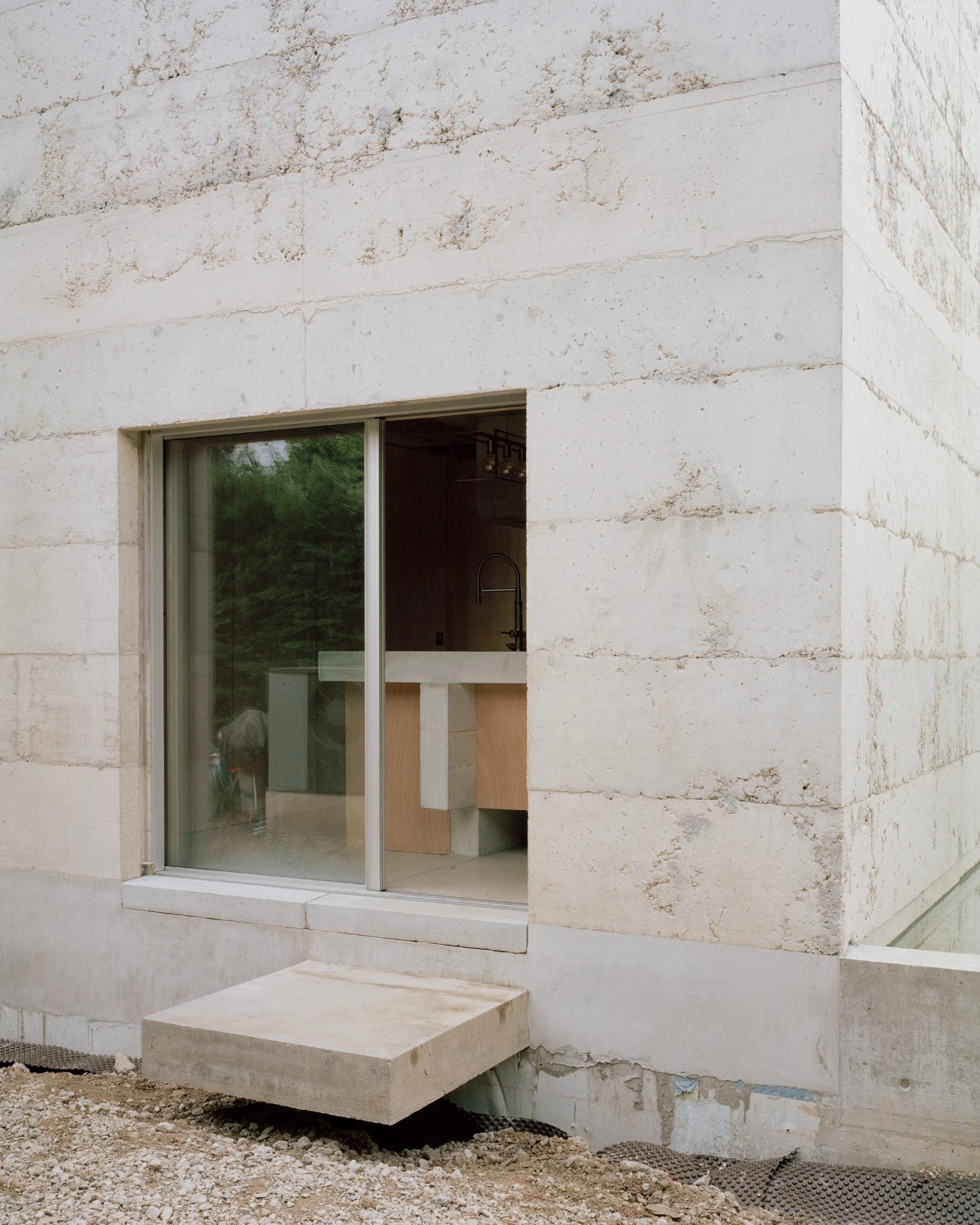
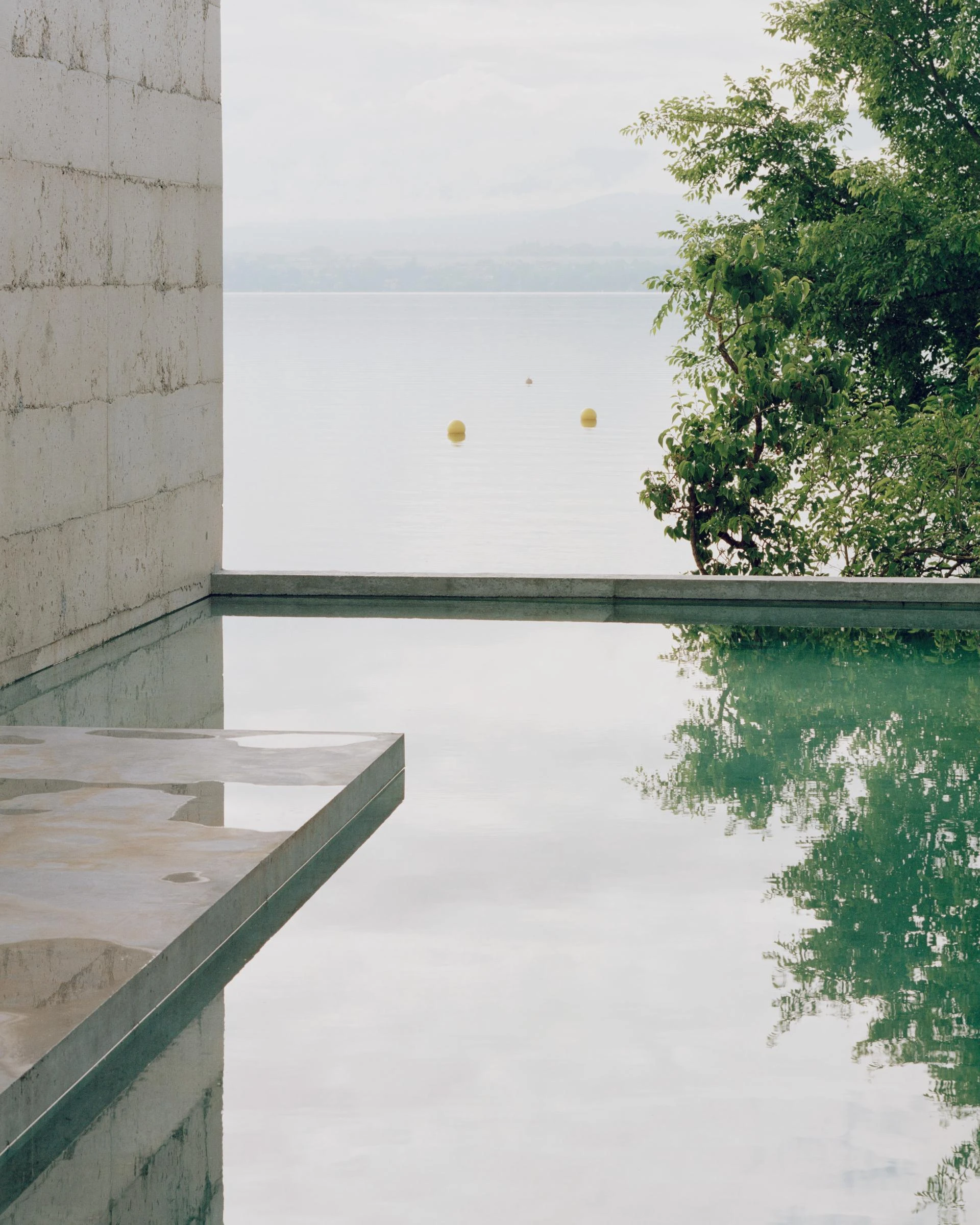
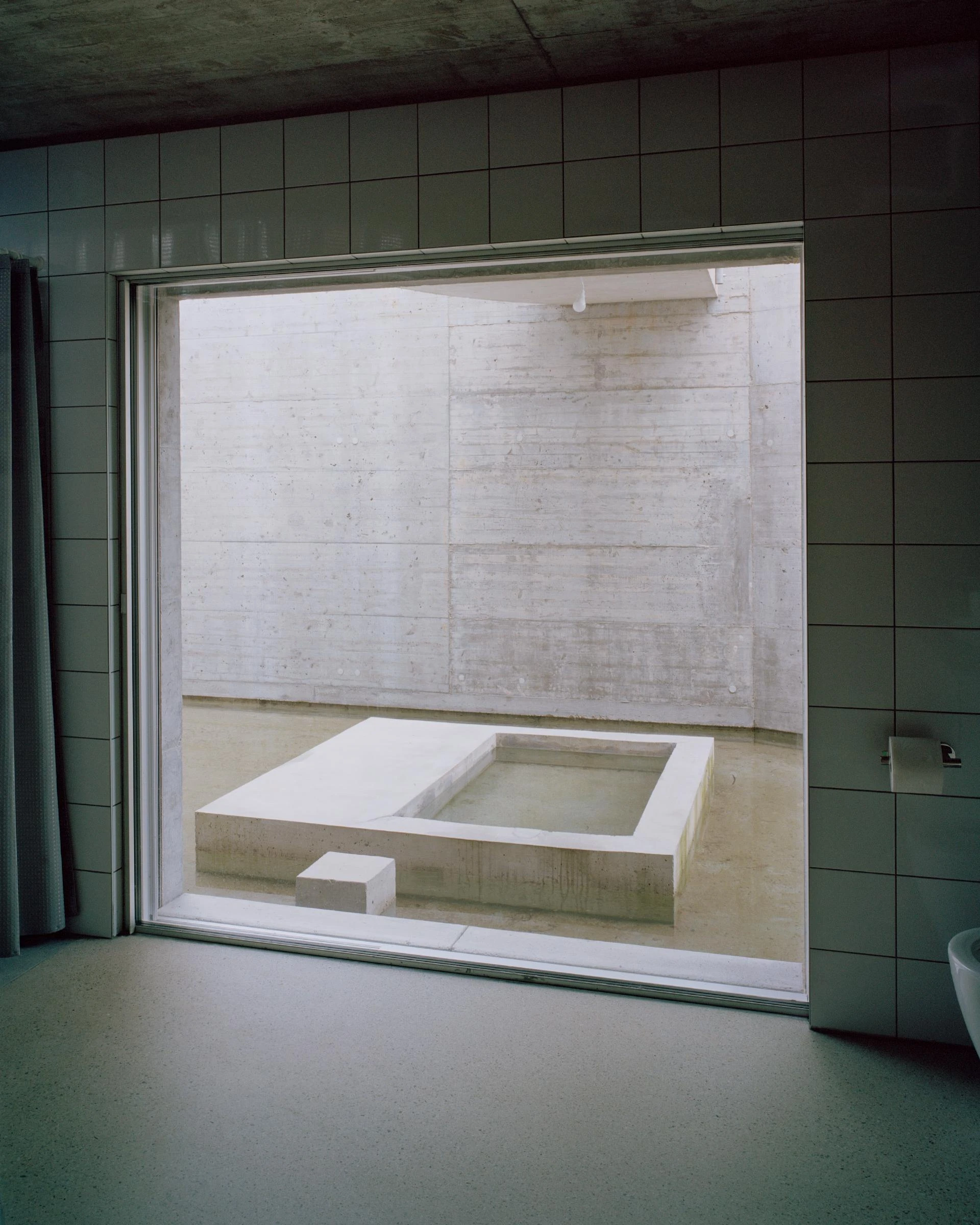
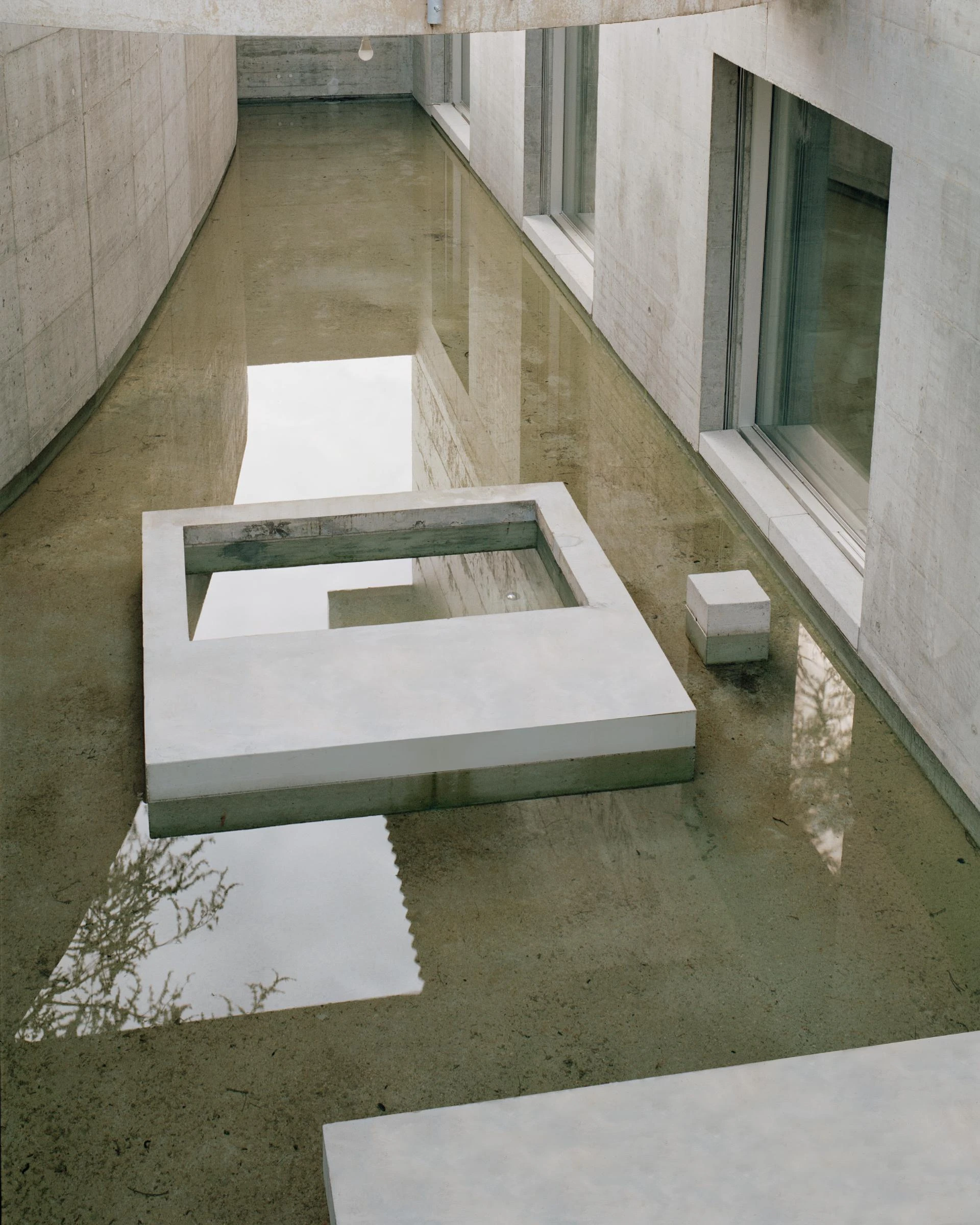
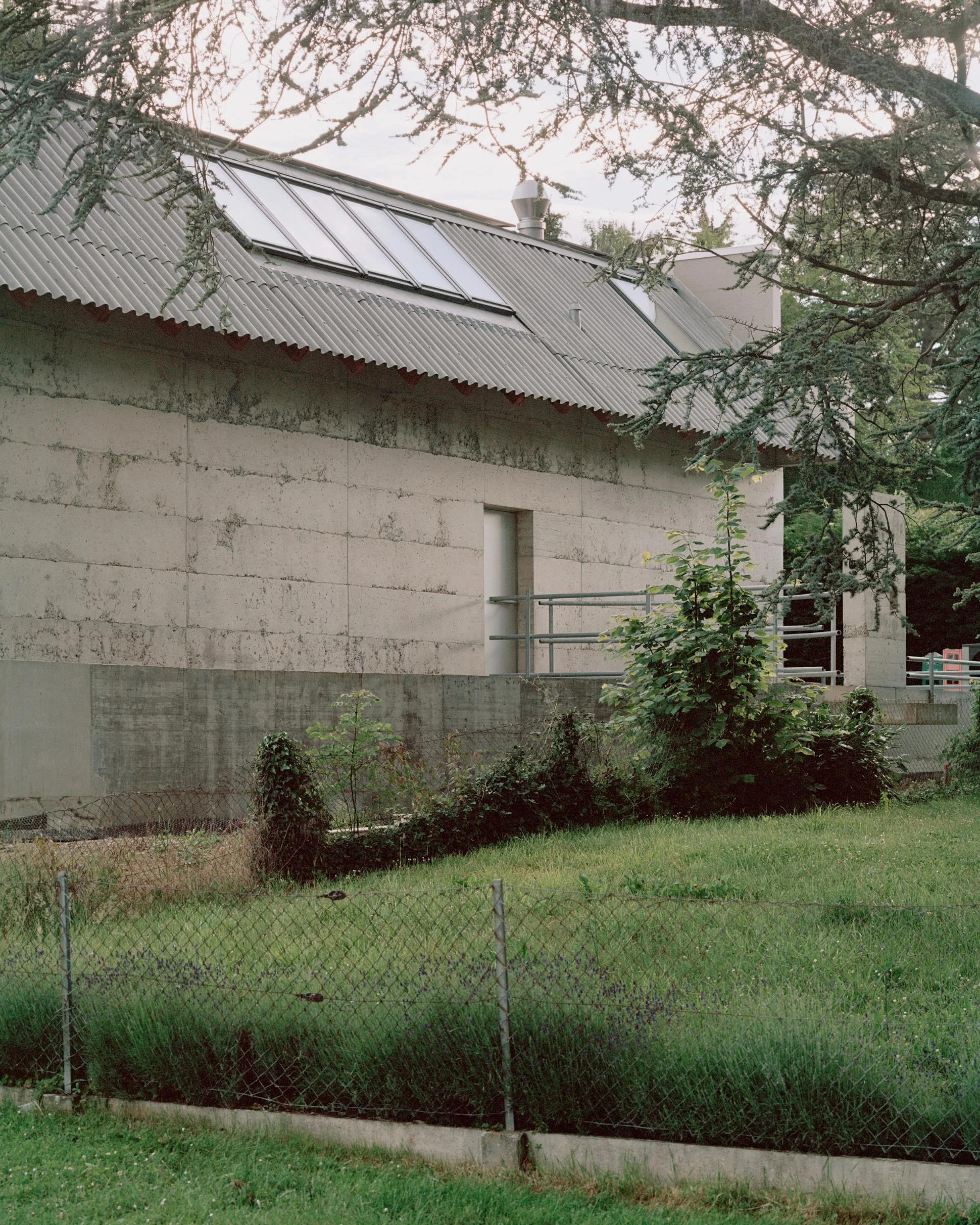
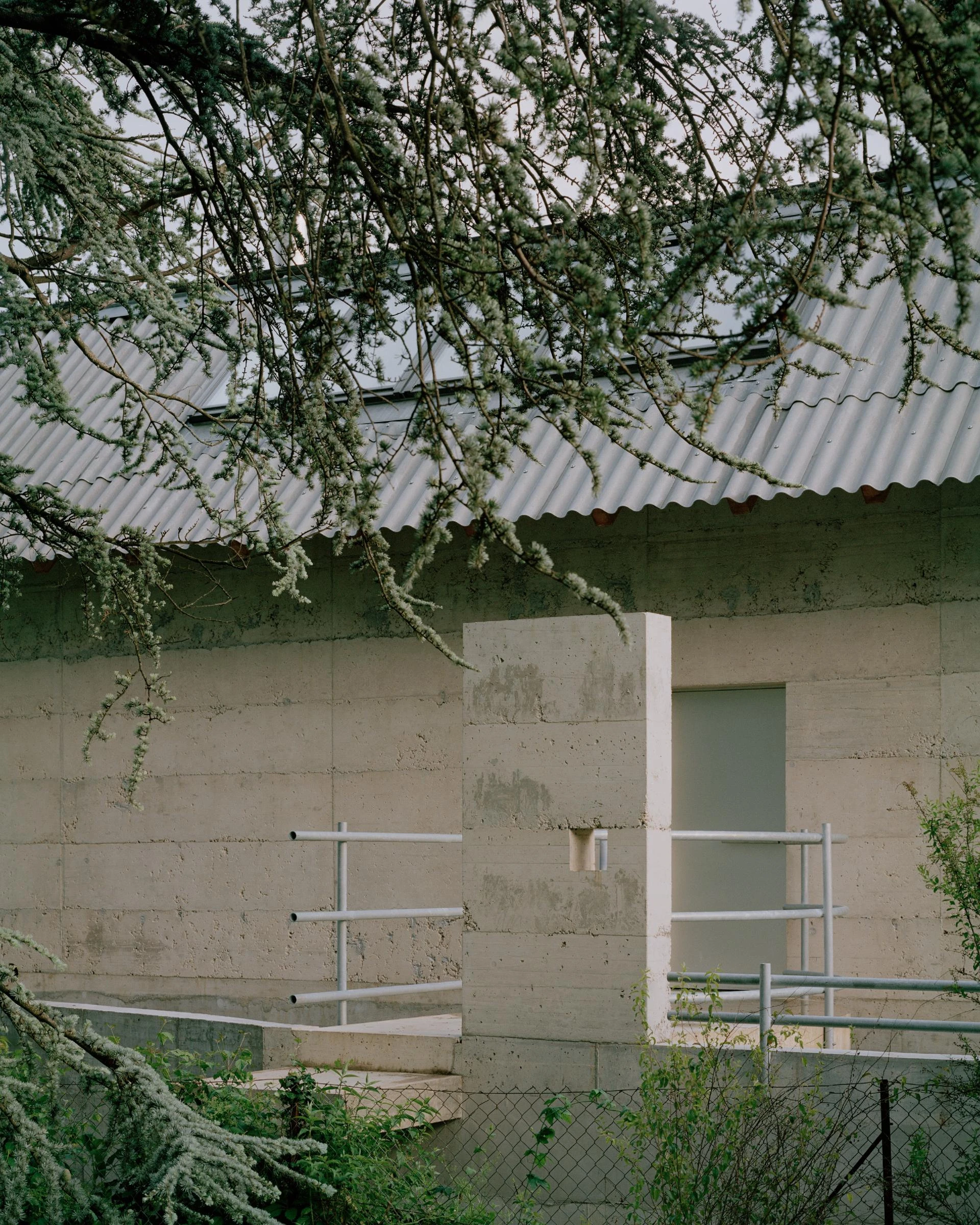
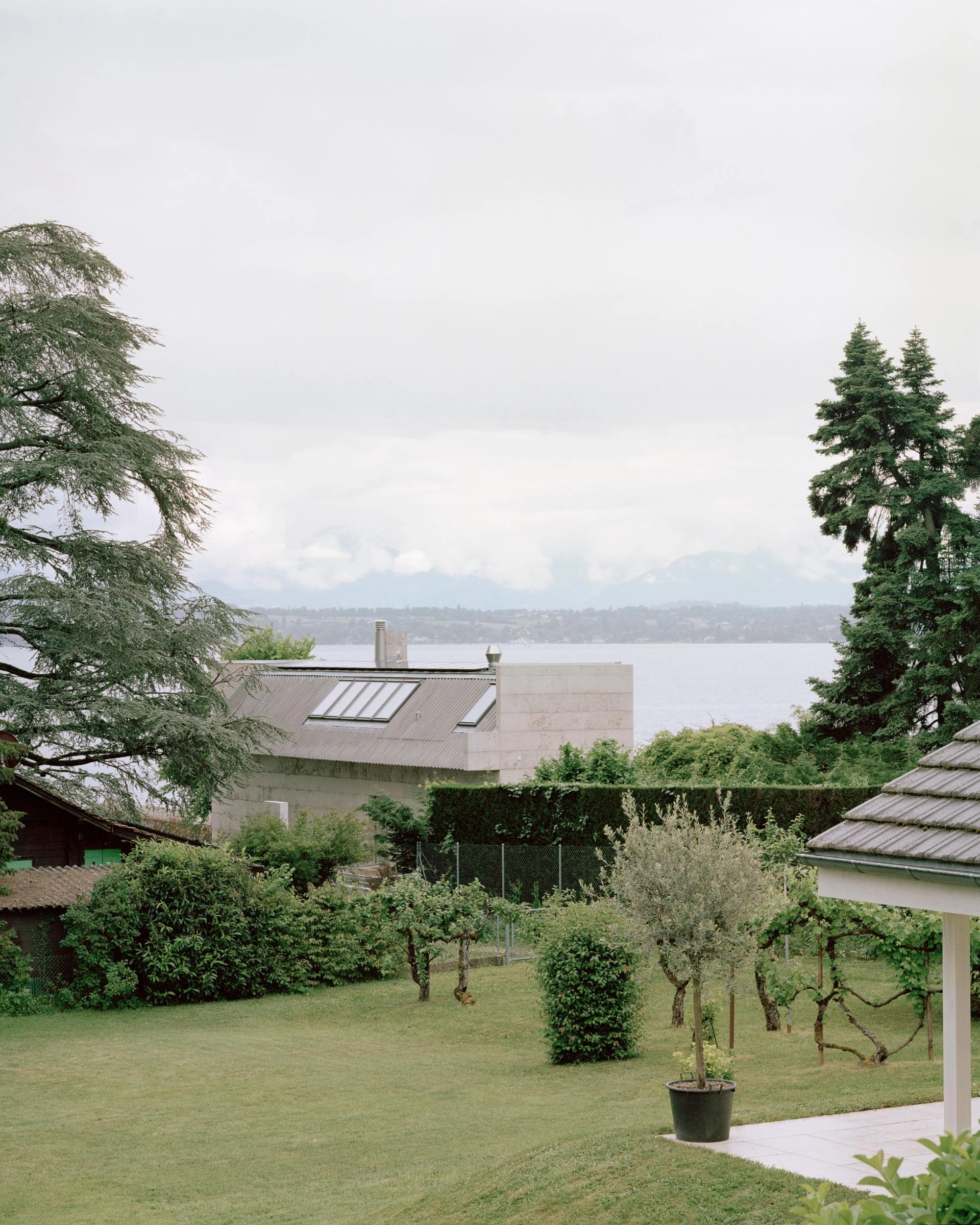
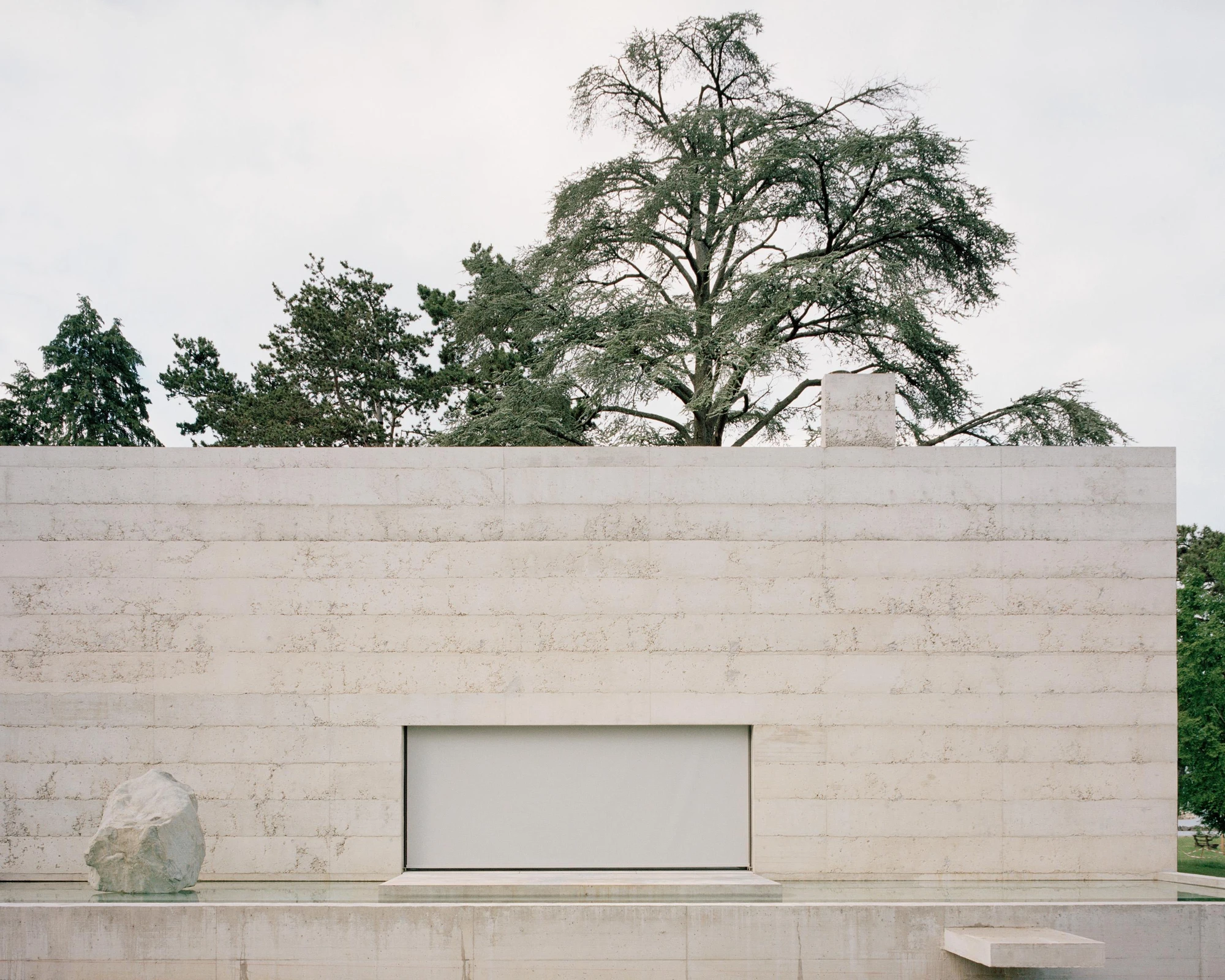
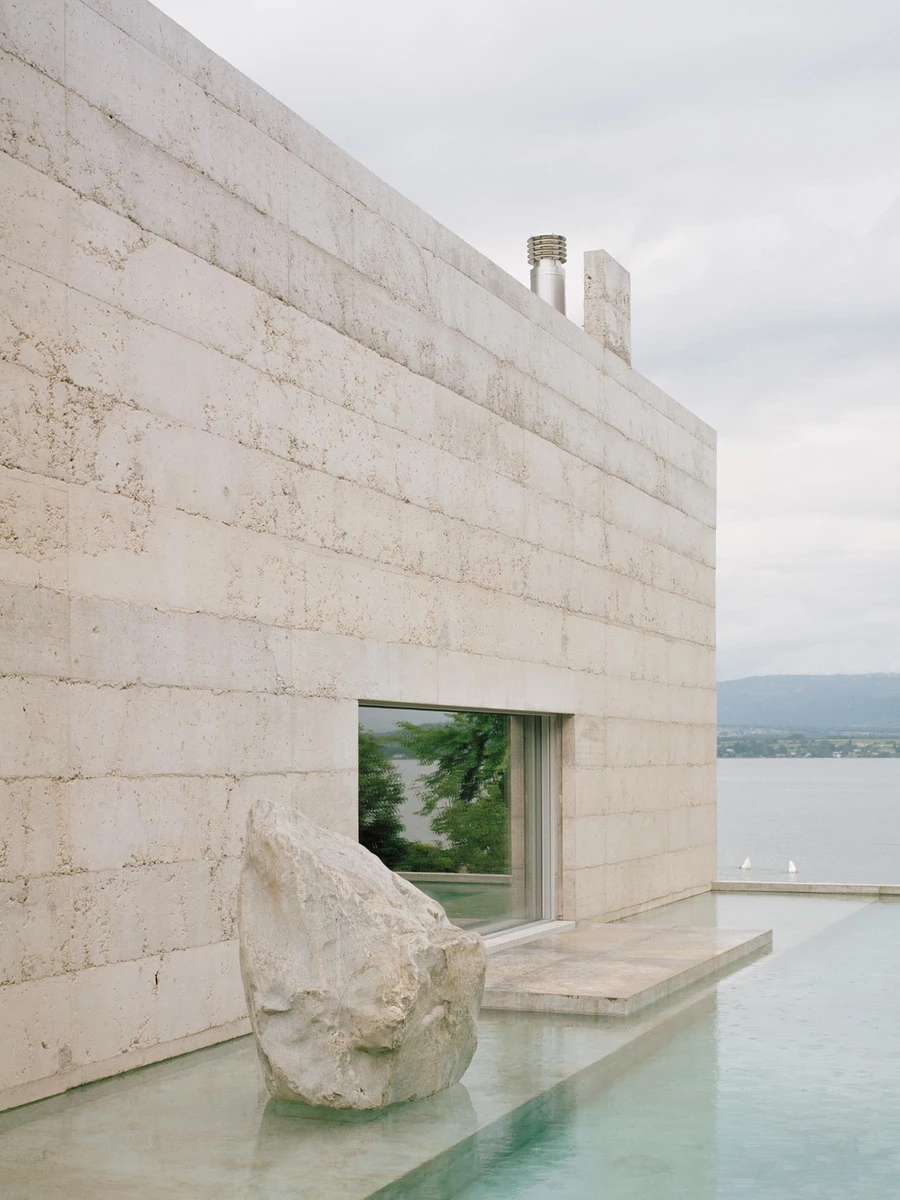
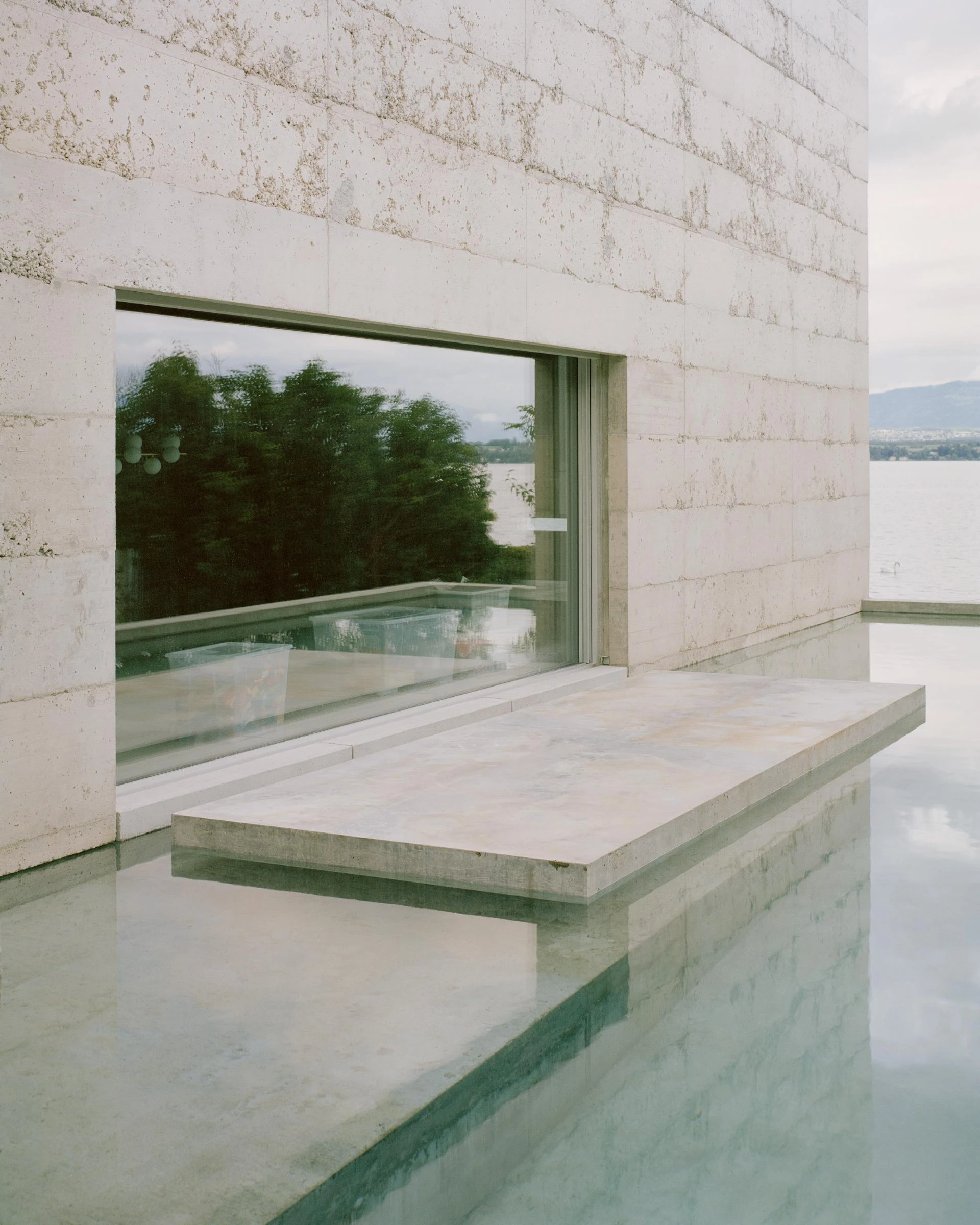
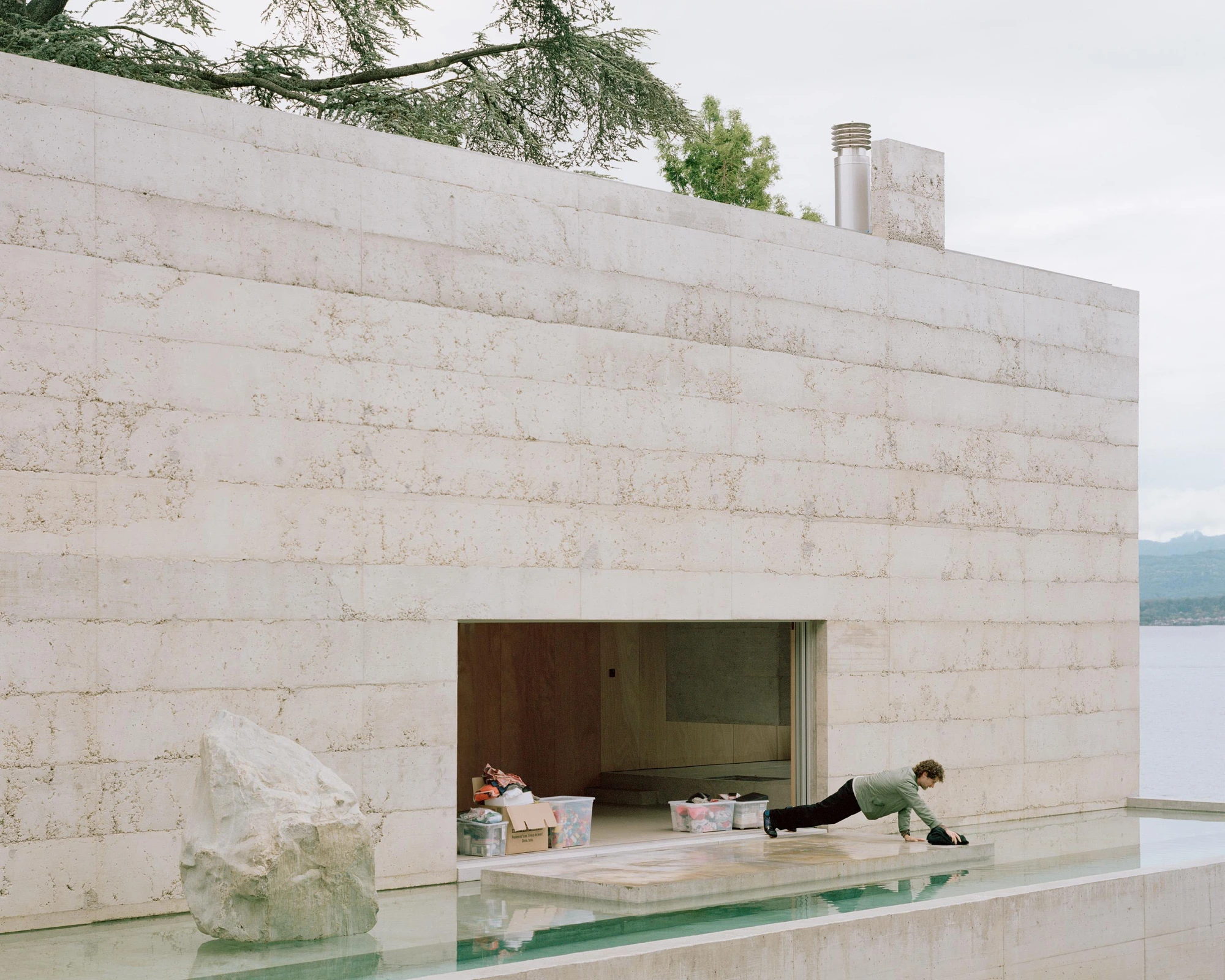
Beside Lake Geneva in Switzerland, Leopold Banchini Architects builds Villa M as a long board-formed concrete volume whose facade reflects symmetrically into a water basin matching its length.

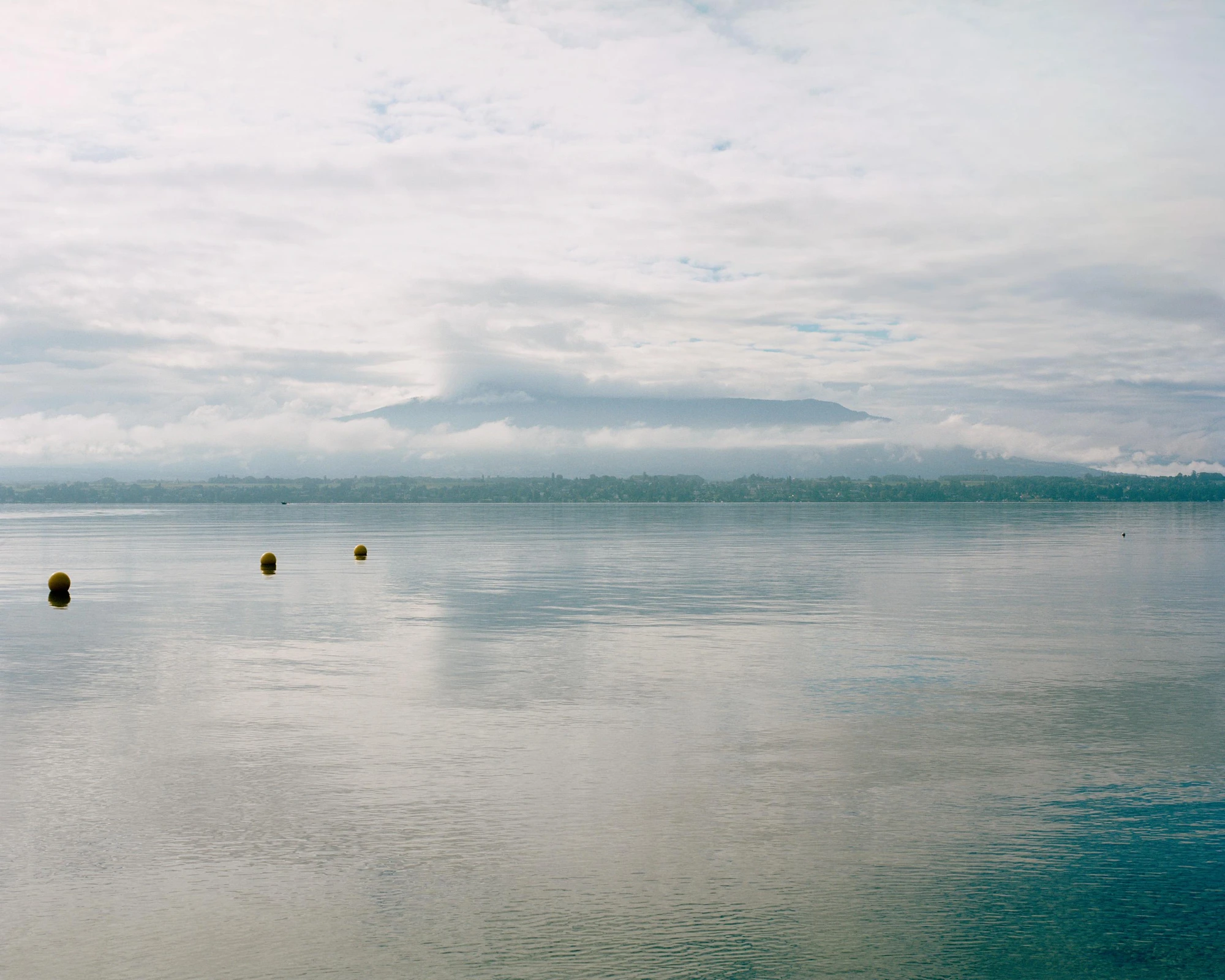
The reference is explicit. Ferdinand Hodler spent fifty years painting Mont-Blanc reflected in Lake Geneva, returning to the horizontal line where mountain meets water and one inverts into the other. He died in 1918 leaving unfinished sketches of that exact view from his Geneva balcony. Villa Montasser, set on the same shore that obsessed him, takes the reflection as its operating principle rather than its motif.

The site is constrained. A long rectangular plan, three levels, tight building regulations, a lakefront that looks across to the Alps and cannot compete with them. Leopold Banchini's response is to refuse the competition. The long facade reads as a single plain surface of board-formed concrete whose horizontal pour lines carry the only register the building offers. In front of it sits a water basin of the same length, holding the facade in mirror. The reflection of the chimney becomes a flight of stairs descending into the pool. A glacial erratic, carried from the Alps by ice and now resting on the lake shore, sits on the surface of the basin as a piece of the geological past placed inside the composition.

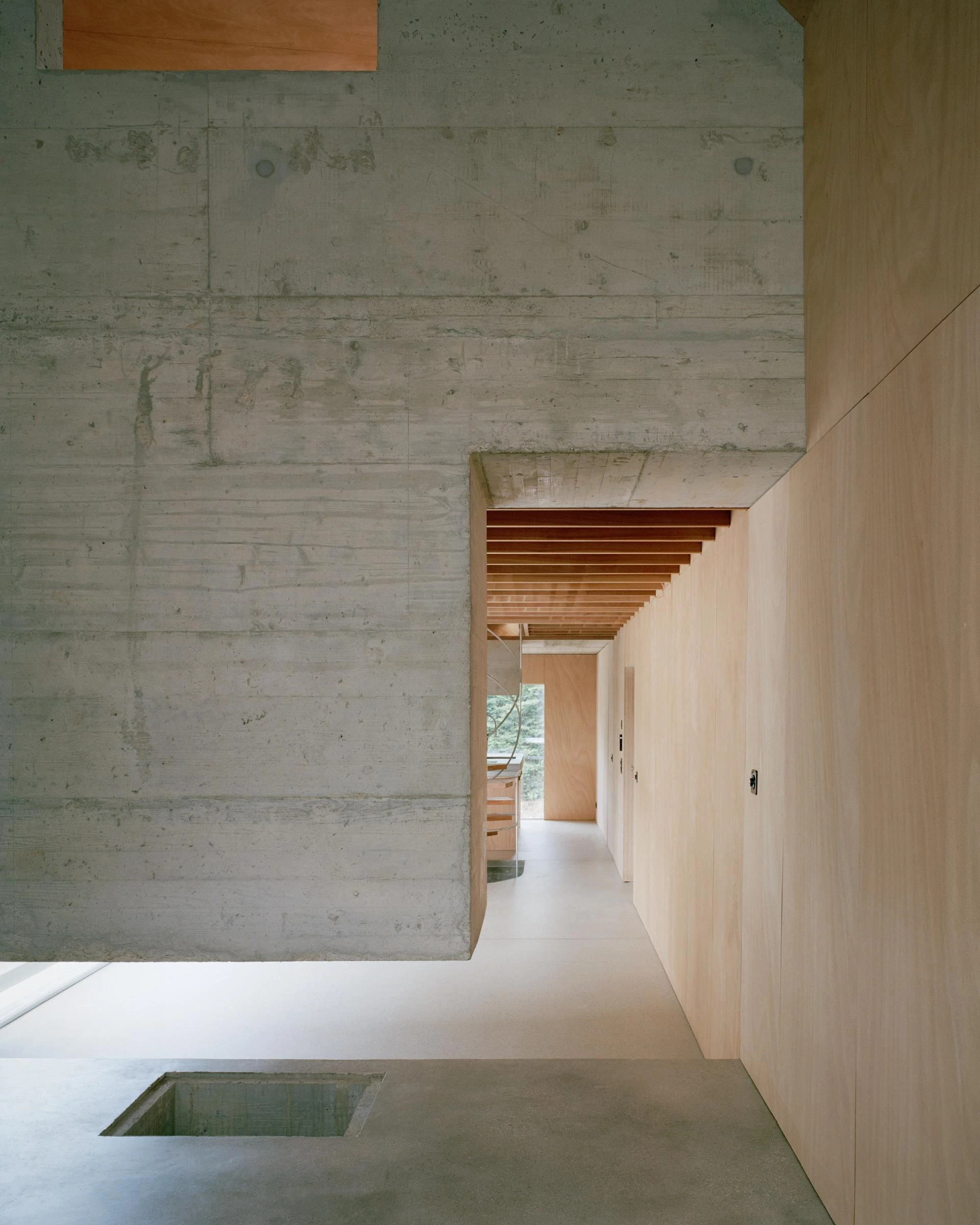
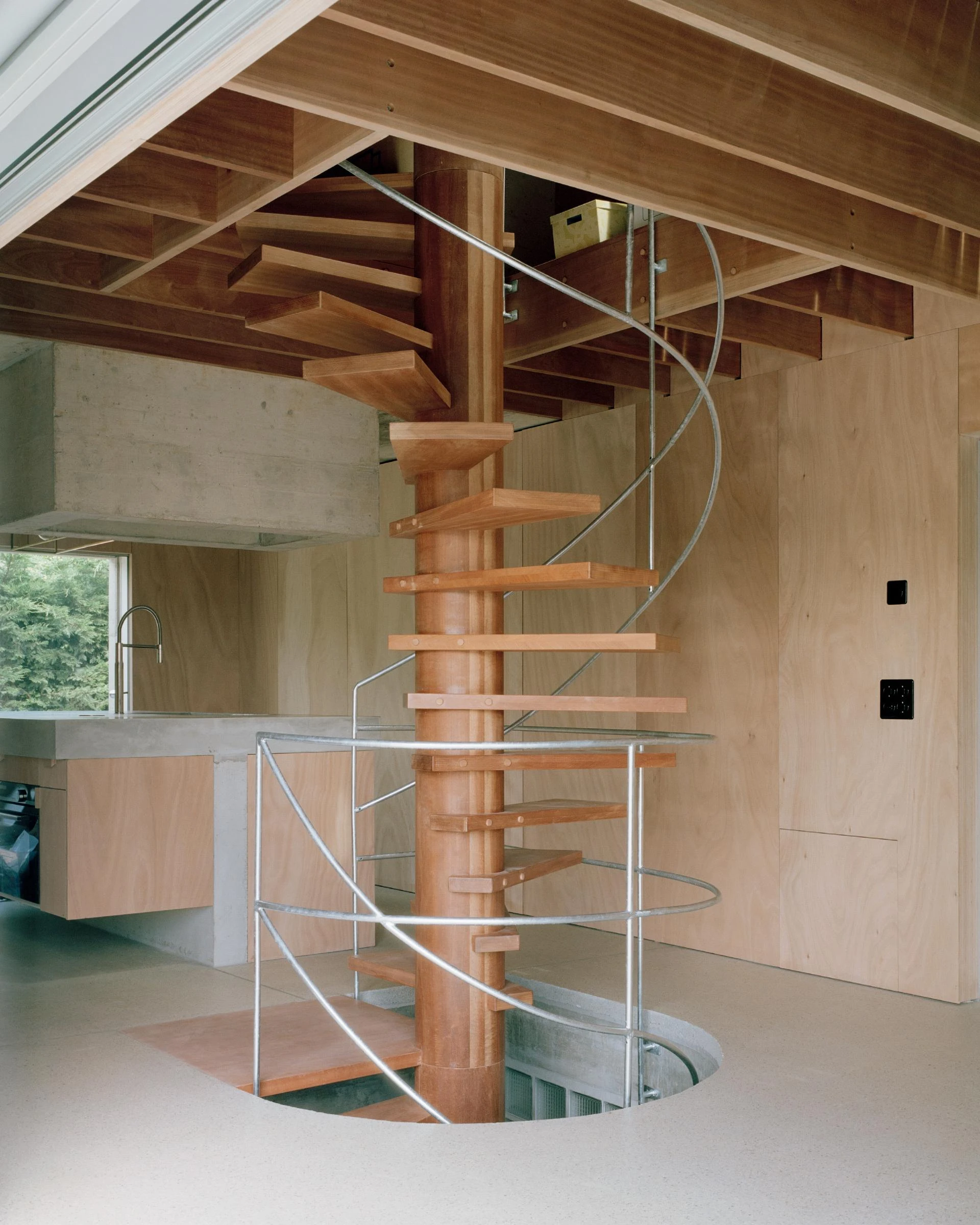
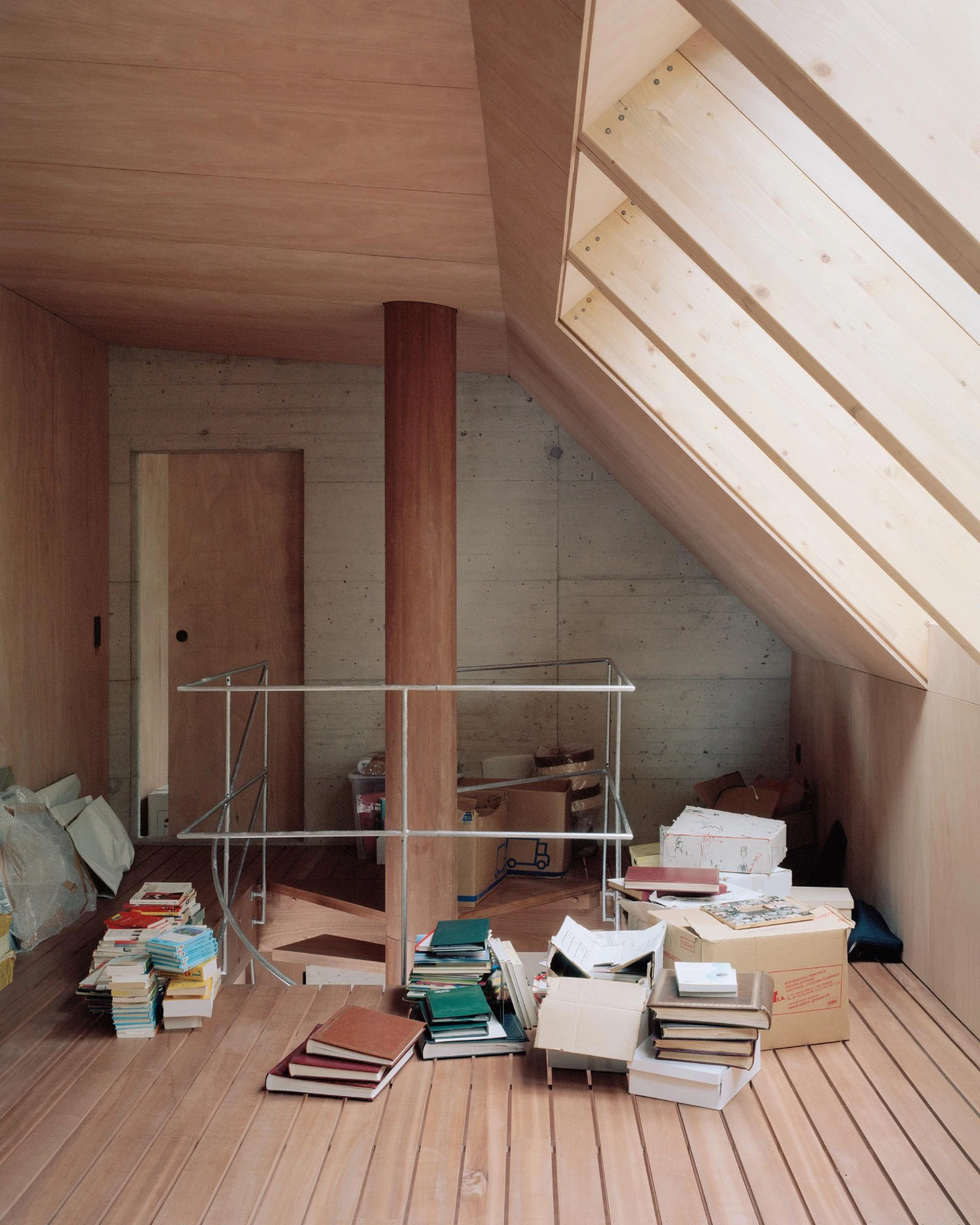
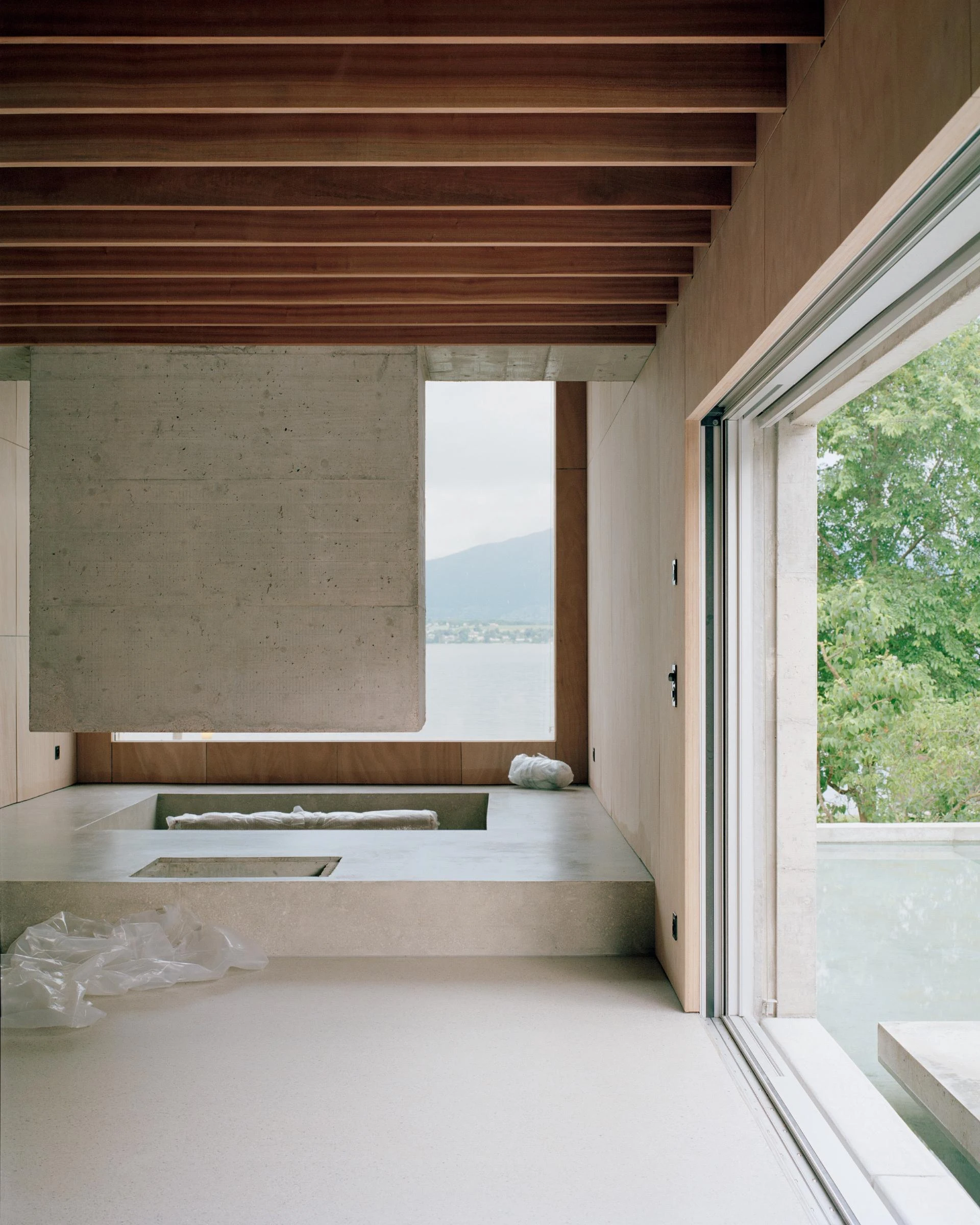
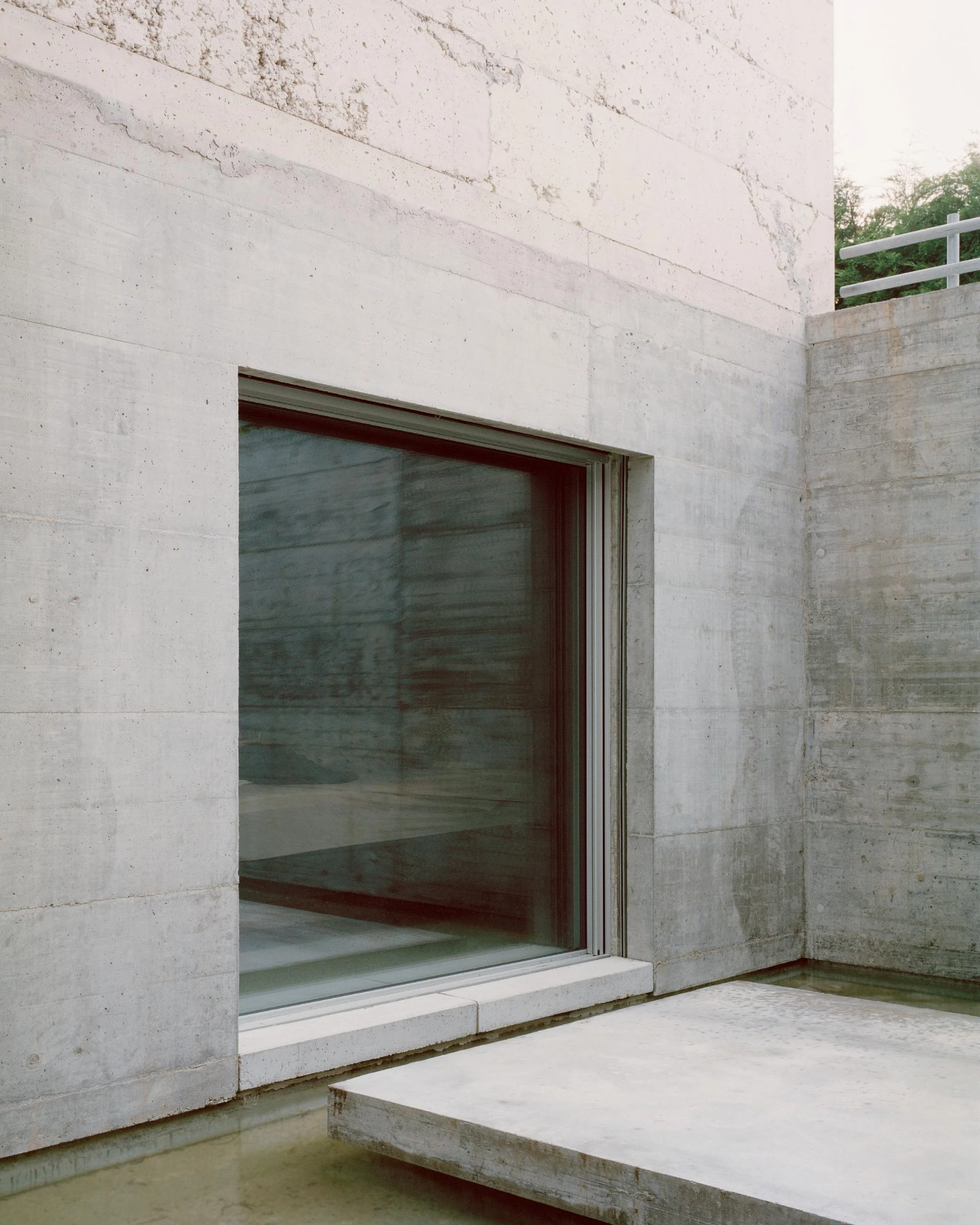
The material palette runs through three registers. Outside, board-formed concrete with visible aggregate and the wood-grain marks of its formwork. Inside, light birch plywood lines ceilings and walls in continuous boards, joinery resolved without ornament. Underfoot, pale terrazzo with a green tint where it meets the water. A single long window opens onto a floating terrace of similar dimensions, framing the lake horizontally in the way Hodler framed it on canvas, with a chrome spiral stair as the only piece of polished metal in the house.

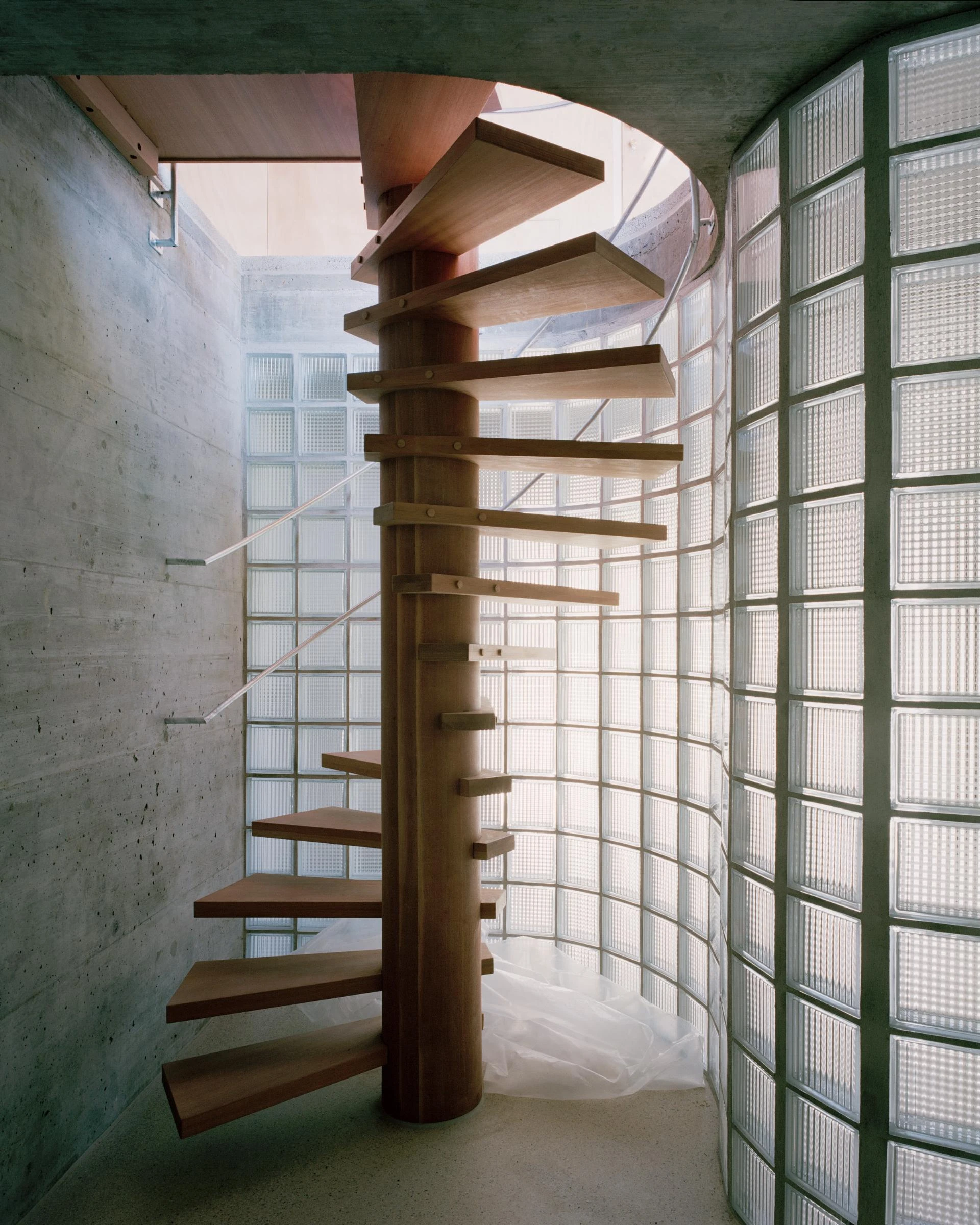
The plan develops in two directions. Ground floor living spaces open broadly toward the lake. Underground bedrooms open instead onto an enclosed patio that the residents cannot walk into, filled with a thin layer of rainwater collected from the roof. Light bounces off both basins, the outer reflecting pool and the inner rainwater patio, before entering the rooms. The wooden walls and ceiling carry the dancing reflections of two separate sheets of water at once.

What Banchini builds is less a house than a frame for the lake's own behaviour. The facade is the surface on which Hodler's horizontal line is restaged daily, the basin is the water that performs the reflection, the boulder is the mountain compressed to scale. The fact that the building stays blank and humble in the face of its setting is the point: the landscape does the speaking, and the house only provides the geometry through which that speech becomes legible.

This is restraint as method. Most lakeside houses on Lake Geneva attempt to claim the view through gestures of openness. Villa M does the opposite. It withdraws into a single horizontal volume, doubles itself through reflection, and lets the painters who came before do the heavy editorial work. Hodler studied this lake until he died. The villa is a footnote to that century of looking.
Interested in Showcasing Your Work?

If you would like to feature your works on Thisispaper, please visit our Submission page and sign up to Thisispaper+ to submit your work. Once your submission is approved, your work will be showcased to our global audience of 2 million art, architecture, and design professionals and enthusiasts.
No items found.
We love less
but there is more.
Become a Thisispaper+ member today to unlock full access to our magazine, advanced tools, and support our work.
Get two months FREE
with annual subscription
We love less
but there is more.
Become a Thisispaper+ member today to unlock full access to our magazine, advanced tools, and support our work.
Get two months FREE
with annual subscription
No items found.
Alexander Zaxarov
Jun 12, 2026

Beside Lake Geneva in Switzerland, Leopold Banchini Architects builds Villa M as a long board-formed concrete volume whose facade reflects symmetrically into a water basin matching its length.

The reference is explicit. Ferdinand Hodler spent fifty years painting Mont-Blanc reflected in Lake Geneva, returning to the horizontal line where mountain meets water and one inverts into the other. He died in 1918 leaving unfinished sketches of that exact view from his Geneva balcony. Villa Montasser, set on the same shore that obsessed him, takes the reflection as its operating principle rather than its motif.

The site is constrained. A long rectangular plan, three levels, tight building regulations, a lakefront that looks across to the Alps and cannot compete with them. Leopold Banchini's response is to refuse the competition. The long facade reads as a single plain surface of board-formed concrete whose horizontal pour lines carry the only register the building offers. In front of it sits a water basin of the same length, holding the facade in mirror. The reflection of the chimney becomes a flight of stairs descending into the pool. A glacial erratic, carried from the Alps by ice and now resting on the lake shore, sits on the surface of the basin as a piece of the geological past placed inside the composition.

The material palette runs through three registers. Outside, board-formed concrete with visible aggregate and the wood-grain marks of its formwork. Inside, light birch plywood lines ceilings and walls in continuous boards, joinery resolved without ornament. Underfoot, pale terrazzo with a green tint where it meets the water. A single long window opens onto a floating terrace of similar dimensions, framing the lake horizontally in the way Hodler framed it on canvas, with a chrome spiral stair as the only piece of polished metal in the house.

The plan develops in two directions. Ground floor living spaces open broadly toward the lake. Underground bedrooms open instead onto an enclosed patio that the residents cannot walk into, filled with a thin layer of rainwater collected from the roof. Light bounces off both basins, the outer reflecting pool and the inner rainwater patio, before entering the rooms. The wooden walls and ceiling carry the dancing reflections of two separate sheets of water at once.

What Banchini builds is less a house than a frame for the lake's own behaviour. The facade is the surface on which Hodler's horizontal line is restaged daily, the basin is the water that performs the reflection, the boulder is the mountain compressed to scale. The fact that the building stays blank and humble in the face of its setting is the point: the landscape does the speaking, and the house only provides the geometry through which that speech becomes legible.

This is restraint as method. Most lakeside houses on Lake Geneva attempt to claim the view through gestures of openness. Villa M does the opposite. It withdraws into a single horizontal volume, doubles itself through reflection, and lets the painters who came before do the heavy editorial work. Hodler studied this lake until he died. The villa is a footnote to that century of looking.
Interested in Showcasing Your Work?

If you would like to feature your works on Thisispaper, please visit our Submission page and subscribe to Thisispaper+. Once your submission is approved, your work will be showcased to our global audience of 2 million art, architecture, and design professionals and enthusiasts.
Thisispaper+
Concrete Stories
100+ Projects
Web Access
Link to Maps
Architecture that treats concrete as an extension of ground rather than an object placed on it. Houses half-buried in dunes, cantilevered over forest, rammed back from the stone of their own ruins, domed over fields. Cultural centres, motorway chapels, tram stops, residences, pavilions — projects where mass, cure time, and formwork texture are the subject, not the by-product of construction.
Explore
Concrete Stories

Join Thisispaper+
Unlock access to 2500 stories, curated guides + editions, and share your work with a global network of architects, artists, writers and designers who are shaping the future.
Get two months FREE
with annual subscription
Travel Guides
Immerse yourself in timeless destinations, hidden gems, and creative spaces—curated by humans, not algorithms.
Explore All Guides +
Submission Module
Submit your project and gain the chance to showcase your work to our worldwide audience of over 2M architects, designers, artists, and curious minds.
Learn More+
Curated Editions
Dive deeper into carefully curated editions, designed to feed your curiosity and foster exploration.
Off-the-Grid
Jutaku
Sacral Journey
minimum
The New Chair
Explore All Editions +
Atlas
A new and interactive way to explore the most inspiring places around the world.
Interactive map
Linked to articles
300+ curated locations
Google + Apple directions
Smart filters
Subscribe to Explore+
Become a Thisispaper+ member today to unlock full access to our magazine, submit your project and support our work.
Join Thisispaper+Join Thisispaper+
€ 9 EUR
/month
Cancel anytime
Get two months FREE
with annual subscription