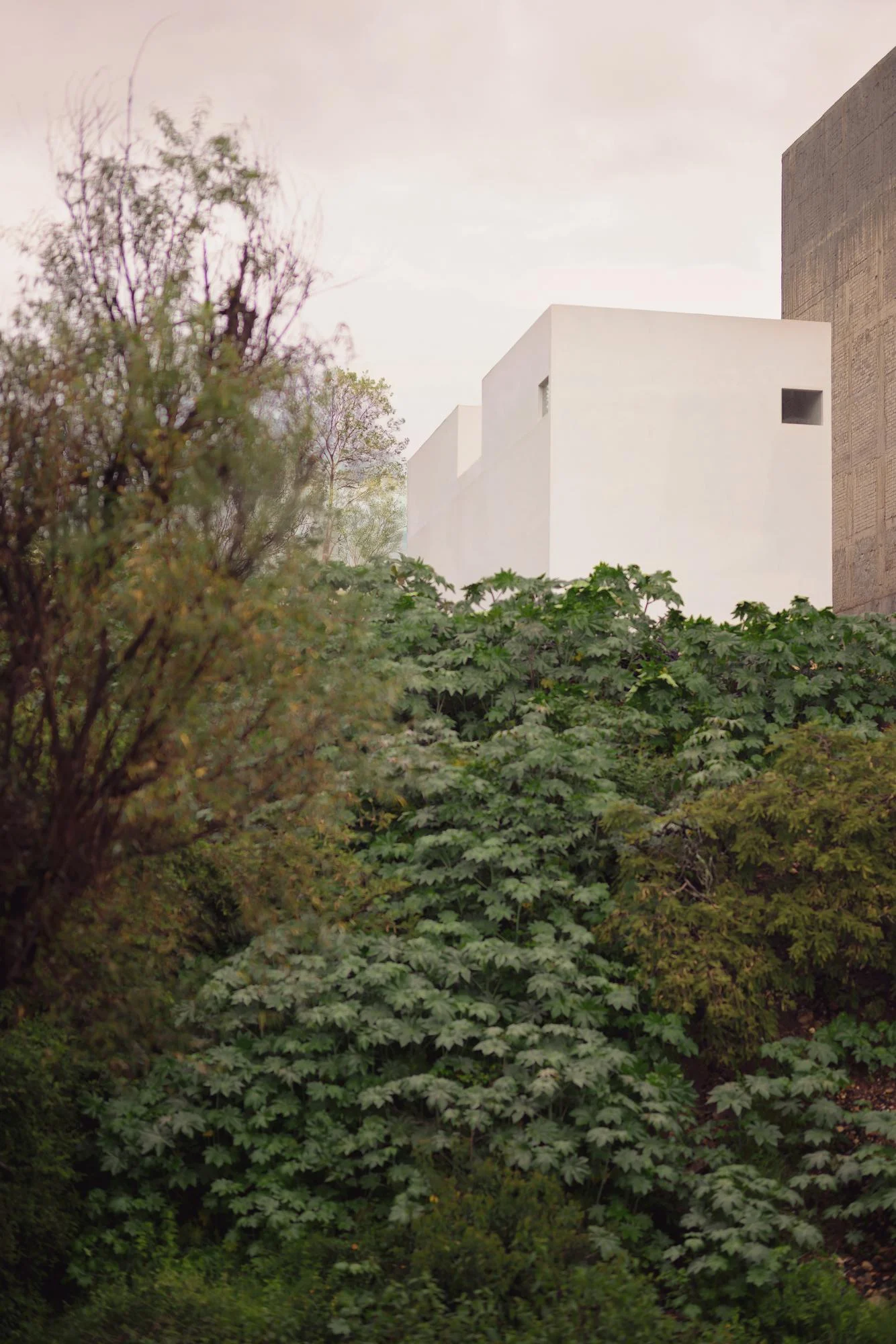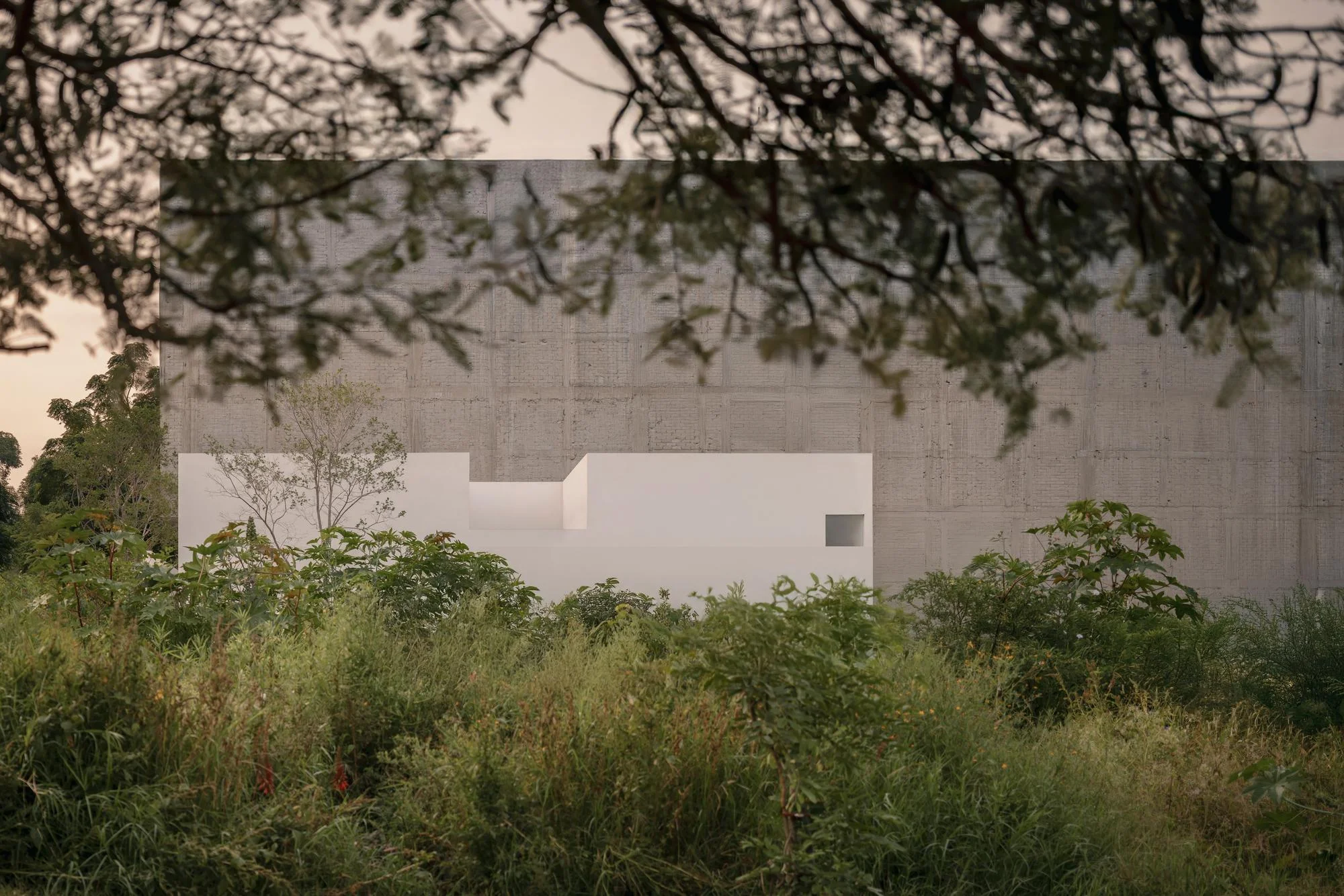
On the outskirts of Morelia, Michoacán, HW Studio builds Kehai House, its founder Rogelio Vallejo Bores' own residence organised around a stone garden rather than a room.
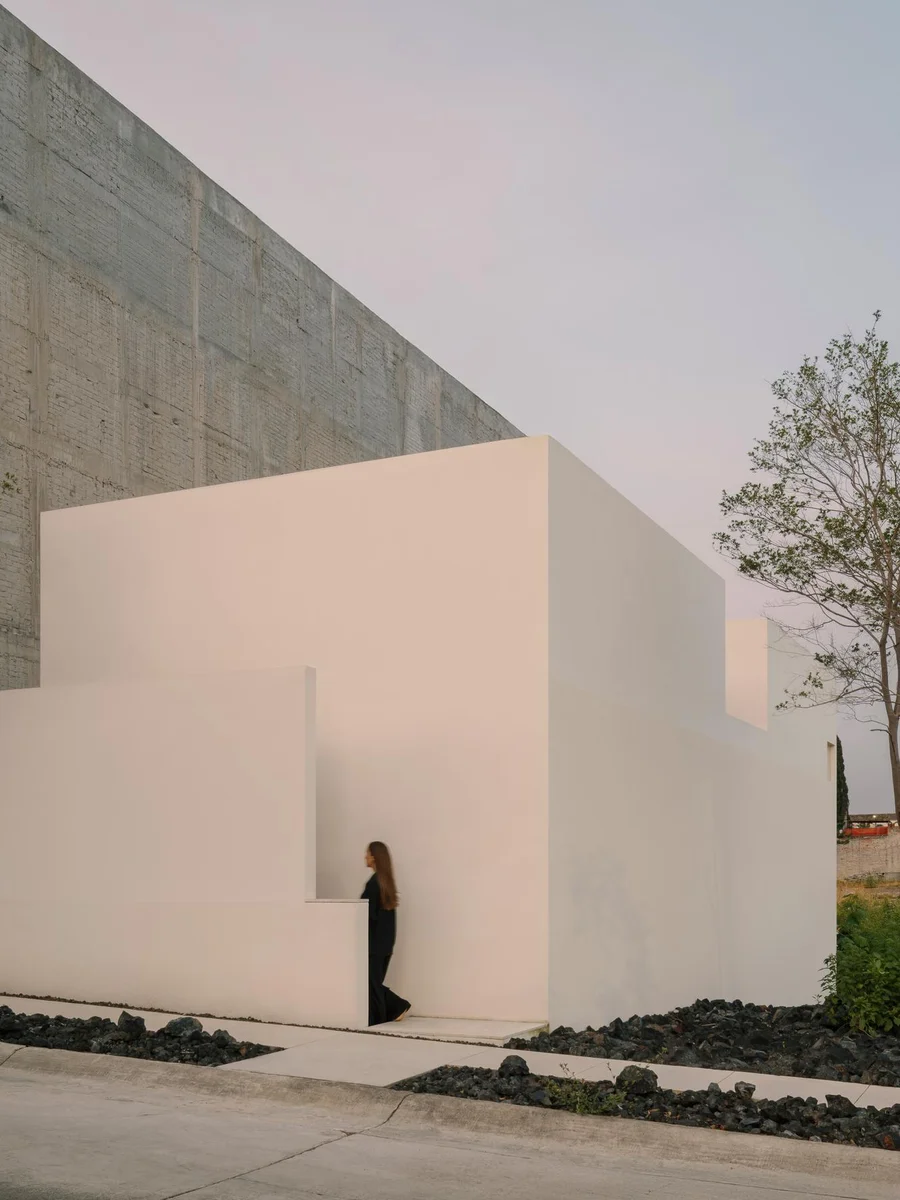
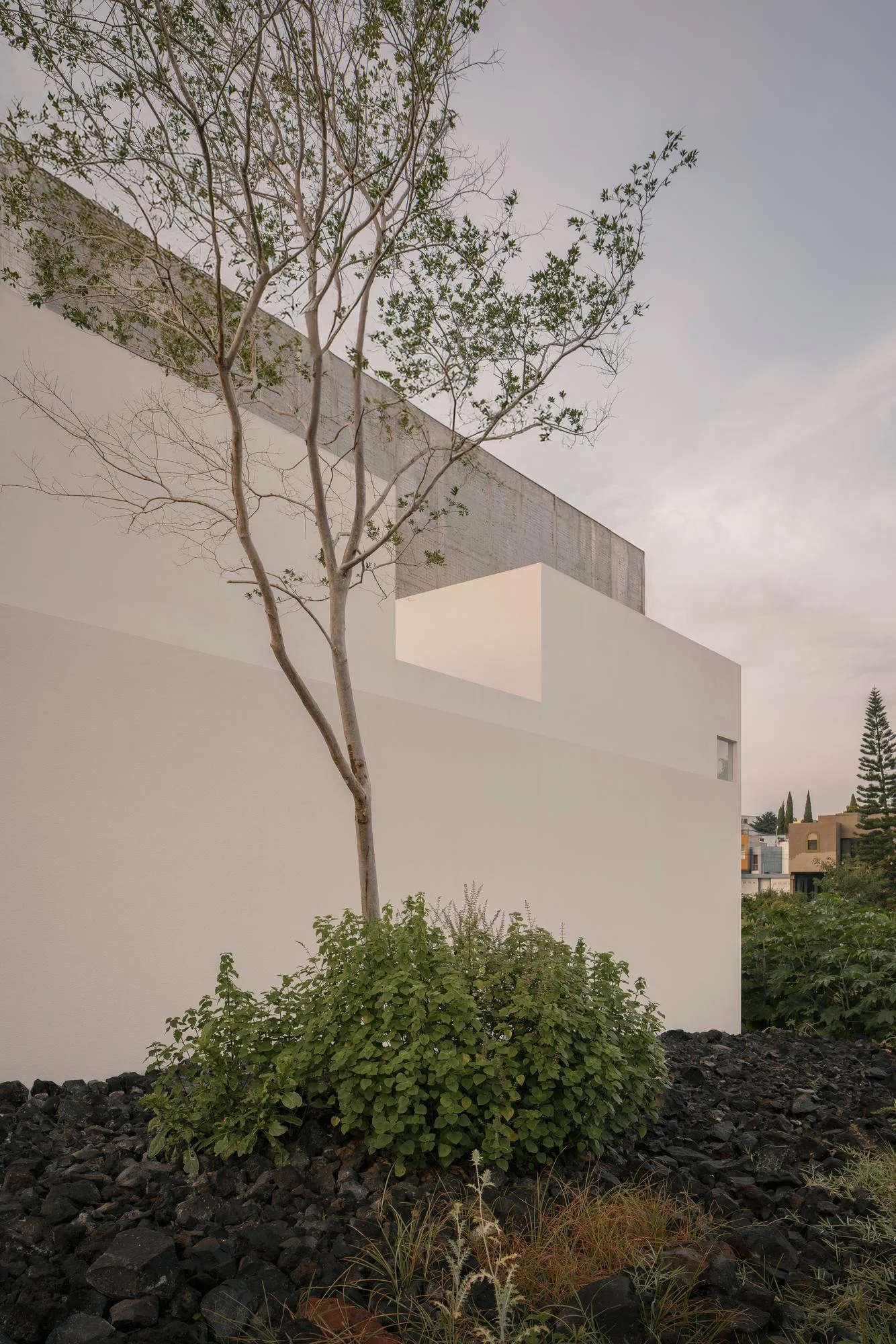
Seen from the street, the house reads as a quiet white box set against a raw board-formed concrete retaining wall, the pine grain of the shuttering still printed across its surface. Black volcanic rock spills along the base, a young tree rises out of it, and a single small opening punctures the cream render. There is almost no glass. Three windows, no more, and each frames a specific thing: a mountain, a neighbouring pine, the tree that grows at the centre of the plan. Everything else turns inward.
HW Studio founder Rogelio Vallejo Bores built the 95 square metres for himself, on a budget of 82,000 USD. Every coin, in his words, had to speak with clarity. The constraint is visible in how little the house asks of its site: the entrance descends rather than climbs, the stair drops to the bedrock where stone offered stability, avoiding costs in foundation. Vallejo Bores frames the gesture in spiritual terms too, the descent as a small bow, the threshold as a kind of torii for an invisible shrine.
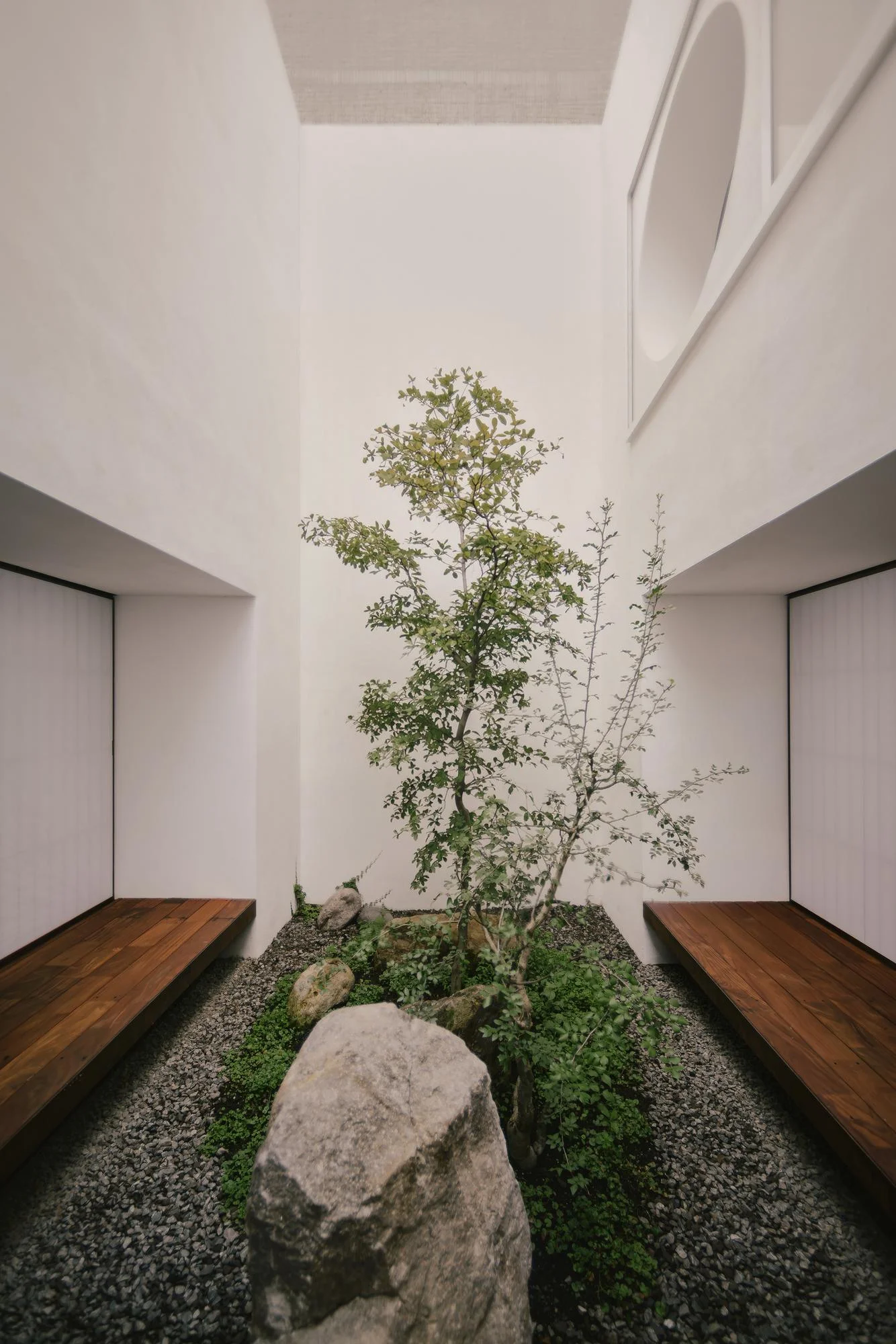
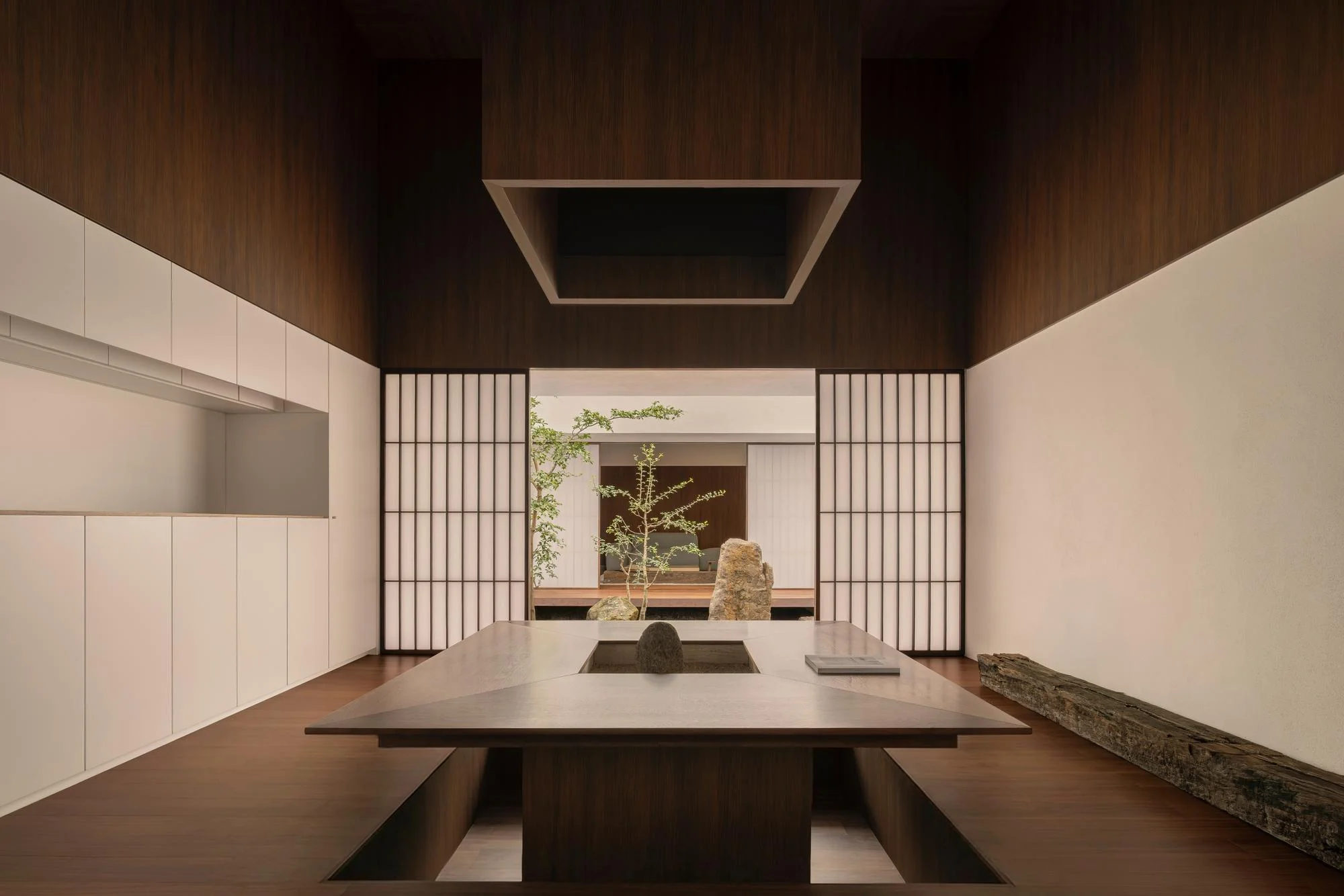
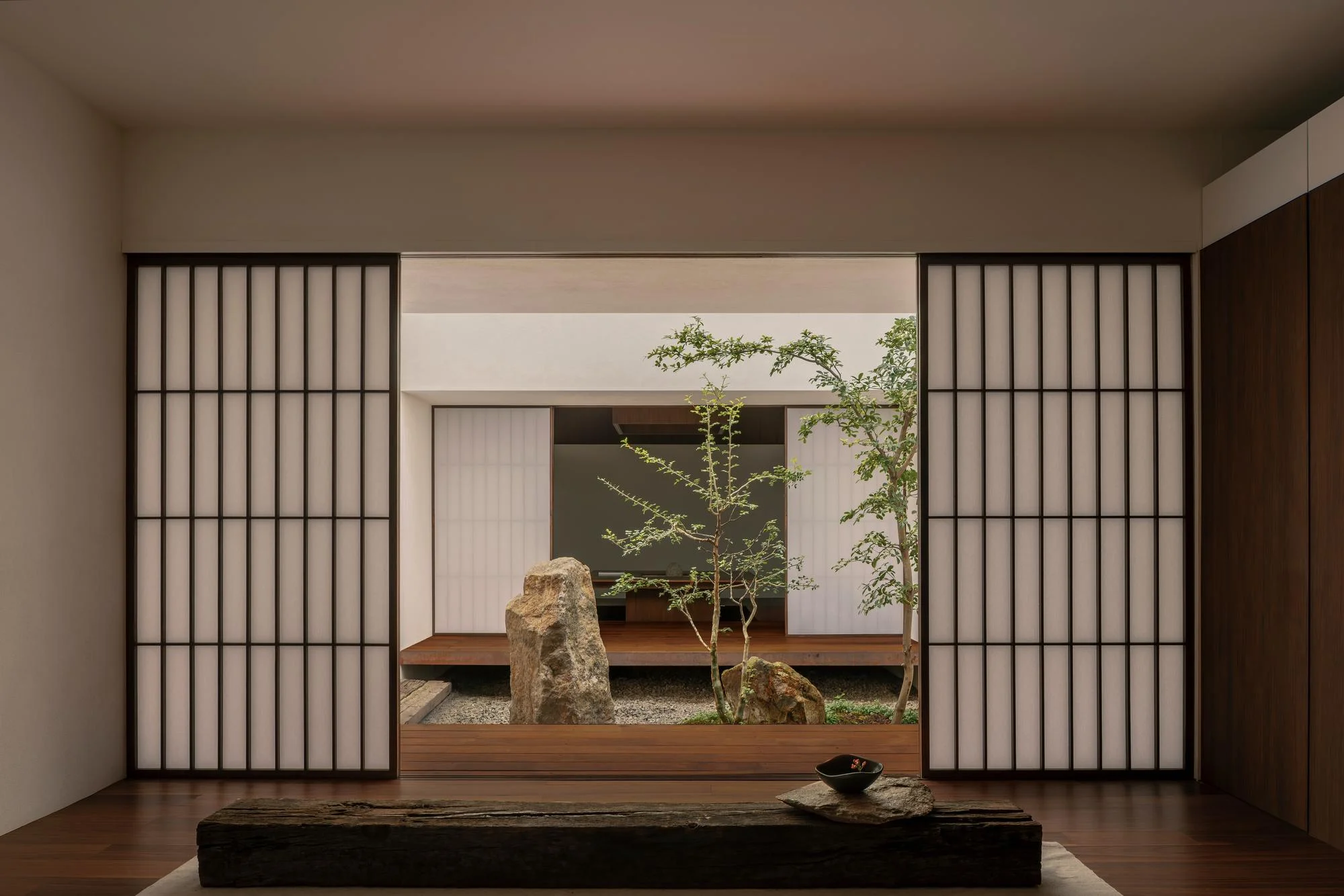
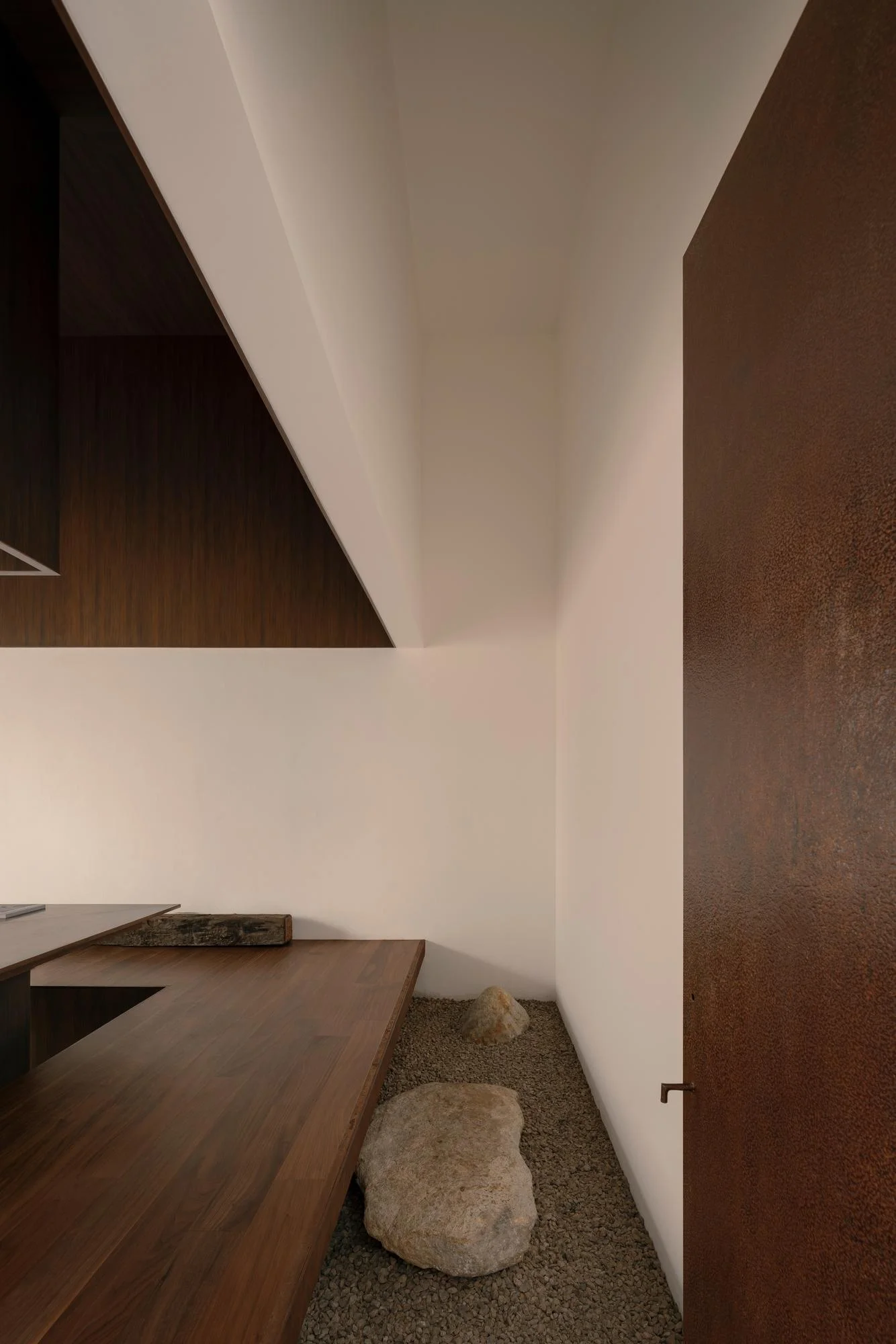
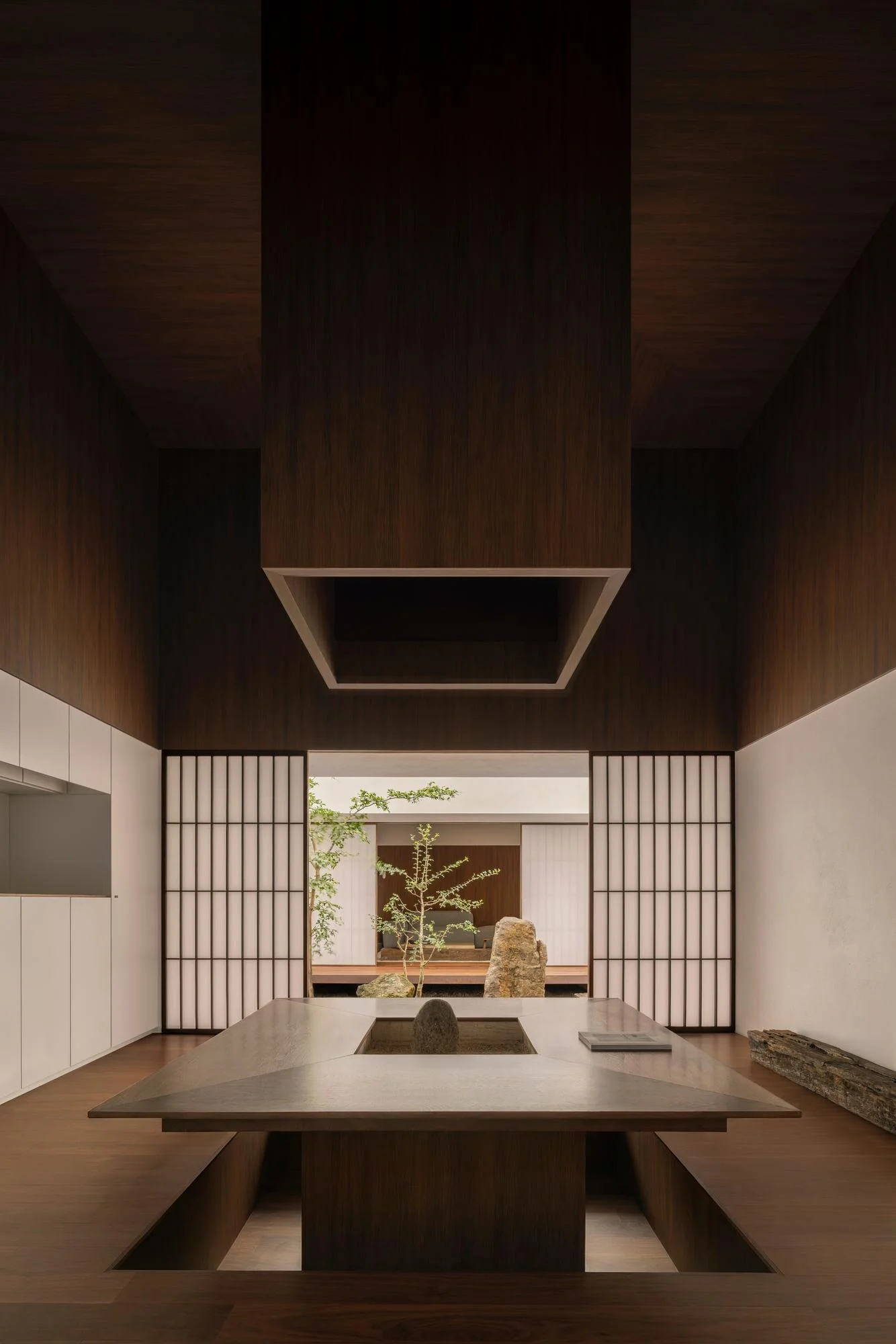
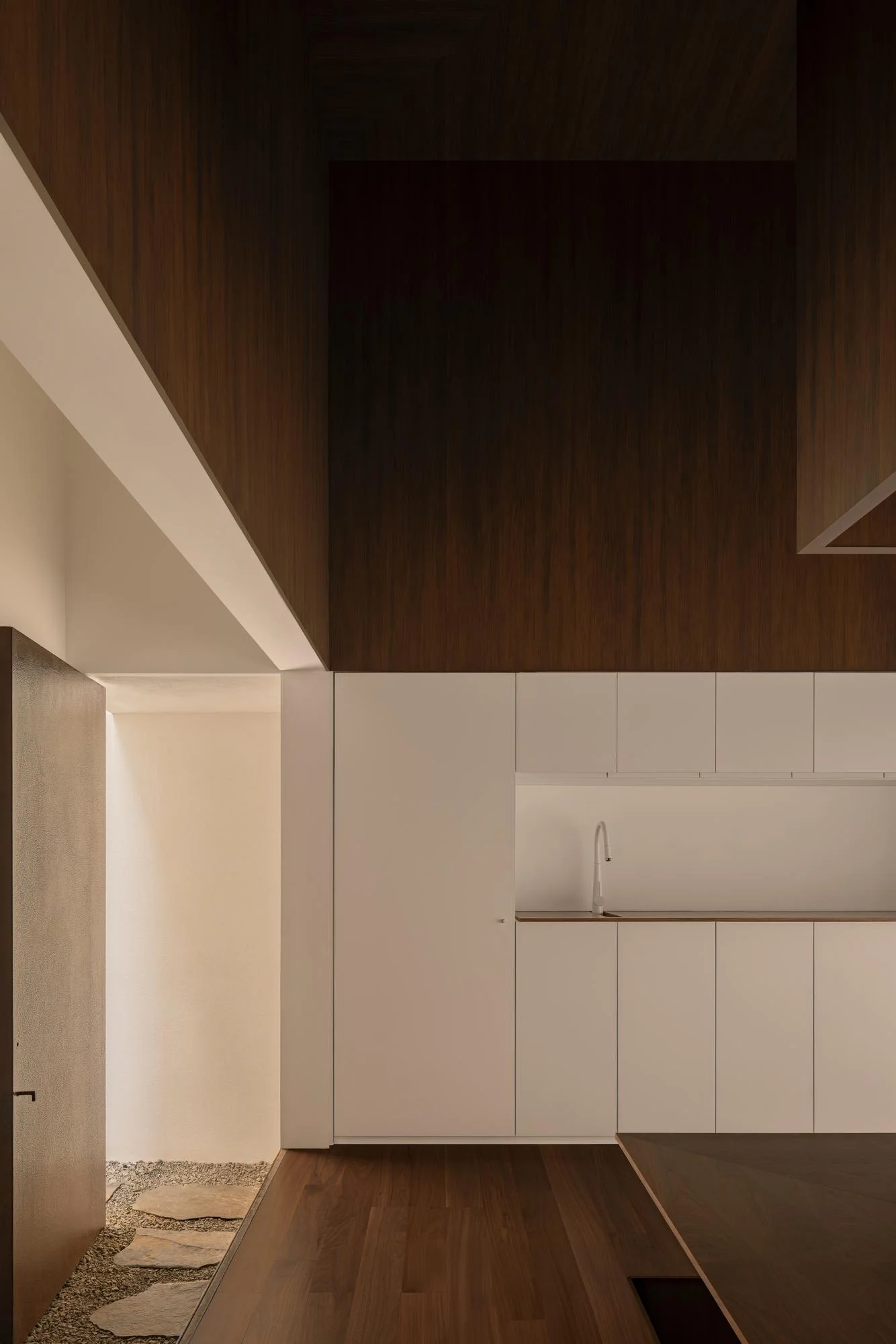
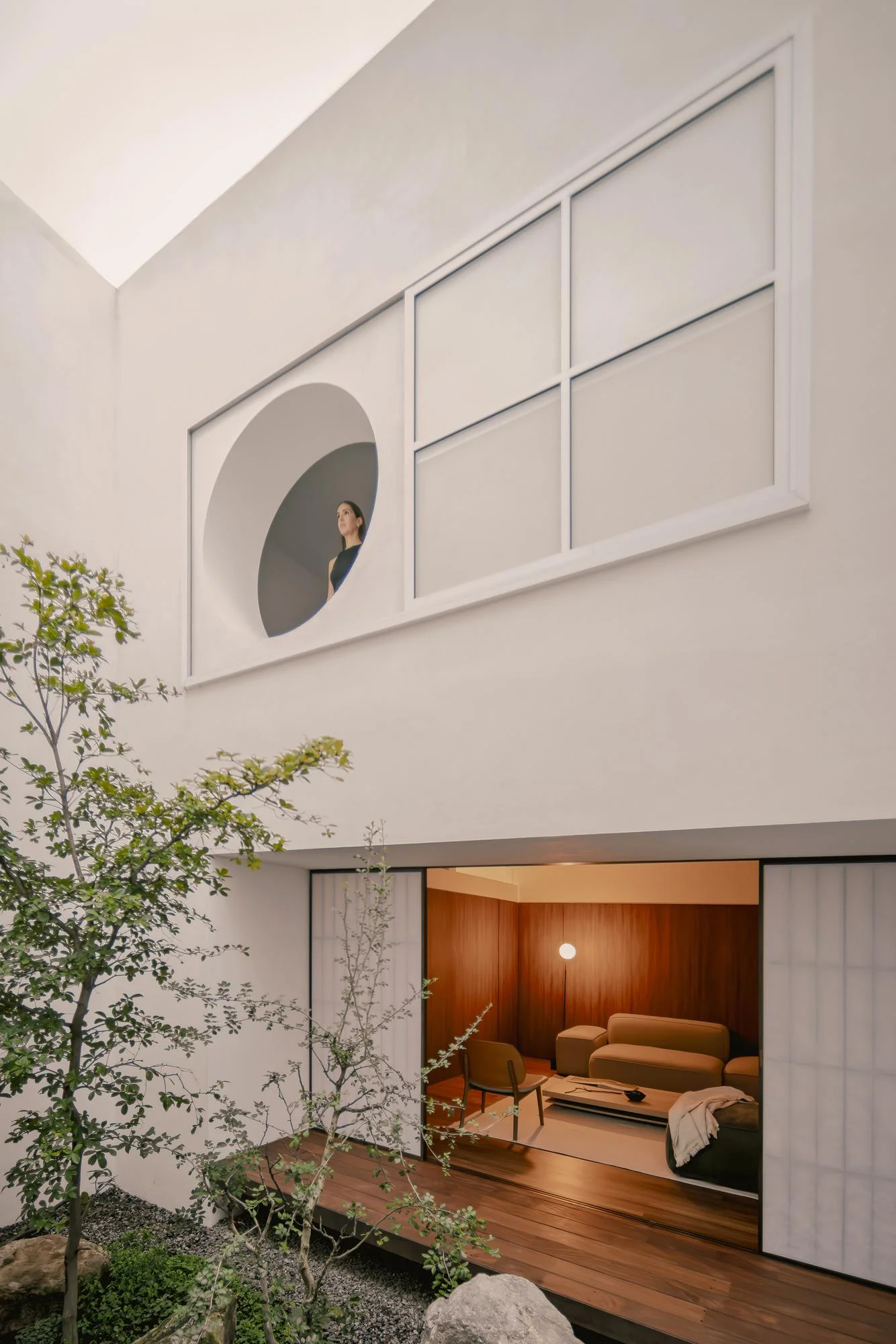
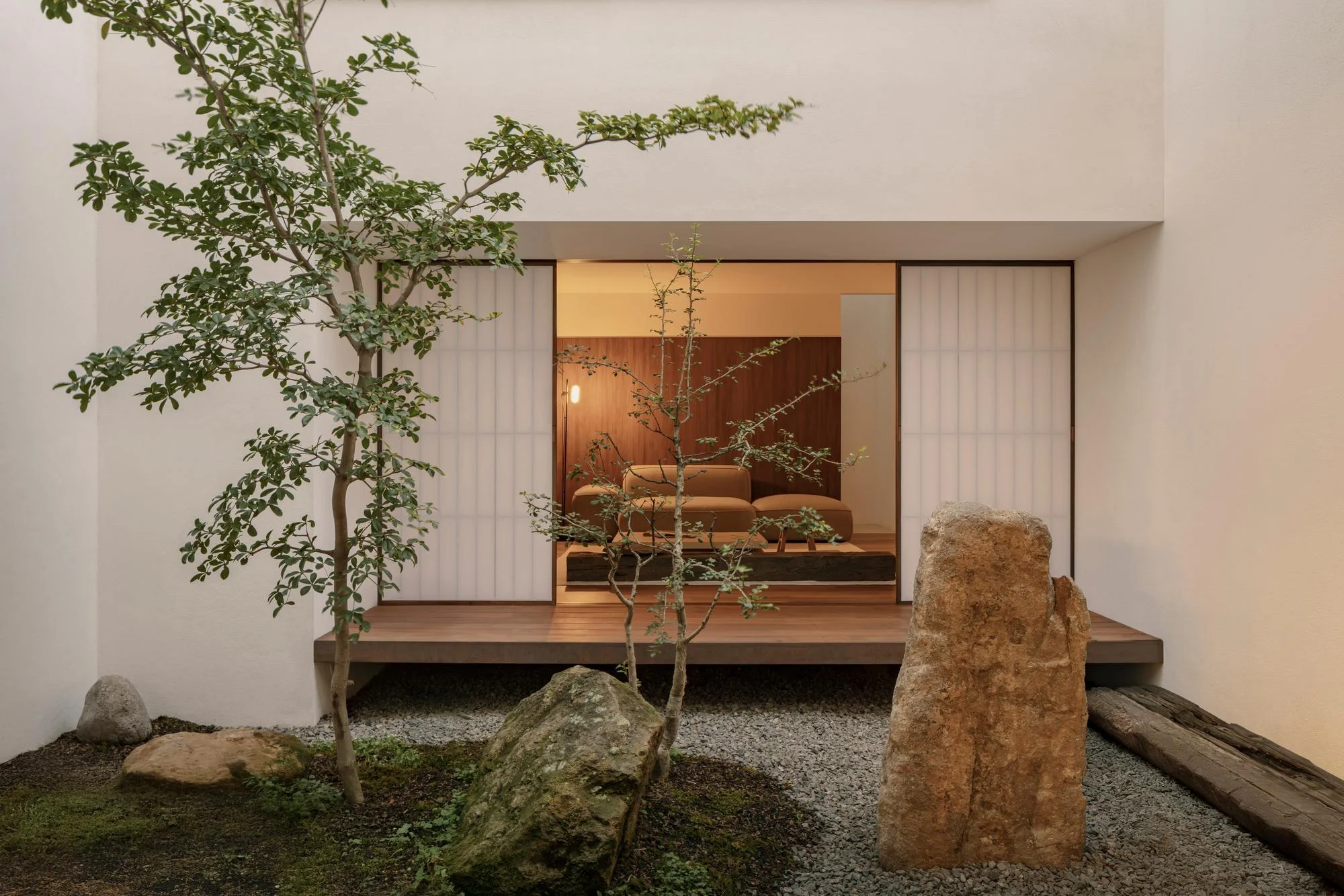
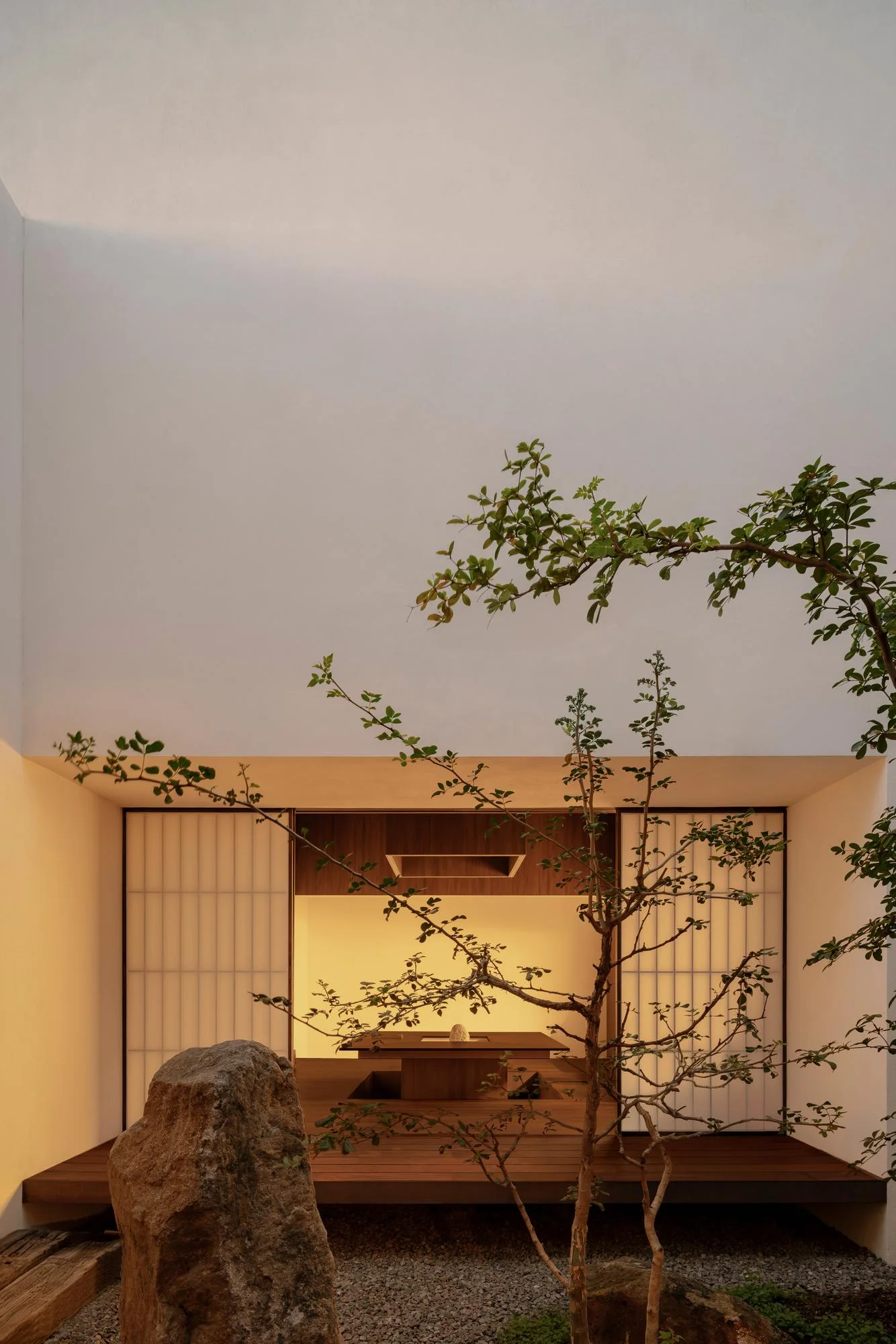
The centre of the house is not a room but a void. A grey gravel bed, laid in the manner of a Kyoto temple garden, holds a handful of weathered boulders and a single sapling that rises through the open-air shaft toward a linear skylight. Two walnut platforms float on the gravel, meant for pause rather than passage. Every other space orbits this stillness. Kitchen and dining sit on one side under a double-height volume whose ceiling gathers the smoke of a real fire, planned against the day the city may stop supplying what is needed. The living room sits on the other. Between them, no covered corridor. When it rains, you get wet, or you wait.
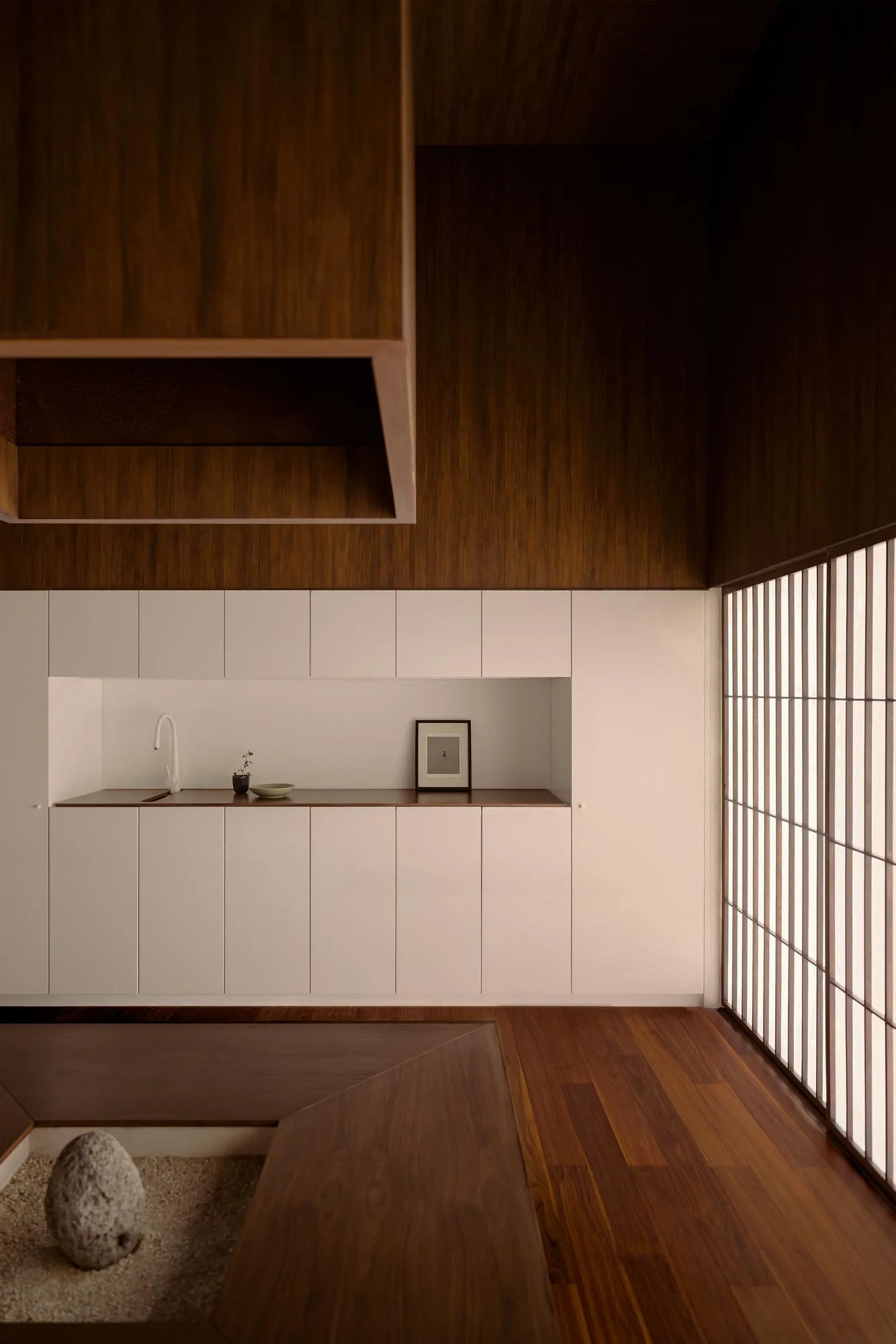
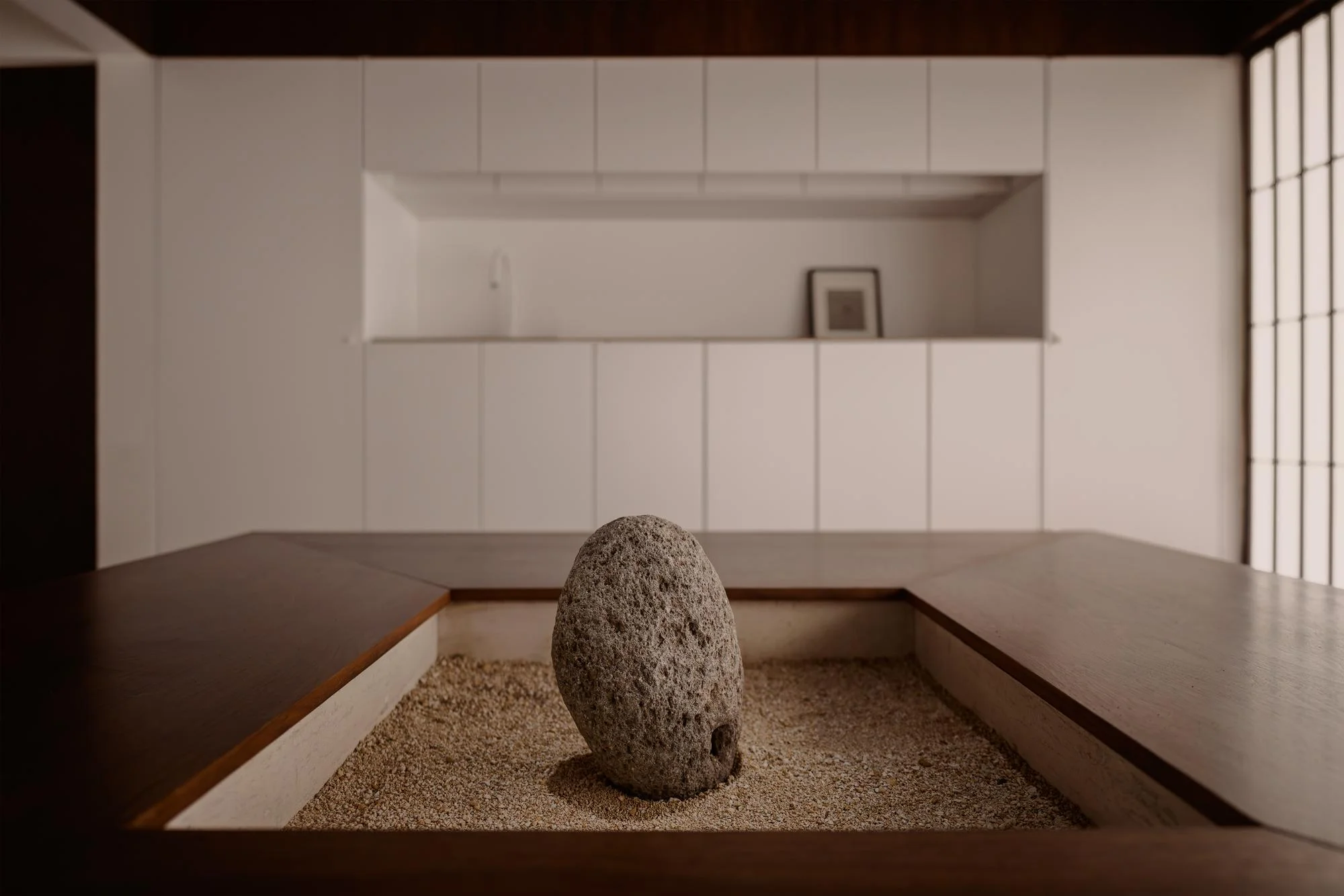
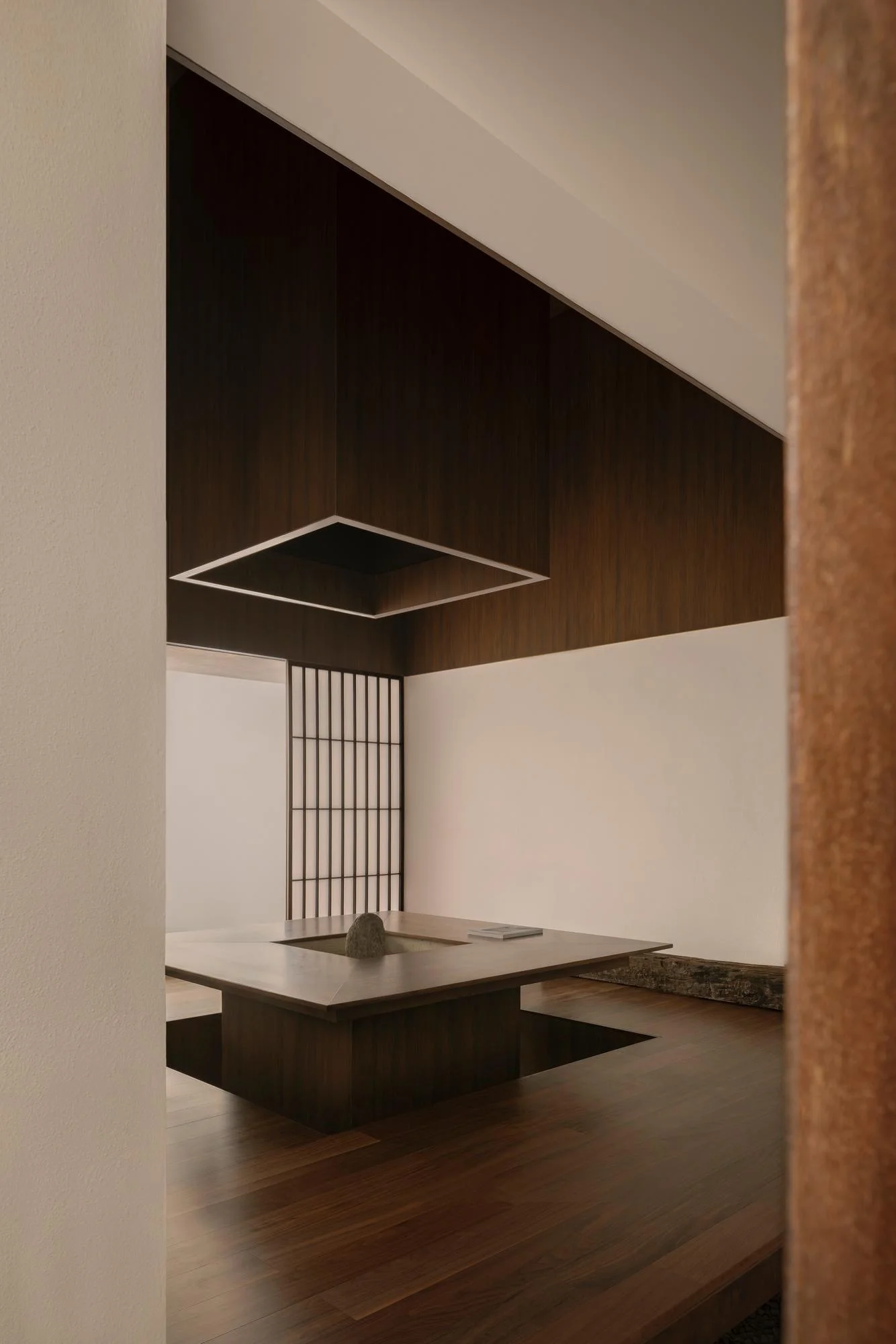
Inside, the palette is narrow and precise. White plaster above a dado of walnut boards, walnut flooring, white joinery with recessed hardware, a slim granite shelf running along one bedroom wall, a corten steel door oxidised to deep rust. Shoji screens in rice paper slide between courtyard and living room; light filters through them until, as Vallejo Bores puts it, it becomes time. A sunken walnut table sits over a recessed tray of fine sand holding a single ovoid stone, the whole room arranged around that one object the way the house is arranged around its garden.
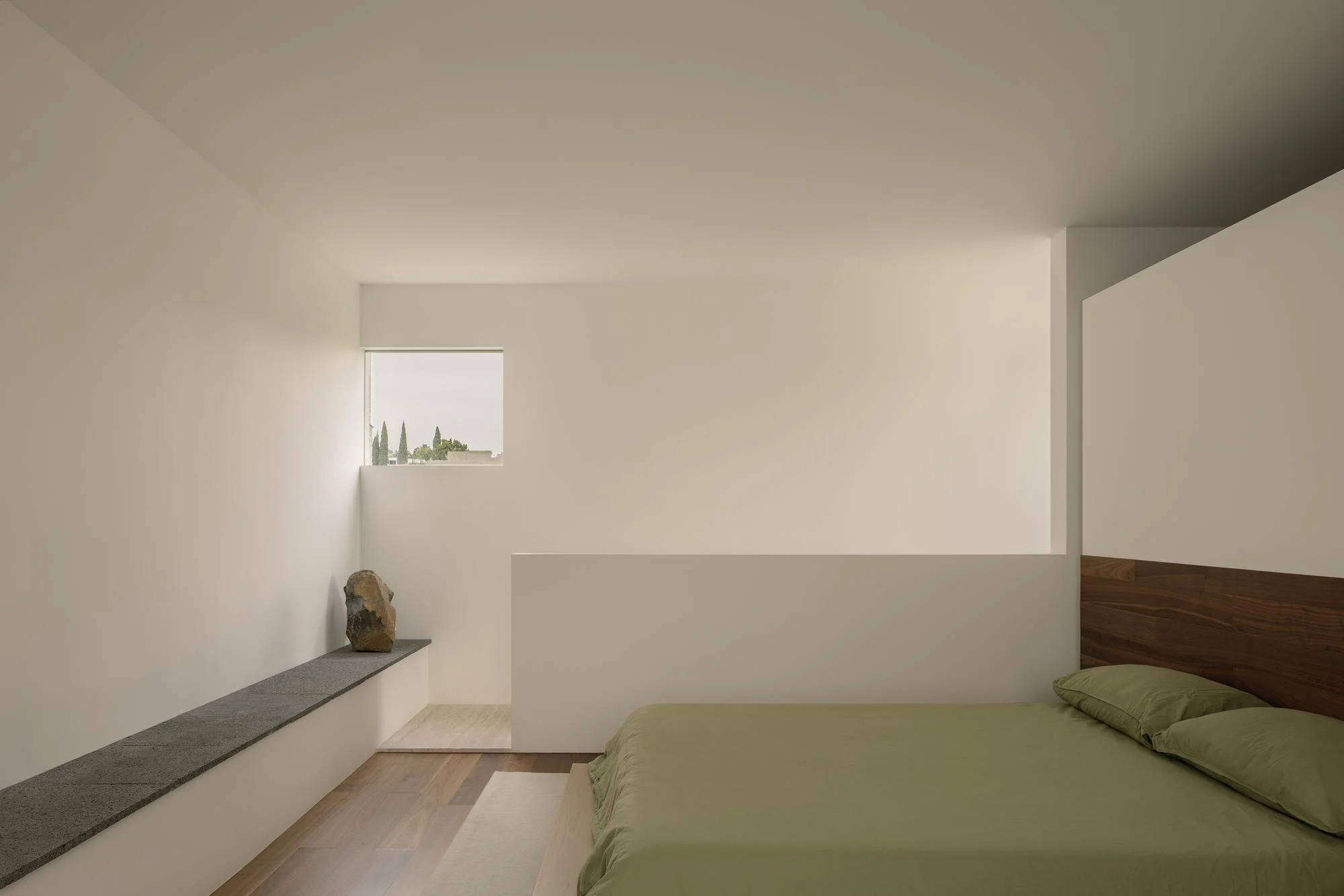
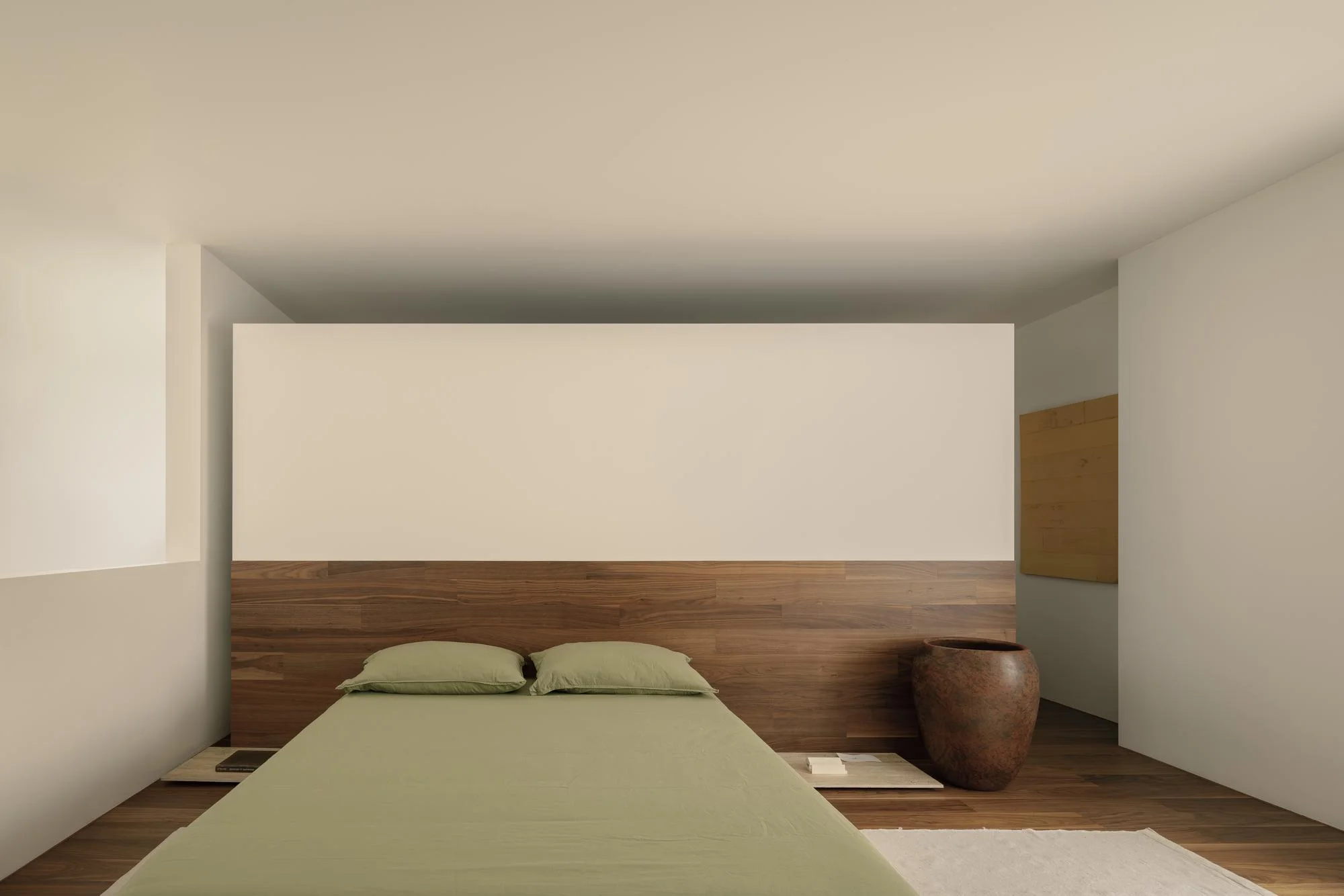
Upstairs, the bedroom is almost bare. A low walnut headboard, sage linen, a terracotta urn from Michoacán, a dark granite shelf holding one rough stone. The single circular window set into the double-height wall of the courtyard reads from inside as an eye onto the foliage of the central tree, from the courtyard below as a pale moon punched into white plaster. It is the one theatrical move in a house otherwise determined to stay quiet.
Kehai in Japanese names the faint presence of something not quite there, a sensation carried by air, shadow, silence. HW Studio has spent a decade making spare stone and concrete boxes in Michoacán; this one simply turns the work inward, onto its own author. The house does not try to impress. It was made to endure in silence, to carry the light weight of an honest life, and to reconcile whoever lives inside it with the weather, the neighbours and the tree at the centre of the plan.