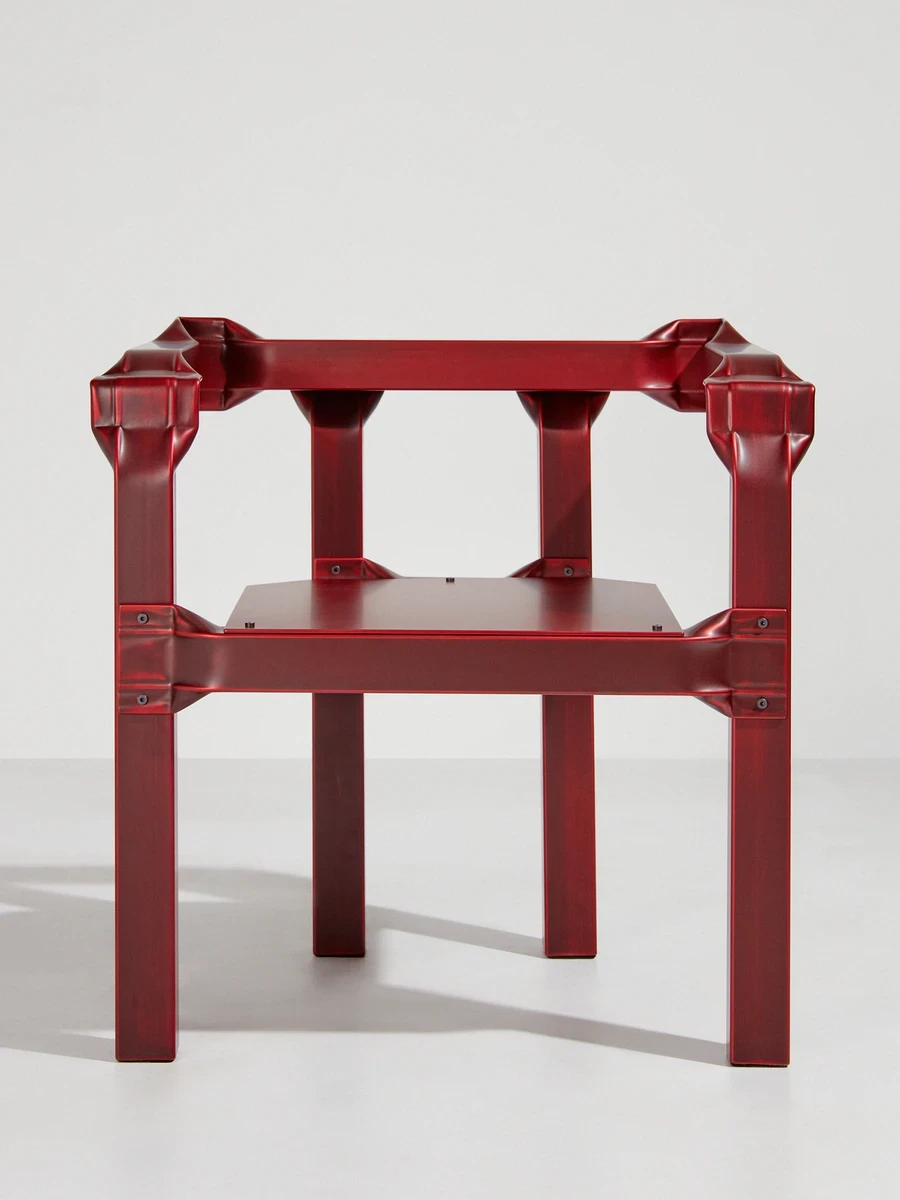
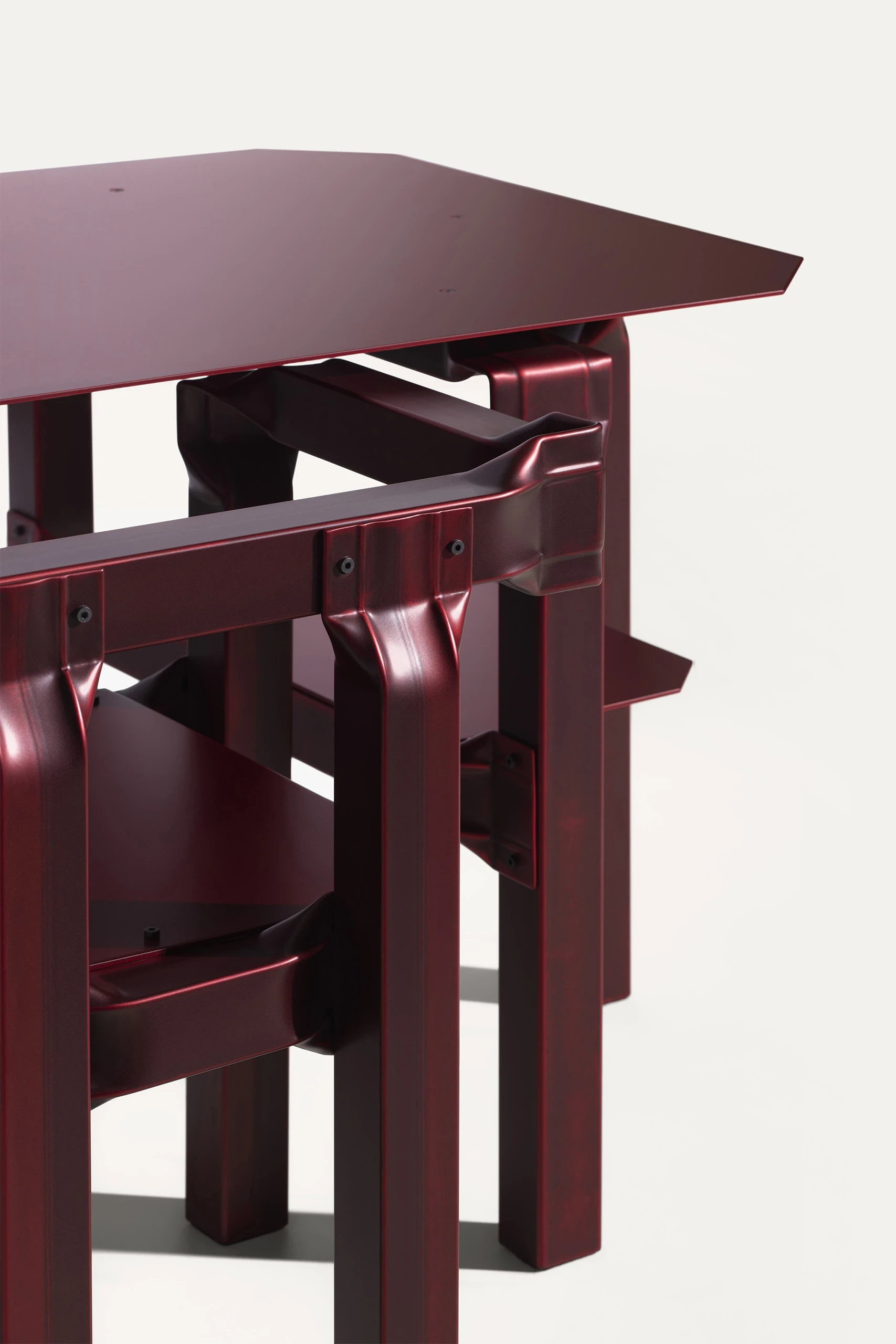
When steel supply failed during the pandemic, Tim Teven Studio worked with the one size of tube left on the shelf, pressing and bending it into the Tube Collection, six pieces built from a single deformation.
The series has a start date and a reason. In 2021, with steel supply broken, Teven could not order the sections a project needed and turned instead to the one size of tube already sitting in the studio. Pressing it, bending it, watching where it buckled, he found a way of working that outlasted the shortage that produced it. The constraint came first. The language followed.
What the press does to the tube is the whole design. Squeeze a square section and its walls pillow outward; force a bend and the corner crumples into a fold no drawing would specify. Teven builds these gestures into repeatable systems. The collection, the studio writes, emerged through experiments that use mechanical actions to deform metal, from which Teven obtains processing systems that exploit the material properties and the properties of the deformation itself. The seam where a leg meets a seat is not welded and hidden but pressed and left in plain sight, evidence of the force that made it.
Six pieces map the span. The 2021 Tube Stool, in zinc-plated steel, sets two square legs under a seat that swells like a pinched cushion. The 2023 Tube Table carries a thin silver plate on legs that splay and flatten where they reach the top. The 2024 Tube Bench presses three metres of matt black tube into a single beam. Then red arrives: the Tube Chair, made for the West Bund fair in Shanghai with Uppercut Gallery; the Tube Boozer, red and set on castors, built for a Brussels show called Training in Failure; and the 2026 Tube Desk, its frame knotted with folds beneath a level top.
Something shifts across those years, and it shows in the wording. The stool page calls the result a ready-made aesthetic and names the series Tubular, as if the tube were found and the outcome simply accepted. The later pieces drop that word for self-made. The move from found to authored is small on the page and large in intent. Teven is no longer reporting what the metal did to itself but claiming it, a vocabulary he can now write in.
The work stays honest about how much of it is not designed. It blurs the line, the studio writes, between designing every detail and spontaneous outcomes, an interplay of mechanical and hand-made gestures. Each fold is at once an accident and a decision, which is why the pieces read as neither industrial nor sculptural but somewhere the two have not yet been told apart. Five years in, the collection is still open.