Klon Klon by Siin Siin in Tokyo refuses to erase the evidence of its own making—each weld and cut preserved as the furniture's essential vocabulary.
Most manufacturing processes work toward a kind of amnesia. The goal is a product so smooth, so resolved, that you forget it was ever raw material, forget the heat and pressure and repetition that brought it into being. The Tokyo designer Siin Siin has built a practice around the opposite instinct: what if we let objects remember?
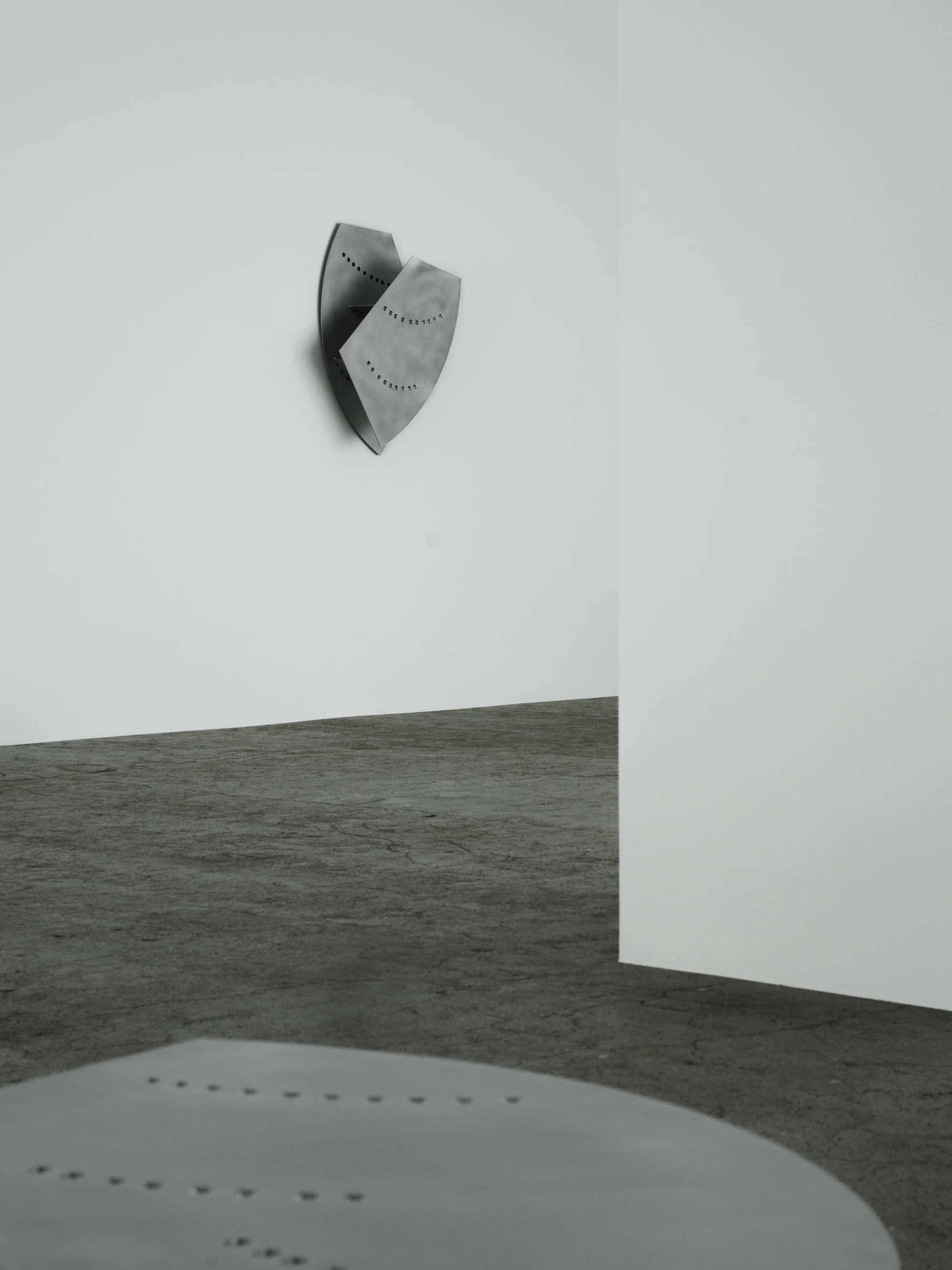
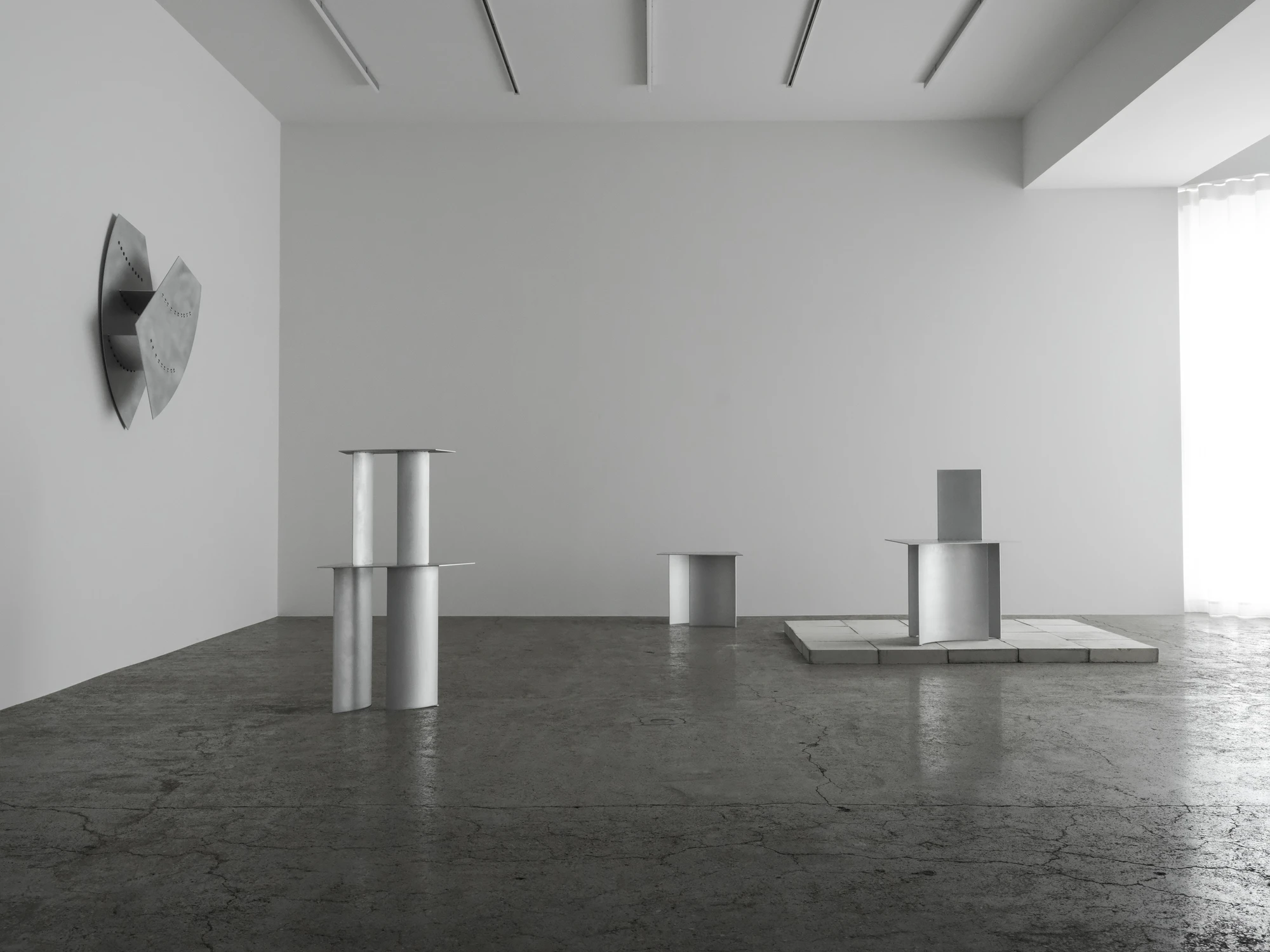
For Klon Klon, his aluminum furniture series developed with sheet metal fabricator Japan Benex, this means preserving every trace that industrial production typically polishes away. The laser-cut edges retain their sharp, almost crystalline finish. Circular perforations align between flat and curved panels, allowing the two surfaces to be welded together through these openings. The welds themselves—normally ground down, filled, painted over—remain visible, forming a constellation of connection points across each piece.
Photographed against the polished concrete floors of Tokyo's Licht Gallery, the furniture reads as simultaneously industrial and intimate. The aluminum catches light like water, shifting between matte and mirror depending on your angle. Stacked concrete blocks serve as pedestals for smaller pieces, creating dialogues between manufactured precision and raw materiality.
There is something almost archaeological about Siin Siin's approach. Each piece becomes a record of its own production—a time capsule of the specific sequence of cuts, bends, and joins that brought it from flat sheet to functional object. In a culture increasingly anxious about authenticity and provenance, Klon Klon offers furniture that carries its credentials on its surface.
The collection also represents a quiet argument for slowness in perception. These are objects that reward sustained attention, revealing new details the longer you look: the subtle texture where laser met metal, the slight irregularity of each hand-finished weld, the play of shadow through perforated surfaces. In refusing to erase its origins, Klon Klon asks us to see manufacturing not as something to overcome, but as a language worth learning to read.