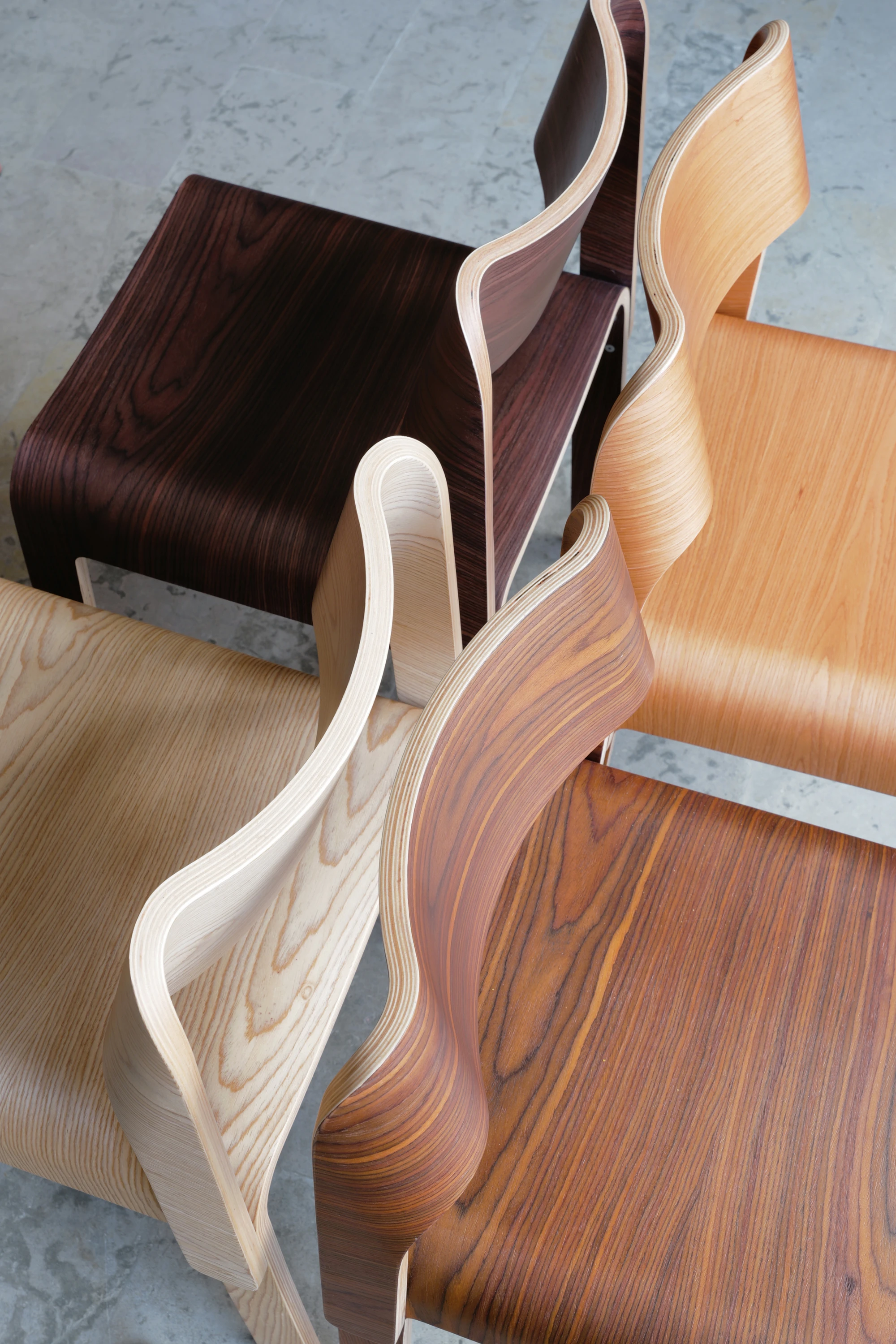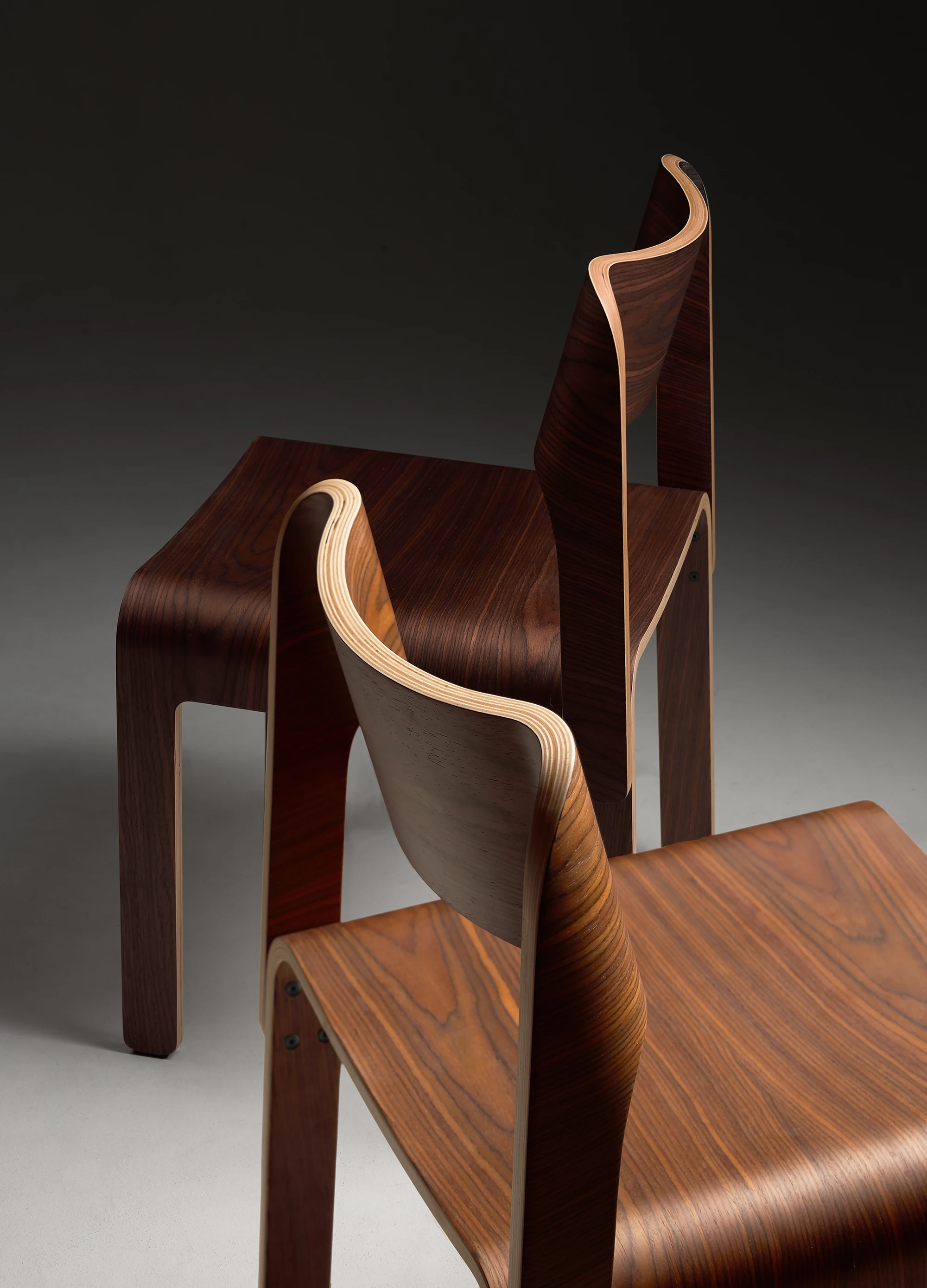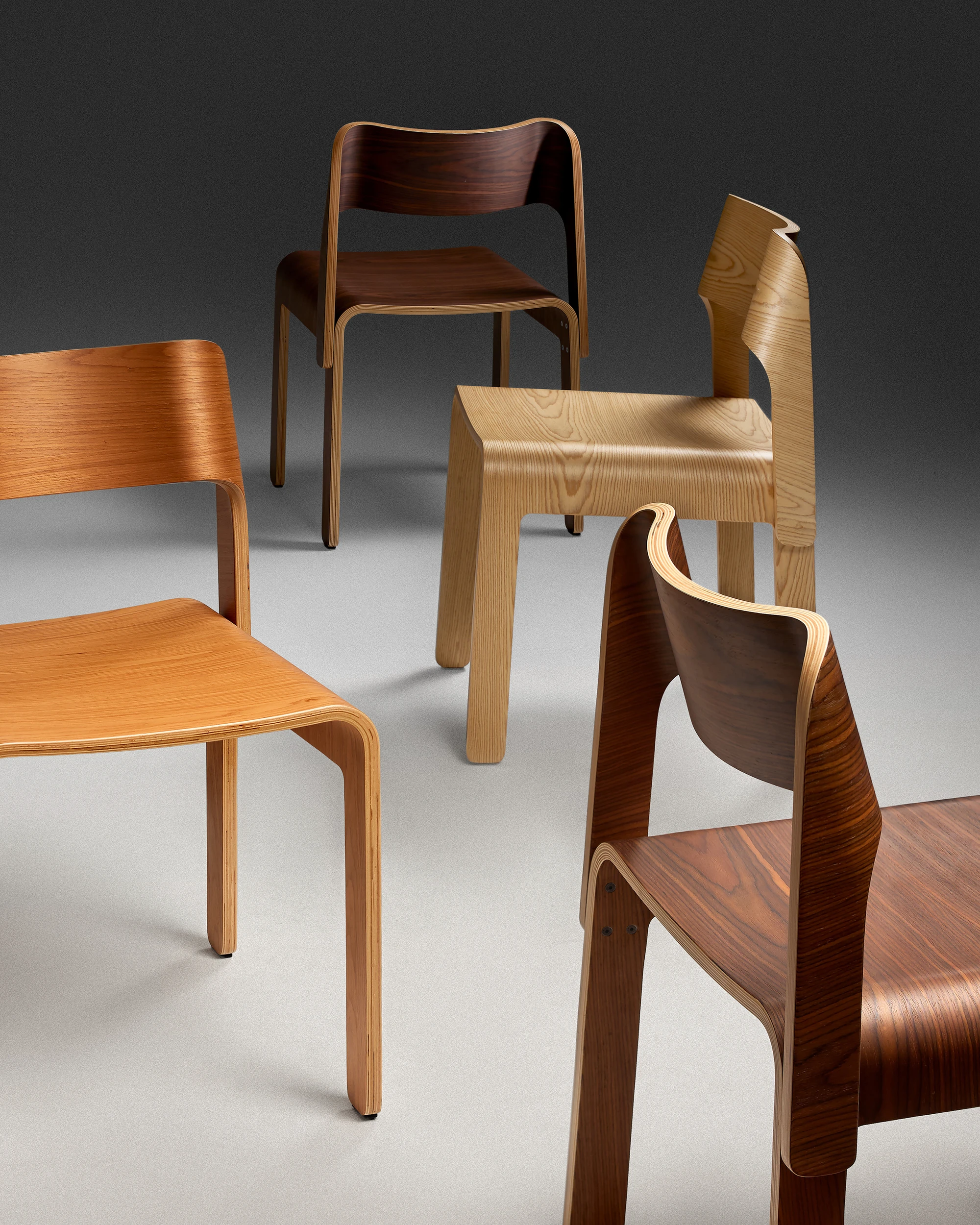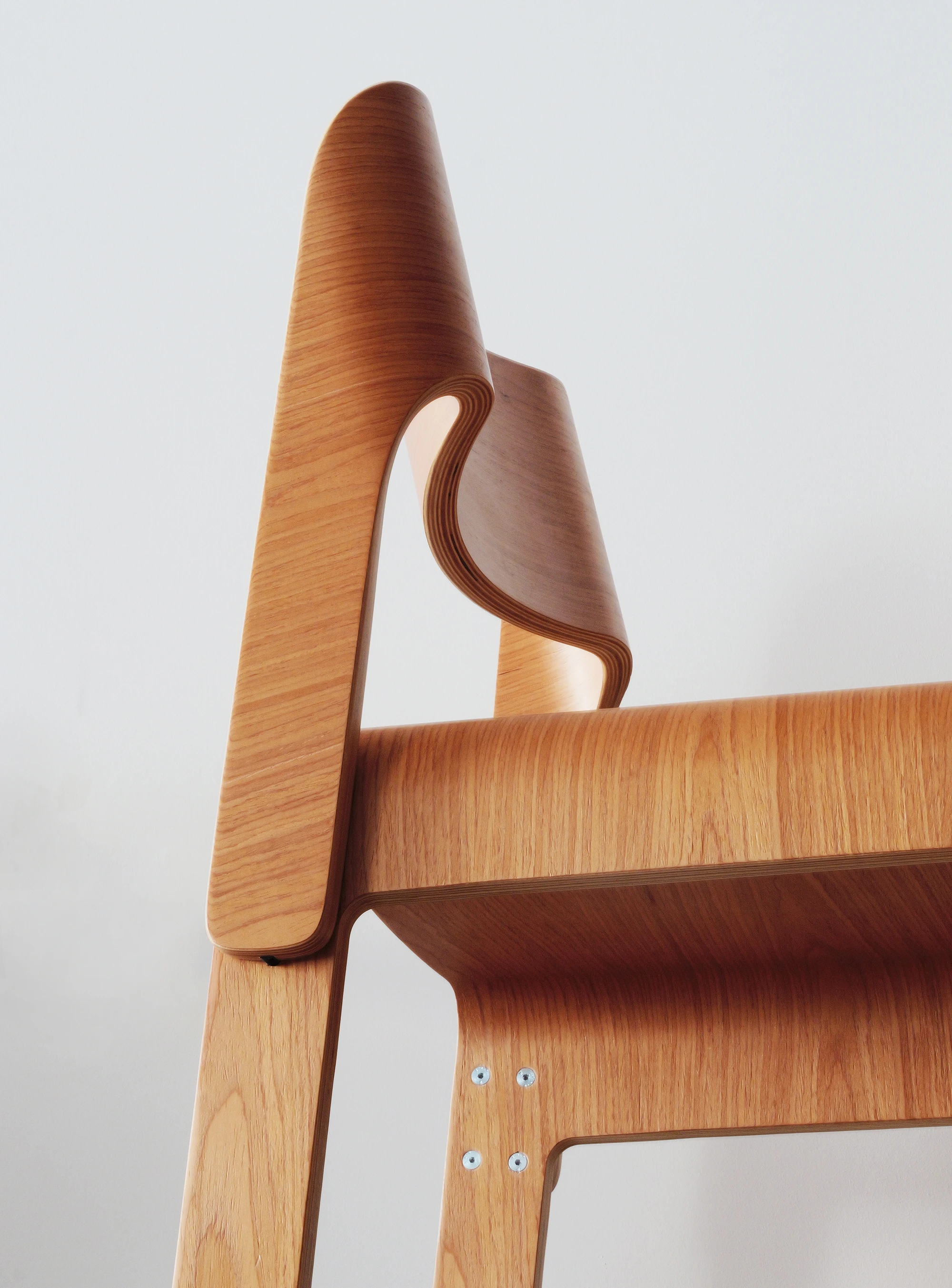
Arseny Brodach designs the Wave chair — a dining chair in bent beech veneered plywood whose name was given by the material: the ergonomics and the bending axis that shaped it arriving at the same wave-like line.
The premise behind Delo Design's approach to the Wave chair is stated simply: "no technology — no design." It is a principle that refuses to treat material and process as neutral variables and insists instead that the available technology is not a constraint to work around but the actual generative condition of the design. Before any formal decisions were made, the team explored the specifics of bent laminated plywood: pressing methods, permissible bending radii, CNC machining capabilities, the range of fasteners, the options for finishing. What the material could do determined what the chair could be.
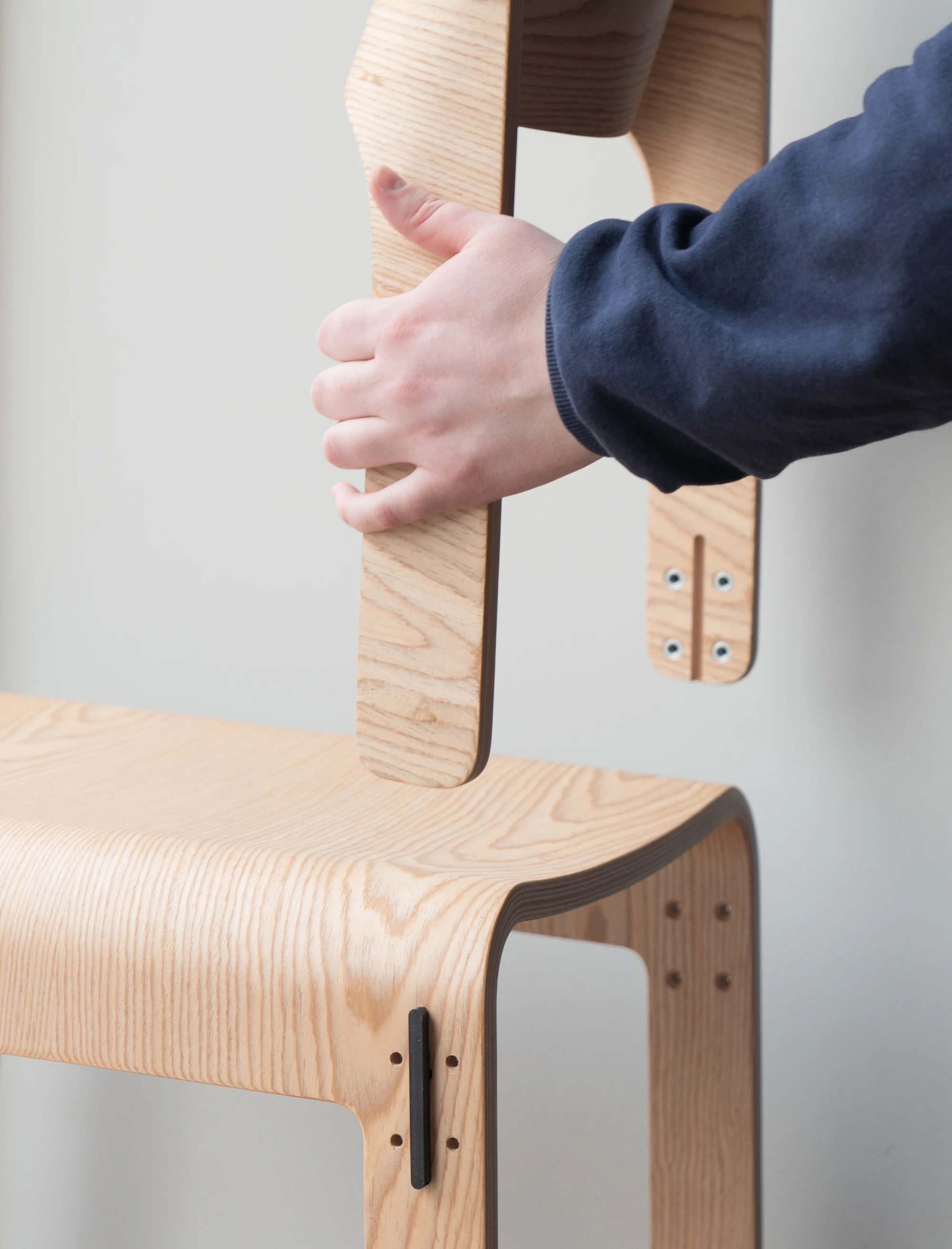
What the material could do, in this case, was bend along a single axis. This excluded the compound curves of classic bent-plywood chairs — the forms that Aalto and Eames made canonical — and directed the design toward a different spatial logic: one of clean, legible curvature, profile-driven, with the bending as event rather than as structural camouflage. The chair is made of two elements: a continuous seat-and-back form that curves in a single plane, and a frame structure that connects to it with bolts and a hex key, enabling ready-to-assemble flat-pack delivery in a compact box.
The beech veneer is chosen for its grain — warm, consistent, and receptive to the bending process in a way that harder woods are not. The surface reads as both structural and tactile, the layering of the plywood visible at the edges as a record of the construction method. The proportions were a primary preoccupation: "it was important to create a chair that is expressive, comfortable, technically feasible, and at the same time not bulky." The search for those proportions is visible in the result — a chair that is light in appearance and firm in structure, the back rising in a single gesture from seat to shoulder height.
The name Wave arrived during the design process as a description of what the profile already was — not imposed from outside but read from the form itself. In furniture design, as in architecture, the moment when a name becomes inevitable is usually the moment when the work is done.