.webp)
From a workshop in Pantin, outside Paris, Perron et frères release Suspens, the studio's first self-initiated lounge chair, built from two solid ash blocks and a single sling of wool melange.
Suspens is the first chair Perron et frères have made on their own terms. The Pantin studio, run by Mayeul Reignault, produces bespoke and commissioned furniture from a workshop where the makers are also the designers. The lounge chair is what surfaces when that practice turns inward and tries to define a domestic object from scratch, with no client brief to push against.
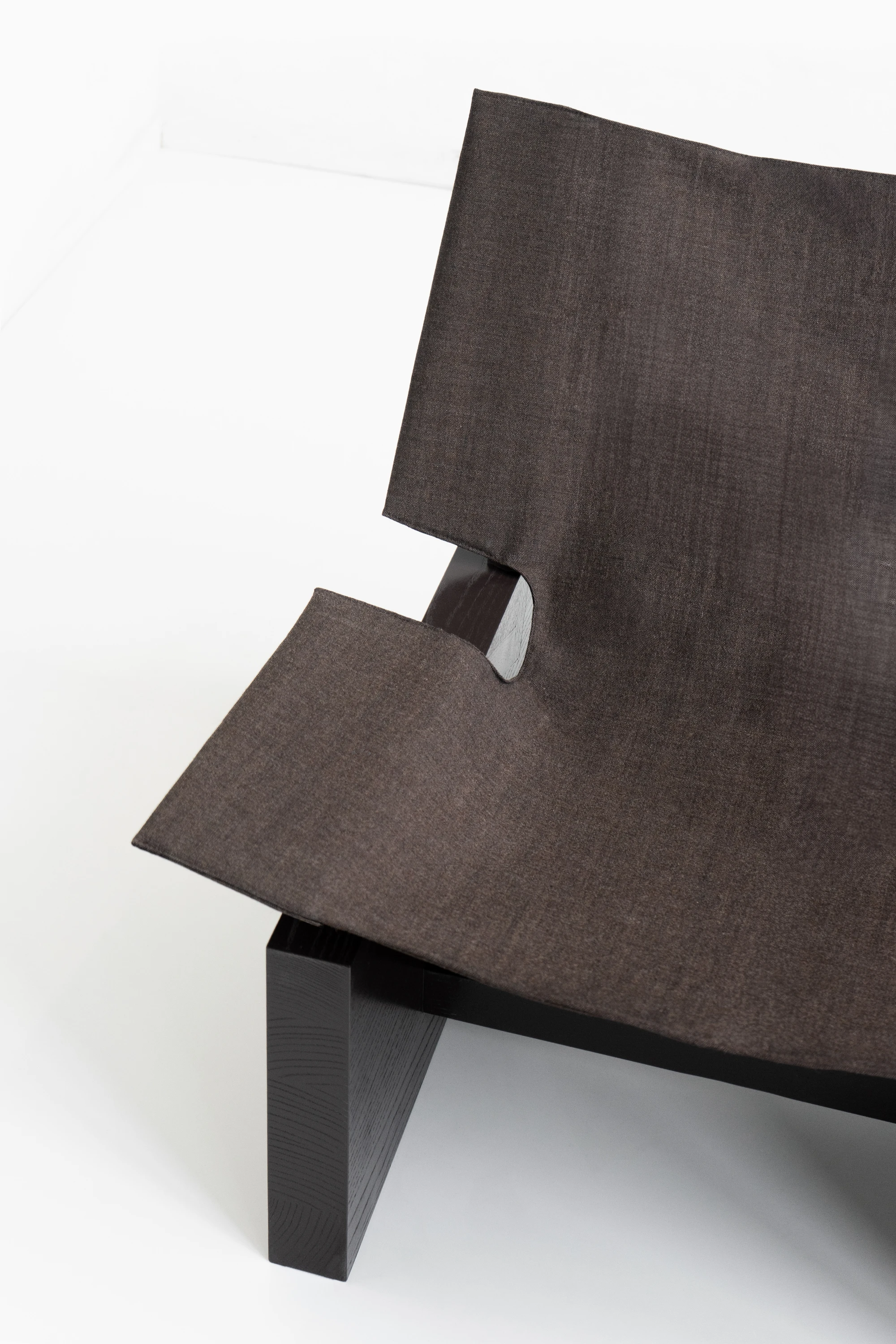
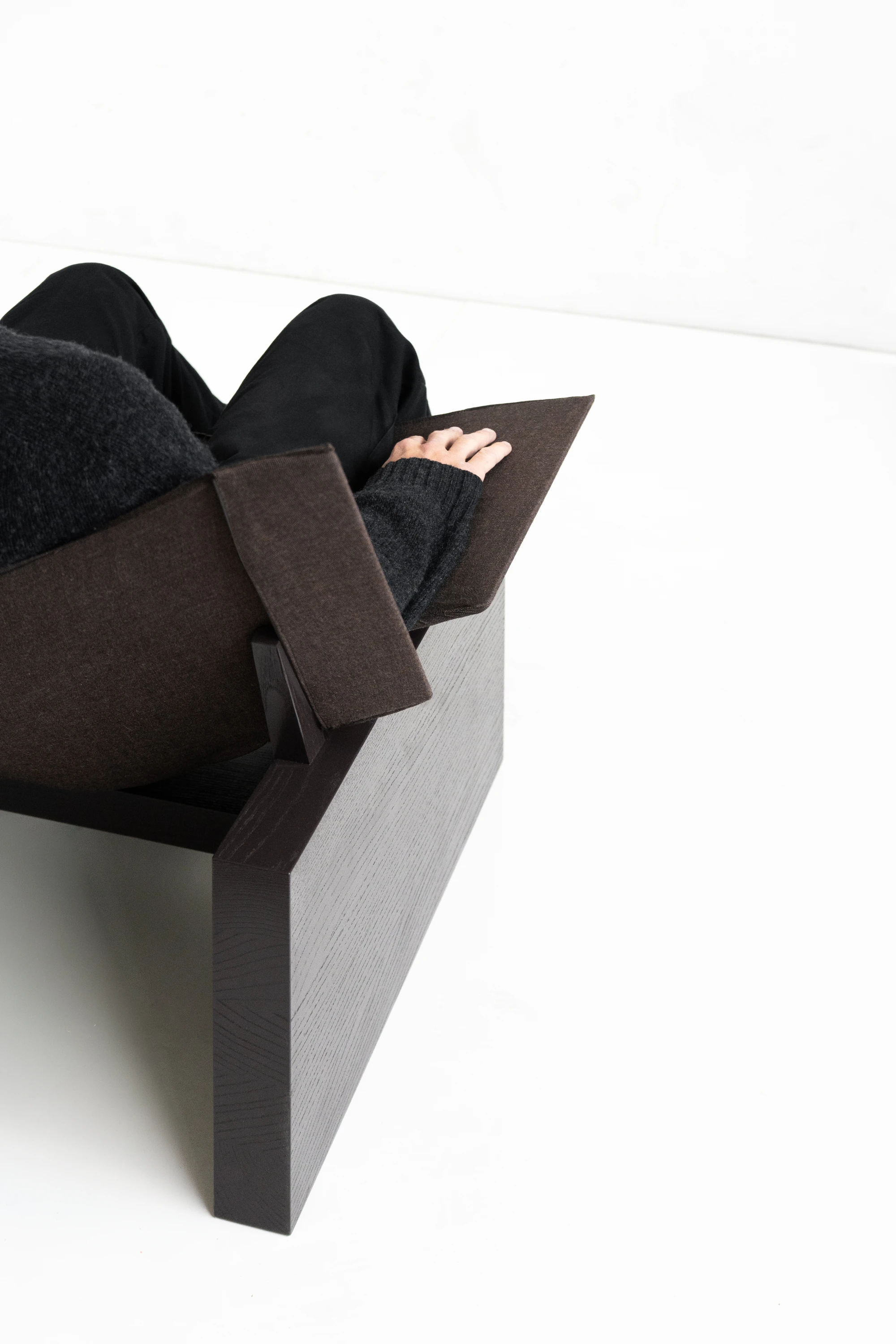
The structure reads as two things bolted together. Two thick blocks of lacquered ash, dark almost to black, sit on the floor like masonry. A single sheet of wool and polyester melange is stretched between them, draping over the front edge of the seat and rising up behind the sitter into a backrest. There is no foam, no cushion, no upholstery in the traditional sense. The fabric is the seat.
The studio writes that the goal was "a chair where comfort does not mean a bulky, foam-filled shape," with the properties of the materials "playing their part in balancing structure and softness." The wool sling does the soft work; the ash does the structural work. Slim arms cantilever forward from the back-rests and steady the fabric where it would otherwise sag. From the side, the chair resolves into a clean geometric drawing of horizontals, verticals, and one suspended curve.
That apparent simplicity hides a complicated piece of joinery. The ash sections meet in mortised tenons, lap joints, and angled bridges that lock the two side blocks together at floor level. The grain is visible through the dark lacquer, which keeps the wood readable as wood rather than flattening it into a painted surface. Dimensions are generous, 800mm wide by 680mm deep by 650mm high, low enough to lean back into and read.
Suspens is available on request from the studio rather than through a manufacturer, which keeps the chair close to the bench it came from. For a practice built on one-off commissions, releasing a serial object is a small reorientation. The result argues for a domestic object made on the same terms as bespoke work: a single textile doing the soft work, the joinery doing the rest.