Thisispaper Community
Join today.
Enter your email address to receive the latest news on emerging art, design, lifestyle and tech from Thisispaper, delivered straight to your inbox.
Oops! Something went wrong while submitting the form.
Instant access to new channels
The top stories curated daily
Weekly roundups of what's important
Original features and deep dives
Exclusive community features
Hitoshi Arato
Jun 25, 2026

In the wooded hills of New York's Hudson Valley, Neil Logan rebuilds a farmstead clearing in Accord from the foundations up, preserving only the original footprints of two structures while replacing everything else.

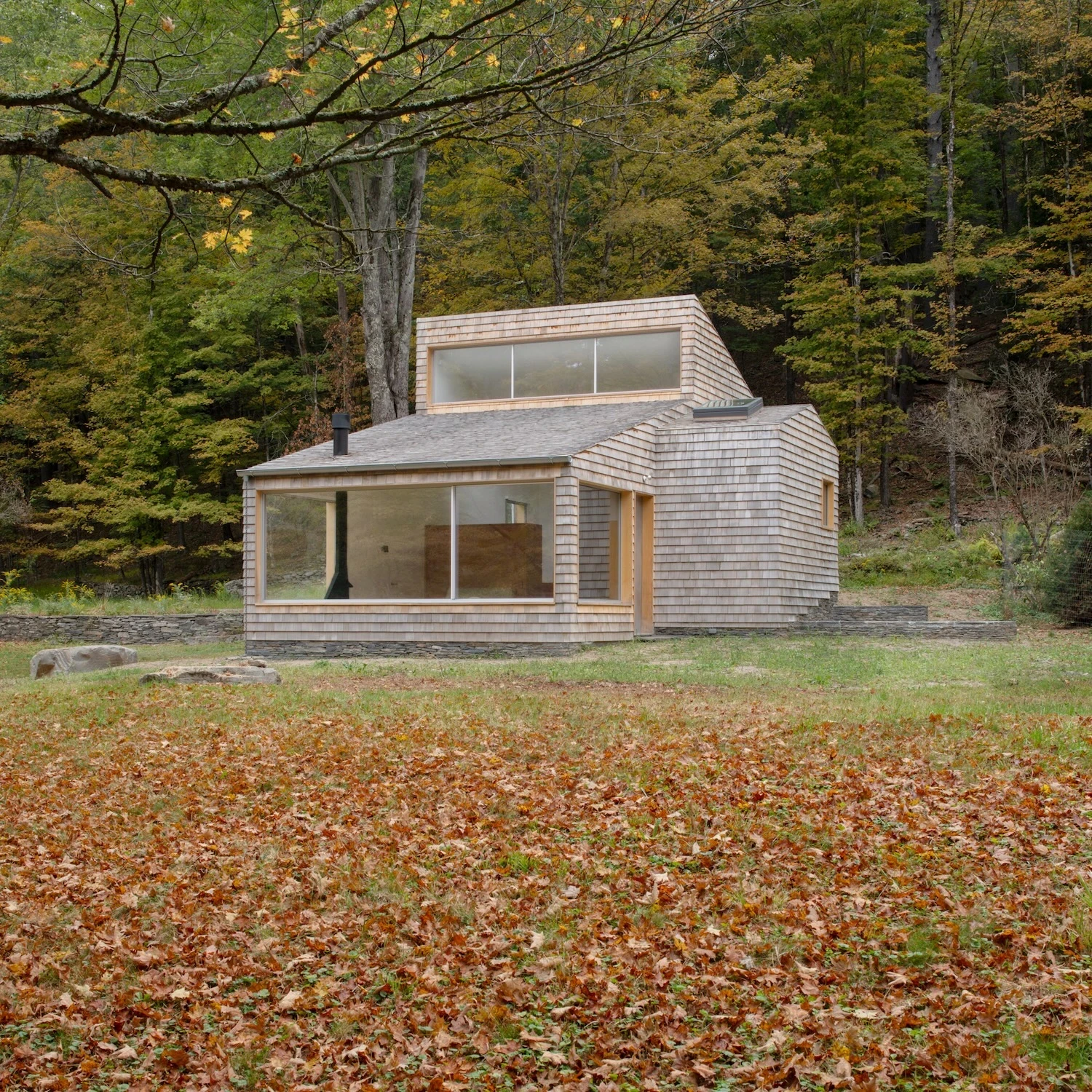
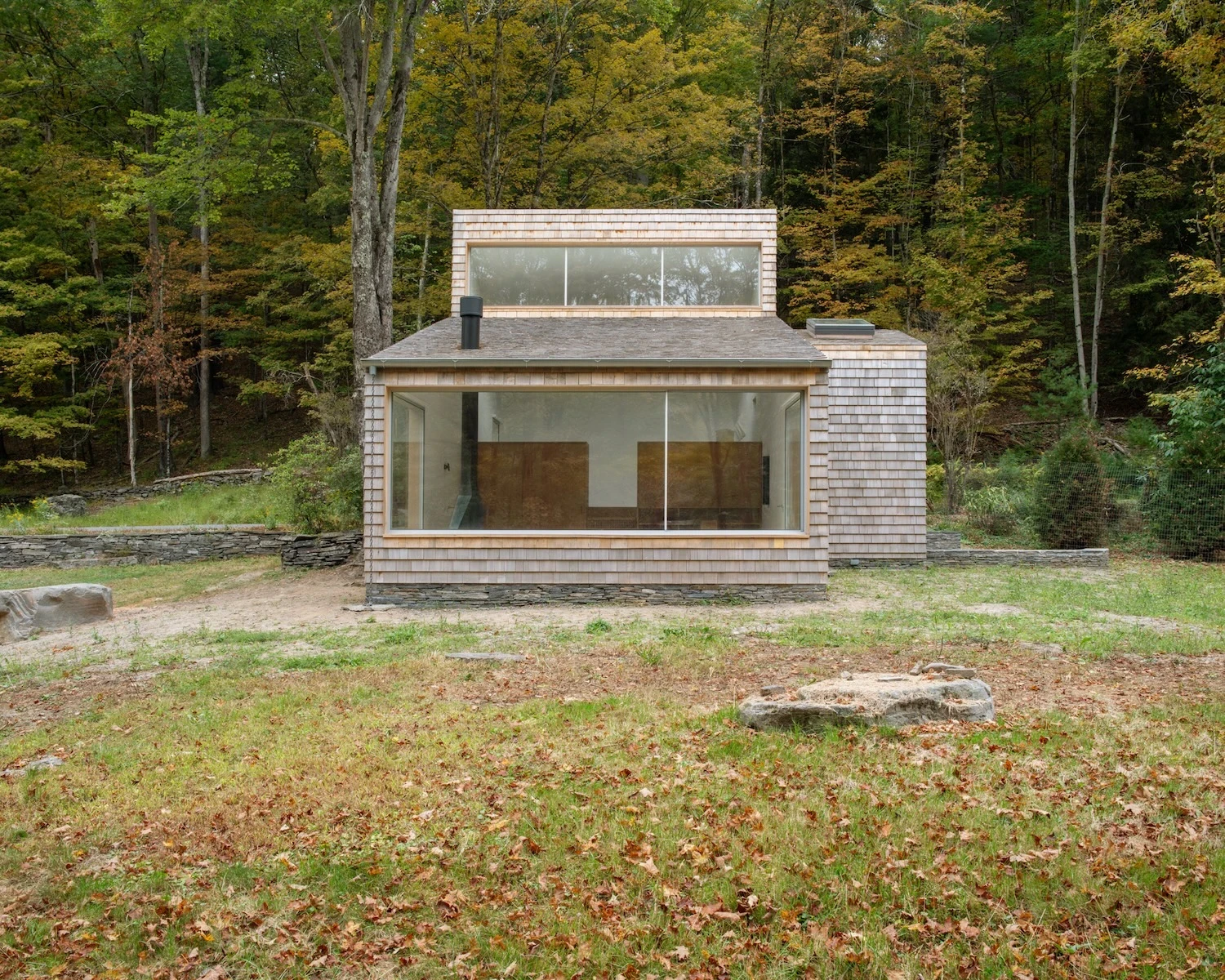
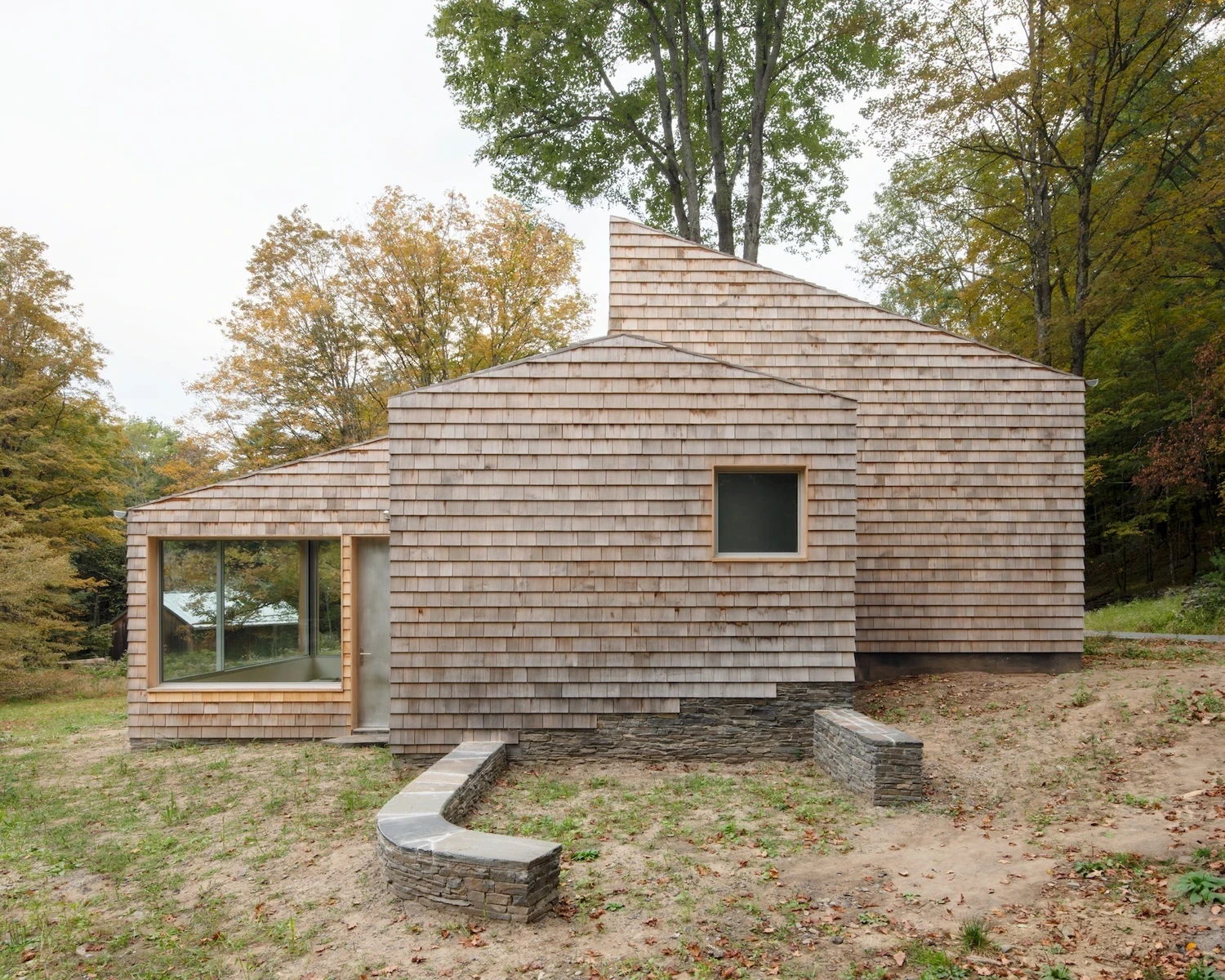
The question Neil Logan sets for this property in Accord, New York is how much of a building you can remove before it stops being itself. His answer: nearly everything. Two structures on a wooded site roughly 100 miles northwest of New York City are rebuilt from their foundations up, retaining only their original footprints. The former house and a storage building stay where they have always stood, but their prior lives survive only as a spatial relationship to the land.

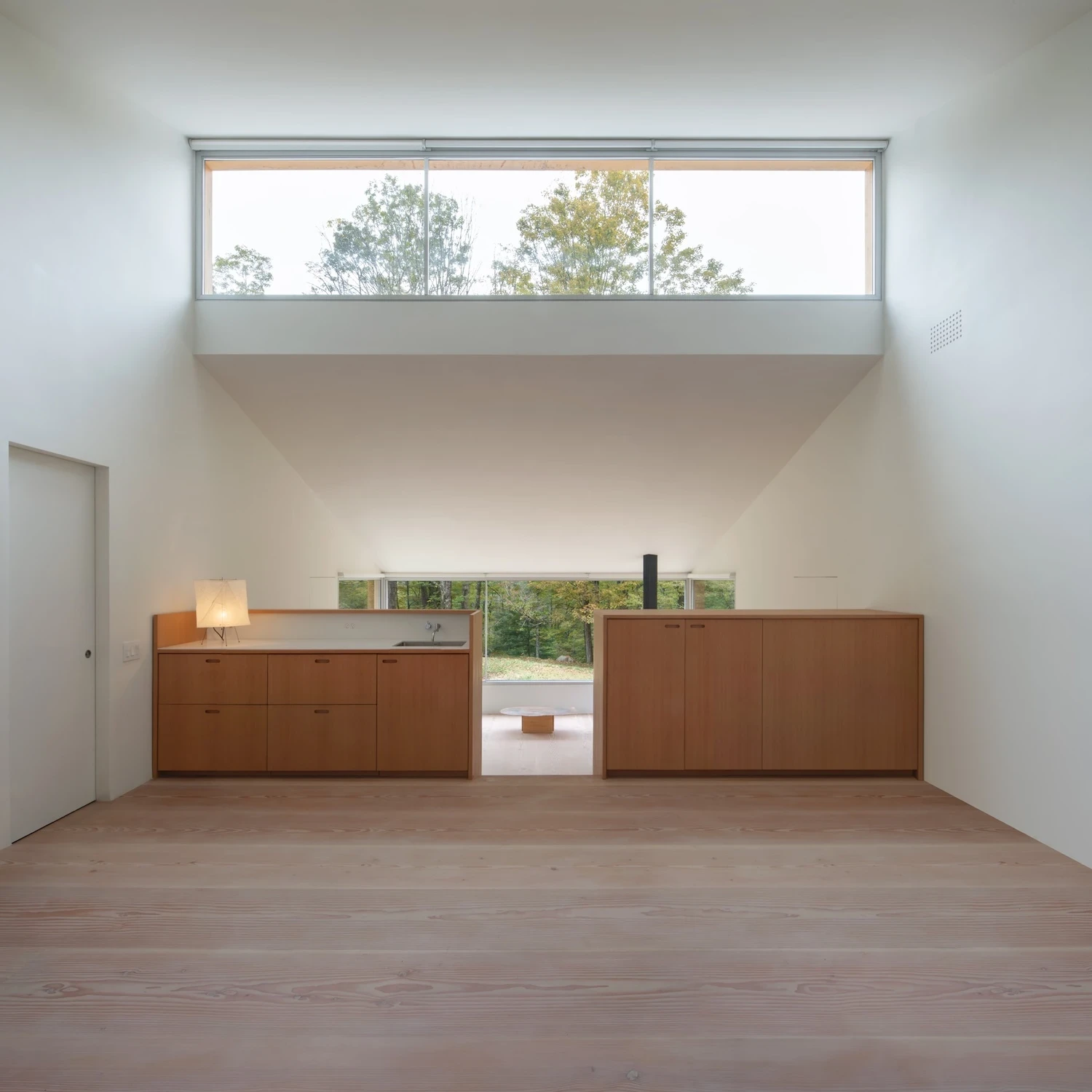
The strategy matters more than the materials it produces. Rather than imposing a new geometry on the clearing, Logan accepts the constraints of the existing layout, concentrating design effort on how the volumes perform rather than where they sit. The former house, positioned close to the road, is gutted entirely: interior partitions stripped, the second floor removed, the plan opened into one tall, continuous space. What was once a subdivided dwelling becomes a working studio organized around the section, not the plan.

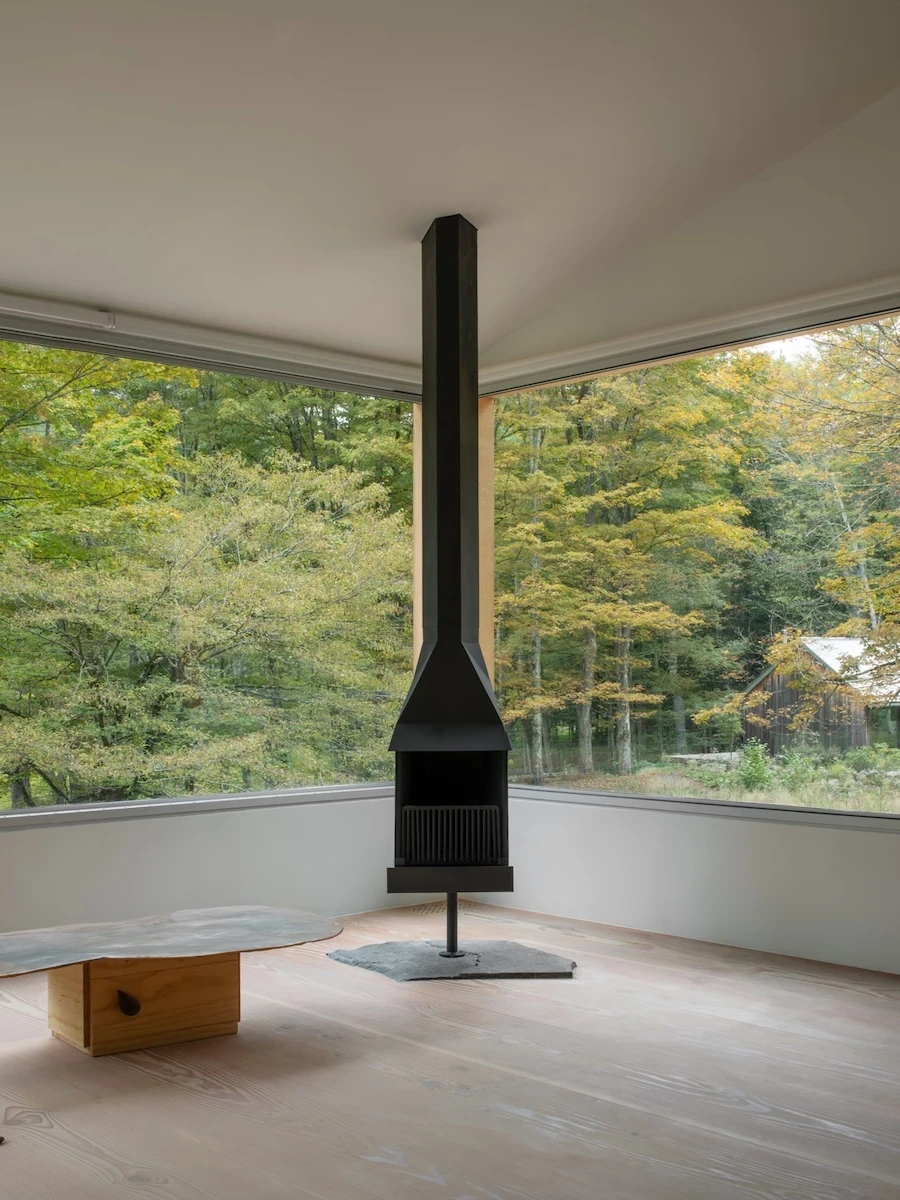
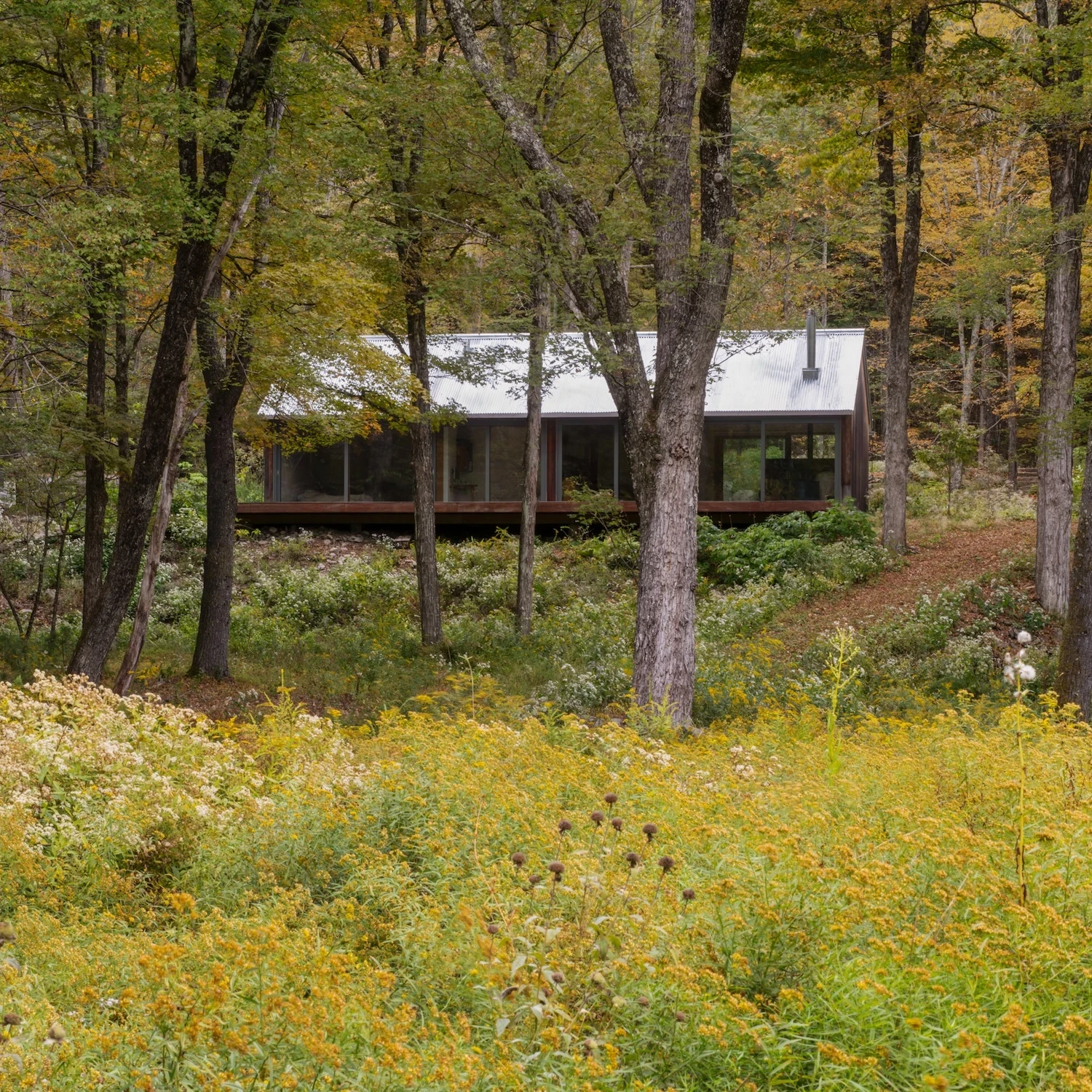
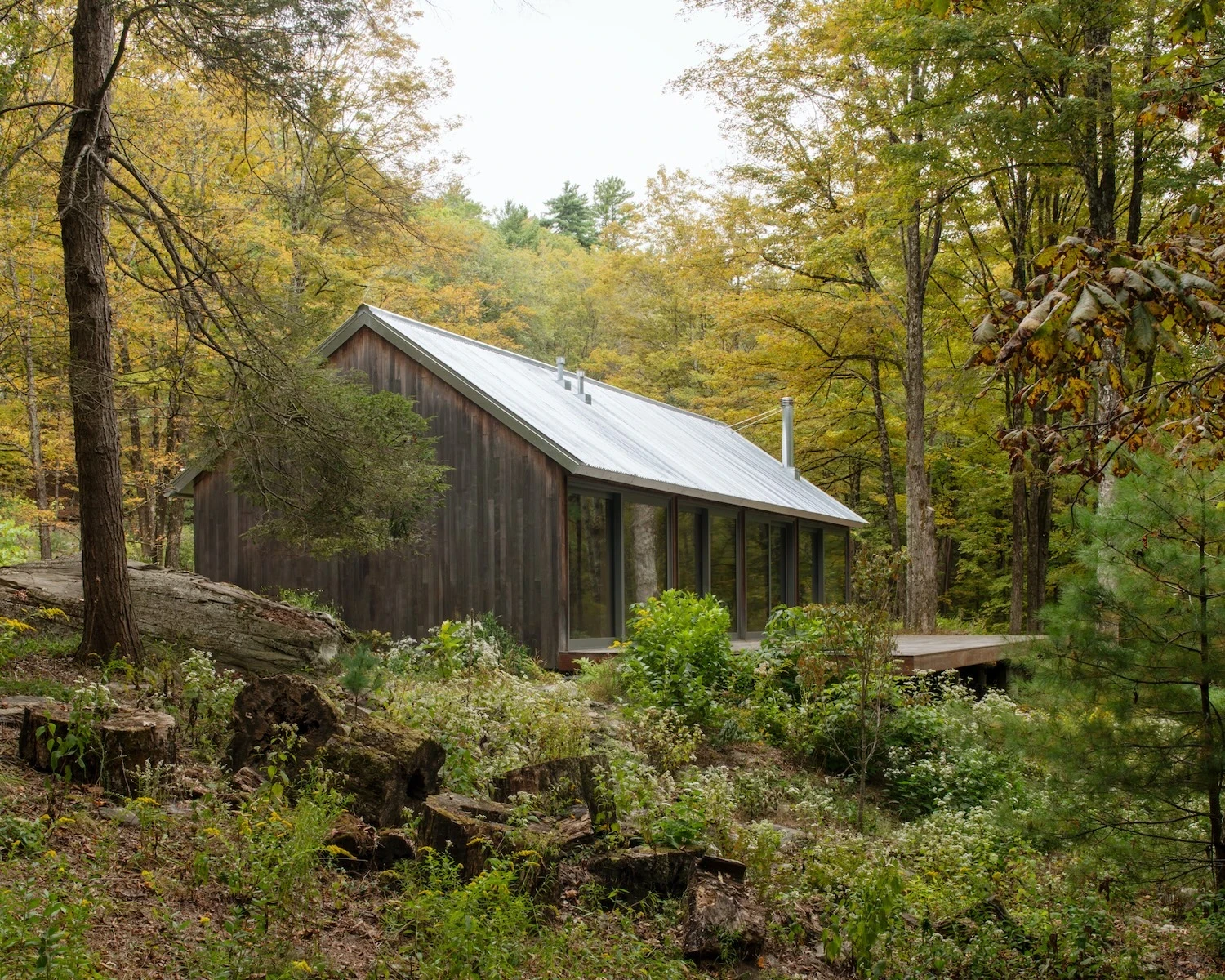
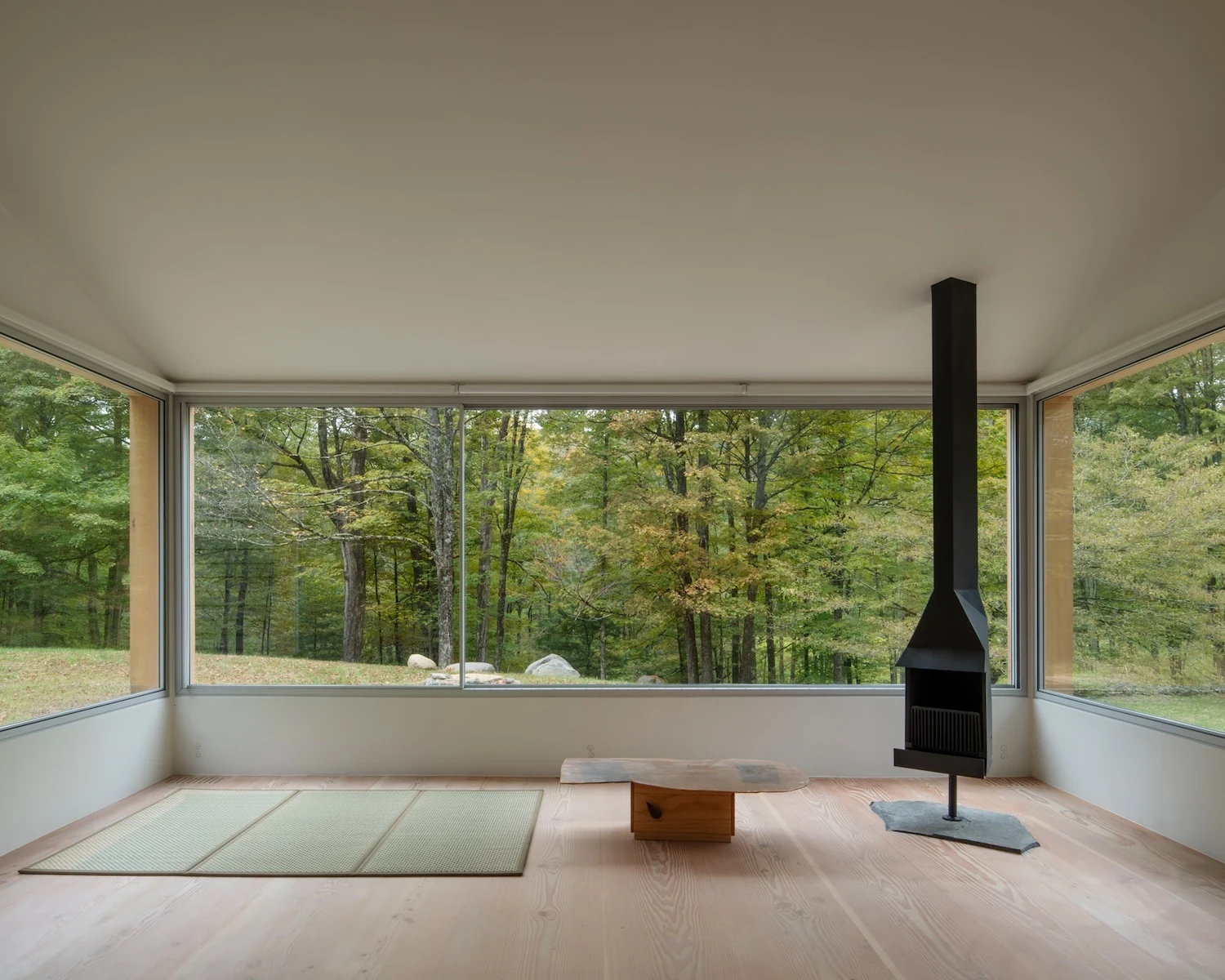
Sectional thinking drives the treatment of the roof. Existing dormers give way to a continuous clerestory band, trading picturesque detail for an even overhead wash of diffused light, a move that recalls the daylighting logic of New England mill buildings. The outdoor view arrives through a single act of precision: a panoramic window that runs the full length of the forest-facing wall, turning the tree line into the room's dominant surface. The studio reads as an instrument calibrated to two kinds of light, the ambient glow from above and the green-reflected light of the canopy beyond.

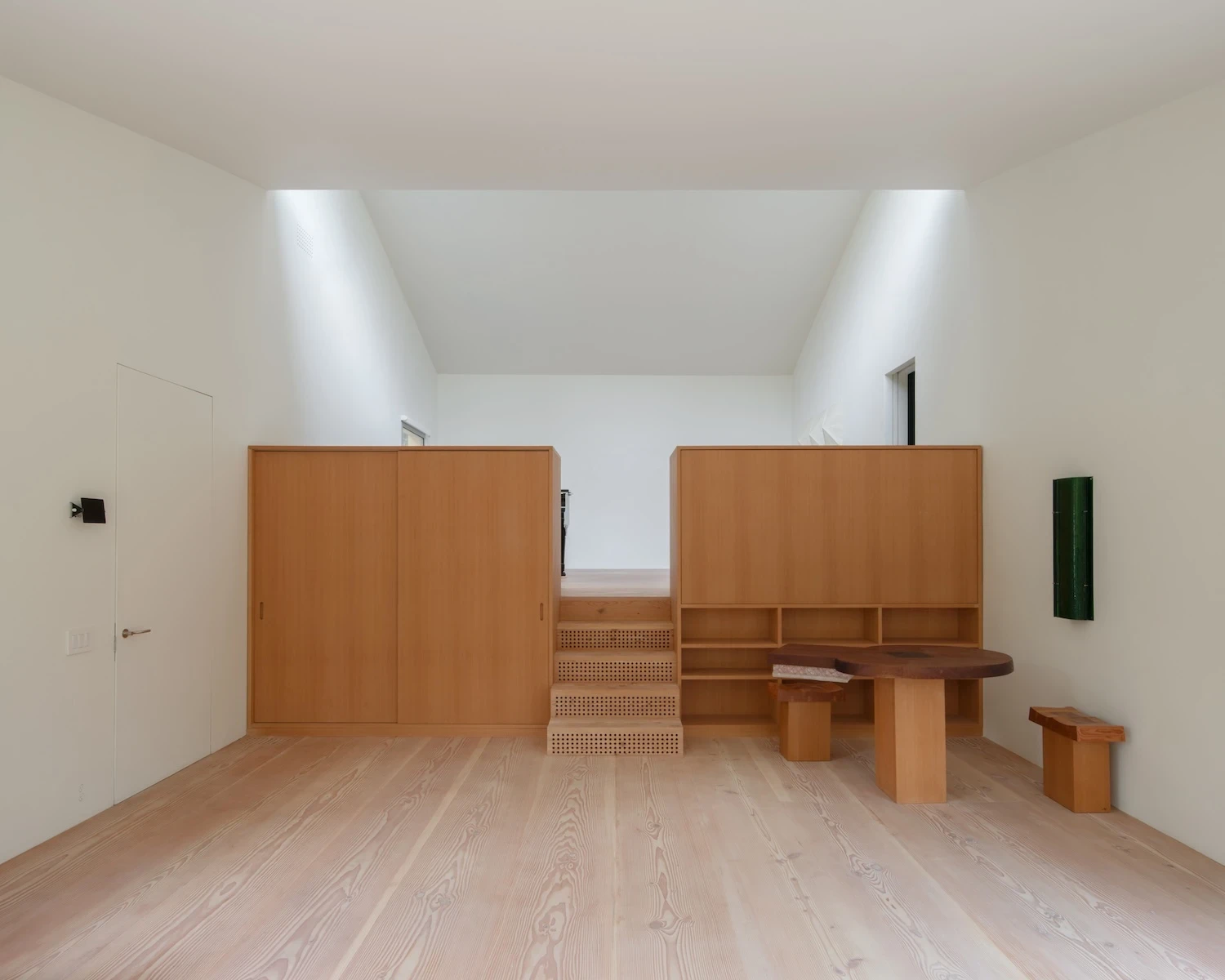
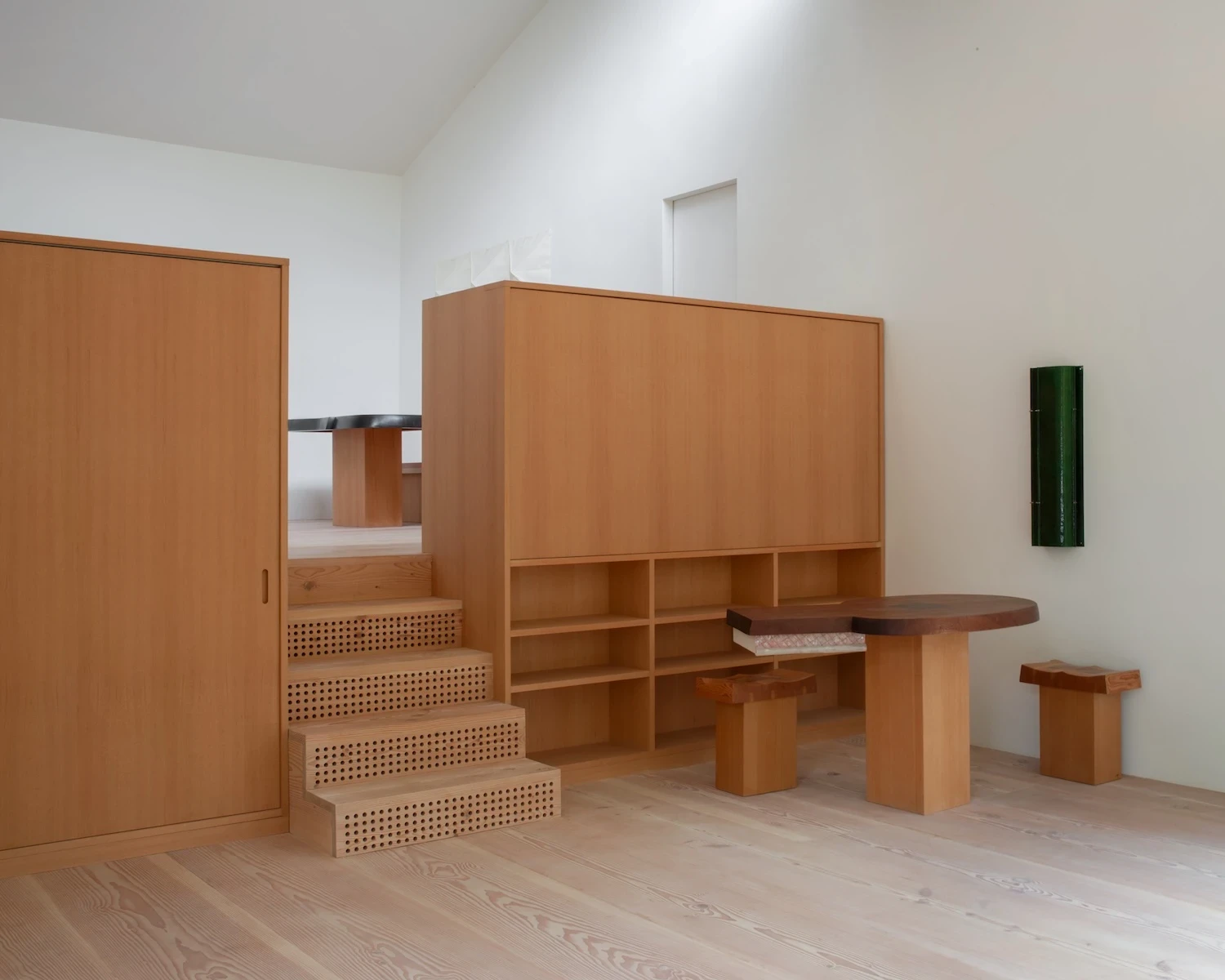
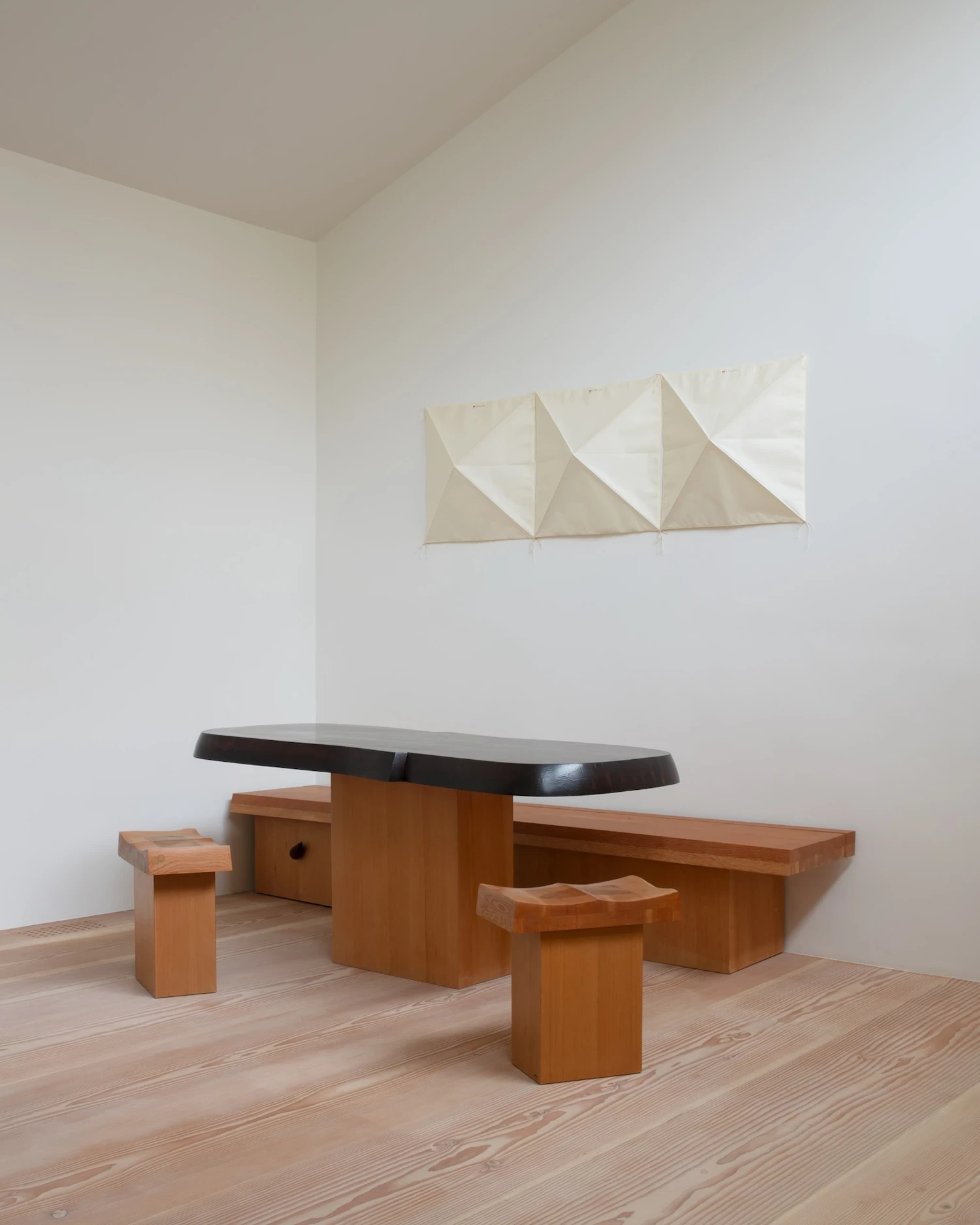
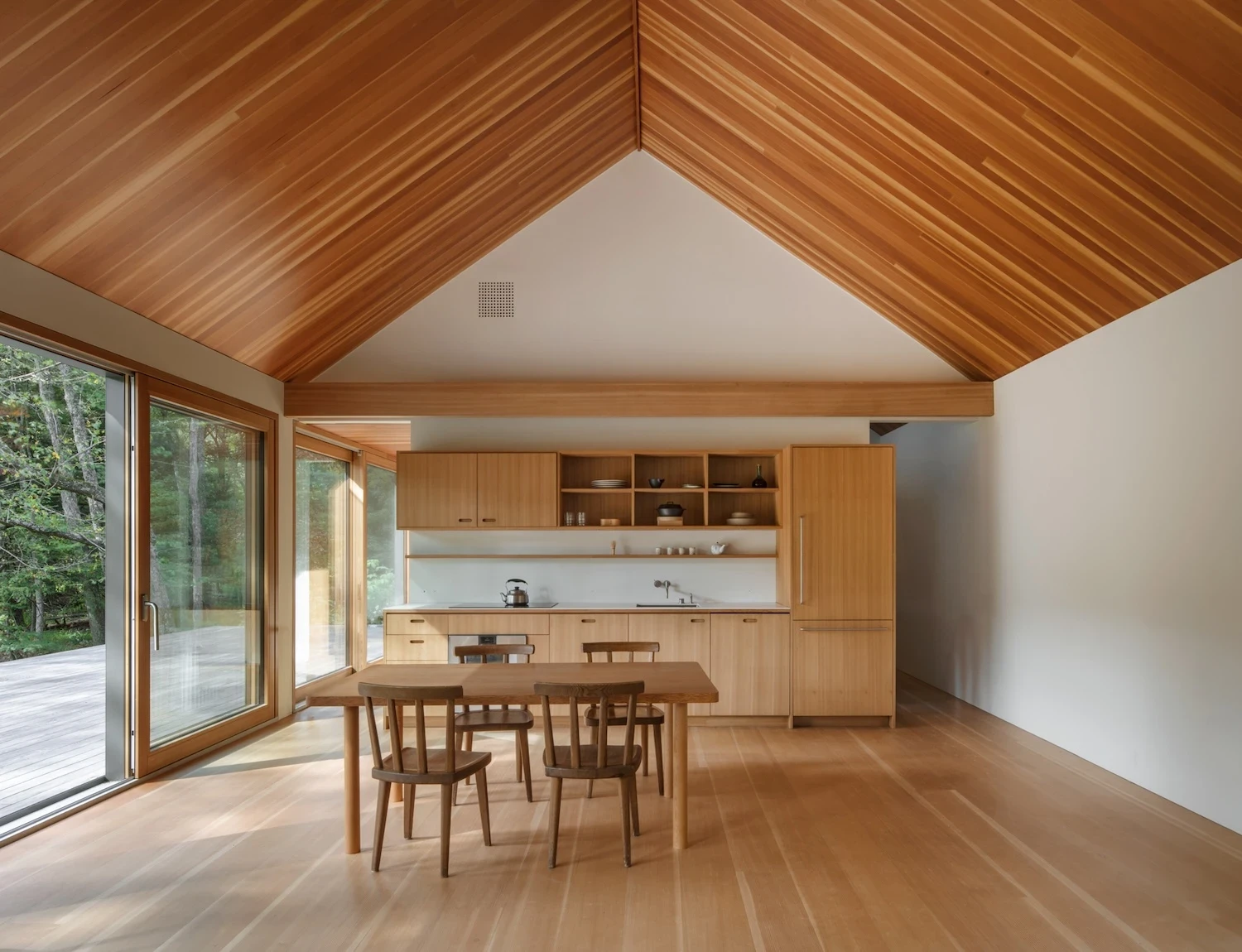
Inside, low fir cabinets fabricated by Round Peg Millwork divide the studio into upper and lower levels without enclosing either one. The millwork absorbs coat closet, shelving, and pantry functions, its cane-front stair risers connecting the two territories. A dark walnut live-edge table sits against the open shelving on the lower level; a black suspended wood-burning stove on a slate hearth anchors the glazed corner of the guest-house volume where cedar tongue-and-groove lines a vaulted ceiling above fir cabinetry.

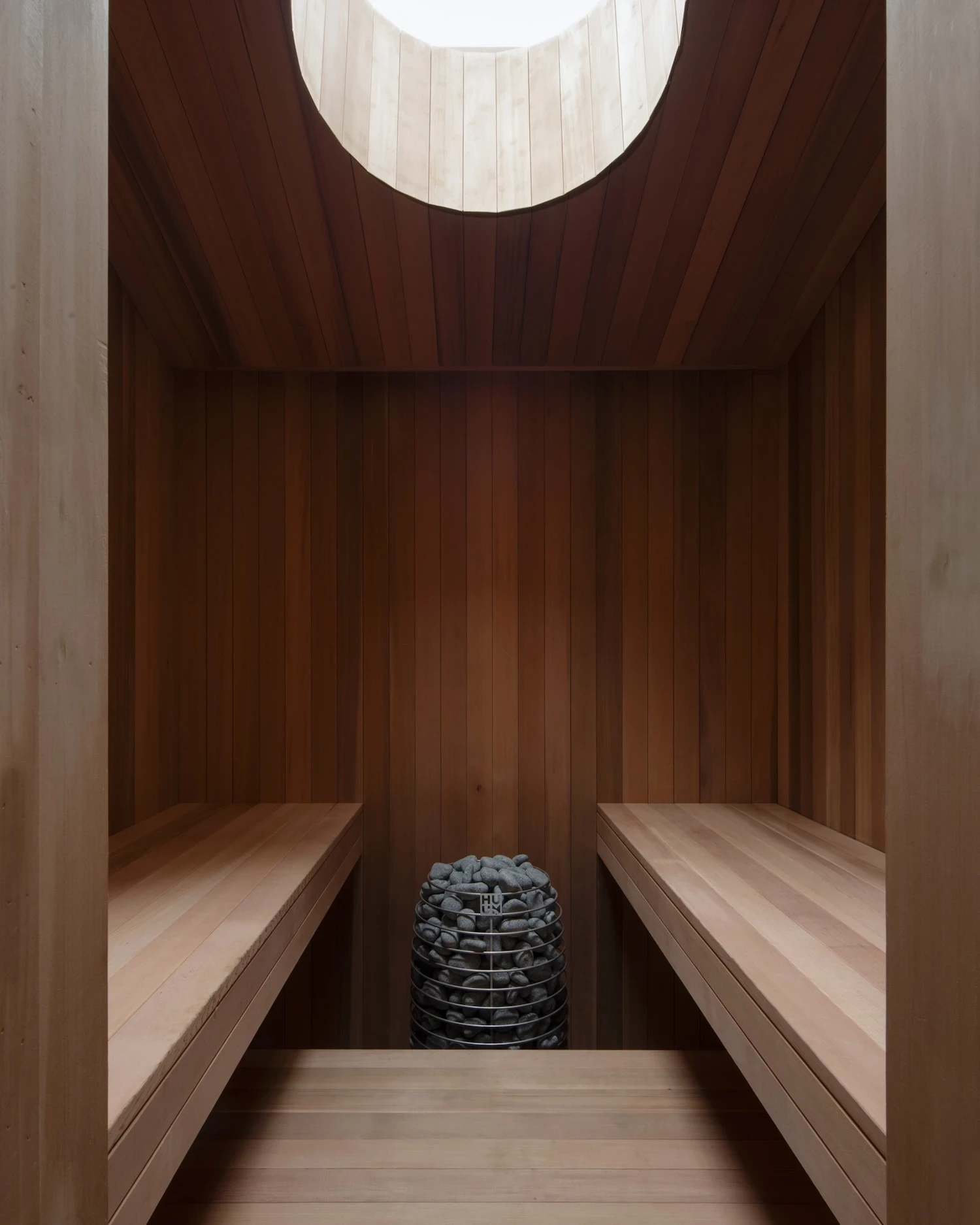
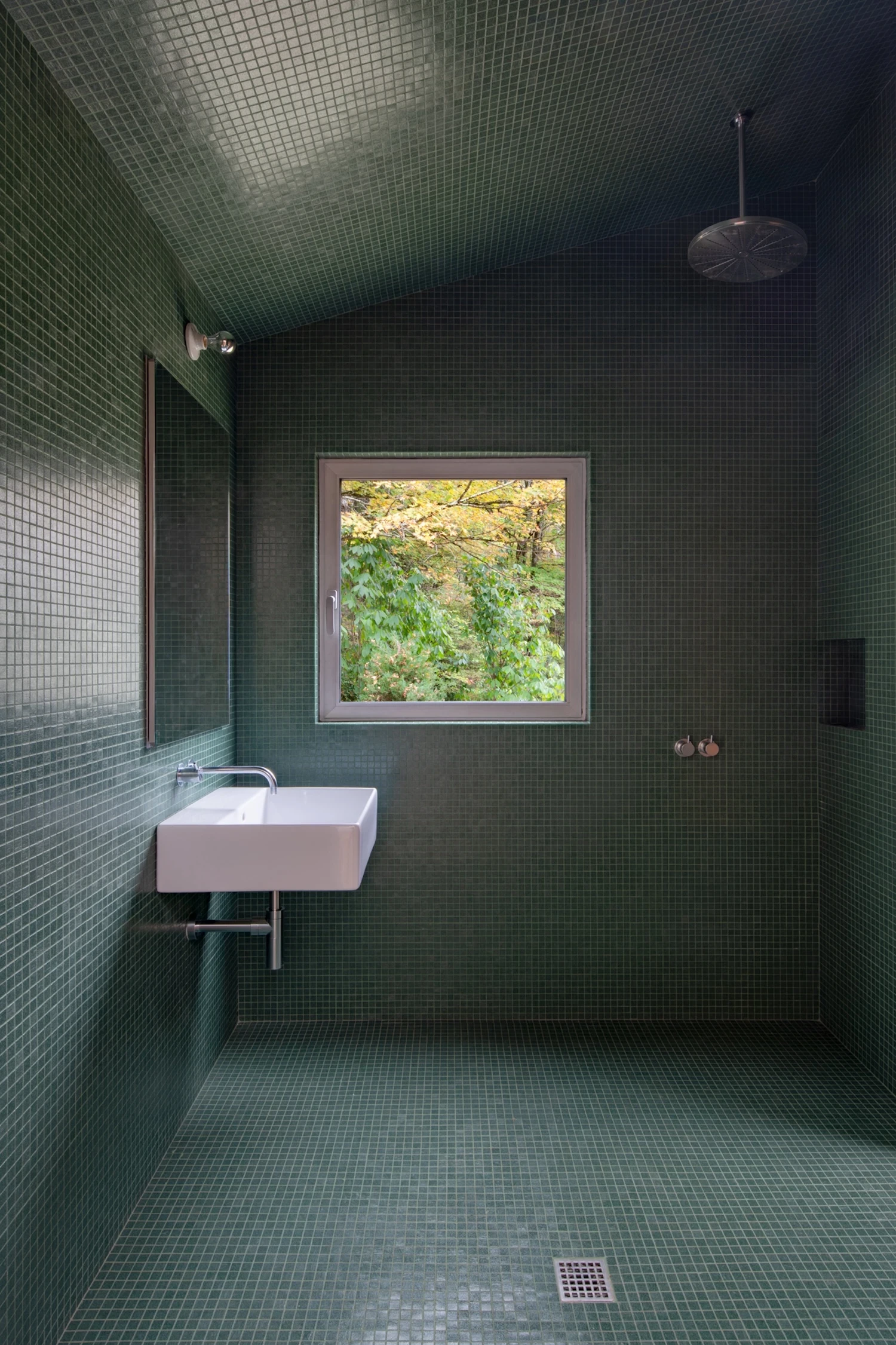
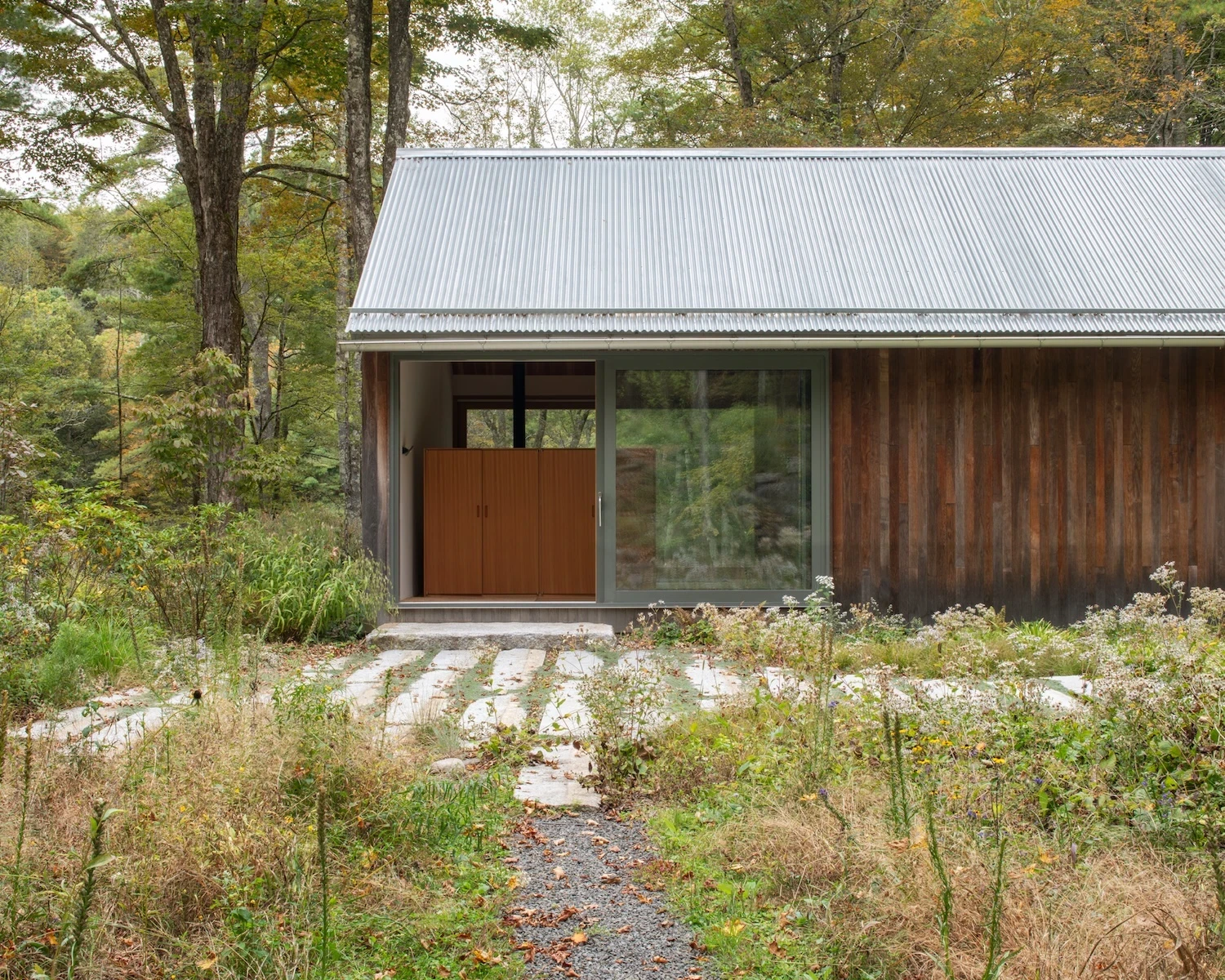
The two buildings are held apart by more than program. Outside, the studio wears weathered vertical board cladding under a corrugated standing-seam metal roof; the guest house is wrapped entirely in cedar shingles, which soften its profile against the autumn maples. A cedar sauna with a circular ceiling light well and a Huum electric stone heater occupies one corner of the guest house, while the bathroom is tiled floor-to-ceiling in deep forest-green mosaic, a single square window cut to the tree line. Every decision in both buildings orbits the same proposition: that the clearest way to honor a place is to leave its geometry intact and rebuild everything else with more care than was there before.
Interested in Showcasing Your Work?

If you would like to feature your works on Thisispaper, please visit our Submission page and sign up to Thisispaper+ to submit your work. Once your submission is approved, your work will be showcased to our global audience of 2 million art, architecture, and design professionals and enthusiasts.
No items found.
Less, with more behind it.
Explore guides. Search the archive. Walk the atlas.
Become a Thisispaper+ member today to unlock full access to our magazine, advanced tools, and support our work.
Get two months FREE
with annual subscription
Less, with more behind it.
Explore guides. Search the archive. Walk the atlas.
Become a Thisispaper+ member today to unlock full access to our magazine, advanced tools, and support our work.
Get two months FREE
with annual subscription
No items found.
Hitoshi Arato
Jun 25, 2026

In the wooded hills of New York's Hudson Valley, Neil Logan rebuilds a farmstead clearing in Accord from the foundations up, preserving only the original footprints of two structures while replacing everything else.

The question Neil Logan sets for this property in Accord, New York is how much of a building you can remove before it stops being itself. His answer: nearly everything. Two structures on a wooded site roughly 100 miles northwest of New York City are rebuilt from their foundations up, retaining only their original footprints. The former house and a storage building stay where they have always stood, but their prior lives survive only as a spatial relationship to the land.

The strategy matters more than the materials it produces. Rather than imposing a new geometry on the clearing, Logan accepts the constraints of the existing layout, concentrating design effort on how the volumes perform rather than where they sit. The former house, positioned close to the road, is gutted entirely: interior partitions stripped, the second floor removed, the plan opened into one tall, continuous space. What was once a subdivided dwelling becomes a working studio organized around the section, not the plan.

Sectional thinking drives the treatment of the roof. Existing dormers give way to a continuous clerestory band, trading picturesque detail for an even overhead wash of diffused light, a move that recalls the daylighting logic of New England mill buildings. The outdoor view arrives through a single act of precision: a panoramic window that runs the full length of the forest-facing wall, turning the tree line into the room's dominant surface. The studio reads as an instrument calibrated to two kinds of light, the ambient glow from above and the green-reflected light of the canopy beyond.

Inside, low fir cabinets fabricated by Round Peg Millwork divide the studio into upper and lower levels without enclosing either one. The millwork absorbs coat closet, shelving, and pantry functions, its cane-front stair risers connecting the two territories. A dark walnut live-edge table sits against the open shelving on the lower level; a black suspended wood-burning stove on a slate hearth anchors the glazed corner of the guest-house volume where cedar tongue-and-groove lines a vaulted ceiling above fir cabinetry.

The two buildings are held apart by more than program. Outside, the studio wears weathered vertical board cladding under a corrugated standing-seam metal roof; the guest house is wrapped entirely in cedar shingles, which soften its profile against the autumn maples. A cedar sauna with a circular ceiling light well and a Huum electric stone heater occupies one corner of the guest house, while the bathroom is tiled floor-to-ceiling in deep forest-green mosaic, a single square window cut to the tree line. Every decision in both buildings orbits the same proposition: that the clearest way to honor a place is to leave its geometry intact and rebuild everything else with more care than was there before.
Interested in Showcasing Your Work?

If you would like to feature your works on Thisispaper, please visit our Submission page and subscribe to Thisispaper+. Once your submission is approved, your work will be showcased to our global audience of 2 million art, architecture, and design professionals and enthusiasts.
Thisispaper+
Weekend Retreat
100+ Projects
Web Access
Link to Maps
Private homes built around the particular quality of time a weekend allows. Larch cabins in pasture, concrete refuges in Alpine foothills, restored farmhouses, coastal pavilions, compact Nordic summer houses, Mornington-Peninsula sheds, hidden atria in the south of Sweden. Architecture where the point is not escape but the slowness of arriving — the stay long enough to notice you have.
Explore
Weekend Retreat

Join Thisispaper+
Unlock access to 2500 stories, curated guides + editions, and share your work with a global network of architects, artists and designers who are shaping the future.
Get two months FREE
with annual subscription
Travel Guides
Immerse yourself in timeless destinations, hidden gems, and creative spaces—curated by humans, not algorithms.
Explore All Guides +
Submission Module
Submit your project and gain the chance to showcase your work to our worldwide audience of over 2M architects, designers, artists, and curious minds.
Learn More+
Curated Editions
Dive deeper into carefully curated editions, designed to feed your curiosity and foster exploration.
Off-the-Grid
Jutaku
Sacral Journey
minimum
The New Chair
Explore All Editions +
Atlas
A new and interactive way to explore the most inspiring places around the world.
Interactive map
Linked to articles
450+ curated locations
Google + Apple directions
Smart filters
Subscribe to Explore+
Become a Thisispaper+ member today to unlock full access to our magazine, submit your project and support our work.
Join Thisispaper+Join Thisispaper+
€9/month
Get two months FREE
with annual subscription