Inside a 1911 industrial complex on Saarbrücker Strasse in Berlin, Celeste Asfour designs Strom, a seasonal courtyard cafe built around cherry wood, rose marble, and wood-fired terracotta.
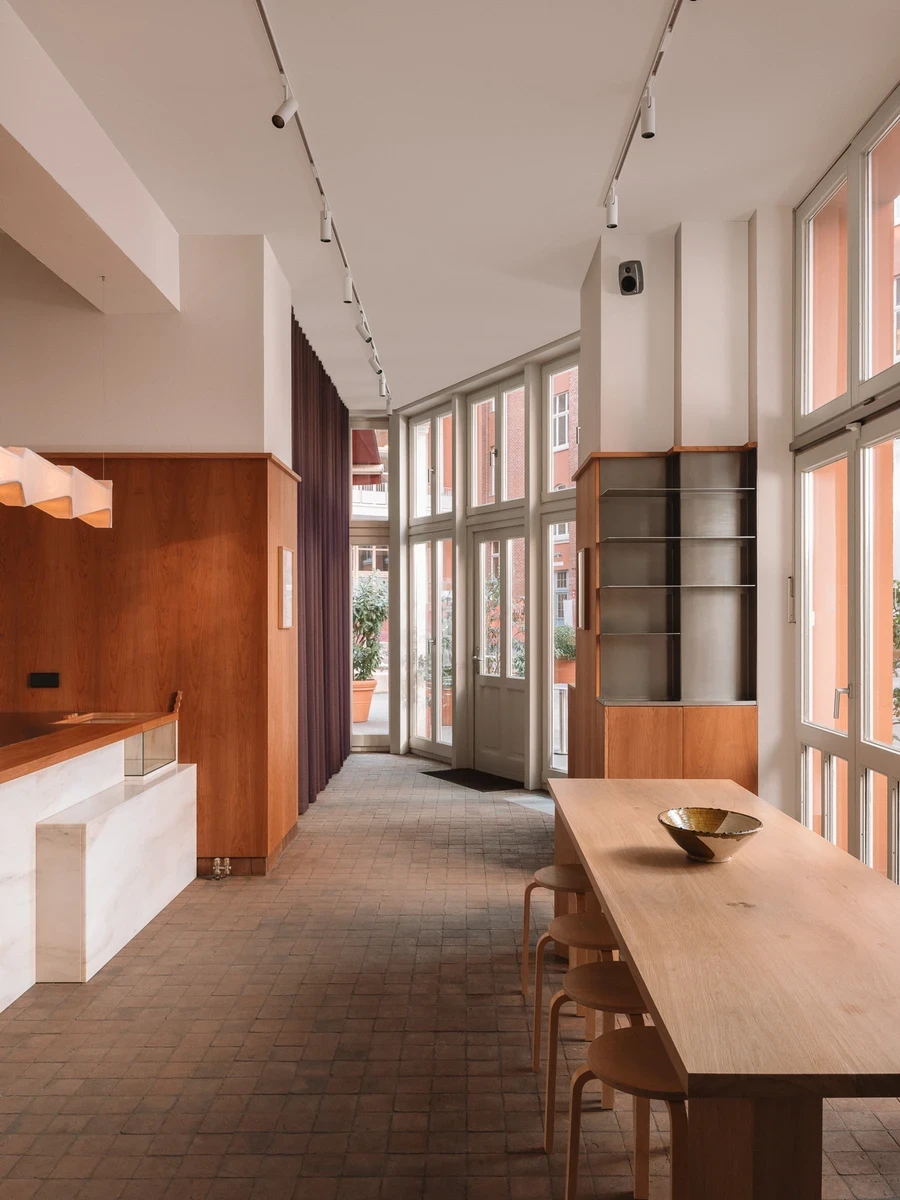
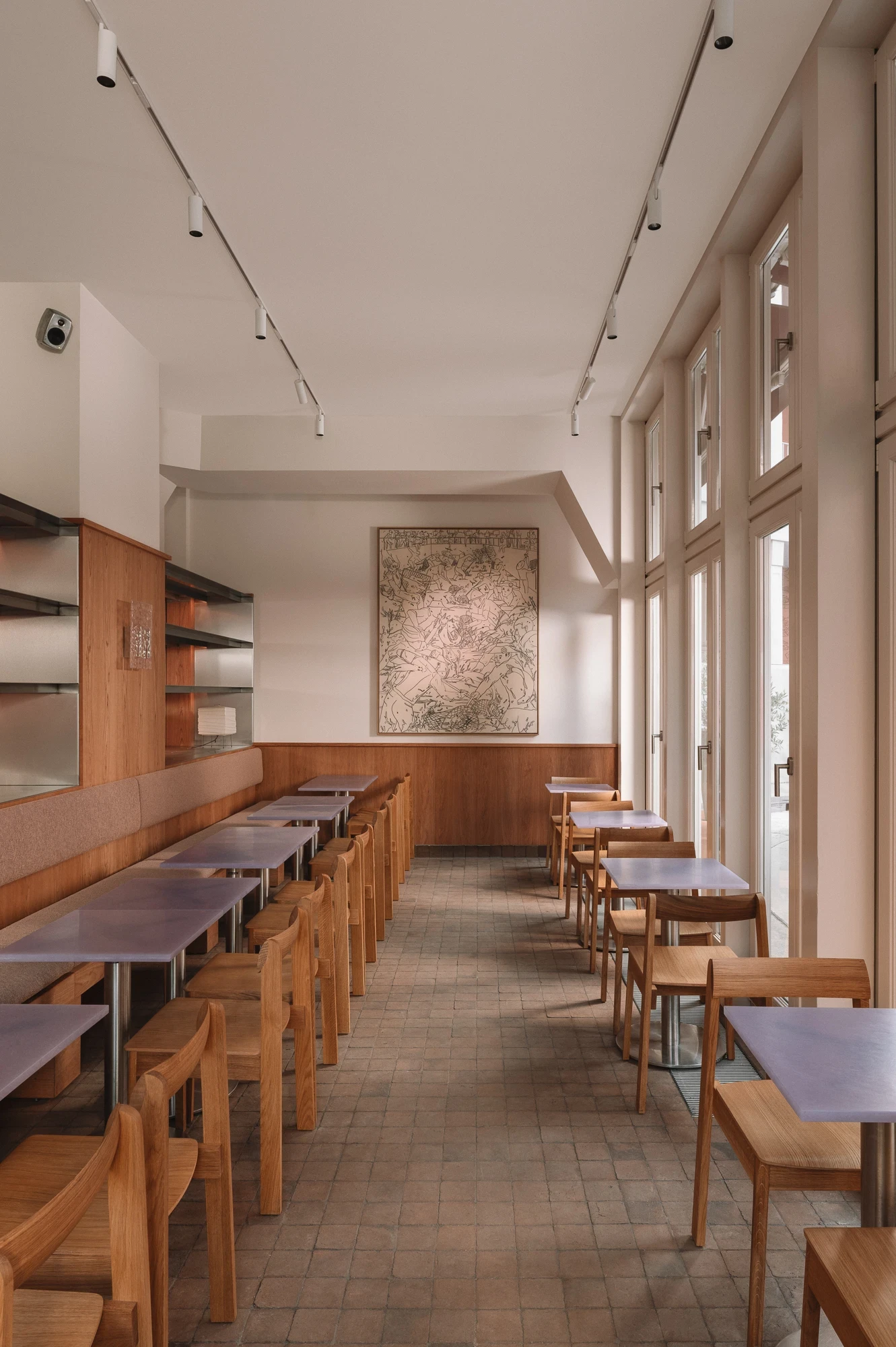
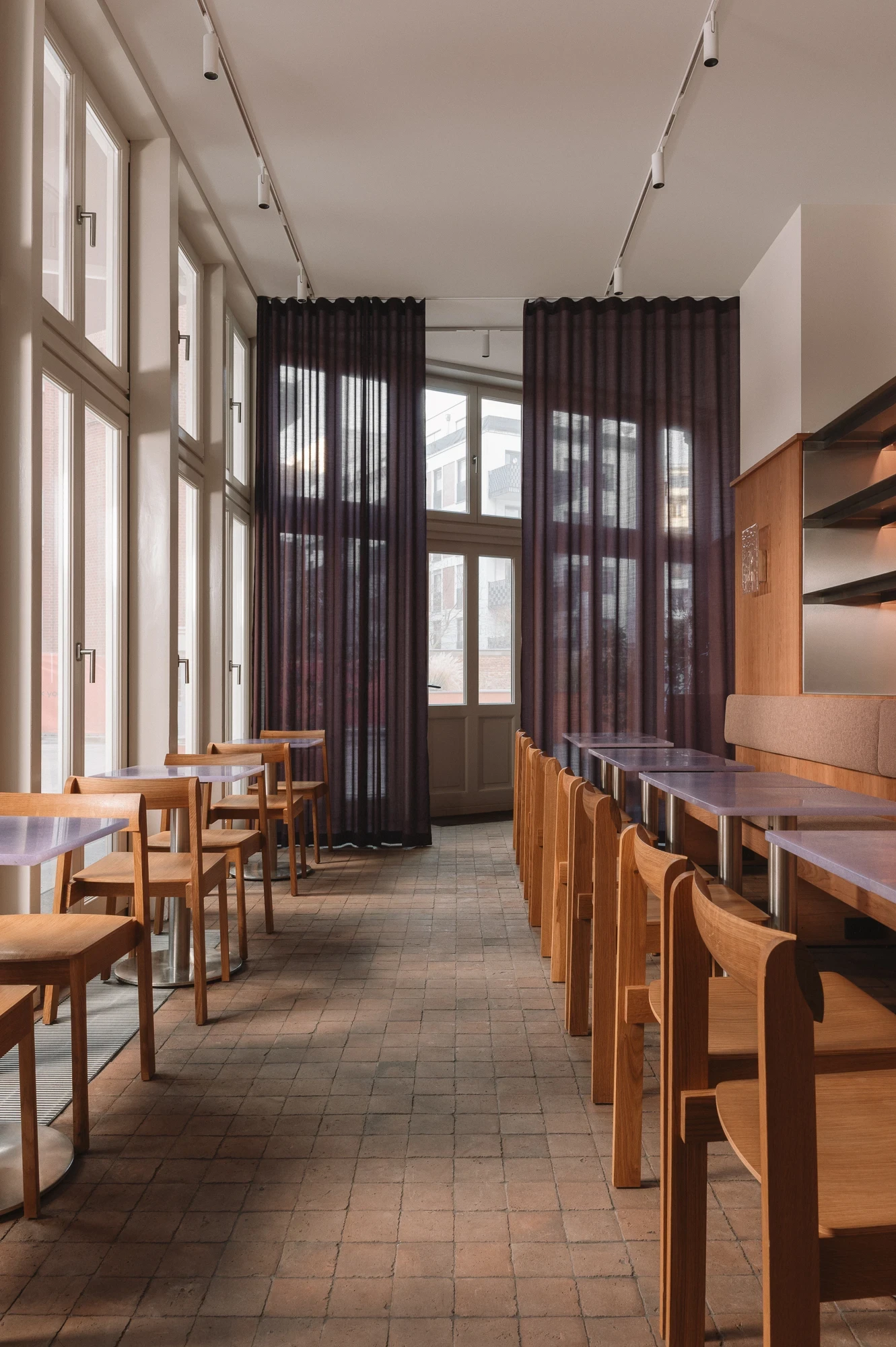
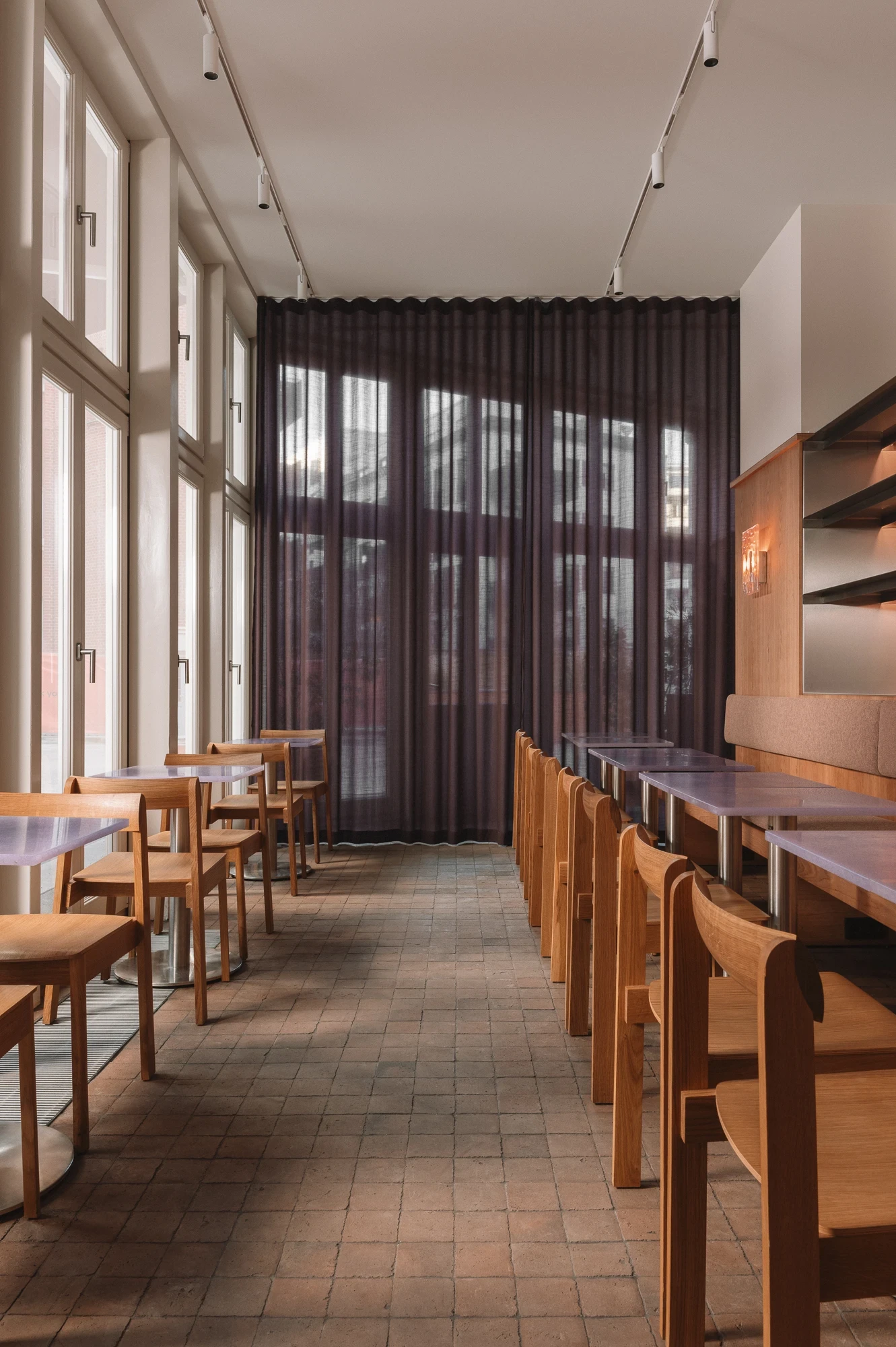
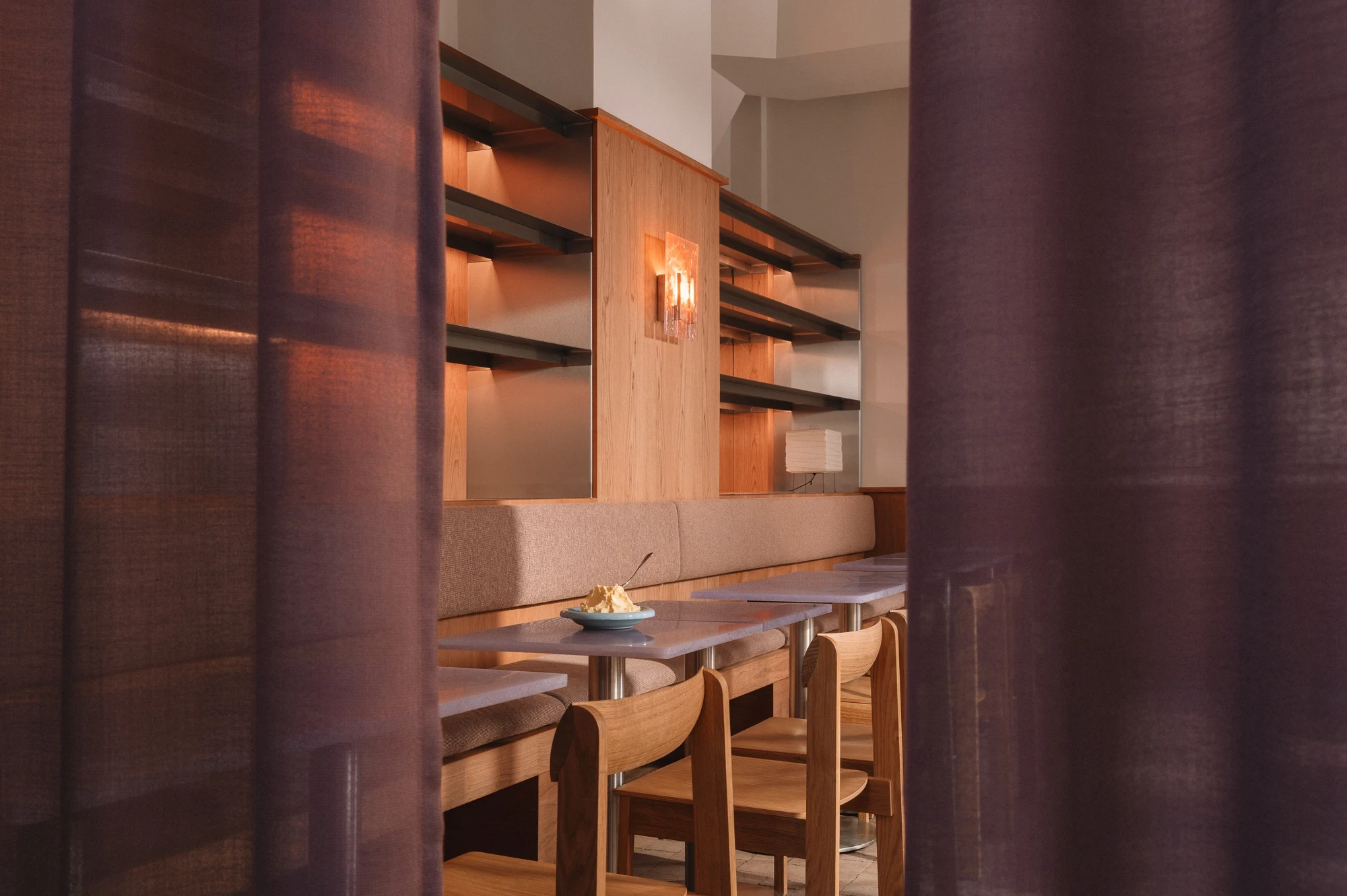
Strom occupies a ground-floor unit on Saarbrücker Strasse 36, set inside a brick-and-stone industrial complex completed in 1911 and now stitched into the residential grain of Prenzlauer Berg. The cafe opens late in 2025 as a seasonal proposition, calibrated to the rhythm of the courtyard it borrows: tall casement windows, sheer aubergine curtains that filter the inner block, doors that swing onto pavers when the weather agrees. Coffee, small plates, an afternoon drink. The brief is modest. The execution is not.
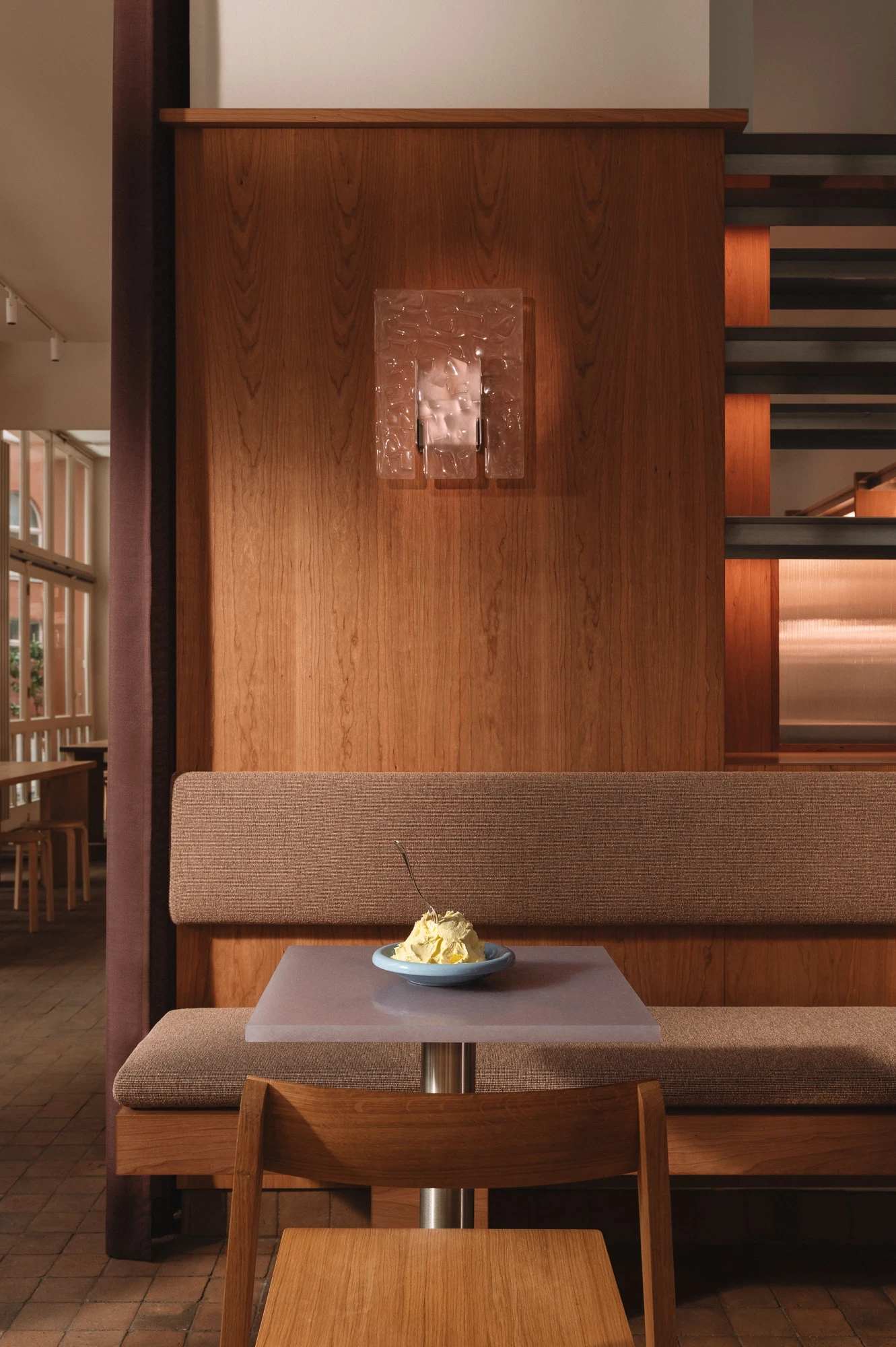
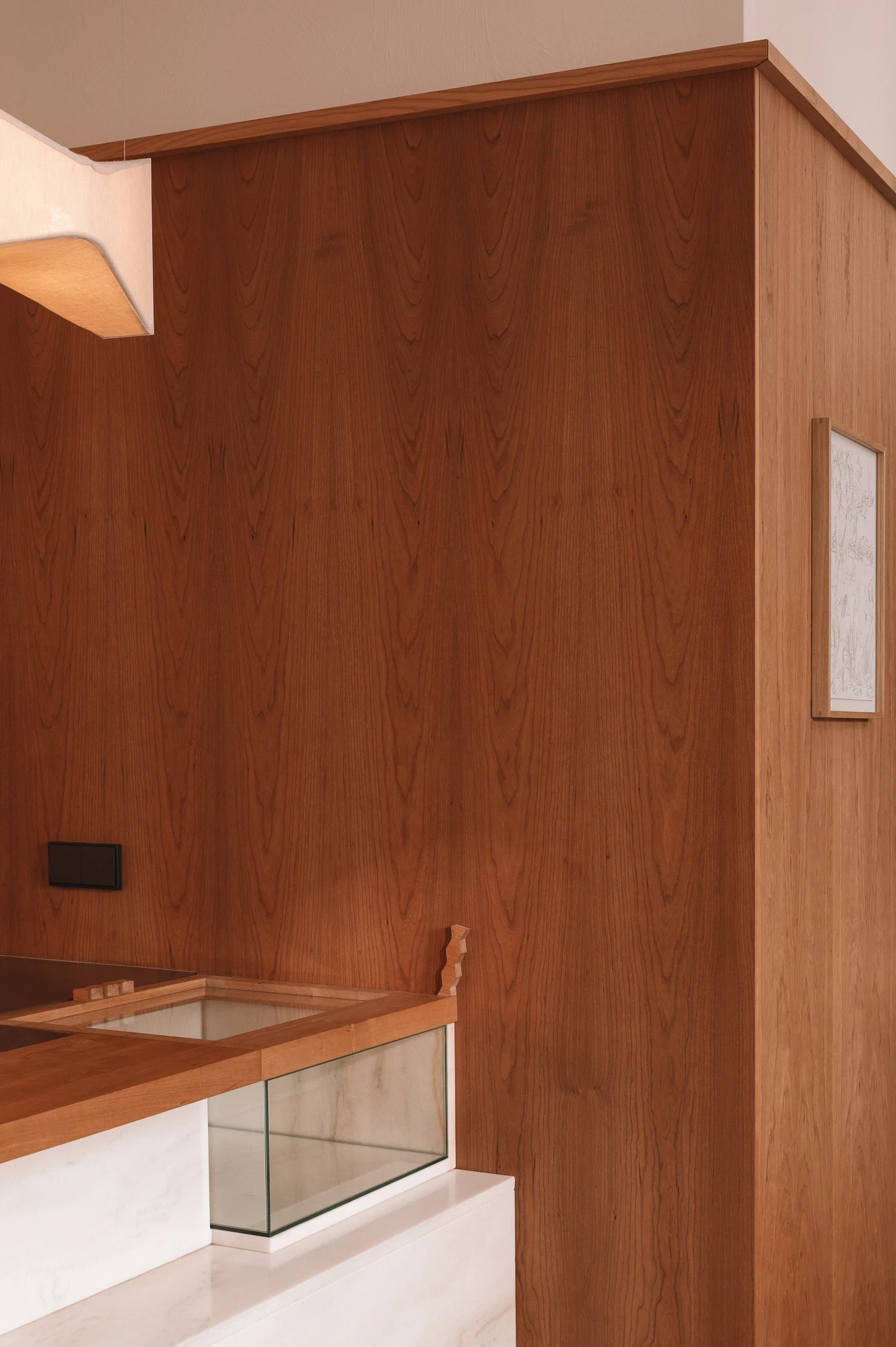
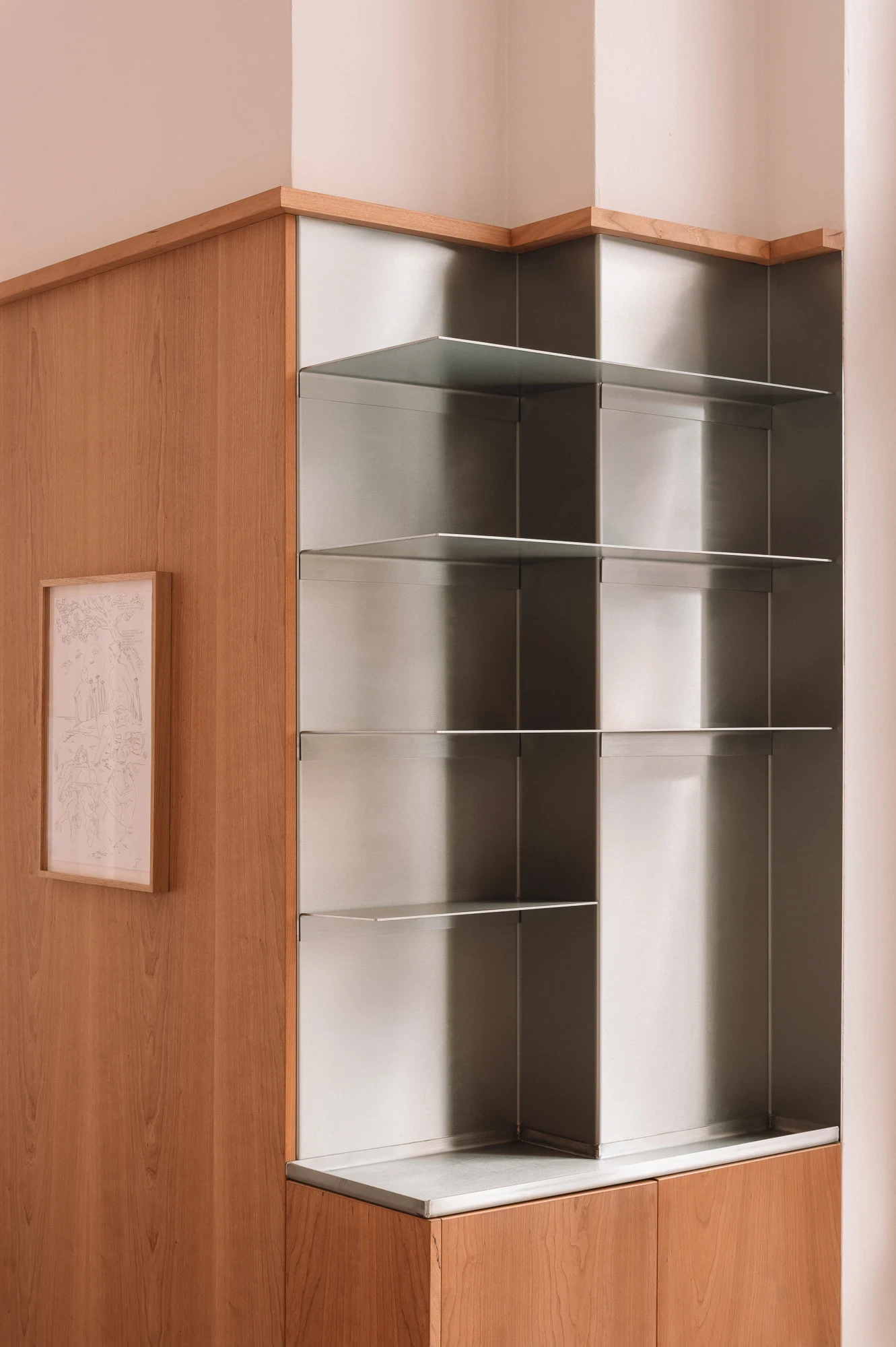
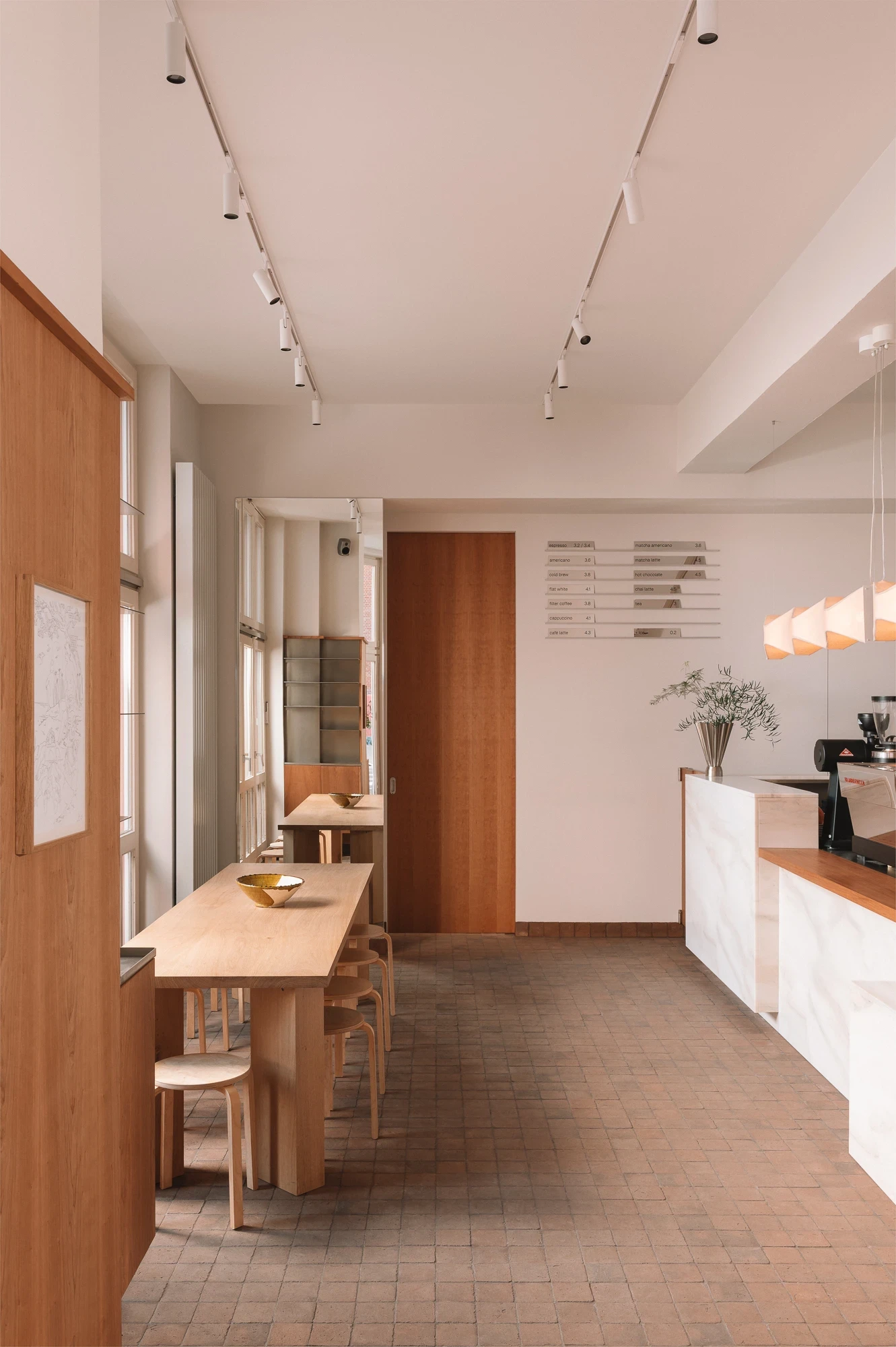
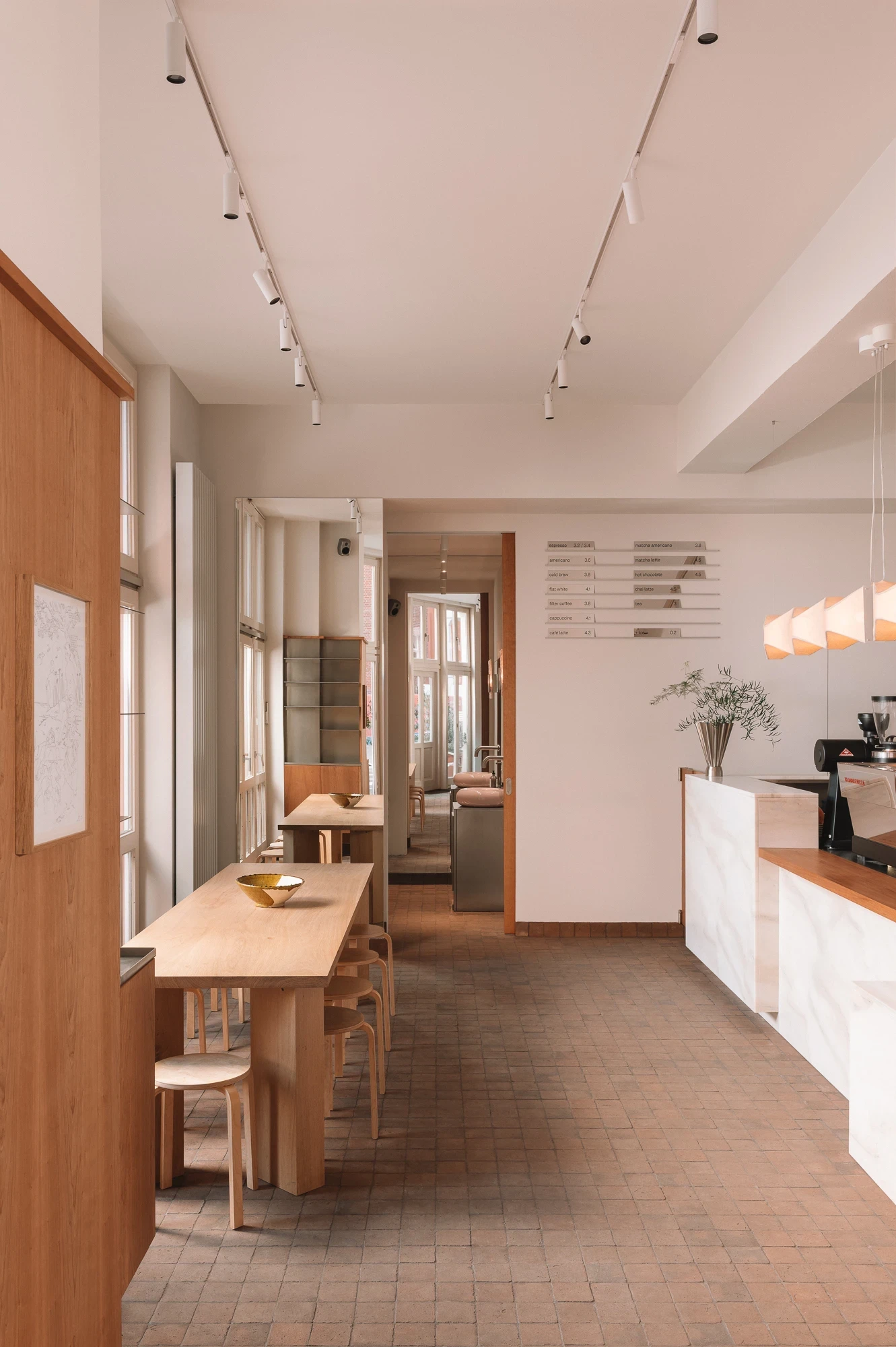
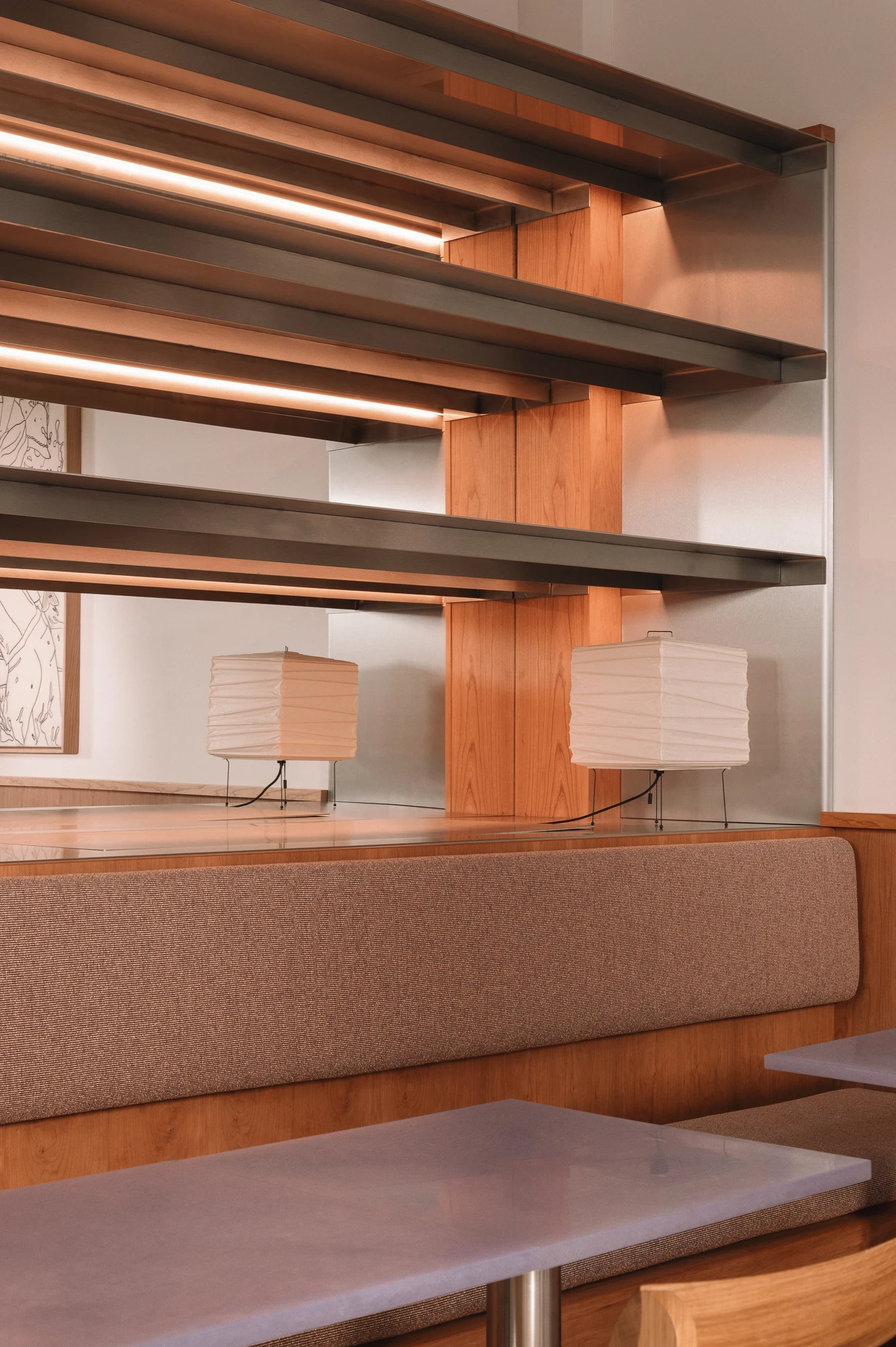
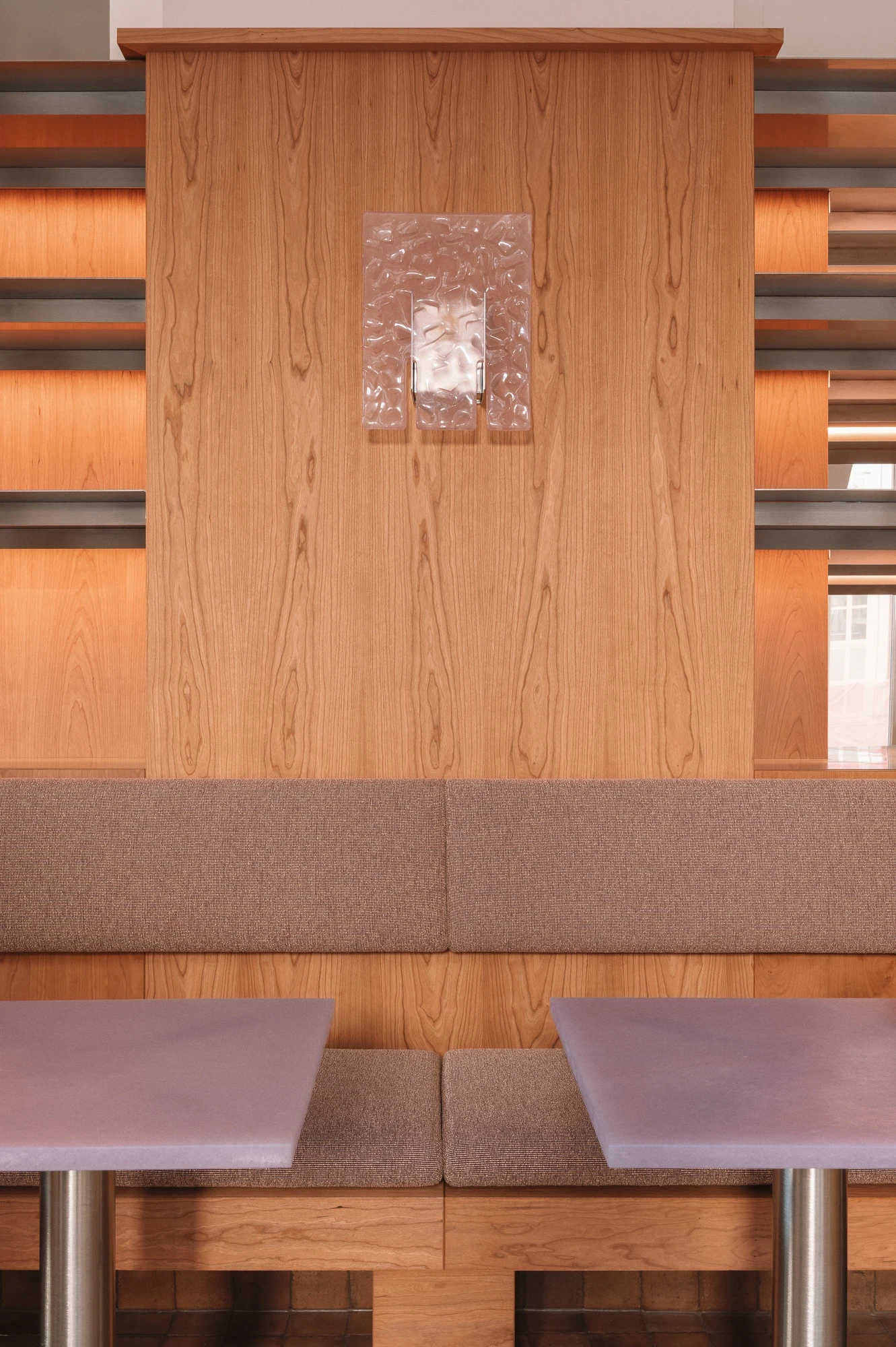
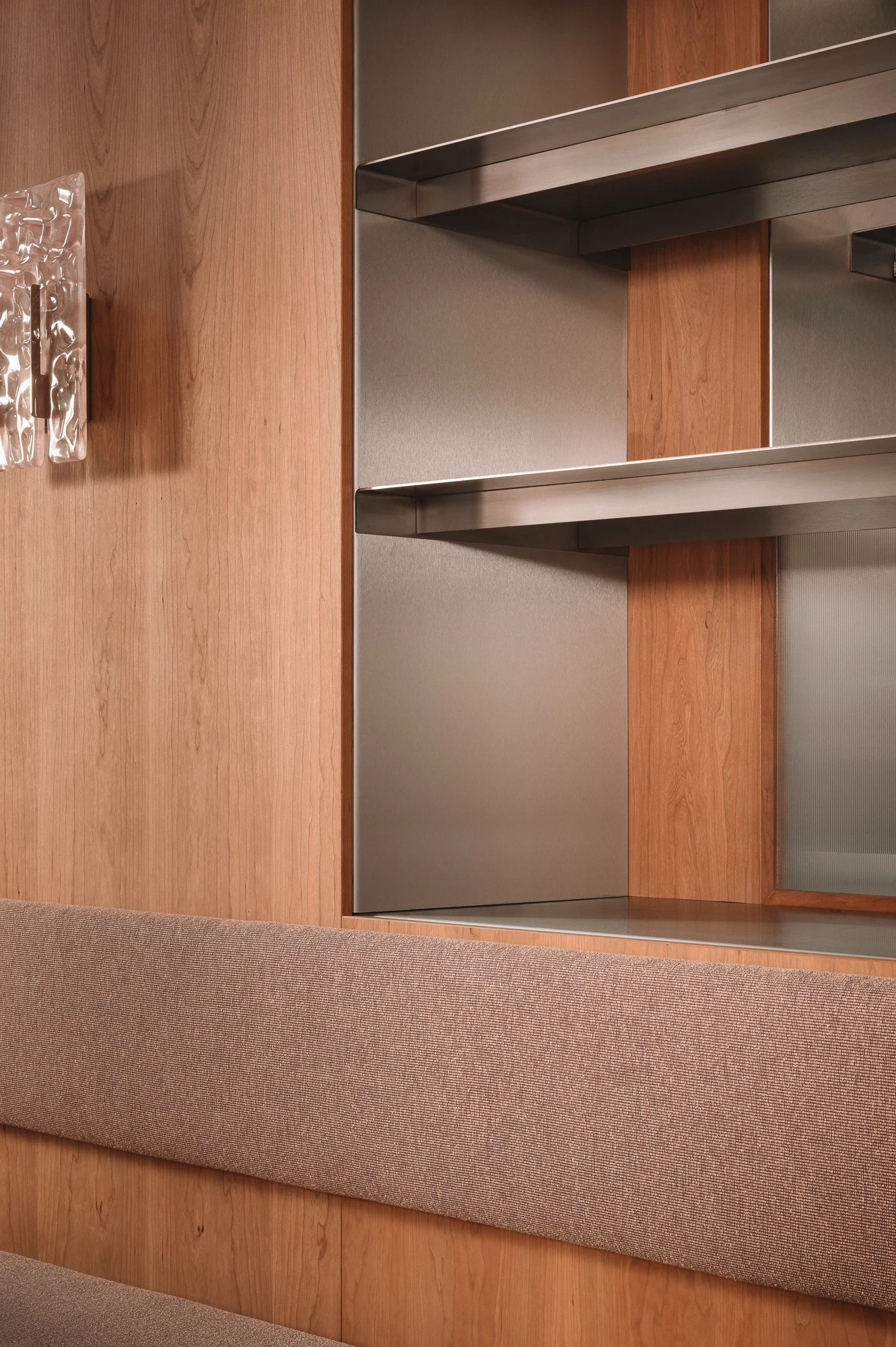
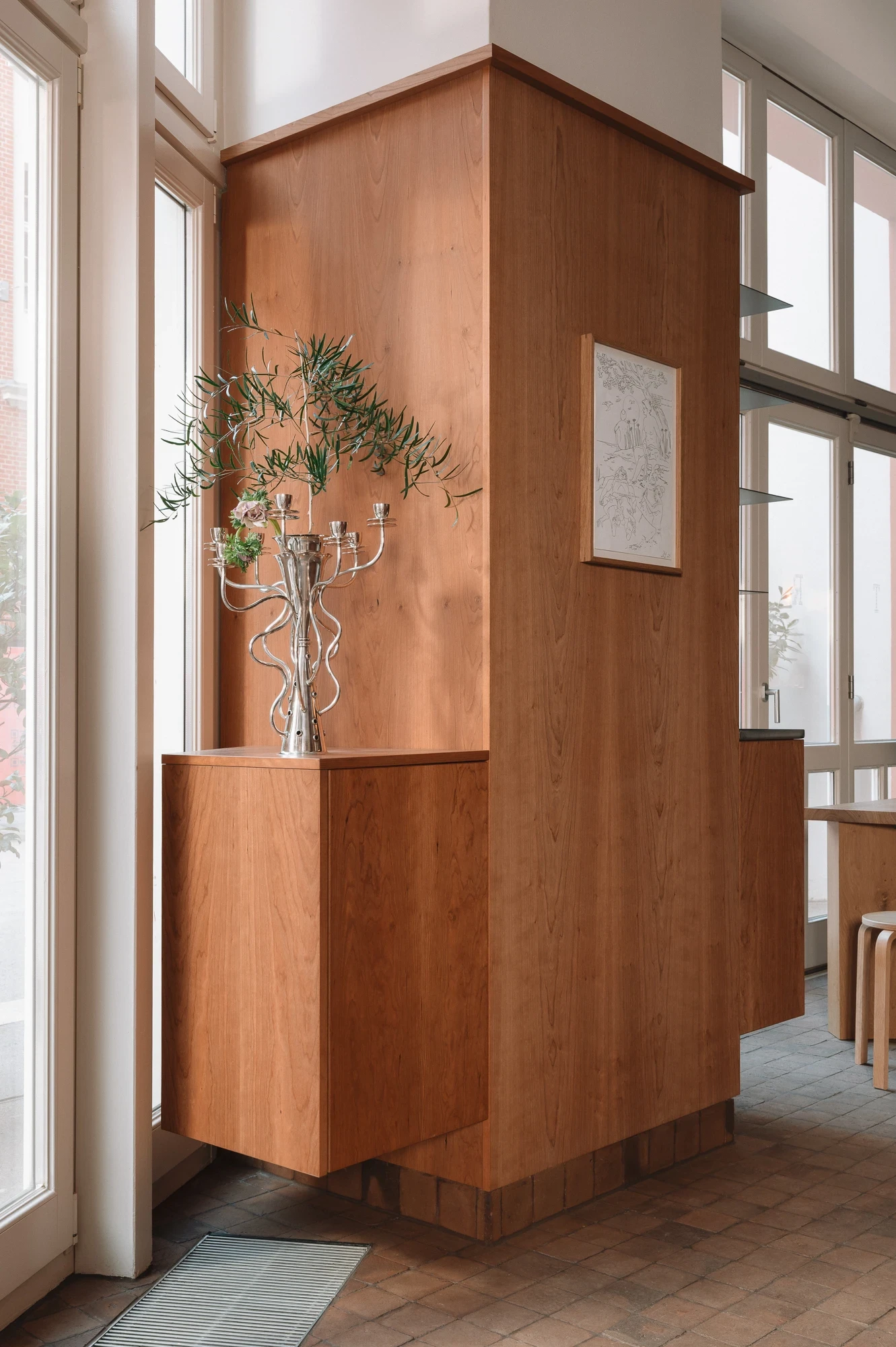
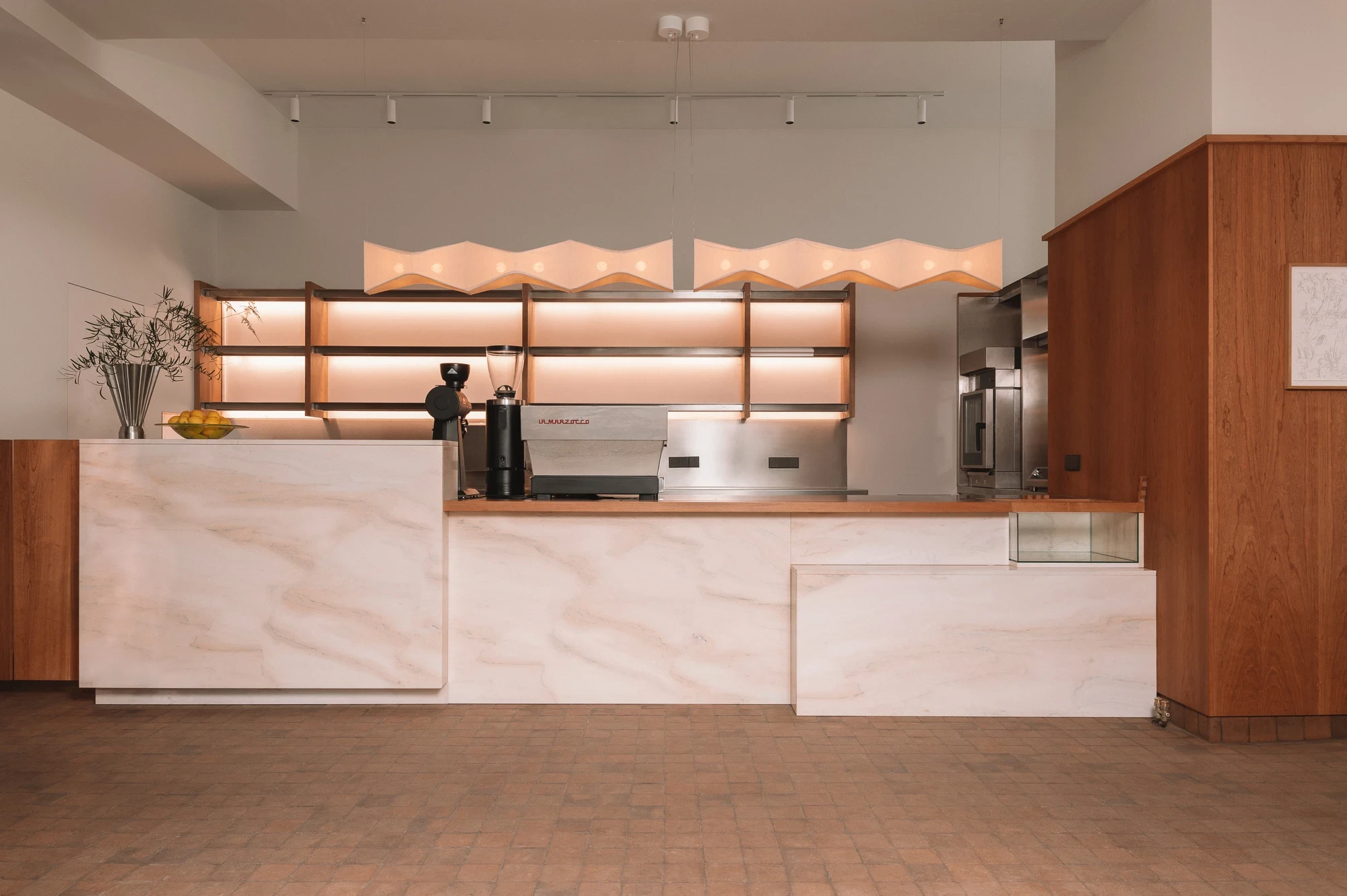
Asfour builds the room around a sculptural rose-marble bar whose veining reads pink and cream under the warm undershelf lighting, its corners rounded with the heft of something brutalist. Behind it, the espresso station sits inside a long rack of cherry wood and brushed steel, the metal folded into faceted reflectors that wash the bottles in a soft amber glow. The cherry returns everywhere: as paneling around the banquette, as the joinery wrapping a service column at the entrance, as the heavy bookmatched walls that close the back of the room.
The floor is wood-fired terracotta laid in small squares, slightly uneven, the kind of clay tile that holds a footprint of heat and gives the room its colour temperature. Above it, tables in a dusty lavender-toned recycled resin, set on steel pedestals, paired with light oak chairs whose curved backs cite the workshop chair more than any restaurant template. The banquettes are upholstered in a coarse mauve bouclé that meets the cherry at a low brass rail. Akari-style paper lamps hang in pairs over the seating, balanced by Murano sconces whose hand-blown glass catches the light like cracked ice.
The material logic is contrast held in check. Wood-fired terracotta against milled stainless. Hand-produced Murano against industrially extruded steel shelves. Cherry against the cold-toned blush of marble. "A material palette rooted in craftsmanship and heritage techniques," the studio writes, complemented by contemporary surfaces that refuse to mimic them. The metal and woodwork was produced through LPH 1 to 9 by studio ultimo, which explains the precision of the joins, the way the steel shelves cantilever flush, the way nothing announces itself.
What the room performs, in the end, is the slow tactility of a courtyard ritual. A framed line drawing here, an antique silver candelabra holding an olive branch there, a hand-thrown bowl on a long oak table. The cafe is small enough to read in one glance, but Asfour has loaded the surfaces with enough specific weight that the eye keeps going. Strom enters Berlin's increasingly crowded specialty coffee scene without raising its voice, and that restraint is the argument it makes.