Thisispaper Community
Join today.
Enter your email address to receive the latest news on emerging art, design, lifestyle and tech from Thisispaper, delivered straight to your inbox.
Oops! Something went wrong while submitting the form.
Instant access to new channels
The top stories curated daily
Weekly roundups of what's important
Original features and deep dives
Exclusive community features
Alexander Zaxarov
Aug 13, 2025

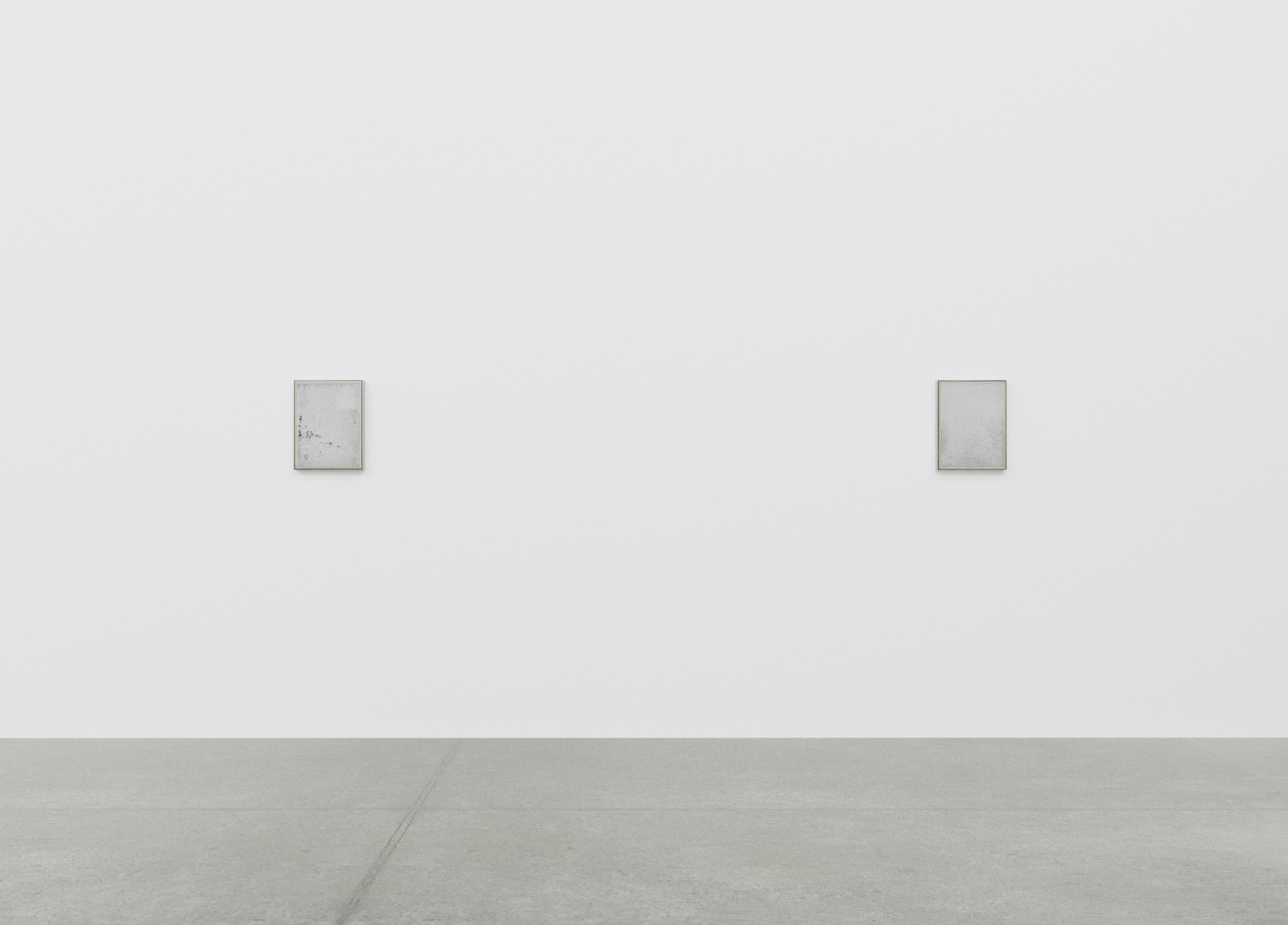
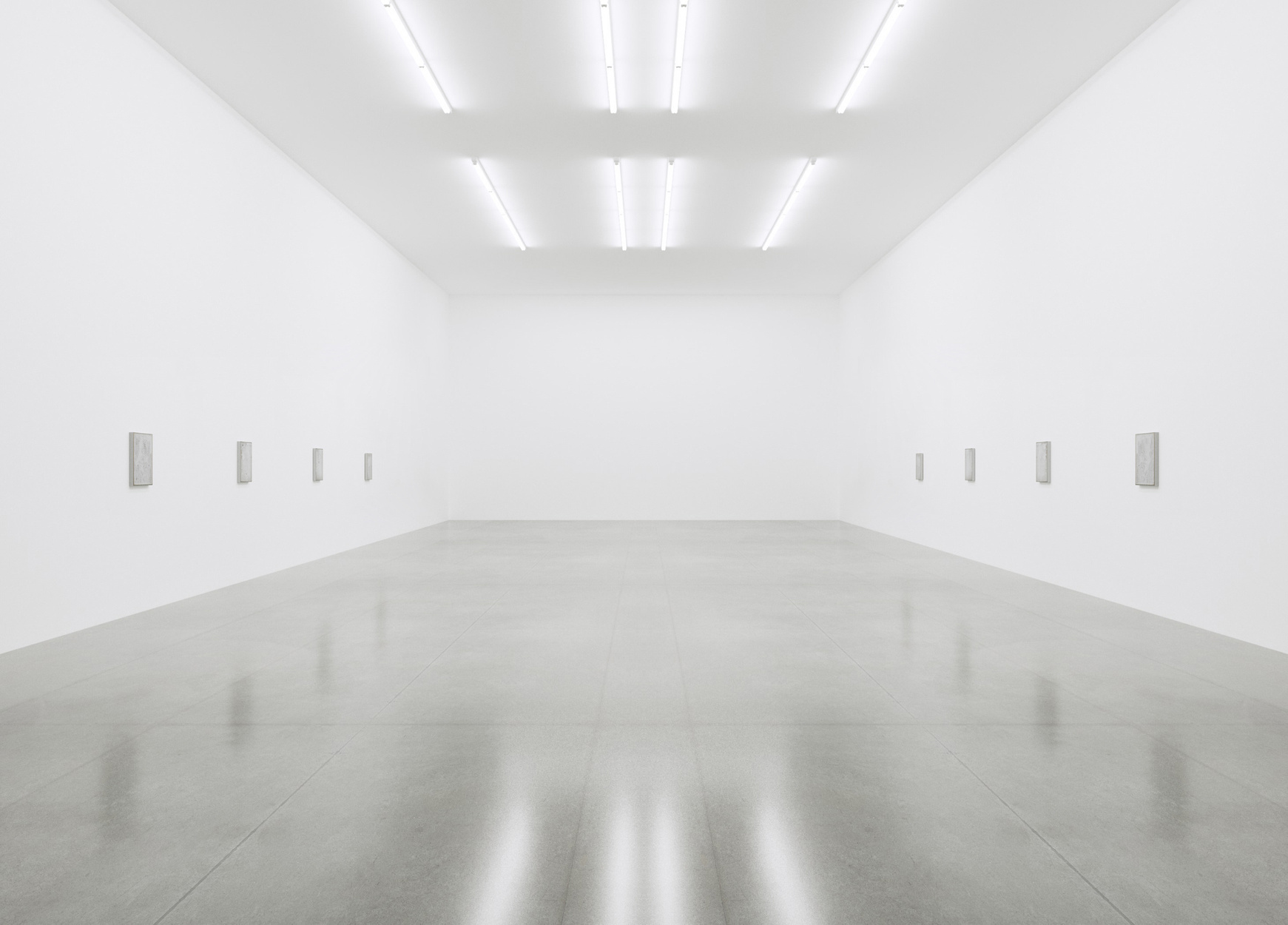
In Seven Sites on view at FORM in Amsterdam, S. Mercure advances a practice that treats exhibition spaces not as inert containers but as porous, material entities.

The project draws from a year-long investigation into extraction—an ongoing experiment in making artworks from the literal substance of the places that host them. The result is a set of works that, while undeniably paintings, also function as micro-architectures of memory and matter.

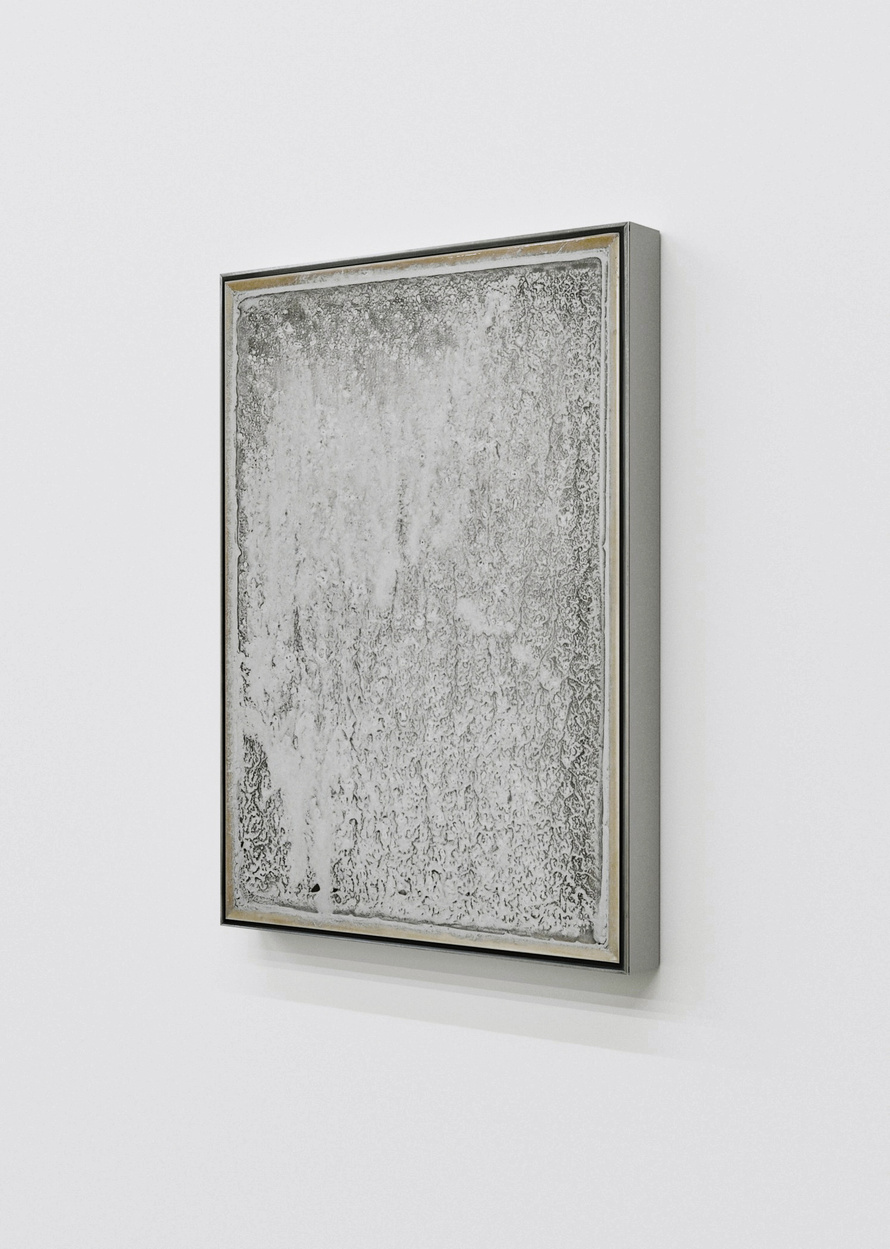
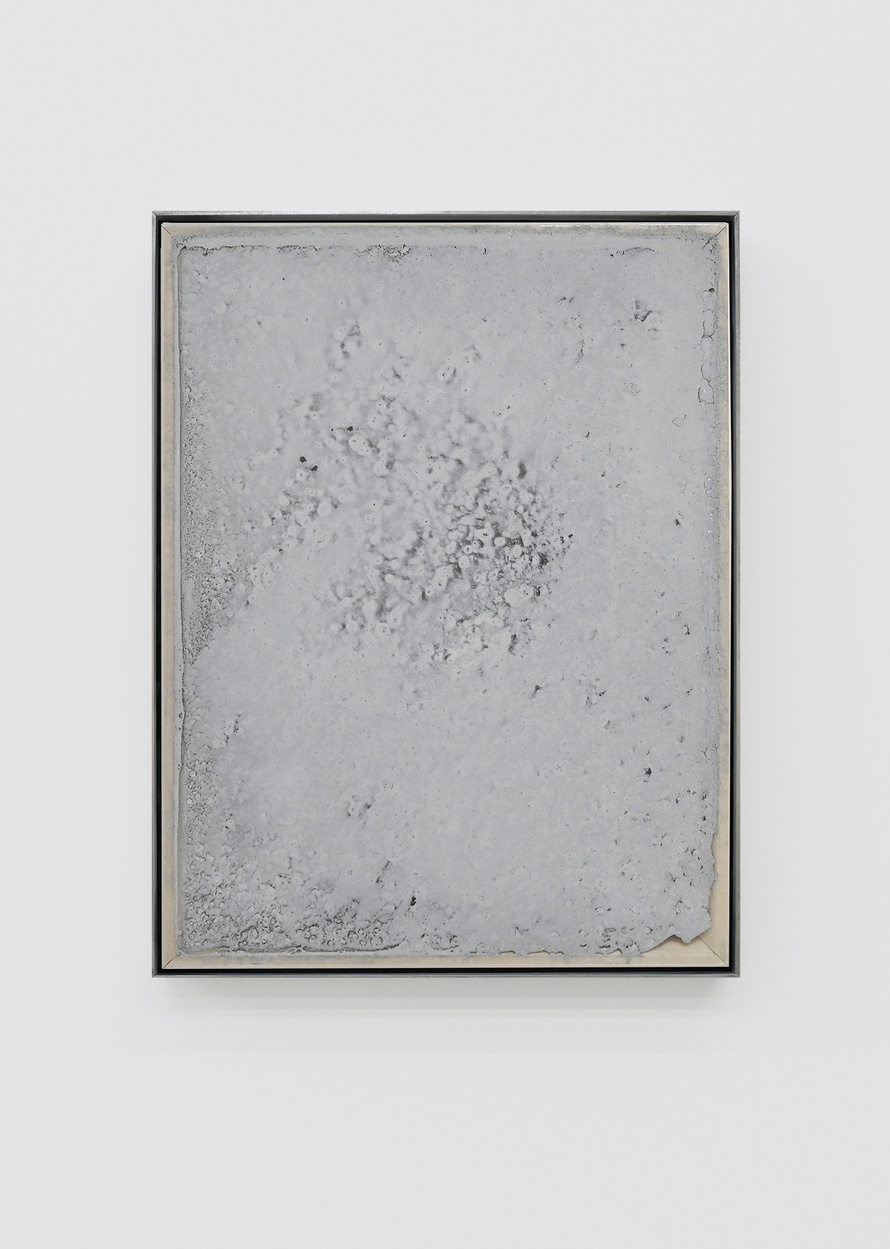
The artist’s process reads almost like forensic fieldwork. Across six contemporary art venues, Mercure sanded minute layers from wall surfaces, collecting a fine powder, and siphoned ambient moisture from the air with a dehumidifier. These unlikely harvests—dust and water—were blended into a composite liquid pigment. The transformation is alchemical yet resolutely indexical: each finished work contains the particulate DNA of six distinct institutional bodies.

Presented on stretched PVC membranes, the paintings have a translucent fragility, as if suspended between states. The pigment dries in uneven rhythms, producing faint topographies of sediment and stain. In some works, a pale crust traces the slow retreat of water; in others, the granular residue reads like a weather map of the vanished spaces. They are, in effect, palimpsests in which the absence of origin sites is made visible through the very material that once belonged to them.

The titular “seventh site” is the gallery itself—FORM—which, crucially, did not contribute to the material pool. This curatorial omission creates a charged displacement. Here, the paintings return to the archetype of the white cube, but as carriers of other architectures, other climates. In occupying the gallery without being of it, they trouble the fantasy of spatial neutrality, positioning FORM as a site of reception and estrangement rather than genesis.

By layering physical remnants from multiple spaces within a single surface, Mercure creates an ecology of overlapping pasts. The works become temporal and spatial composites, confronting viewers with a condensed geography of art institutions. In this sense, Seven Sites is not a narrative of origin but of circulation: matter migrates, identities blur, and the boundaries between places erode into a shared, volatile surface.

If the project began with an interest in the invisible—dust in air, moisture in walls—it ultimately reveals how even the most intangible residues carry the weight of site-specific histories. In a moment when art spaces are increasingly interchangeable, Mercure insists on the stubborn particularity of place, even when reduced to a handful of dust and a jar of water.

Interested in Showcasing Your Work?

If you would like to feature your works on Thisispaper, please visit our Submission page and sign up to Thisispaper+ to submit your work. Once your submission is approved, your work will be showcased to our global audience of 2 million art, architecture, and design professionals and enthusiasts.
No items found.
Less, with more behind it.
Explore guides. Search the archive. Walk the atlas.
Become a Thisispaper+ member today to unlock full access to our magazine, advanced tools, and support our work.
Get two months FREE
with annual subscription
Less, with more behind it.
Explore guides. Search the archive. Walk the atlas.
Become a Thisispaper+ member today to unlock full access to our magazine, advanced tools, and support our work.
Get two months FREE
with annual subscription
No items found.
Alexander Zaxarov
Aug 13, 2025

In Seven Sites on view at FORM in Amsterdam, S. Mercure advances a practice that treats exhibition spaces not as inert containers but as porous, material entities.

The project draws from a year-long investigation into extraction—an ongoing experiment in making artworks from the literal substance of the places that host them. The result is a set of works that, while undeniably paintings, also function as micro-architectures of memory and matter.

The artist’s process reads almost like forensic fieldwork. Across six contemporary art venues, Mercure sanded minute layers from wall surfaces, collecting a fine powder, and siphoned ambient moisture from the air with a dehumidifier. These unlikely harvests—dust and water—were blended into a composite liquid pigment. The transformation is alchemical yet resolutely indexical: each finished work contains the particulate DNA of six distinct institutional bodies.

Presented on stretched PVC membranes, the paintings have a translucent fragility, as if suspended between states. The pigment dries in uneven rhythms, producing faint topographies of sediment and stain. In some works, a pale crust traces the slow retreat of water; in others, the granular residue reads like a weather map of the vanished spaces. They are, in effect, palimpsests in which the absence of origin sites is made visible through the very material that once belonged to them.

The titular “seventh site” is the gallery itself—FORM—which, crucially, did not contribute to the material pool. This curatorial omission creates a charged displacement. Here, the paintings return to the archetype of the white cube, but as carriers of other architectures, other climates. In occupying the gallery without being of it, they trouble the fantasy of spatial neutrality, positioning FORM as a site of reception and estrangement rather than genesis.

By layering physical remnants from multiple spaces within a single surface, Mercure creates an ecology of overlapping pasts. The works become temporal and spatial composites, confronting viewers with a condensed geography of art institutions. In this sense, Seven Sites is not a narrative of origin but of circulation: matter migrates, identities blur, and the boundaries between places erode into a shared, volatile surface.

If the project began with an interest in the invisible—dust in air, moisture in walls—it ultimately reveals how even the most intangible residues carry the weight of site-specific histories. In a moment when art spaces are increasingly interchangeable, Mercure insists on the stubborn particularity of place, even when reduced to a handful of dust and a jar of water.

Interested in Showcasing Your Work?

If you would like to feature your works on Thisispaper, please visit our Submission page and subscribe to Thisispaper+. Once your submission is approved, your work will be showcased to our global audience of 2 million art, architecture, and design professionals and enthusiasts.
Thisispaper+
Amsterdam Guide
Web Access
Link to Maps
Narrow brick houses lean toward the canals, their gables mirrored in water that holds the grey northern light. Behind the glass, galleries hang new work, showrooms stage furniture like still lifes, and studios test ideas that never announce themselves too loudly. The design here runs experimental and quiet, more interested in the material and the joint than the gesture, a city that rewards the second look.
Explore
Amsterdam Guide

Join Thisispaper+
Unlock access to 2500 stories, curated guides + editions, and share your work with a global network of architects, artists and designers who are shaping the future.
Get two months FREE
with annual subscription
Travel Guides
Immerse yourself in timeless destinations, hidden gems, and creative spaces—curated by humans, not algorithms.
Explore All Guides +
Submission Module
Submit your project and gain the chance to showcase your work to our worldwide audience of over 2M architects, designers, artists, and curious minds.
Learn More+
Curated Editions
Dive deeper into carefully curated editions, designed to feed your curiosity and foster exploration.
Off-the-Grid
Jutaku
Sacral Journey
minimum
The New Chair
Explore All Editions +
Atlas
A new and interactive way to explore the most inspiring places around the world.
Interactive map
Linked to articles
450+ curated locations
Google + Apple directions
Smart filters
Subscribe to Explore+
Become a Thisispaper+ member today to unlock full access to our magazine, submit your project and support our work.
Join Thisispaper+Join Thisispaper+
€9/month
Get two months FREE
with annual subscription