Working from EDXXKAT, the studio finishes the Roses Lace boutique in deep glossy black, then cuts the walls open with white illuminated niches that hold each silk and velvet dress as a separate exhibit.
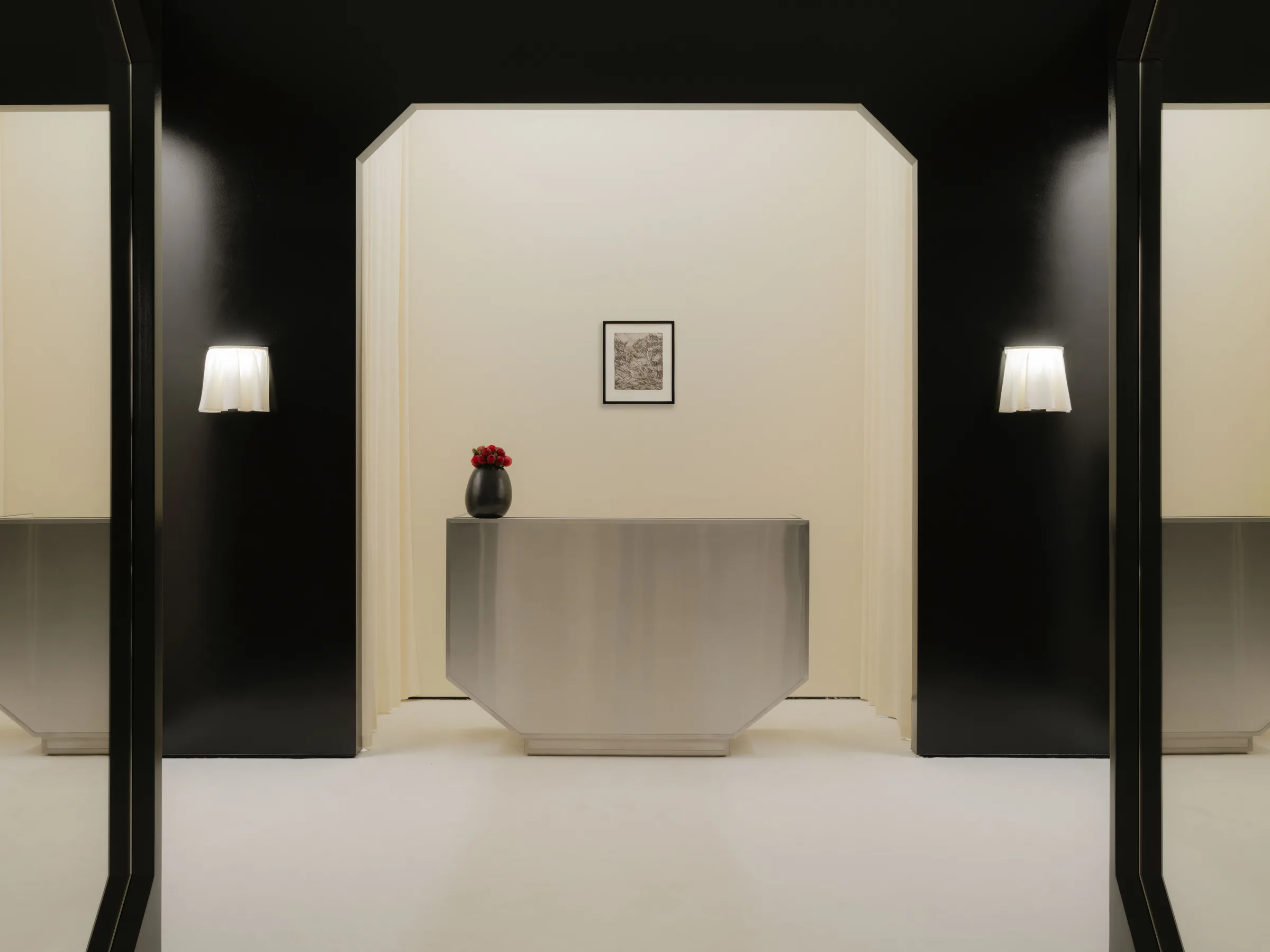
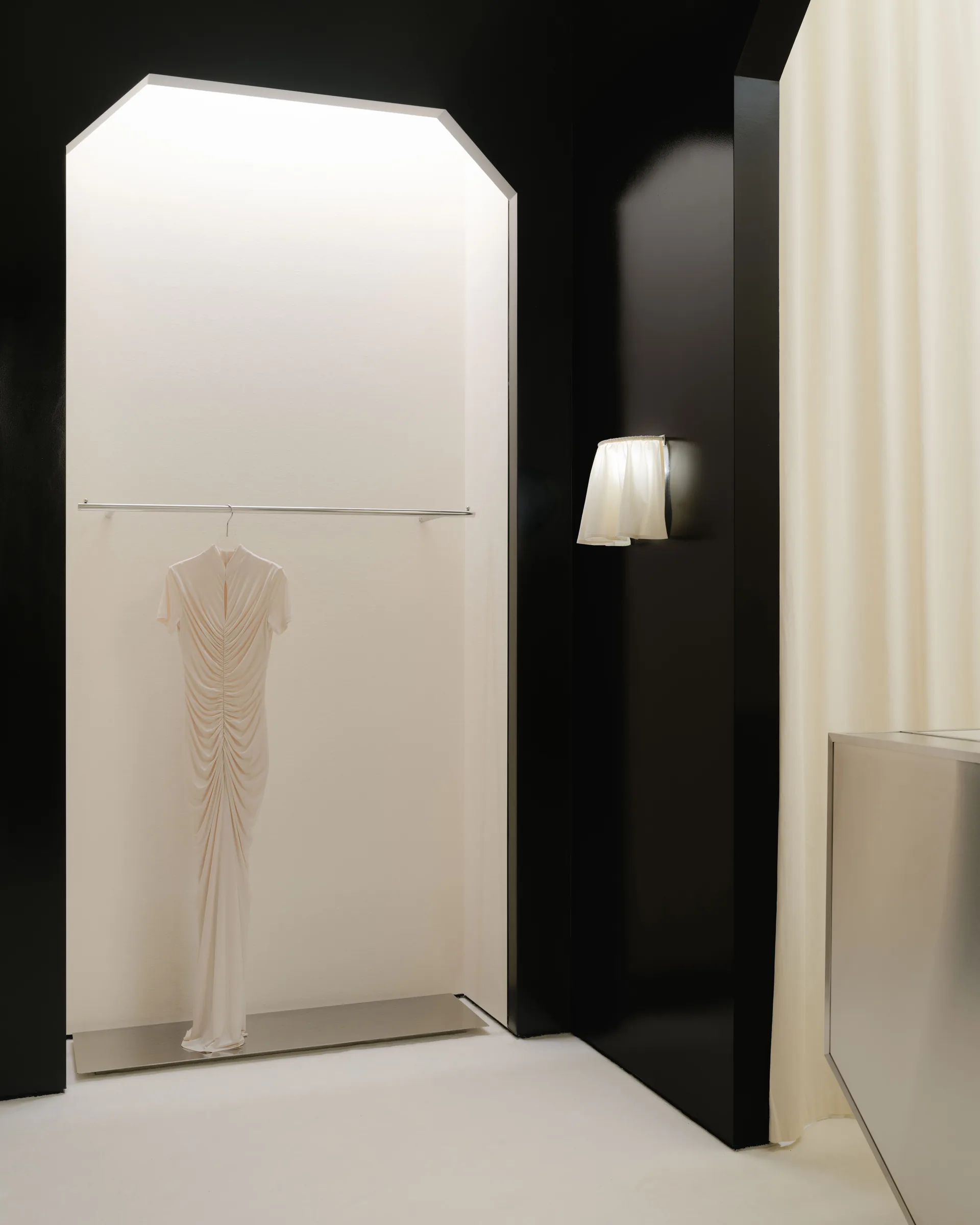
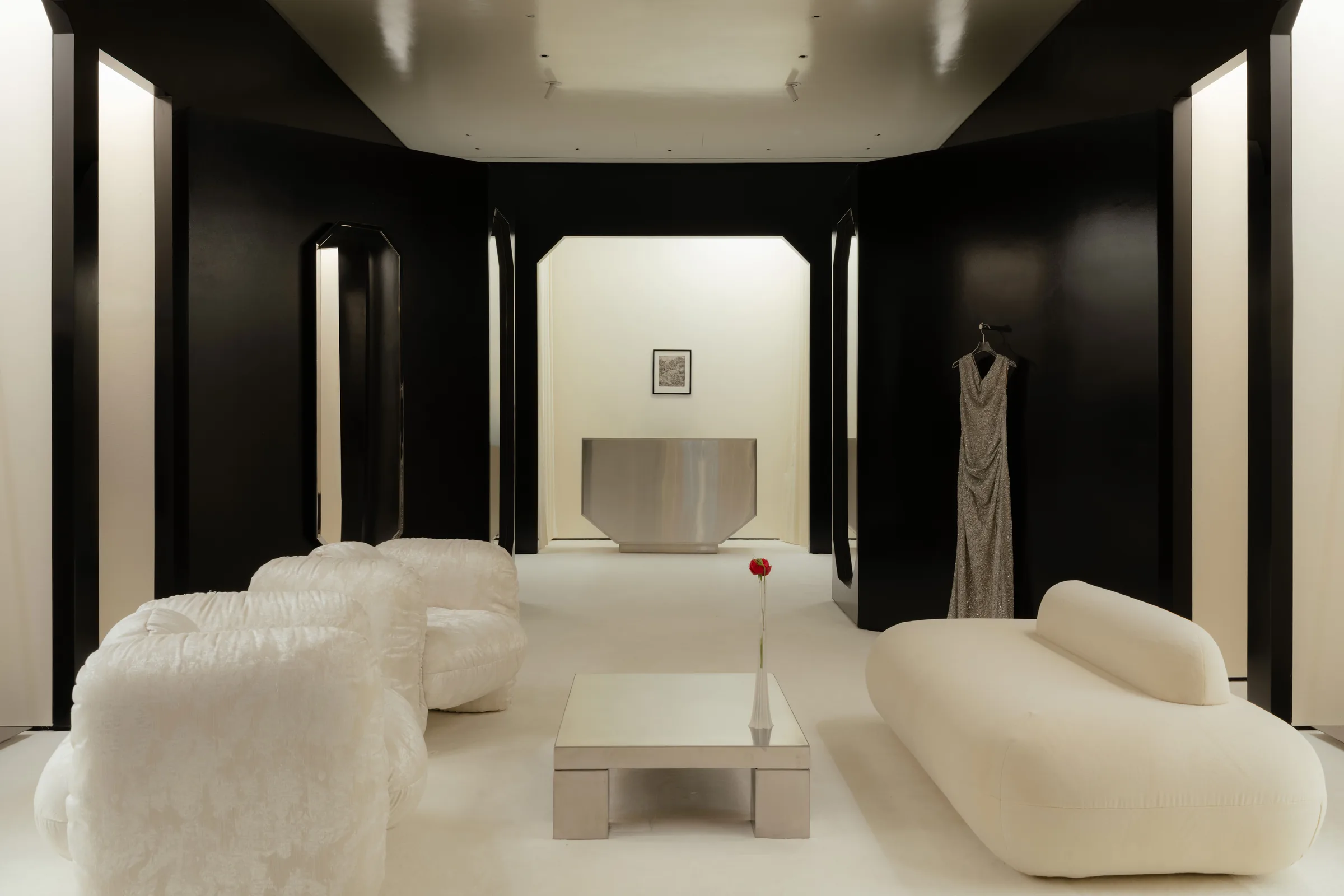
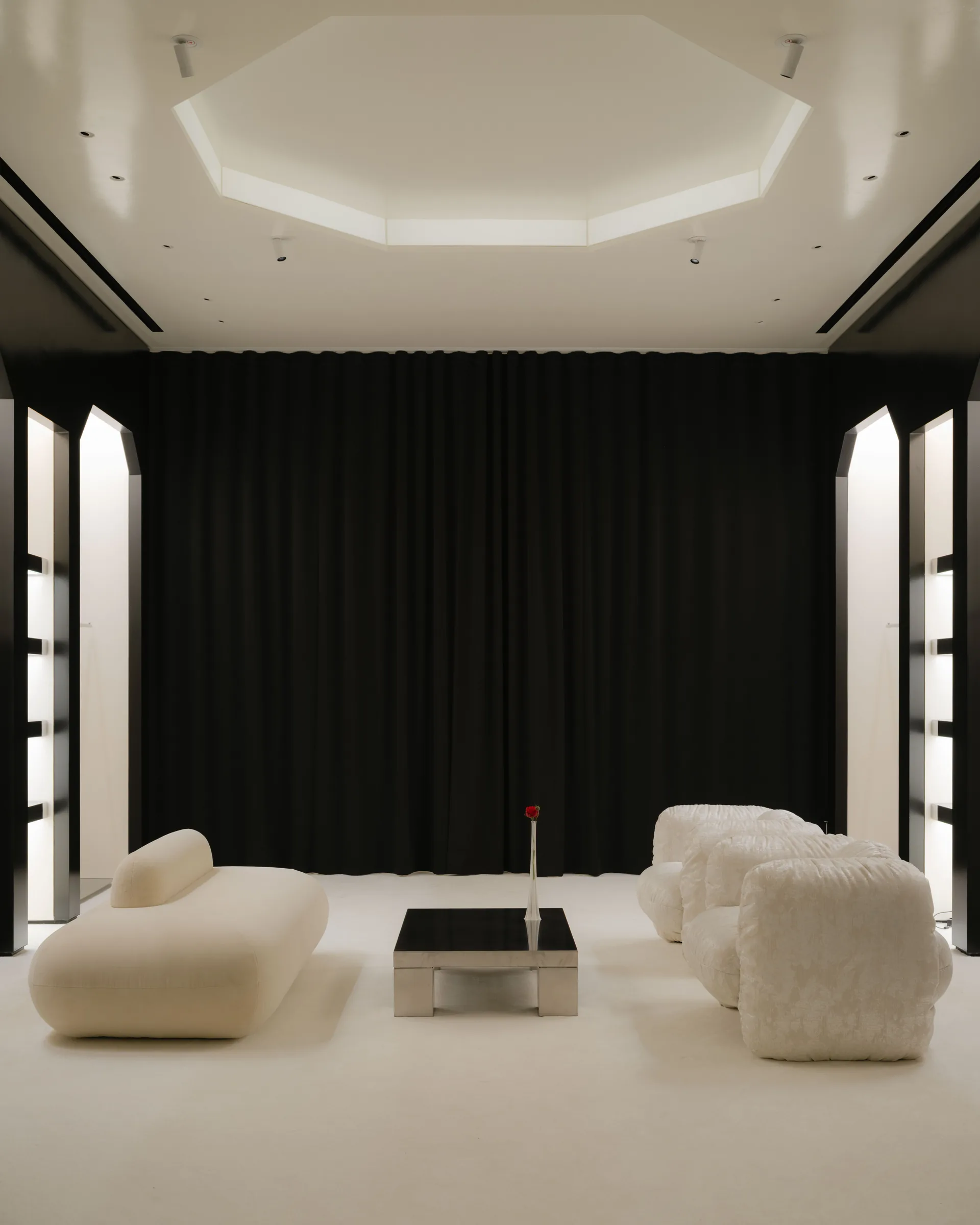
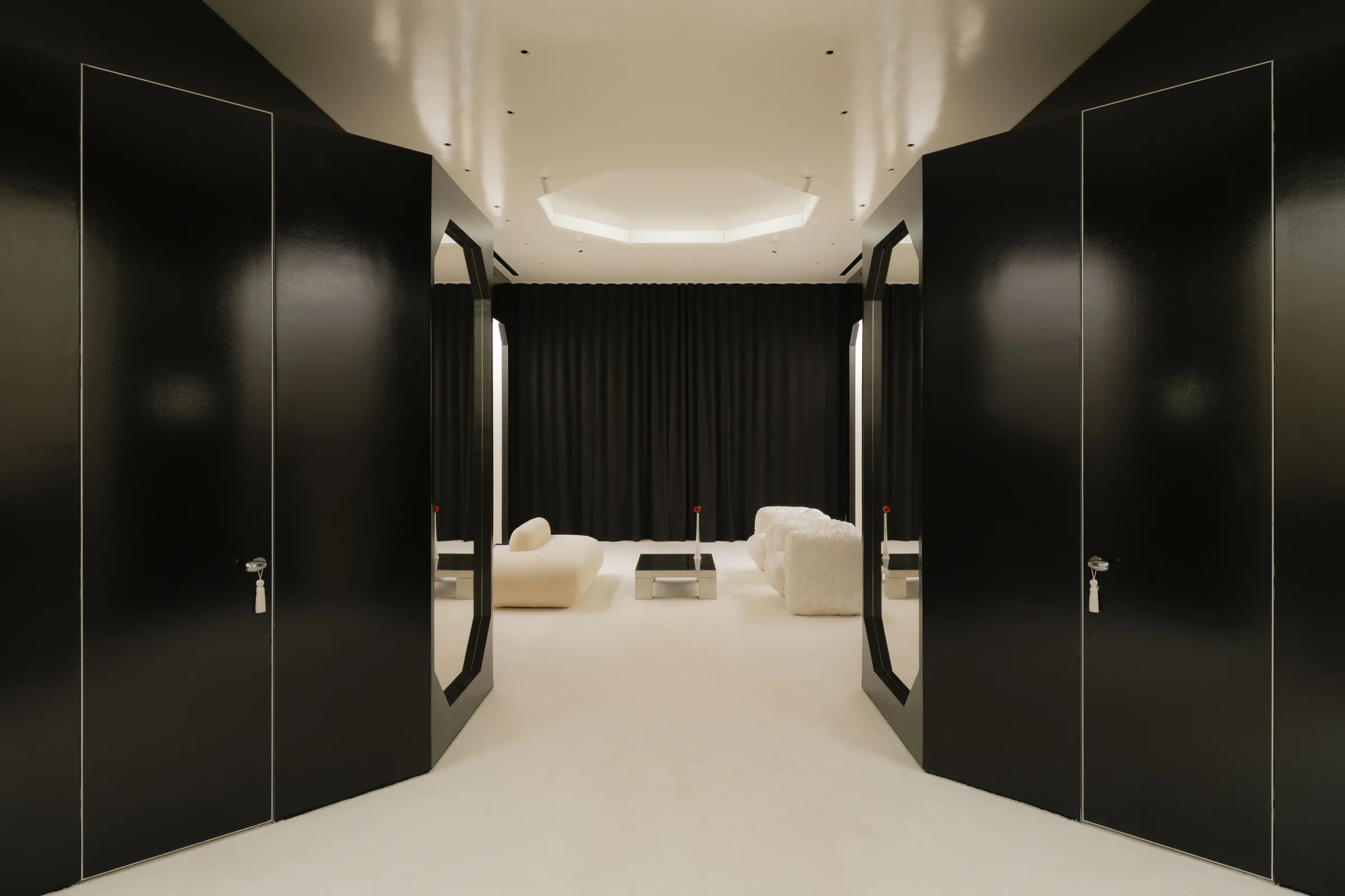
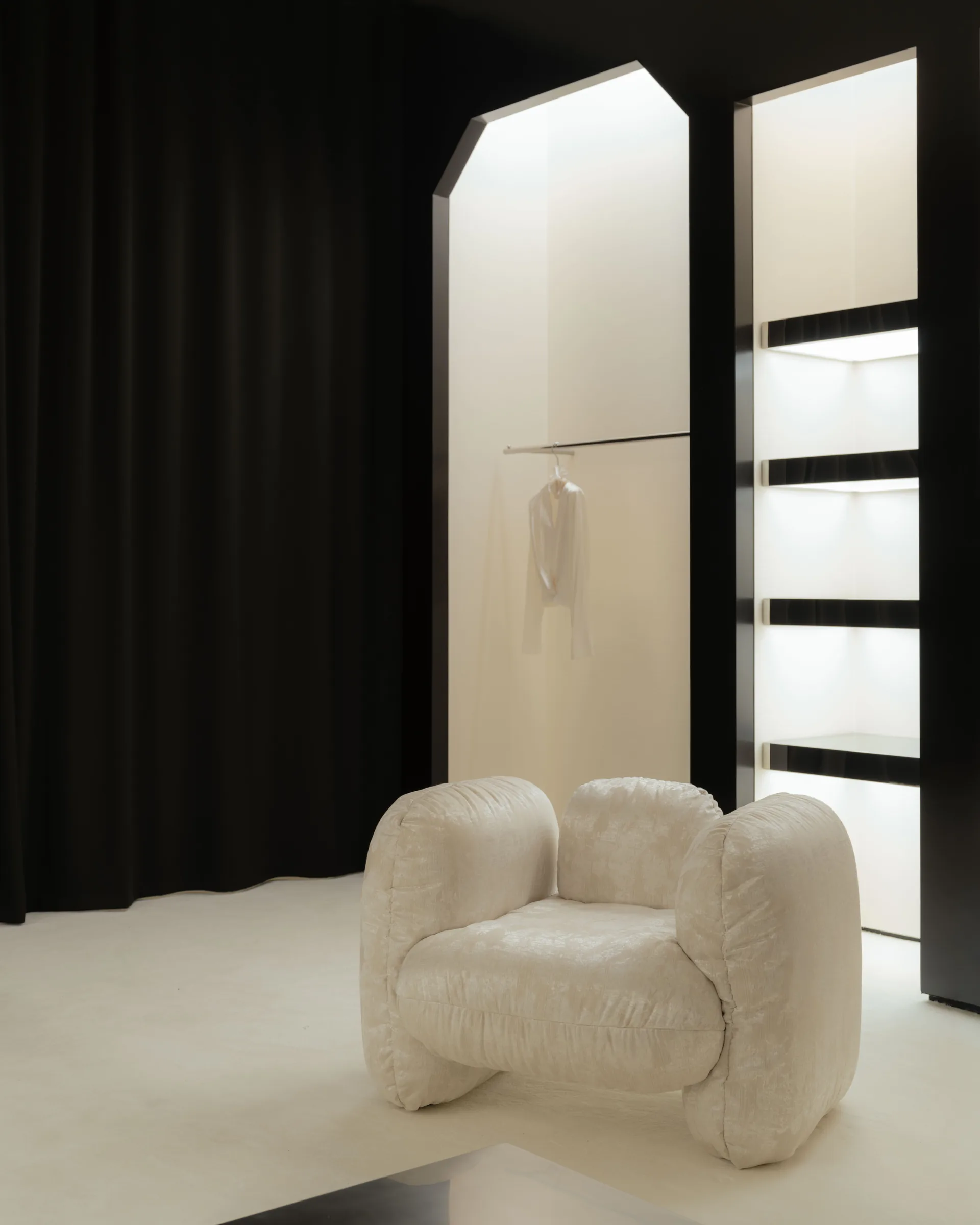
The room is almost entirely black. Walls, ceiling perimeter, the deep curtain that closes the back of the lounge, the lacquered surrounds of the floor mirrors: all of it rendered in the same glossy black, the kind that reflects like water and absorbs detail in equal measure. Then, set into that black, a sequence of tall white niches. Each one is lit from within. Each one holds a single dress. The boutique reads less like retail than like a small private gallery, the kind where the works do not need labels because the staging has done that work already.
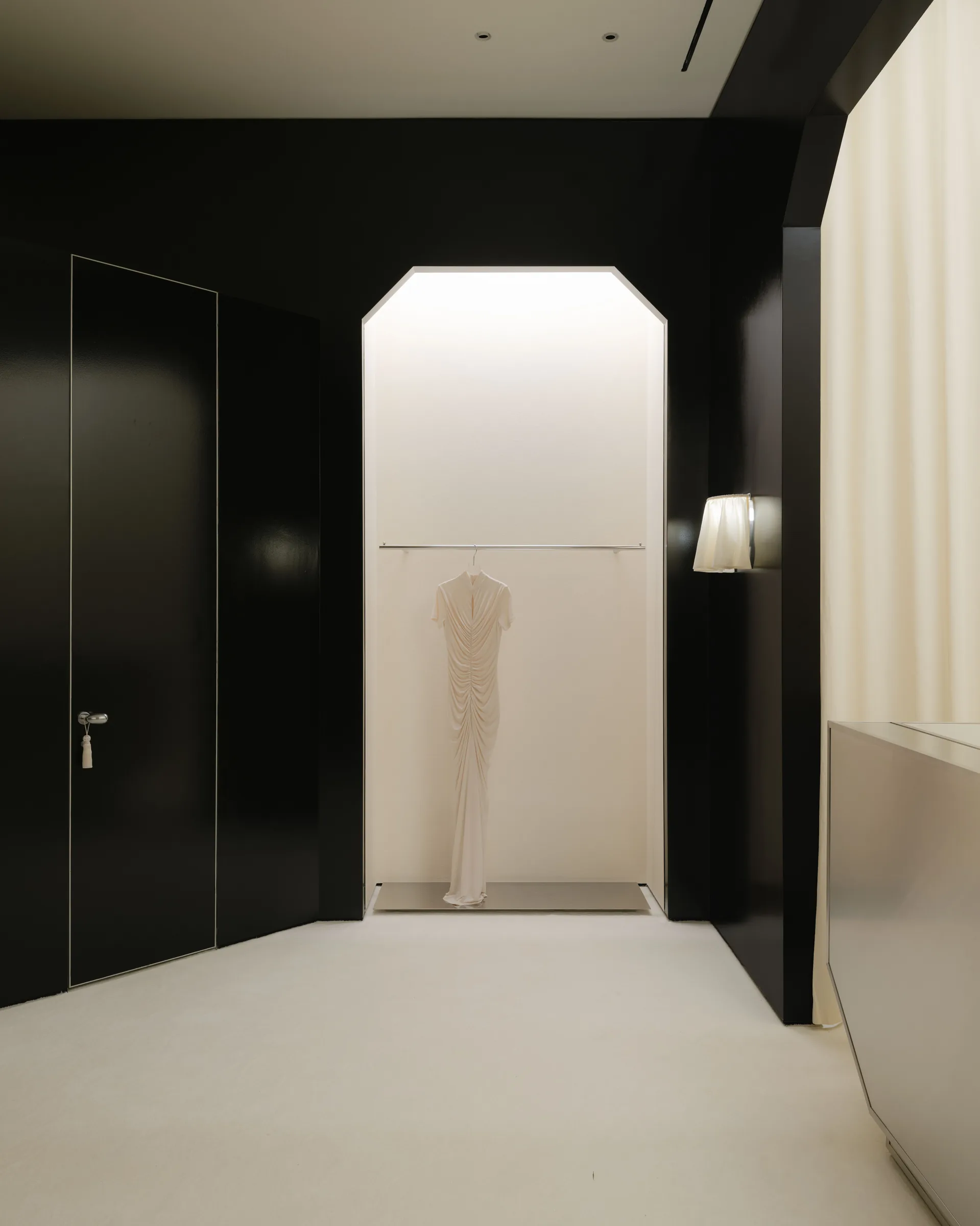
EDXXKAT calls the atmosphere "Garden under the yellow moon" and credits the 19th century for the decorative grammar, but the more useful reference is theatre. The black walls function the way a proscenium does, the white lightboxes the way a stage does. The dresses, by Roses Lace in silk, satin, velvet, crêpe de chine, hang inside the boxes on slim brass rails as if positioned by a costumier rather than a shop fitter. Light builds inside the niche and falls off into the surrounding black, so the eye returns to the garment every time.
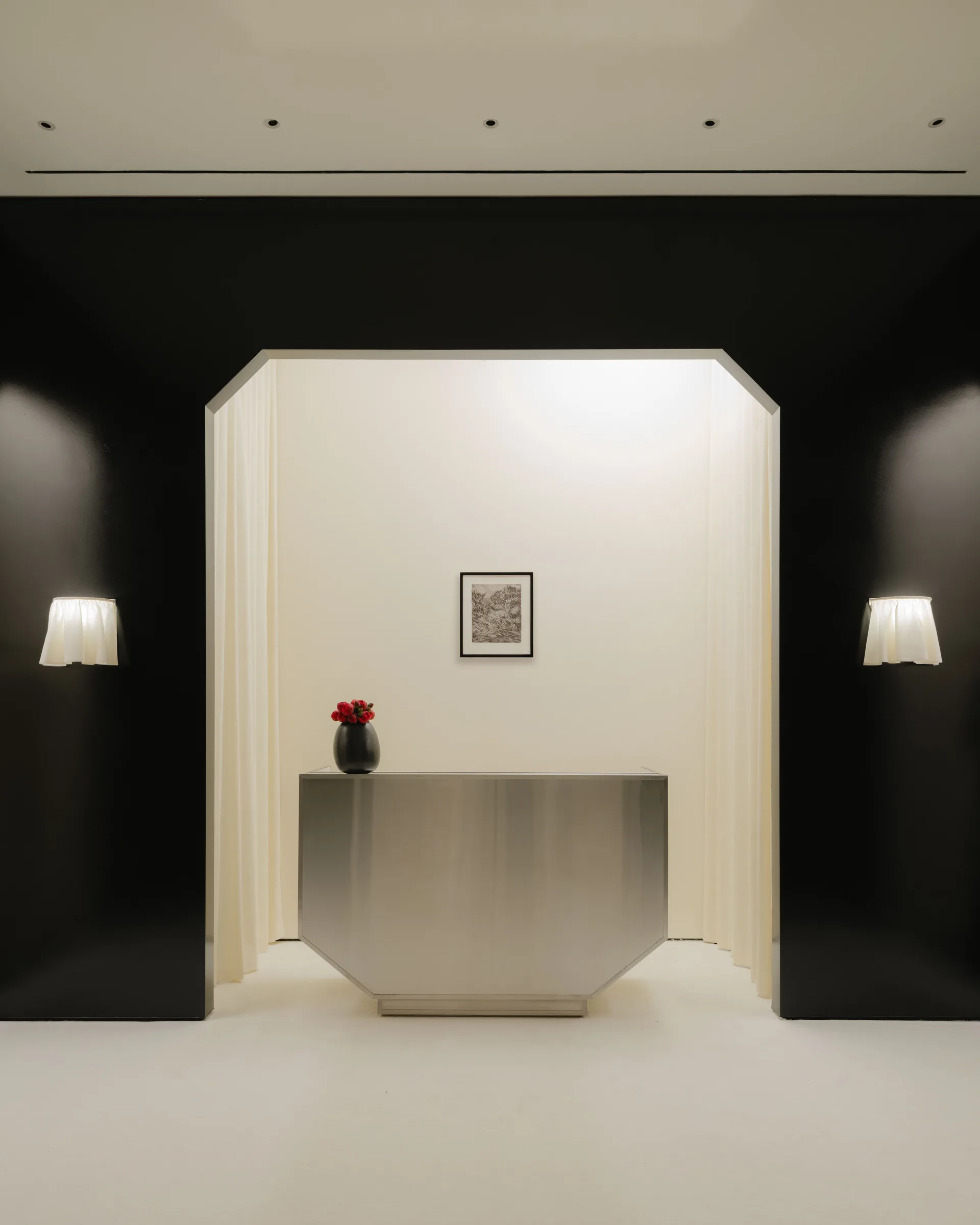
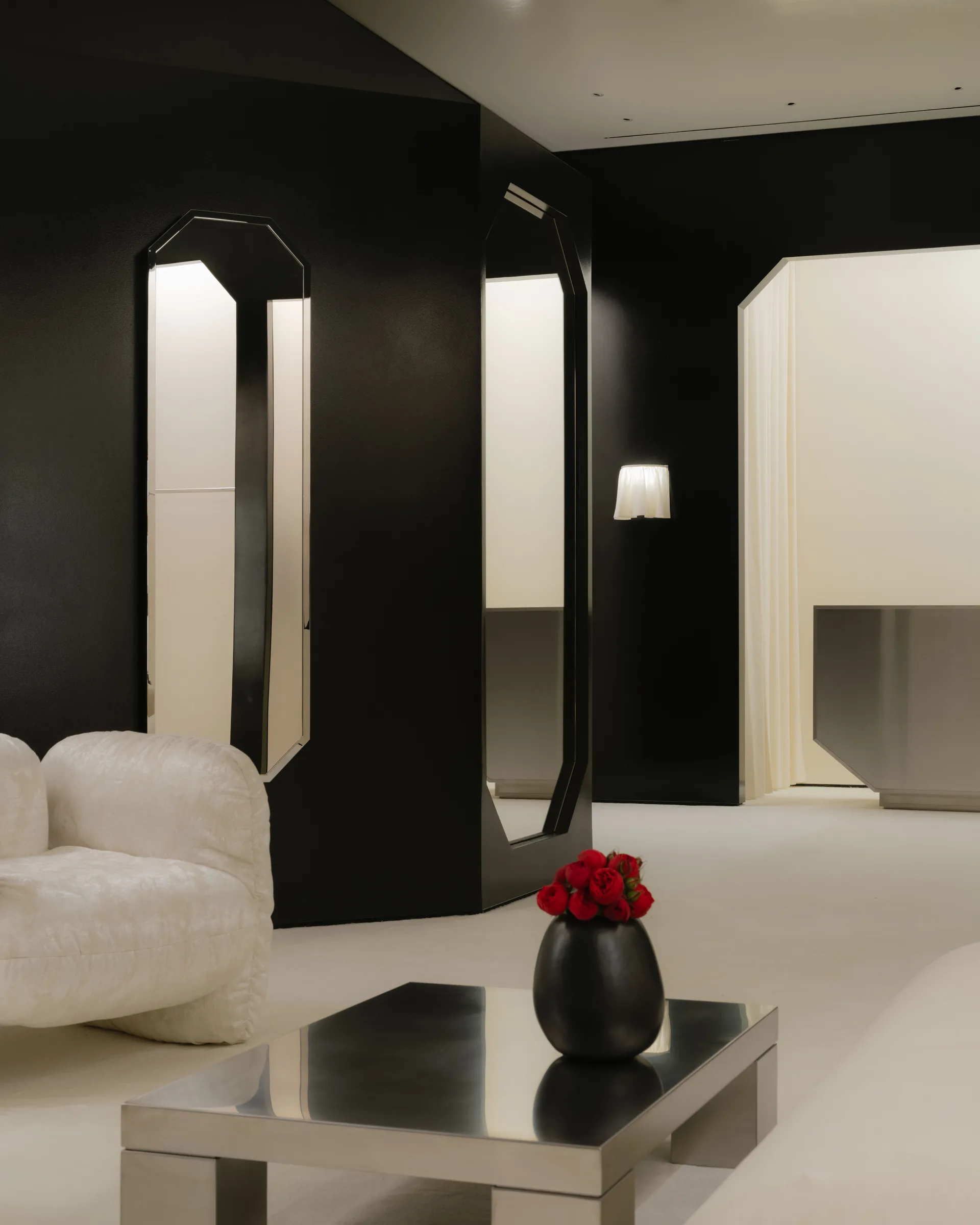
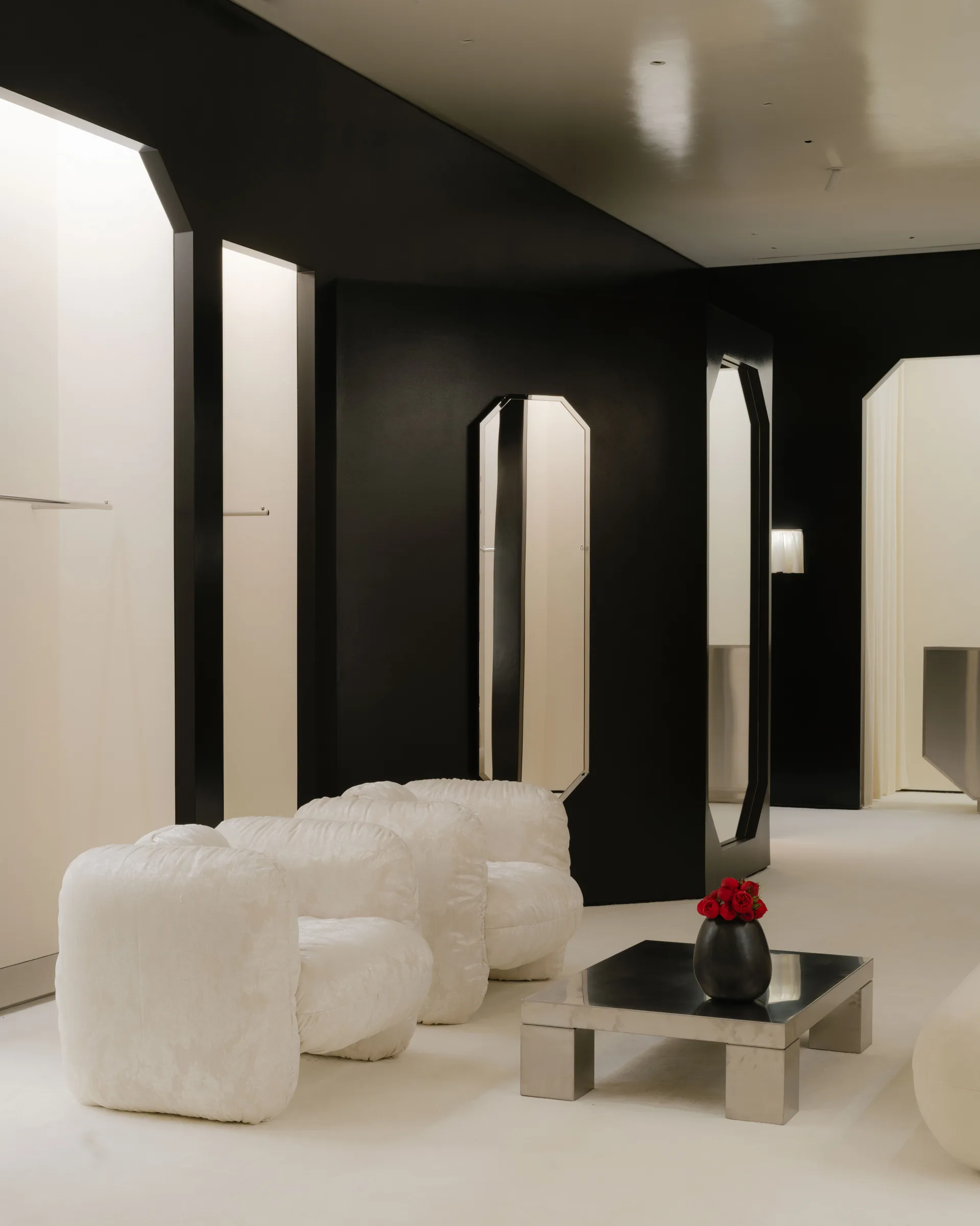
The custom run goes further than the lighting. The cash desk, in brushed stainless steel, sits inside its own white-lined recess between two pleated curtain panels; a vase of red roses provides the only other colour in the room. Wall sconces with pleated cream shades read as period objects without quoting any single period directly. Floor mirrors are cut into octagonal frames lacquered in the same black as the walls, doubling the niches into the disorienting reflections of a fitting-room corridor seen from inside.
In the seating area the palette inverts. A pair of curved cream sofas, presented for the first time in a floral print under fur trim, anchor the back wall, flanked by two large pouf-cubes in long-pile white shearling. A low black coffee table with a brushed-metal base carries a black vase and a single rose. The floral print under fur is the studio's most overtly 19th-century gesture in the room, an upholstery decision at home in a Belle Époque salon and pointedly current here.
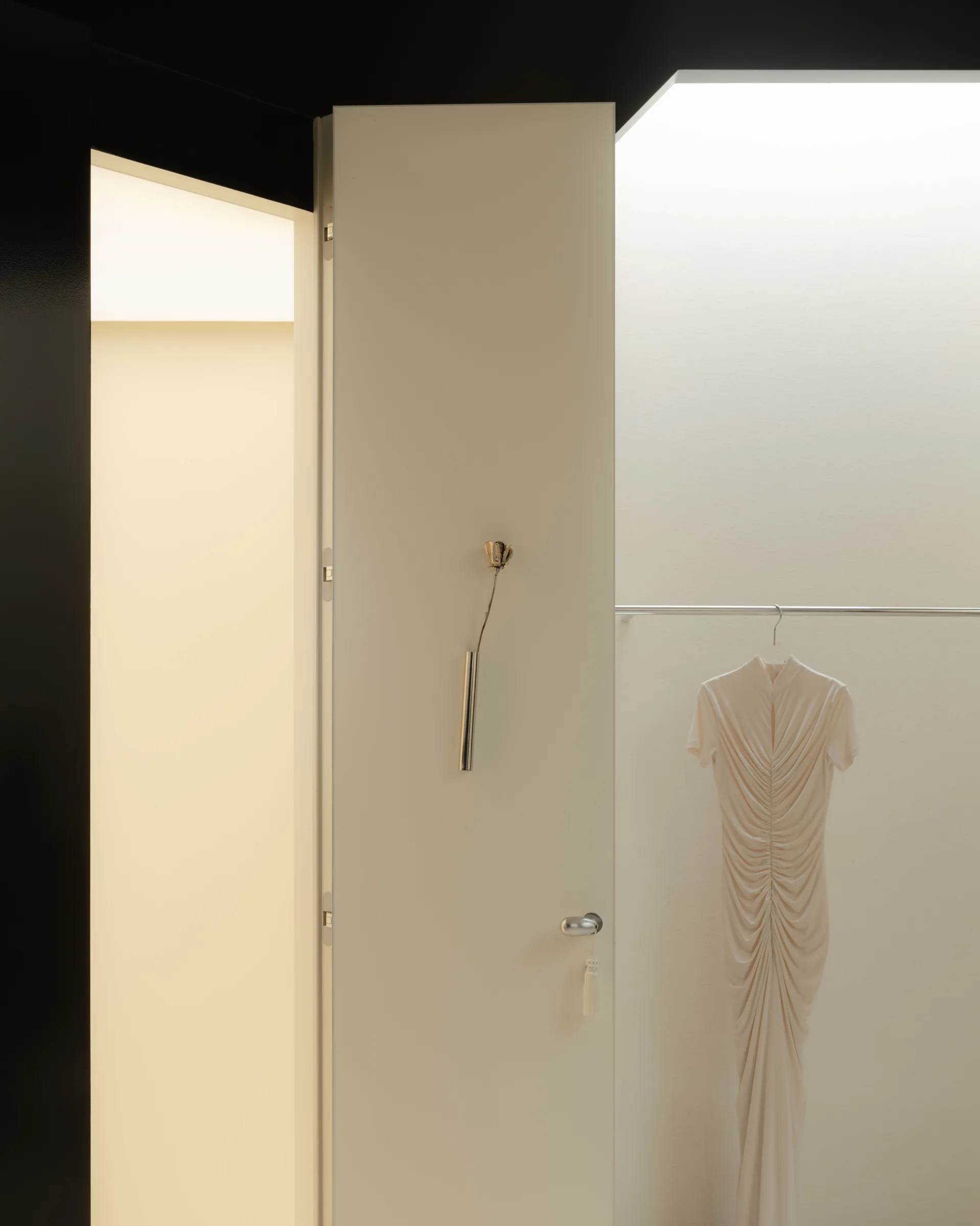
Behind the lounge, a private circuit of fitting rooms runs in soft carpet and cream-painted walls. Doors are concealed in the black panelling and only reveal themselves as one approaches. A manual control lets each guest tune the lightbox temperature and brightness against the garment being tried on, a small but telling concession to how buying a dress in this category actually works.
What the boutique gets right is the proportion of restraint to romance. The black-and-white discipline of the shell, almost graphic in its certainty, holds the more theatrical elements, the velvet, the floral upholstery, the single rose, in a frame where they cannot tip into pastiche. The dresses become art objects because the room insists, with every surface, that they are the only thing in it worth looking at.