.webp)
In Moscow, EDXXKAT keeps the cafe's concrete shell raw and board-marked, then sets vertical larch panelling, polished steel tubing and brown leather upholstery against it until contrast itself becomes hospitality.
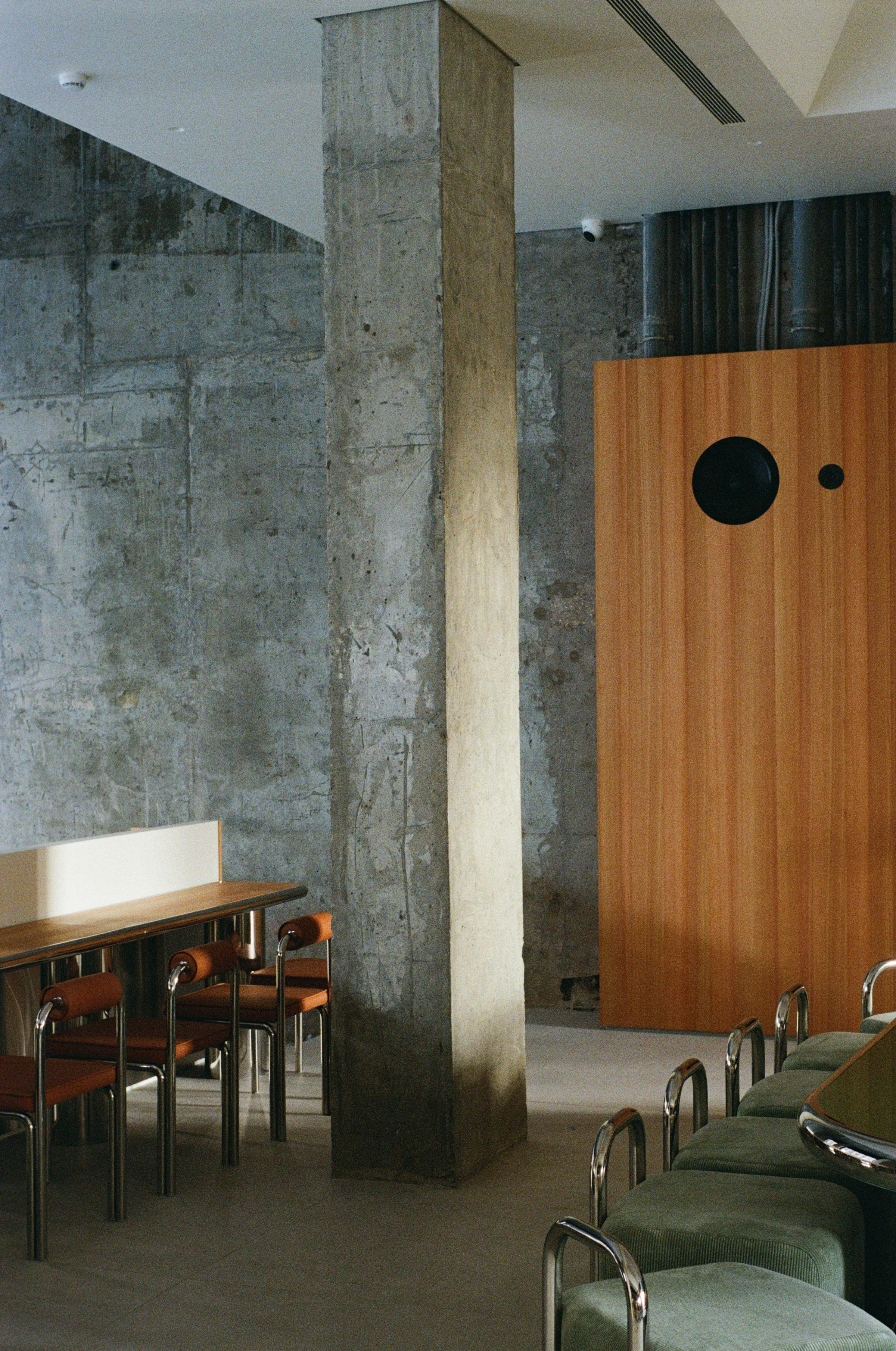
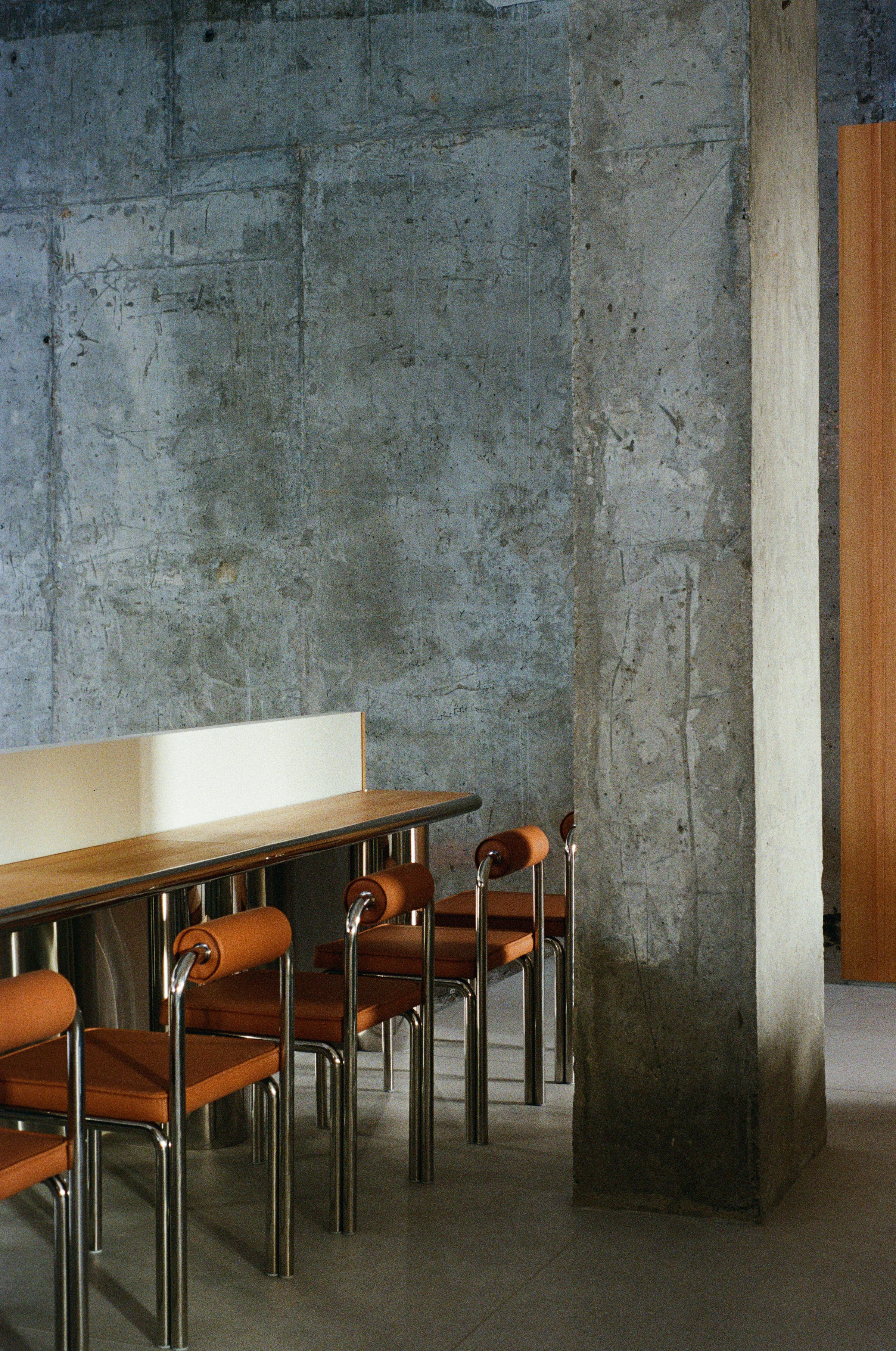
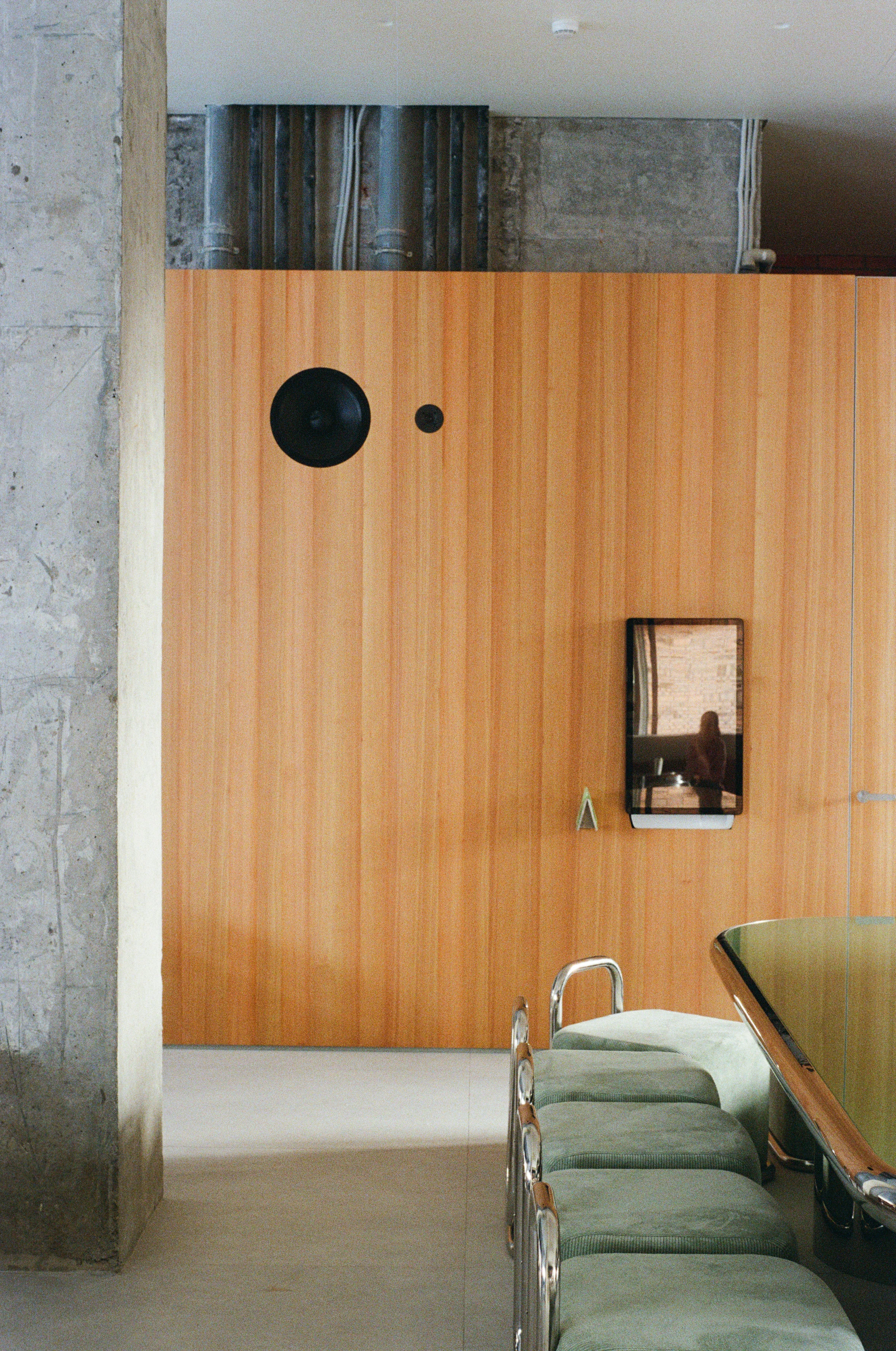
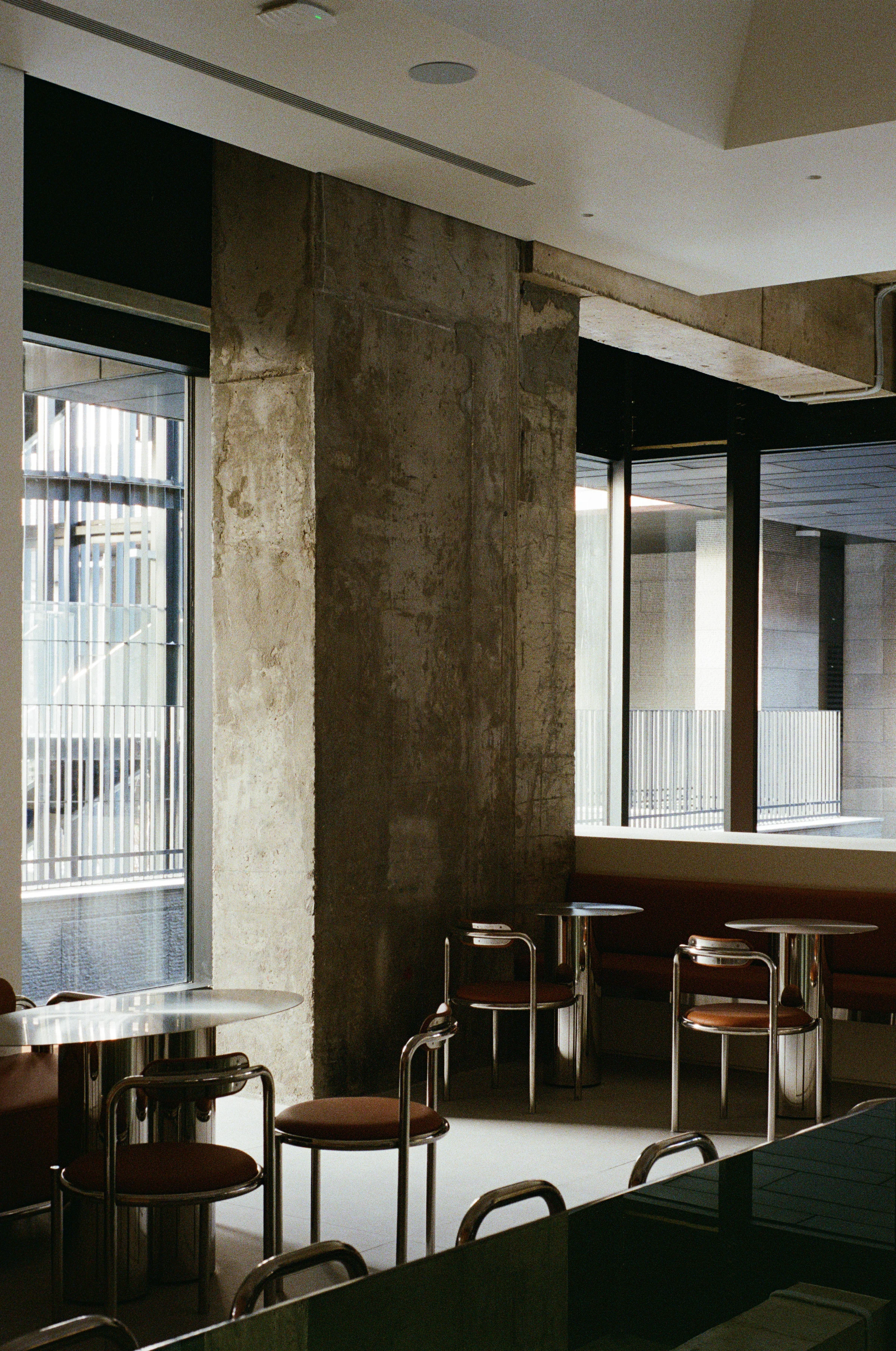
At Nothing Fancy, the studio behind the cafe's identity over several previous chapters arrived at the new space already fluent in the brand. EDXXKAT, the practice founded by Eduard Eremchuk and Katy Pititskaya, treats this fluency as license to subtract rather than add. The existing concrete shell, board-marked, patinated, carrying the construction crew's chalked notations and pour seams in plain view, is left fully exposed. Nothing is plastered out. The shell is the first piece of the interior, not its substrate.
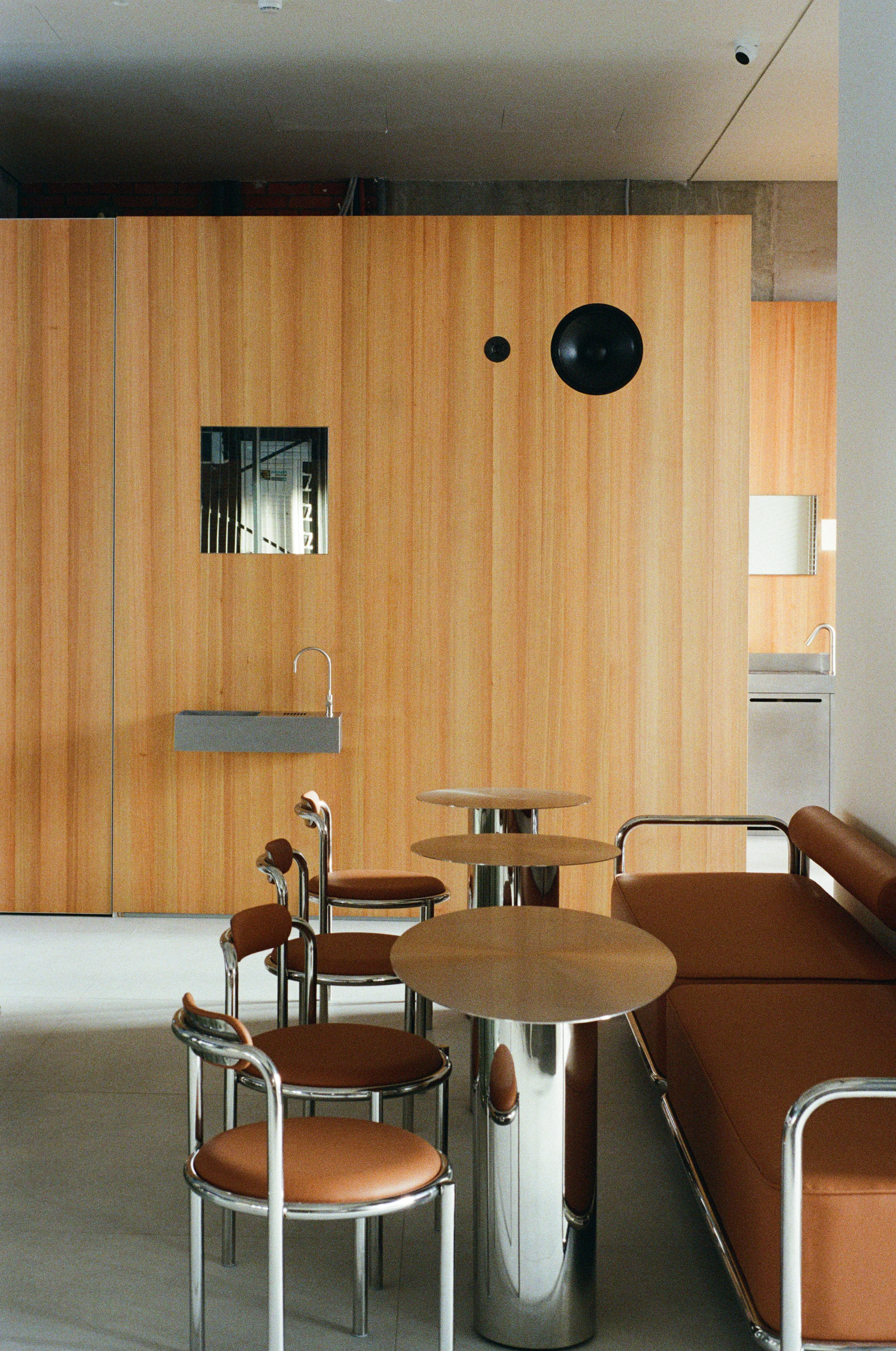
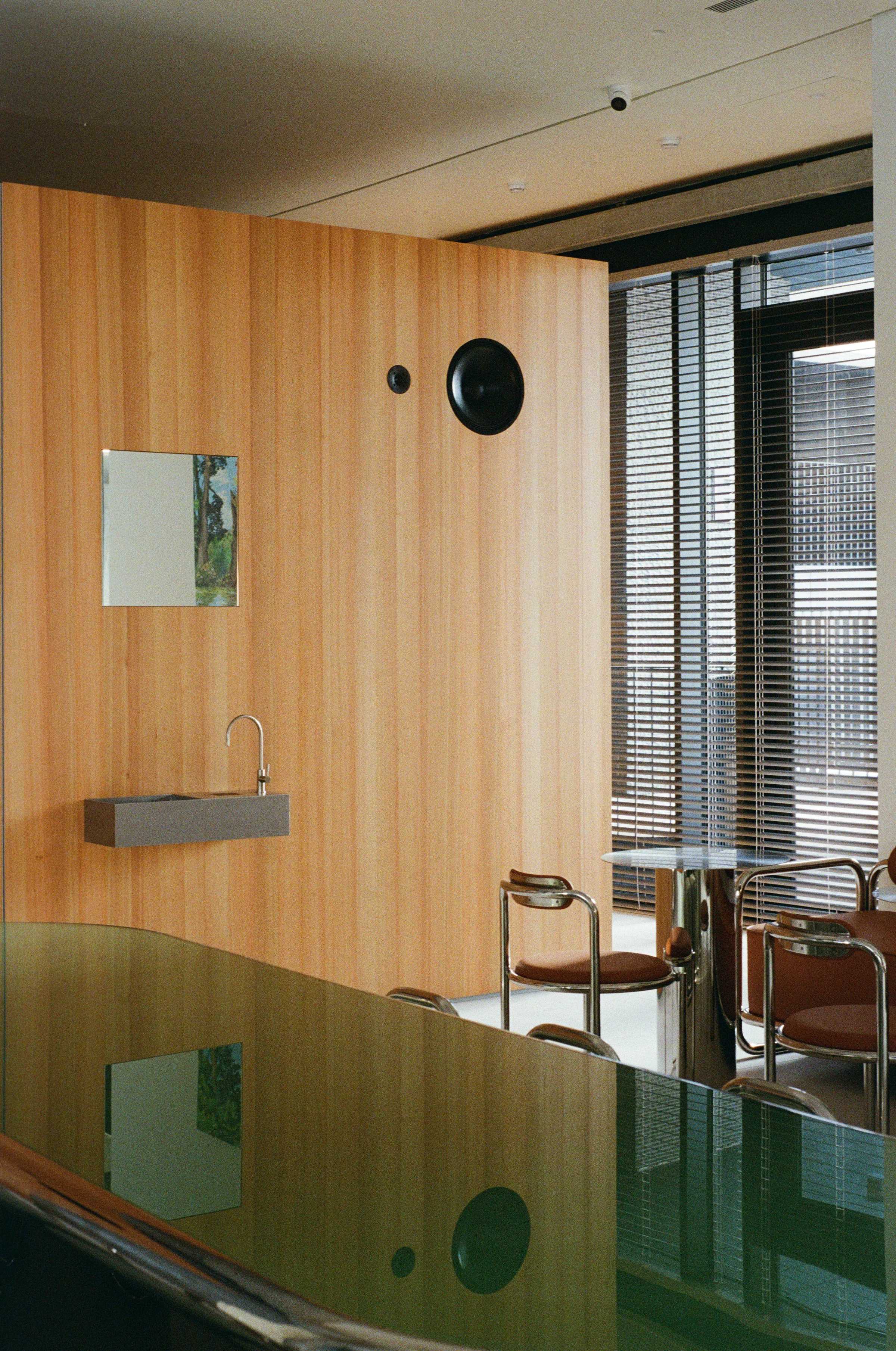
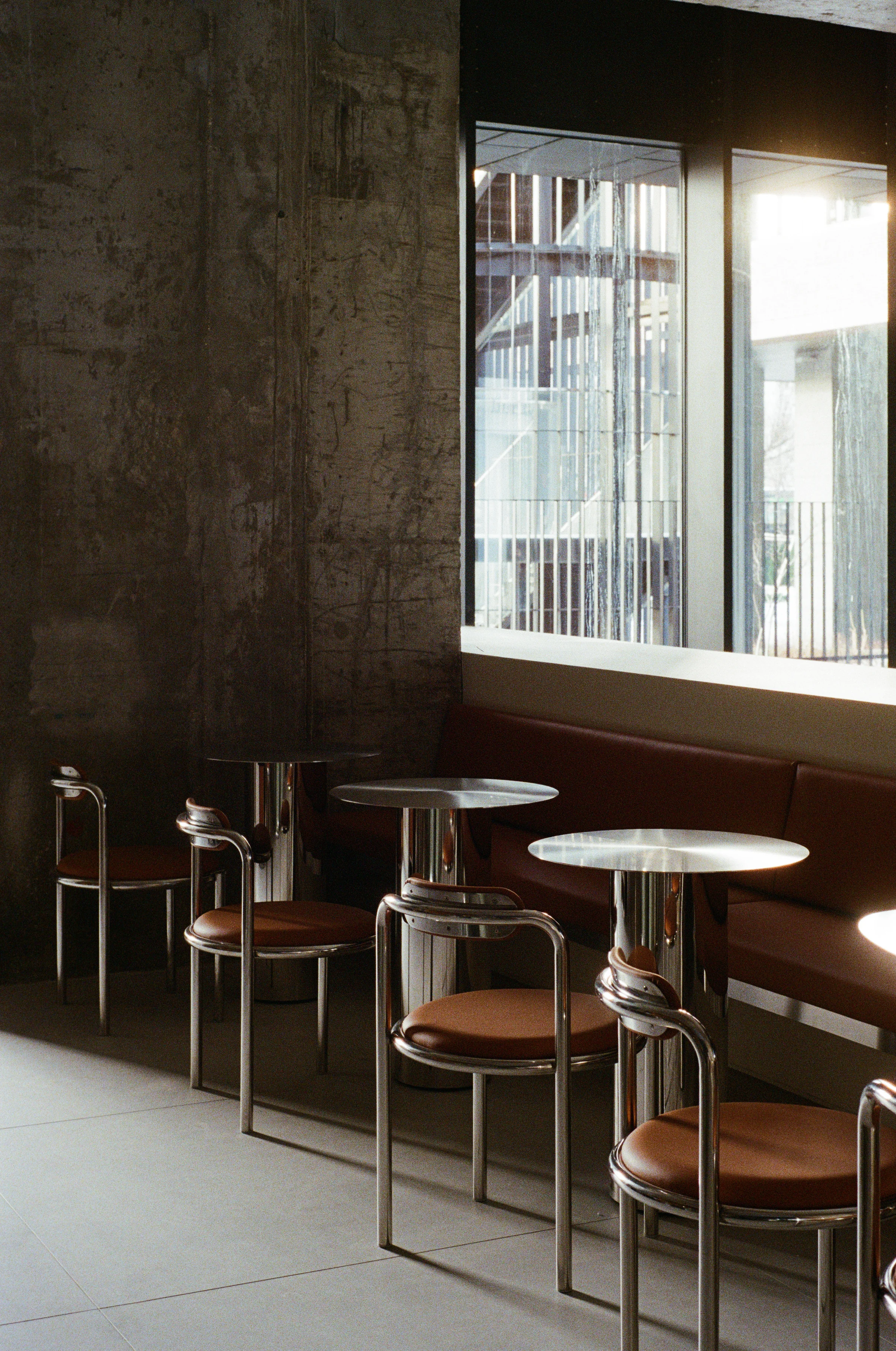
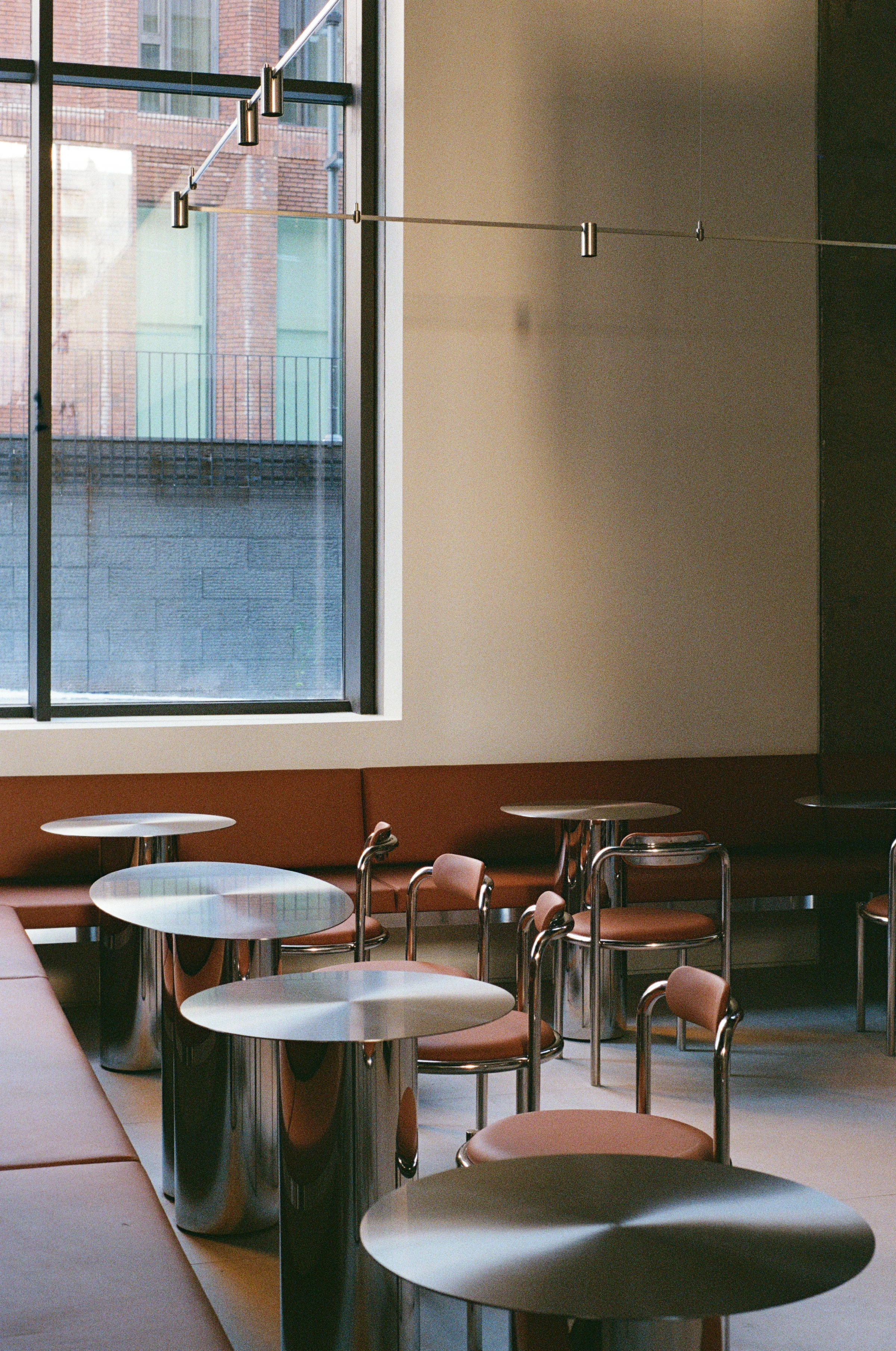
Against that found surface the studio sets a vertical larch wainscot and a handmade veneer wall, the grain reading uniformly close, the joinery clean. Brown leather upholstery wraps the chairs and runs along the banquettes; polished stainless steel forms the chair frames, the table edges, the bullnose on the large central counter. The contact between rough and machined is direct: a tubular steel chair set flush against a concrete column with the column's own surface untreated behind it. Texture answers texture.
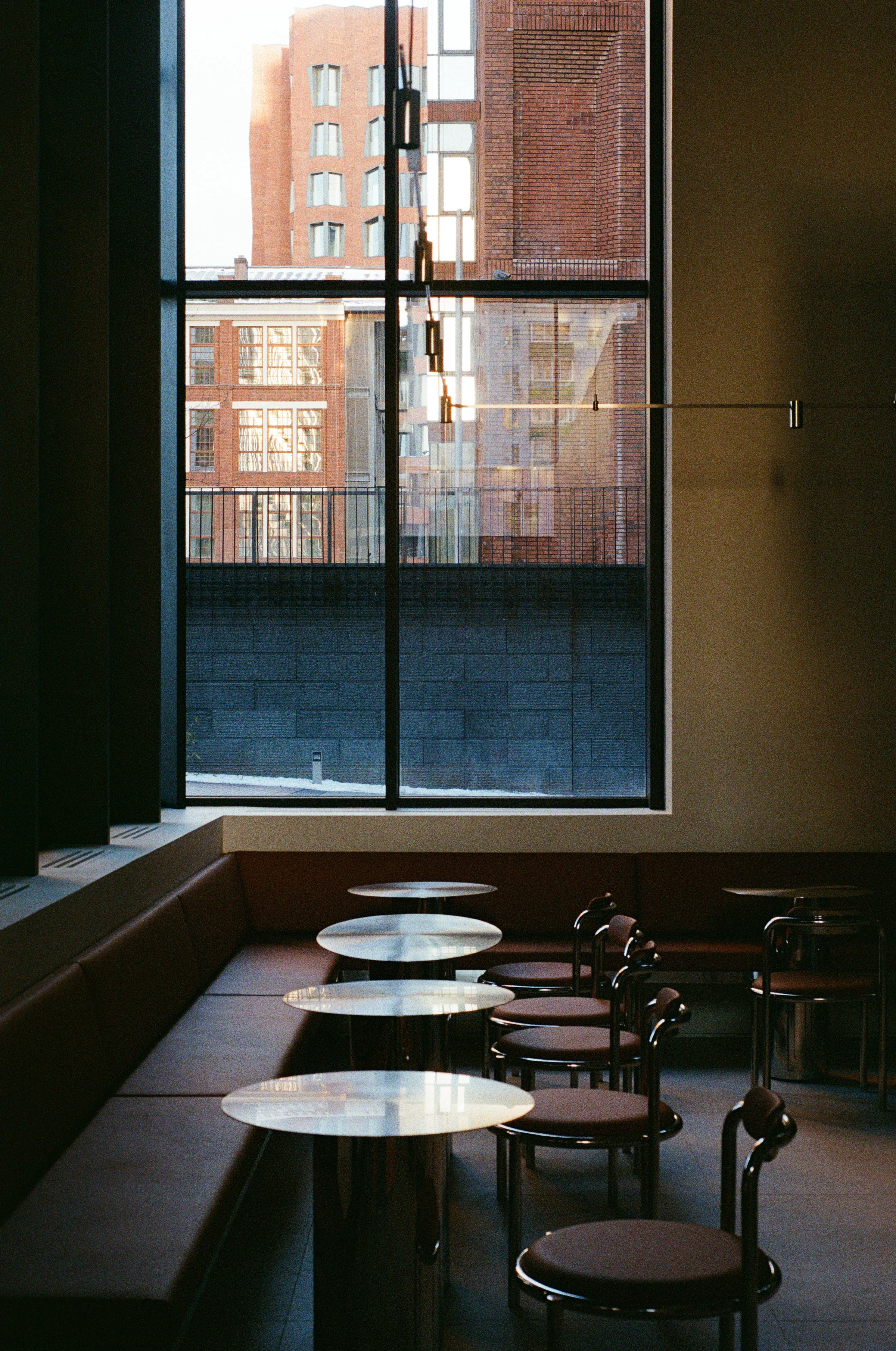
A long shared table anchors the room's social register. Its glass top sits in a polished steel rim that turns the surface into a mirror at the edge; a pair of deep green velvet armchairs face one end and a low velvet bench runs along the other. The velvet is not a decorative accent. It is the third material doing structural work in the palette, alongside leather and wood, holding the green tone that the daylight off neighbouring red brick brings into the room through tall window bays.
Lighting is layered low. Pendant tracks and brass-armed swing fixtures pull illumination down to the table surfaces rather than washing the room from above, leaving the concrete in shadow where it earns its character. "Every material is chosen for its texture and ageing quality, so the interior evolves beautifully over time," the studio writes. The bet is on patina. The leather will darken; the steel will hold its polish; the larch will deepen its honey. The concrete is already old.
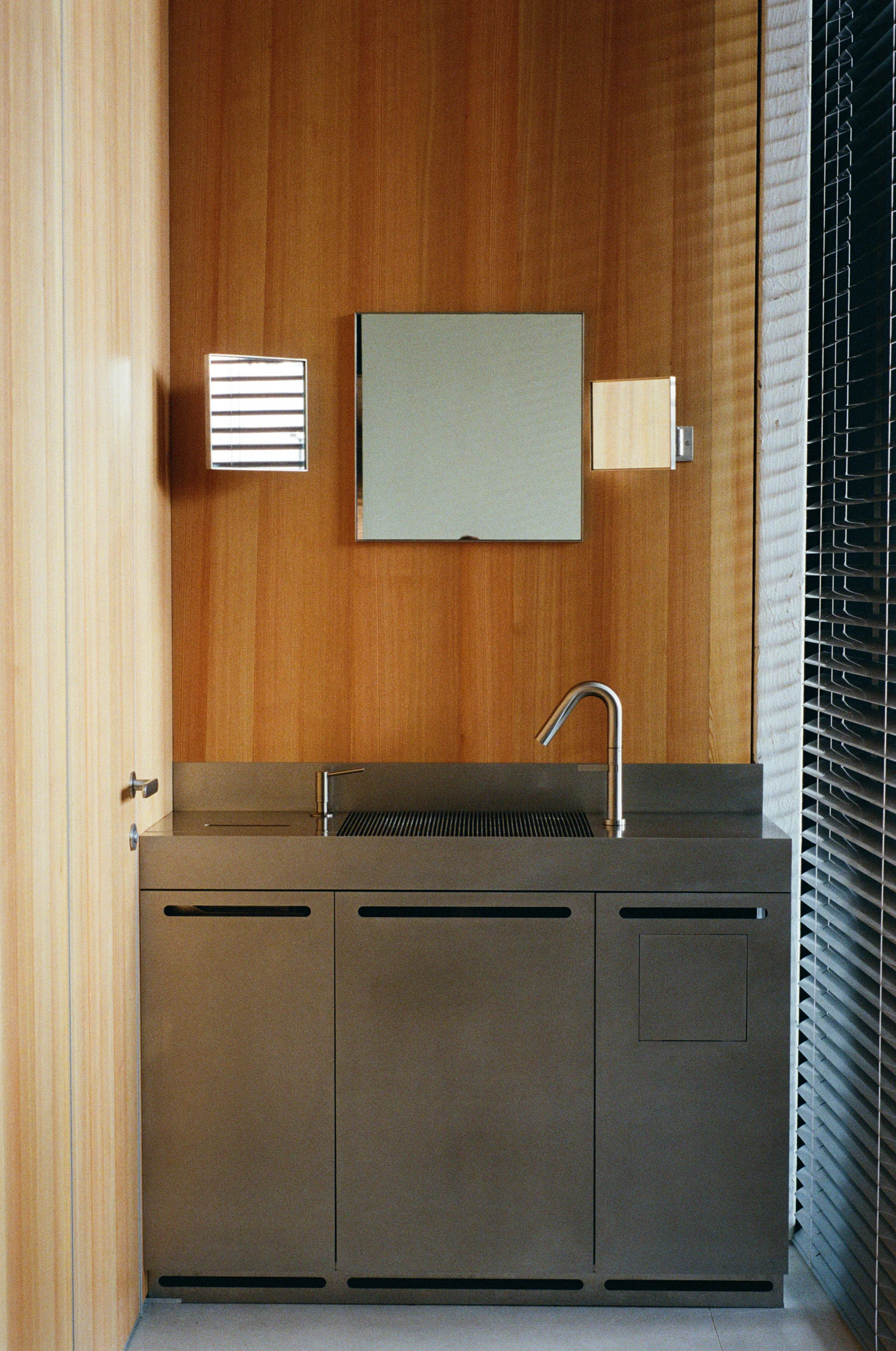
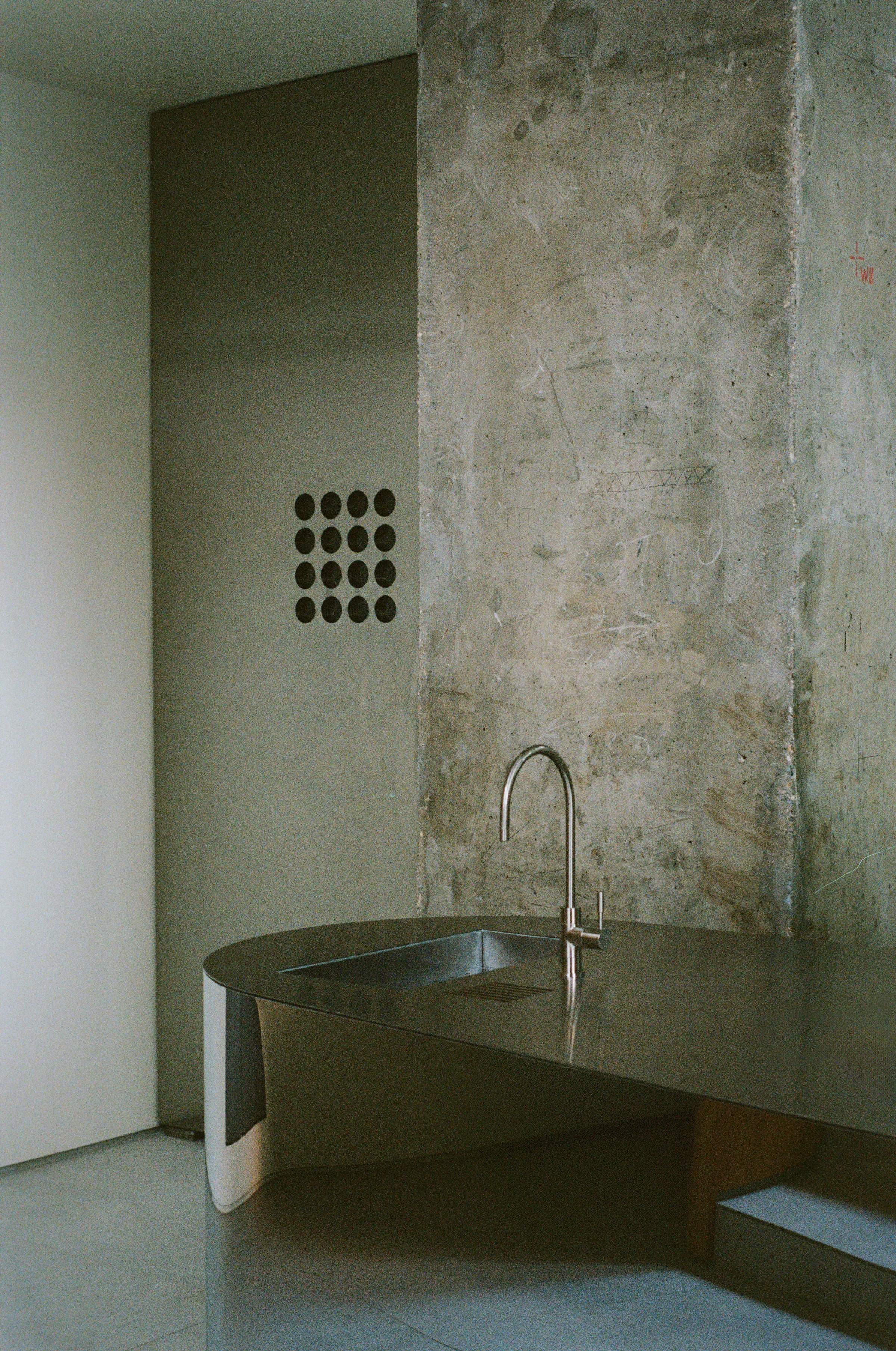
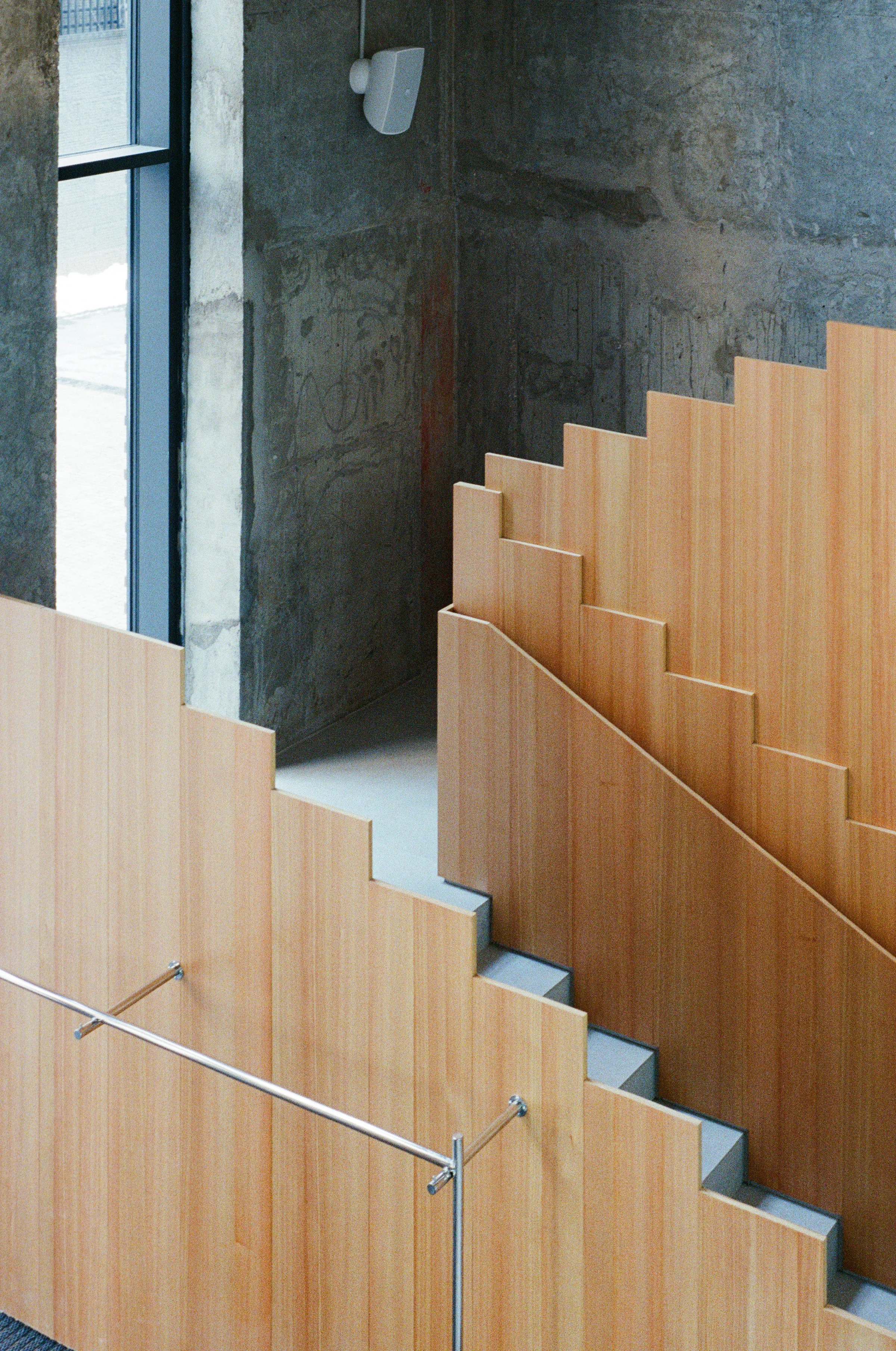
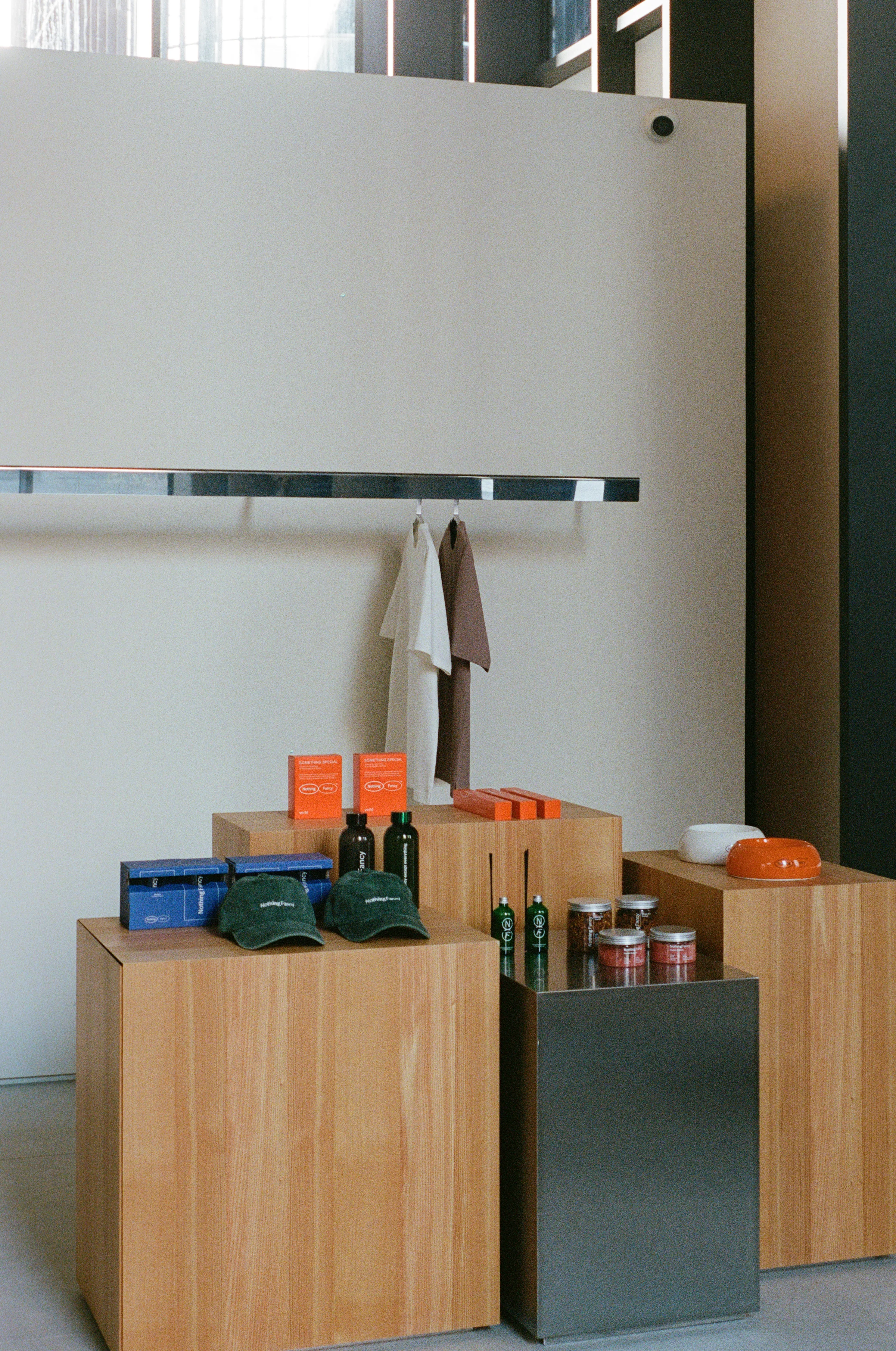
Smaller program reads with the same logic. A washroom sink in stamped stainless steel pairs with a backlit larch screen; a merchandise plinth in raw wood holds branded caps and coffee jars beside an orange paper poster, the only chromatic event in the palette. A larch staircase folds against a raw concrete wall in steeped planar increments, more sculpture than circulation. The cafe's name is its argument: not a stage set, not a styled environment, just a room where the building's own materials and the studio's chosen ones meet at eye level and hold.