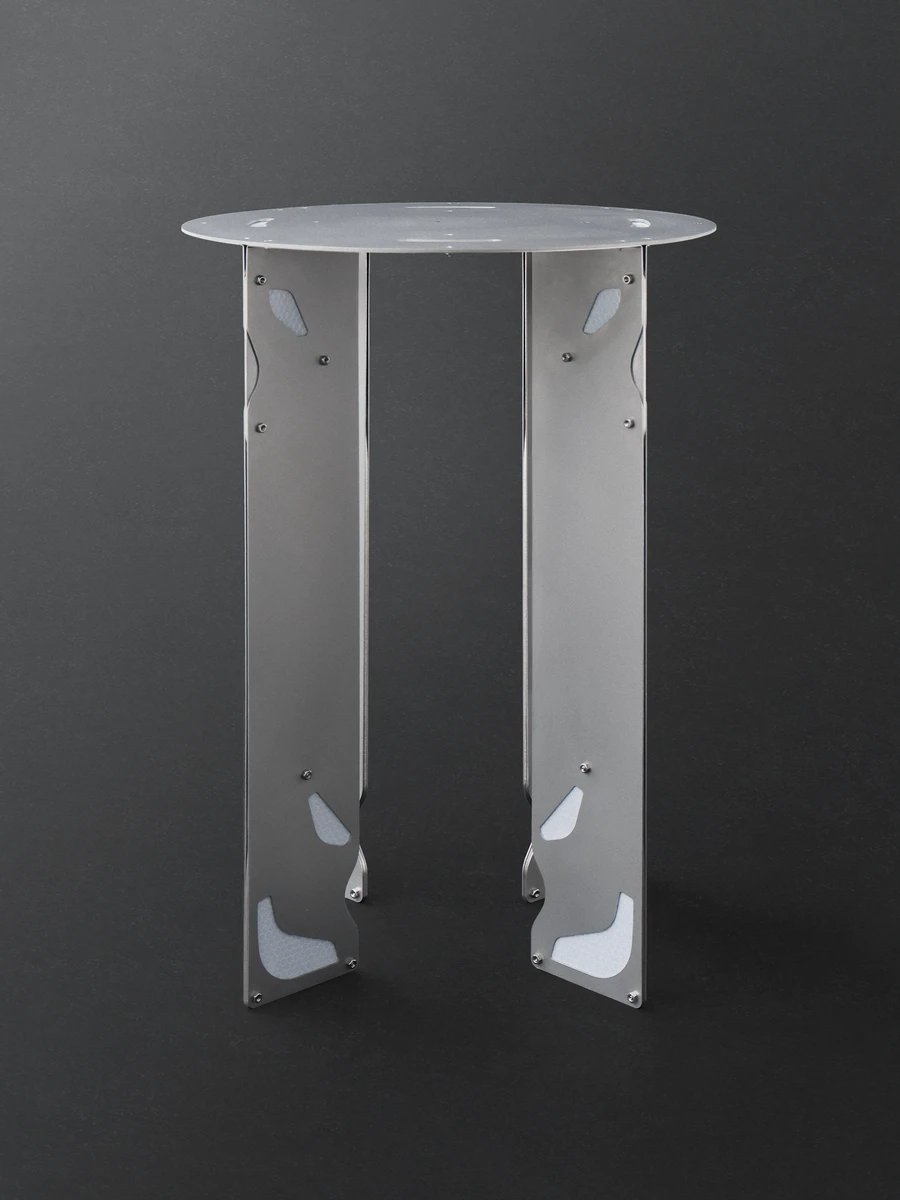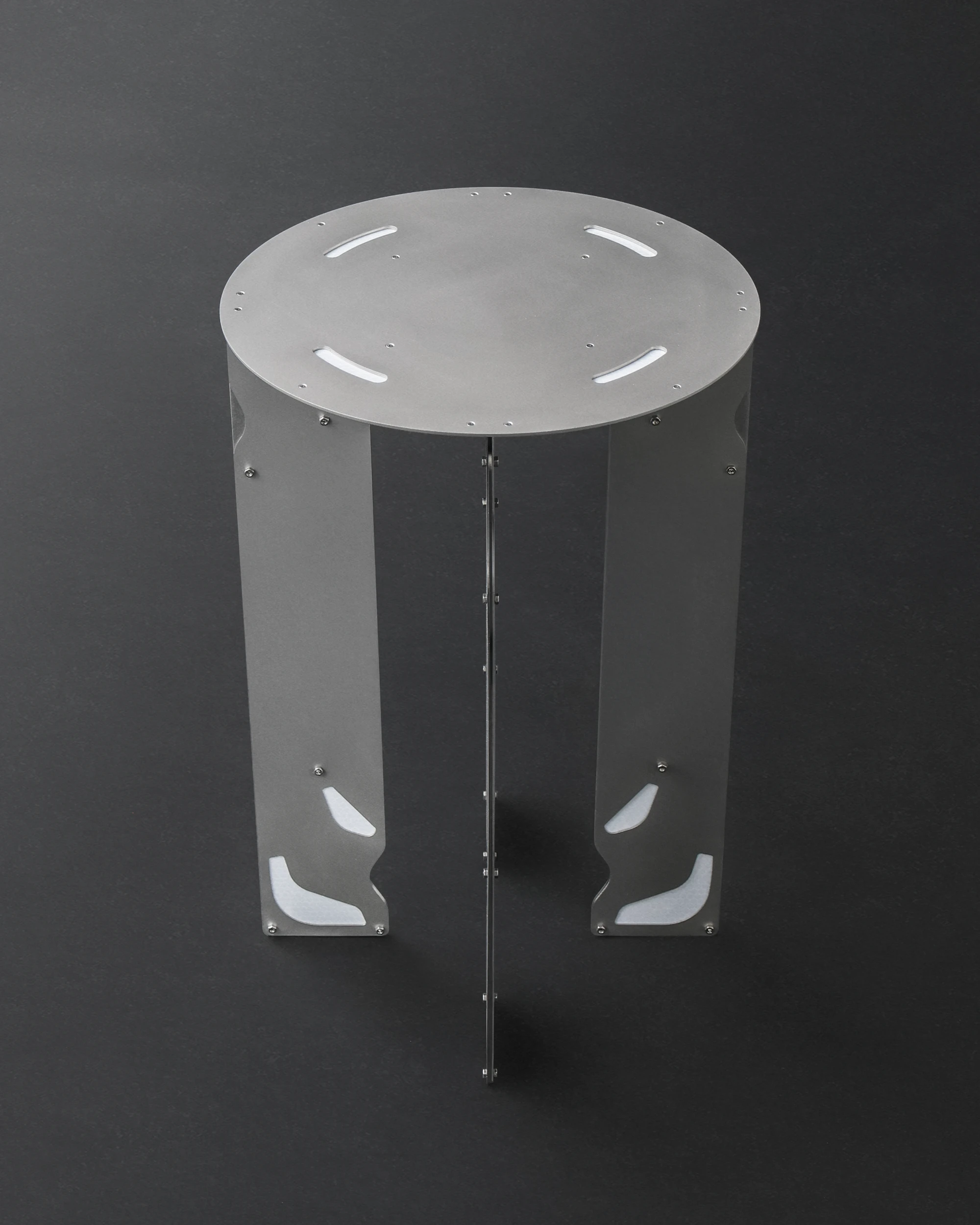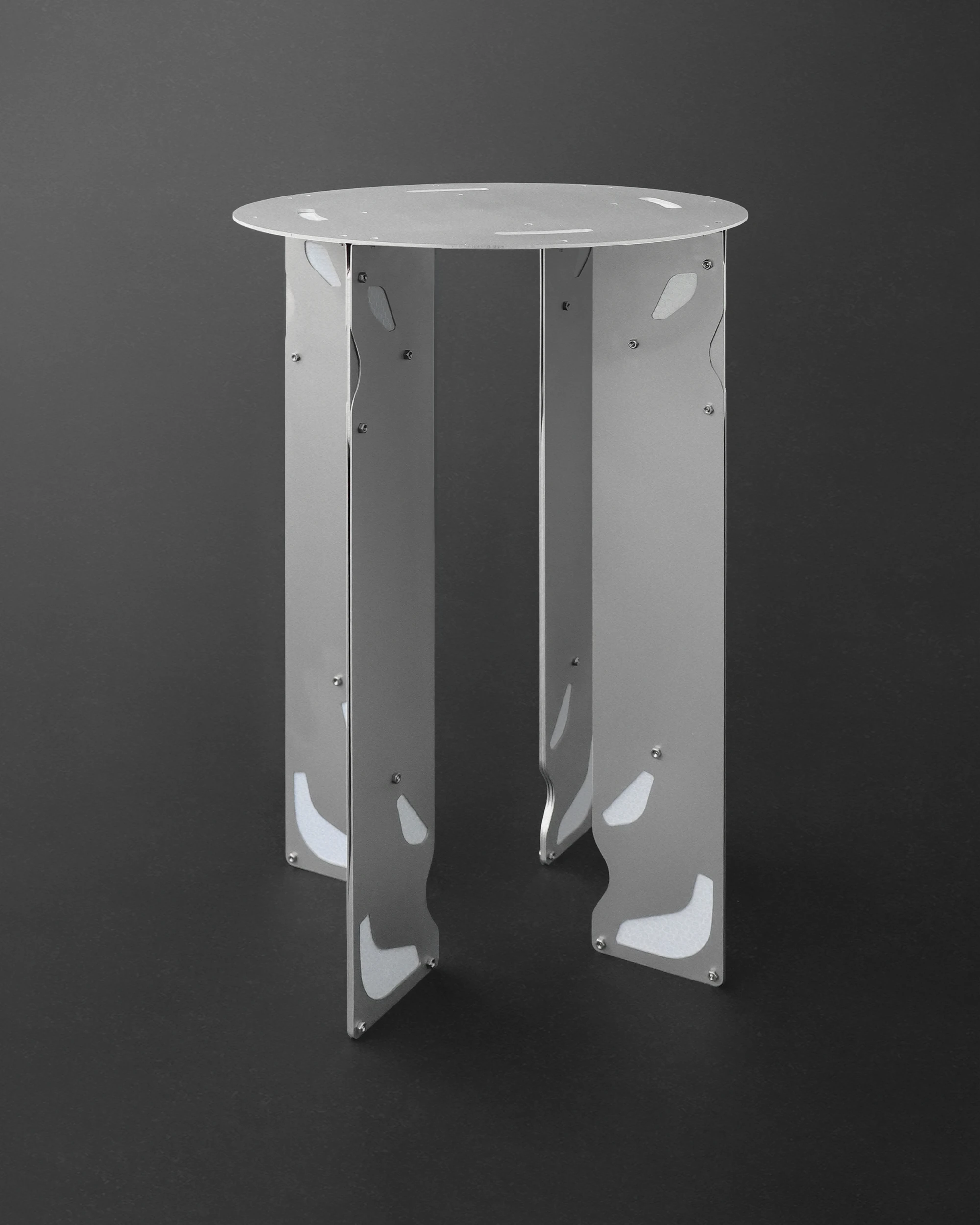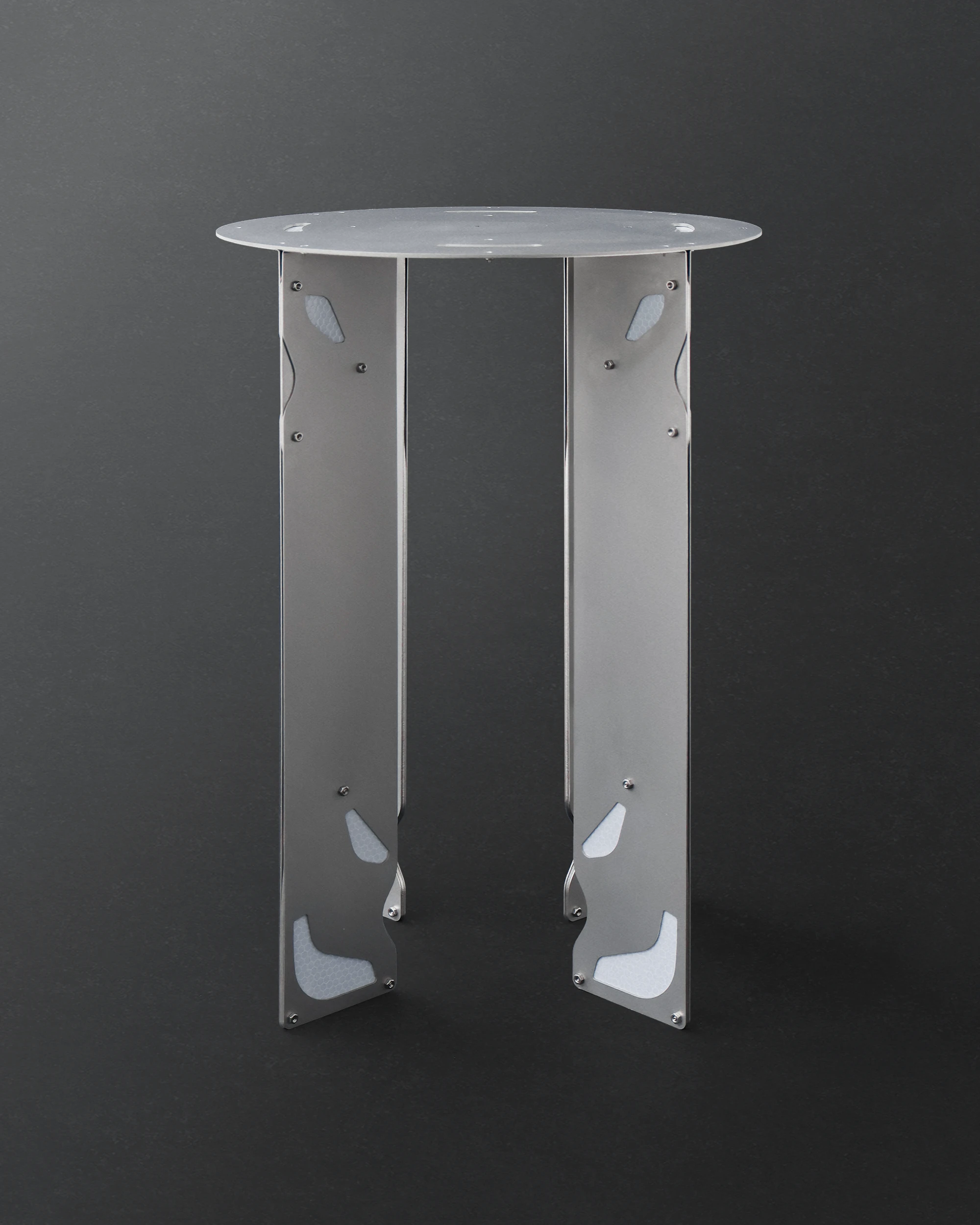
At Milan Design Week 2026, Seoul studio A POW STUDIO presents the Retroreflective Stool, polished aluminium legs and a round top trimmed with retroreflective elements that bounce light back to its source.
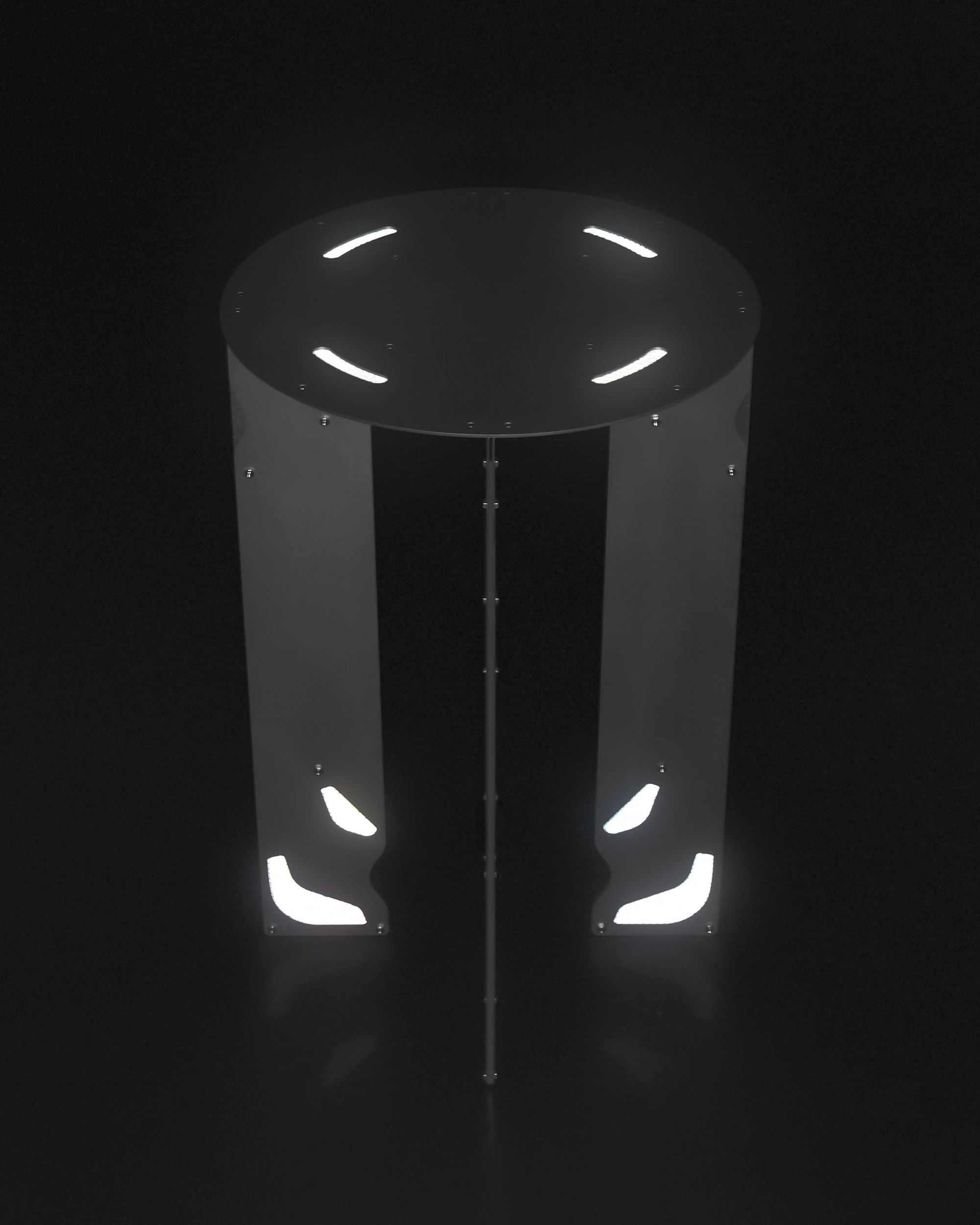
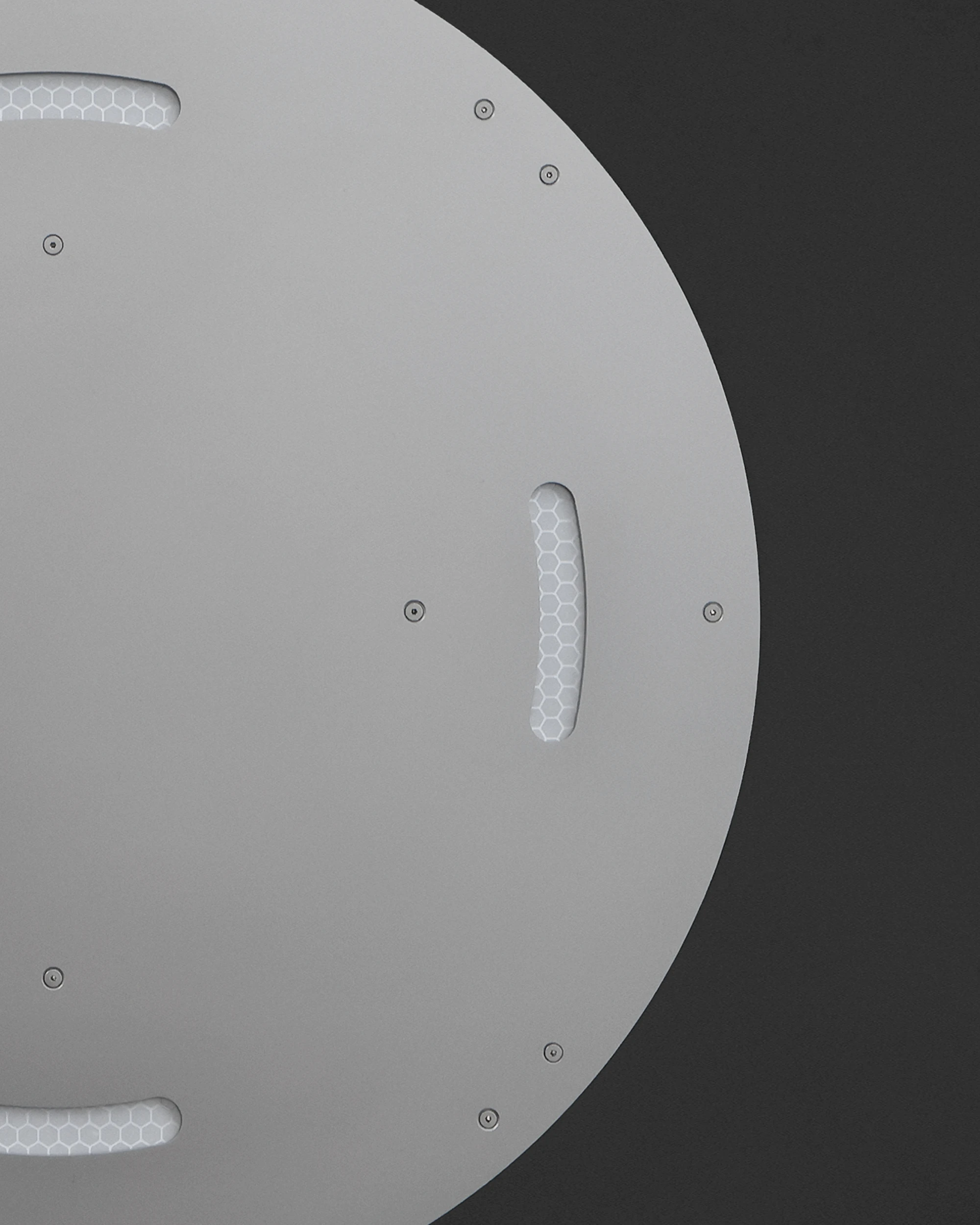
The design premise is direct: furniture is designed to be used in adequate light, and this means its perceptual logic falls apart the moment conditions change. A POW STUDIO, the Seoul studio of Sehong Min, asks what happens if you take that failure seriously as a design problem. The Retroreflective Stool is the result: a round-topped stool with polished aluminium plate legs that frame large apertures and a retroreflective strip running around the edge of the top surface, catching incident light from a torch beam, a car headlight, a phone screen, and returning it directly to its source.
Retroreflective materials work differently from standard mirror surfaces. A mirror bounces light at an equal-and-opposite angle; retroreflective material sends it back toward whatever emitted it, regardless of angle of incidence. This is the technology embedded in road markings, in cyclists' vests, in emergency infrastructure. A POW STUDIO applies it at the scale of a stool, mounted at deoron's exhibition space during Milan Design Week. In the documentation the stool appears as a bright outline against a dark grey background, the retroreflective trim catching the camera flash and describing the form in pure light against shadow. In context, in a darkened room with a moving light source, the form would appear and disappear as the source moves.
The aluminium legs are precision-cut plates with shaped apertures, negative forms within the structural members that reduce material without compromising the load path. The circular top is matt-white in the images, consistent across different angles, the retroreflective strip visible as a slightly different surface quality around its perimeter. The stool can also be seen in a second version: a taller bar-height variant with the same leg geometry scaled up, the proportions shifting the reading from side table to stool proper.
The studio describes this as a "scaled-down application" of a condition-based perceptual strategy that could extend to the scale of an entire space. As a proposal, the stool is modest in footprint and clear in argument, furniture that addresses a condition most furniture ignores, using a material technology that belongs to infrastructure and temporarily inhabiting the register of designed objects with it.