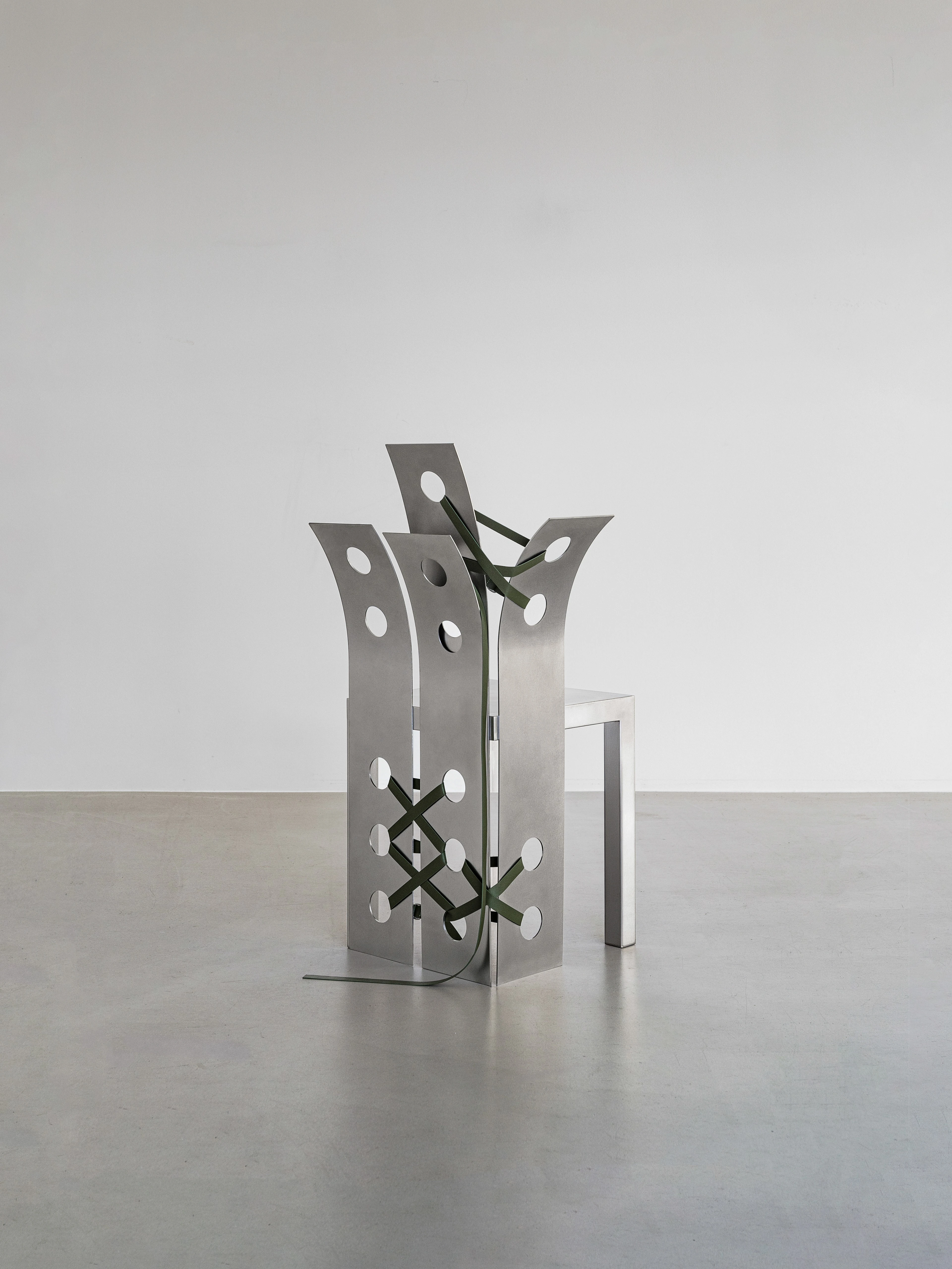
Nara Lee presents her first object collection at The Sun Room in Seoul — stainless-steel furniture stitched together with leather straps, named Pul after the Korean word for grass, designed to flex slightly when sat on.
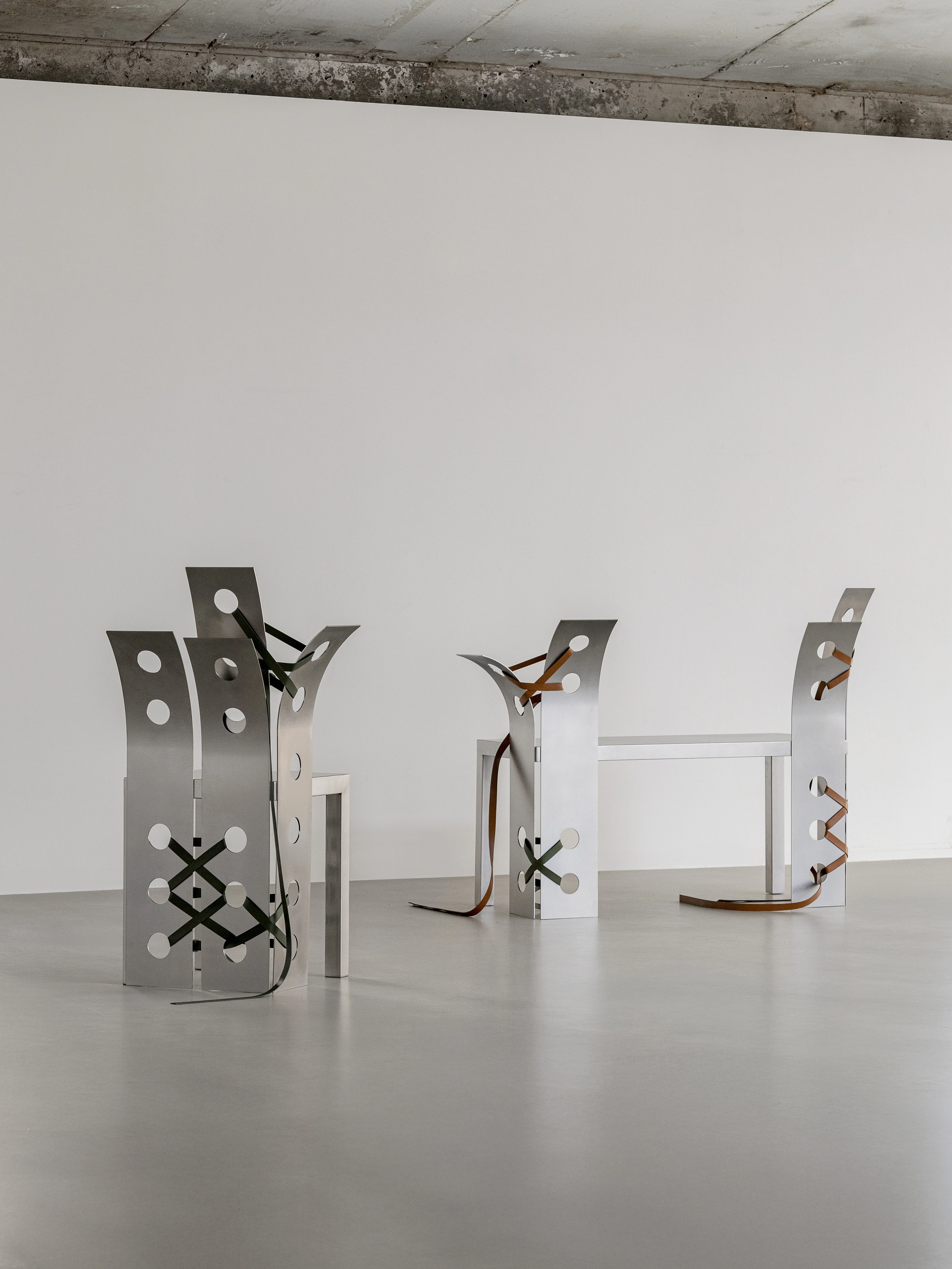
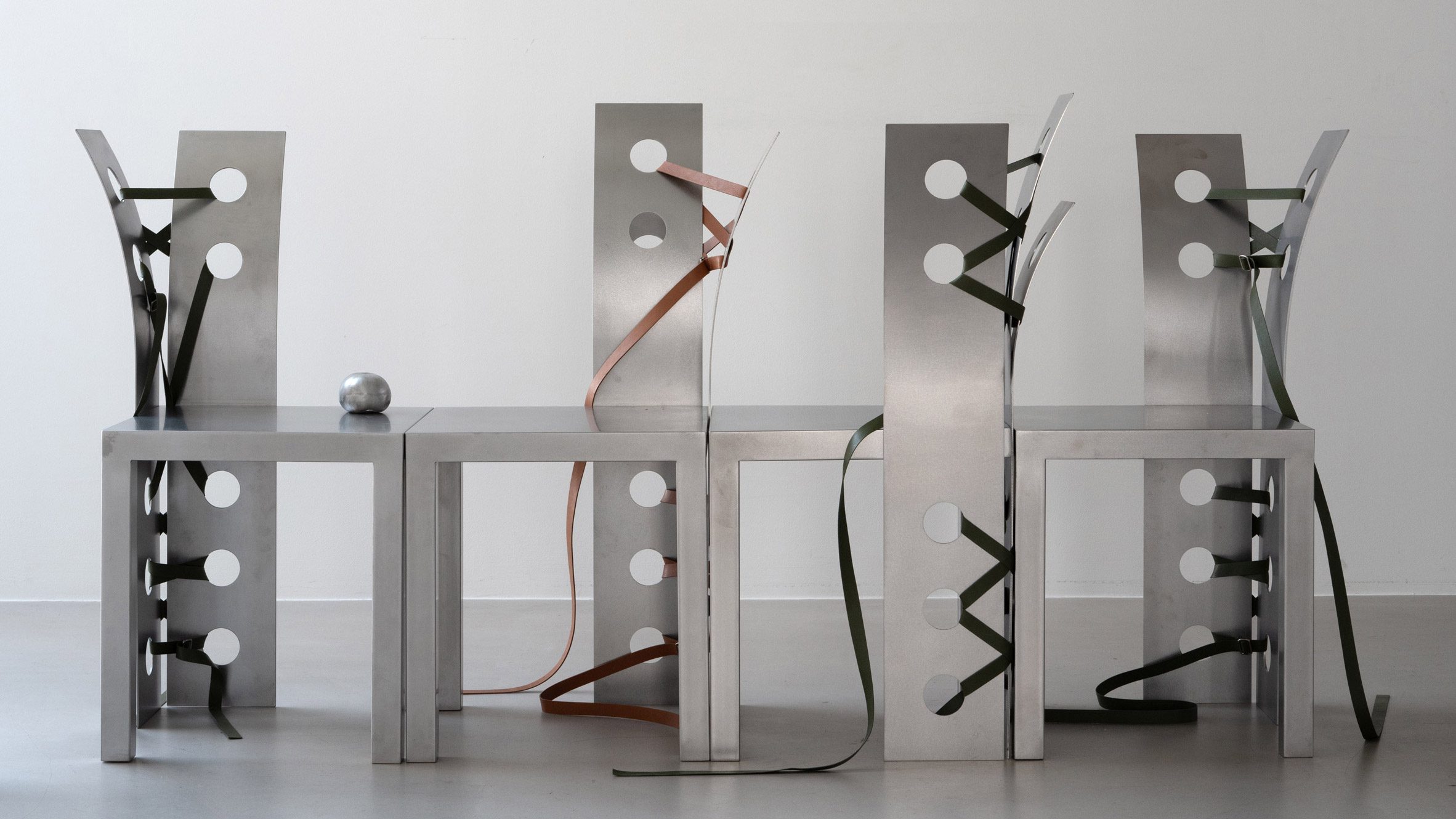
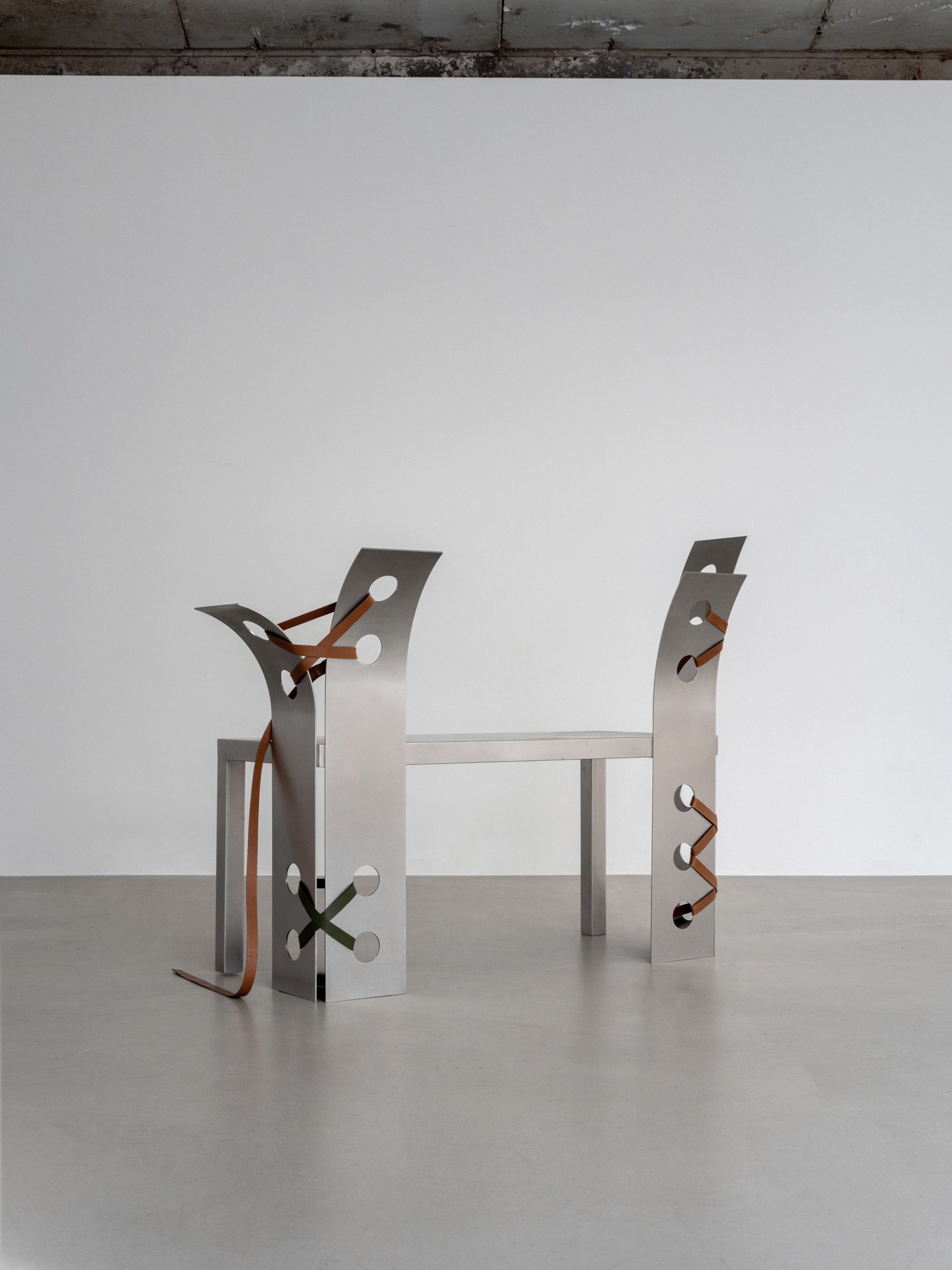
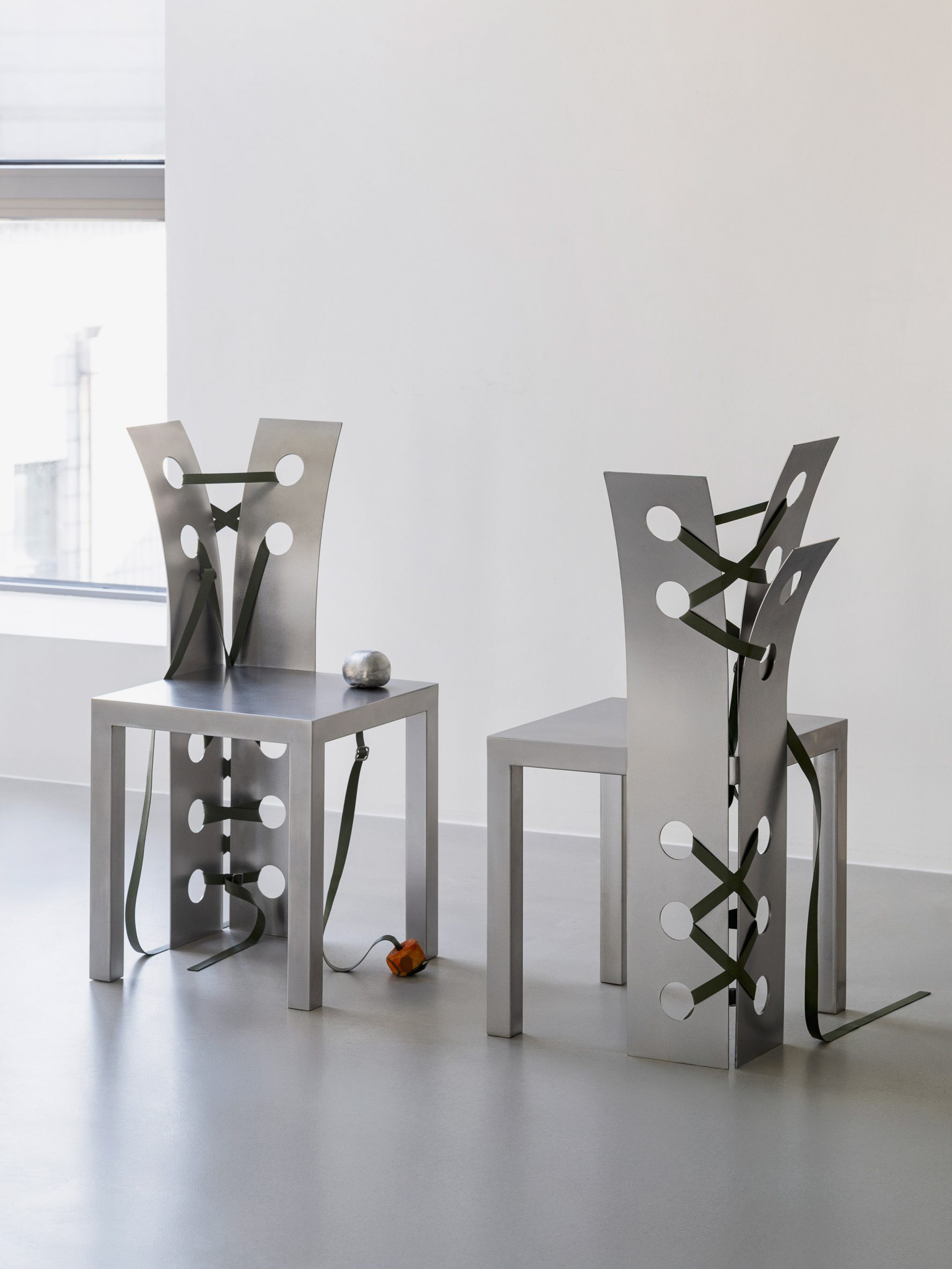
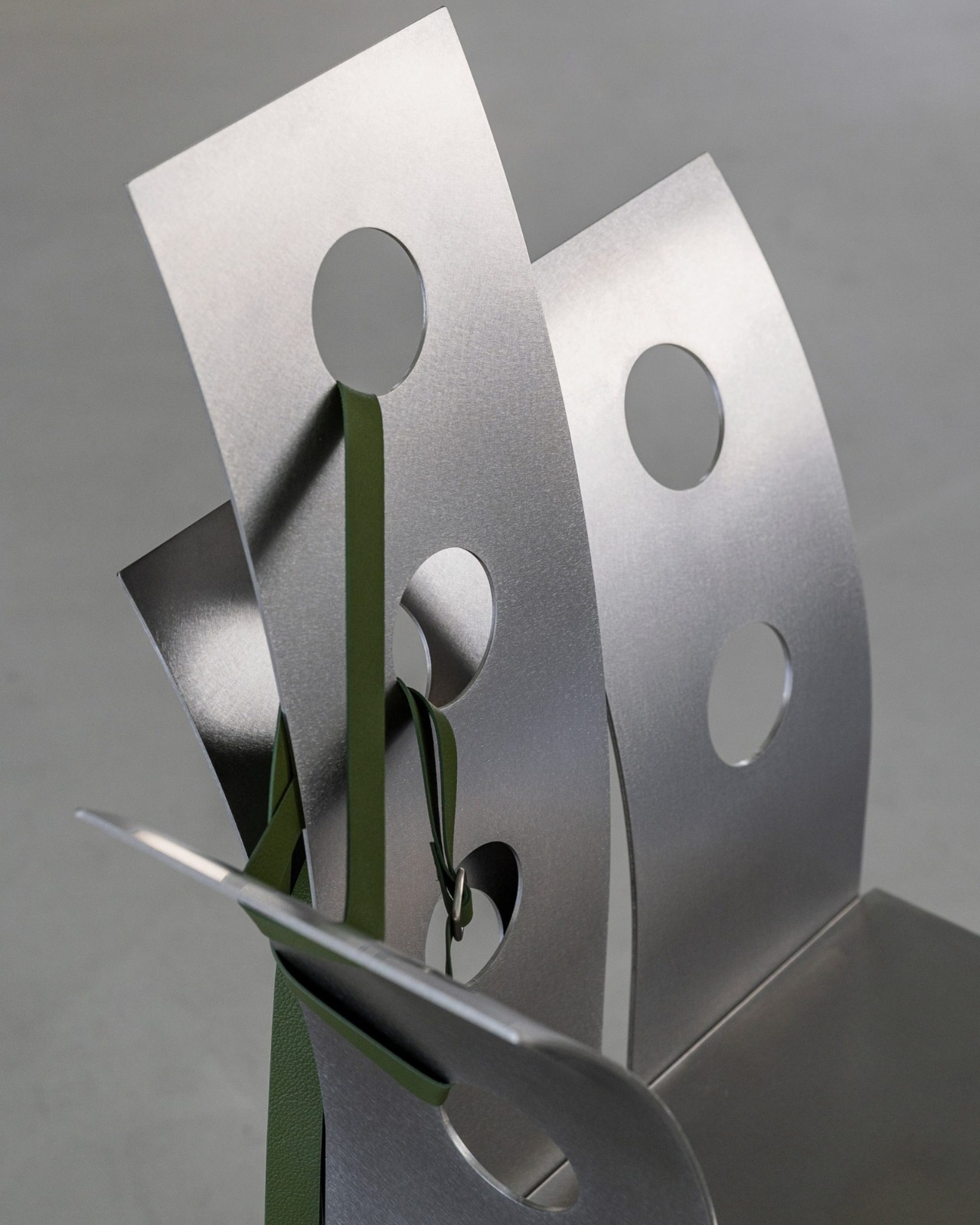
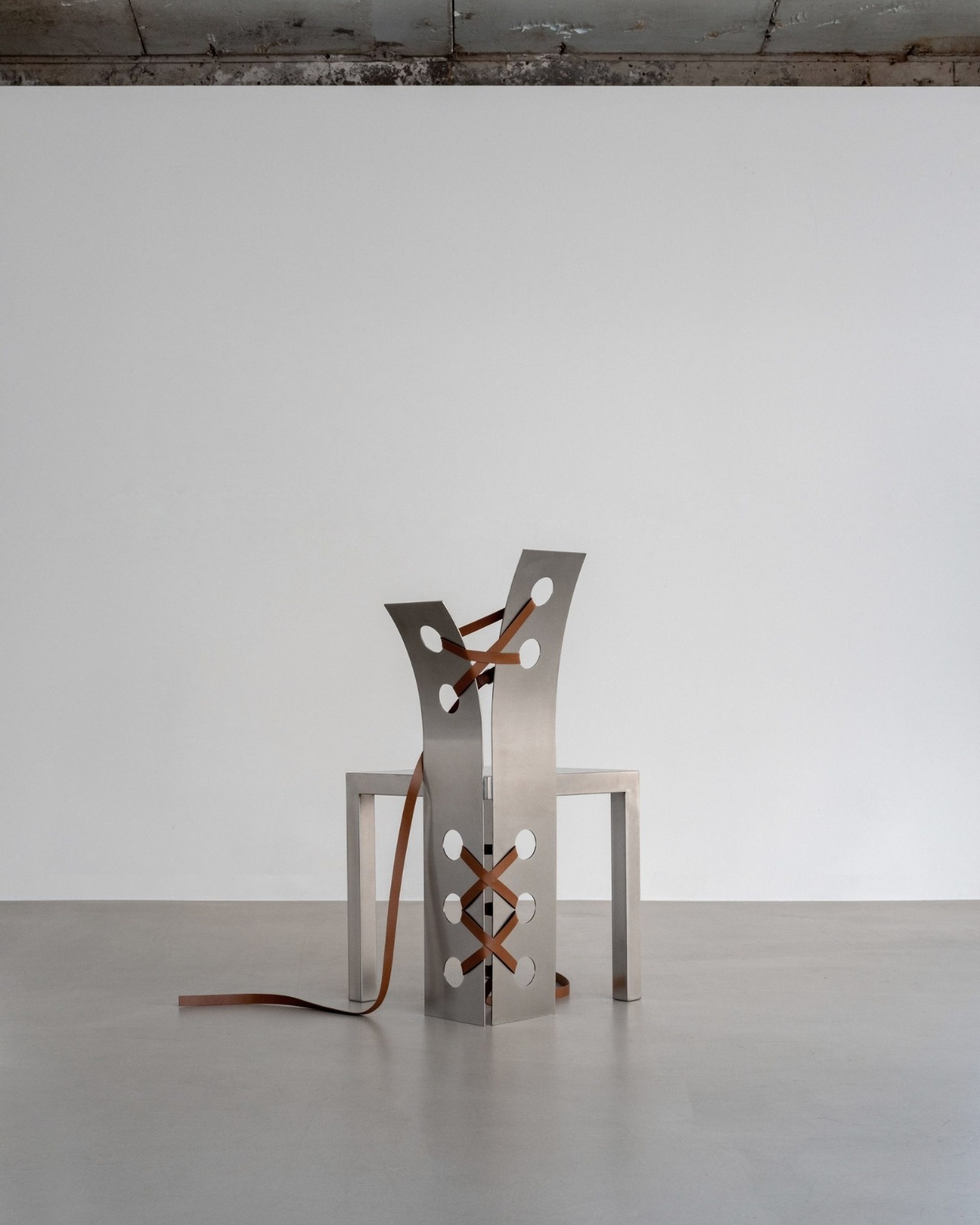
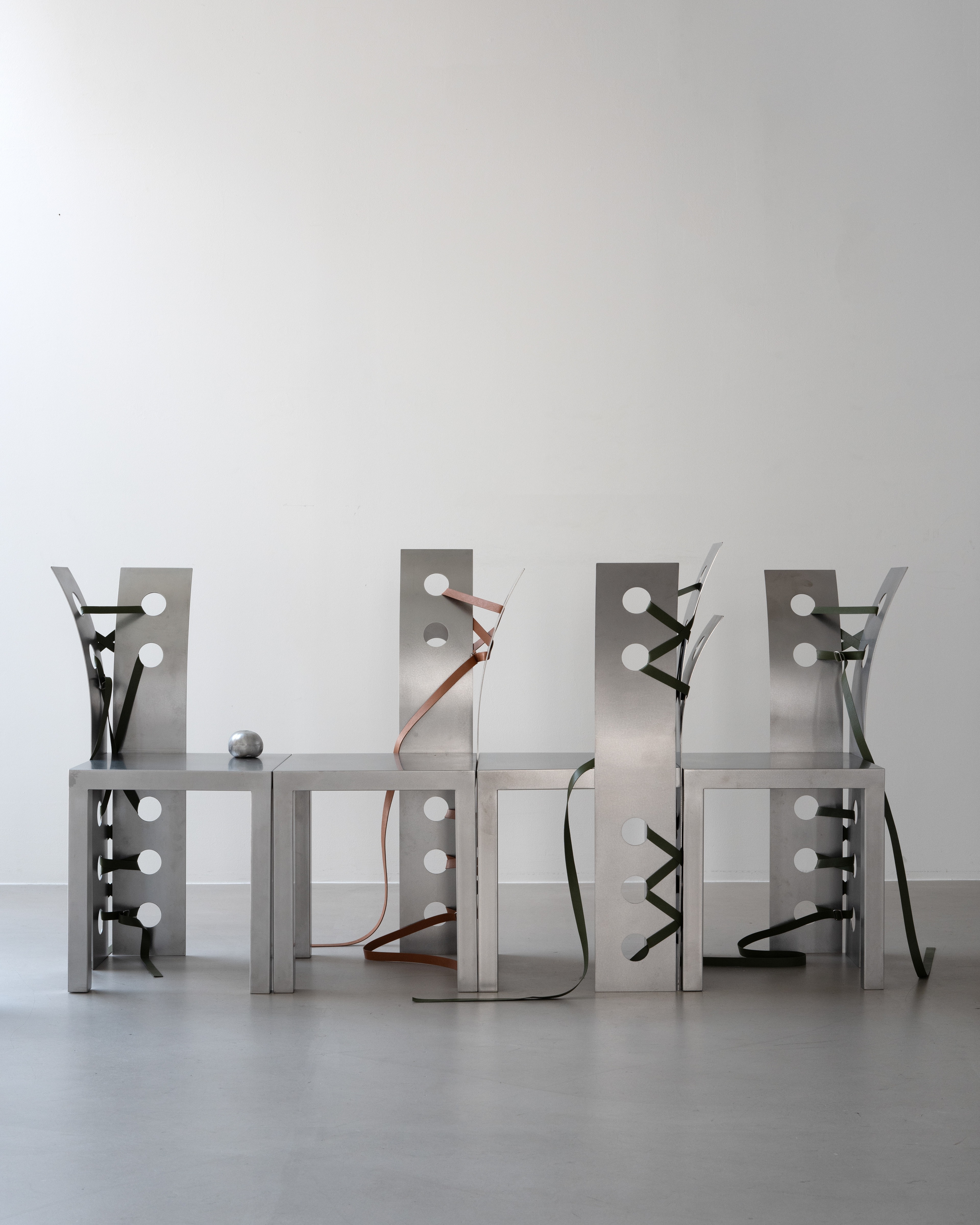
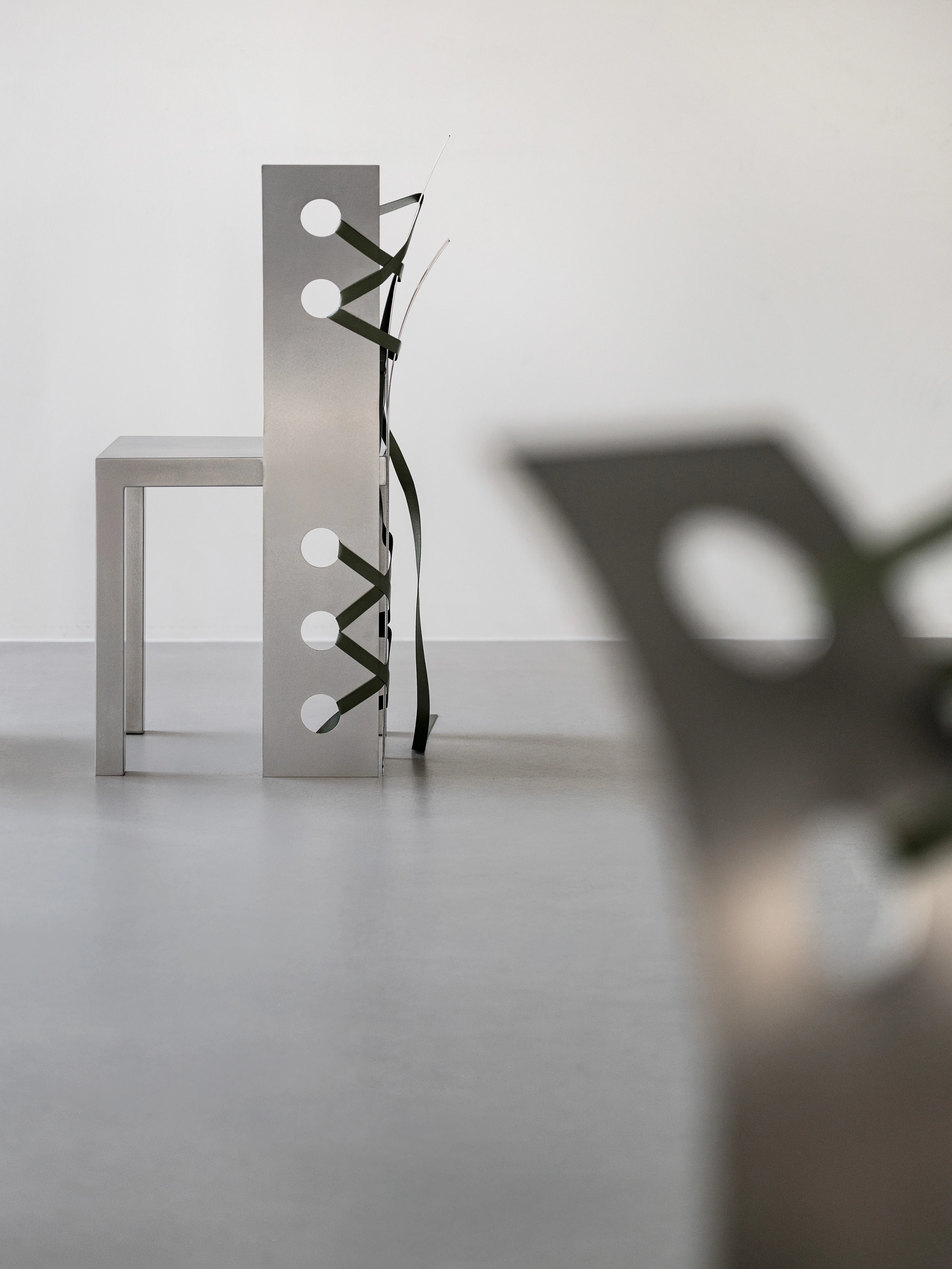
Pul is Paris-based Lee's first collection of objects — chairs, benches, and folding screens assembled from precision-cut stainless-steel sheets and oversized leather straps threaded through punched circular holes. The steel is structural but not rigid: the backrests bow and curve, and when a chair is occupied the metal flexes slightly, a response Lee describes as evoking the resilience of living organisms. The leather does not sit inside the steel : it laces through it, with straps woven across punched holes in crossing patterns, the joinery appearing as the dominant visual element across every piece in the series.
The collection takes its name from 풀 — Korean for grass in its broadest sense, meaning the weedy, unmanaged growth that appears between sidewalk cracks and climbs apartment walls rather than the cultivated kind. Lee conceived the work after a summer in Seoul, hiking the mountain behind her family home. she has described being struck by how wild nature lives right inside Seoul's dense urban landscape, as she has said , a condition she could appreciate with fresh eyes after her years in Paris. "That coexistence became the starting point for Pul, named after the Korean word for grass in its broadest sense."
The material pairing carries its own inversion. "Metal is structural yet flexible, while leather is soft yet strong," Lee has noted , and across the Pul pieces, those properties are crossed. The steel sheets bend at the top of each backrest into forms closer to calligraphy than standard furniture geometry. The leather straps, by contrast, hold the steel in place , crossing and knotting at each punched hole with the matter-of-fact utility of rigging, the excess strap length trailing loose on the floor. Chairs come with forest-green straps, others with brown or tan, the same steel form differentiated by the colour of its lacing.
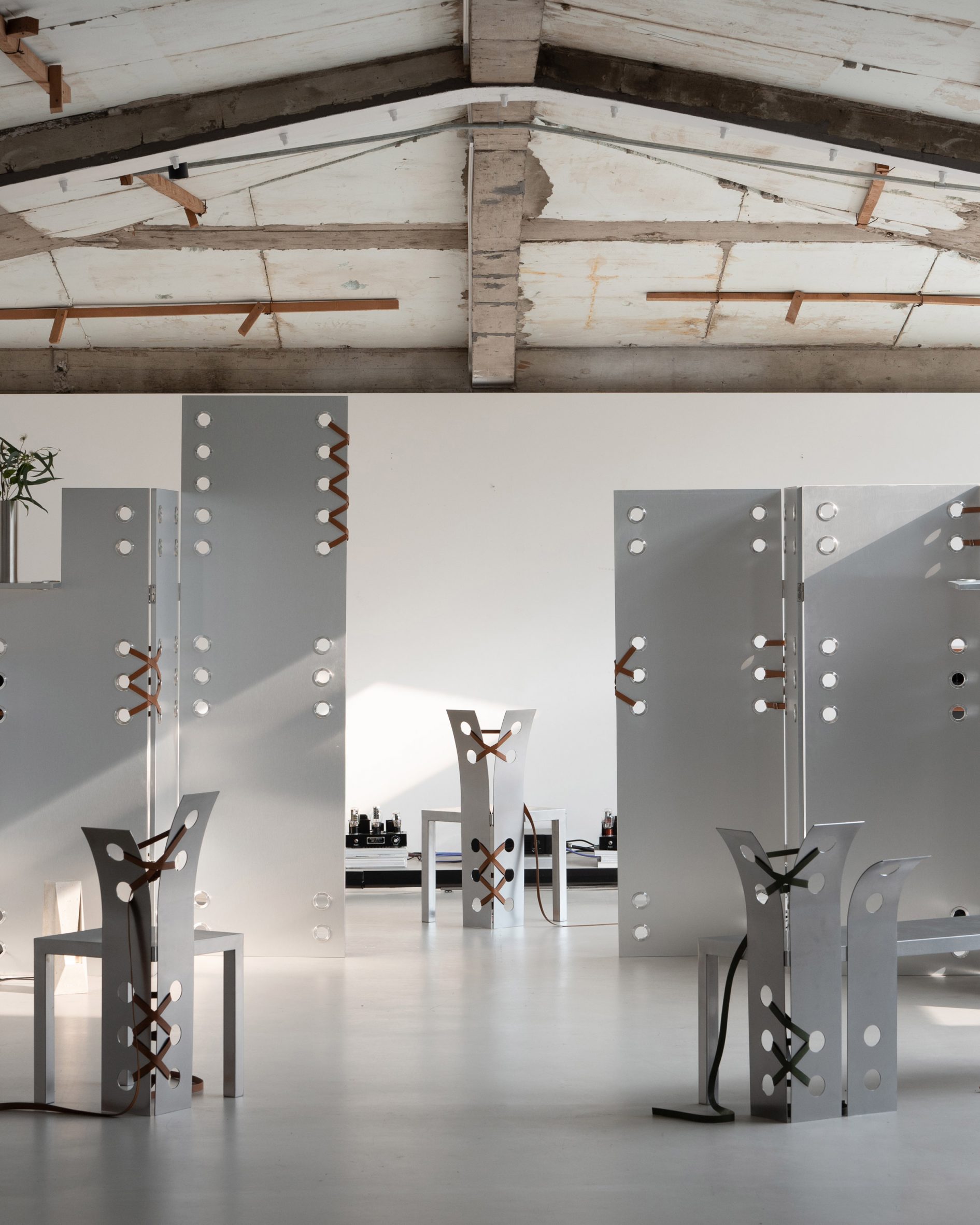
The collection was shown at The Sun Room, a 23 November–7 December 2025 exhibition held at Mirae Building in Seoul, where lighting was developed in collaboration with studio Aklyphs. The exhibition concept framed greenhouse and solarium architectures ( glass houses built to cultivate ) as the container for furniture made from wild-growth logic. The pieces are identified as Pul 01, 04, 08, and so on; a numbered series rather than titled sub-works. Lee's work with Prada provides a single line of context; Pul is her authorial output as a designer of objects.
The stainless steel reads differently depending on orientation and ambient light : brushed silver in some frames, mirror surface in others, catching the room around it. The folding screens carry the same punched-hole and leather-laced vocabulary as the seating, scaled to partition dimensions. Seen together in the exhibition space, the pieces form a consistent vocabulary: not a furniture line in any conventional sense, but a family of objects sharing a construction logic and holding the same argument about what materials can be made to do.