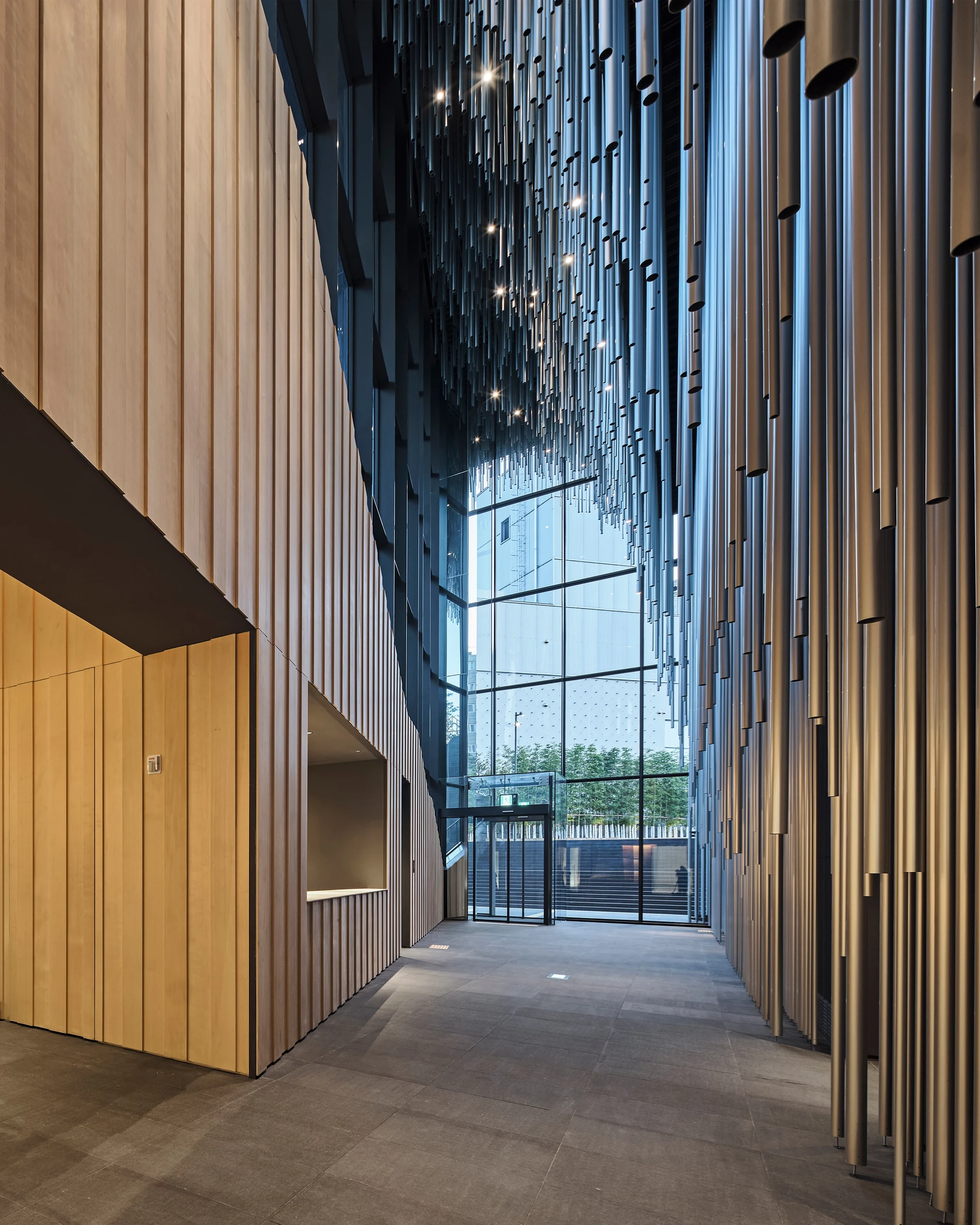
The Audeum by Kengo Kuma & Associates in Seoul dissolves the boundary between building and instrument—architecture calibrated for ears as much as eyes.
Museums traditionally privilege sight. Objects rest in cases; visitors process past them in prescribed sequences; lighting determines what can be seen and what remains in shadow. The Audeum—a portmanteau of audio and museum—proposes a different hierarchy. Sound takes precedence here; the building itself becomes apparatus for its perception.
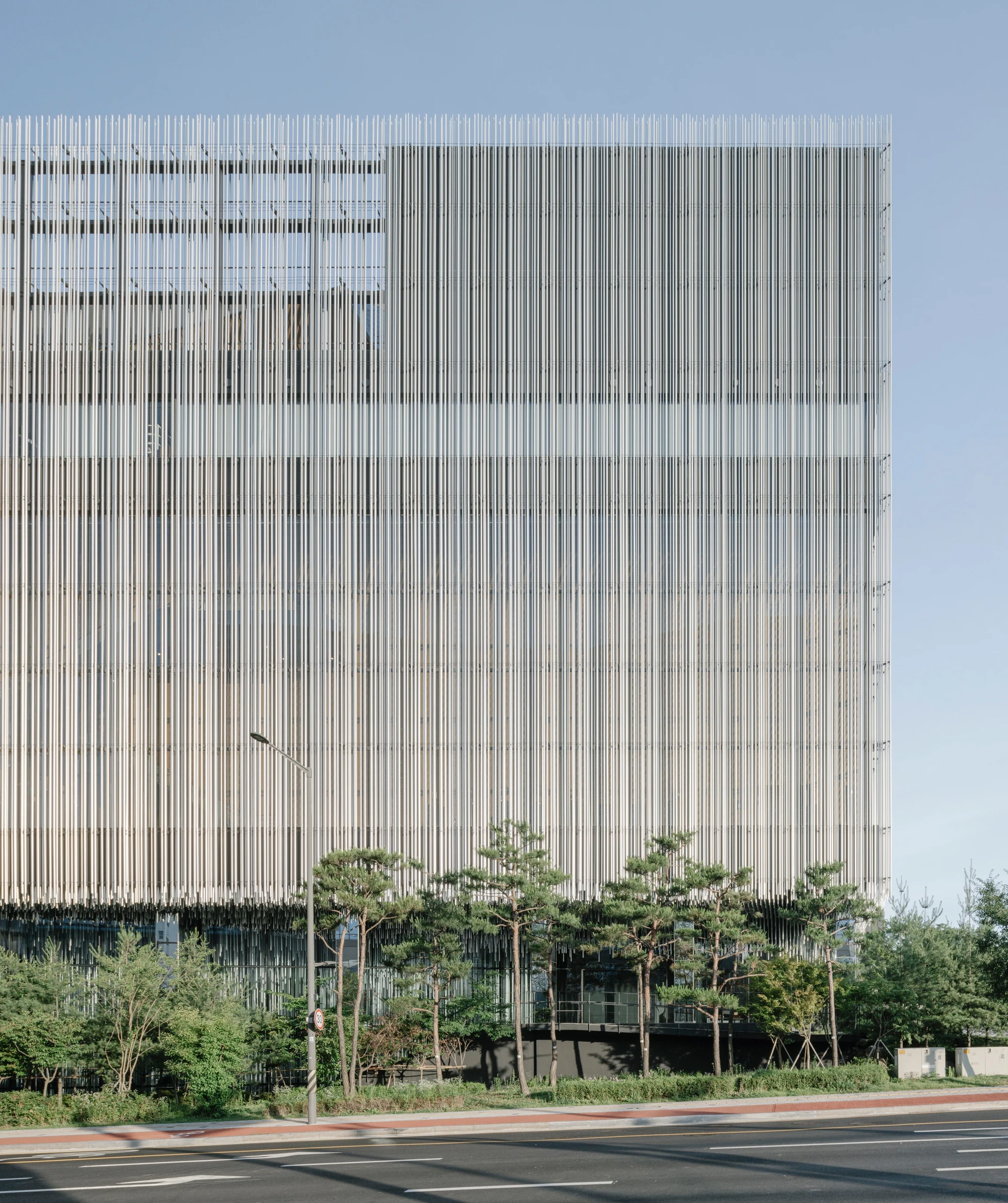
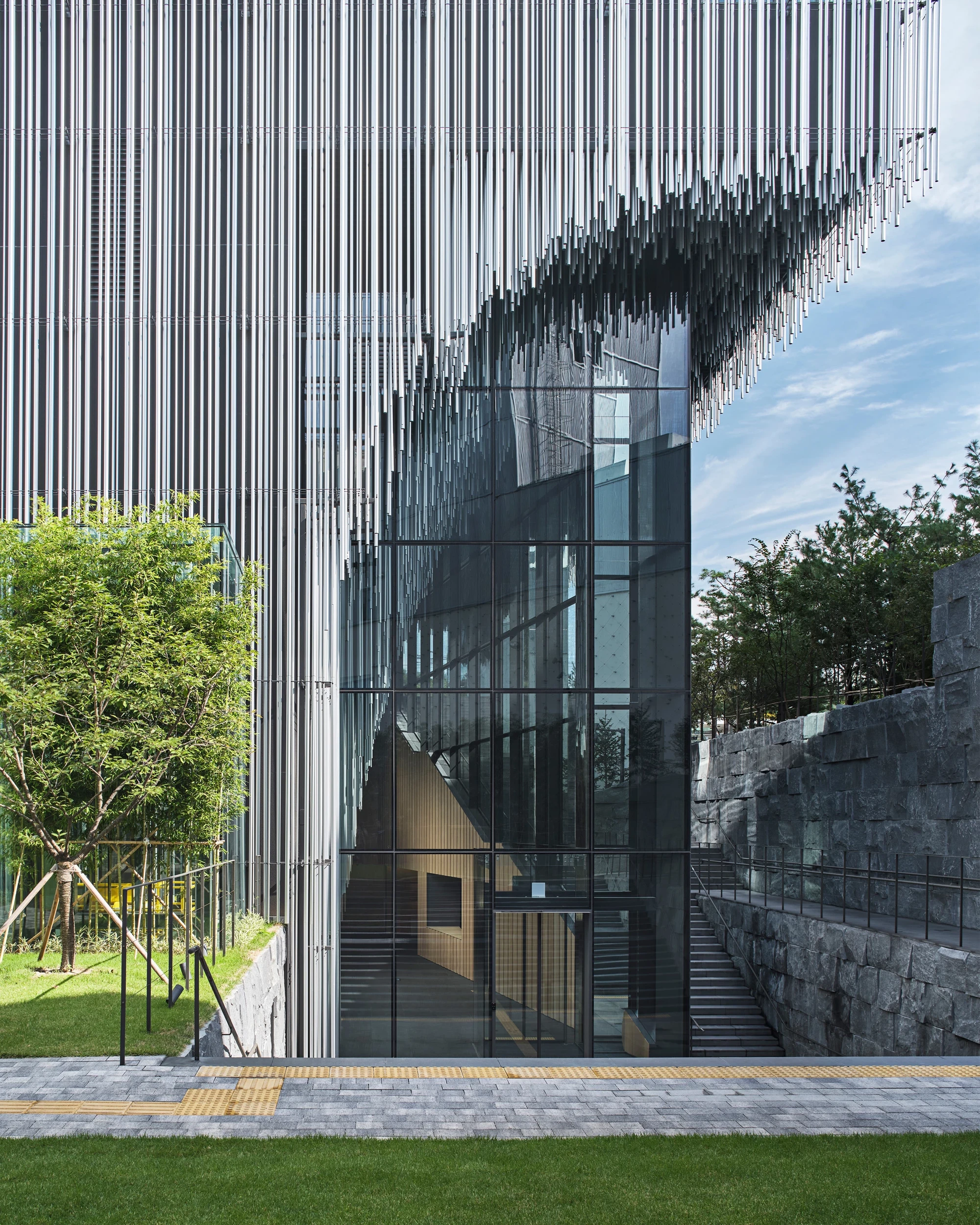
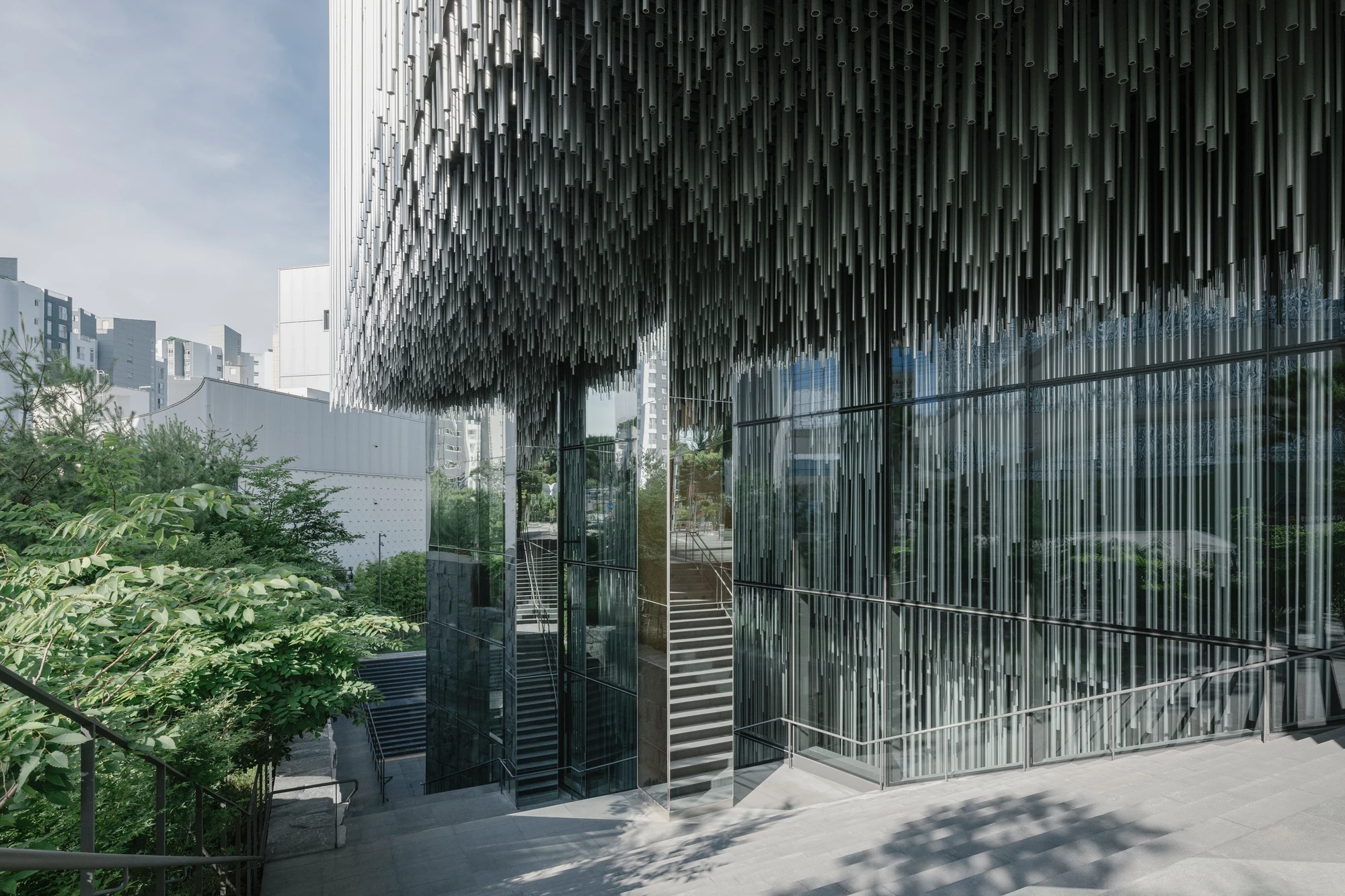
Kengo Kuma's exterior presents a forest of aluminum louvers, vertically overlapping in patterns that suggest vegetation more than construction. Light and shadow play across the façade throughout the day, creating effects closer to dappled woodland than urban surface. The metallic material operates almost paradoxically—industrial in substance, organic in effect.
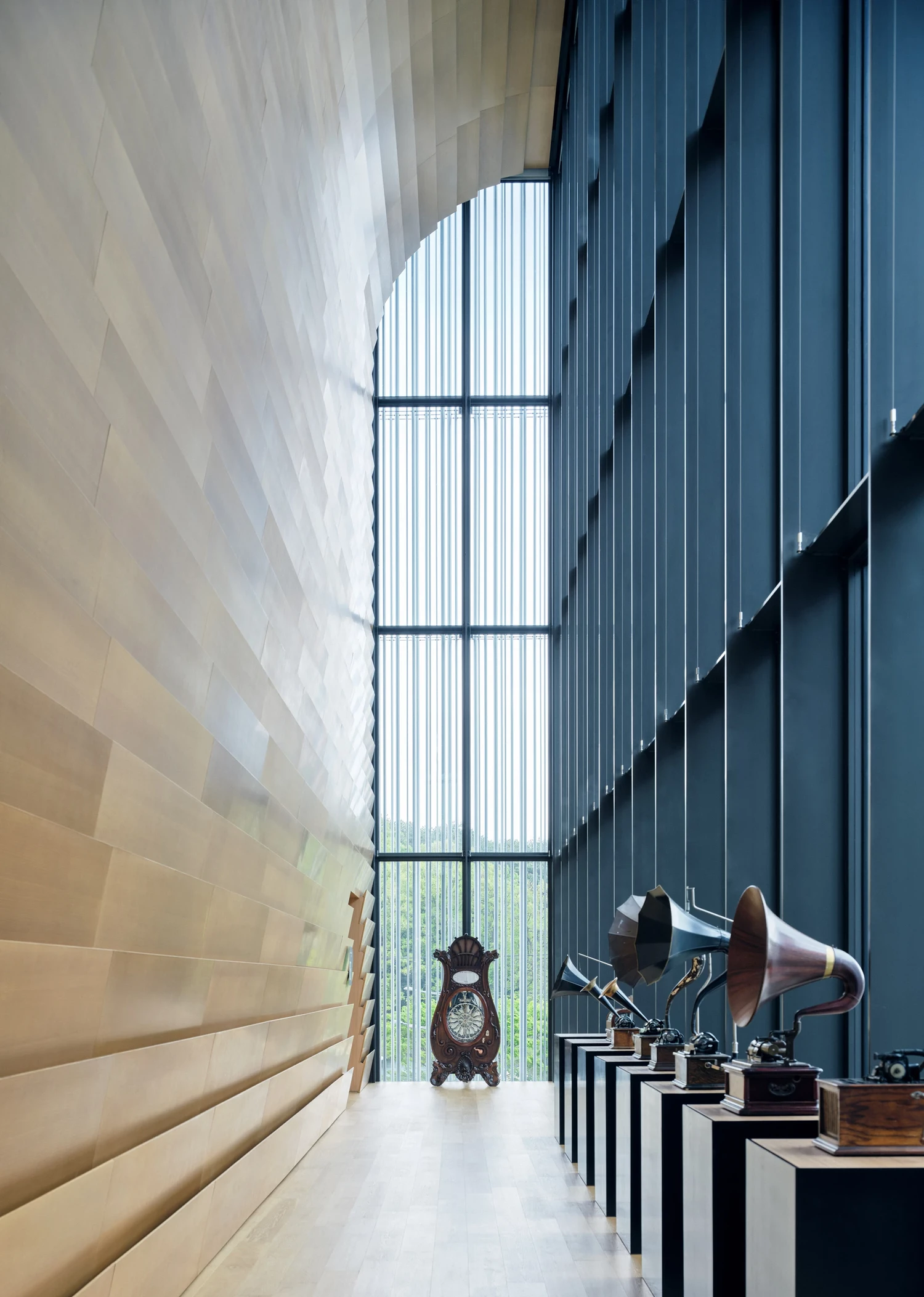
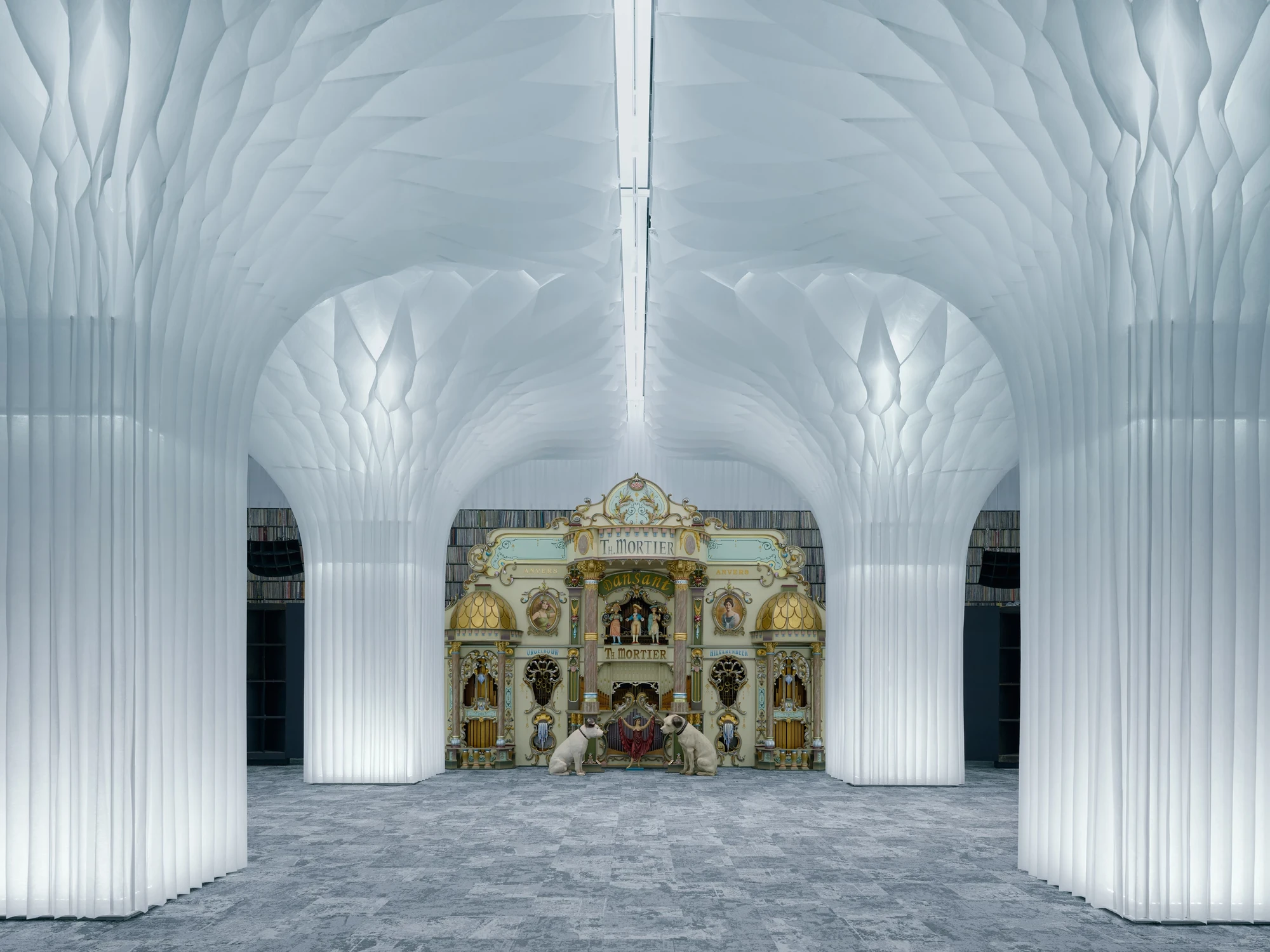
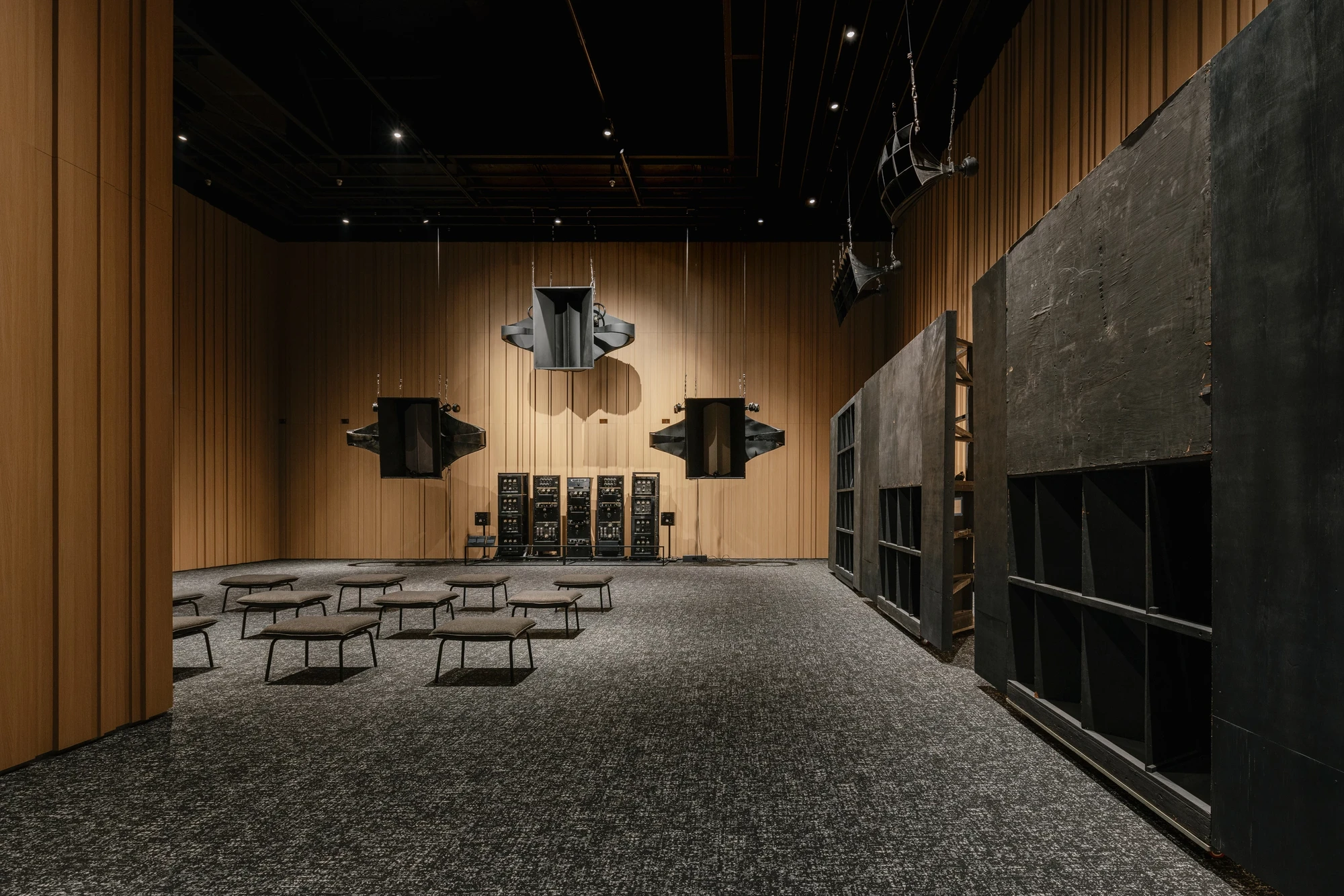
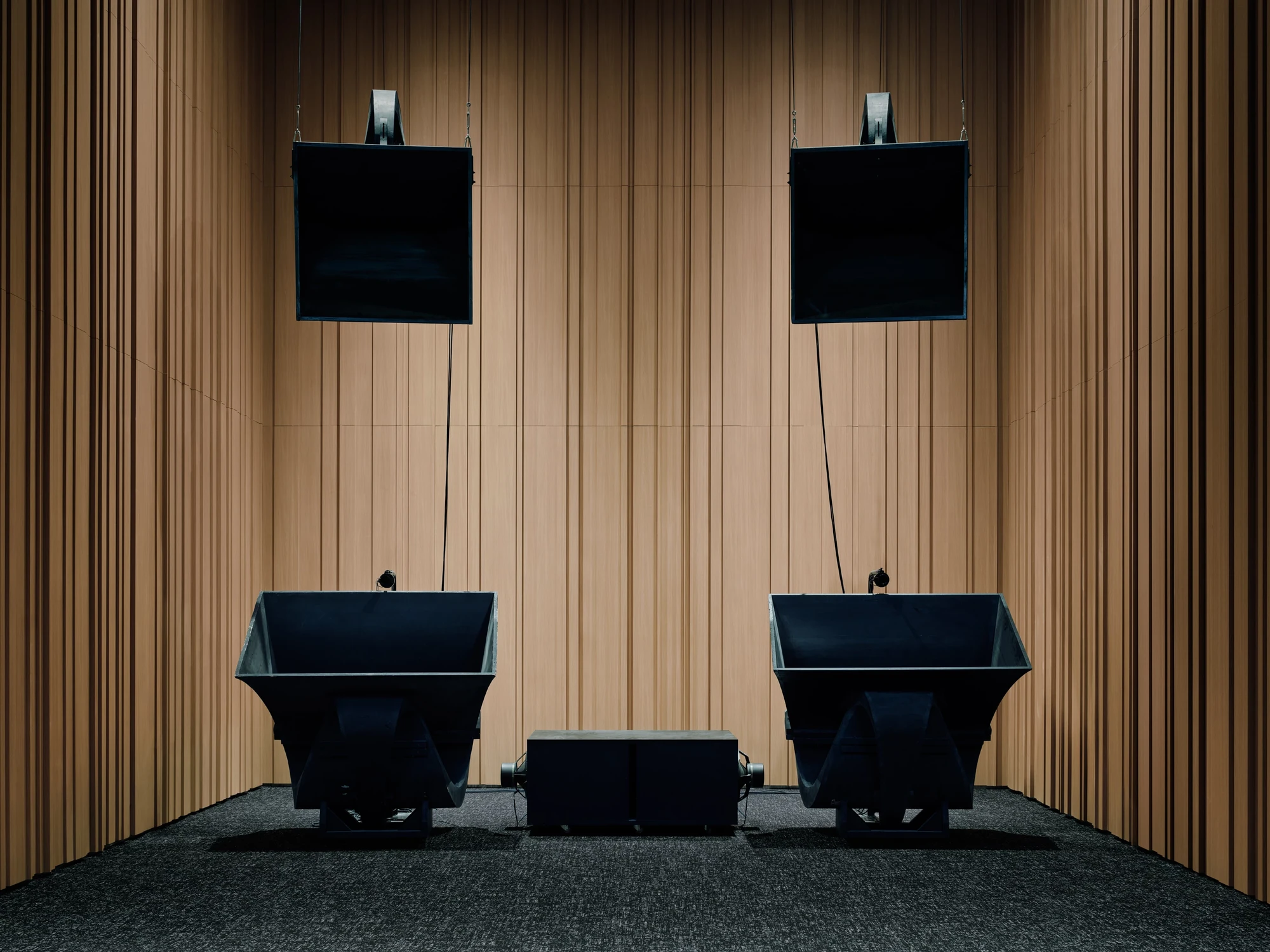
The transition from outside to inside marks a material shift. Aluminum gives way to wood; hardness yields to warmth. Kuma's signature "wood drape" detail lines interior surfaces with timber elements that serve acoustic purposes beyond their visual presence. Sound behaves differently here—absorbed, reflected, channeled according to the specific needs of each space.
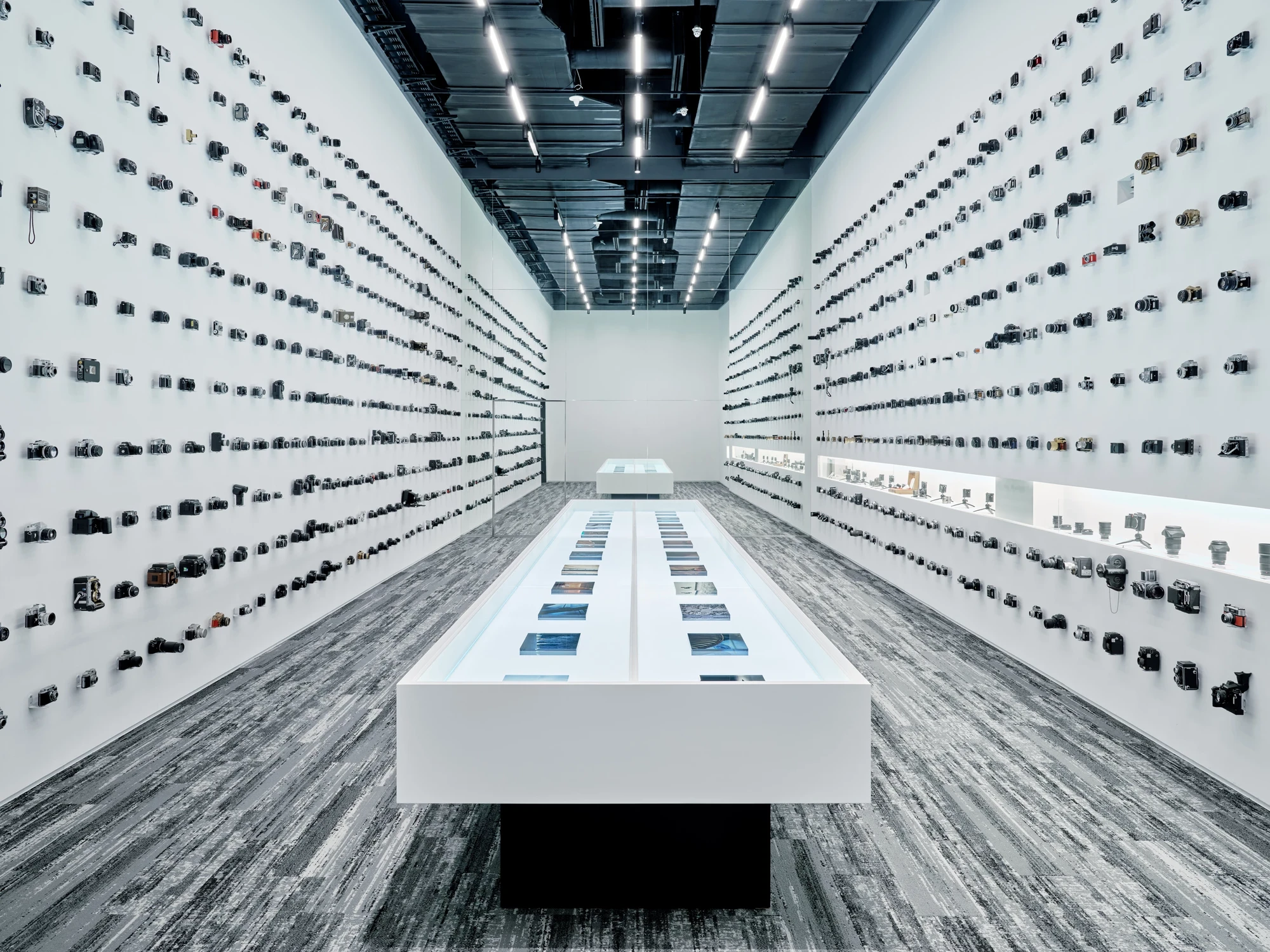
The program descends through five basement levels and rises through five above ground, distributing exhibition and performance spaces across the section. Each floor calibrates its acoustic environment to the content it houses. The building functions less as container than as instrument—its dimensions and materials tuned like the strings of something enormous.
The Audeum earned recognition at the 2025 Prix Versailles, its interior receiving special acknowledgment in the museum category. What the jury recognized, perhaps, was the coherence of an architecture that takes seriously its responsibility to more than one sense. You enter with your eyes; you understand with your ears; you leave having experienced something rarer than either alone.