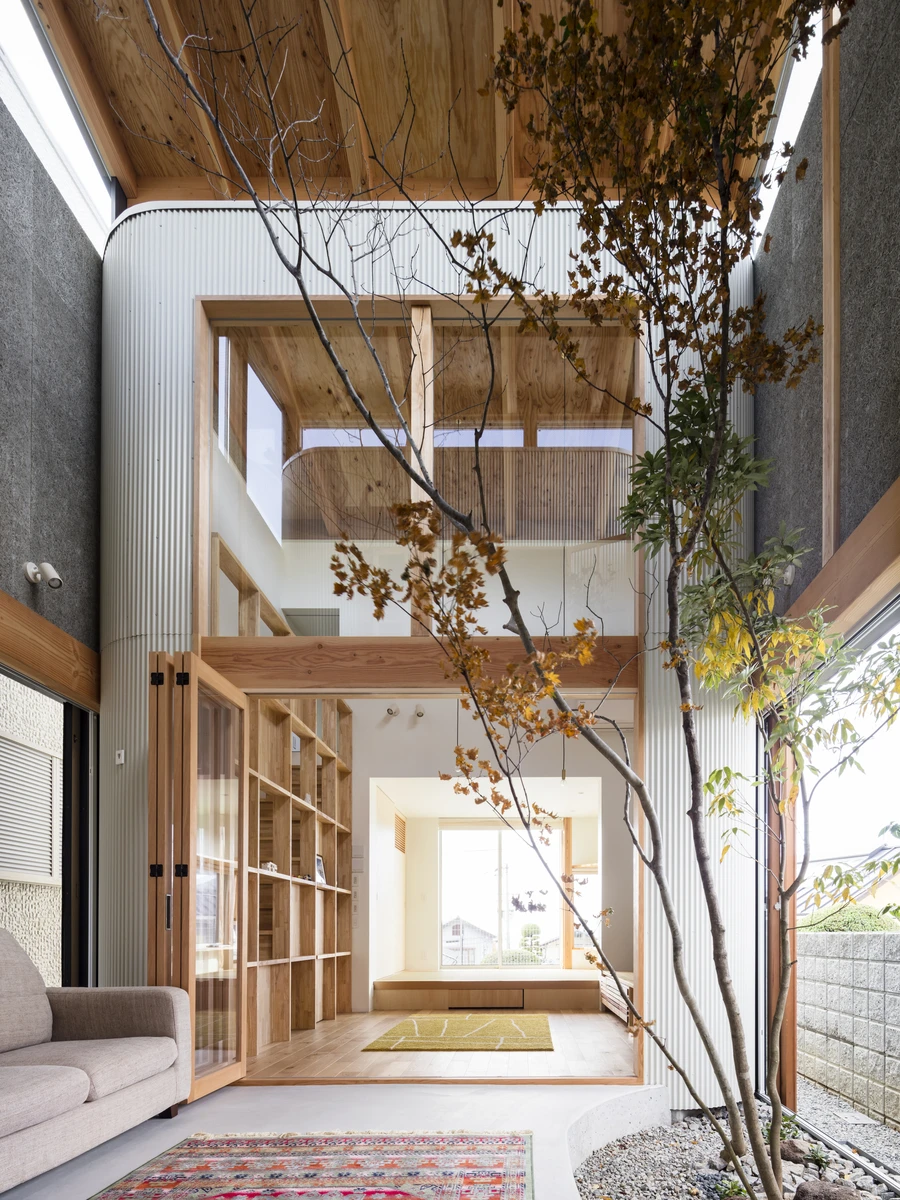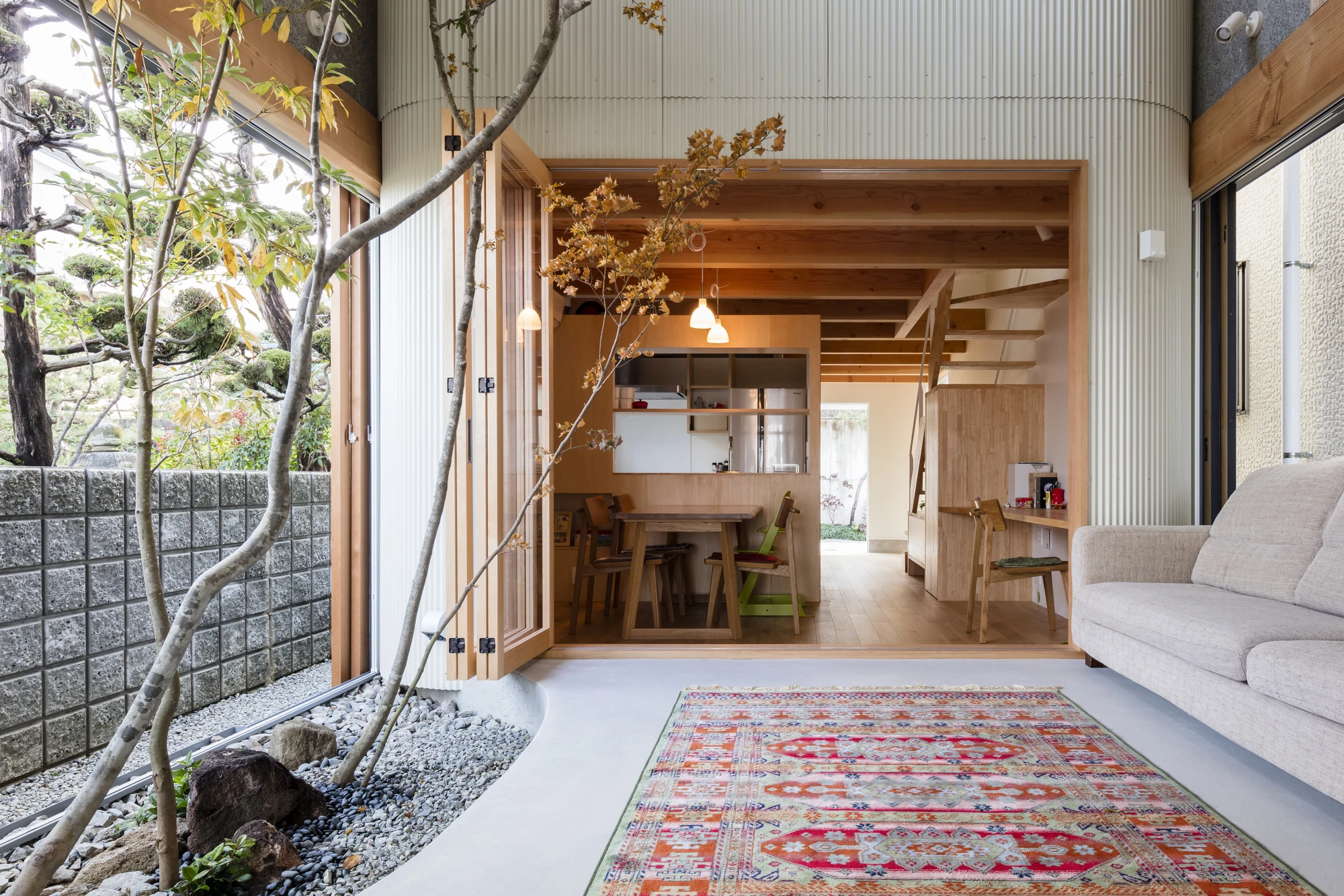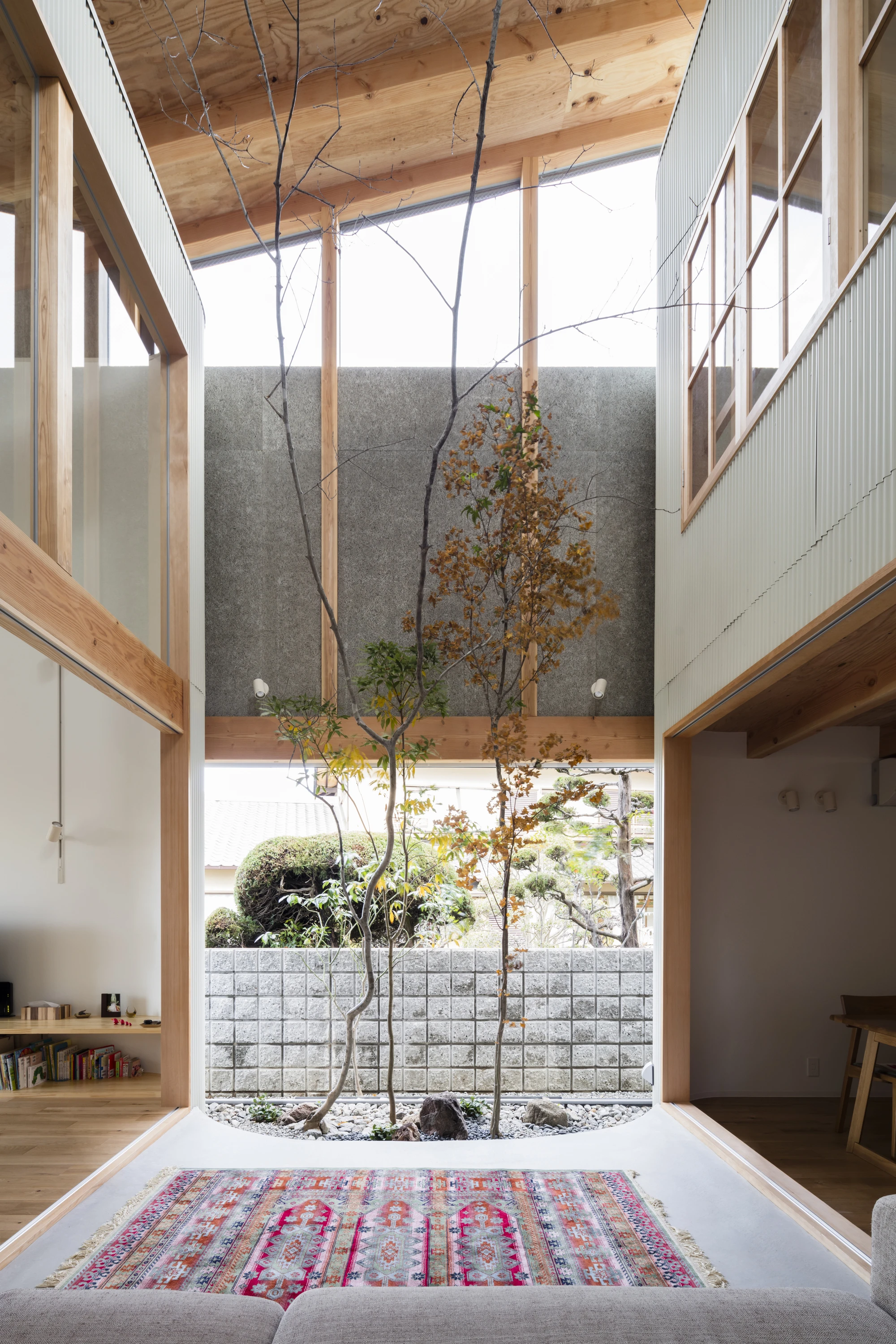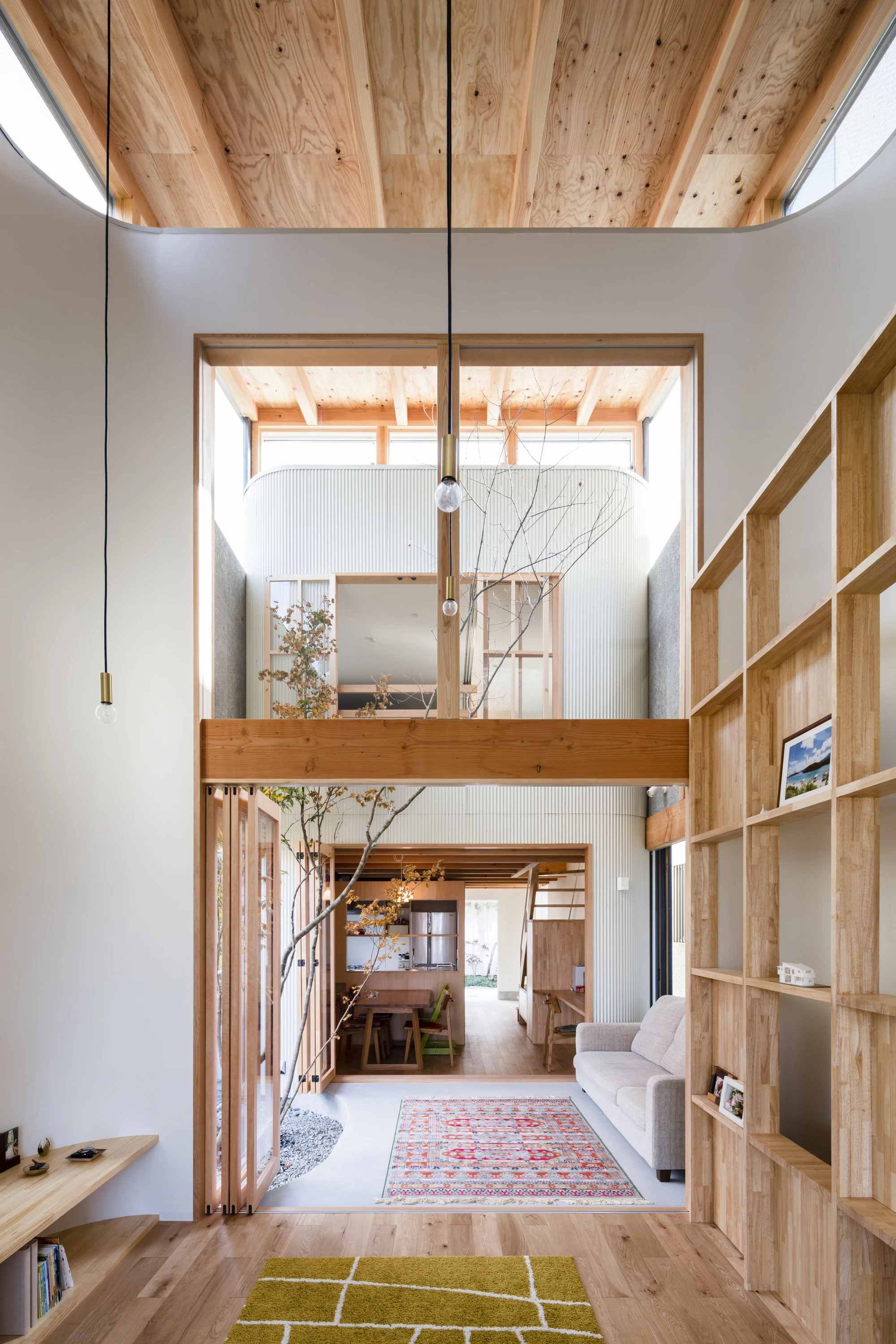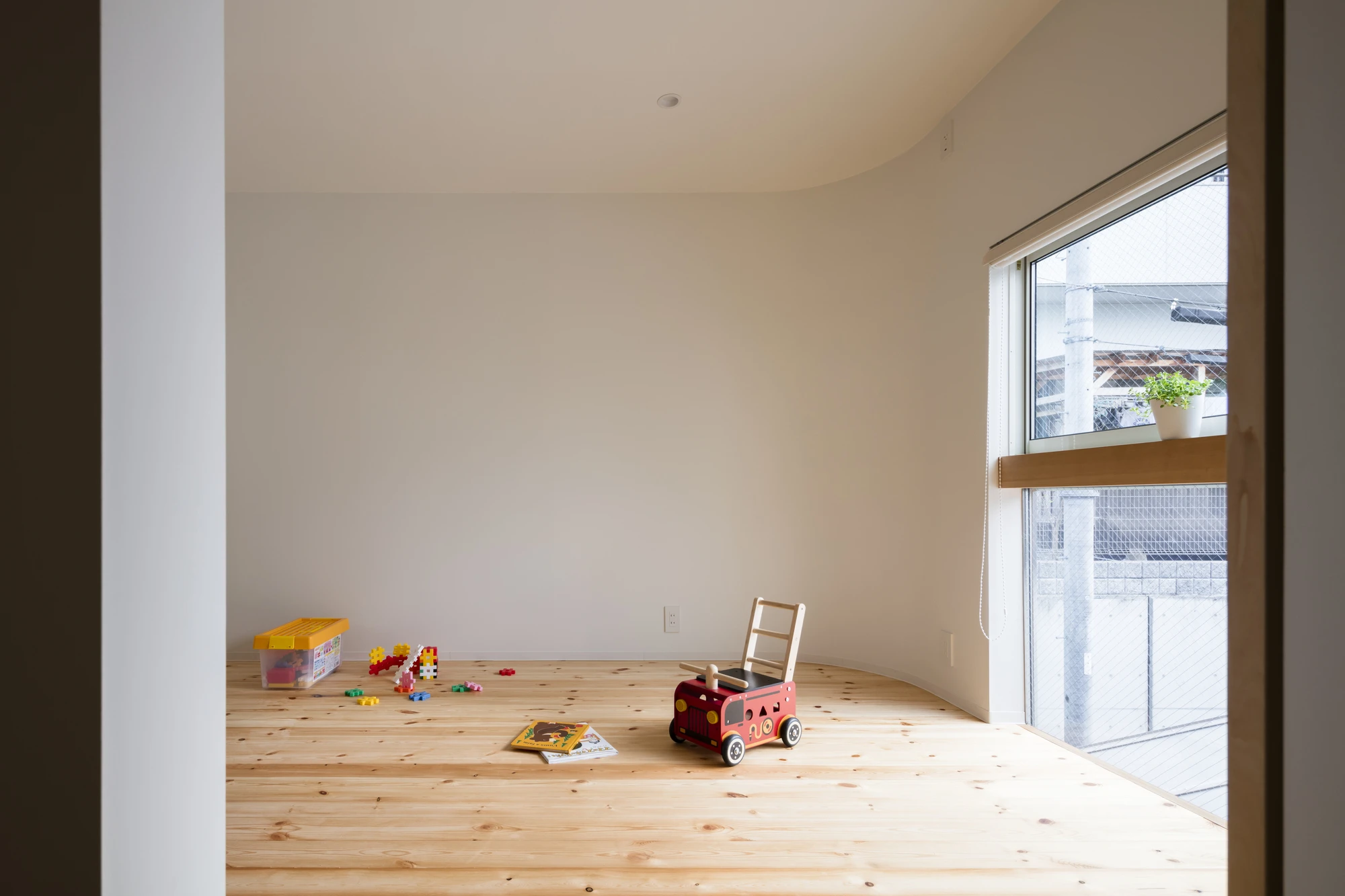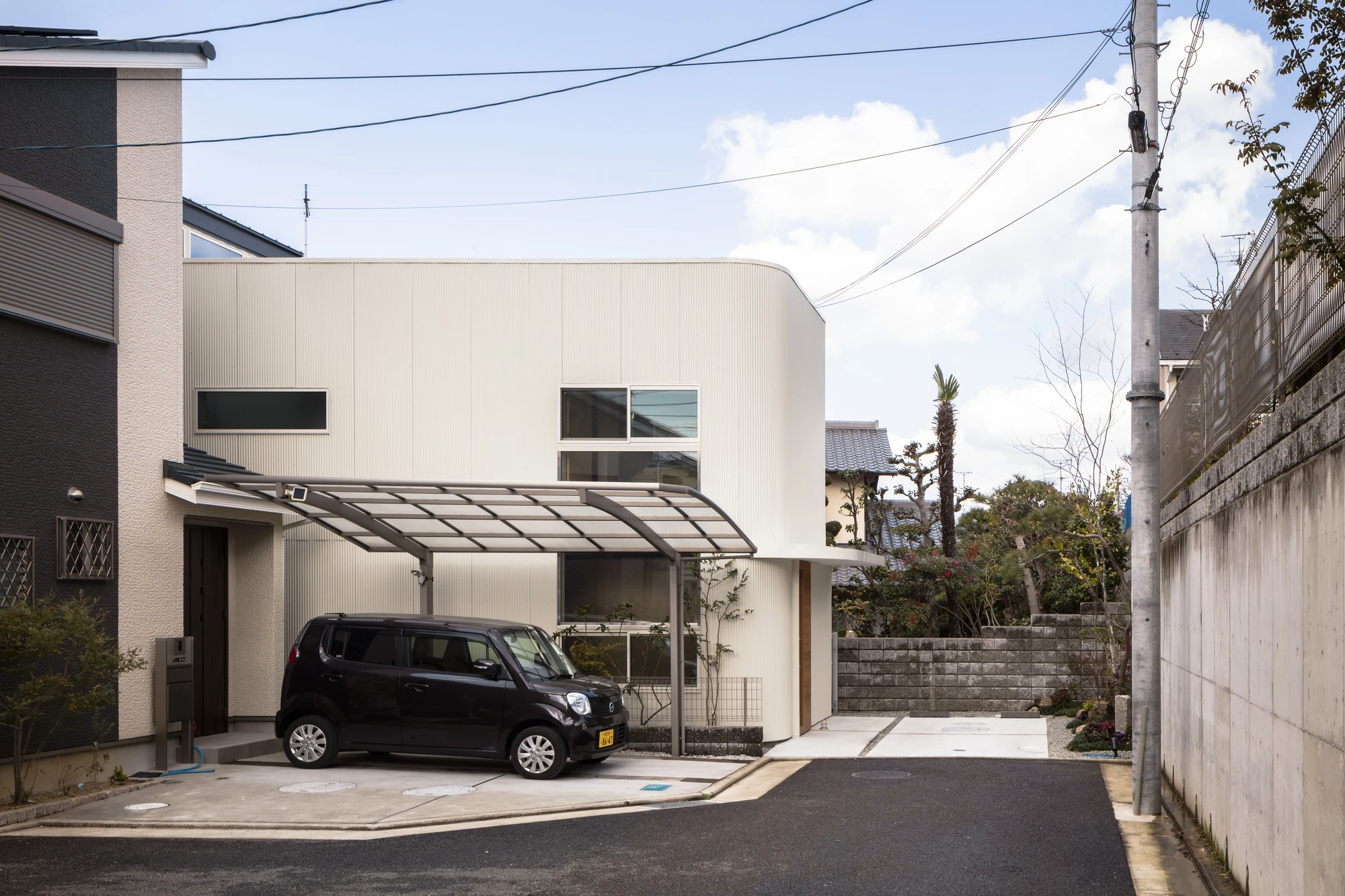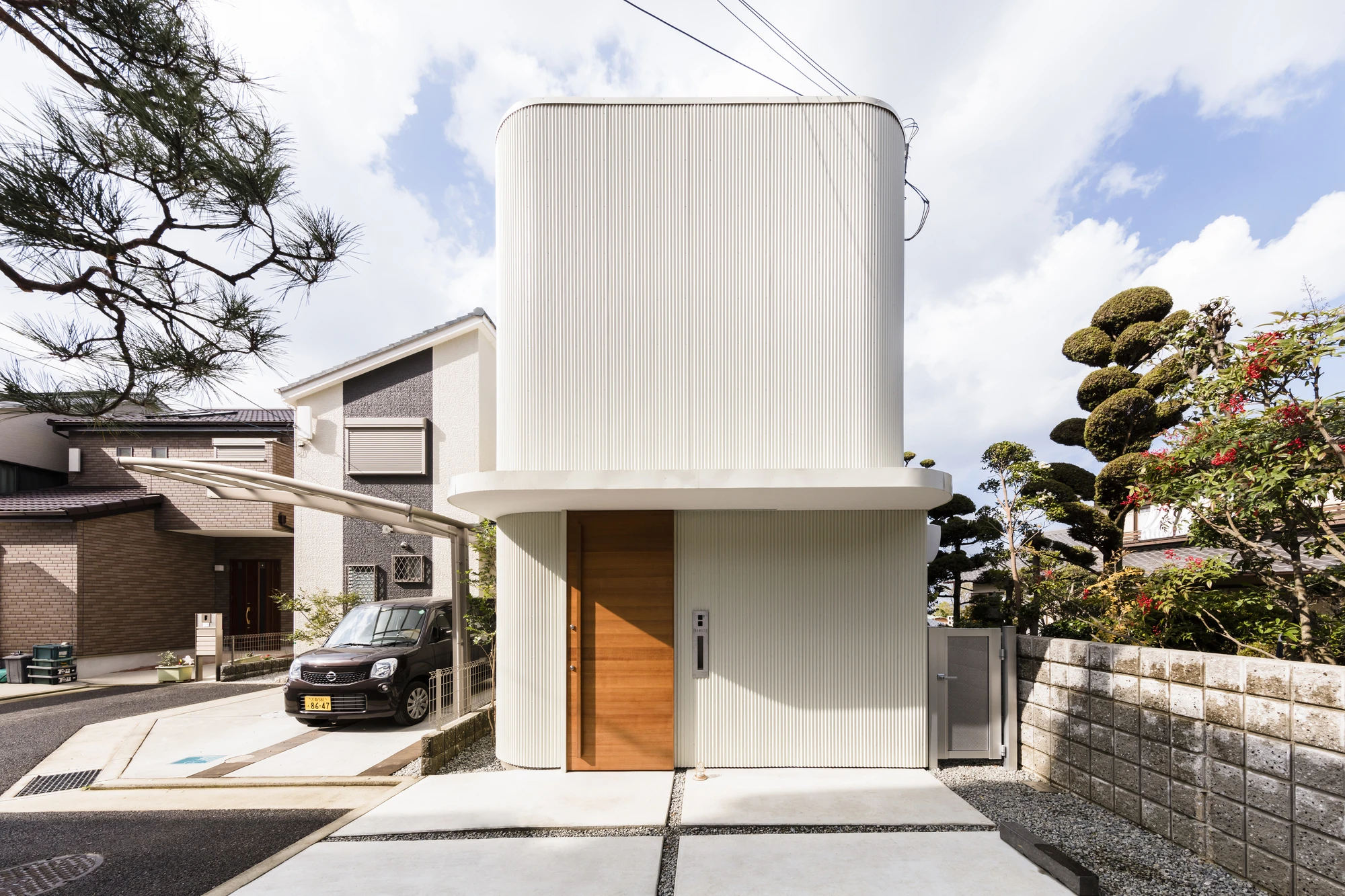
On a narrow 5.6-metre plot in Yao, Osaka, architect Satoshi Saito of SAI Architectural Design Office designs Melt — a house organized around a sheltered double-height courtyard where a dry garden becomes the room the family inhabits most.
The client — a couple in their thirties with two children — asked for a house where they could feel a close connection with the natural environment, despite the site's dense urban context at the foot of a mountain. Saito responded with a plan that places a courtyard at the centre: enclosing a tree and a couch, this multi-functional void is used as one of the home's rooms, blurring the line between interior and garden.
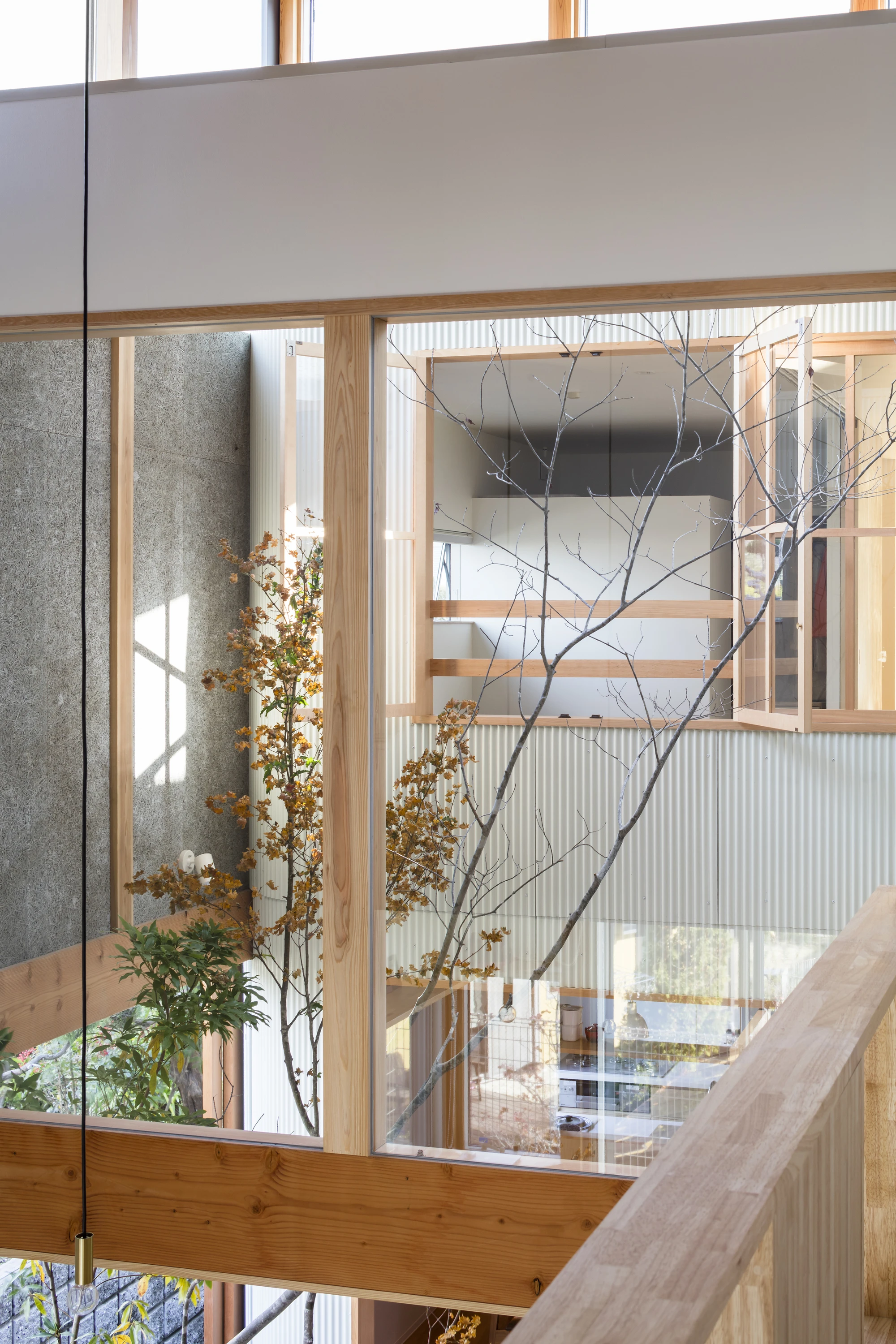
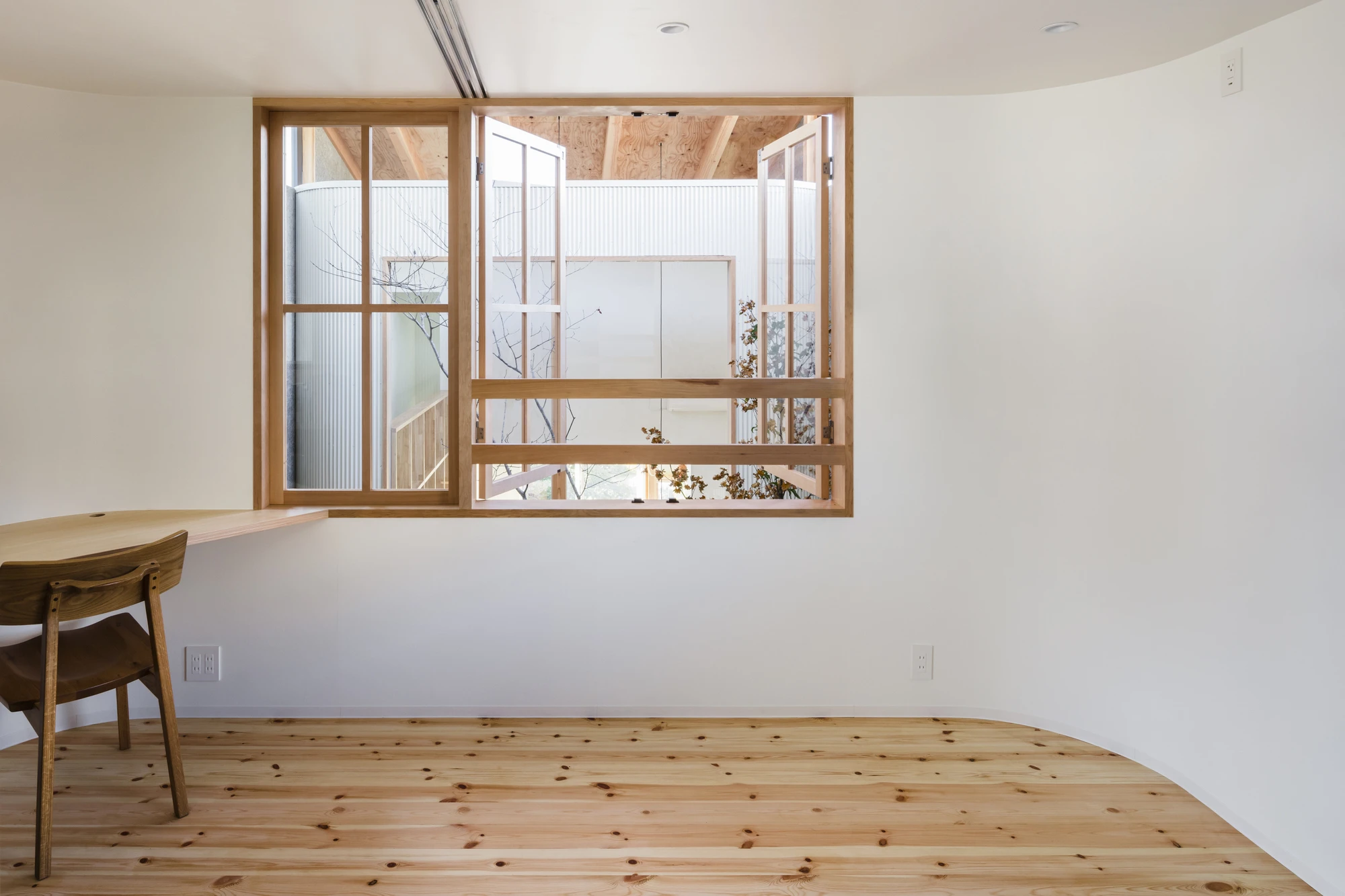
"By providing large openings and high-side lights, the plan takes in plenty of natural light and actively encourages natural ventilation, even though it is a long and narrow building," Saito explains. The courtyard draws daylight deep into the plan and establishes a vertical connection between floors that the narrow footprint would otherwise deny. From almost every room, the tree is visible — a constant reference point that shifts with the seasons.
The dry garden is the conceptual heart of the project. "This plan hopes that even in a limited area, the dry garden will allow the residents to spend a variety of time and create a space where each scene can be spun up in a dense and diverse manner," Saito writes. It is at once living room, light well, ventilation shaft, and garden — a compression of programme that turns the constraint of the plot into the house's defining quality.
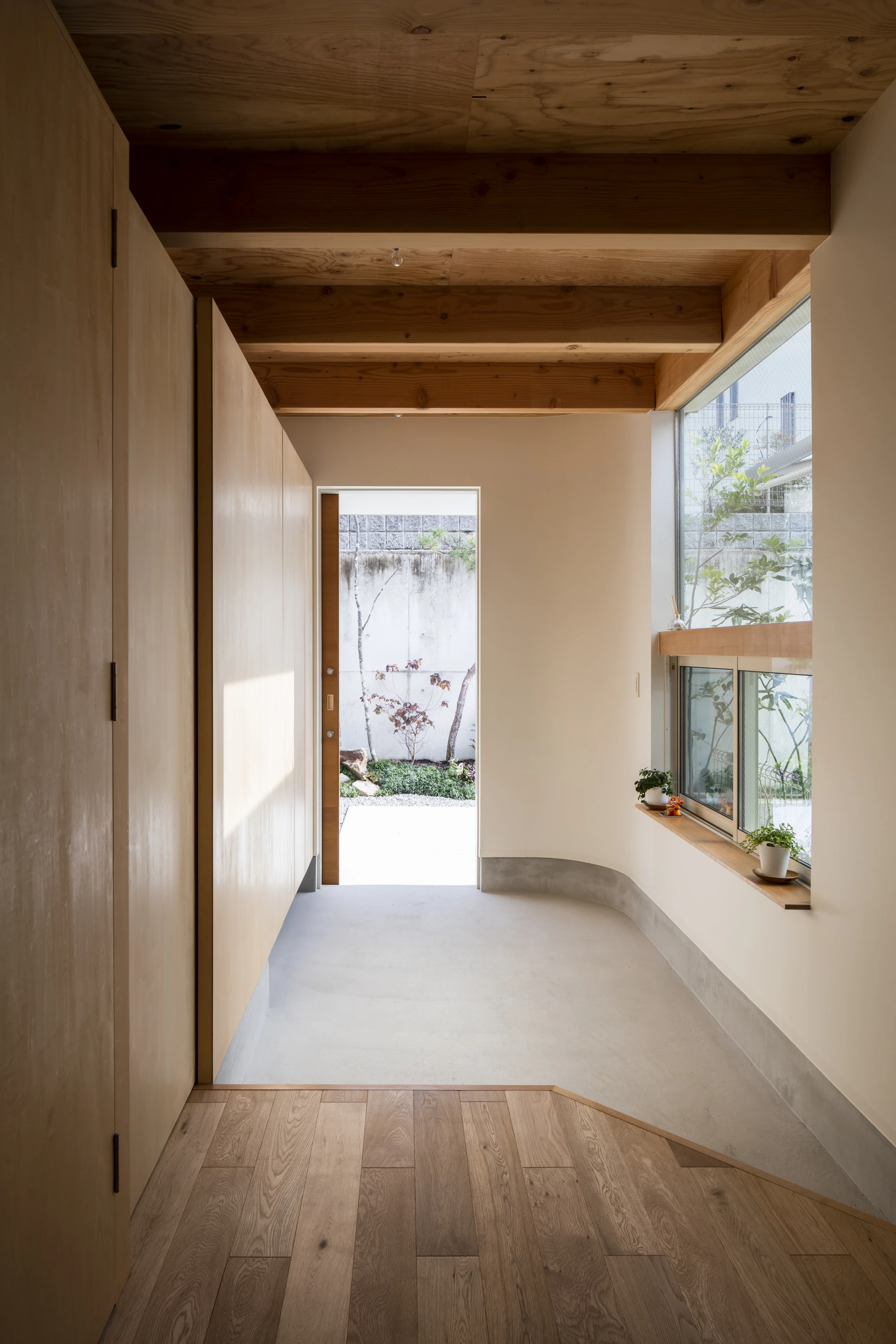
Materials are restrained and warm: pale timber, white plaster, polished concrete at ground level. The house earns its name through the way boundaries dissolve — between inside and out, between room and garden, between the built and the planted. In a city of tight lots and close neighbours, Melt demonstrates that the most generous domestic spaces are sometimes the ones carved out of the least promising sites.