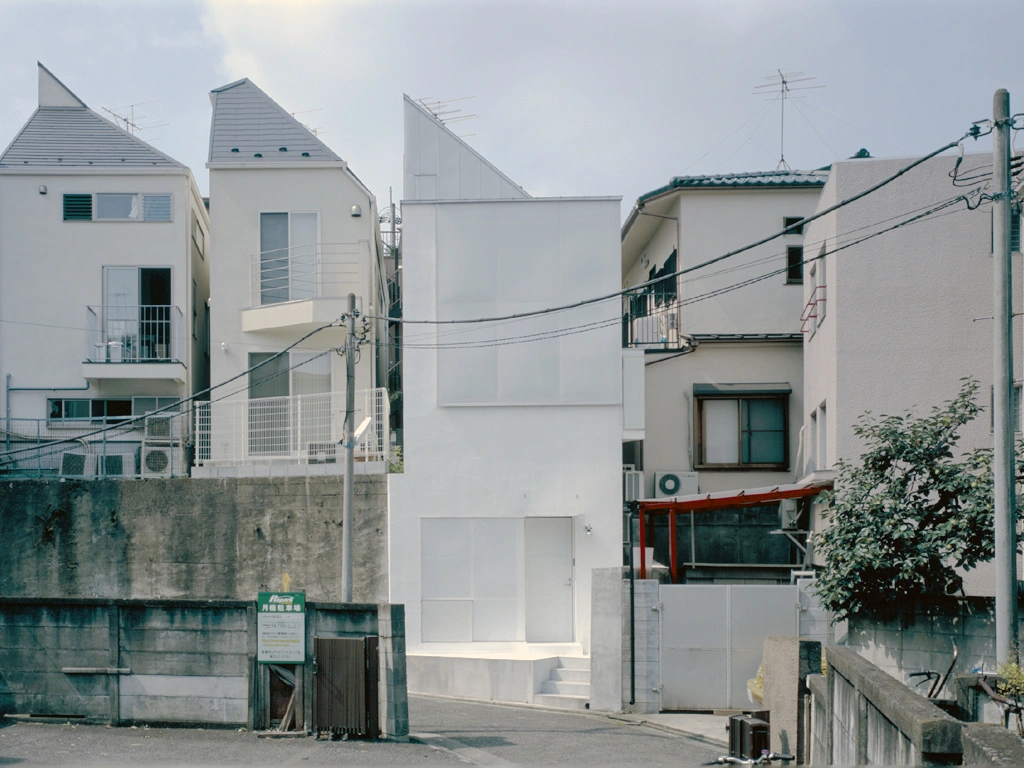
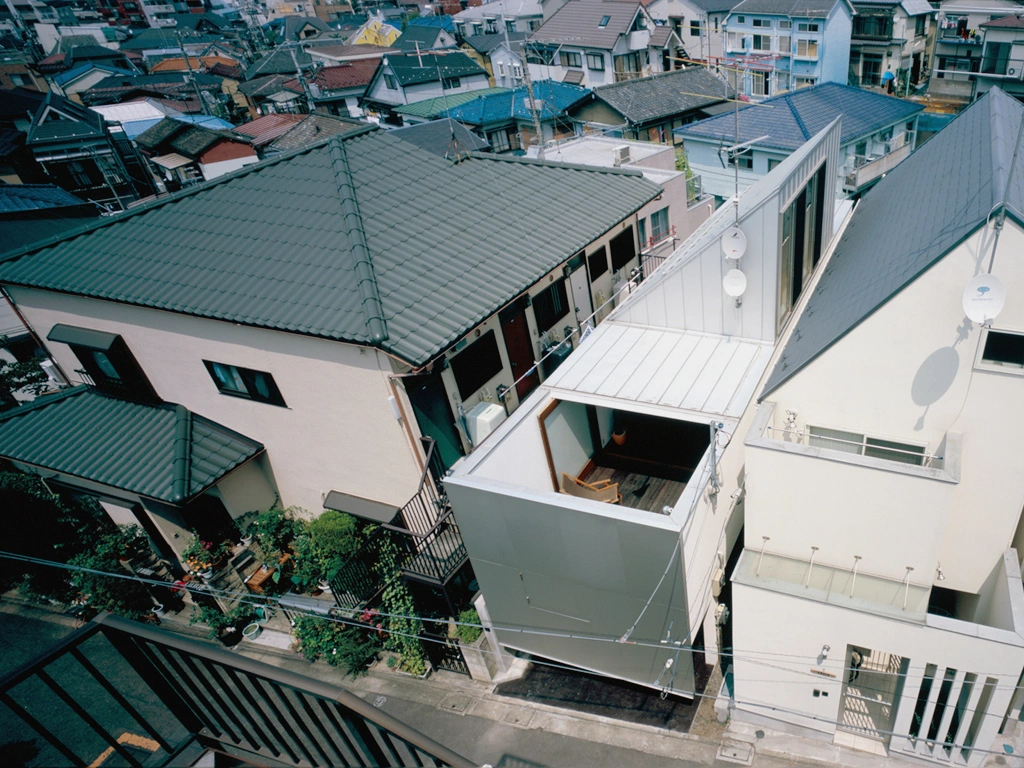
Long Tall House designed by Spacespace rises from a sliver of Tokyo topography with the quiet determination of a structure negotiating its own constraints.
Tucked between narrow paths and perched on the edge of an aging retaining wall, the house reinterprets its awkward site as a generative force. Spacespace’s design embraces the steep drop, the thin footprint, and the dense urban grain, transforming these pressures into a five-storey sequence of rooms that feel unexpectedly open, airy, and continuous.
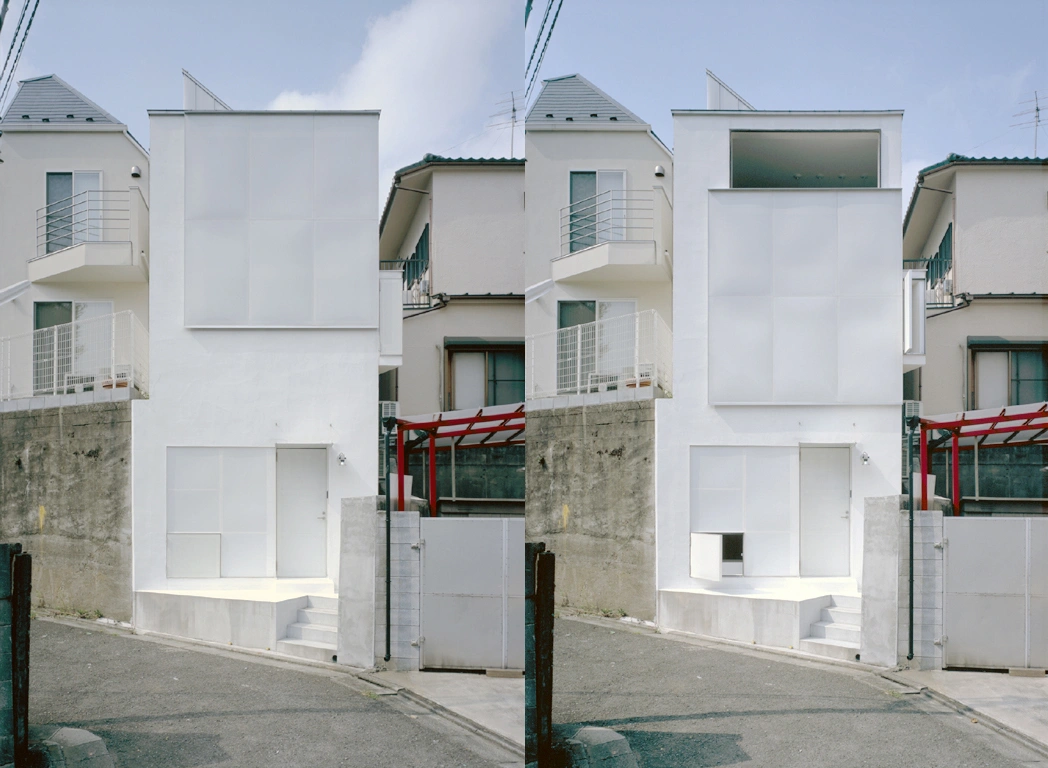
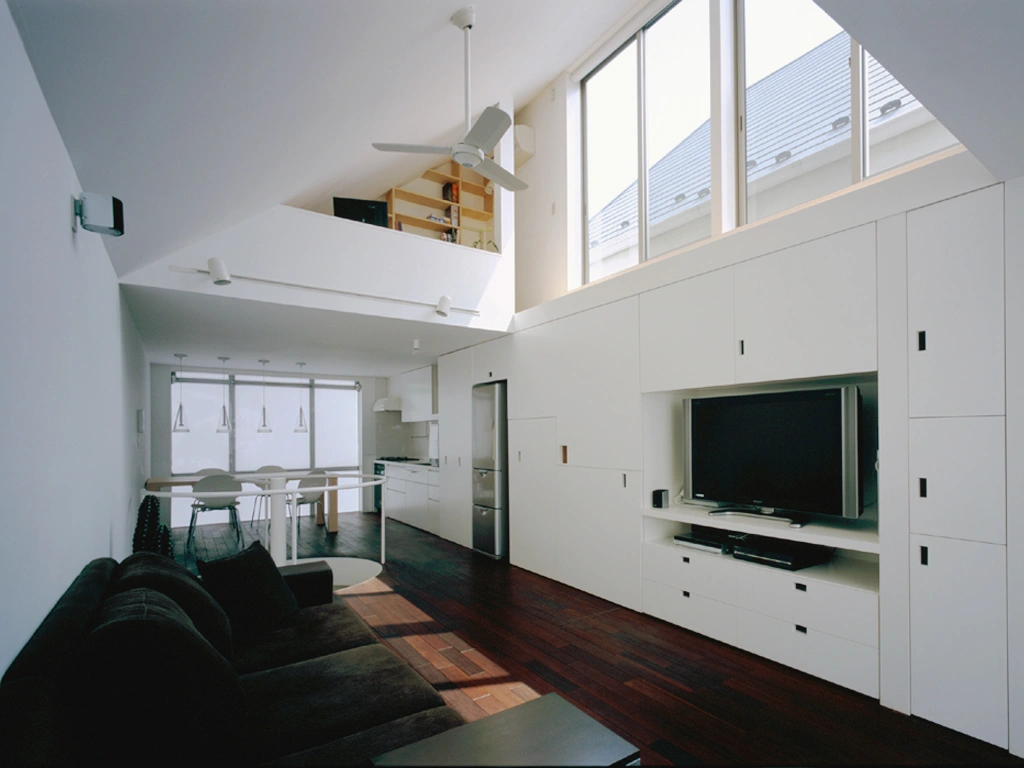
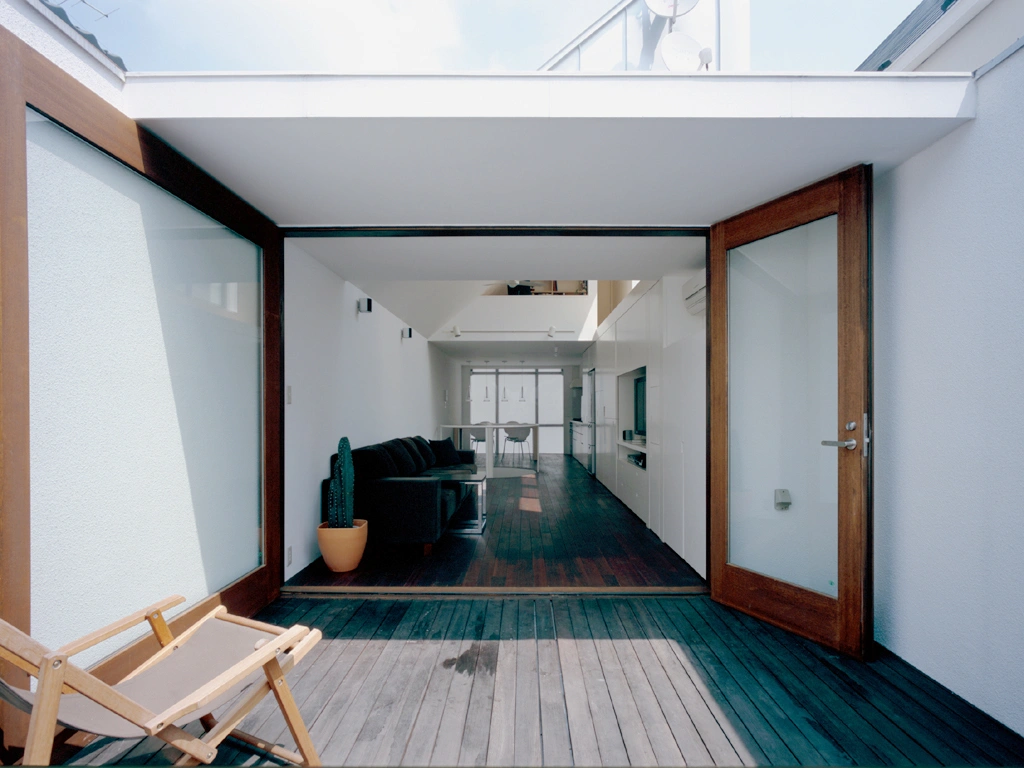
The lower two floors, embedded in reinforced concrete, trace the buried contours beneath the old wall, effectively stitching two ground levels into one spatial narrative. Above them, three lightweight timber floors lighten the ascent, culminating in a narrow but luminous living level that stretches the full 16-metre length of the plot. This long room, free of partitions, becomes the home’s social spine, opening to both north and south through operable facades that shift the building’s posture with surprising theatricality.
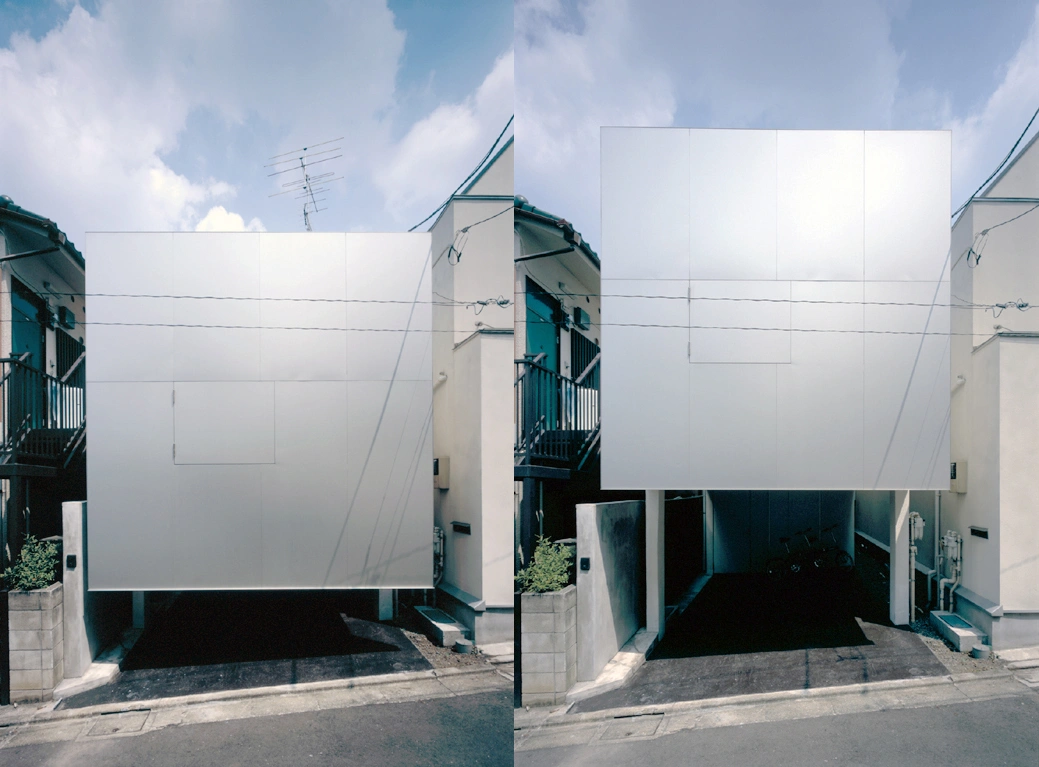
These sliding elements—a large translucent window to the north and a paneled aluminum wall to the south—move vertically via counterweights, lifting completely despite the site’s restricted clearances. When raised, they dissolve the boundary between house and street, allowing air, views, and neighborhood rhythms to sweep through the interior. When lowered, the façade returns to its enigmatic, near-monolithic presence, a quiet rectangular volume aligned with the stubborn geometry of the old retaining wall.
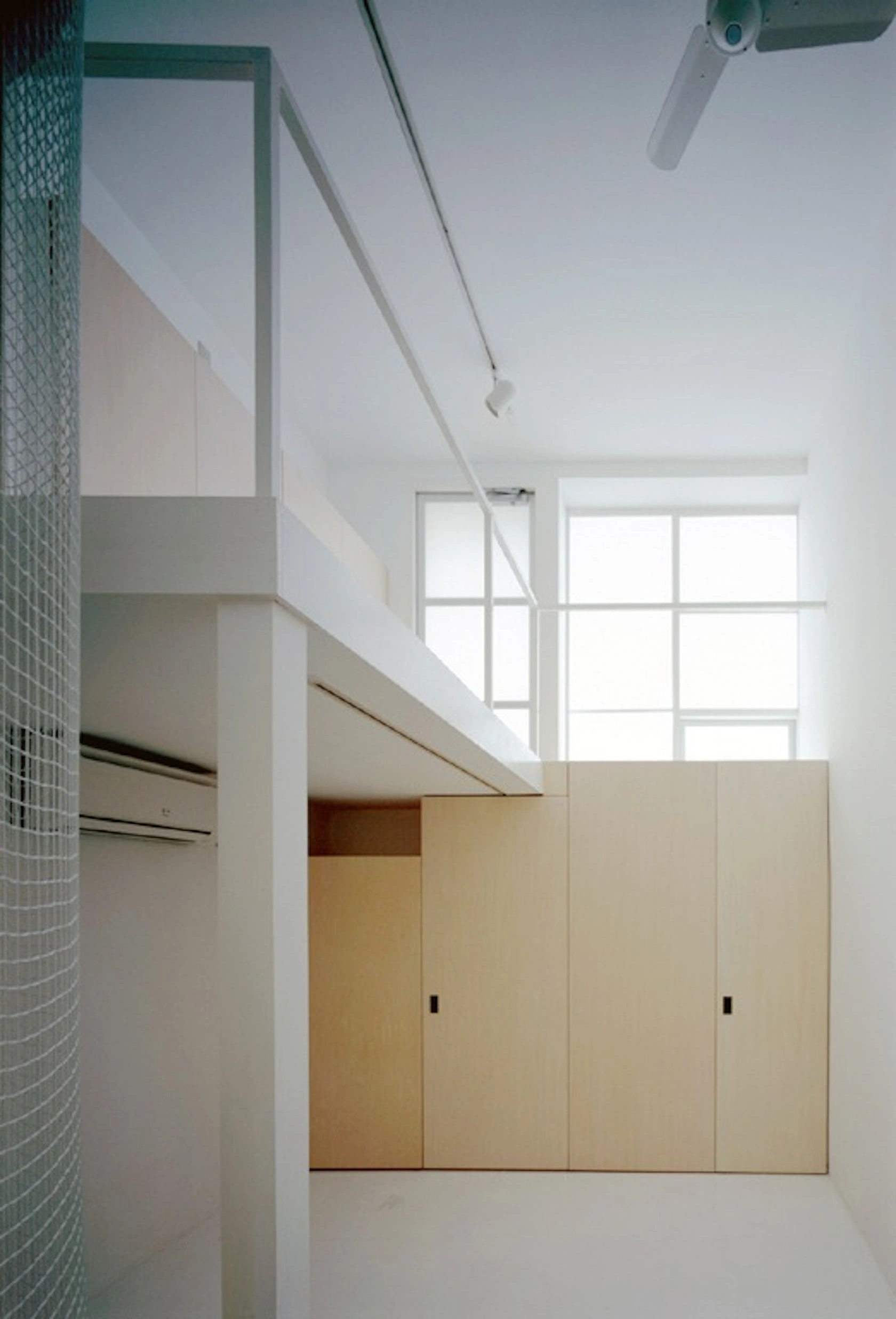
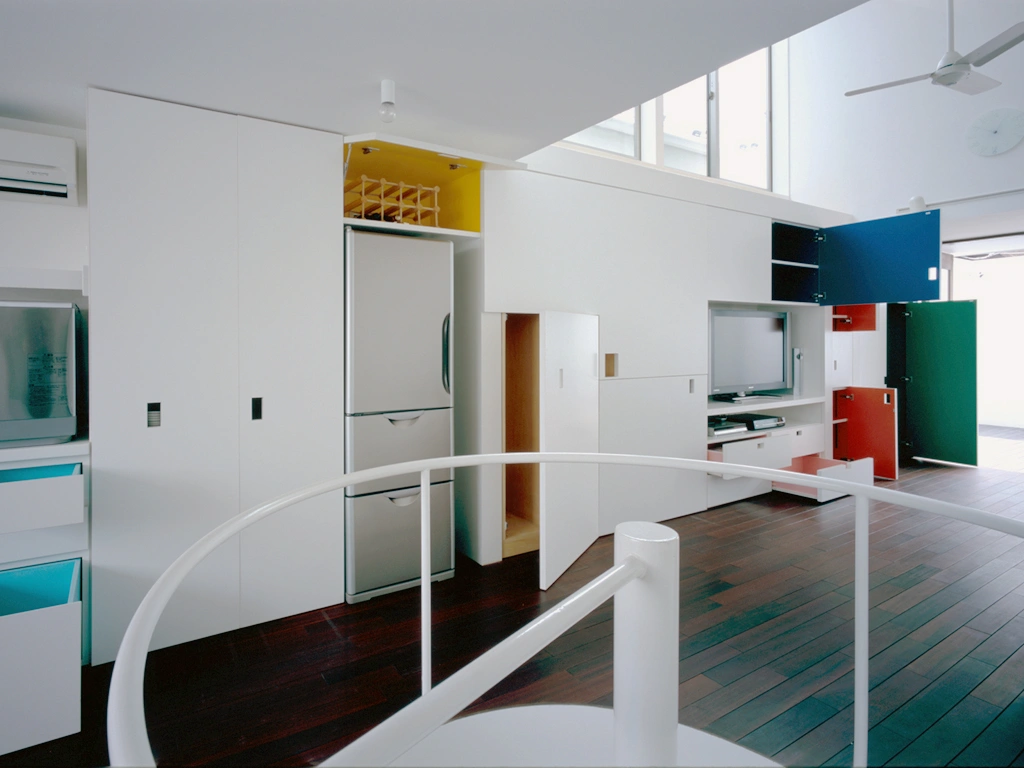
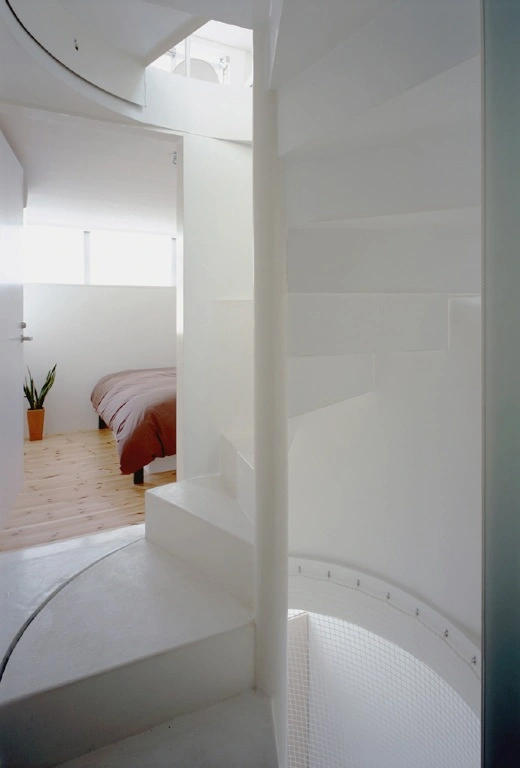
Inside, the architects use storage as both program and architecture. A continuous wall of built-ins along the living level holds everything from appliances to AV equipment to a disappearing stairway leading to the study above. Each compartment is given its own color, creating a subtle chromatic index that the owners can navigate by memory and habit. The effect is both playful and precise, a human counterbalance to the house’s otherwise disciplined white envelope.
Long Tall House stands as a meditation on living within limits—of land, light, and regulation—and turning those limits into opportunities for connection. It is a hybrid of row house and tower, of excavation and elevation, its spaces threaded together by movement, air, and the shifting thresholds that frame daily life in the heart of Tokyo.