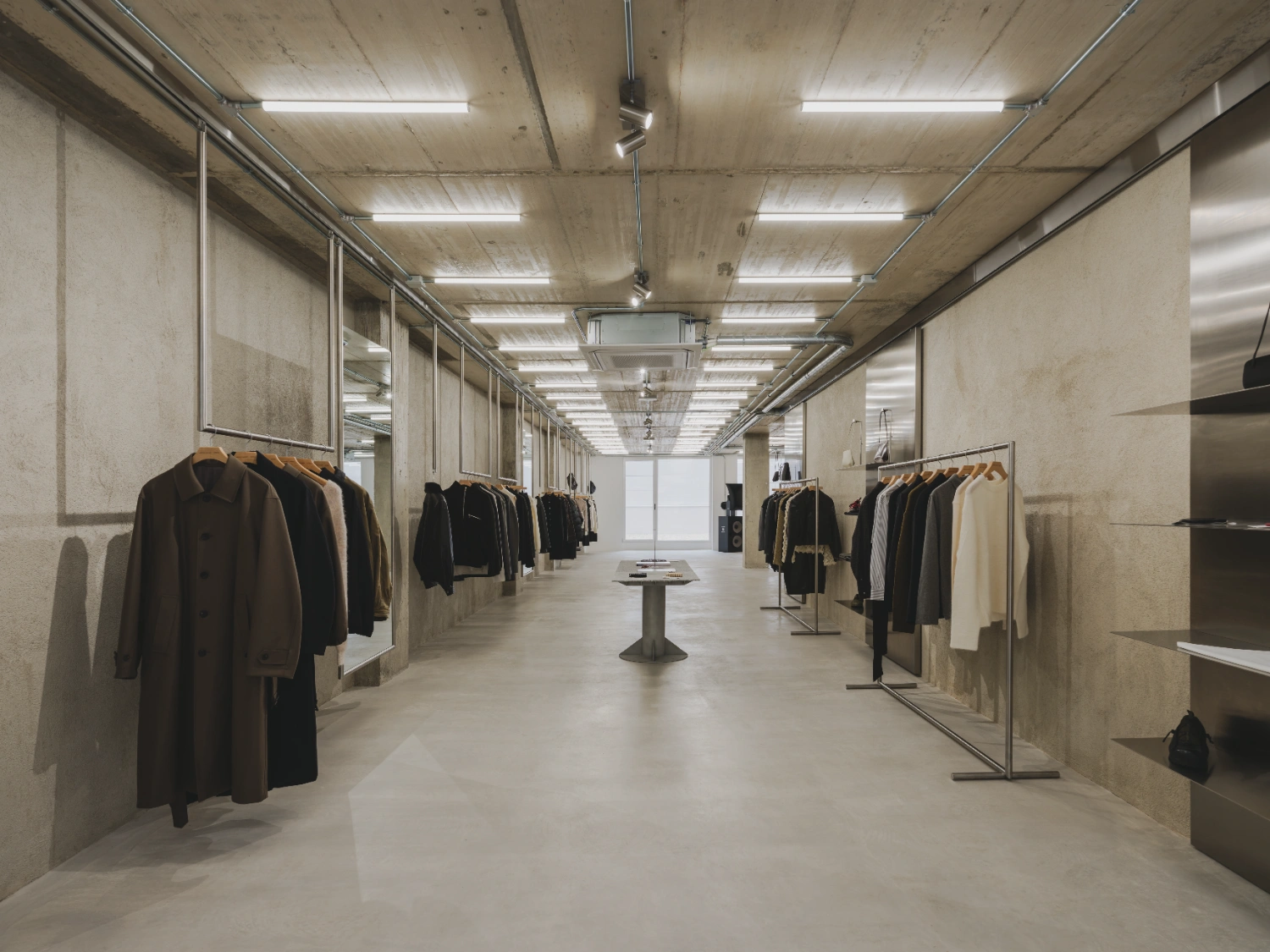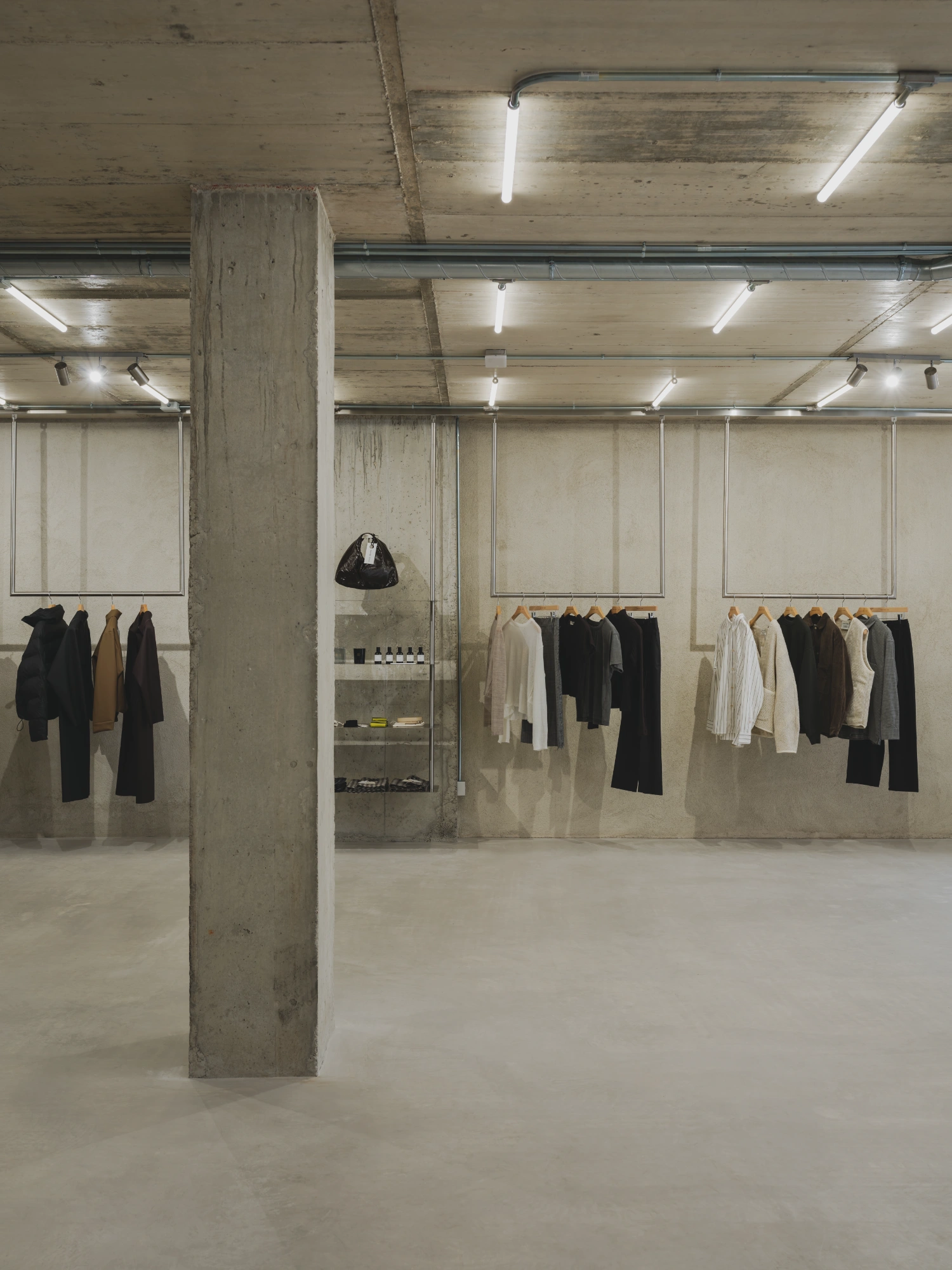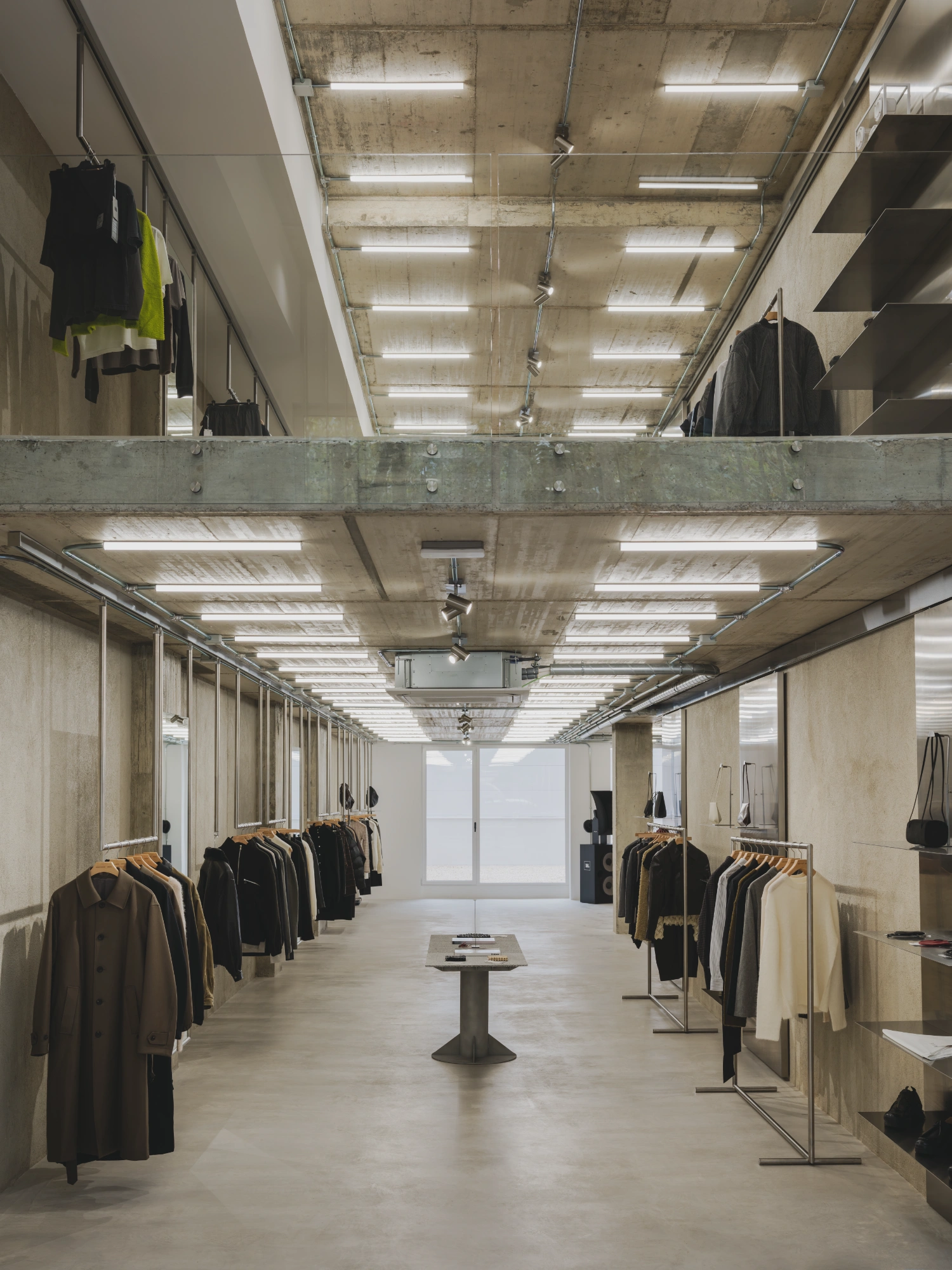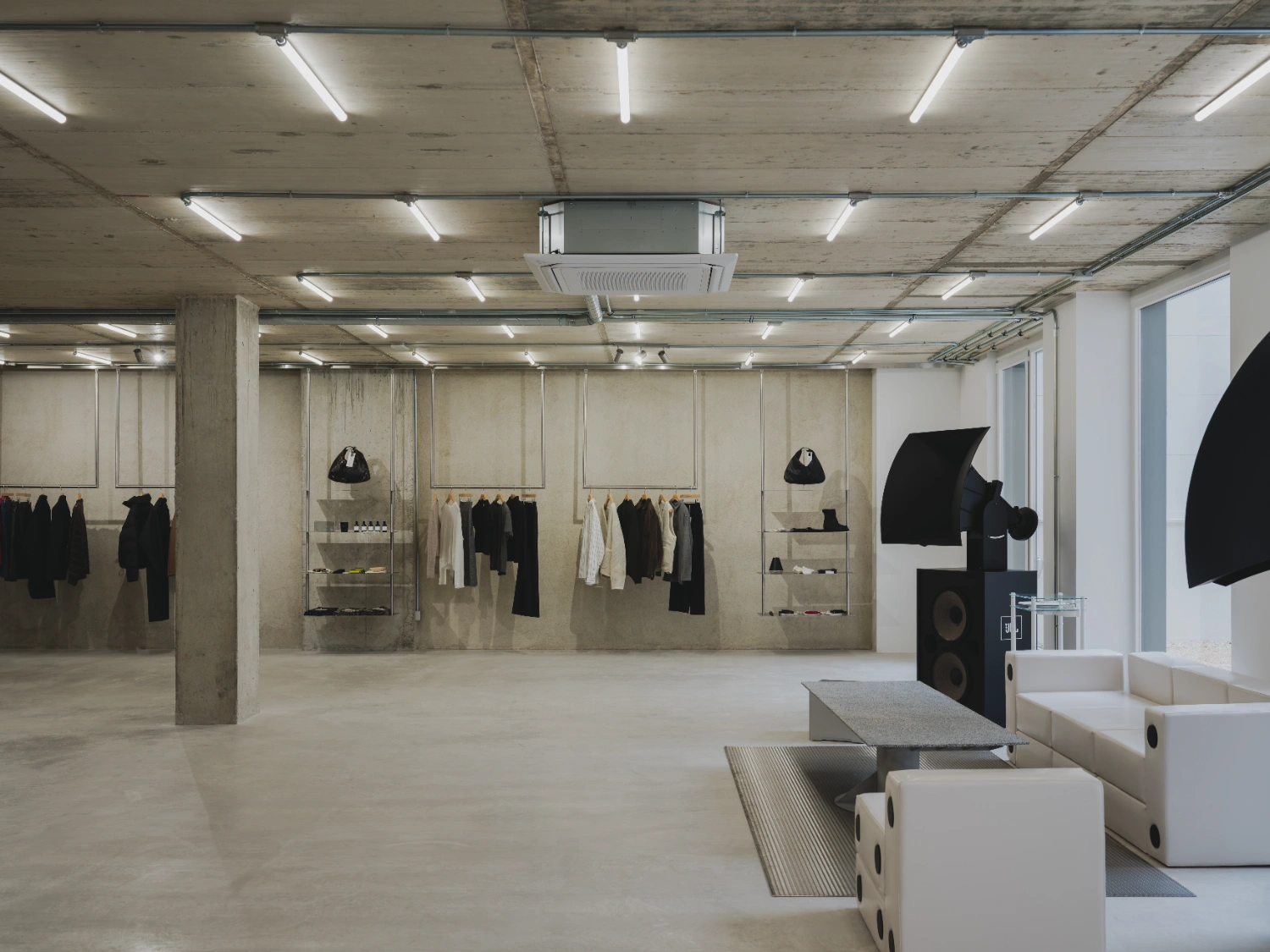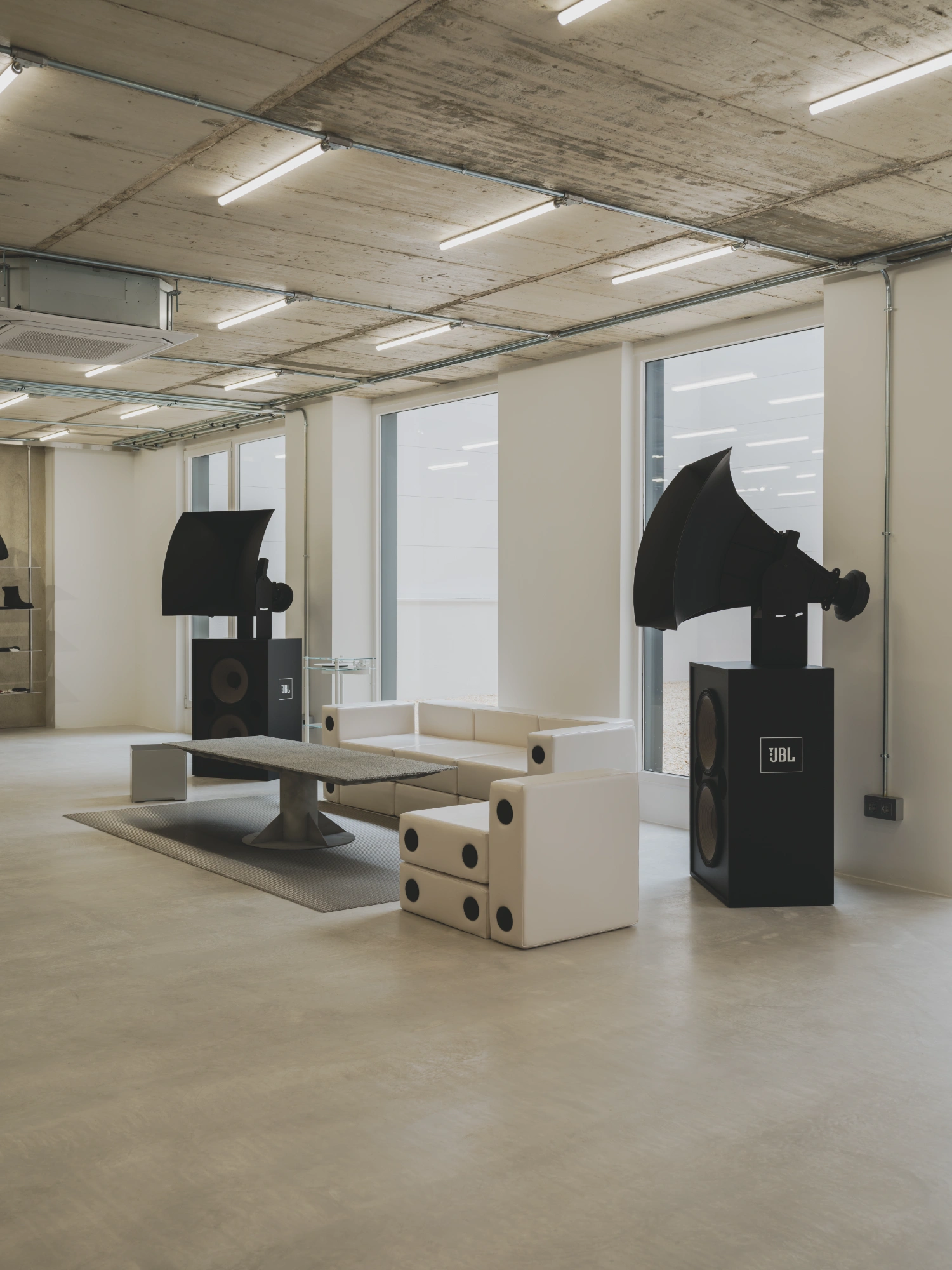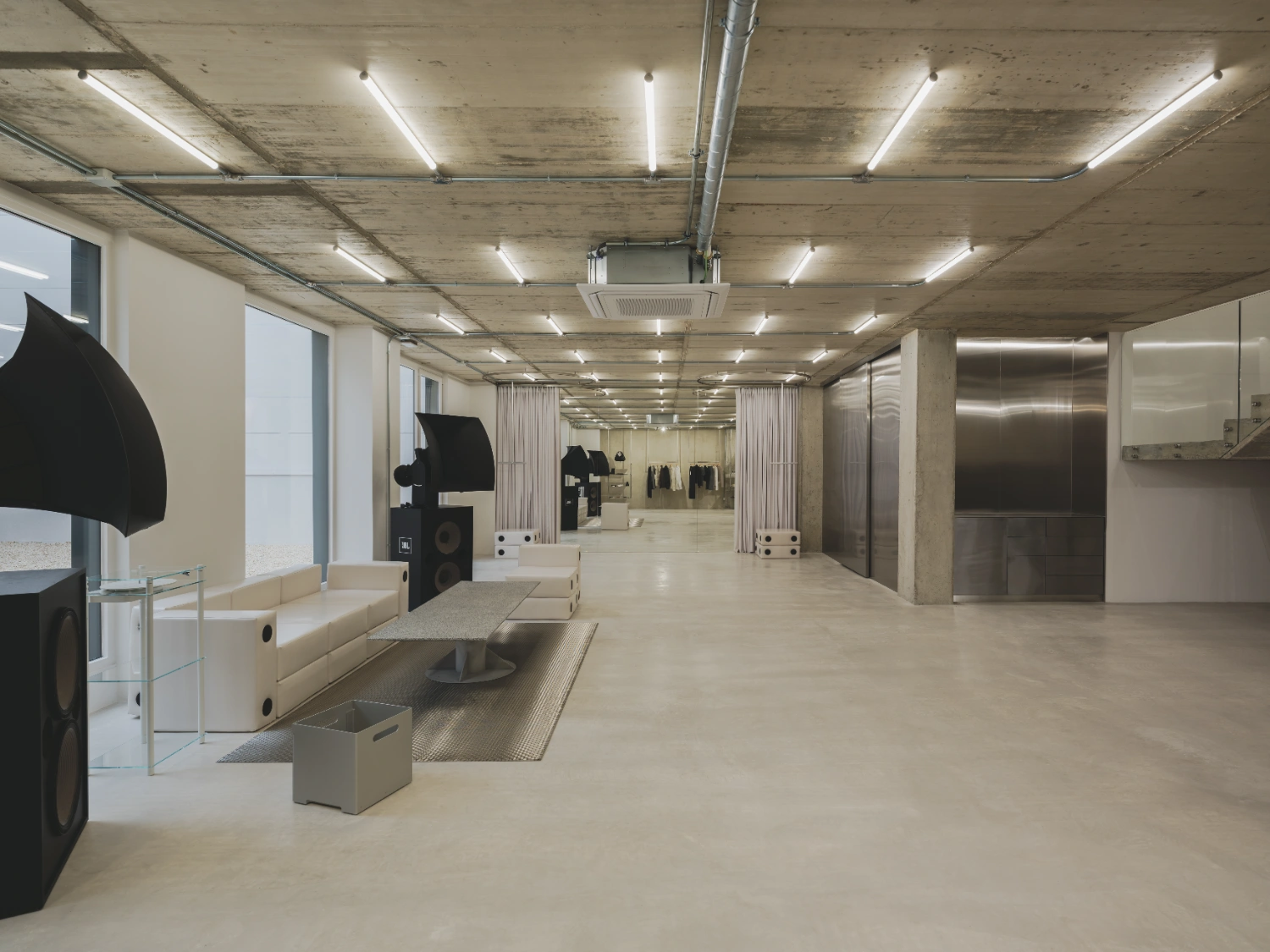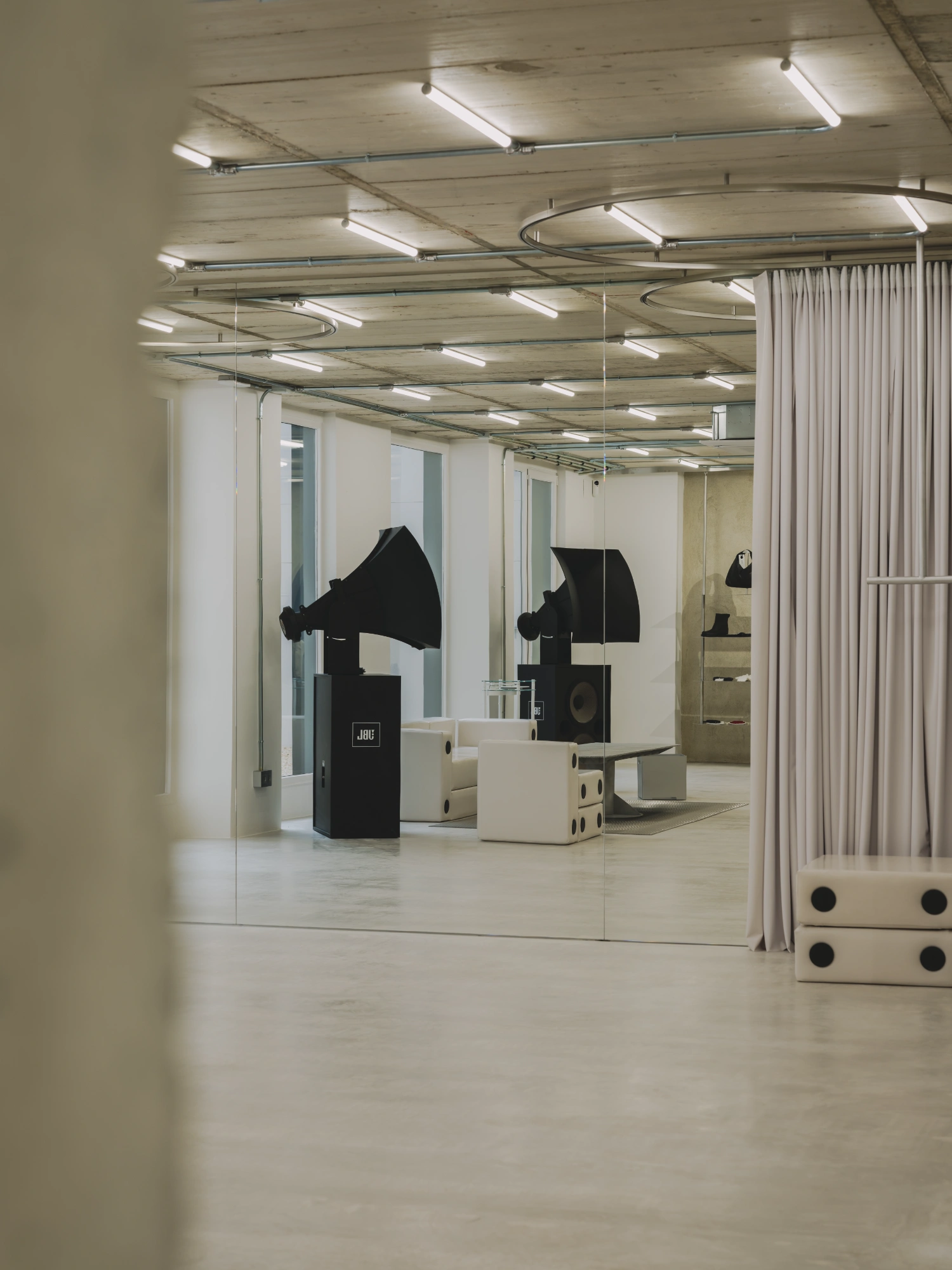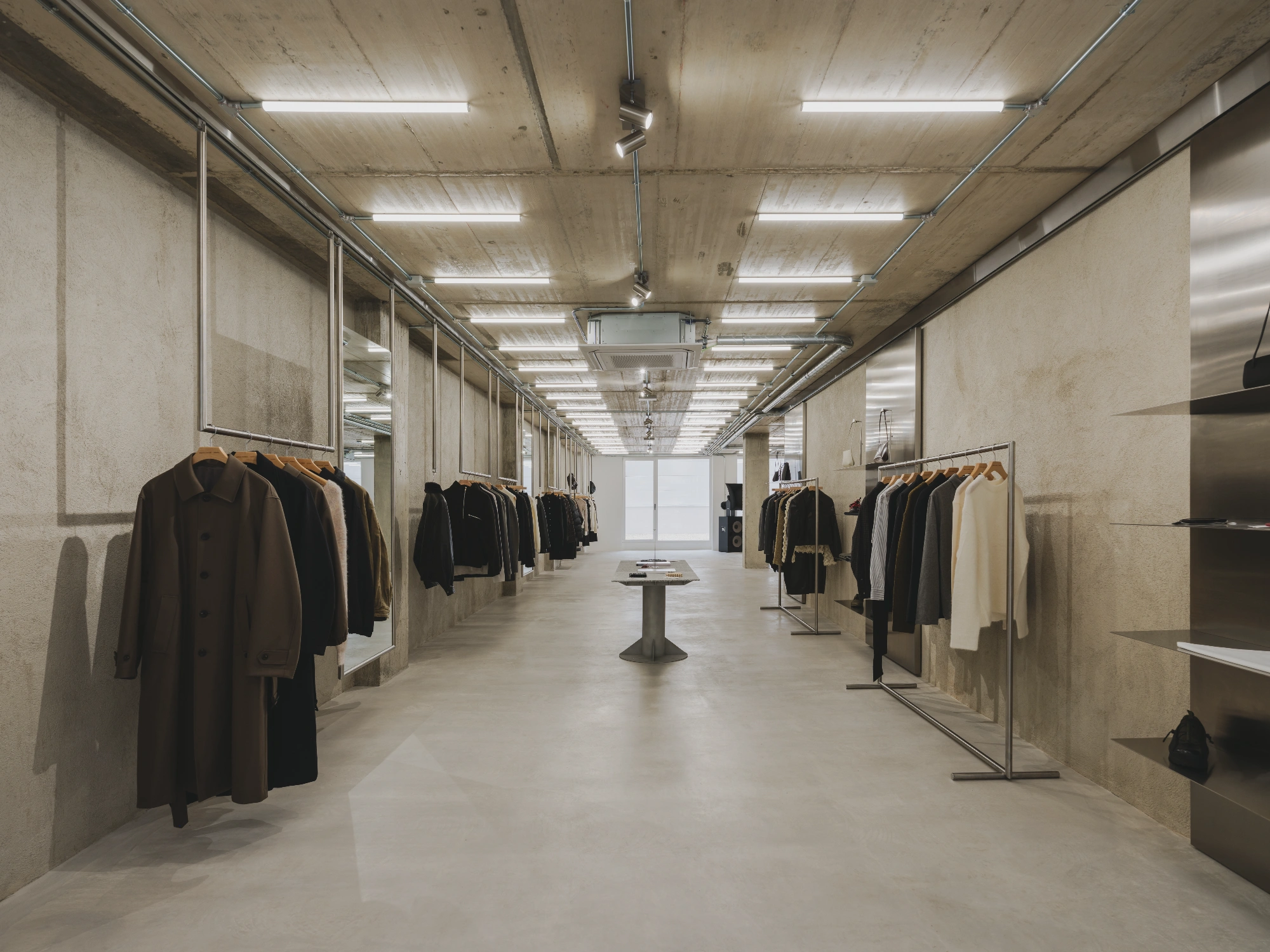
In the raw, brutalist shell of M.I.G.’s new Barcelona outpost, AVOIR stages a material and conceptual ballet between asceticism and functionality.
The store unfolds as a gallery of tactile provocation, where furnishings double as meditations on structure, sensation, and utility. Each intervention serves not merely as an object, but as a scenario—an opportunity to question the norms of display, rest, and use.
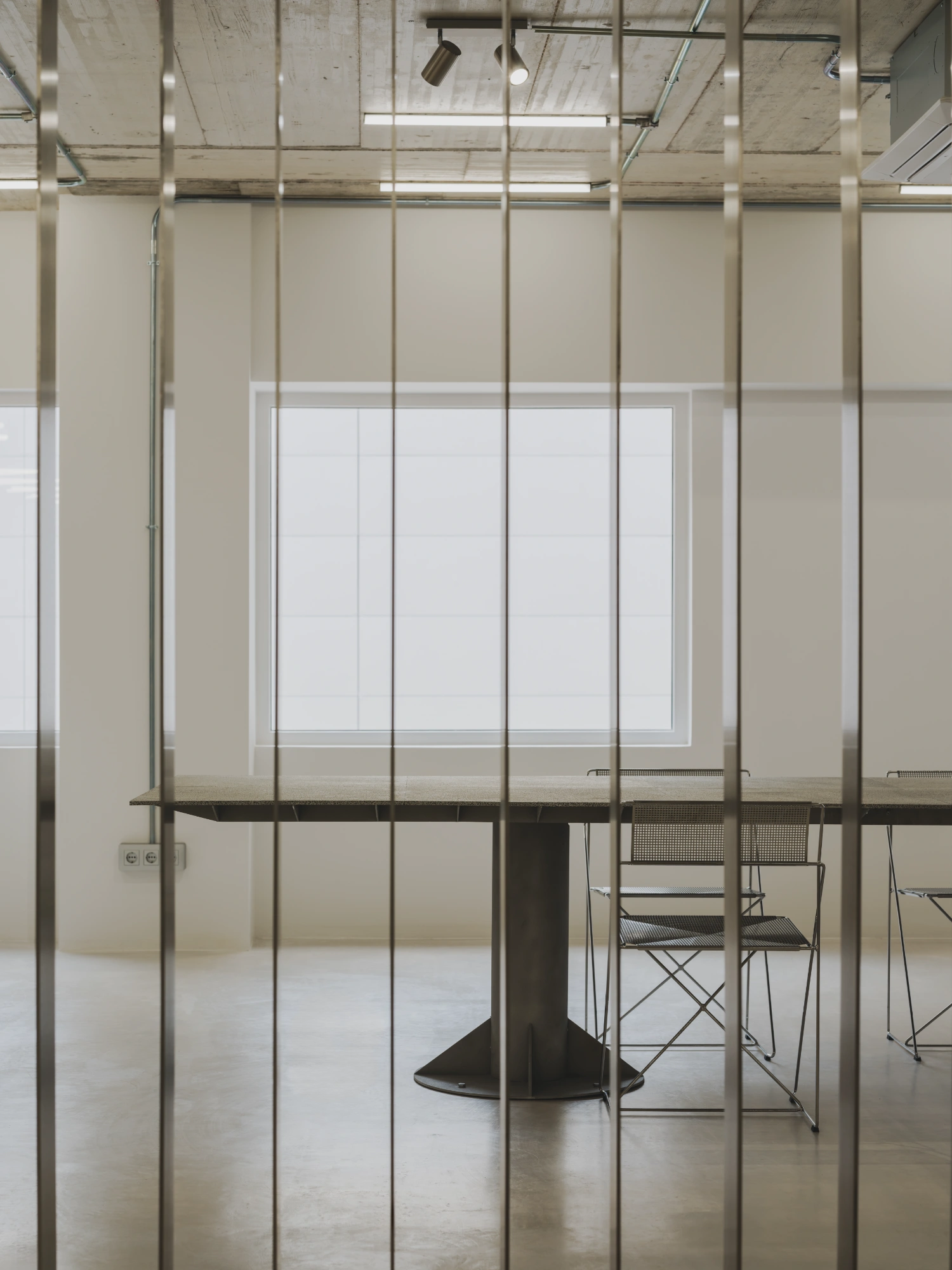
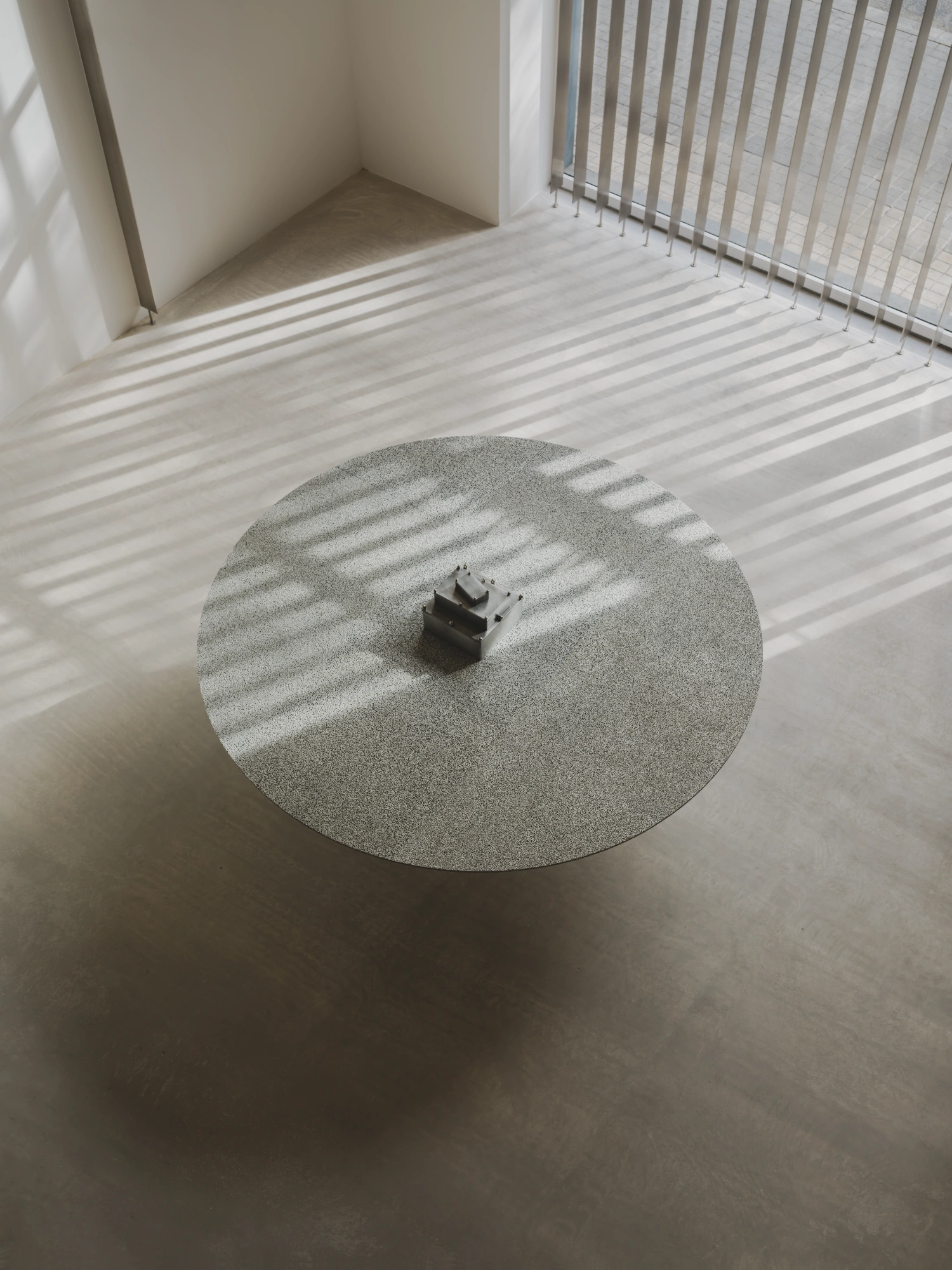
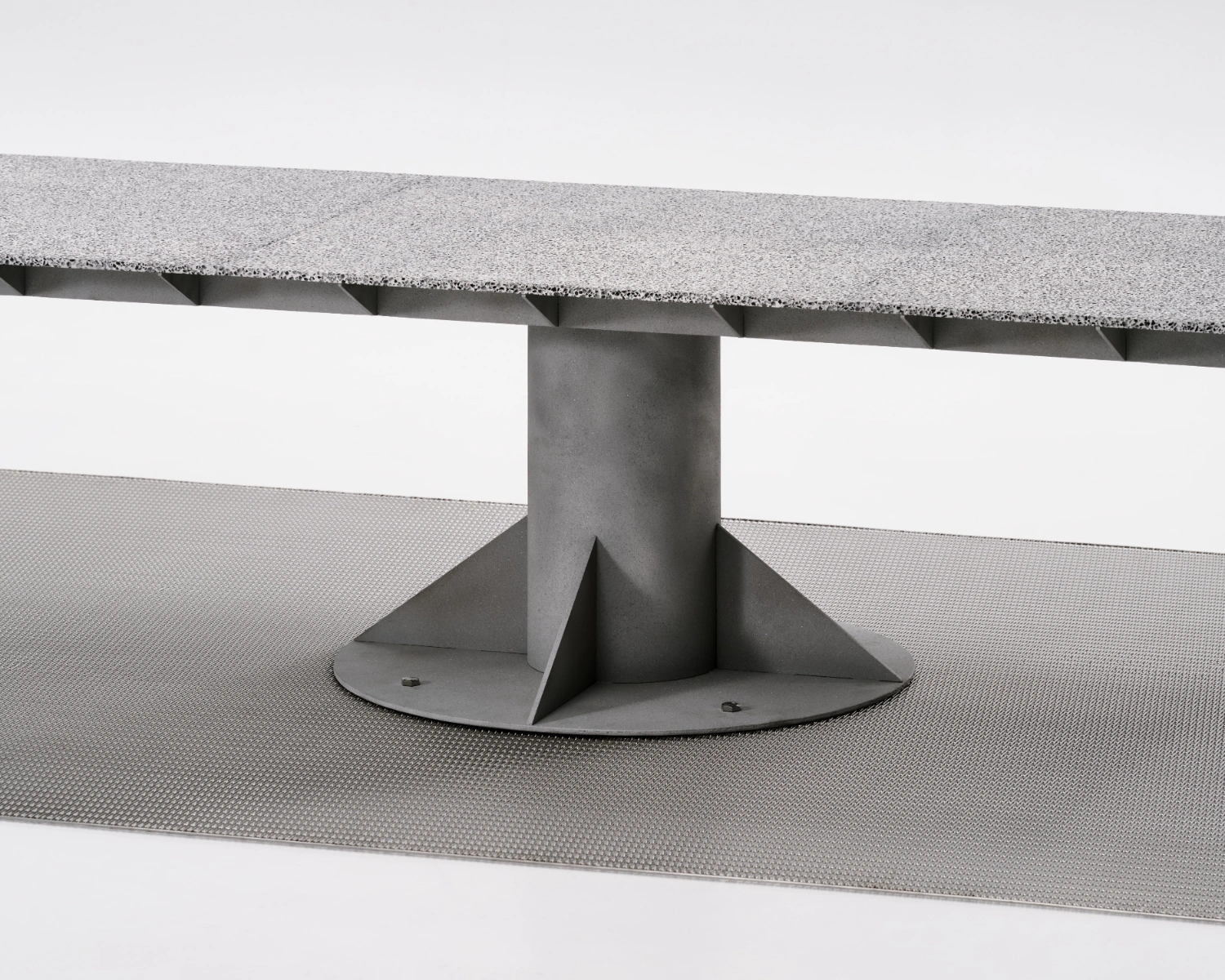
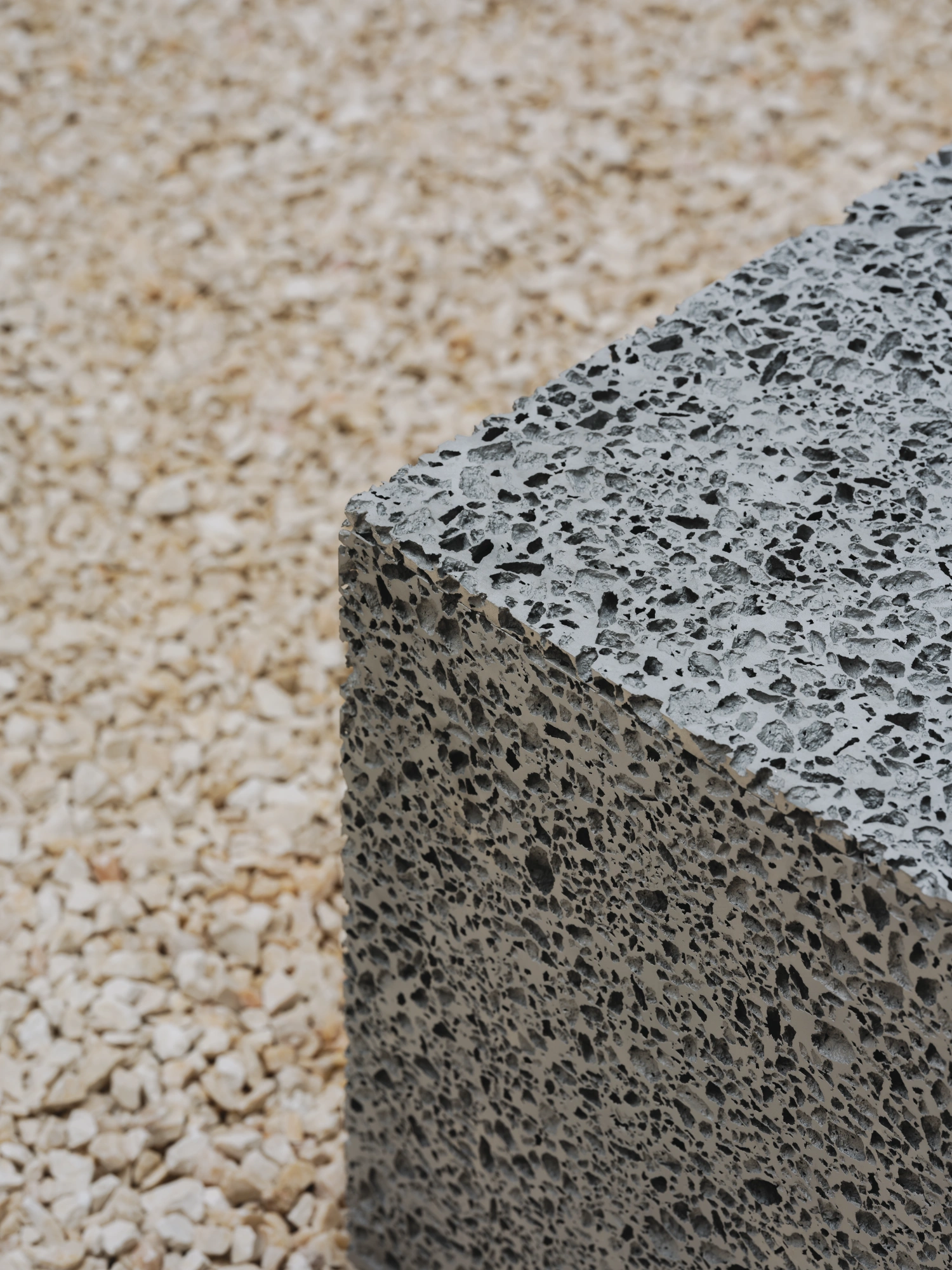
The centerpiece of the courtyard, the Sugar Bench, is cast from salt-treated aluminum—a dense, porous monolith echoing the gravel that surrounds it. It’s less a bench than a block of geological fiction: compressed, textured, unresolved. Inside, the Clock Tables punctuate the space like industrial timepieces, their single columns supporting rotating terrazzo discs. Together or apart, they oscillate between solitary use and communal interaction, evoking the modularity of brutalist infrastructure rendered with architectural elegance.
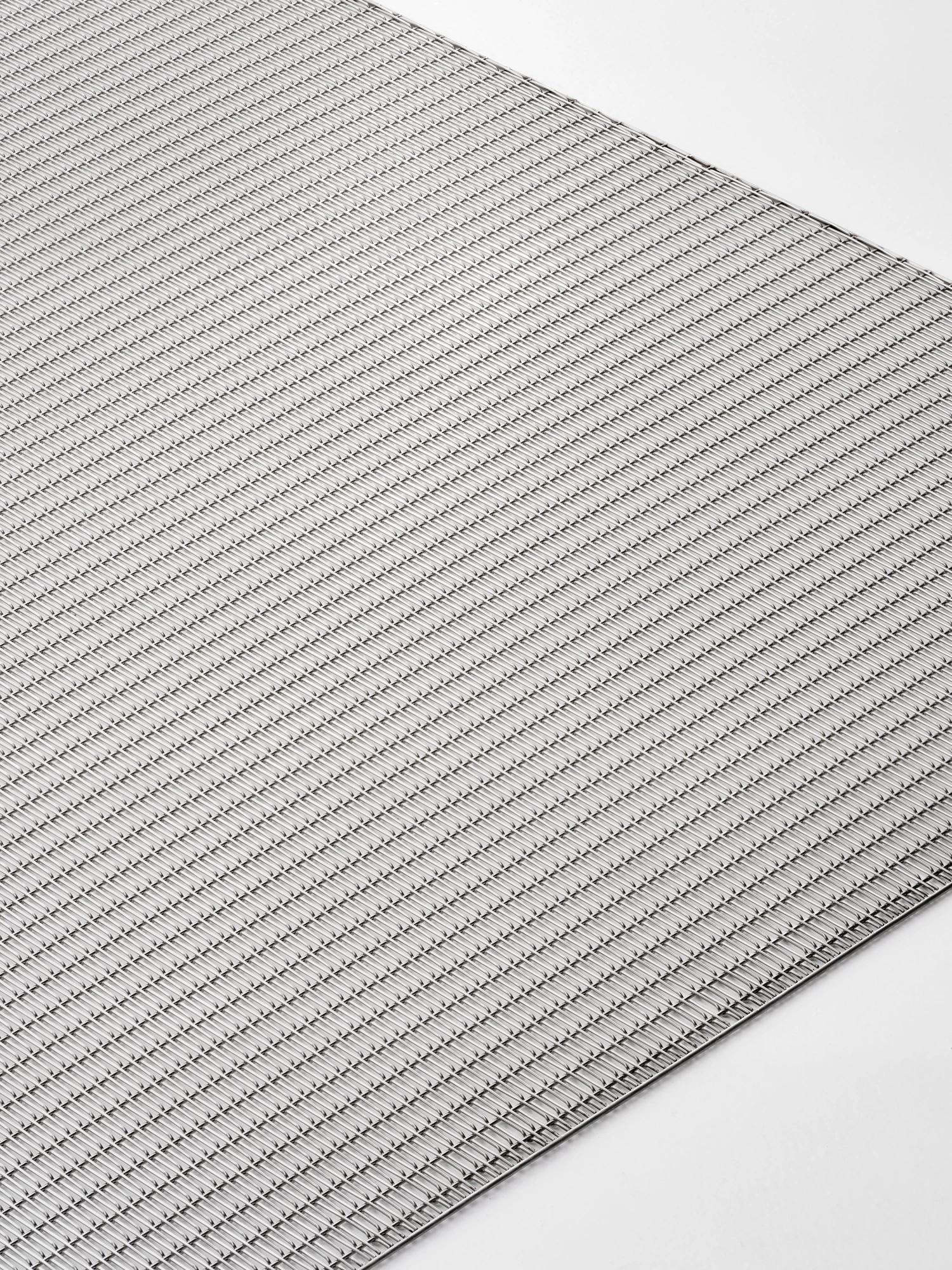
Elsewhere, the Domino Sofa embodies a kind of haptic reductionism—simple magnetic cushions that can be rearranged infinitely, without tools or rules. It feels like furniture stripped of ego, its form dictated solely by function and play. The Fakir Rug, by contrast, questions our relationship to comfort altogether. Made from metallic mesh more commonly found on façades, it refuses soft luxury in favor of an ascetic, sensory ambiguity—at once massage and menace.
AVOIR’s staging of the M.I.G. store is a distilled gesture toward the future of adaptable space. One that doesn’t compromise between form and use, but lets the friction between them create new cultural architectures.