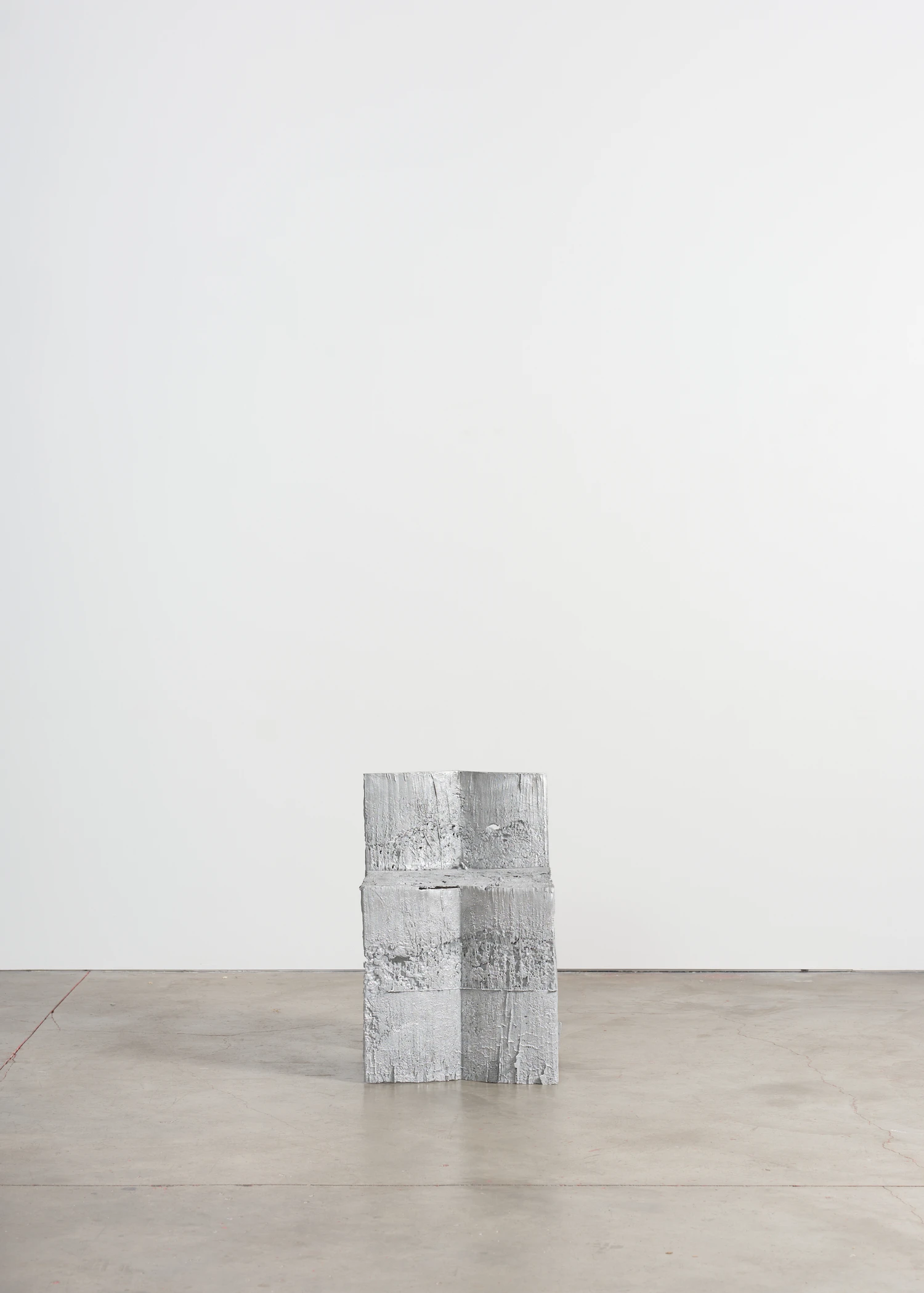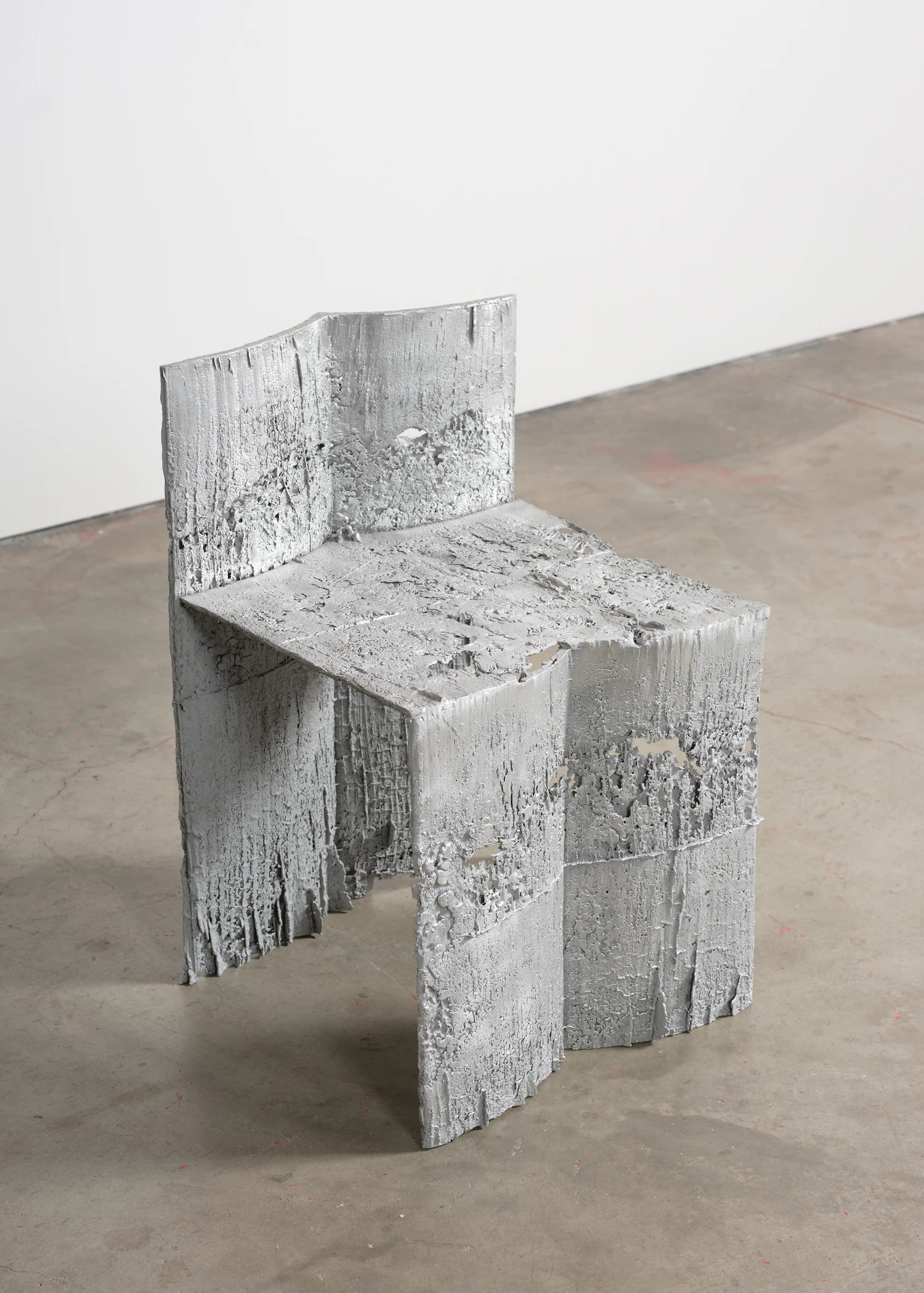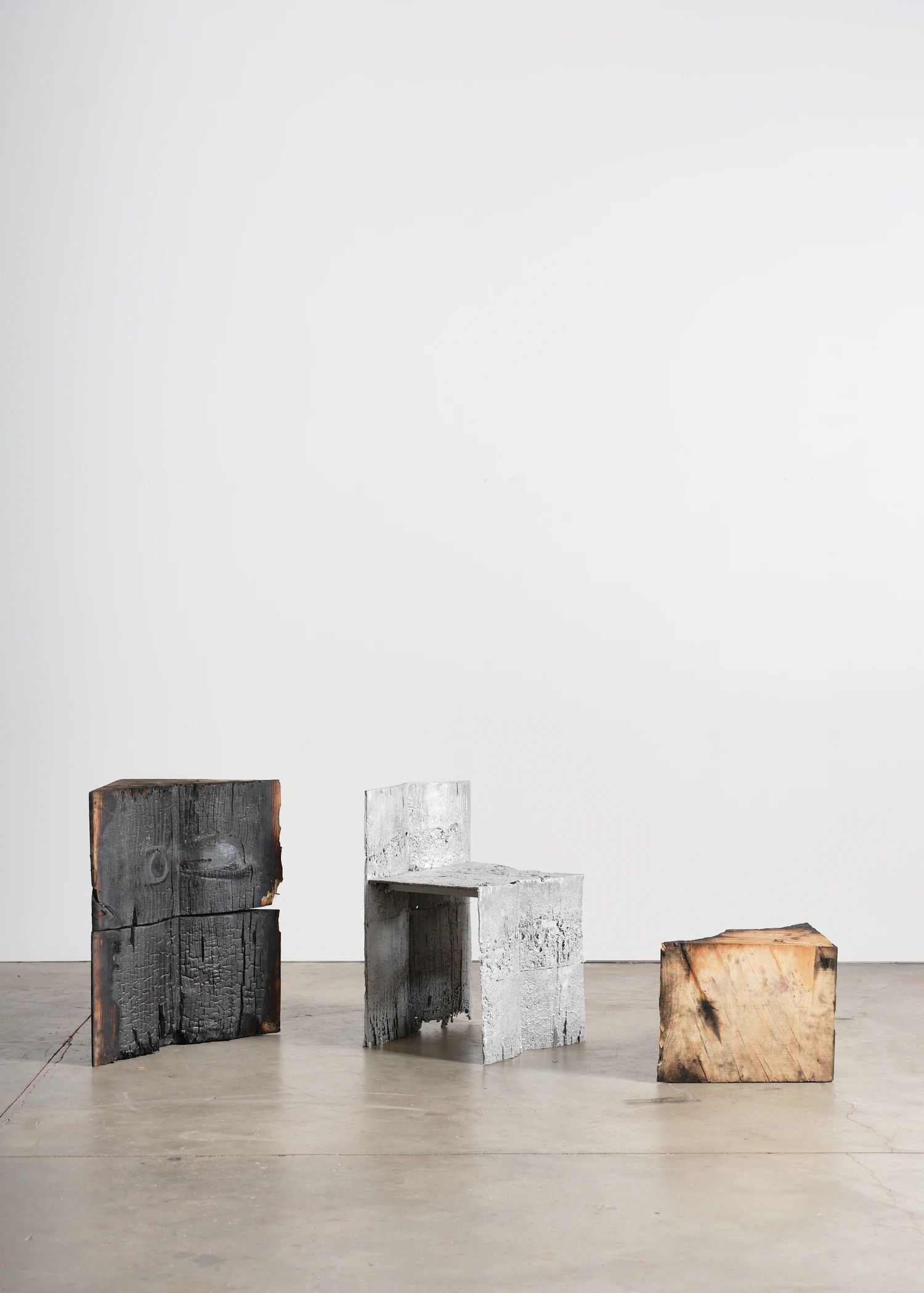
Cast from salvaged wood and molten aluminum, Left Over Chair designed by Eeba Studio records uncertainty through material process, fixing traces of chance, resilience, and quiet aftermath into a dense, unresolved design object.
Left Over Chair emerges as a compact yet forceful object, one that carries the density of an event rather than its spectacle. At first glance, its mass reads as geological, closer to a remnant than a piece of furniture. The chair’s blocky profile and blunt geometry refuse ergonomic persuasion, insisting instead on presence. It feels less designed than precipitated, as if it arrived through pressure rather than intention.
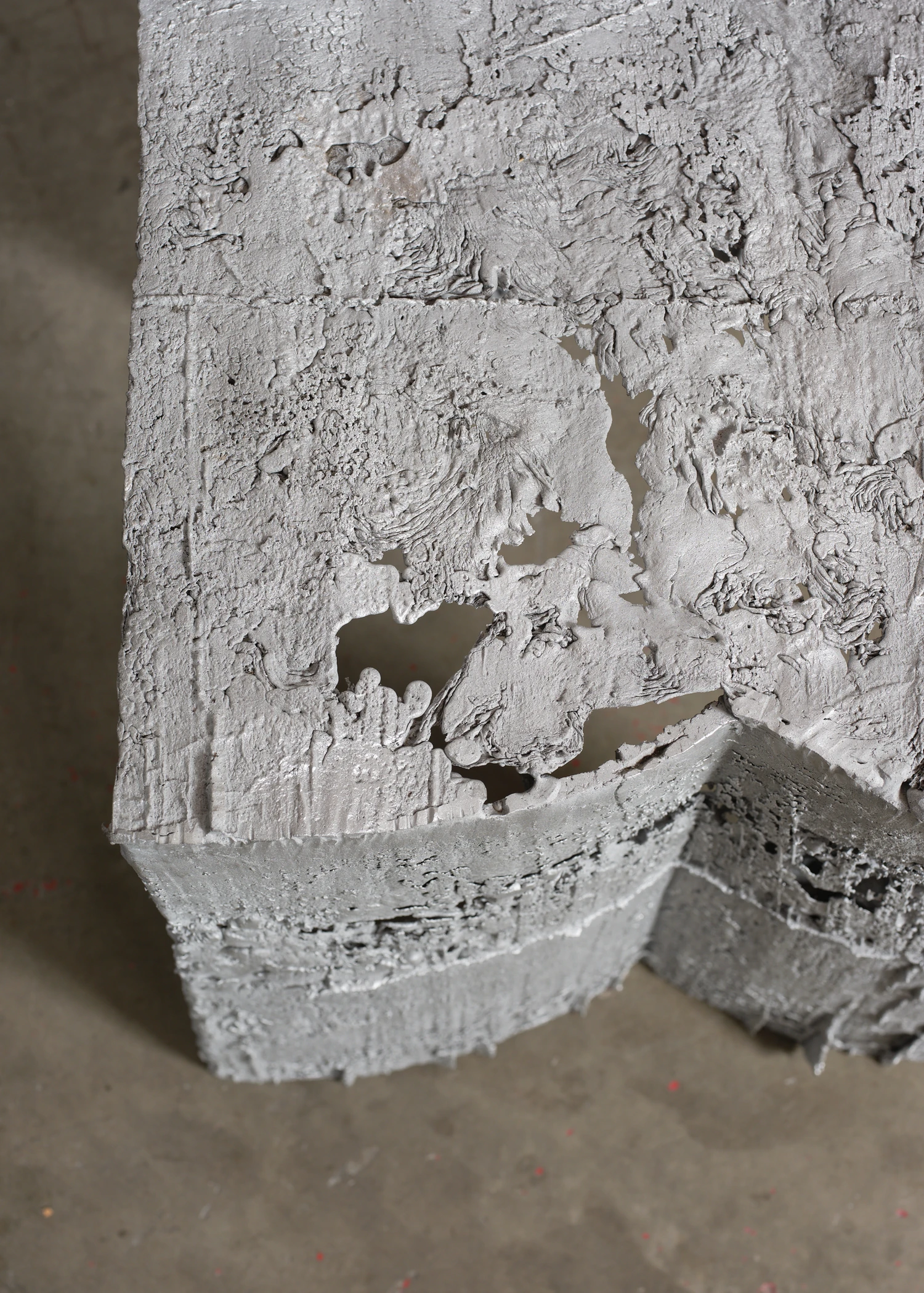
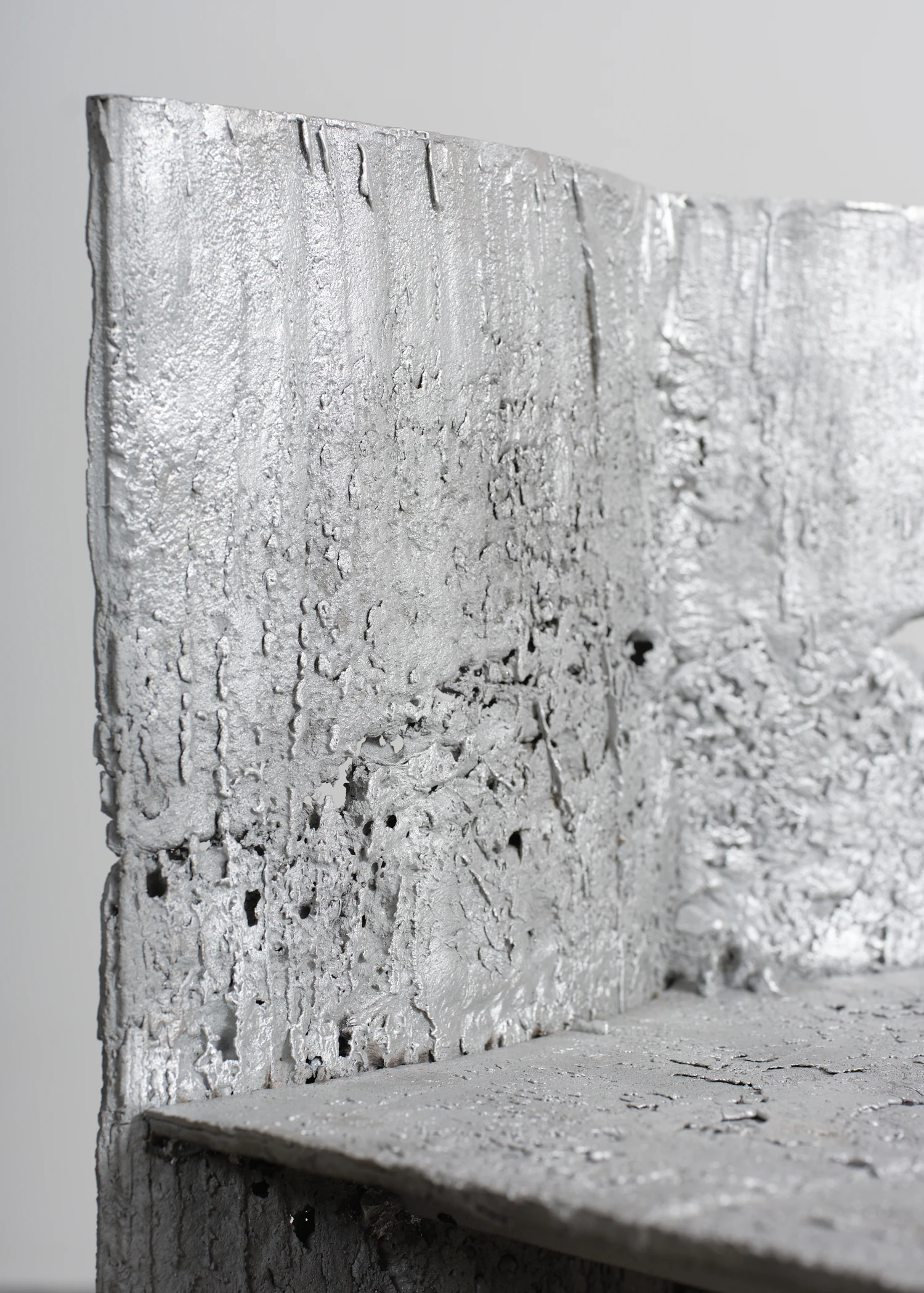
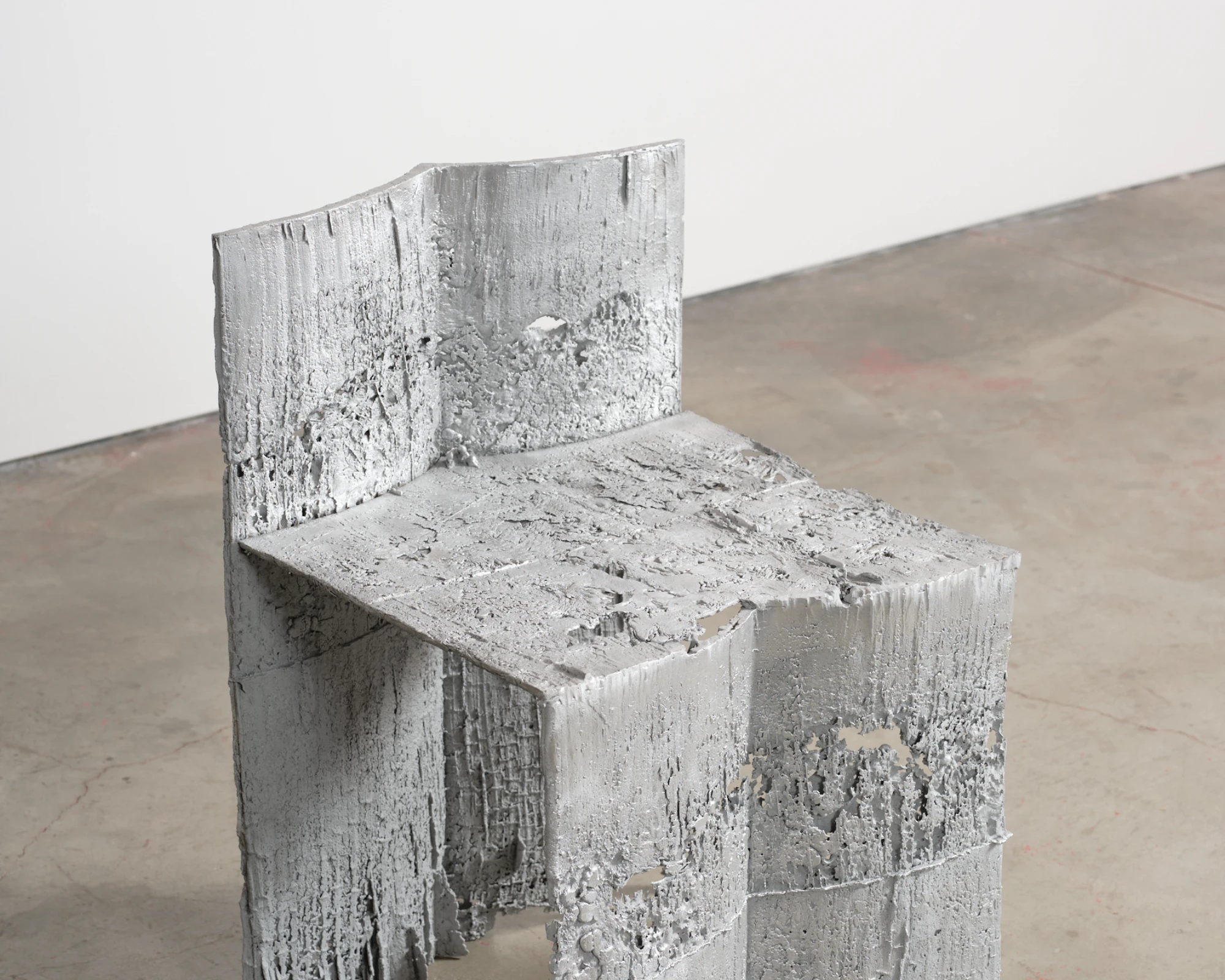
The process behind the chair is inseparable from its meaning. Wooden blocks salvaged from trees spared by fire but felled by wind are carved into restrained, almost mnemonic forms. These cavities act as temporary architectures, holding molten aluminum long enough for uncertainty to leave its trace. The resulting surfaces are unpredictable: blistered, torn, pitted, recording the meeting of green wood and liquid metal as a brief but decisive encounter.
What gives the chair its emotional gravity is not an overt reference to catastrophe, but its quiet insistence on aftermath. The aluminum does not smooth or neutralize the wood’s volatility; instead, it fixes it in place. Textures read like scorched skin or eroded stone, yet they are neither literal nor illustrative. The object resists narrative clarity, allowing material behavior to speak where symbolism might otherwise dominate.
Placed alongside the charred wood blocks that produced it, the chair becomes part of a dispersed ensemble rather than a singular statement. Each element carries its own timeline and agency, forming a loose family of forms shaped by chance, loss, and persistence. In this way, Left Over Chair is less about destruction than about what remains legible after upheaval: matter that adapts, records, and continues to exist without resolution.