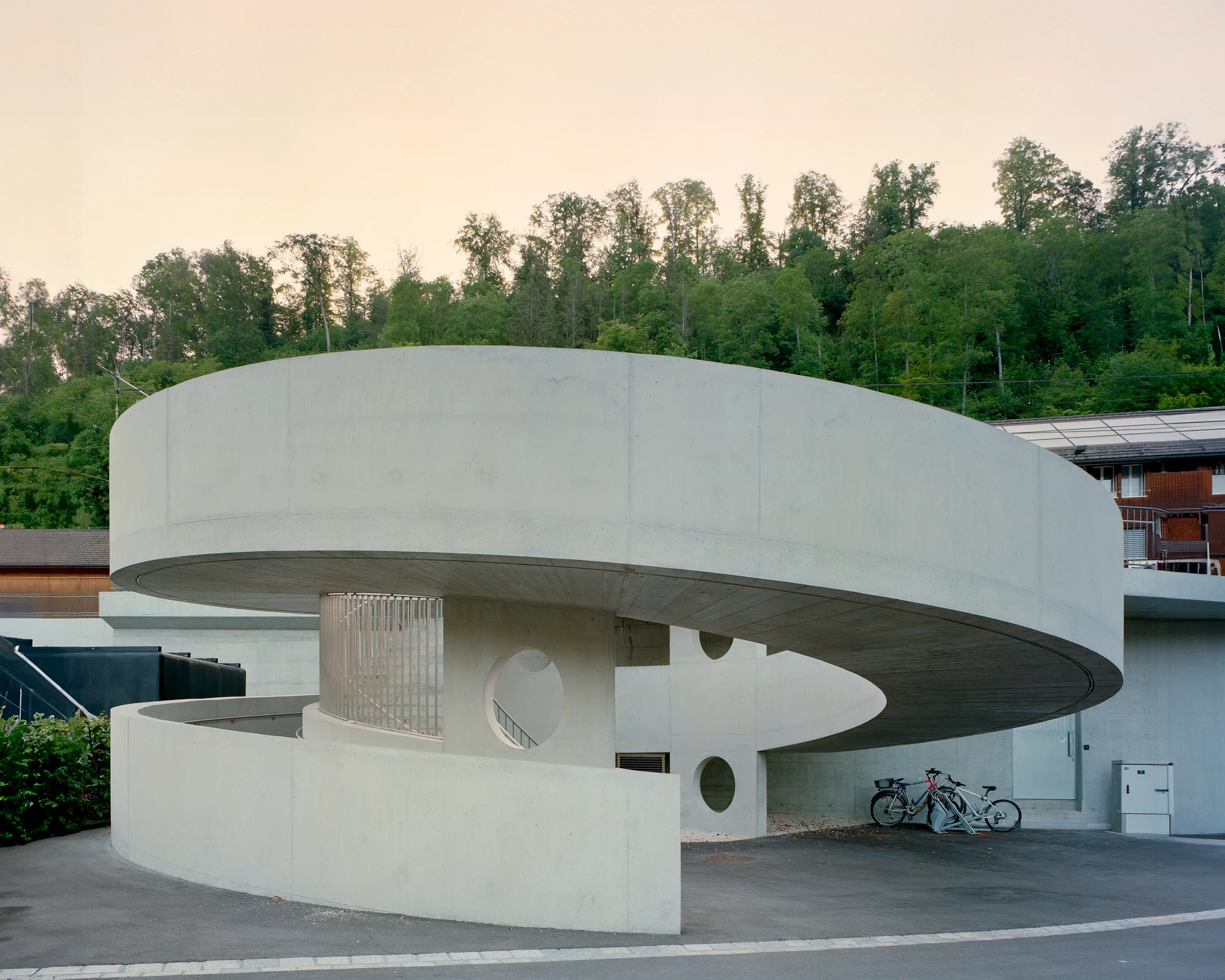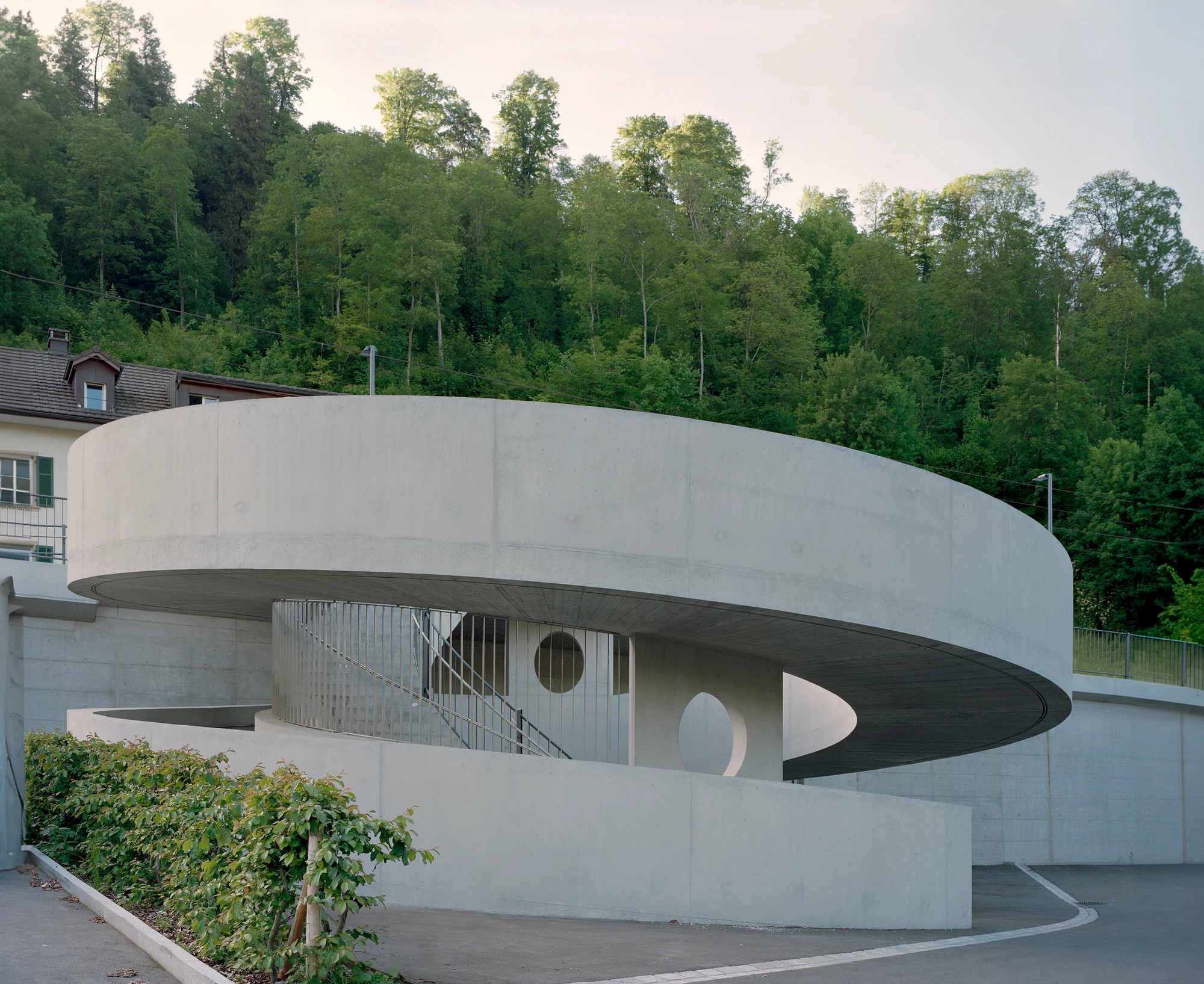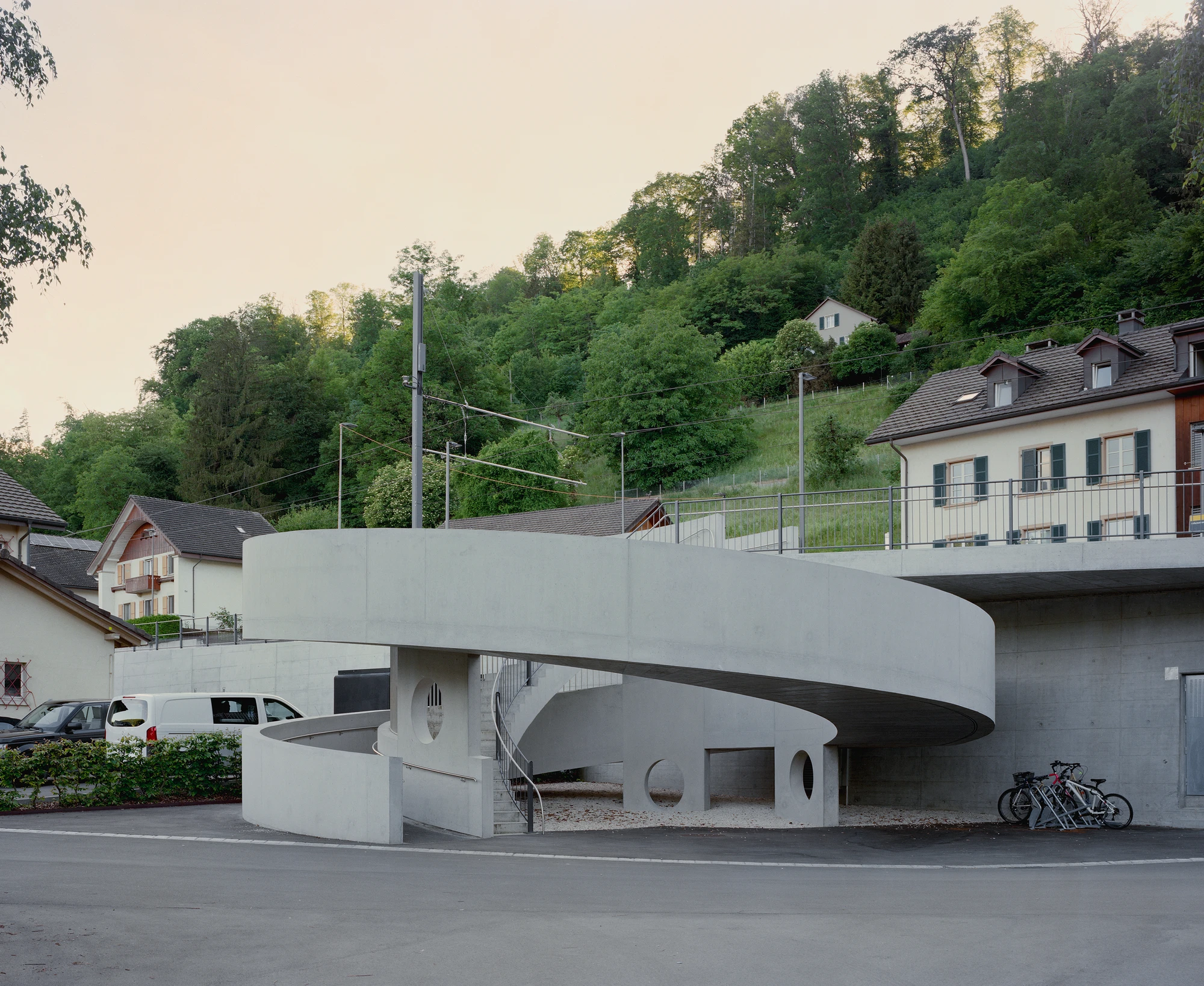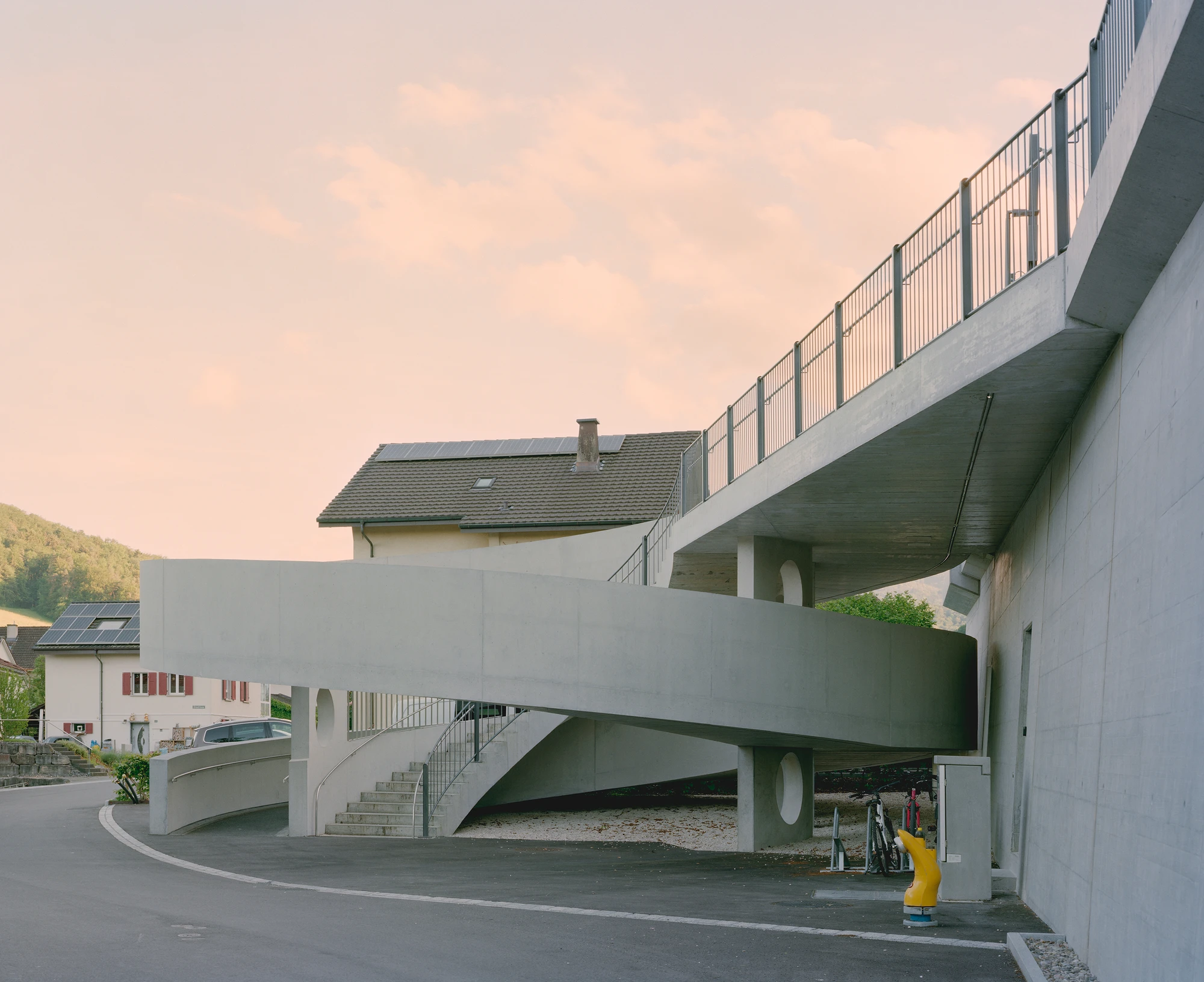
In Hölstein, Switzerland, Raeto Studer Architekten designs the BLT Linie 19 tram stop—an exposed concrete ramp and staircase structure that turns a five-metre height difference into a sensory experience, with a 55-metre concrete girder spiralling through 540 degrees.
The Hölstein Süd stop on the BLT Linie 19 tram line sits with a height difference of more than five metres between the platform and the district road above. In the hands of Raeto Studer Architekten, this topographical challenge becomes the starting point for a piece of infrastructure that operates with the spatial ambition of architecture—a ramp and staircase structure in exposed concrete that transforms the act of arrival and departure into a sensory experience.
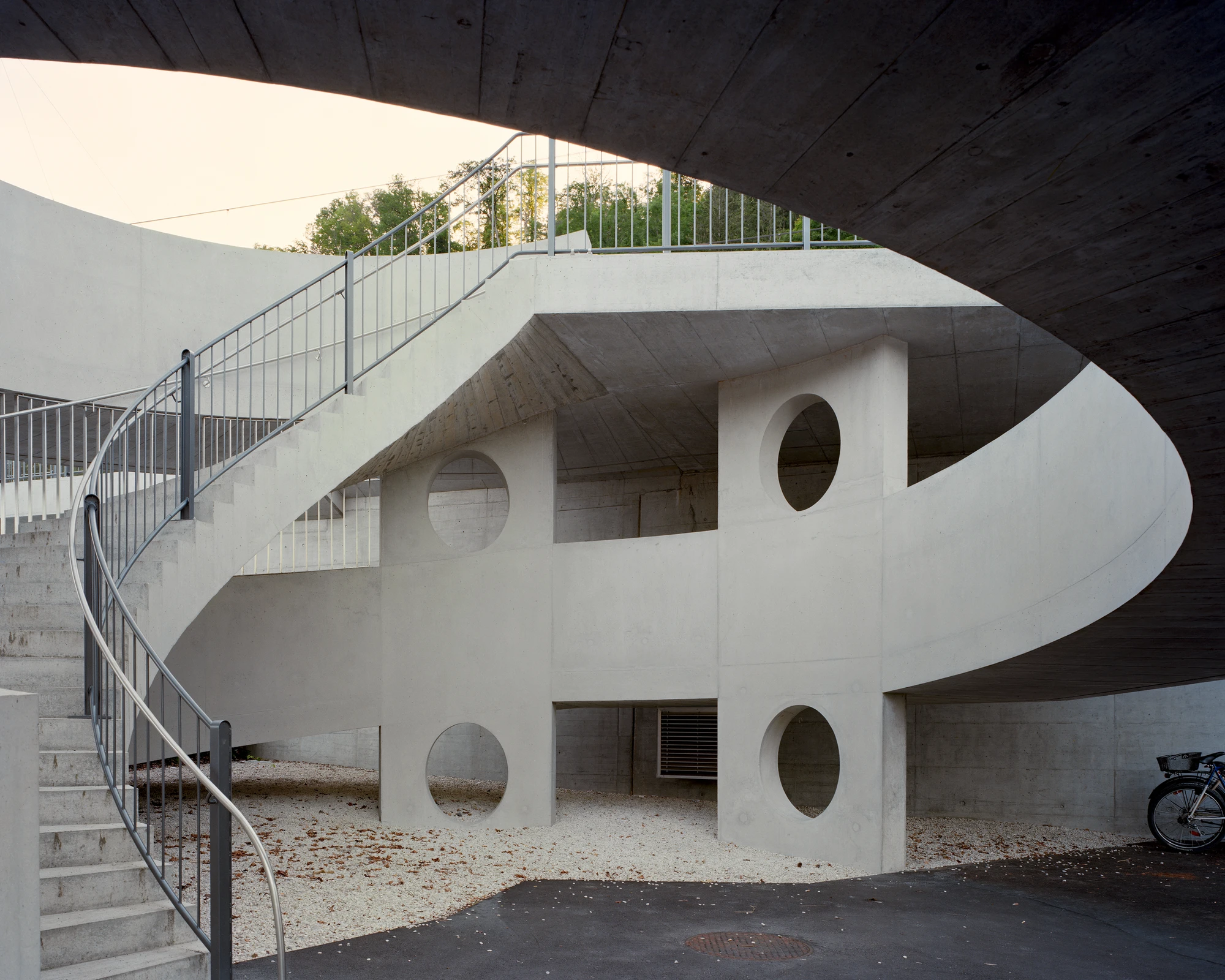
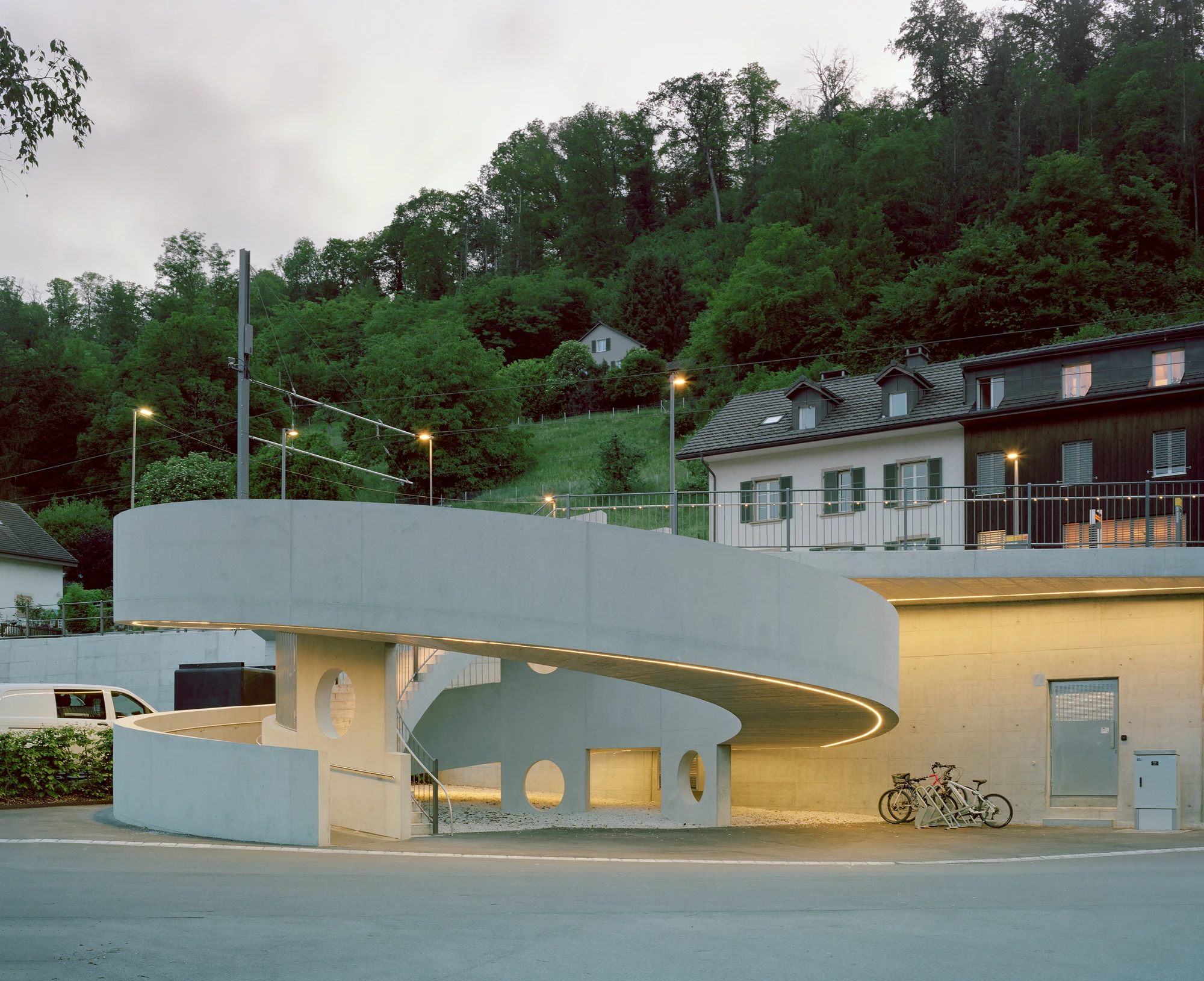
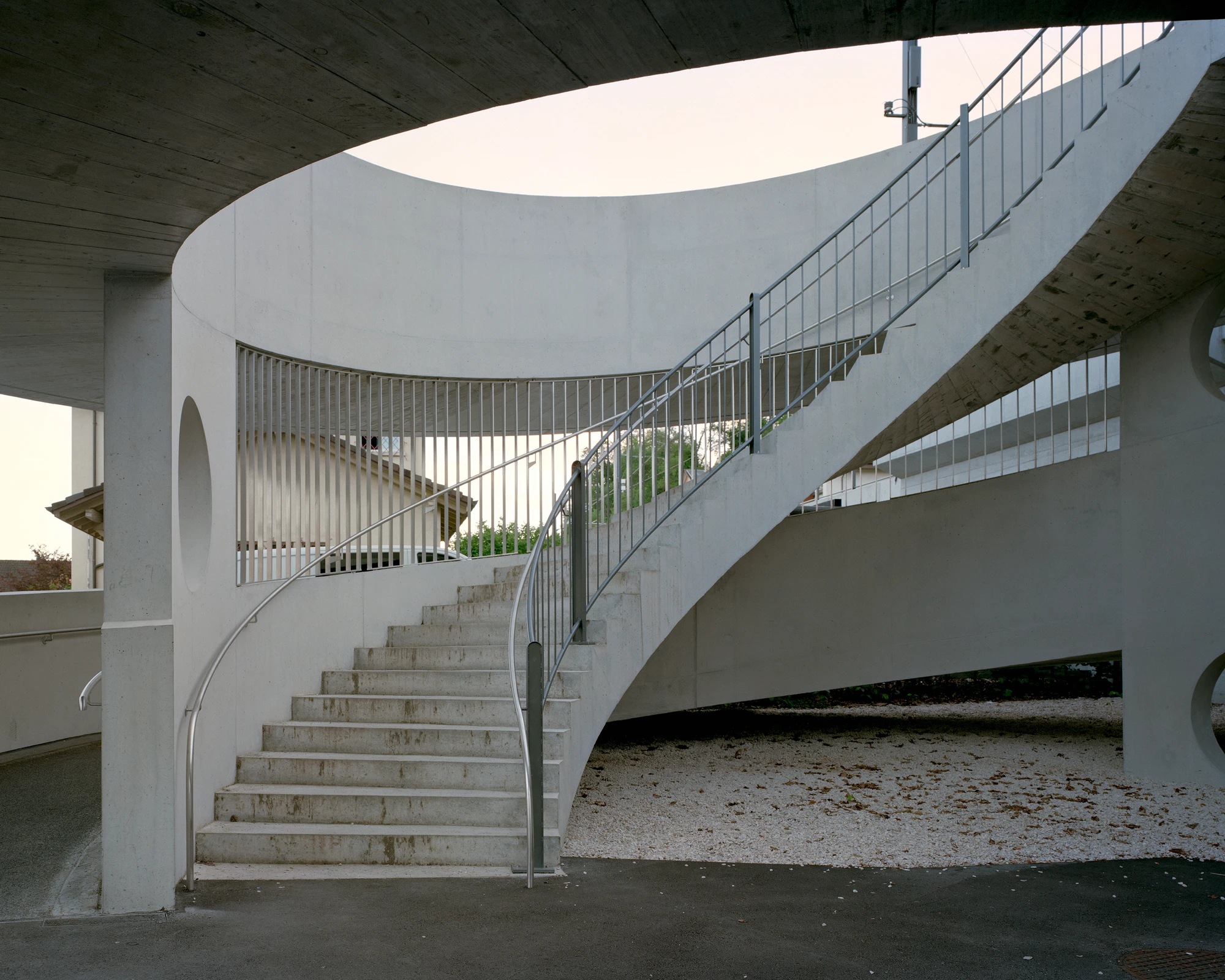
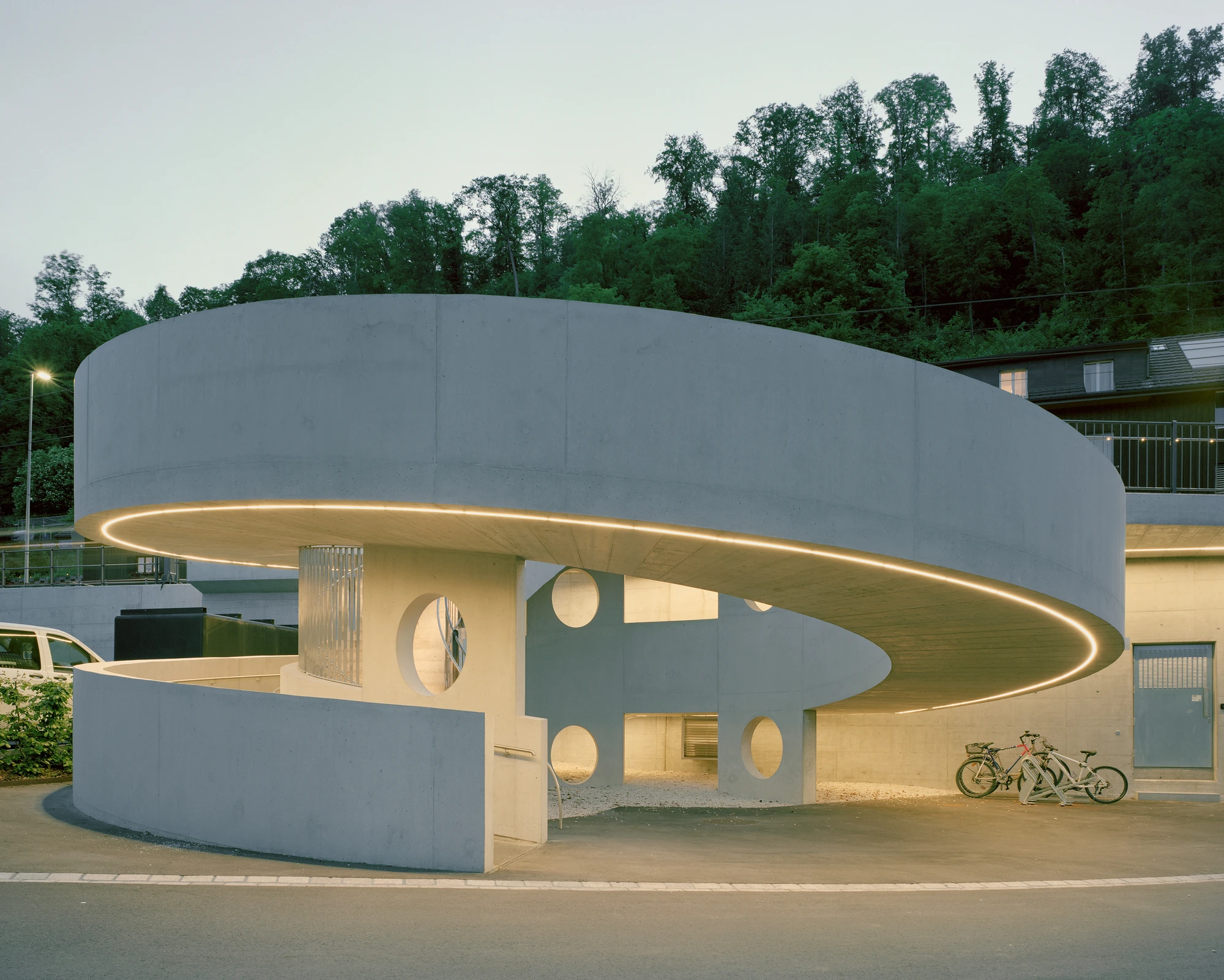
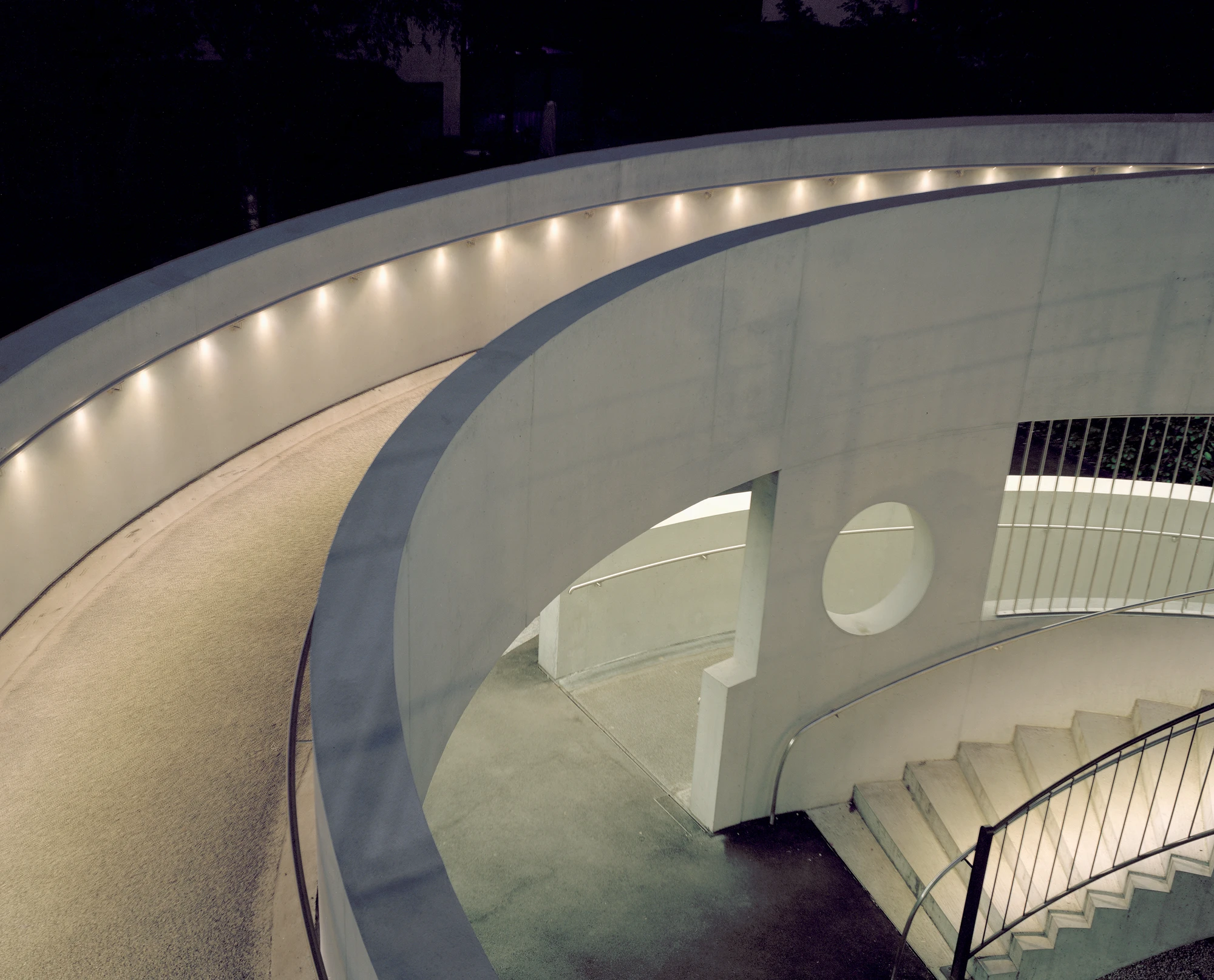
Passengers are guided to the ramp and stairs via a platform that fans outward. The ramp offers a leisurely ascent or descent, while the staircase provides a shortcut—two speeds of movement through the same volume. The spiral staircase, turning through 540 degrees across a 55-metre concrete girder, creates rain-protected bicycle parking beneath and a covered entrance to both circulation paths. The lighting supports wayfinding and address formation simultaneously, solving signalling while giving the structure its public presence.
The decision to build in exposed concrete came from a sustainability discussion that evaluated pure steel, timber, and hybrid alternatives alongside the experience of the practice in infrastructure. The massive parapets and three perforated concrete slabs are structural, with dimensions reduced to the minimum required. The embankment road and the fanning platform integrate the building contextually into its surroundings, while metalwork—railings and fall protection—runs along the entire route with a consistent, understated logic.
What elevates Hölstein Süd beyond functional transport architecture is its insistence on experience. The ramp is not simply a means of overcoming a level change; it is a walk, a slow unfolding of views, an encounter with materiality and gravity. In a country where public infrastructure is often treated as a solved problem, Raeto Studer demonstrates that even a tram stop can be an occasion for architecture.