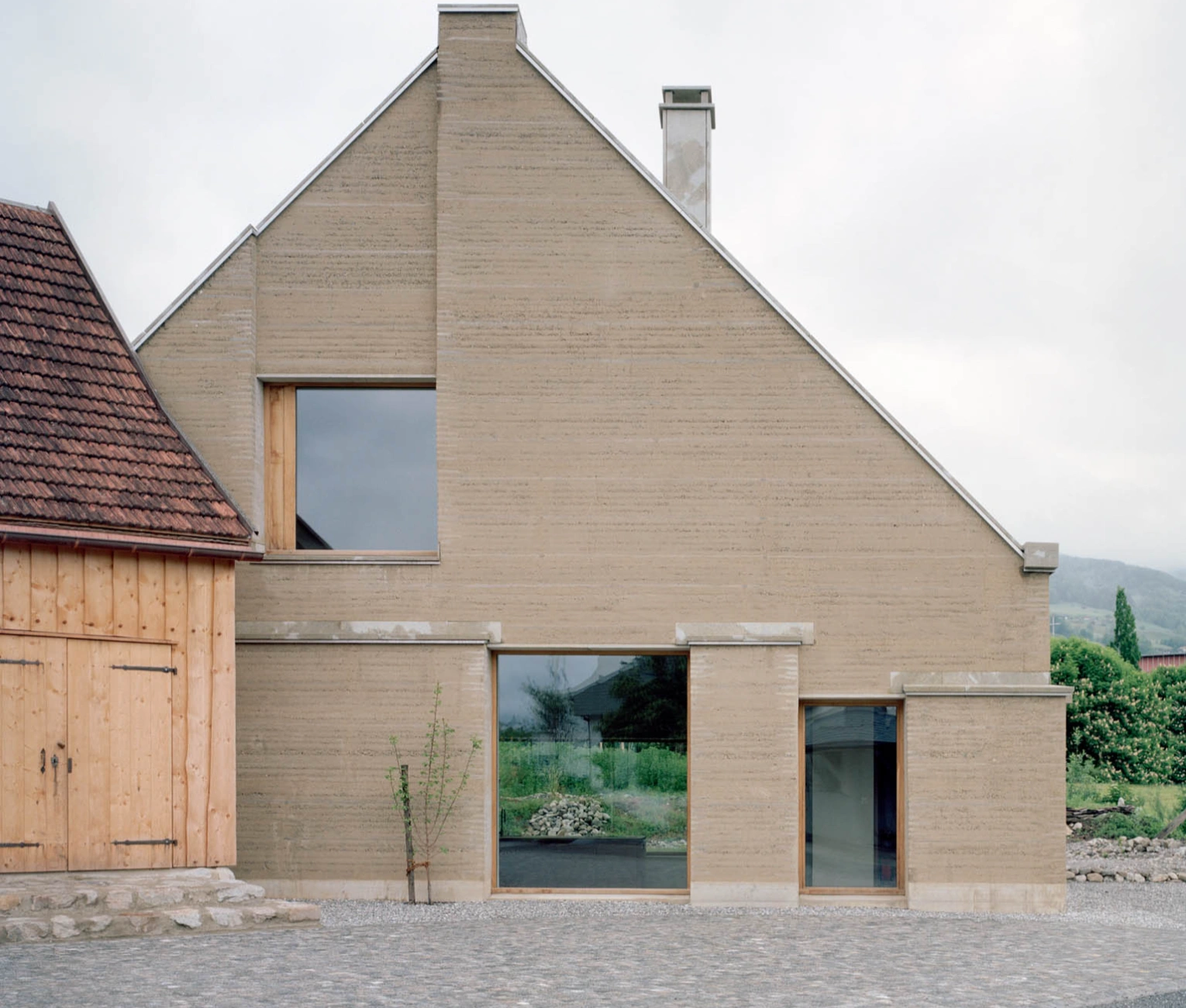
In the Werdenberg region of Switzerland, allen + crippa architektur's Gässli5 pairs a relocated historic log house with a new rammed-earth building—architecture almost without waste.
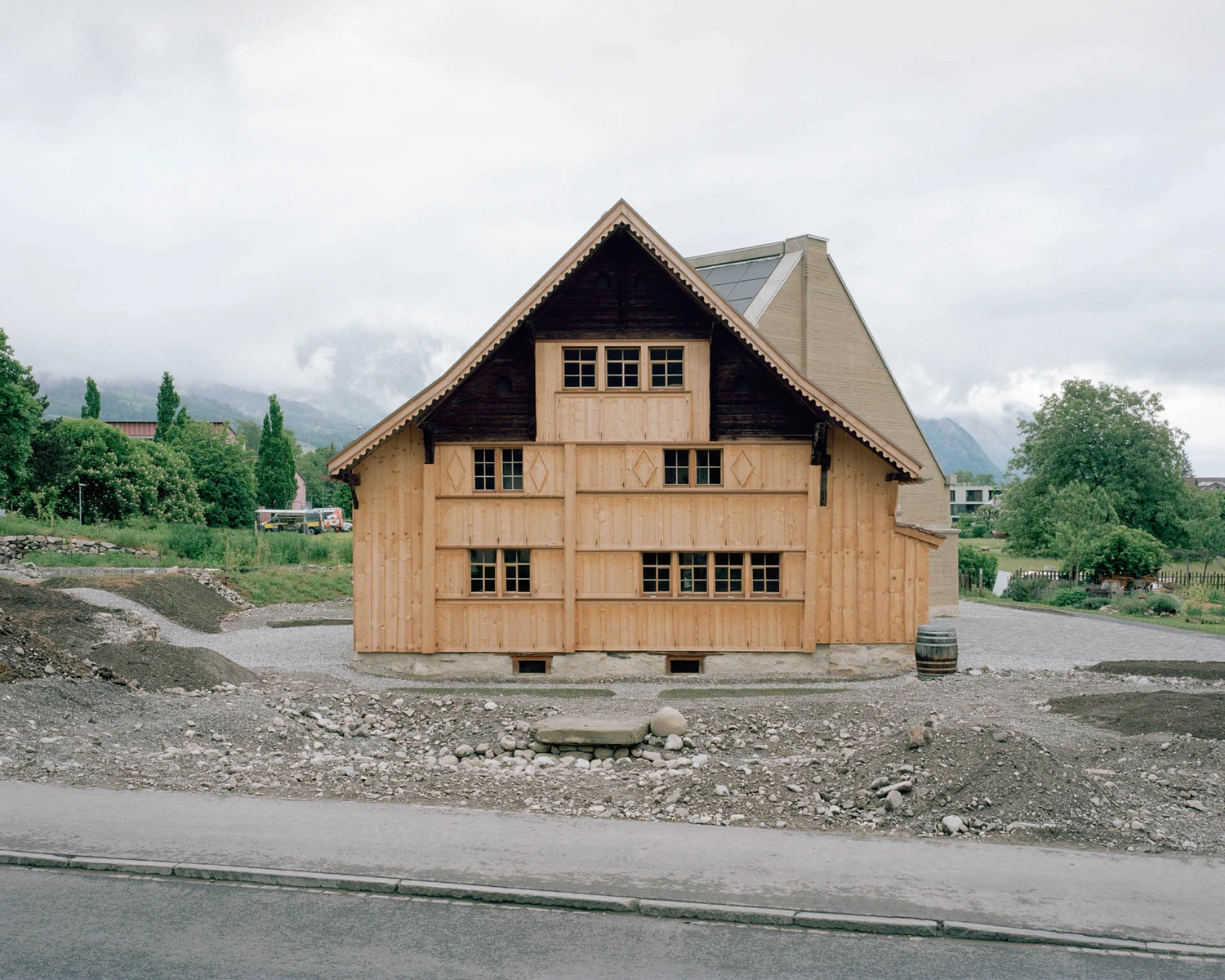
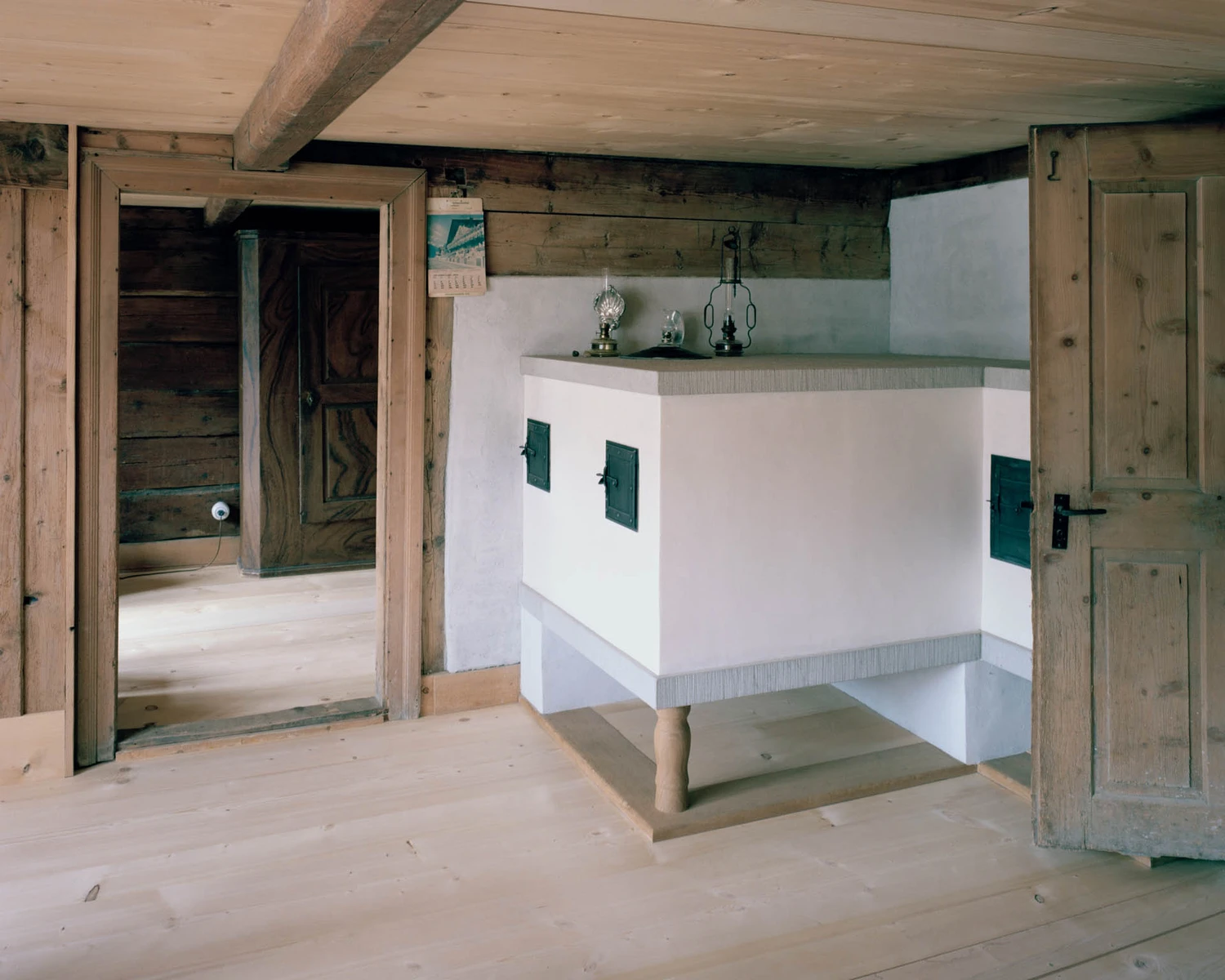
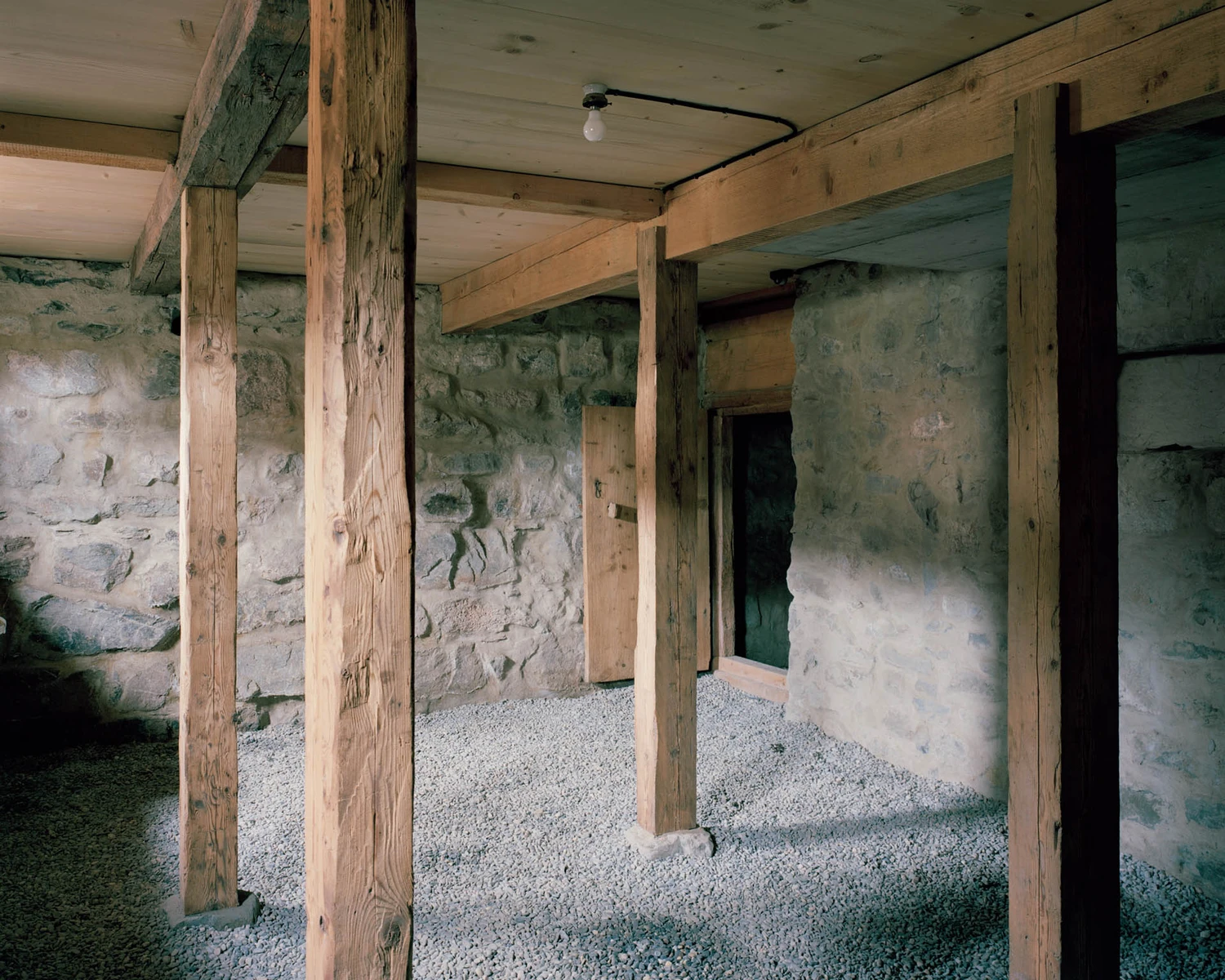
The relocation was itself an act of material devotion. Missing or damaged elements of the log construction were salvaged from other demolished buildings in the village, "allowing the local building history to continue in the spirit of circular construction." The historic structure was kept in its material and spatial simplicity—no insulation was added, no plumbing, no electrical installations. It remains what it always was: wood and air and the memory of old hands.
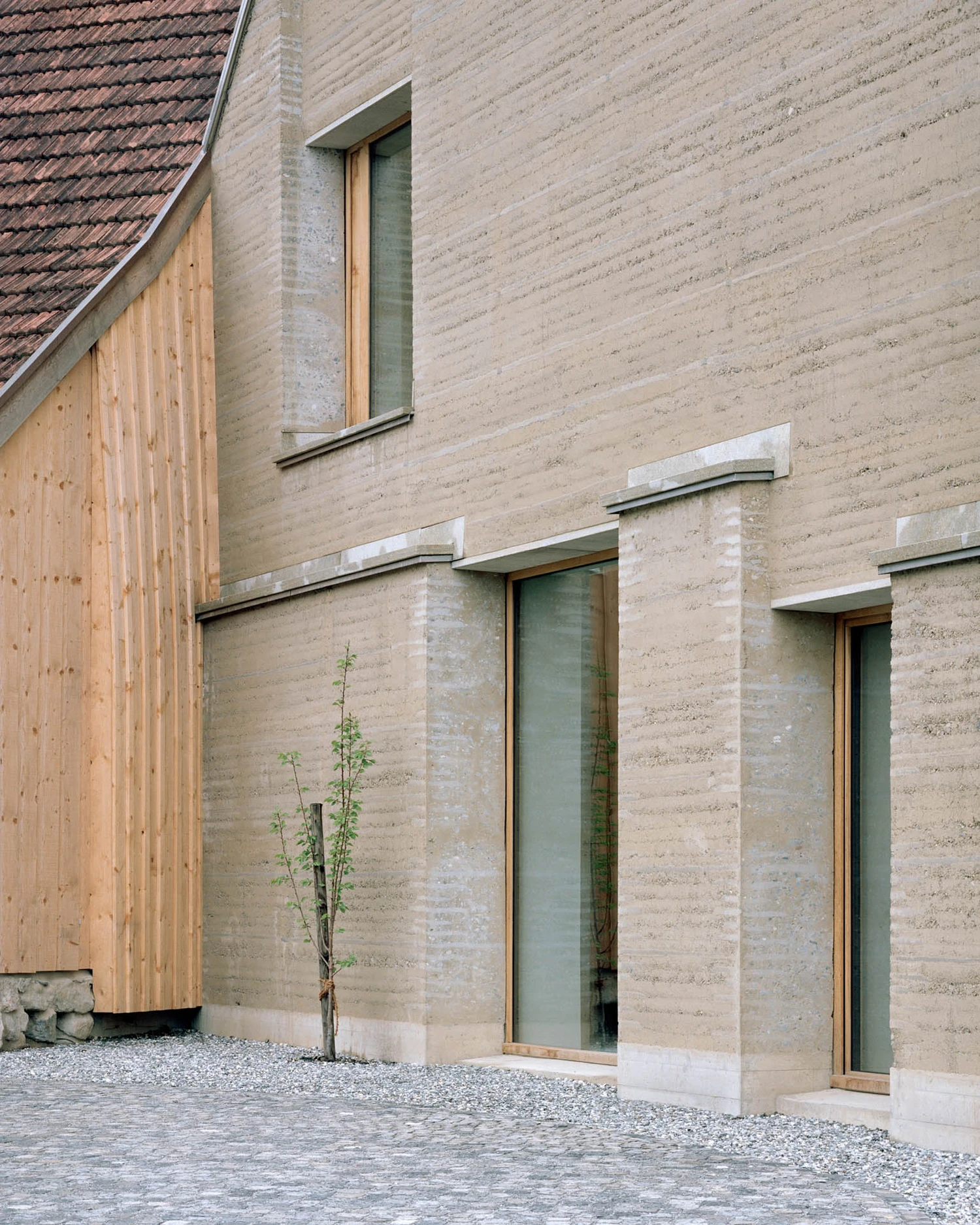
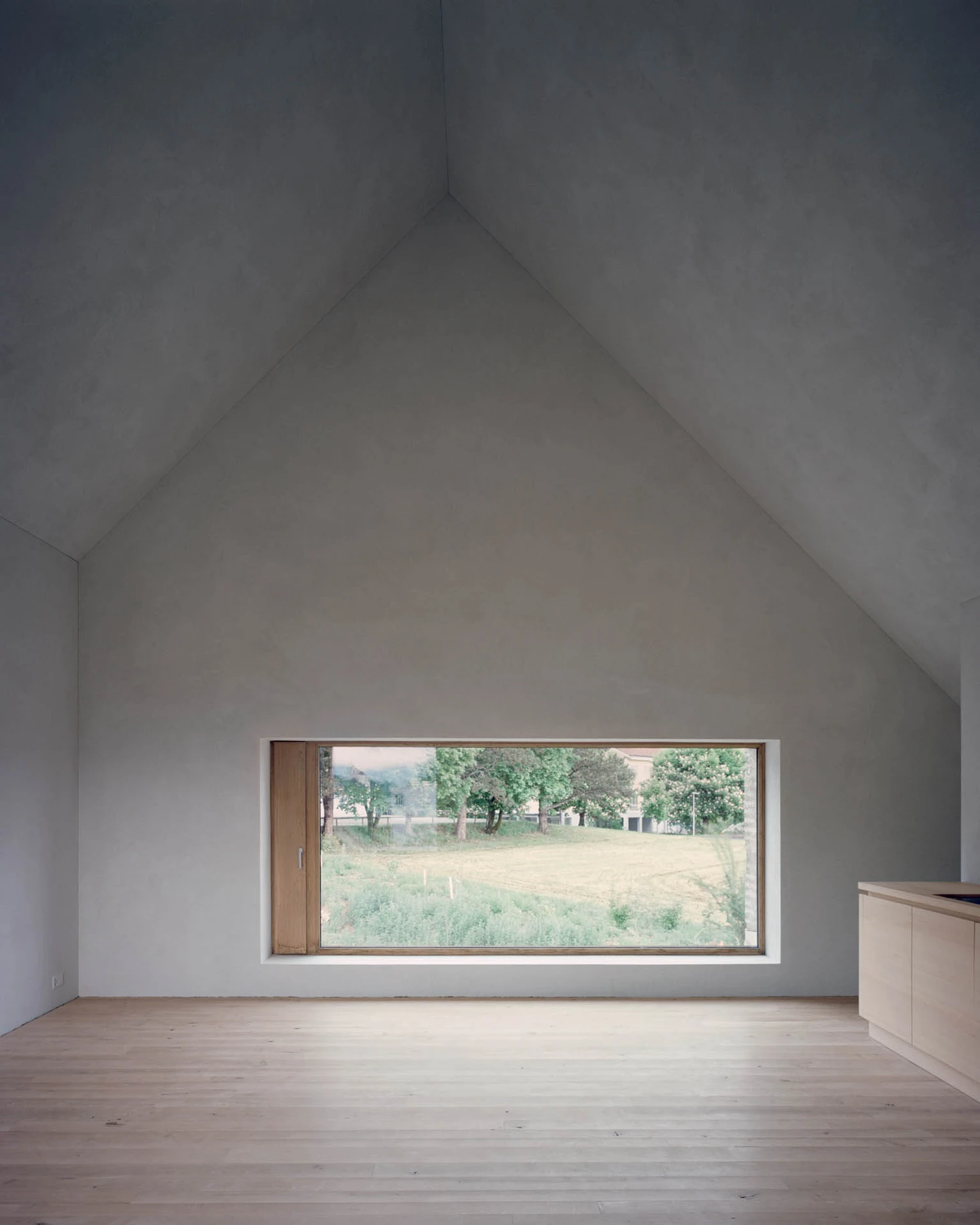
The new building stands alongside it, slightly rotated to create a sense of arrival and to open views toward the garden. Where the old house faces the street to the south, the new volume turns toward the landscape. A lower intermediate space connects the two, forming what the architects call "a new, independent architectural figure." The rammed-earth walls—approximately 200 individual earth elements—show their making in their surface: visible stratification that documents the fabrication process, layer by layer. Floors are locally sourced rammed earth, untreated oak, and clay tiles, all following "the principle of mono-material separation." An inner layer of hemp-lime insulates; lime plaster made from recycled brick dust finishes the interior spaces.
The ground floor is flexible and open—usable as a community house, living space, or workshop—while the upper floor holds a compact apartment. The uninsulated log house beside it serves as a three-season companion. Around both buildings, a permaculture garden of edible plants, ponds, and dry zones extends the architecture into an ecological and social landscape. Rainwater is managed on site. There is a composting toilet. The whole project can, at the end of its life, "be fully reintegrated into material cycles."
What gives the Gässli5 its particular power is the pairing itself: the light, assembled timber of the old house against the heavy, monolithic earth of the new one—"a duality based not on contrast, but on complementarity." The architects, a young practice, are frank about what this project means to them: "a statement against today's culture of demolition, a sign opposing waste in the construction industry, and a plea for the reuse of existing building fabric." For them, the Gässli5 is proof that sufficiency and beauty do not compete. They coexist, quietly, in a Swiss village where the oldest house now stands beside the newest—both built to return to the earth.