Thisispaper Community
Join today.
Enter your email address to receive the latest news on emerging art, design, lifestyle and tech from Thisispaper, delivered straight to your inbox.
Oops! Something went wrong while submitting the form.
Instant access to new channels
The top stories curated daily
Weekly roundups of what's important
Original features and deep dives
Exclusive community features
Thisispaper+ Member

Cozinha das Flores by Space Copenhagen and mural by Álvaro Siza

Dates:
✧ Collect Post
Porto Guide
under the patronage of
Restaurants by Design
under the patronage of
Cozinha das Flores by Space Copenhagen and mural by Álvaro Siza
Alexander Zaxarov
Aug 13, 2026

On Largo de São Domingos in Porto, inside a 16th-century building, Álvaro Siza has made a tiled mural of musicians for Cozinha das Flores, the restaurant Space Copenhagen wrapped in coppery plaster and dark wood.

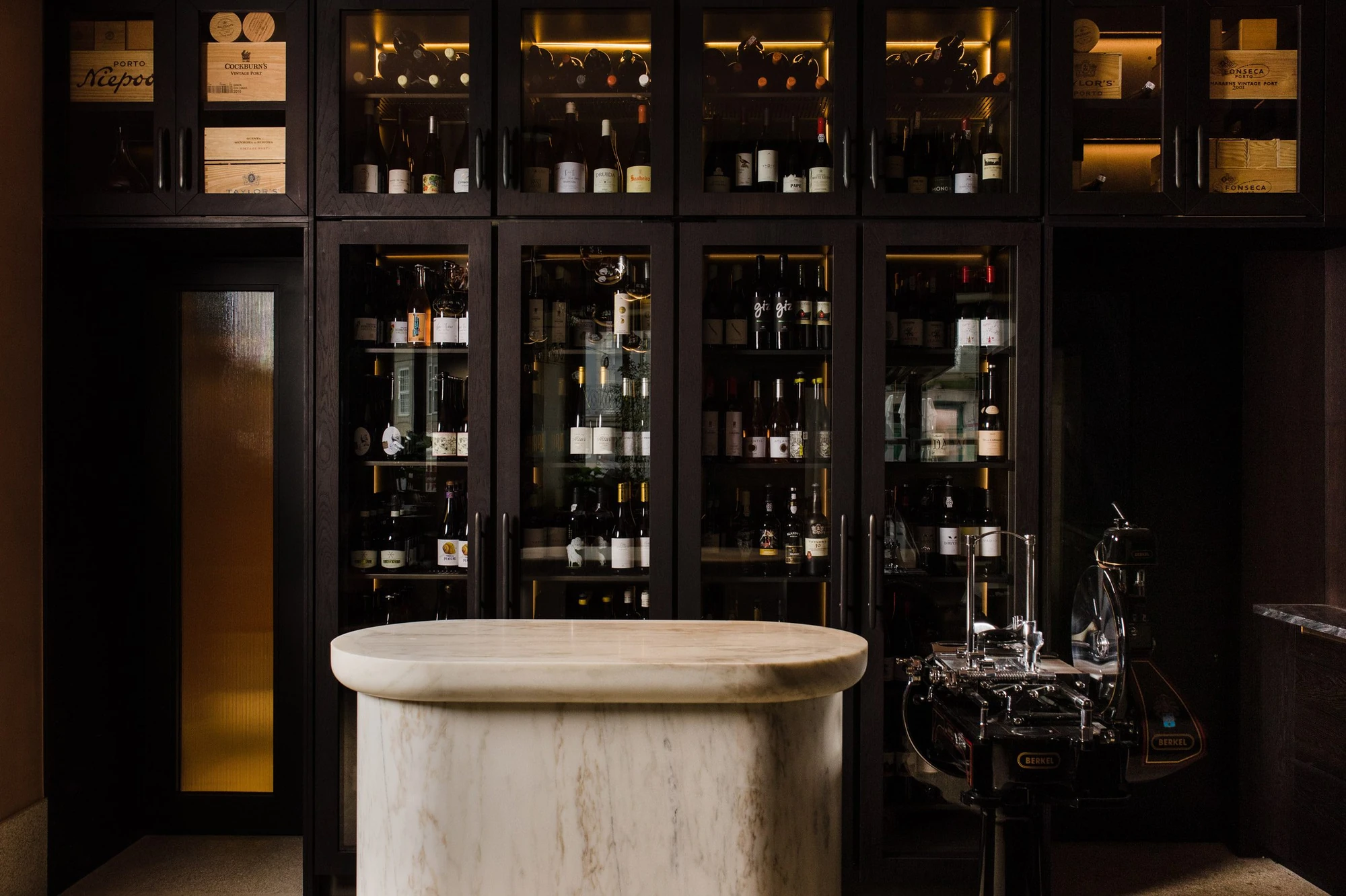
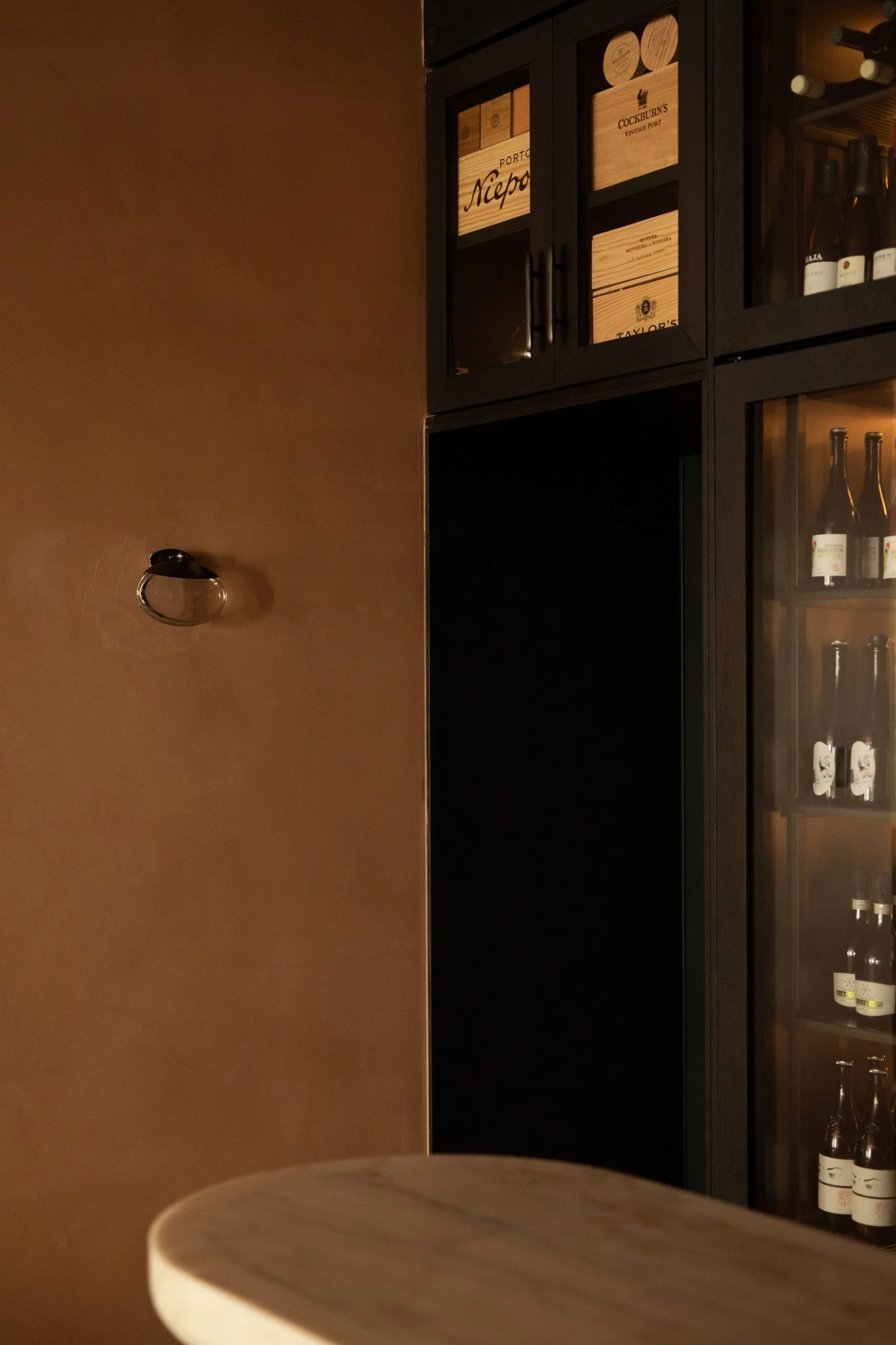
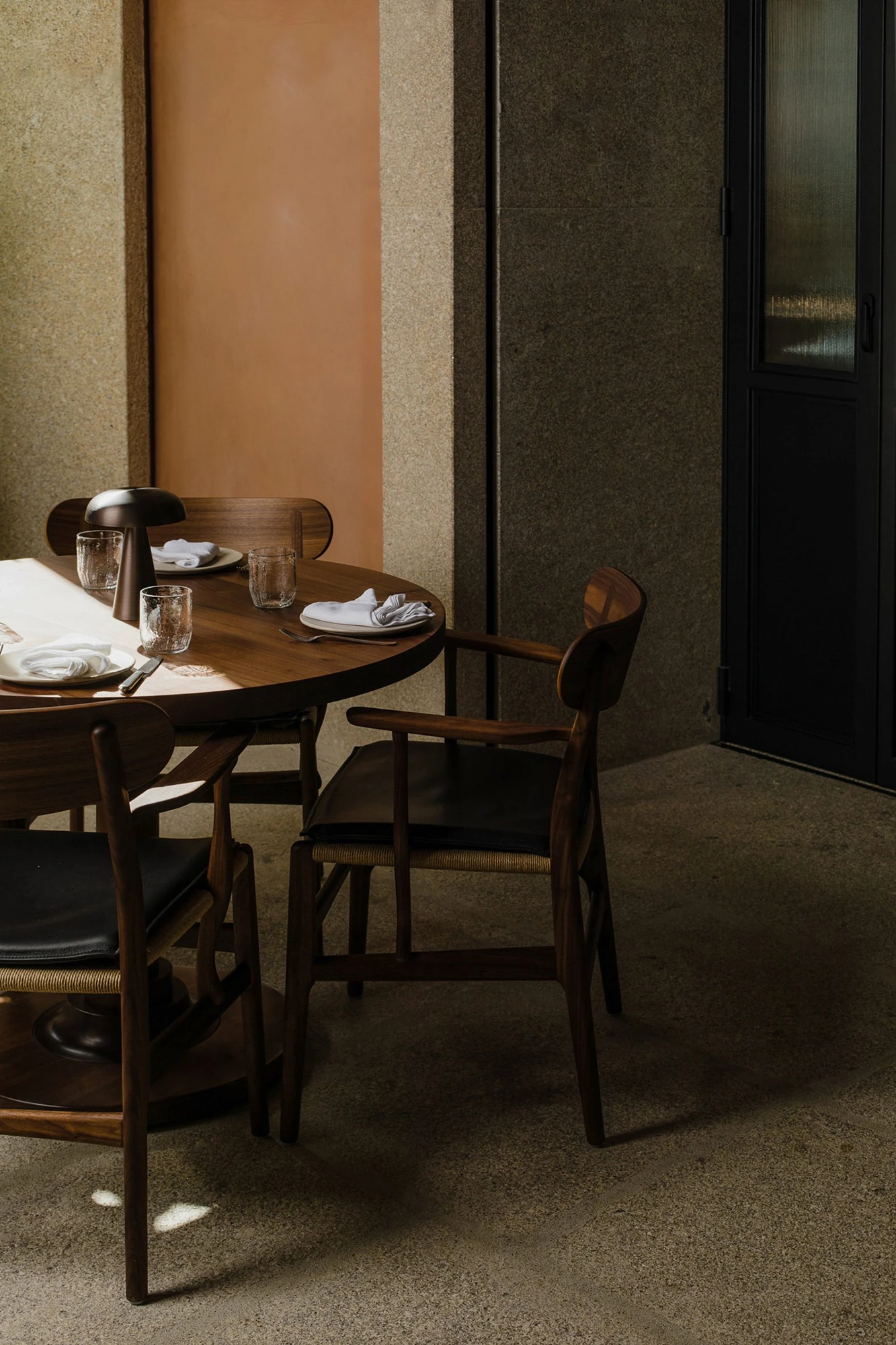
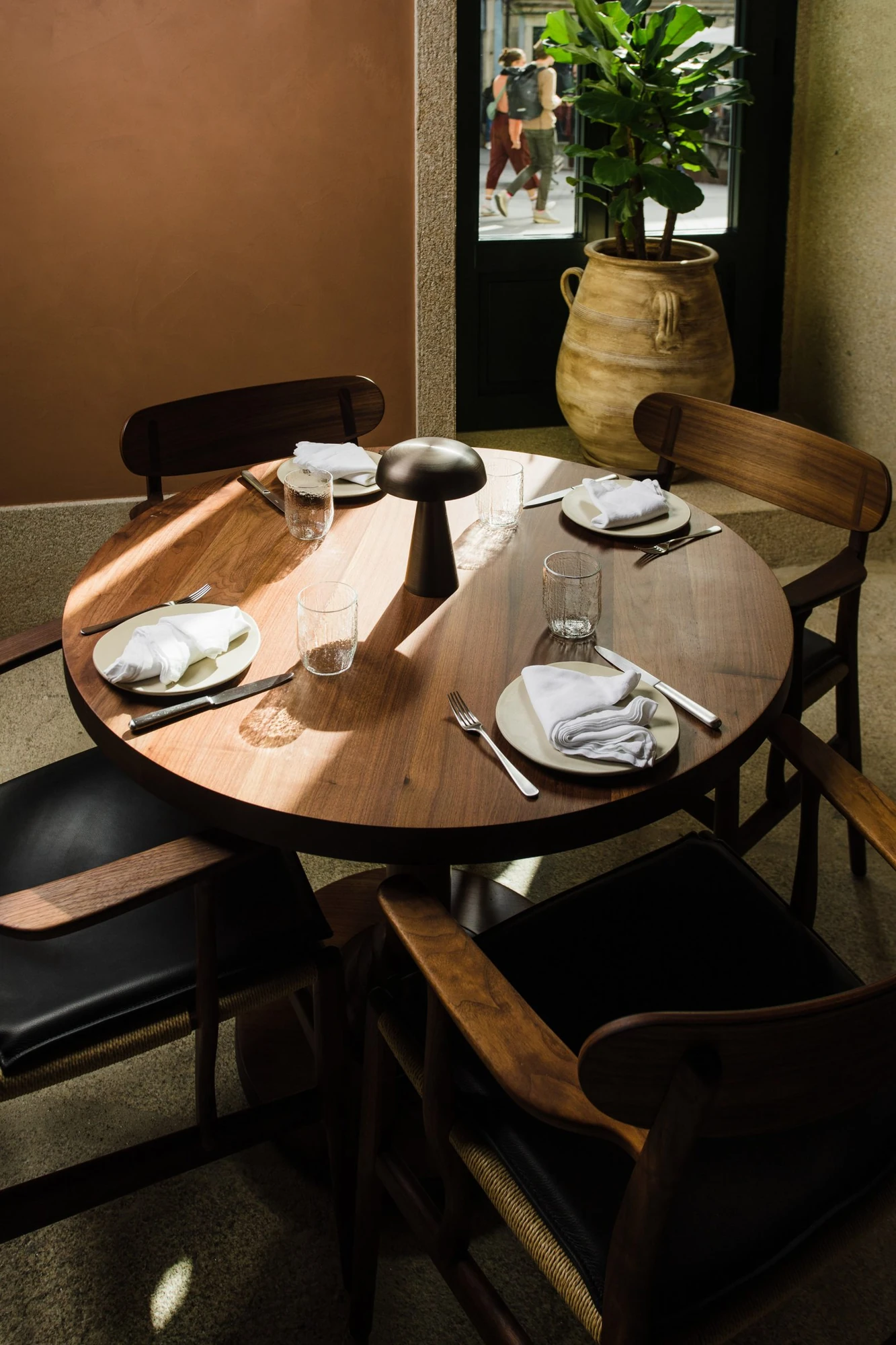
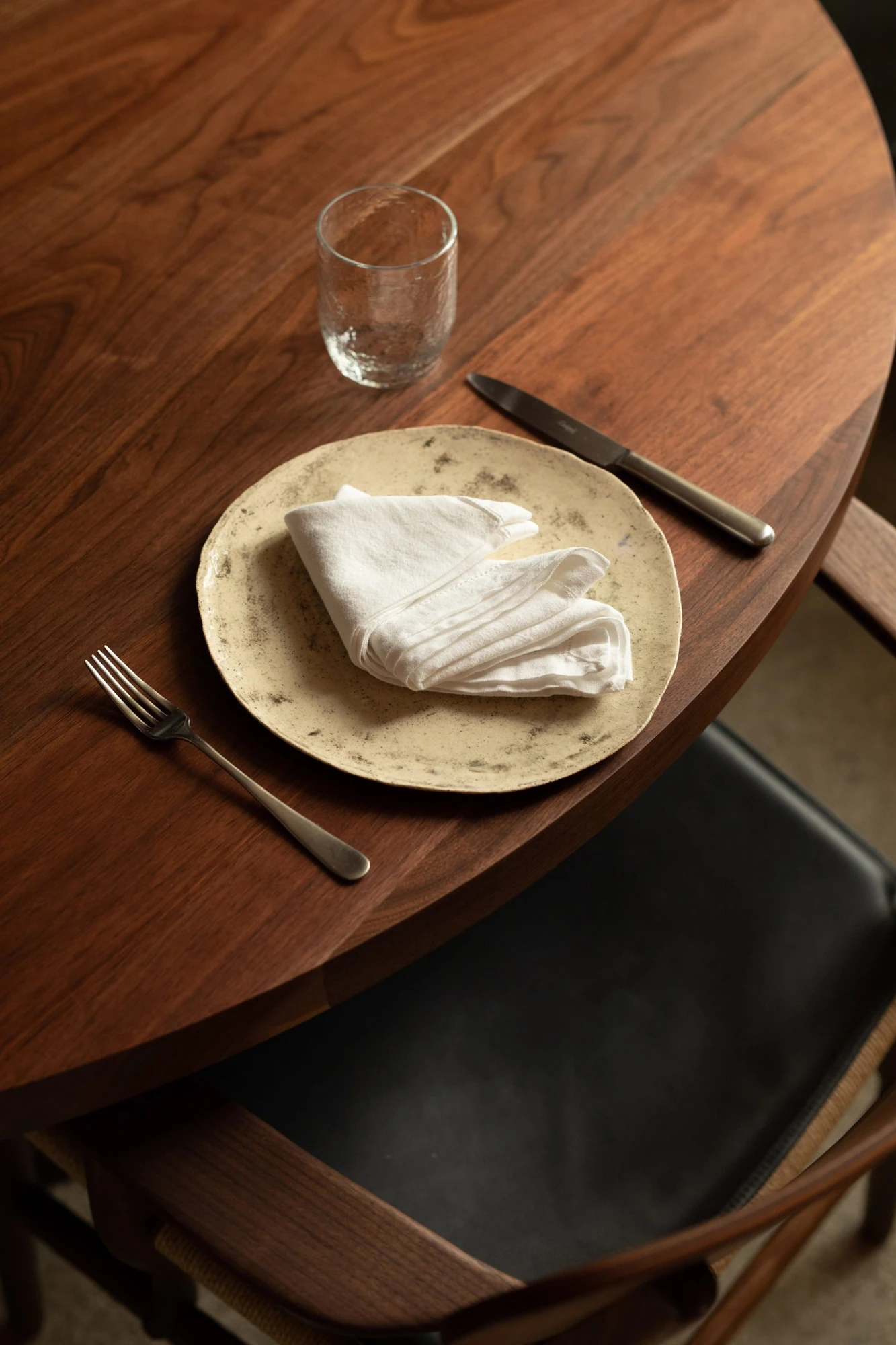
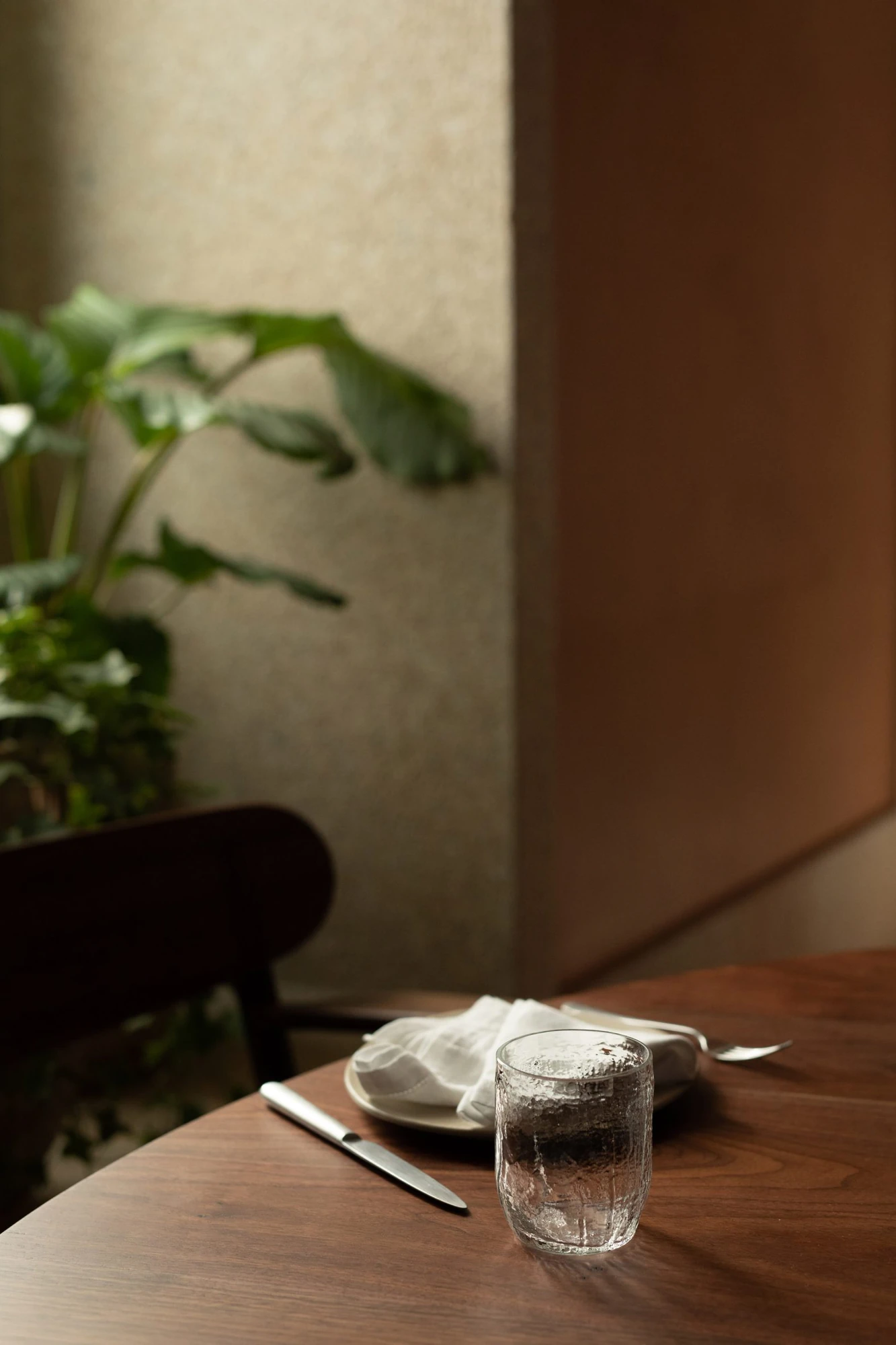
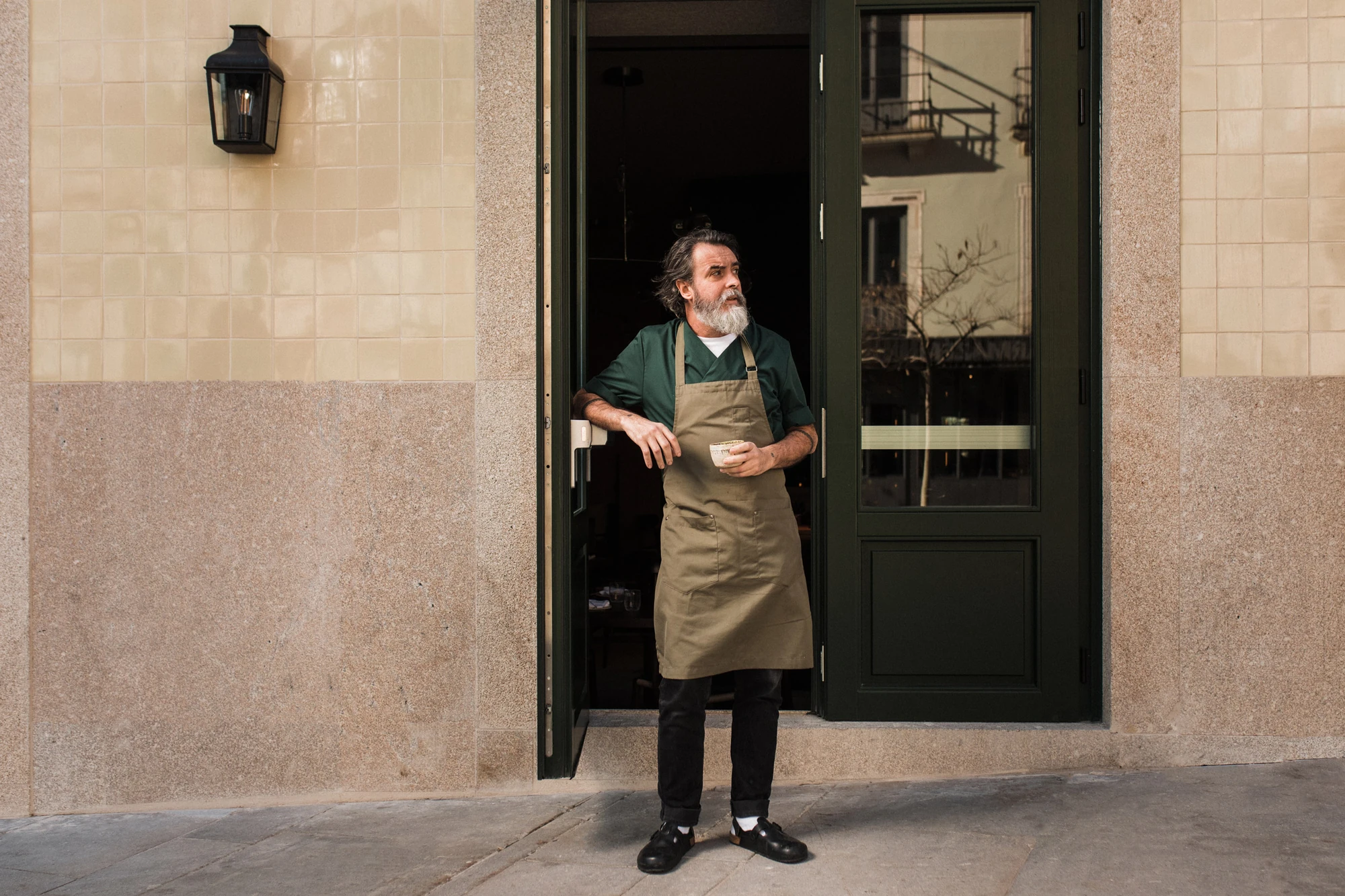
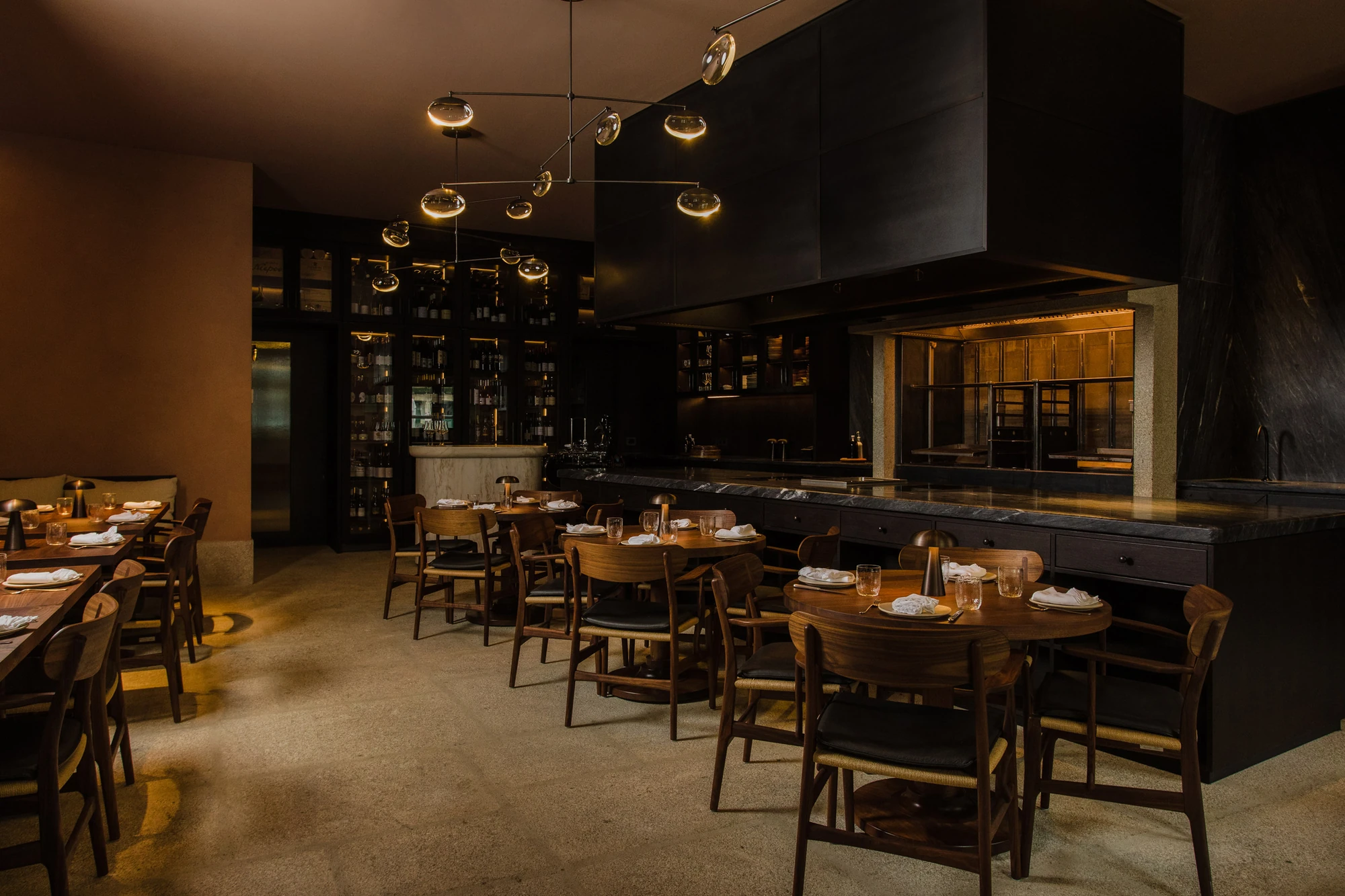
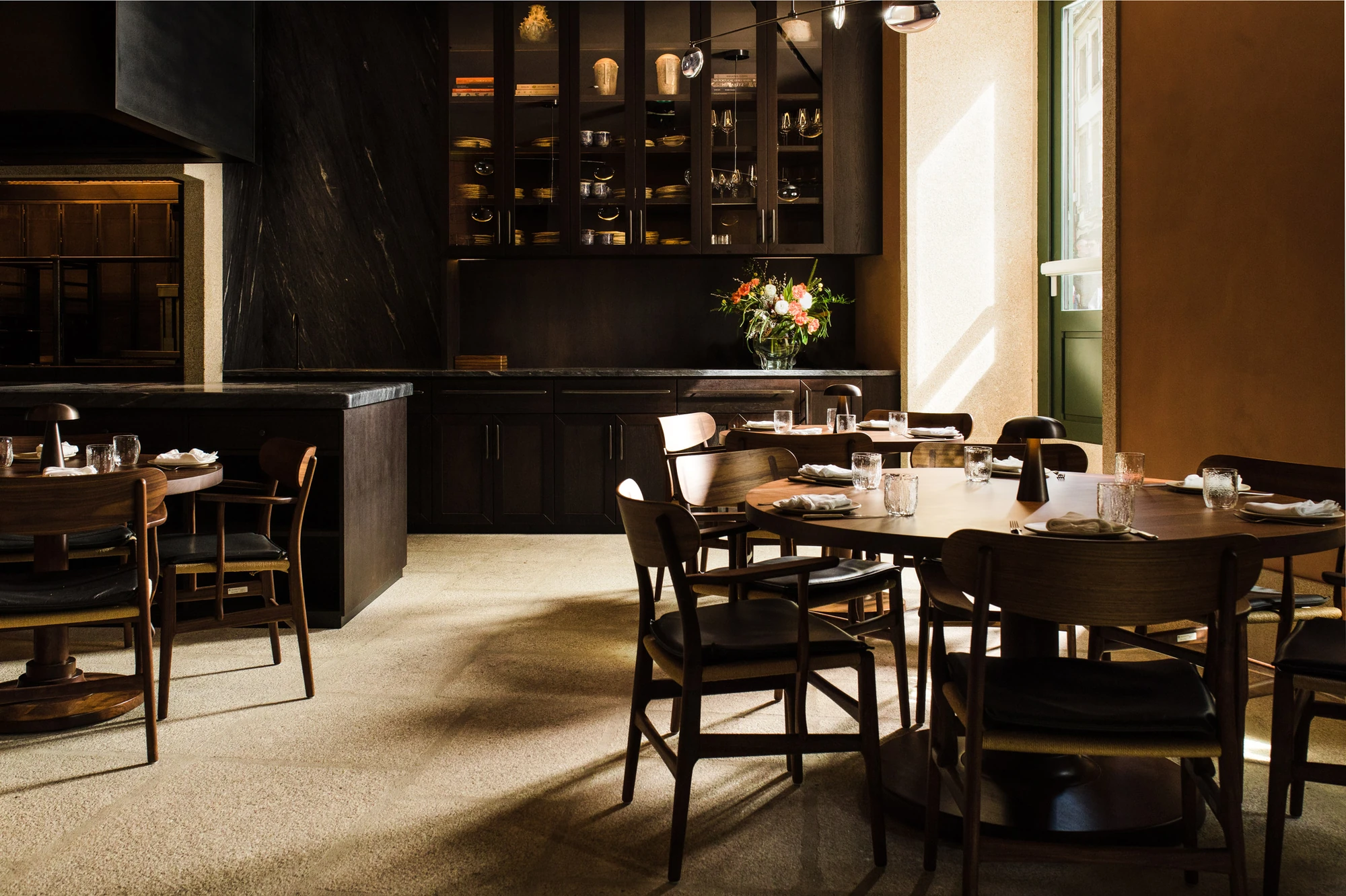
Largo de São Domingos has been a working corner of Porto for centuries, and the building that now holds Cozinha das Flores has stood on it since the 16th century. Space Copenhagen took the shell as a given rather than a problem. Aged stone and dark-stained wood were the starting points, and what has been added since is keyed to them: coppery plaster across the walls, dark wood tables and chairs made by woodworkers in the north, a pale aggregate floor that holds whatever daylight gets past the green-painted doors.

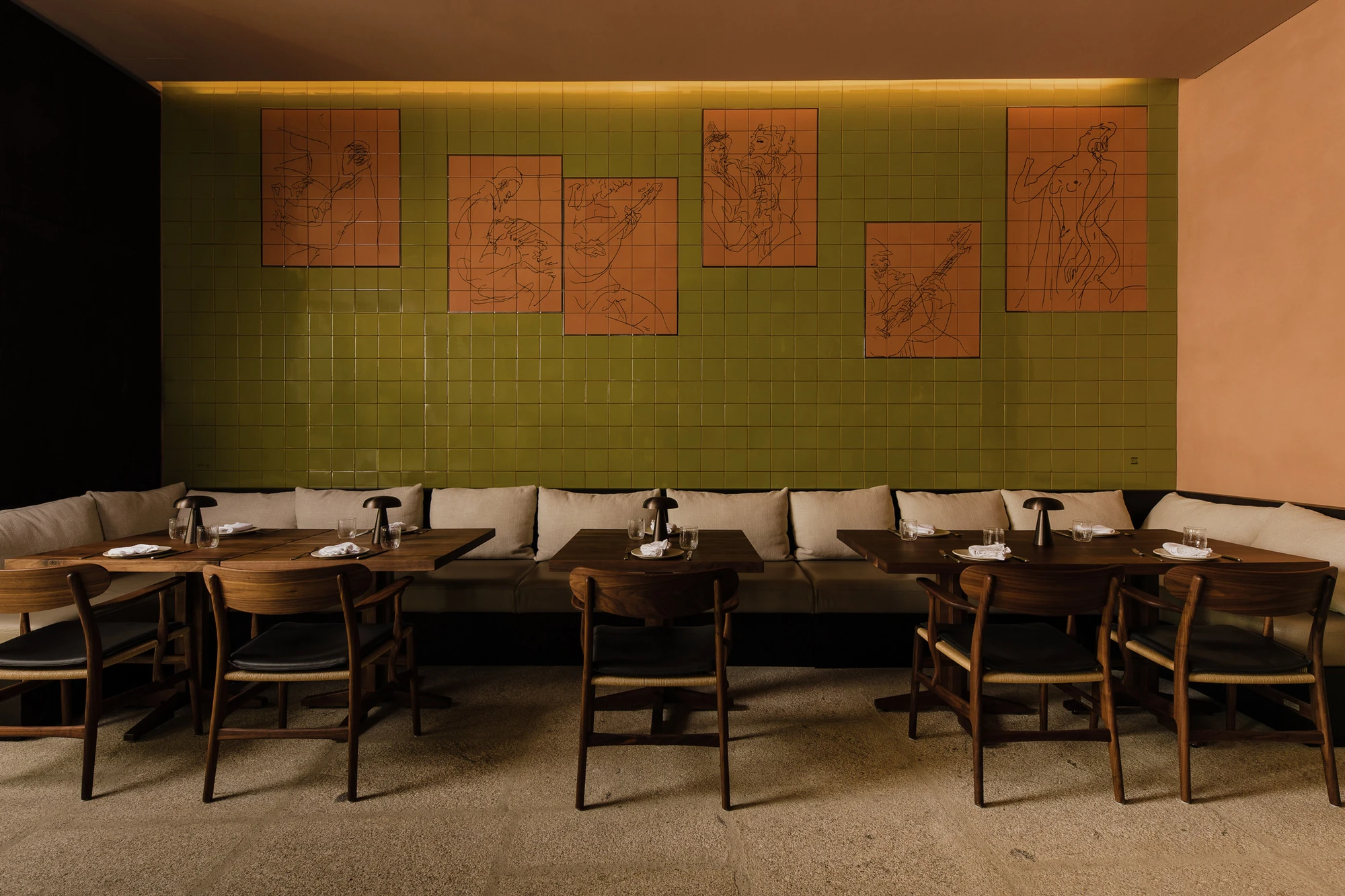
The wall above the banquette belongs to Álvaro Siza. Musicians in black line, orange panels set into a field of green glazed tile, drawn loose and fast the way he draws. He has made work of this kind all over the world, but as Space Copenhagen founders Peter Bundgaard Rützou and Signe Bindslev Henriksen told Dezeen, "he had never created something of this kind for his hometown of Porto". Asked to imagine a piece for the room, he returned to musicians, a subject he keeps coming back to, standing in for time well spent and for people joined by arts and culture.

The tiles came from Viuva Lamego. A pencil sketch on paper was scaled up into a facsimile and then transferred by hand: "The specialist craftspeople used a traditional technique of hand painting the scaled-up facsimile of a sketched image from paper onto the tiles, painted dot by dot." Dot by dot is the whole point. The line keeps the speed of the original drawing while the surface becomes a fired, glazed thing that will outlast the restaurant around it.

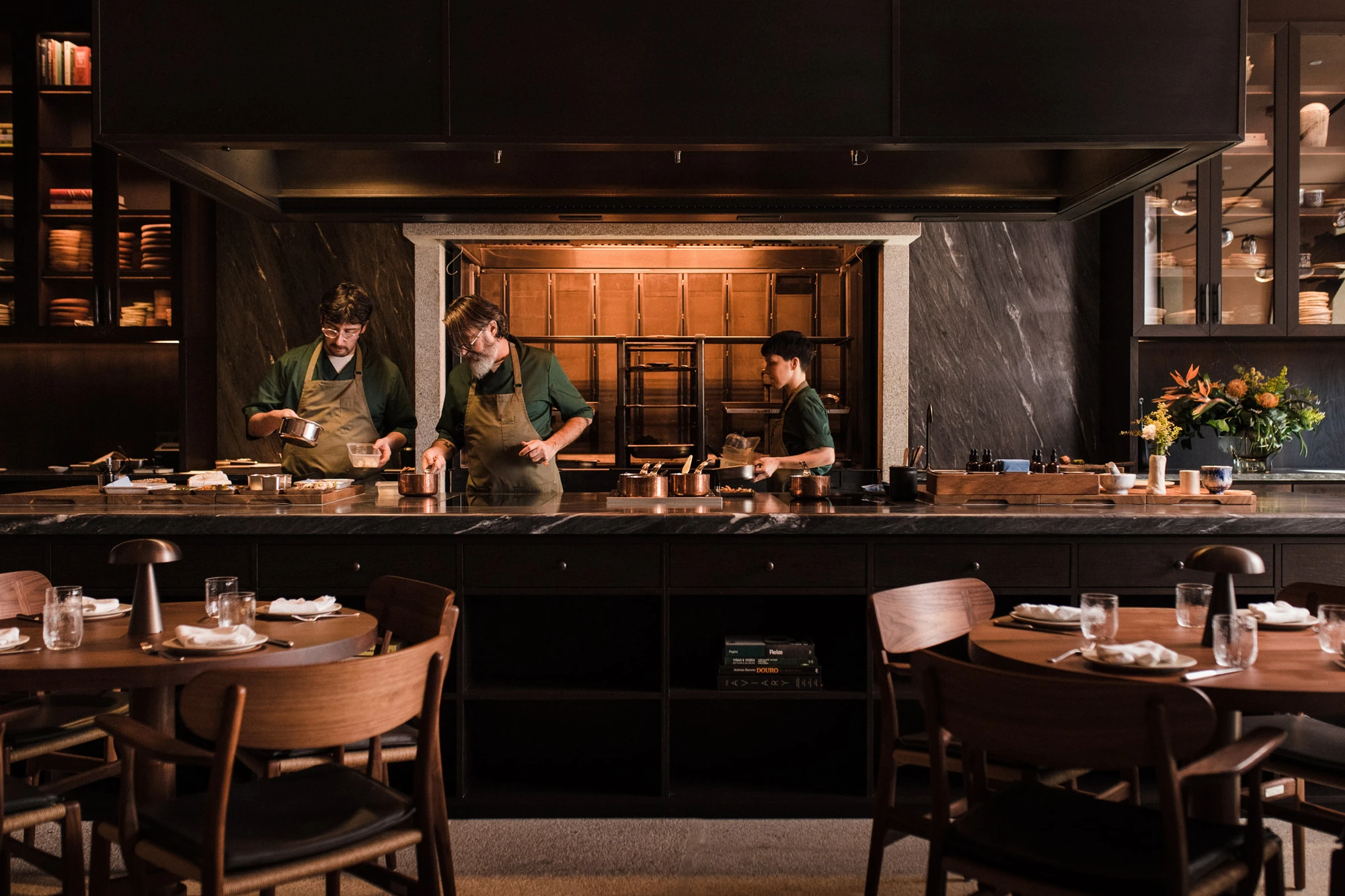
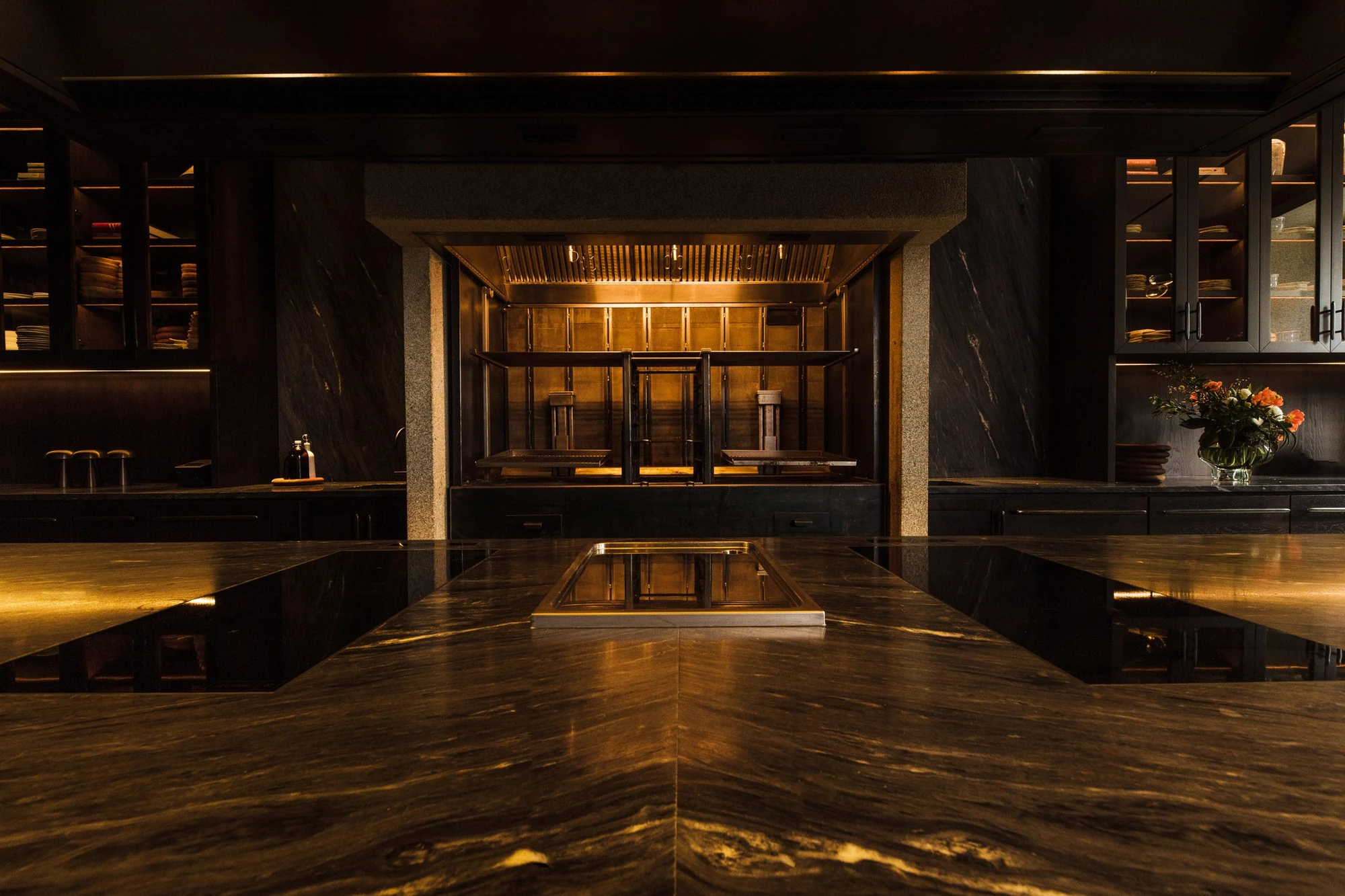
The two colours run out into the room. Green cushions along the built-in oak bench beneath the mural, doorways painted dark green, the orange returning in the plaster. Light is kept low and warm, so the tiled wall reads as the brightest surface in the place. Around the corner the open kitchen runs the opposite register: dark grey quartzite counters, wooden cabinets, a brass-lined hearth, cooks at work in full view of the tables.

Stone, marble, brass and oak throughout, and almost all of it from nearby. "All stone, wood, metal and tiling has been sourced from regions in Portugal using a proximity criterion as priority," the studio said. "All the millwork has been made by local artisans." The kitchen, under Lisbon-born chef Nuno Mendes, runs on the same logic, built around the ingredients, wine and culture of northern Portugal.

Siza has fed Porto before: his 1963 Boa Nova Tea House became a seafood restaurant for chef Rui Paula in 2014. Cozinha das Flores and its adjacent bar, Flôr, sit among the heritage buildings of the Largo project. What is new here is the drawing. A Pritzker winner making a picture rather than a plan, for the city he has spent his life building in.
Interested in Showcasing Your Work?

If you would like to feature your works on Thisispaper, please visit our Submission page and sign up to Thisispaper+ to submit your work. Once your submission is approved, your work will be showcased to our global audience of 2 million art, architecture, and design professionals and enthusiasts.
No items found.
Less, with more behind it.
Explore guides. Search the archive. Walk the atlas.
Become a Thisispaper+ member today to unlock full access to our magazine, advanced tools, and support our work.
Get two months FREE
with annual subscription
Less, with more behind it.
Explore guides. Search the archive. Walk the atlas.
Become a Thisispaper+ member today to unlock full access to our magazine, advanced tools, and support our work.
Get two months FREE
with annual subscription
No items found.
Alexander Zaxarov
Aug 13, 2026

On Largo de São Domingos in Porto, inside a 16th-century building, Álvaro Siza has made a tiled mural of musicians for Cozinha das Flores, the restaurant Space Copenhagen wrapped in coppery plaster and dark wood.

Largo de São Domingos has been a working corner of Porto for centuries, and the building that now holds Cozinha das Flores has stood on it since the 16th century. Space Copenhagen took the shell as a given rather than a problem. Aged stone and dark-stained wood were the starting points, and what has been added since is keyed to them: coppery plaster across the walls, dark wood tables and chairs made by woodworkers in the north, a pale aggregate floor that holds whatever daylight gets past the green-painted doors.

The wall above the banquette belongs to Álvaro Siza. Musicians in black line, orange panels set into a field of green glazed tile, drawn loose and fast the way he draws. He has made work of this kind all over the world, but as Space Copenhagen founders Peter Bundgaard Rützou and Signe Bindslev Henriksen told Dezeen, "he had never created something of this kind for his hometown of Porto". Asked to imagine a piece for the room, he returned to musicians, a subject he keeps coming back to, standing in for time well spent and for people joined by arts and culture.

The tiles came from Viuva Lamego. A pencil sketch on paper was scaled up into a facsimile and then transferred by hand: "The specialist craftspeople used a traditional technique of hand painting the scaled-up facsimile of a sketched image from paper onto the tiles, painted dot by dot." Dot by dot is the whole point. The line keeps the speed of the original drawing while the surface becomes a fired, glazed thing that will outlast the restaurant around it.

The two colours run out into the room. Green cushions along the built-in oak bench beneath the mural, doorways painted dark green, the orange returning in the plaster. Light is kept low and warm, so the tiled wall reads as the brightest surface in the place. Around the corner the open kitchen runs the opposite register: dark grey quartzite counters, wooden cabinets, a brass-lined hearth, cooks at work in full view of the tables.

Stone, marble, brass and oak throughout, and almost all of it from nearby. "All stone, wood, metal and tiling has been sourced from regions in Portugal using a proximity criterion as priority," the studio said. "All the millwork has been made by local artisans." The kitchen, under Lisbon-born chef Nuno Mendes, runs on the same logic, built around the ingredients, wine and culture of northern Portugal.

Siza has fed Porto before: his 1963 Boa Nova Tea House became a seafood restaurant for chef Rui Paula in 2014. Cozinha das Flores and its adjacent bar, Flôr, sit among the heritage buildings of the Largo project. What is new here is the drawing. A Pritzker winner making a picture rather than a plan, for the city he has spent his life building in.
Interested in Showcasing Your Work?

If you would like to feature your works on Thisispaper, please visit our Submission page and subscribe to Thisispaper+. Once your submission is approved, your work will be showcased to our global audience of 2 million art, architecture, and design professionals and enthusiasts.
Thisispaper+
Porto Guide
10+ Projects
Web Access
Link to Maps
Porto is small enough that architecture, design and art are not separate scenes with separate audiences, and the reputation it carries runs ahead of its size. Its cultural life keeps moving into what the city stopped using, a park on a former estate on one bank, warehouses and a cookware factory on the other.
The same crowd at the museum, the shop, and the building. Porto's reputation travels further than Porto does.
Explore
Porto Guide

Join Thisispaper+
Unlock access to 2500 stories, curated guides + editions, and share your work with a global network of architects, artists and designers who are shaping the future.
Get two months FREE
with annual subscription
Travel Guides
Immerse yourself in timeless destinations, hidden gems, and creative spaces—curated by humans, not algorithms.
Explore All Guides +
Submission Module
Submit your project and gain the chance to showcase your work to our worldwide audience of over 2M architects, designers, artists, and curious minds.
Learn More+
Curated Editions
Dive deeper into carefully curated editions, designed to feed your curiosity and foster exploration.
Off-the-Grid
Jutaku
Sacral Journey
minimum
The New Chair
Explore All Editions +
Atlas
A new and interactive way to explore the most inspiring places around the world.
Interactive map
Linked to articles
450+ curated locations
Google + Apple directions
Smart filters
Subscribe to Explore+
Become a Thisispaper+ member today to unlock full access to our magazine, submit your project and support our work.
Join Thisispaper+Join Thisispaper+
€9/month
Get two months FREE
with annual subscription