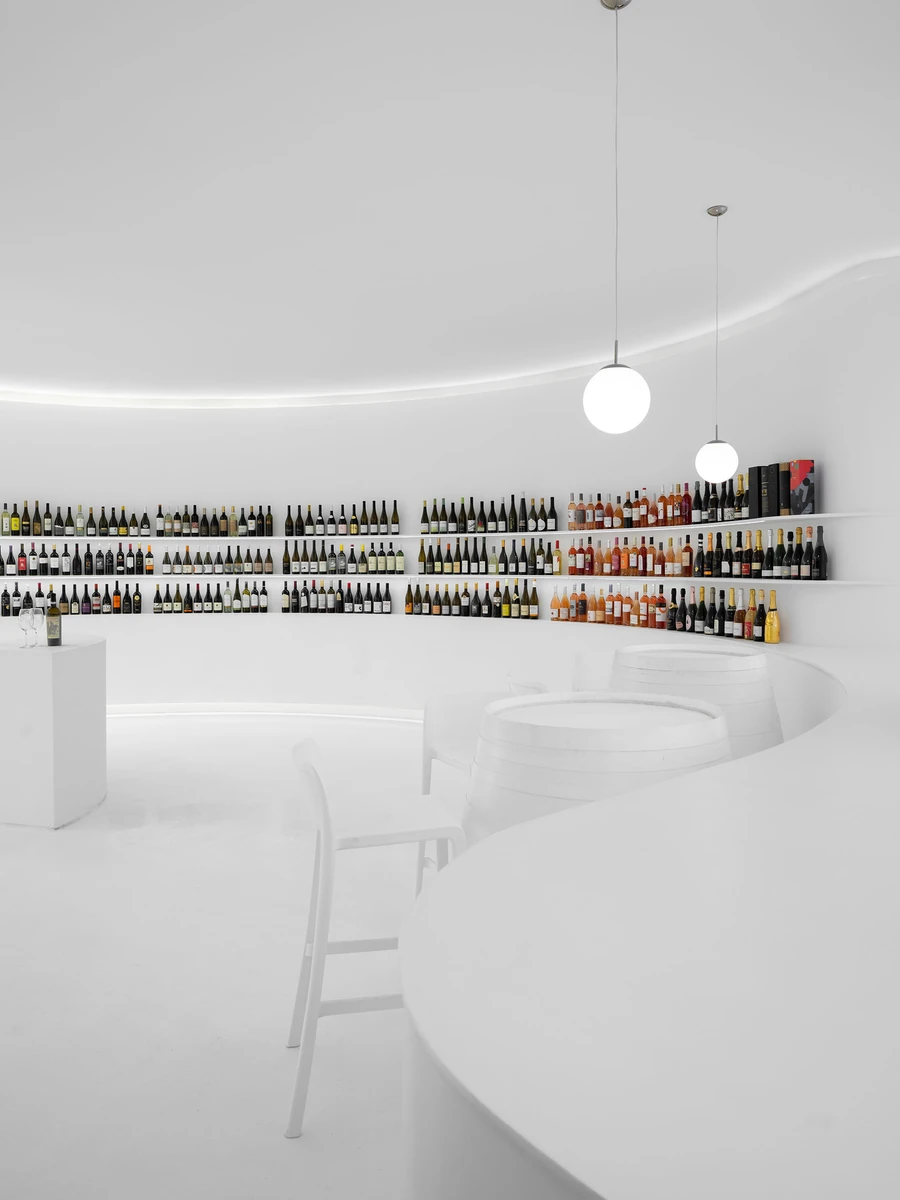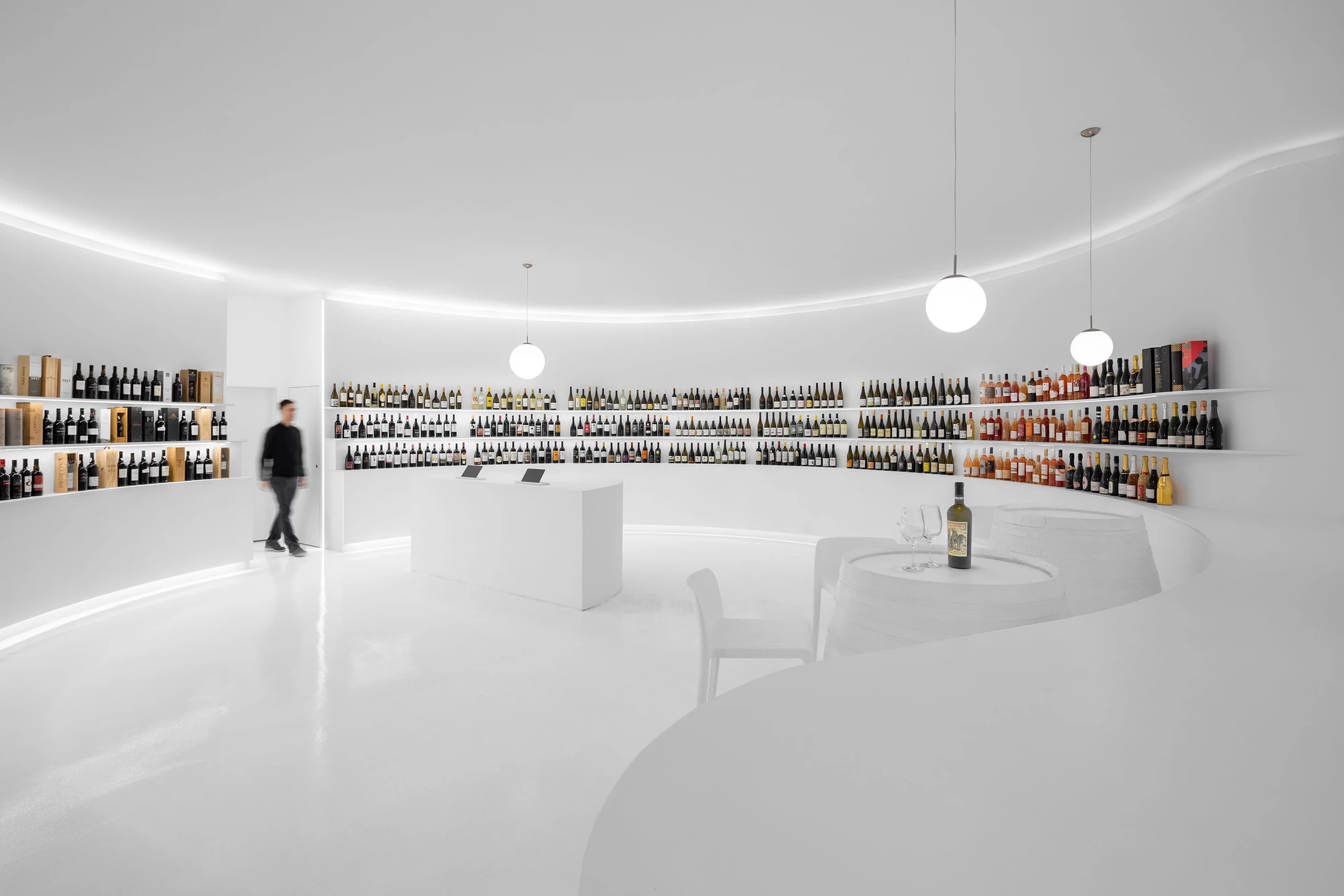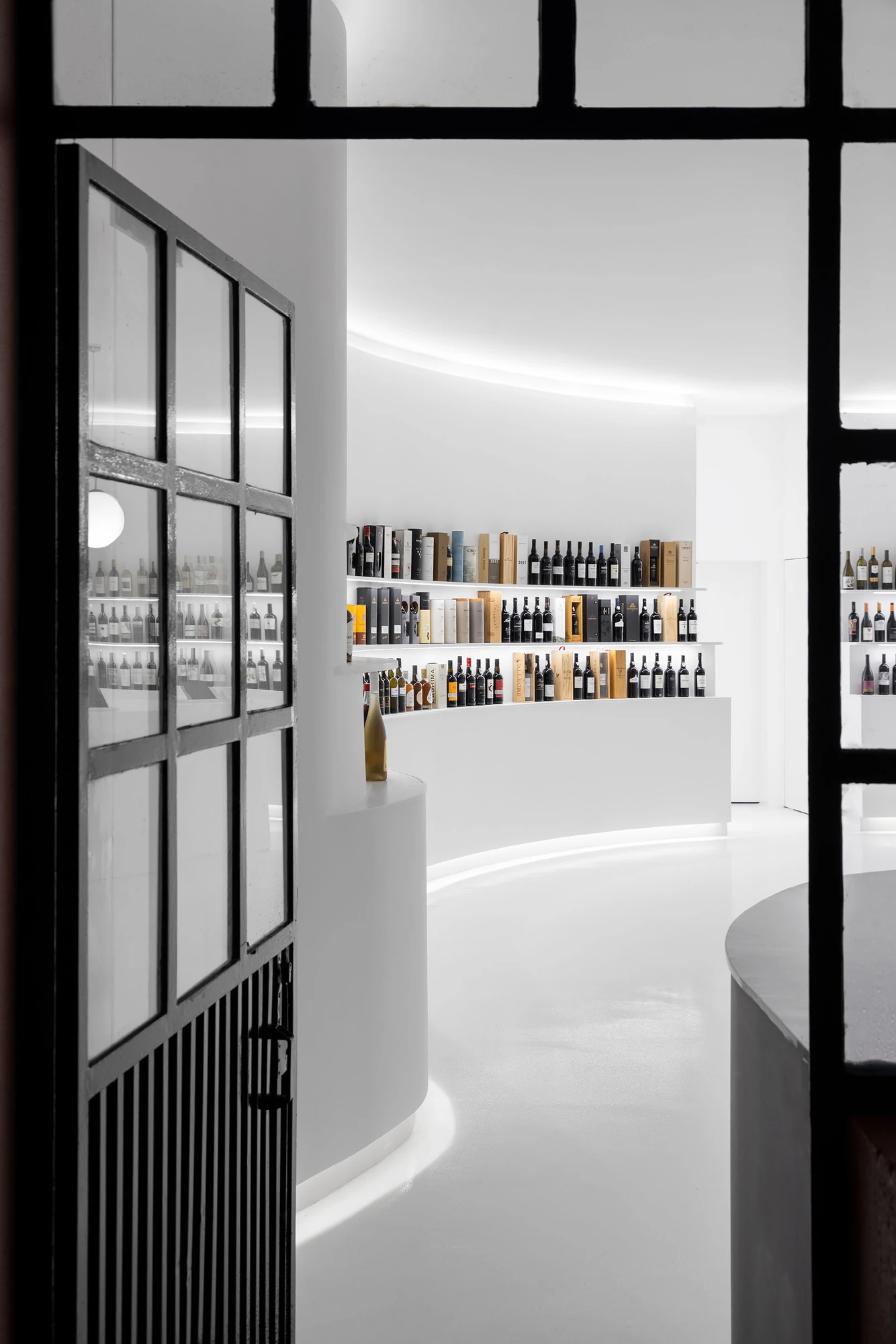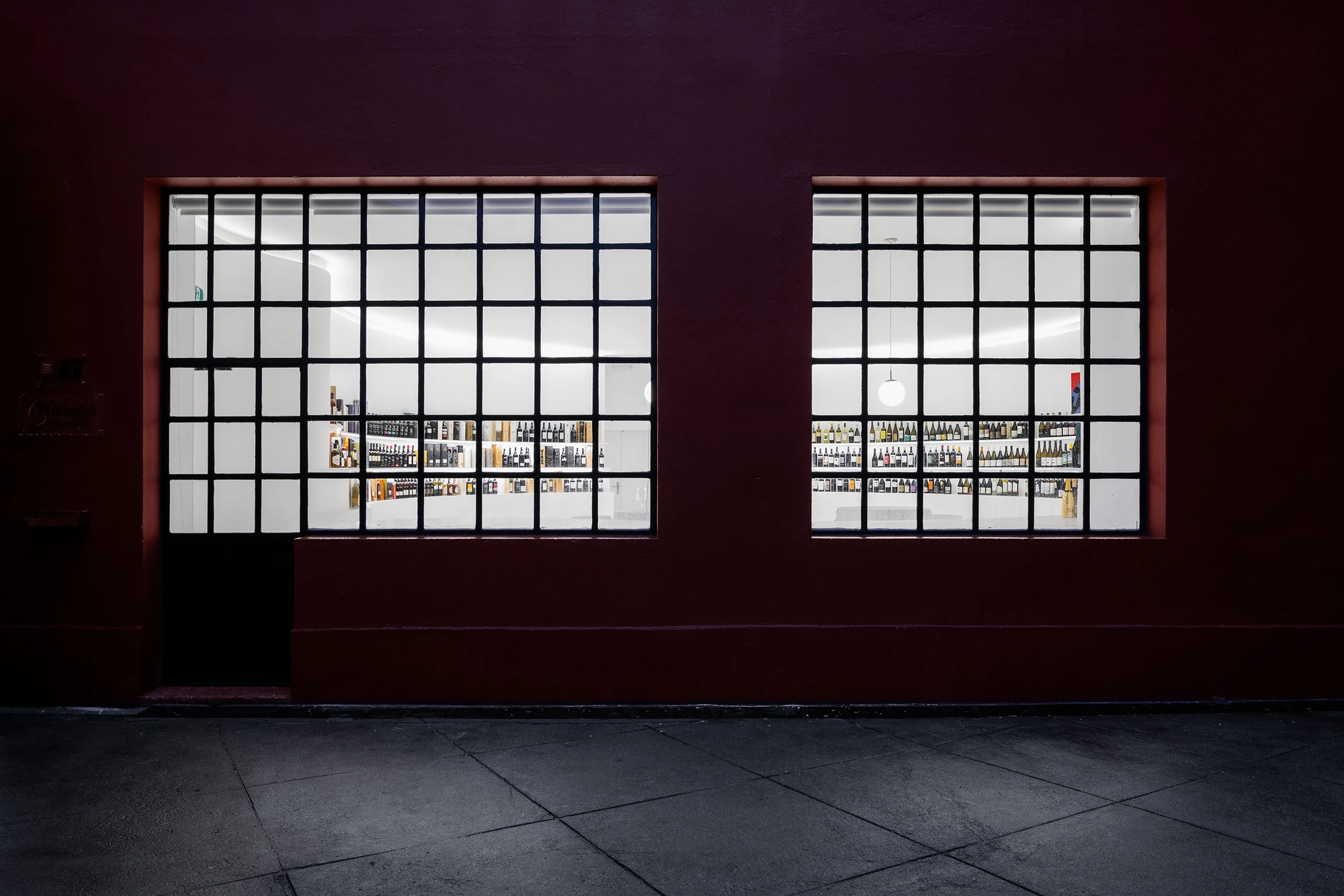
Behind an oxblood wall and two steel-framed windows in Porto, Porto Architects gives an online wine merchant its first shop, a circular white room of 90 square metres built from three terraces of shelving.
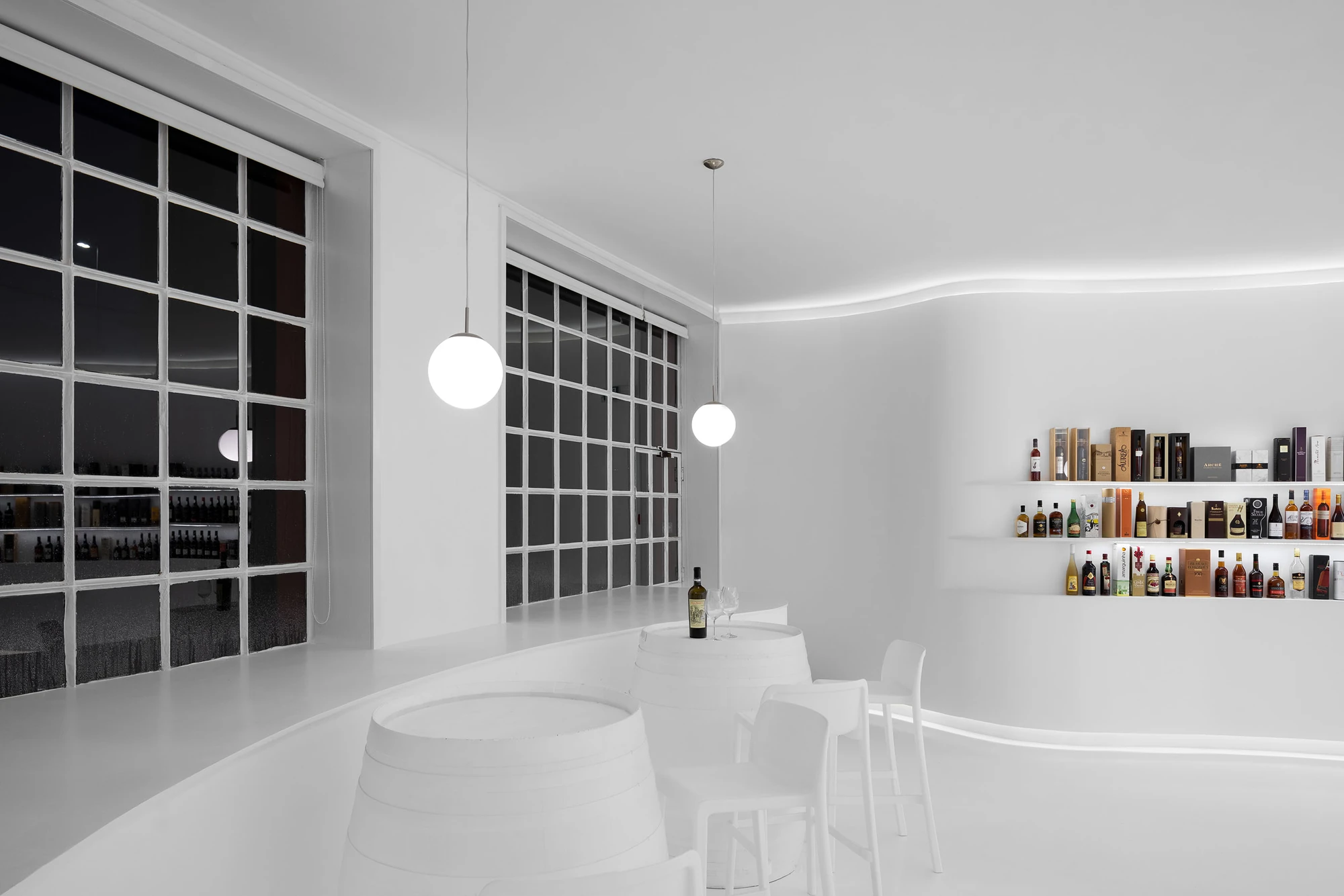
From the street the shop admits almost nothing. An oxblood wall, two windows gridded into small panes with black steel, a door of the same steel, and a hard white light on the other side of the glass. At night the bottles read as a single bright line across the dark, which is the whole of the signage.
Portugal Vineyards sold wine online before it sold it anywhere else. The store, finished in 2019, is the company's first physical room, put next door to its own headquarters and facing the street, and it takes 90 square metres. There are no partitions in it. The studio's description is blunt to the point of being a manifesto: the space inside is "blindingly white, minimal and circular".
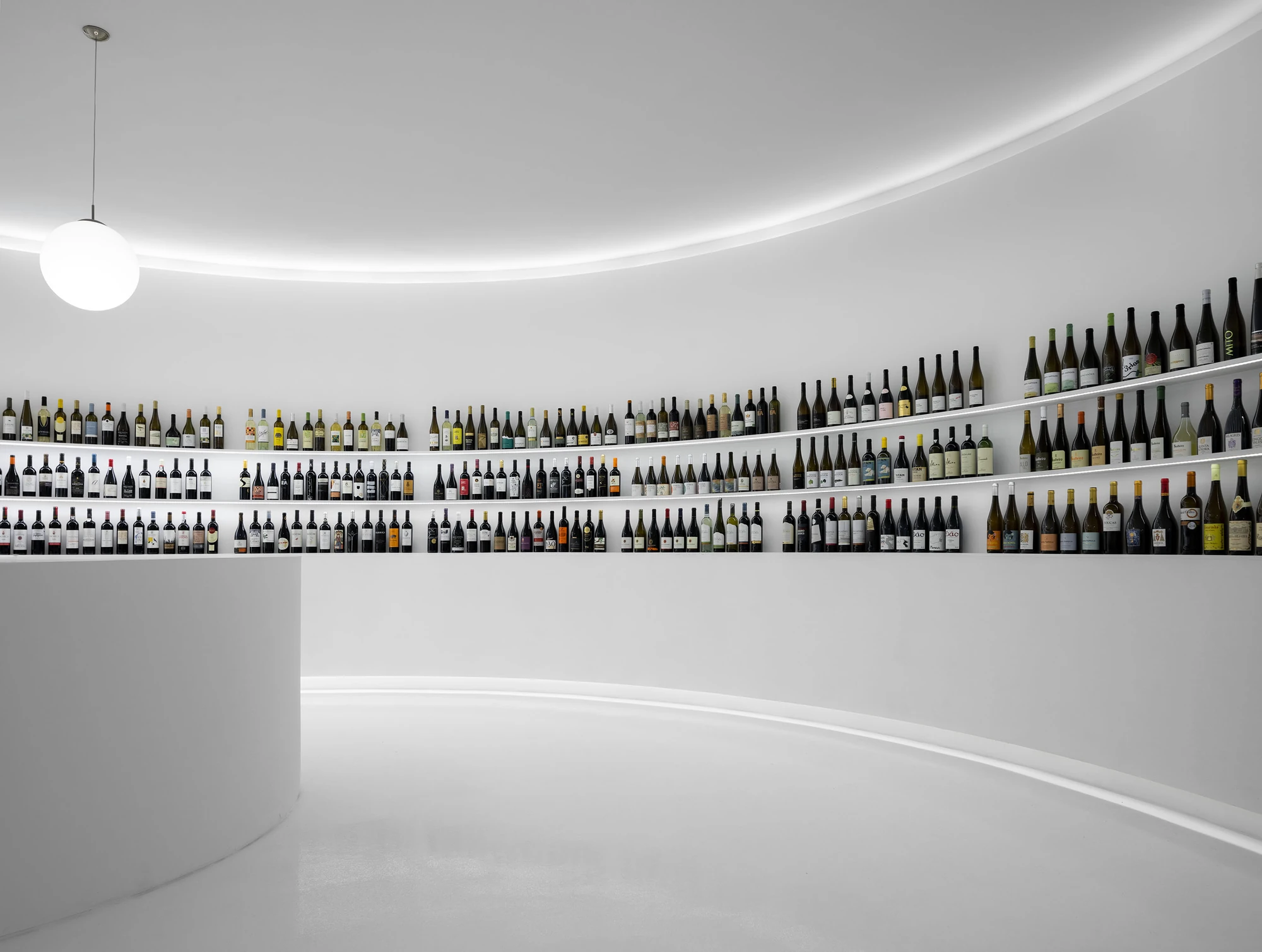
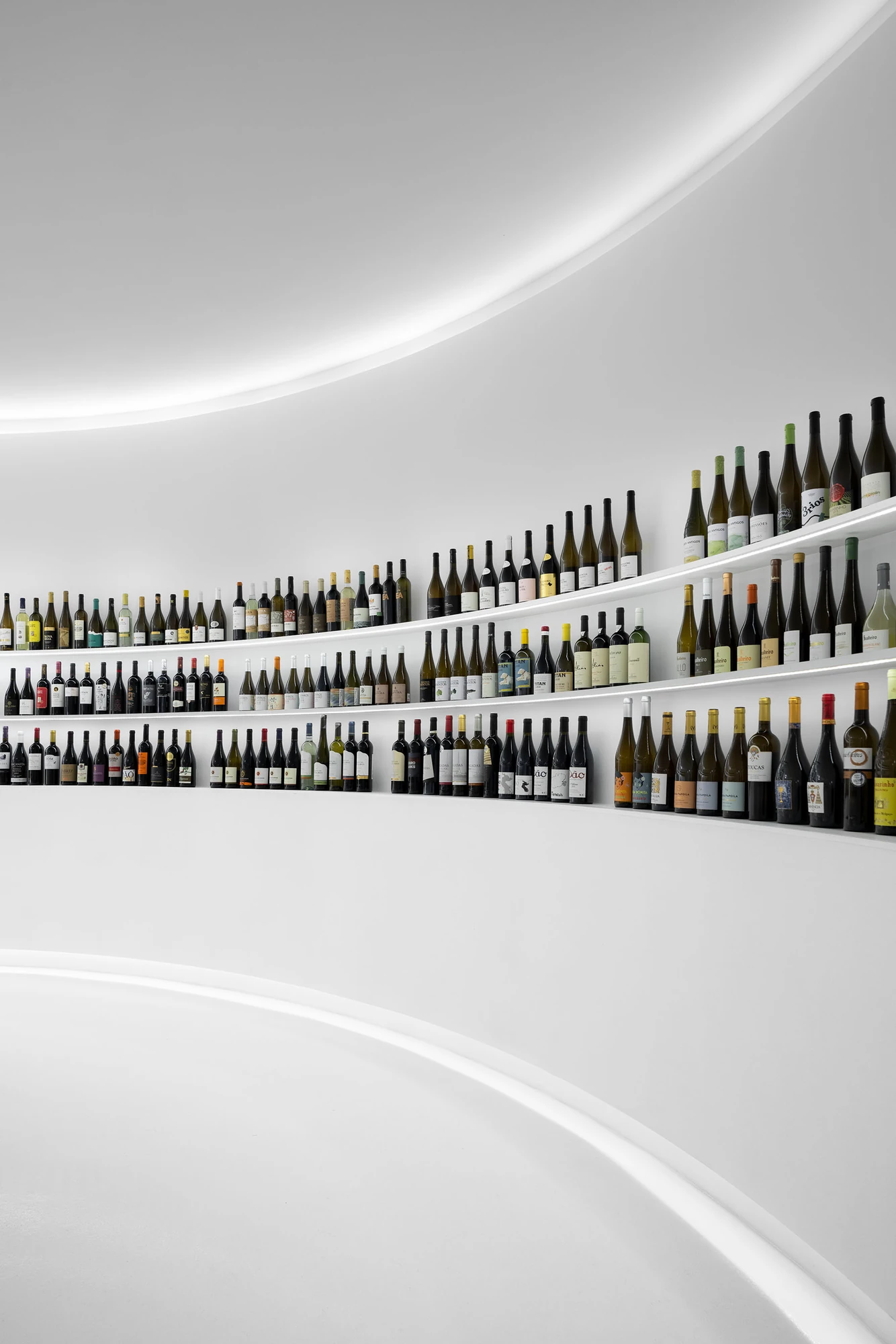
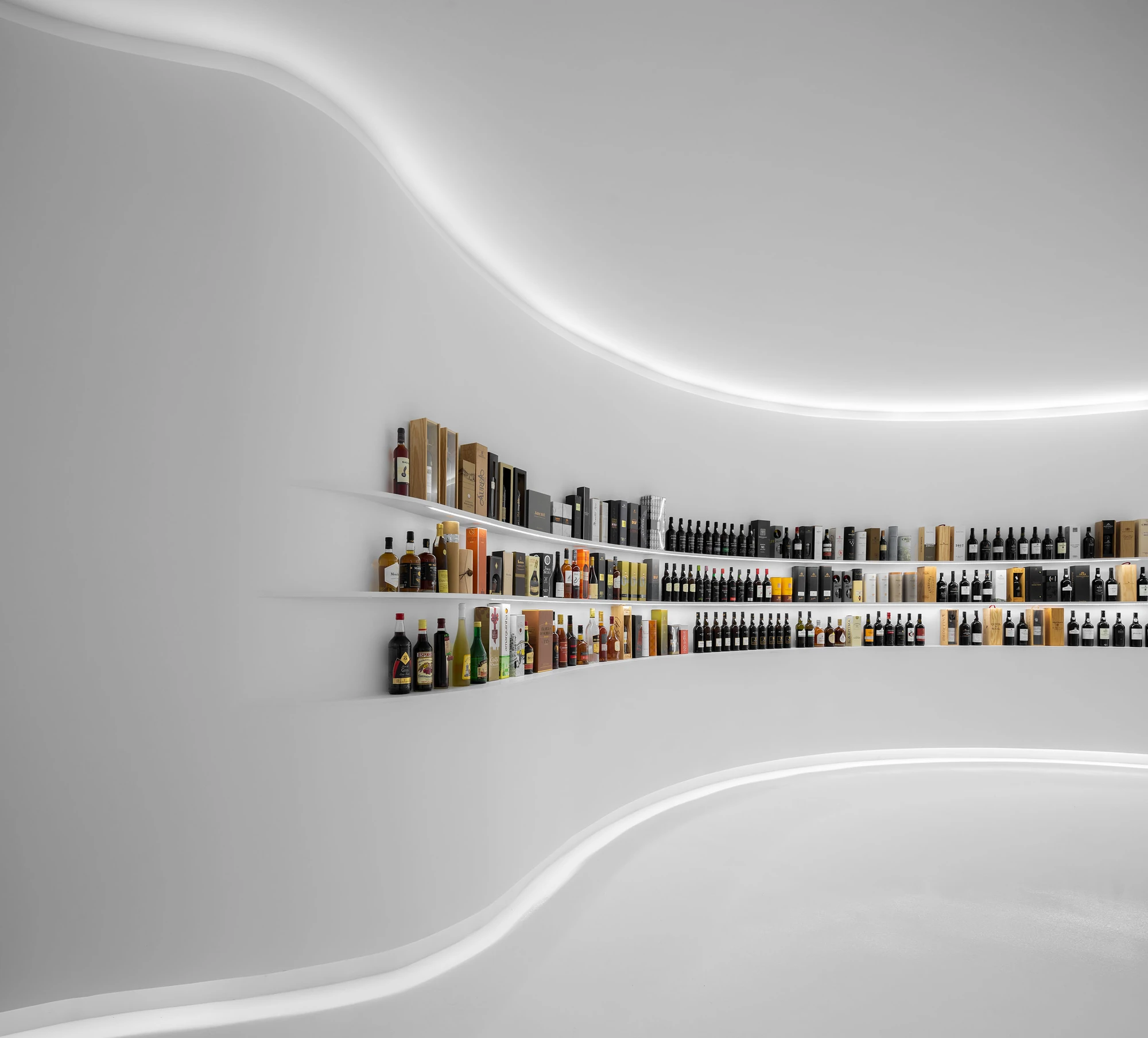
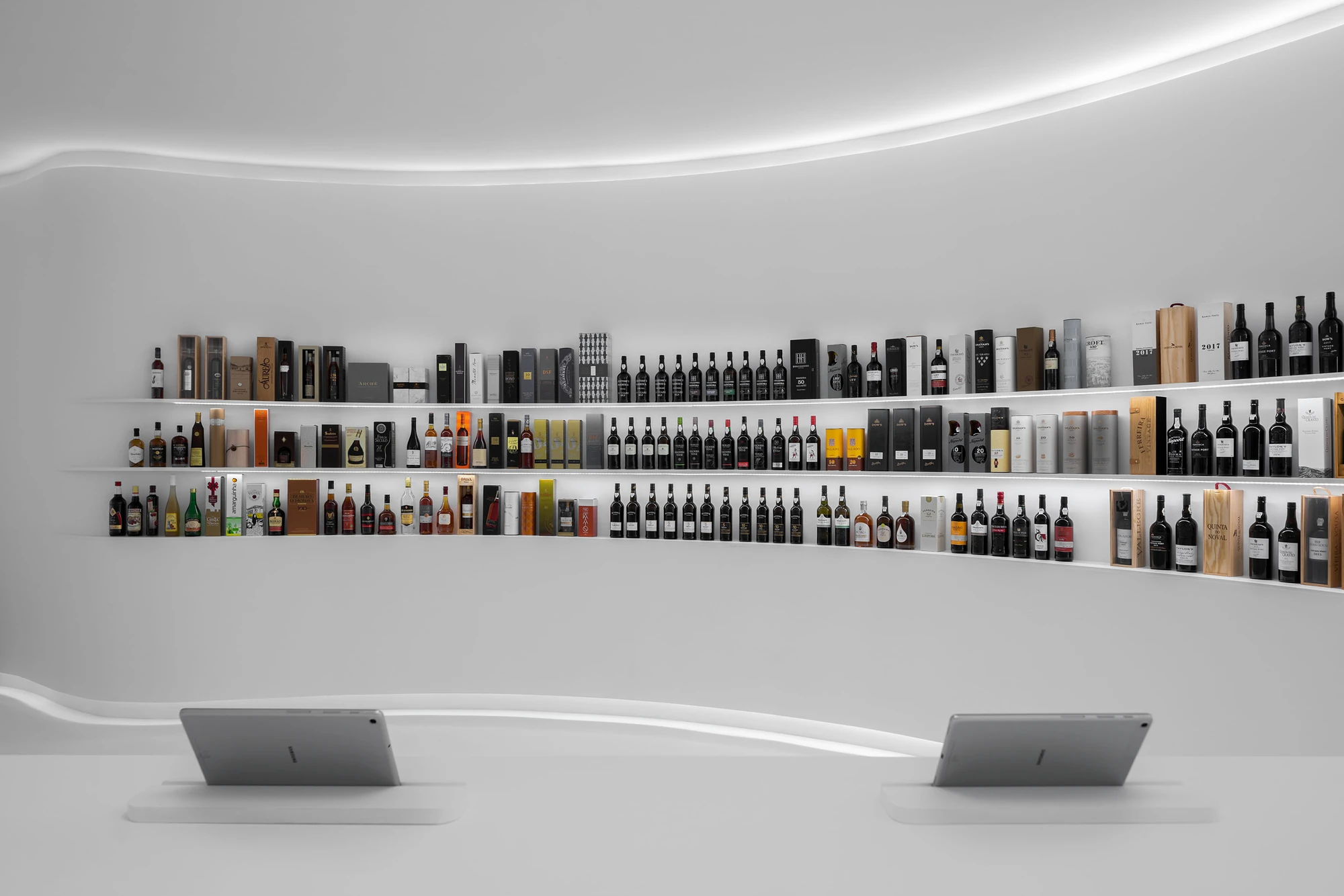
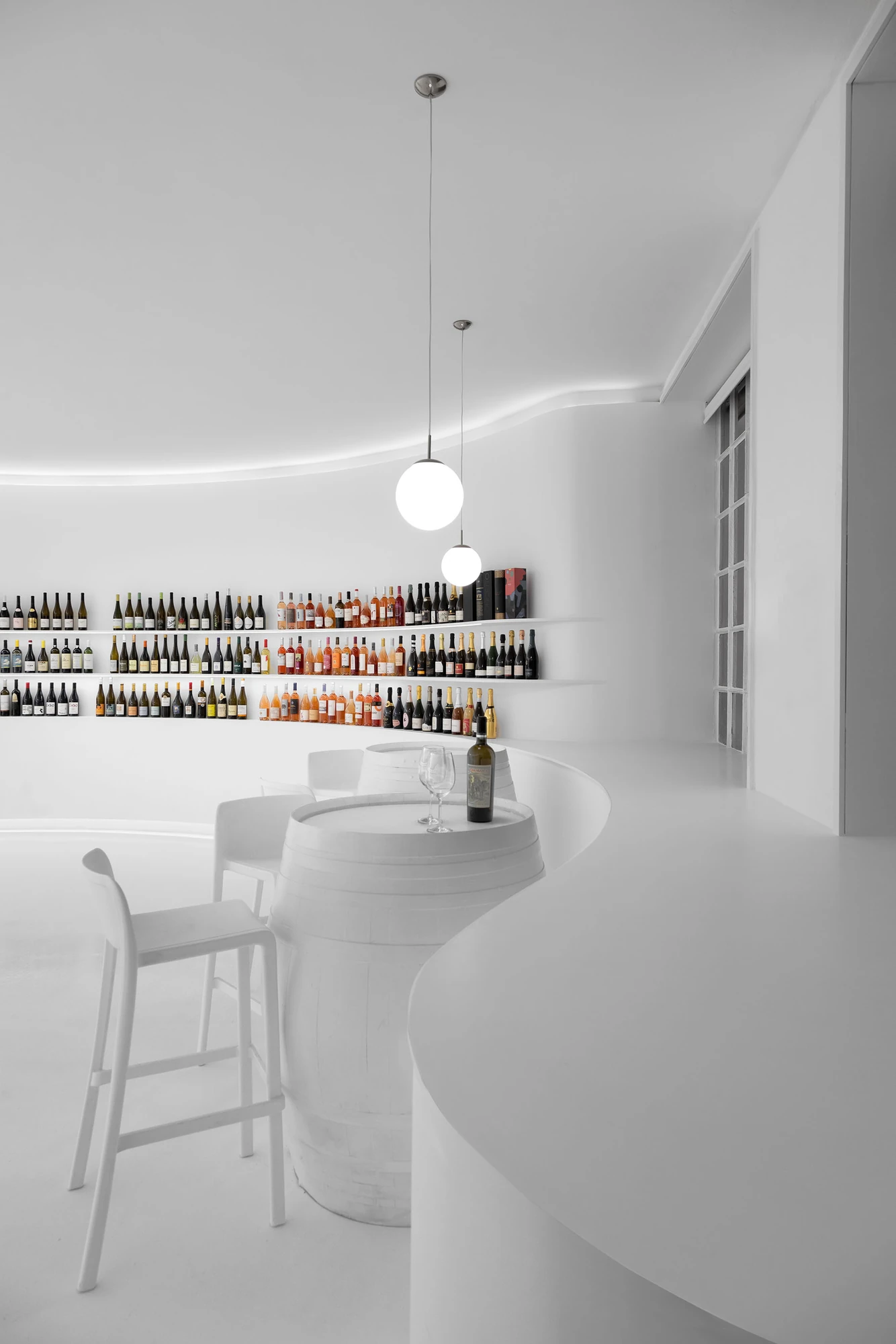
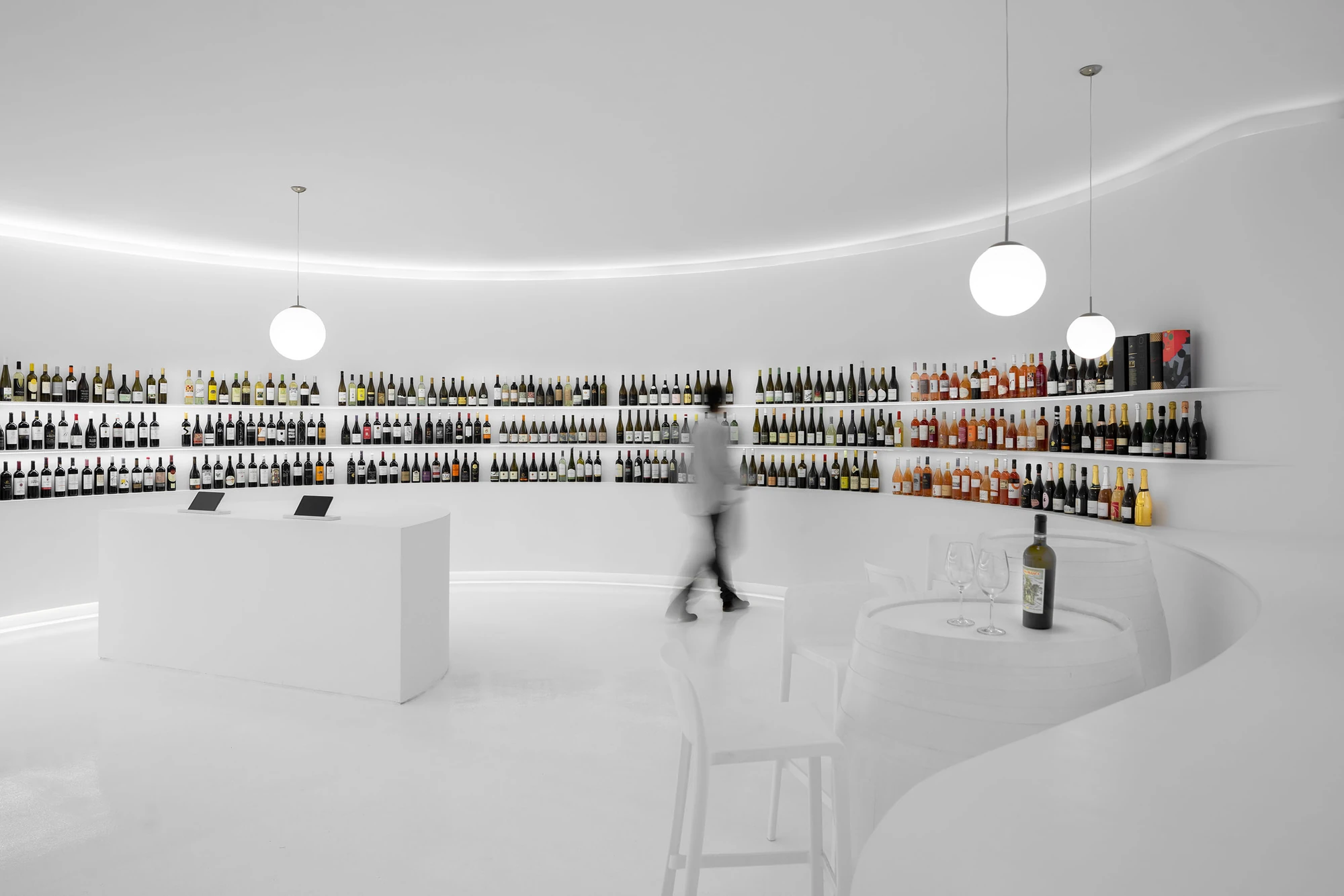
The walls are the fittings. Three shelves are cut into them and run the full circumference, rising and dipping as they go, each with a line of concealed light beneath it, so the bottles stand on illumination rather than under it. The studio calls the arrangement a reference to vineyard terraces. The intention, as written, was to celebrate "the wine bottle, its shape and the brightness of its colored glass without lies", and the room is built to make that literal: the walls, floor, ceiling, counter, chairs and barrels are all the same white, and every colour in the space arrives on a label.
The curve does the circulation. Enter and the wall turns with you, a single path around the room that gives a full view of the range from any point in it. The three terraces are counters as well as shelves, so the display can be reordered by theme or season without touching the room. The ceiling carries a cove that meanders where the wall does, one continuous line of light that never resolves into a fixture.
Two things interrupt the whiteness, and both are deliberate. Traditional wood barrels, painted out to match everything else, stand as tasting tables with white stools pulled up to them, a piece of cellar furniture reduced to a silhouette. And on the low counter, two tablets open onto the warehouse, where the least known Portuguese wines sit. It is a shop built by a business that never needed one, and the room understands the assignment: it is a background, and it is the most disciplined background a bottle is likely to get.