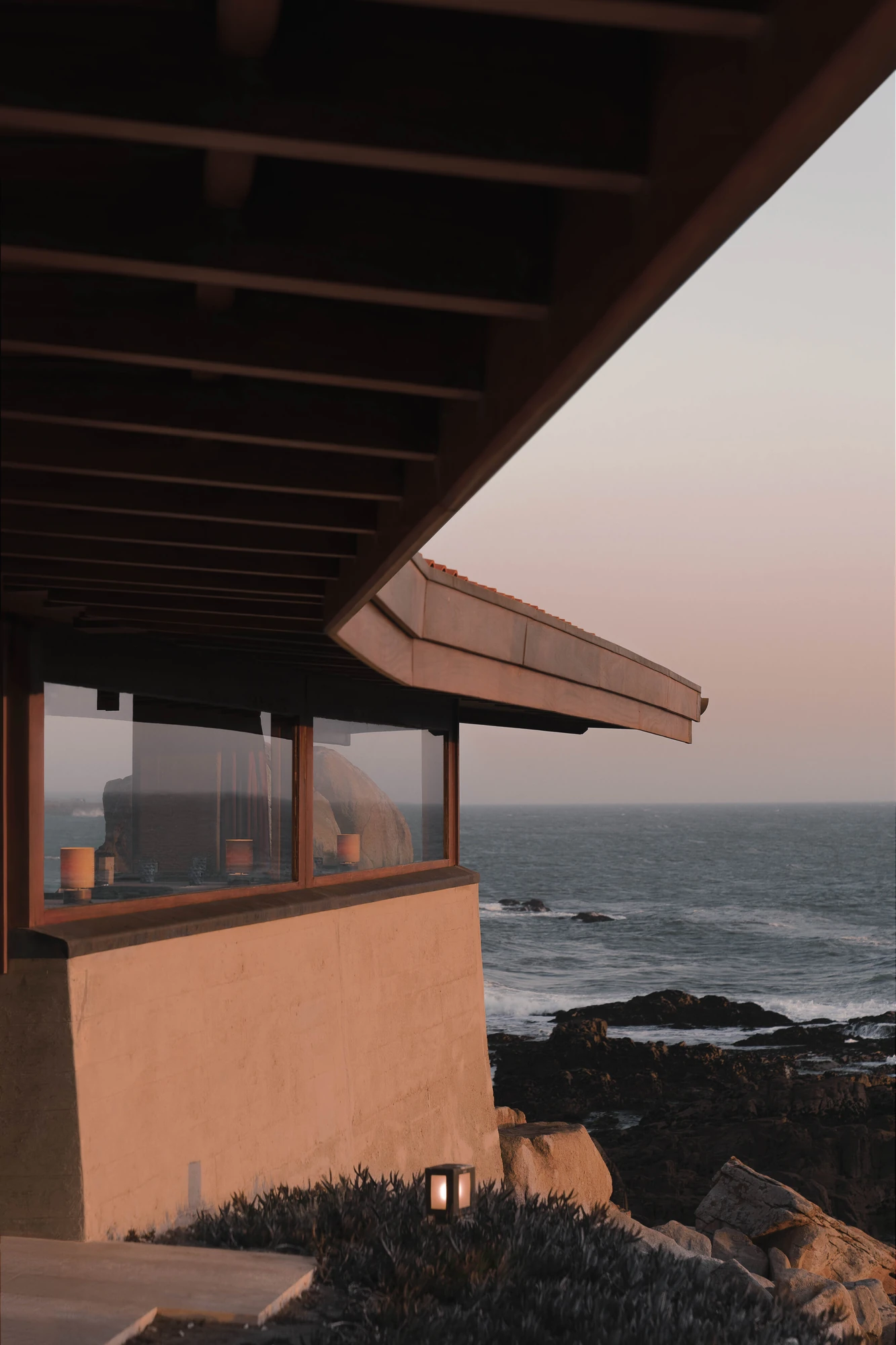
On the granite shore at Leça da Palmeira, north of Porto, Álvaro Siza set Casa de Chá da Boa Nova low between the rocks, its tiled roof barely clearing the stone.
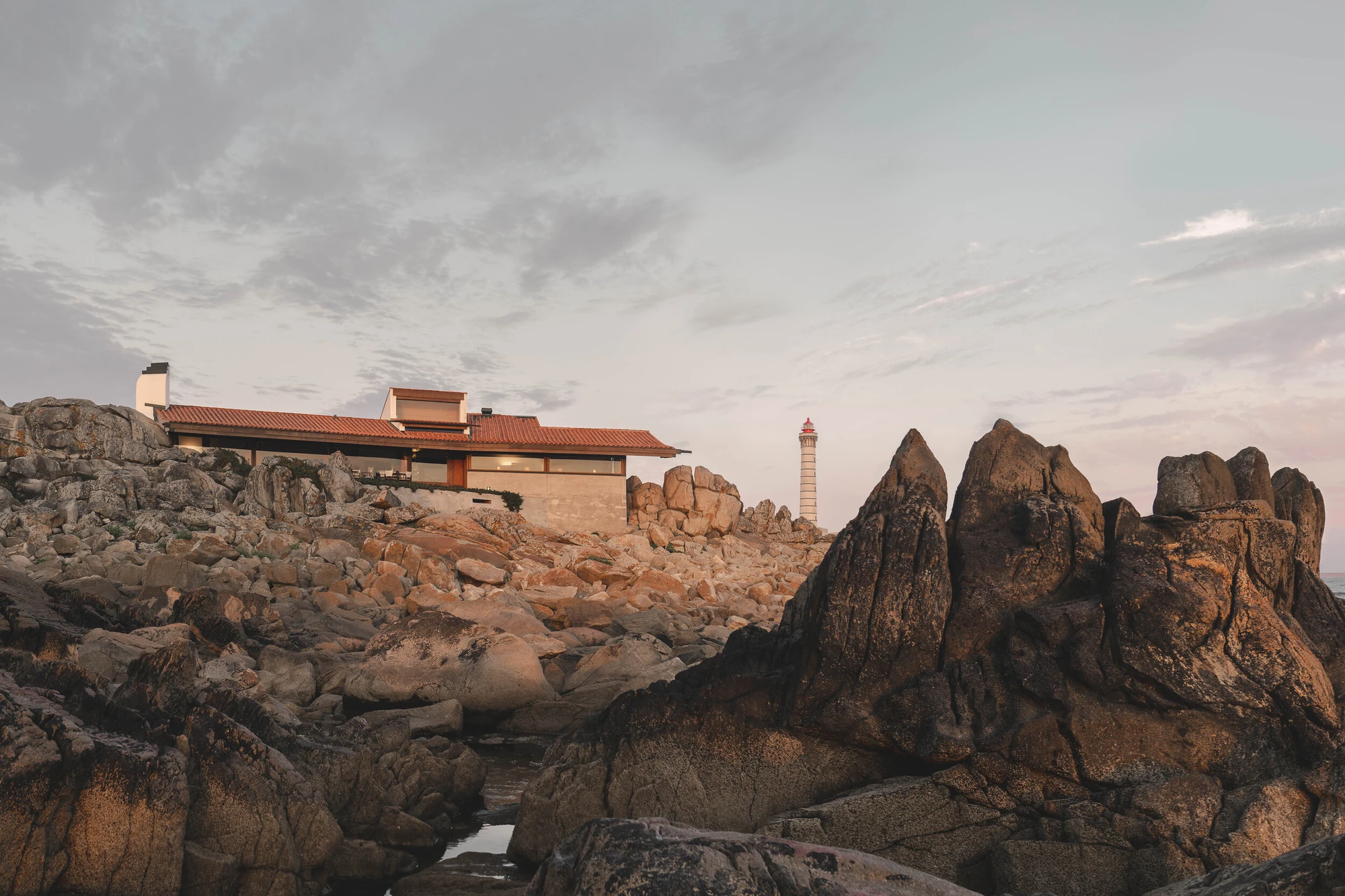
From the coast road at Leça da Palmeira, north of Porto, there is a low white wall, a line of red tile, and then the Atlantic. The rest is granite. Boa Nova capture by Nick Dearden sits among boulders that were there long before it, and the way in is a stair dropping down between them, turning as the rock turns, so that the sea arrives in pieces before it arrives whole.
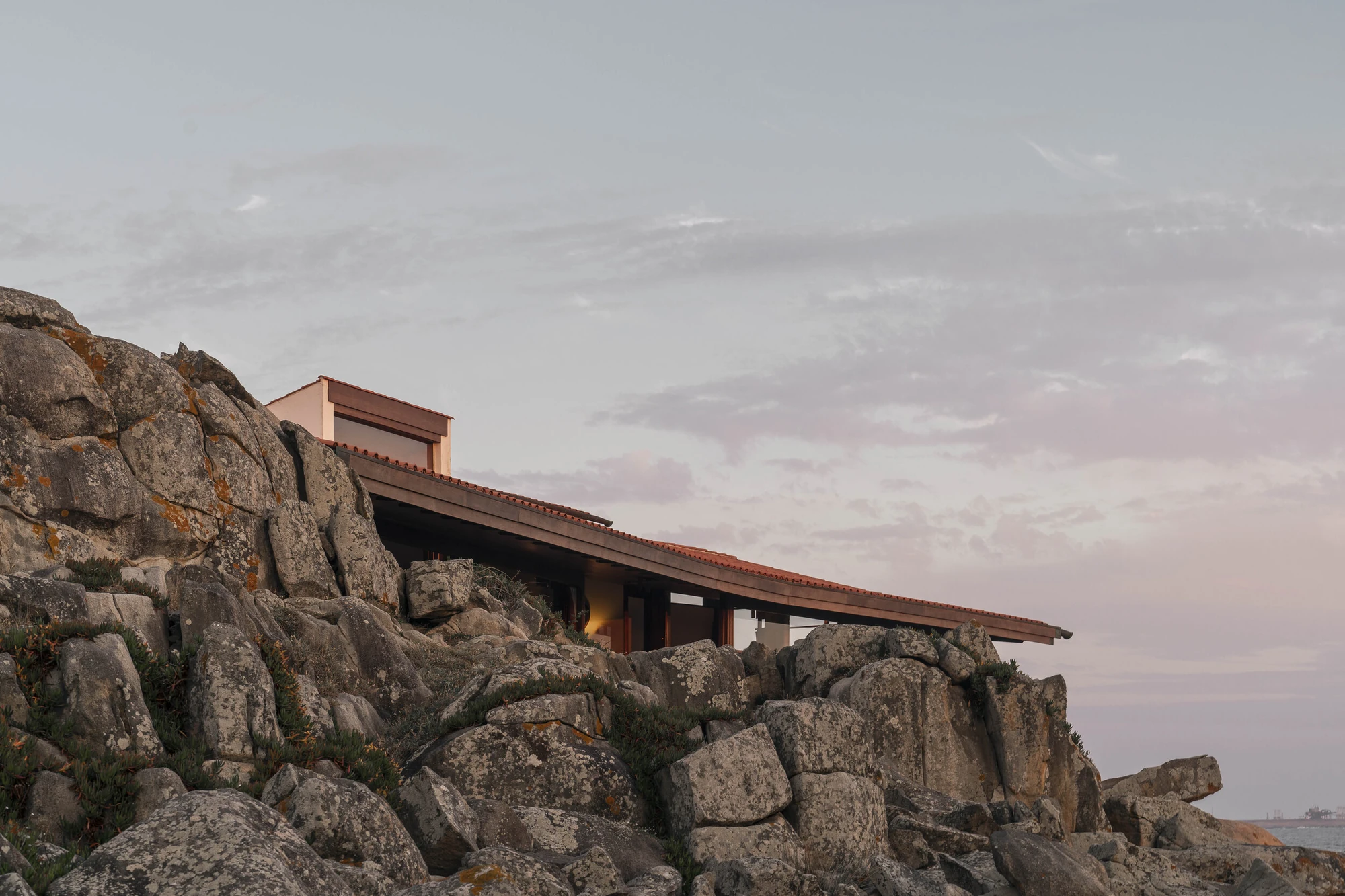
Siza was at the beginning of his working life when this was built, between 1958 and 1963, and the restraint reads as a decision rather than a shortage of ideas. Nothing is levelled. The roof steps and tilts to follow the ground, its deep eaves pulled down toward the horizon, and the plan spreads sideways rather than up. Seen from the rocks at dusk, only a tiled edge and one raised roof light break the skyline.
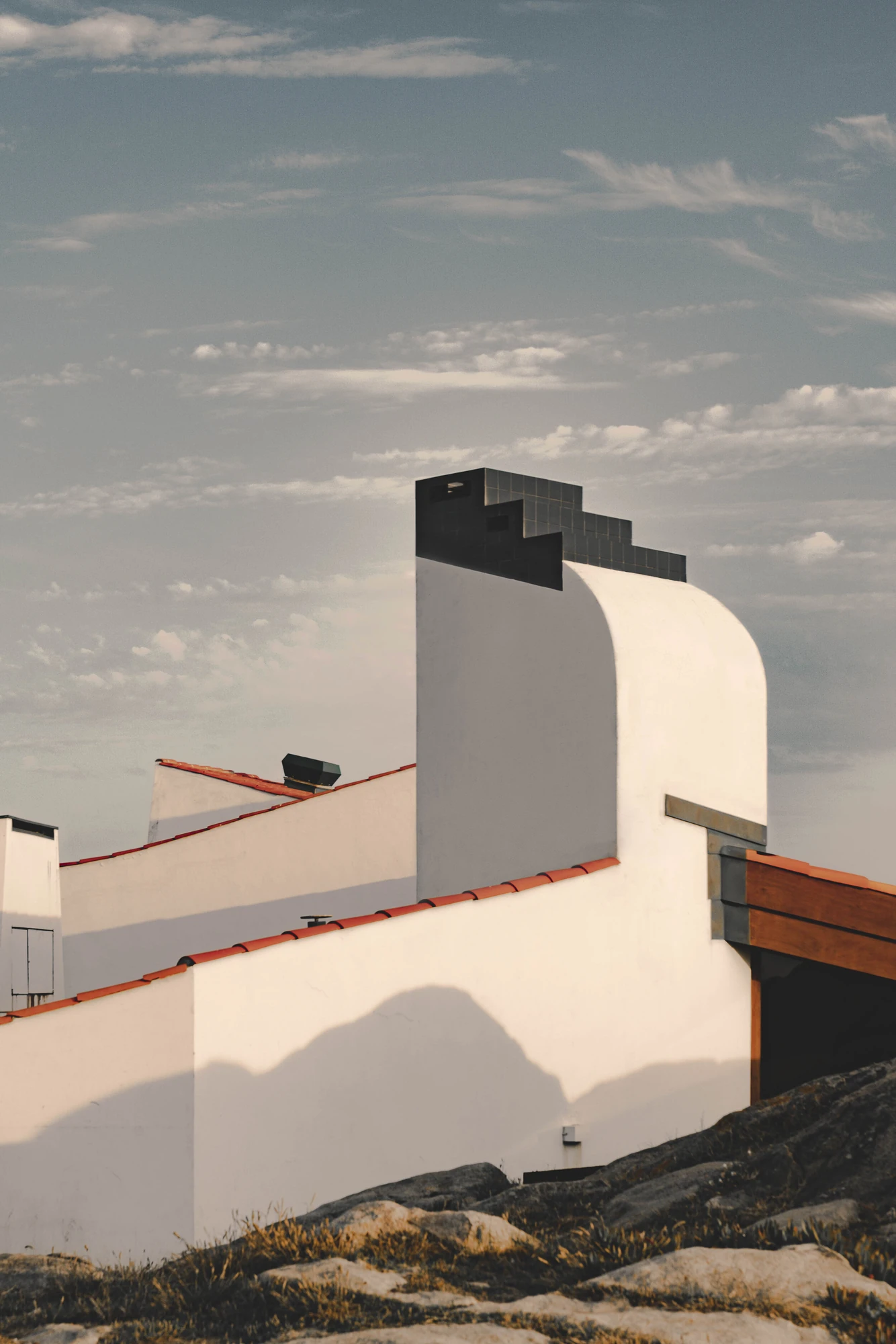
The palette stays close to the fishing settlements along this coast. Whitewashed render, clay tile laid in long red runs, metal flashings darkened to brown, timber left to go the colour of tea. Above the entrance a stack faced in black tile steps against the sky beside a white wall rolled into a curve. The moves are small and there are a great many of them.
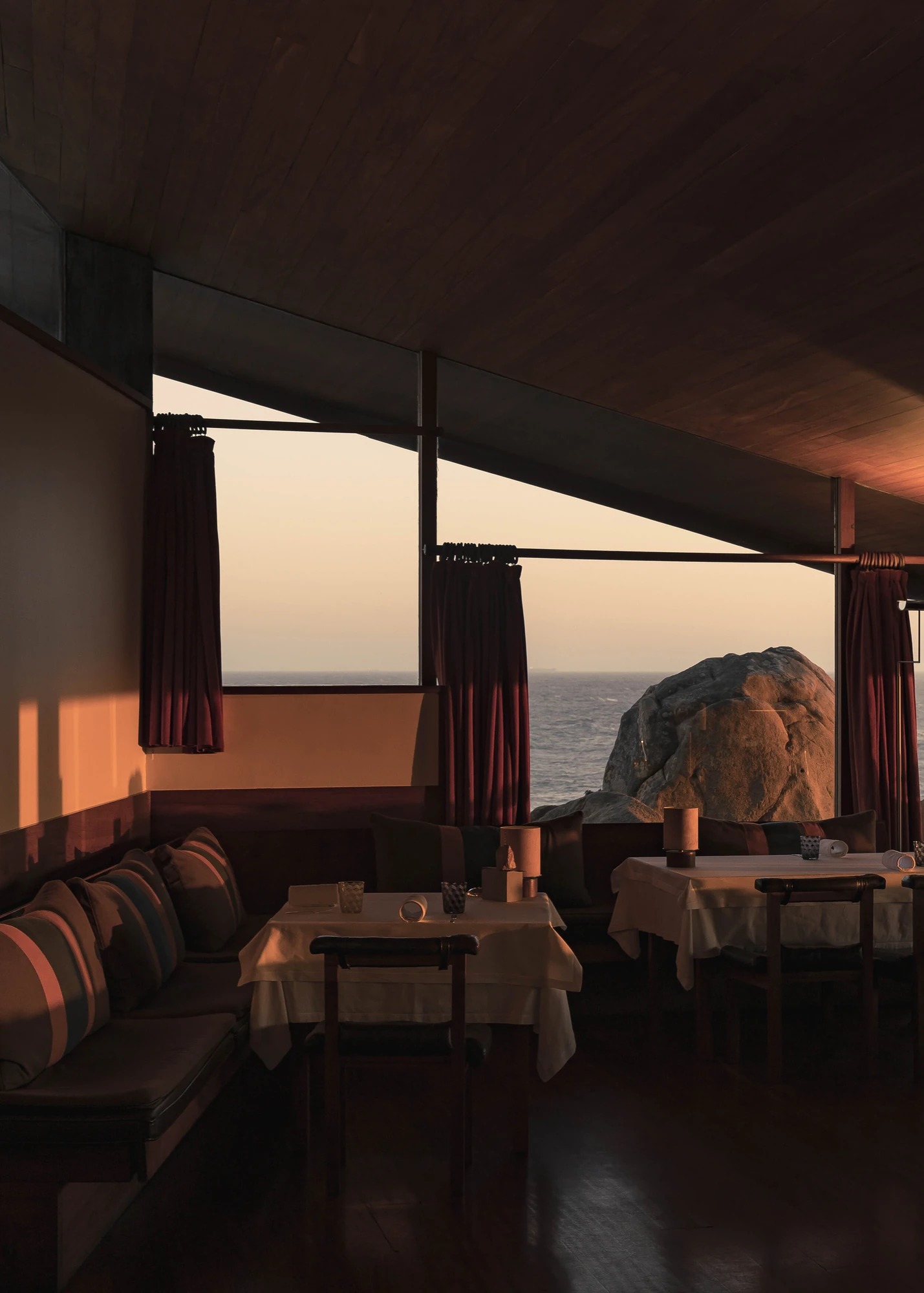
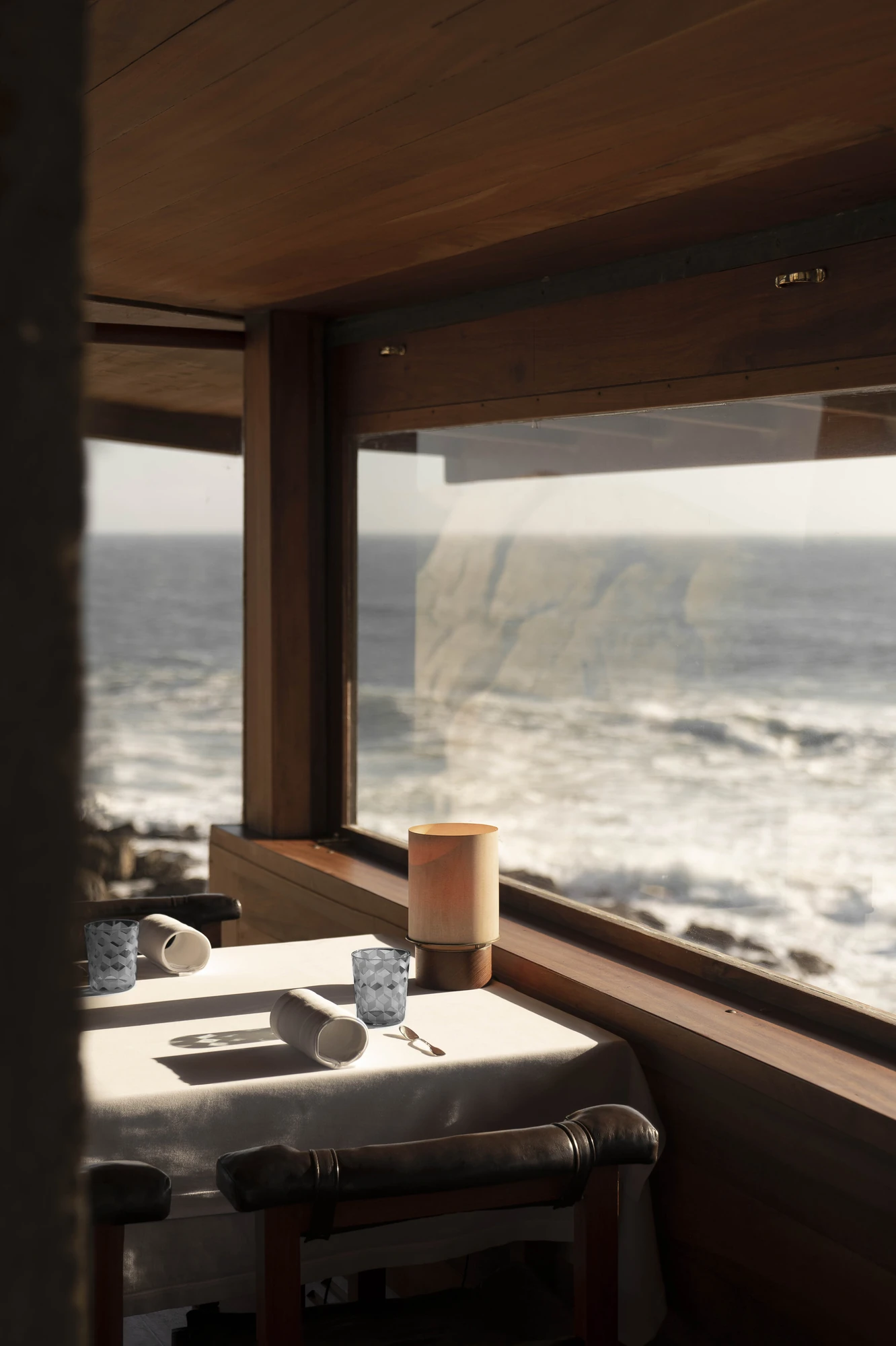
Inside, the ceiling is boarded in dark timber and held low, which pushes attention outward through a band of glass running the length of the dining room. Wine-red curtains hang at the openings. A boulder stands directly outside one window, close enough to touch through the glass, lit orange at sunset while the water behind it turns cold. Elsewhere the view is rationed: a horizontal slot above the panelling delivers nothing but a tanker on the horizon.
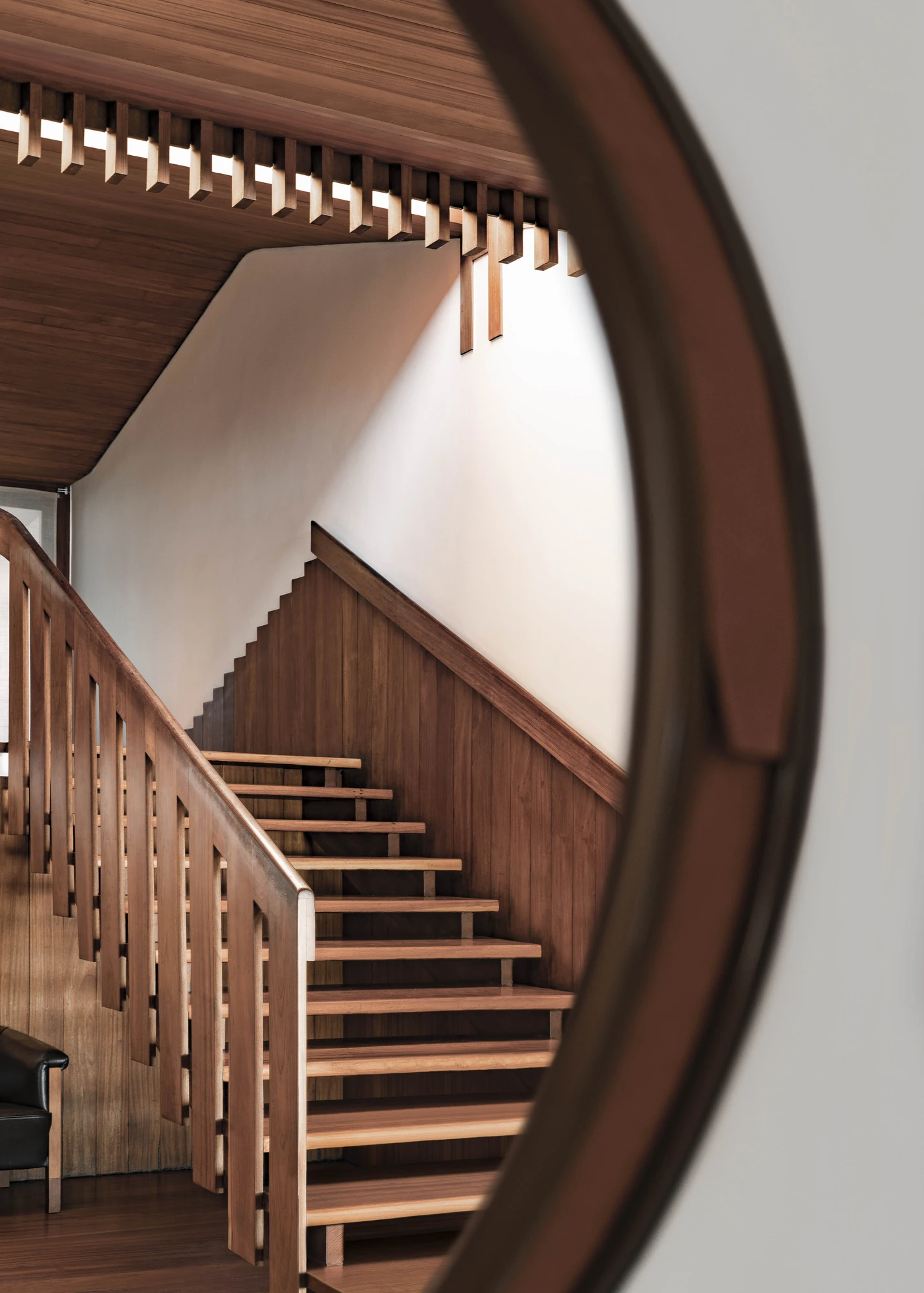
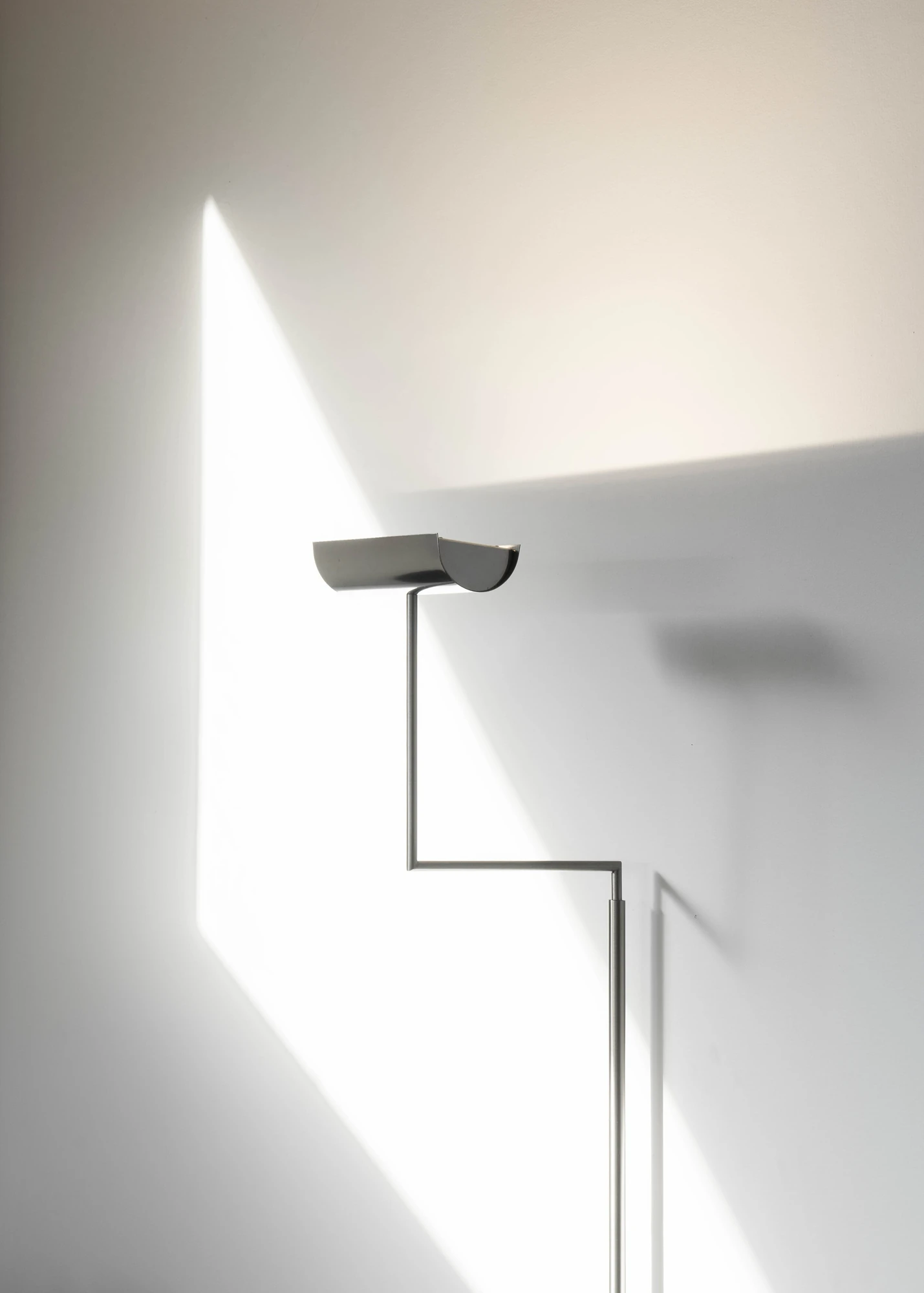
It works as a restaurant now, tables dressed in white cloth, broth served in a porcelain sea urchin. The handrail on the timber stair has been worn smooth. The detailing still rewards a slow look, from the notched balustrade to the row of timber fins releasing light along the ceiling to a slender uplighter throwing a shaft against bare plaster. Little of it has dated, because little of it was fashionable to begin with.