Thisispaper Community
Join today.
Enter your email address to receive the latest news on emerging art, design, lifestyle and tech from Thisispaper, delivered straight to your inbox.
Oops! Something went wrong while submitting the form.
Instant access to new channels
The top stories curated daily
Weekly roundups of what's important
Original features and deep dives
Exclusive community features
The New Chair
under the patronage of
Trauer Tragen, Carrying Grief by Antonia Fischer
Alexander Zaxarov
Oct 7, 2026

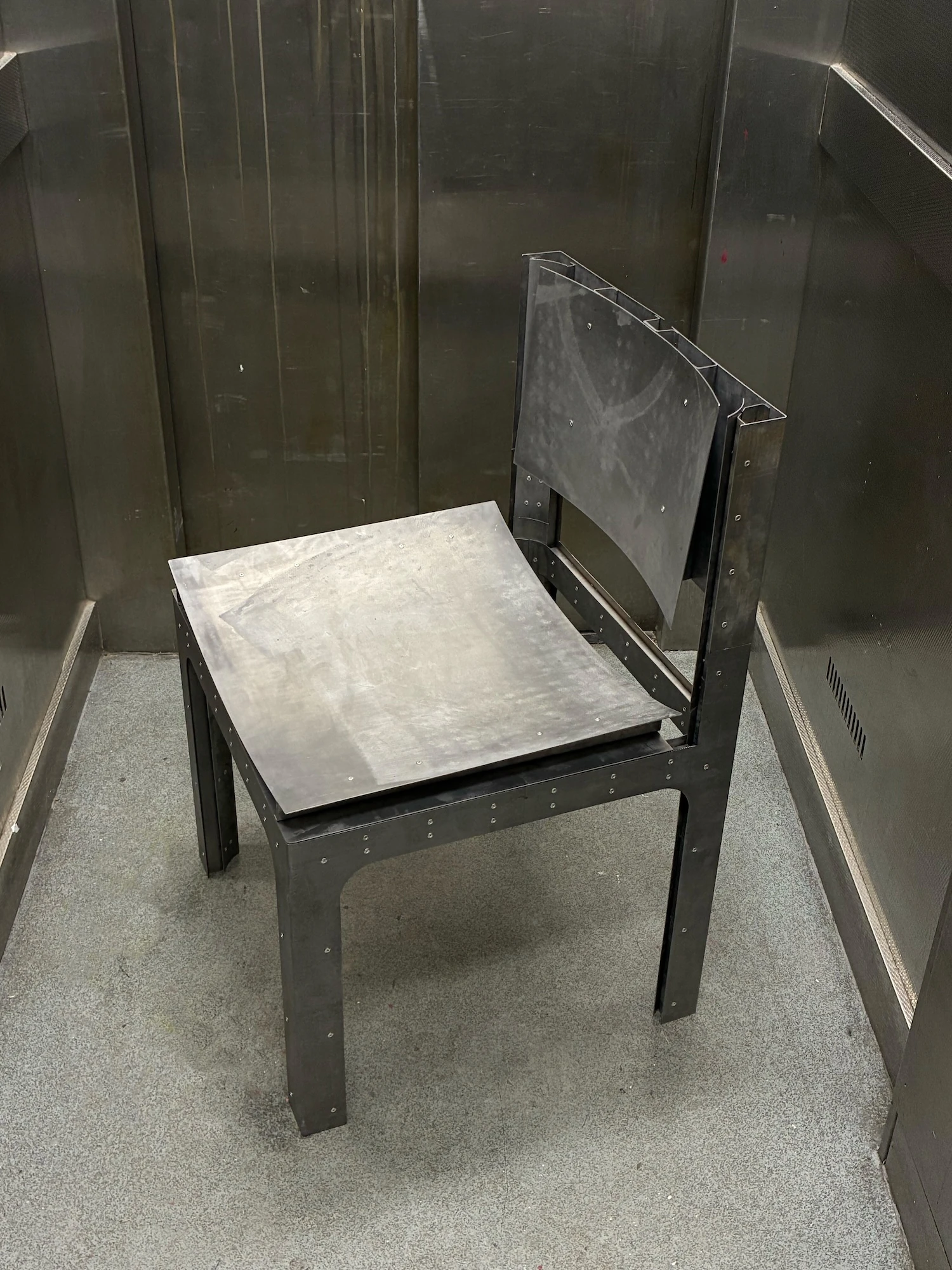
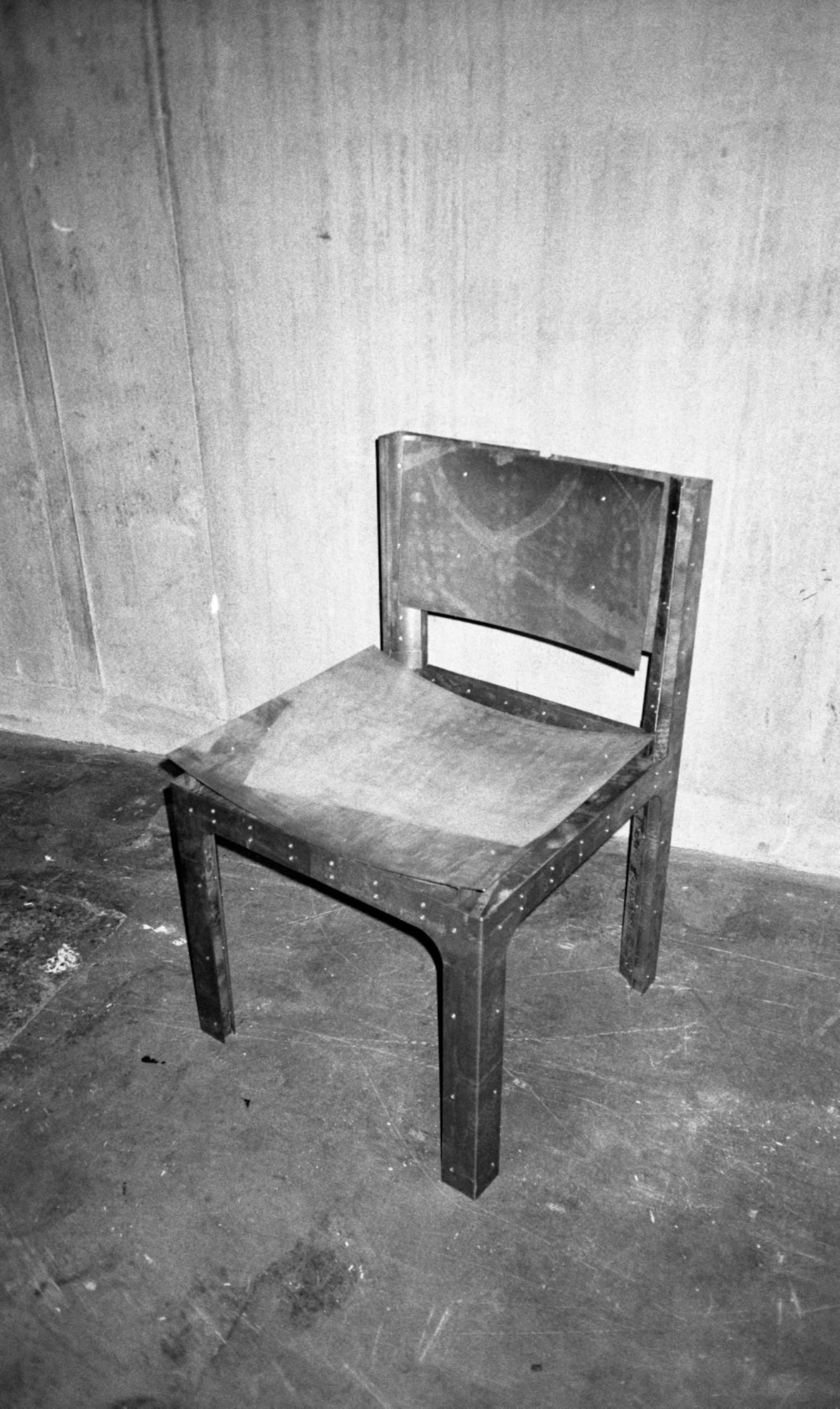
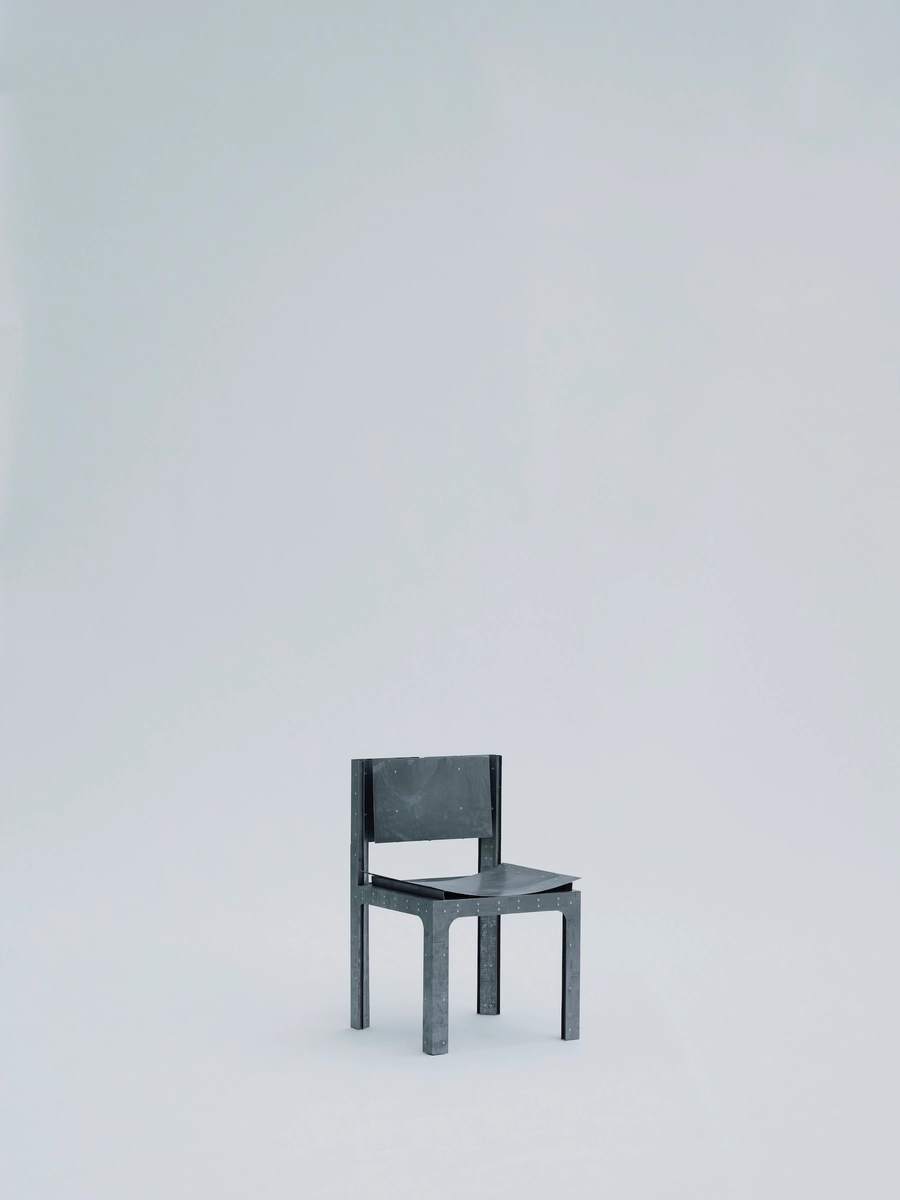
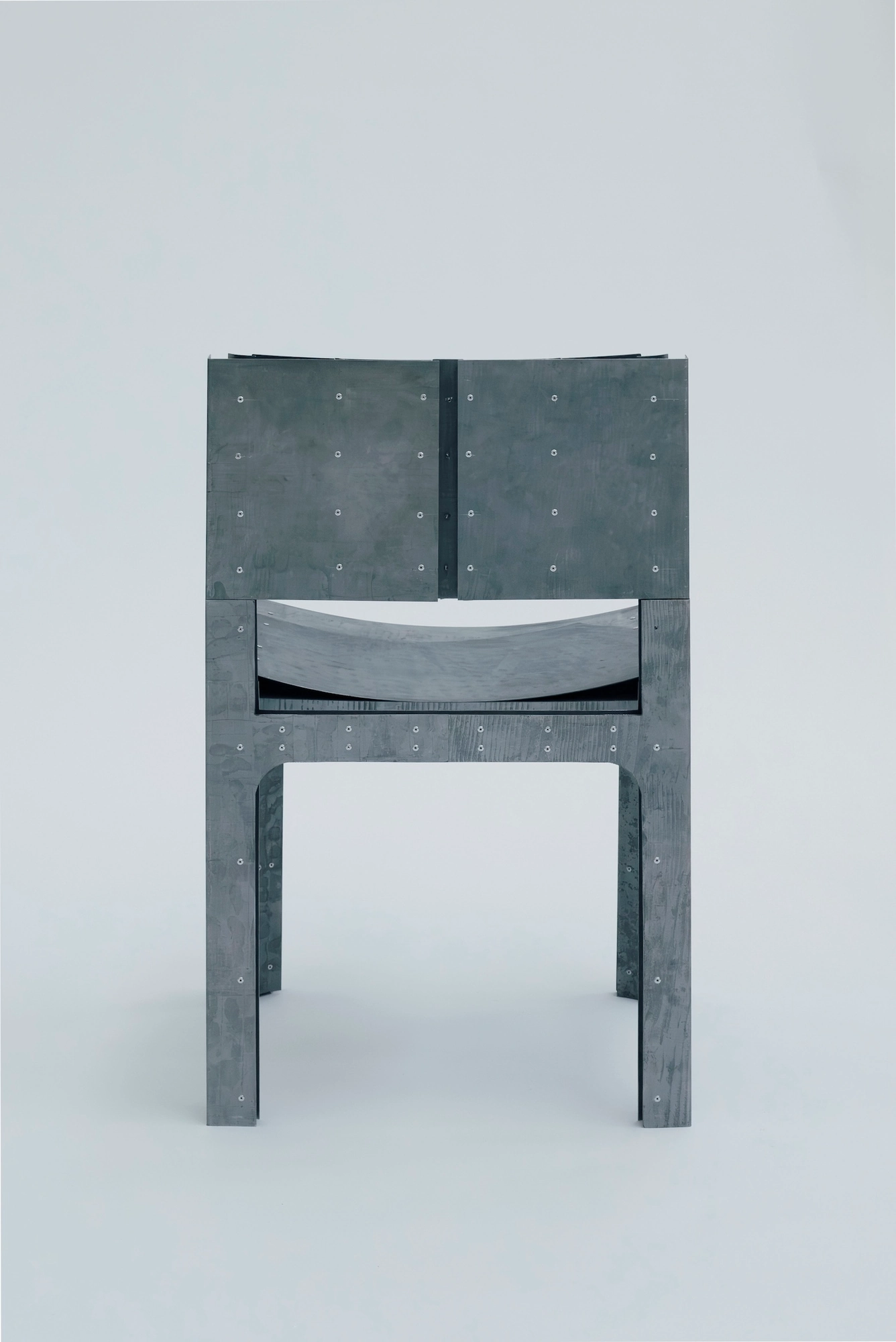
Grief changes how a home and its objects are read, and in London, Antonia Fischer works that shift into Trauer Tragen, Carrying Grief, a steel chair etched from castings of her grandparents’ home.

The chair began with a death. After Antonia Fischer’s grandfather passed, the atmosphere of her grandparents’ home shifted, its worn fabrics and surfaces still holding the traces of daily life. Fischer took silicone castings of those surfaces, textiles, walls, floors and objects, then carried the impressions into steel through acid etching.

Fischer describes a step where “acid captured a ghost-like moment while destroying parts of the surface.” The title carries the same double charge. In German, Trauer tragen means both to grieve and to wear mourning, and the work considers the burden of memory as emotional, but also as spatial and material. The chair becomes a threshold between presence and absence, where grief turns tangible.

The chair is made entirely of steel and held together with rivets, and every plate was etched on both sides. Each etching derives from moulds of that home, embedding its material traces directly into the structure. Bent and riveted into the form of a chair, the plates become what Fischer calls “a spatial translation of the home.”

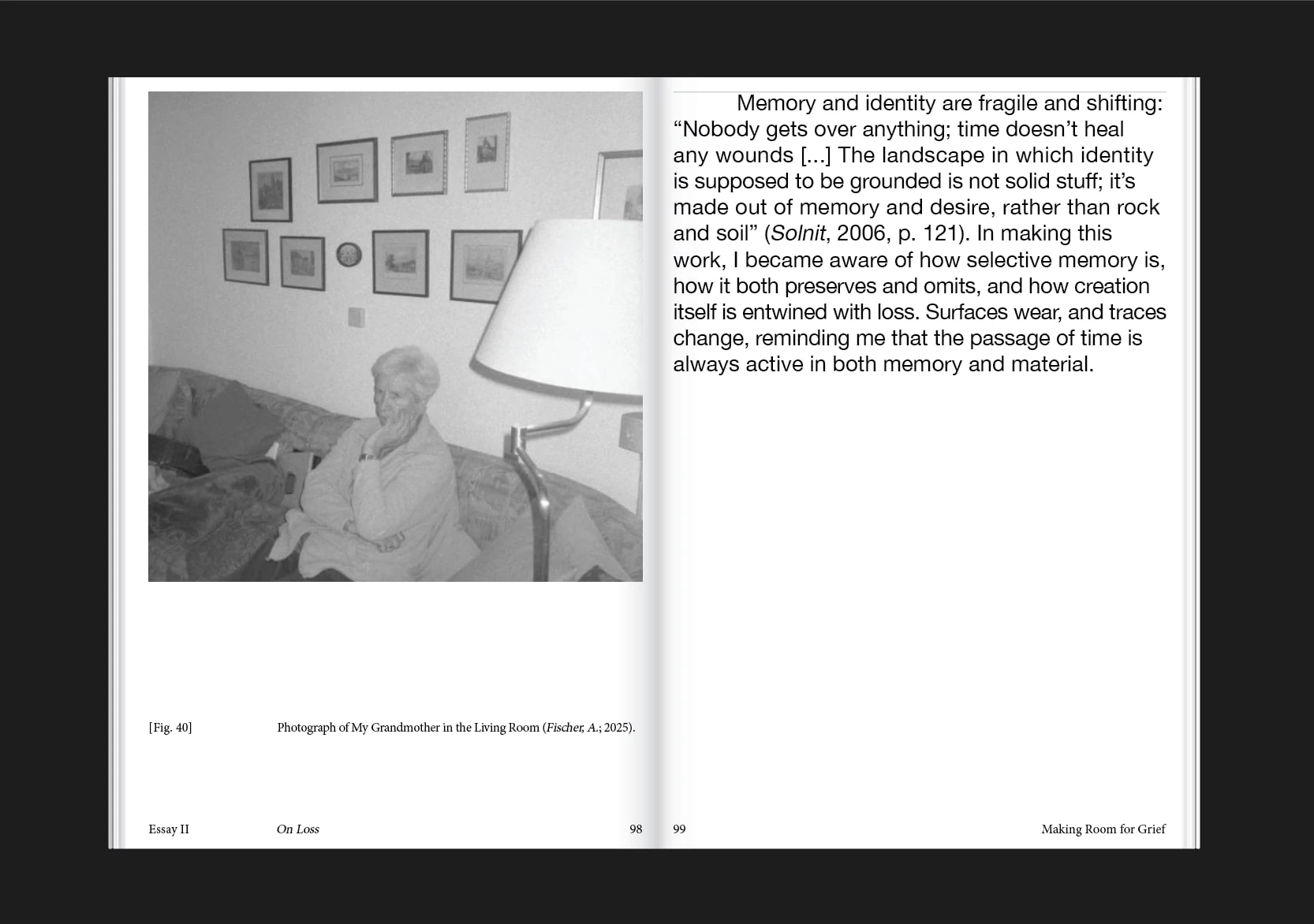
Fischer’s practice runs on phenomenology and a close attention to materiality, drawn to what she calls the “felt-space” of everyday rooms and objects. Here the making mirrors grief, an ongoing negotiation between holding on and letting go. A book accompanies the chair, gathering process documentation, spatial mappings and a set of essays on loss and the difficulty of releasing what remains.

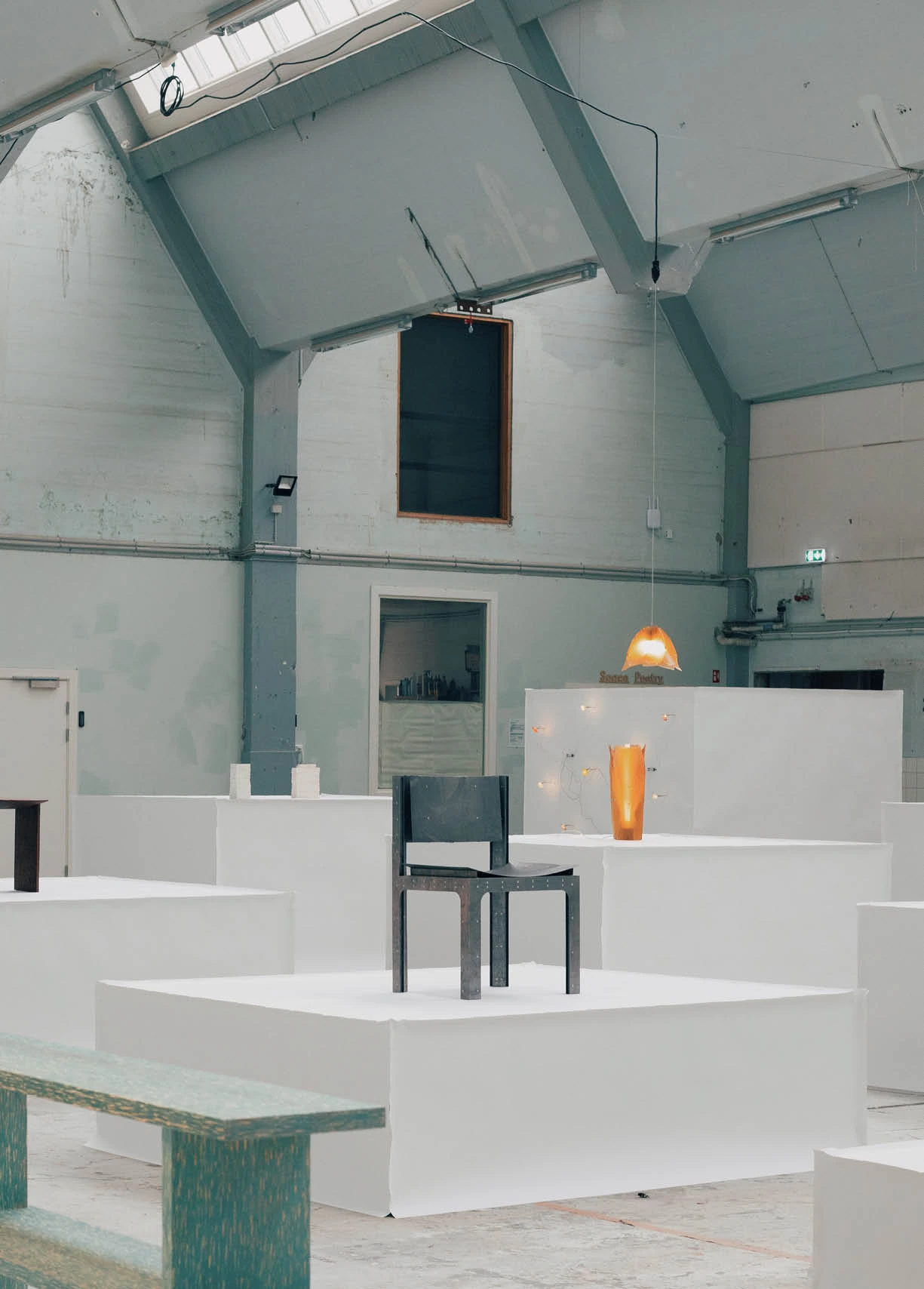
Made as her graduation project for an MA at the University of the Arts London, the chair was later shown with UKURANT at 3 Days of Design in Copenhagen. Fischer writes that “memories can never be recreated, only translated to be slowly lost.” Rather than reconstructing the past, the work translates what remains into a physical form of mourning.
Interested in Showcasing Your Work?
‍

If you would like to feature your works on Thisispaper, please visit our Submission page and sign up to Thisispaper+ to submit your work. Once your submission is approved, your work will be showcased to our global audience of 2 million art, architecture, and design professionals and enthusiasts.
No items found.
Less, with more behind it.
Explore guides. Search the archive. Walk the atlas.
Become a Thisispaper+ member today to unlock full access to our magazine, advanced tools, and support our work.
Get two months FREE
with annual subscription
Less, with more behind it.
Explore guides. Search the archive. Walk the atlas.
Become a Thisispaper+ member today to unlock full access to our magazine, advanced tools, and support our work.
Get two months FREE
with annual subscription
No items found.
Alexander Zaxarov
Oct 7, 2026

Grief changes how a home and its objects are read, and in London, Antonia Fischer works that shift into Trauer Tragen, Carrying Grief, a steel chair etched from castings of her grandparents’ home.

The chair began with a death. After Antonia Fischer’s grandfather passed, the atmosphere of her grandparents’ home shifted, its worn fabrics and surfaces still holding the traces of daily life. Fischer took silicone castings of those surfaces, textiles, walls, floors and objects, then carried the impressions into steel through acid etching.

Fischer describes a step where “acid captured a ghost-like moment while destroying parts of the surface.” The title carries the same double charge. In German, Trauer tragen means both to grieve and to wear mourning, and the work considers the burden of memory as emotional, but also as spatial and material. The chair becomes a threshold between presence and absence, where grief turns tangible.

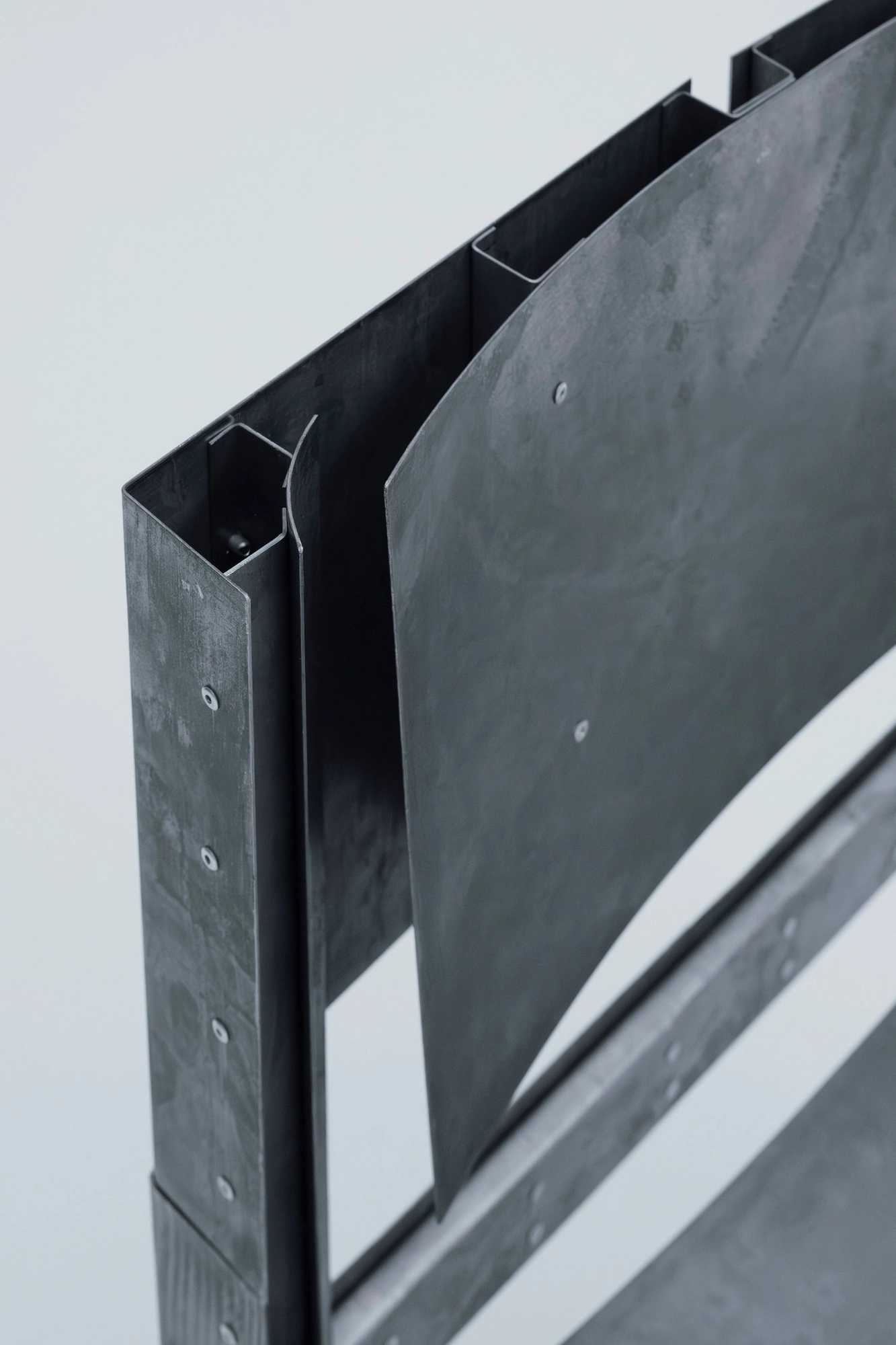
The chair is made entirely of steel and held together with rivets, and every plate was etched on both sides. Each etching derives from moulds of that home, embedding its material traces directly into the structure. Bent and riveted into the form of a chair, the plates become what Fischer calls “a spatial translation of the home.”

Fischer’s practice runs on phenomenology and a close attention to materiality, drawn to what she calls the “felt-space” of everyday rooms and objects. Here the making mirrors grief, an ongoing negotiation between holding on and letting go. A book accompanies the chair, gathering process documentation, spatial mappings and a set of essays on loss and the difficulty of releasing what remains.

Made as her graduation project for an MA at the University of the Arts London, the chair was later shown with UKURANT at 3 Days of Design in Copenhagen. Fischer writes that “memories can never be recreated, only translated to be slowly lost.” Rather than reconstructing the past, the work translates what remains into a physical form of mourning.
Interested in Showcasing Your Work?
‍

If you would like to feature your works on Thisispaper, please visit our Submission page and subscribe to Thisispaper+. Once your submission is approved, your work will be showcased to our global audience of 2 million art, architecture, and design professionals and enthusiasts.
Thisispaper+
The New Chair
65+ Projects
Web Access
Link to Maps
The smallest brief in the discipline. Bent beech, riveted aluminium, forged steel, salvaged timber set in molten aluminum, plywood veneer, flat-pack logic. Chairs that lean into process, into material memory, into sculpture; chairs that refuse the distinction between furniture and object. Argued out one piece at a time — because the chair is where form and function meet most visibly, and most honestly.
The chair as argument. Backrest, seat, four legs, and every generation's question of what design is.
Explore
The New Chair

Join Thisispaper+
Unlock access to 2500 stories, curated guides + editions, and share your work with a global network of architects, artists and designers who are shaping the future.
Get two months FREE
with annual subscription
Travel Guides
Immerse yourself in timeless destinations, hidden gems, and creative spaces—curated by humans, not algorithms.
Explore All Guides +
Submission Module
Submit your project and gain the chance to showcase your work to our worldwide audience of over 2M architects, designers, artists, and curious minds.
Learn More+
Curated Editions
Dive deeper into carefully curated editions, designed to feed your curiosity and foster exploration.
Off-the-Grid
Jutaku
Sacral Journey
minimum
The New Chair
Explore All Editions +
Atlas
A new and interactive way to explore the most inspiring places around the world.
Interactive map
Linked to articles
450+ curated locations
Google + Apple directions
Smart filters
Subscribe to Explore+
Become a Thisispaper+ member today to unlock full access to our magazine, submit your project and support our work.
Join Thisispaper+Join Thisispaper+
€9/month
Get two months FREE
with annual subscription