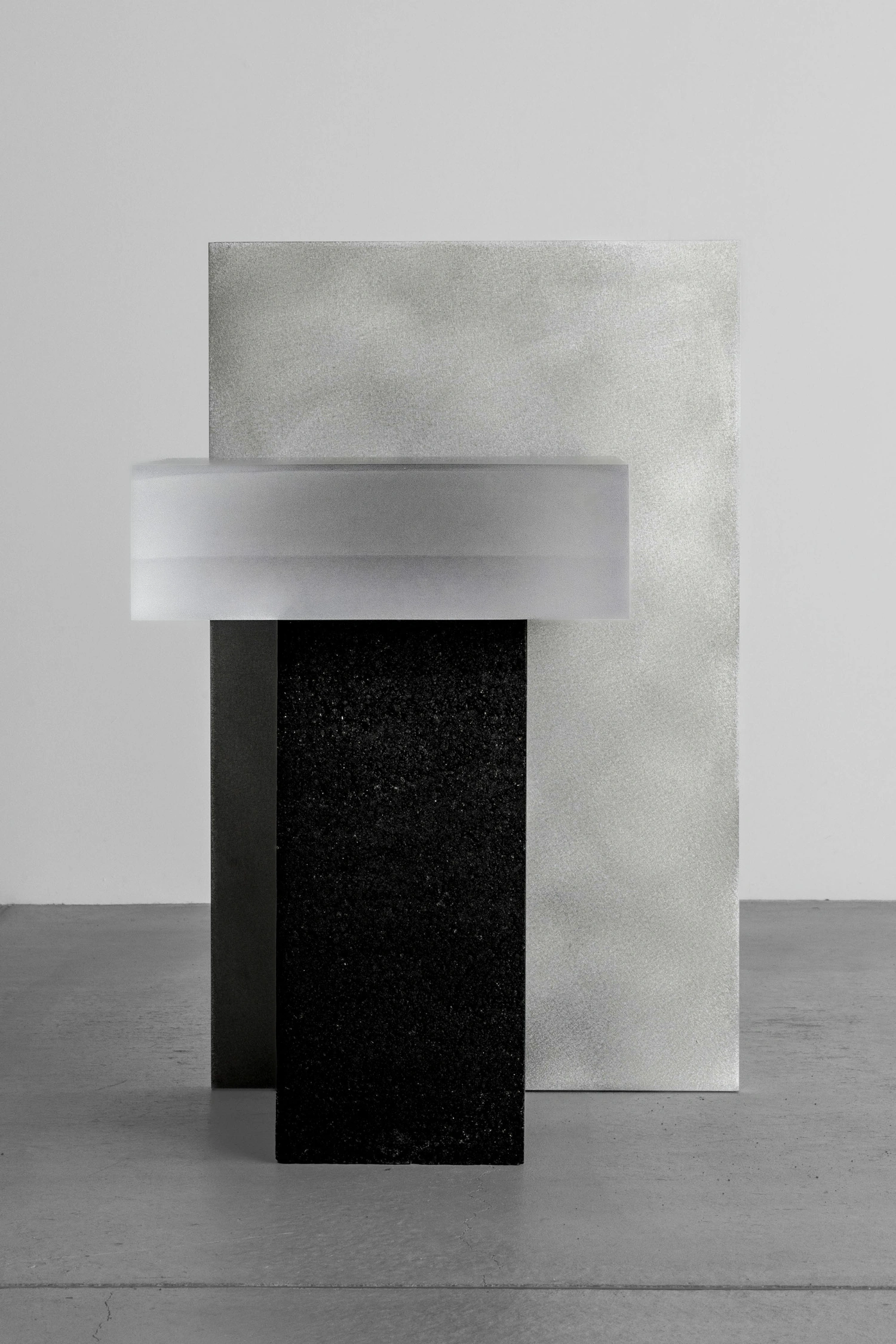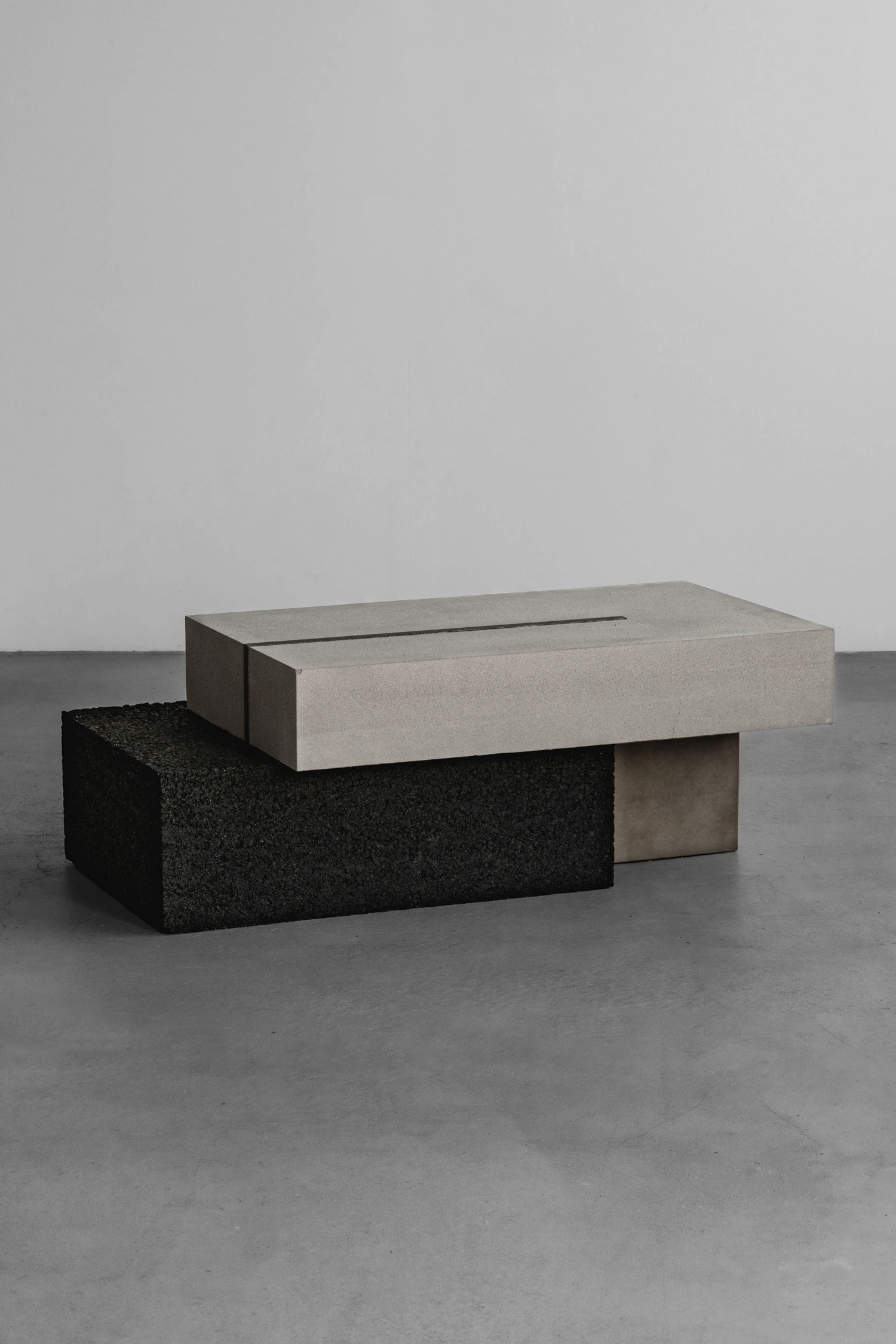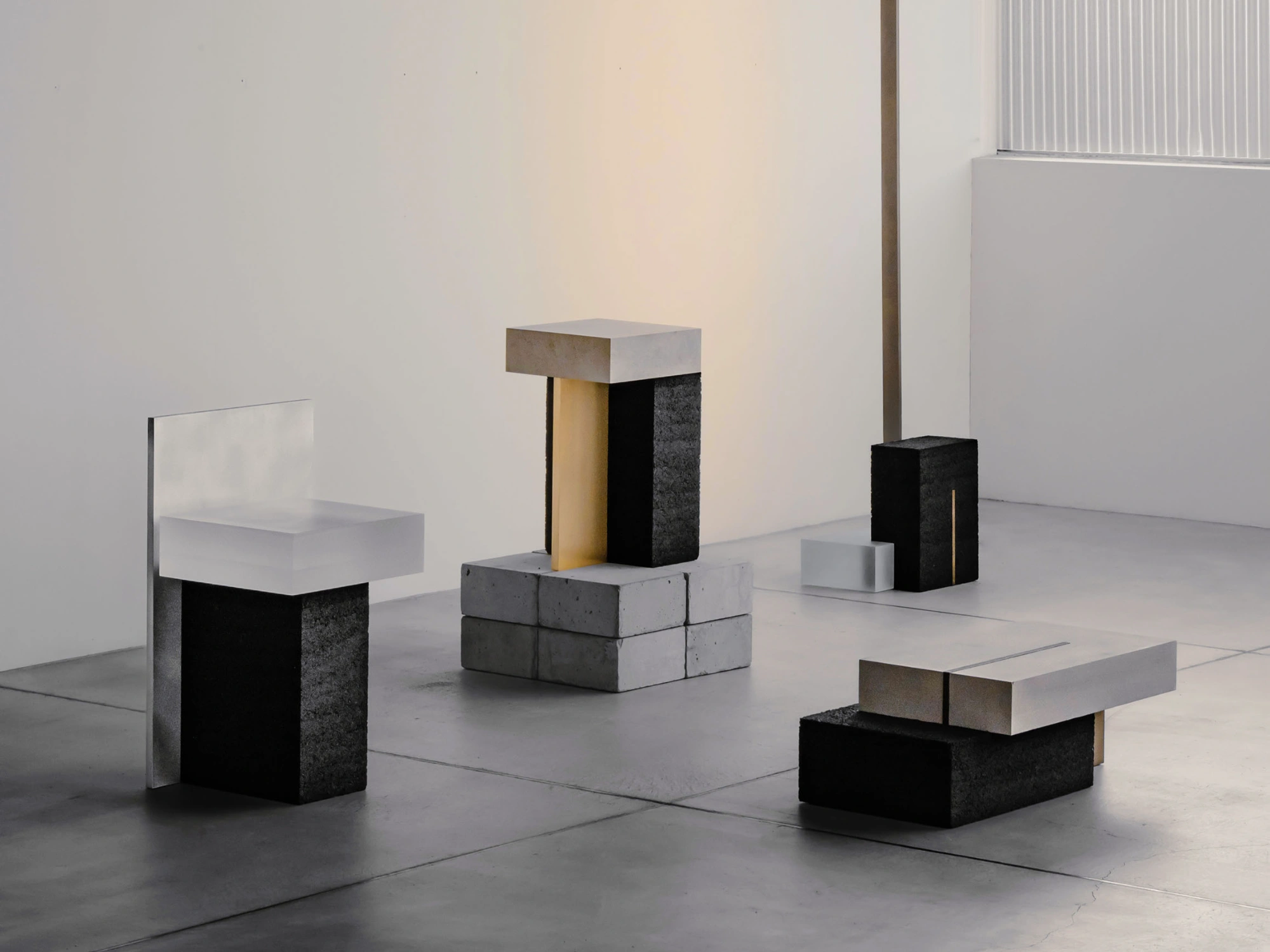
So Koizumi’s "As" collection reimagines asphalt as a connective force, uniting stone, metal, and resin into sculptural furniture that feels both ancient in logic and sharply contemporary.
There is a quiet hum to So Koizumi’s new collection, a sense that each piece is less an object than a negotiated truce between materials. Asphalt, conventionally cast as a ubiquitous background element of modern life, is recentered here as an active participant. Not the inert crust of city infrastructure, but a primordial binder—an intermediary with a long memory. Koizumi returns asphalt to its earliest logic: something that holds different worlds together.
Across the stools, tables, and lighting elements, volumes of stone, metal, resin, and asphalt intersect with a kind of deliberate awkwardness, as though the materials had been asked to meet halfway. The compositions feel almost architectural—stacked masses, shifted tectonics, cold planes offset by porous black blocks. Asphalt appears not as surface but as structure: a foundational anchor that both grounds and accentuates the more refined elements resting upon it. In the gallery’s calm light, these contrasts read like slow, spatial conversations.
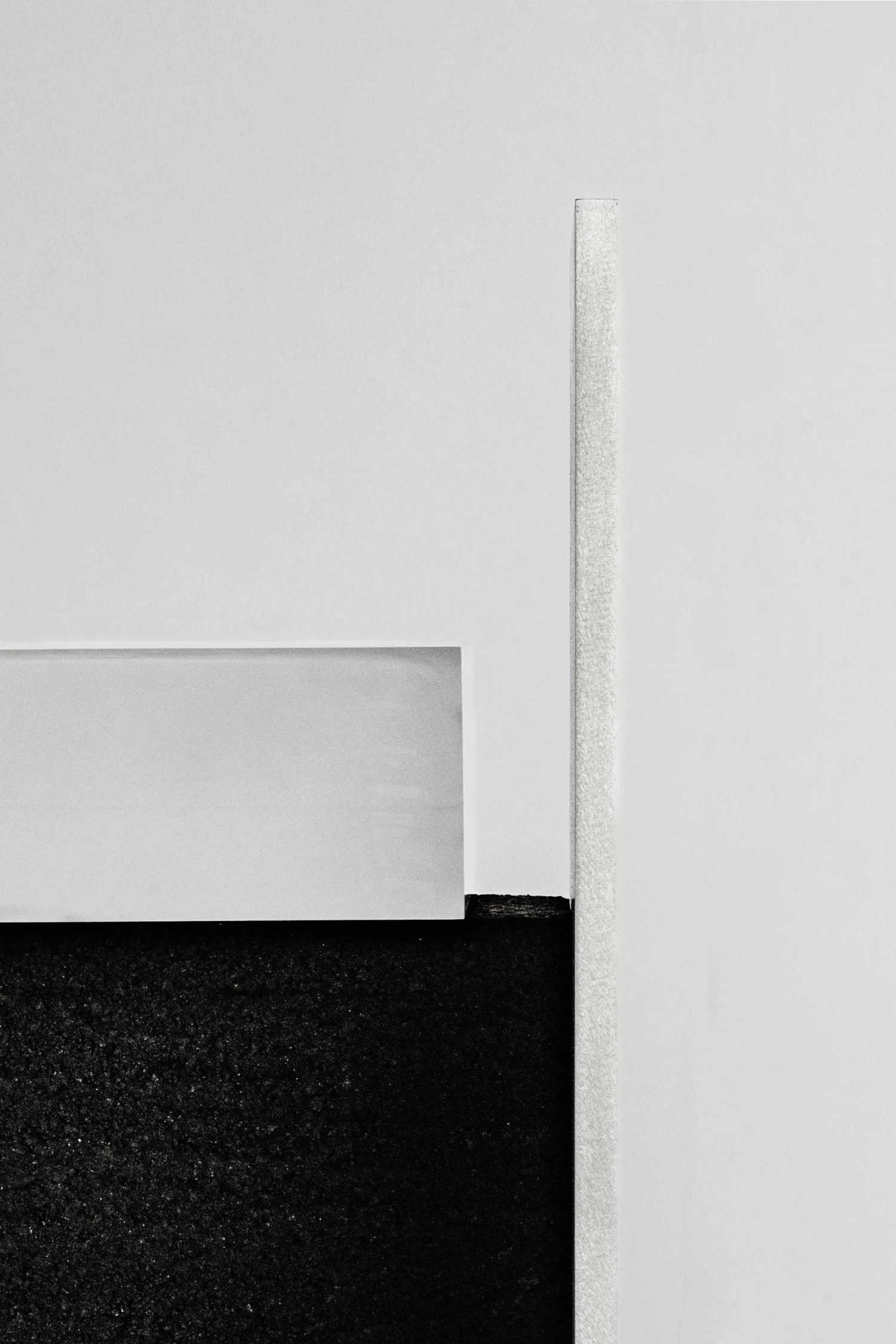
What distinguishes the series is the sense of material self-awareness. Koizumi treats fabrication not merely as assembly but as a generative act—shaping asphalt by hand, tuning its texture through repeated trials. The surfaces bear the evidence of that process; the asphalt’s rough, granular density stands in tension with the sleek weight of metal or the ghostly translucence of cast resin. You sense the artist feeling his way through each junction, prioritizing the moment where materials acknowledge one another.
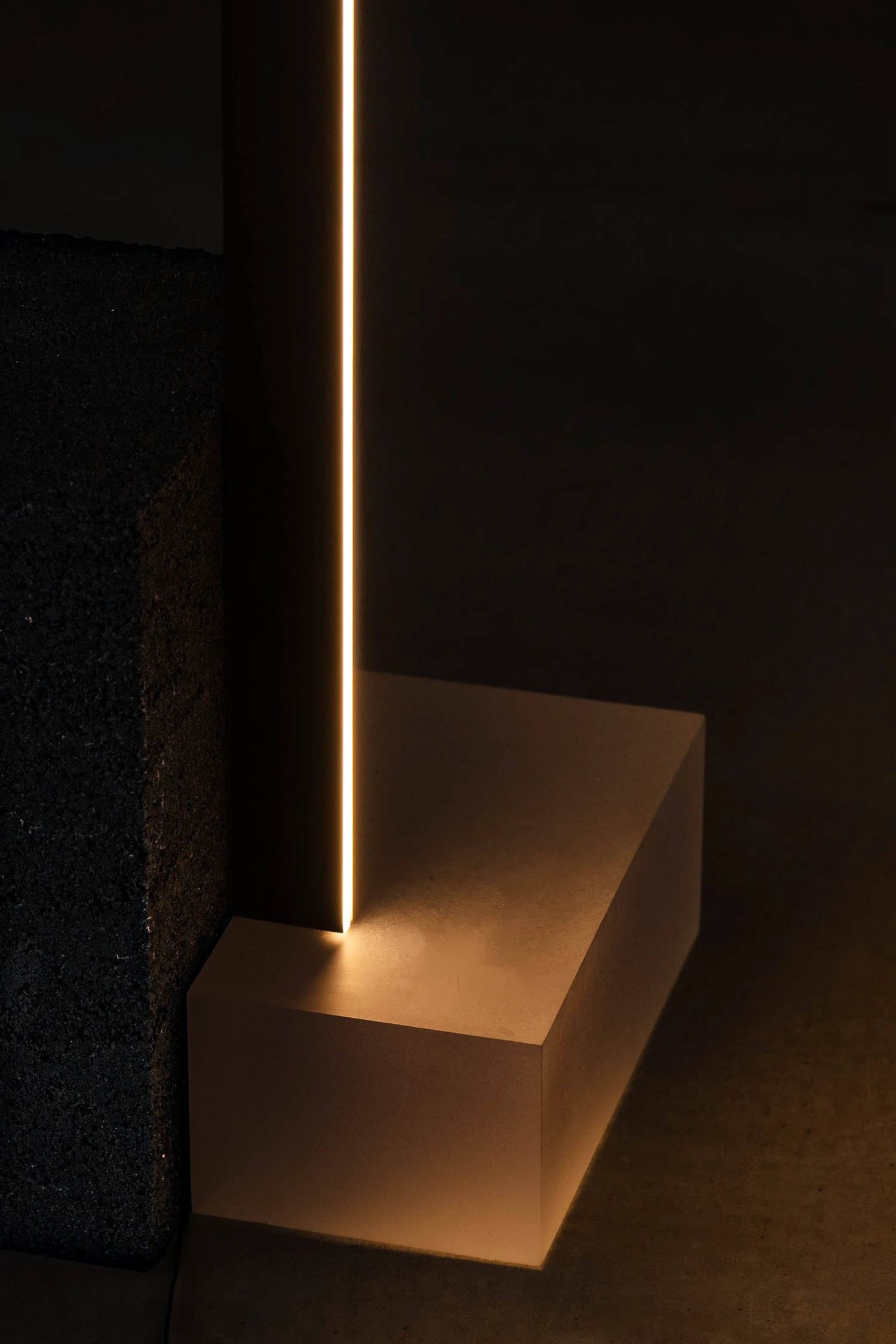
The lighting pieces extend this dialogue vertically, transforming asphalt into an improbable pedestal for slender luminous forms. Their quiet presence suggests a recalibration of balance—light emerging from something traditionally seen as heavy, opaque, industrial. Throughout the collection, Koizumi’s experimental instinct is apparent: he treats materials not as fixed categories but as energies with their own gravitational fields, capable of generating new relationships through contact.
Taken together, As is a thoughtful inquiry into how materials negotiate coexistence. It reflects a studio practice grounded in reflection and tactile experimentation, proposing a future for furniture where connection—rather than function alone—becomes the central design gesture. Asphalt, once overlooked, becomes a hinge between elements, a subtle force binding disparate worlds into a shared equilibrium.