Thisispaper Community
Join today.
Enter your email address to receive the latest news on emerging art, design, lifestyle and tech from Thisispaper, delivered straight to your inbox.
Oops! Something went wrong while submitting the form.
Instant access to new channels
The top stories curated daily
Weekly roundups of what's important
Original features and deep dives
Exclusive community features
Sep 18, 2026

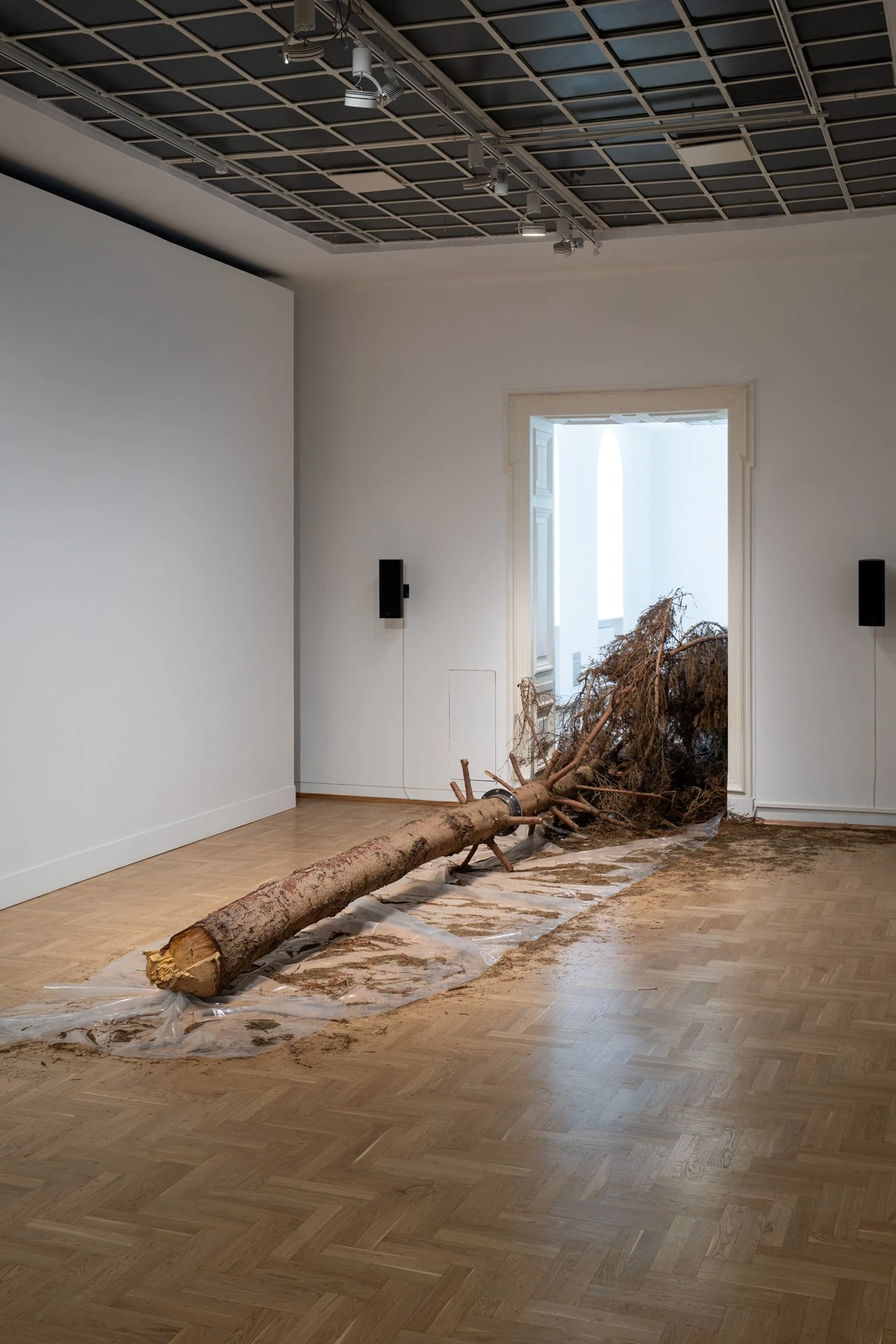
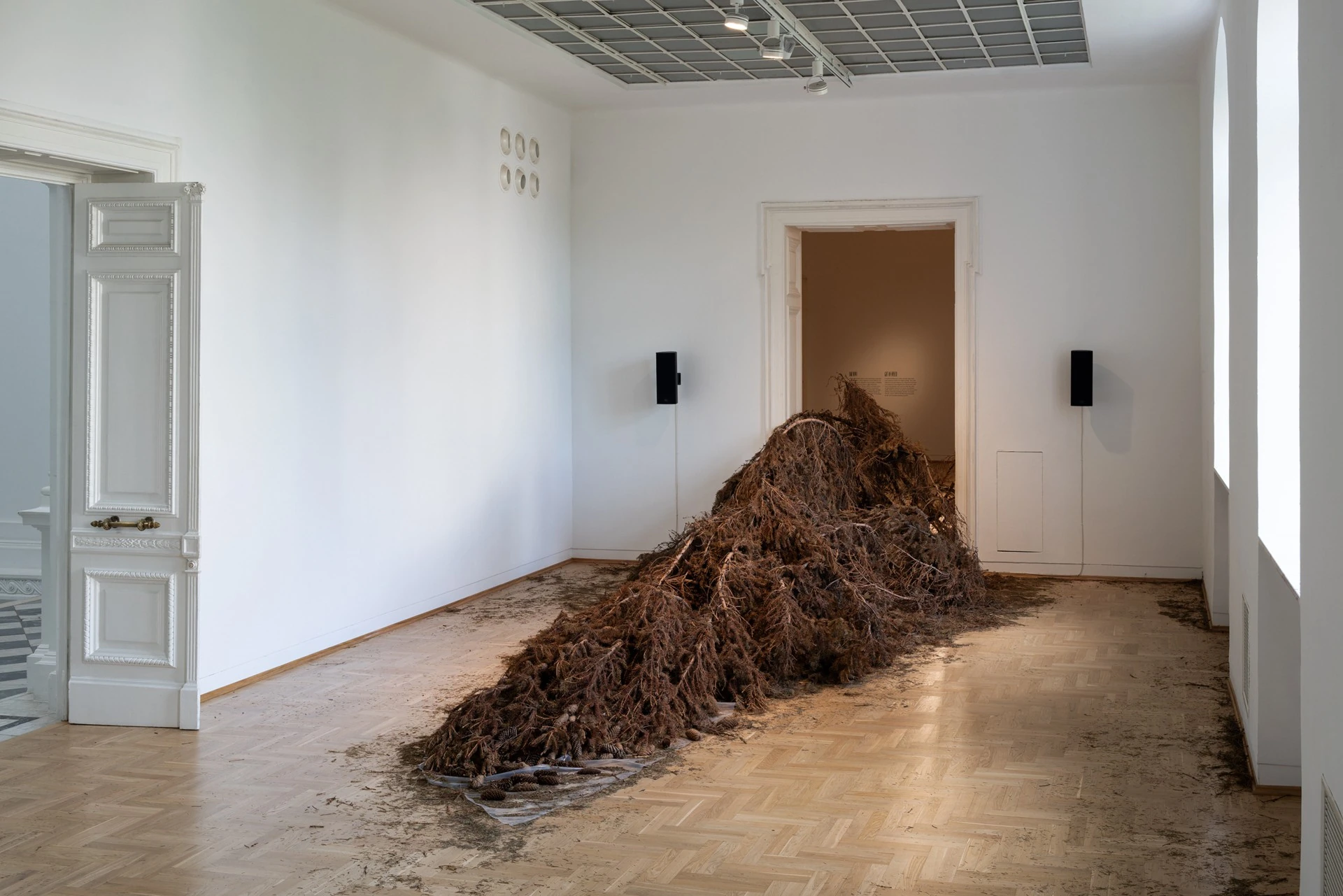
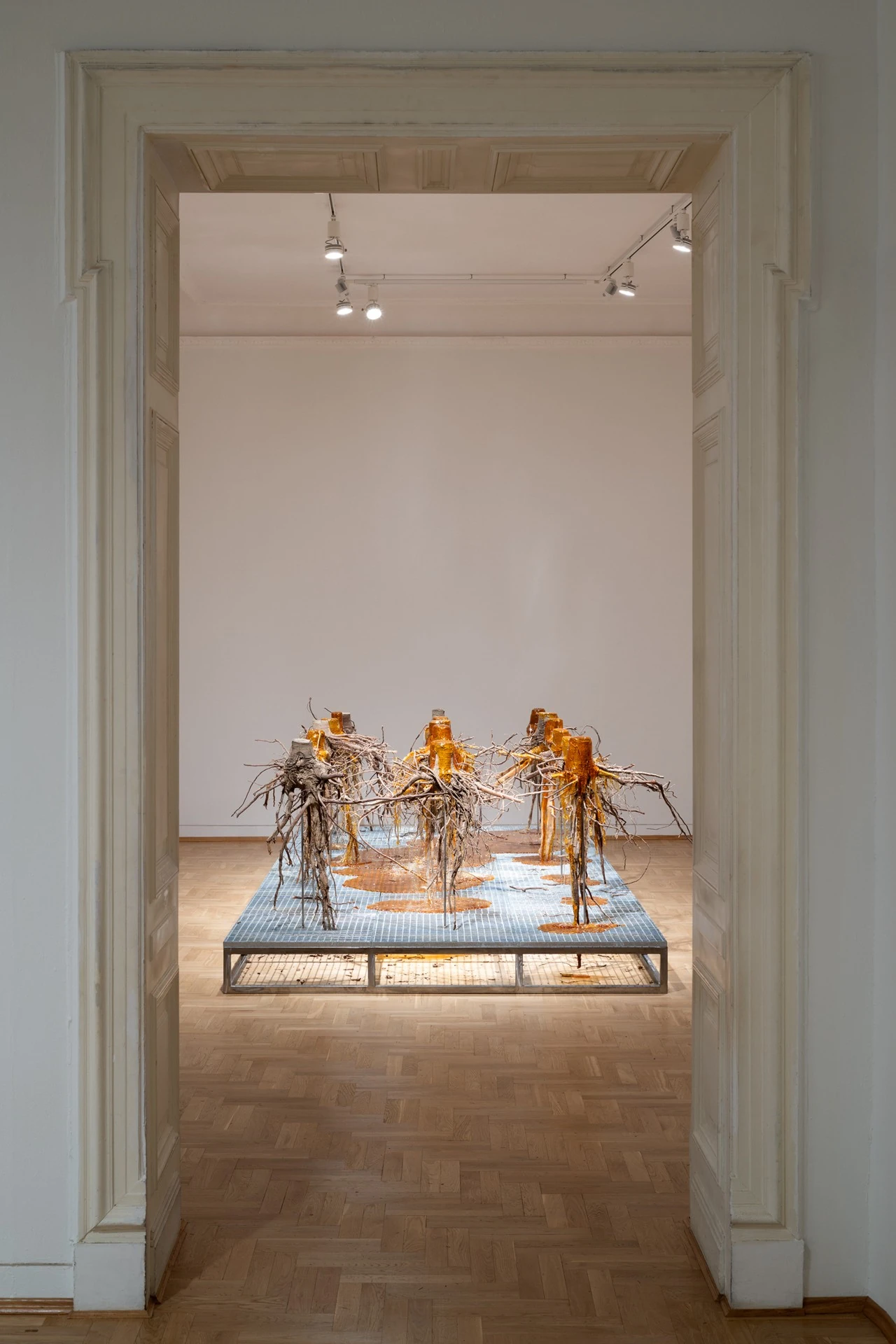
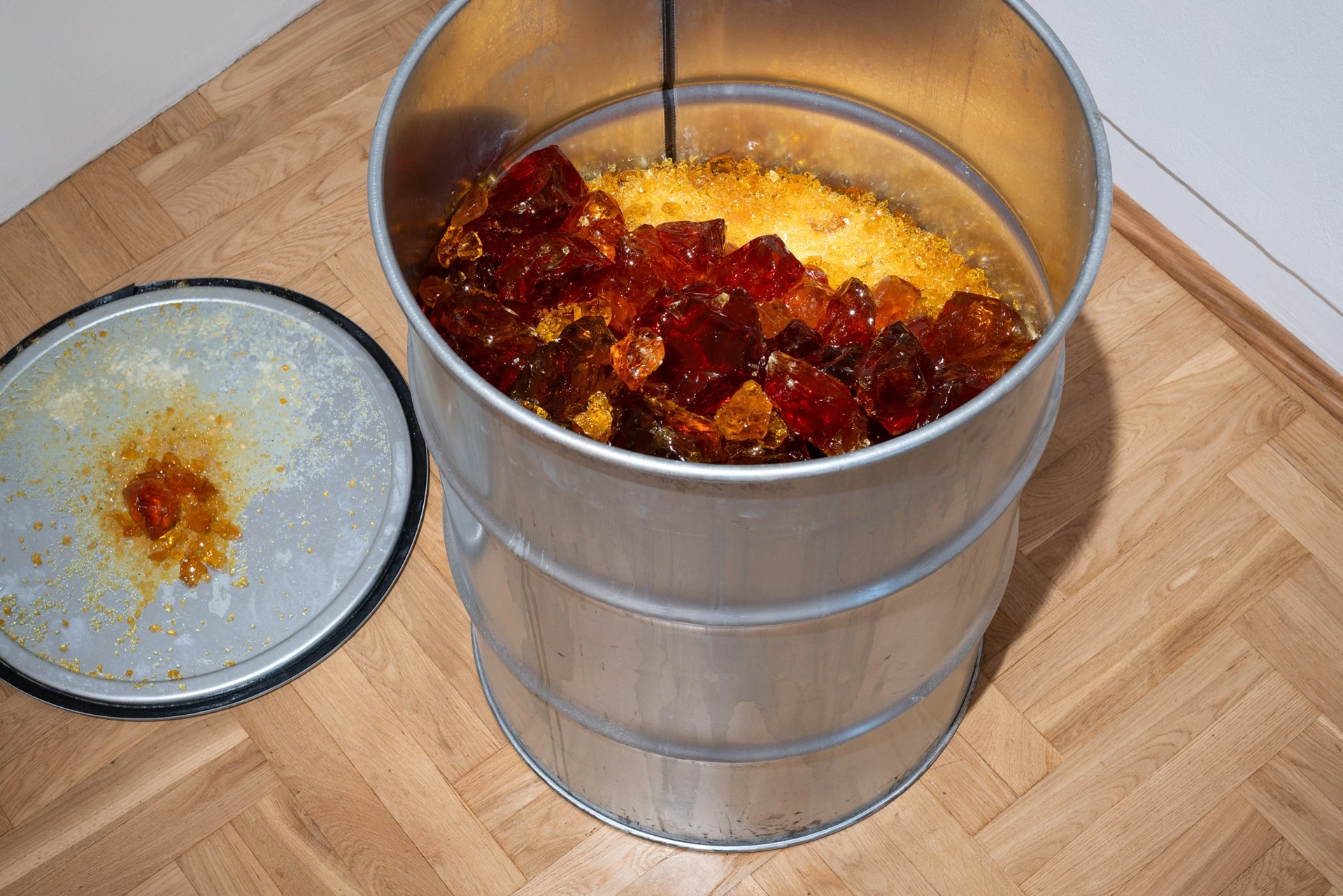
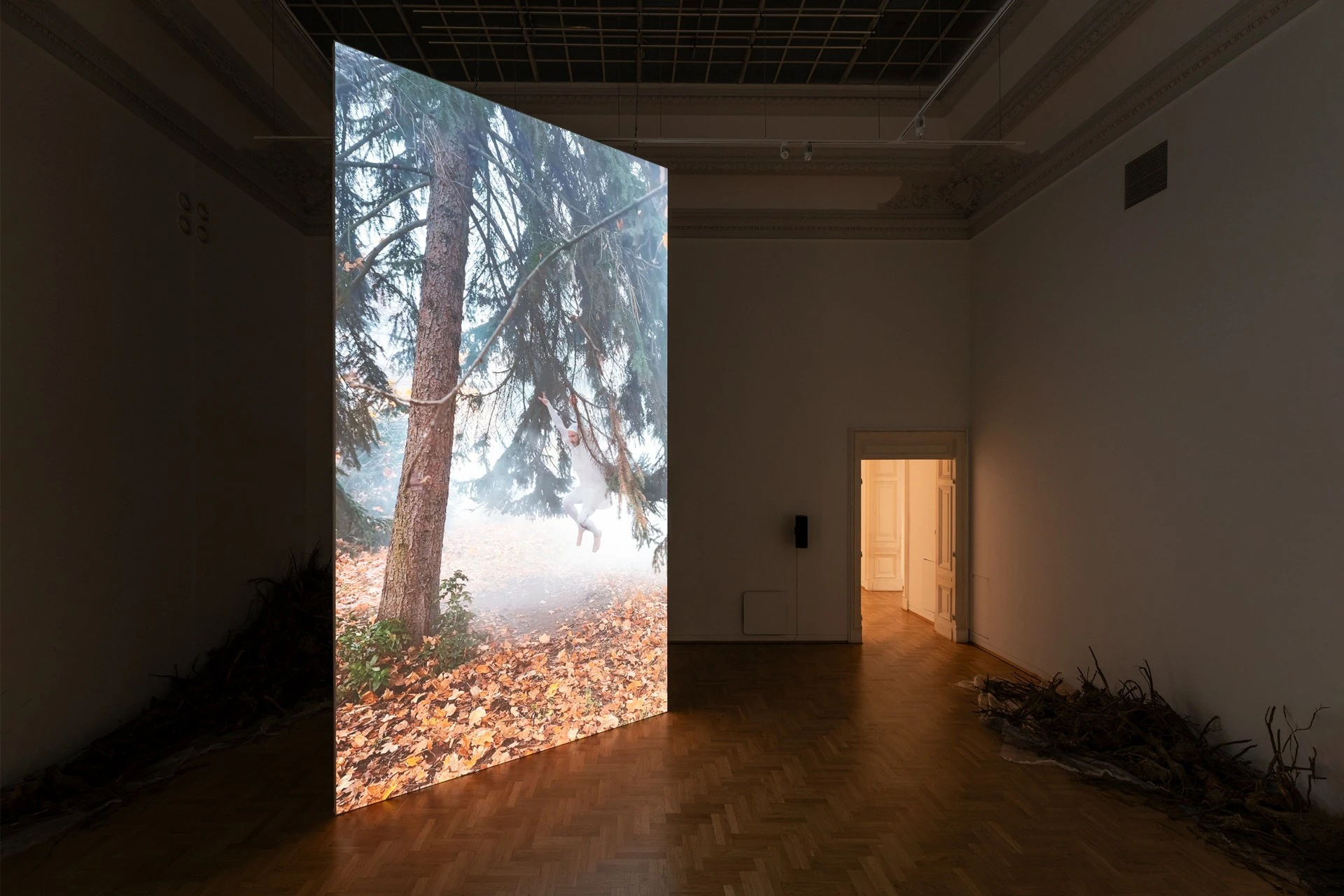
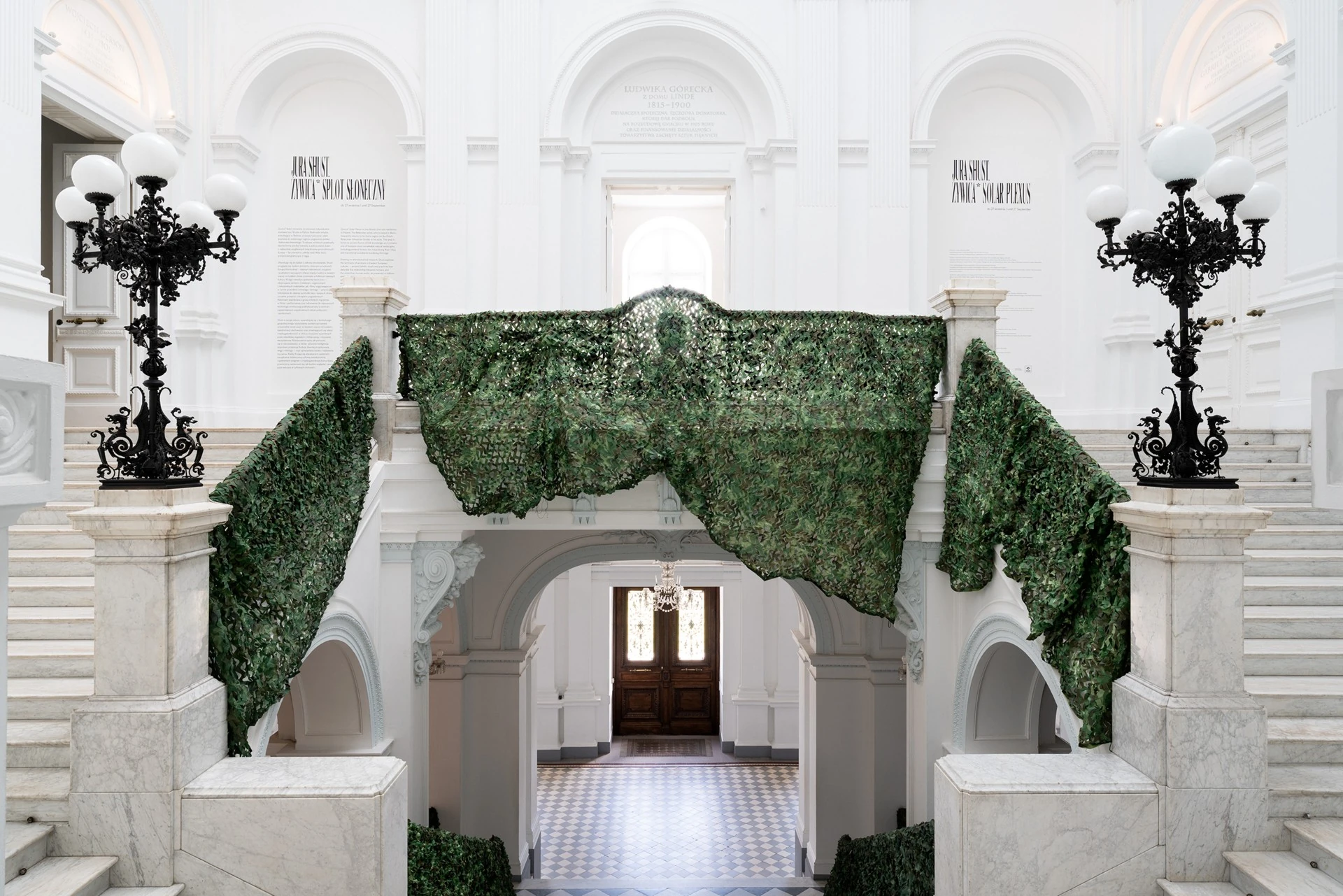
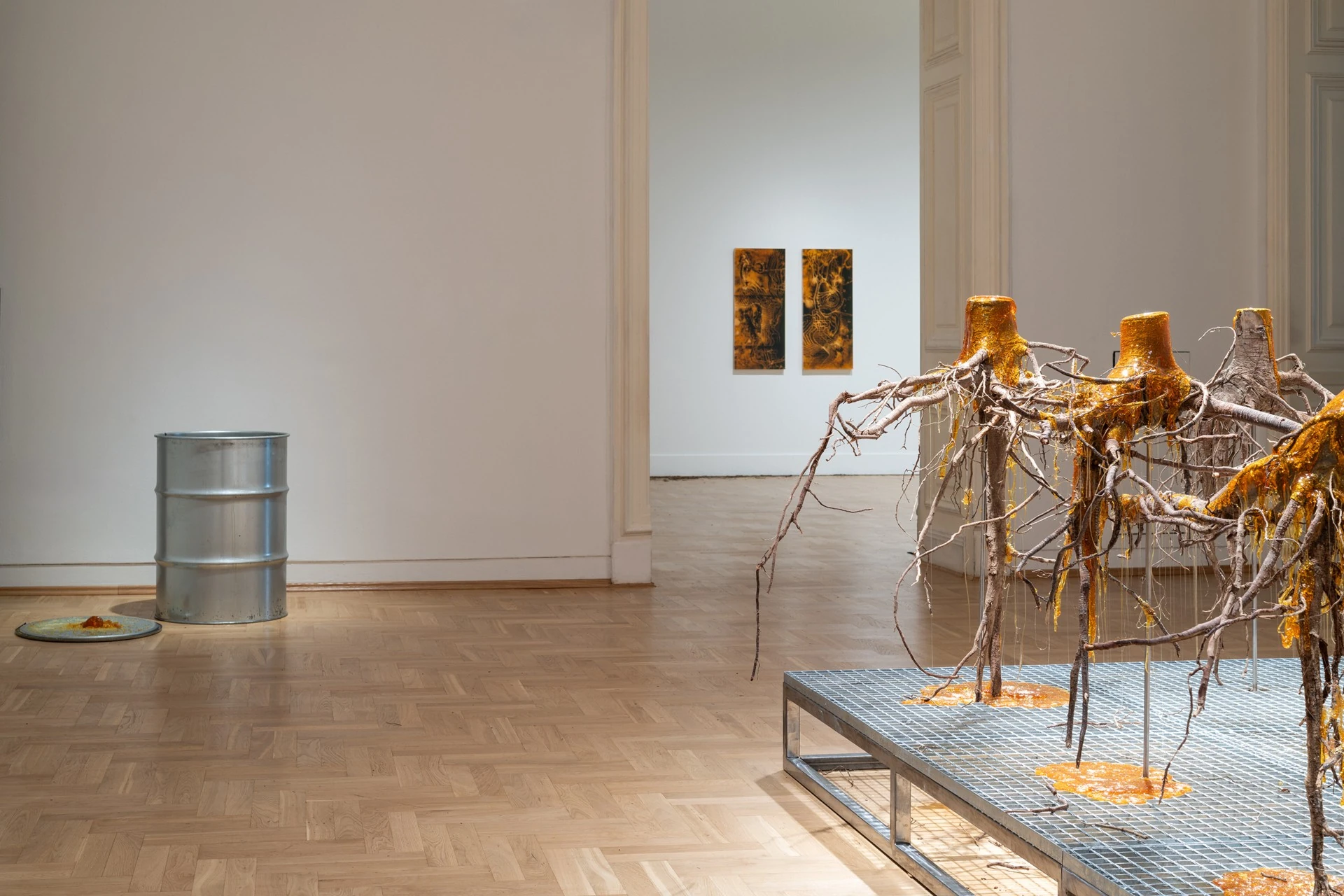
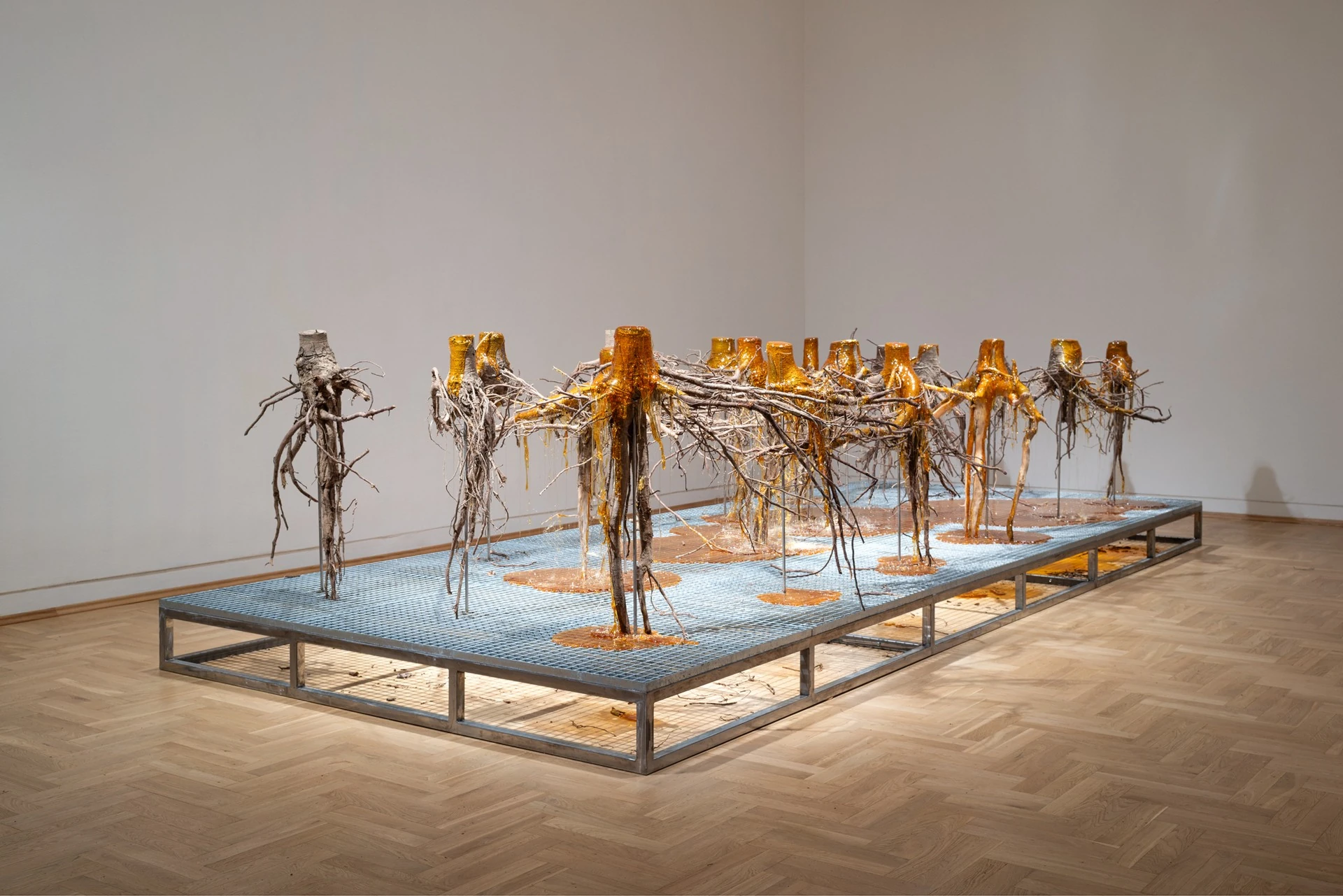
At Warsaw’s Zachęta, the National Gallery of Art, Jura Shust builds Żywica* Solar Plexus around a felled spruce, its severed roots sealed in tree resin on a raised metal platform.

Żywica* Solar Plexus is Jura Shust’s first solo exhibition in Poland. A Belarusian artist long based in Berlin, he keeps returning to the borderlands where Poland, Belarus and Lithuania meet, a region once inhabited by people who called themselves tutejsi, the locals, claiming no clear national identity. It holds some of Europe’s last primeval woods and forests fading into the taiga. Through ethnobotany, Shust reads the surviving traces of animism in the region’s folk culture.

In many Slavic and Finno-Ugric systems the forest was a sacred, threshold place. Against the dualism splitting the world into safe settlement and hostile wood, as the curator Michalina Sablik writes, Belarusians held “the idea of a benevolent forest, a gift from God.” Every person had a corresponding tree, its crown a home for the soul after death, its trunk an axis between the living and the dead. The spruce carried apotropaic force, its resinous wood cut into coffins and domowiny, grave houses.

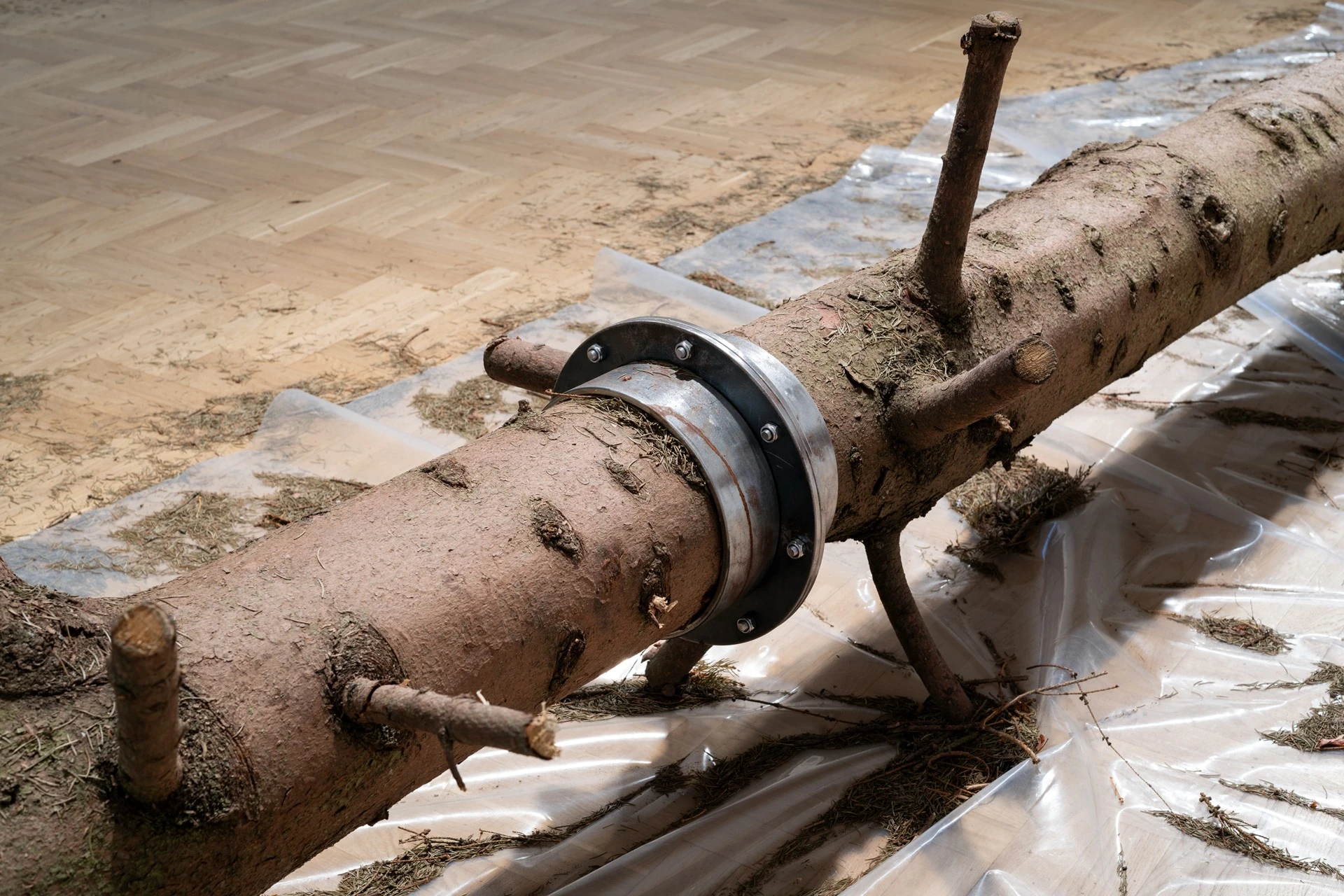
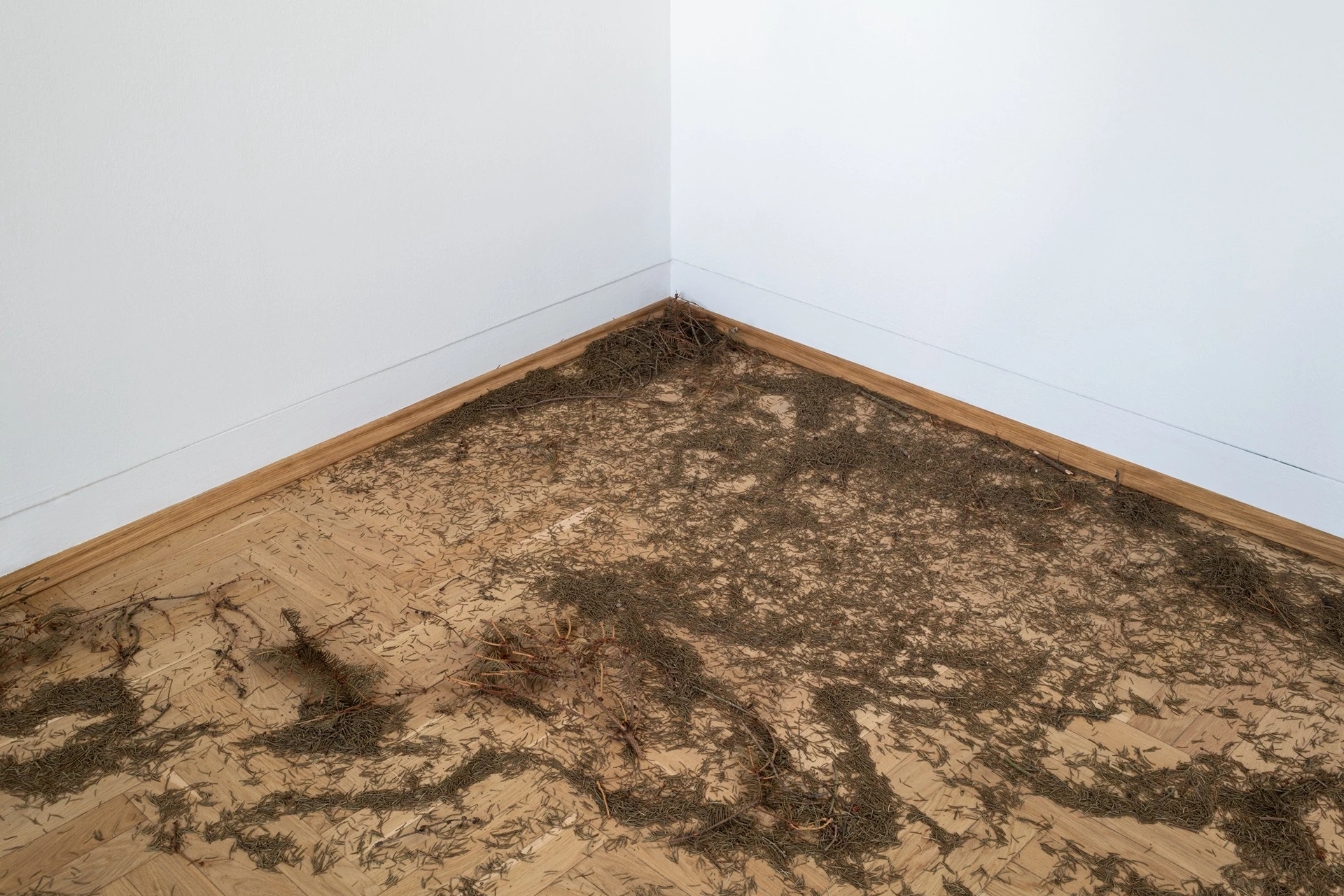
Świerk posadzony obok domu, Spruce Planted Next to a House, made for Zachęta, takes up the World Tree, the axis mundi of the region’s cosmology. The felled spruce comes from Mazovia, where the species is now planted close to houses in defiance of the old warnings. Obtained legally, already marked for felling for its age and disease, it was fumigated before entering the gallery. The curator reads that disinfection as an industrial-ritual gesture, a passage from living landscape to object.

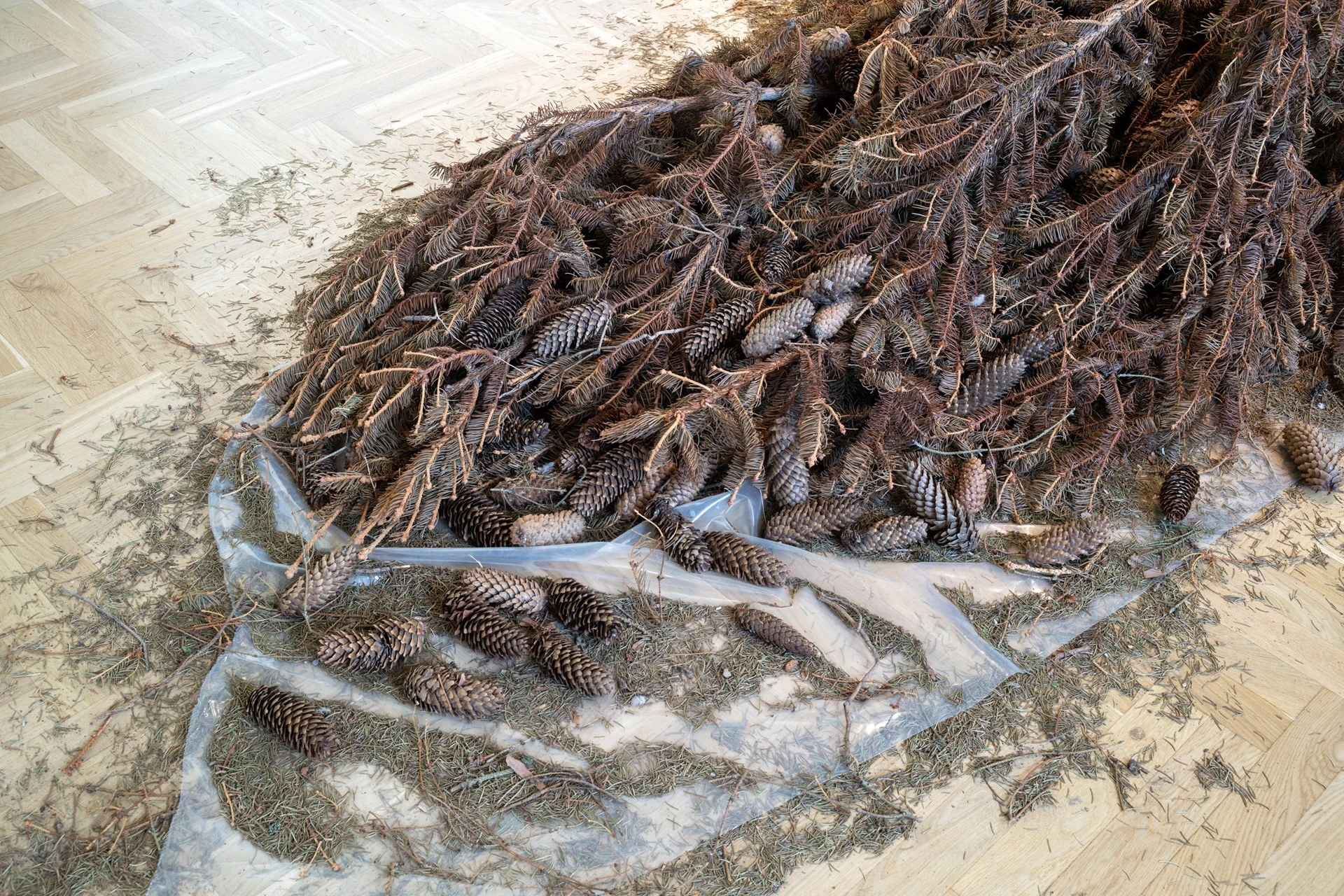
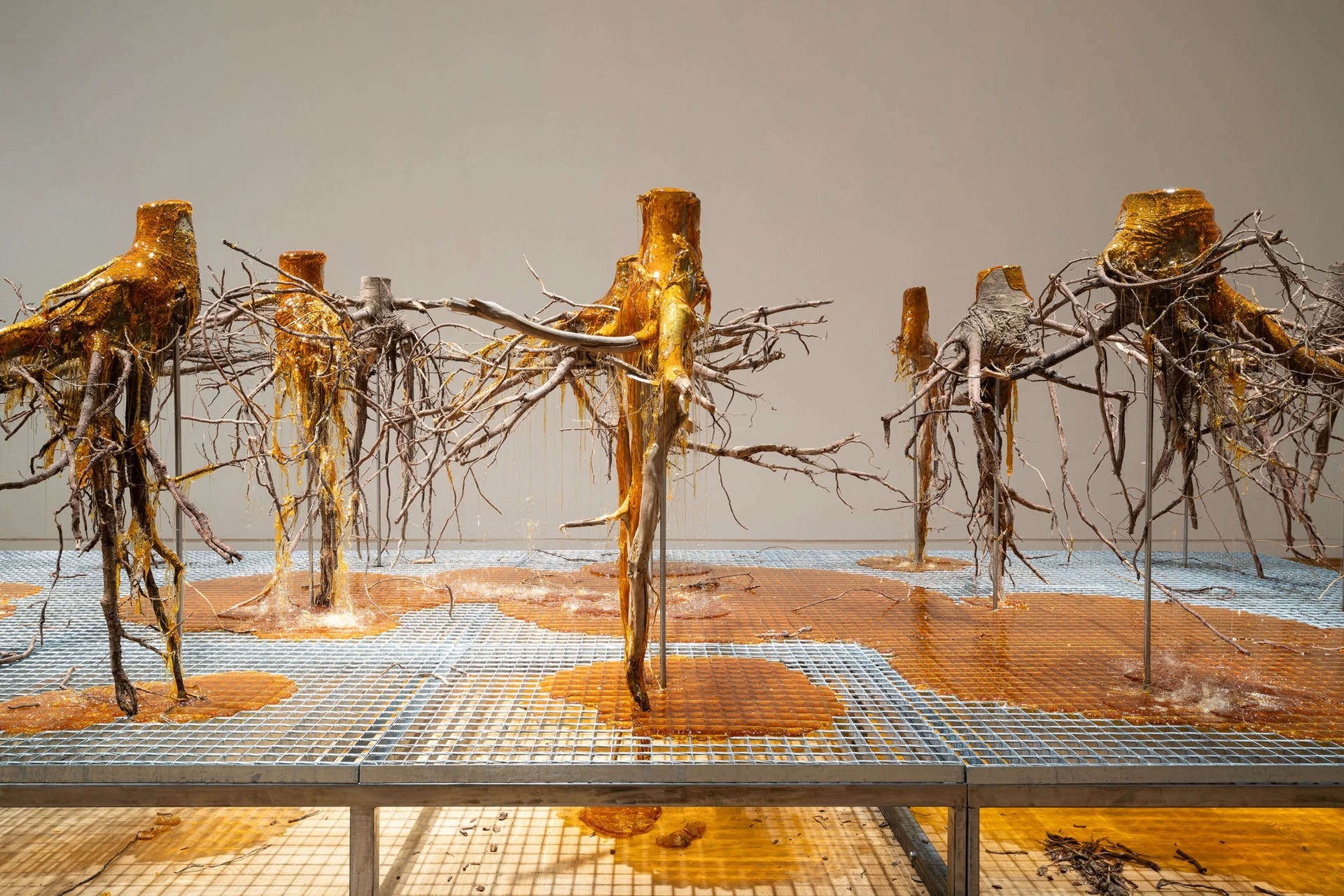
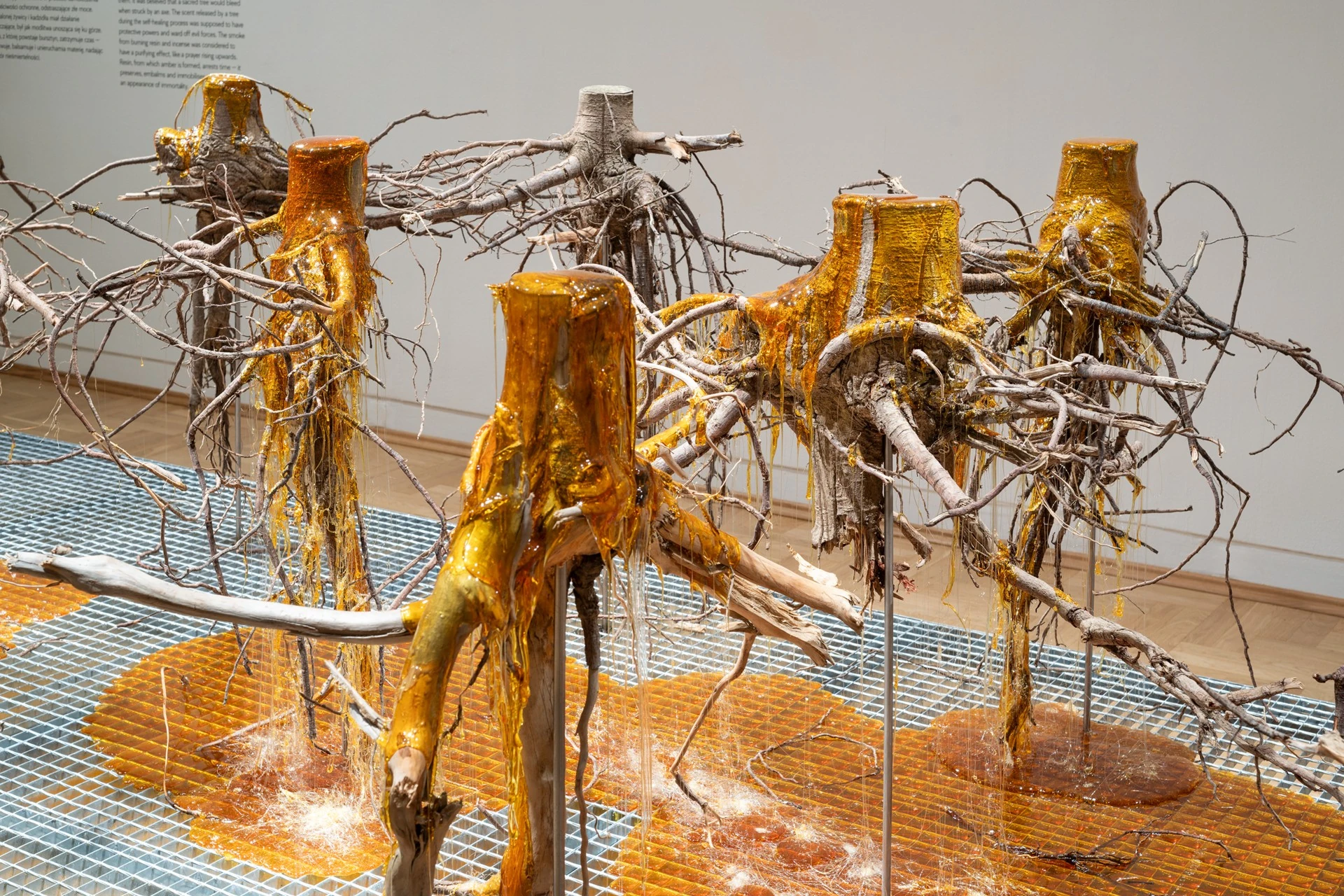
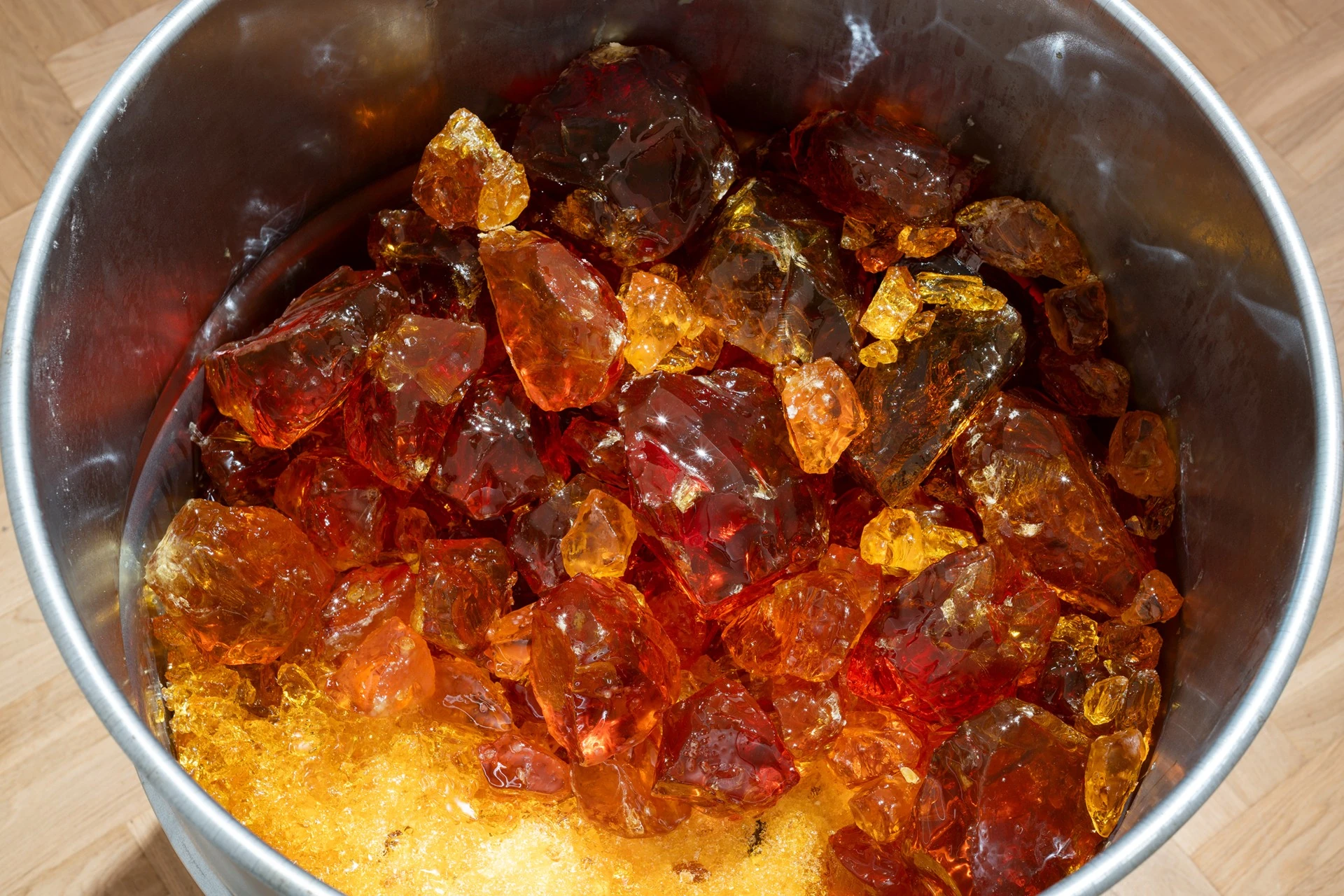
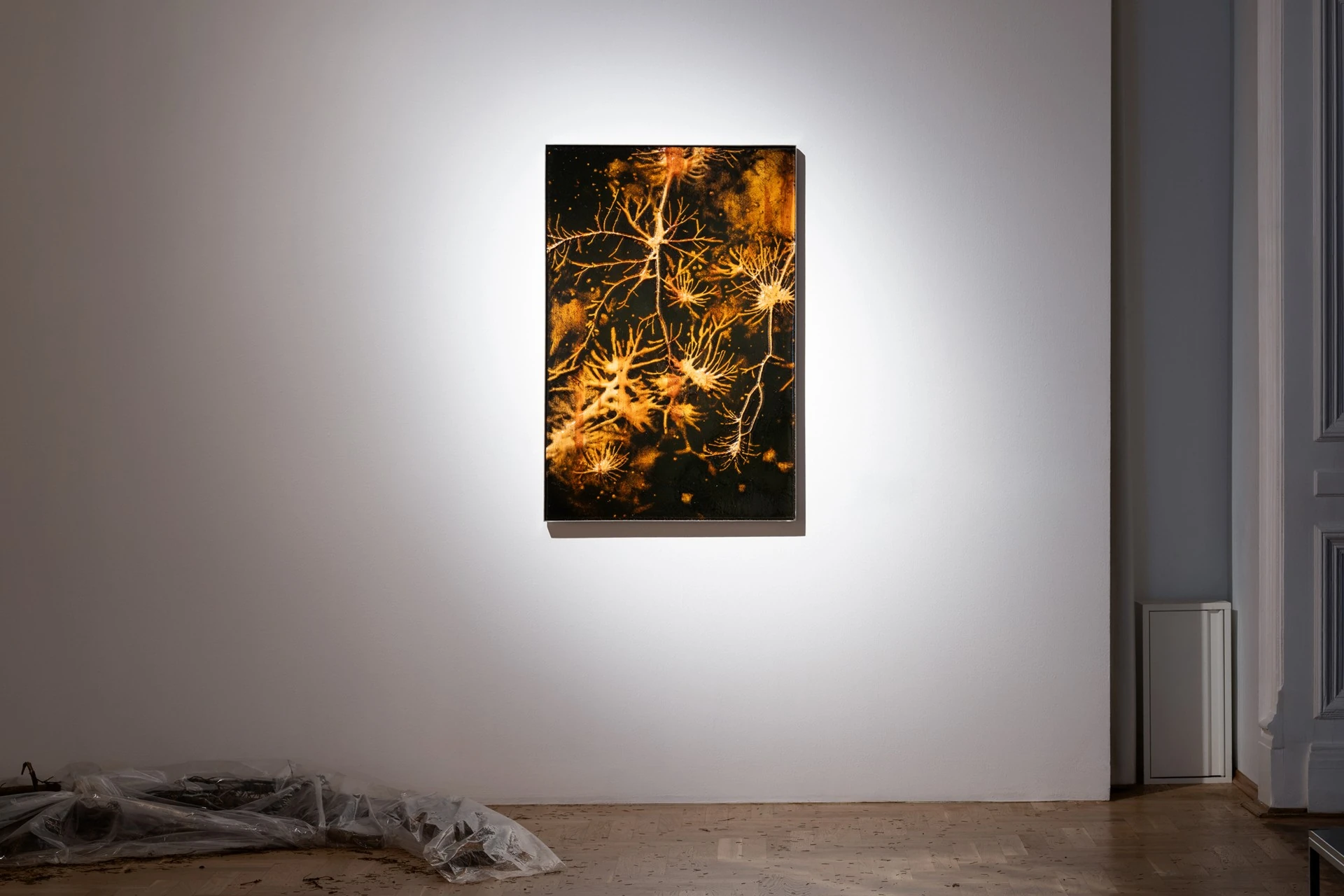
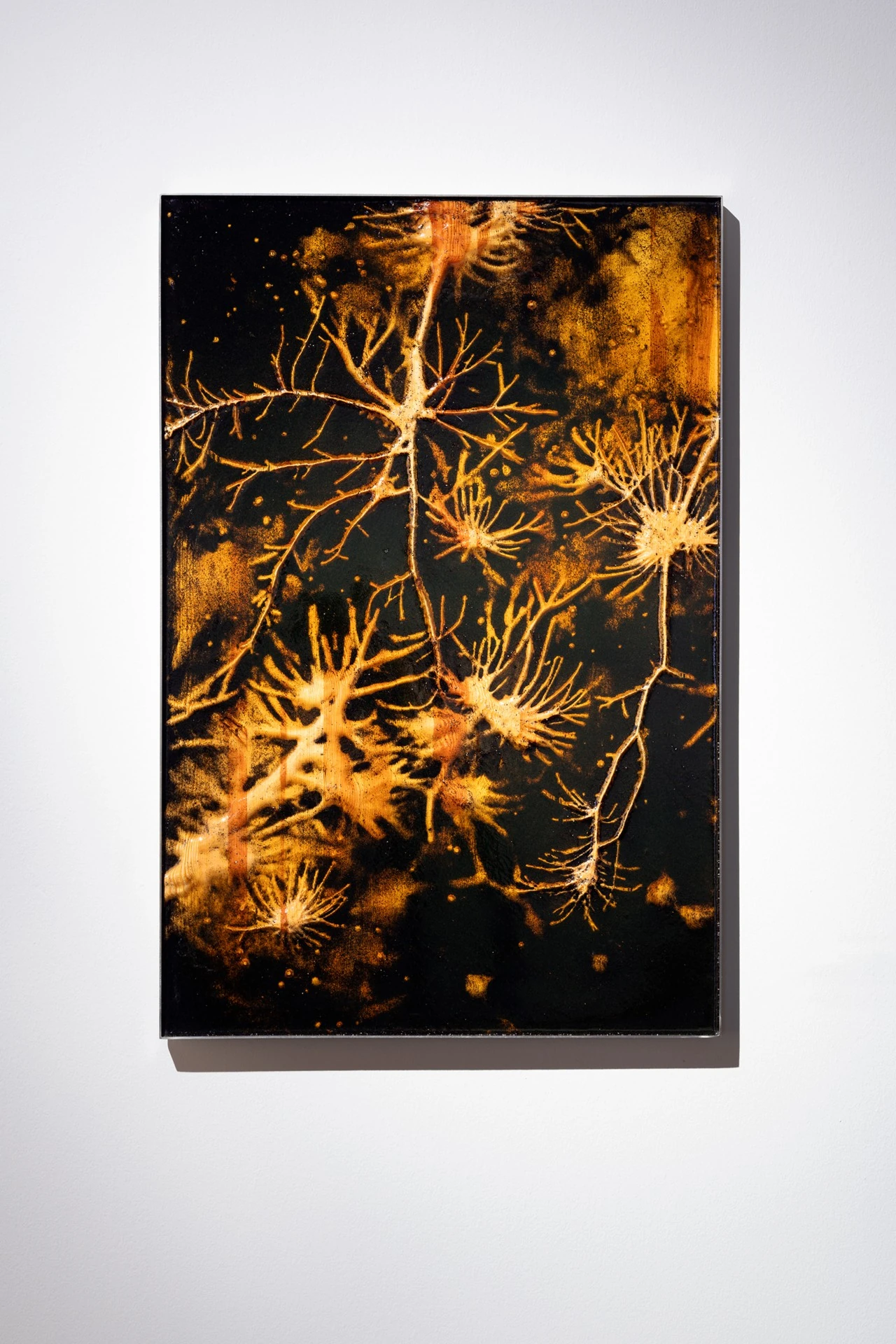
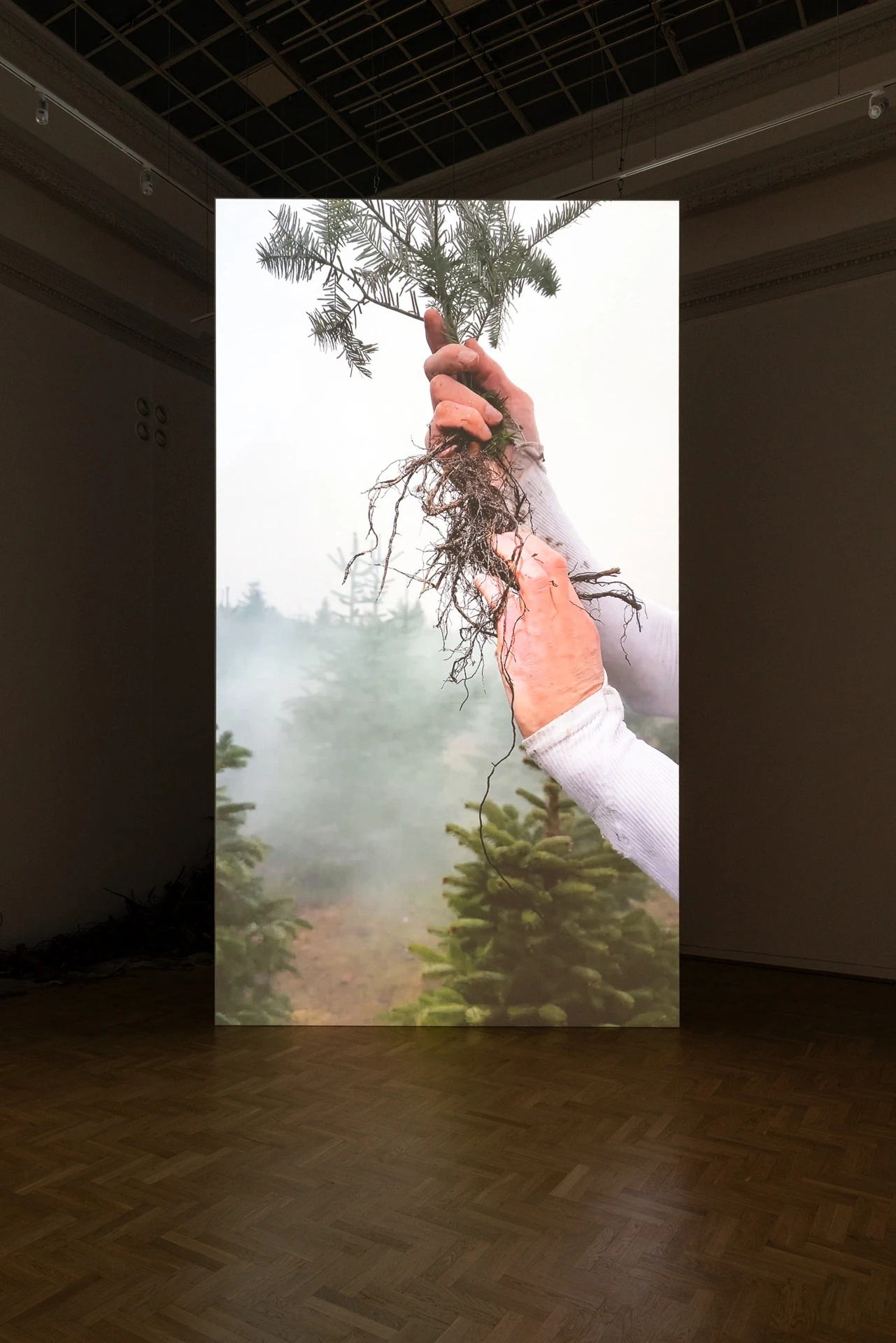
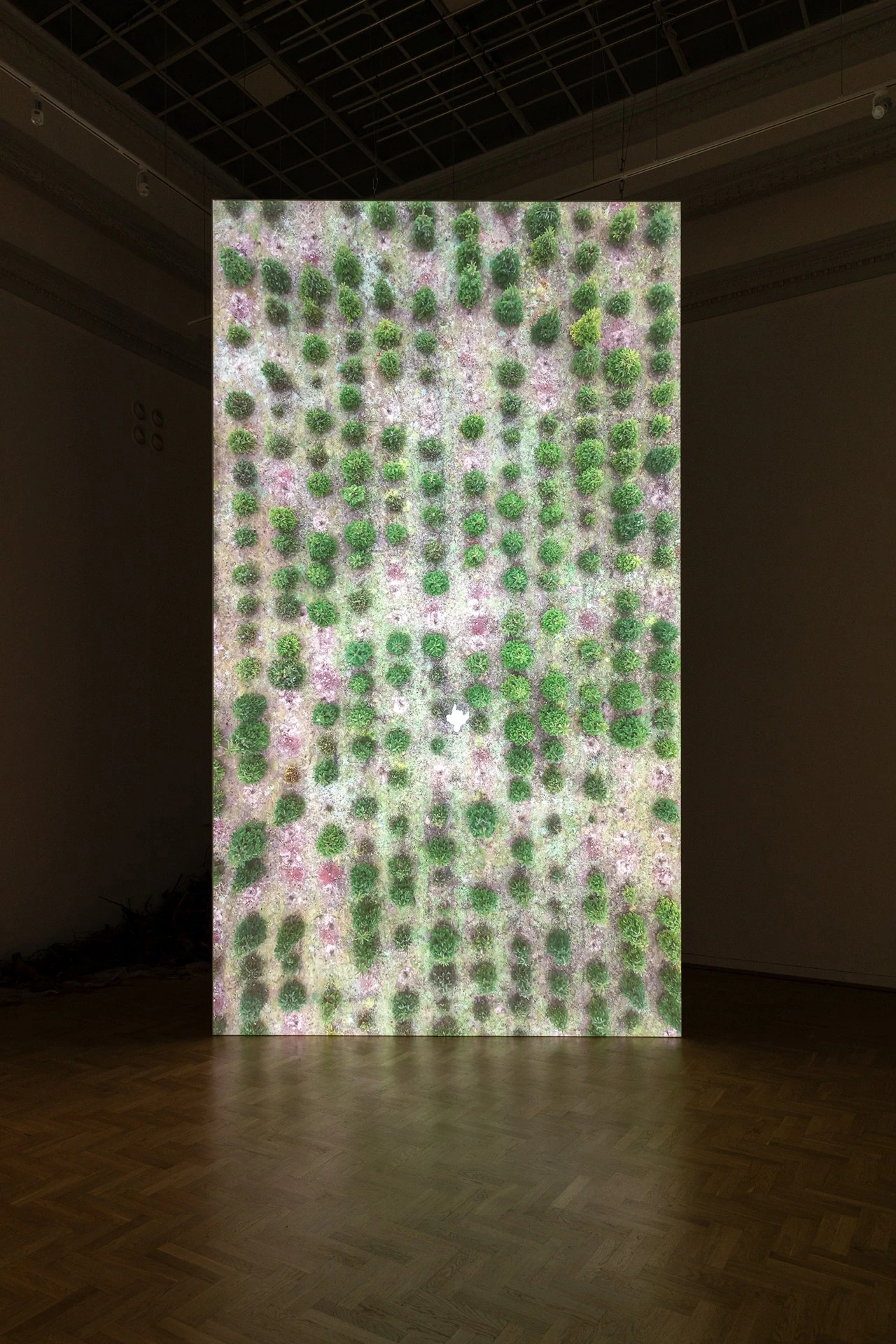
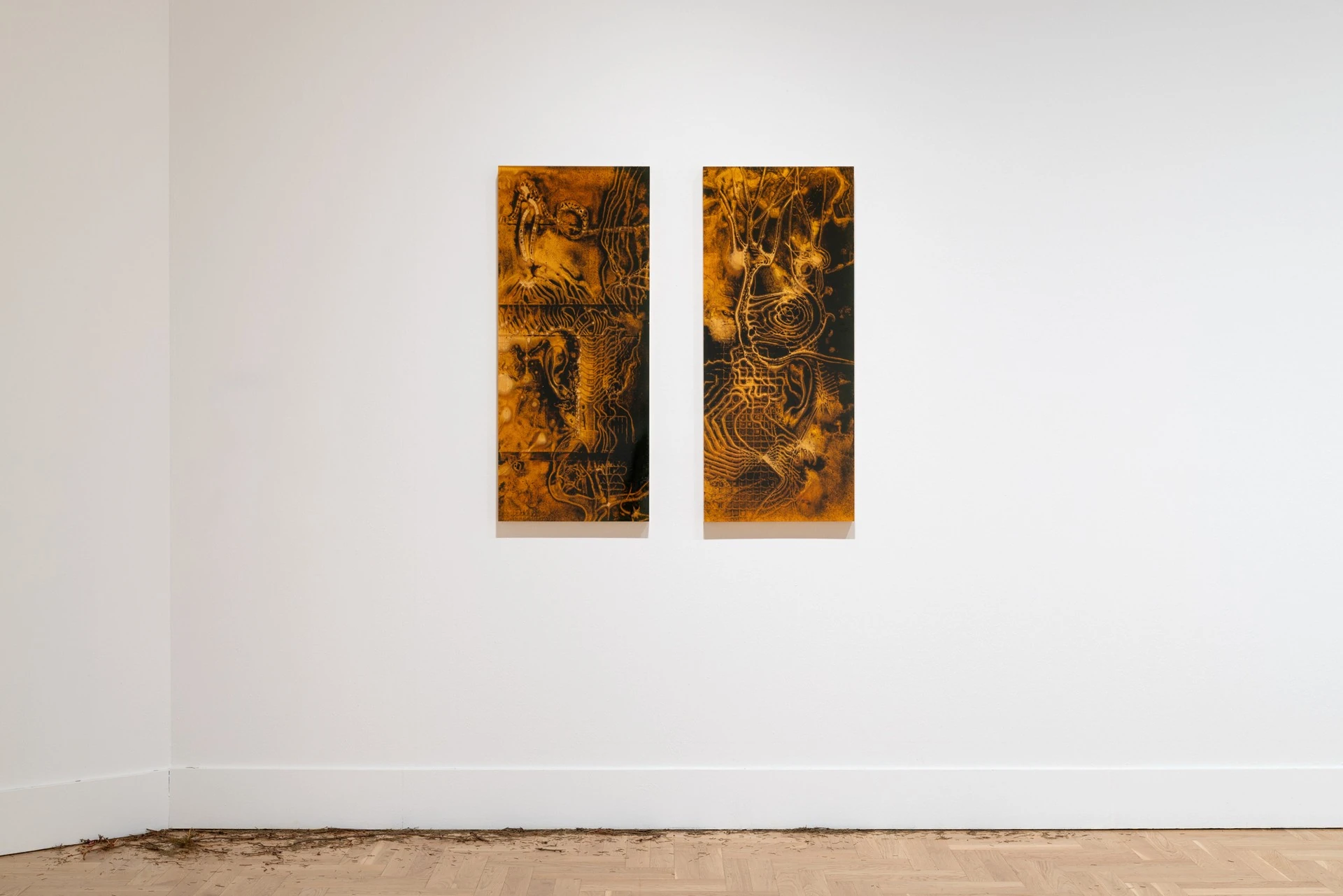
The title installation gathers several dozen roots of young spruces, the waste of a Christmas tree plantation, on a metal platform, then pours tree resin over them. Żywica is the Slavic word for that resin, from the Proto-Slavic živ-, to live, a sap of life. As Sablik writes, the fluid that “protects trees from wounds, seals damage and defends against insects and fungi” now coats the roots of artificially cultivated trees. The roots branch into a network nearer to neural pathways than to anything decorative.

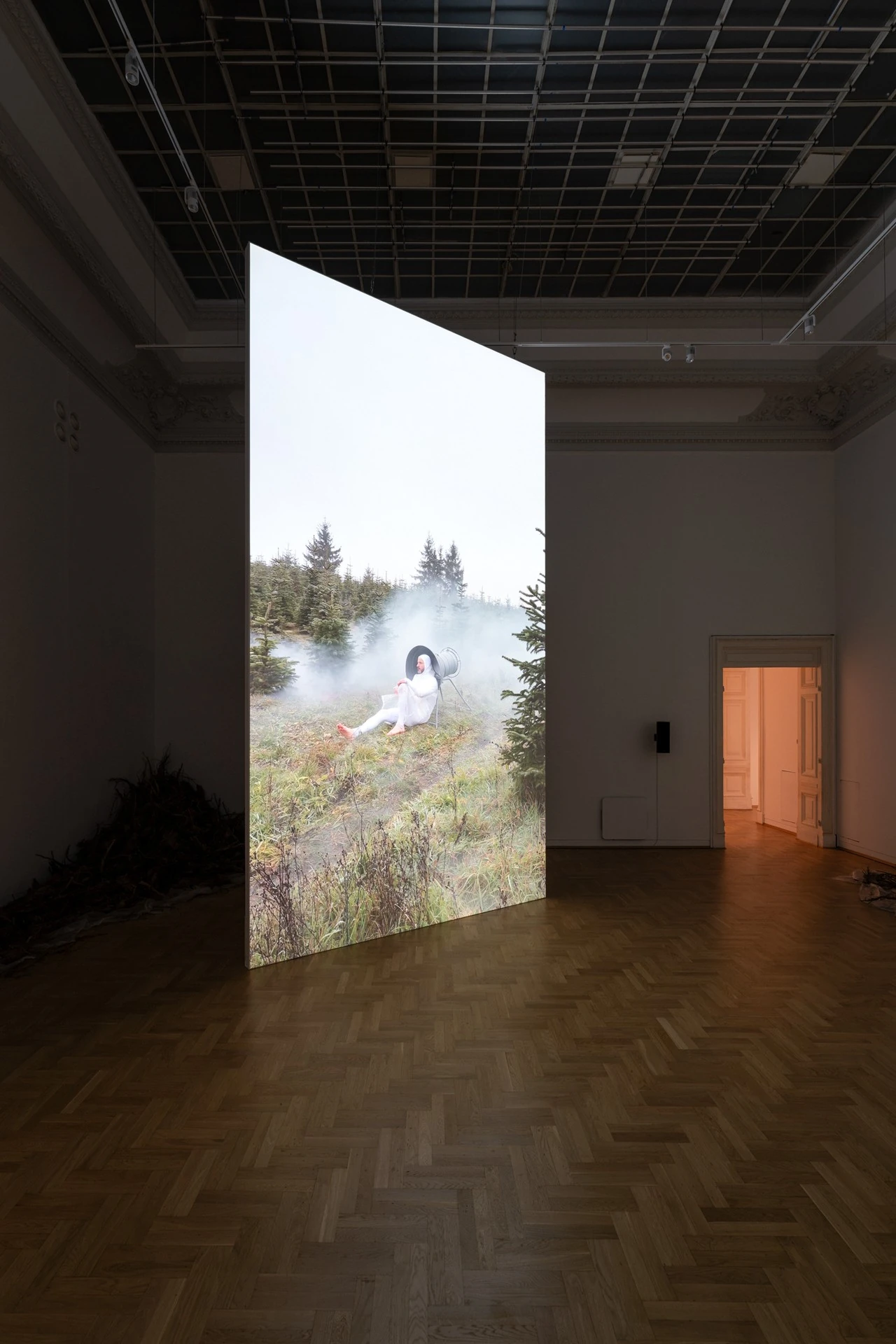
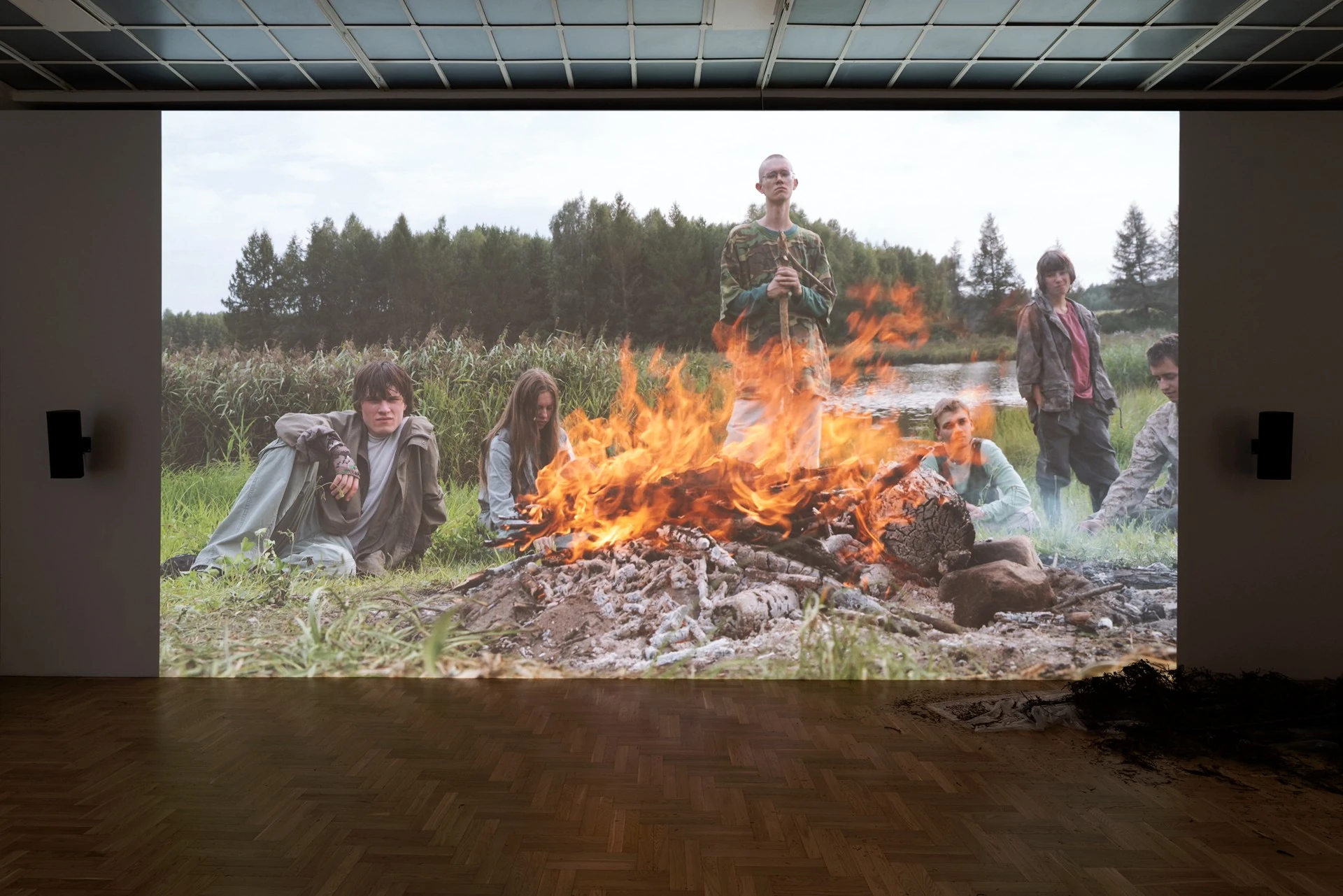
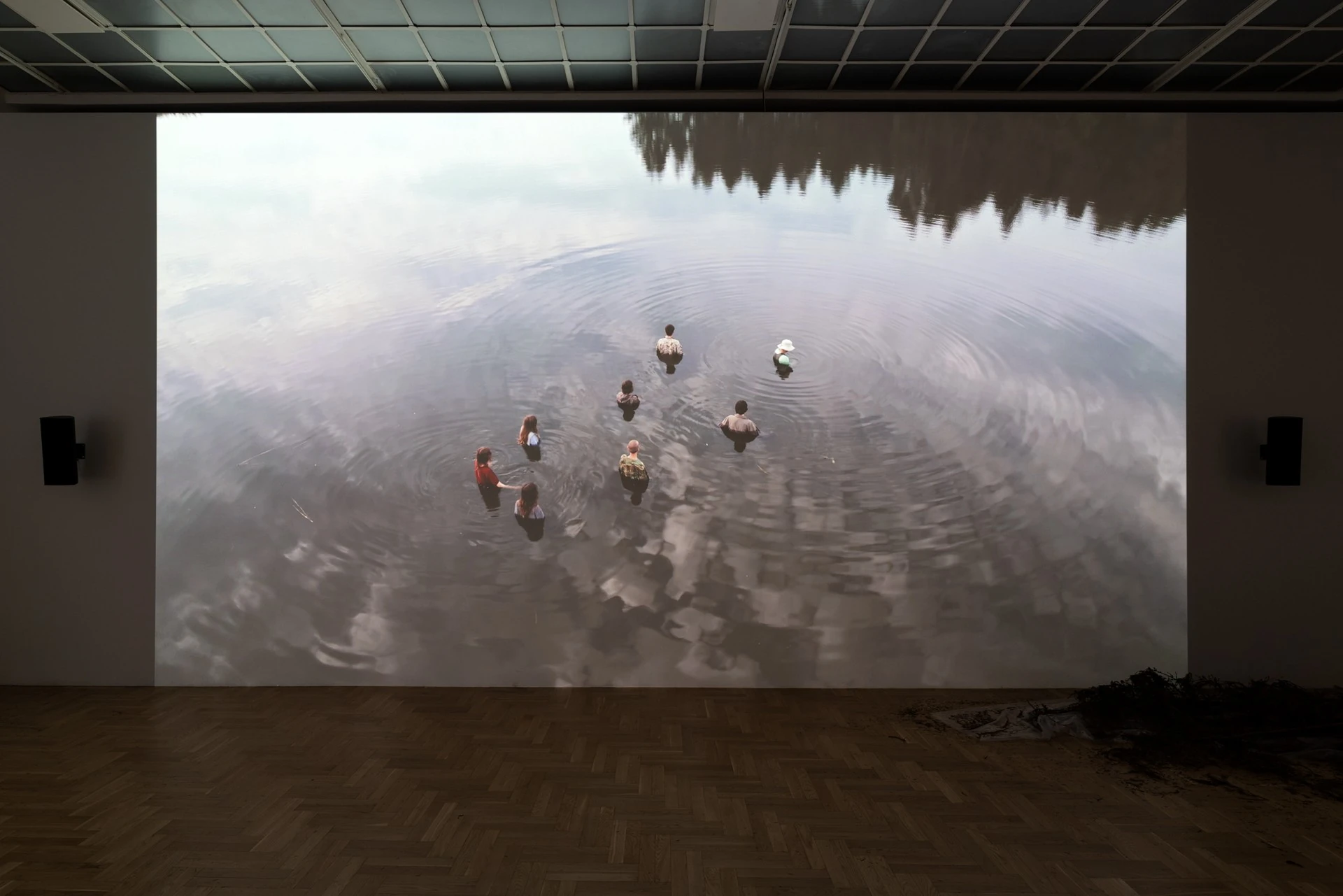
Living voices move through the rooms. In Birds with Human Heads, Belarusian migrants gather around the fallen spruce in collective vocalisation drawn from glossolalia, surviving as a sound piece and a two-channel video shot on a surveillance camera. The 2023 film Neophyte III: On the Eve of the Shortest Night follows young people through the forests of Podlasie at the solstice, leaping bonfires and bathing at dawn, the Kupala rite under a militarised border. Both are made with migrants who left Belarus after the 2020 protests. War’s ecocide, the curator writes, “is its deepest, though quietest, tragedy.”

Shust refuses techno-pessimism. He asks whether the mycelial networks of a forest and the cables and data centres of a planetary machine describe one continuous intelligence. The essay traces that thought to Vladimir Vernadsky’s noosphere, the layer human knowledge lays over the Earth. The title returns to the body, to the solar plexus, the abdominal nerve network that carries the name of the sun.
Interested in Showcasing Your Work?

If you would like to feature your works on Thisispaper, please visit our Submission page and sign up to Thisispaper+ to submit your work. Once your submission is approved, your work will be showcased to our global audience of 2 million art, architecture, and design professionals and enthusiasts.
No items found.
Less, with more behind it.
Explore guides. Search the archive. Walk the atlas.
Become a Thisispaper+ member today to unlock full access to our magazine, advanced tools, and support our work.
Get two months FREE
with annual subscription
Less, with more behind it.
Explore guides. Search the archive. Walk the atlas.
Become a Thisispaper+ member today to unlock full access to our magazine, advanced tools, and support our work.
Get two months FREE
with annual subscription
No items found.
Sep 18, 2026

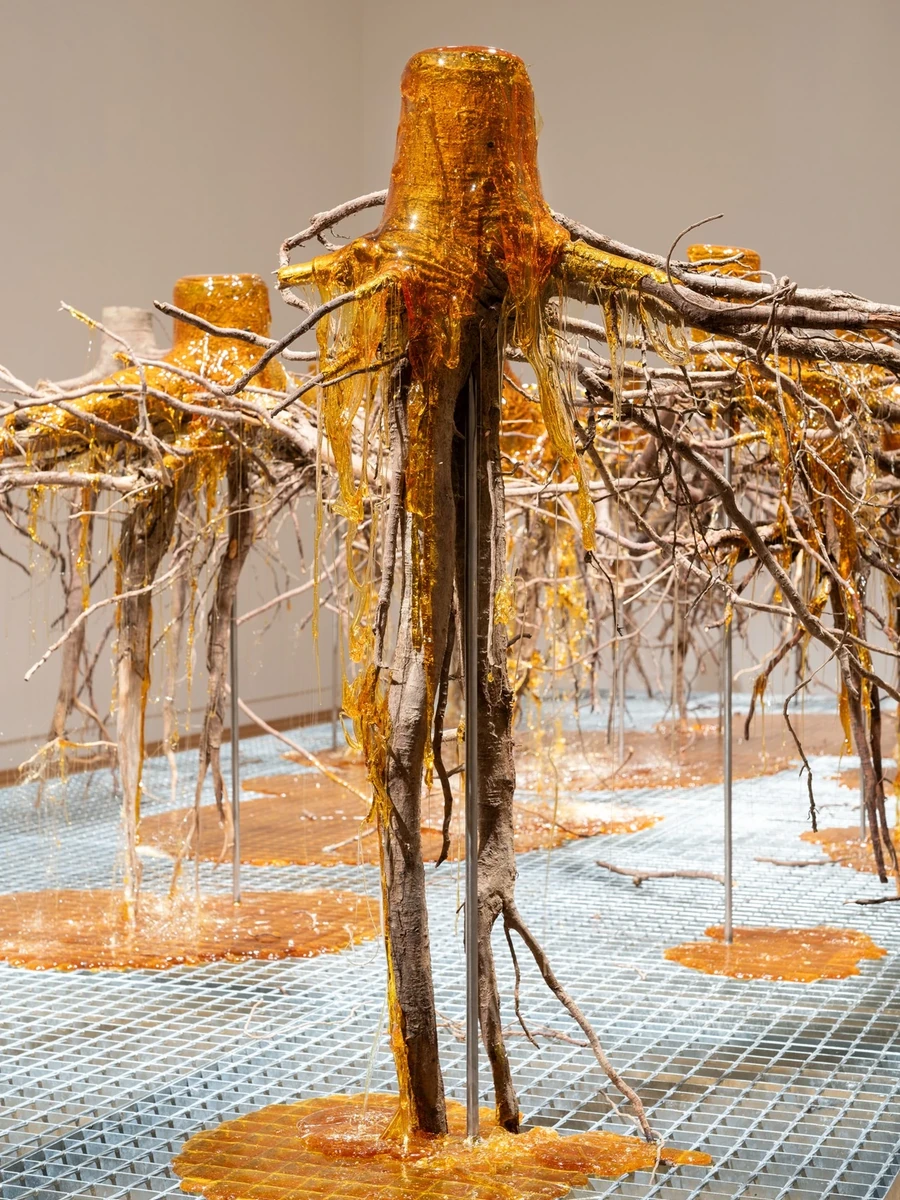
At Warsaw’s Zachęta, the National Gallery of Art, Jura Shust builds Żywica* Solar Plexus around a felled spruce, its severed roots sealed in tree resin on a raised metal platform.

Żywica* Solar Plexus is Jura Shust’s first solo exhibition in Poland. A Belarusian artist long based in Berlin, he keeps returning to the borderlands where Poland, Belarus and Lithuania meet, a region once inhabited by people who called themselves tutejsi, the locals, claiming no clear national identity. It holds some of Europe’s last primeval woods and forests fading into the taiga. Through ethnobotany, Shust reads the surviving traces of animism in the region’s folk culture.

In many Slavic and Finno-Ugric systems the forest was a sacred, threshold place. Against the dualism splitting the world into safe settlement and hostile wood, as the curator Michalina Sablik writes, Belarusians held “the idea of a benevolent forest, a gift from God.” Every person had a corresponding tree, its crown a home for the soul after death, its trunk an axis between the living and the dead. The spruce carried apotropaic force, its resinous wood cut into coffins and domowiny, grave houses.

Świerk posadzony obok domu, Spruce Planted Next to a House, made for Zachęta, takes up the World Tree, the axis mundi of the region’s cosmology. The felled spruce comes from Mazovia, where the species is now planted close to houses in defiance of the old warnings. Obtained legally, already marked for felling for its age and disease, it was fumigated before entering the gallery. The curator reads that disinfection as an industrial-ritual gesture, a passage from living landscape to object.

The title installation gathers several dozen roots of young spruces, the waste of a Christmas tree plantation, on a metal platform, then pours tree resin over them. Żywica is the Slavic word for that resin, from the Proto-Slavic živ-, to live, a sap of life. As Sablik writes, the fluid that “protects trees from wounds, seals damage and defends against insects and fungi” now coats the roots of artificially cultivated trees. The roots branch into a network nearer to neural pathways than to anything decorative.

Living voices move through the rooms. In Birds with Human Heads, Belarusian migrants gather around the fallen spruce in collective vocalisation drawn from glossolalia, surviving as a sound piece and a two-channel video shot on a surveillance camera. The 2023 film Neophyte III: On the Eve of the Shortest Night follows young people through the forests of Podlasie at the solstice, leaping bonfires and bathing at dawn, the Kupala rite under a militarised border. Both are made with migrants who left Belarus after the 2020 protests. War’s ecocide, the curator writes, “is its deepest, though quietest, tragedy.”

Shust refuses techno-pessimism. He asks whether the mycelial networks of a forest and the cables and data centres of a planetary machine describe one continuous intelligence. The essay traces that thought to Vladimir Vernadsky’s noosphere, the layer human knowledge lays over the Earth. The title returns to the body, to the solar plexus, the abdominal nerve network that carries the name of the sun.
Interested in Showcasing Your Work?

If you would like to feature your works on Thisispaper, please visit our Submission page and subscribe to Thisispaper+. Once your submission is approved, your work will be showcased to our global audience of 2 million art, architecture, and design professionals and enthusiasts.
No items found.

Join Thisispaper+
Unlock access to 2500 stories, curated guides + editions, and share your work with a global network of architects, artists and designers who are shaping the future.
Get two months FREE
with annual subscription
Travel Guides
Immerse yourself in timeless destinations, hidden gems, and creative spaces—curated by humans, not algorithms.
Explore All Guides +
Submission Module
Submit your project and gain the chance to showcase your work to our worldwide audience of over 2M architects, designers, artists, and curious minds.
Learn More+
Curated Editions
Dive deeper into carefully curated editions, designed to feed your curiosity and foster exploration.
Off-the-Grid
Jutaku
Sacral Journey
minimum
The New Chair
Explore All Editions +
Atlas
A new and interactive way to explore the most inspiring places around the world.
Interactive map
Linked to articles
450+ curated locations
Google + Apple directions
Smart filters
Subscribe to Explore+
Become a Thisispaper+ member today to unlock full access to our magazine, submit your project and support our work.
Join Thisispaper+Join Thisispaper+
€9/month
Get two months FREE
with annual subscription