Thisispaper Community
Join today.
Enter your email address to receive the latest news on emerging art, design, lifestyle and tech from Thisispaper, delivered straight to your inbox.
Oops! Something went wrong while submitting the form.
Instant access to new channels
The top stories curated daily
Weekly roundups of what's important
Original features and deep dives
Exclusive community features
Barcelona Guide
under the patronage of
Xavier Corberó House and Studio by Xavier Corberó
Alexander Zaxarov
Jul 10, 2026

In Esplugues de Llobregat on the edge of Barcelona, sculptor Xavier Corberó spent decades pouring the arched concrete labyrinth of his house and studio, a single work he never finished.

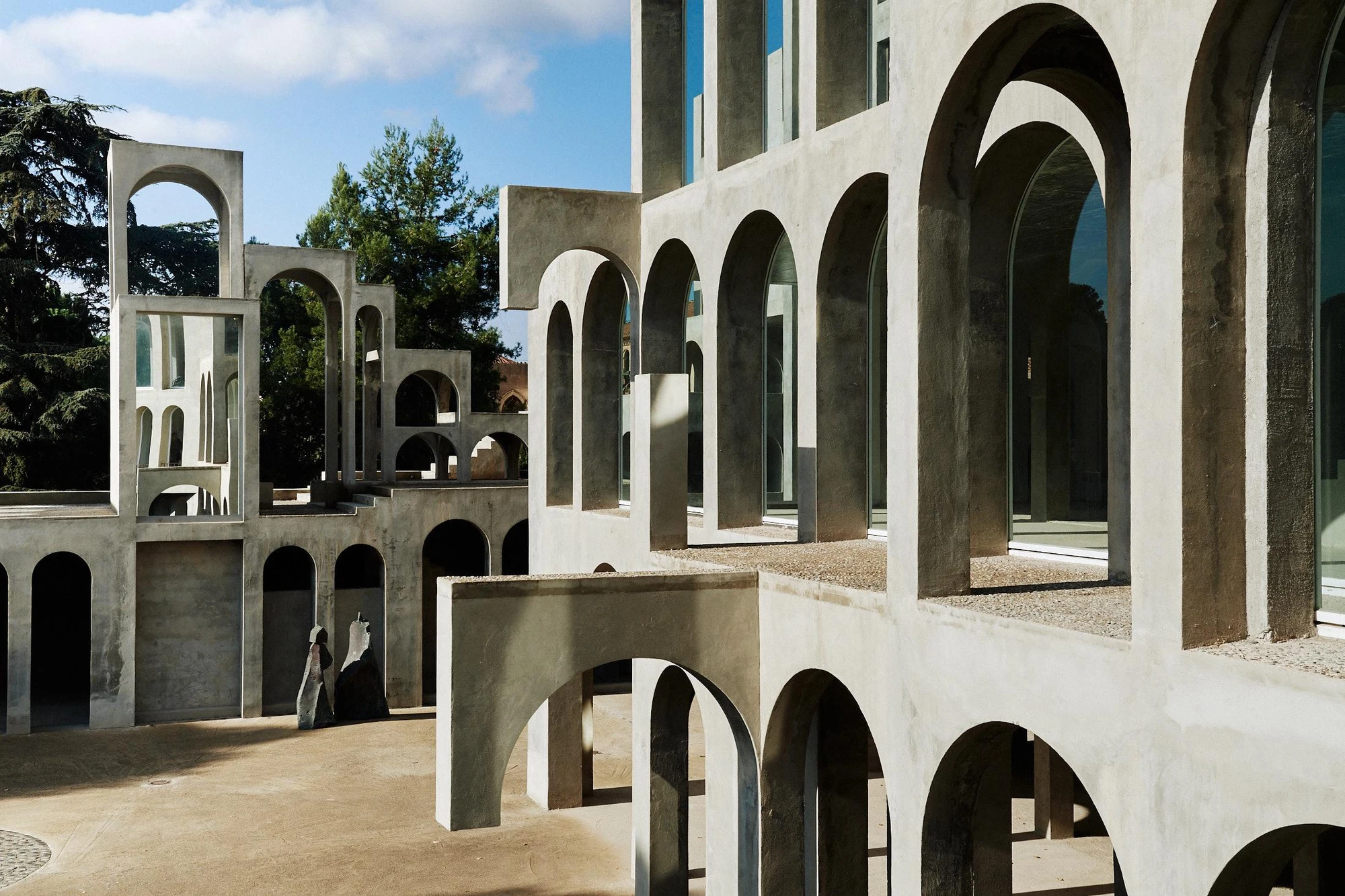
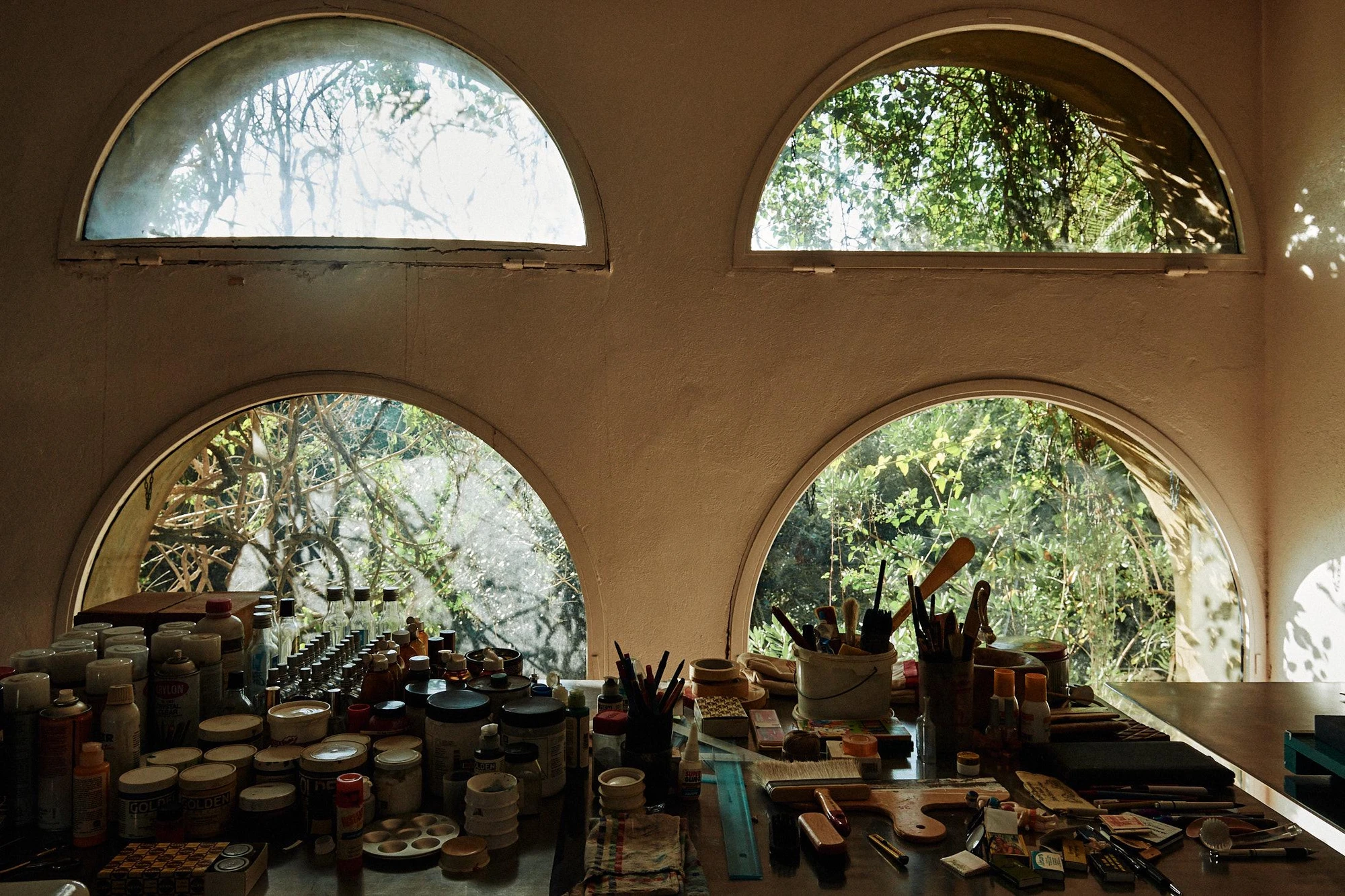
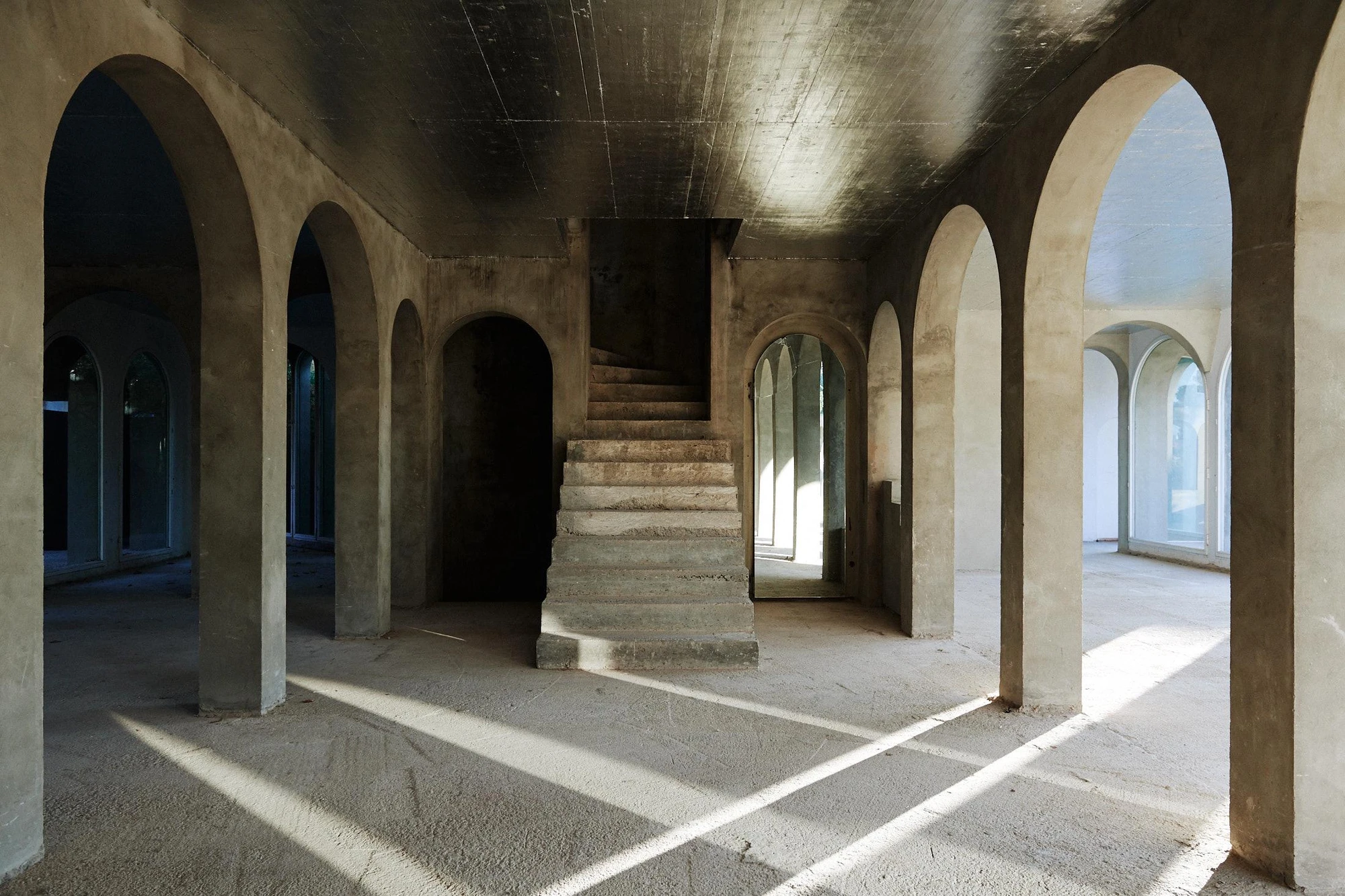
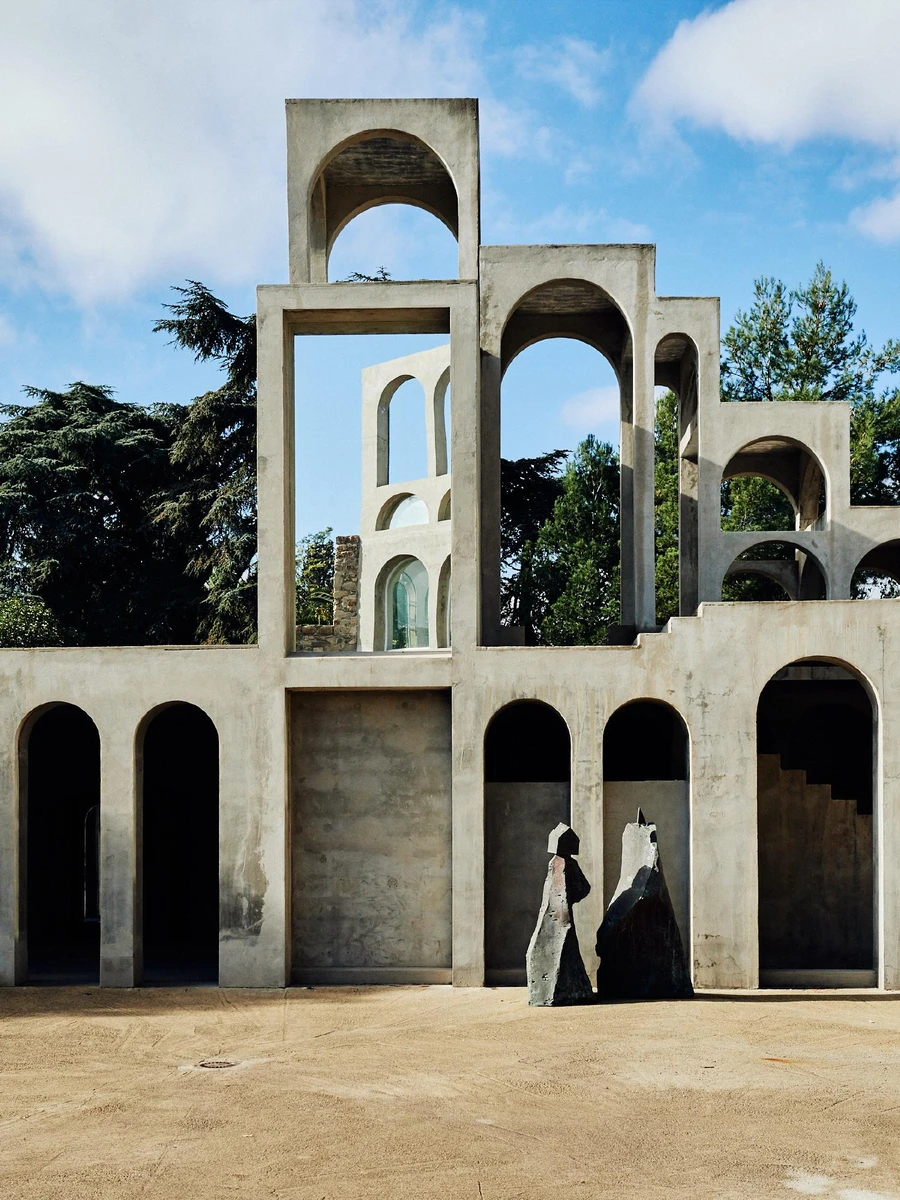
Xavier Corberó bought a former potato farm on the edge of Esplugues de Llobregat in 1968 and never stopped building on it. Over the following decades the Catalan sculptor poured a compound of concrete arches that reads as one unfinished work, part residence, part studio, part private city. He had no formal training as a builder. He worked it the way he worked stone and bronze, by hand and by instinct, adding rooms, courtyards and towers as the idea demanded. Game of Thrones later borrowed its arcades for the House of the Undying, but the place was Corberó's own invention long before any camera found it.

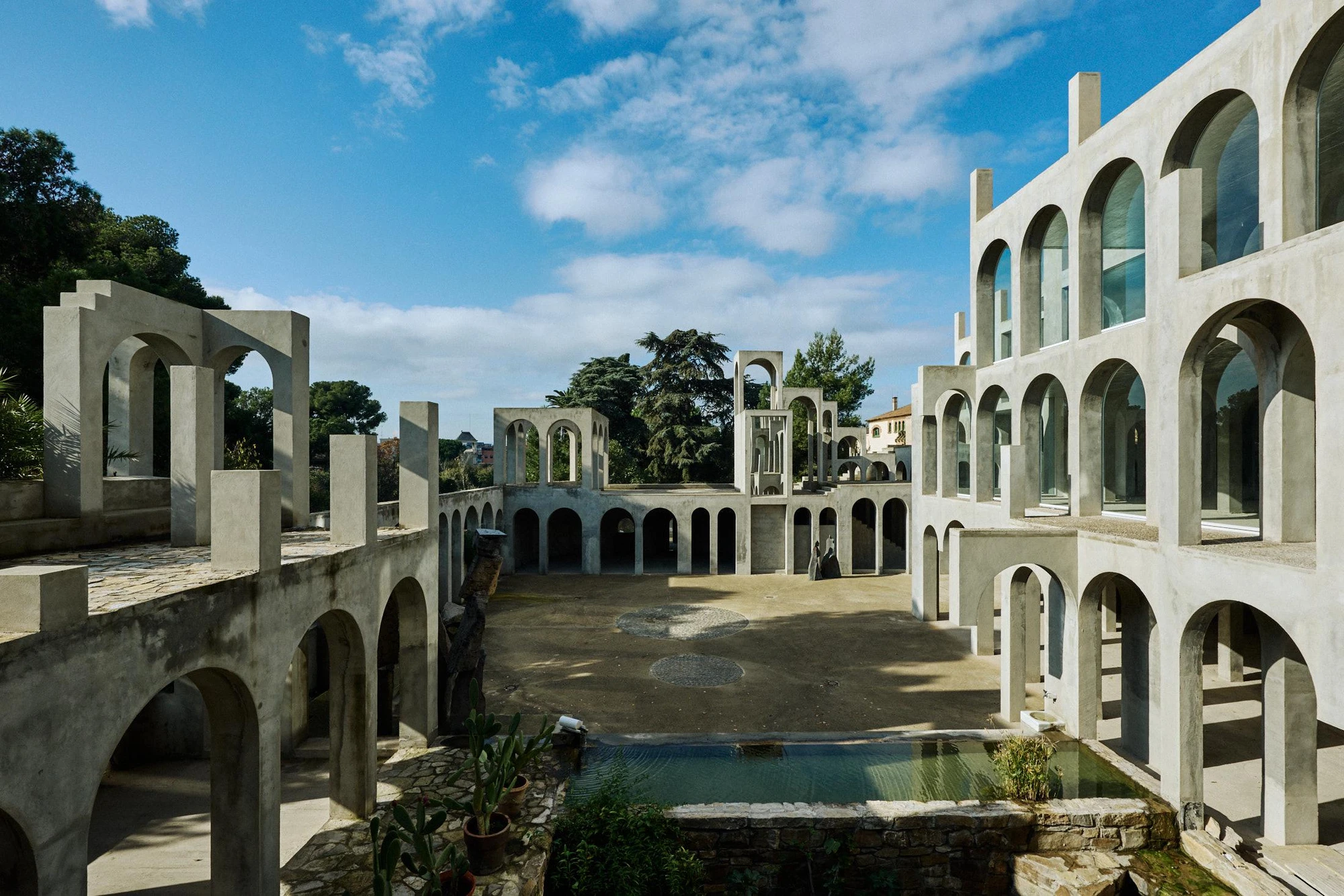
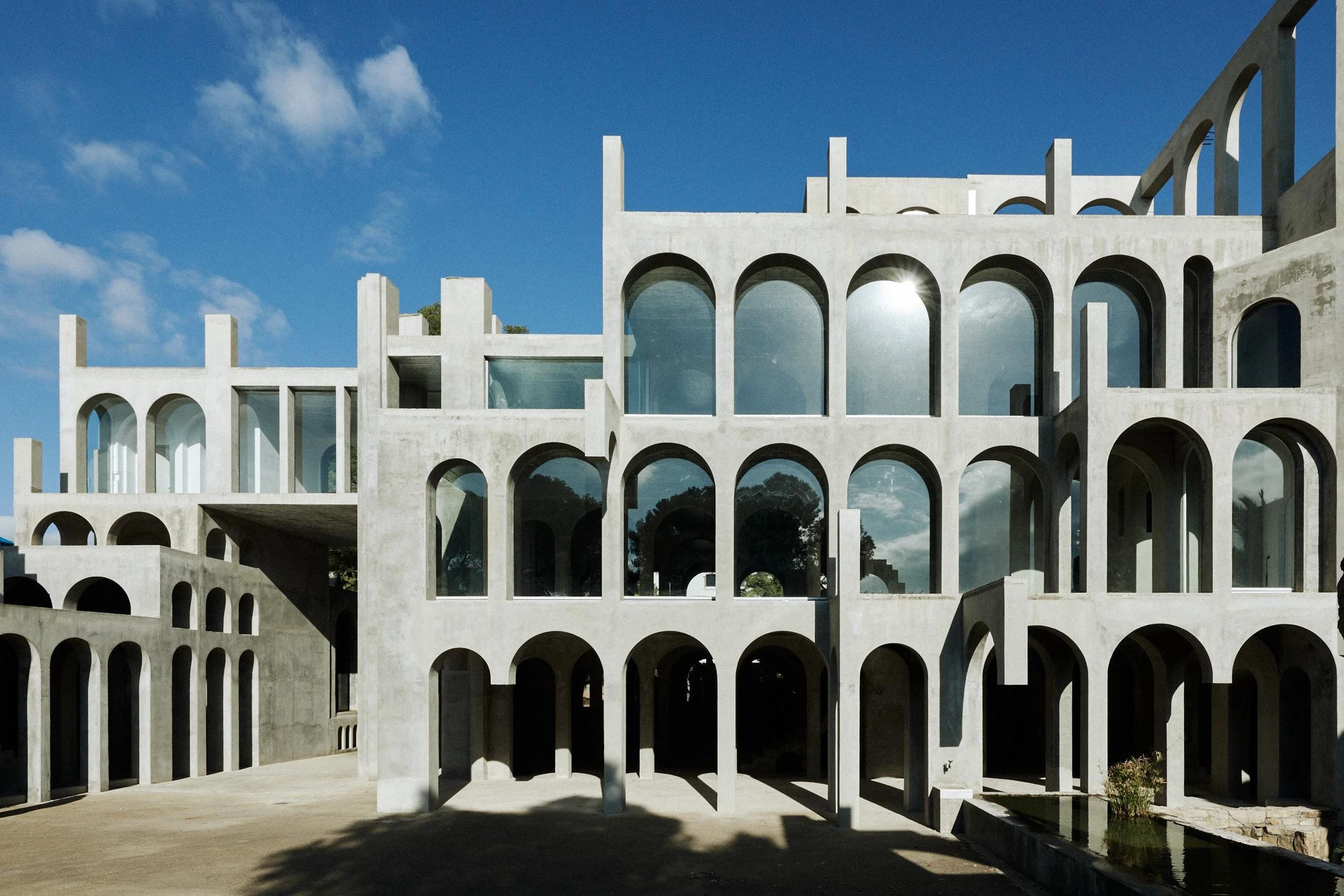
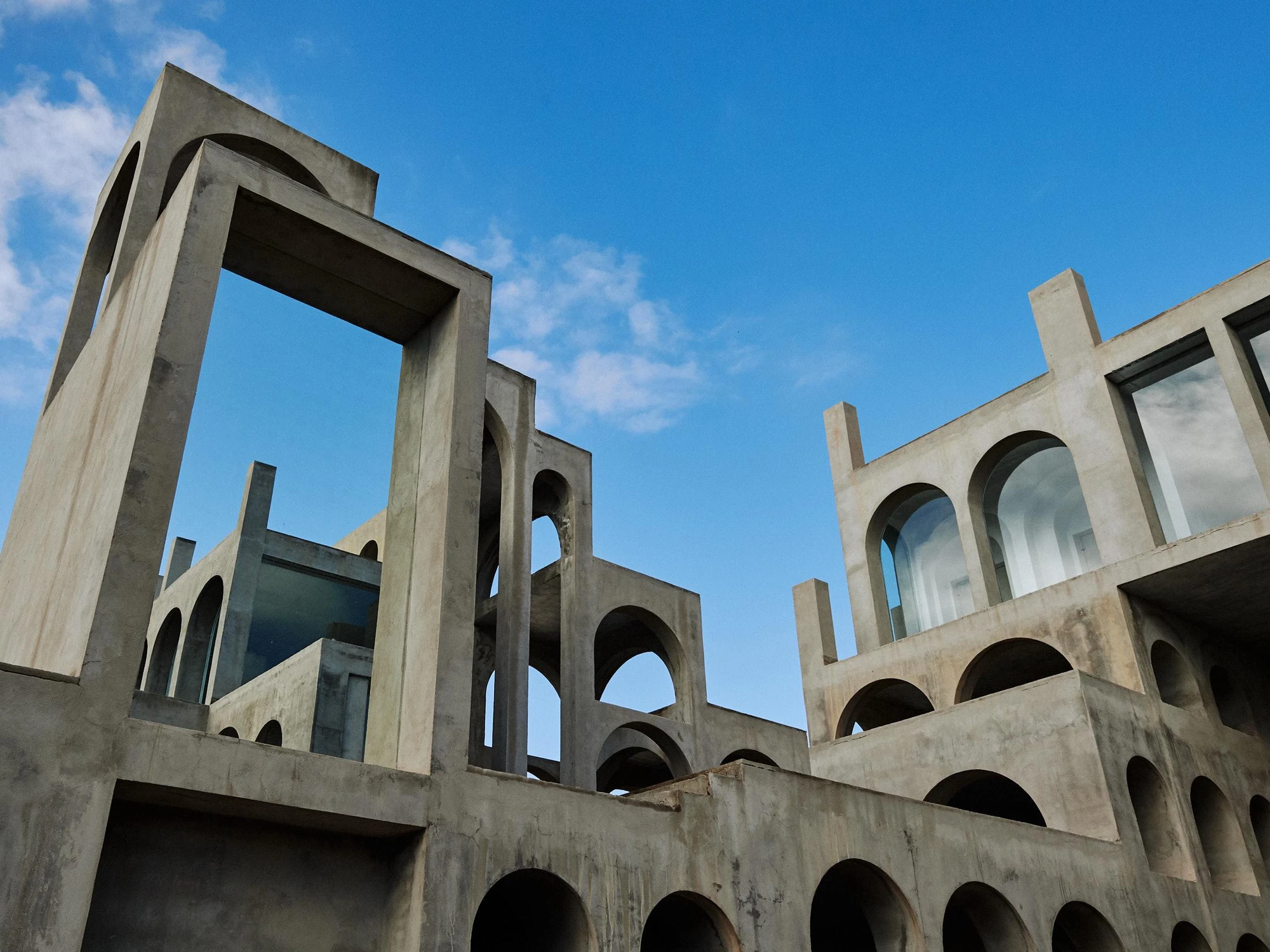
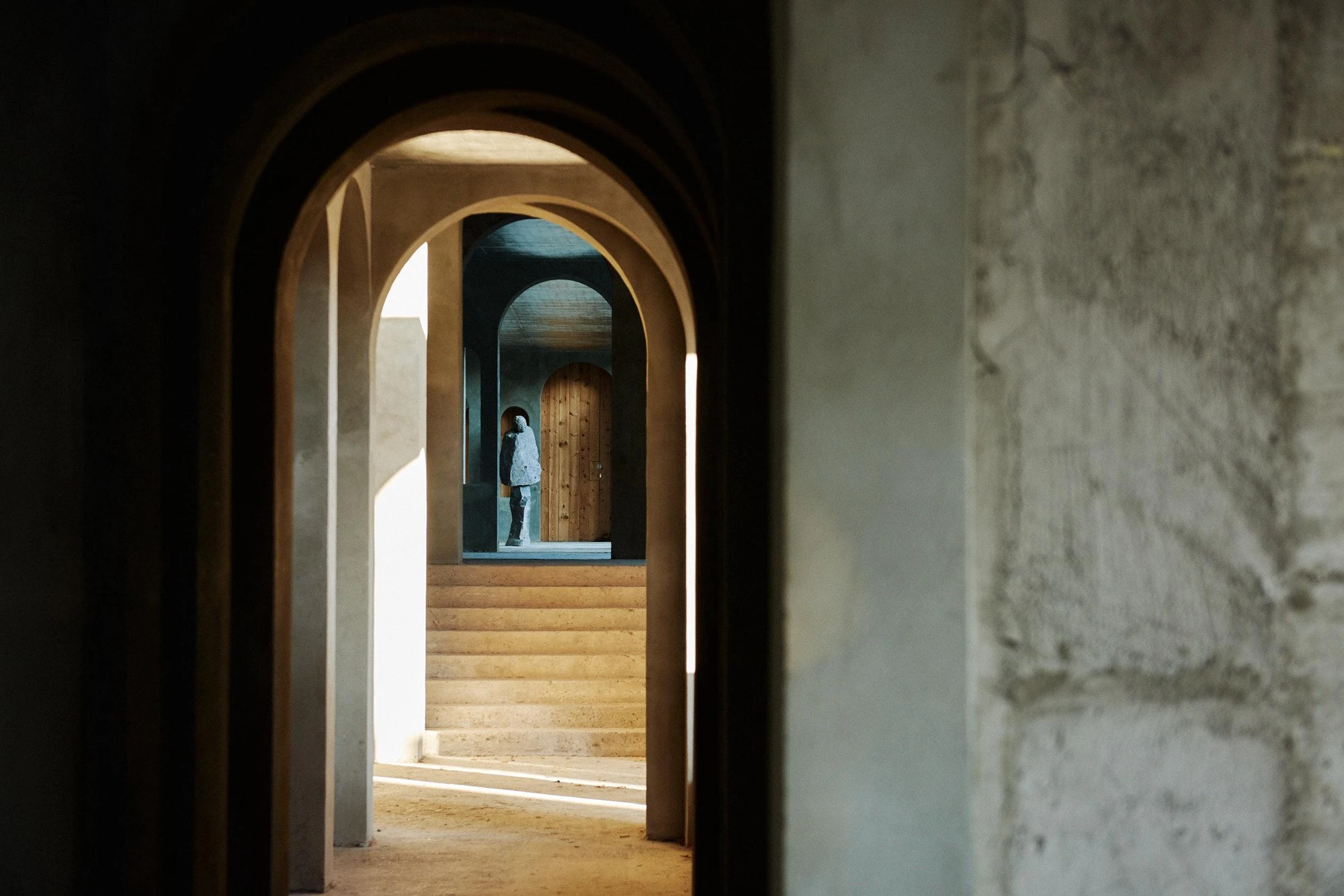
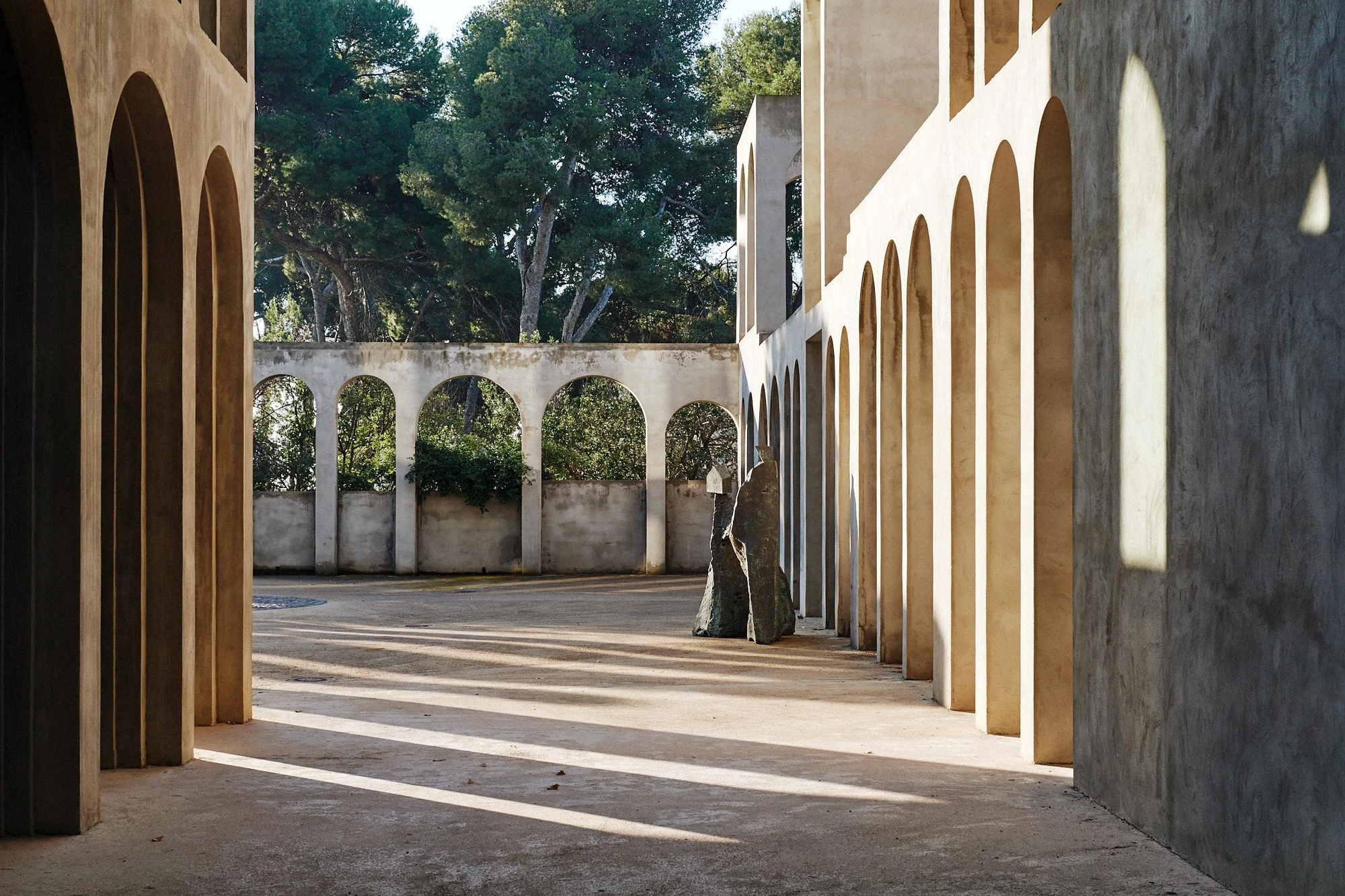
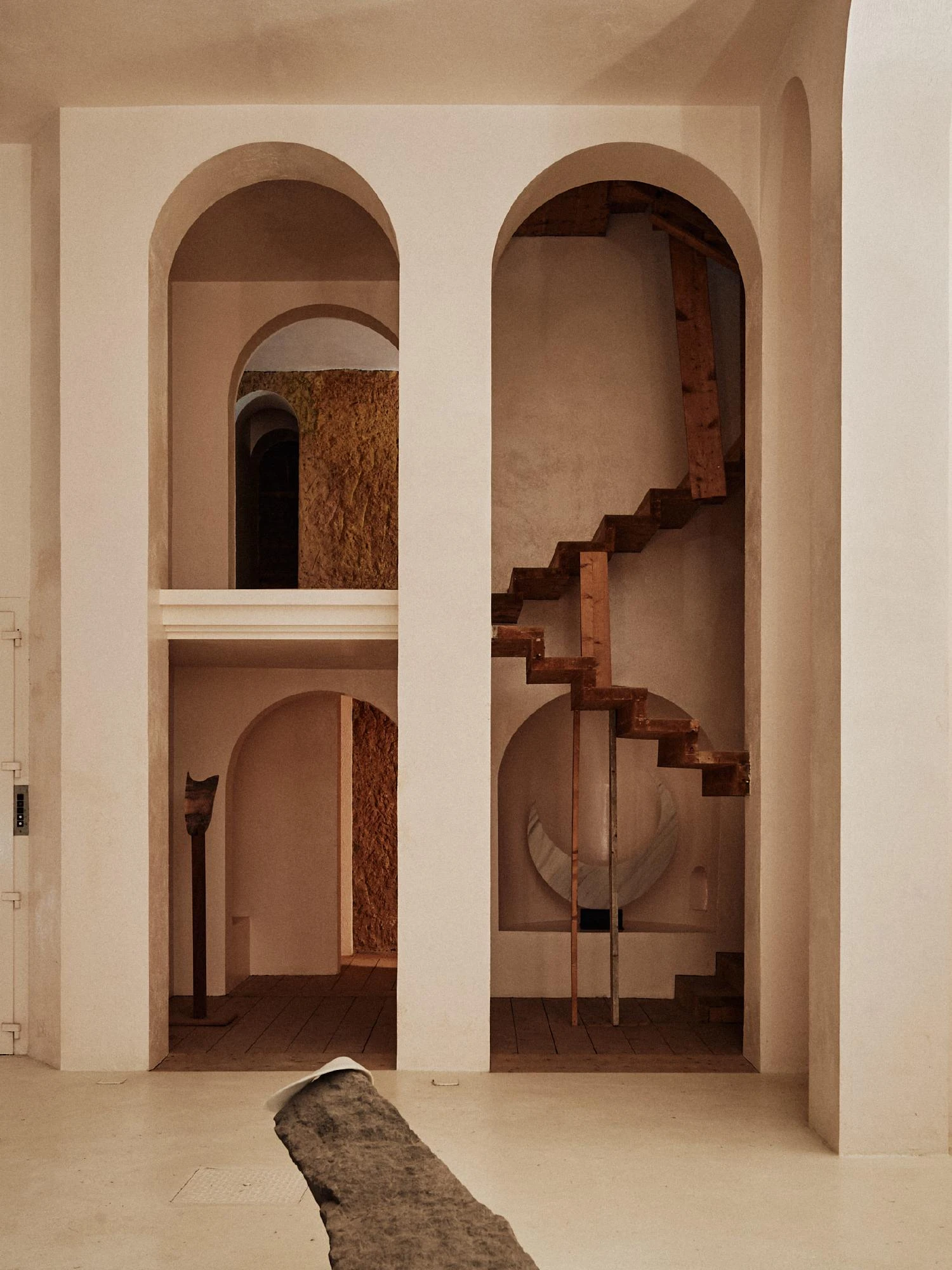
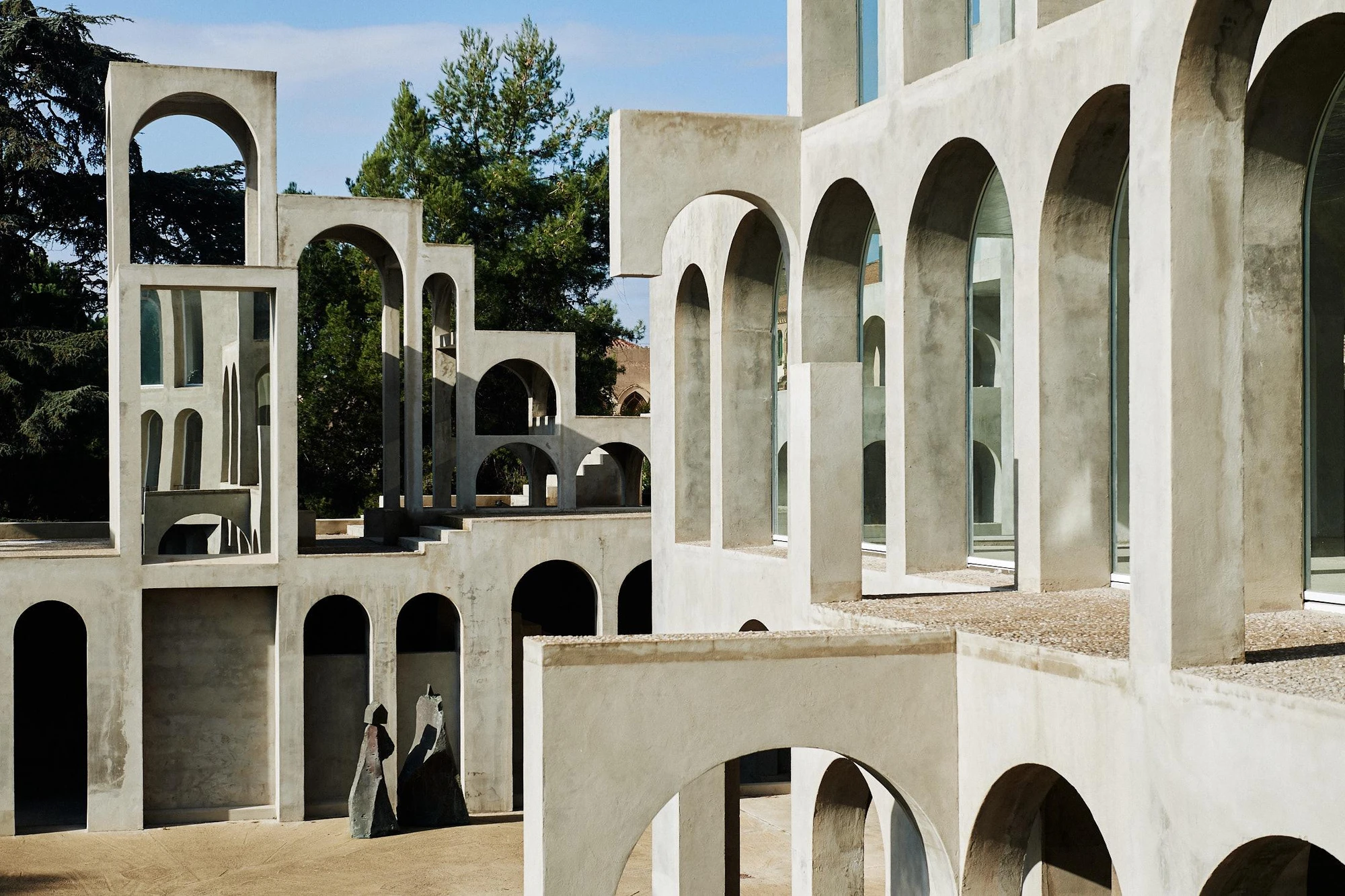
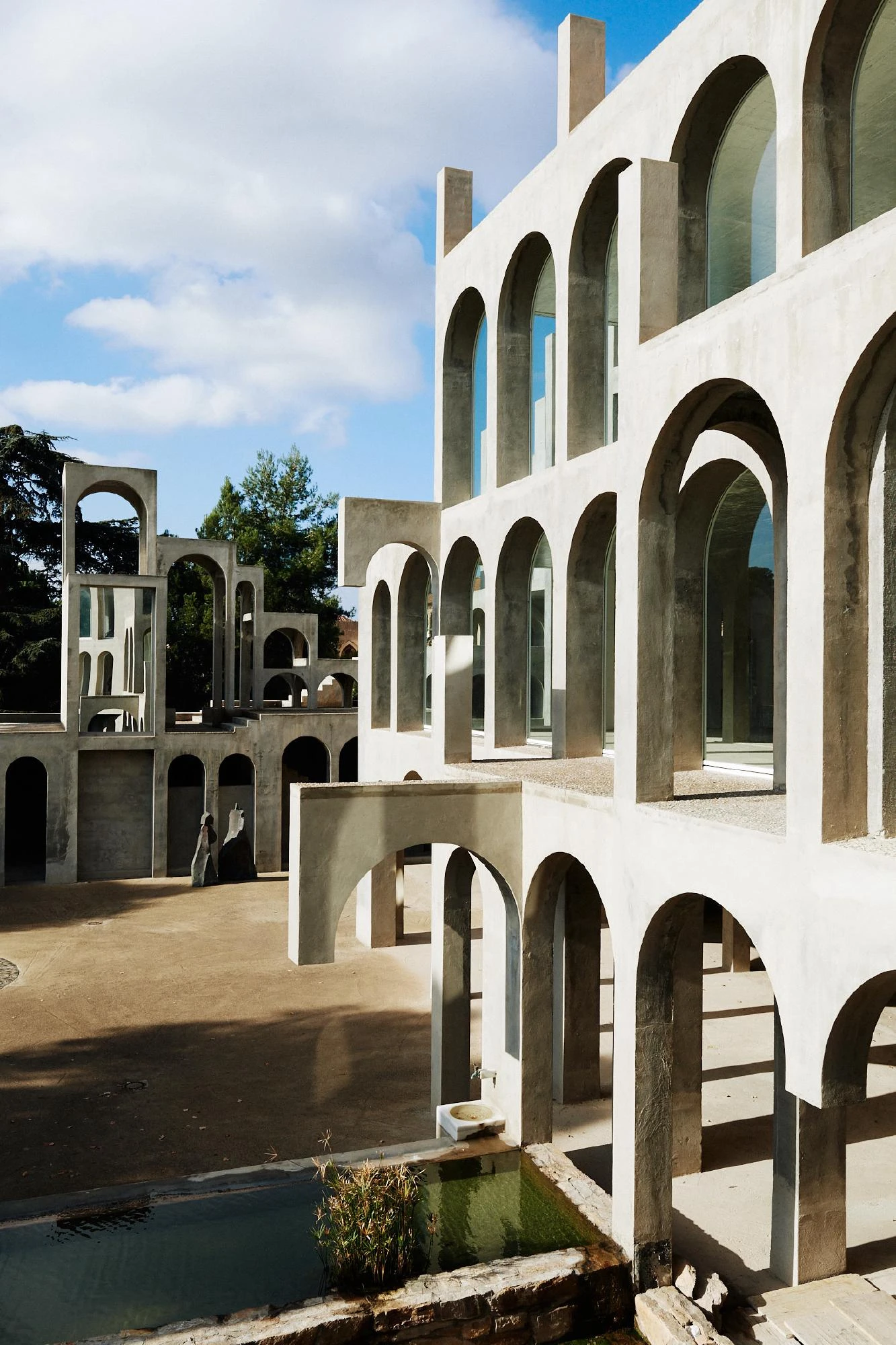
The oldest structures are board-formed concrete, grey and weathered, their surfaces still carrying the grain of the timber shuttering. Corberó multiplied a single motive, the round arch, across every scale he could reach. Arches open into arches. They stack into slender towers that stand free against the sky, frame rectangular voids of pure blue, and drop into shaded arcades at ground level. Courtyards of raked gravel hold reflecting pools edged with reeds, and cypress and umbrella pine press in from the garden. The effect is closer to a ruin built forward than a house, an aqueduct that decided to become a home.

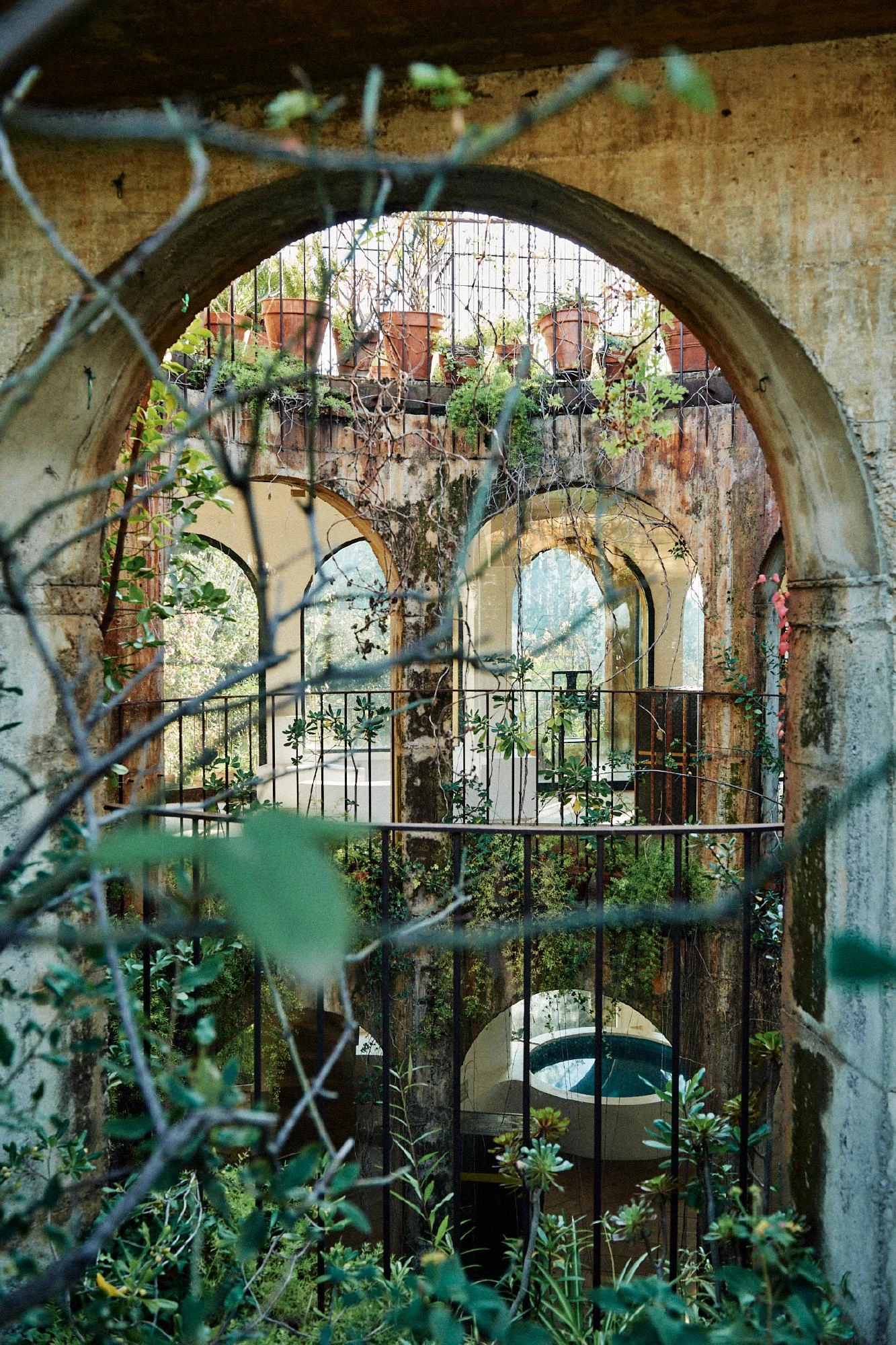
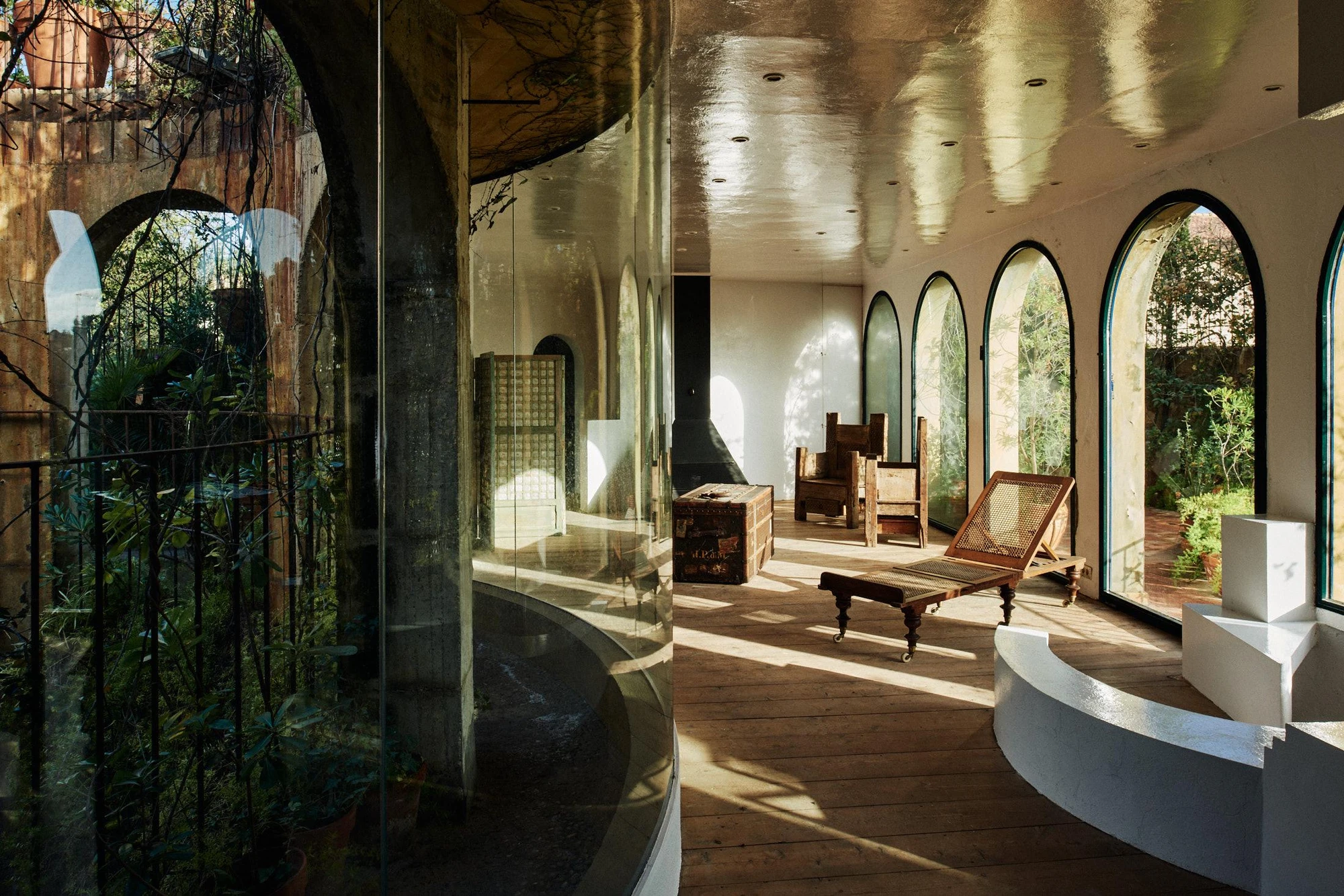
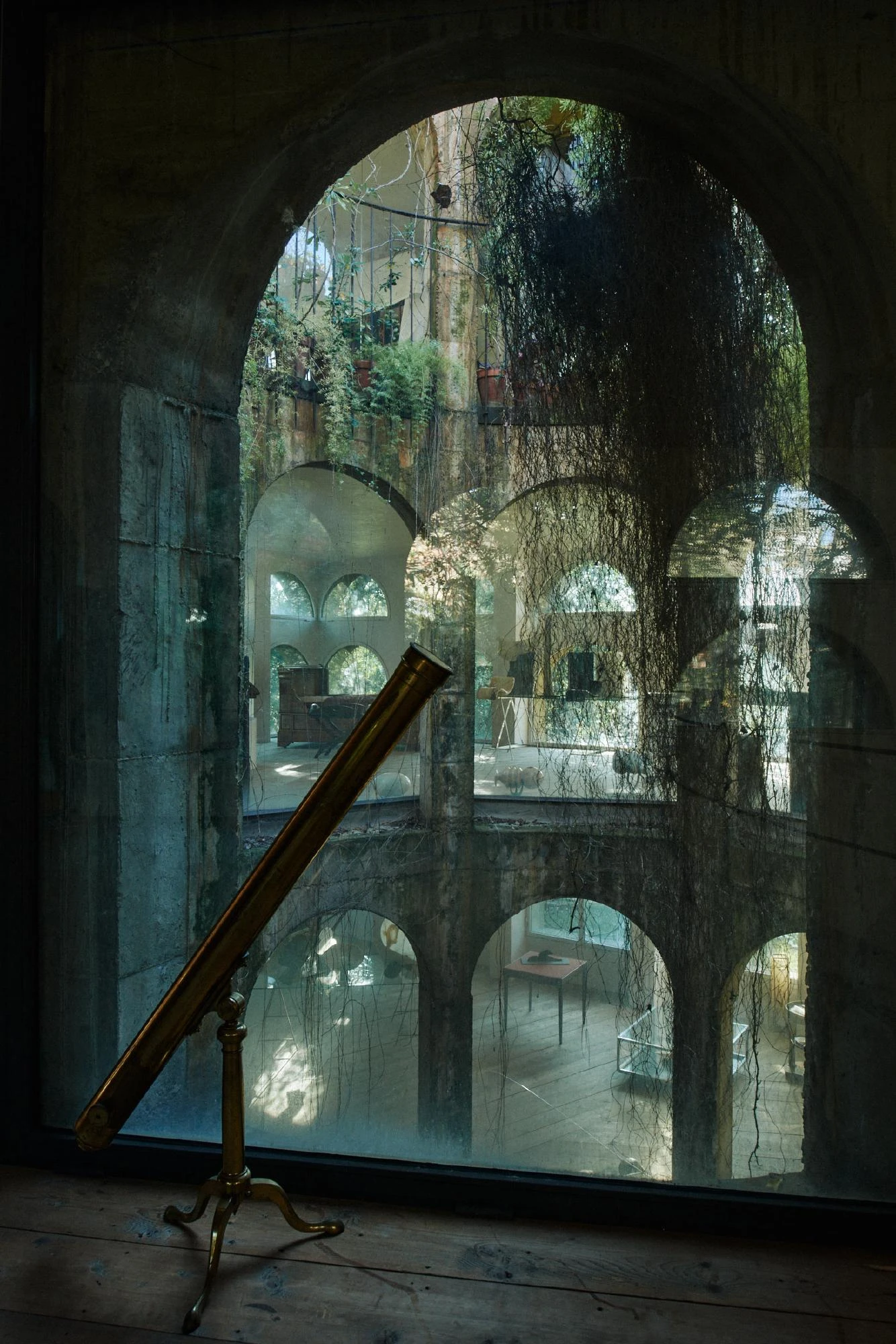
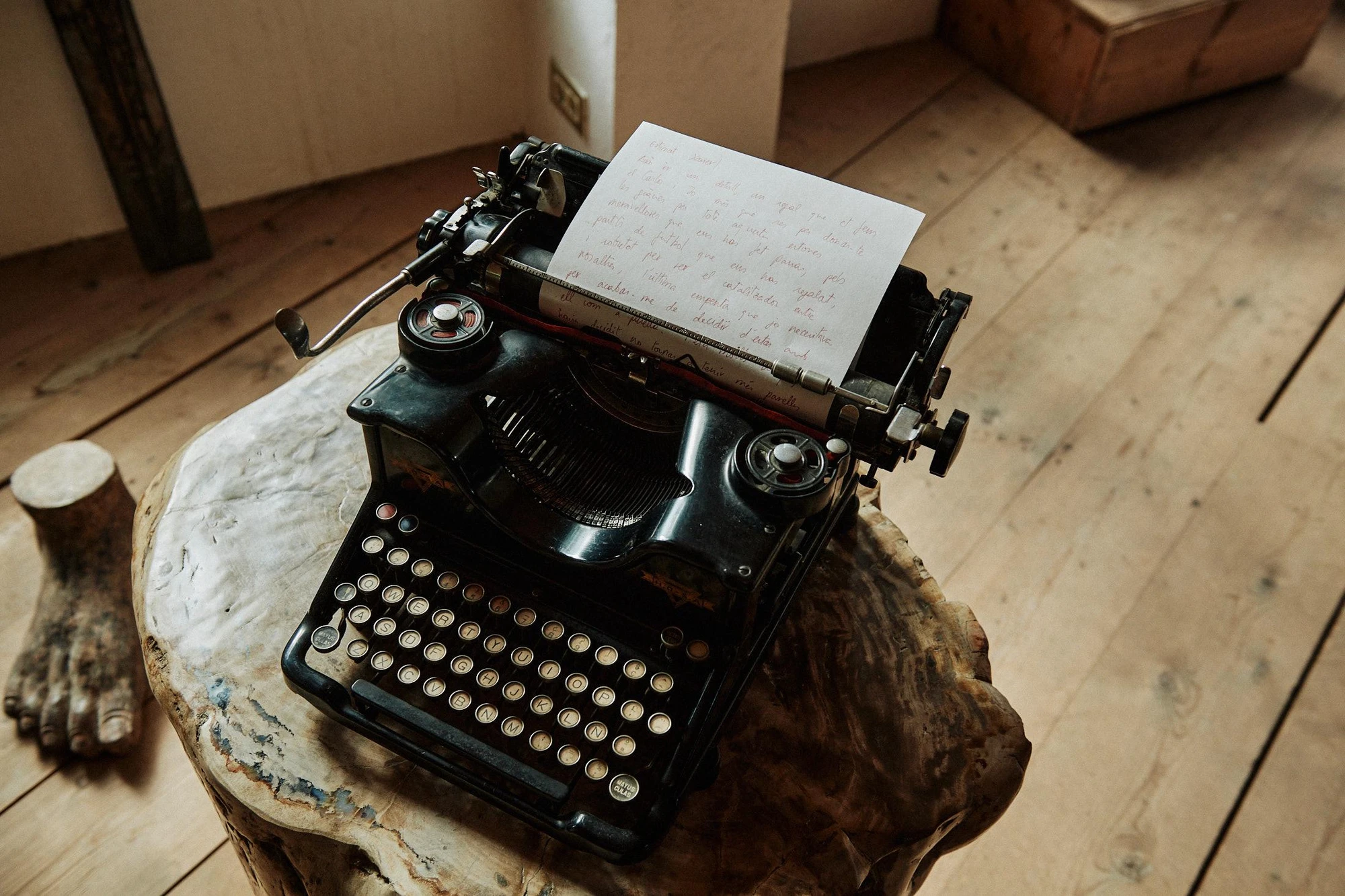
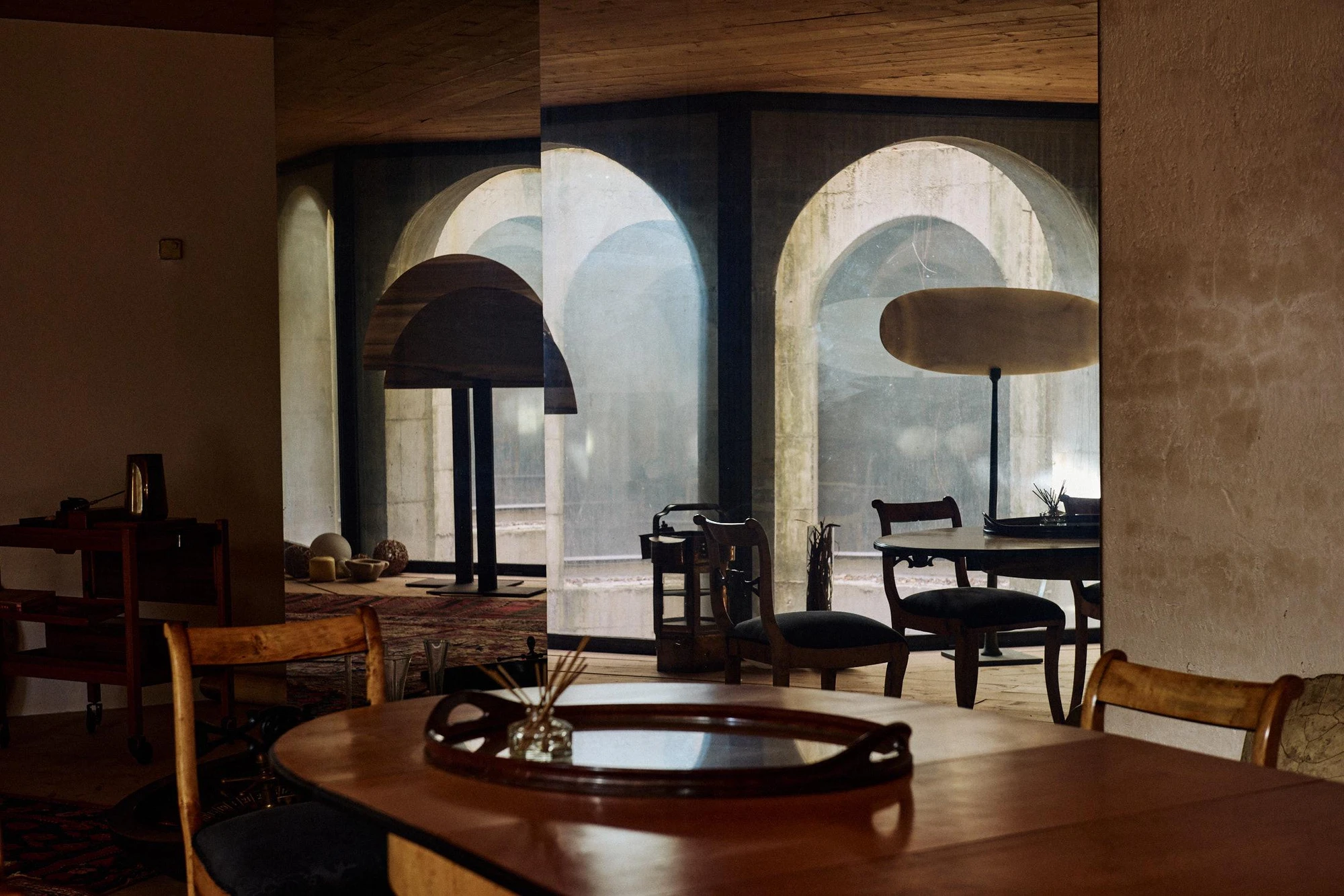
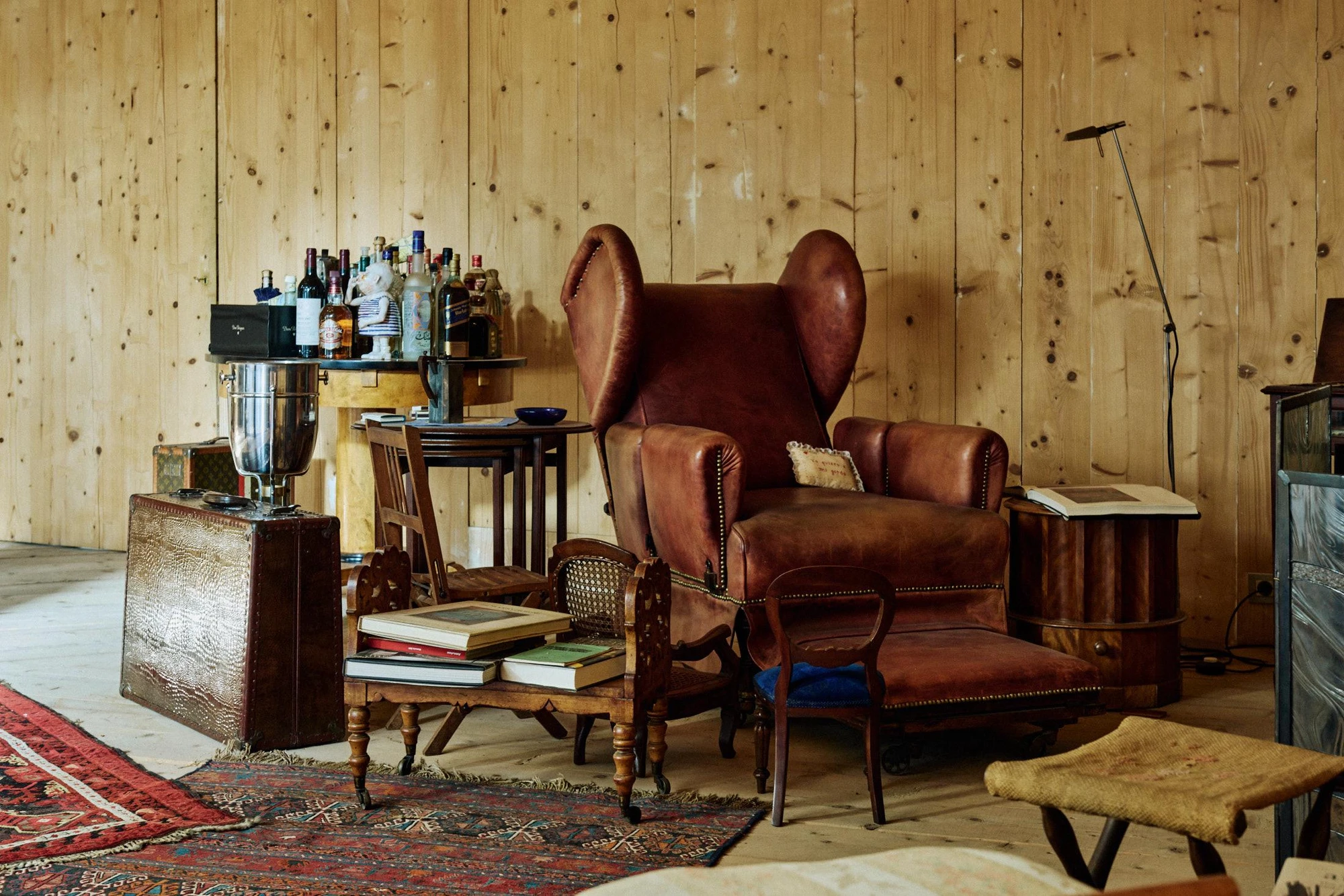
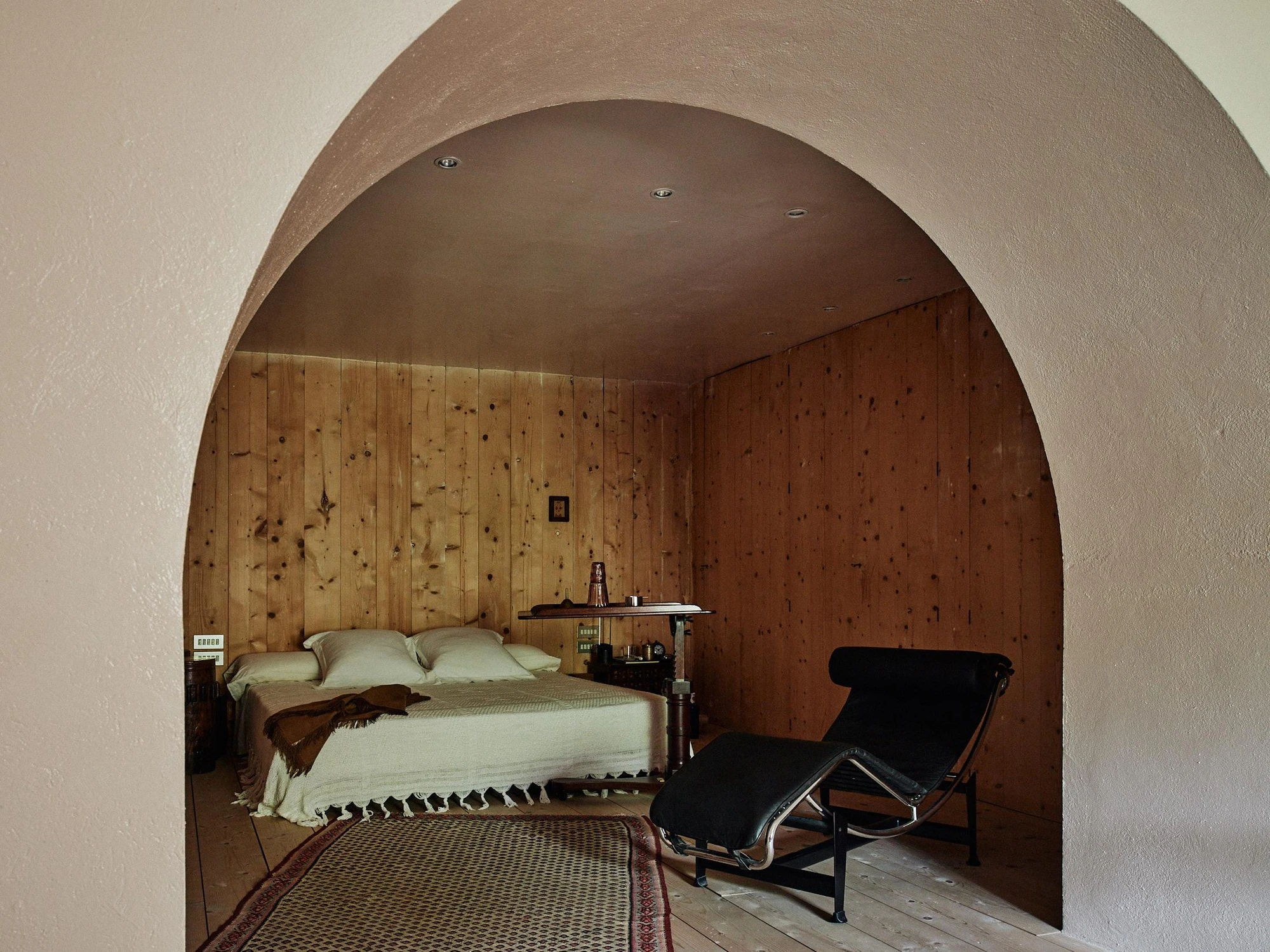
Inside, the grey gives way to warmth. Lime-plastered arches turn soft pink and ochre, wide pine boards run underfoot, and tongue-and-groove panelling lines the sleeping rooms. Corberó furnished the labyrinth like a collector: a cracked leather wingback beside a makeshift bar, kilims layered over plank floors, a Le Corbusier chaise parked under a plastered vault. A brass telescope leans at a tall window that looks down through hanging vines into a flooded lower court. On a slab of raw timber sits a black typewriter, a handwritten letter in Catalan still curling from the roller.

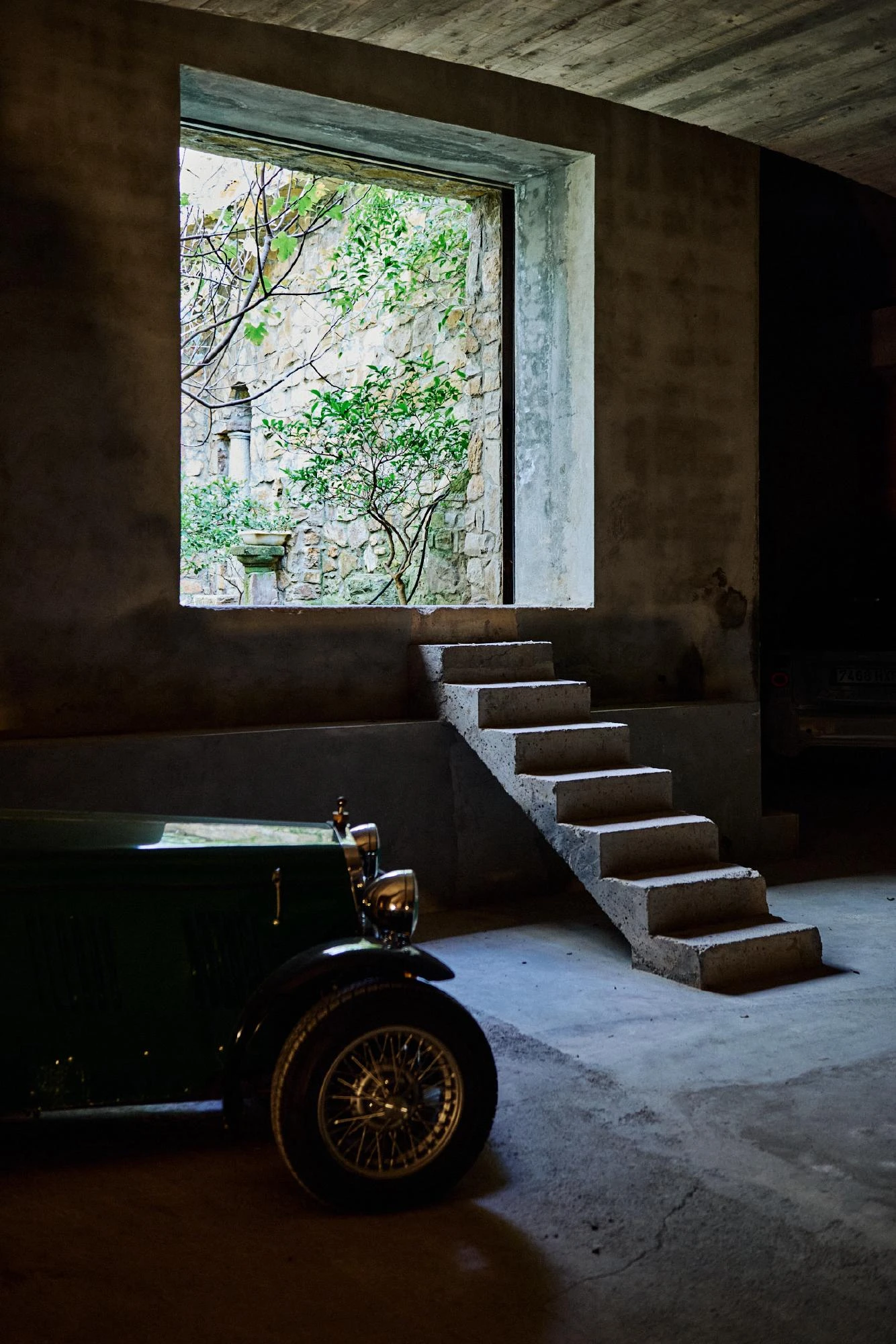
Light does most of the work. The low southern sun rakes through the arcades and lays long diagonal bars across the concrete, while glazed arches double every view, courtyard folded into interior and back again. Movement through the compound is all threshold, one framed opening giving onto the next until the count of rooms slips away. A green vintage roadster waits in a half-buried garage below a square window cut to a wall of rough stone and fig leaves.

Corberó died in 2017 with the work still open-ended, and in 2024 the municipality of Esplugues opened the estate to visitors for the first time. What they inherit is less a building than a self-portrait, one maker's attempt to live permanently inside his own imagination. It belongs to the long, stubborn line of artist-built worlds, Ferdinand Cheval's Palais Idéal, Niki de Saint Phalle's Tarot Garden, places where a single obsession hardens into ground you can walk. Corberó's is poured in Mediterranean grey, and it is still catching the light.
Interested in Showcasing Your Work?

If you would like to feature your works on Thisispaper, please visit our Submission page and sign up to Thisispaper+ to submit your work. Once your submission is approved, your work will be showcased to our global audience of 2 million art, architecture, and design professionals and enthusiasts.
No items found.
Less, with more behind it.
Explore guides. Search the archive. Walk the atlas.
Become a Thisispaper+ member today to unlock full access to our magazine, advanced tools, and support our work.
Get two months FREE
with annual subscription
Less, with more behind it.
Explore guides. Search the archive. Walk the atlas.
Become a Thisispaper+ member today to unlock full access to our magazine, advanced tools, and support our work.
Get two months FREE
with annual subscription
No items found.
Alexander Zaxarov
Jul 10, 2026

In Esplugues de Llobregat on the edge of Barcelona, sculptor Xavier Corberó spent decades pouring the arched concrete labyrinth of his house and studio, a single work he never finished.

Xavier Corberó bought a former potato farm on the edge of Esplugues de Llobregat in 1968 and never stopped building on it. Over the following decades the Catalan sculptor poured a compound of concrete arches that reads as one unfinished work, part residence, part studio, part private city. He had no formal training as a builder. He worked it the way he worked stone and bronze, by hand and by instinct, adding rooms, courtyards and towers as the idea demanded. Game of Thrones later borrowed its arcades for the House of the Undying, but the place was Corberó's own invention long before any camera found it.

The oldest structures are board-formed concrete, grey and weathered, their surfaces still carrying the grain of the timber shuttering. Corberó multiplied a single motive, the round arch, across every scale he could reach. Arches open into arches. They stack into slender towers that stand free against the sky, frame rectangular voids of pure blue, and drop into shaded arcades at ground level. Courtyards of raked gravel hold reflecting pools edged with reeds, and cypress and umbrella pine press in from the garden. The effect is closer to a ruin built forward than a house, an aqueduct that decided to become a home.

Inside, the grey gives way to warmth. Lime-plastered arches turn soft pink and ochre, wide pine boards run underfoot, and tongue-and-groove panelling lines the sleeping rooms. Corberó furnished the labyrinth like a collector: a cracked leather wingback beside a makeshift bar, kilims layered over plank floors, a Le Corbusier chaise parked under a plastered vault. A brass telescope leans at a tall window that looks down through hanging vines into a flooded lower court. On a slab of raw timber sits a black typewriter, a handwritten letter in Catalan still curling from the roller.

Light does most of the work. The low southern sun rakes through the arcades and lays long diagonal bars across the concrete, while glazed arches double every view, courtyard folded into interior and back again. Movement through the compound is all threshold, one framed opening giving onto the next until the count of rooms slips away. A green vintage roadster waits in a half-buried garage below a square window cut to a wall of rough stone and fig leaves.

Corberó died in 2017 with the work still open-ended, and in 2024 the municipality of Esplugues opened the estate to visitors for the first time. What they inherit is less a building than a self-portrait, one maker's attempt to live permanently inside his own imagination. It belongs to the long, stubborn line of artist-built worlds, Ferdinand Cheval's Palais Idéal, Niki de Saint Phalle's Tarot Garden, places where a single obsession hardens into ground you can walk. Corberó's is poured in Mediterranean grey, and it is still catching the light.
Interested in Showcasing Your Work?

If you would like to feature your works on Thisispaper, please visit our Submission page and subscribe to Thisispaper+. Once your submission is approved, your work will be showcased to our global audience of 2 million art, architecture, and design professionals and enthusiasts.
Thisispaper+
Barcelona Guide
30+ Locations
Web Access
Link to Maps
Architecture in Barcelona — from Gaudí's organic forms to contemporary studios navigating the Gothic Quarter's density. Ceramic facades, courtyard houses, cultural centres, and the interplay of stone, tile, and shadow that defines building in this city.
Explore
Barcelona Guide

Join Thisispaper+
Unlock access to 2500 stories, curated guides + editions, and share your work with a global network of architects, artists and designers who are shaping the future.
Get two months FREE
with annual subscription
Travel Guides
Immerse yourself in timeless destinations, hidden gems, and creative spaces—curated by humans, not algorithms.
Explore All Guides +
Submission Module
Submit your project and gain the chance to showcase your work to our worldwide audience of over 2M architects, designers, artists, and curious minds.
Learn More+
Curated Editions
Dive deeper into carefully curated editions, designed to feed your curiosity and foster exploration.
Off-the-Grid
Jutaku
Sacral Journey
minimum
The New Chair
Explore All Editions +
Atlas
A new and interactive way to explore the most inspiring places around the world.
Interactive map
Linked to articles
450+ curated locations
Google + Apple directions
Smart filters
Subscribe to Explore+
Become a Thisispaper+ member today to unlock full access to our magazine, submit your project and support our work.
Join Thisispaper+Join Thisispaper+
€9/month
Get two months FREE
with annual subscription