Thisispaper Community
Join today.
Enter your email address to receive the latest news on emerging art, design, lifestyle and tech from Thisispaper, delivered straight to your inbox.
Oops! Something went wrong while submitting the form.
Instant access to new channels
The top stories curated daily
Weekly roundups of what's important
Original features and deep dives
Exclusive community features
No items found.
Within and For Each Other by Jan Baszak at WHOISPOLA
Alexander Zaxarov
Oct 9, 2026

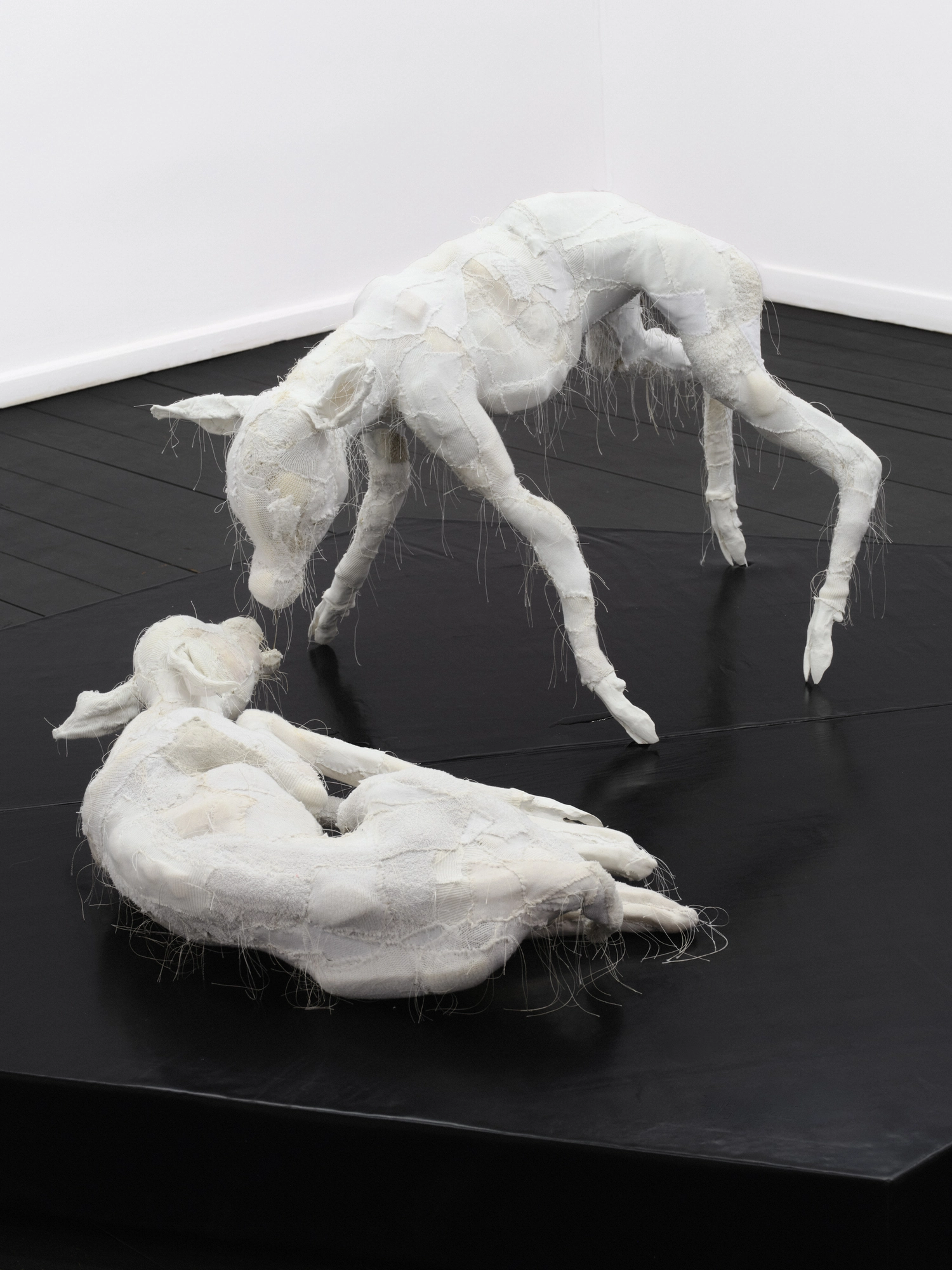
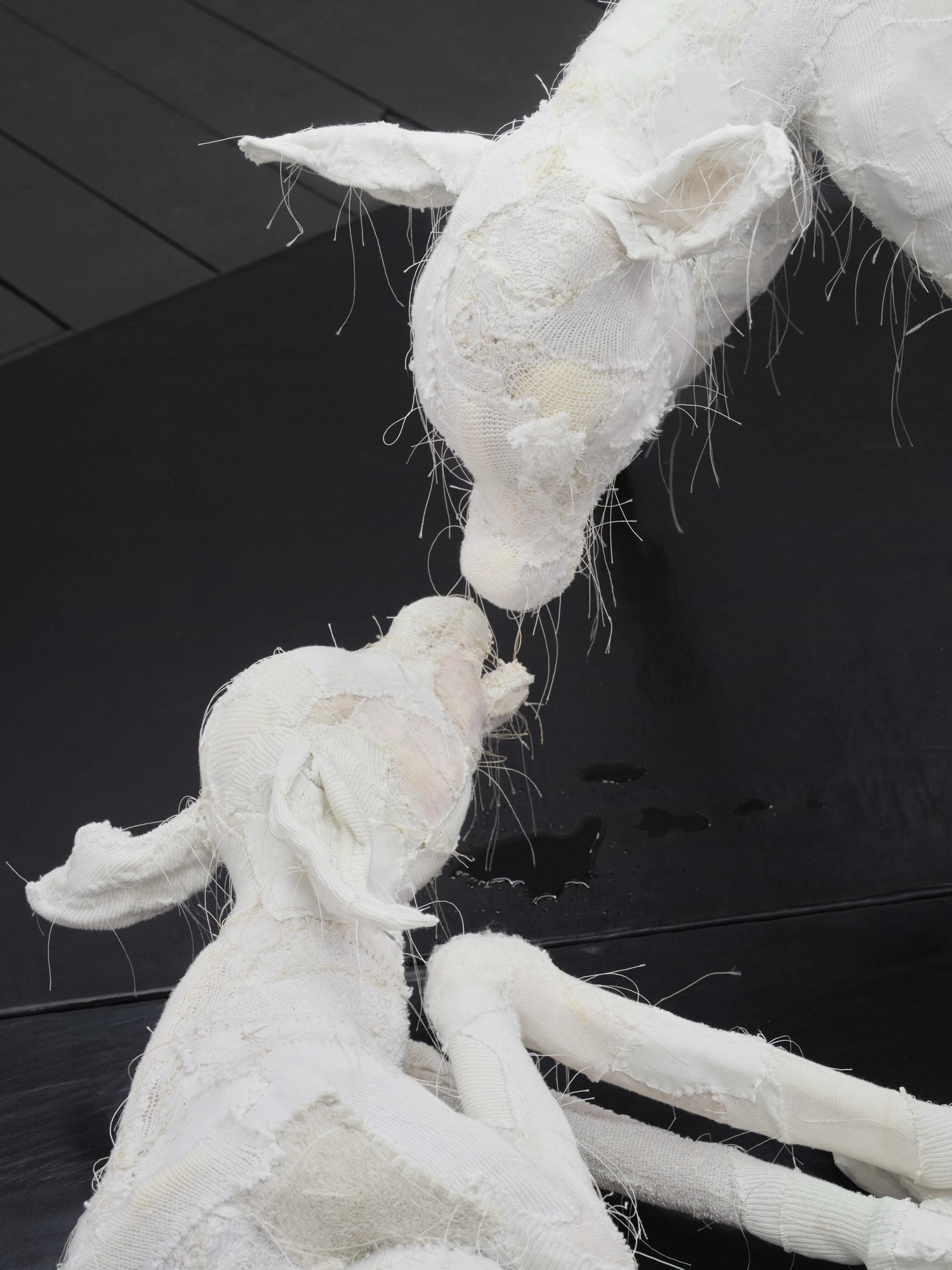
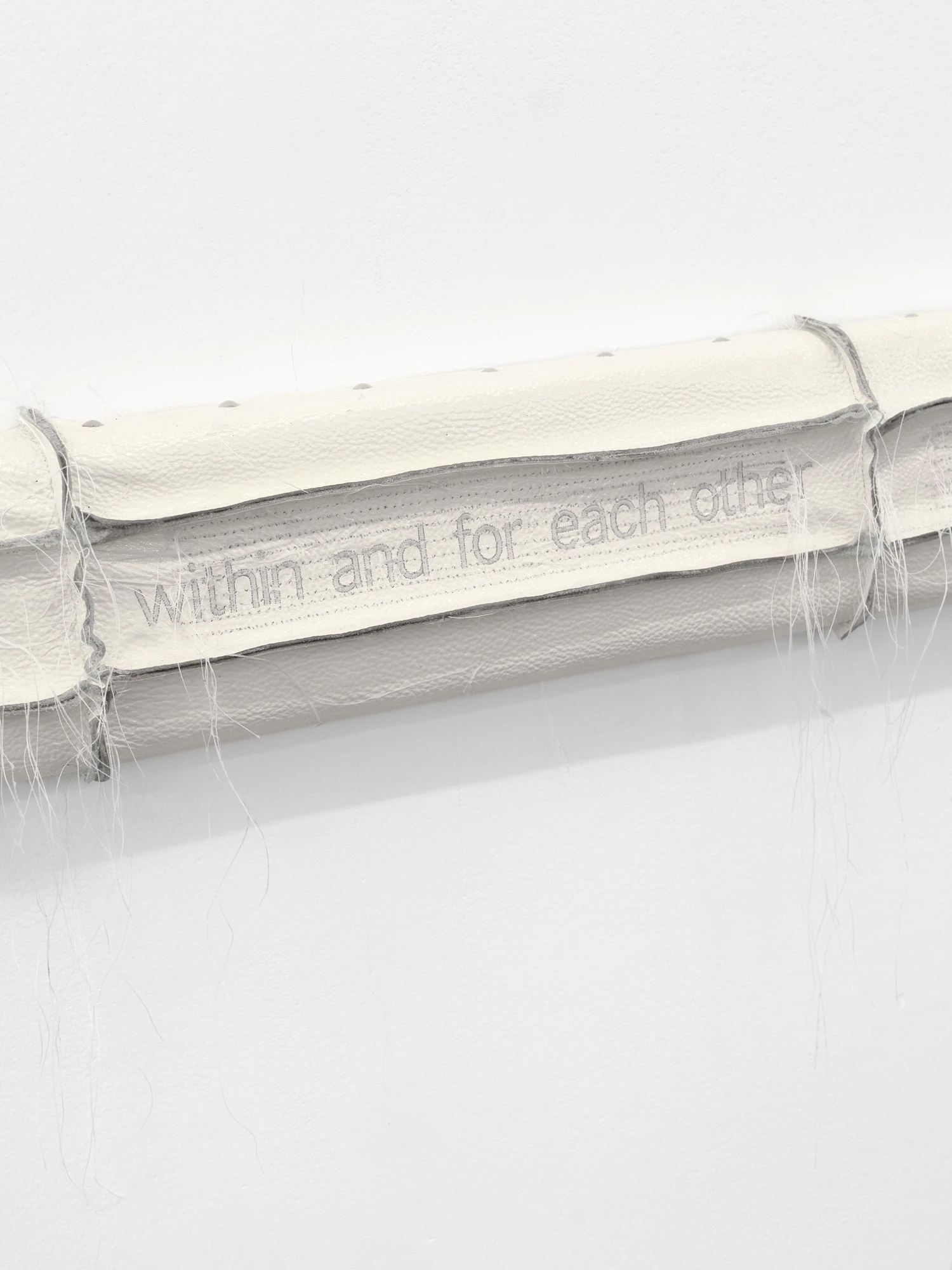
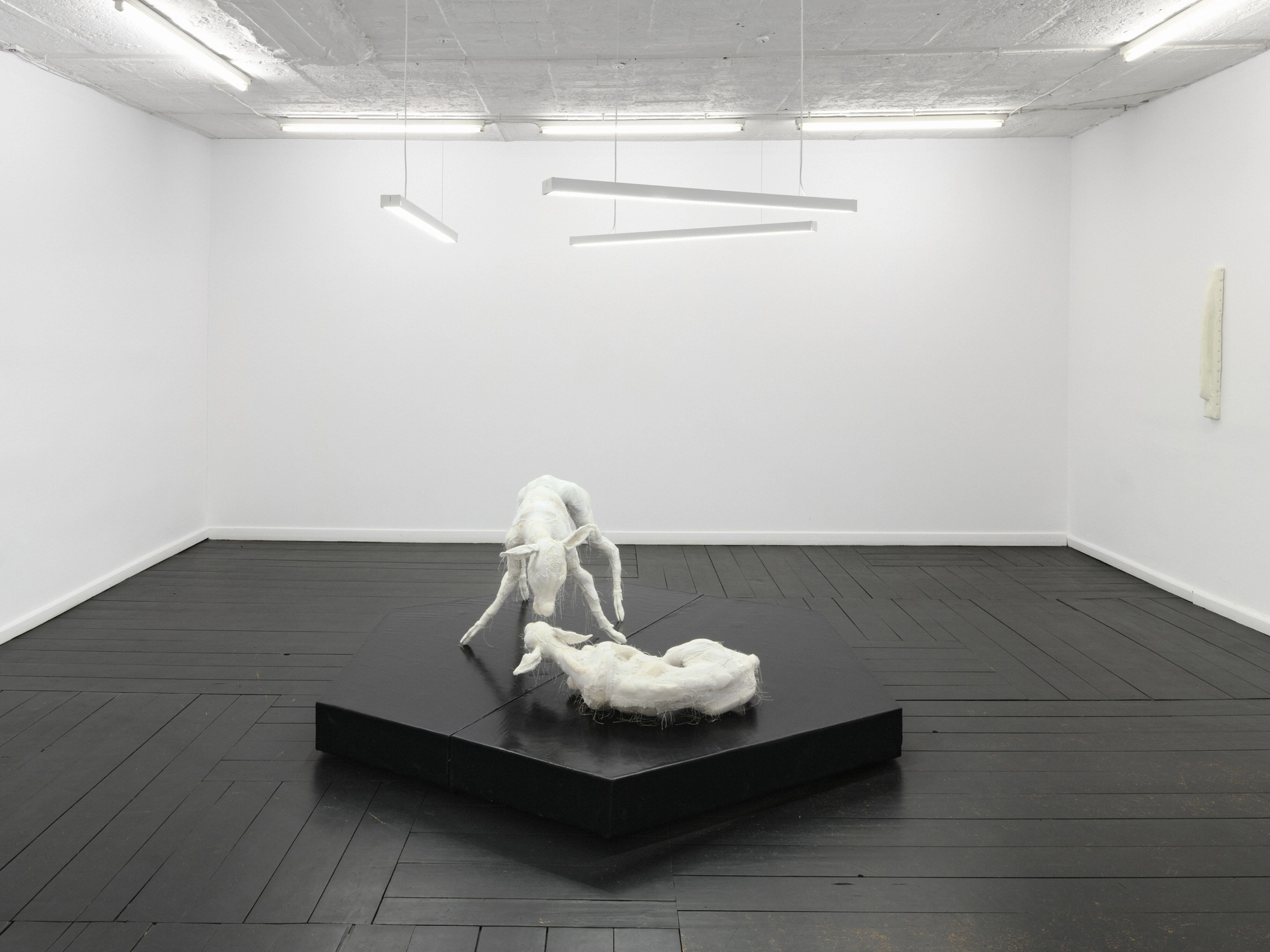
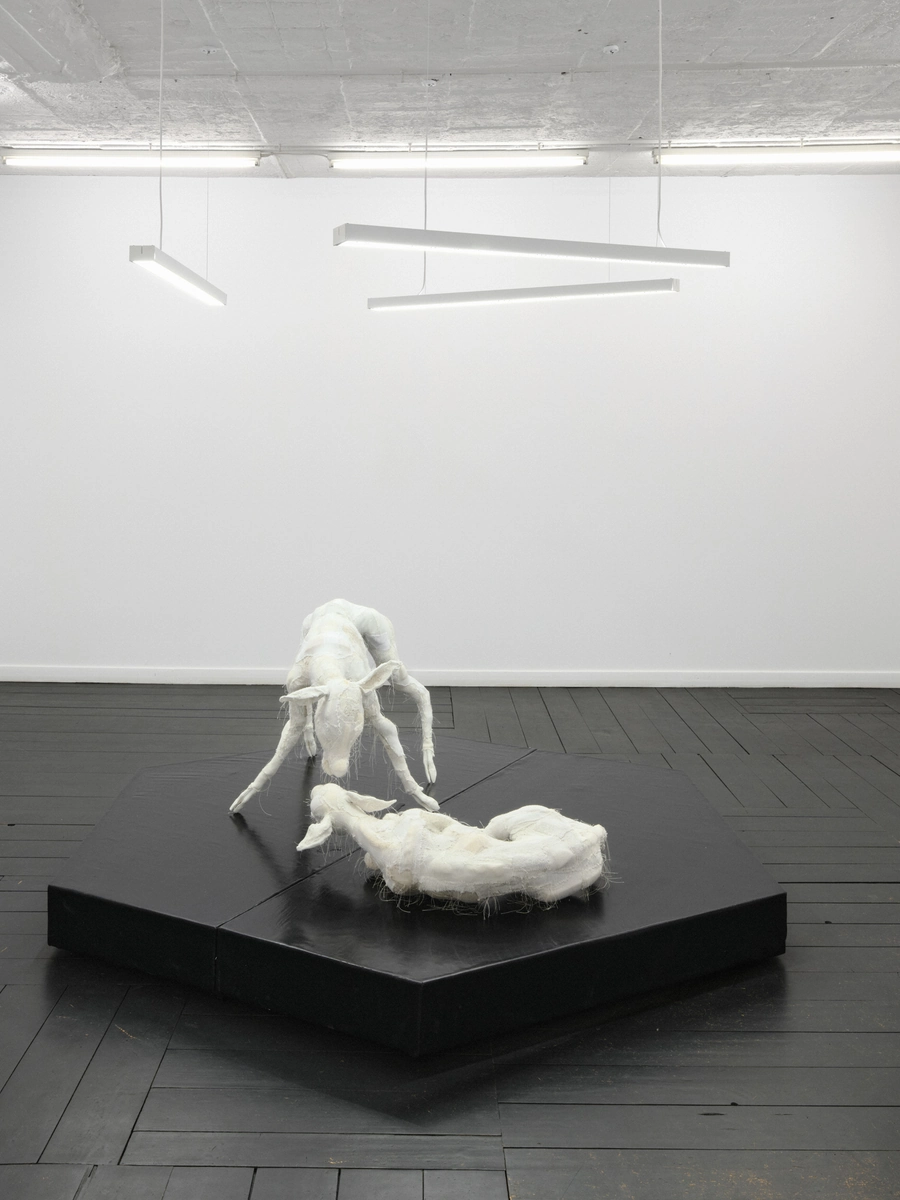
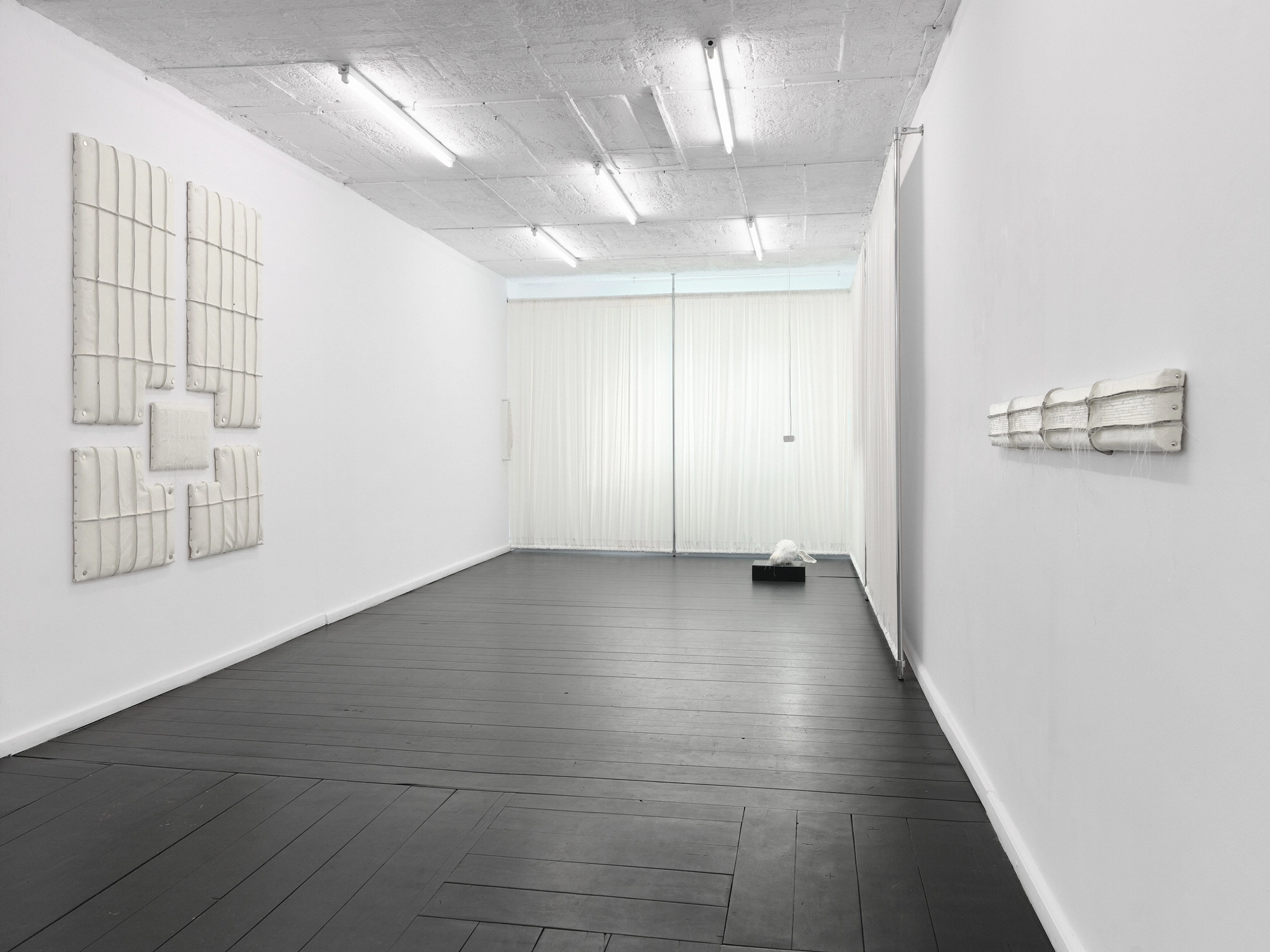
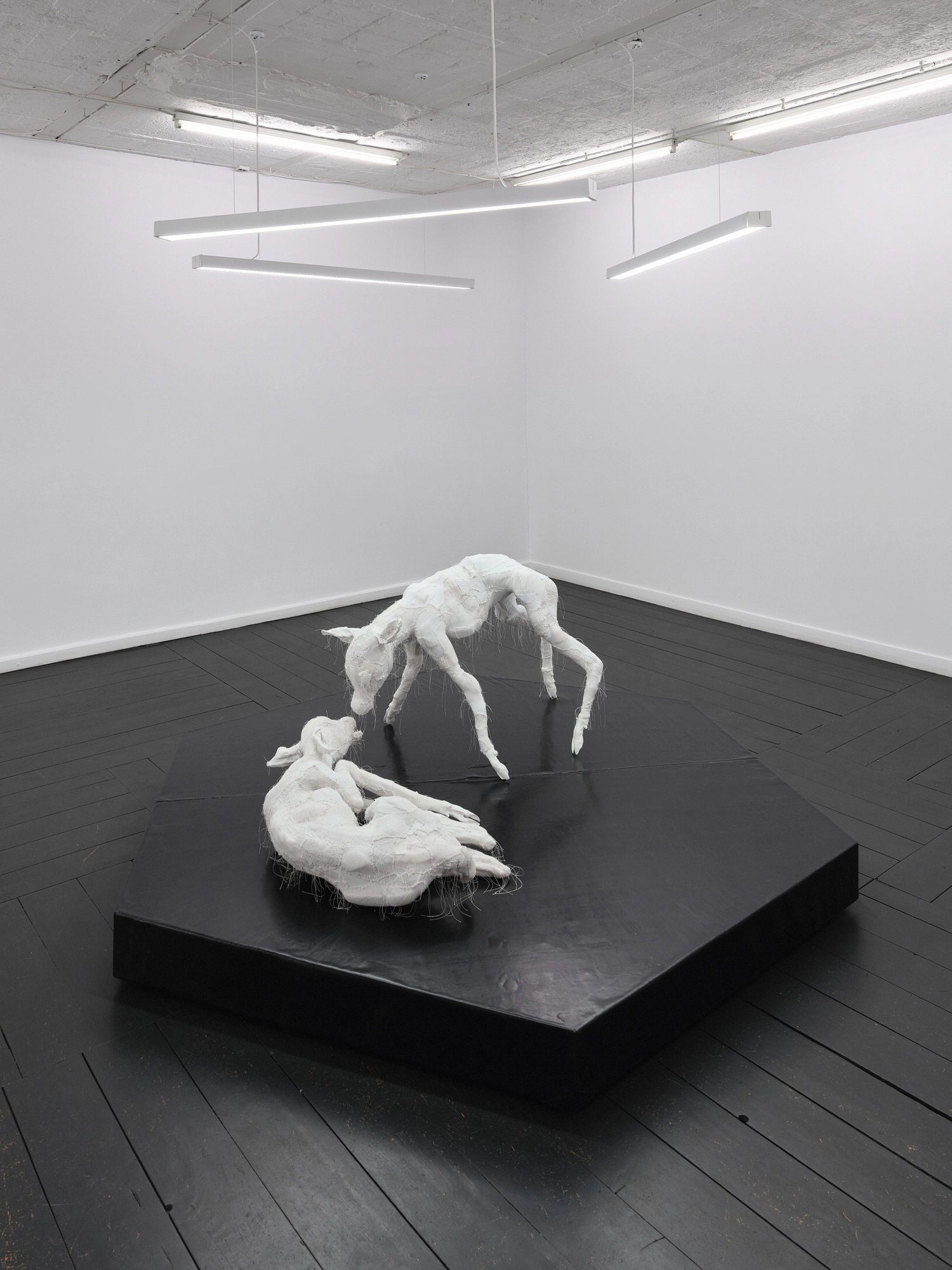
What passes between two bodies in an exchange of saliva? Jan Baszak answers at WHOISPOLA in Warsaw with Within and For Each Other, two albino roe deer made of foam, cotton, steel and synthetic saliva.

Jan Baszak makes bodies that should not hold together. His method is to coax soft materials into the likeness of other creatures, hybrids that never settle into a single species. Born in 1994 in Szczecin and now based between Szczecin, Warsaw and Berlin, he works under a banner he calls “abject romanticism,” a practice that in his words affirms “ritual, the crossing and dissolution of bodily boundaries, as well as strangeness and the abject.” The show’s title at WHOISPOLA comes from a line in Part II of Adam Mickiewicz’s Forefathers’ Eve.

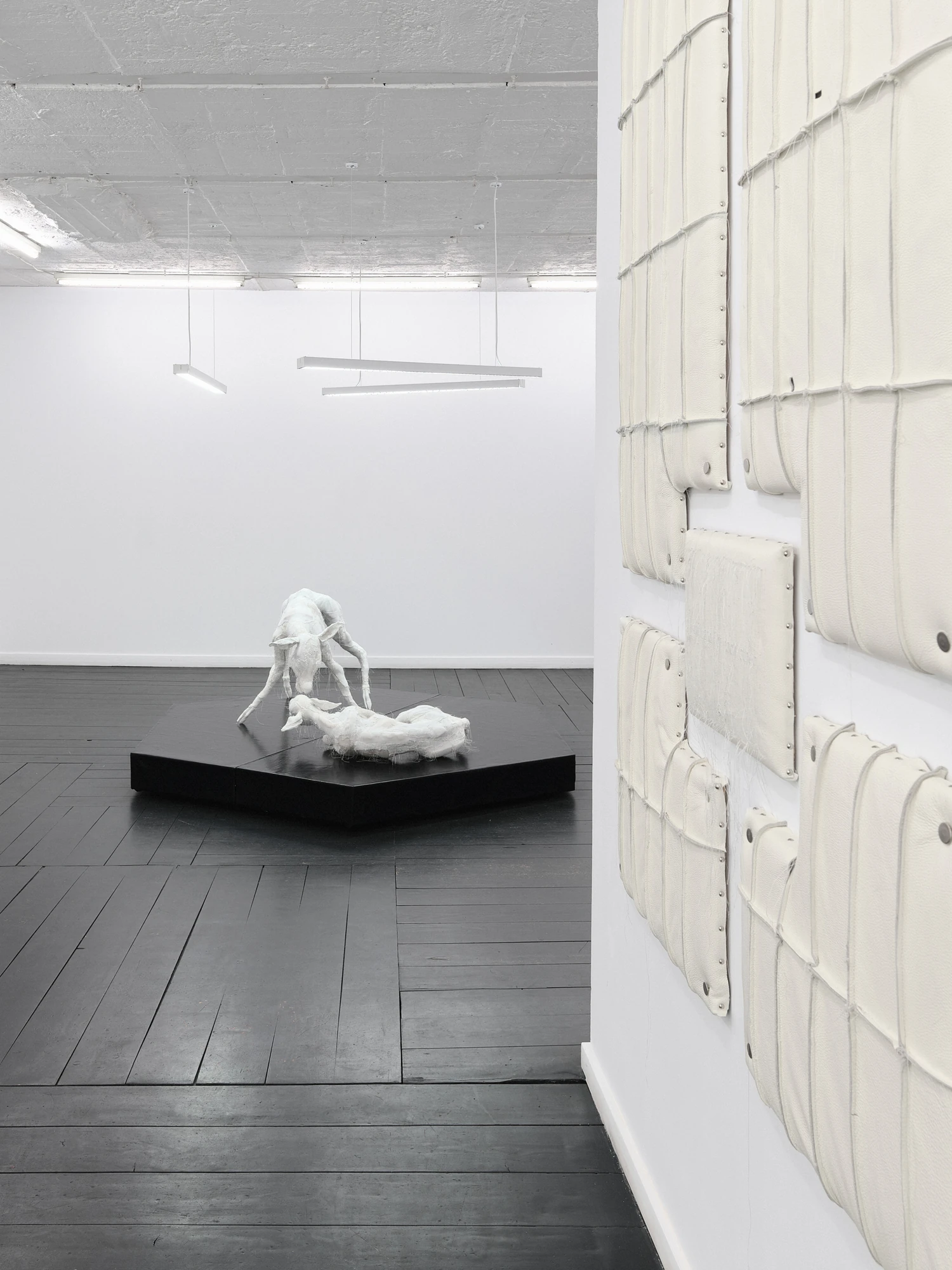
The show turns on two young roe deer joined in an exchange of saliva. They are albinos, which makes them rarer and stranger still. The gallery sets the gesture down plainly: in the animal world it carries no symbolic meaning, yet from a human vantage it “evokes intimacy, care, disgust, and the crossing of boundaries,” the gallery writes. Saliva, synthetic here, is the connective matter, listed alongside the steel, PVC tubes, foam and epoxy resin that hold the pair together. “It is a miracle, but a frail one,” Sebastian Cichocki writes in the exhibition essay, pointing to the old hunters’ taboo against raising a hand to a white animal.

Cichocki reads the pair through permeability. He reaches for Lynn Margulis’s theory of endosymbiosis, once regarded as almost heretical, in which bodies are partly built from other beings, the mitochondria inside human cells descended from once free-living bacteria. Saliva, in his telling, doubles as ectoplasm, the sticky matter mediums were said to exude in séances, a lubricant for contact between two worlds. The roe deer suits the part, its whole body studded with scent glands, a creature that communicates without a single word. “Its entire body is a machine for nonverbal communication,” he writes.

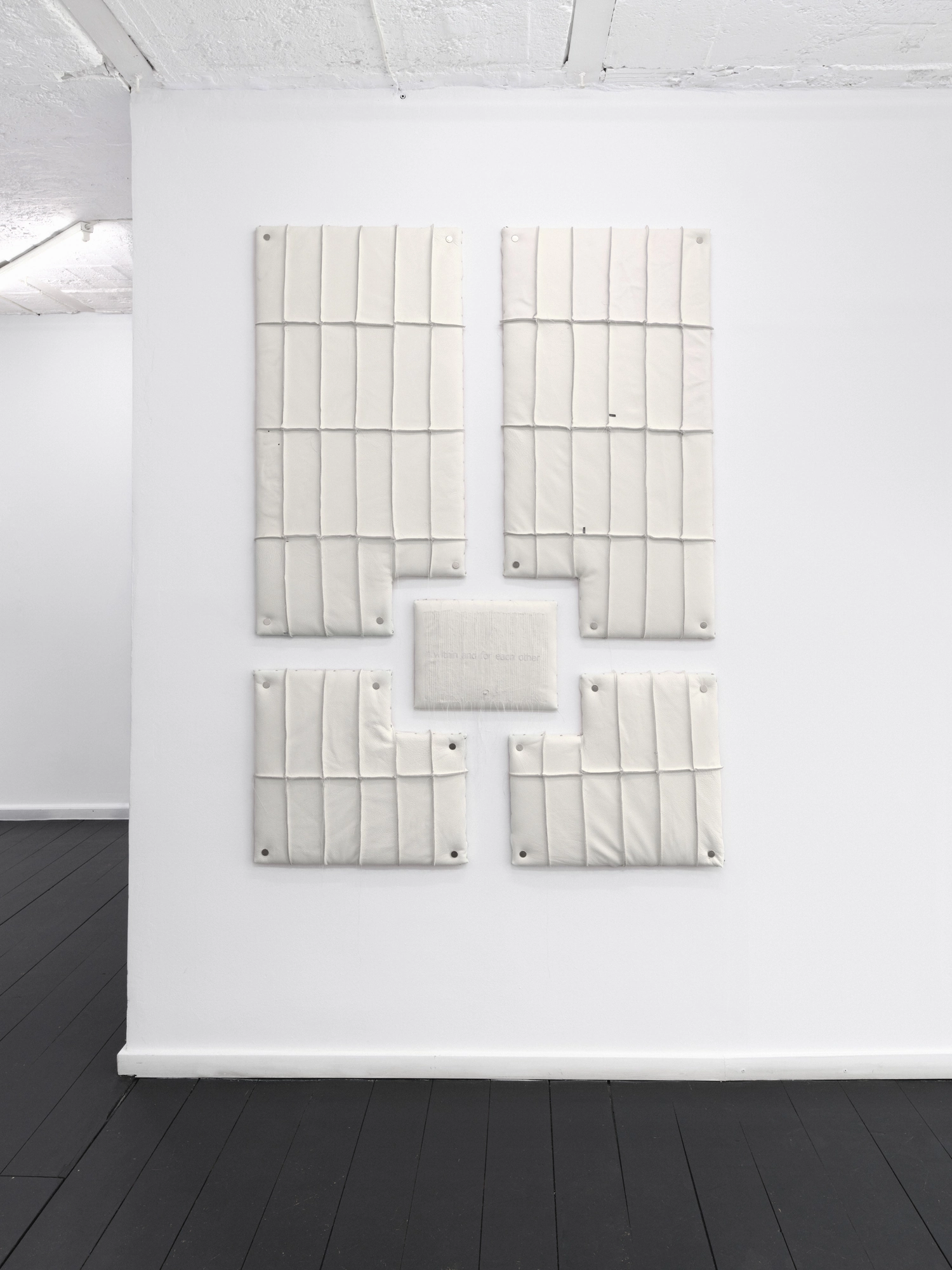
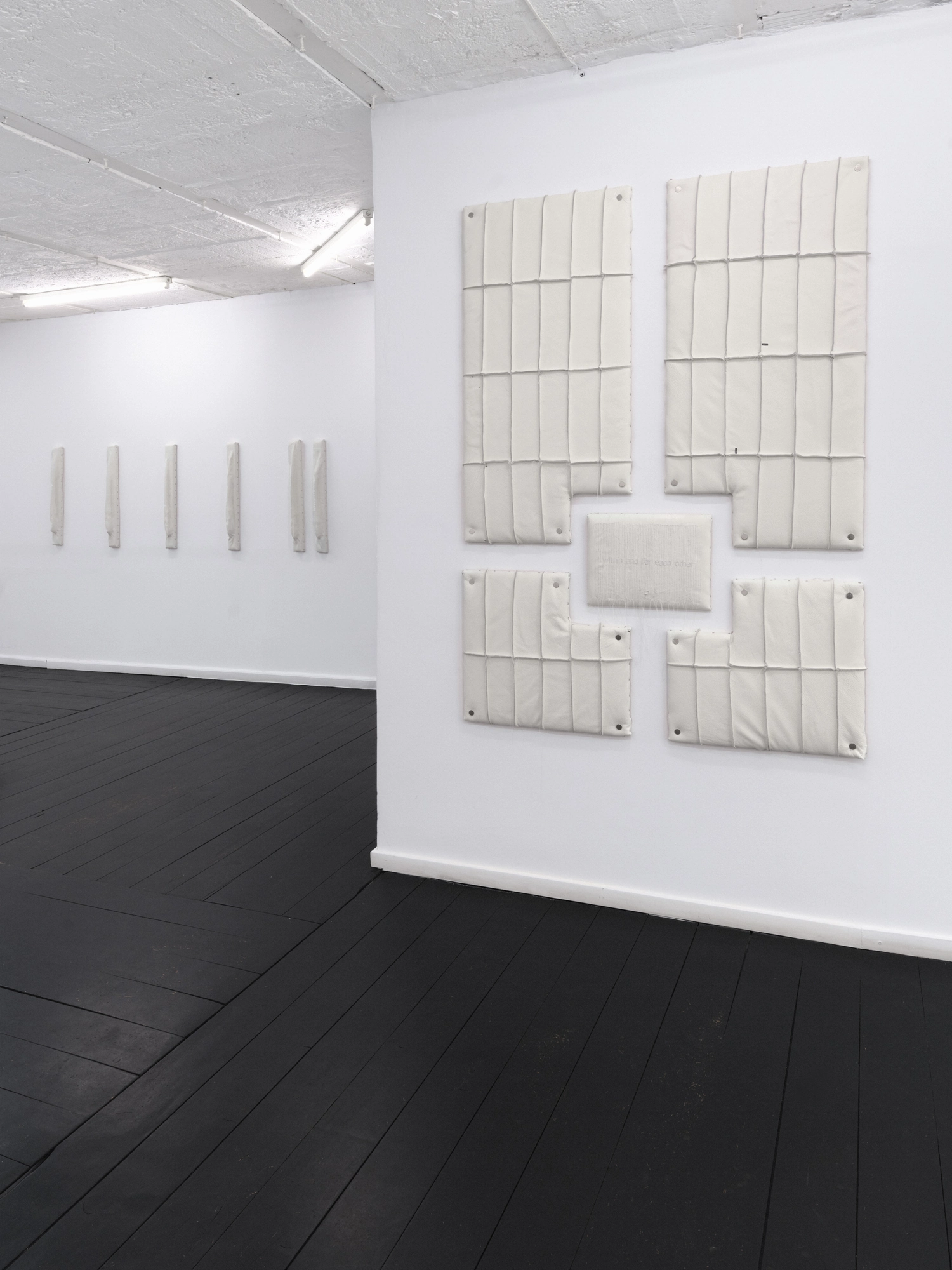
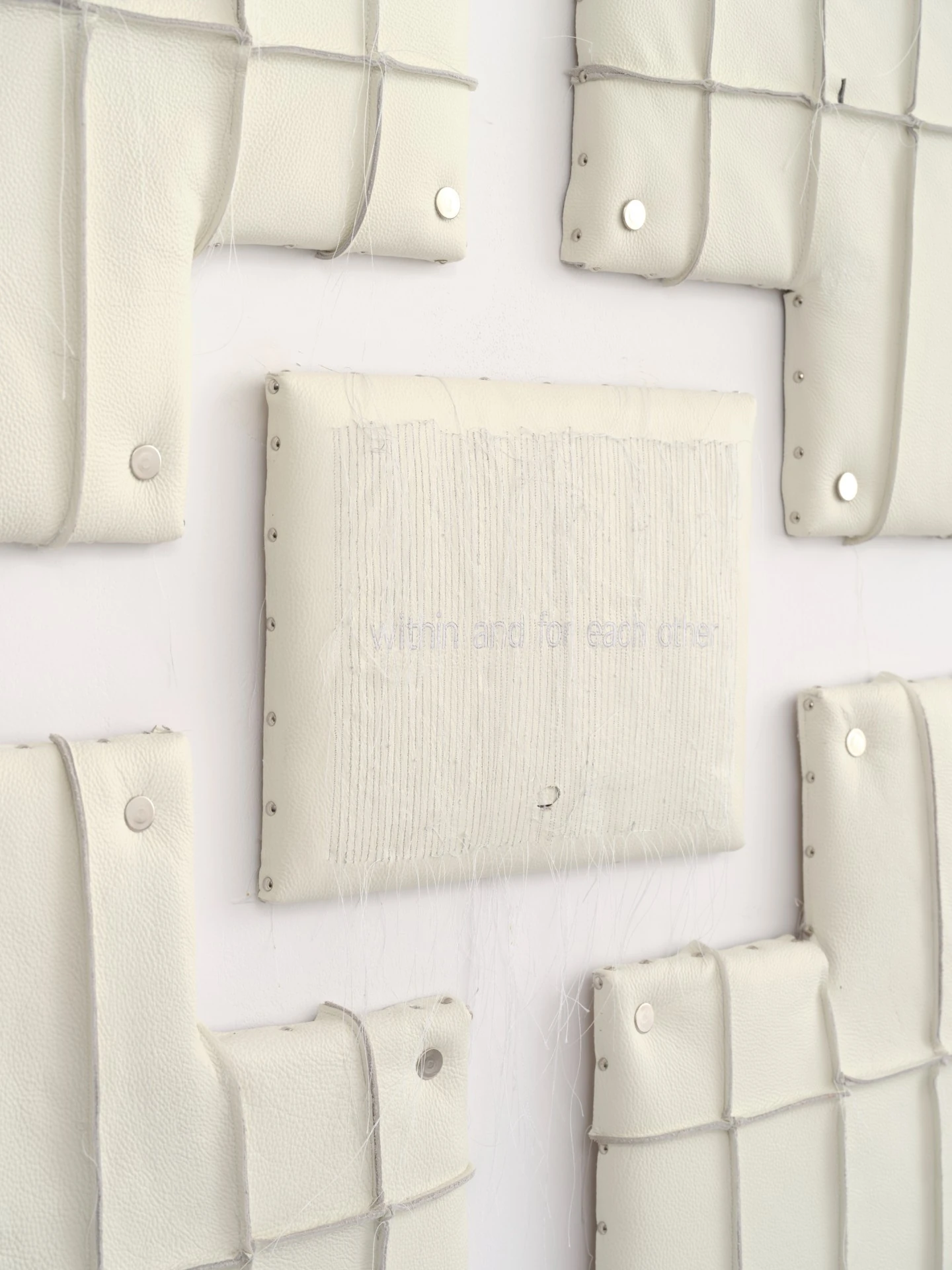
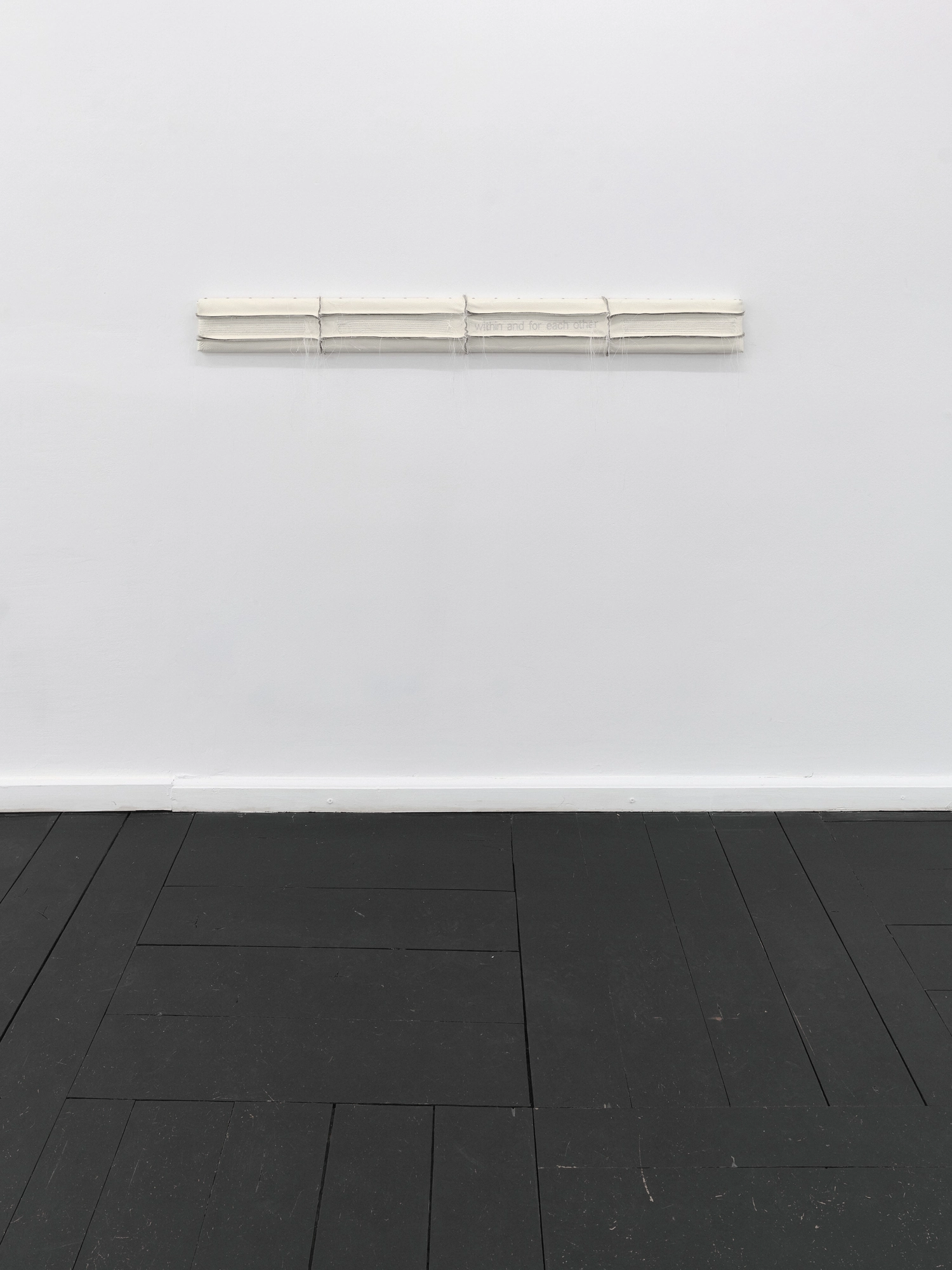
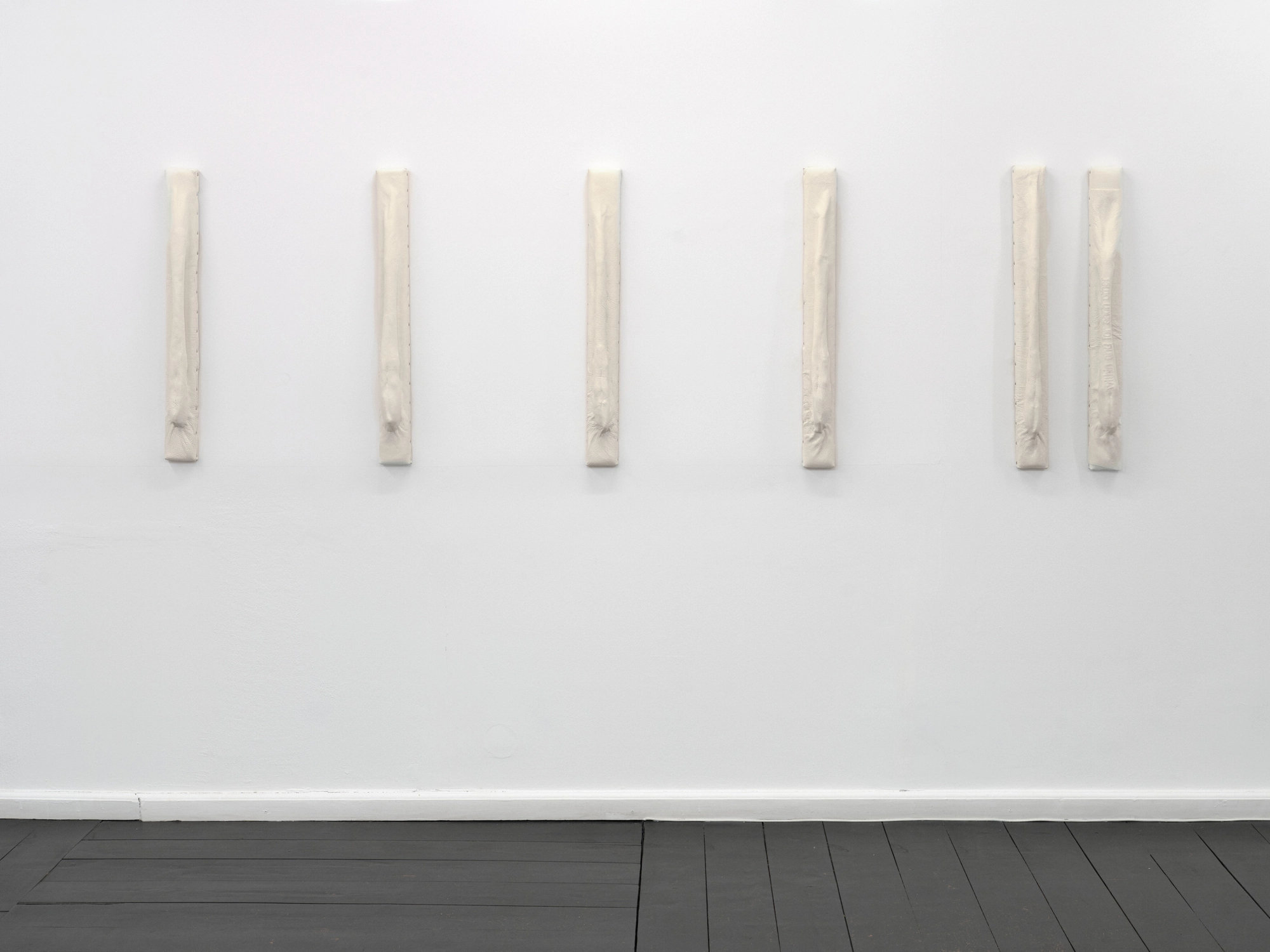
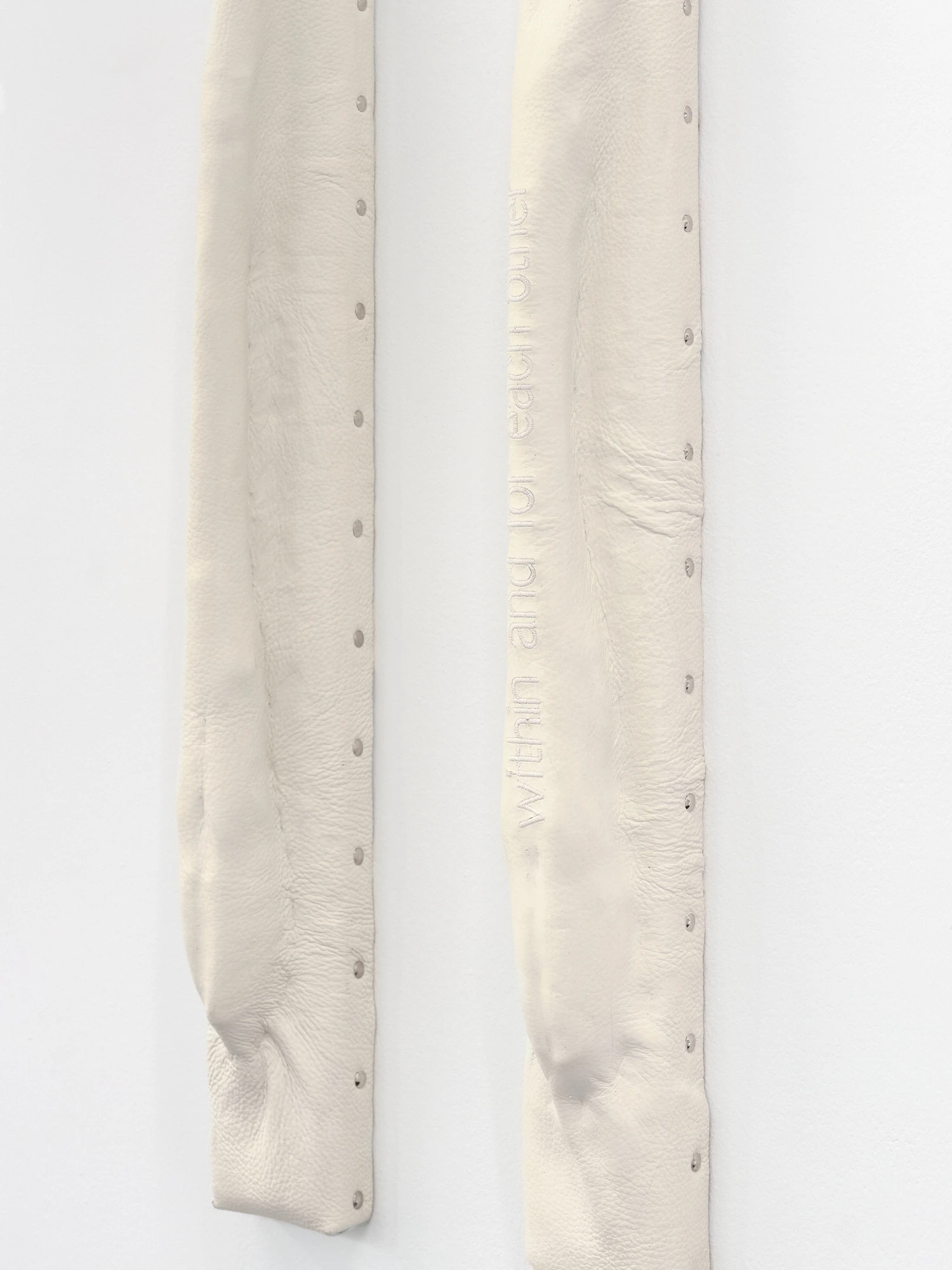
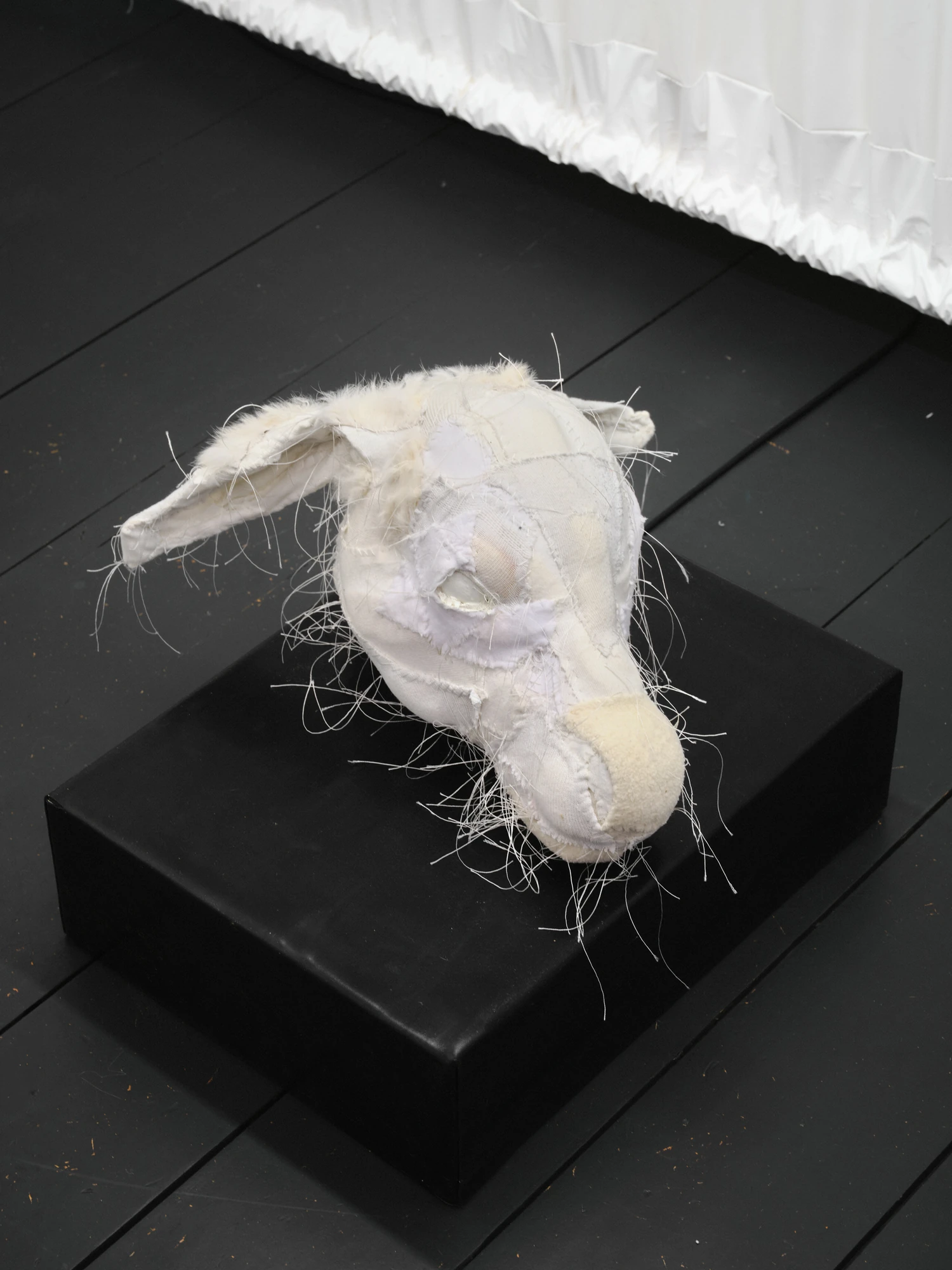
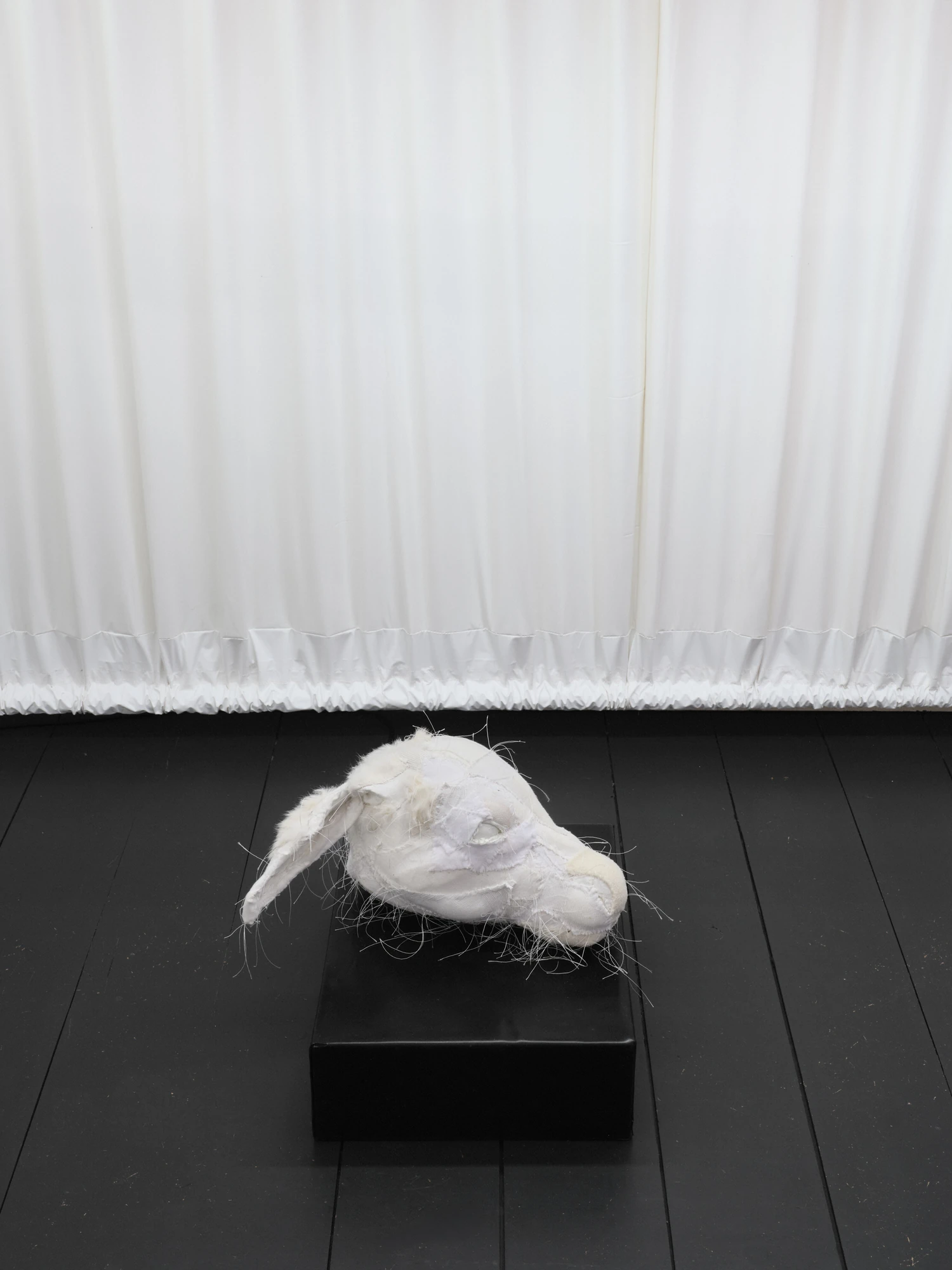
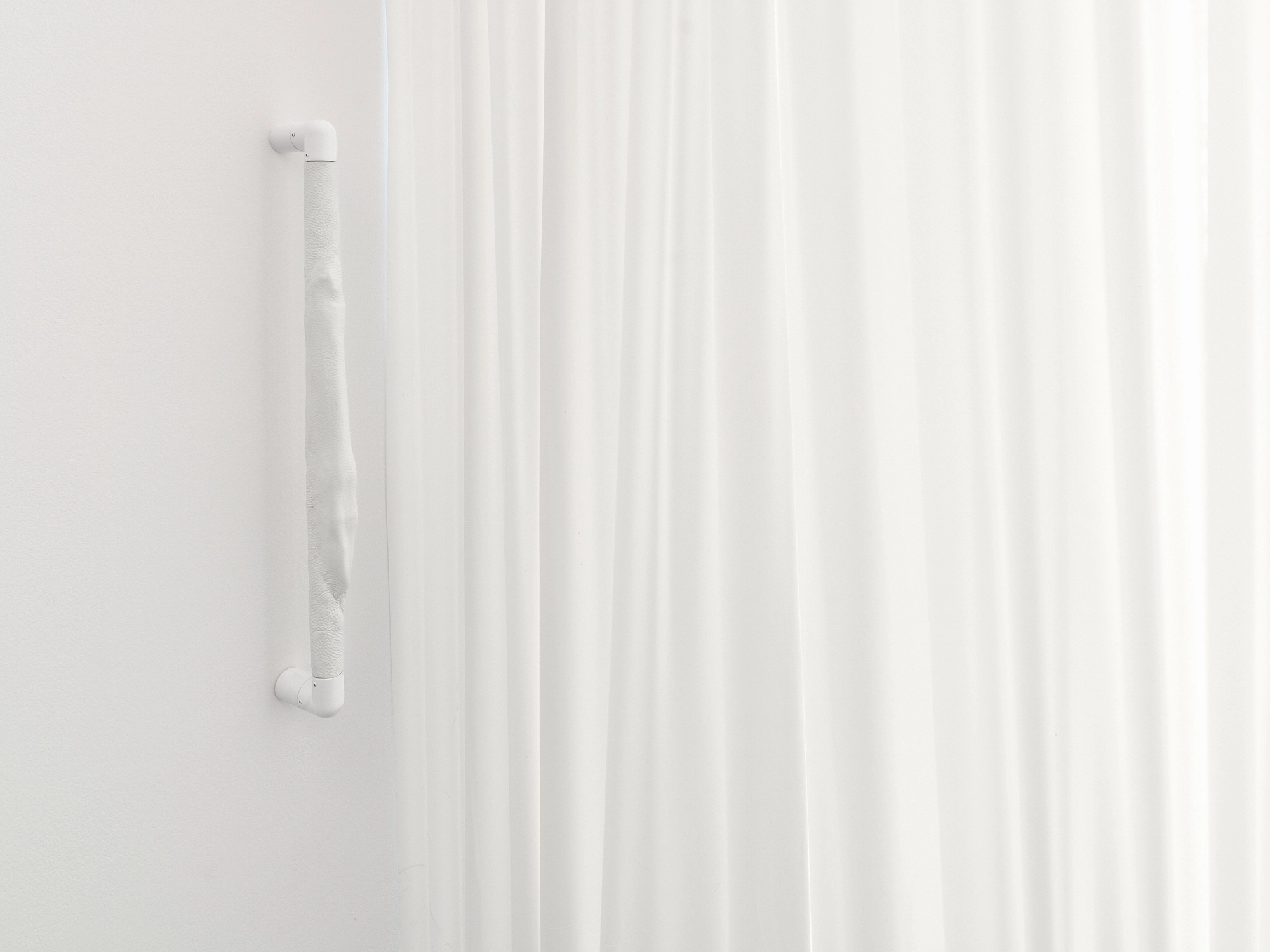
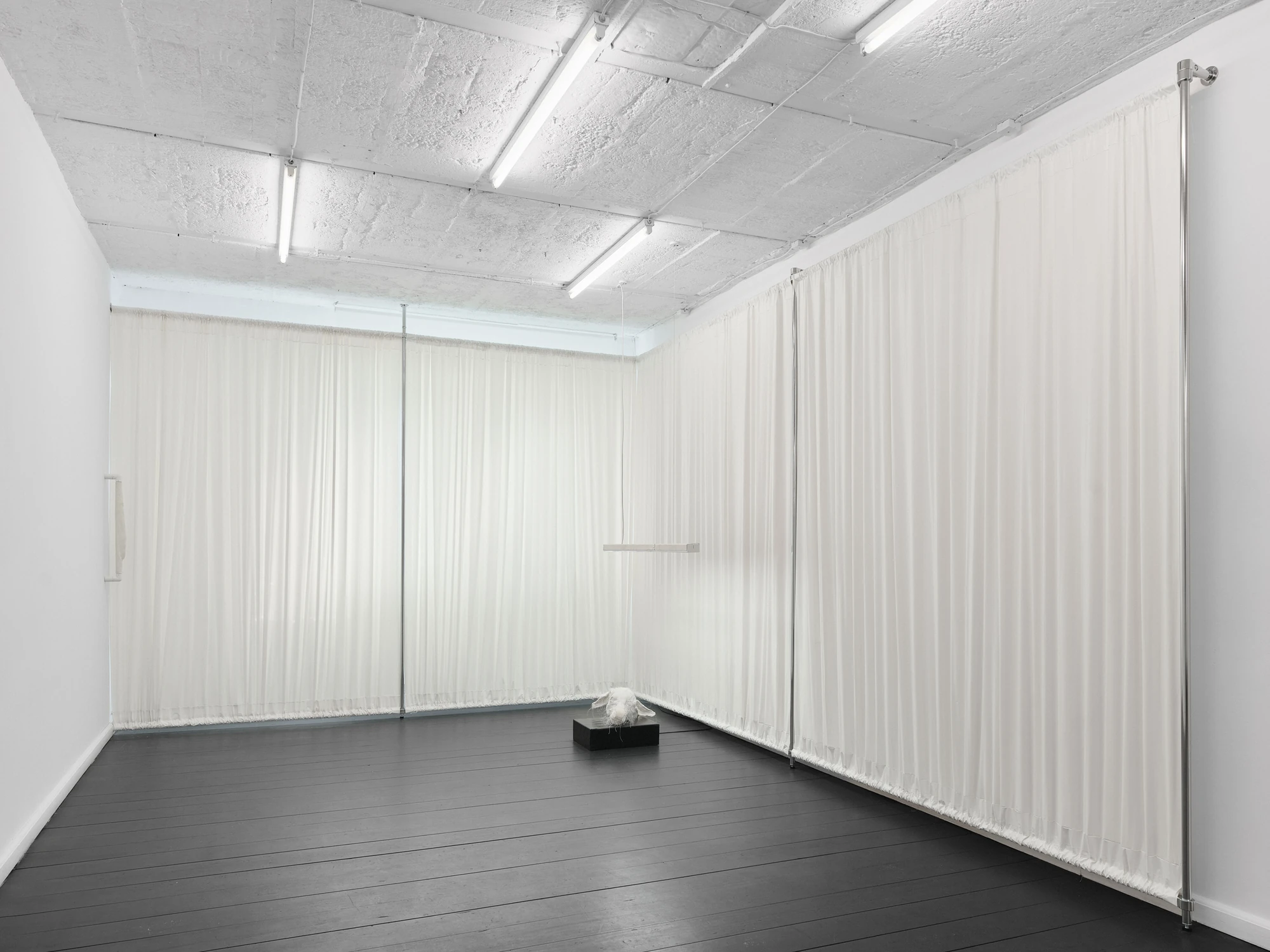
Around the pair, a set of wall reliefs is worked from OSB board, pine wood, powder-coated steel and recycled leather, with upholstery foam and white lacquer. A third roe deer, present as a head, becomes a sound sculpture, To Flow My Tears, from which John Dowland’s sixteenth-century song Flow My Tears plays, the lute lament once known as Lachrimae Pavane. The version heard in the room was conceived by Klaudia Hartung-Wójciak and performed by Małgorzata Biela. Lament songs run throughout Baszak’s work, where intimacy and melancholy meet the private and the public.

The essay is titled “Wilding.” The word names the show’s true subject. Popular culture long ago softened the roe deer into a creature of fairy tales, cartoons and toy shops, an impulse Cichocki calls bambification. His essay pulls the opposite way, toward the Latin fērālis, meaning mortal or funereal, an ill omen, and toward the feral child raised outside human language. What Baszak stages is “an image of ugly, furious wilding,” a reckoning with everything domestication has smoothed over. The question underneath, the one the essay opens with, is what is really alive.
Interested in Showcasing Your Work?
‍

If you would like to feature your works on Thisispaper, please visit our Submission page and sign up to Thisispaper+ to submit your work. Once your submission is approved, your work will be showcased to our global audience of 2 million art, architecture, and design professionals and enthusiasts.
No items found.
Less, with more behind it.
Explore guides. Search the archive. Walk the atlas.
Become a Thisispaper+ member today to unlock full access to our magazine, advanced tools, and support our work.
Get two months FREE
with annual subscription
Less, with more behind it.
Explore guides. Search the archive. Walk the atlas.
Become a Thisispaper+ member today to unlock full access to our magazine, advanced tools, and support our work.
Get two months FREE
with annual subscription
No items found.
Alexander Zaxarov
Oct 9, 2026

What passes between two bodies in an exchange of saliva? Jan Baszak answers at WHOISPOLA in Warsaw with Within and For Each Other, two albino roe deer made of foam, cotton, steel and synthetic saliva.

Jan Baszak makes bodies that should not hold together. His method is to coax soft materials into the likeness of other creatures, hybrids that never settle into a single species. Born in 1994 in Szczecin and now based between Szczecin, Warsaw and Berlin, he works under a banner he calls “abject romanticism,” a practice that in his words affirms “ritual, the crossing and dissolution of bodily boundaries, as well as strangeness and the abject.” The show’s title at WHOISPOLA comes from a line in Part II of Adam Mickiewicz’s Forefathers’ Eve.

The show turns on two young roe deer joined in an exchange of saliva. They are albinos, which makes them rarer and stranger still. The gallery sets the gesture down plainly: in the animal world it carries no symbolic meaning, yet from a human vantage it “evokes intimacy, care, disgust, and the crossing of boundaries,” the gallery writes. Saliva, synthetic here, is the connective matter, listed alongside the steel, PVC tubes, foam and epoxy resin that hold the pair together. “It is a miracle, but a frail one,” Sebastian Cichocki writes in the exhibition essay, pointing to the old hunters’ taboo against raising a hand to a white animal.

Cichocki reads the pair through permeability. He reaches for Lynn Margulis’s theory of endosymbiosis, once regarded as almost heretical, in which bodies are partly built from other beings, the mitochondria inside human cells descended from once free-living bacteria. Saliva, in his telling, doubles as ectoplasm, the sticky matter mediums were said to exude in séances, a lubricant for contact between two worlds. The roe deer suits the part, its whole body studded with scent glands, a creature that communicates without a single word. “Its entire body is a machine for nonverbal communication,” he writes.

Around the pair, a set of wall reliefs is worked from OSB board, pine wood, powder-coated steel and recycled leather, with upholstery foam and white lacquer. A third roe deer, present as a head, becomes a sound sculpture, To Flow My Tears, from which John Dowland’s sixteenth-century song Flow My Tears plays, the lute lament once known as Lachrimae Pavane. The version heard in the room was conceived by Klaudia Hartung-Wójciak and performed by Małgorzata Biela. Lament songs run throughout Baszak’s work, where intimacy and melancholy meet the private and the public.

The essay is titled “Wilding.” The word names the show’s true subject. Popular culture long ago softened the roe deer into a creature of fairy tales, cartoons and toy shops, an impulse Cichocki calls bambification. His essay pulls the opposite way, toward the Latin fērālis, meaning mortal or funereal, an ill omen, and toward the feral child raised outside human language. What Baszak stages is “an image of ugly, furious wilding,” a reckoning with everything domestication has smoothed over. The question underneath, the one the essay opens with, is what is really alive.
Interested in Showcasing Your Work?
‍

If you would like to feature your works on Thisispaper, please visit our Submission page and subscribe to Thisispaper+. Once your submission is approved, your work will be showcased to our global audience of 2 million art, architecture, and design professionals and enthusiasts.
No items found.

Join Thisispaper+
Unlock access to 2500 stories, curated guides + editions, and share your work with a global network of architects, artists and designers who are shaping the future.
Get two months FREE
with annual subscription
Travel Guides
Immerse yourself in timeless destinations, hidden gems, and creative spaces—curated by humans, not algorithms.
Explore All Guides +
Submission Module
Submit your project and gain the chance to showcase your work to our worldwide audience of over 2M architects, designers, artists, and curious minds.
Learn More+
Curated Editions
Dive deeper into carefully curated editions, designed to feed your curiosity and foster exploration.
Off-the-Grid
Jutaku
Sacral Journey
minimum
The New Chair
Explore All Editions +
Atlas
A new and interactive way to explore the most inspiring places around the world.
Interactive map
Linked to articles
450+ curated locations
Google + Apple directions
Smart filters
Subscribe to Explore+
Become a Thisispaper+ member today to unlock full access to our magazine, submit your project and support our work.
Join Thisispaper+Join Thisispaper+
€9/month
Get two months FREE
with annual subscription