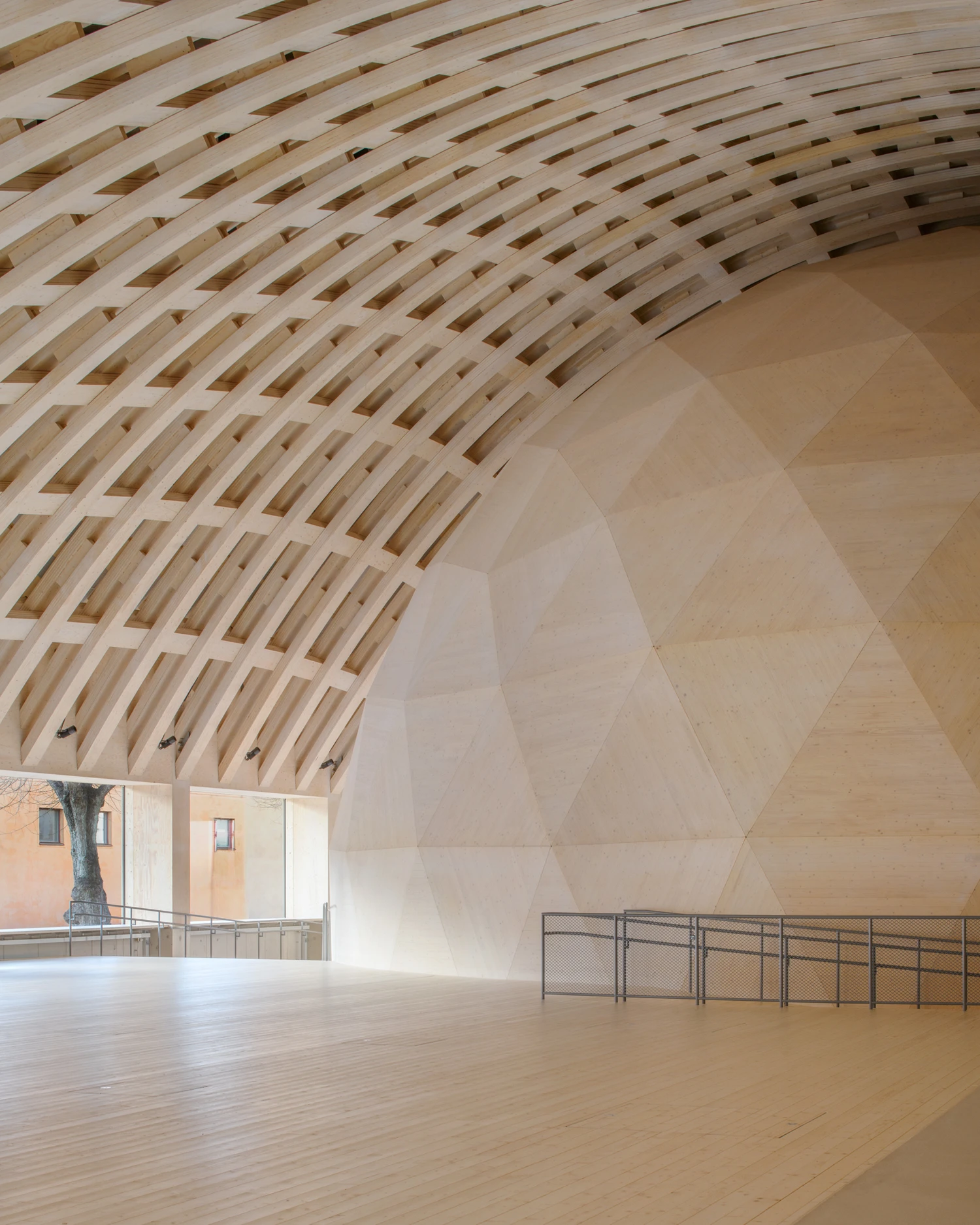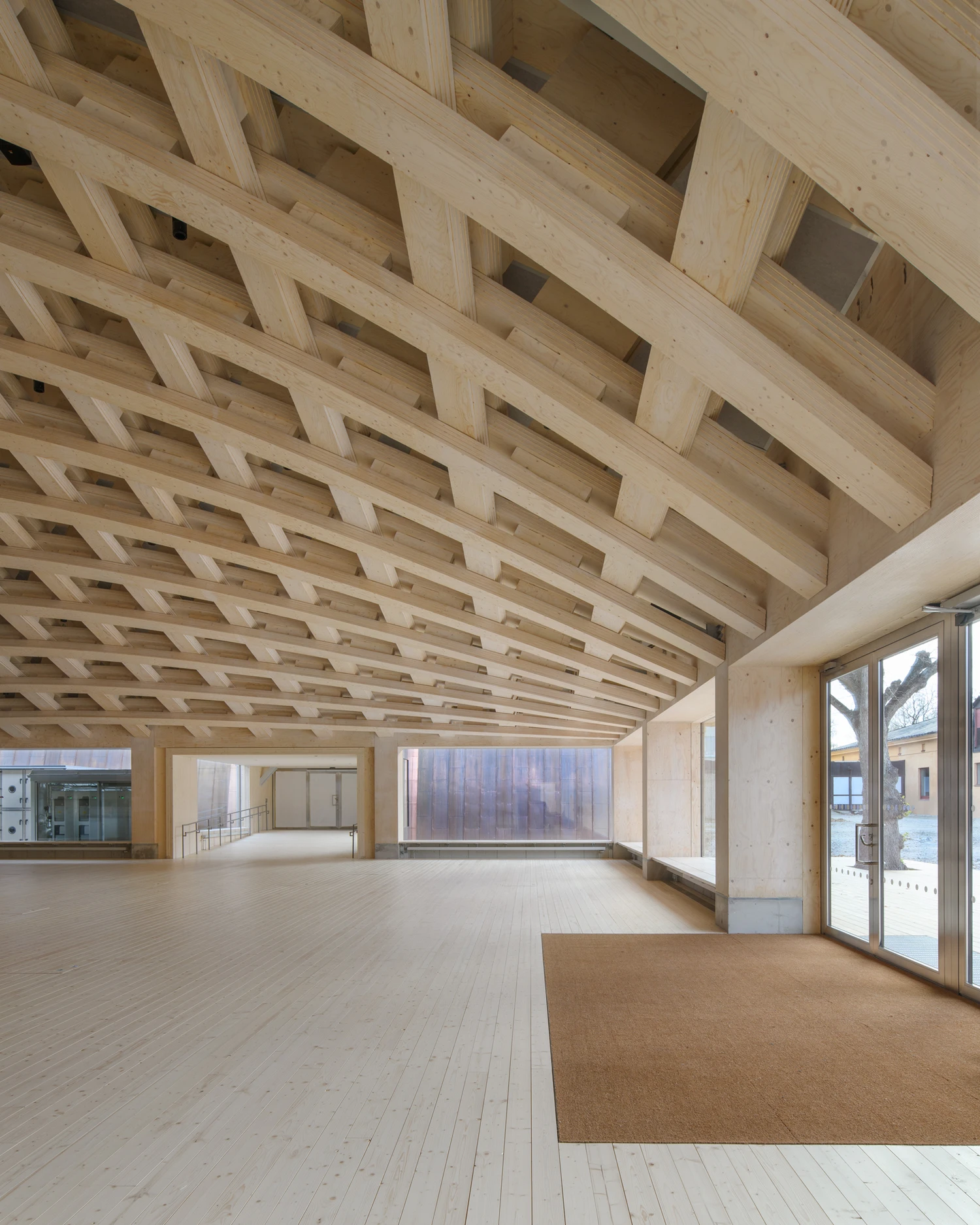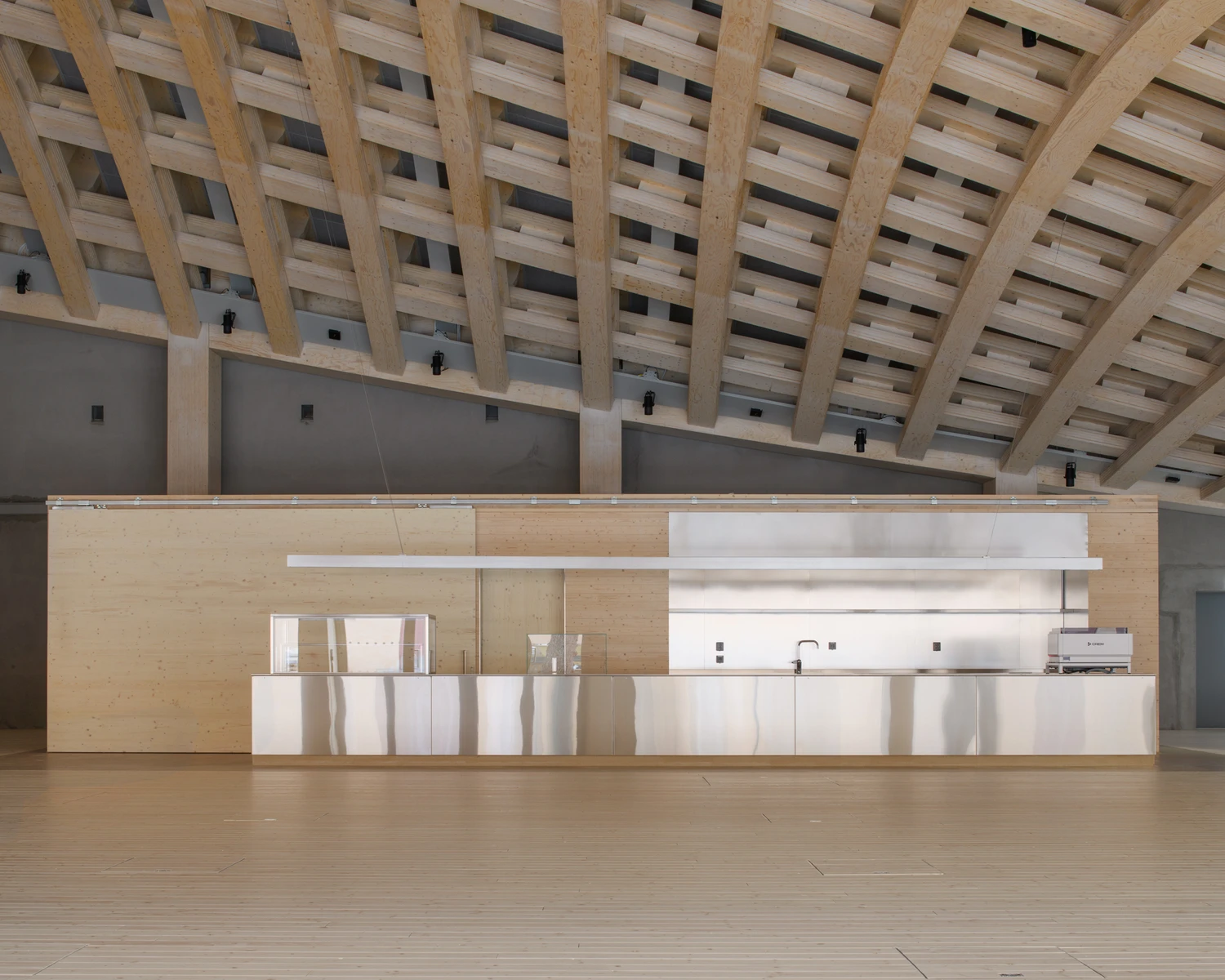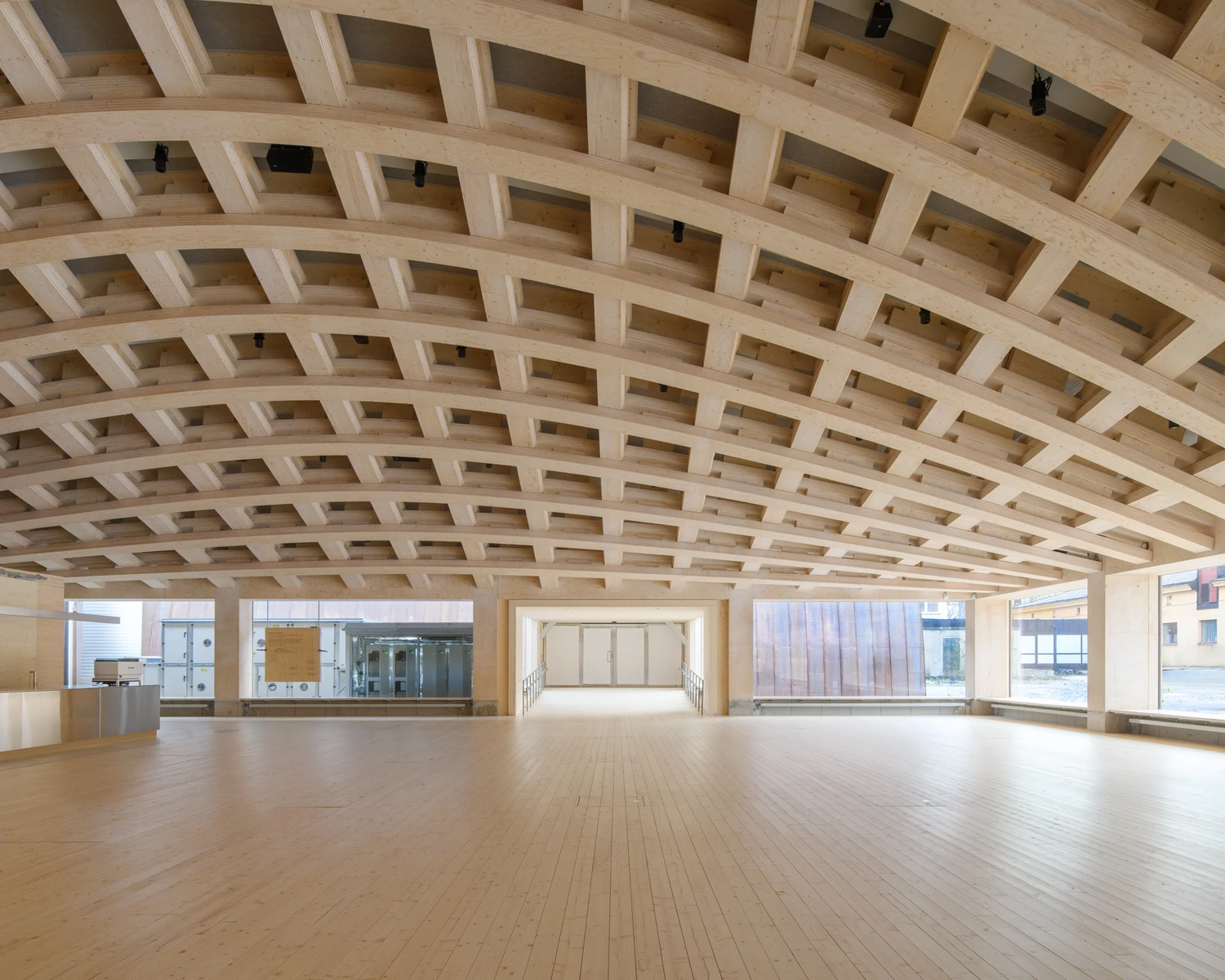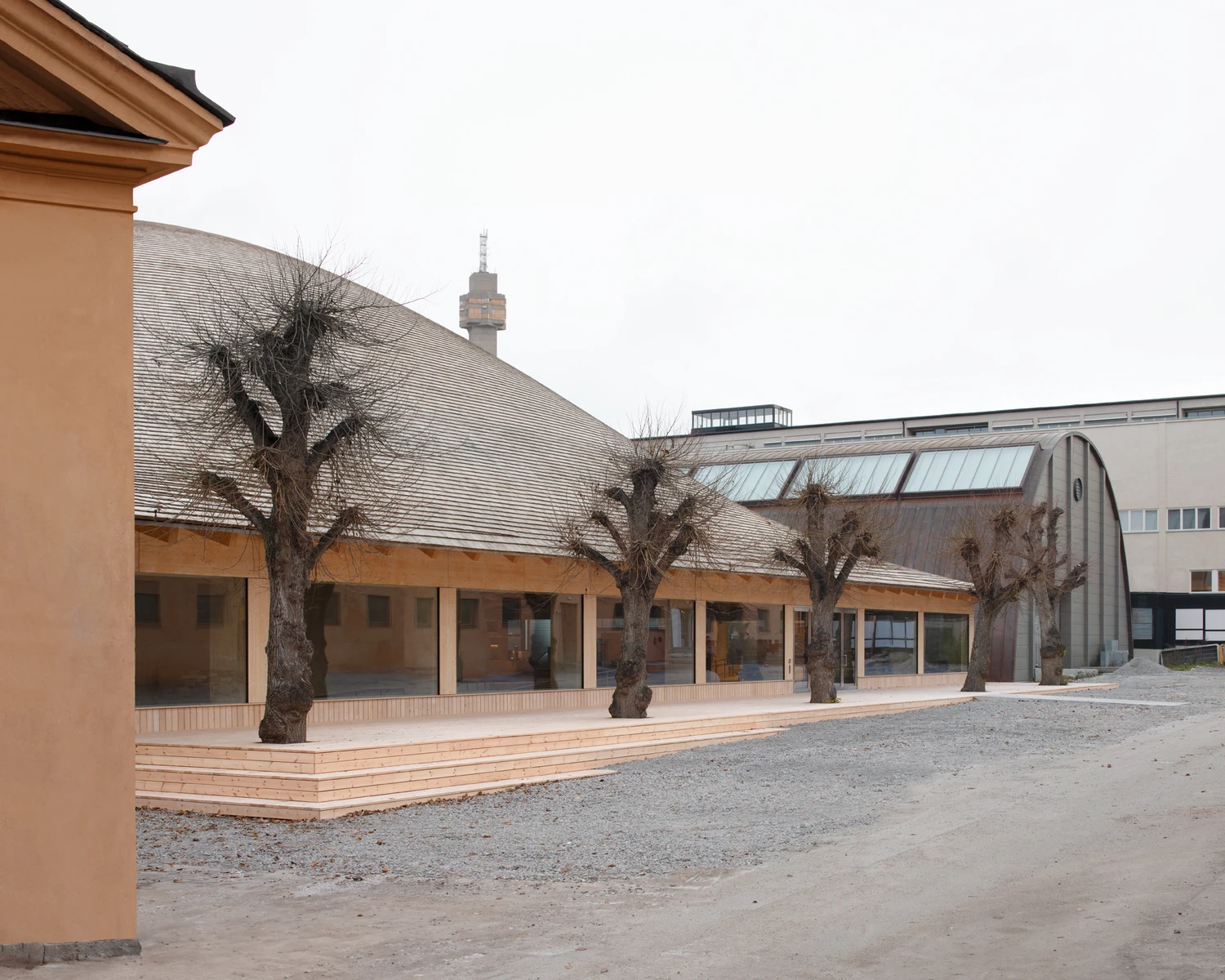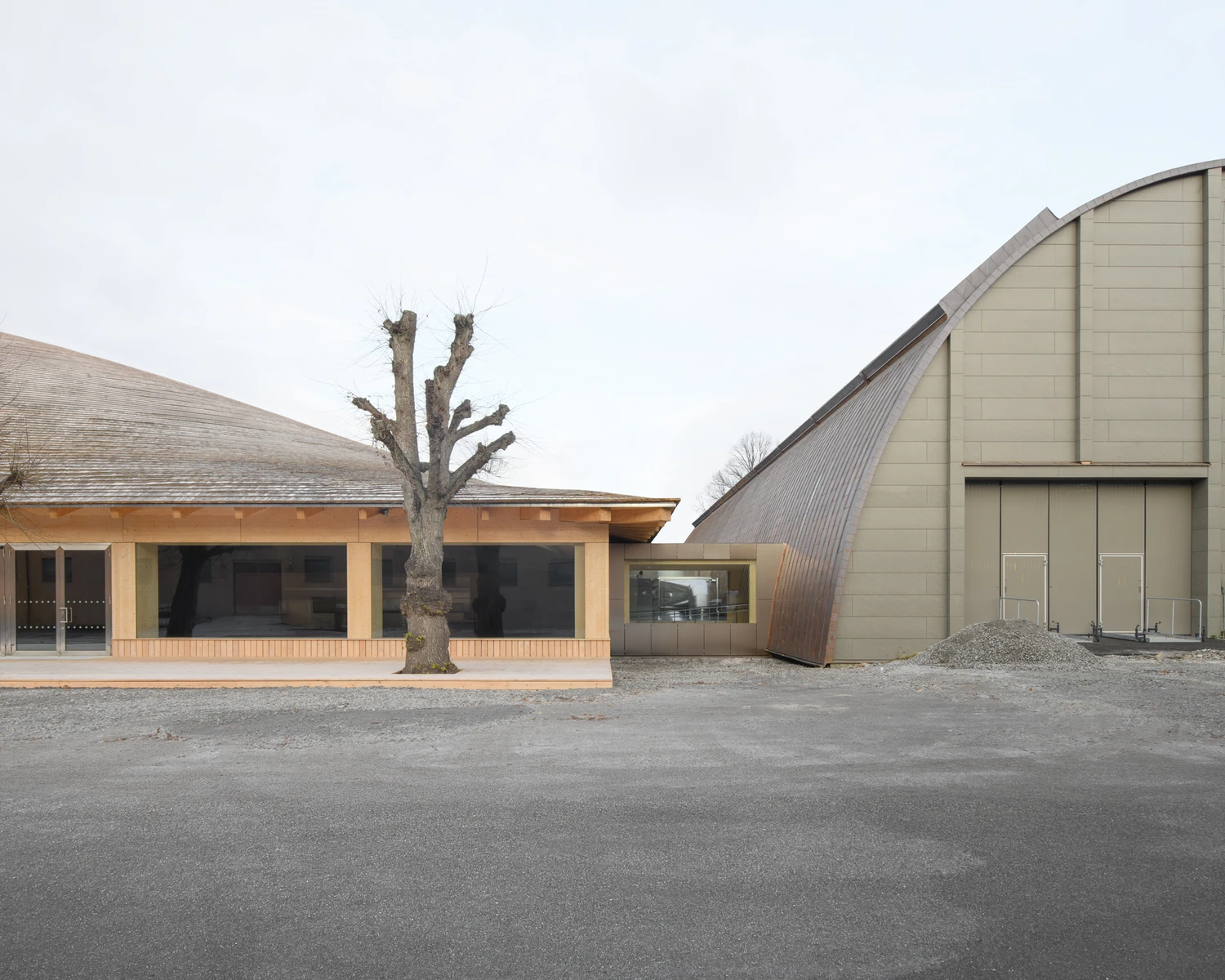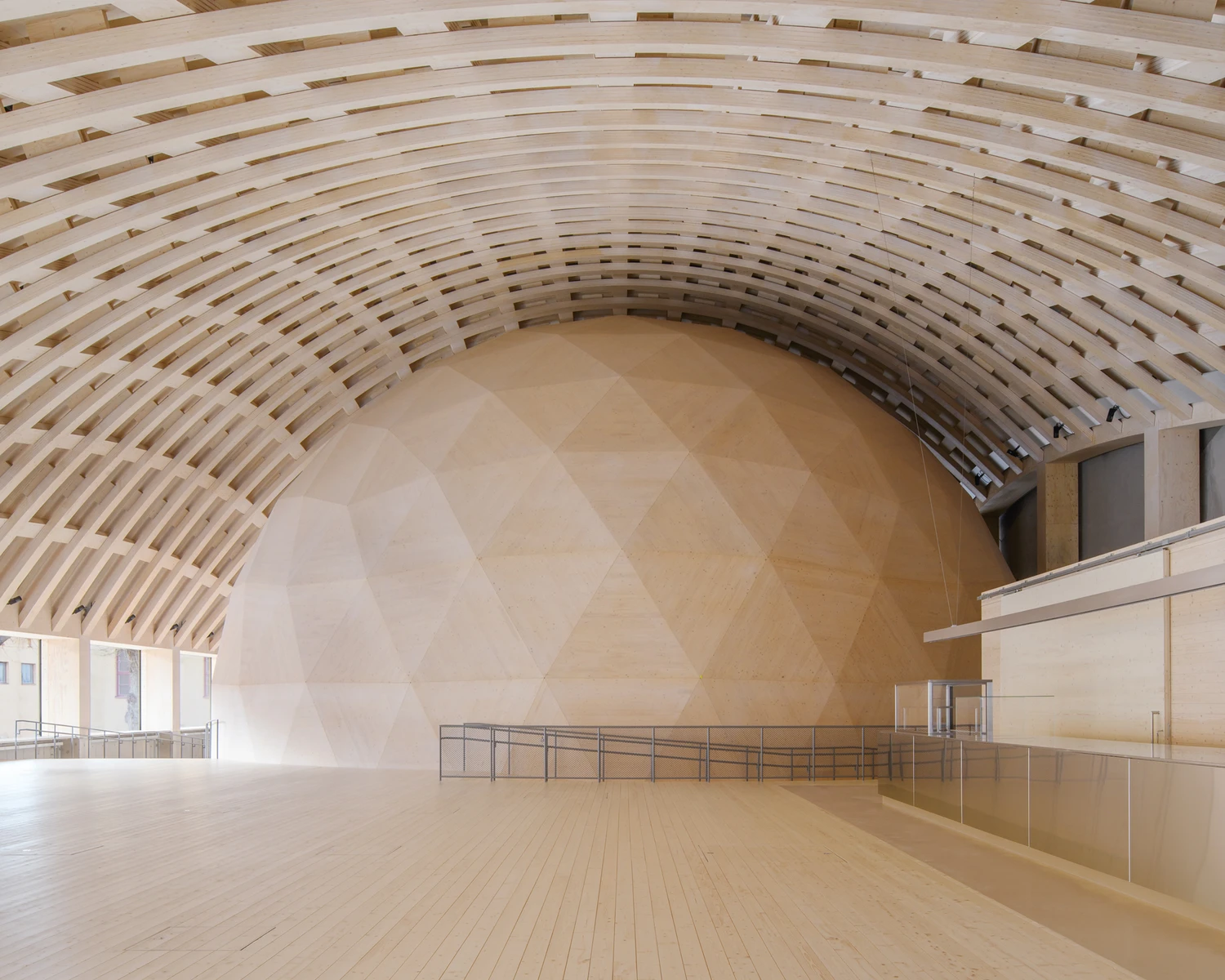
At the National Swedish Museum of Technology in Stockholm, Elding Oscarson have threaded a new building through an existing one. Wisdome Stockholm occupies an unused courtyard, splicing together museum functions around what was previously dead space—a 1,325 m² extension housing a visualization dome, a cafe, and an exhibition hall.
The visualization dome is the centrepiece: a spherical space where audiovisual technology achieves full immersion, the kind of environment where science becomes experience rather than information. But the architectural challenge lay not in the dome itself but in how to insert something inherently tall and volumetric into a courtyard defined by the vaulted hall and lower buildings that surround it. Elding Oscarson’s response is sensitive rather than spectacular—the addition acknowledges the existing structures rather than competing with them.
The construction is primarily timber, with the structural engineering led by Florian Kosche of DIFK and the timber structure engineered by SJB Kempter Fitze with Hermann Blumer of Creation Holz, then fabricated by Blumer Lehmann. This is serious wood engineering, not decorative timber cladding—the material is structural, expressive, and responsible for the building’s presence. The exterior detail reveals the logic of its making: joints, connections, and the grain of the wood are visible rather than concealed.
Photographed by Mikael Olsson, the project reads as a study in the relationship between old and new, heavy and light, the institutional permanence of a national museum and the warmth of exposed timber. Where many museum extensions announce themselves as architectural statements, Wisdome Stockholm does something quieter: it finds space where none seemed to exist, and fills it with a structure that feels both precise and welcoming.