.webp)
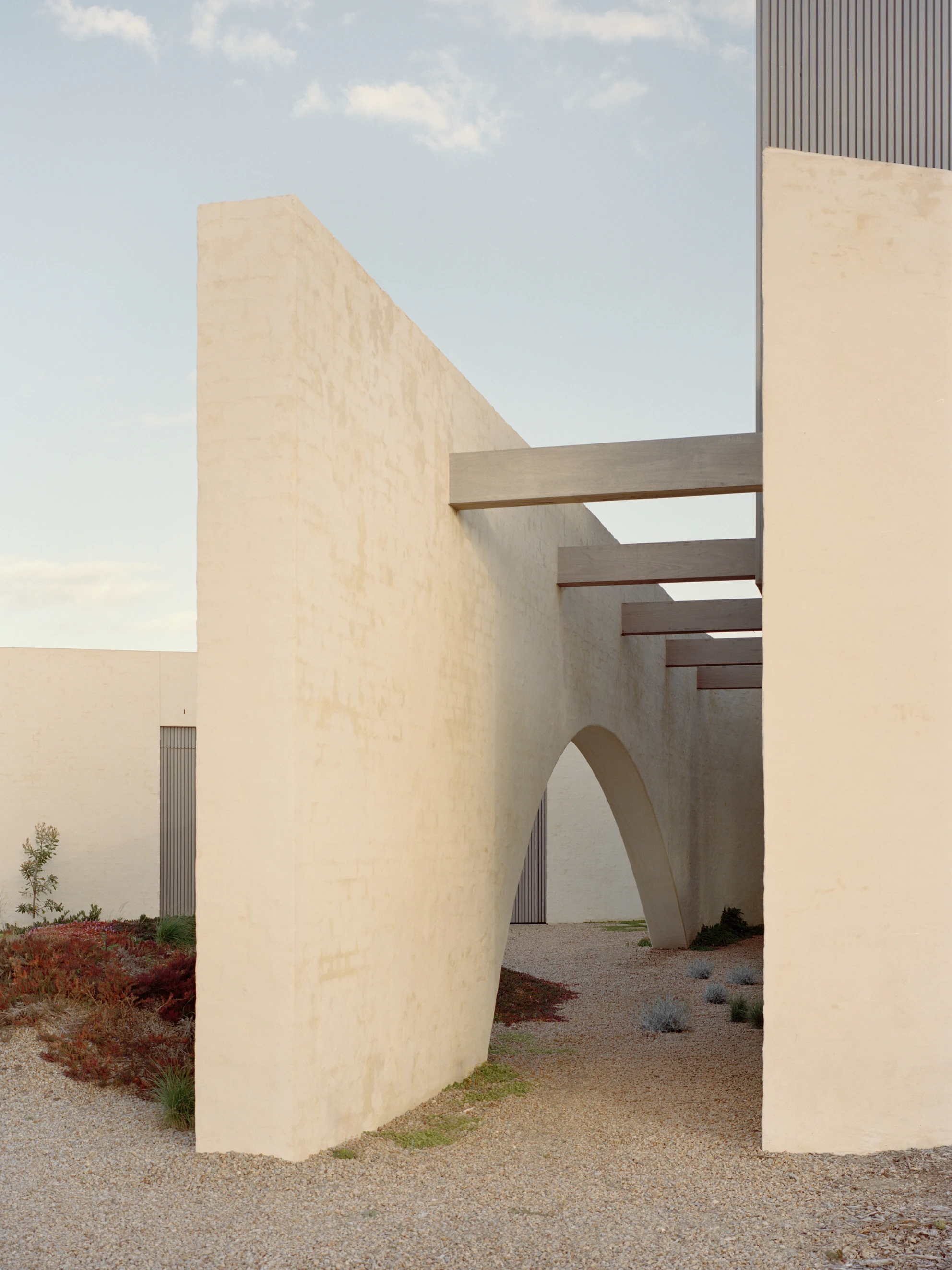
Three curving blade walls hold a house against the wind of the Mornington Peninsula, where Pandolfini Architects sets Wildcoast House in recycled brick and greyed Moonah timber.
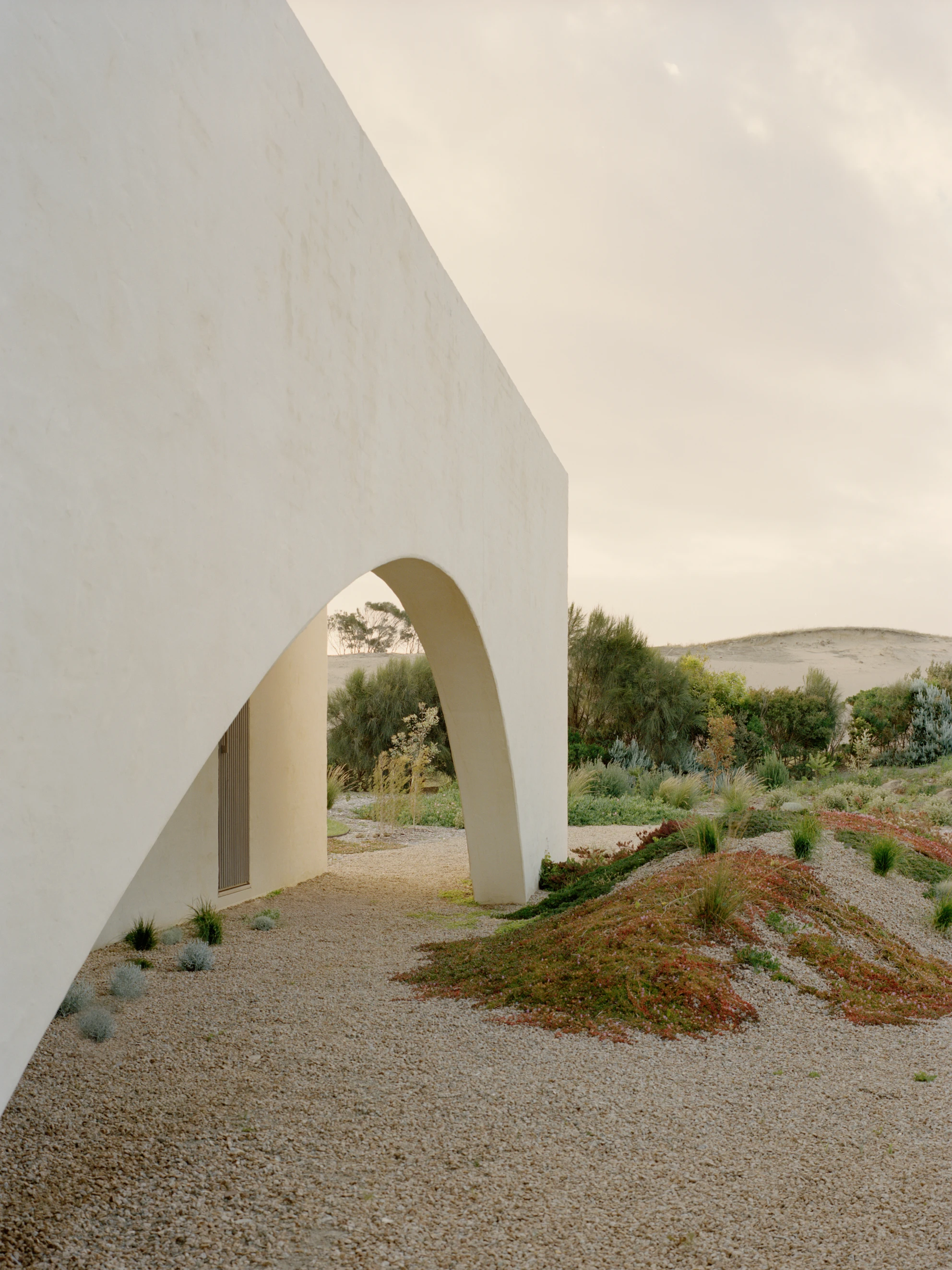
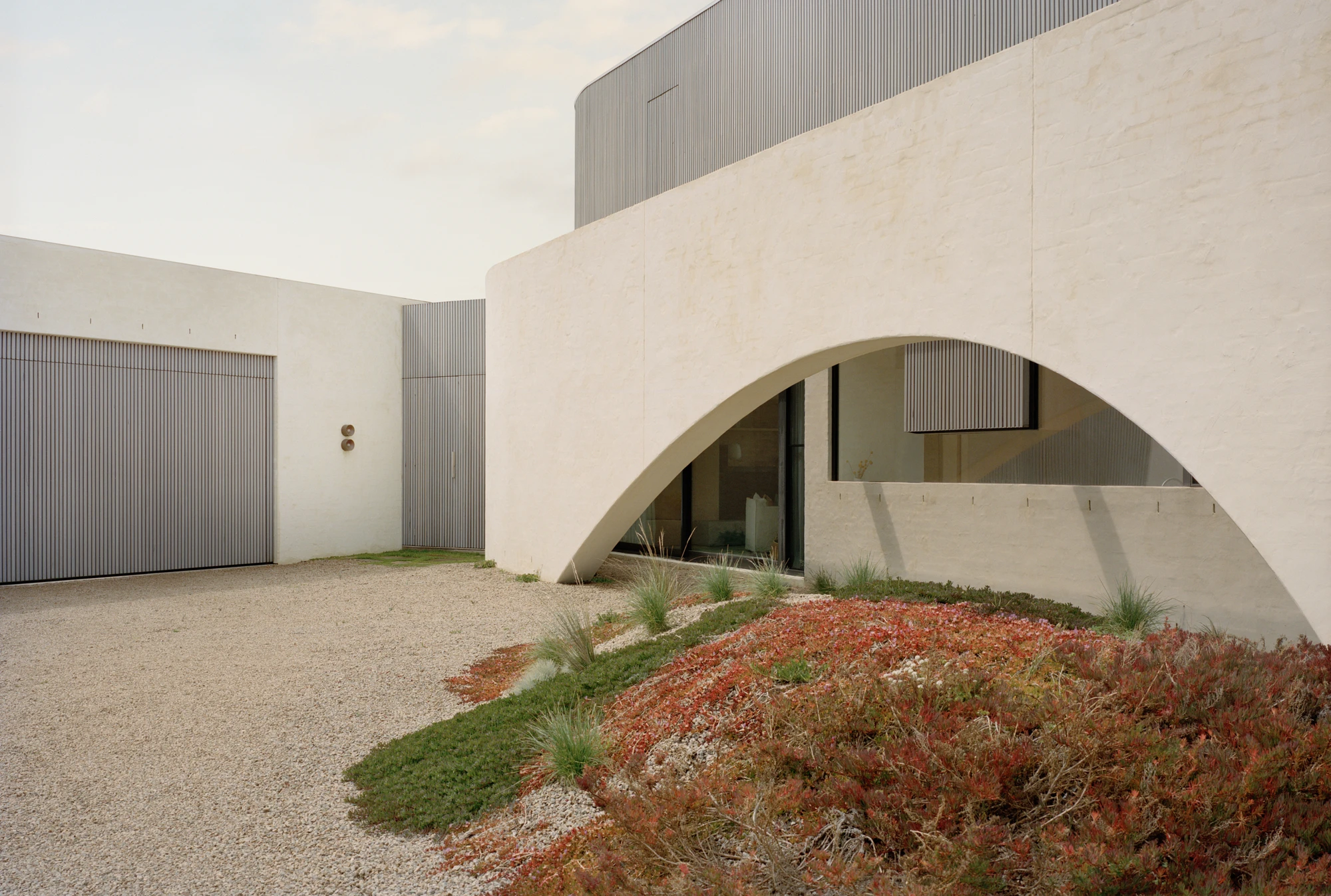
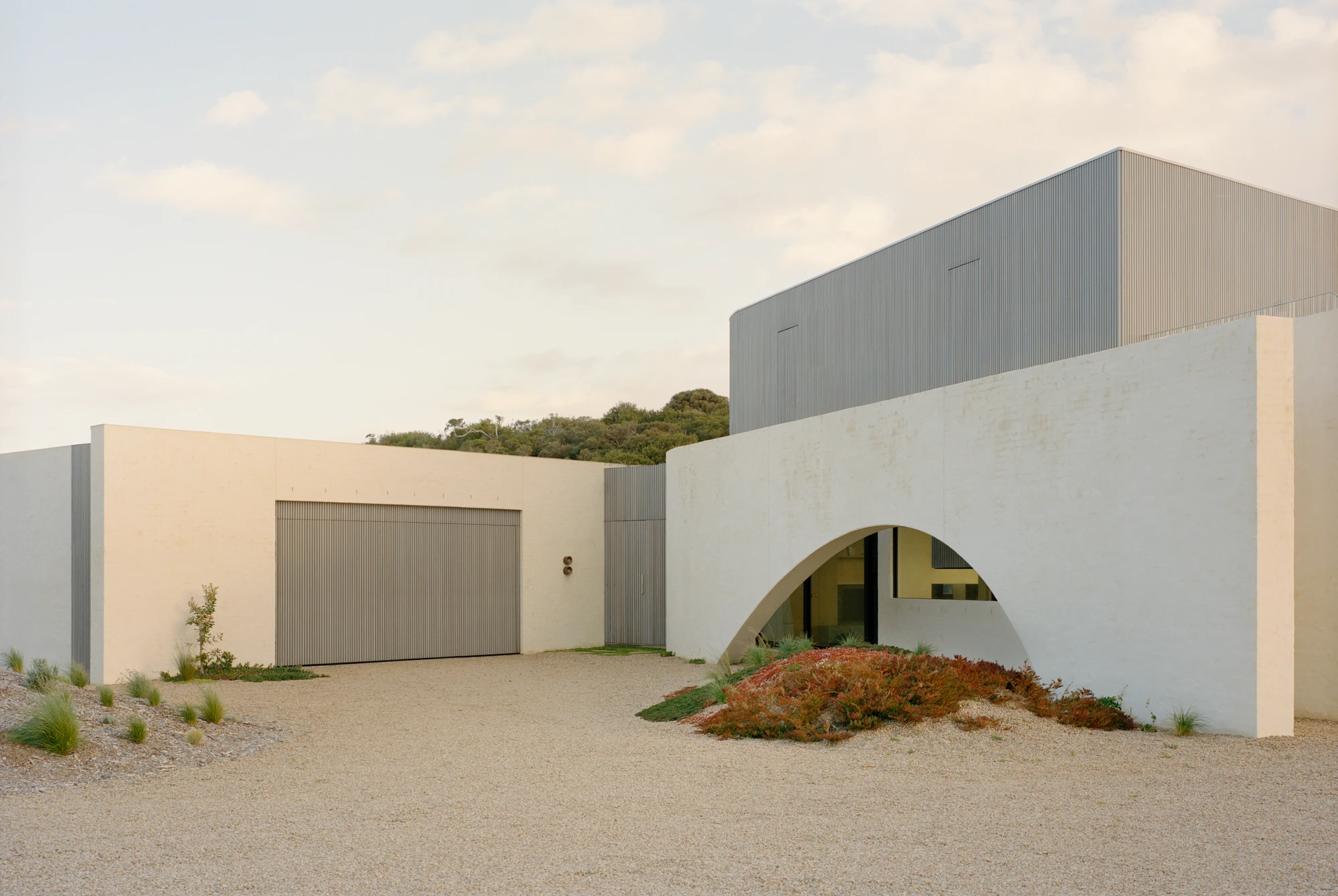
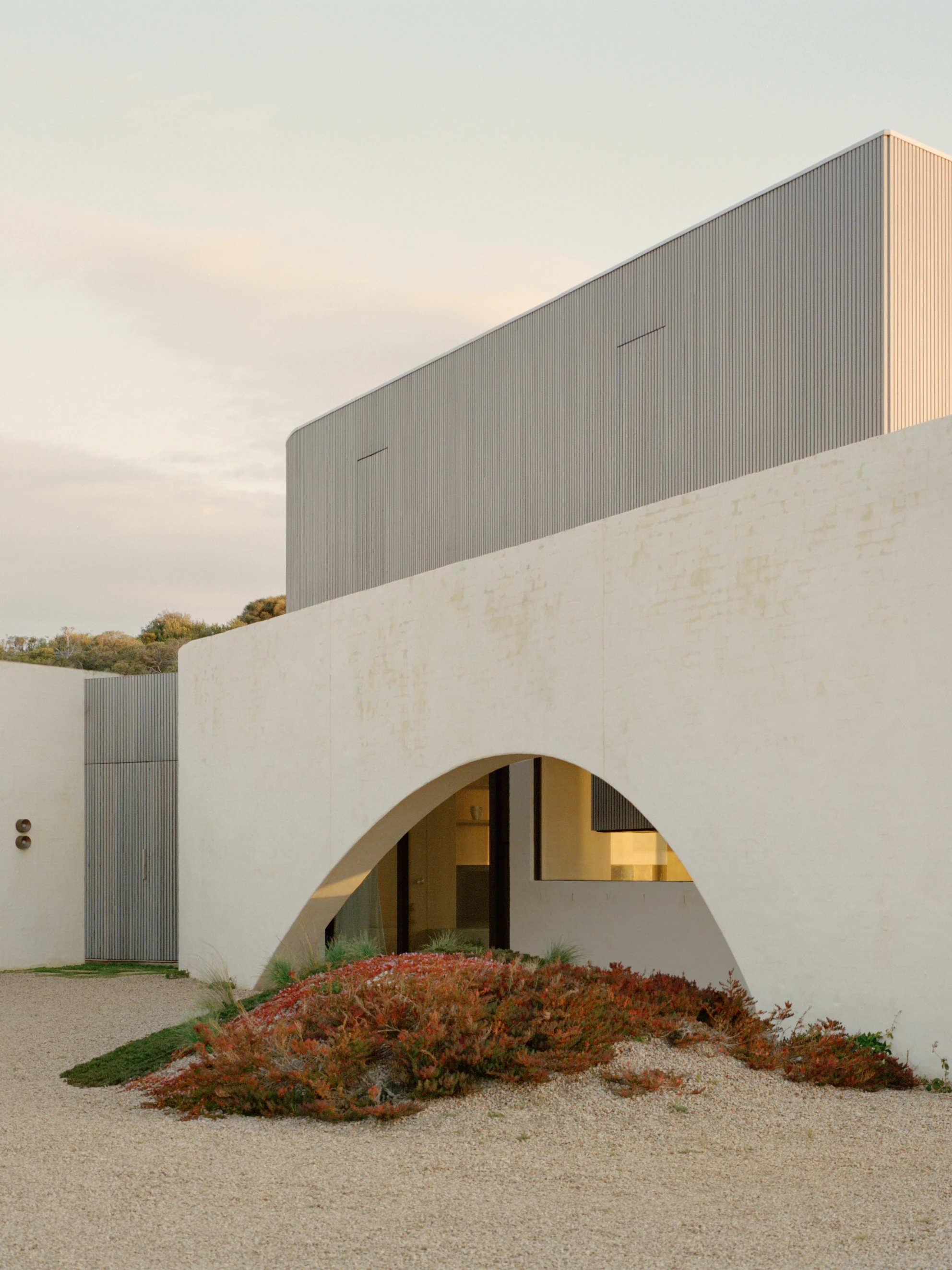
The defining element is the arch that marks the entry: a monolithic rendered brick wall punctured by an organic archway that lifts gently from the native planting at its base. "A glimpse of the home whilst establishing a sense of arrival that is both grounded and enigmatic," the architects describe it. Inside that threshold, the plan divides into three wings — family, living and guest — each bounded by one of the blade walls, converging at a central circulation spine. The tripartite configuration allows the zones to operate independently while remaining connected: an architecture of separation that does not produce isolation.
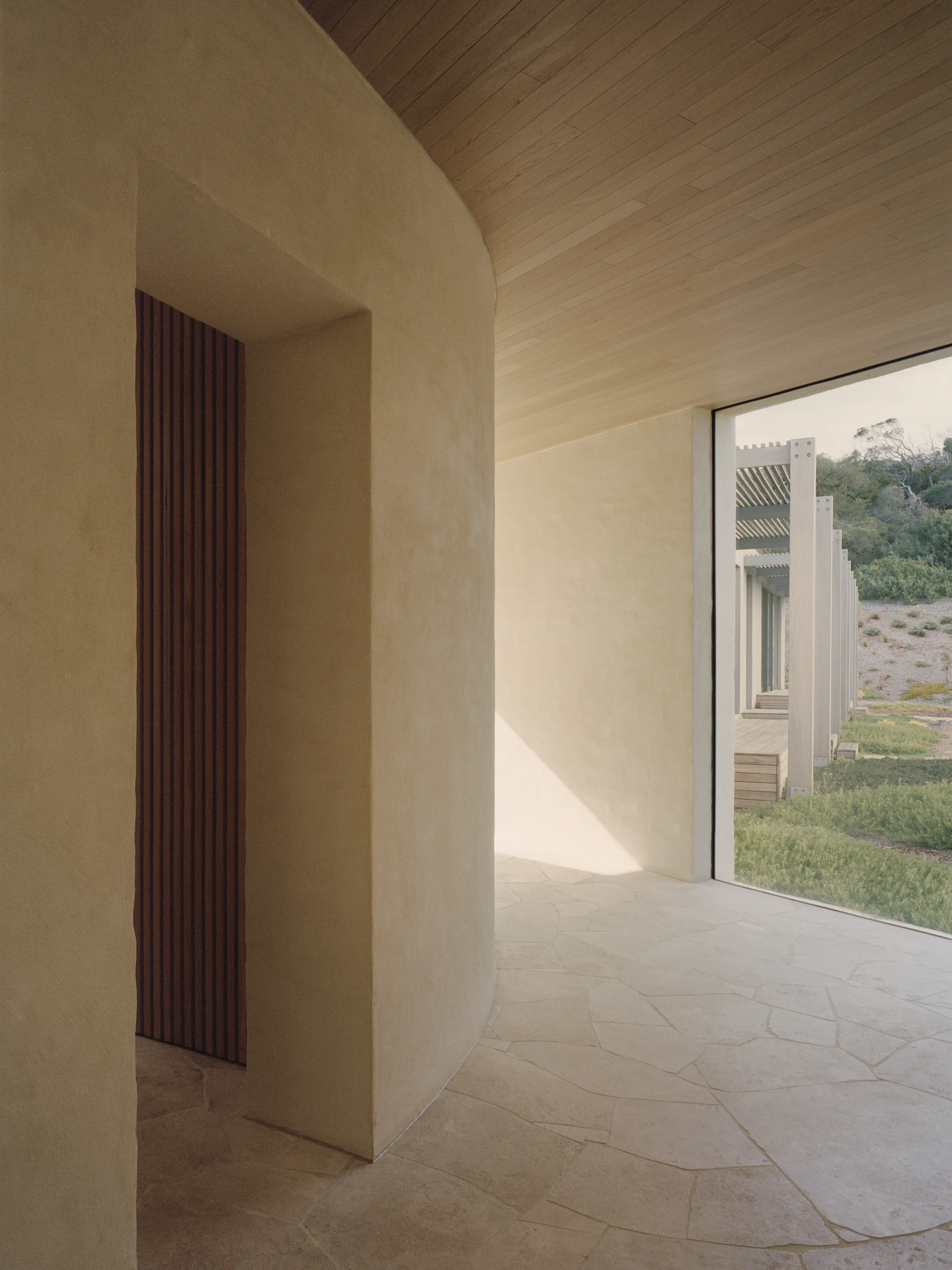
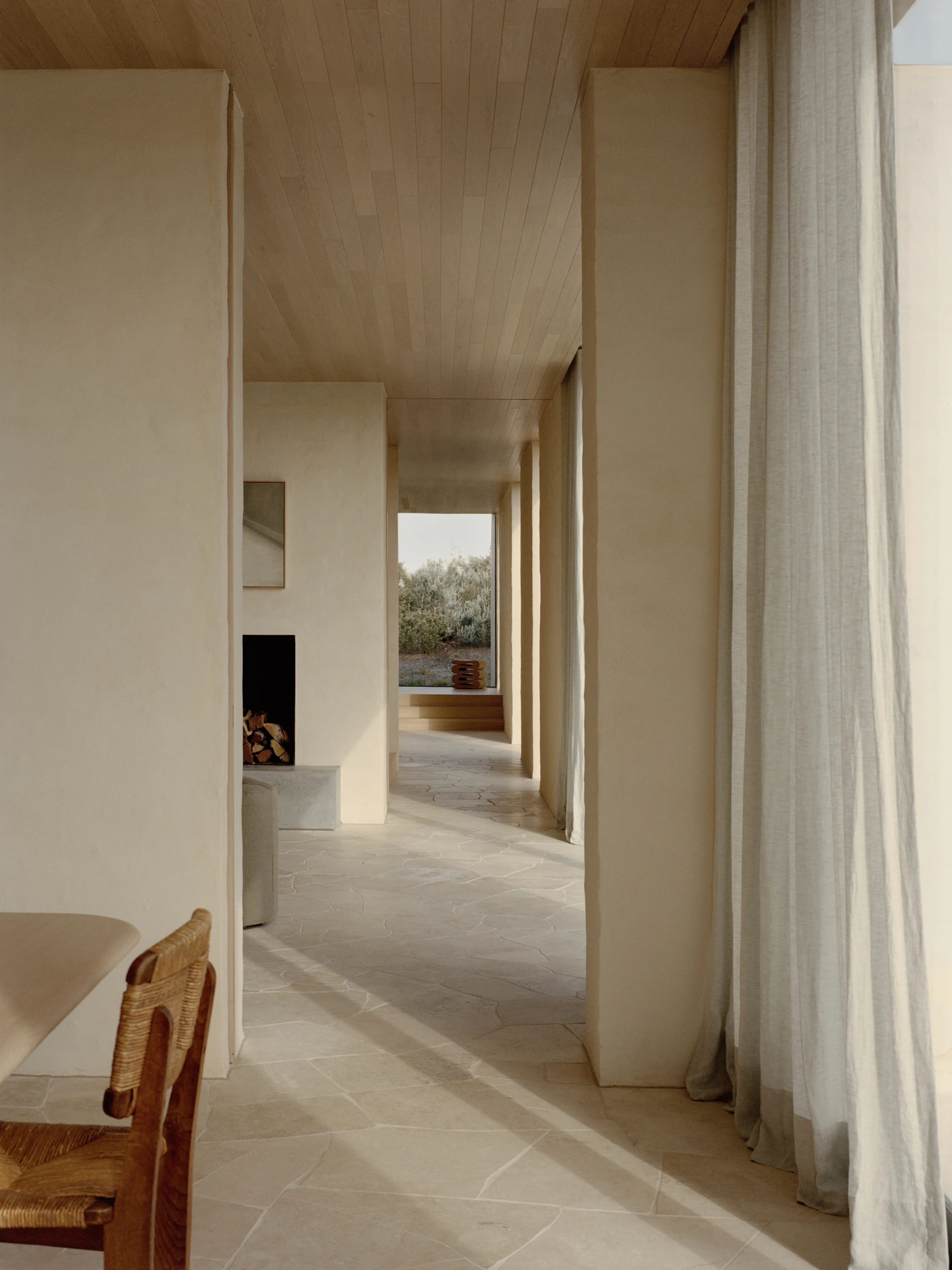
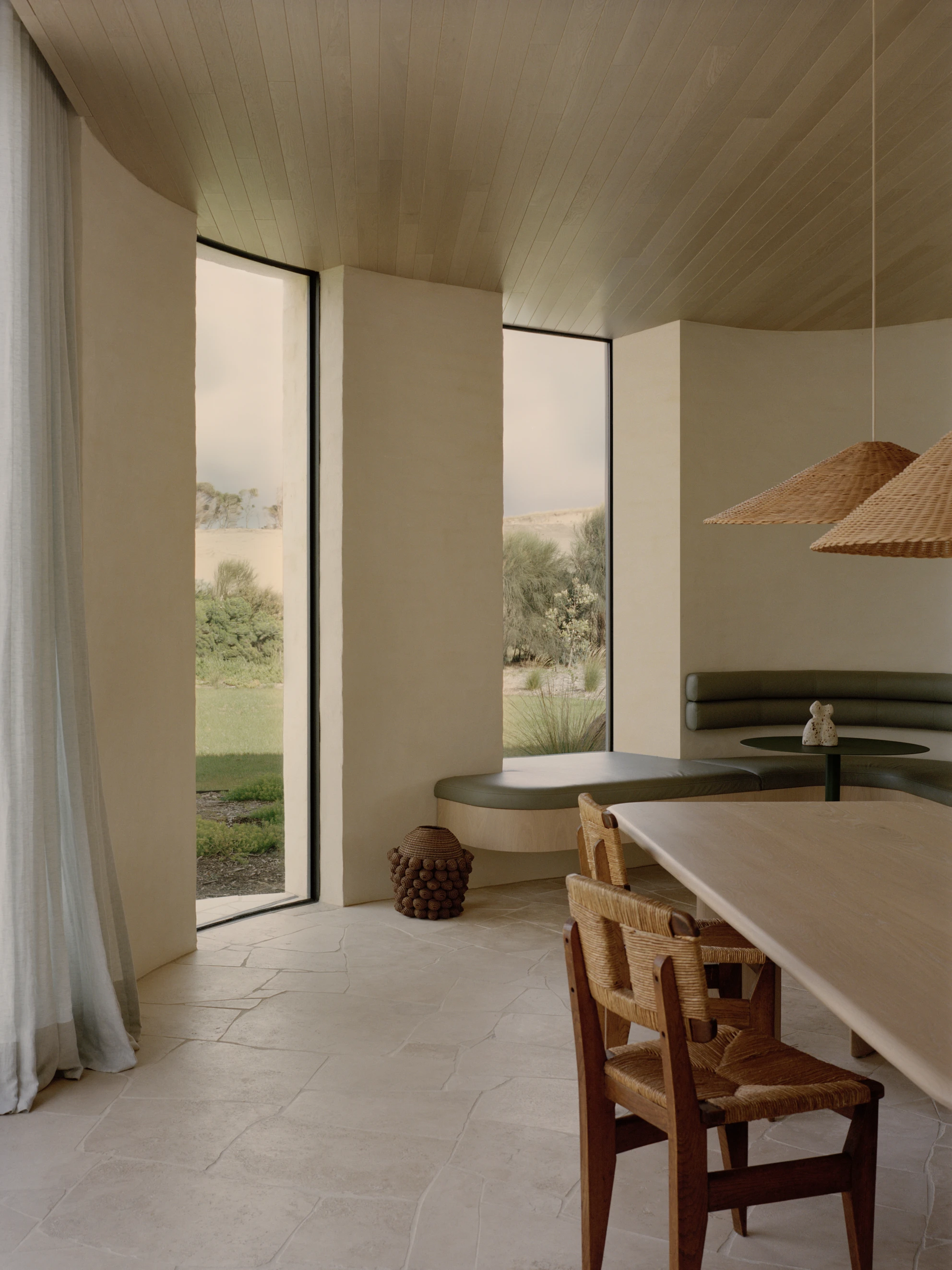
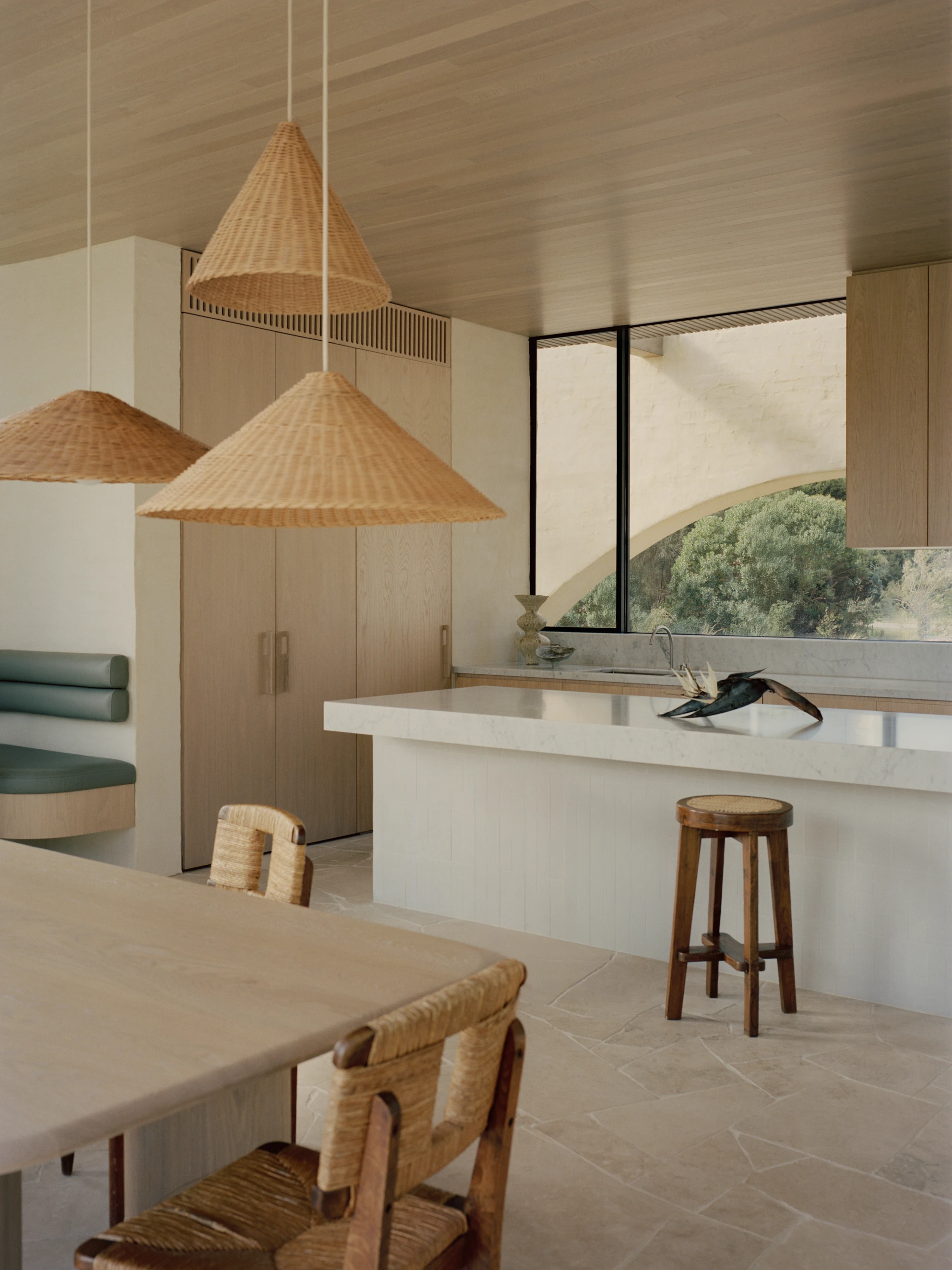
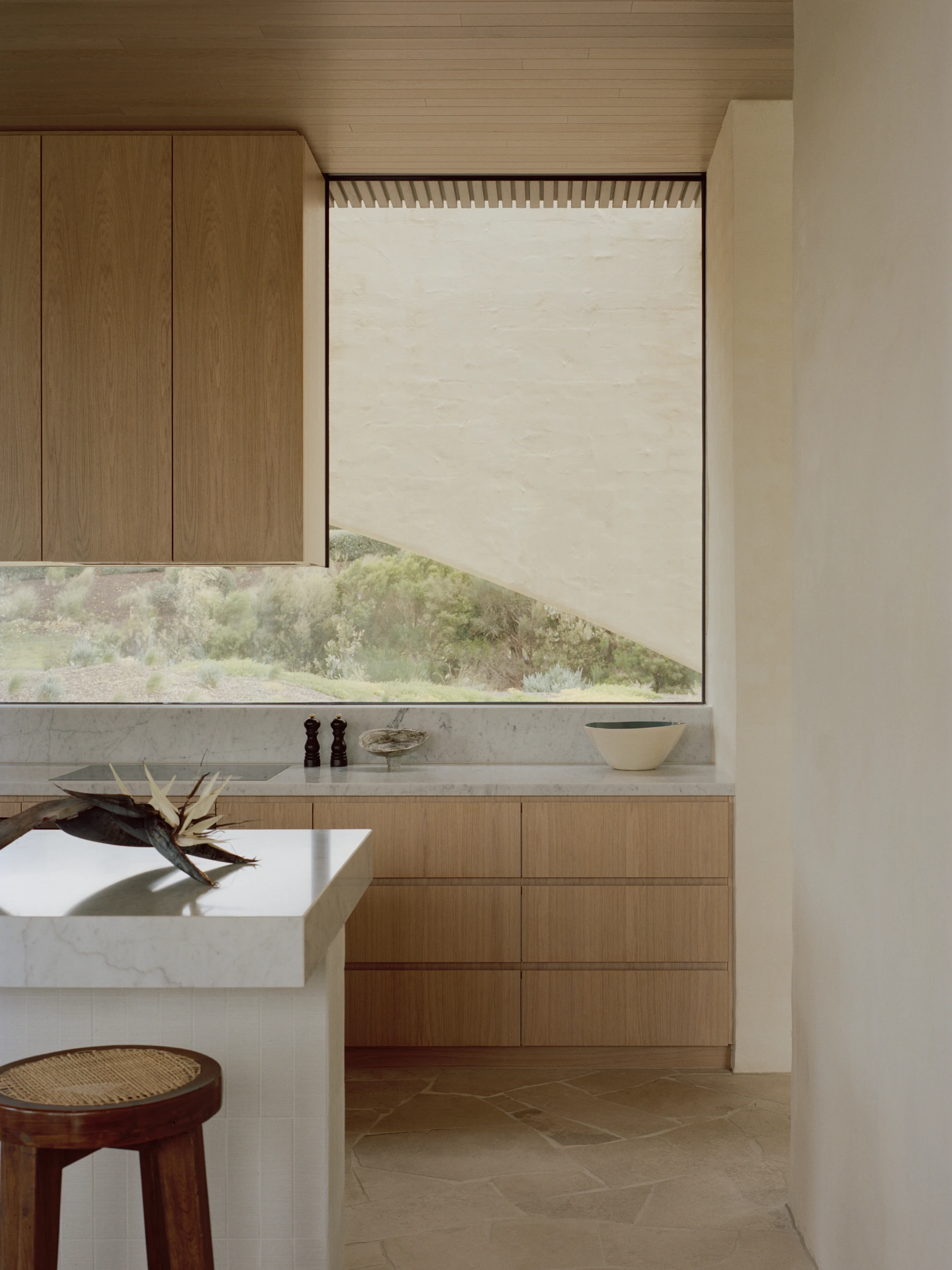
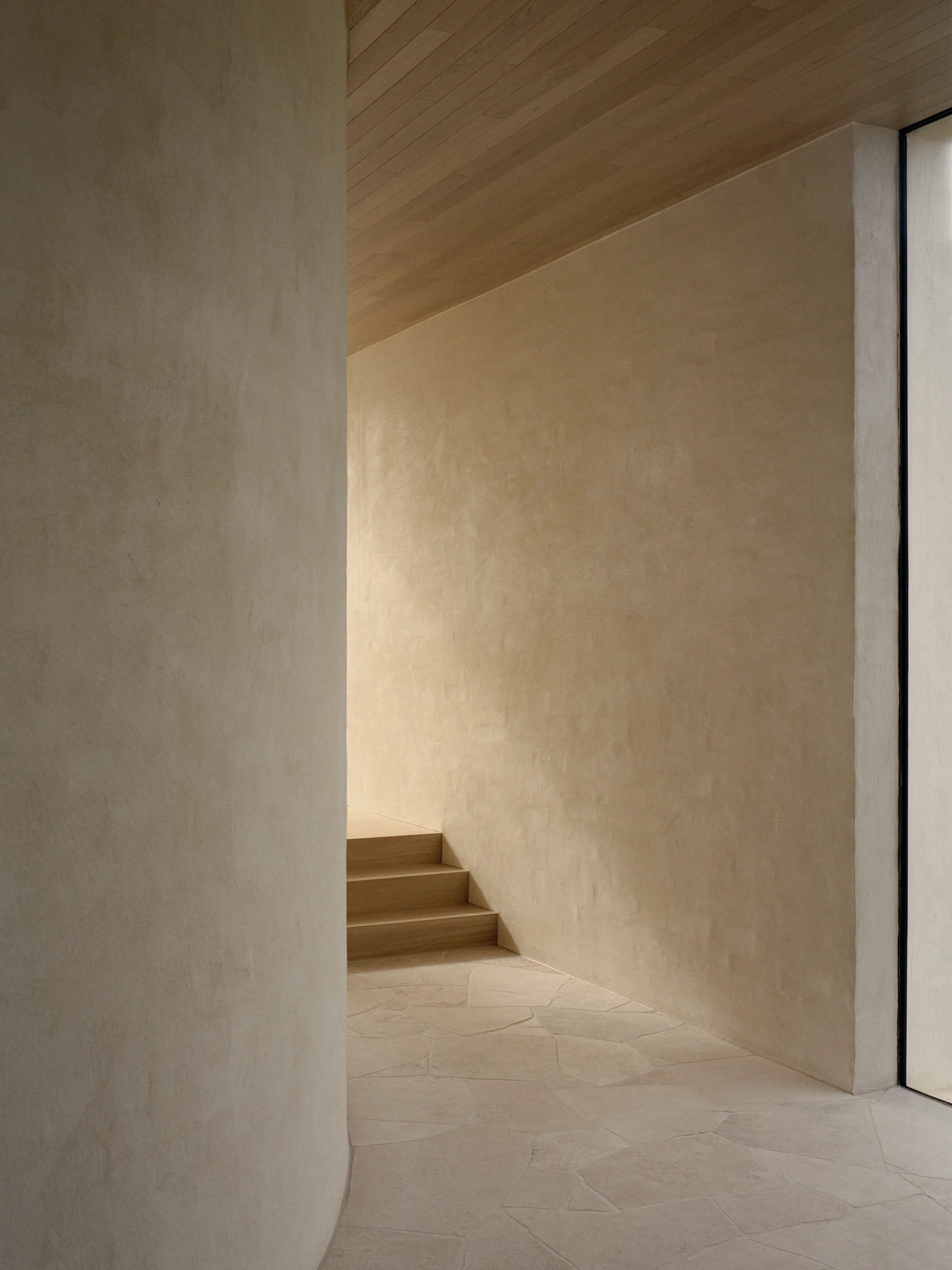
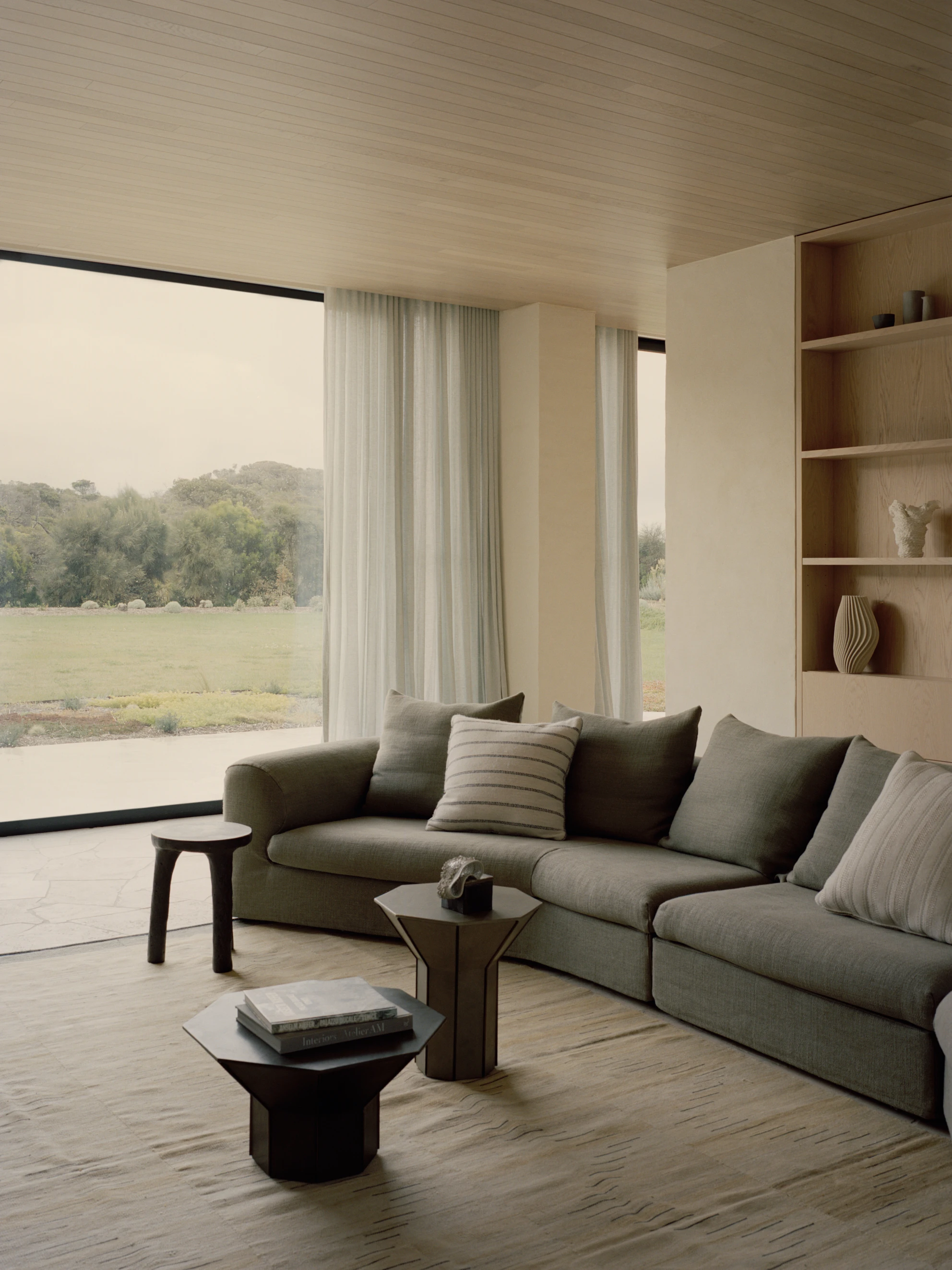
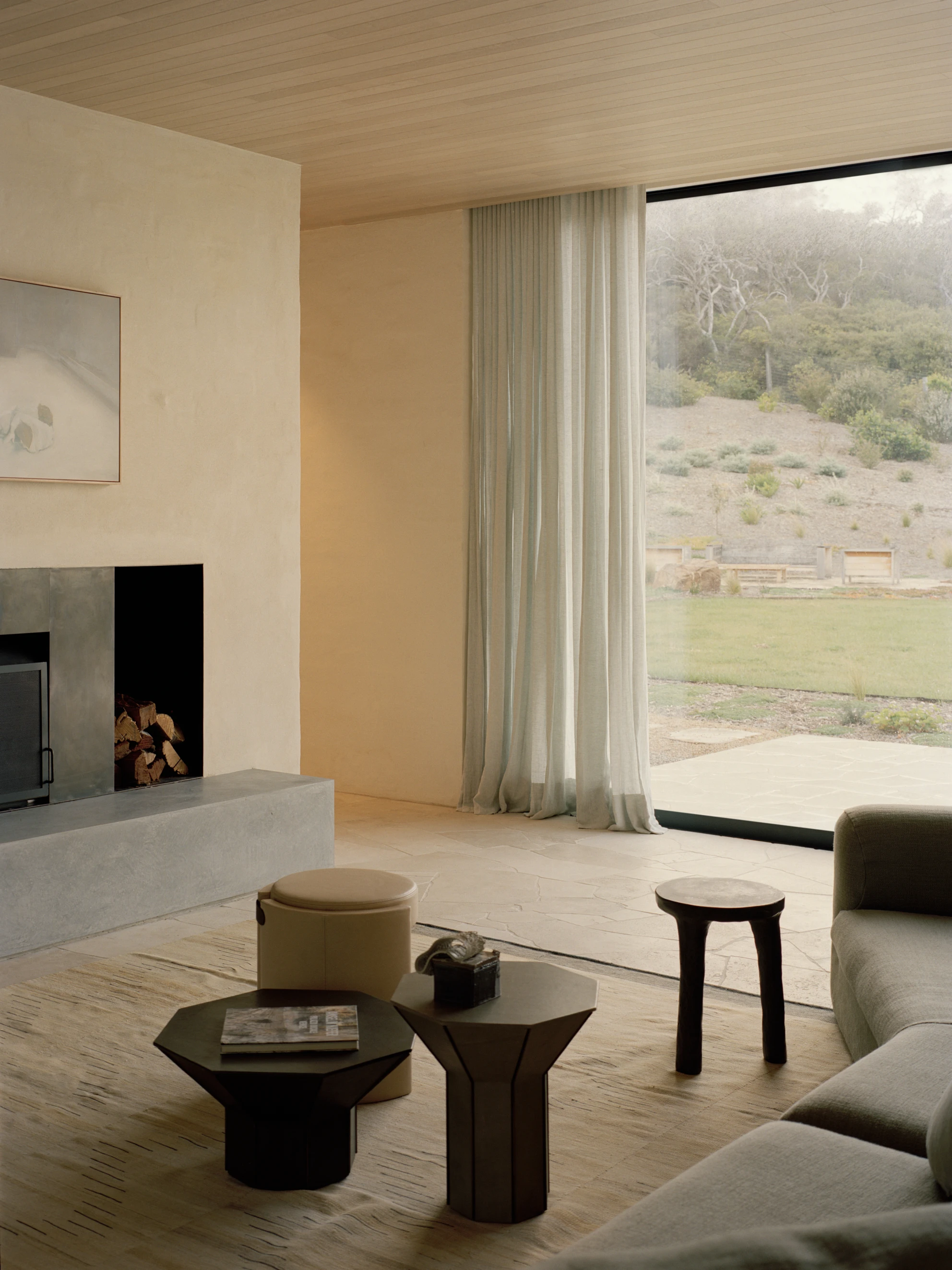
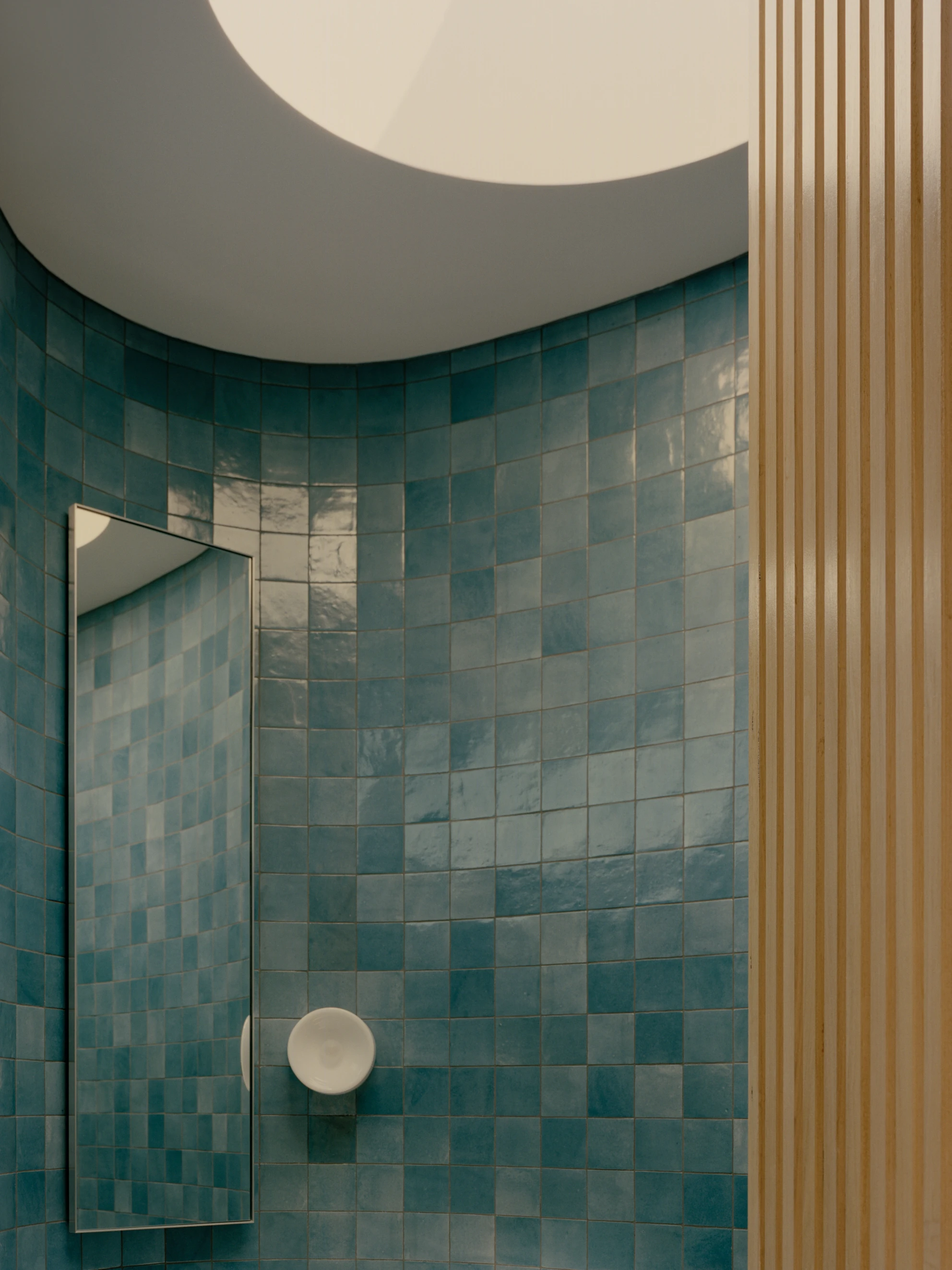
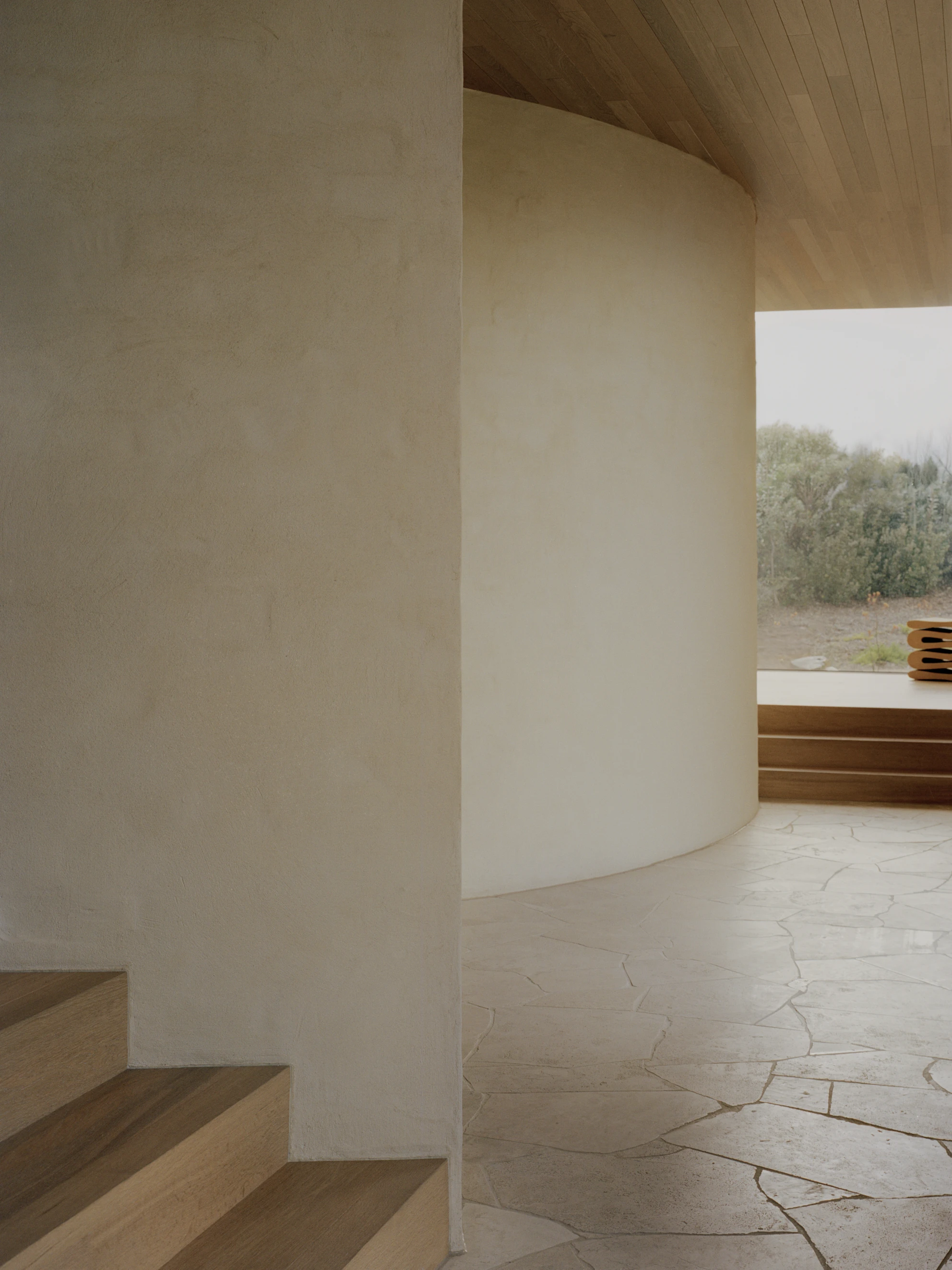
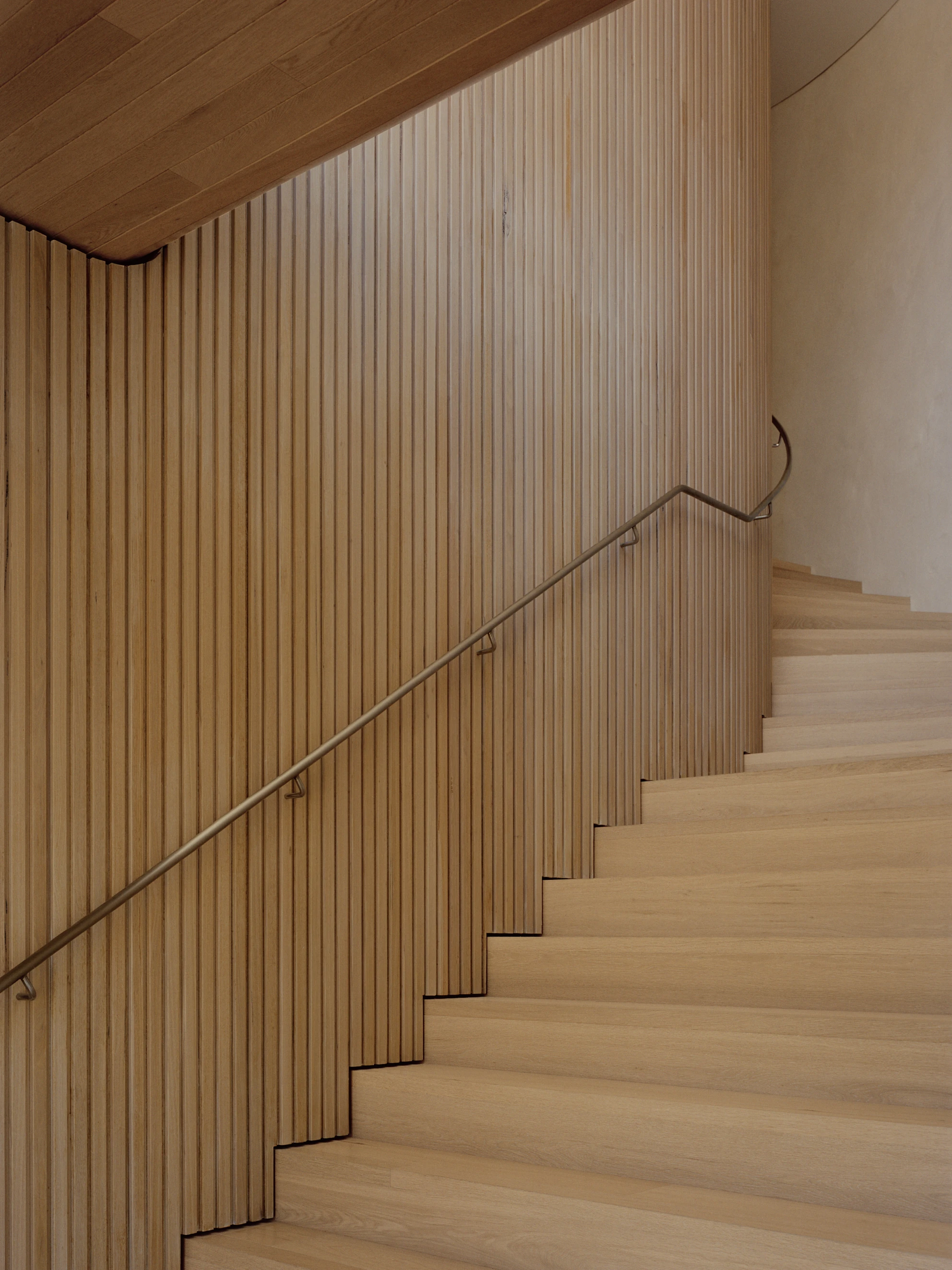
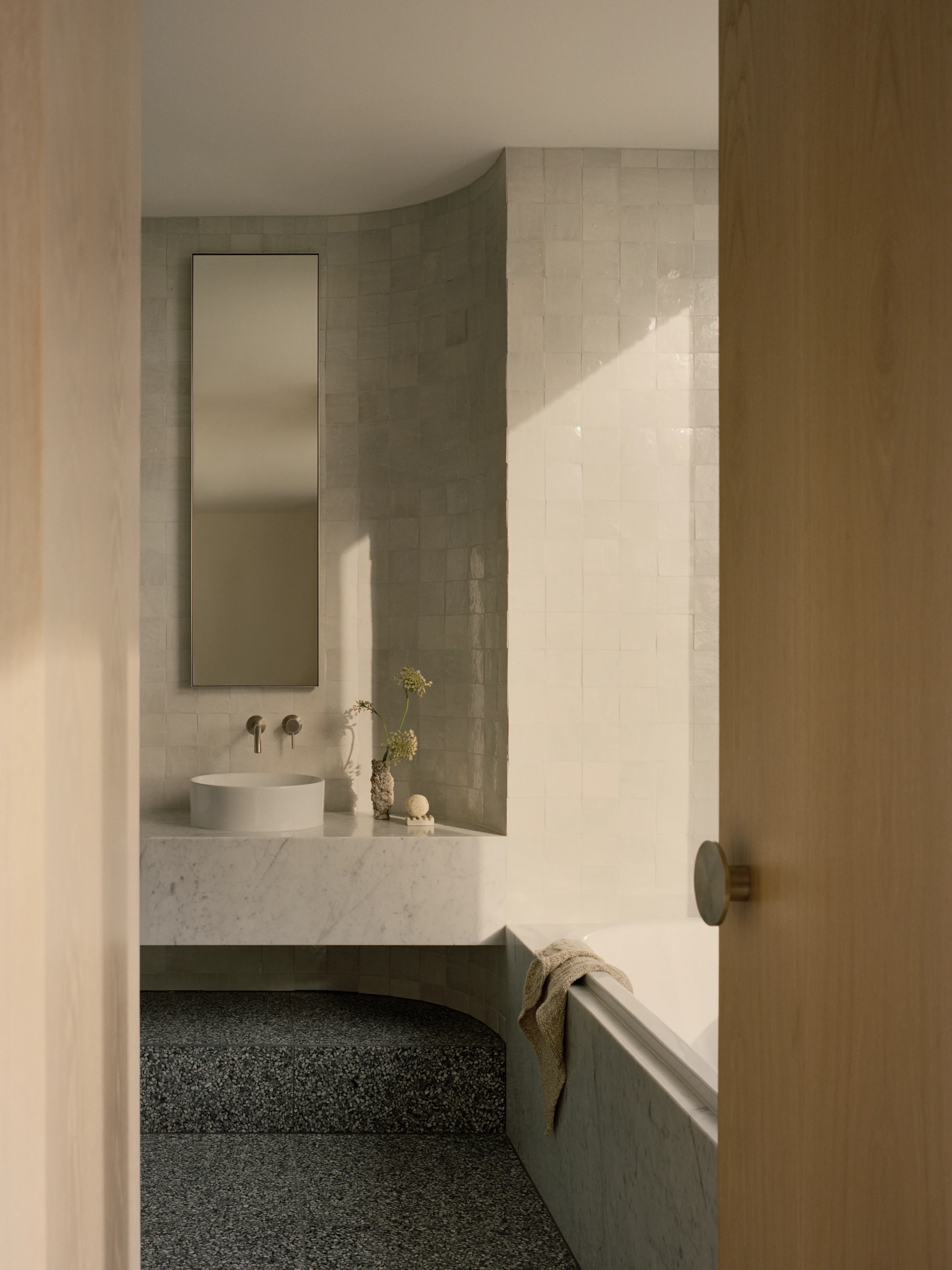
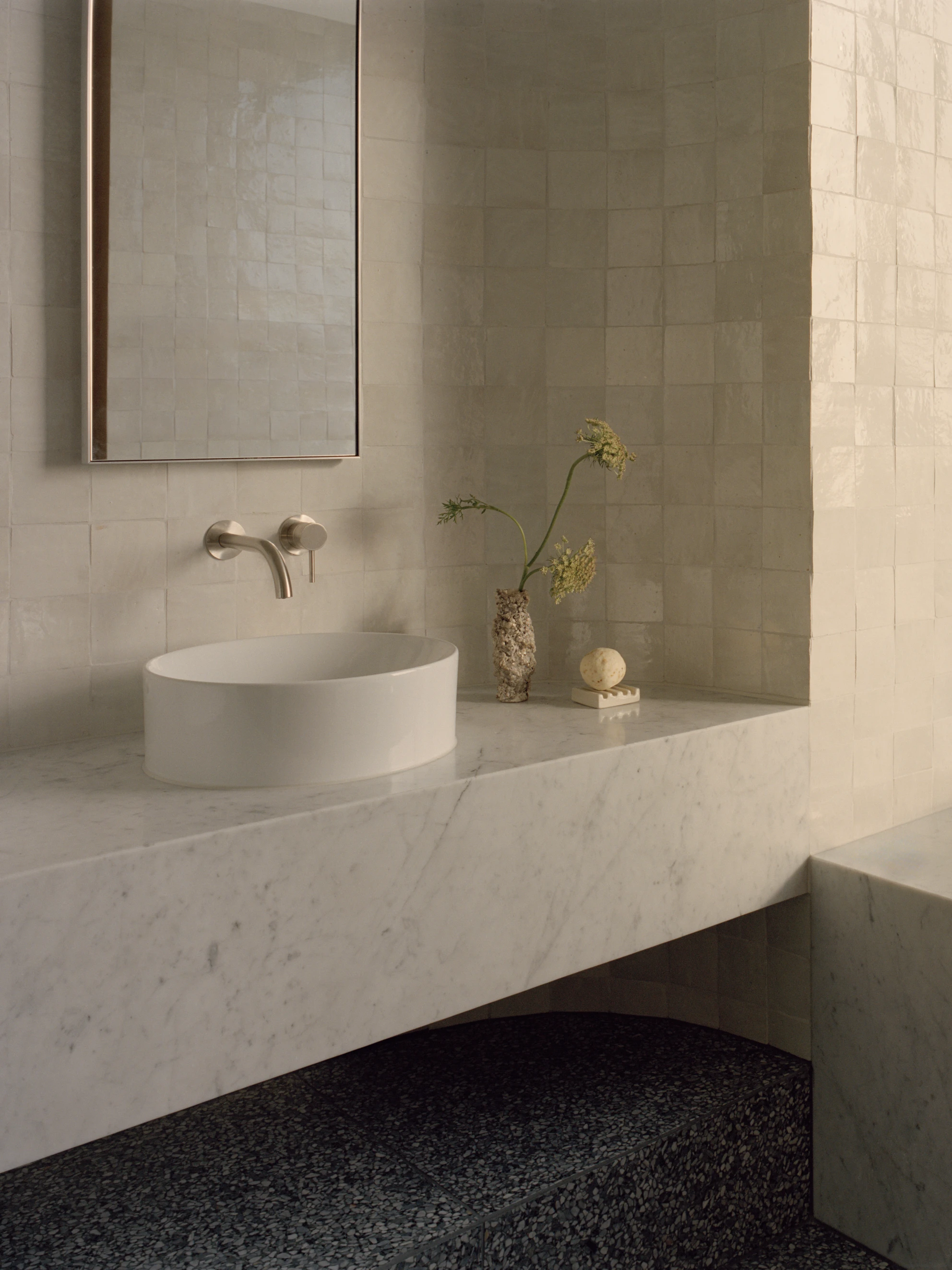
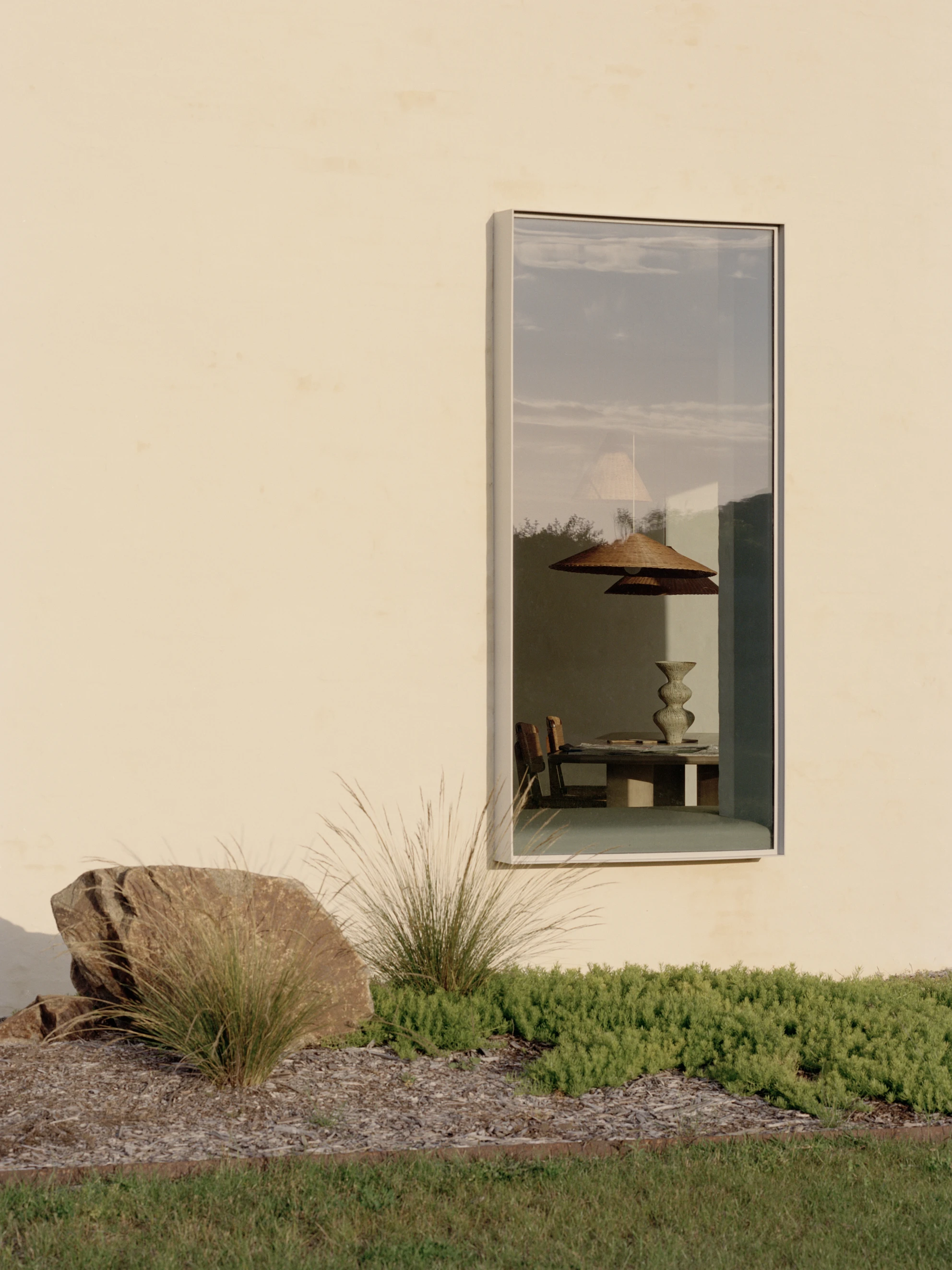
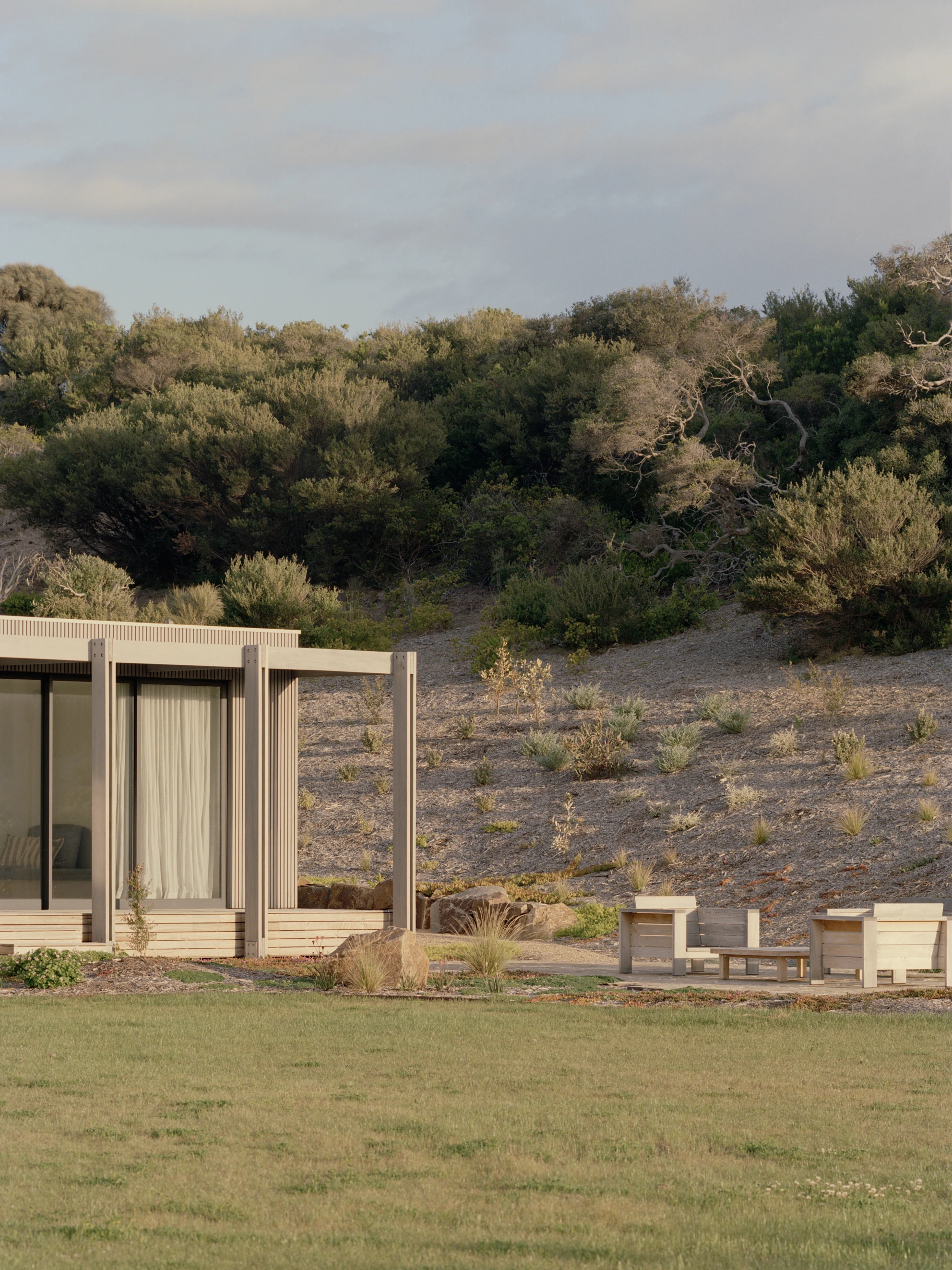
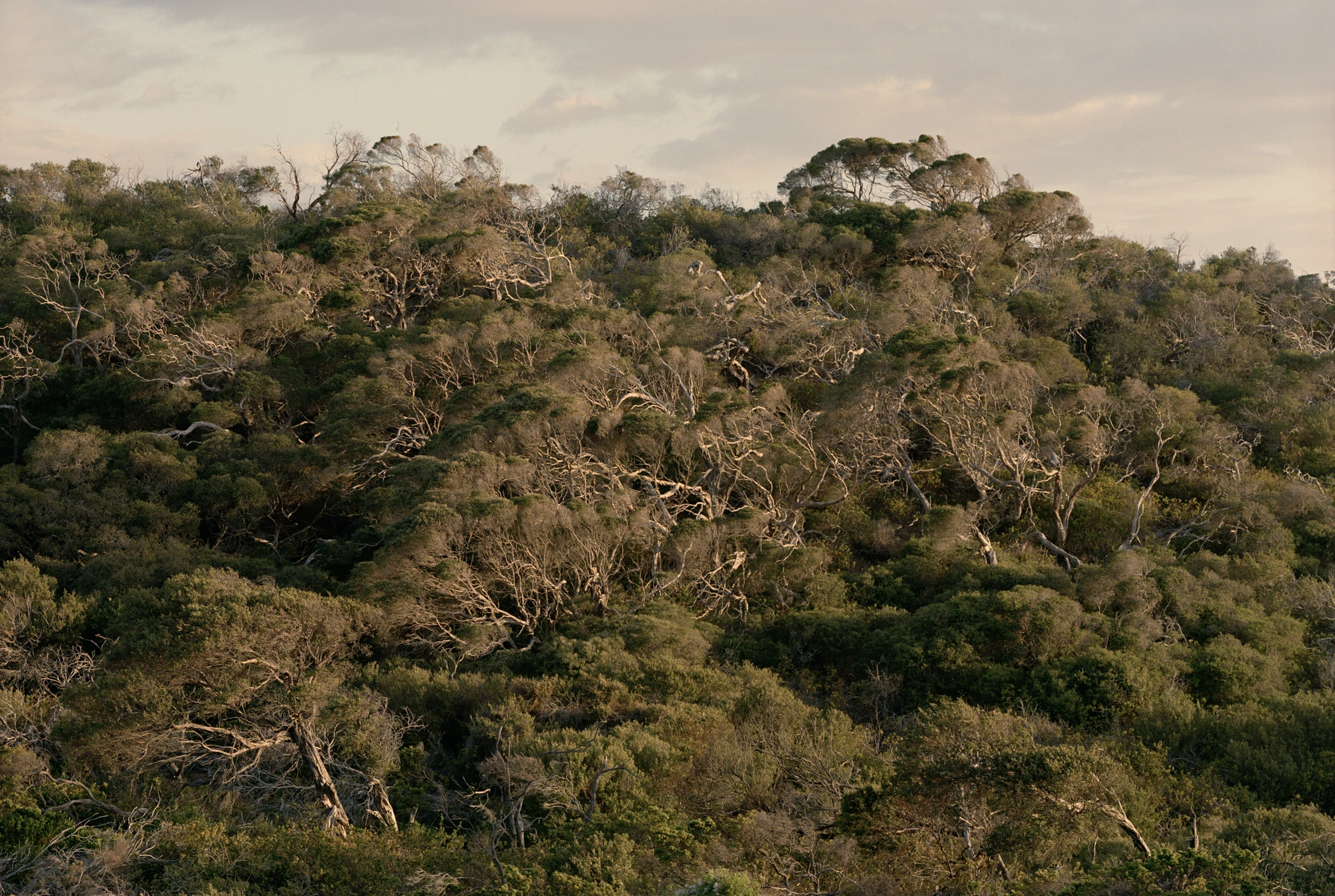
The material palette is sourced from and calibrated against the site's own vocabulary. The off-white render sits over heavily textured brickwork in irregular D-grade recycled bricks — a material choice that simultaneously reduces the embodied carbon of the project and references the sandstone cliffs just beyond the parkland boundary. Greyed timber cladding and the curved walls throughout echo the grey twisting trunks of the Moonah trees. Inside, the blade walls continue in exposed brickwork, and the split-level circulation moves through space that evokes, the architects note, "the experience of walking through sand dunes." Freeform travertine floor tiles define the main living and guest wings; American oak veneer joinery and natural stone complete the interior.
The environmental logic is passive throughout: narrow floor plates with cross-ventilation as the sole source of cooling on the ground floor year-round, operable transom panels above doors for uninterrupted airflow, a thermal mass of recycled brickwork moderating temperature fluctuations. The landscape strategy reconnects the formerly farmed site to native ecology — introducing plants that blur the boundary between garden and national park, regenerating what had been cleared.
Photographer Tasha Tylee documents the house in the shifting coastal light the architects describe as the project's true material — the light that moves across rendered brick and Moonah timber and identifies their correspondence to the landscape they've been drawn from.