Thisispaper Community
Join today.
Enter your email address to receive the latest news on emerging art, design, lifestyle and tech from Thisispaper, delivered straight to your inbox.
Oops! Something went wrong while submitting the form.
Instant access to new channels
The top stories curated daily
Weekly roundups of what's important
Original features and deep dives
Exclusive community features
Alexander Zaxarov
Sep 27, 2026

Inside Tranen in Hellerup, north of Copenhagen, Louis Morlæ builds Walls at the World’s End, three robotic walls that roll into new formations on carts driven by live data pulled from the internet.

For his first solo show in the Nordic region, Louis Morlæ turns the Danish art venue Tranen, in Hellerup, into a machine for generating visions of the end of the world. His subject is the tech industry that built the world as it stands, and the artificial intelligence now dismantling it. Dreams of progress have curdled into ambitions of disruption, the old start-up motto “move fast and break things,” once Mark Zuckerberg’s, hardened into a theory of society.

Born in Australia and based in London, Morlæ works with whatever the moment offers: AI, video generators, 3D printing, robotics, new materials, collaborators. From them he makes sculpture, film, music and machines with an aerospace engineer’s precision. Toke Lykkeberg, who directs Tranen and shaped the show, reads the results as status reports from the “engine room” of civilization.

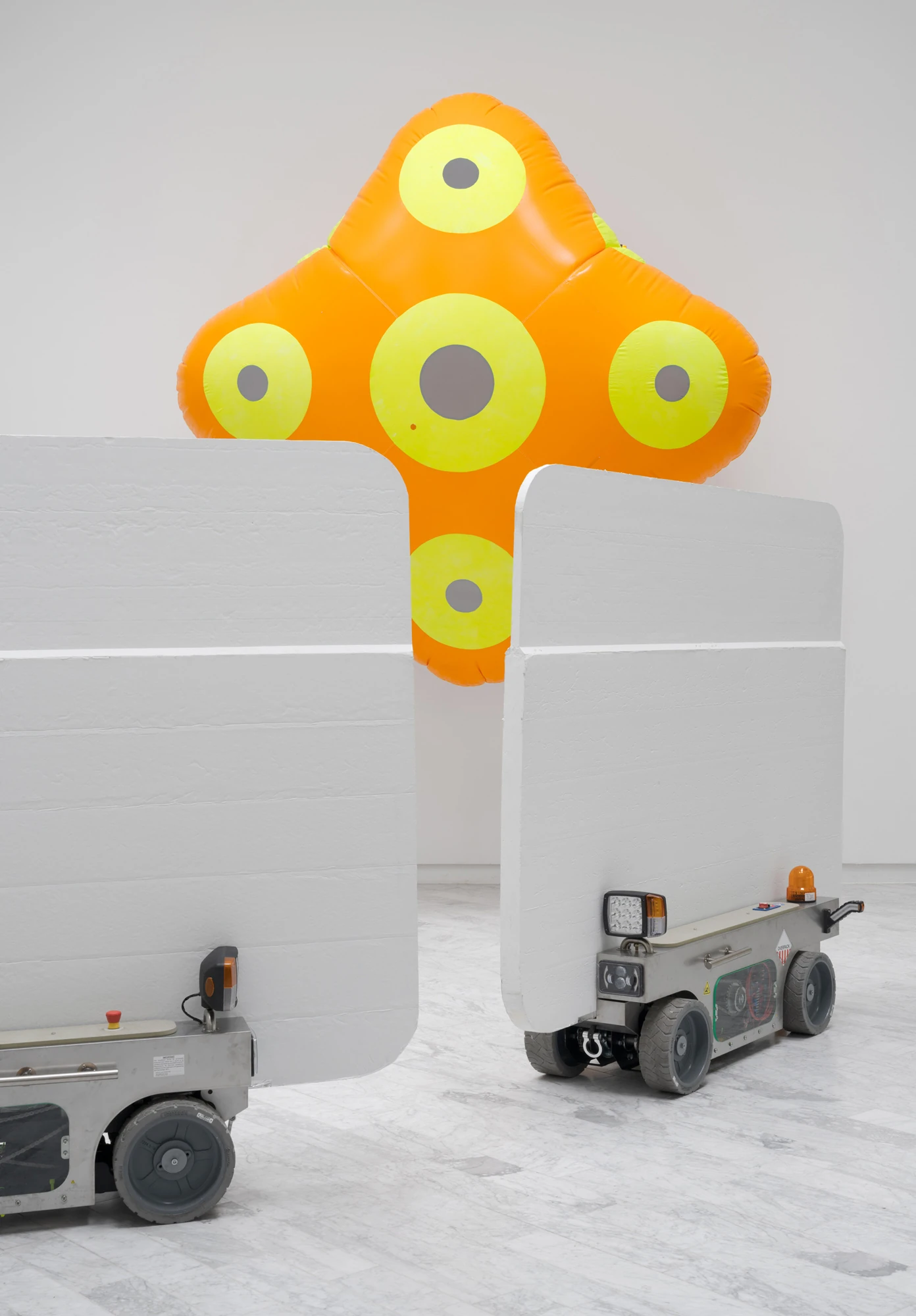
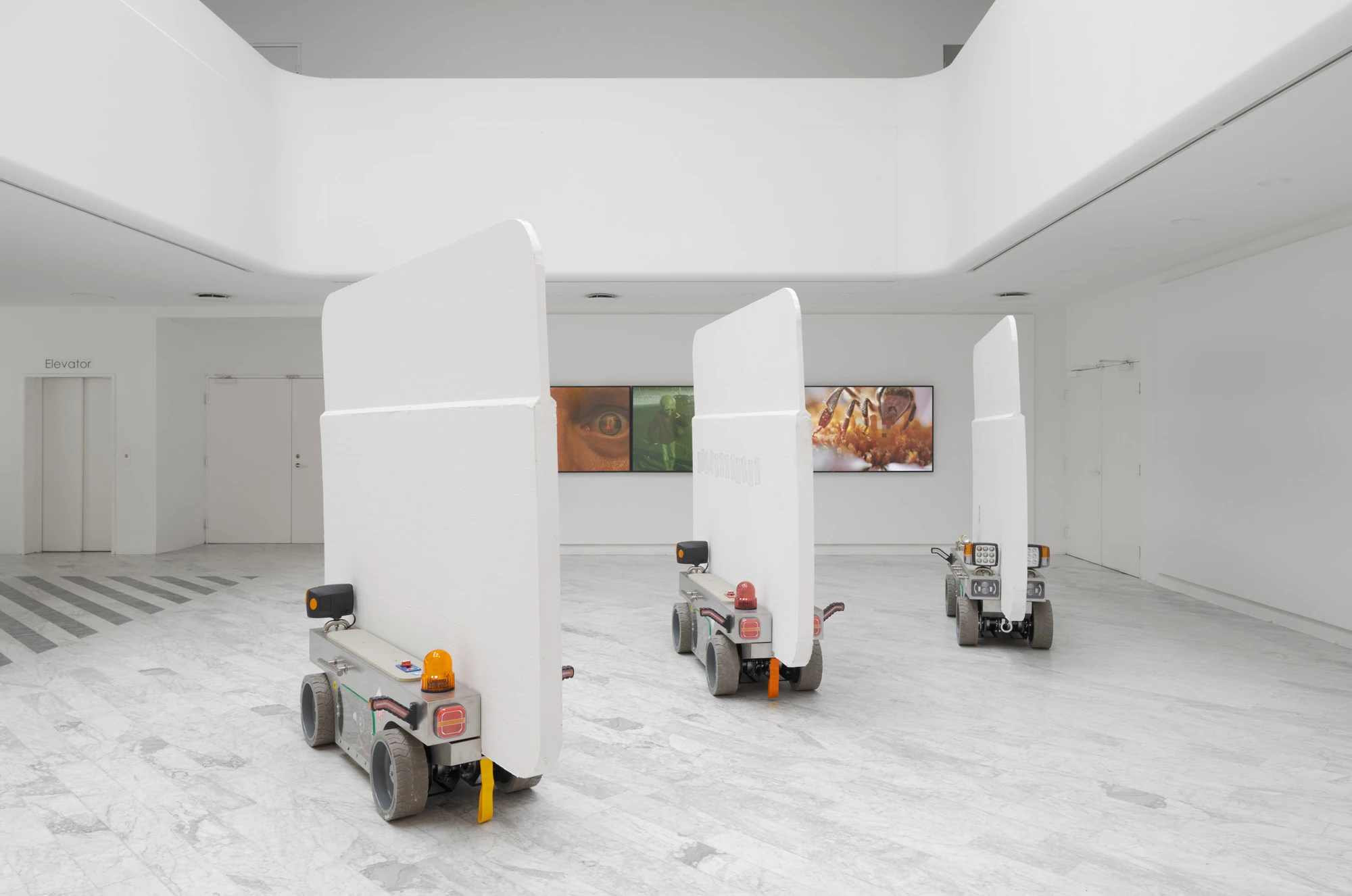
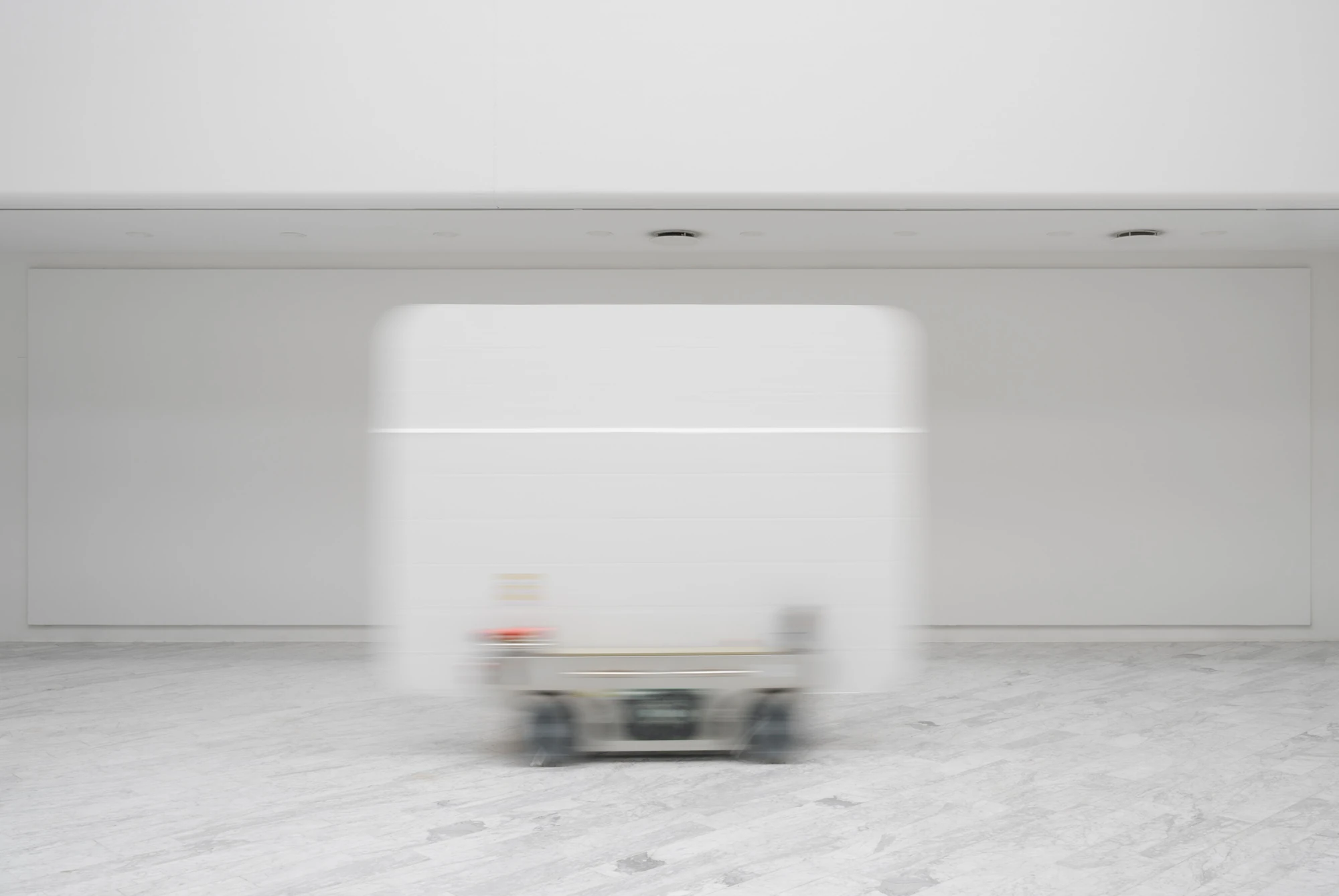
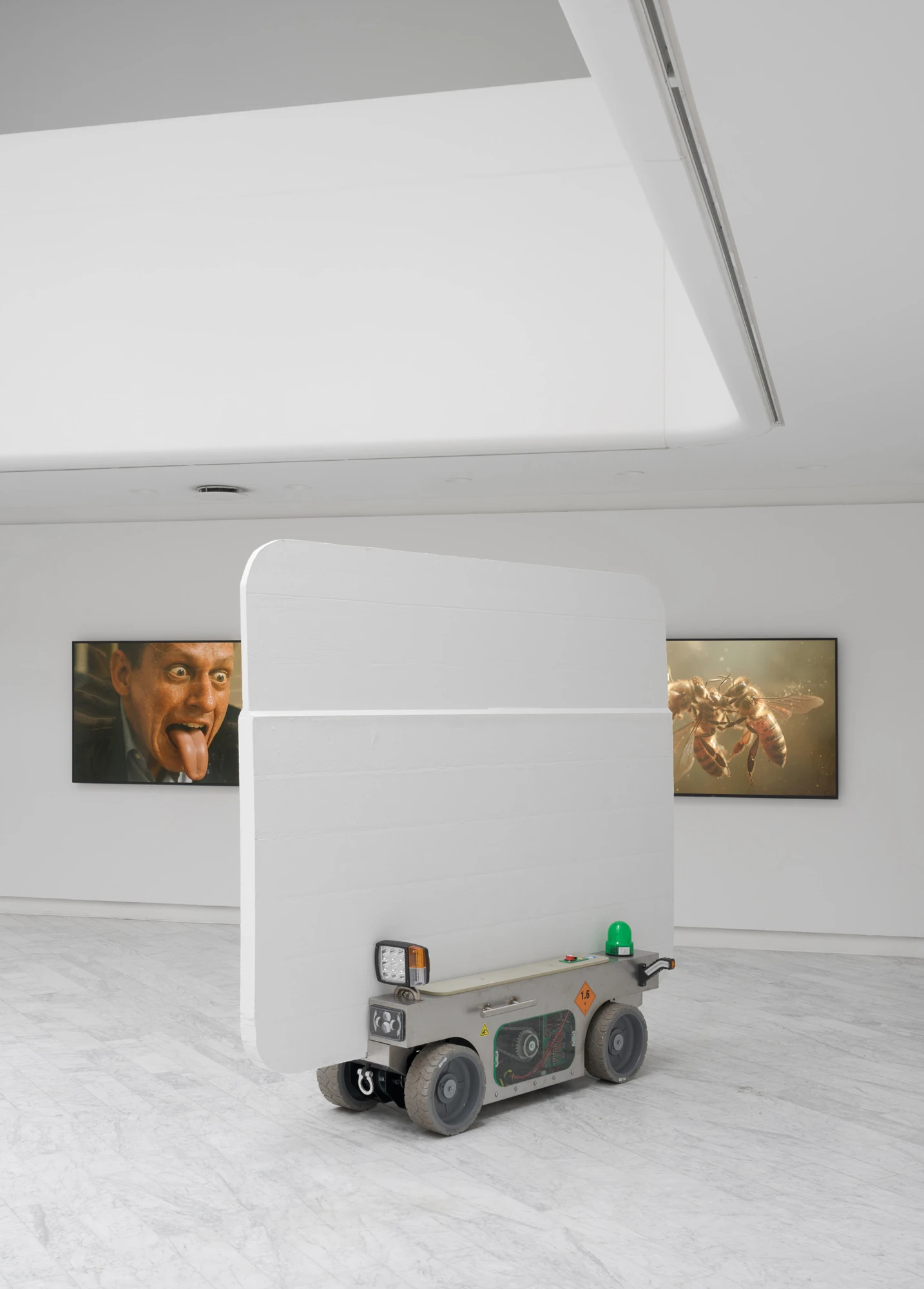
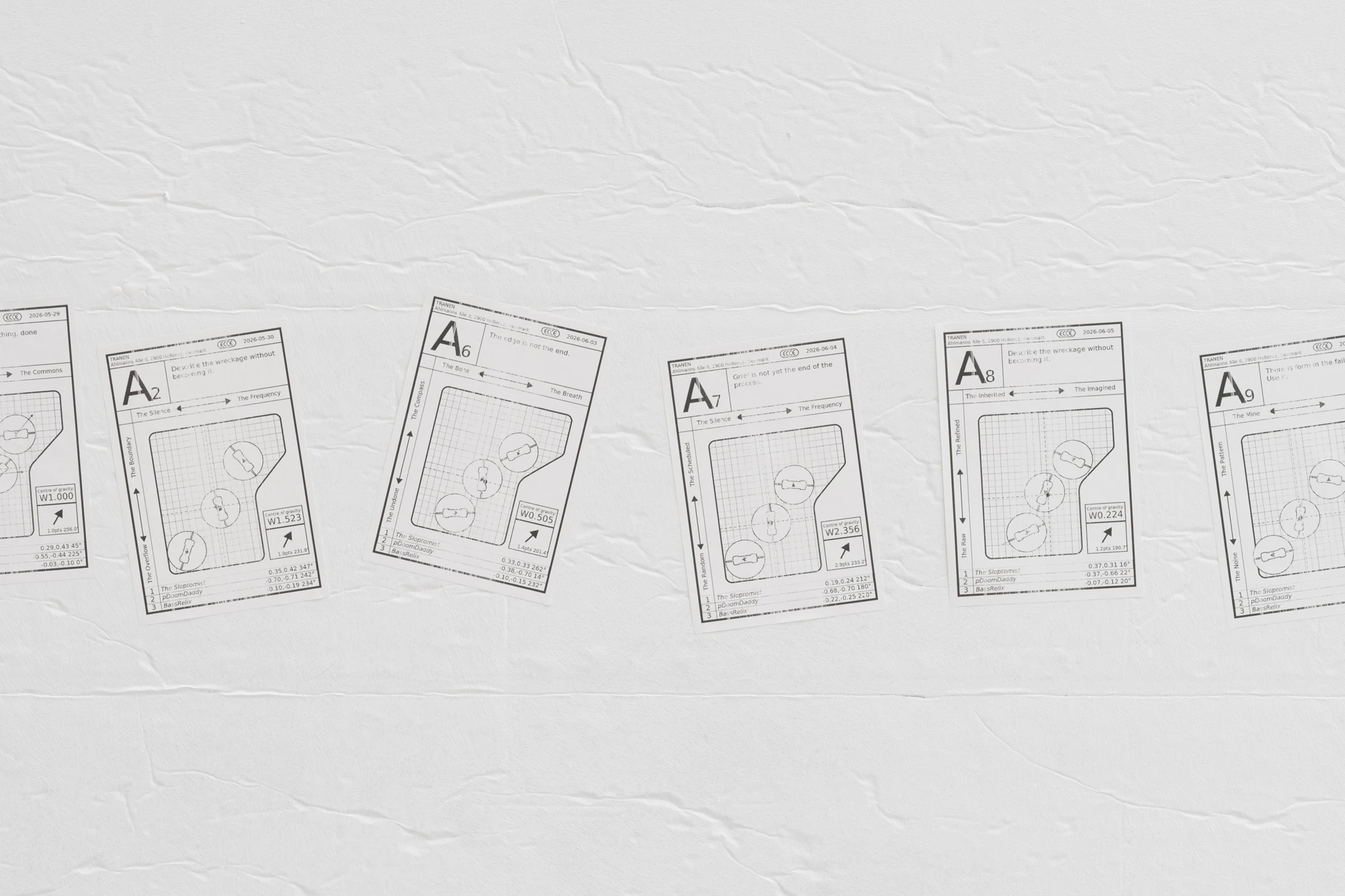
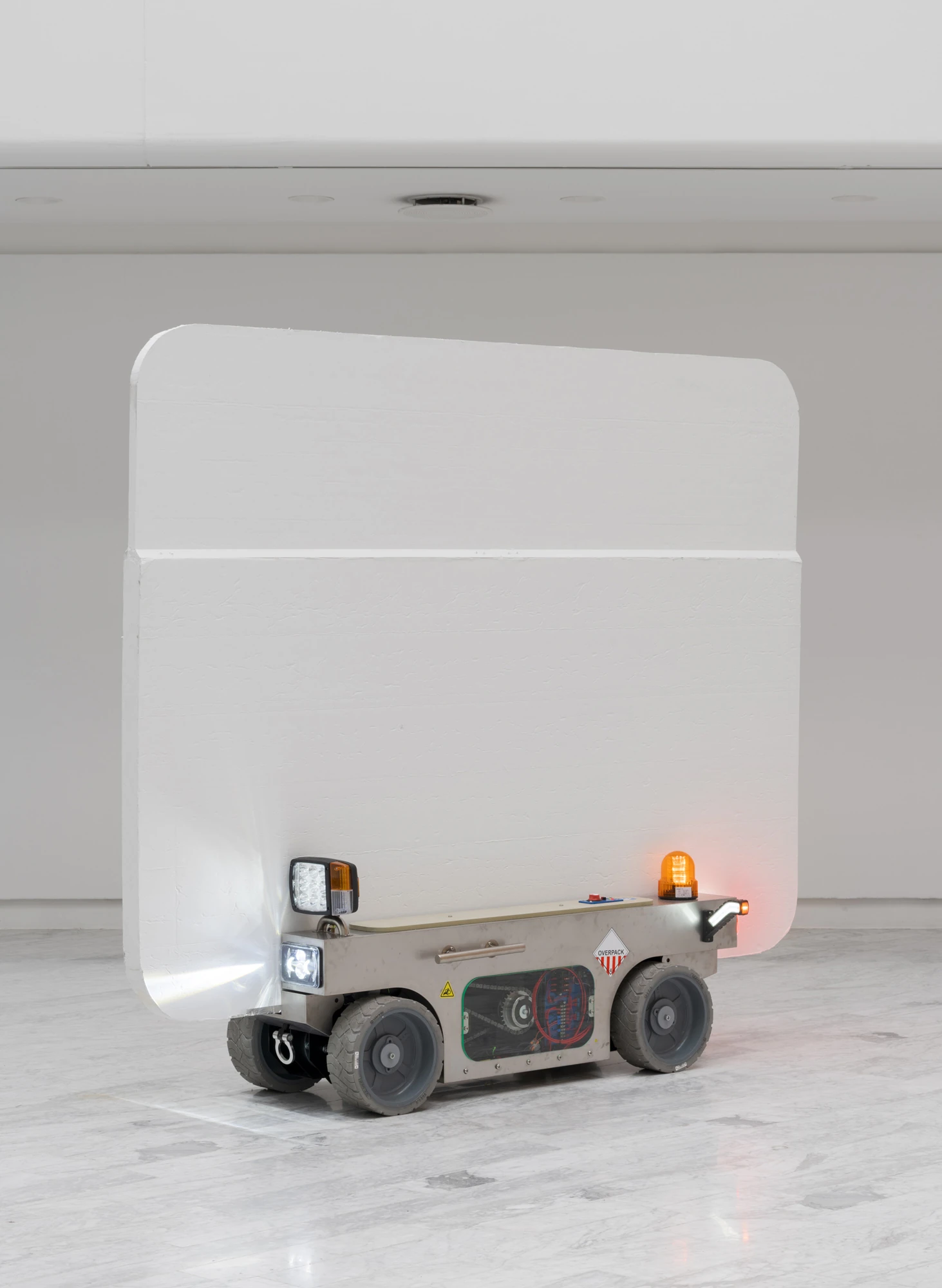
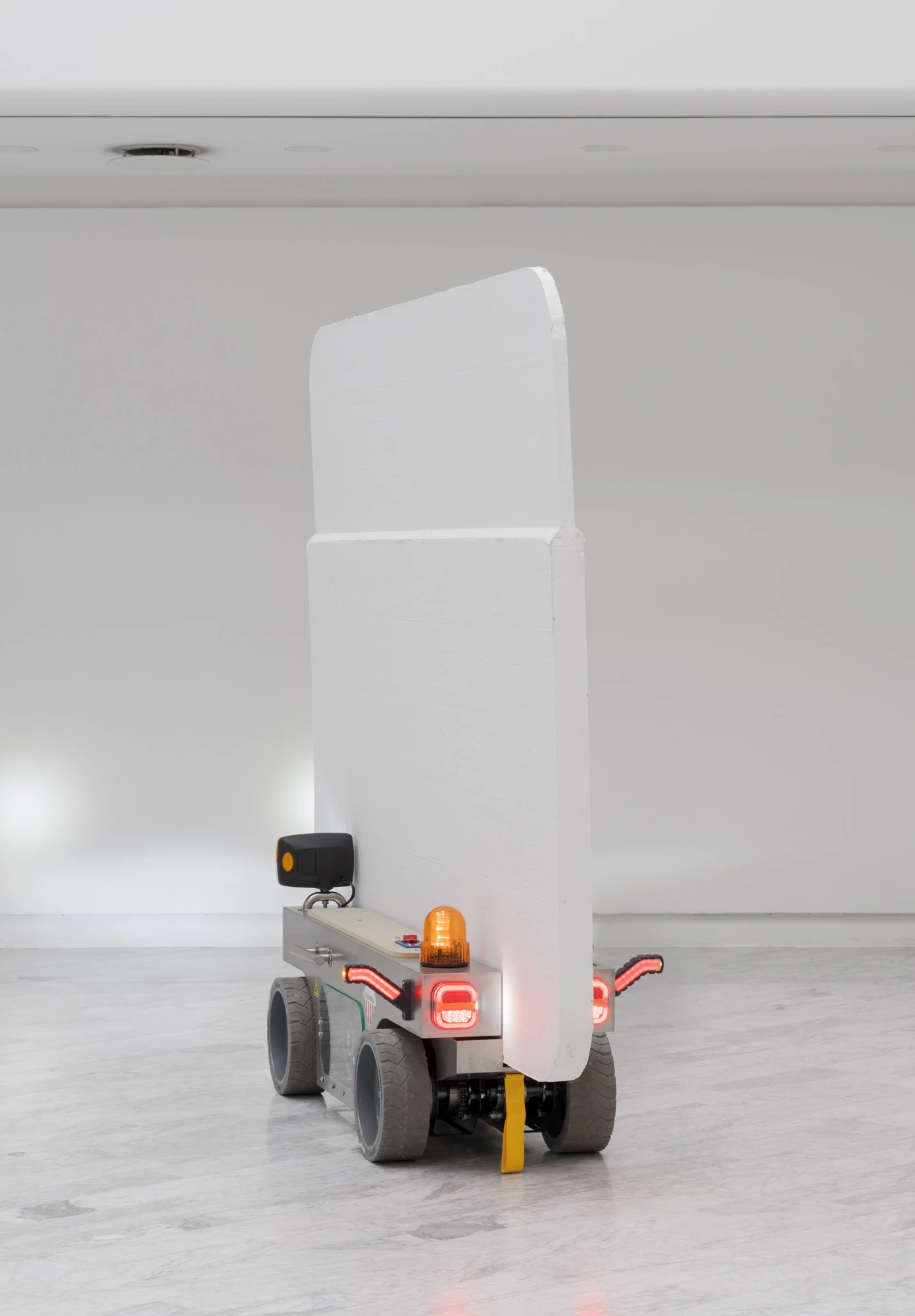
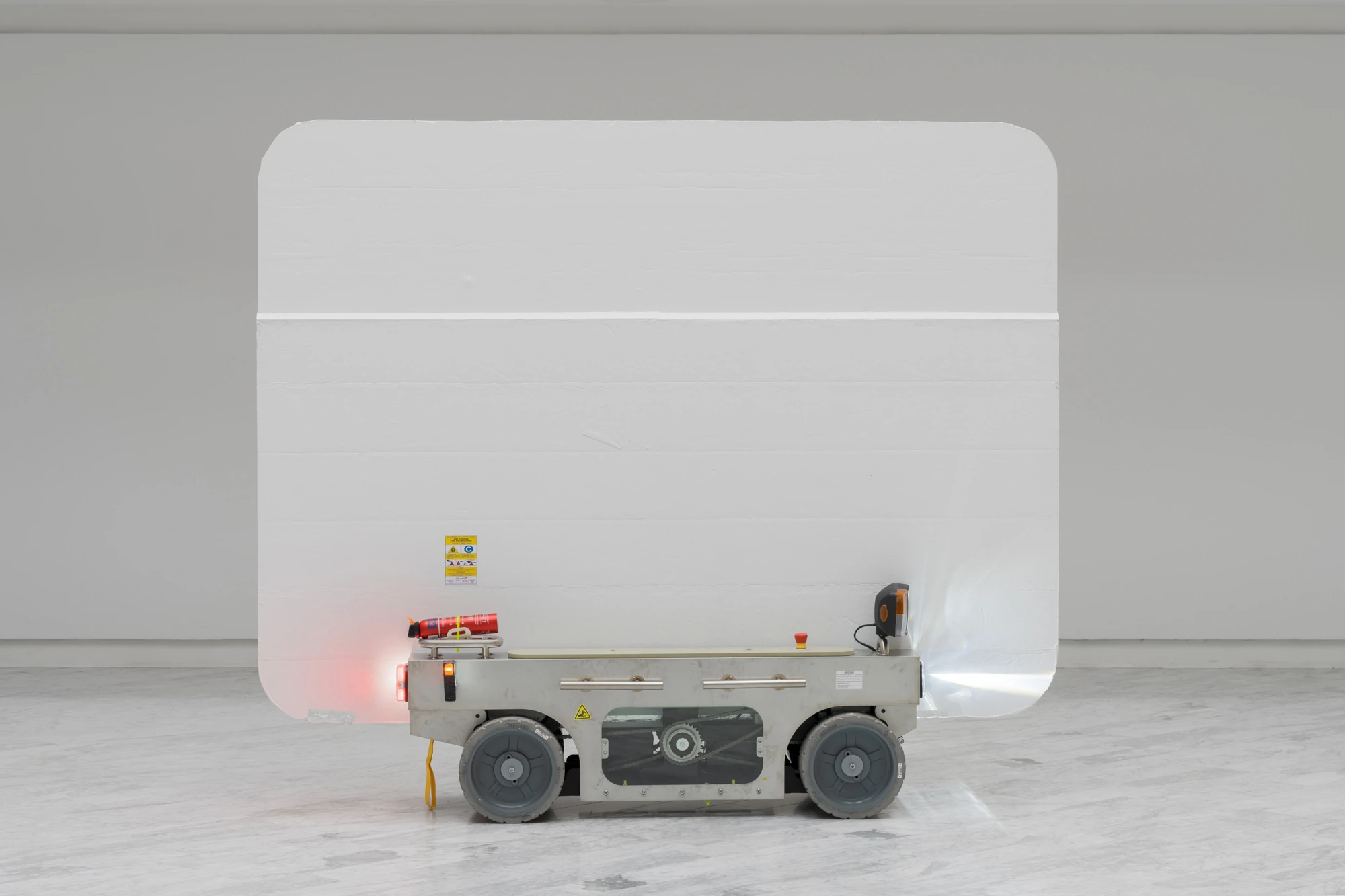
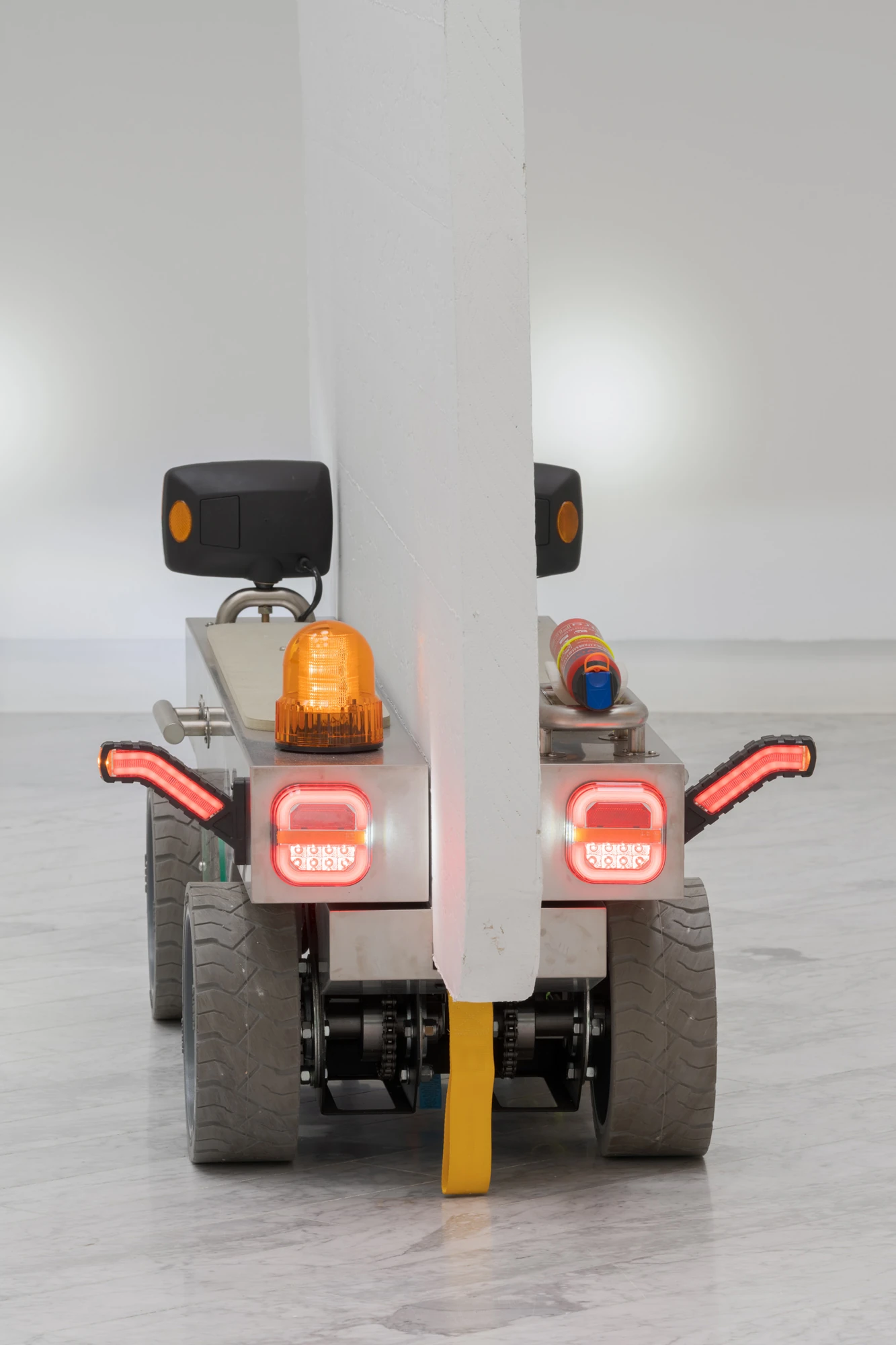
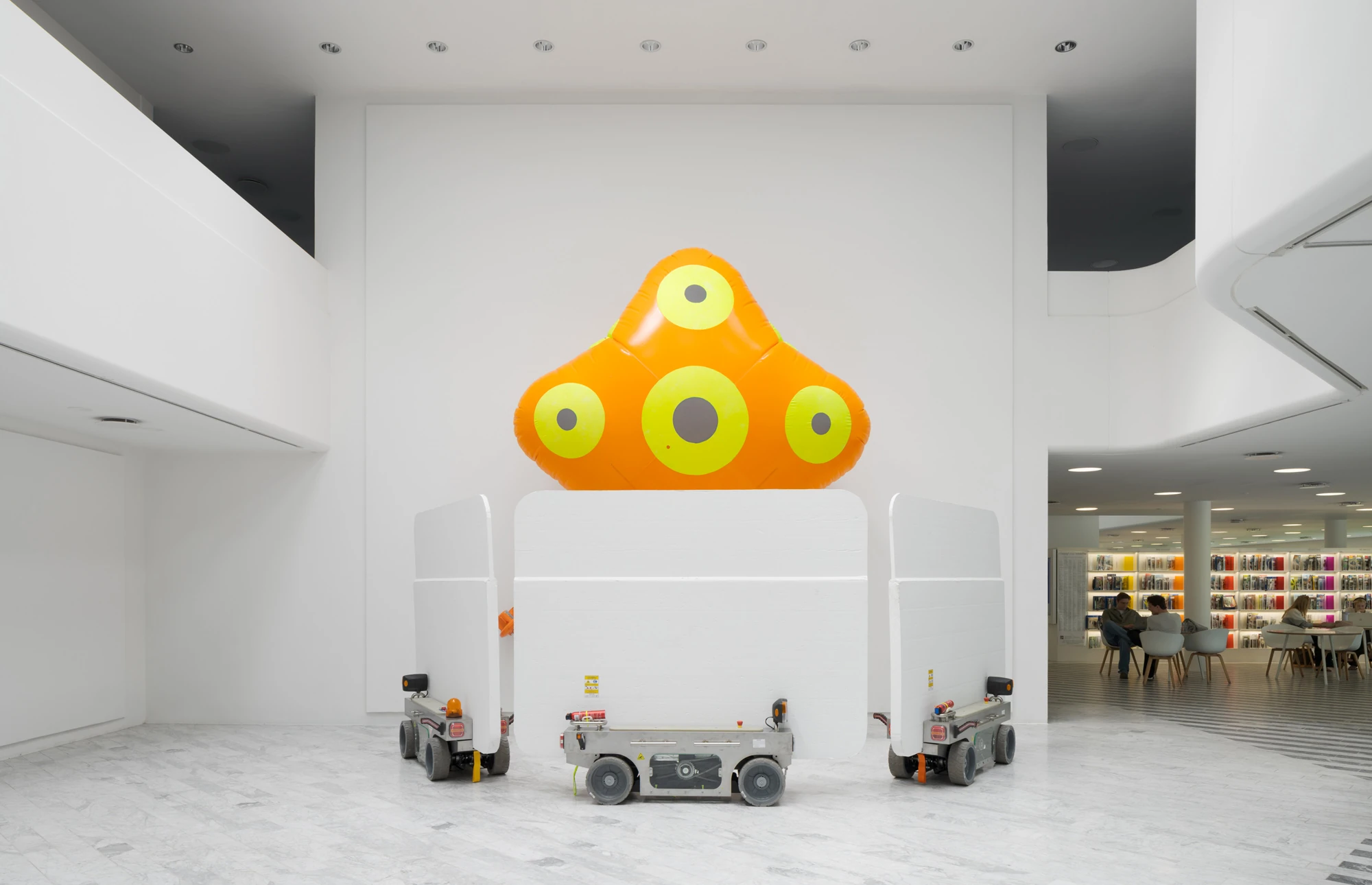
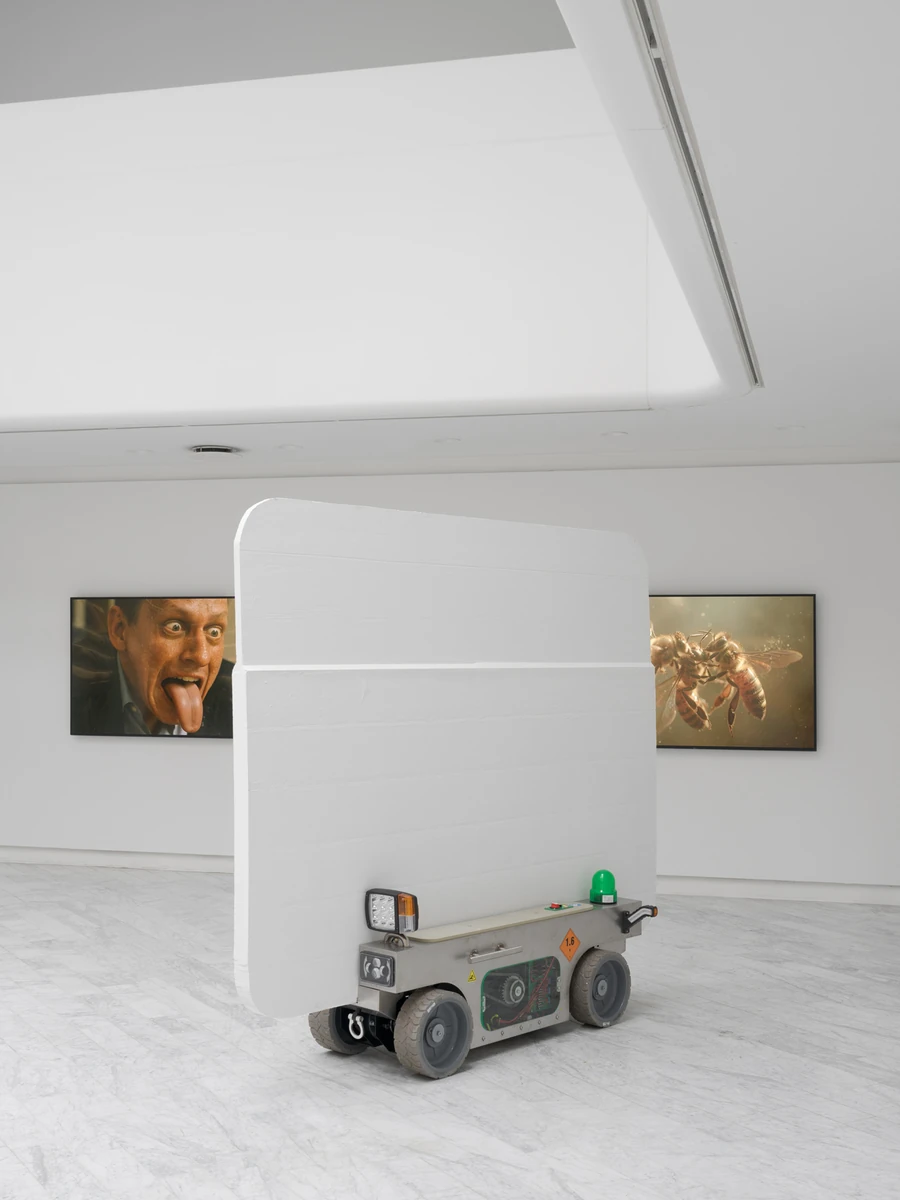
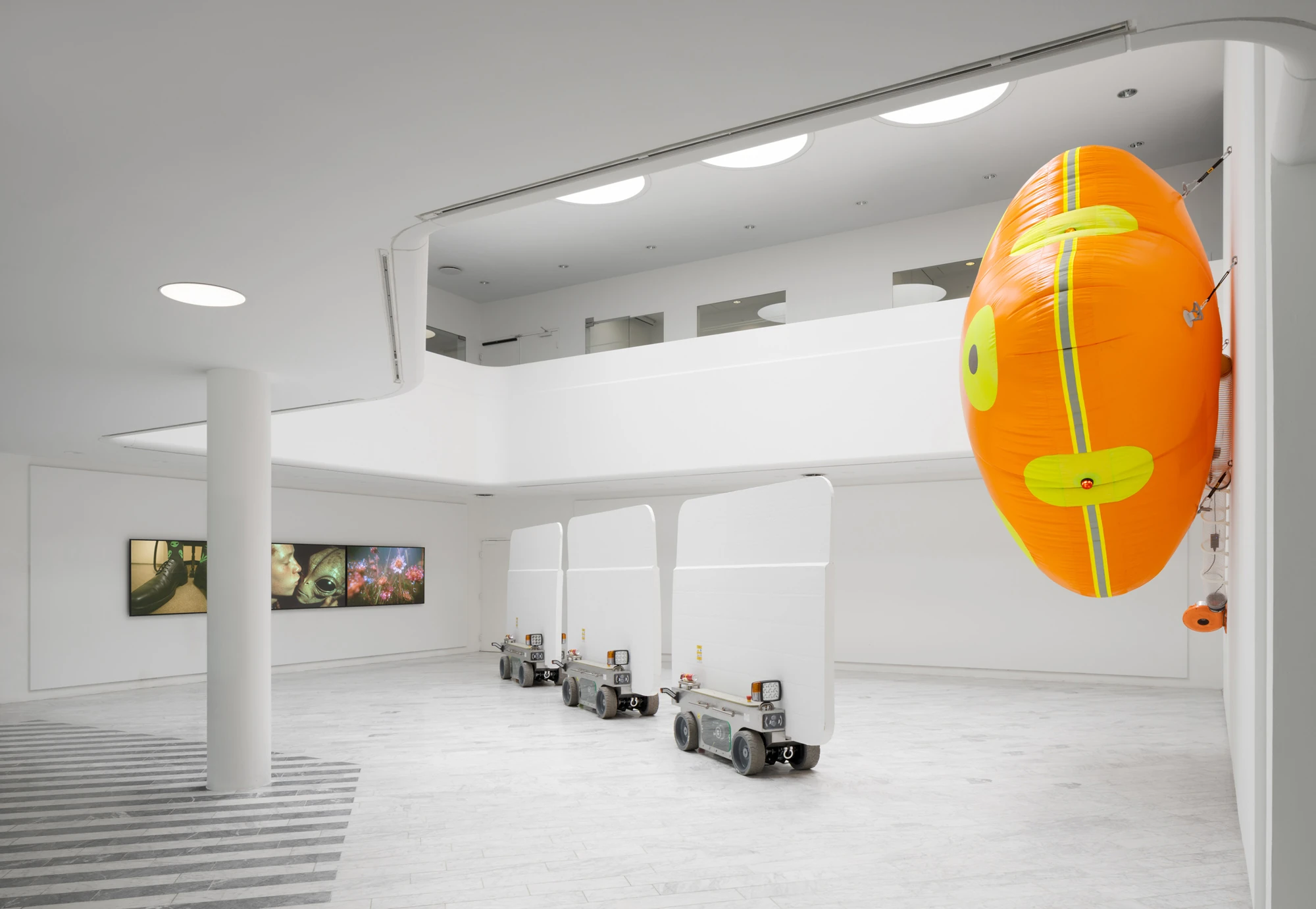
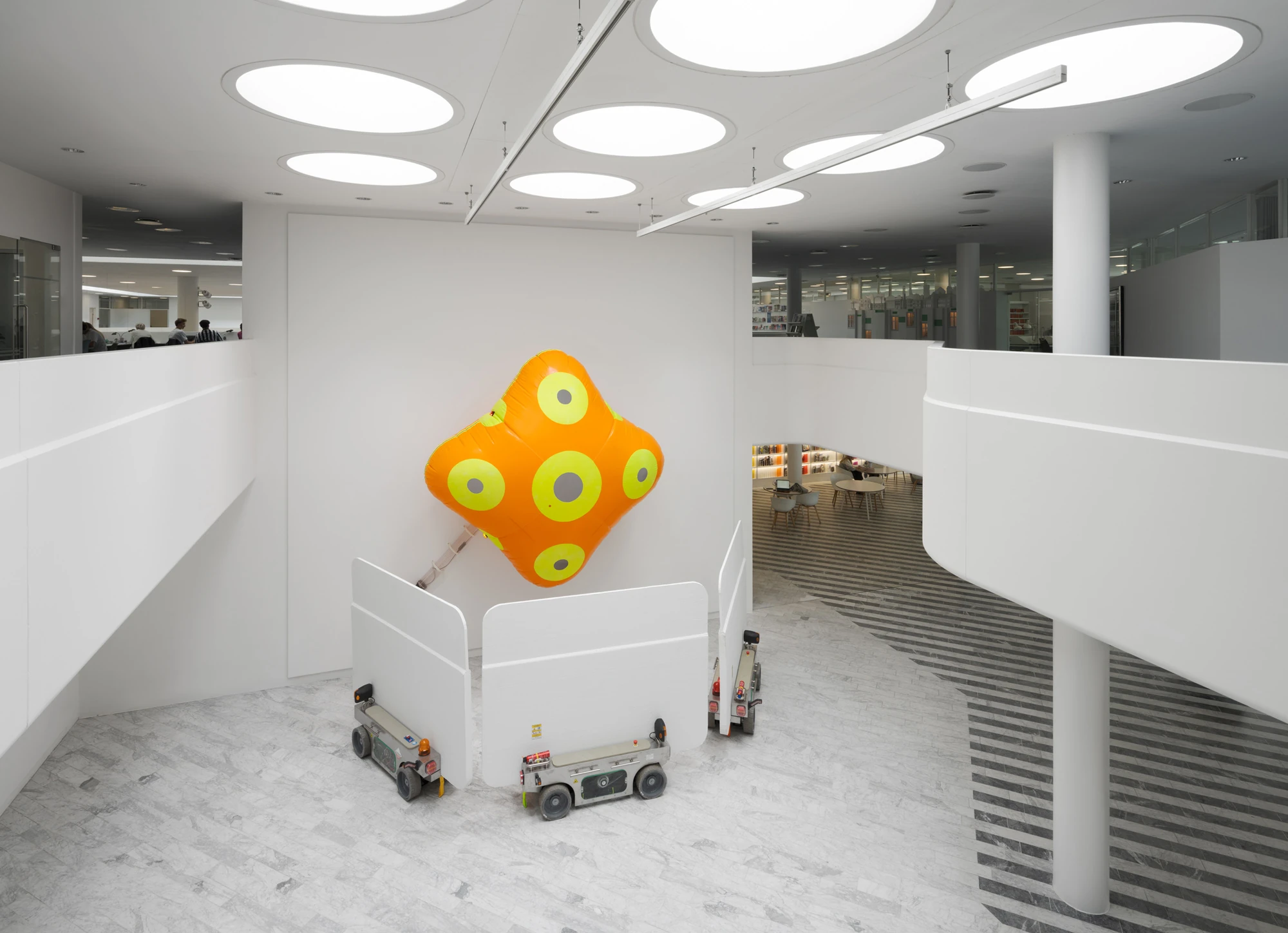
The show turns on three mobile walls on wheels: The First Wall (BassRelixx), The Second Wall (SloptomistPriime) and The Third Wall (pDoomDaddy). Each is a slab of PIR board with perspex siding and steel brackets, riding a four-wheeled cart fitted with lights, mimicking the fixed walls of the room. An inscrutable AI harvests live data from the internet and shunts them into new configurations, working from paired concepts of its own: the fence and the horizon, the furnace and the tide. The logic is opaque even to Morlæ, as the systems now steering daily life have grown opaque to their own engineers.

On the move, the walls behave like self-driving cars crossed with bumper cars, switching modes and sometimes colliding; the engineer who built the vehicles Morlæ designed comes from the show Robot Wars. As they travel they open passages and throw up barriers, deciding how anyone crosses the room, making the infrastructure they use.

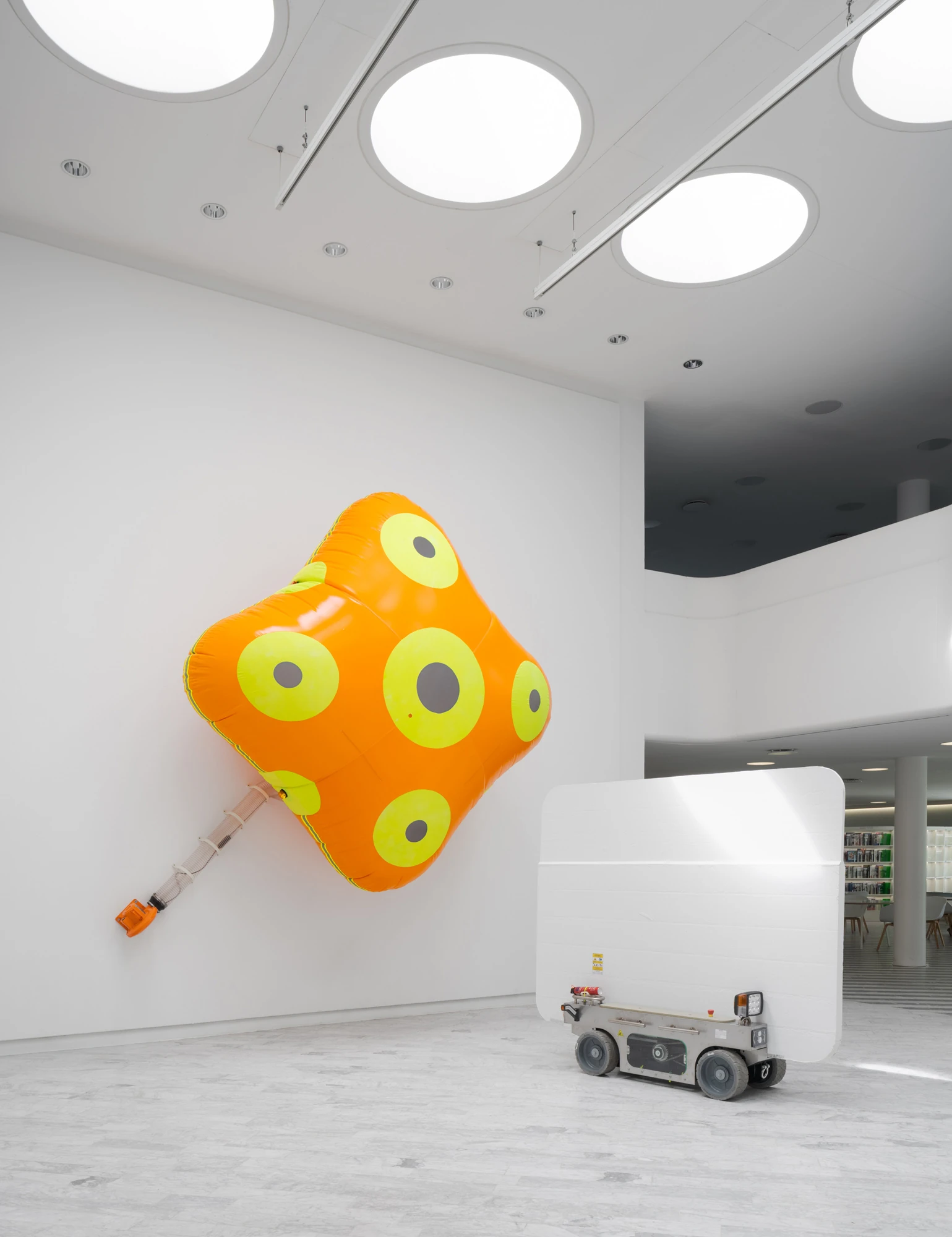
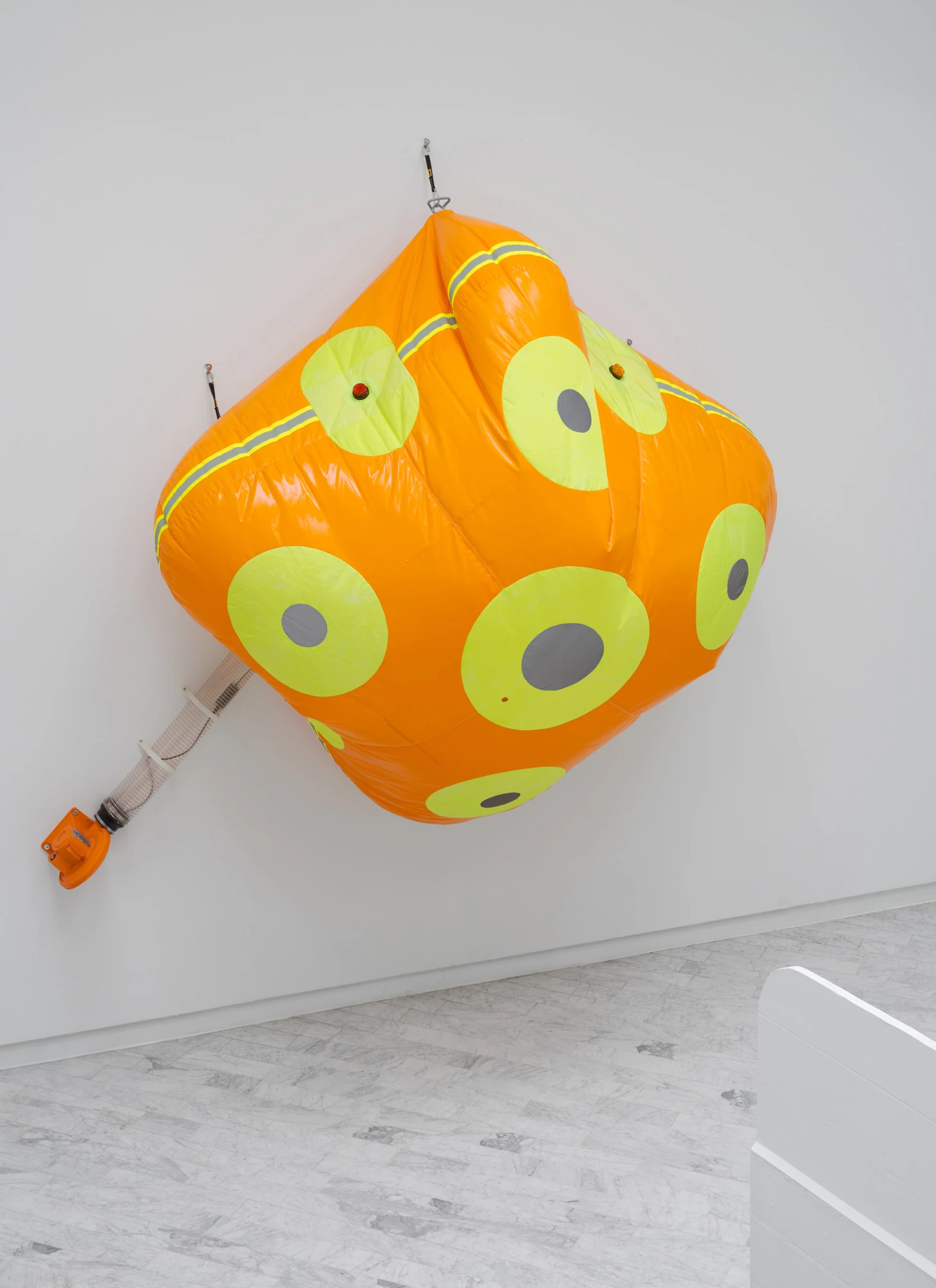
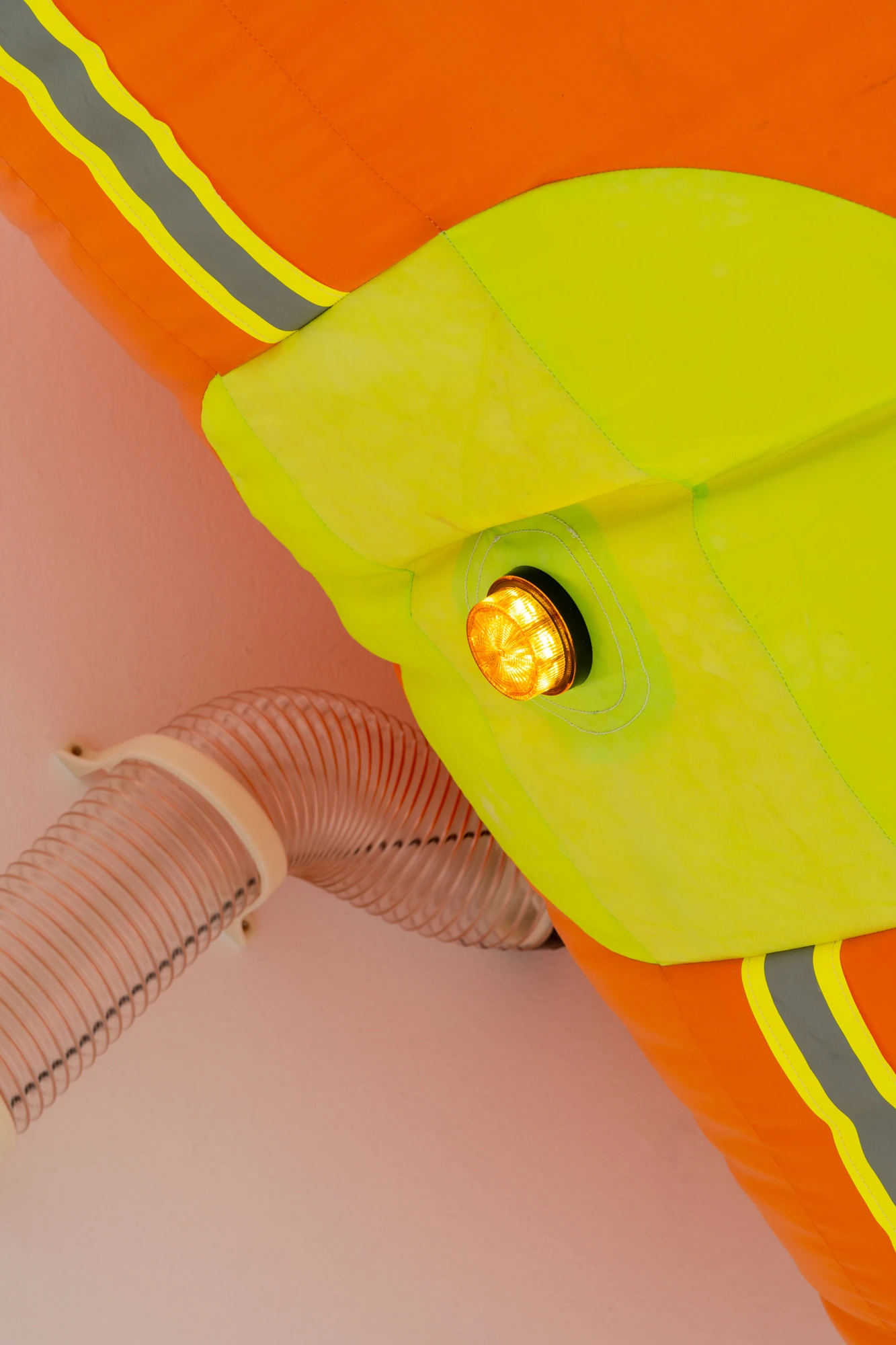
Above them hangs SFB03 (Larsen), a stitched airbag of silicone-coated nylon banded in high-visibility panels, fed by a blower through flexible tubing and studded with lights. It reads as a kill switch, the kind meant to shut down a robot or an AI, and when inflated it crowds the floor and shrinks how far the walls can travel. Lykkeberg sees in it both the industry’s promised safety and pure hot air, the vow to let the genie out of the bottle and coax it back, as easily as a balloon is pumped and let down.

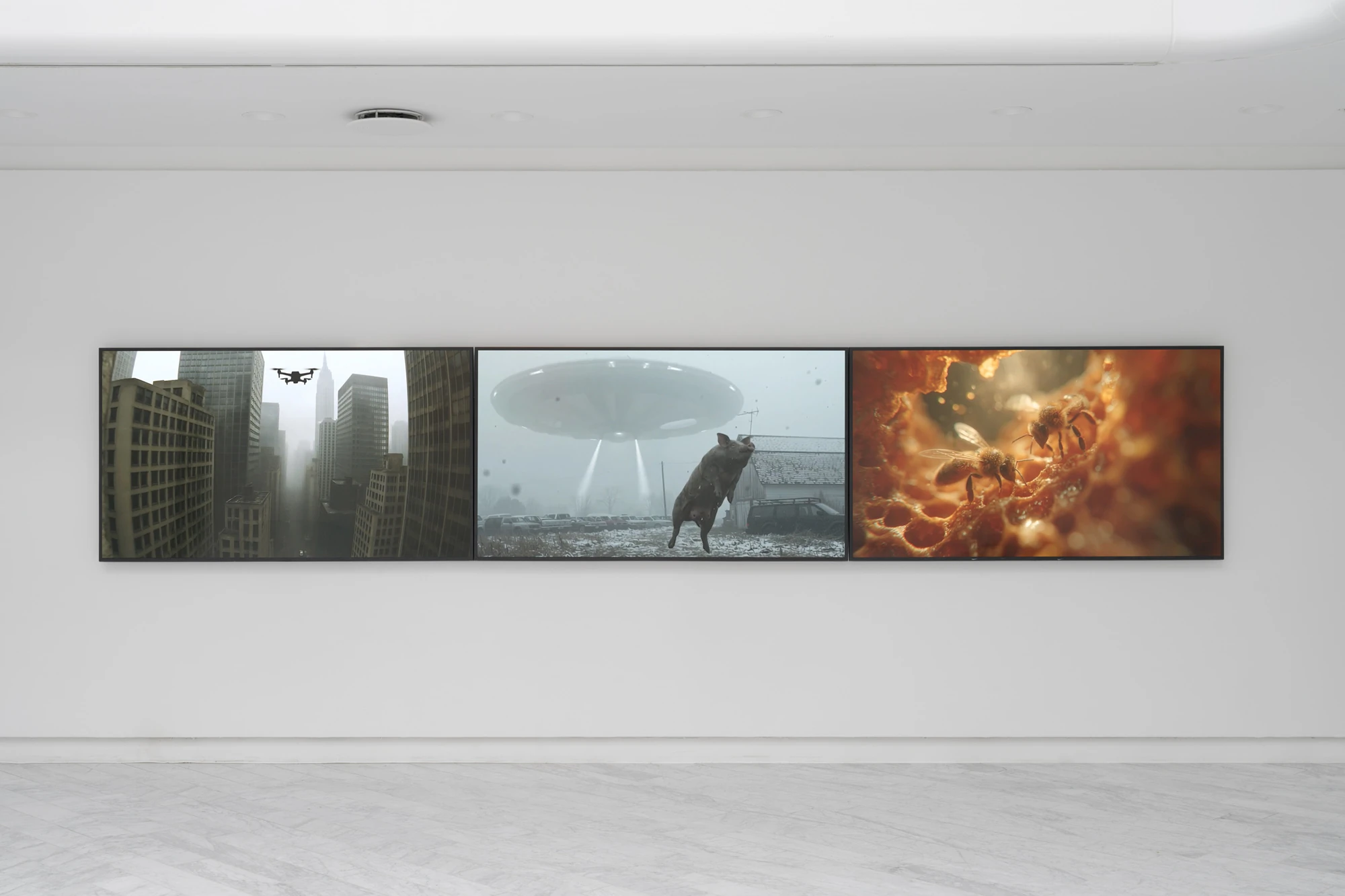
The end arrives, finally, in three films. Grouped as The Fourth Wall, they imagine rather than forecast, closer to the “hallucinations” that AI hands its users than to prediction. One trails an individualist in the mould of Peter Thiel, lost in a warped version of his own futures; another visits an eco-collective whose techno rave is cut short by an alien abduction; the last sees a post-human, multispecies world through the eyes of ecstatic bees. Each used the newest generator on the market, testing the worldview each tool allows. The show offers many endings for the known world and no answer about what waits beyond.
Interested in Showcasing Your Work?
‍

If you would like to feature your works on Thisispaper, please visit our Submission page and sign up to Thisispaper+ to submit your work. Once your submission is approved, your work will be showcased to our global audience of 2 million art, architecture, and design professionals and enthusiasts.
No items found.
Less, with more behind it.
Explore guides. Search the archive. Walk the atlas.
Become a Thisispaper+ member today to unlock full access to our magazine, advanced tools, and support our work.
Get two months FREE
with annual subscription
Less, with more behind it.
Explore guides. Search the archive. Walk the atlas.
Become a Thisispaper+ member today to unlock full access to our magazine, advanced tools, and support our work.
Get two months FREE
with annual subscription
No items found.
Alexander Zaxarov
Sep 27, 2026

Inside Tranen in Hellerup, north of Copenhagen, Louis Morlæ builds Walls at the World’s End, three robotic walls that roll into new formations on carts driven by live data pulled from the internet.

For his first solo show in the Nordic region, Louis Morlæ turns the Danish art venue Tranen, in Hellerup, into a machine for generating visions of the end of the world. His subject is the tech industry that built the world as it stands, and the artificial intelligence now dismantling it. Dreams of progress have curdled into ambitions of disruption, the old start-up motto “move fast and break things,” once Mark Zuckerberg’s, hardened into a theory of society.

Born in Australia and based in London, Morlæ works with whatever the moment offers: AI, video generators, 3D printing, robotics, new materials, collaborators. From them he makes sculpture, film, music and machines with an aerospace engineer’s precision. Toke Lykkeberg, who directs Tranen and shaped the show, reads the results as status reports from the “engine room” of civilization.

The show turns on three mobile walls on wheels: The First Wall (BassRelixx), The Second Wall (SloptomistPriime) and The Third Wall (pDoomDaddy). Each is a slab of PIR board with perspex siding and steel brackets, riding a four-wheeled cart fitted with lights, mimicking the fixed walls of the room. An inscrutable AI harvests live data from the internet and shunts them into new configurations, working from paired concepts of its own: the fence and the horizon, the furnace and the tide. The logic is opaque even to Morlæ, as the systems now steering daily life have grown opaque to their own engineers.

On the move, the walls behave like self-driving cars crossed with bumper cars, switching modes and sometimes colliding; the engineer who built the vehicles Morlæ designed comes from the show Robot Wars. As they travel they open passages and throw up barriers, deciding how anyone crosses the room, making the infrastructure they use.

Above them hangs SFB03 (Larsen), a stitched airbag of silicone-coated nylon banded in high-visibility panels, fed by a blower through flexible tubing and studded with lights. It reads as a kill switch, the kind meant to shut down a robot or an AI, and when inflated it crowds the floor and shrinks how far the walls can travel. Lykkeberg sees in it both the industry’s promised safety and pure hot air, the vow to let the genie out of the bottle and coax it back, as easily as a balloon is pumped and let down.

The end arrives, finally, in three films. Grouped as The Fourth Wall, they imagine rather than forecast, closer to the “hallucinations” that AI hands its users than to prediction. One trails an individualist in the mould of Peter Thiel, lost in a warped version of his own futures; another visits an eco-collective whose techno rave is cut short by an alien abduction; the last sees a post-human, multispecies world through the eyes of ecstatic bees. Each used the newest generator on the market, testing the worldview each tool allows. The show offers many endings for the known world and no answer about what waits beyond.
Interested in Showcasing Your Work?
‍

If you would like to feature your works on Thisispaper, please visit our Submission page and subscribe to Thisispaper+. Once your submission is approved, your work will be showcased to our global audience of 2 million art, architecture, and design professionals and enthusiasts.
Thisispaper+
Copenhagen Guide
20+ Projects
Web Access
Link to Maps
Experience Copenhagen’s modern creative pulse through our guide. Discover the city’s finest contemporary art galleries, pioneering design studios, and architectural landmarks that reflect a perfect blend of heritage and modernity.
Immerse yourself in Copenhagen's cutting-edge design scene, a city where art and architecture inspire daily life.
Explore
Copenhagen Guide

Join Thisispaper+
Unlock access to 2500 stories, curated guides + editions, and share your work with a global network of architects, artists and designers who are shaping the future.
Get two months FREE
with annual subscription
Travel Guides
Immerse yourself in timeless destinations, hidden gems, and creative spaces—curated by humans, not algorithms.
Explore All Guides +
Submission Module
Submit your project and gain the chance to showcase your work to our worldwide audience of over 2M architects, designers, artists, and curious minds.
Learn More+
Curated Editions
Dive deeper into carefully curated editions, designed to feed your curiosity and foster exploration.
Off-the-Grid
Jutaku
Sacral Journey
minimum
The New Chair
Explore All Editions +
Atlas
A new and interactive way to explore the most inspiring places around the world.
Interactive map
Linked to articles
450+ curated locations
Google + Apple directions
Smart filters
Subscribe to Explore+
Become a Thisispaper+ member today to unlock full access to our magazine, submit your project and support our work.
Join Thisispaper+Join Thisispaper+
€9/month
Get two months FREE
with annual subscription