Thisispaper Community
Join today.
Enter your email address to receive the latest news on emerging art, design, lifestyle and tech from Thisispaper, delivered straight to your inbox.
Oops! Something went wrong while submitting the form.
Instant access to new channels
The top stories curated daily
Weekly roundups of what's important
Original features and deep dives
Exclusive community features
Thisispaper+ Member

Vis-à-vis Restoration of Villa Doná and Barchessa by RigonSimonetti

Dates:
✧ Collect Post
Cafes by Design
under the patronage of
Vis-à-vis Restoration of Villa Doná and Barchessa by RigonSimonetti
Alexander Zaxarov
May 18, 2026

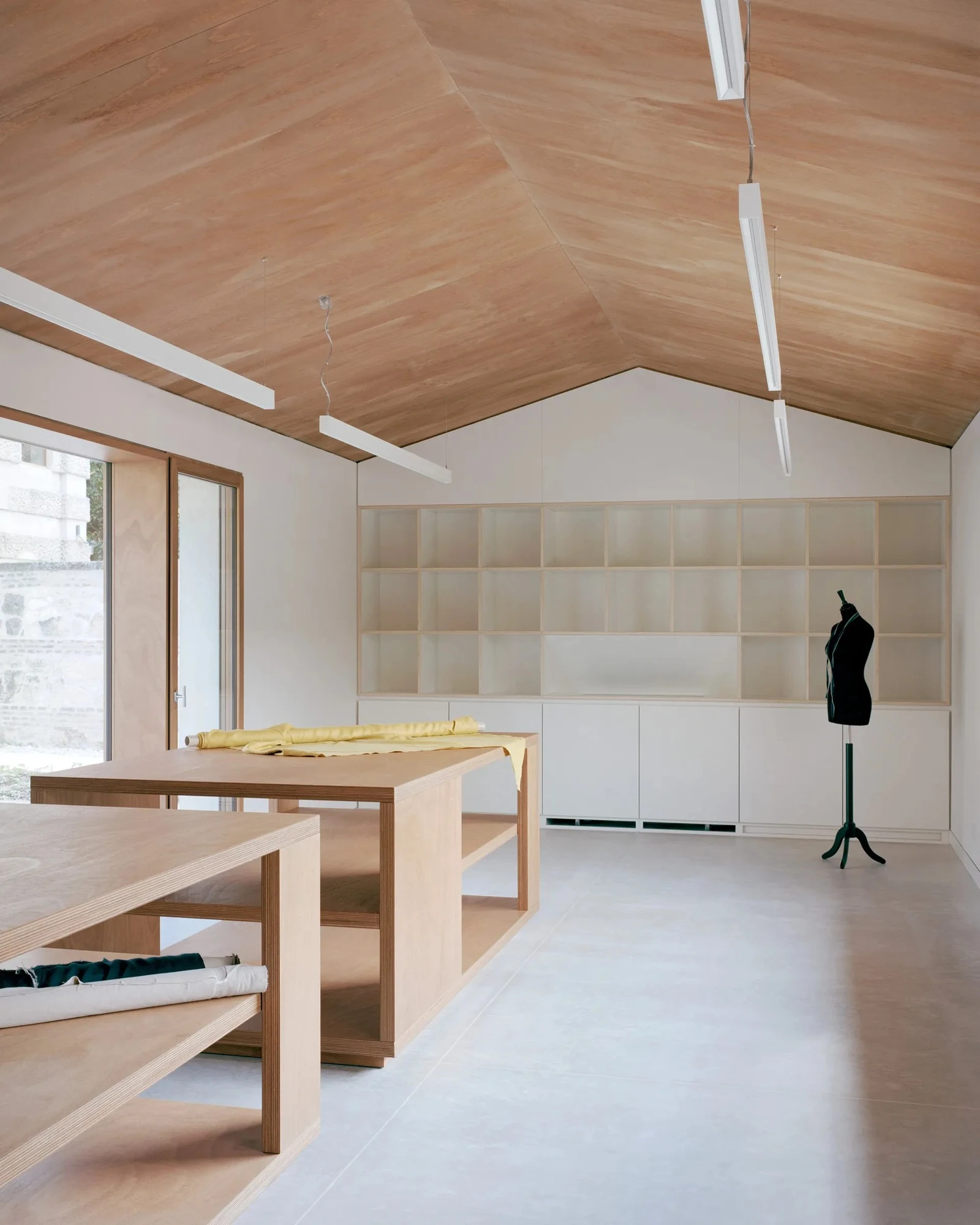
In Costabissara, Vicenza, RigonSimonetti restores Villa Doná and its barchessa as a layered adaptive reuse, converting the service wing into a café, offices, and event hall while preserving every historical stratum.

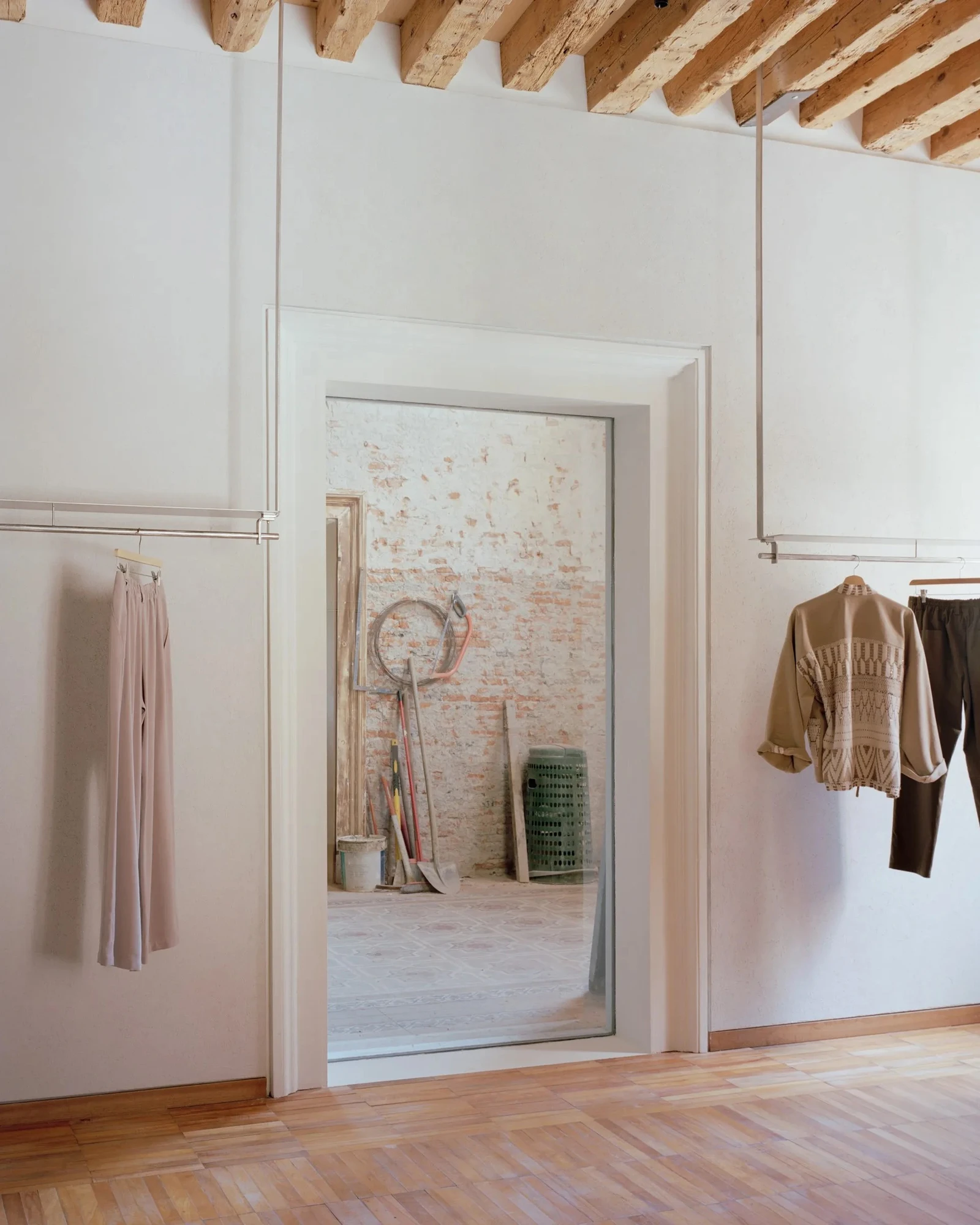
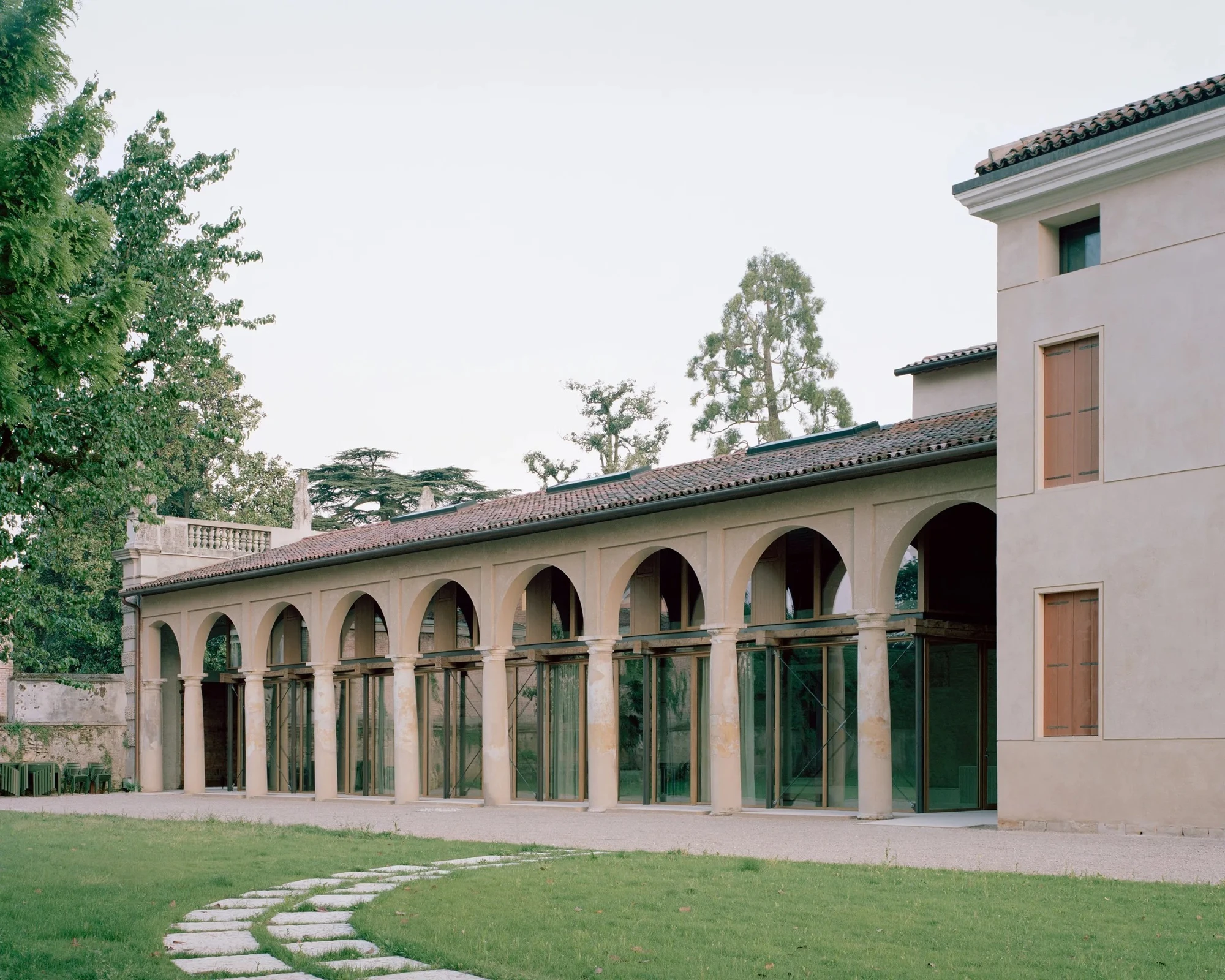
The guiding principle at Costabissara is something Francesco Rigon and Margherita Simonetti describe as reading a building as a palimpsest: taking seriously what was added, removed, worn down, and adapted across time rather than stabilising the complex around a single idealized period. In the barchessa, that position produces surfaces where 18th and 19th-century interventions survive intact, weathered brick boundaries remain unwashed, and stripped wall sections expose ancient timber fragments lodged within masonry. The effect is disciplined rather than picturesque.

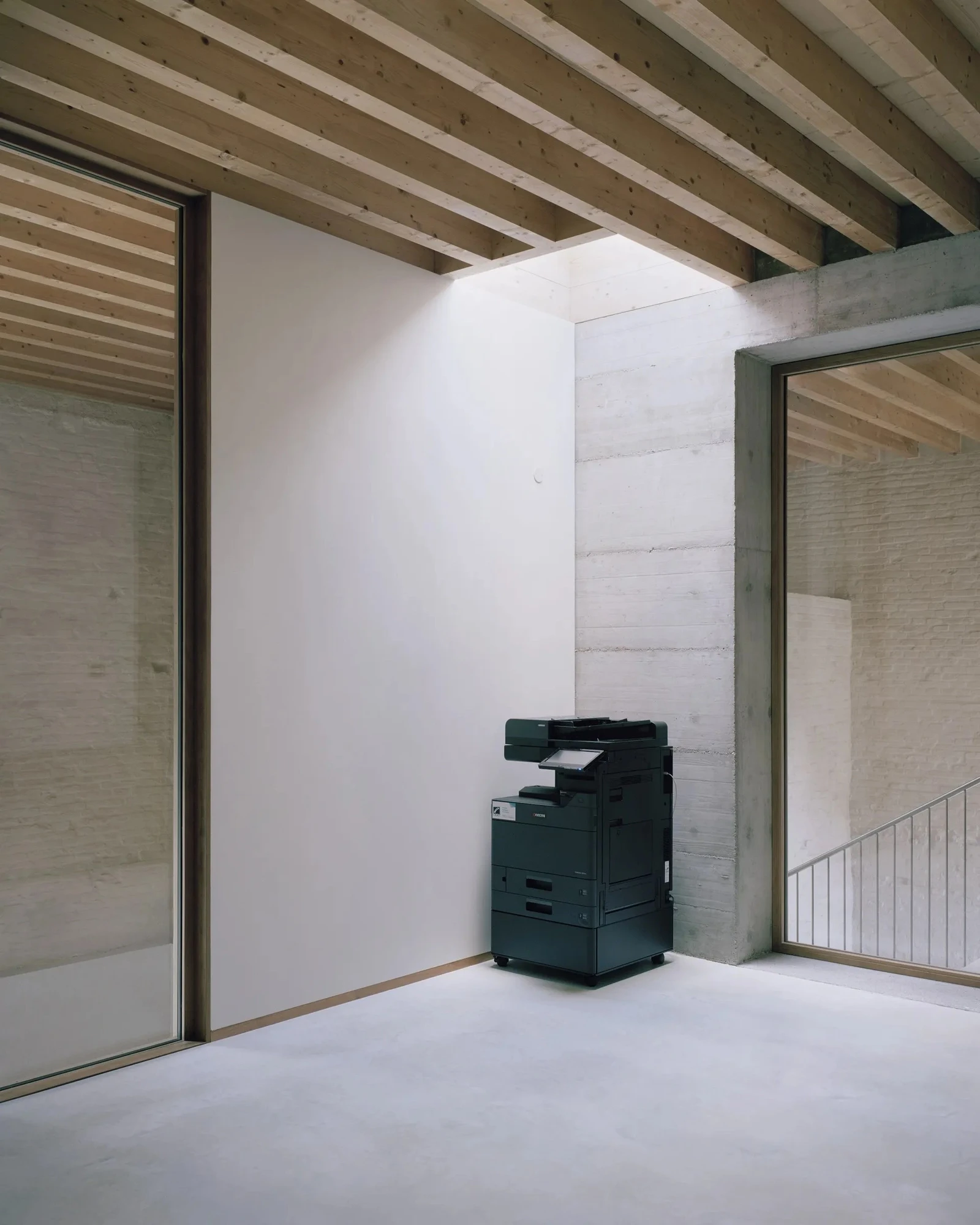
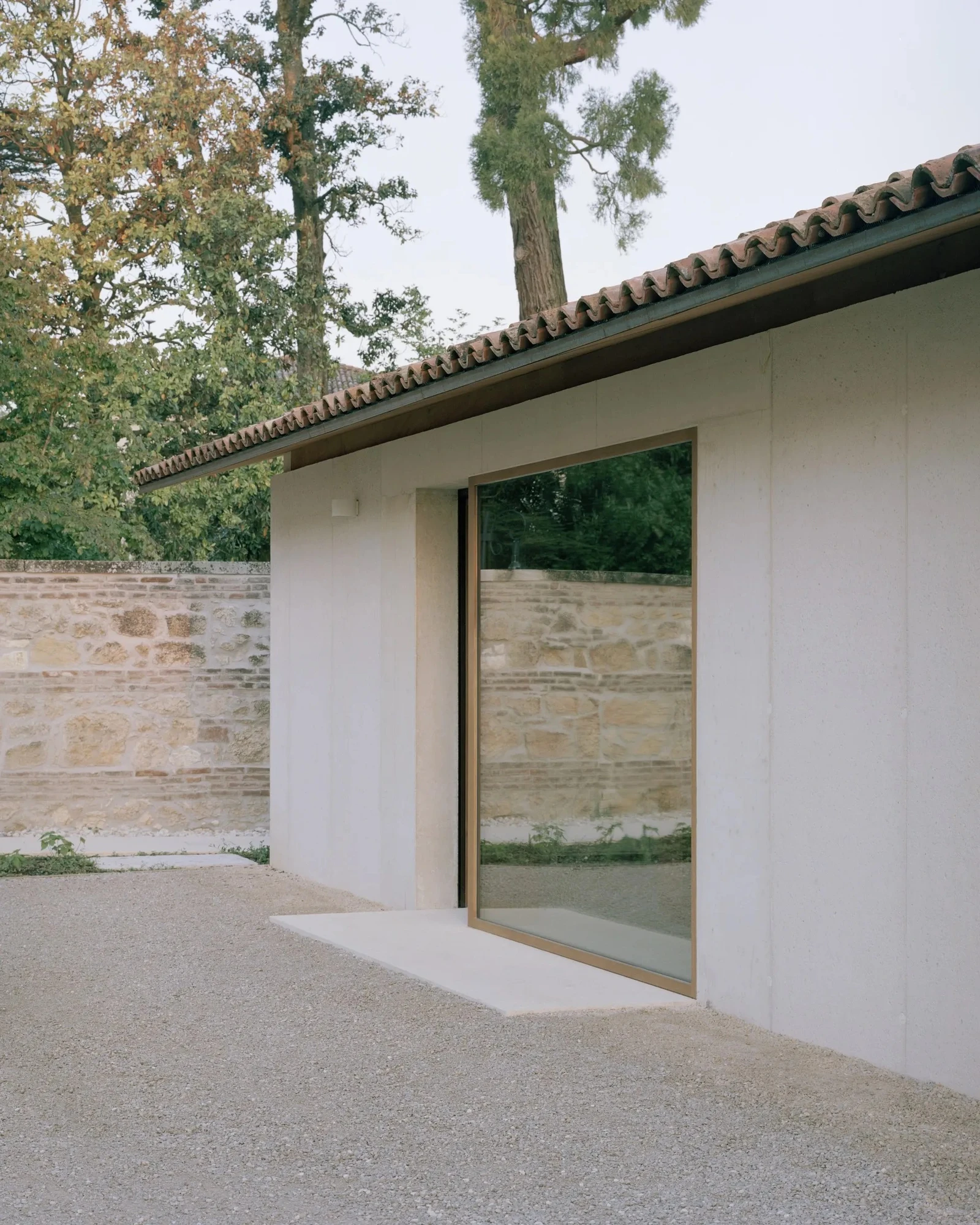
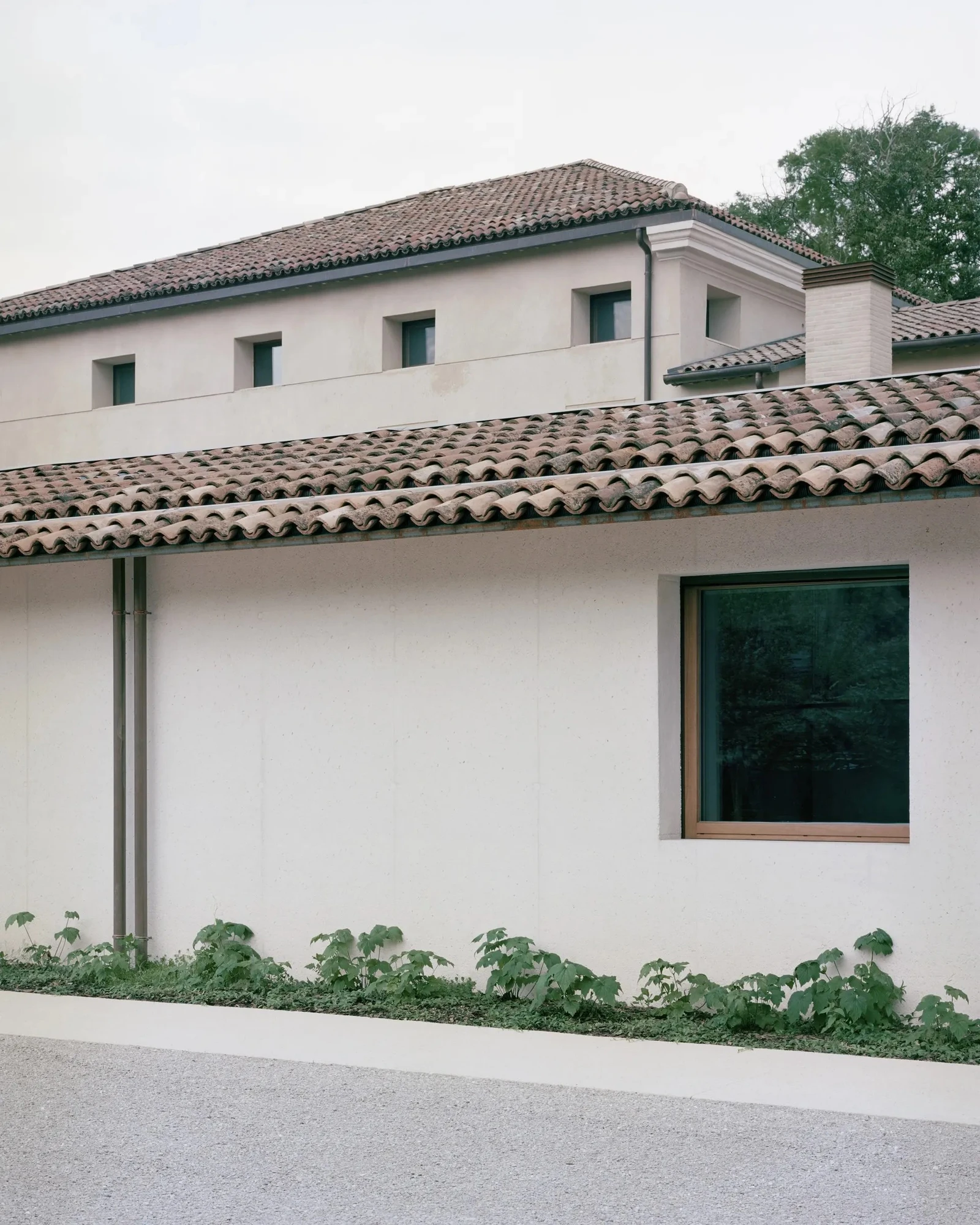
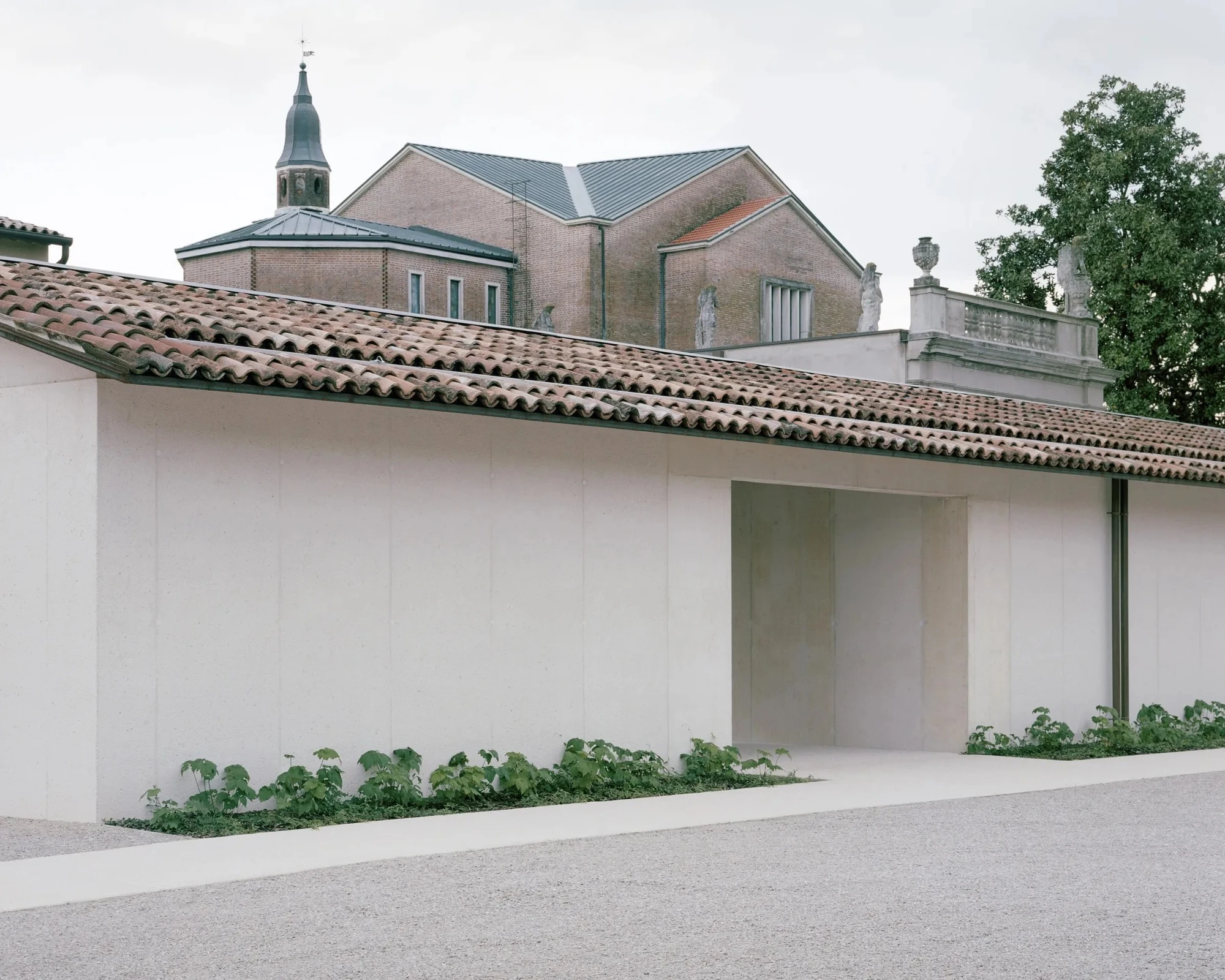
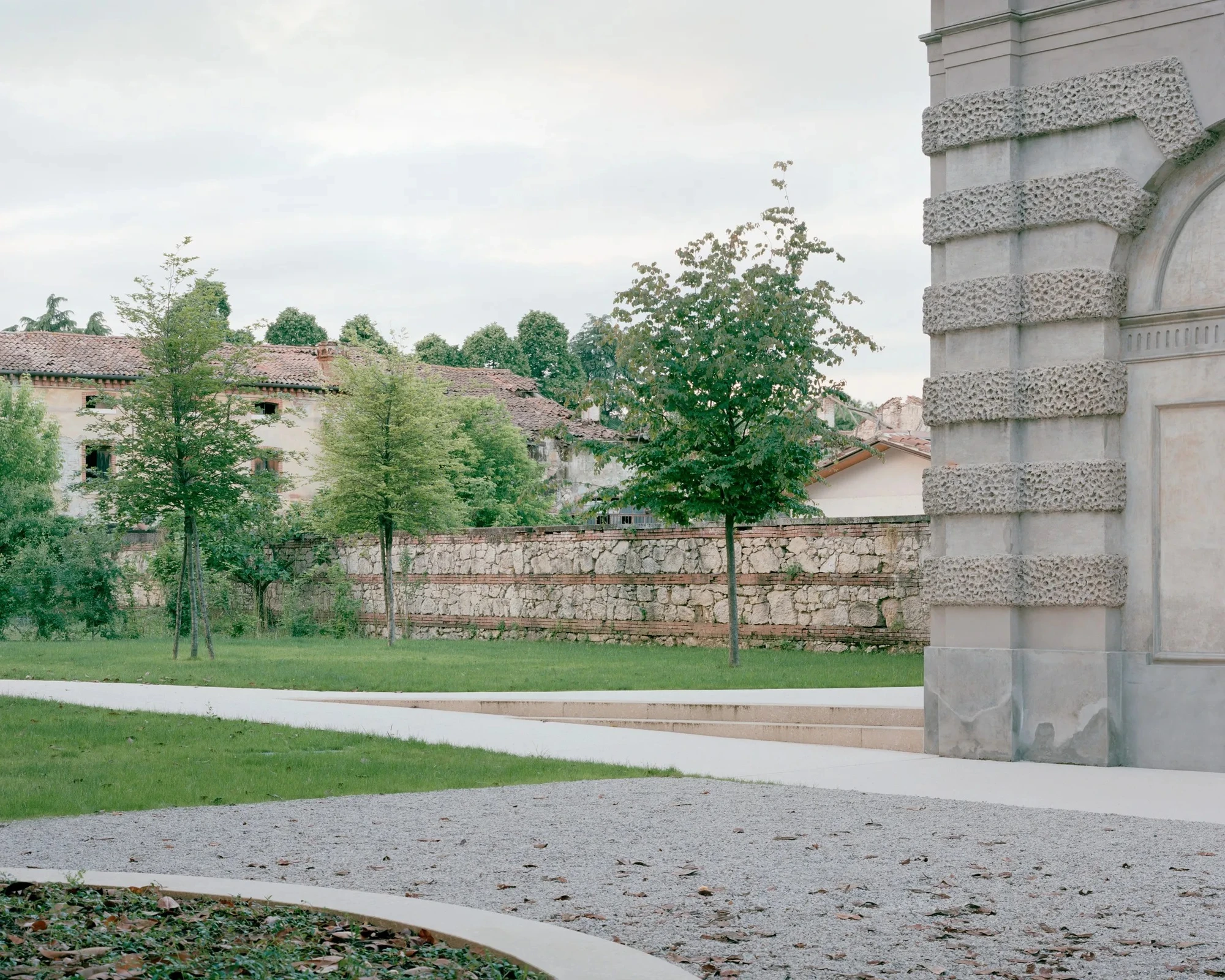
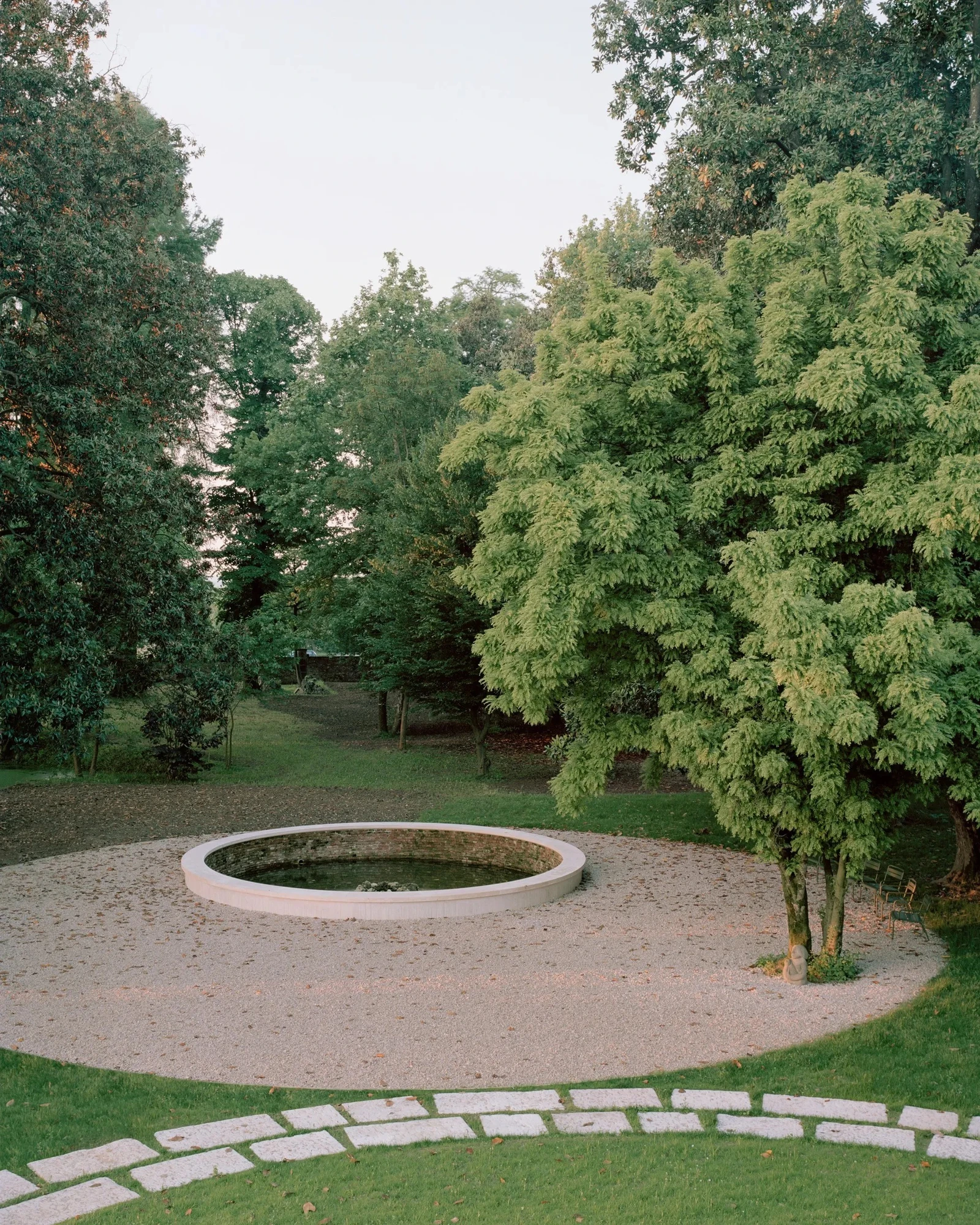
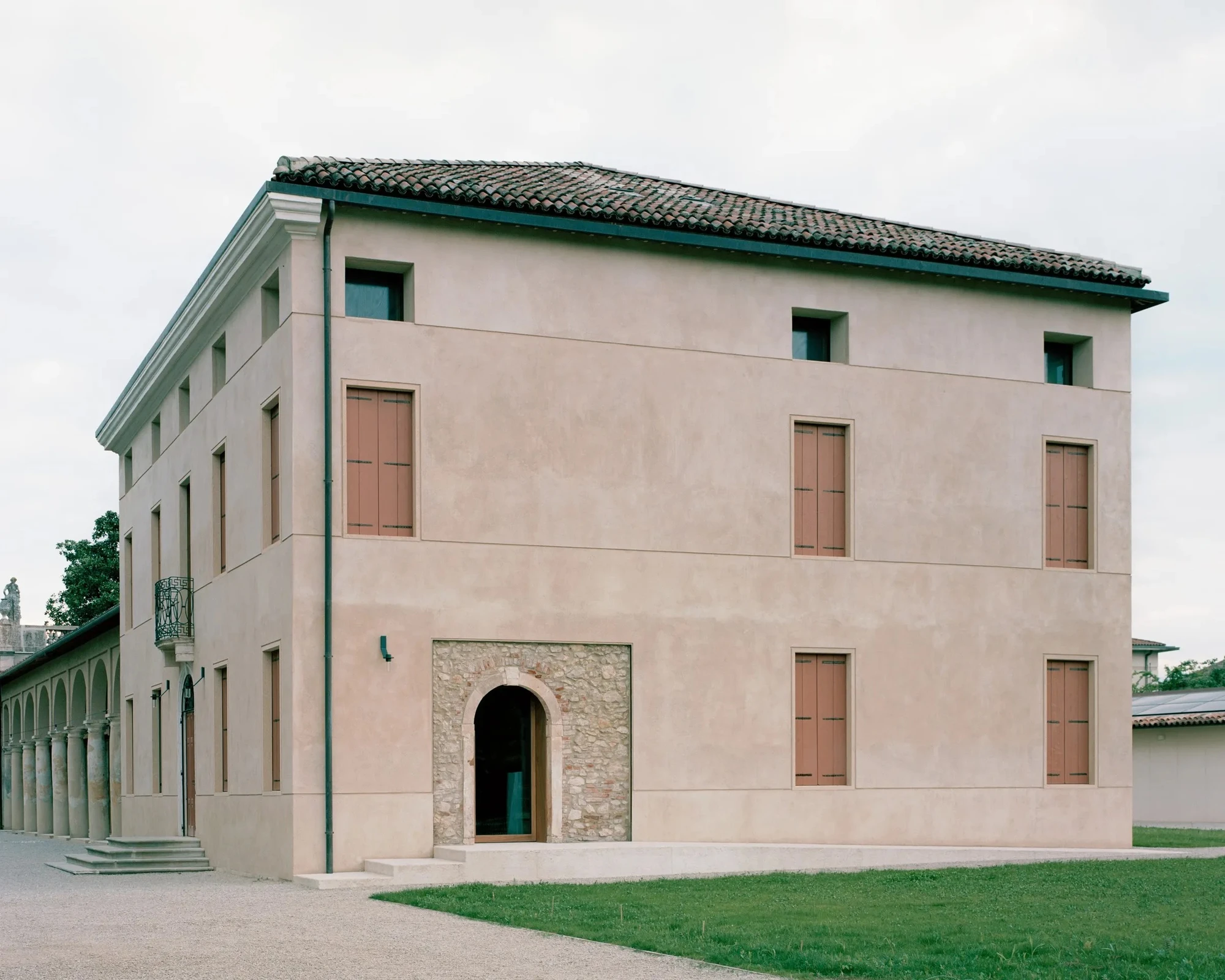
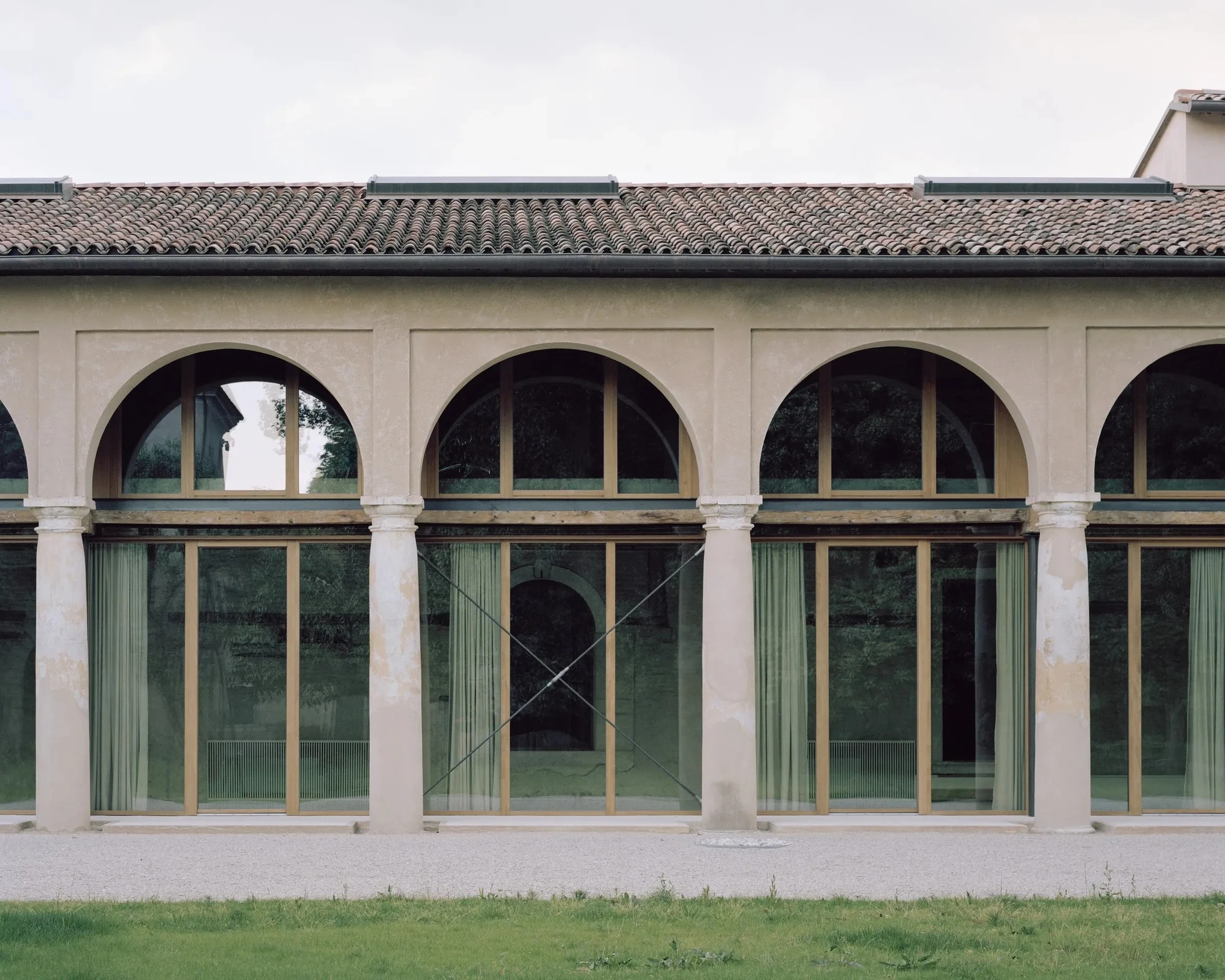
The exterior makes the contrast explicit. From the garden side, the barchessa's Tuscan column arcade now carries a glass and light-timber infill set behind the column line, so the old portico remains readable as a former exterior space. On the street facade, a glass-and-wood box suspended within the rusticated central arch sits as an object inside the opening, rectangular against the carved stone, the mascaron keystone unchanged above it. The new annex to the north reads differently still: sandblasted white concrete planes and a terracotta roof tile, contemporary forms that neither mimic the masonry order nor compete with it.

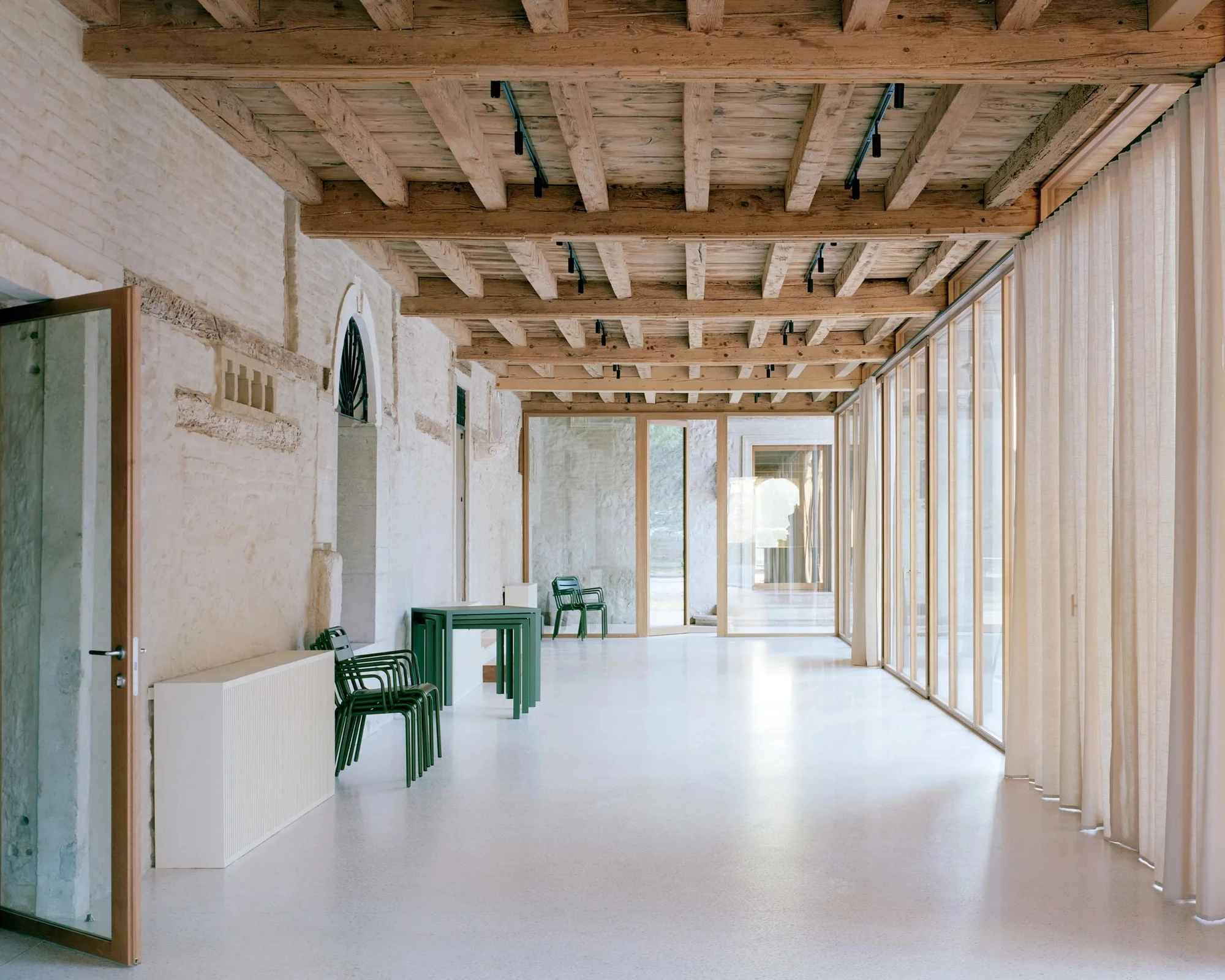
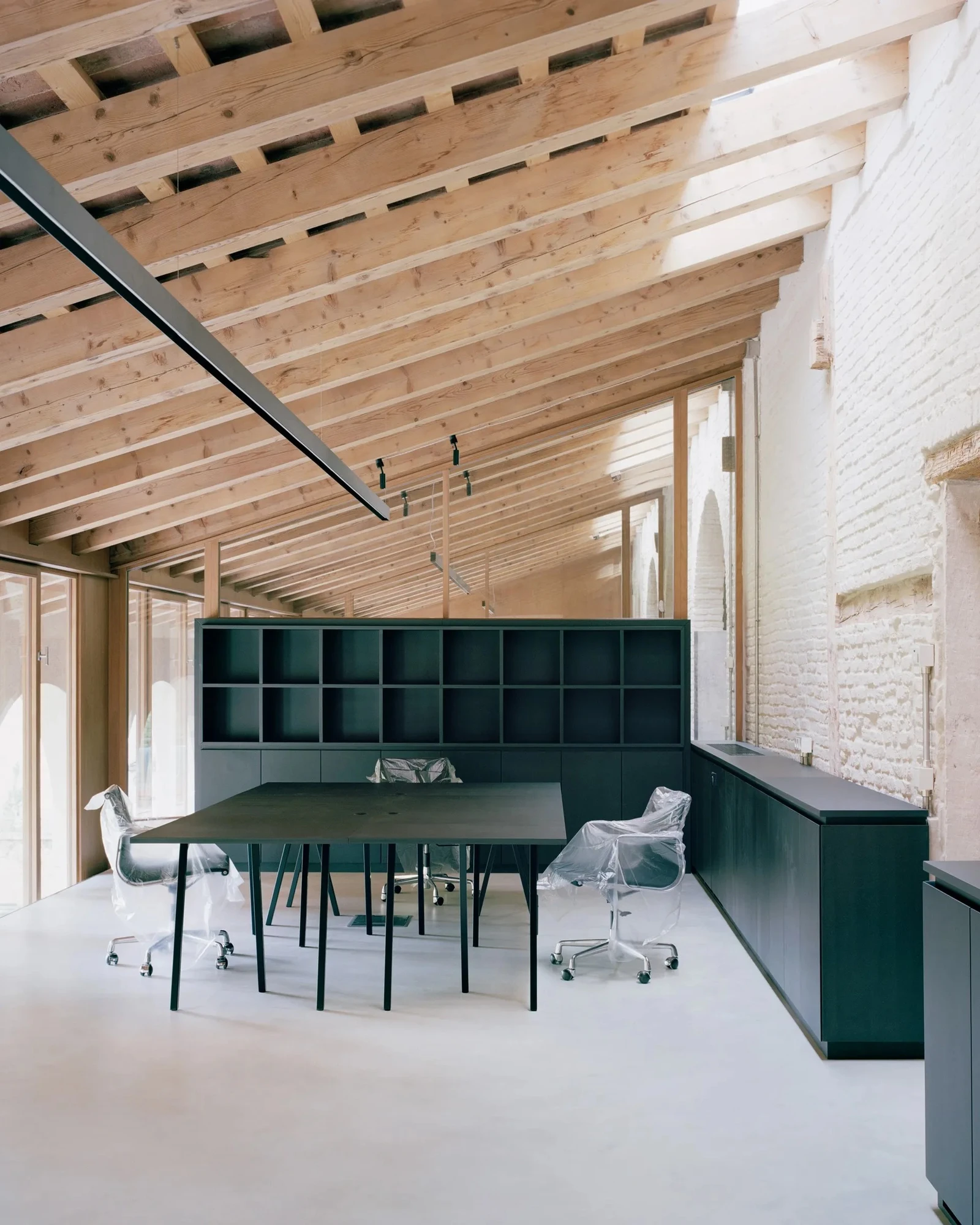
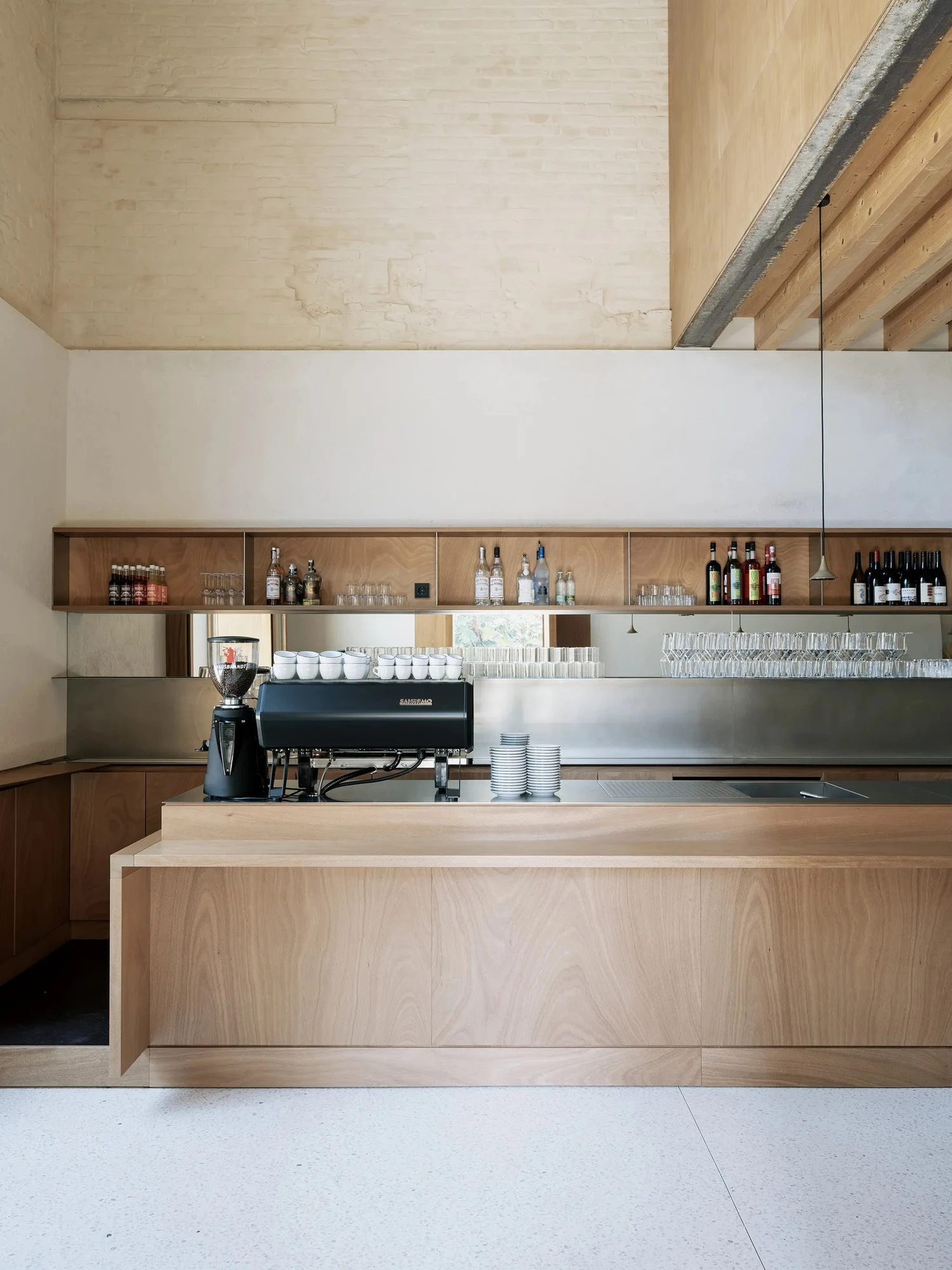
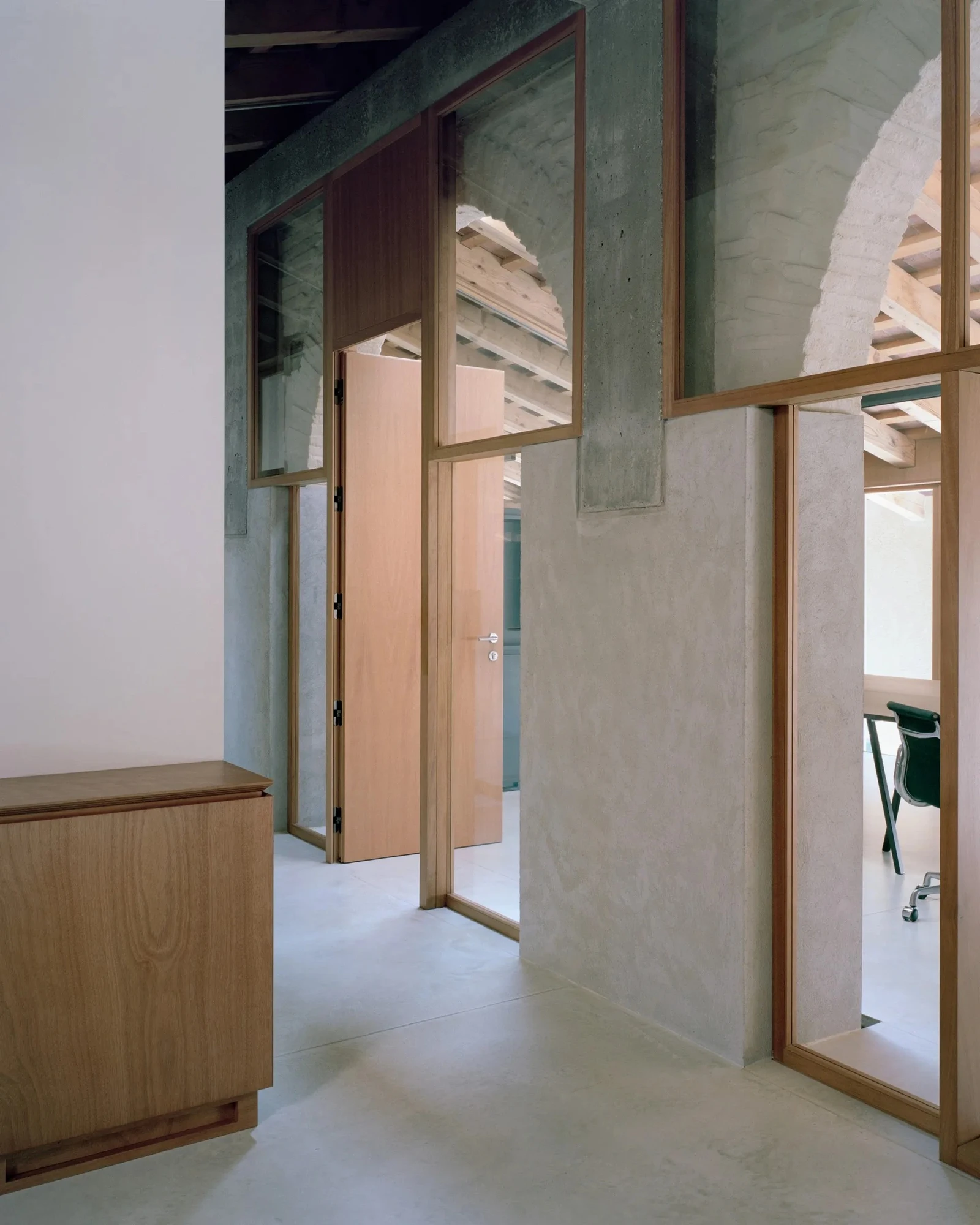
Inside, the double-height cafe occupies the street-facing portion. The brick spine walls are whitewashed, the arched openings retained with partial discontinuities intact. Okoume furnishings and a vestibule define the café occupation without filling the historic envelope. Overhead, a new timber roof structure spans the space in pale spruce, its rafters exposed and shadow-casting. The upper coworking level is reached through a stair inserted into the former caretaker's dwelling; the landing opens first onto views back into the double-height space, then continues into enclosed offices behind oak and glass partitions.

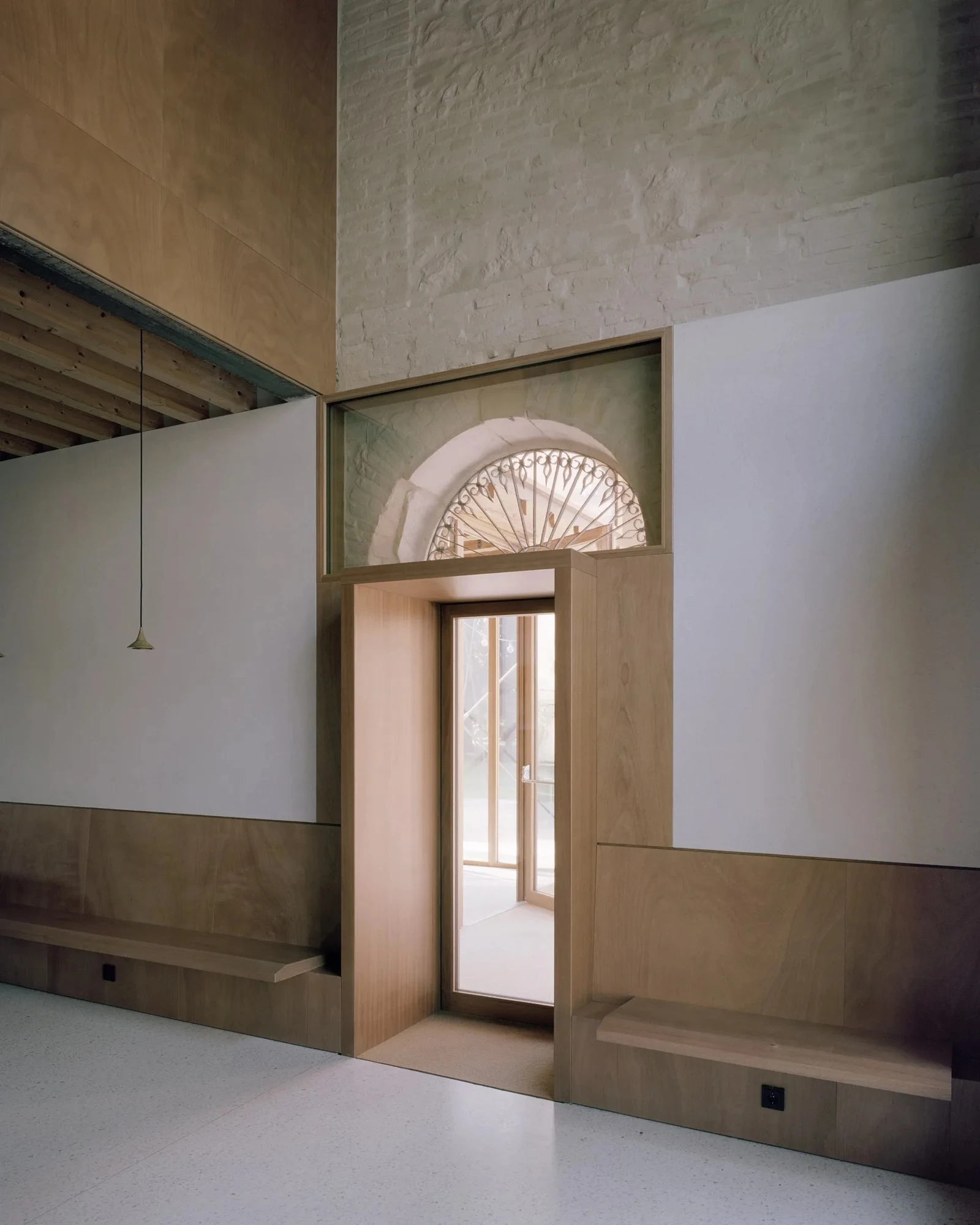
One interior move concentrates everything: a new oak door cut into a lime-washed wall, its fanlight a curved tracery arch recovered from the existing fabric, exposed ancient timber lodged in the rough masonry above. New plaster in warm off-white covers one face; raw stone sits two metres away. The room holds both without forcing resolution.

"The reinterpretation of the villa stems from the awareness that this type of building, pervaded by time and lived experience, reads as a palimpsest of interventions layered over time," the studio notes. The project carries that statement into every surface decision, from the sandblasted concrete stair treads set atop Vicenza stone to the cast concrete parapets that edge the restored garden. Restoration here is understood as continuation, not recovery.
Interested in Showcasing Your Work?

If you would like to feature your works on Thisispaper, please visit our Submission page and sign up to Thisispaper+ to submit your work. Once your submission is approved, your work will be showcased to our global audience of 2 million art, architecture, and design professionals and enthusiasts.
No items found.
We love less
but there is more.
Become a Thisispaper+ member today to unlock full access to our magazine, advanced tools, and support our work.
Get two months FREE
with annual subscription
We love less
but there is more.
Become a Thisispaper+ member today to unlock full access to our magazine, advanced tools, and support our work.
Get two months FREE
with annual subscription
No items found.
Alexander Zaxarov
May 18, 2026

In Costabissara, Vicenza, RigonSimonetti restores Villa Doná and its barchessa as a layered adaptive reuse, converting the service wing into a café, offices, and event hall while preserving every historical stratum.

The guiding principle at Costabissara is something Francesco Rigon and Margherita Simonetti describe as reading a building as a palimpsest: taking seriously what was added, removed, worn down, and adapted across time rather than stabilising the complex around a single idealized period. In the barchessa, that position produces surfaces where 18th and 19th-century interventions survive intact, weathered brick boundaries remain unwashed, and stripped wall sections expose ancient timber fragments lodged within masonry. The effect is disciplined rather than picturesque.

The exterior makes the contrast explicit. From the garden side, the barchessa's Tuscan column arcade now carries a glass and light-timber infill set behind the column line, so the old portico remains readable as a former exterior space. On the street facade, a glass-and-wood box suspended within the rusticated central arch sits as an object inside the opening, rectangular against the carved stone, the mascaron keystone unchanged above it. The new annex to the north reads differently still: sandblasted white concrete planes and a terracotta roof tile, contemporary forms that neither mimic the masonry order nor compete with it.

Inside, the double-height cafe occupies the street-facing portion. The brick spine walls are whitewashed, the arched openings retained with partial discontinuities intact. Okoume furnishings and a vestibule define the café occupation without filling the historic envelope. Overhead, a new timber roof structure spans the space in pale spruce, its rafters exposed and shadow-casting. The upper coworking level is reached through a stair inserted into the former caretaker's dwelling; the landing opens first onto views back into the double-height space, then continues into enclosed offices behind oak and glass partitions.

One interior move concentrates everything: a new oak door cut into a lime-washed wall, its fanlight a curved tracery arch recovered from the existing fabric, exposed ancient timber lodged in the rough masonry above. New plaster in warm off-white covers one face; raw stone sits two metres away. The room holds both without forcing resolution.

"The reinterpretation of the villa stems from the awareness that this type of building, pervaded by time and lived experience, reads as a palimpsest of interventions layered over time," the studio notes. The project carries that statement into every surface decision, from the sandblasted concrete stair treads set atop Vicenza stone to the cast concrete parapets that edge the restored garden. Restoration here is understood as continuation, not recovery.
Interested in Showcasing Your Work?

If you would like to feature your works on Thisispaper, please visit our Submission page and subscribe to Thisispaper+. Once your submission is approved, your work will be showcased to our global audience of 2 million art, architecture, and design professionals and enthusiasts.
Thisispaper+
Cafes by Design
40+ Projects
Web Access
Link to Maps
Hospitality interiors given the attention usually reserved for larger buildings. Cafés, bakeries, restaurants, and bars inside canal houses, former bank branches, ironworks, corner shops, and medieval church additions. Material, light, counter height, seating, threshold — the small decisions that make a room hold the ritual of its programme.
Explore
Cafes by Design

Join Thisispaper+
Unlock access to 2500 stories, curated guides + editions, and share your work with a global network of architects, artists, writers and designers who are shaping the future.
Get two months FREE
with annual subscription
Travel Guides
Immerse yourself in timeless destinations, hidden gems, and creative spaces—curated by humans, not algorithms.
Explore All Guides +
Submission Module
Submit your project and gain the chance to showcase your work to our worldwide audience of over 2M architects, designers, artists, and curious minds.
Learn More+
Curated Editions
Dive deeper into carefully curated editions, designed to feed your curiosity and foster exploration.
Off-the-Grid
Jutaku
Sacral Journey
minimum
The New Chair
Explore All Editions +
Atlas
A new and interactive way to explore the most inspiring places around the world.
Interactive map
Linked to articles
300+ curated locations
Google + Apple directions
Smart filters
Subscribe to Explore+
Become a Thisispaper+ member today to unlock full access to our magazine, submit your project and support our work.
Join Thisispaper+Join Thisispaper+
€ 9 EUR
/month
Cancel anytime
Get two months FREE
with annual subscription