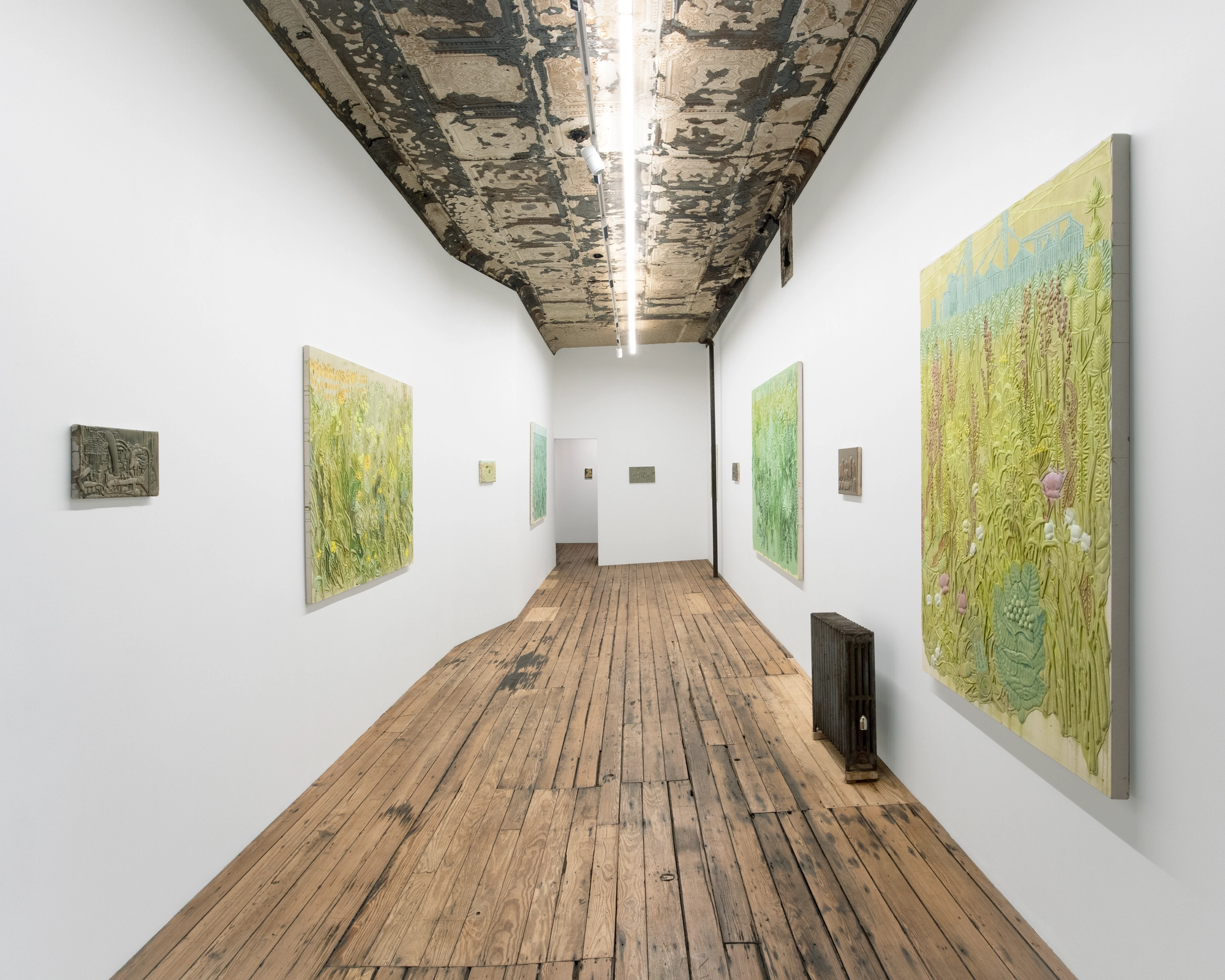
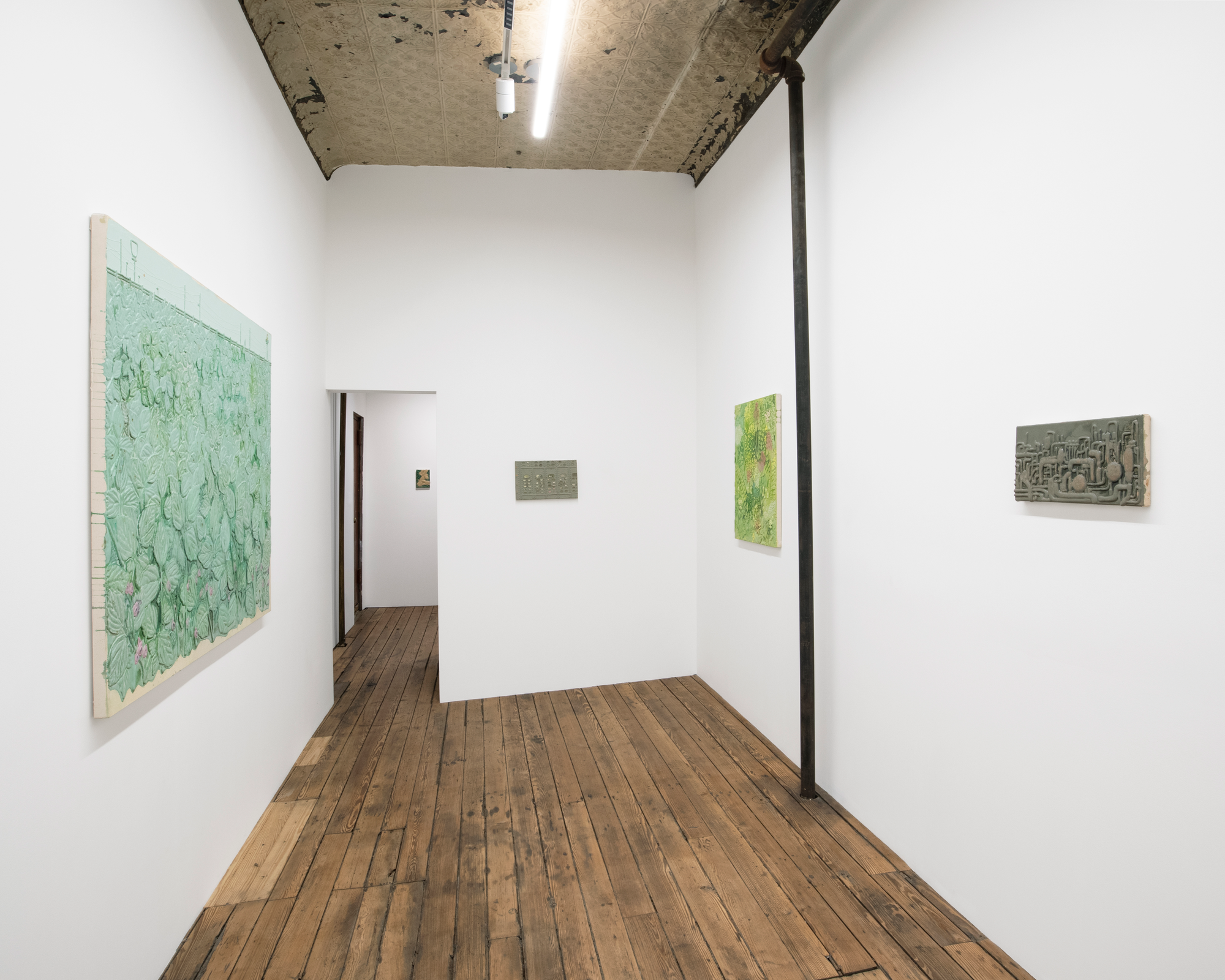
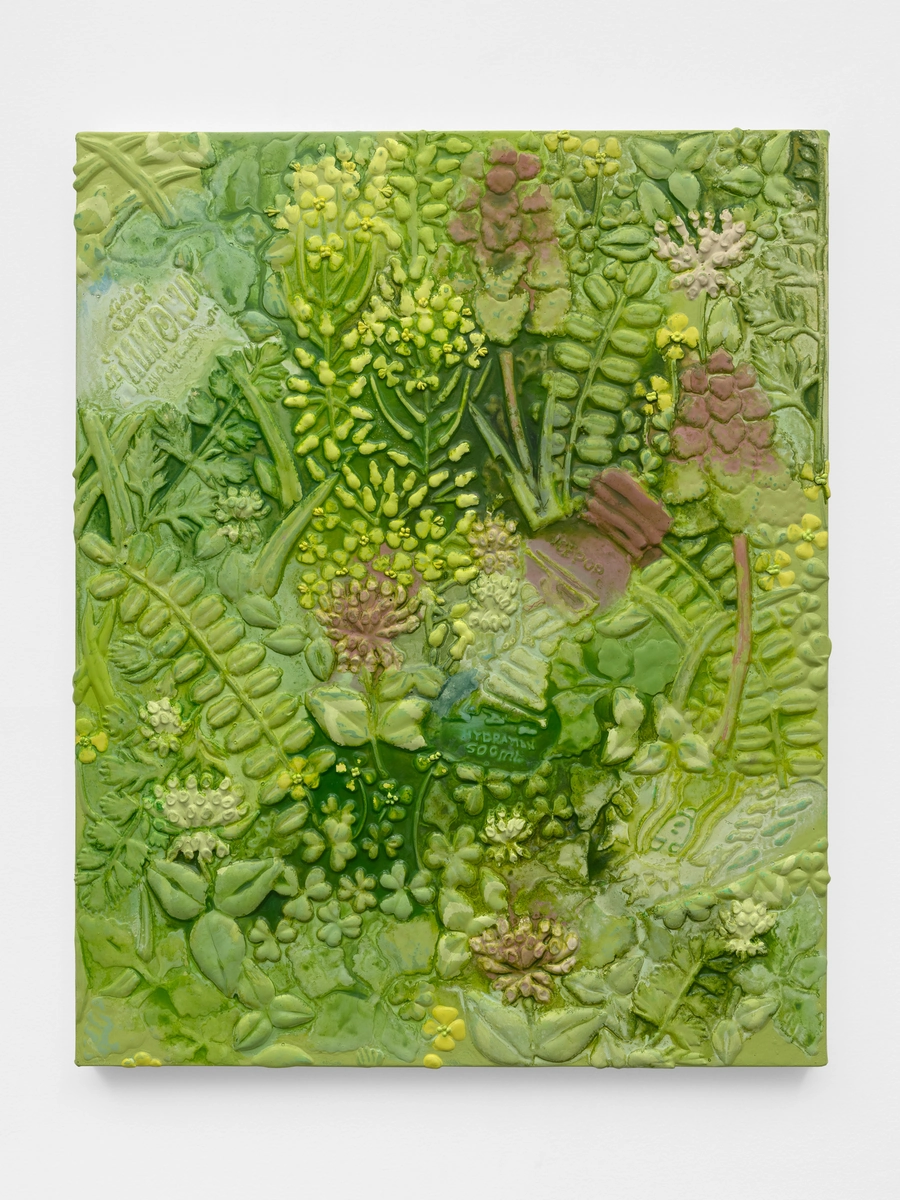
Freight routes, not nature trails, set the itinerary for the plant studies Michael Assiff gathered across the United States and rebuilt in extruded plastic for USA Flowers in New York.
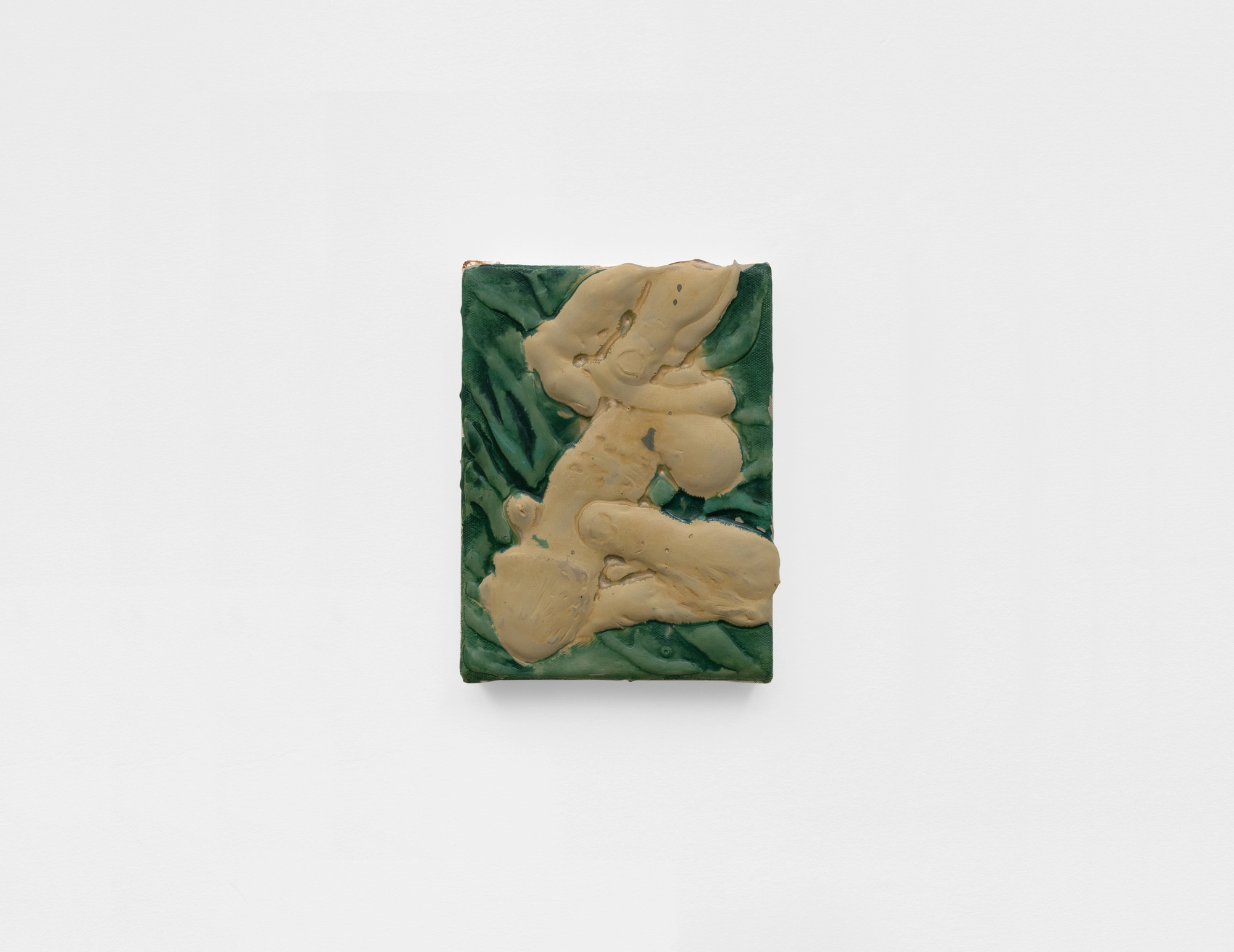
The paintings in this exhibition look like roadside abundance: weeds, agricultural fields, insects, highways and the infrastructure that carries goods across the country. Assiff built the series on cross-country trips in the cab of a semi driven by his friend Ramblin, a long-haul flatbed trucker, stopping to photograph and draw plants at truck stops, loading docks, gas stations and the edges of fields. The gallery calls the result “a provisional botany of American supply chains.”
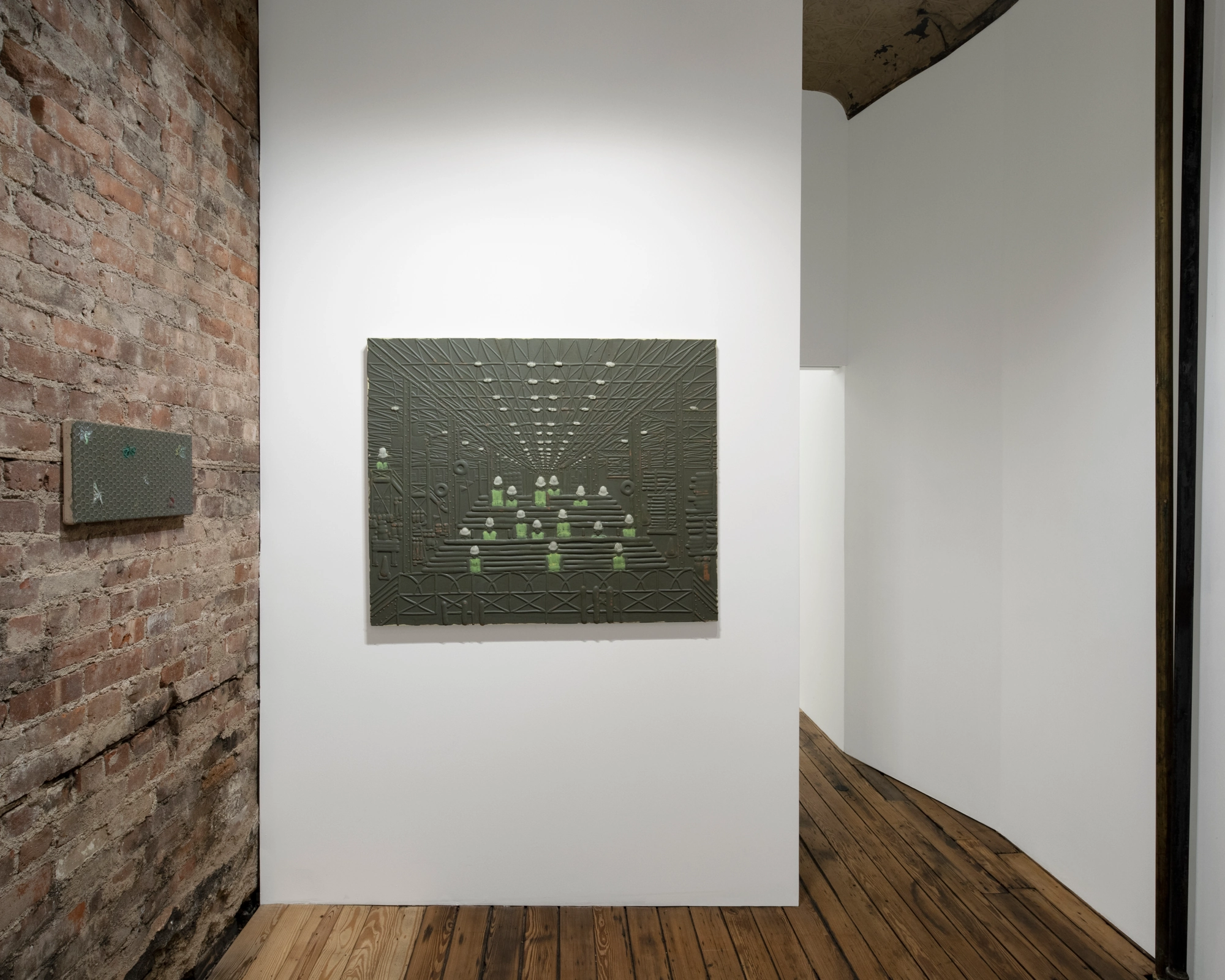
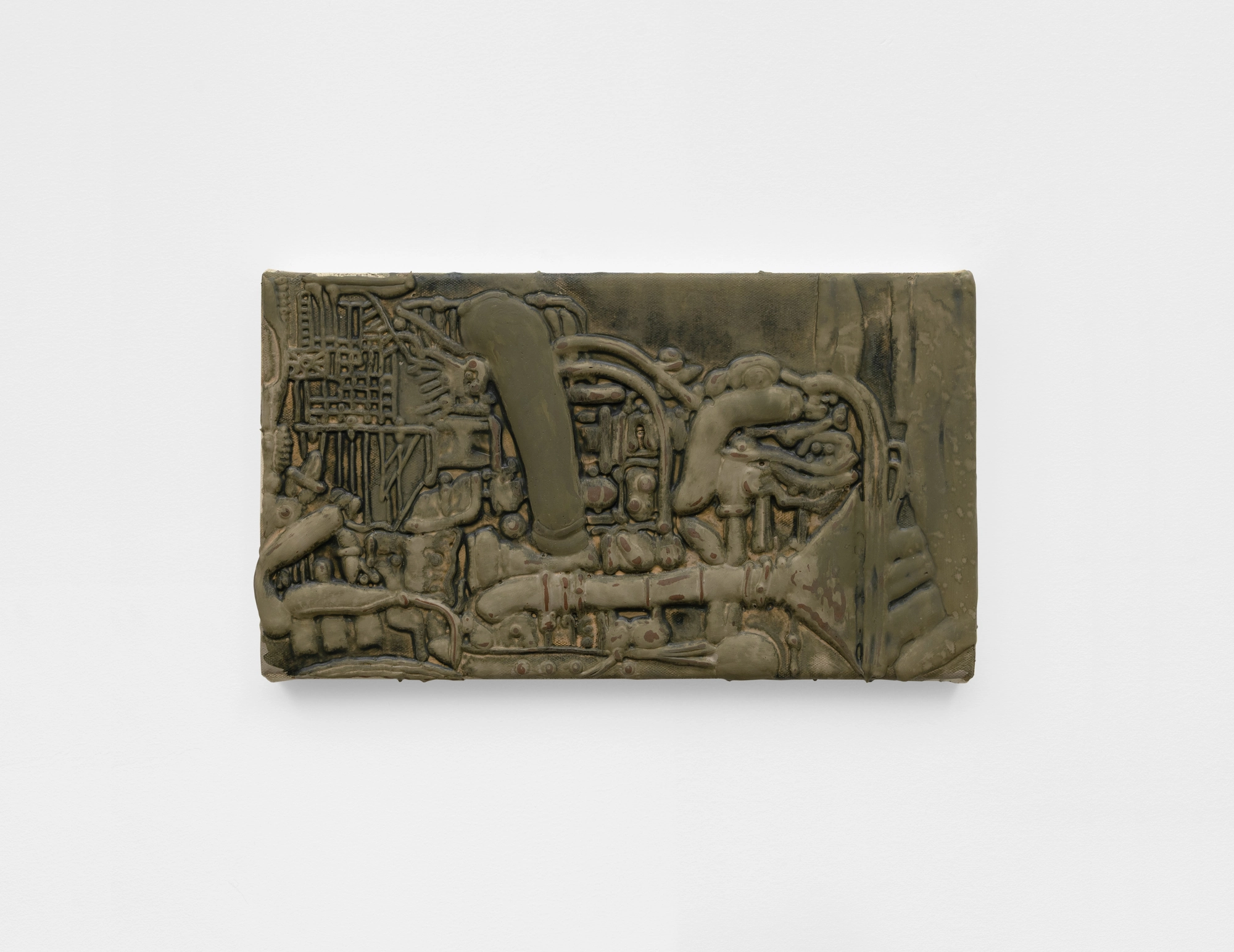
Each painting is a low relief. Working over a drawing on canvas, Assiff pipes extruded plastic through cake-decorating tips, pours paint across the raised lines, sands the surface back, then repaints individual elements by hand. The new works add a step he calls a “spill,” a spray of water and diluted house-paint dyes that leaves stains. In the gallery's account those stains read as weathering, runoff and chemical contamination, at once blurring the image and insisting on the relief beneath.
He has worked this way for over a decade. Assiff first turned to plastic, the gallery notes, in response to the enduring longevity of ancient stone reliefs and petroglyphs; the material offered another permanence, a throwaway thing that lingers for centuries. That logic ties surface to subject, what Post Times calls “plastic tableaus of petrocapitalist realism.” The fluorescent oranges, yellows and greens come partly from high-visibility workwear, colors meant to mark workers inside industrial zones, which Assiff sets against the ultraviolet signals flowers use to draw insects.
The works reach back, in the gallery's telling, to a strain of American landscape painting about land remade by agriculture and industry. Assiff has looked in particular to Alexandre Hogue, whose volumetric scenes of the Dust Bowl broke with Regionalist pastoral and set farm machinery beside the erosion and drought it helped bring about. The contemporary version answers to interstate highways, industrial agriculture, petrochemical production, pipelines and freight.
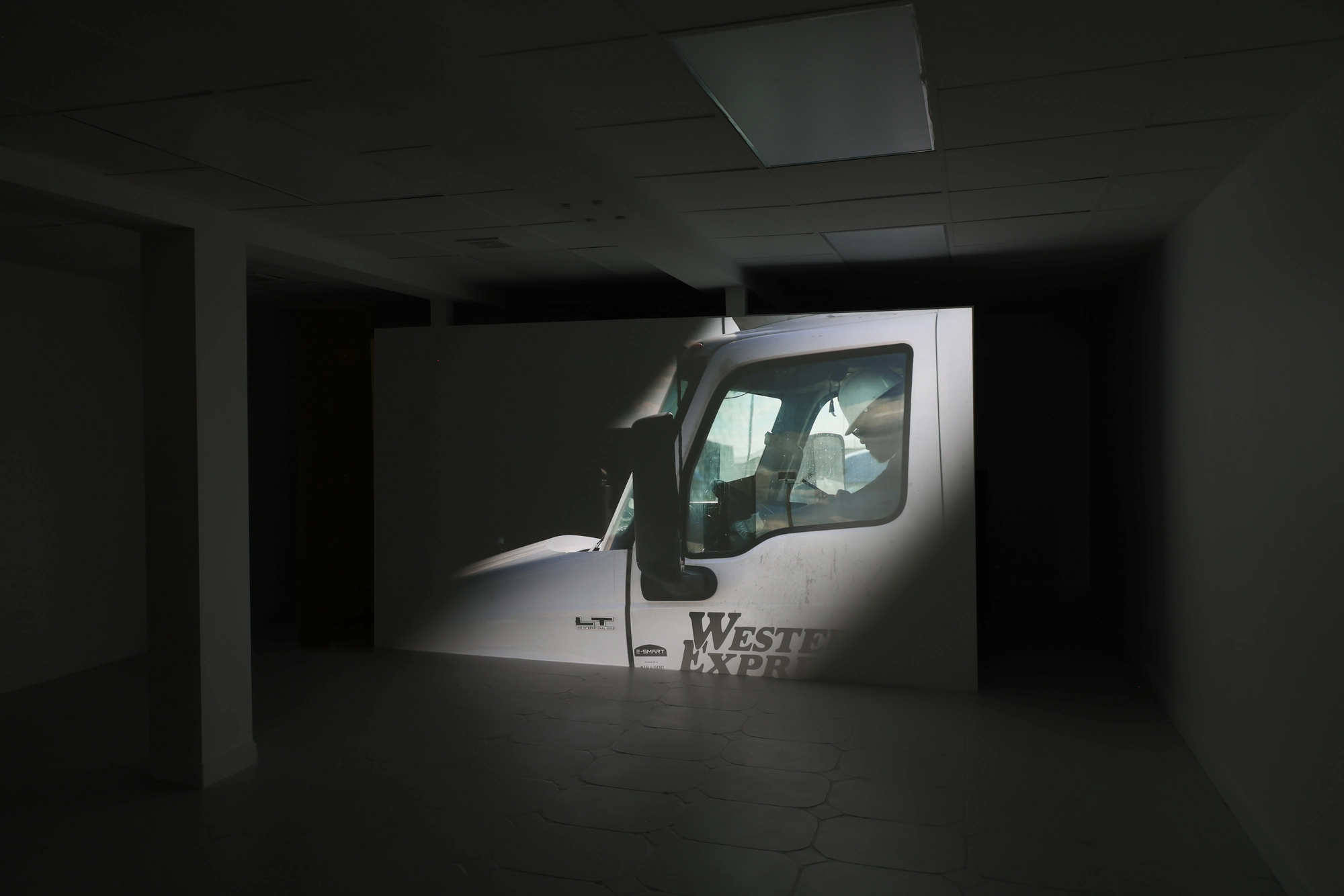
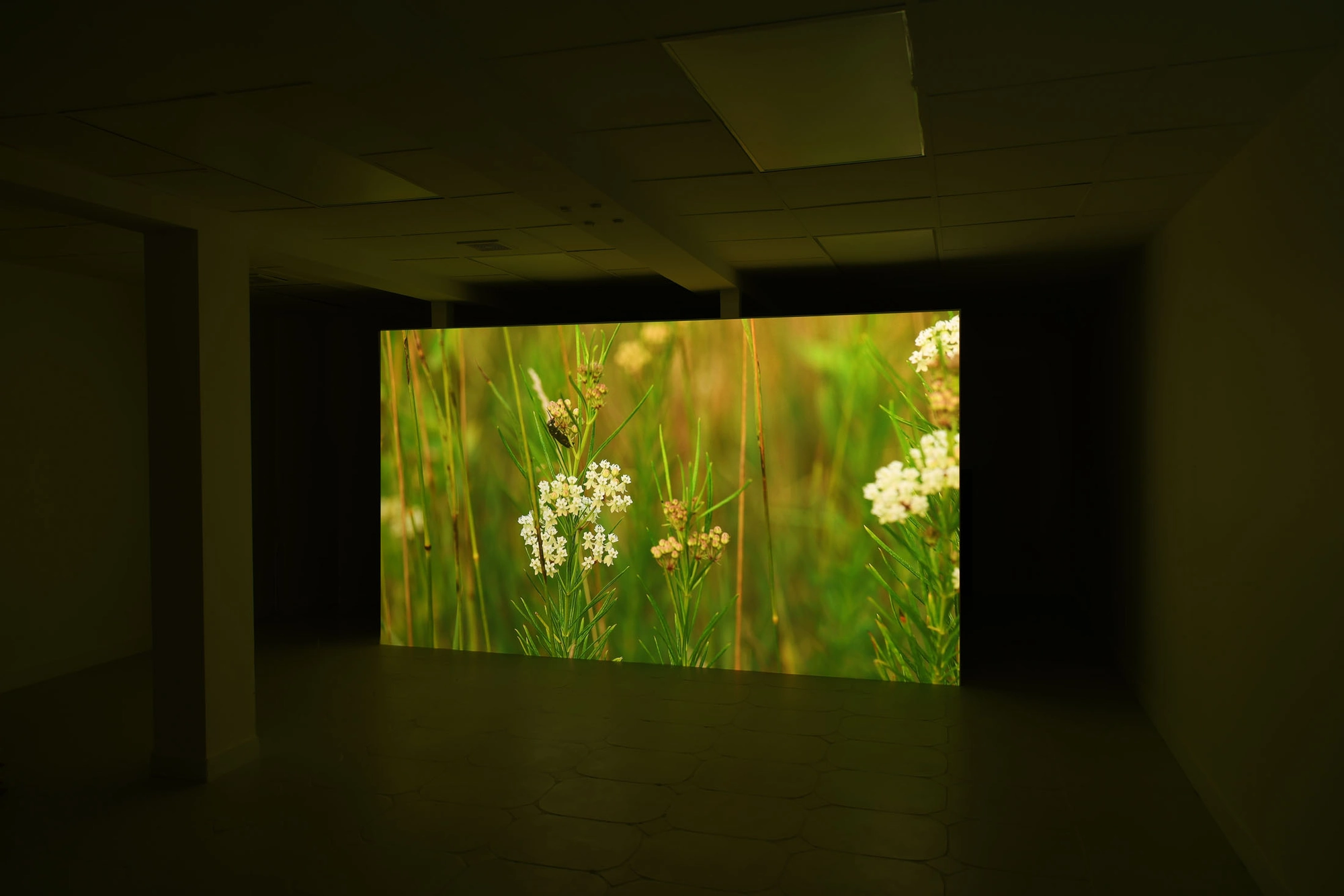
On the lower level, a 49-minute video titled Long-Haul Flowers played on a continuous loop. It keeps to the rhythm of Ramblin's working days, from early fog and steel loaded in the midday heat to pipe strapped to a flatbed at night and a steak grilled in a Walmart parking lot. Ramblin, a trans man in the trucking industry, is seen watching clips in his cab and filming his own, from workout routines to commentary on gender. Found sound meets the analog synthesizer of Matthew Scarduzio, whose oscillators throw off bass drones close to a diesel engine. The piece can be read as a diary of Assiff's travels and a study of the driver who structures it.