Trust Me is an ongoing staged-portrait series by Jinyong Lian, a France-based Chinese photographer whose work — twenty-seven images treating self-doubt as choreography.
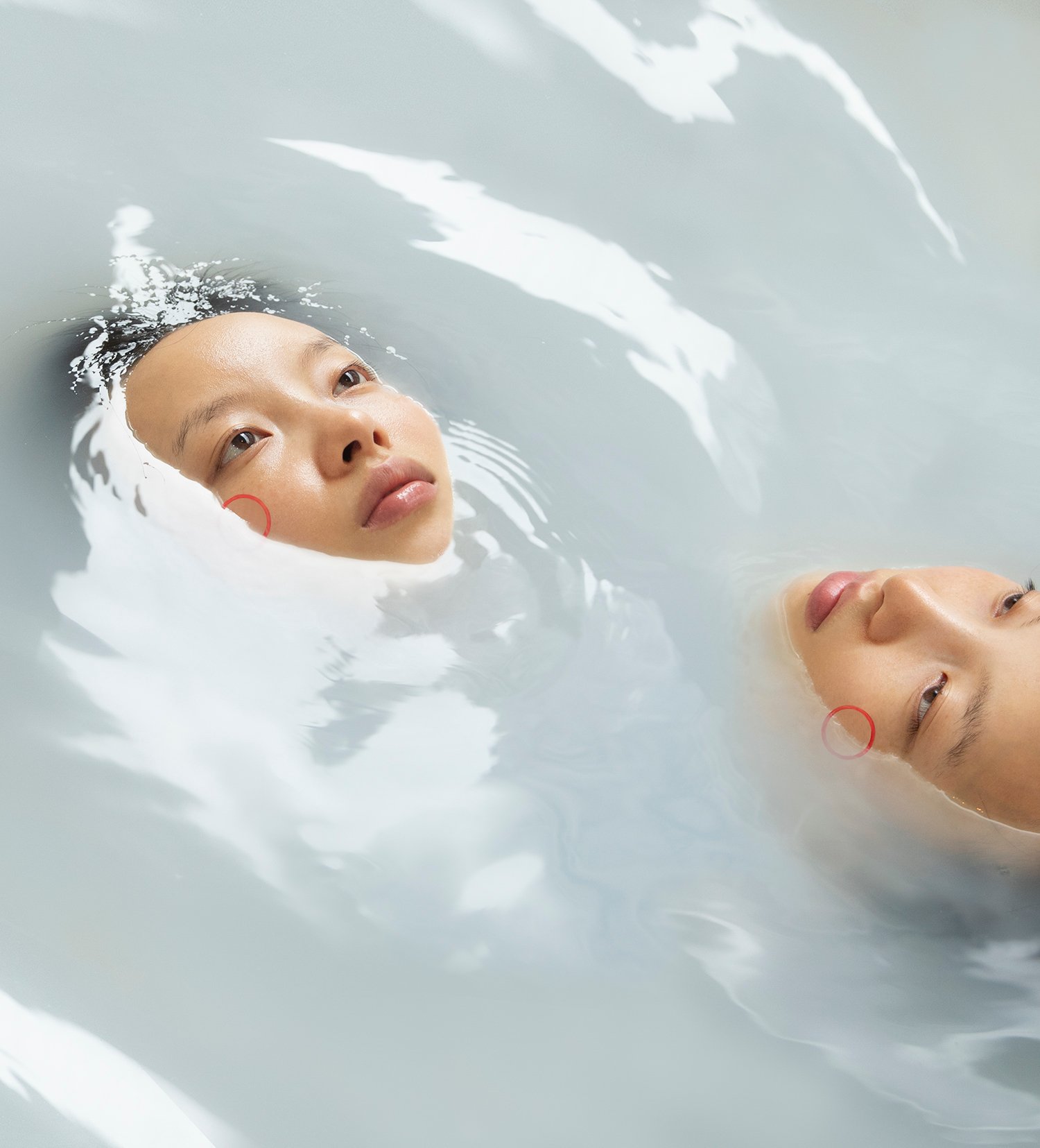
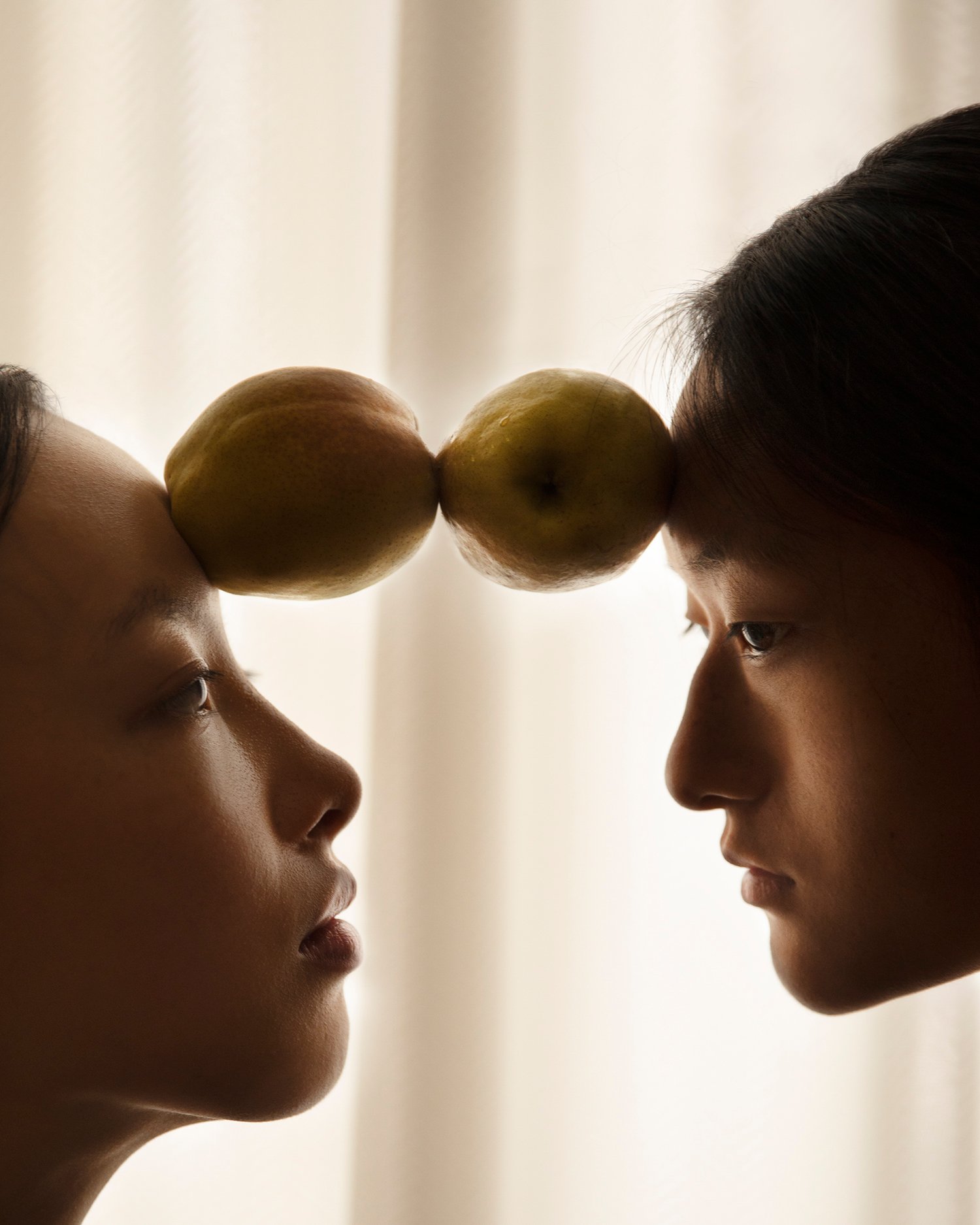
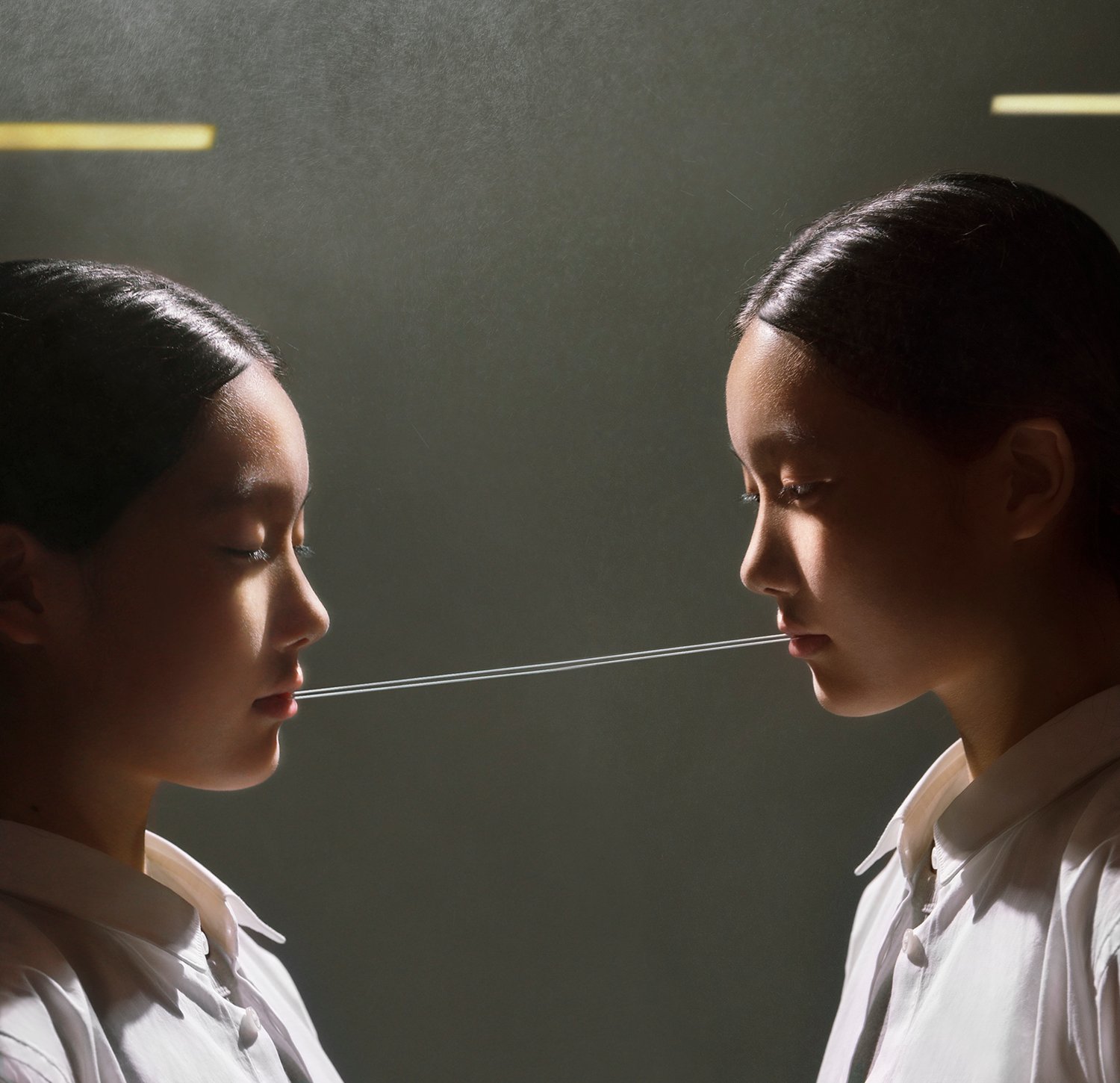
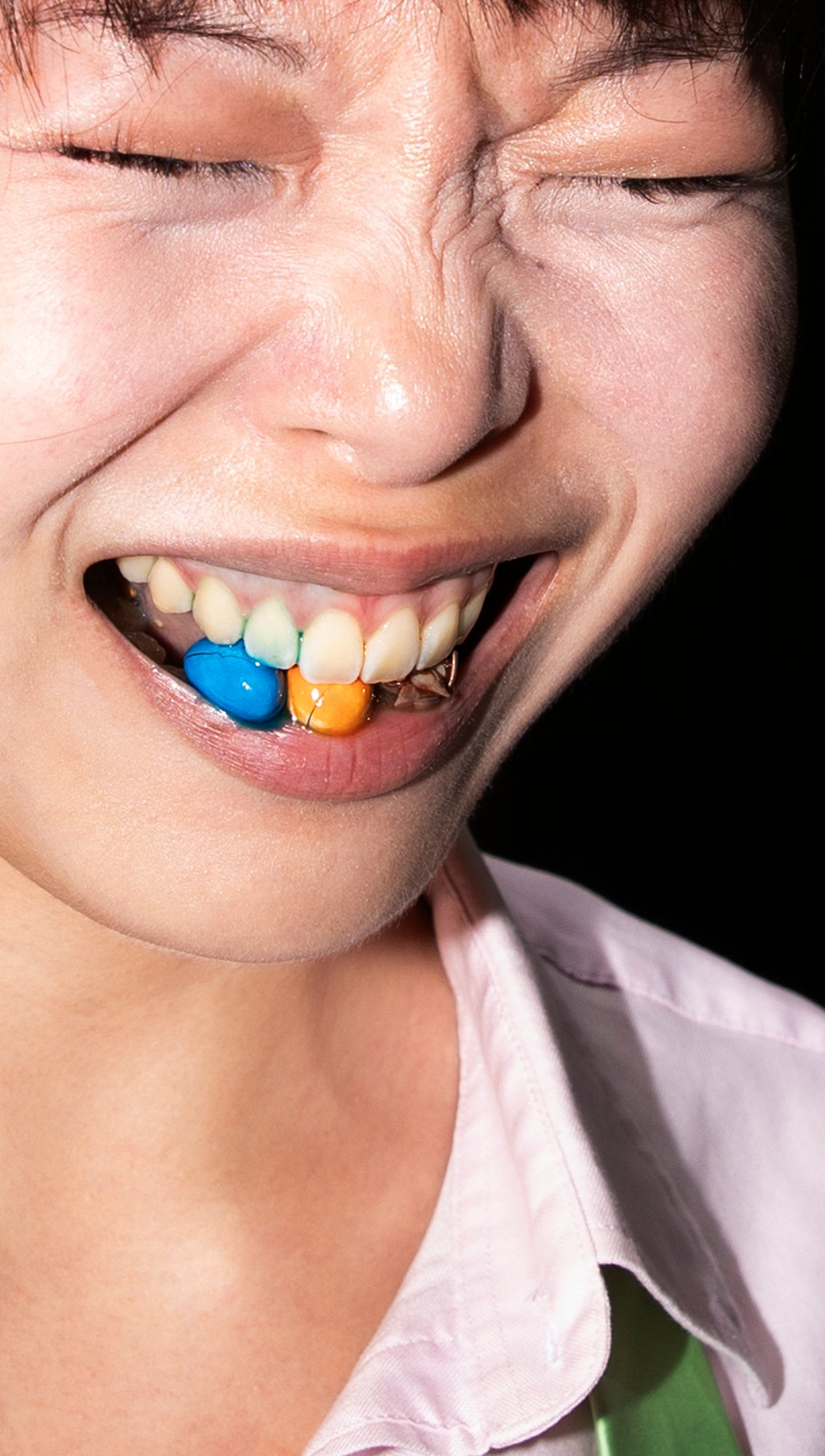
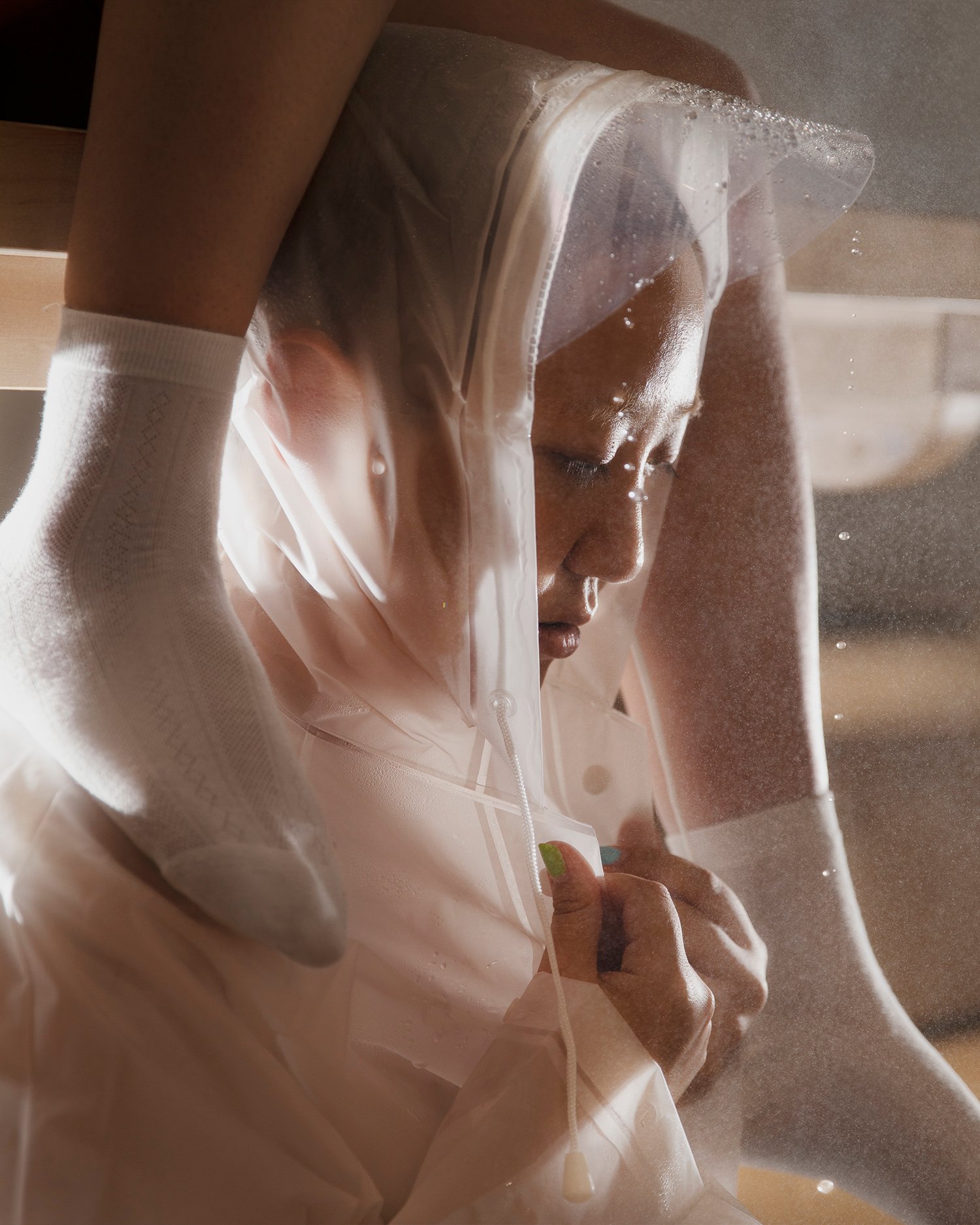
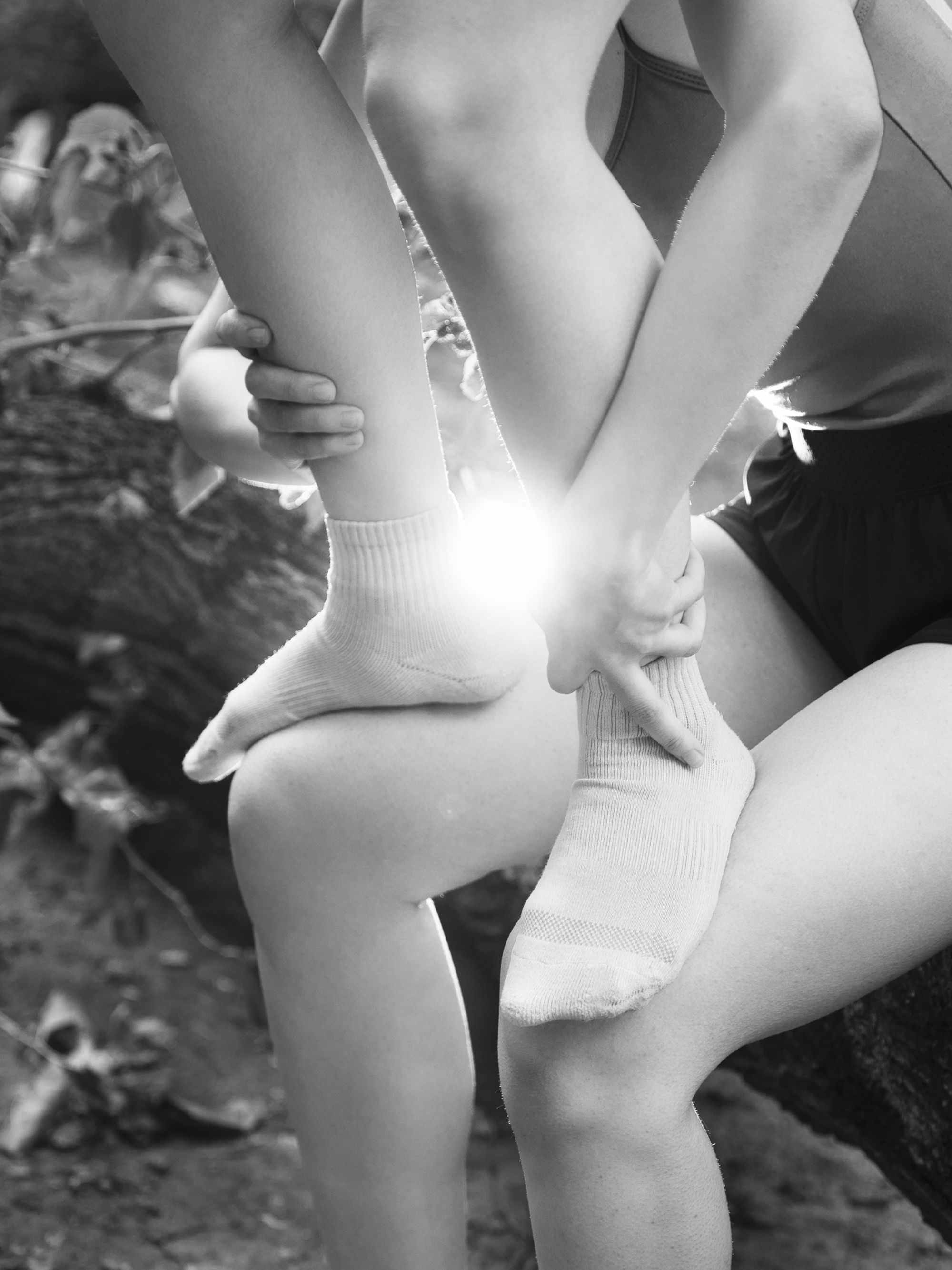
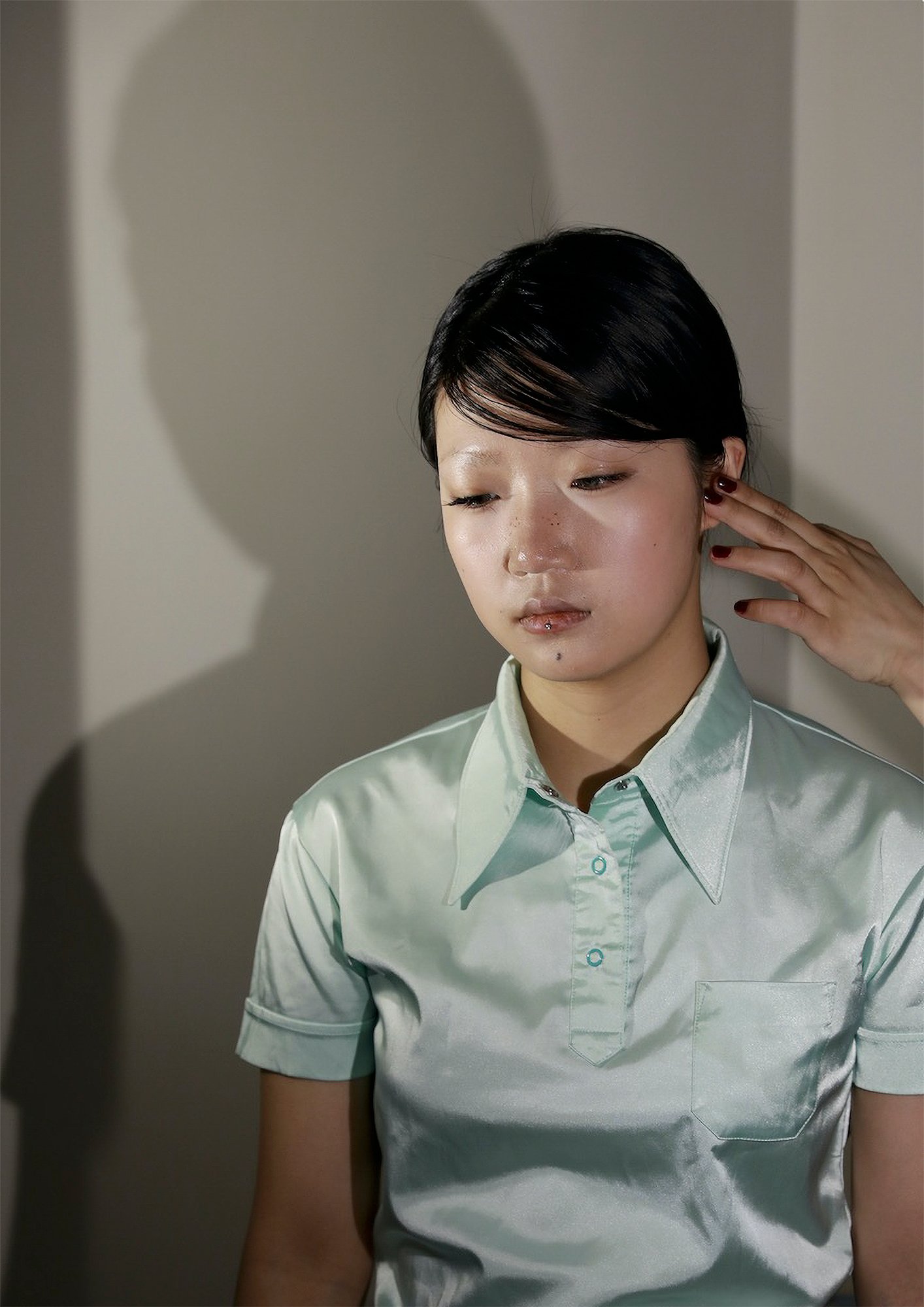
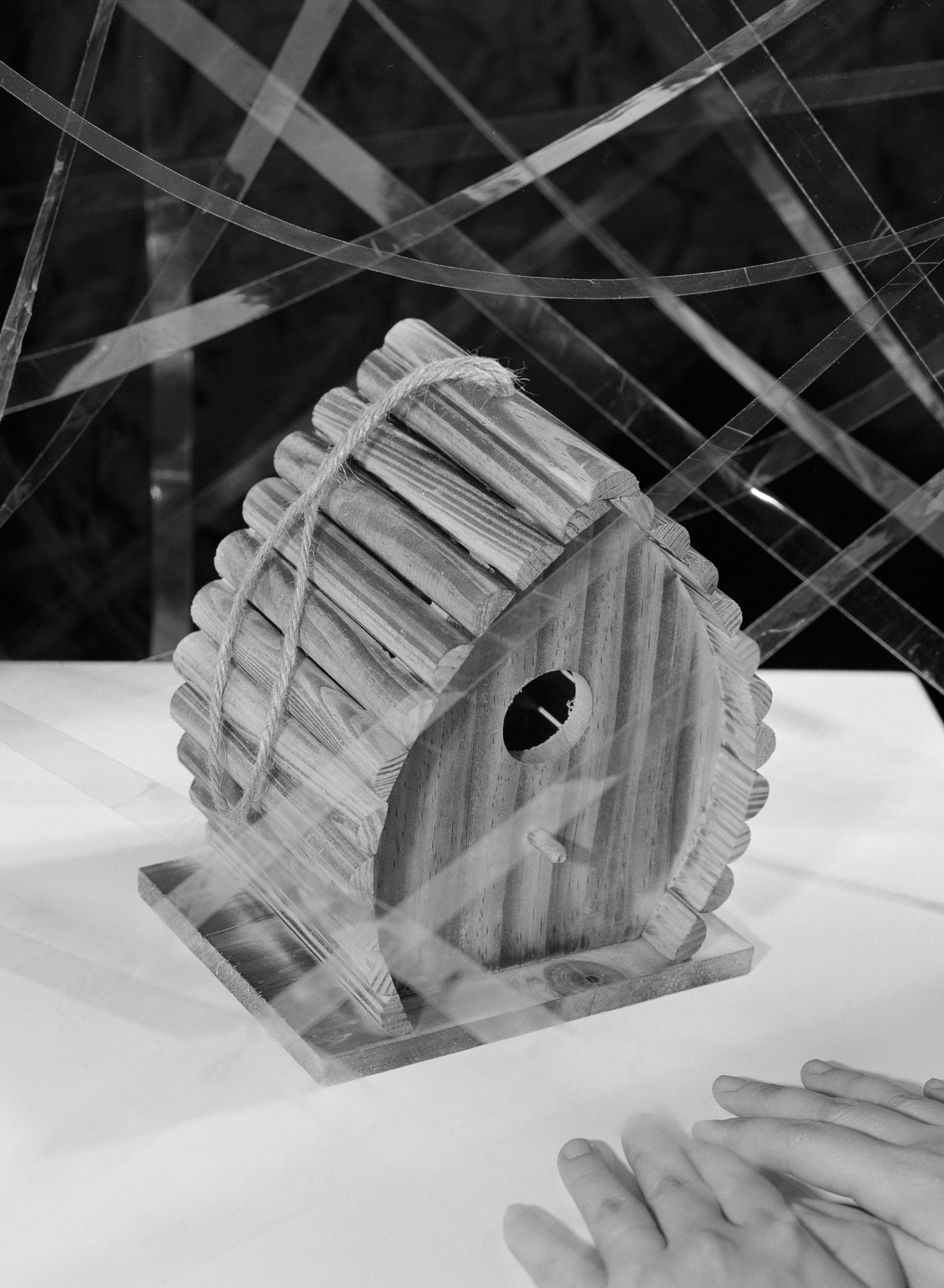
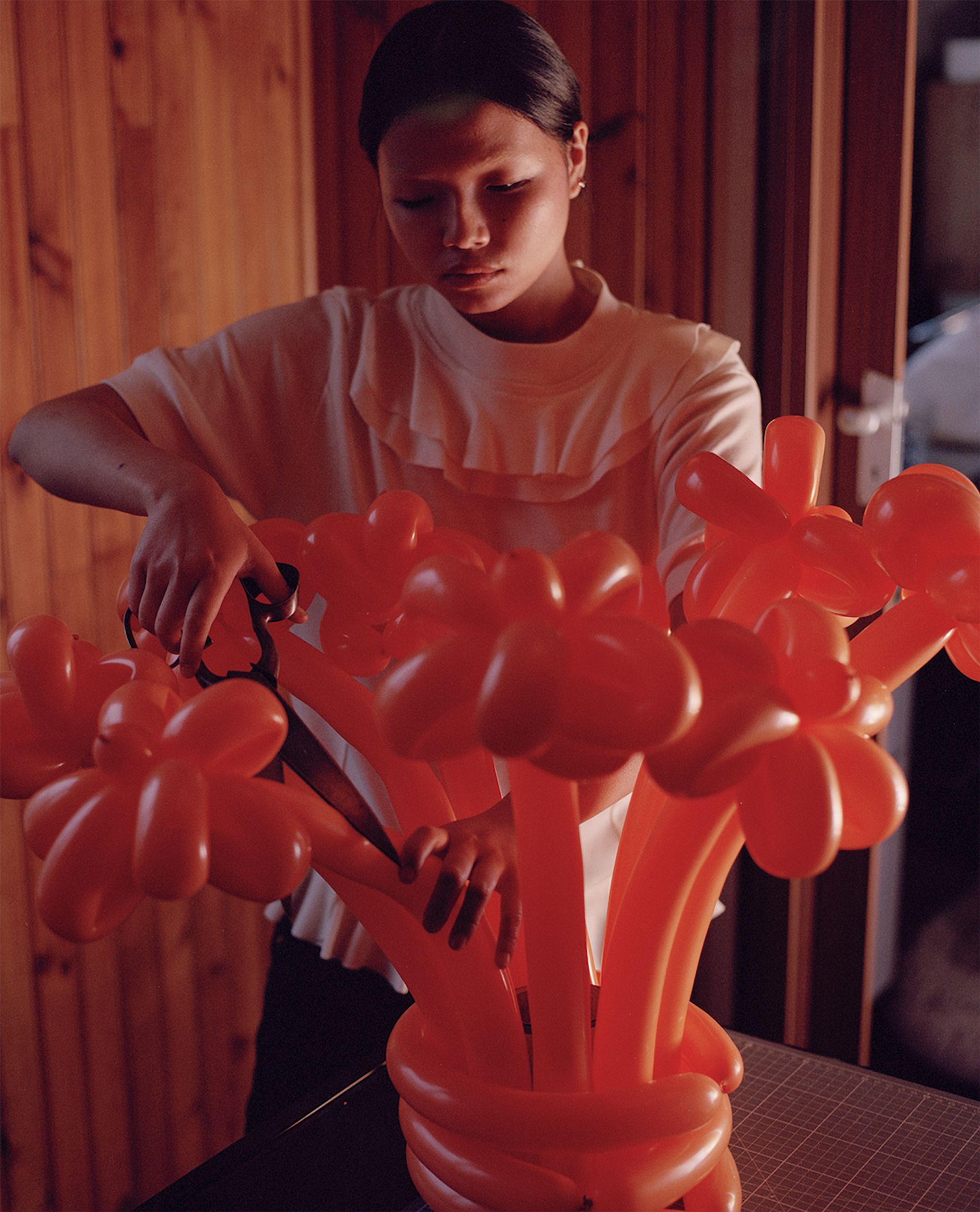
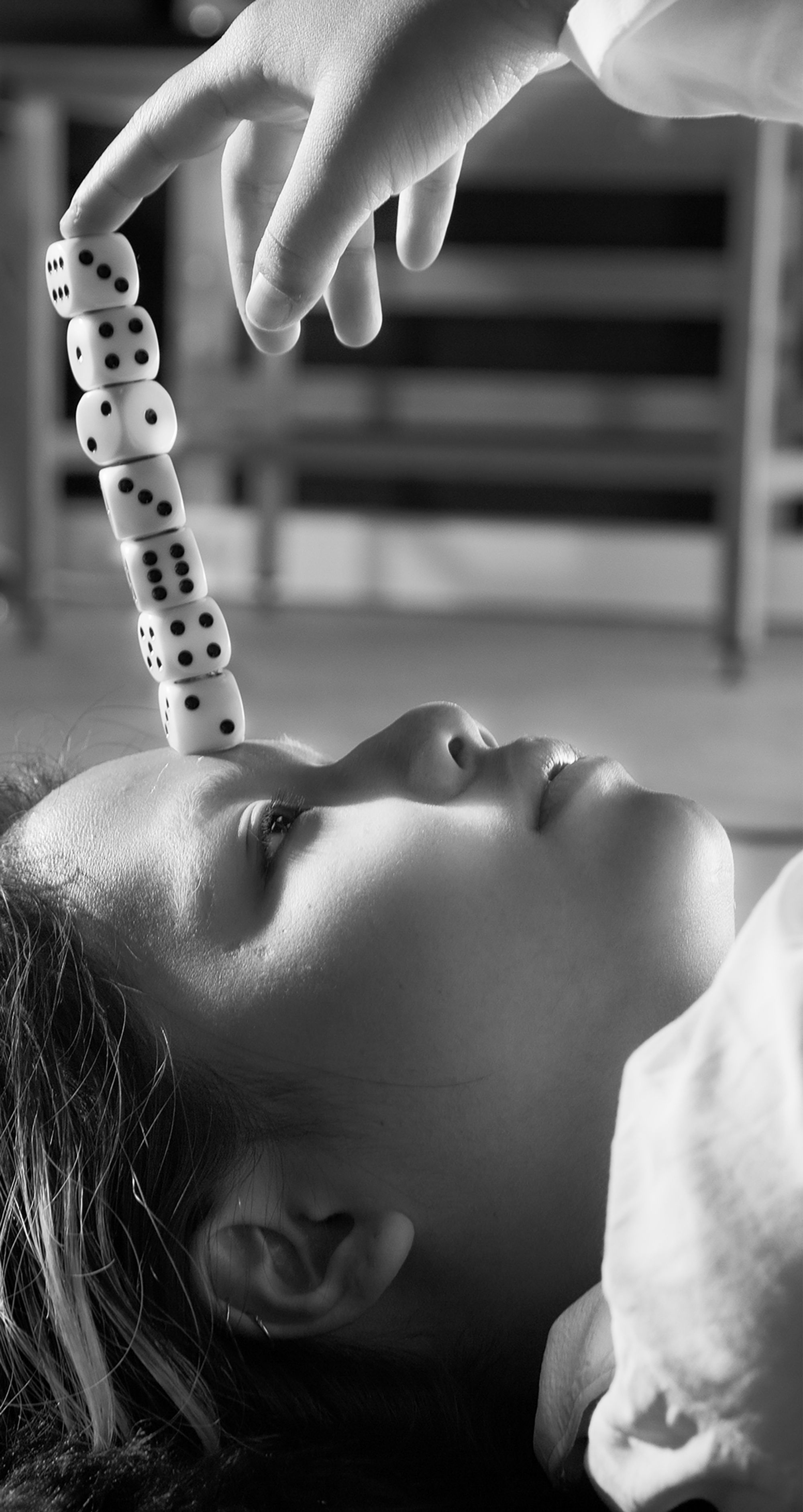
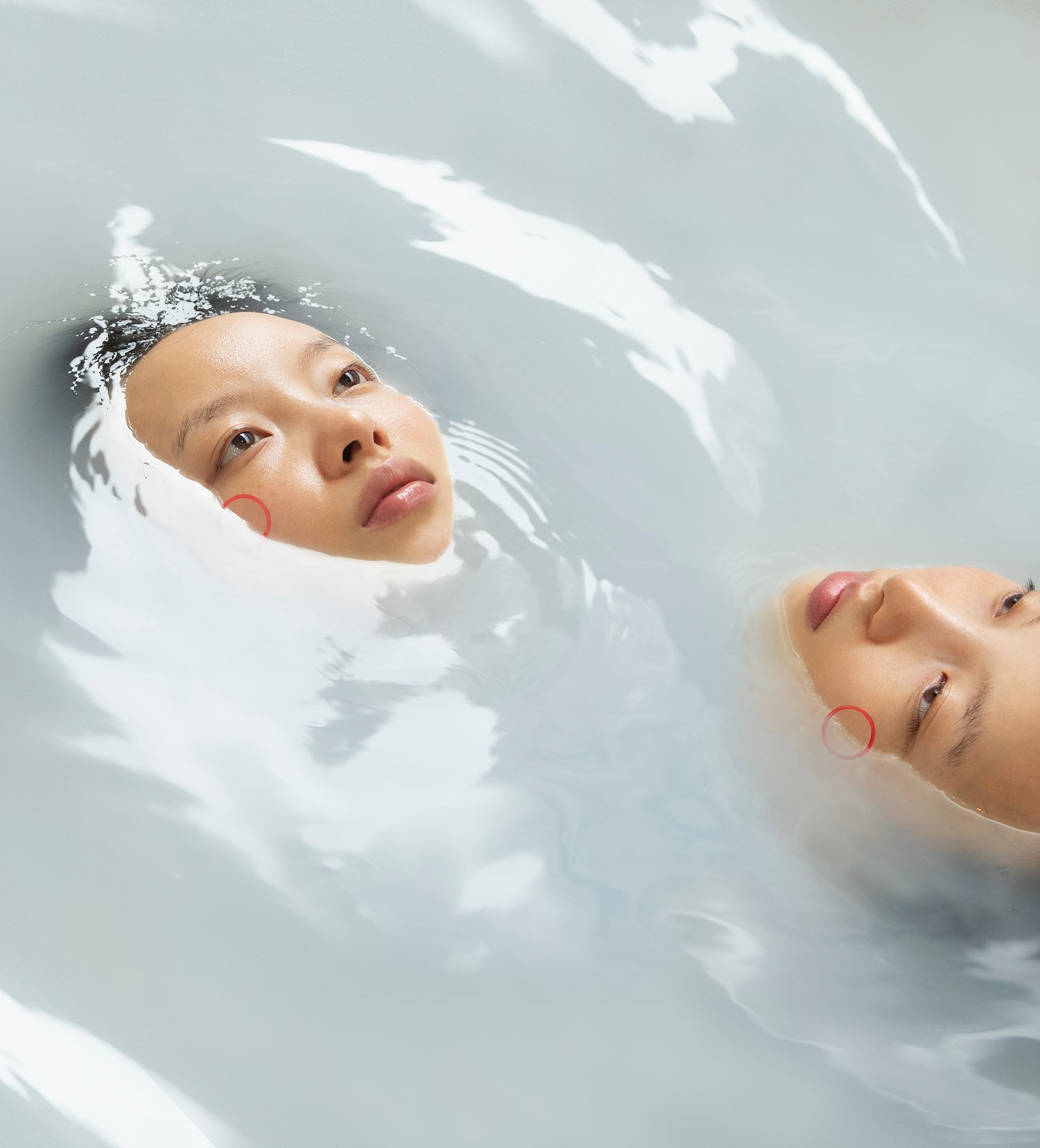
Each image in the series is what Lian calls "an independent fable" — a tableau built from bodies, props, and tension rather than documentation. Two faces float at the surface of milky bath water, eyes tracking sideways, their presence held between buoyancy and submersion. Two profiles press pears temple-to-temple, the fruit bridging them like a shared thought. A white-gloved hand drapes wet plastic over a bowed head. A mouth bites down on coloured candy studs set into the gum-line like grillwork, the grin extreme. These are not portraits in any conventional sense — they are fables staged to hold open the gap between what bodies perform and what they actually feel.
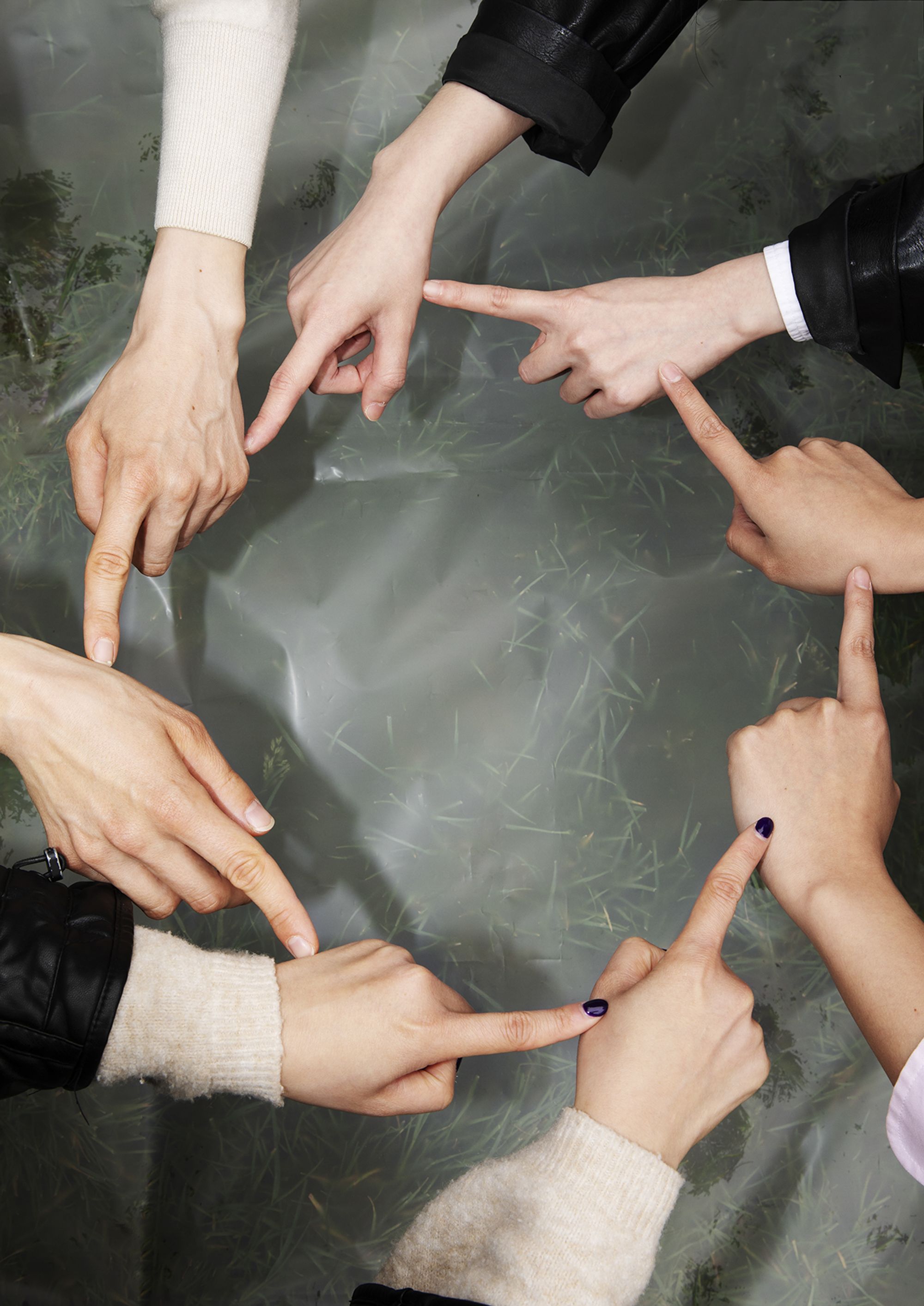
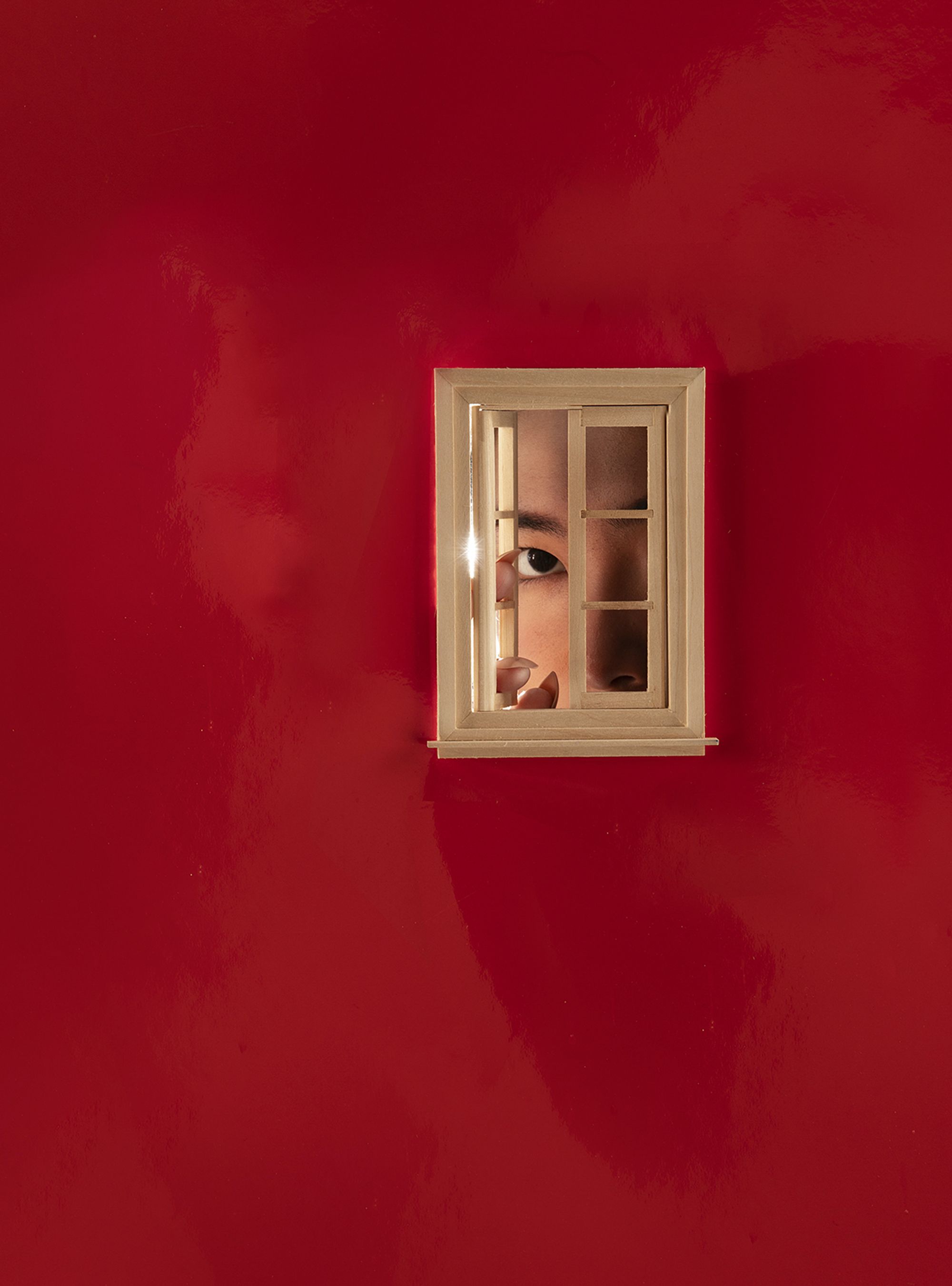
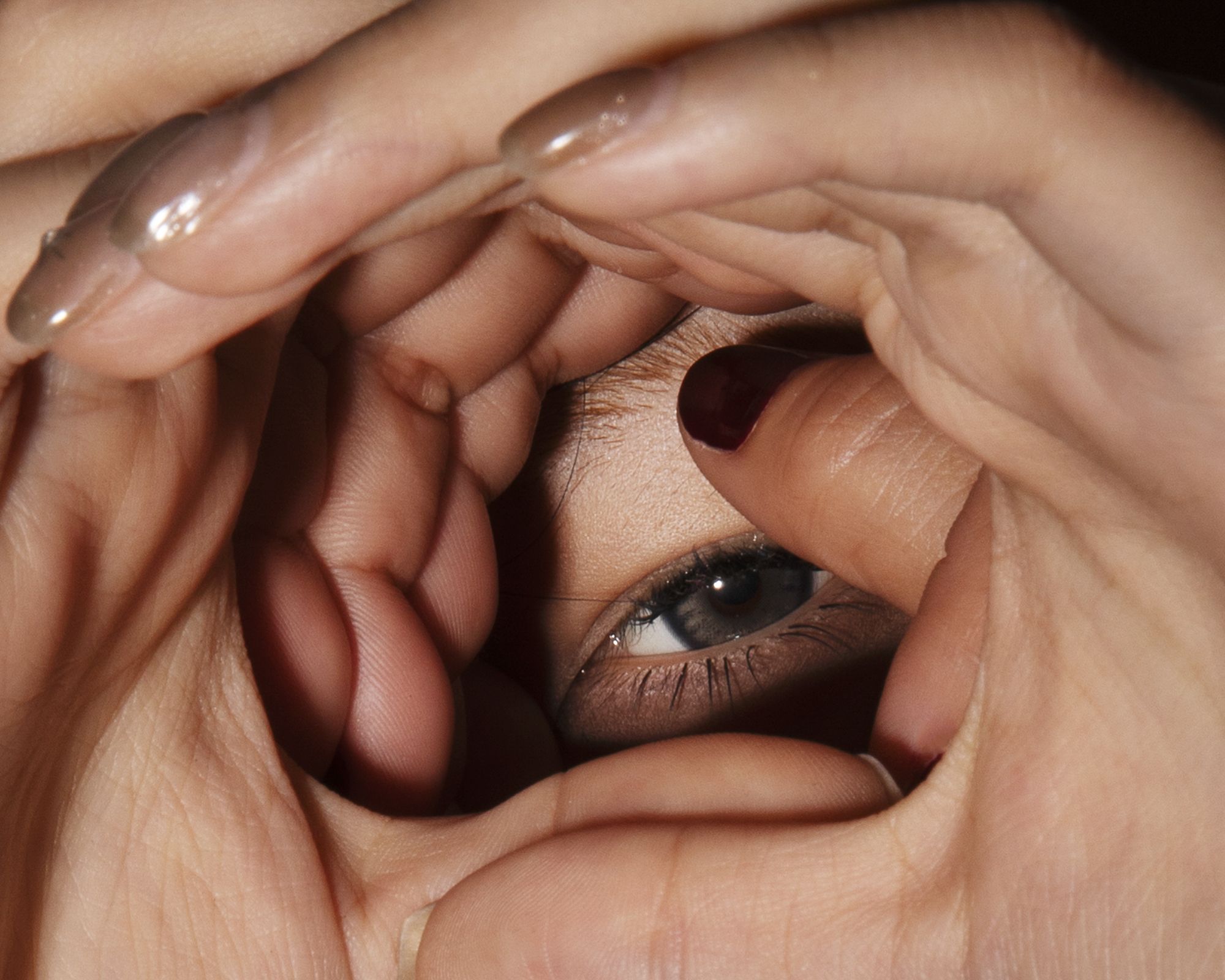
The series turns on what Lian calls the position of "an outsider between cultures": Chinese-born, based in France, and identifying as a sexual minority in Europe. The domestic and interpersonal spaces the images occupy are not neutral. A face pressed against the panes of a tiny dollhouse window, surrounded by deep red lacquer, watches outward from inside a container built to the wrong scale. Hands form a knot around a single eye. Eight index fingers point inward in a circle at a shared surface below. The recurrence of pointing, watching, and being watched runs through the series as a structural device, not an aesthetic one.
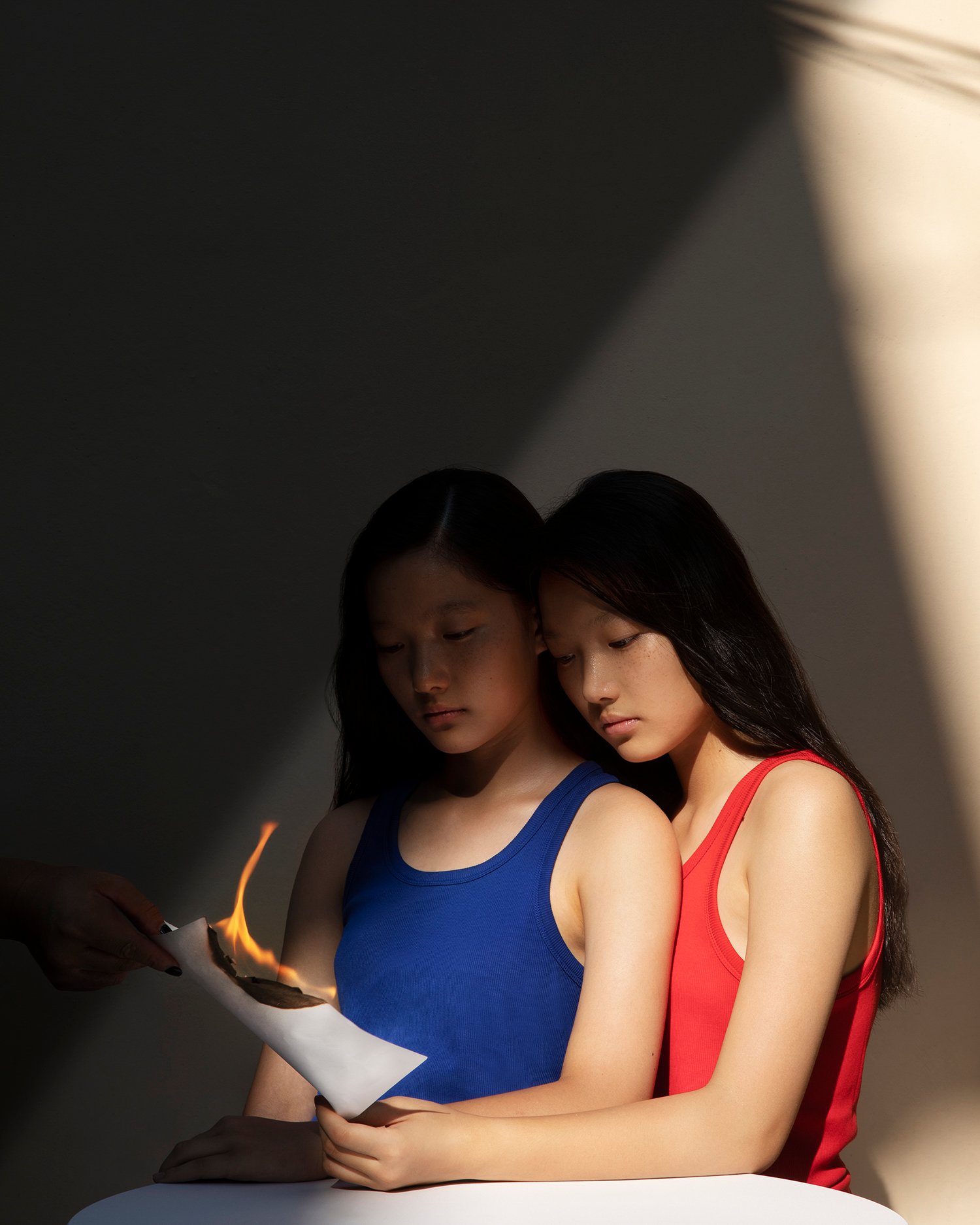
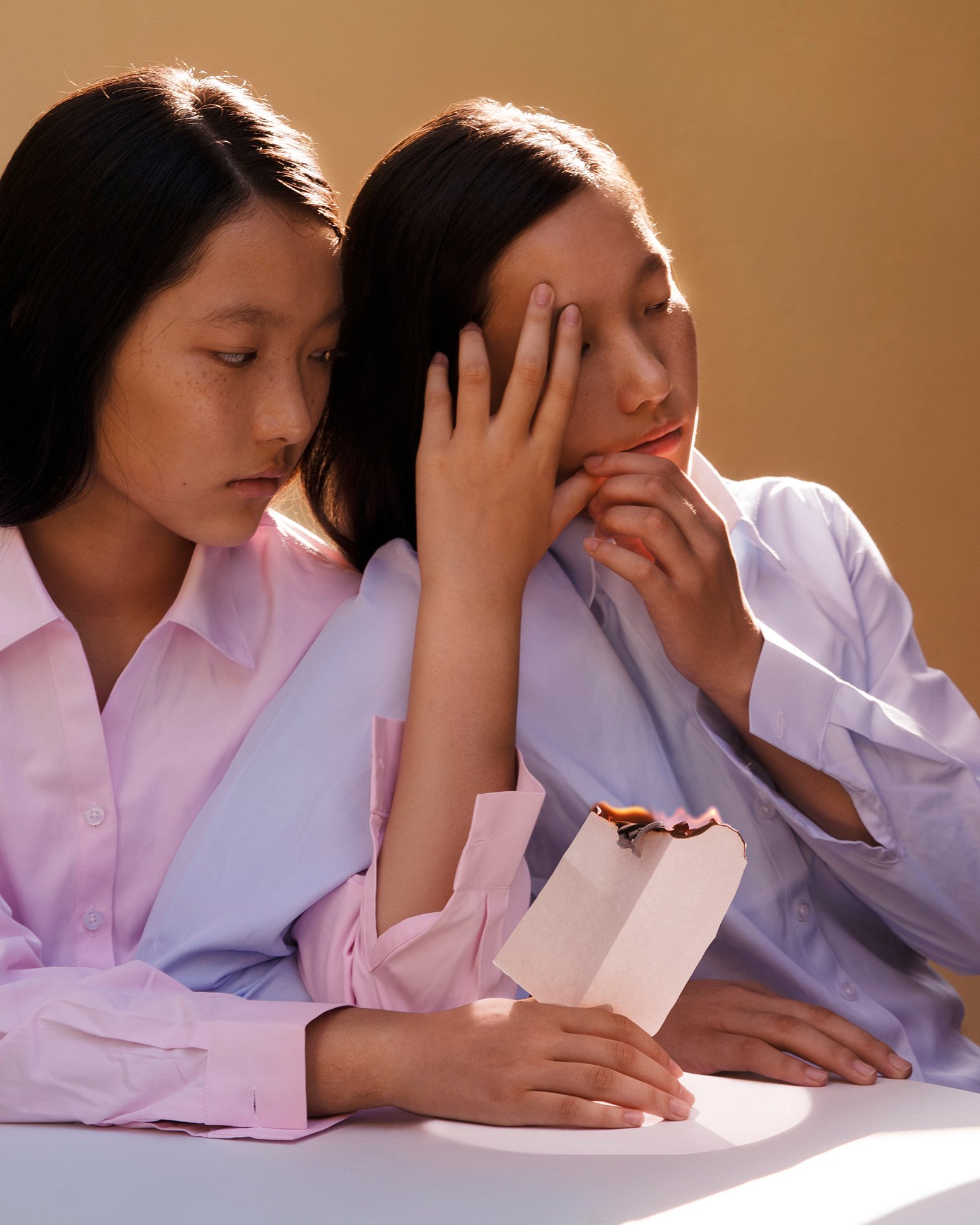
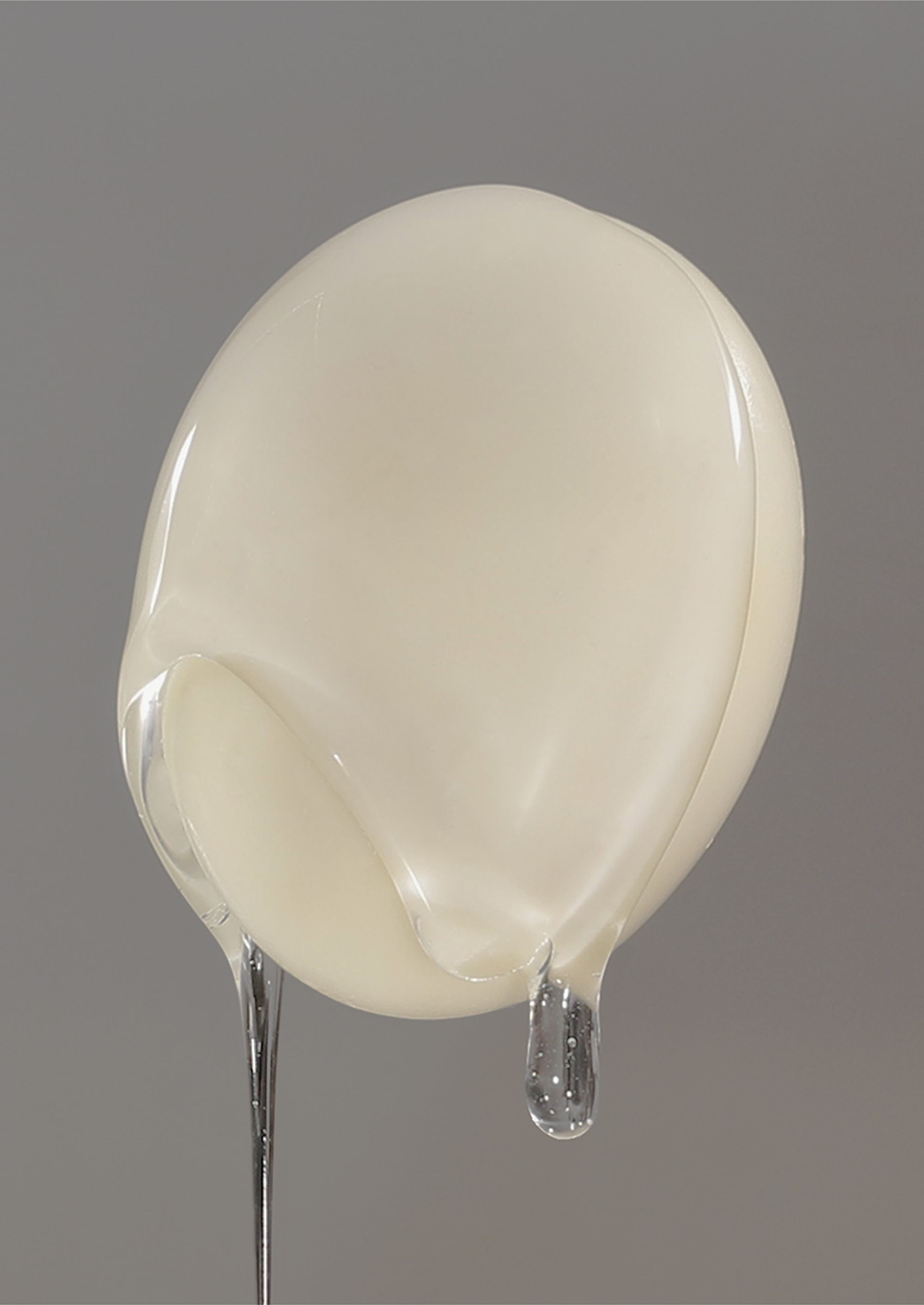
Lian identifies with the child in The Emperor's New Clothes, the figure who names what the adults agree not to see. She describes herself as that child, she has said, and the images hold that position: made from the materials of social norms and used to map the pressure those norms produce. A burning page held between two women leaning together in primary-coloured tops. A translucent balloon cast as a human face, beginning to drip on a steel stand, caught on the line between solid and liquid.
The work encourages viewers to reconsider private space as political. The strength of the series is that its political content is inseparable from its formal structure: the Freudian unease Lian names, the uncanny familiarity of domestic objects deployed against themselves, keeps the images working long after any single reading closes.