.webp)
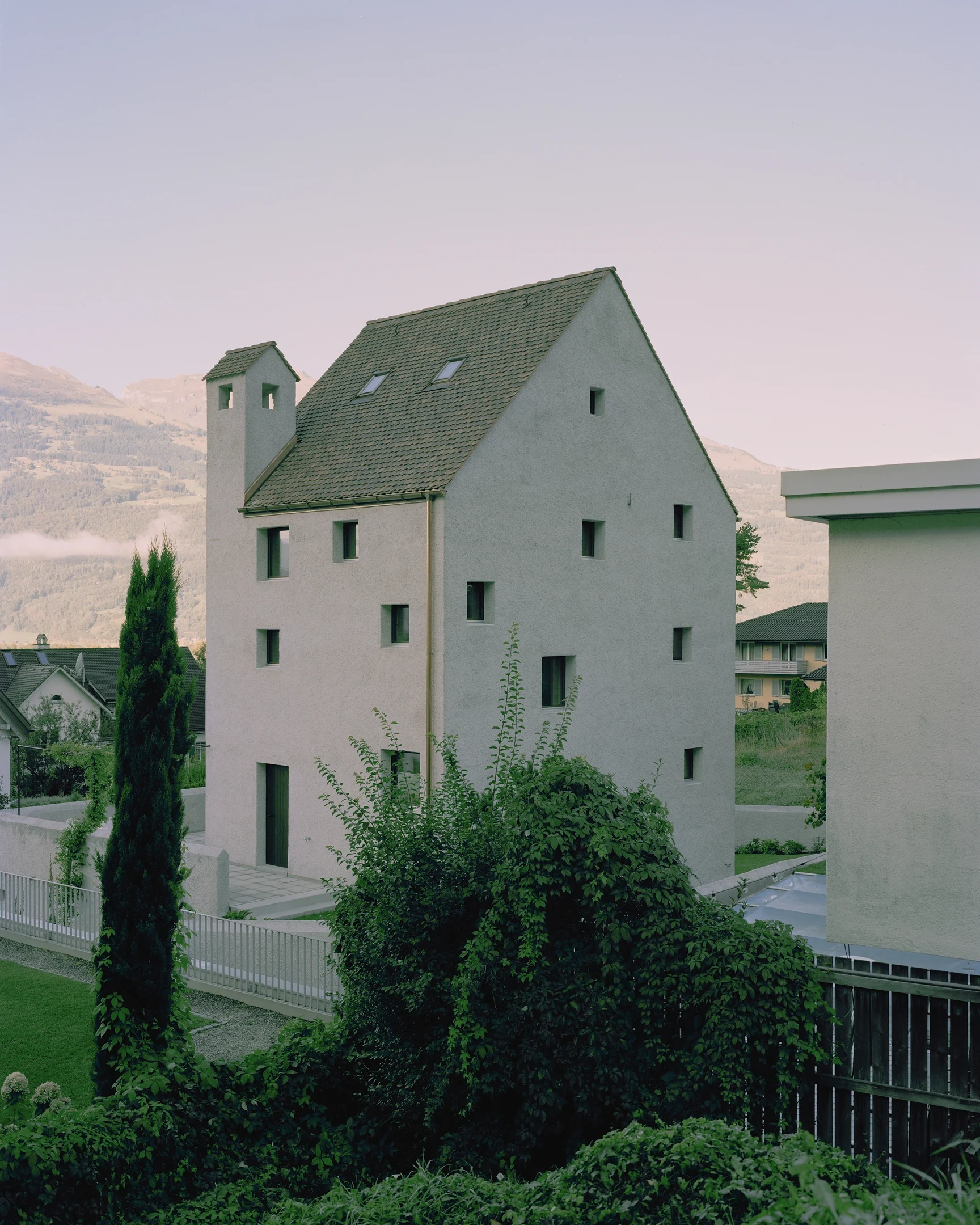
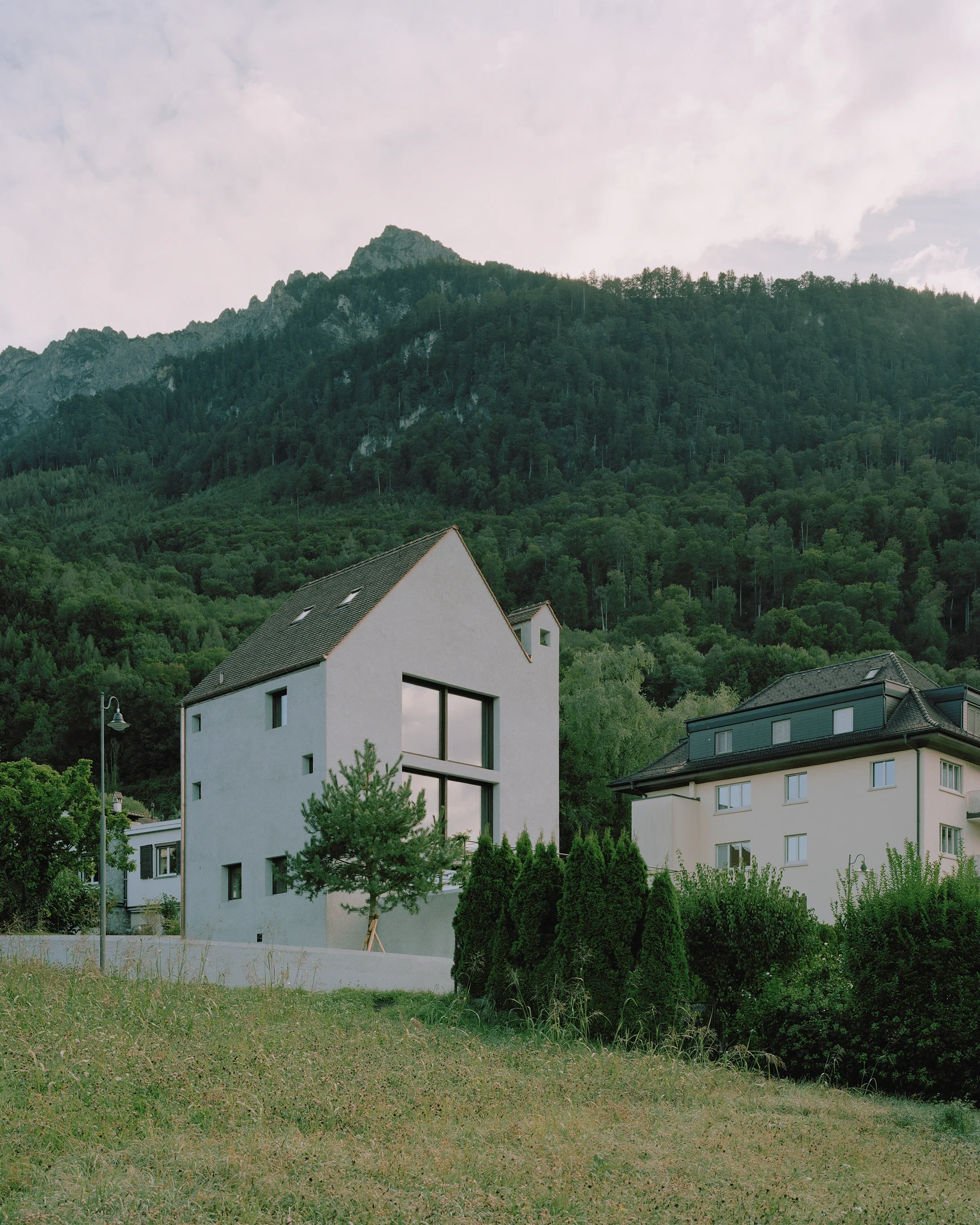
Beside the historic Red House in Vaduz, the capital of Liechtenstein, Schreiber Architekten raise Tower house Vaduz, a five-story tower whose shell and pitched roof are cast as one monolithic mass of concrete.
The tower sits where the Rhine valley meets the forested slopes of the Three Sisters, a steep gable turned to the view and a low circular wall drawn around the plot in the manner of the region's old vineyard enclosures. From the road it reads almost as vernacular: a tall house with a tiled roof and a chimney, the kind that has stood in these Alpine towns for centuries. Then the small square windows, scattered rather than aligned, give the game away. This is a deliberate object, not an inheritance.
Thickness does the work here. The exterior walls are massive, and they carry more than load. They provide security, a thermal buffer, and a filter through their own porosity, and inside their depth they hide every ancillary room and the vertical access. What is left at the center of each level is a single open volume, free of structure, divided only by lightweight partitions that can be moved or removed as a household changes. The plan is fixed in mass and loose in use.
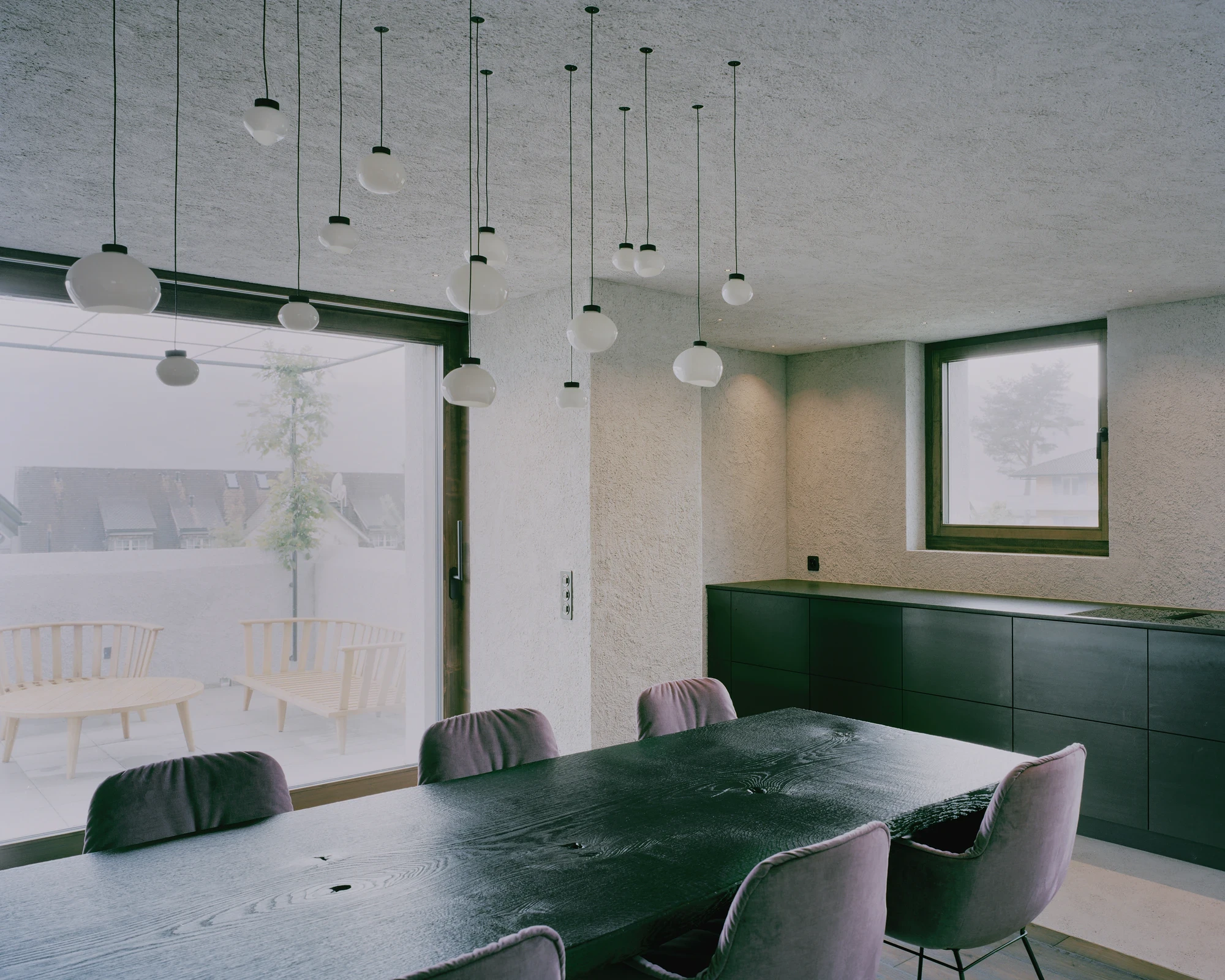
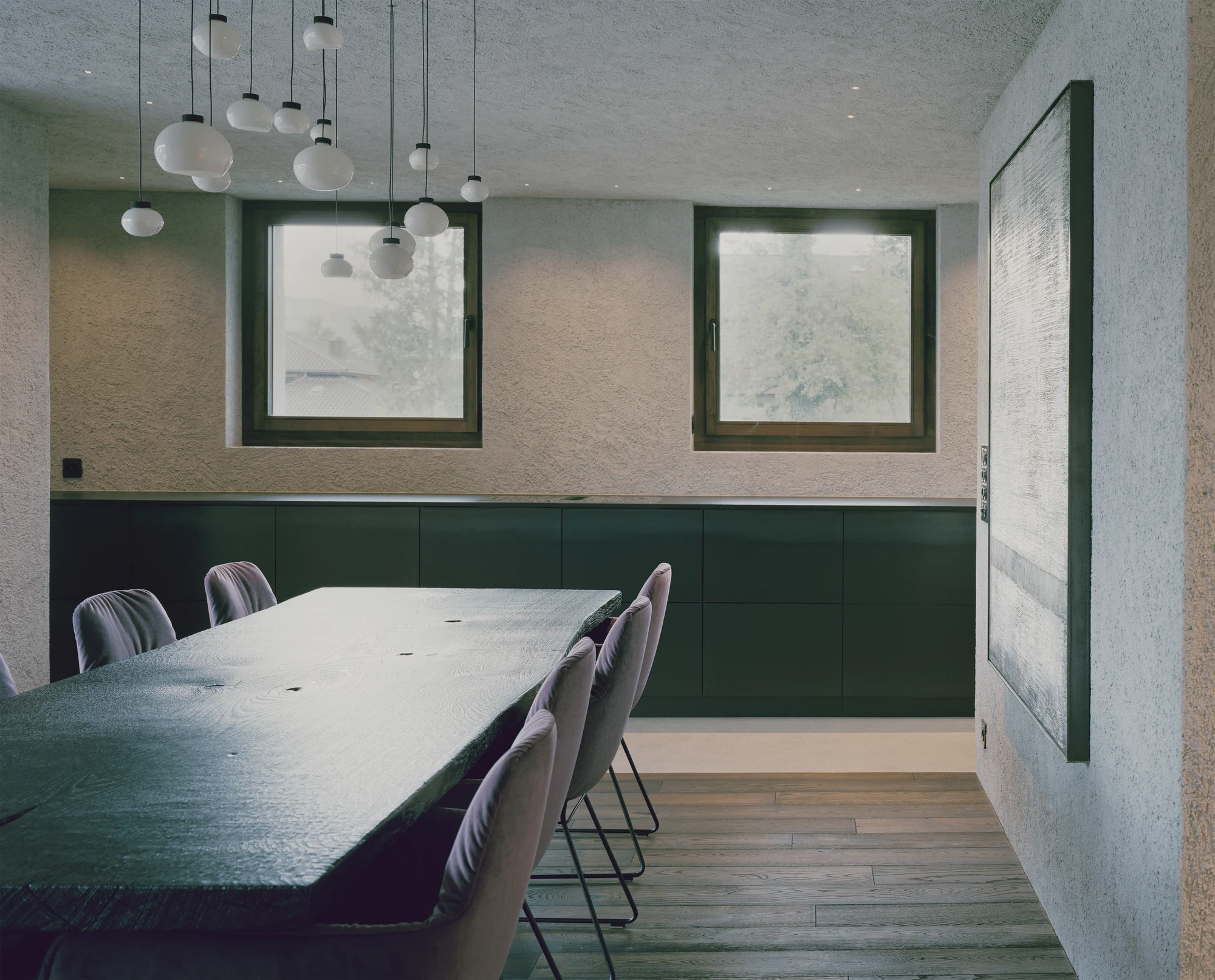
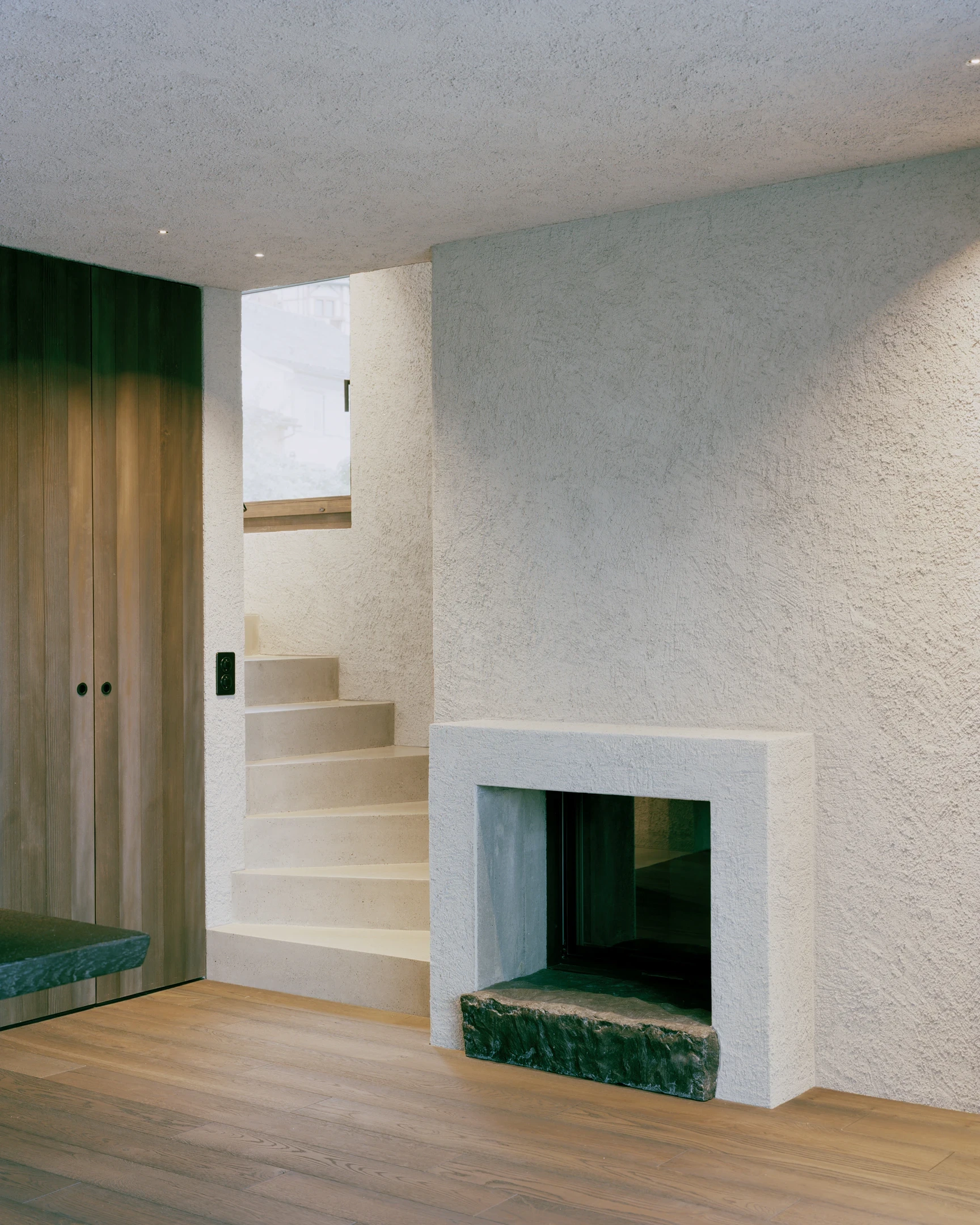
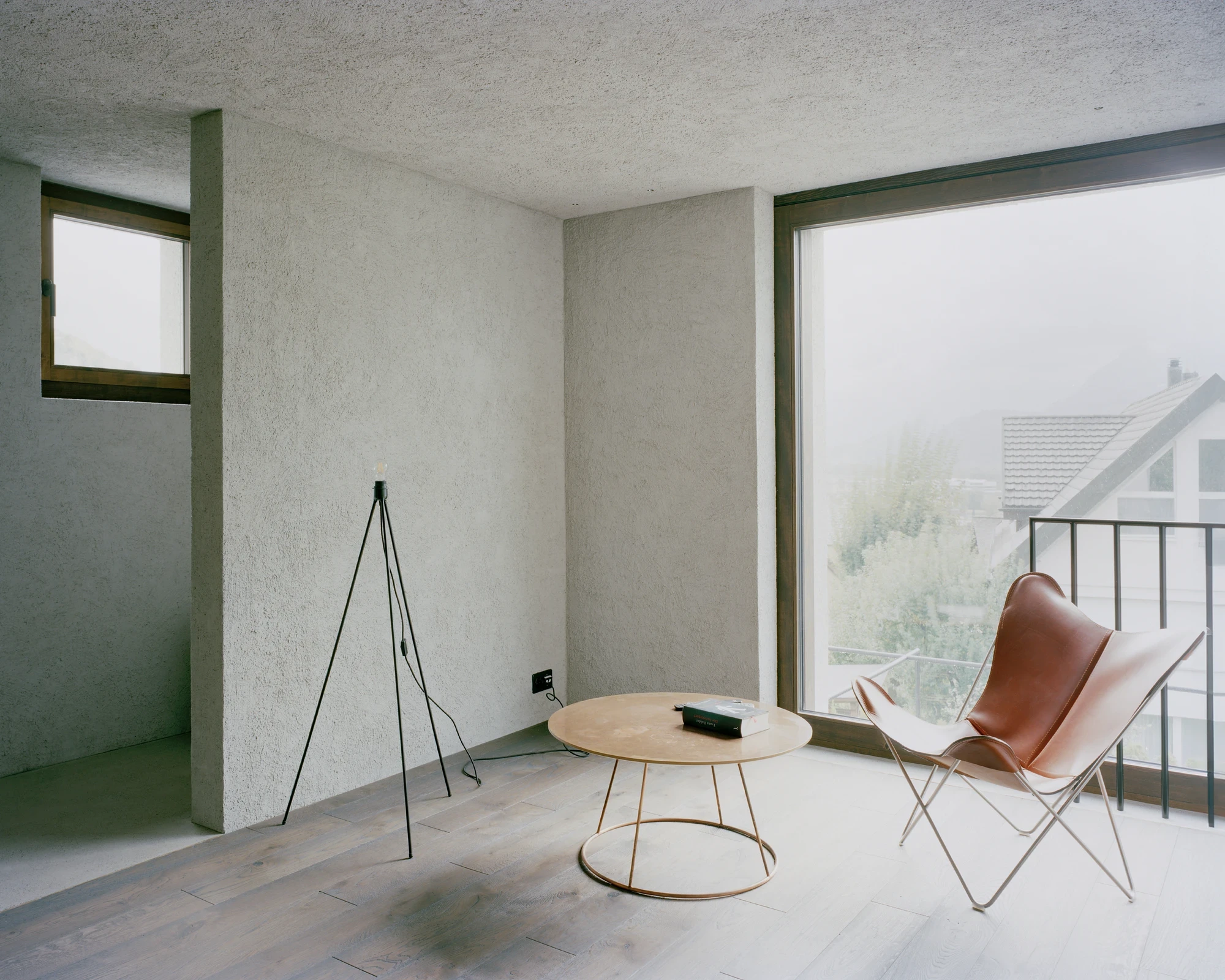
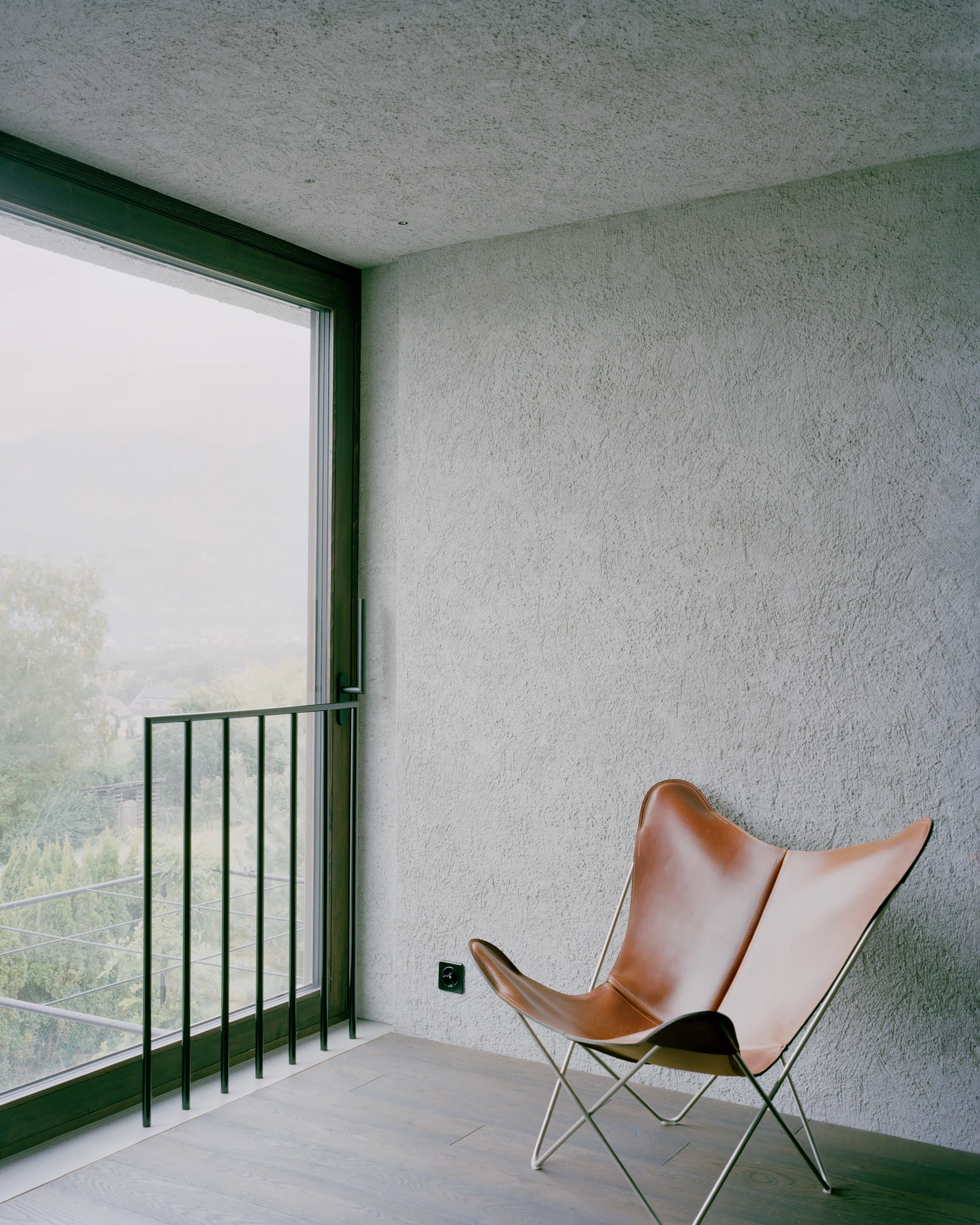
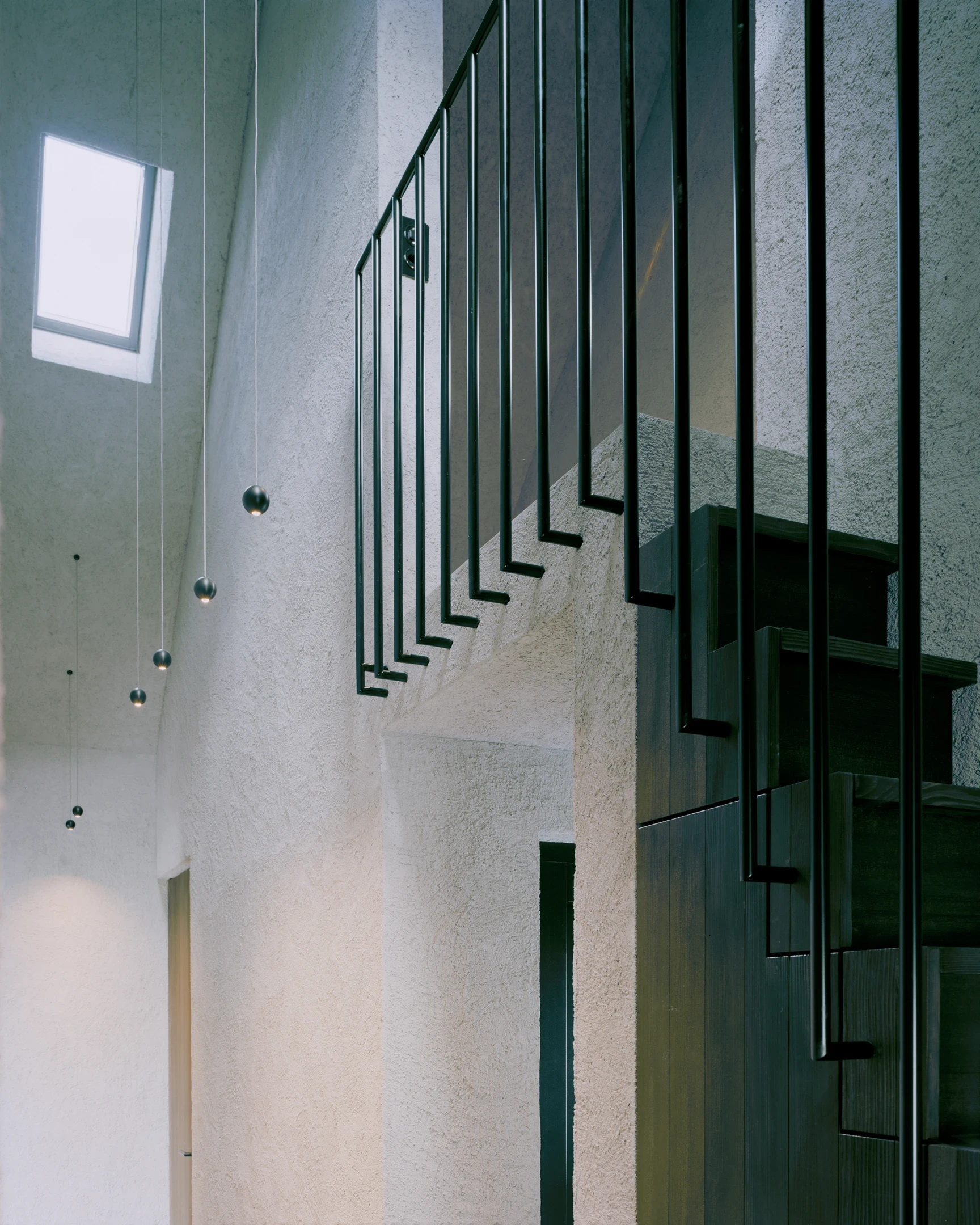
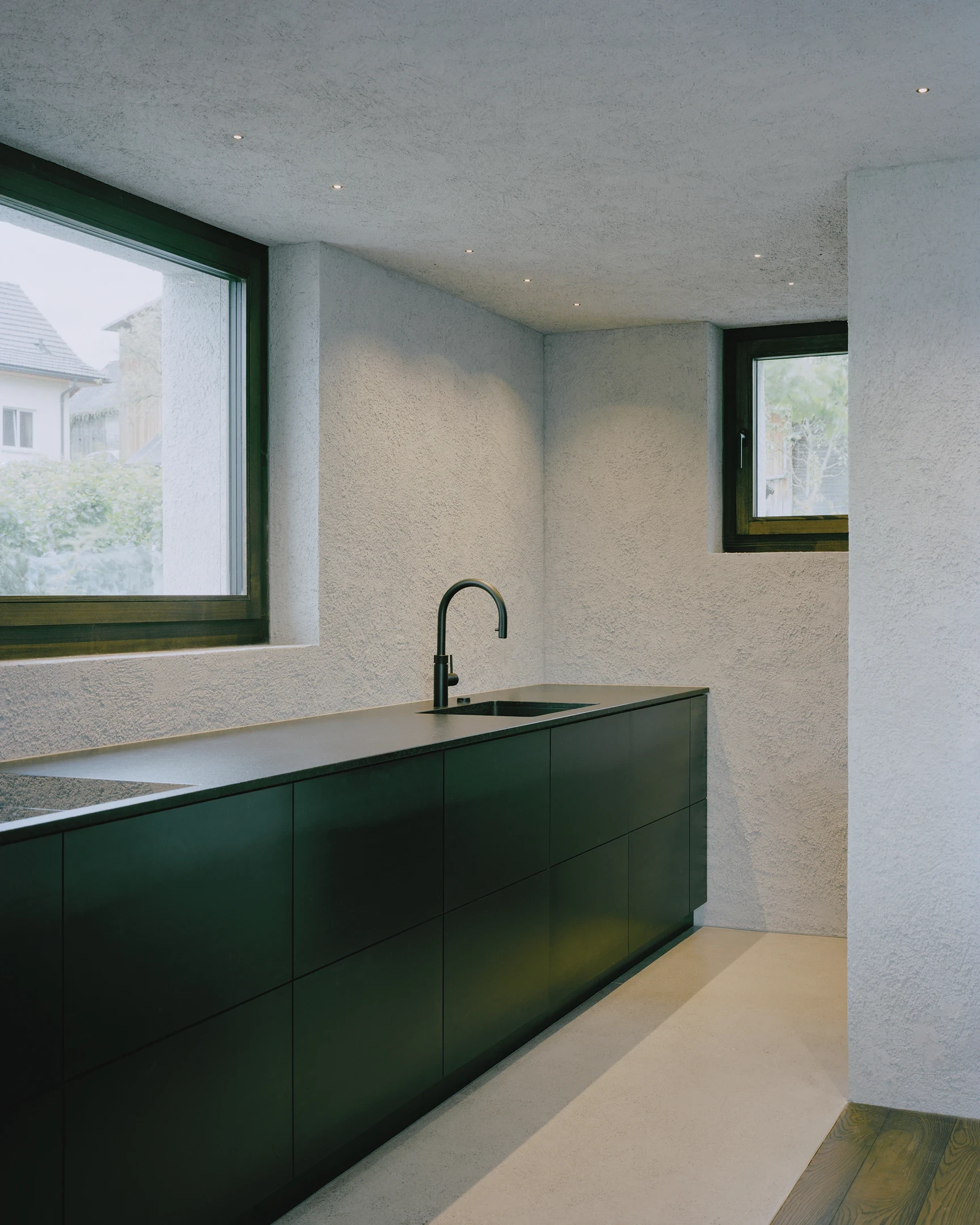
Shell and roof were poured together as one continuous body of concrete, lined internally with mineral-based thermal insulation, so the building behaves as a single material rather than an assembly of layers. Over all of it, outside and in, runs lime plaster applied by hand from regional sands. The finish is unmistakable: a coarse, neutral gray with a troweled grain that catches raking light across walls and ceilings alike, the same skin on a kitchen soffit as on the gable peak two stories up.
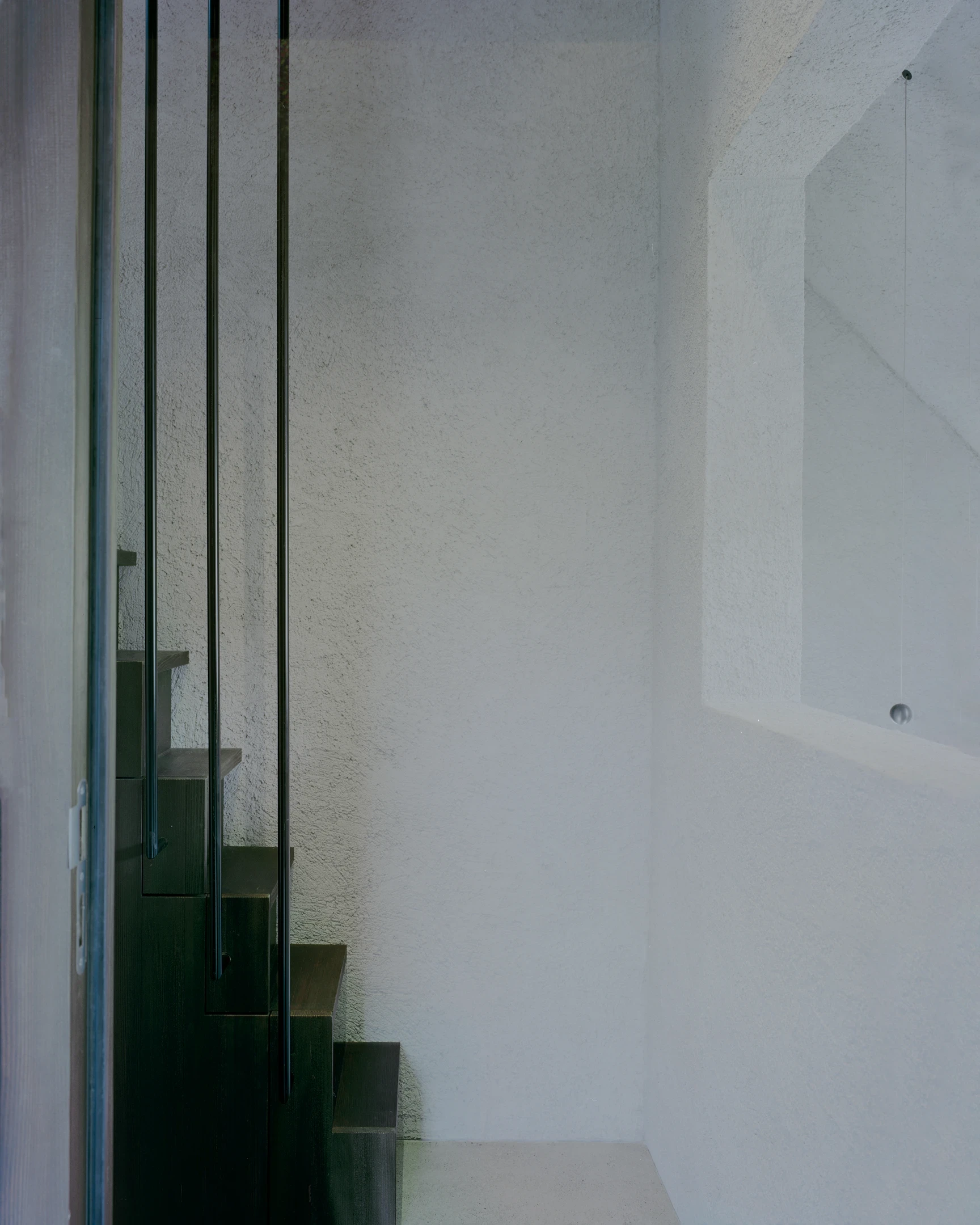
Against that gray, warmth arrives in dark brown glazed spruce. The wood frames the windows, hangs the doors, and lines the joinery, and it sets the temperature of every room: a butterfly chair in tan leather by a corner of glass, a roughsawn dining table under a constellation of pendant lights, a cast lime fireplace seated on a rough green stone hearth. Slim black steel balustrades thread the stair through the tower, past a high clerestory that drops daylight down the plastered flank.
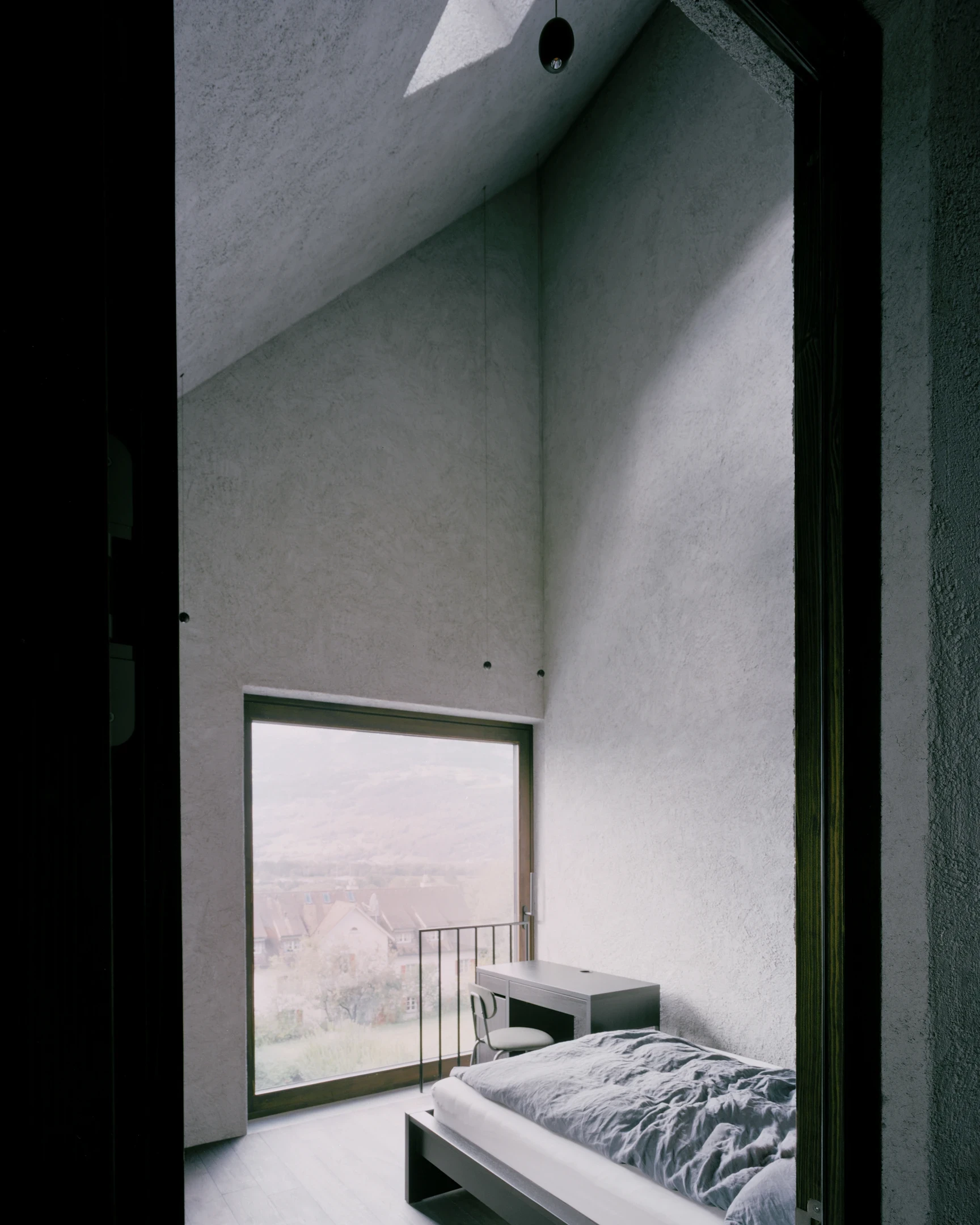
The top floor is the payoff. Under the bare pitch of the roof, the ceiling climbs to the ridge and a single tall window holds the valley and the far mountains, often softened by morning fog. It is a room that knows exactly what it is built from and exactly what it is built to see. In a place where the picturesque house is a regional given, Schreiber Architekten take the silhouette and rebuild it from the inside out, until the familiar shape carries an entirely contemporary argument about mass, openness, and the honesty of a single material.