In the Rhine Valley near St. Gallen, Zurich studio kit builds Tower House from prefabricated spruce panels assembled in three days, its gabled form rereading the rural dwelling on a constrained triangular plot.
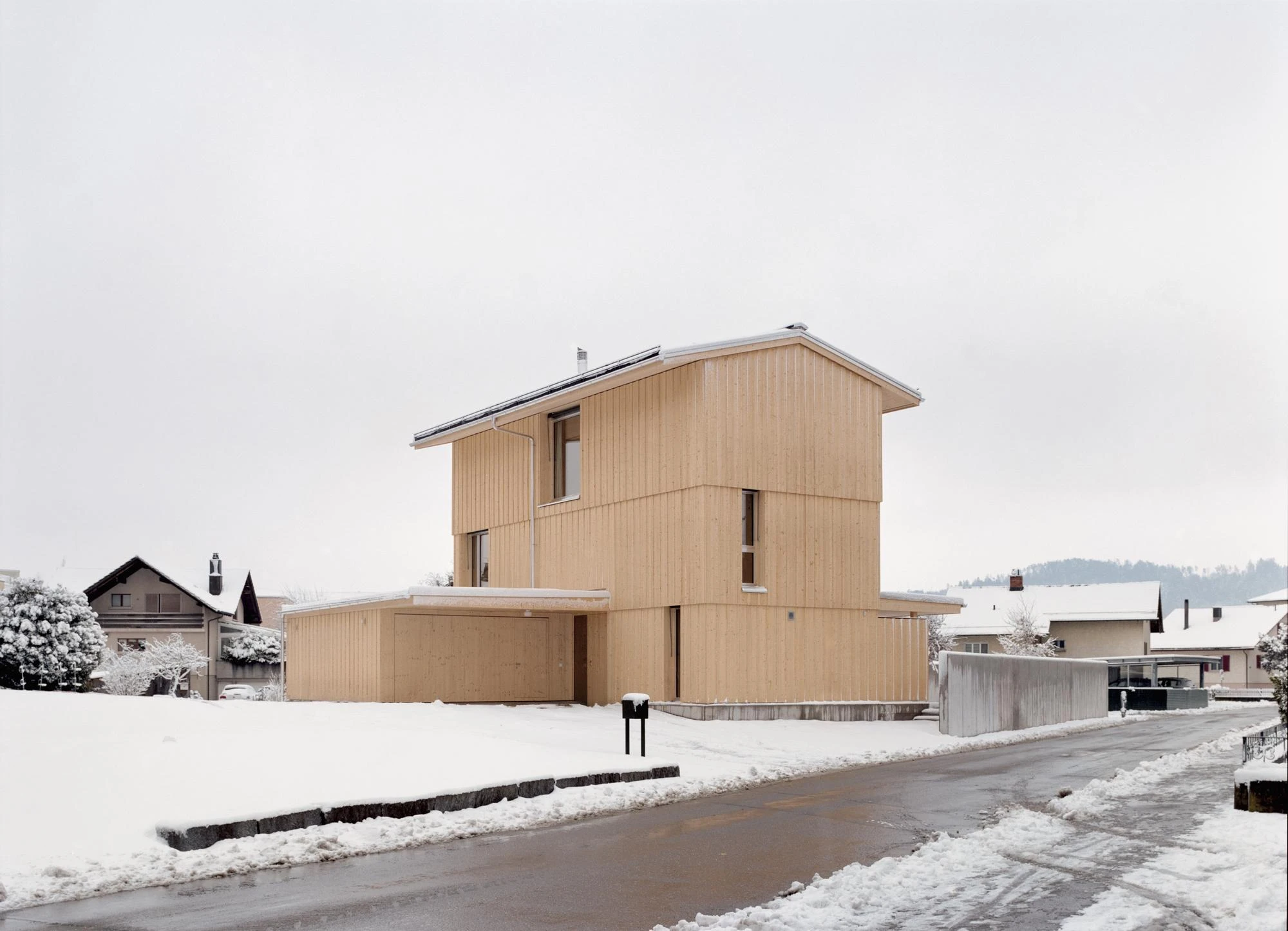
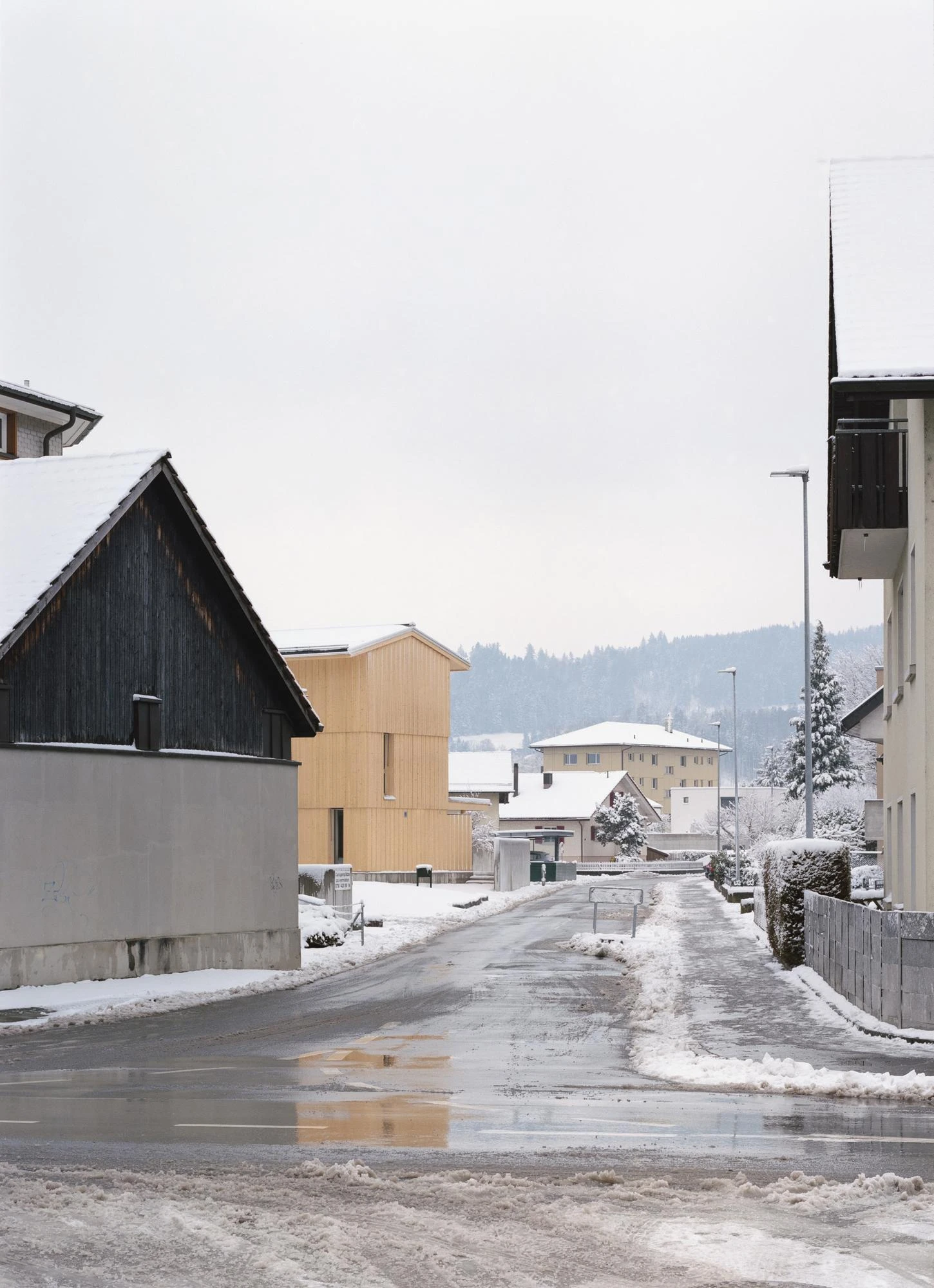
The Rhine Valley near St. Gallen is residential, agricultural and somewhat compressed. Plots are small, neighbours are close, village centres sit at irregular distances. It is not a landscape that tolerates overt formal ambition easily. Tower House by Zurich studio kit belongs here not because it is modest but because it is precise: narrow, gabled, clearly derived from the rural dwelling archetype and executed in a single material system. The prefabricated spruce panels, walls, floors, ceilings, were manufactured off-site and assembled in three days. Three days for the complete shell of a three-storey family home is not a construction shortcut; it is a different understanding of what building can be.
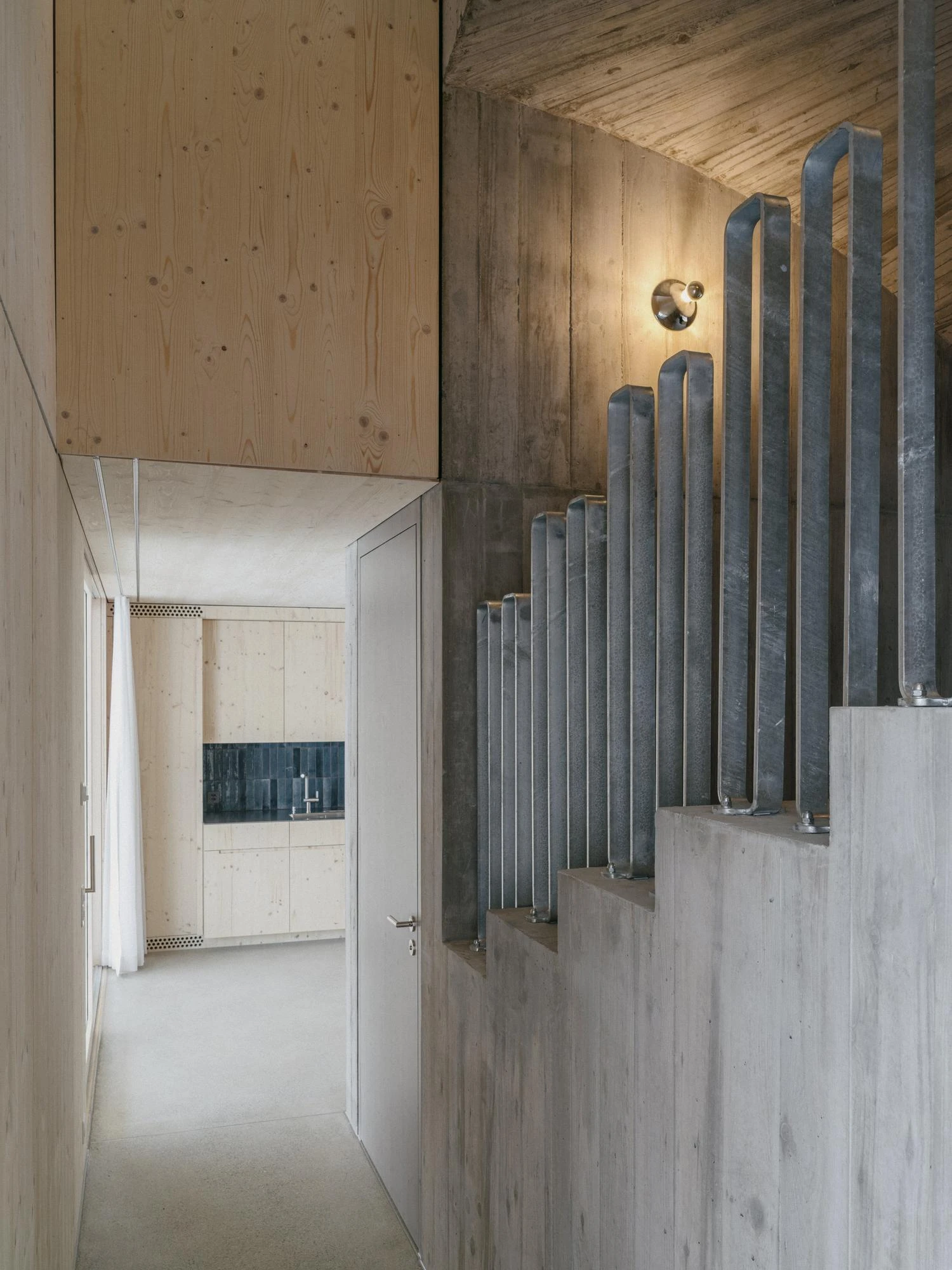
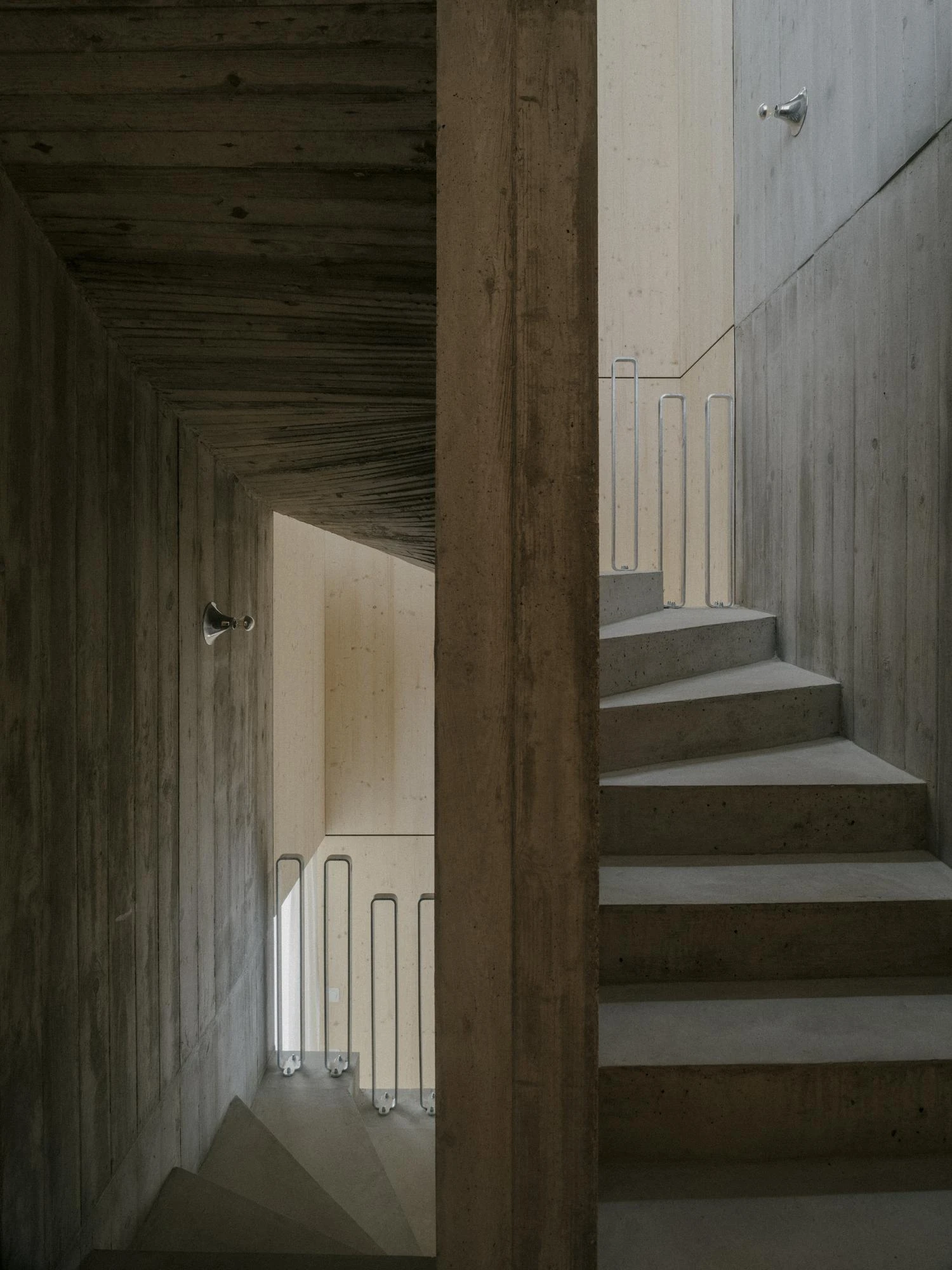
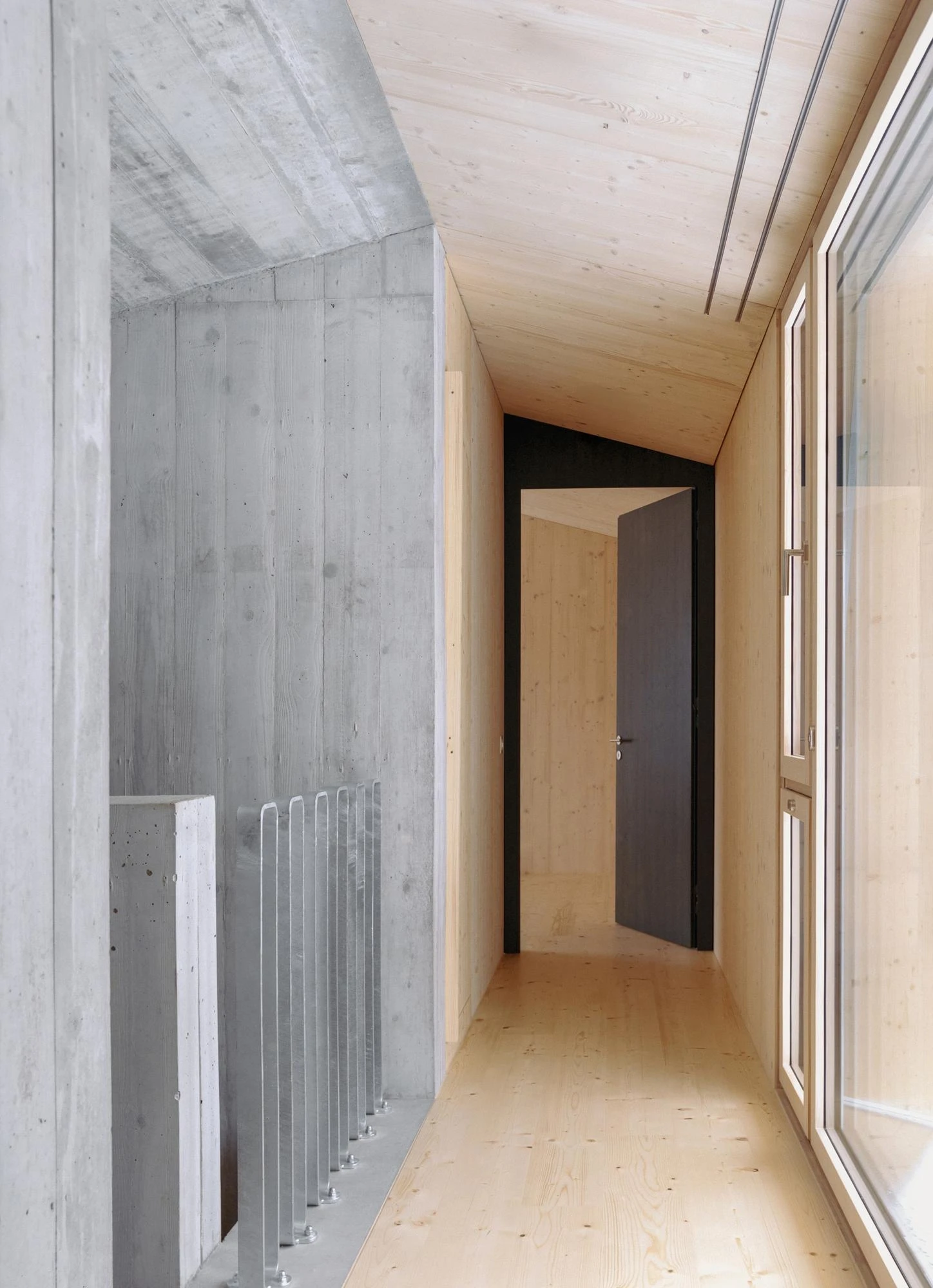
The structure inside the timber envelope is worth describing carefully. At the centre of each floor plan, an exposed concrete core provides stiffness and contains vertical services. The concrete does more than carry loads: it forms an air shaft, drawing air from lower levels upward through the building to a rooflight above. Combined with opposing openings and an over-height living space, the strategy allows passive cooling in summer without mechanical systems. Rory Gardiner's photographs show the concrete core clean and matter-of-fact within the warm spruce interior, the two materials share the room without competing.
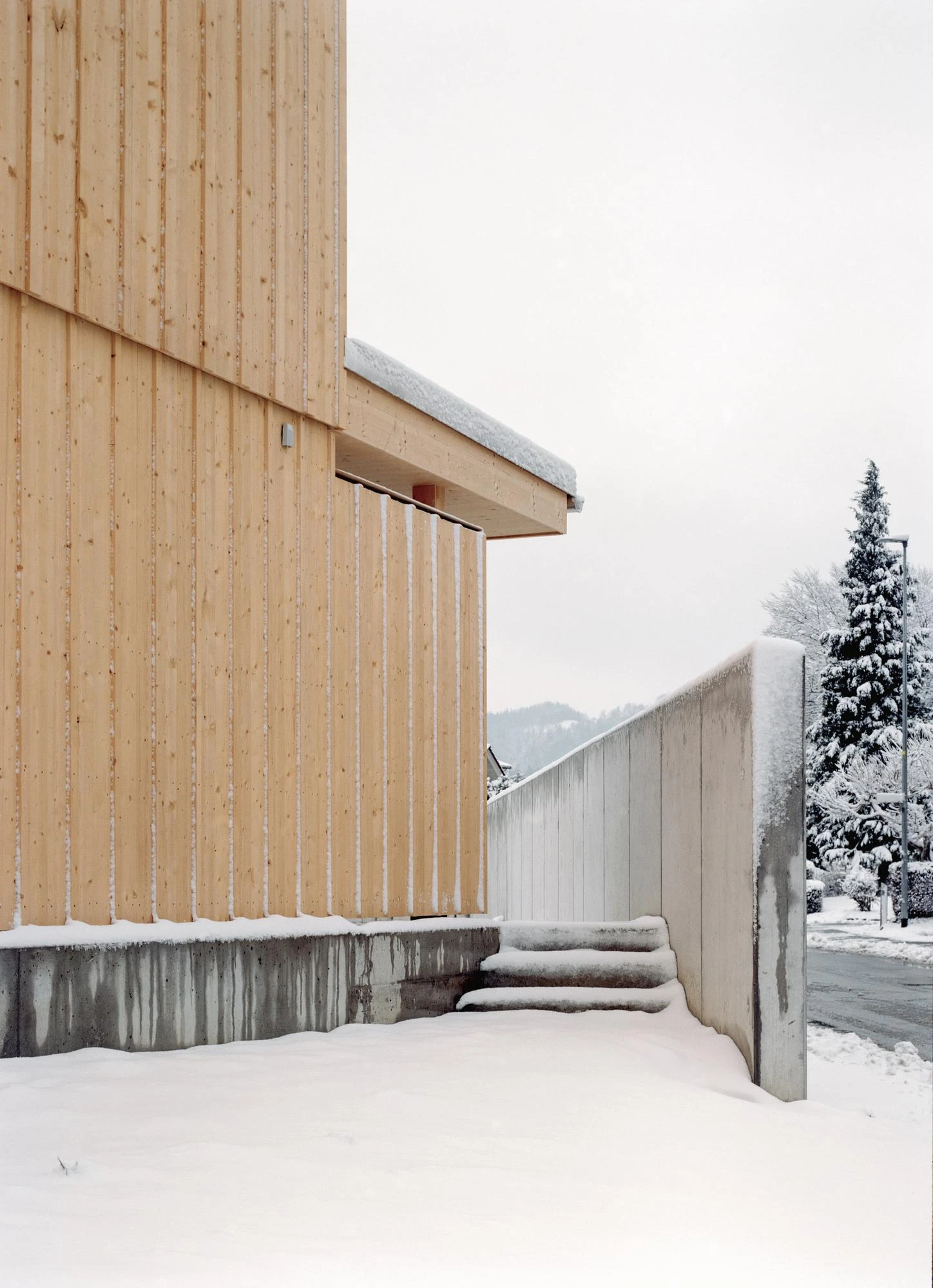
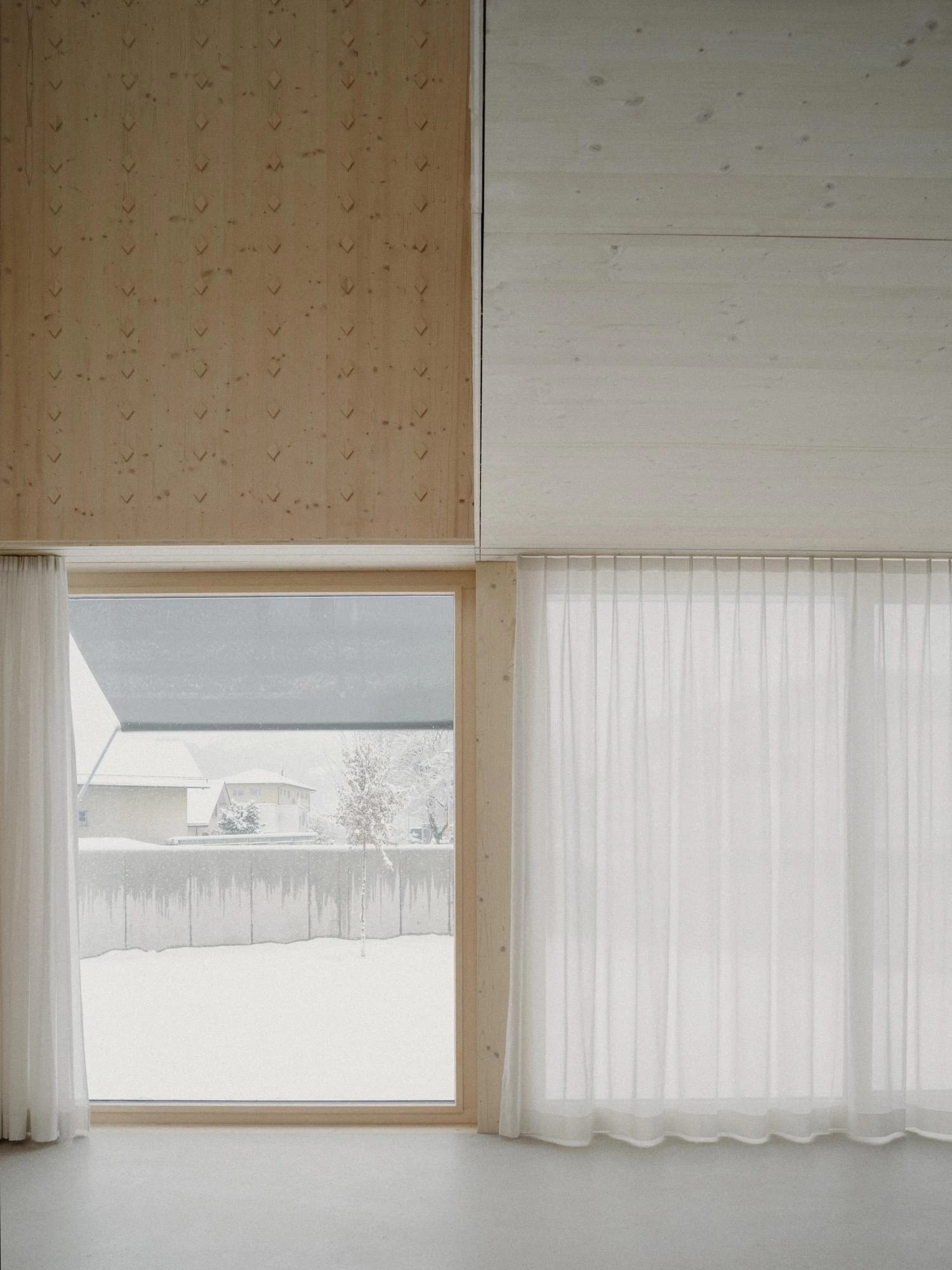
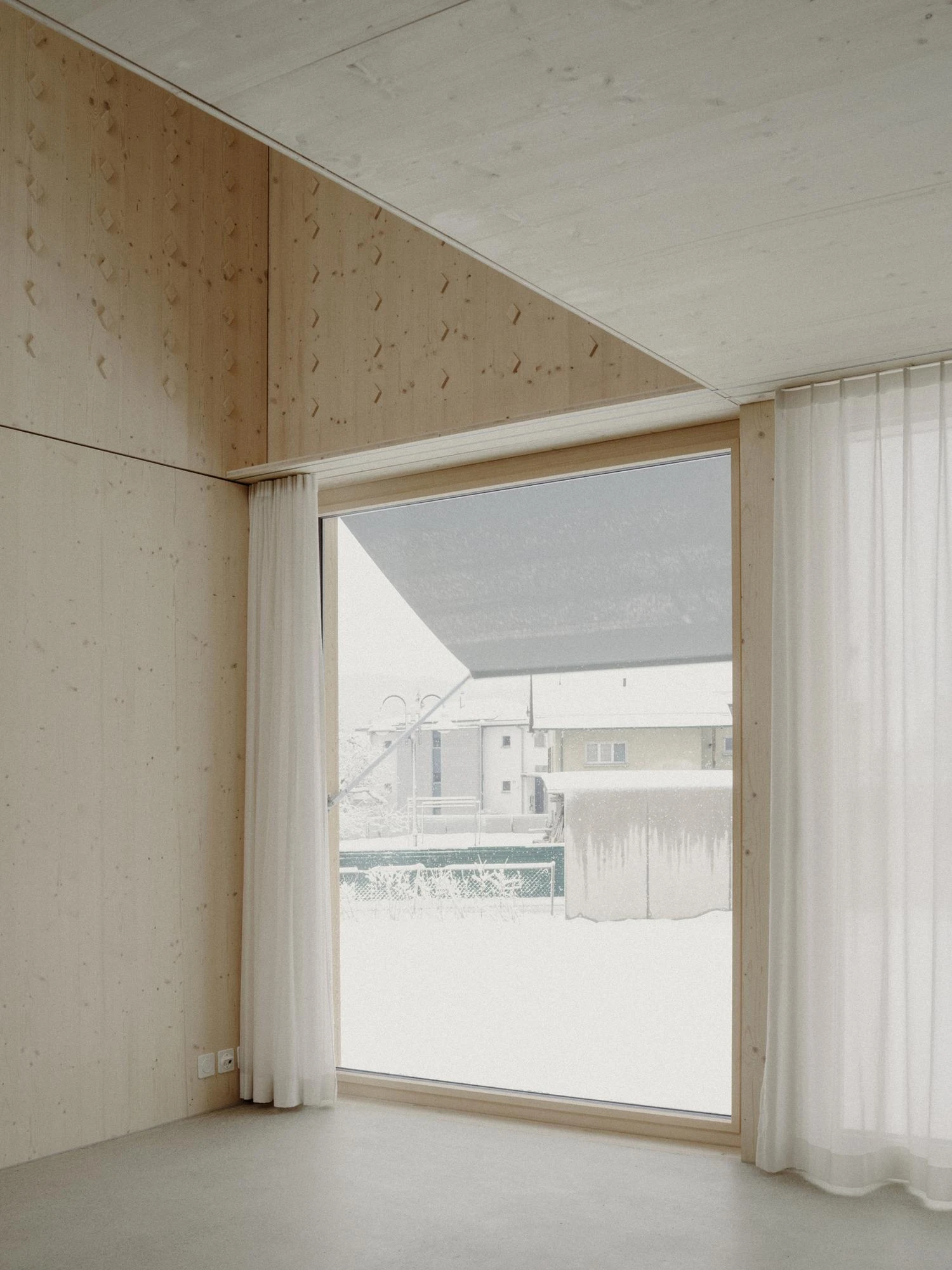
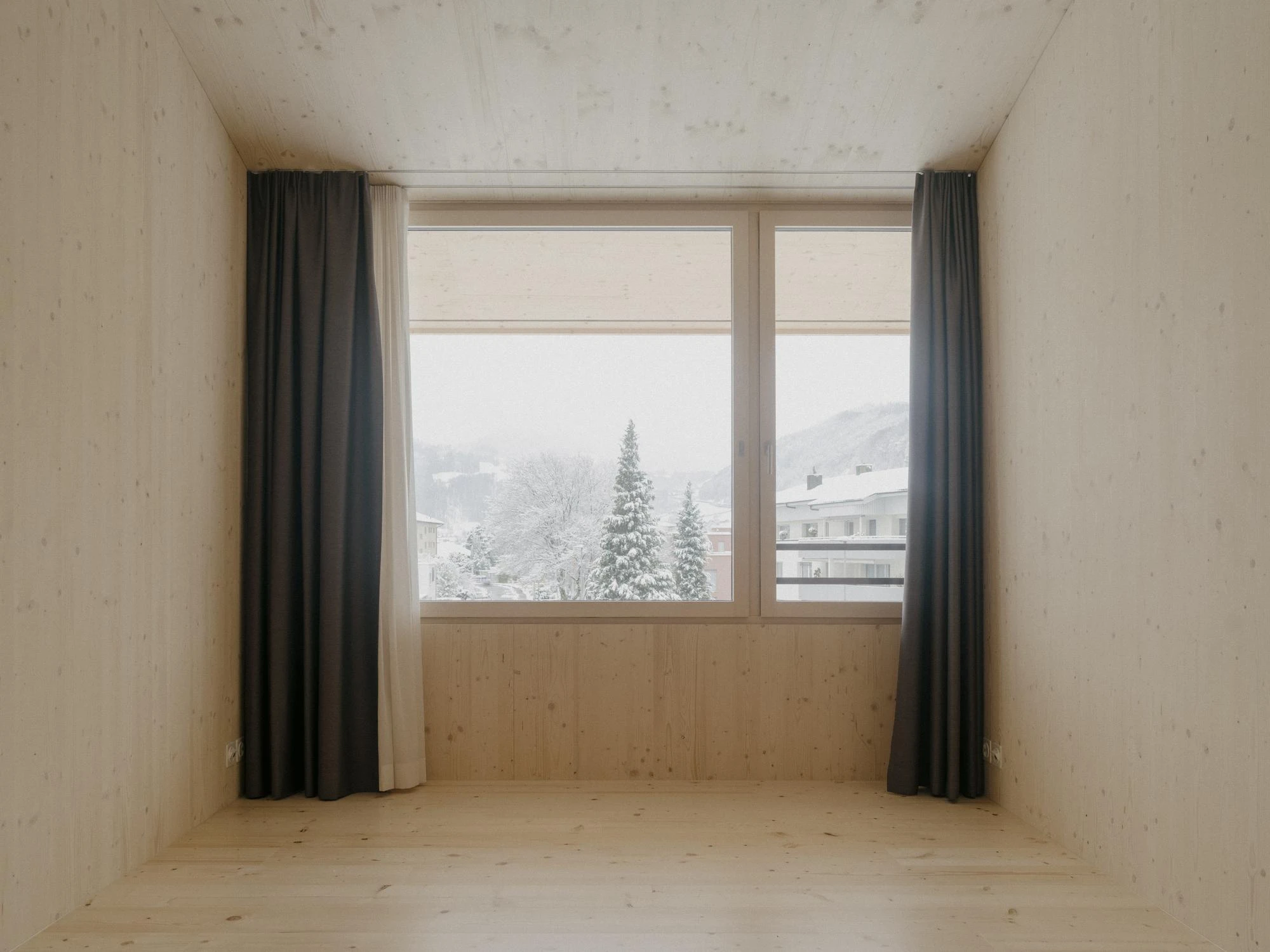
The spruce panels are left exposed internally, which removes the need for additional wall coverings and allows the structure itself to define the rooms. The grain is fine, the colour is pale cream-gold in the images, with the visible pattern of the prefabrication, tight boards, consistent joinery, running floor to ceiling. Combined with the galvanised steel details at staircase and balustrade, and the ventilated timber facade externally, the palette holds three registers simultaneously: warm, cool, structural. None of the three exceeds its role.
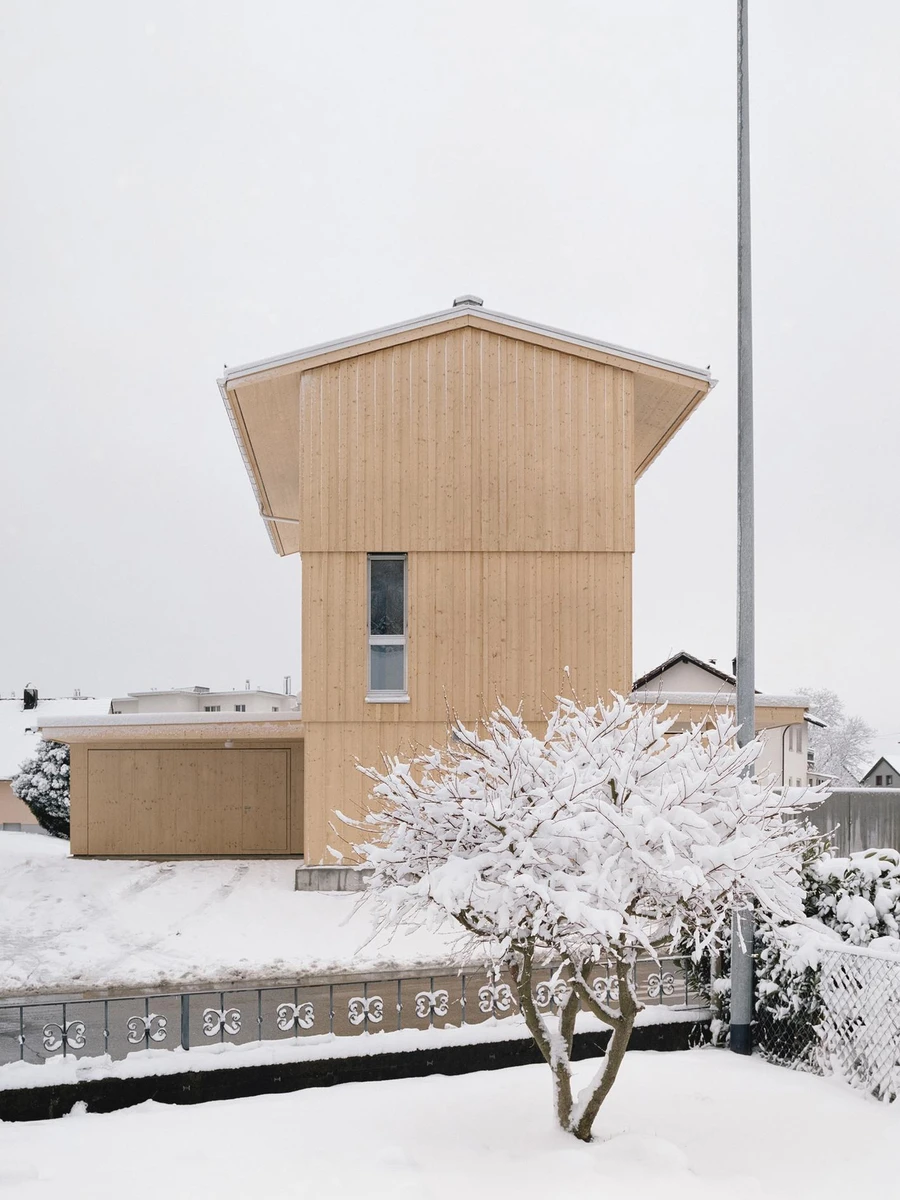
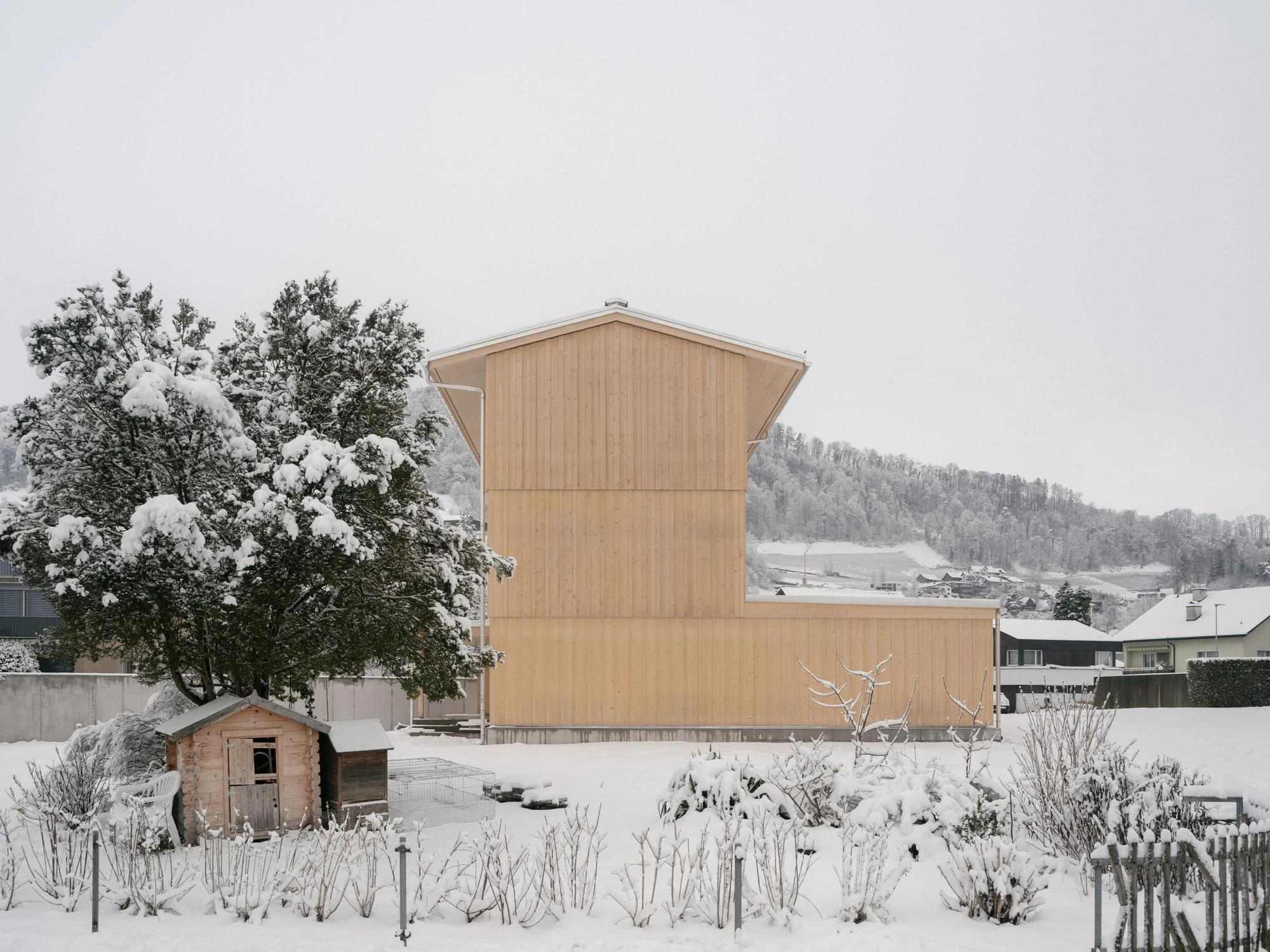
In winter, Tower House reads particularly clearly against snow. The ventilated timber facade, pale and even, distinguishes itself from its neighbours through scale and verticality more than material difference. A small outbuilding to one side, a snow-covered shrub in the foreground: the house enters its suburban setting with the confidence of something that knows where it belongs. Photovoltaic panels and a ground-source heat pump with free-cooling capacity in summer reduce operational energy demand significantly. The southern half of the plot is reserved for a potential second house of identical dimensions, a site strategy that treats the present as incomplete by design, not by oversight.