Jono Terry’s photographic journey through Lake Kariba’s layered histories, revealing the tension between inherited myths, colonial ruptures, and the quiet resilience of everyday life around the water.
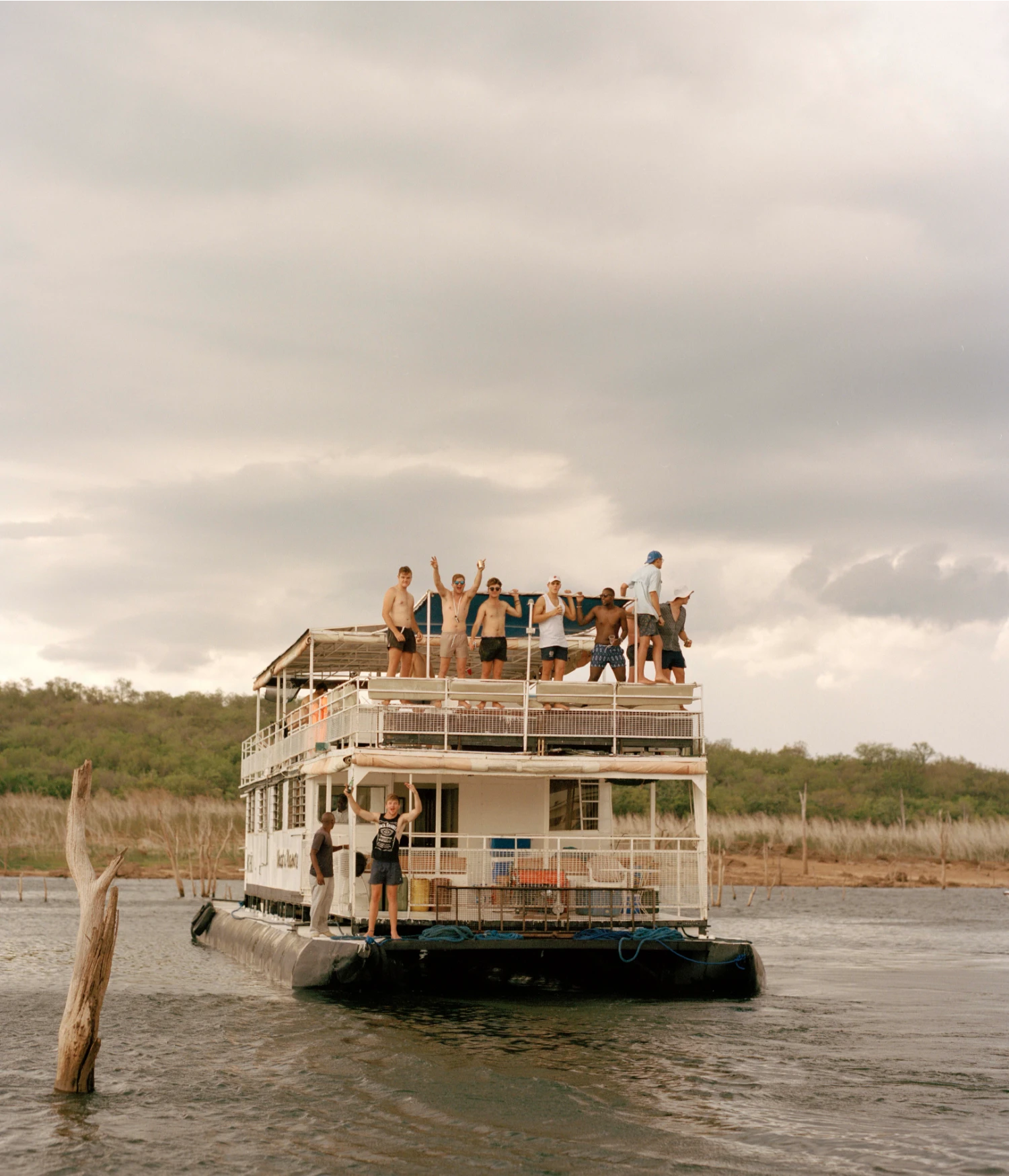
The project unfolds like an inherited story retold with a new, steadier breath: a recollection of white childhood idylls set against the quiet, persistent presence of what was erased to make them possible. What emerges is a portrait of a place where dualities never resolve; they simply coexist, uneasily, like tectonic plates that refuse to lock.
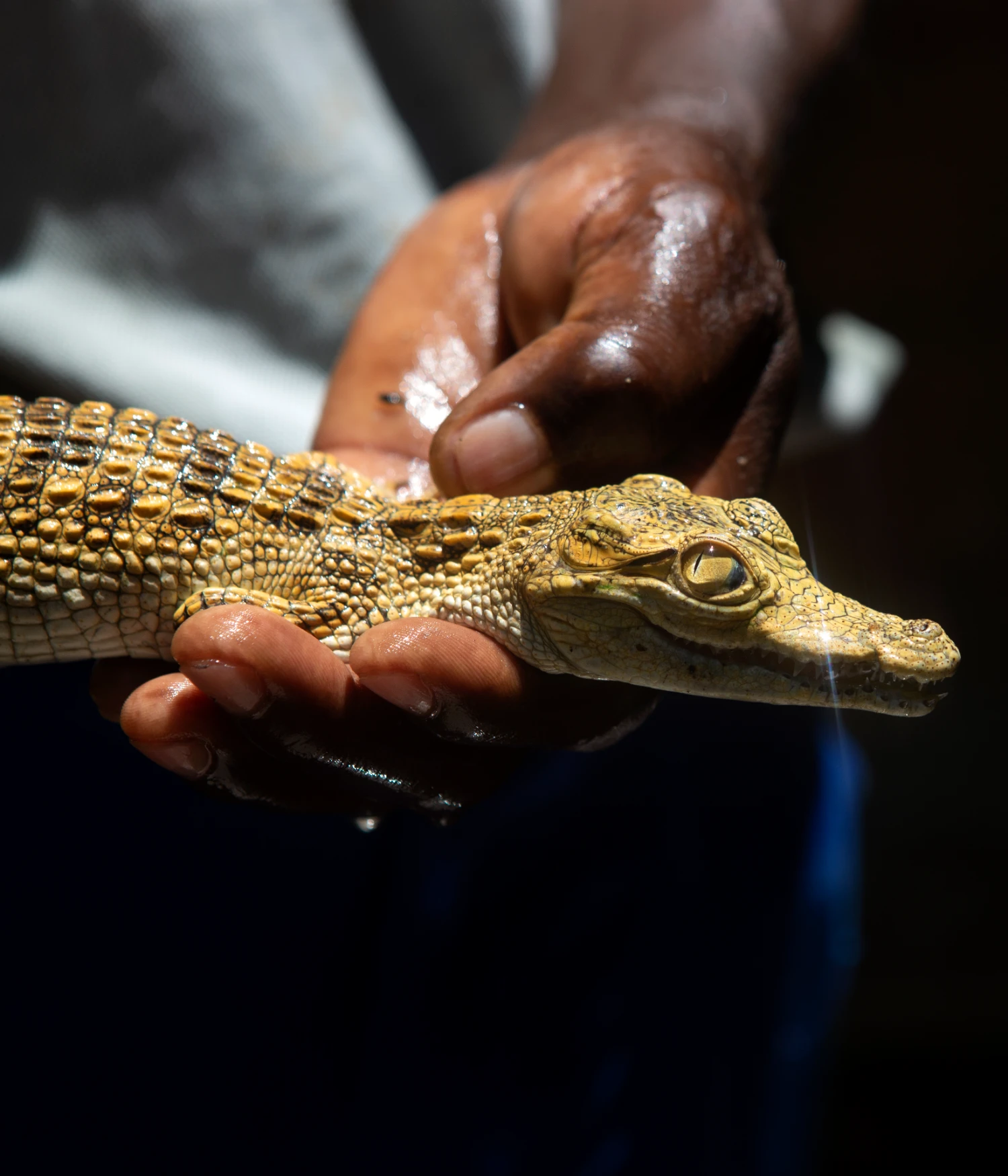
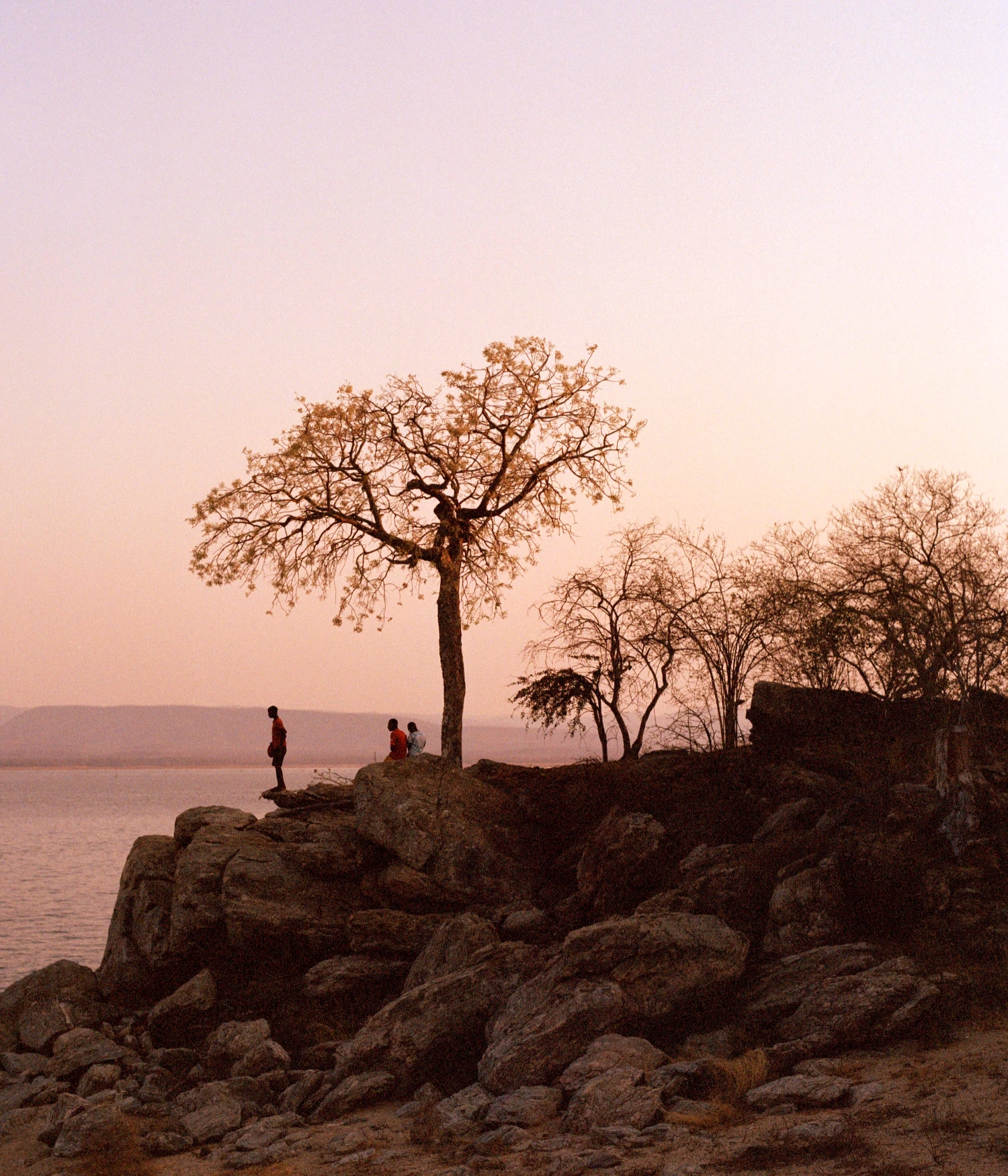
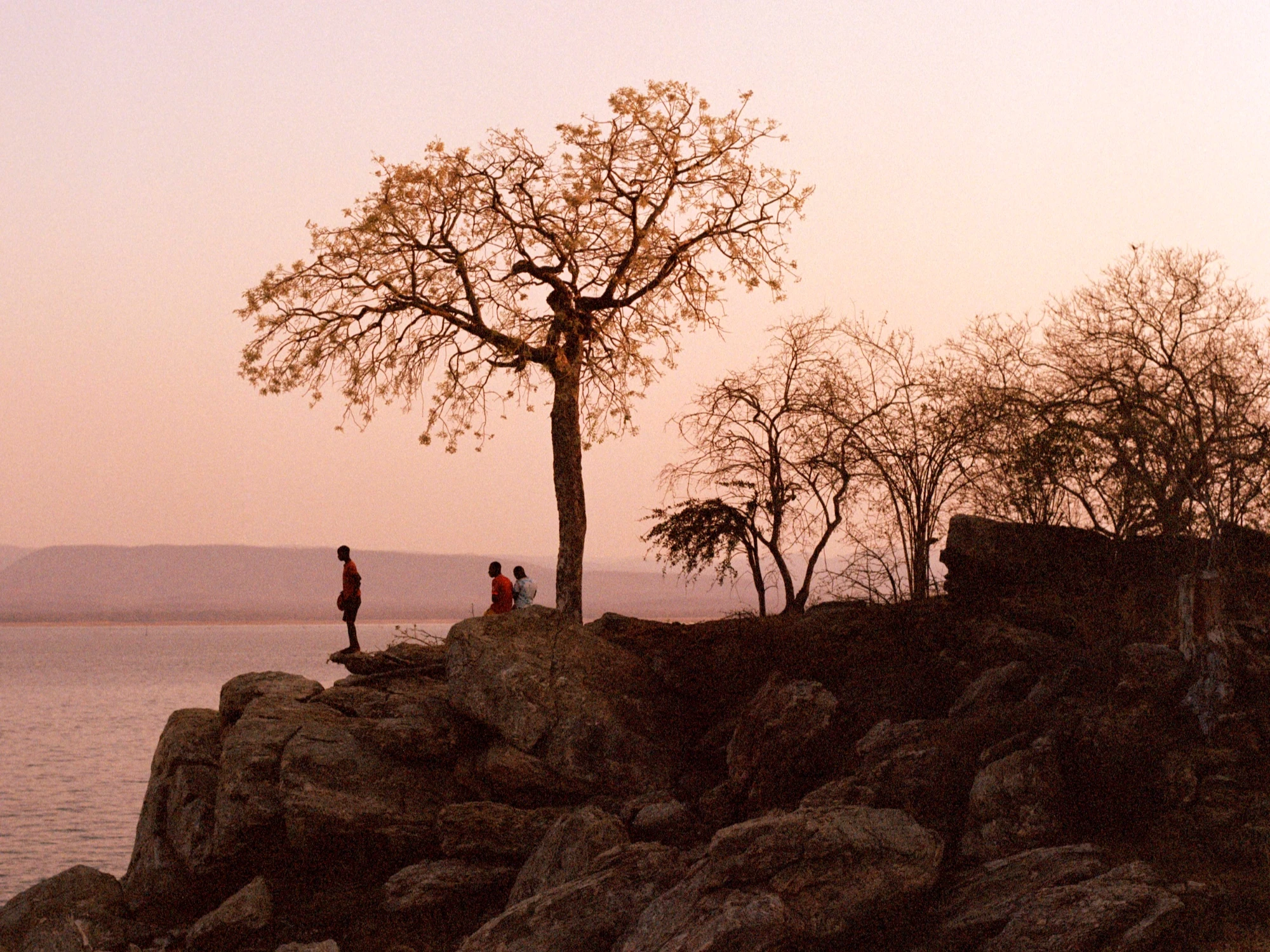
In one frame, a small crocodile is held in a glistening hand, a gesture both tender and faintly possessive. In another, the enormous sweep of the Kariba dam wall casts a shadow that feels almost geological in its authority. These images speak to the asymmetry embedded in the lake’s creation: a monumental engineering gesture imposed onto a terrain already rich with its own cosmologies. Terry’s camera lingers not on spectacle but on what flickers at the edges—children perched on sun-worn rocks at dusk, a goat rising to meet a human hand, fish drying under an improvised shroud of blue netting. These quieter moments destabilize the heroic narrative once used to rationalize the dam’s construction.
The photographs are steeped in the folklore of NyamiNyami, the river god separated from his wife by the dam wall. This myth, invoked in the accompanying text, becomes a structural metaphor for the project: a sundered connection, a disjunction that persists across generations. Terry uses this symbolic rift to approach the broader fracture between white Zimbabwean nostalgia and the realities of displacement that formed the lake—57,000 Tonga farmers uprooted, habitats swallowed, spiritual geographies drowned. His images refuse to render these histories as distant; instead, they hover in the foreground, almost tactile.
Some portraits feel like quiet confrontations. A man with a braided headdress stands with his eyes closed, as if listening inwardly to something the camera cannot catch. Another sitter, dressed in office attire against a mint-green wall, holds a pen lightly but deliberately, the posture suggesting someone who has learned to wait, perhaps too long, for promises unmet. The project’s title nods to one such broken promise—the boat owed to King Lobengula—which becomes a synecdoche for the long lineage of deceptions that shaped the region.
Terry’s sequencing pushes the viewer into oscillation: between beauty and abrasion, reverence and rupture. A goat’s blood-smeared coat appears without warning, a reminder that land is never merely a backdrop but a site of ongoing negotiation, sometimes violent. The hand-painted roadside sign advertising power worms reads almost like an accidental poem, pointing to the small economies and improvisations that sustain contemporary life around the lake—lives that exist far beyond colonial mythmaking.
In the end, They Still Owe Him a Boat feels less like a completed story than a gesture toward accountability. Terry, moving through landscapes tied to his own family’s mythology, uses photography not as proof but as a form of listening. Through this listening, Kariba becomes neither shrine nor crime scene, but something more complicated: a place where history still shifts underfoot, and where belonging—like water—refuses to stay still.