Thisispaper Community
Join today.
Enter your email address to receive the latest news on emerging art, design, lifestyle and tech from Thisispaper, delivered straight to your inbox.
Oops! Something went wrong while submitting the form.
Instant access to new channels
The top stories curated daily
Weekly roundups of what's important
Original features and deep dives
Exclusive community features
Alexander Zaxarov
Mar 3, 2026

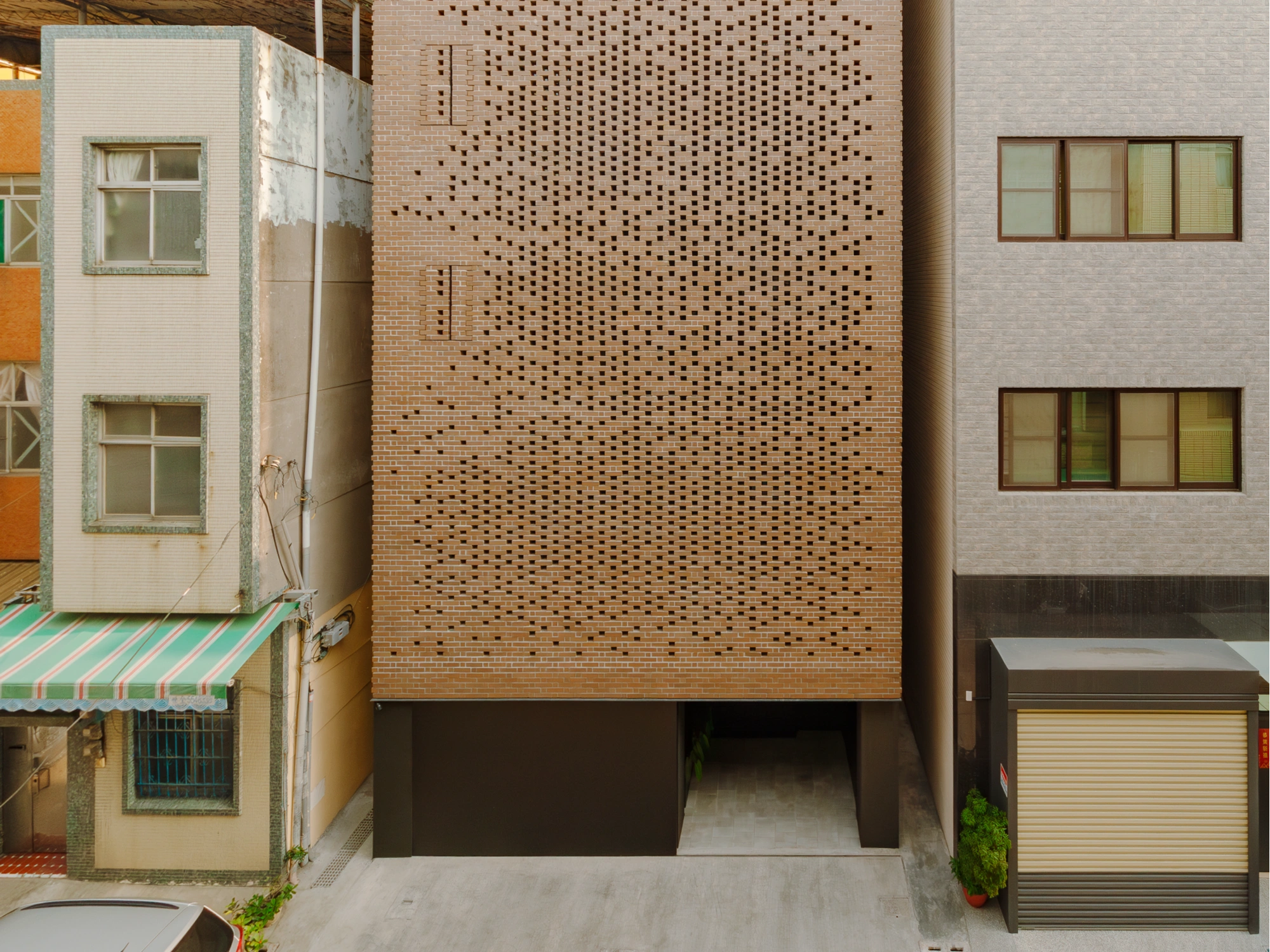
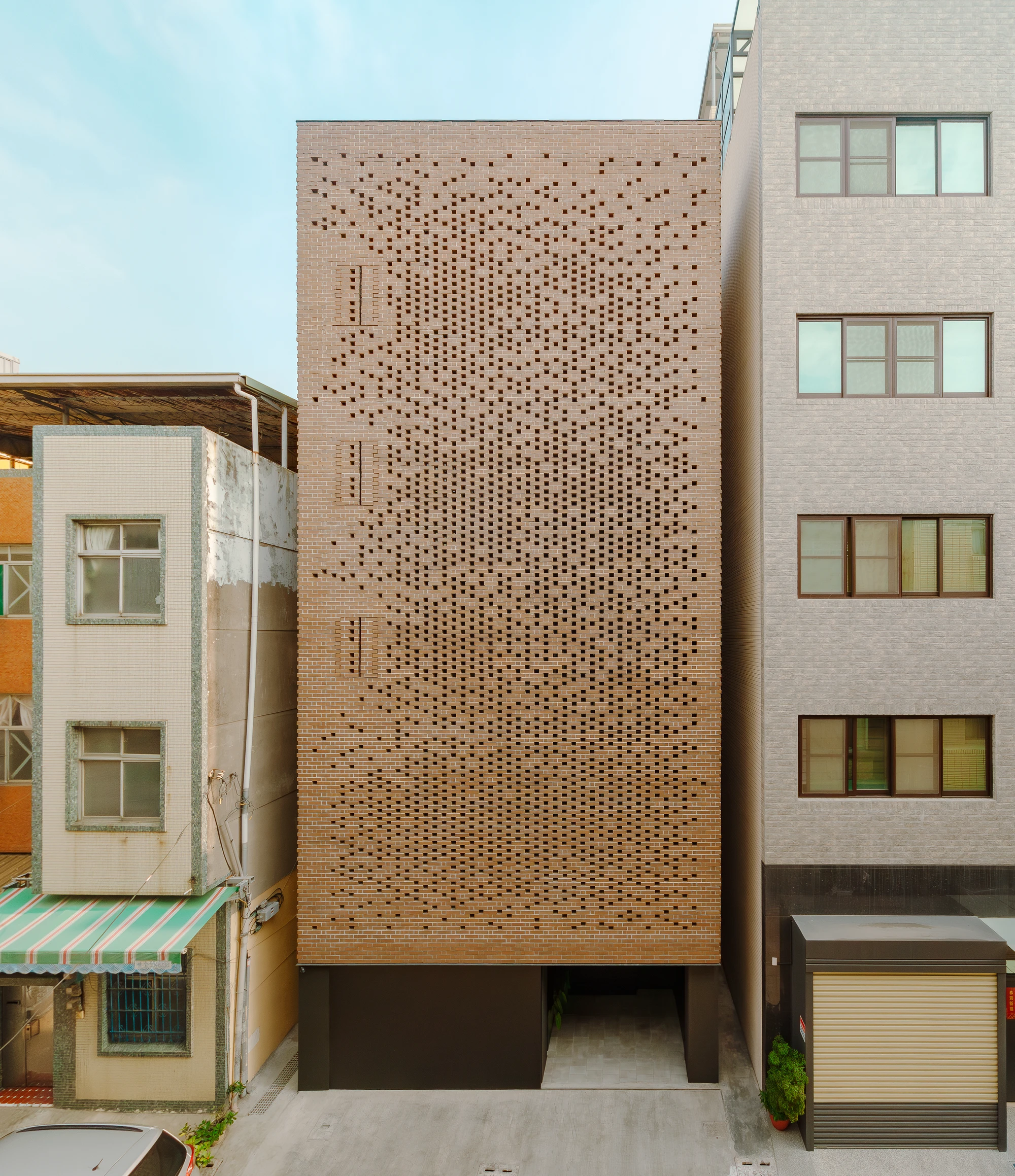
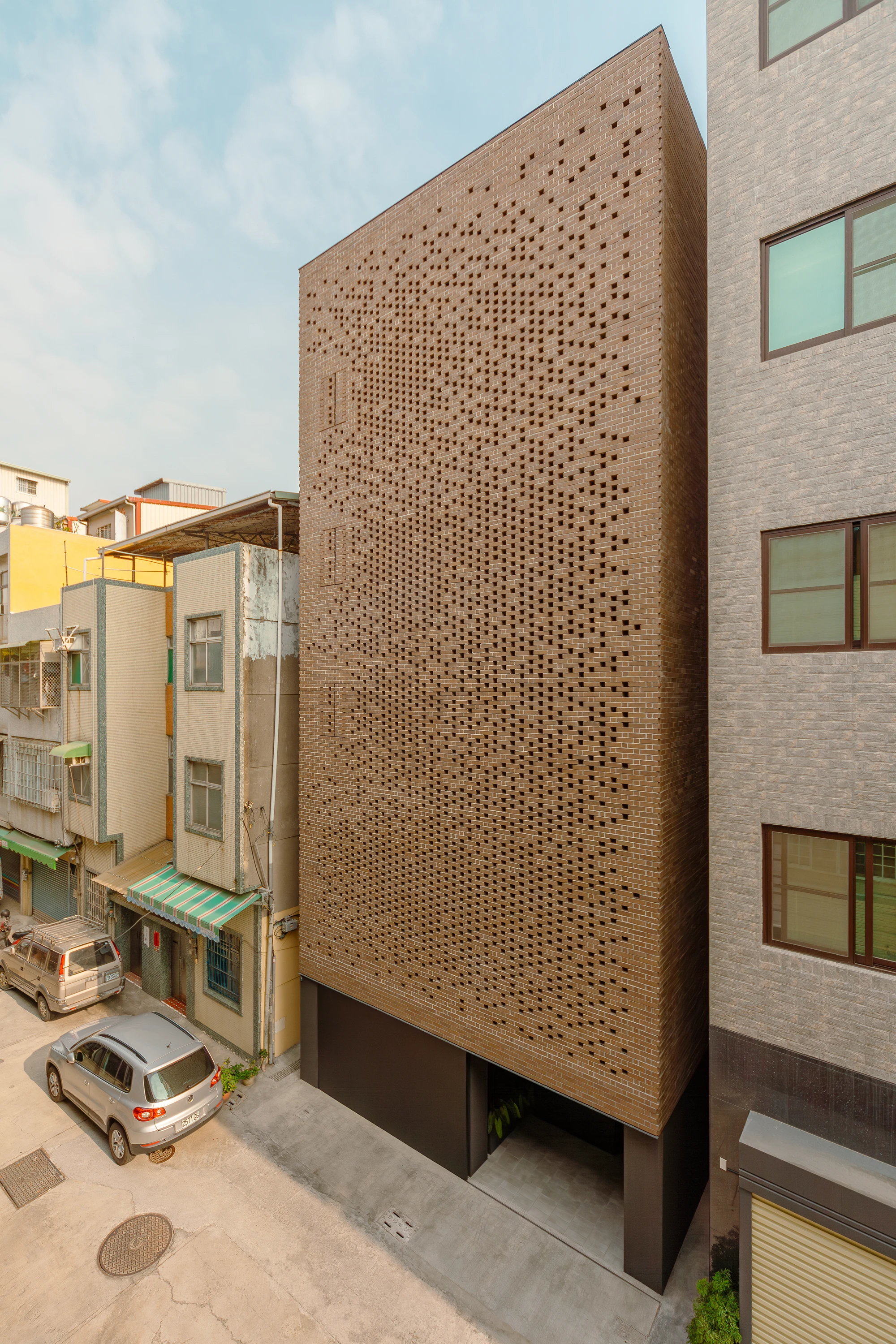
Near the site of the historic Taiwan-Renga brick kiln from 1899 in Kaohsiung, Taiwan, Paperfarm Inc has built a house that thinks of itself as a body. The Veil House reimagines the home as something with "a breathable, permeable skin"—a perforated brick facade that secures privacy while letting light filter in, eliminating the need for curtains entirely.

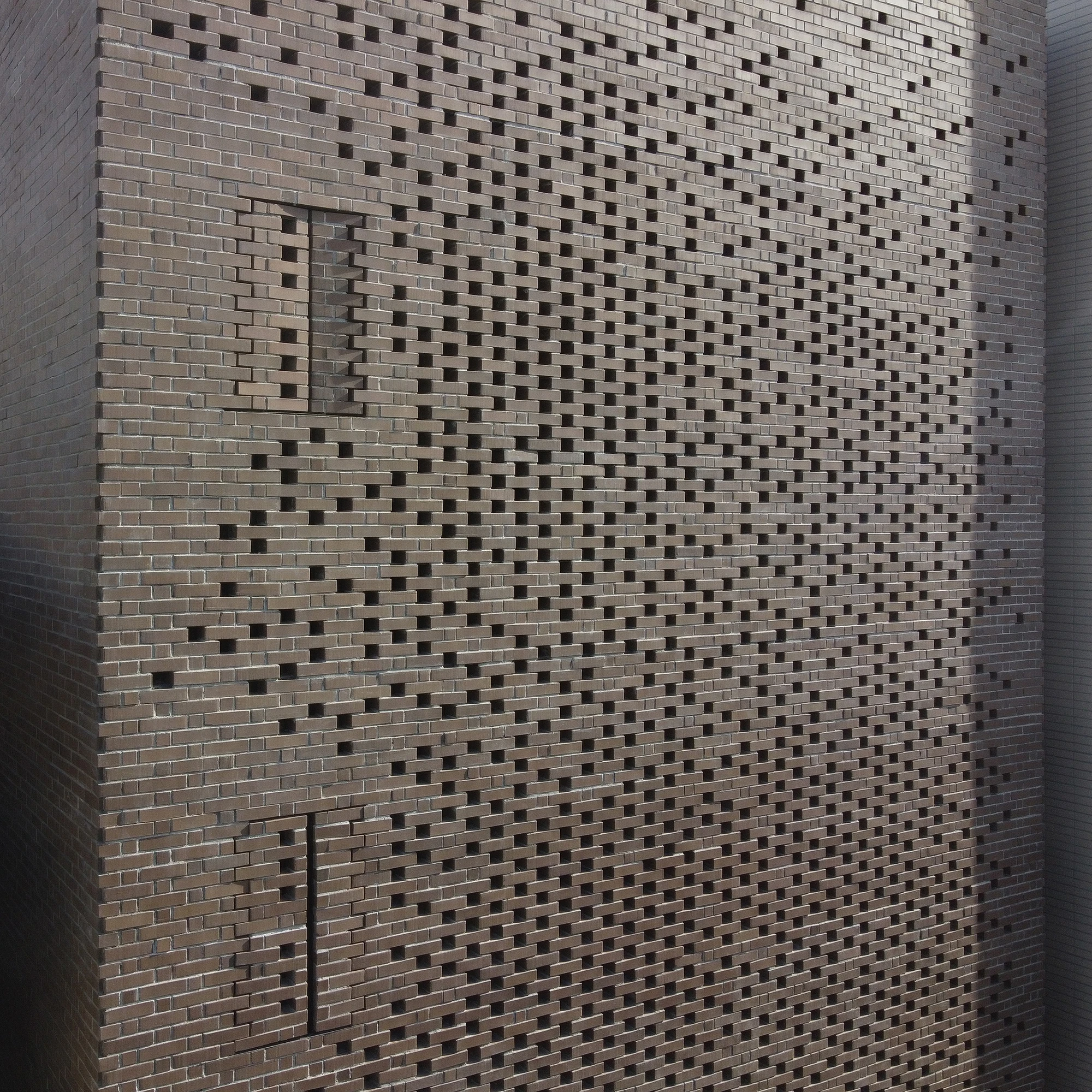
The problem is a common one in this district: very narrow streets, close proximity to neighbors, and a social fabric so active that "privacy is often compromised." The typical response—shading windows all day, abandoning balconies and terraces—renders homes dim and interior-focused. The Veil House turns this condition inside out. Its clay-brick facade is perforated at varying densities, "like skin's pores," calibrated to the functional needs behind each enclosure—tighter where privacy matters most, more open where light is welcome. The weaving of floating bricks references the brick kiln history that once made this neighborhood prosper.

The engineering behind the poetry is serious. Cored bricks are secured by rebars, shelf angles, and steel channels—"designed to withstand the local challenges of earthquakes and typhoons." Three emergency exits, built with saw-tooth pivots, disappear into the facade. At street level, a powder-coated stainless-steel door—366 cm by 214 cm, two inches thick—provides automobile storage "without visually distracting the pedestrian entry," its track hung from above and hidden behind five courses of veneer brick. It is one of those details that tells you the architects cared about what walking up to this house feels like.

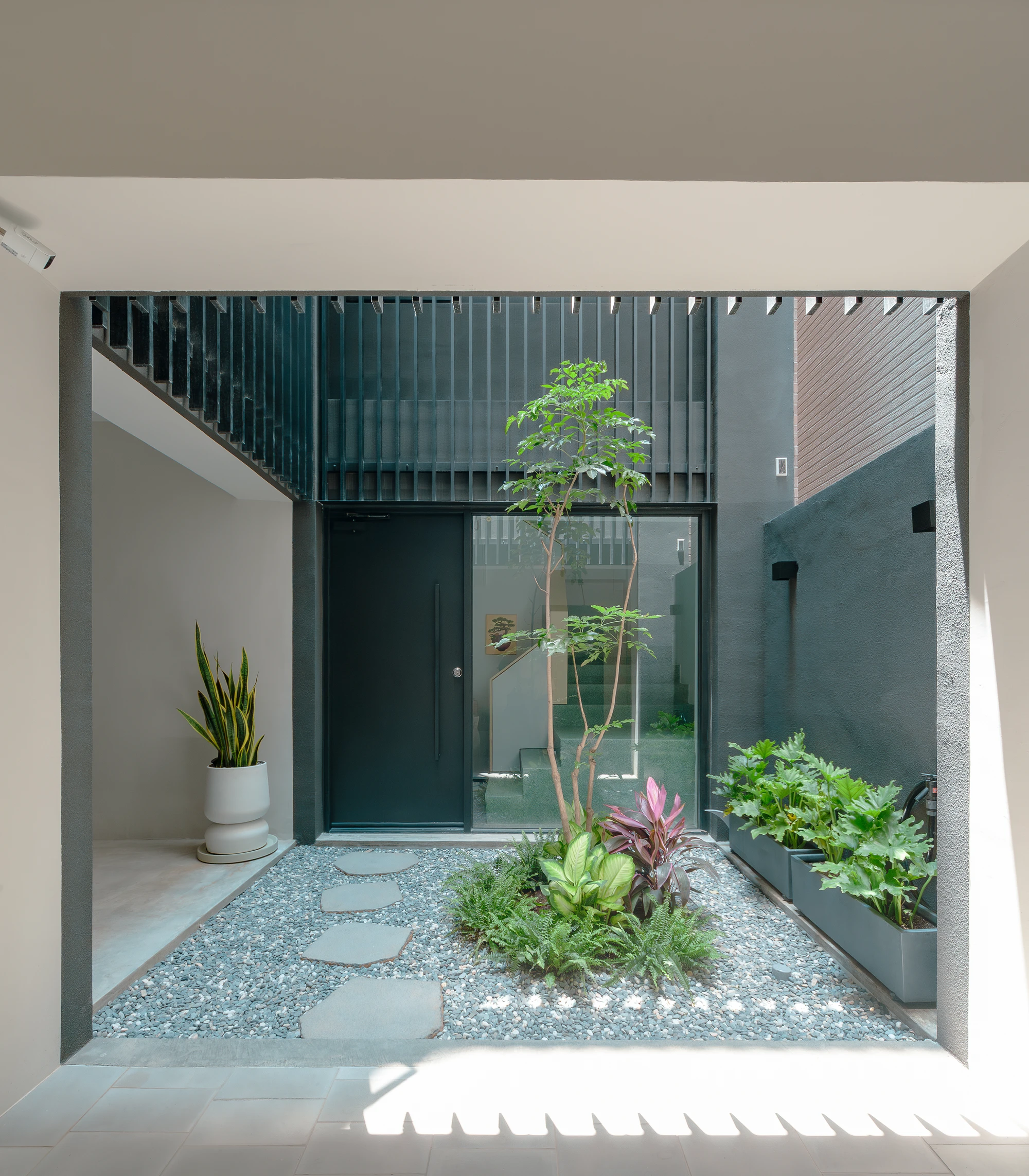
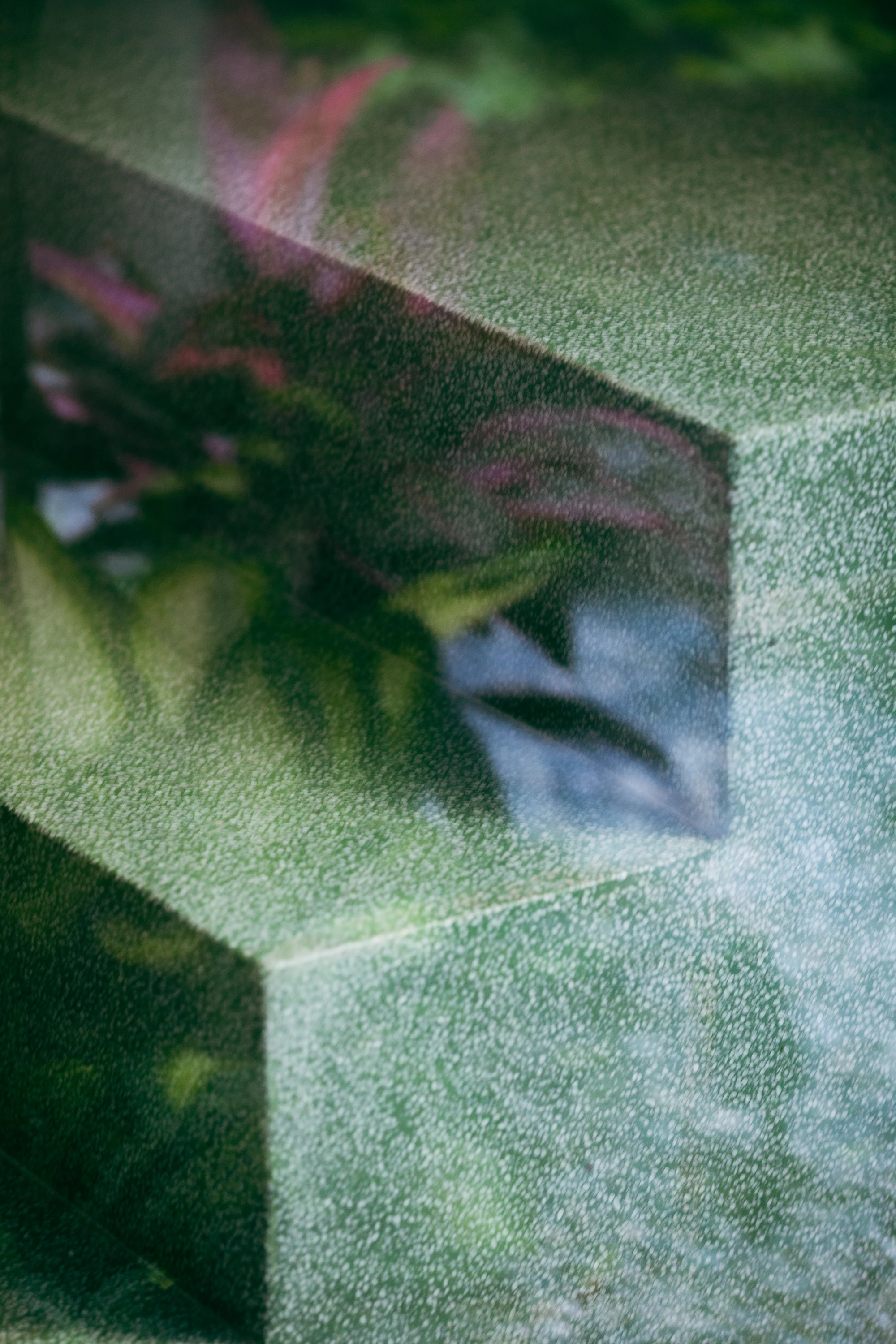
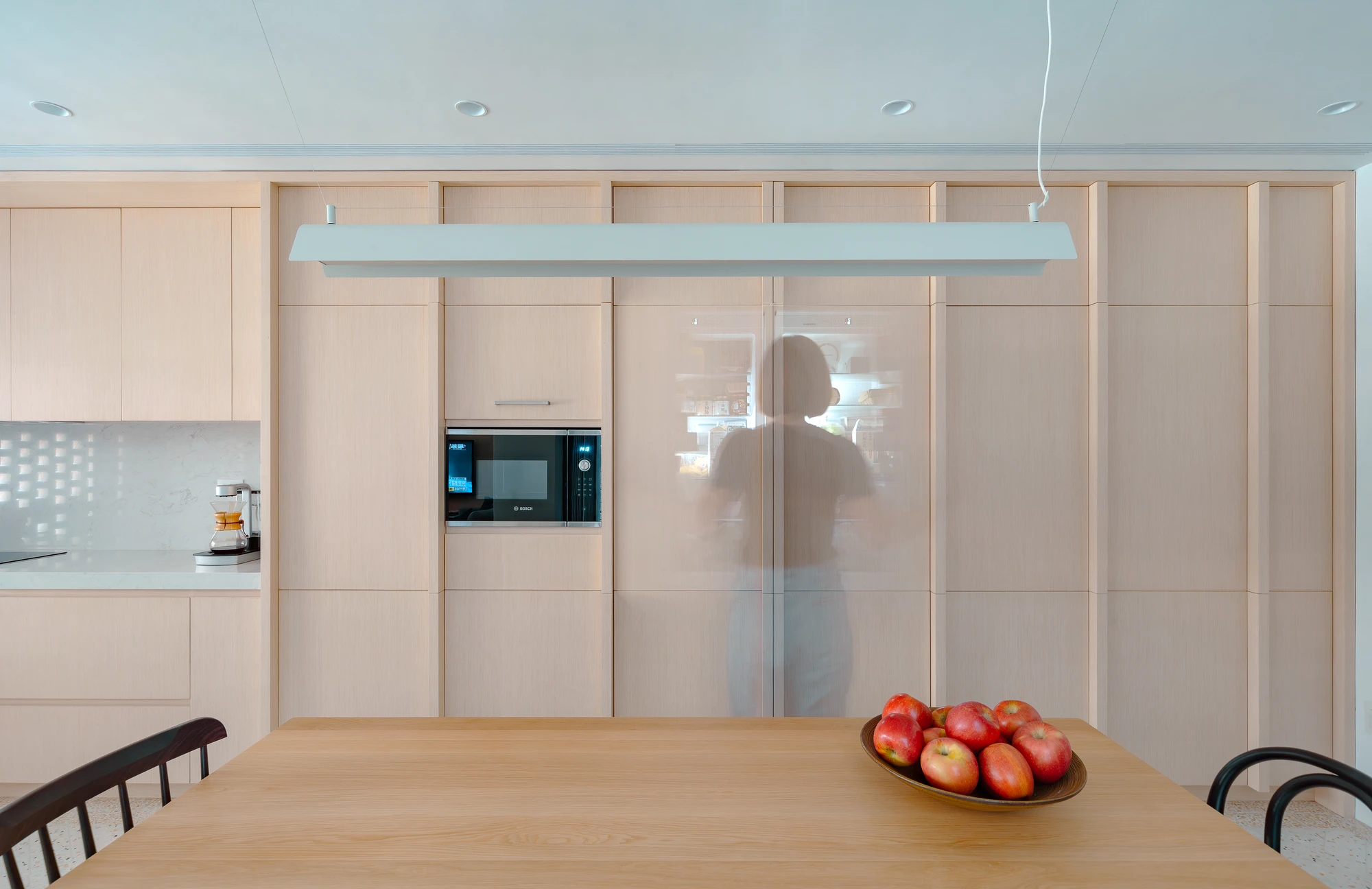
Inside, the entry moves through an interior garden that quiets the transition from the street—"a deep threshold into the heart of the home." Residents circle an open atrium clad with vertical aluminum louvers, a nod to the Taiwanese vernacular of protected fenestrations. This atrium does everything: it is an urban garden on the ground floor, a light-well for the bedrooms, an airshaft for cross-ventilation with the brick veil, and a connector that ties program together across multiple floors. Custom terrazzo defines the open-plan living spaces; full-length white-oak millwork conceals not only the kitchen but the entertainment and storage as well.

The result is a house whose defining characteristic is the productive tension between what is shown and what is shielded. "The desire to build a cozy, airy lifestyle behind an urban facade that successfully withdraws from the frenetic street life" is how the architects frame it. Behind the veil, everything is quiet, reductive, material-focused. The brick does the talking—filtering light, guarding rest, connecting this contemporary home to a neighborhood whose identity was built, quite literally, on the making of bricks.
Interested in Showcasing Your Work?

If you would like to feature your works on Thisispaper, please visit our Submission page and sign up to Thisispaper+ to submit your work. Once your submission is approved, your work will be showcased to our global audience of 2 million art, architecture, and design professionals and enthusiasts.
No items found.
We love less
but there is more.
Become a Thisispaper+ member today to unlock full access to our magazine, advanced tools, and support our work.
Get two months FREE
with annual subscription
We love less
but there is more.
Become a Thisispaper+ member today to unlock full access to our magazine, advanced tools, and support our work.
Get two months FREE
with annual subscription
No items found.
Alexander Zaxarov
Mar 3, 2026

Near the site of the historic Taiwan-Renga brick kiln from 1899 in Kaohsiung, Taiwan, Paperfarm Inc has built a house that thinks of itself as a body. The Veil House reimagines the home as something with "a breathable, permeable skin"—a perforated brick facade that secures privacy while letting light filter in, eliminating the need for curtains entirely.

The problem is a common one in this district: very narrow streets, close proximity to neighbors, and a social fabric so active that "privacy is often compromised." The typical response—shading windows all day, abandoning balconies and terraces—renders homes dim and interior-focused. The Veil House turns this condition inside out. Its clay-brick facade is perforated at varying densities, "like skin's pores," calibrated to the functional needs behind each enclosure—tighter where privacy matters most, more open where light is welcome. The weaving of floating bricks references the brick kiln history that once made this neighborhood prosper.

The engineering behind the poetry is serious. Cored bricks are secured by rebars, shelf angles, and steel channels—"designed to withstand the local challenges of earthquakes and typhoons." Three emergency exits, built with saw-tooth pivots, disappear into the facade. At street level, a powder-coated stainless-steel door—366 cm by 214 cm, two inches thick—provides automobile storage "without visually distracting the pedestrian entry," its track hung from above and hidden behind five courses of veneer brick. It is one of those details that tells you the architects cared about what walking up to this house feels like.

Inside, the entry moves through an interior garden that quiets the transition from the street—"a deep threshold into the heart of the home." Residents circle an open atrium clad with vertical aluminum louvers, a nod to the Taiwanese vernacular of protected fenestrations. This atrium does everything: it is an urban garden on the ground floor, a light-well for the bedrooms, an airshaft for cross-ventilation with the brick veil, and a connector that ties program together across multiple floors. Custom terrazzo defines the open-plan living spaces; full-length white-oak millwork conceals not only the kitchen but the entertainment and storage as well.

The result is a house whose defining characteristic is the productive tension between what is shown and what is shielded. "The desire to build a cozy, airy lifestyle behind an urban facade that successfully withdraws from the frenetic street life" is how the architects frame it. Behind the veil, everything is quiet, reductive, material-focused. The brick does the talking—filtering light, guarding rest, connecting this contemporary home to a neighborhood whose identity was built, quite literally, on the making of bricks.

Interested in Showcasing Your Work?

If you would like to feature your works on Thisispaper, please visit our Submission page and subscribe to Thisispaper+. Once your submission is approved, your work will be showcased to our global audience of 2 million art, architecture, and design professionals and enthusiasts.
Thisispaper+
Vertical Living
40+ Projects
Web Access
Link to Maps
As cities densify, the most compelling architecture is no longer expansive but exacting. Vertical Living gathers projects that rise from impossibly narrow plots and forgotten sites, transforming limitation into spatial poetry. Height, here, is not spectacle—it is strategy.
Explore
Vertical Living

Join Thisispaper+
Unlock access to 2500 stories, curated guides + editions, and share your work with a global network of architects, artists, writers and designers who are shaping the future.
Get two months FREE
with annual subscription
Travel Guides
Immerse yourself in timeless destinations, hidden gems, and creative spaces—curated by humans, not algorithms.
Explore All Guides +
Submission Module
Submit your project and gain the chance to showcase your work to our worldwide audience of over 2M architects, designers, artists, and curious minds.
Learn More+
Curated Editions
Dive deeper into carefully curated editions, designed to feed your curiosity and foster exploration.
Off-the-Grid
Jutaku
Sacral Journey
minimum
The New Chair
Explore All Editions +
Atlas
A new and interactive way to explore the most inspiring places around the world.
Interactive map
Linked to articles
300+ curated locations
Google + Apple directions
Smart filters
Subscribe to Explore+
Become a Thisispaper+ member today to unlock full access to our magazine, submit your project and support our work.
Join Thisispaper+Join Thisispaper+
€ 9 EUR
/month
Cancel anytime
Get two months FREE
with annual subscription