At Anni Wu Gallery in Milan, Andrea Luzi and Nicola Ghirardelli stage The Fire and its Ghosts, a double solo show where fire moves as both destroyer and animating force.
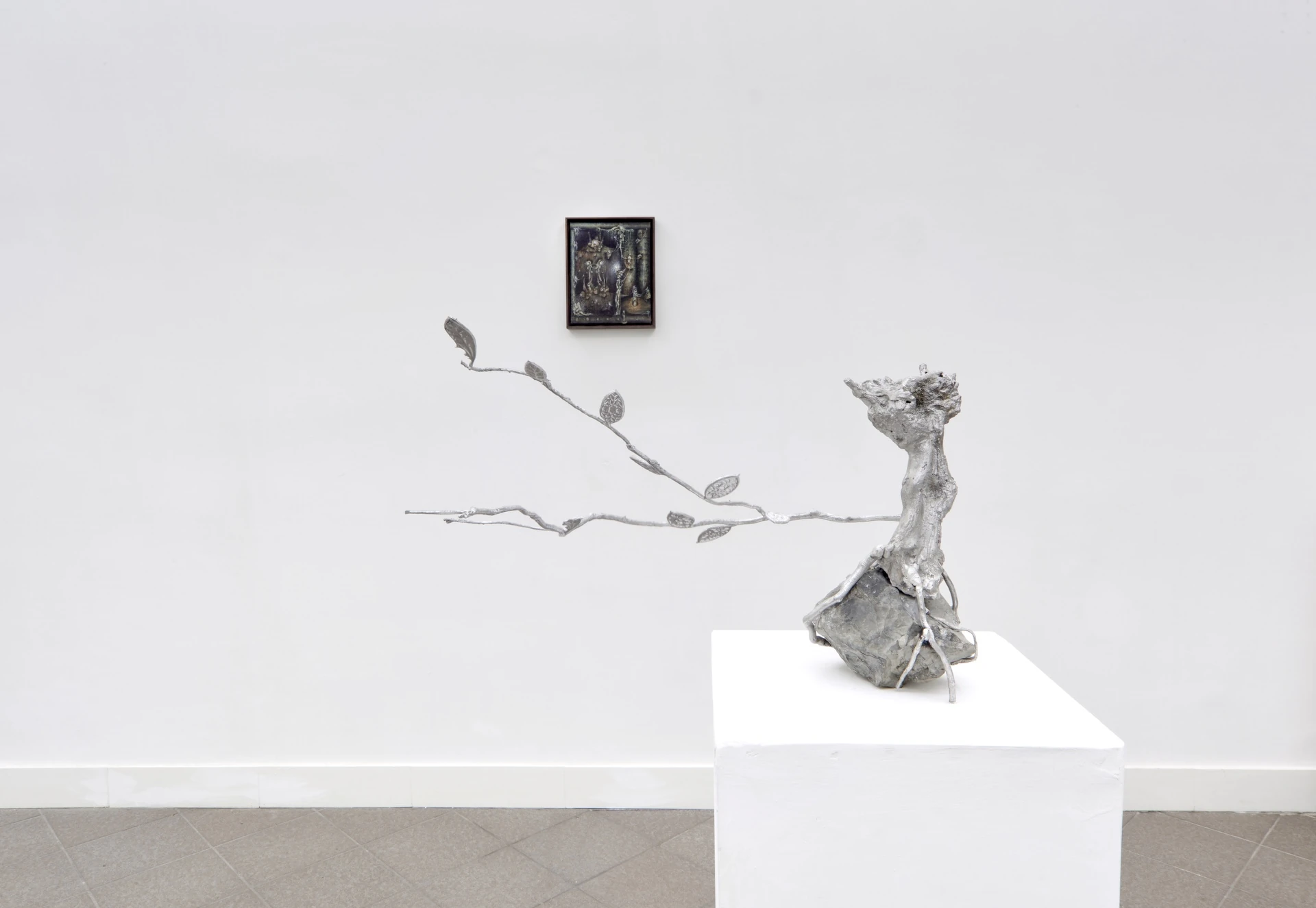
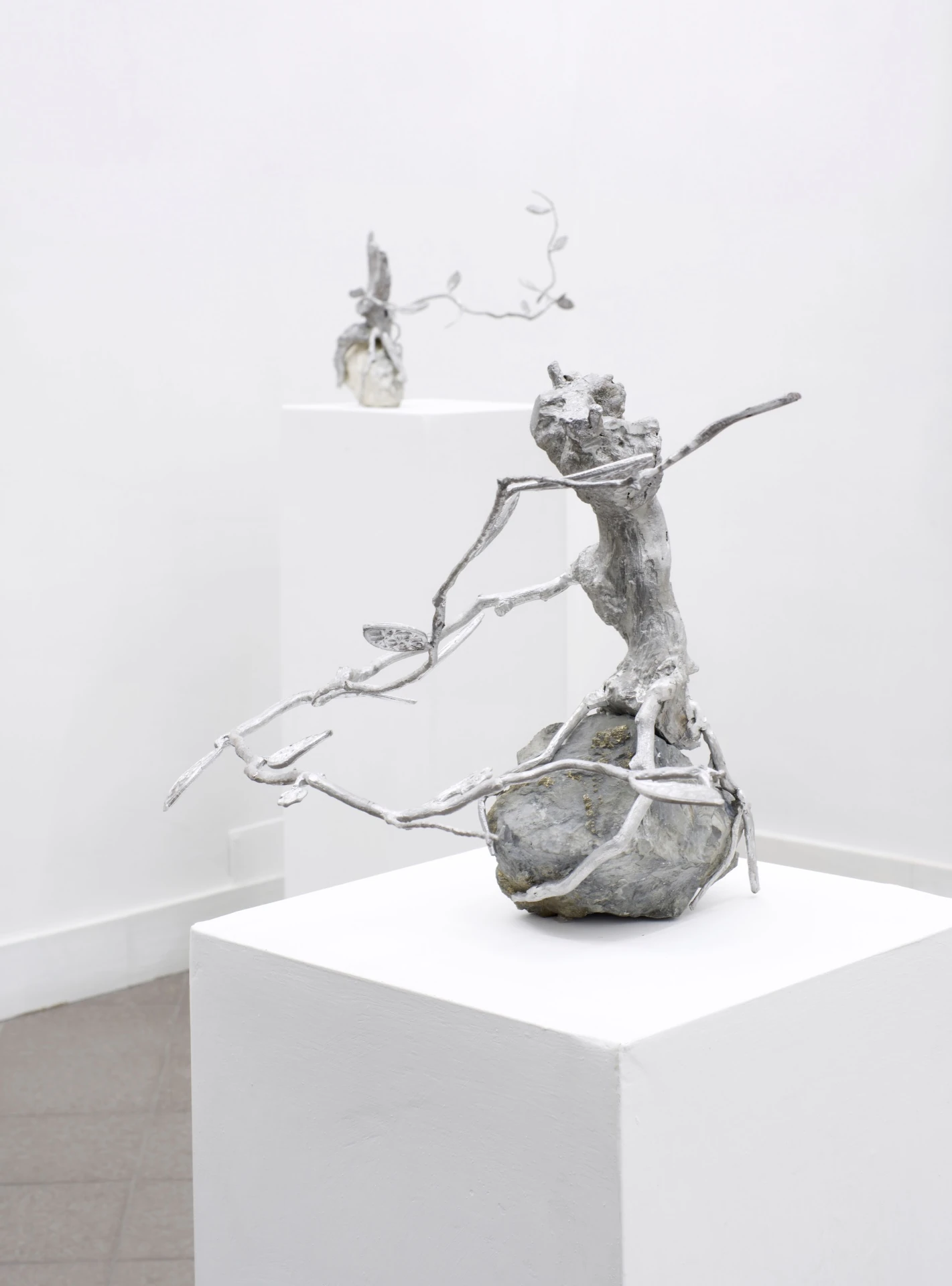
Ghirardelli's practice moves across sculpture, installation, and site-specific intervention. He pulls impressions and archaeological fragments from everyday life, staging frictions between the natural and the anthropic. His works are hybrid organisms in which forms of otherness, generational trauma, and apocalyptic omens coexist. In the first room, "Un cumulo di sassi finché non vedi la cattedrale" rises from quartz and pyrite on basalt — two plants of Gothic memory leaning toward the light of Luzi's paintings.
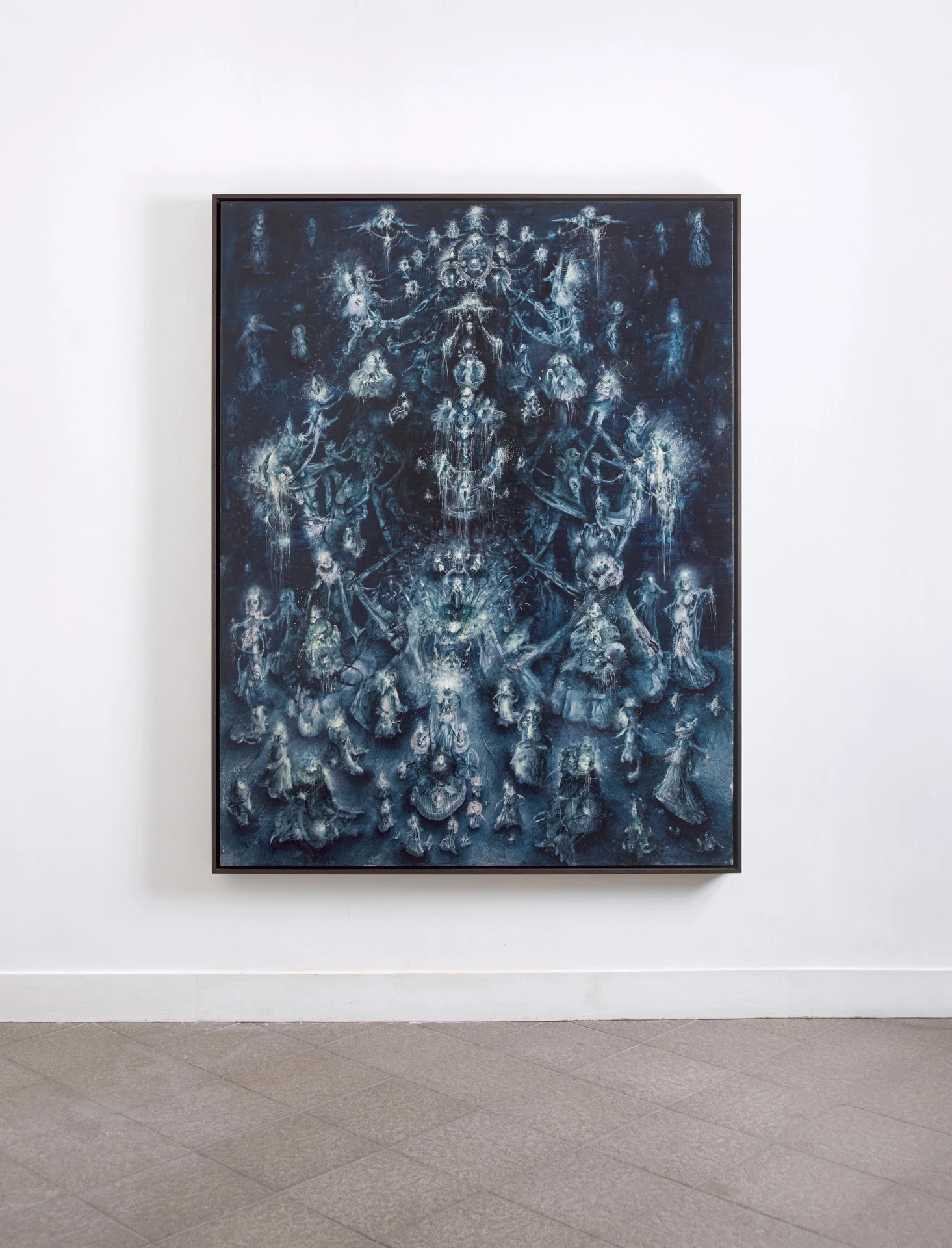
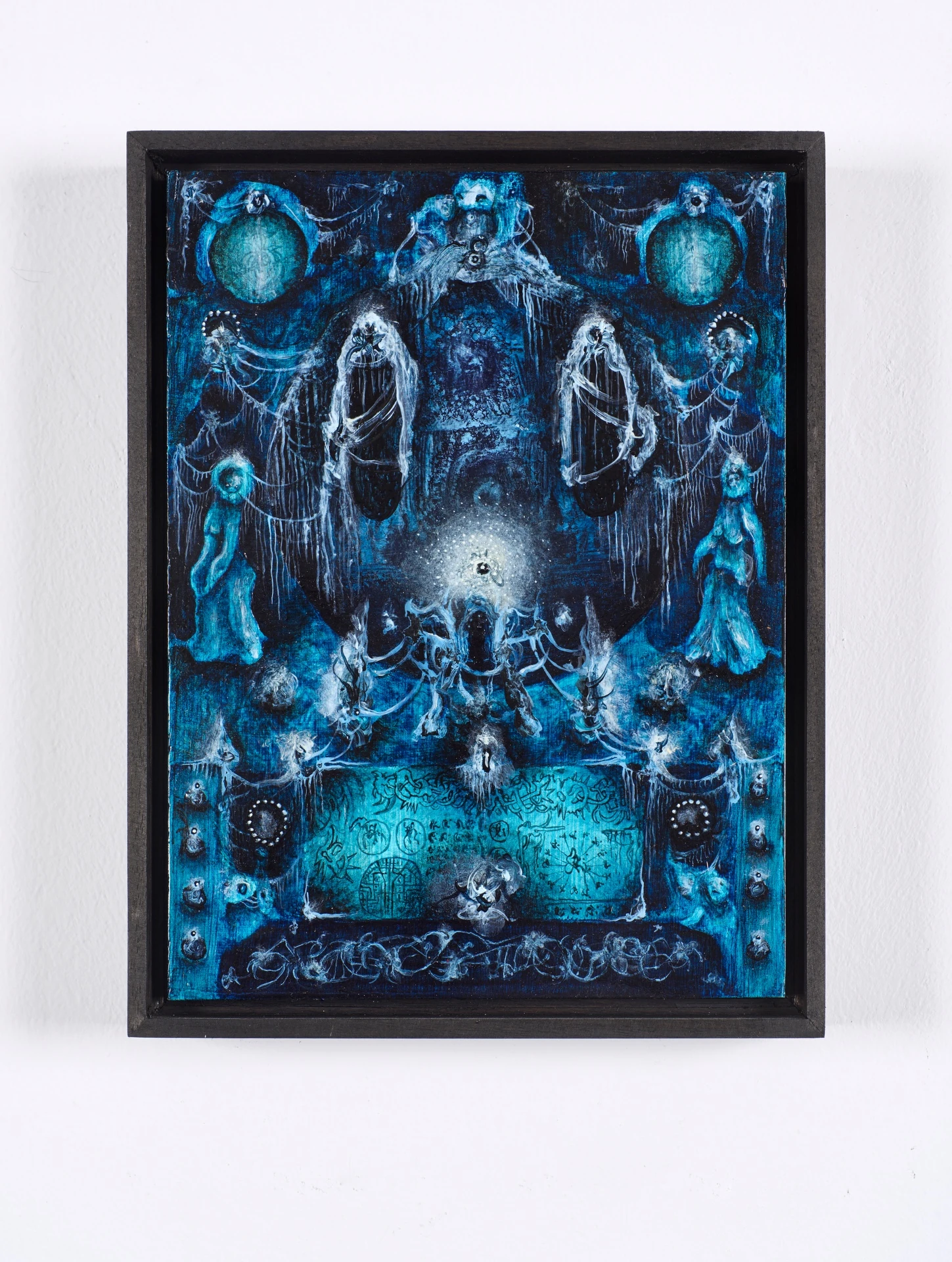
Luzi's canvases begin with a meditative but instinctive gesture, shaped by years of intaglio printmaking, engraving, and graffiti culture. "La signora del gioco" holds psychedelic chromatic rhythm against the iconography of sacred art, producing a votive scene populated by phantasmagoric figures. Elsewhere, "La grandezza del nulla pt. 3" fractures into a polyptych that expands and folds back on itself, as if trying to read the unknown through encyclopedic painterly gesture.
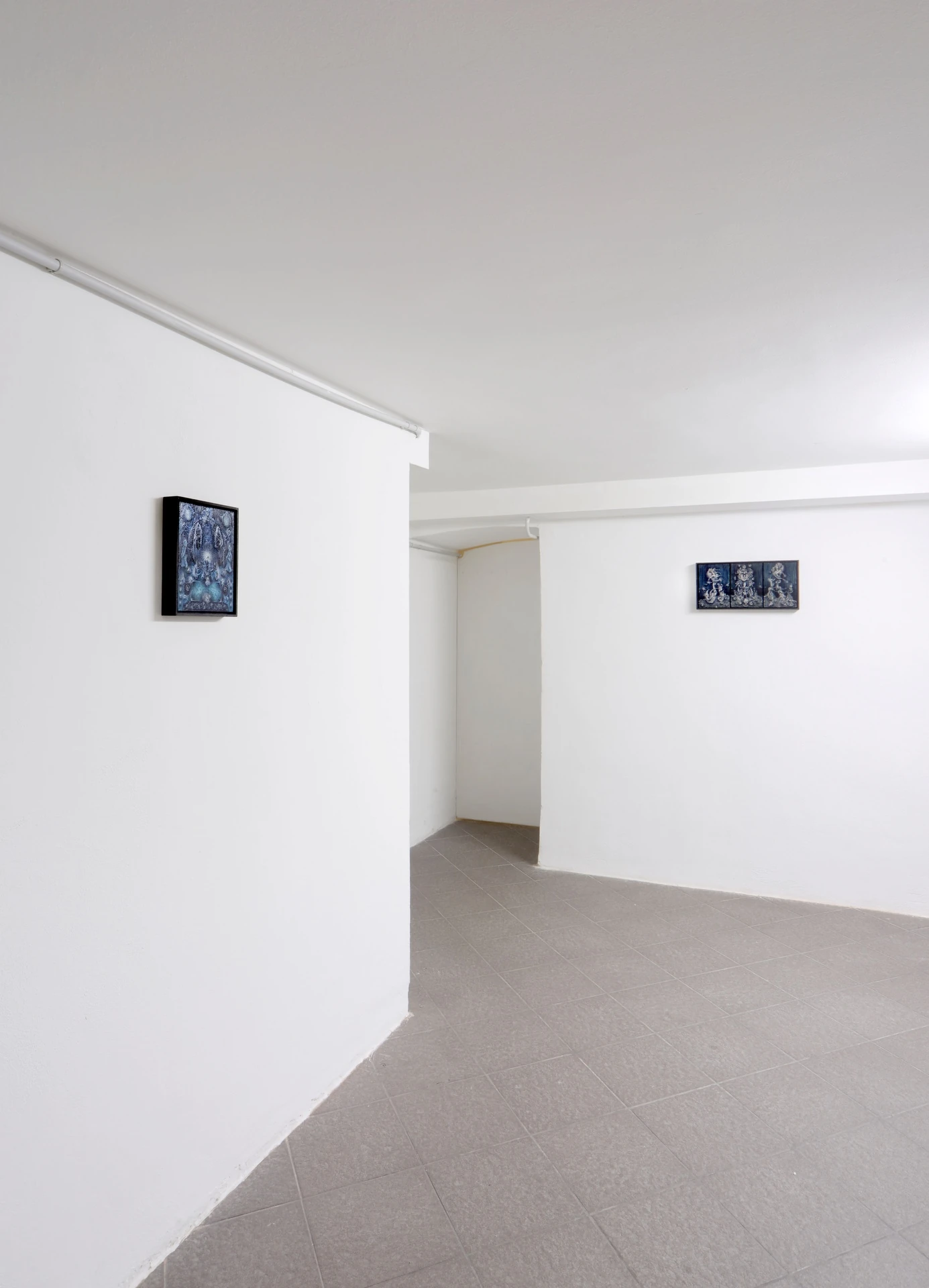
In the next room, the panels shrink and lose their vertical dimension. "Tumulazione di una lacrima" reads almost as object, a site where graphic marks land on the surface like seals. Figures, symbols, ideograms: each sign carries the potential of a language.
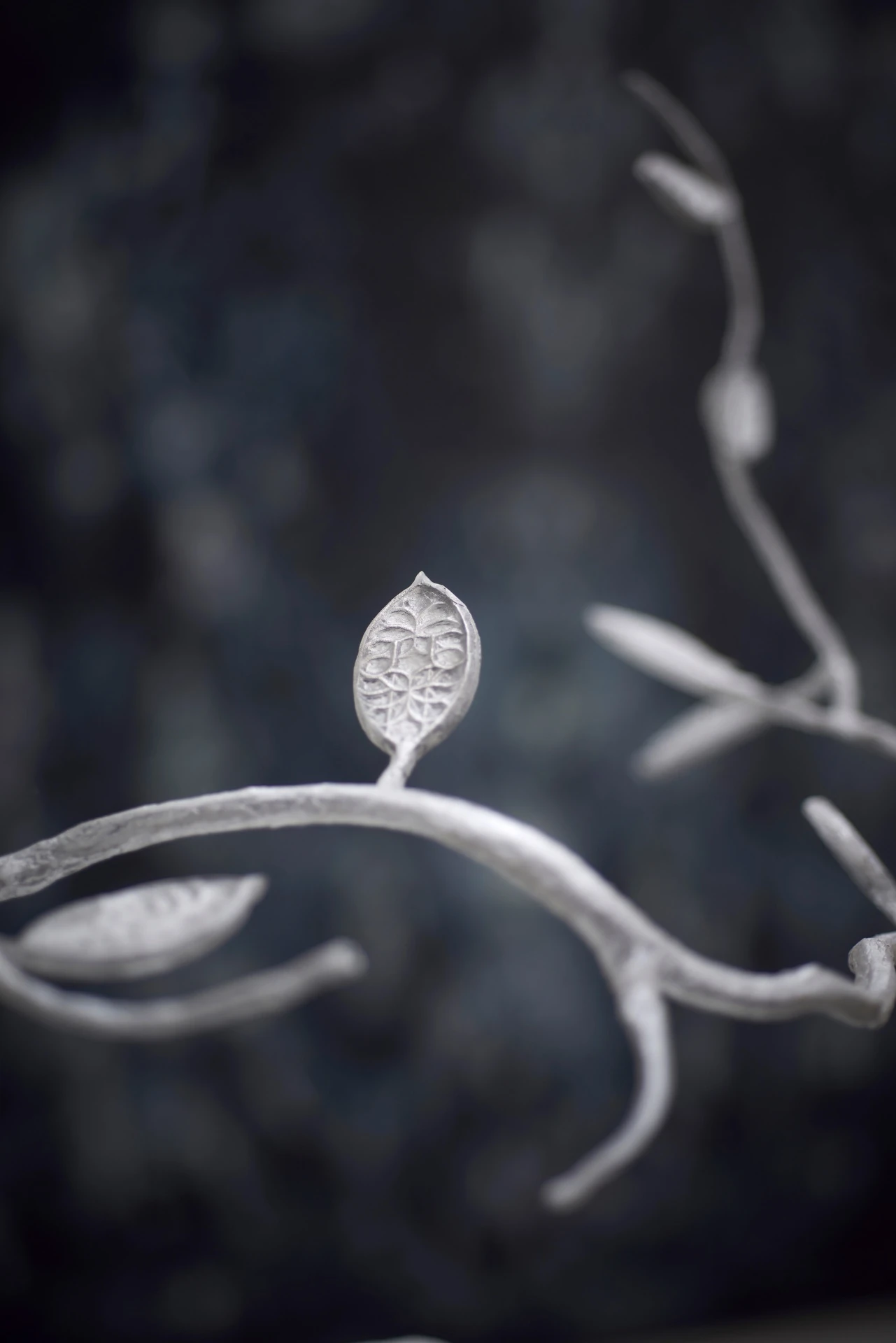
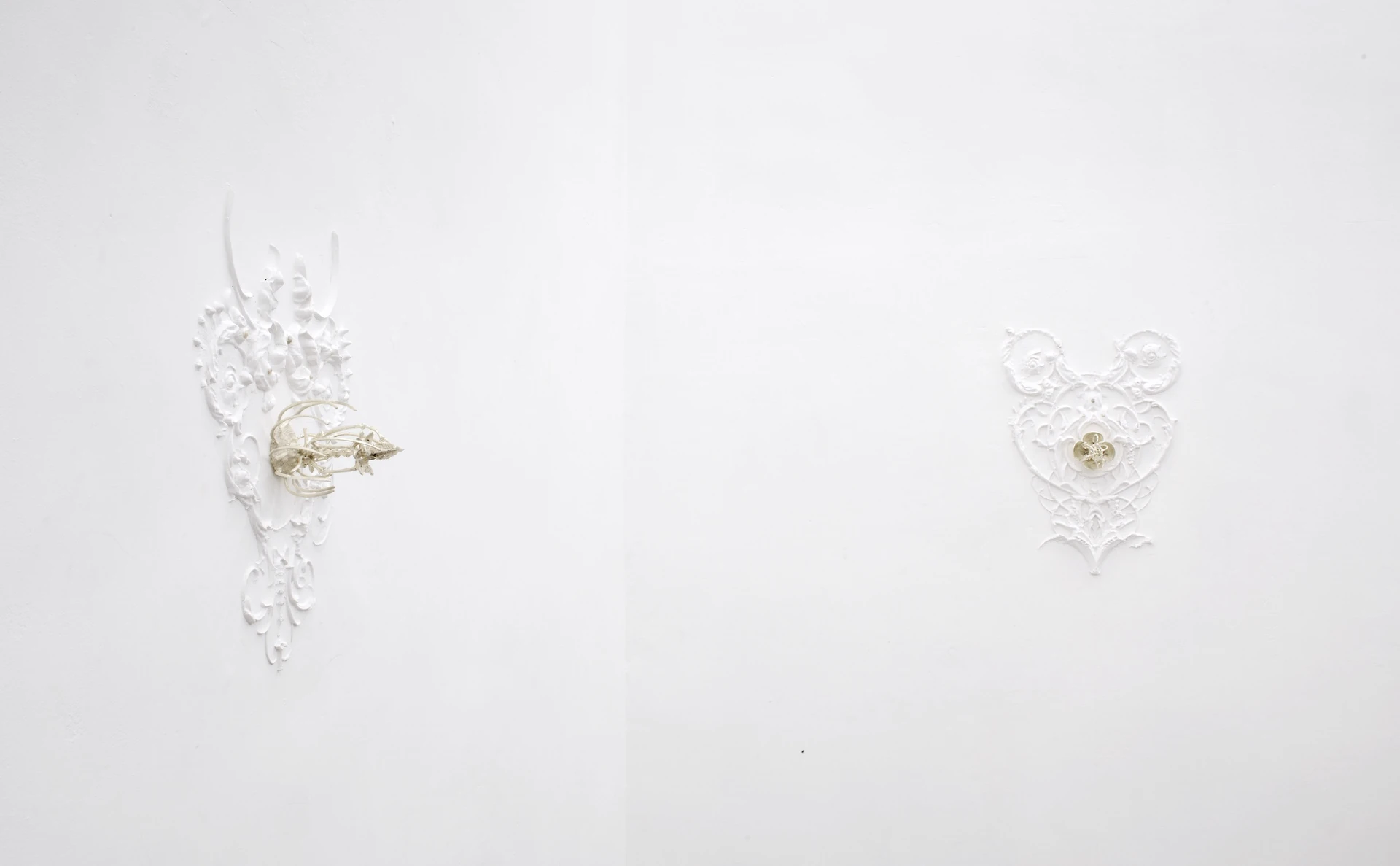
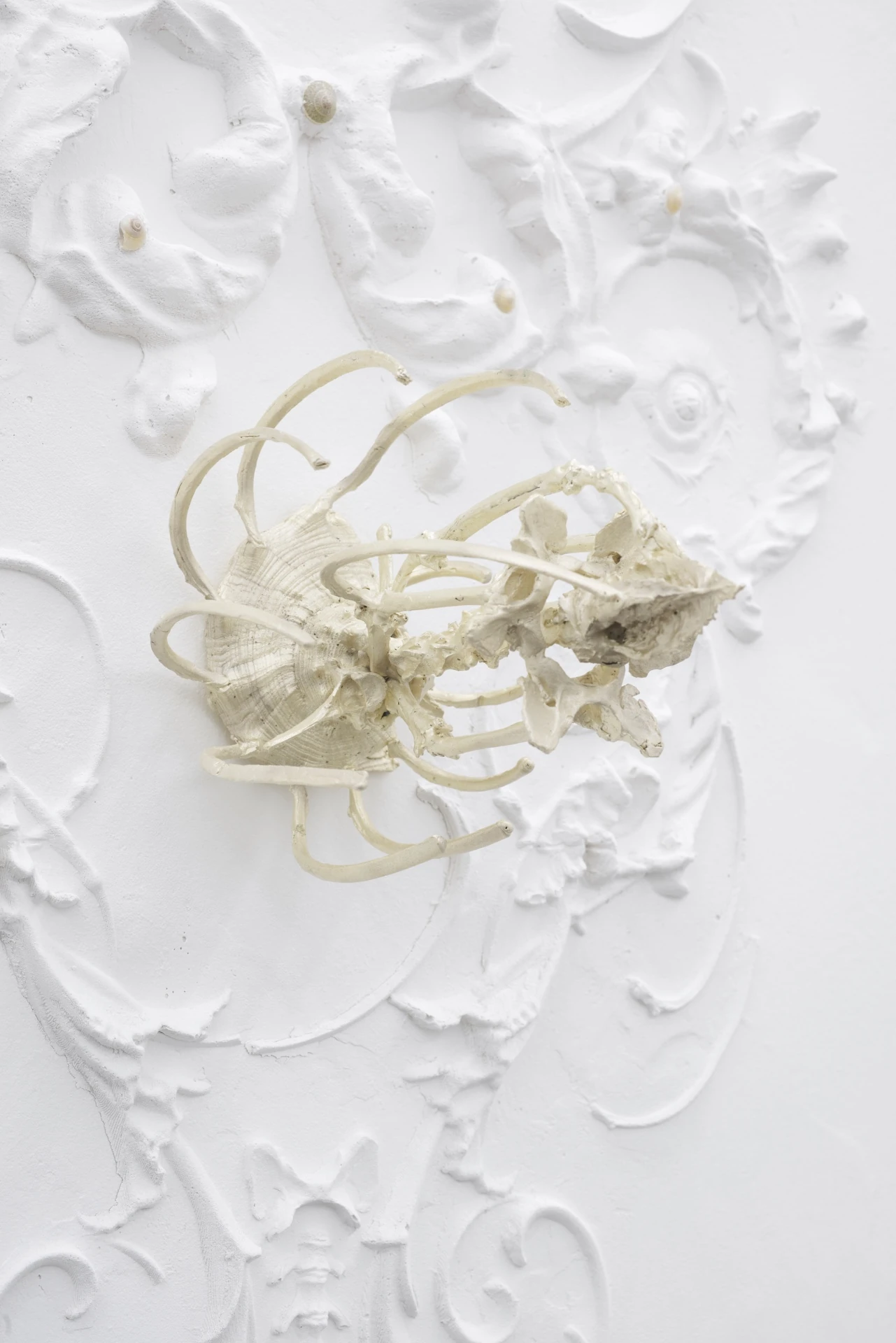
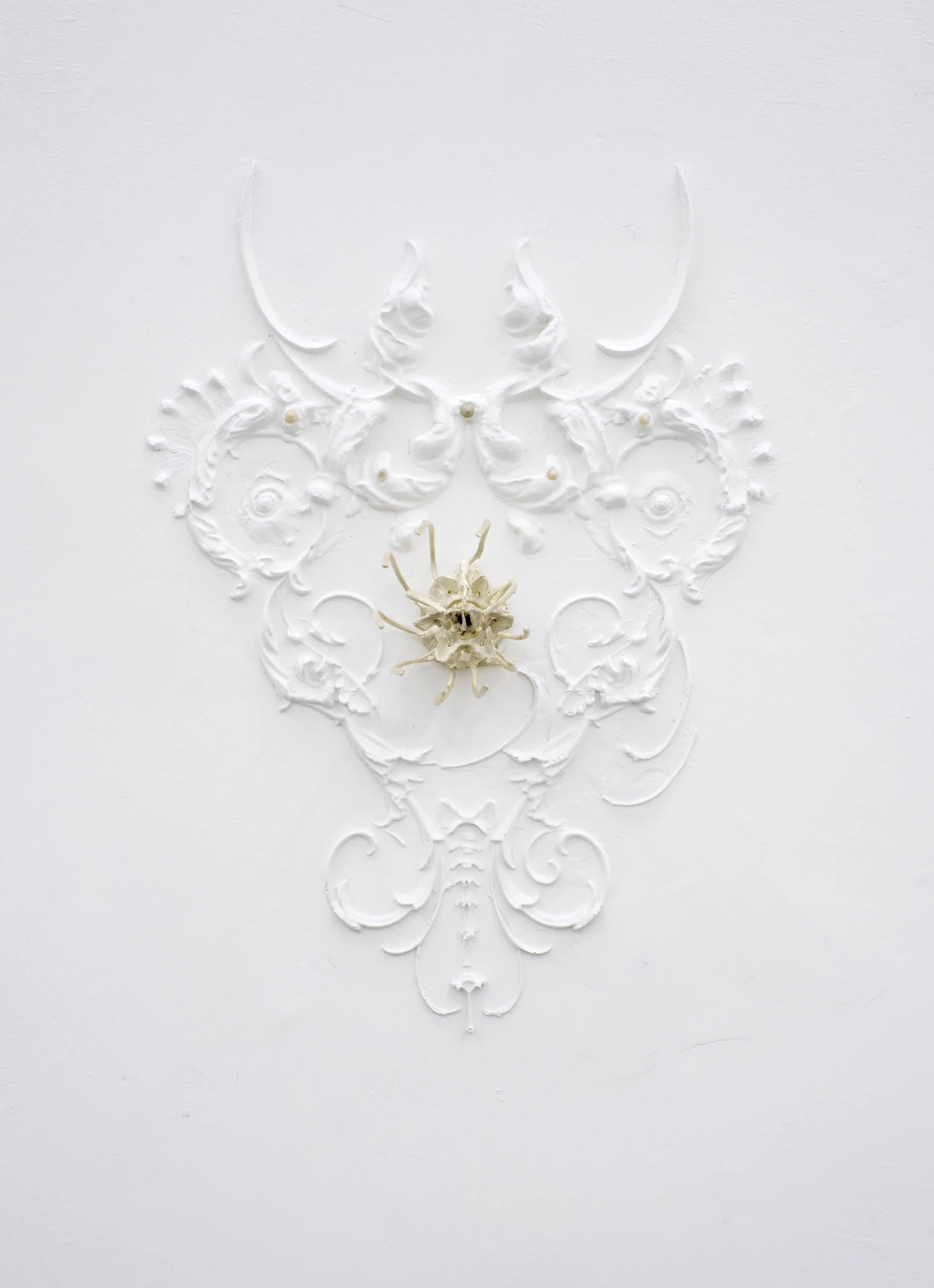
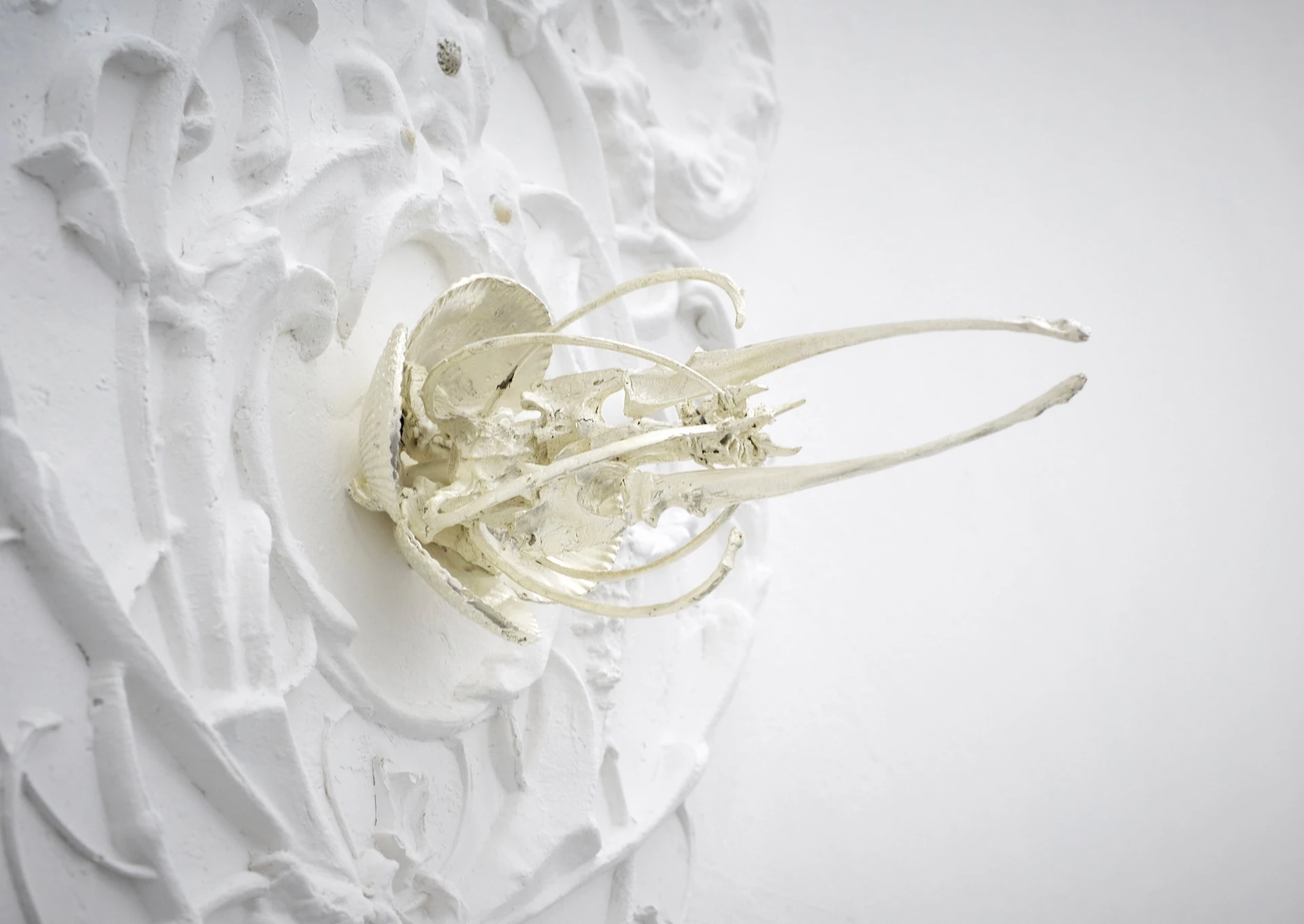
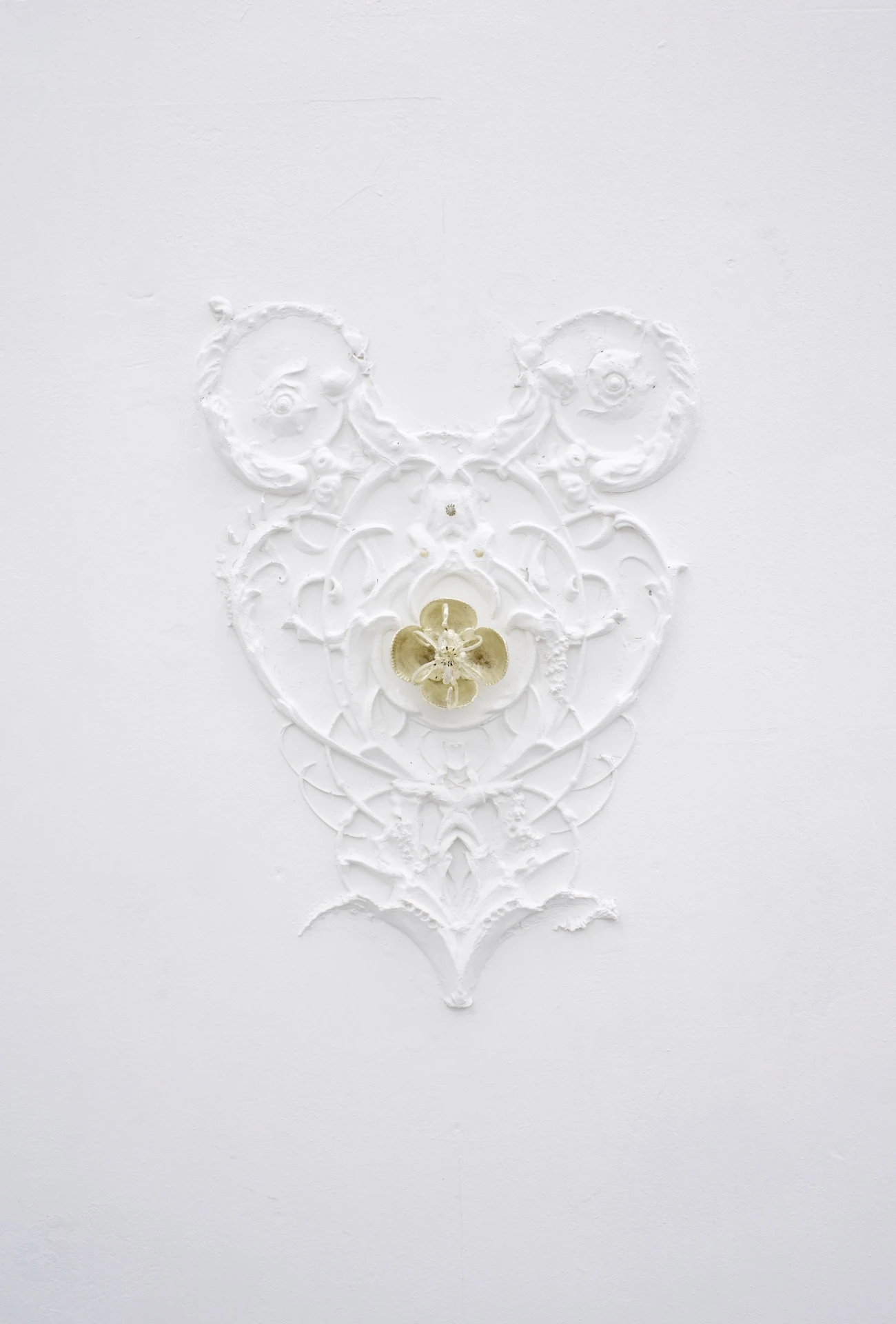
Facing this are Ghirardelli's "Barrueco" works — irregular plaster pearls cast as bas-reliefs, framed in bone-like forms and mother-of-pearl shells. At their center, silvered brass blooms shaped from valves and poisonous plants complicate the reliquary structure, as if the archive were still alive.
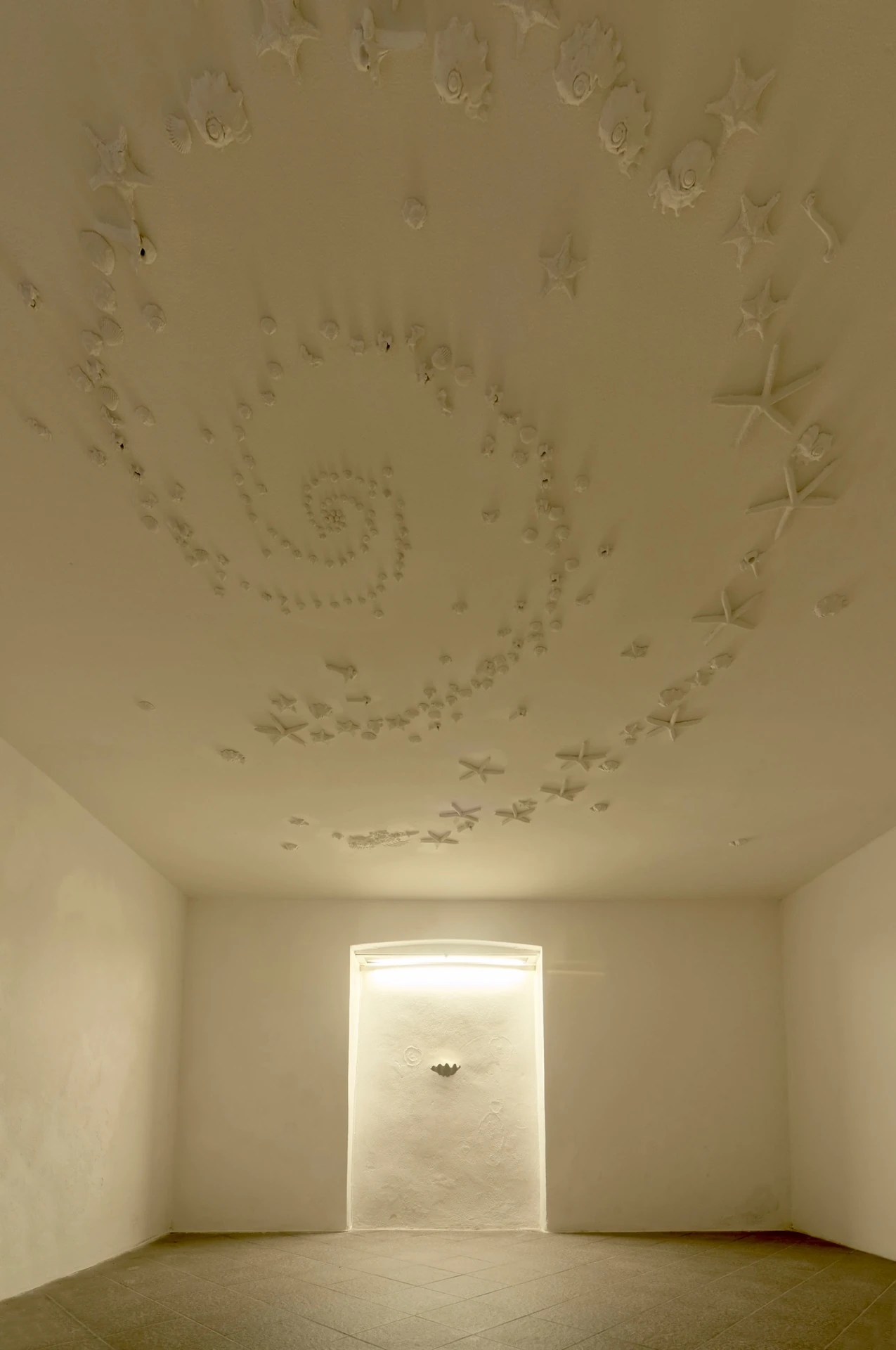
On the lower floor the double Fibonacci spiral of "Viriditas" runs along the ceiling in silvered starfish, shells, and vertebrae, drawn from research into the celestial vaults of Byzantine churches. It guides the visitor toward "Agape": a dark-bronze shell oxidized with sulfur, whose mirrored interior holds water and psilocybe. The gesture is a straightforward one: trust your senses to nonhuman agencies, and let the exhibition resolve into a new cosmogony.