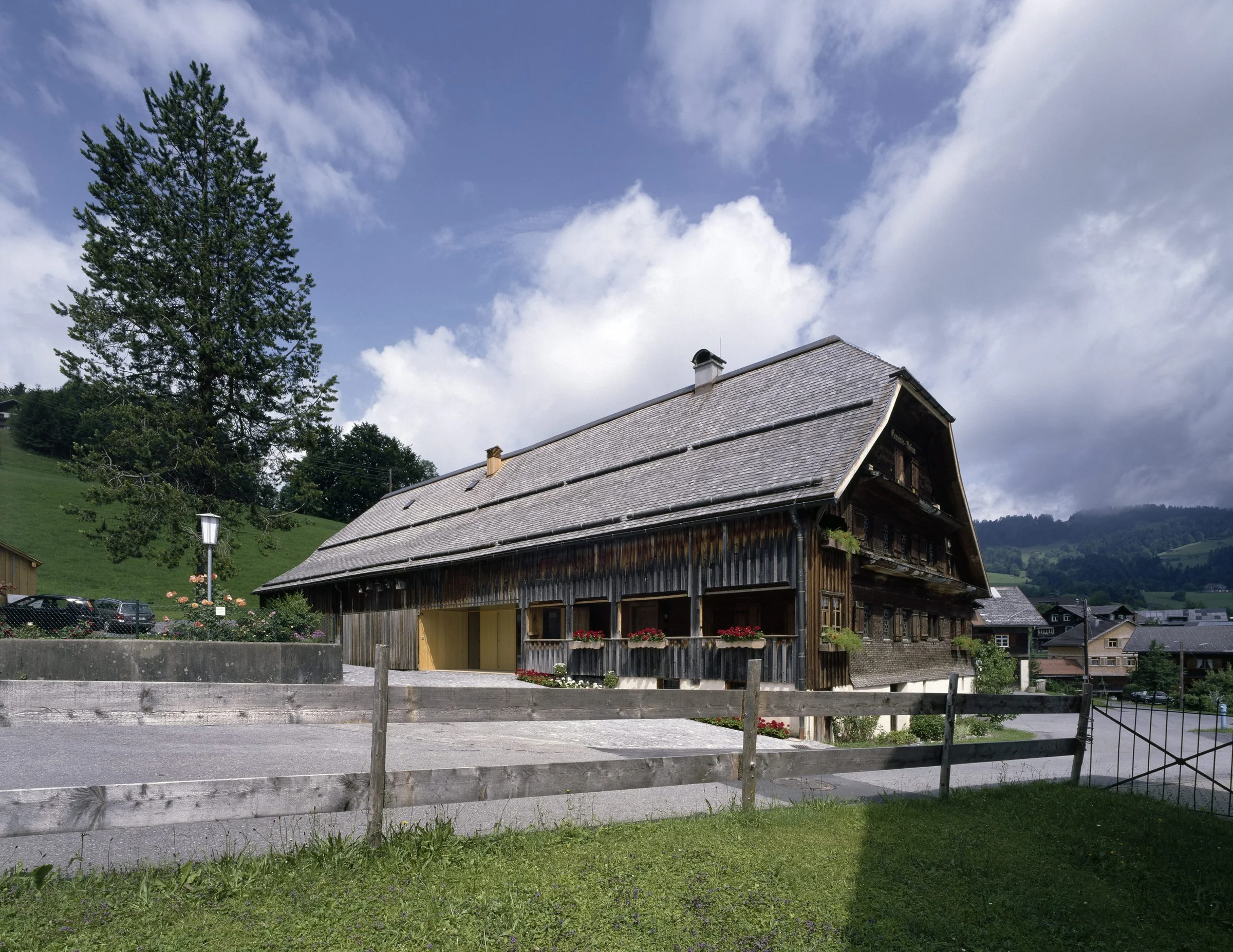
On a hillside above Schwarzenberg in Austria's Bregenzerwald, Dietrich Untertrifaller slips the Angelika Kauffmann Museum into a 16th-century Wälderhaus behind a sliding yellow-ochre gate.
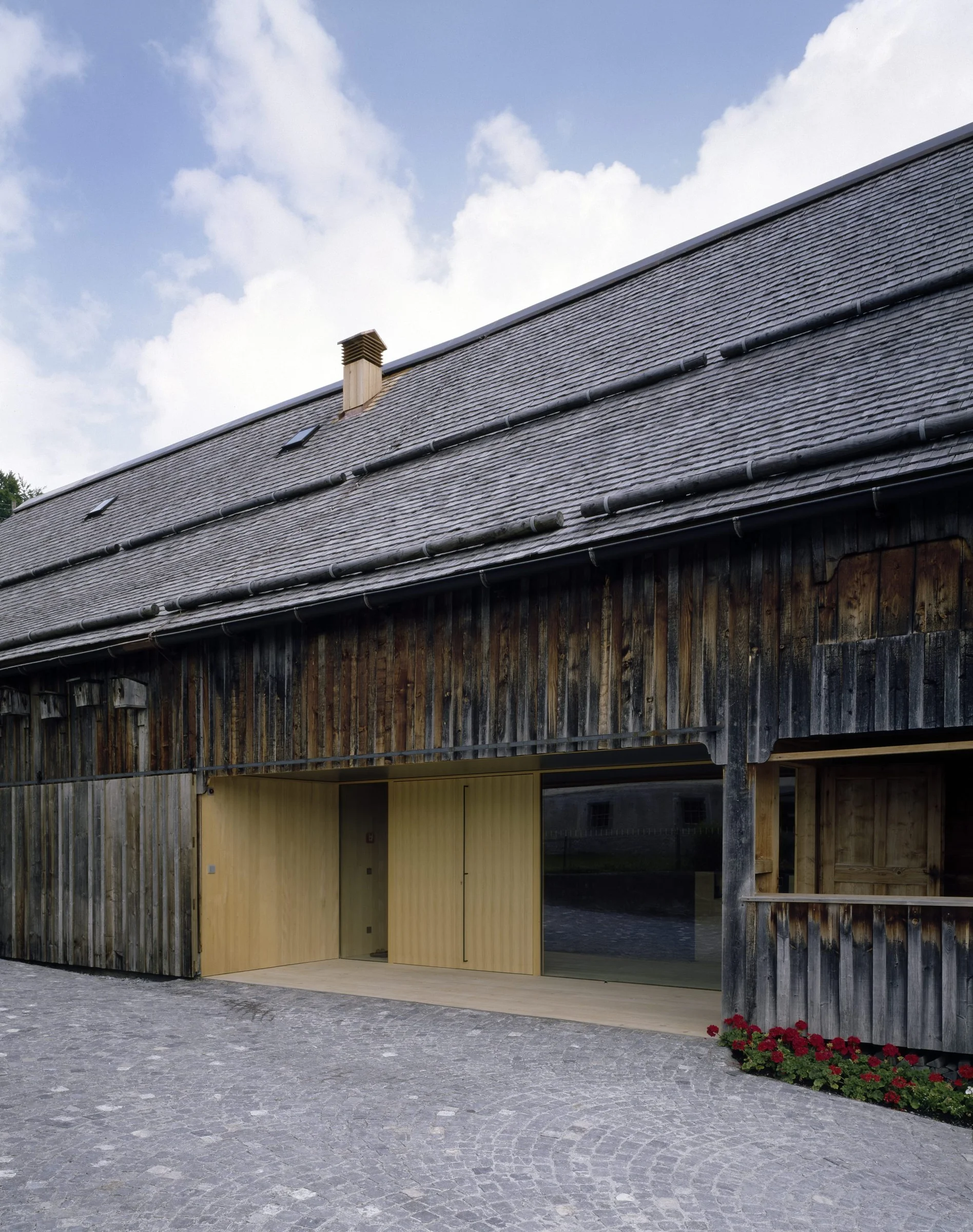
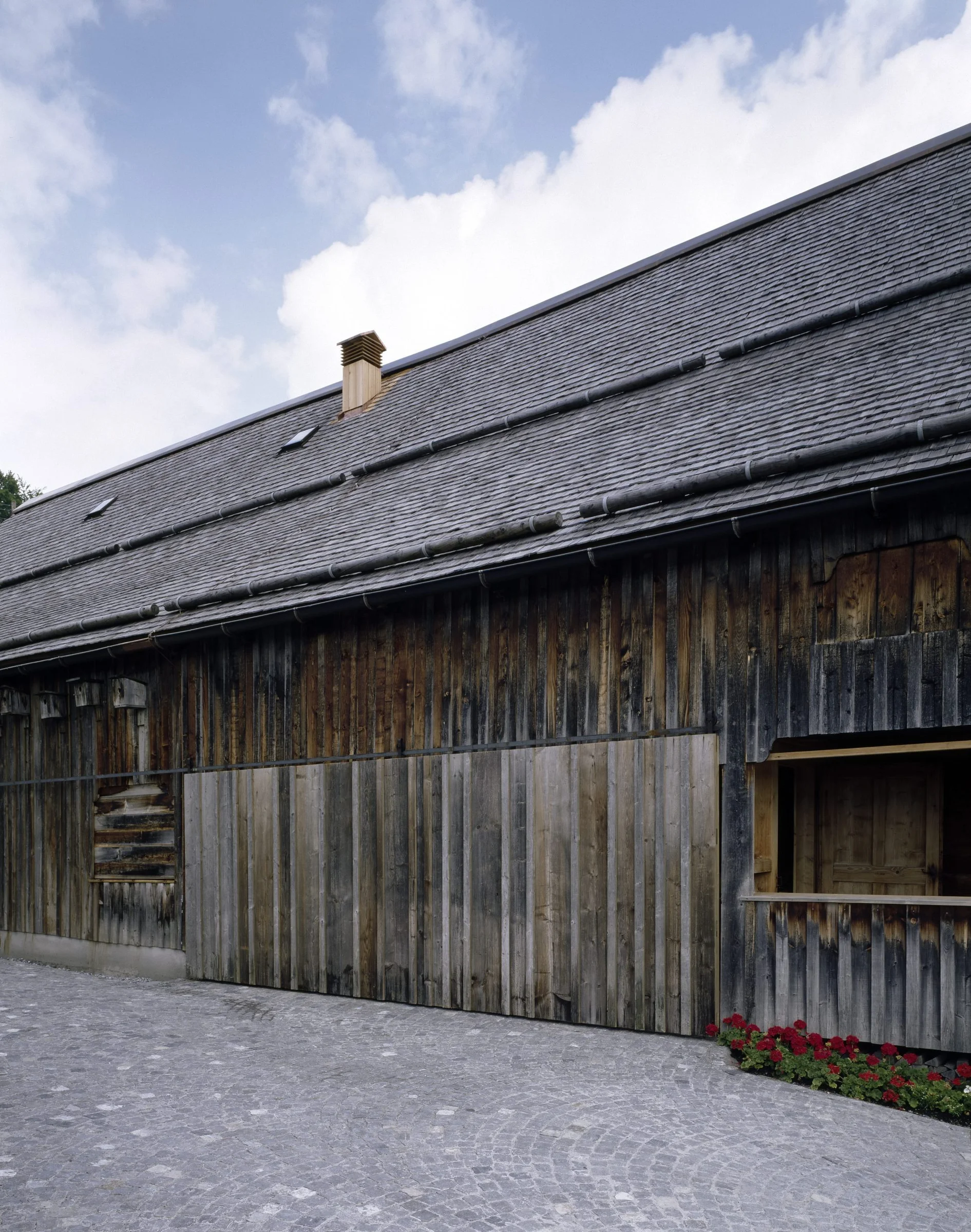
The Wälderhaus stands on a slope west of the village, its vertical timber boards aged to charcoal and warm umber under a low slate roof. Two museums now share the old farmhouse. The former living quarters hold a local history collection; the barn alongside, once a threshing floor and hay store, has been rewired as the Angelika Kauffmann Museum. From the cobbled courtyard the building reads as it has for four centuries, save for a single deviation: a wide silver-fir sliding panel, painted soft ochre, that rolls back to reveal glass.
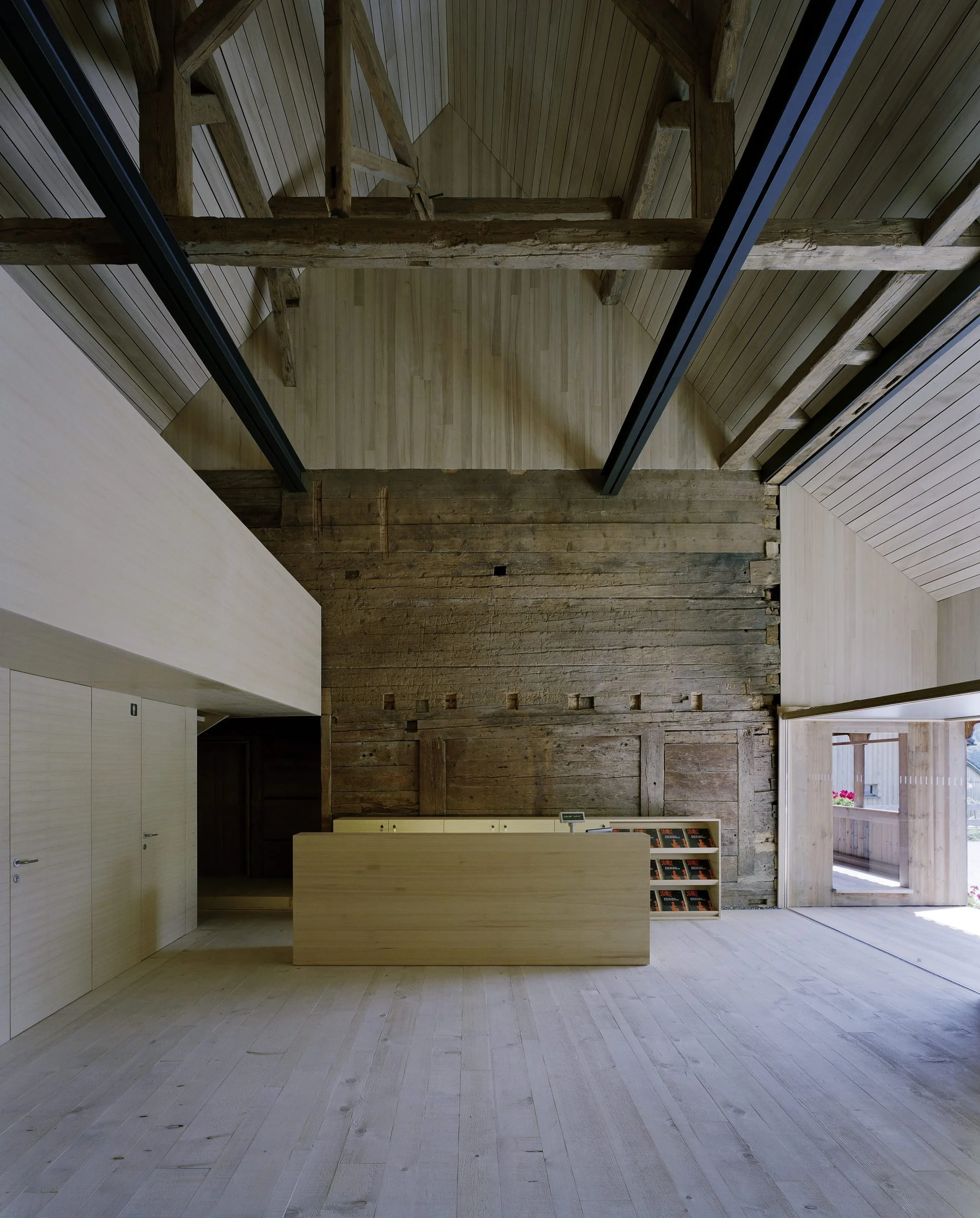
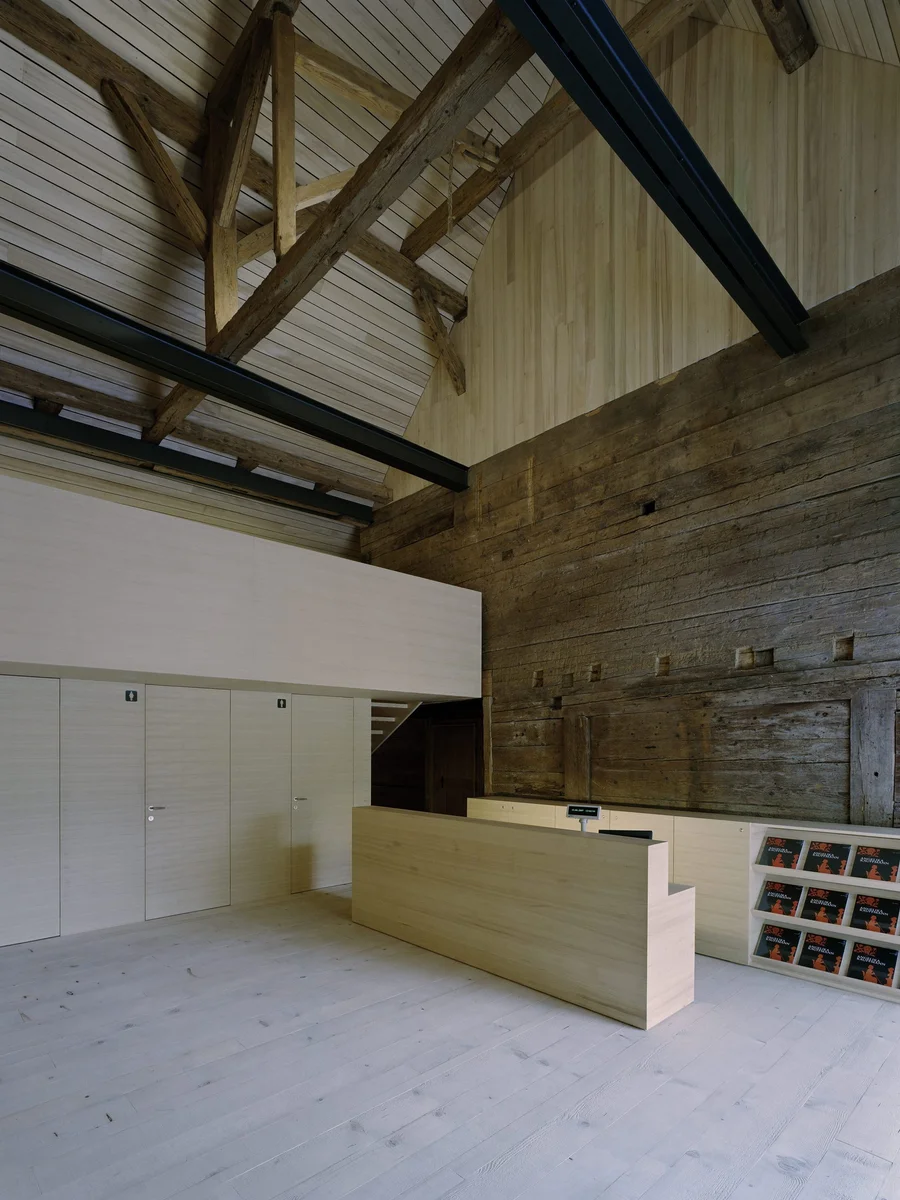
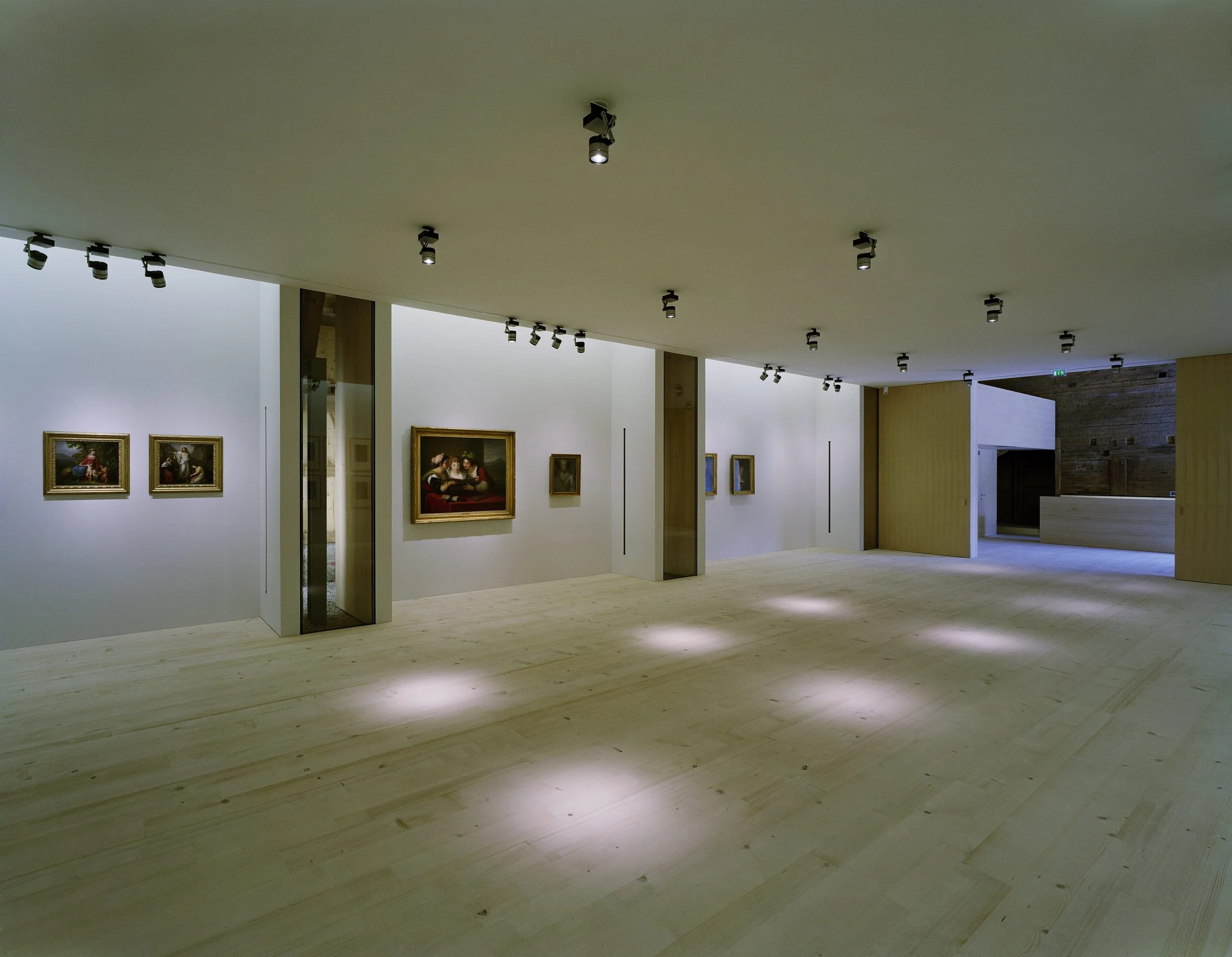
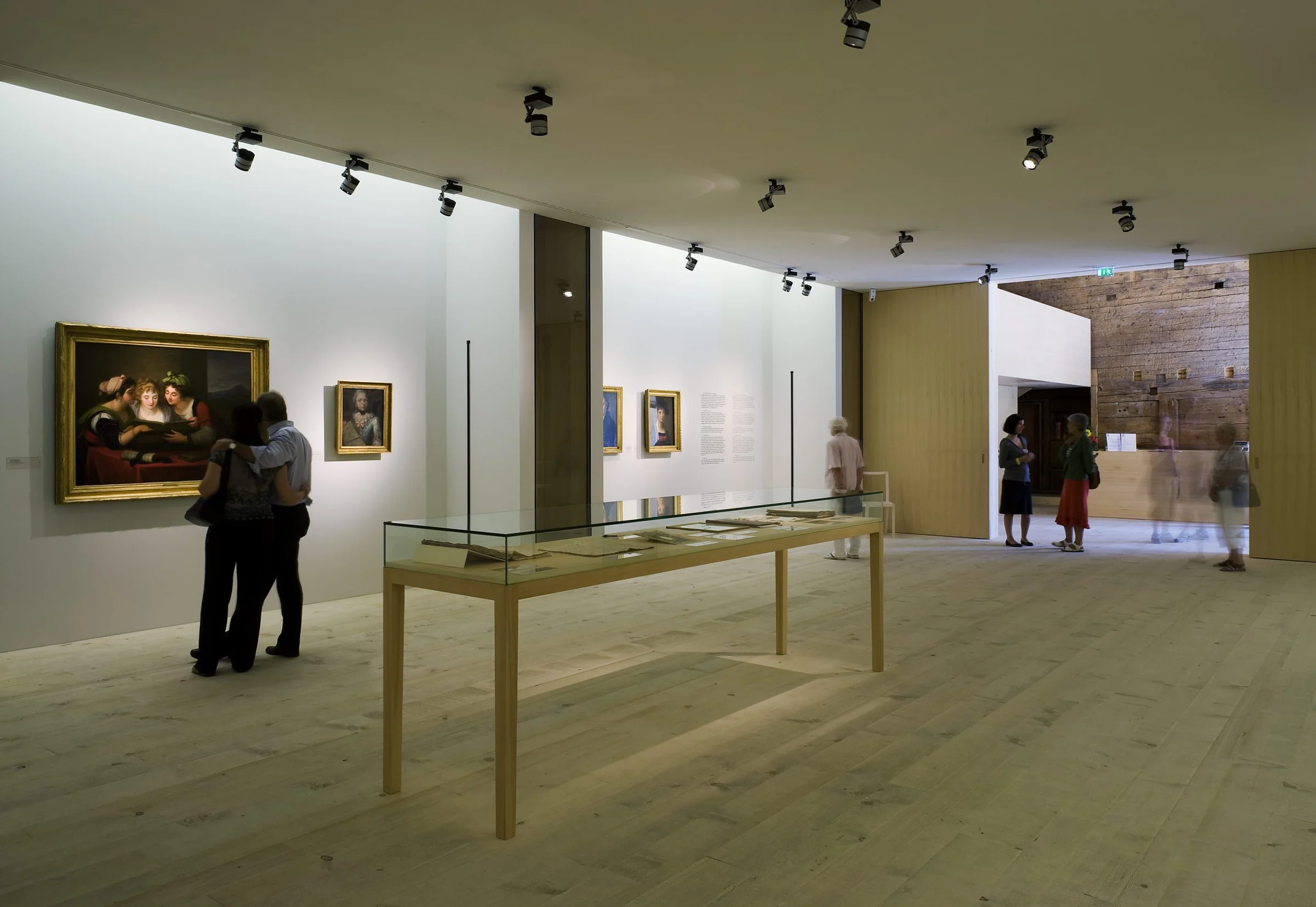
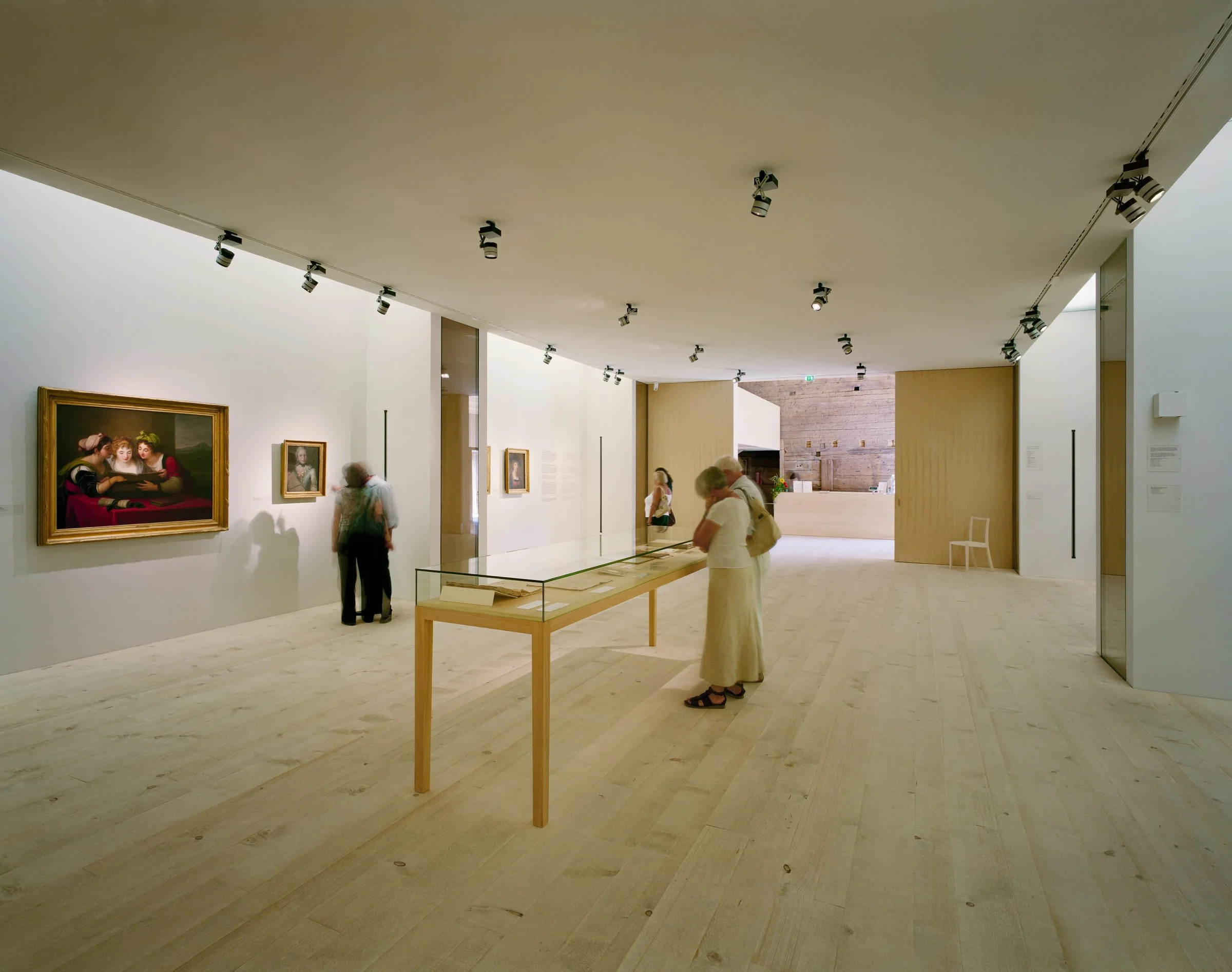
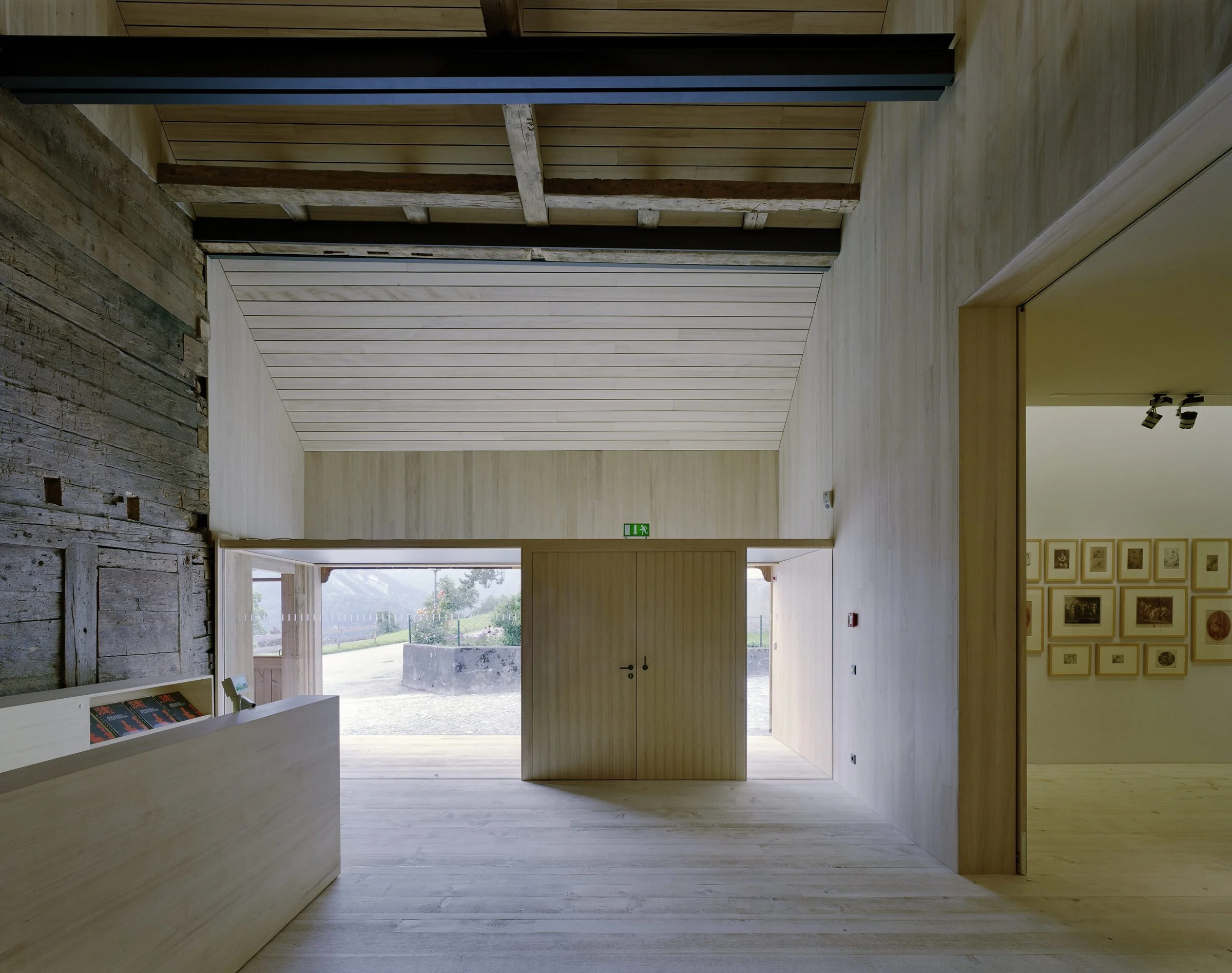
Pass through the gate and the first space is a nine-metre foyer that runs the full height of the roof. Light-toned silver fir lines the new volume, smooth and almost unblemished beside the blackened board wall left from the original barn. Steel profiles, painted matte black, carry the loads the old timber can no longer take. Rough-sawn fir planks cover the floor, their grain coarse enough to catch light and shadow, and continue uninterrupted into the galleries beyond.
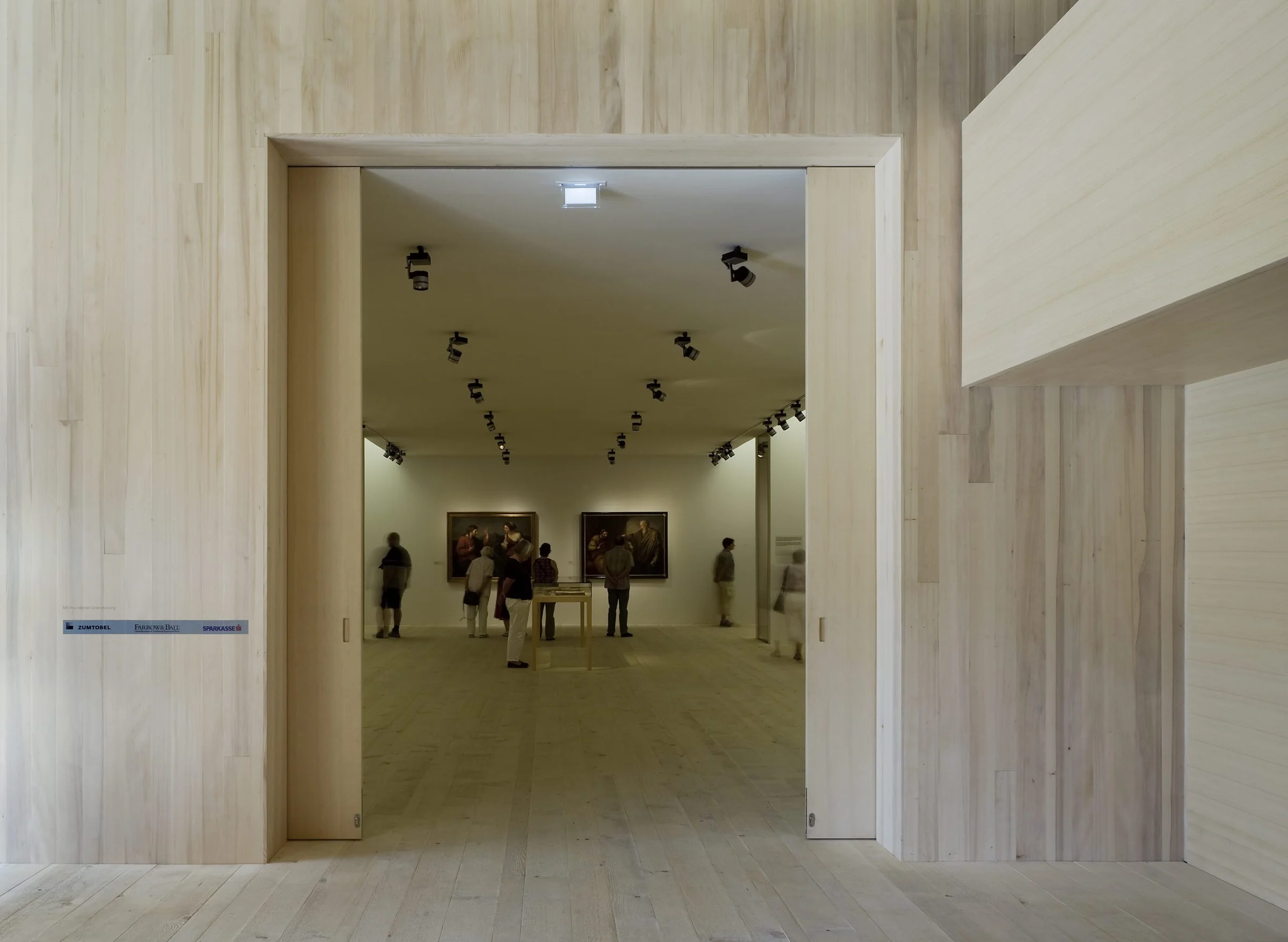
The exhibition hall sits inside the barn as a flat-roofed house within a house, a thermally insulated shell held clear of the original facades by lateral steel frames. Cream walls rise to a plain ceiling of track-mounted spotlights. Olive-tinted glazed slits puncture the partitions at regular intervals, narrow enough to register as gaps rather than installations. Behind them the rough interior of the Wälderhaus shows through, a reminder of what the new building is wrapped around.
Local carpenters, at home in both hand joinery and CNC, handled the conversion. Ventilation is routed through seams in the panelling. Lighting is run from the foyer so no switches disturb the walls. Shallow niches admit daylight without breaking the collection's even, cream-walled illumination, and three of them frame the original timberwork as a quiet secondary exhibit.
Angelika Kauffmann, born into the Bregenzerwald in 1741, spent most of her working life in Rome and London and returned here only in portrait form. The building that now carries her name does something her paintings also did: it keeps decorum with its inherited frame while pushing, gently, into another century. From the outside, almost nothing has moved. From the inside, nearly everything has.