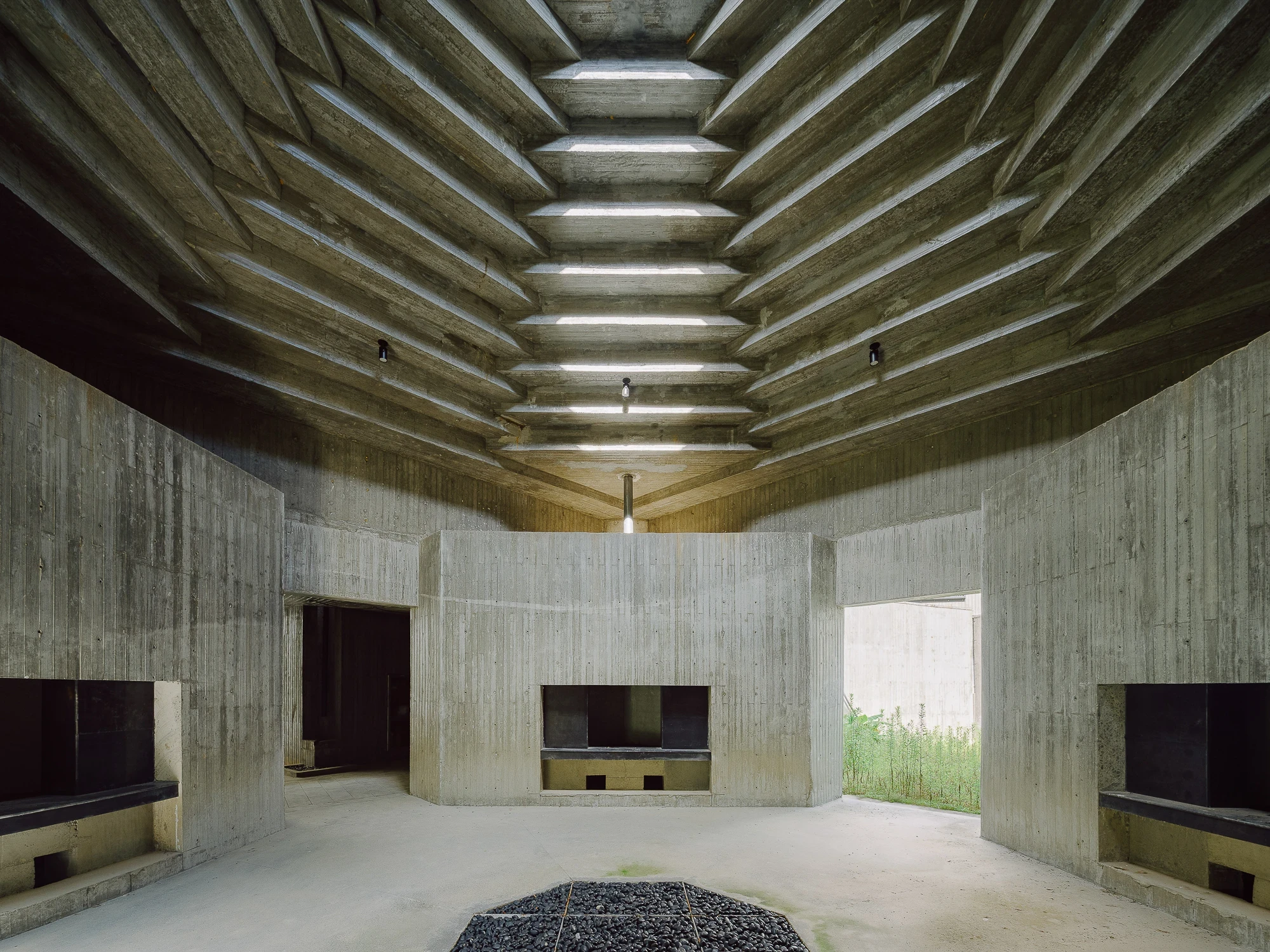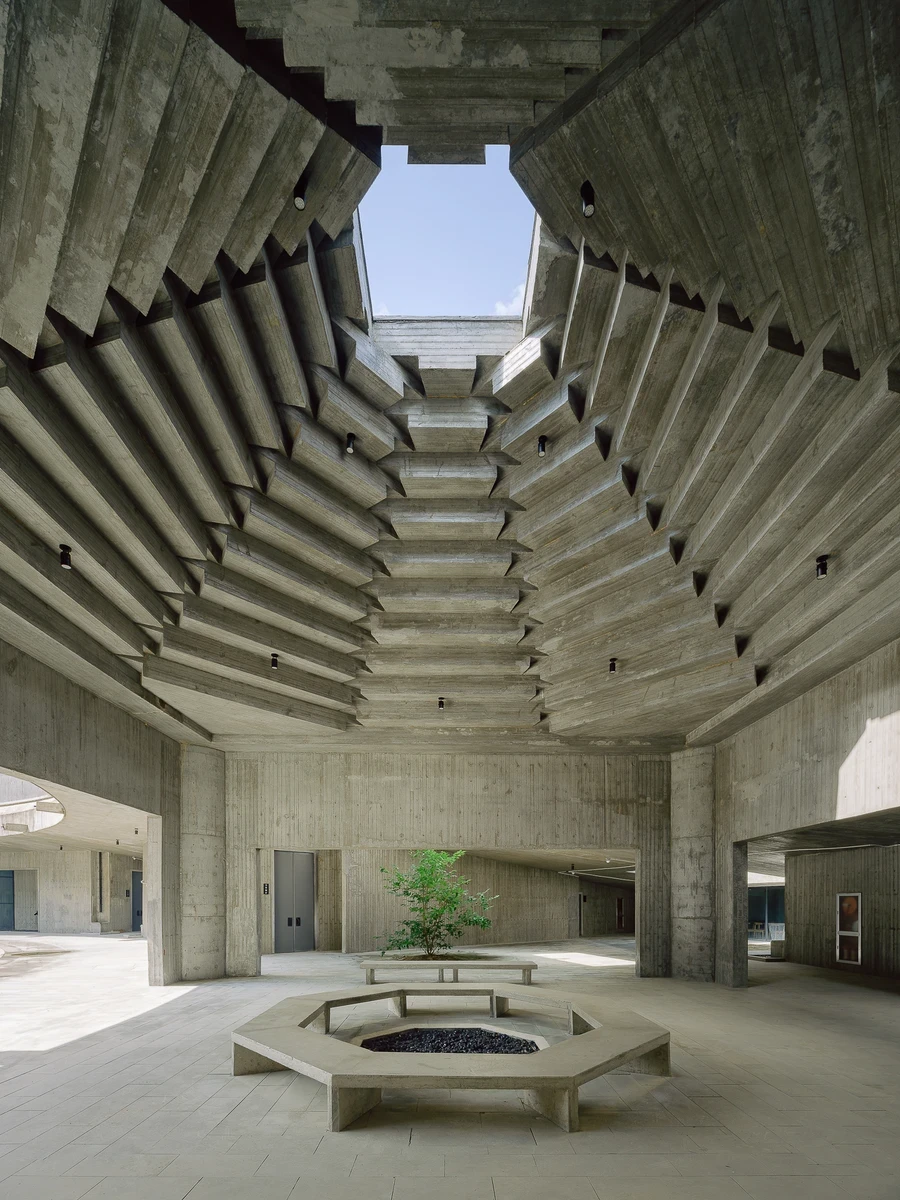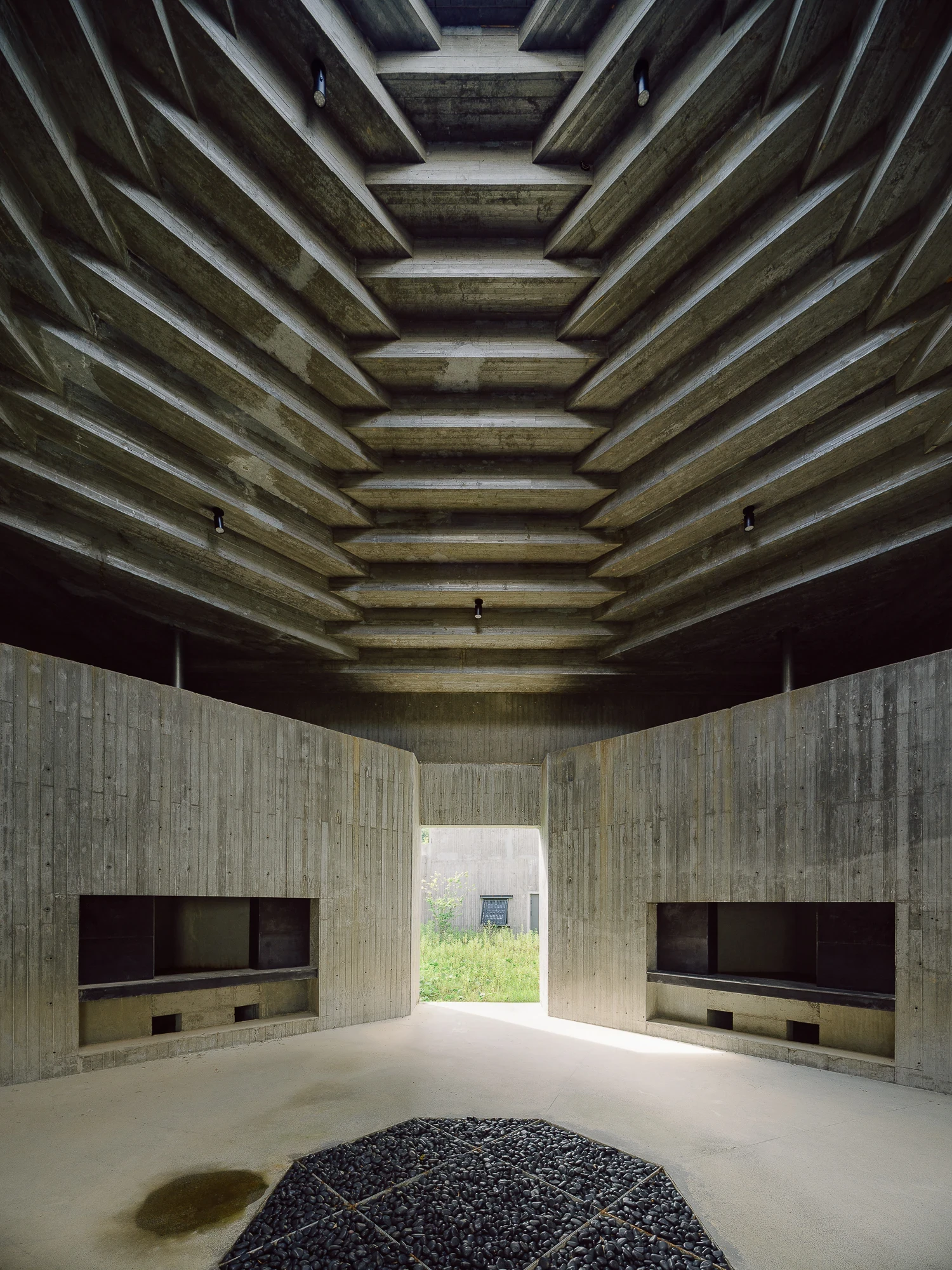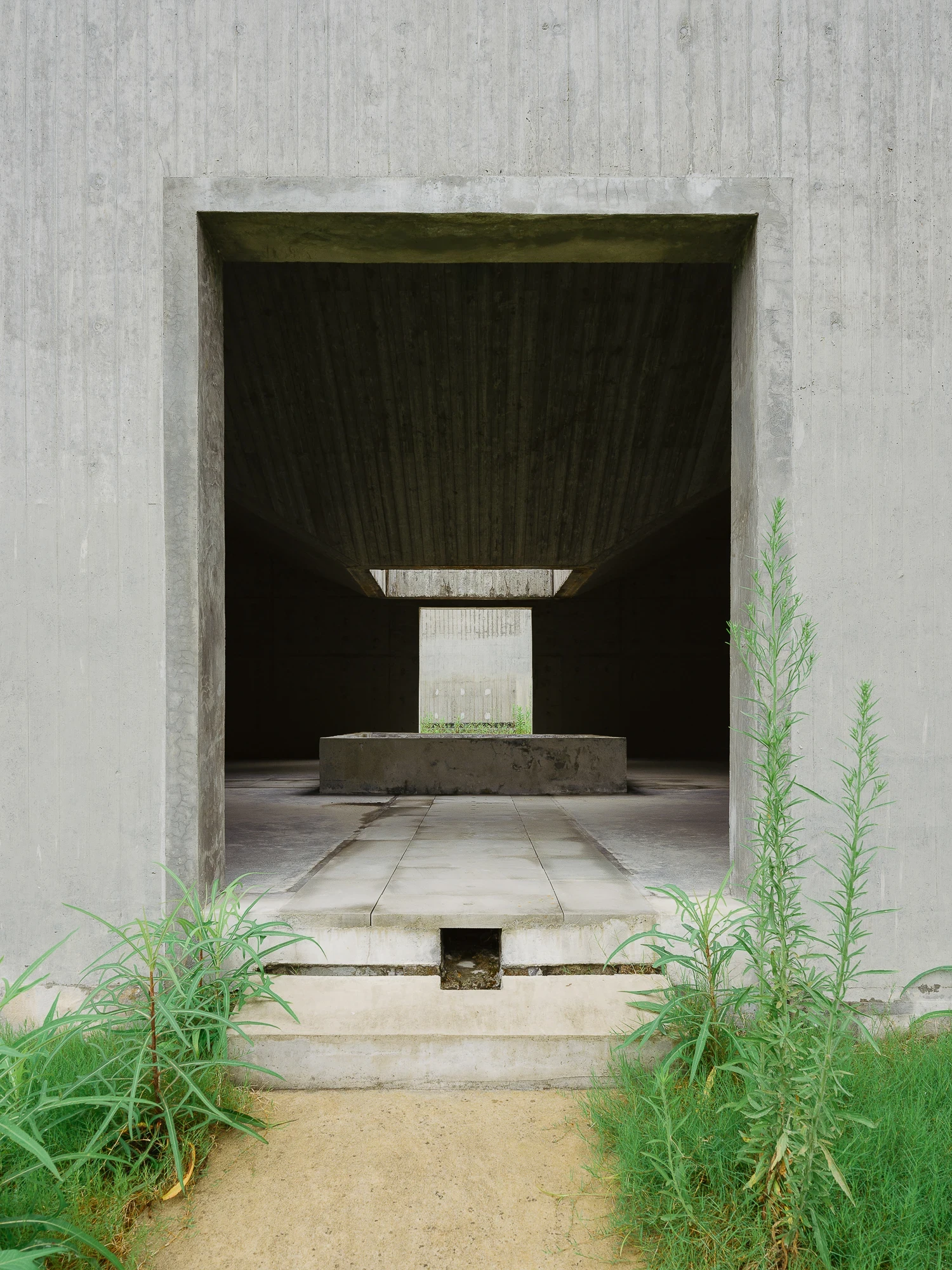
The Suichang Funerary Complex by Untitled Architects sinks a set of board-formed concrete halls into a wooded valley in Zhejiang, China, where a coffered ceiling steps upward toward a single opening onto the sky.
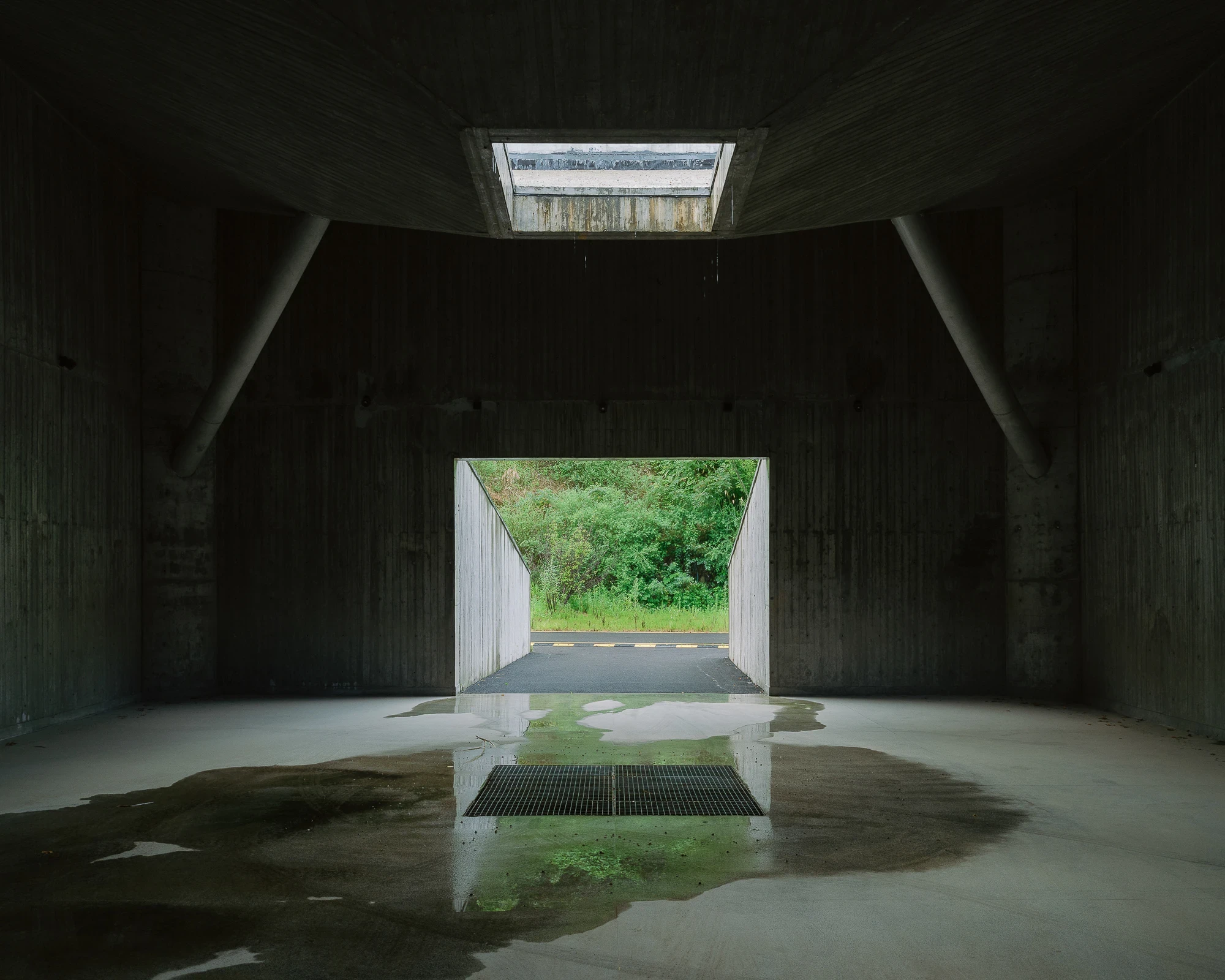
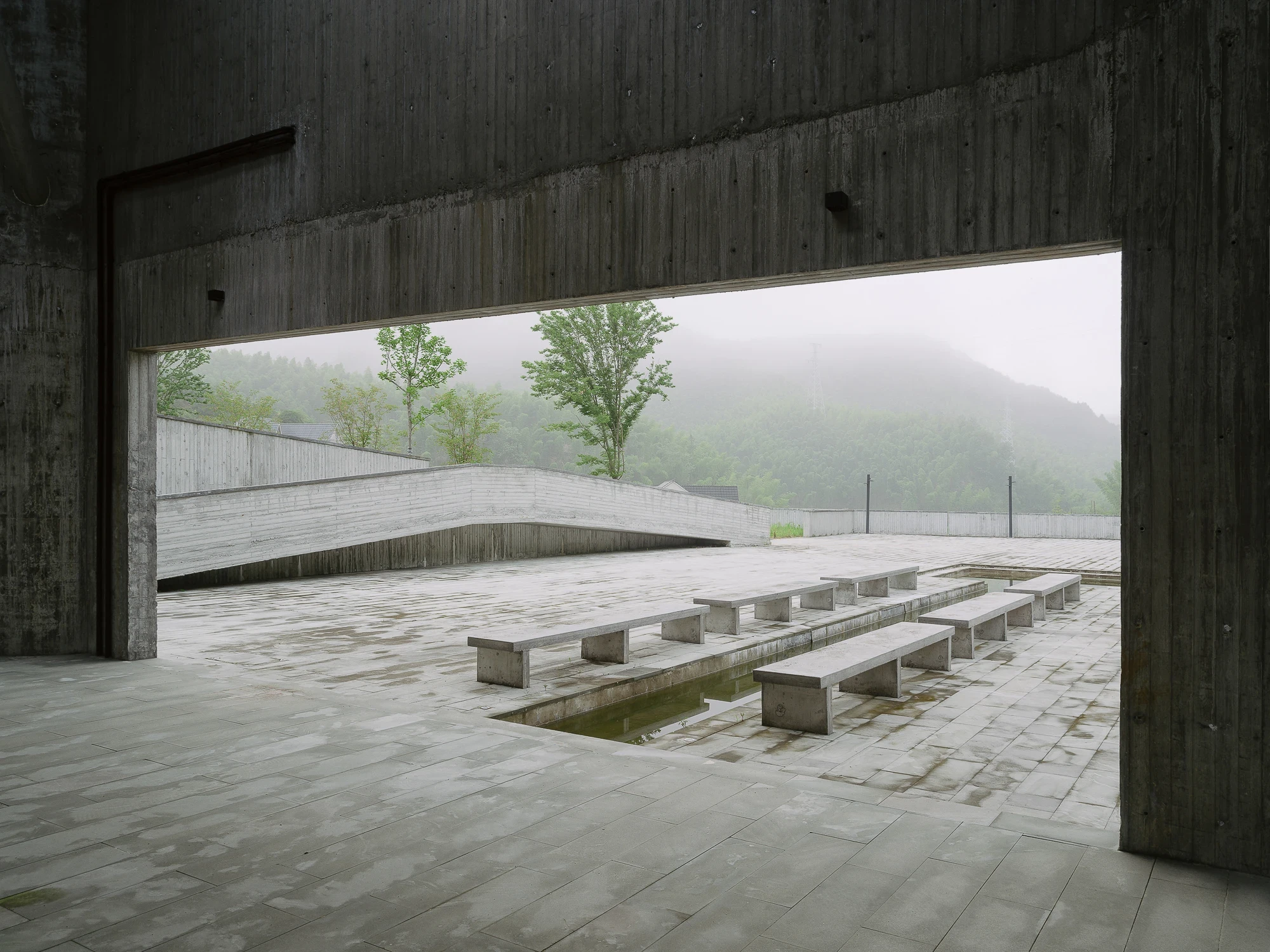
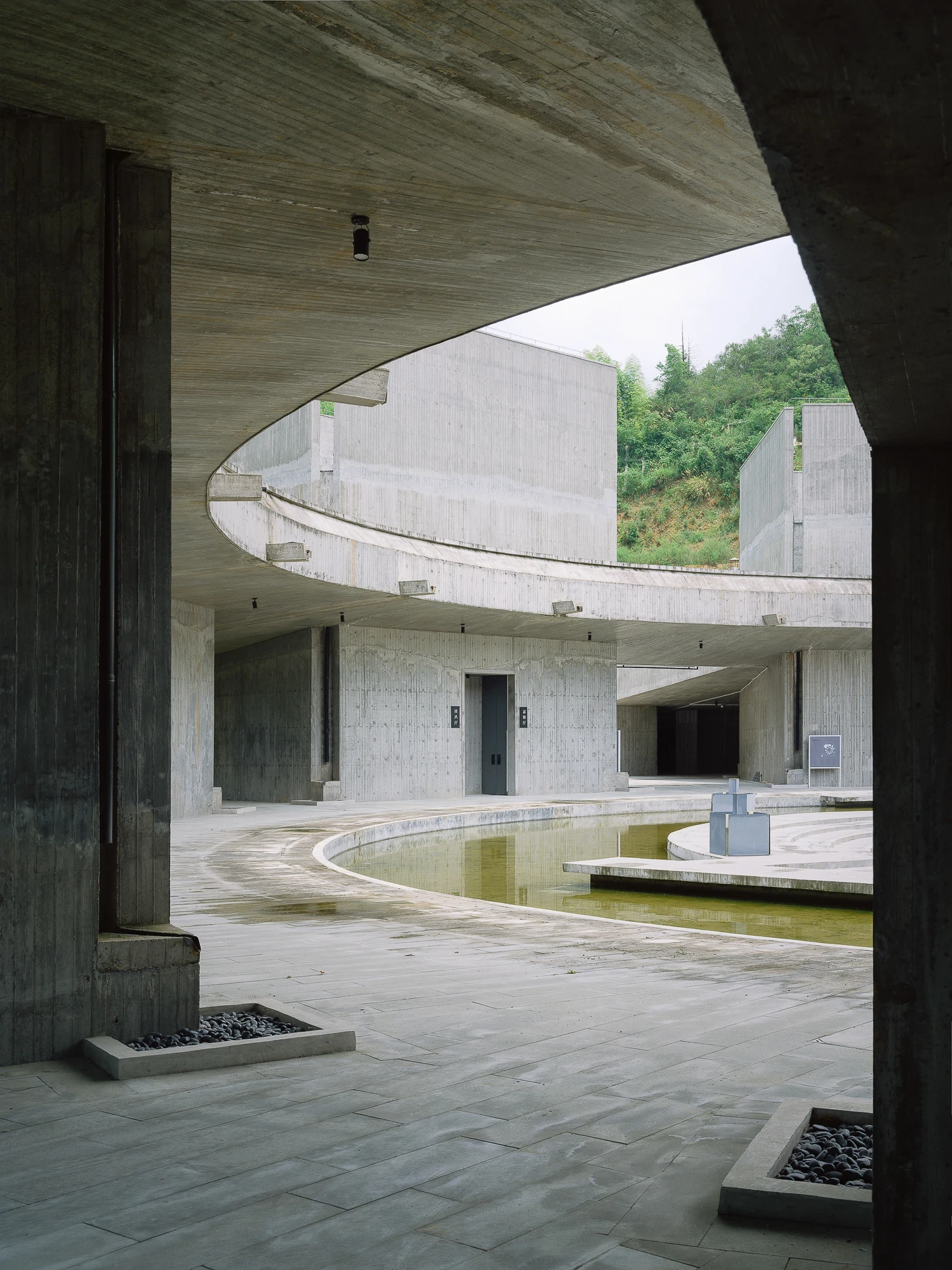
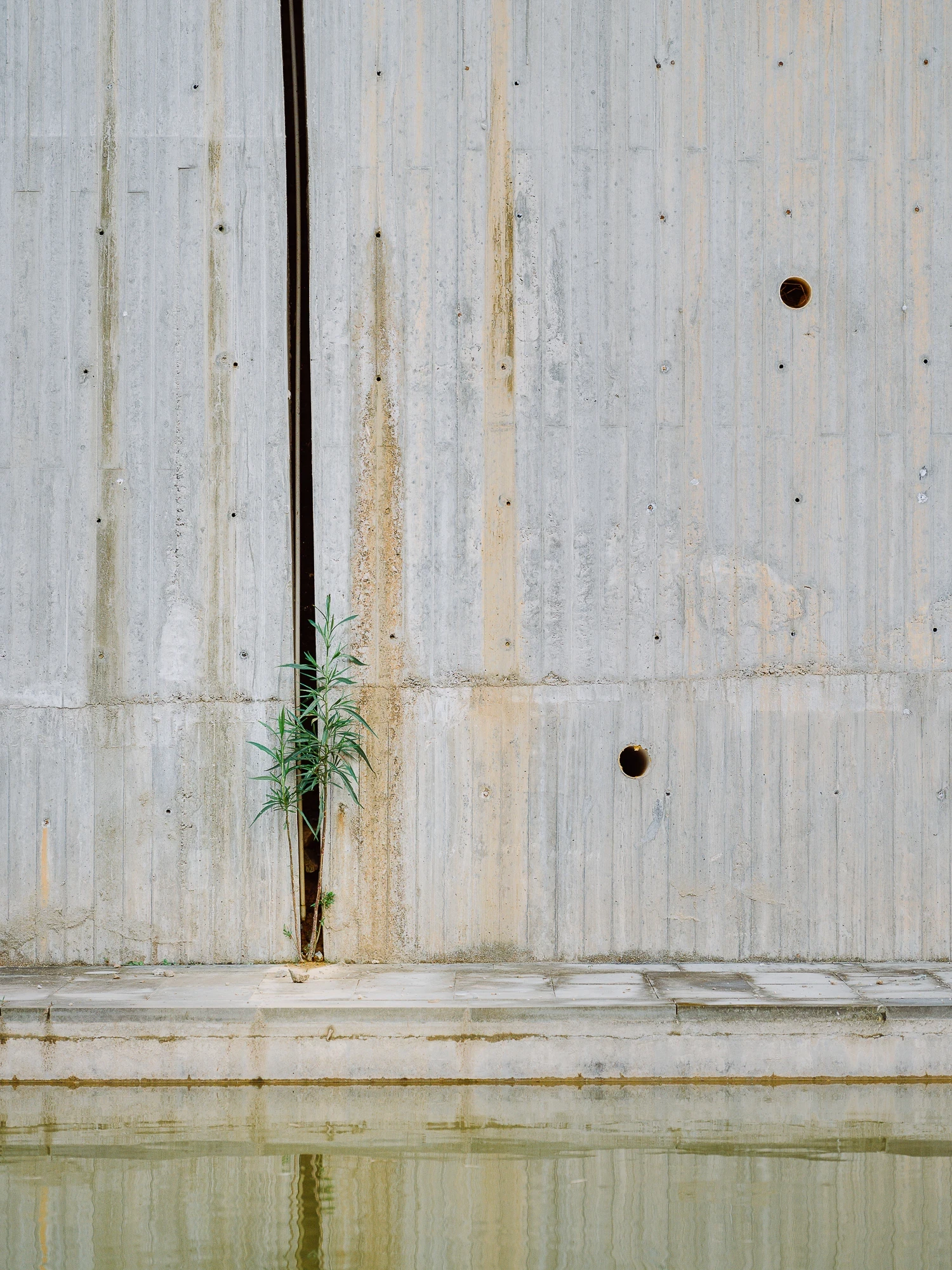
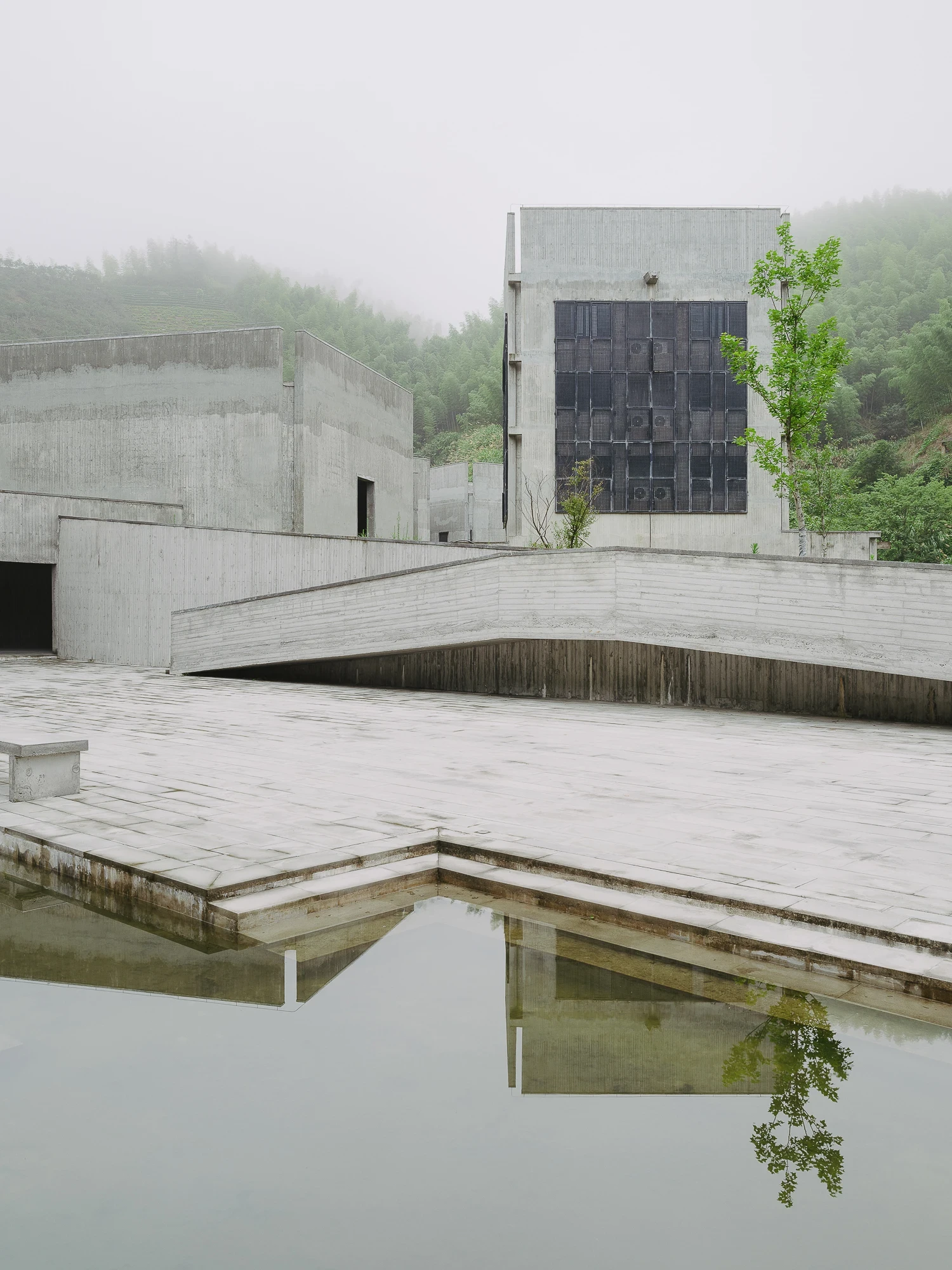
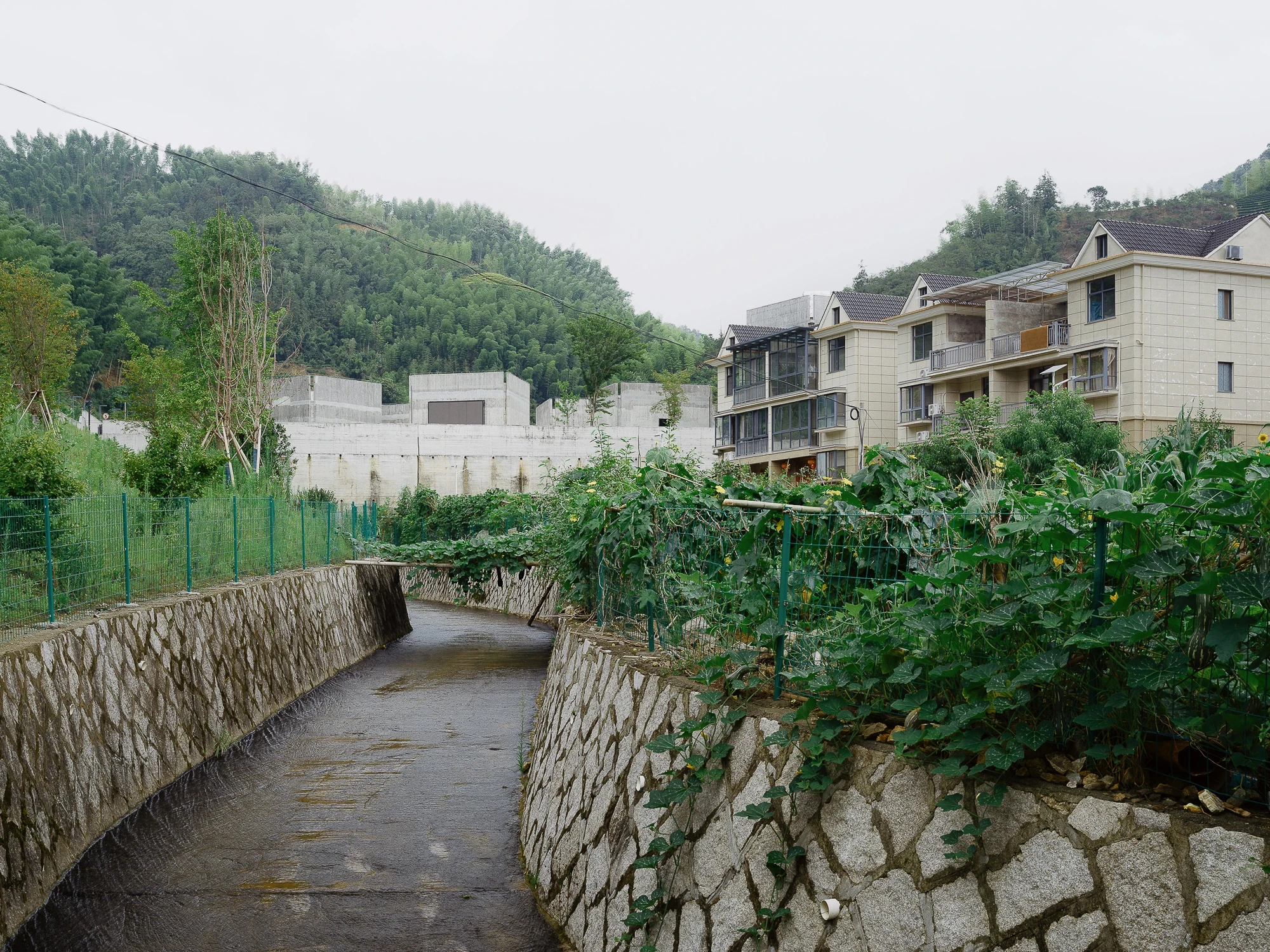
The complex reads as a low field of concrete volumes set against forested hills, terraced down toward pools of still water that hold the reflection of the buildings and the mist. Everything is cast concrete, carrying the vertical grain of the board formwork on every wall, so the surfaces keep the memory of the timber they were poured against. Ramps fold down into the ground. Courtyards open to the weather. The town presses right up to the perimeter wall, its balconies and vegetable plots a few metres from the threshold.
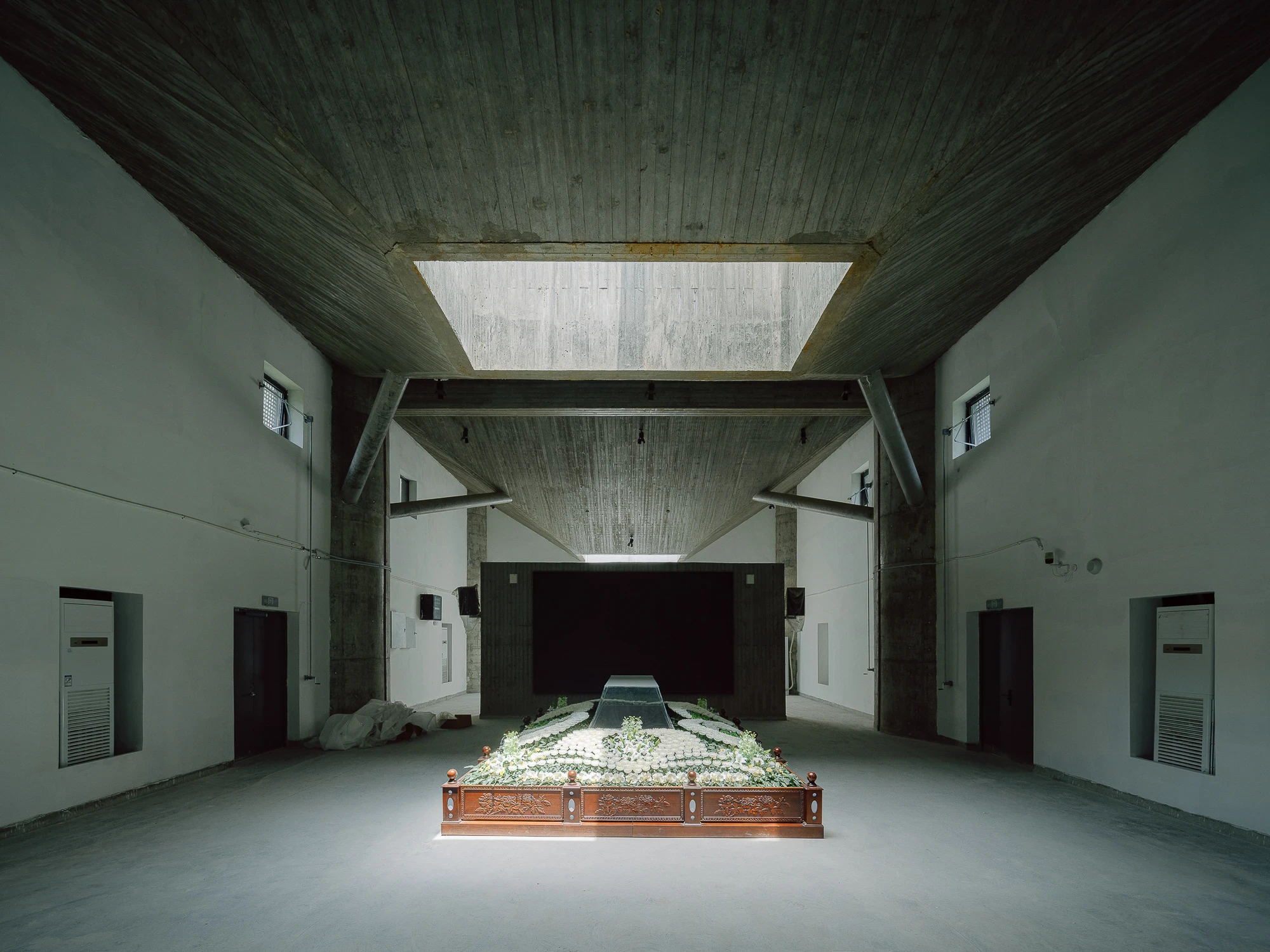
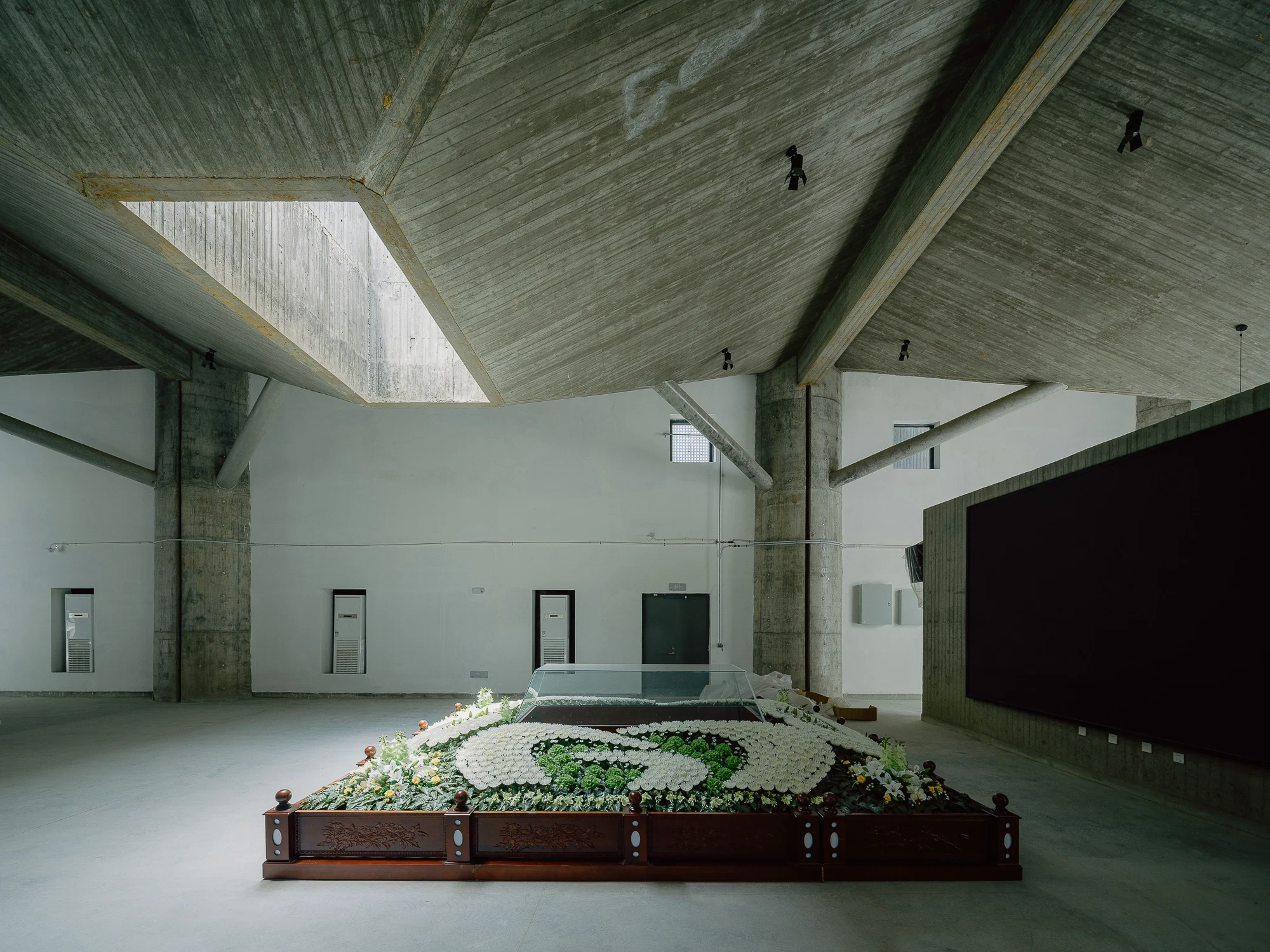
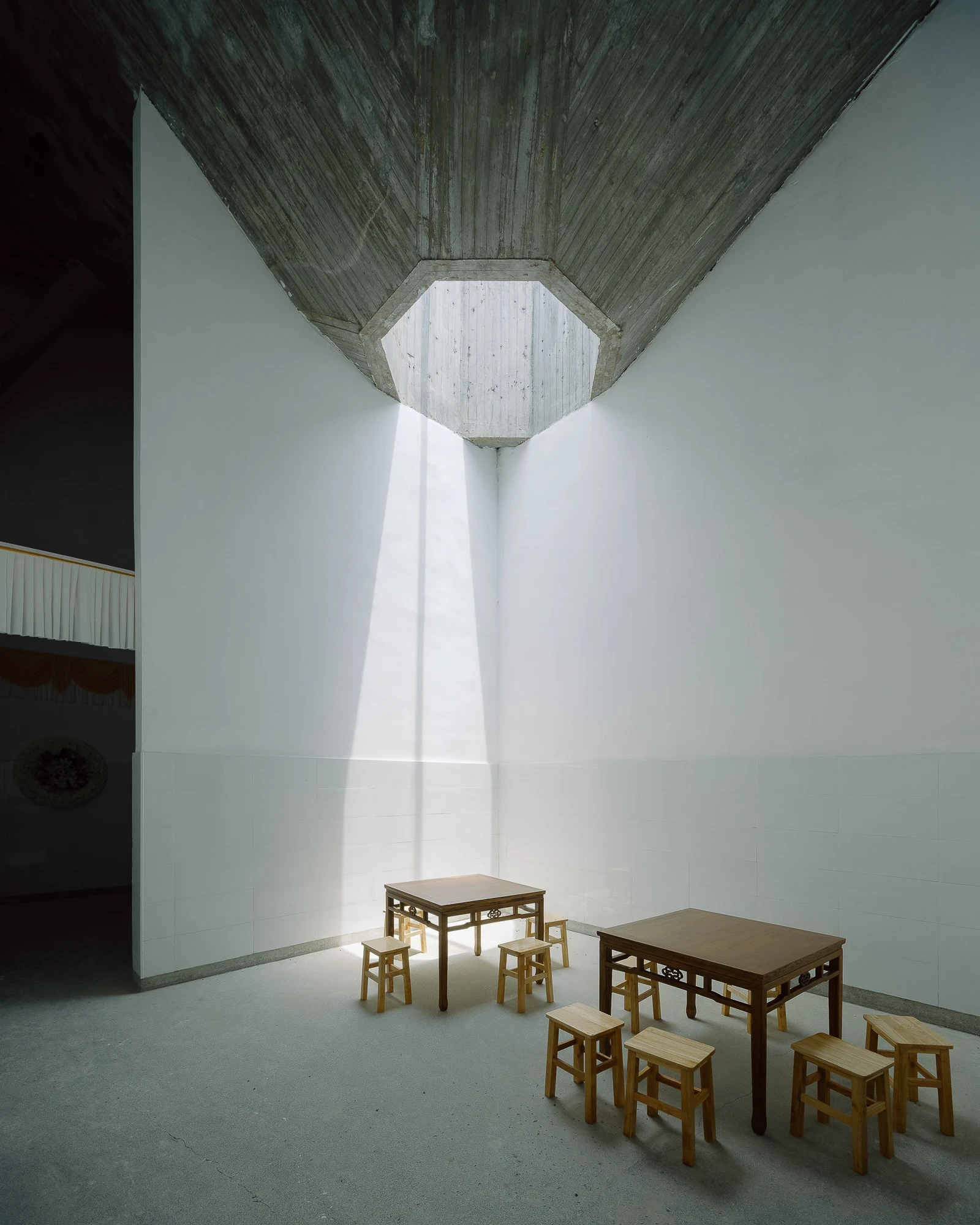
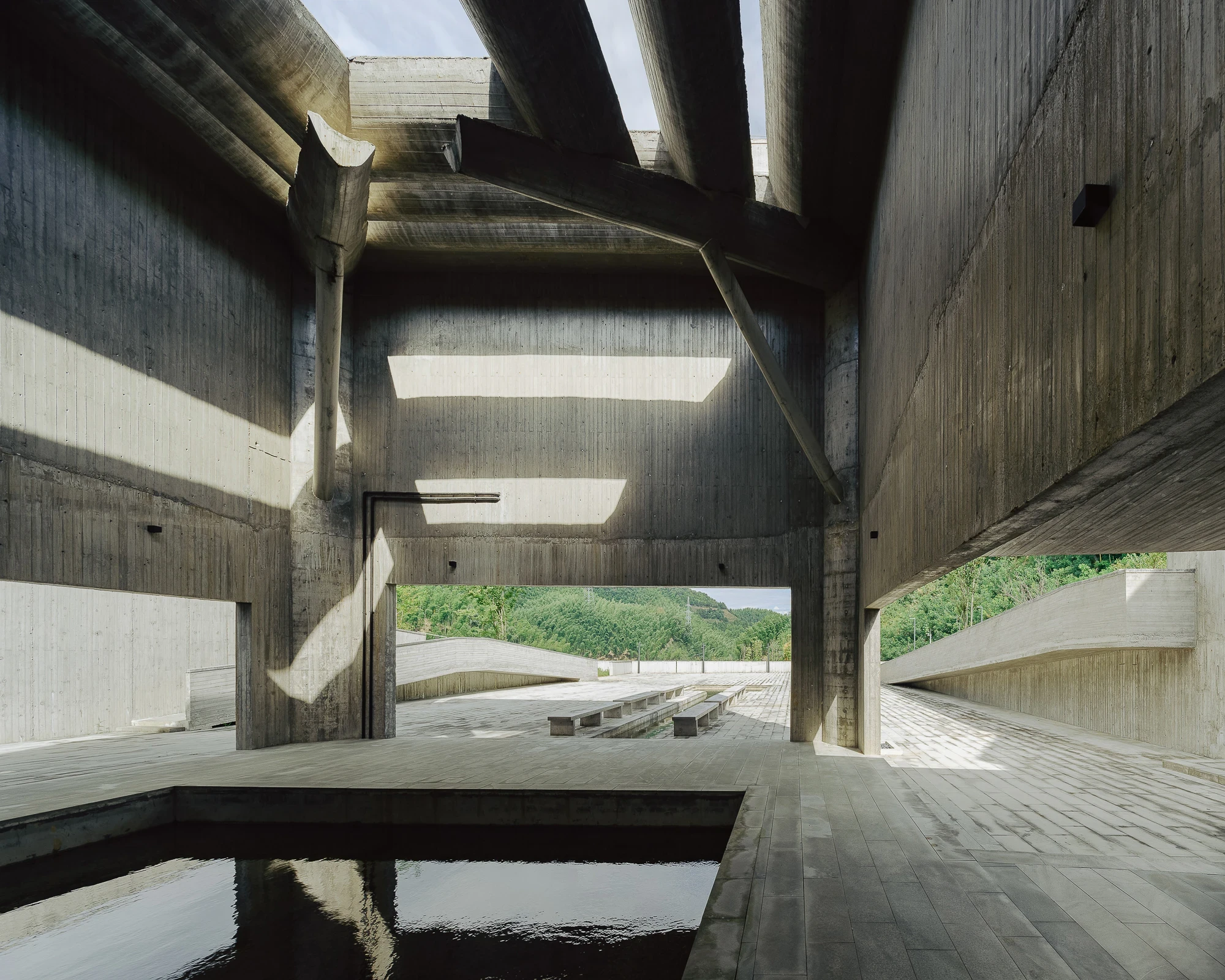
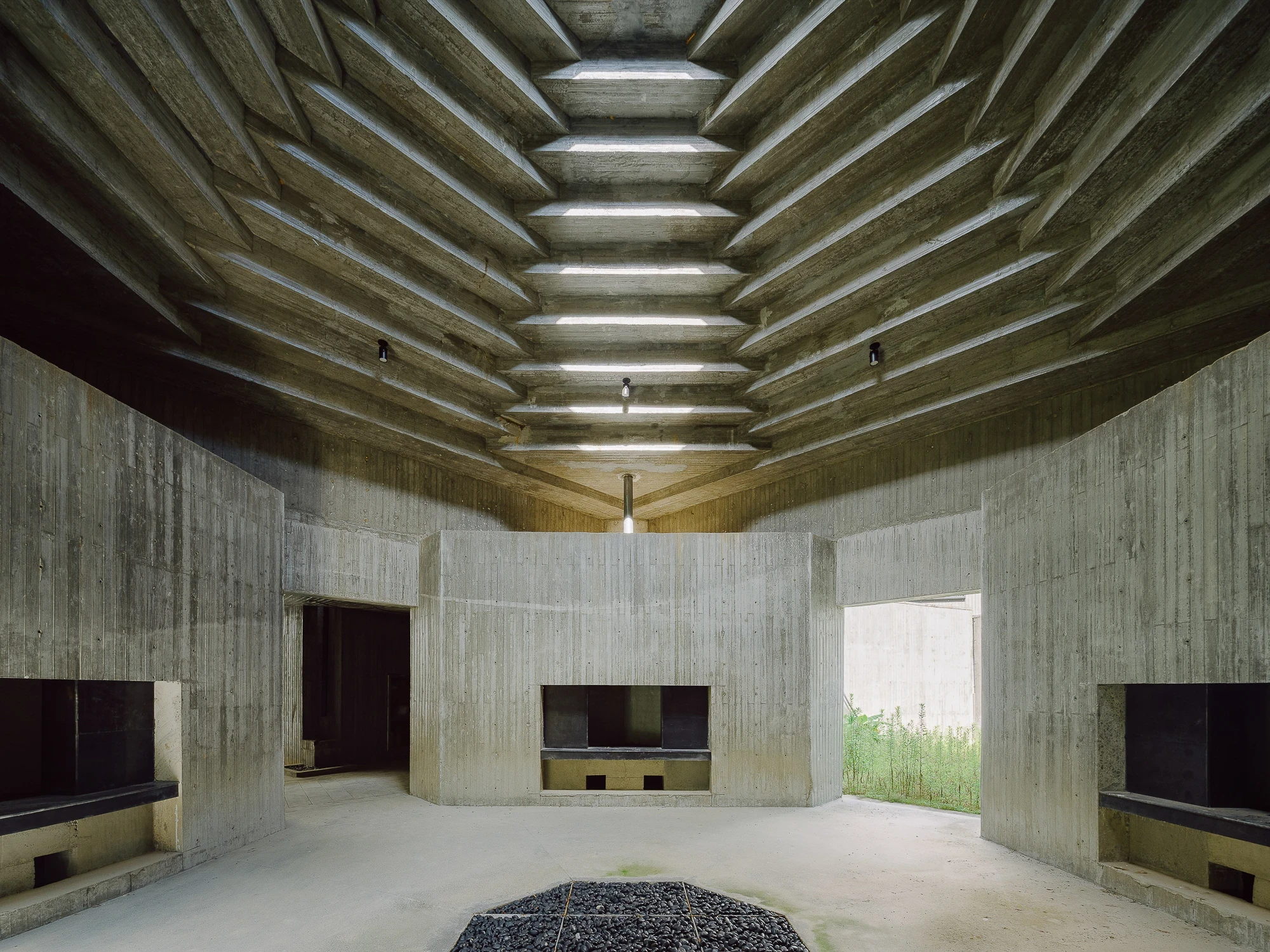
Inside, the ceilings do most of the work. Concrete beams are corbelled inward and stacked in stepped tiers, each course cantilevering slightly past the last until the whole surface narrows toward a small square opening at the centre. From below the effect is a coffered funnel drawing the eye upward to a patch of open sky. Looking straight up the opening, the tiers spiral and interlock like the underside of a timber pagoda translated into raw concrete.
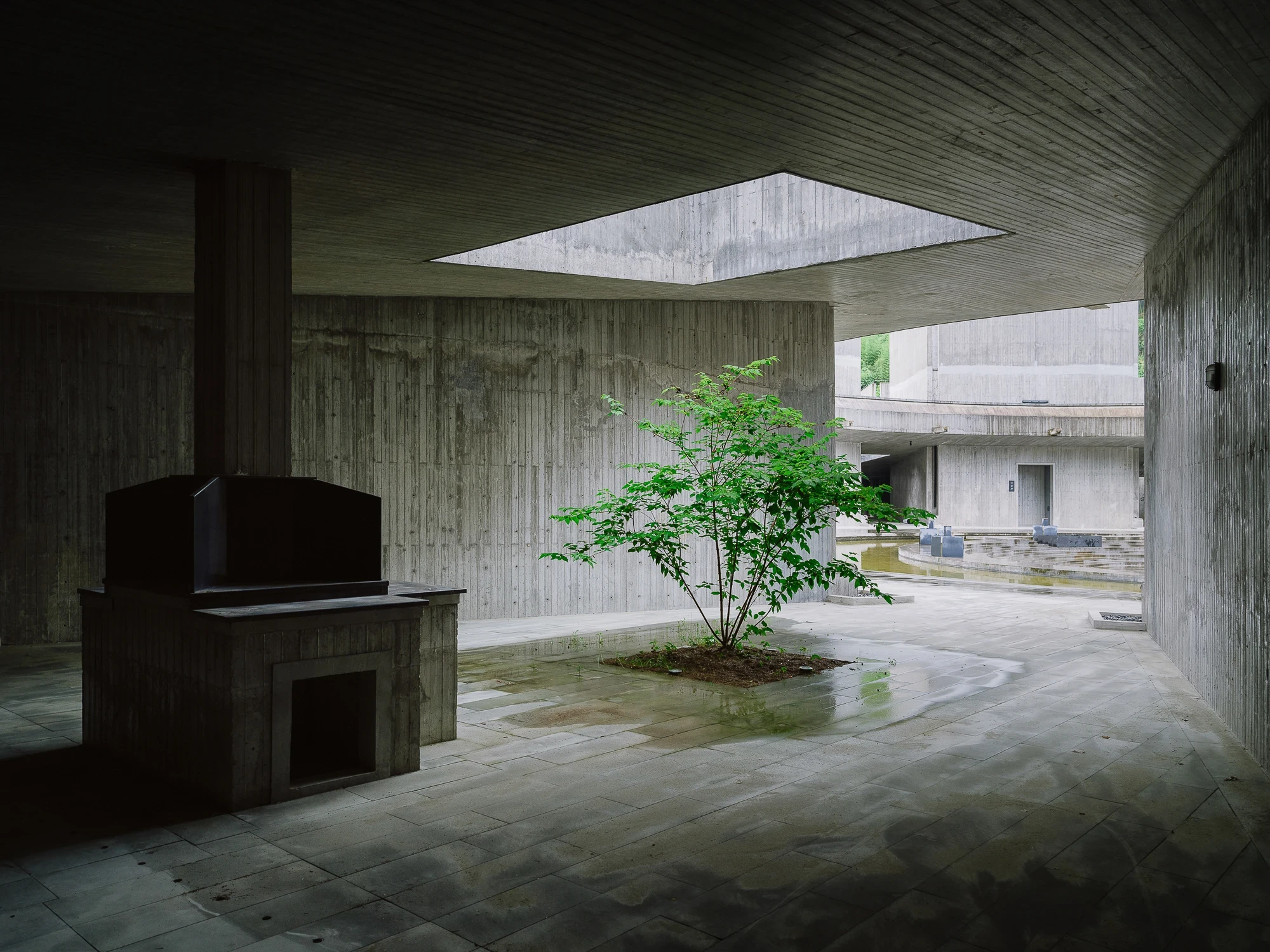
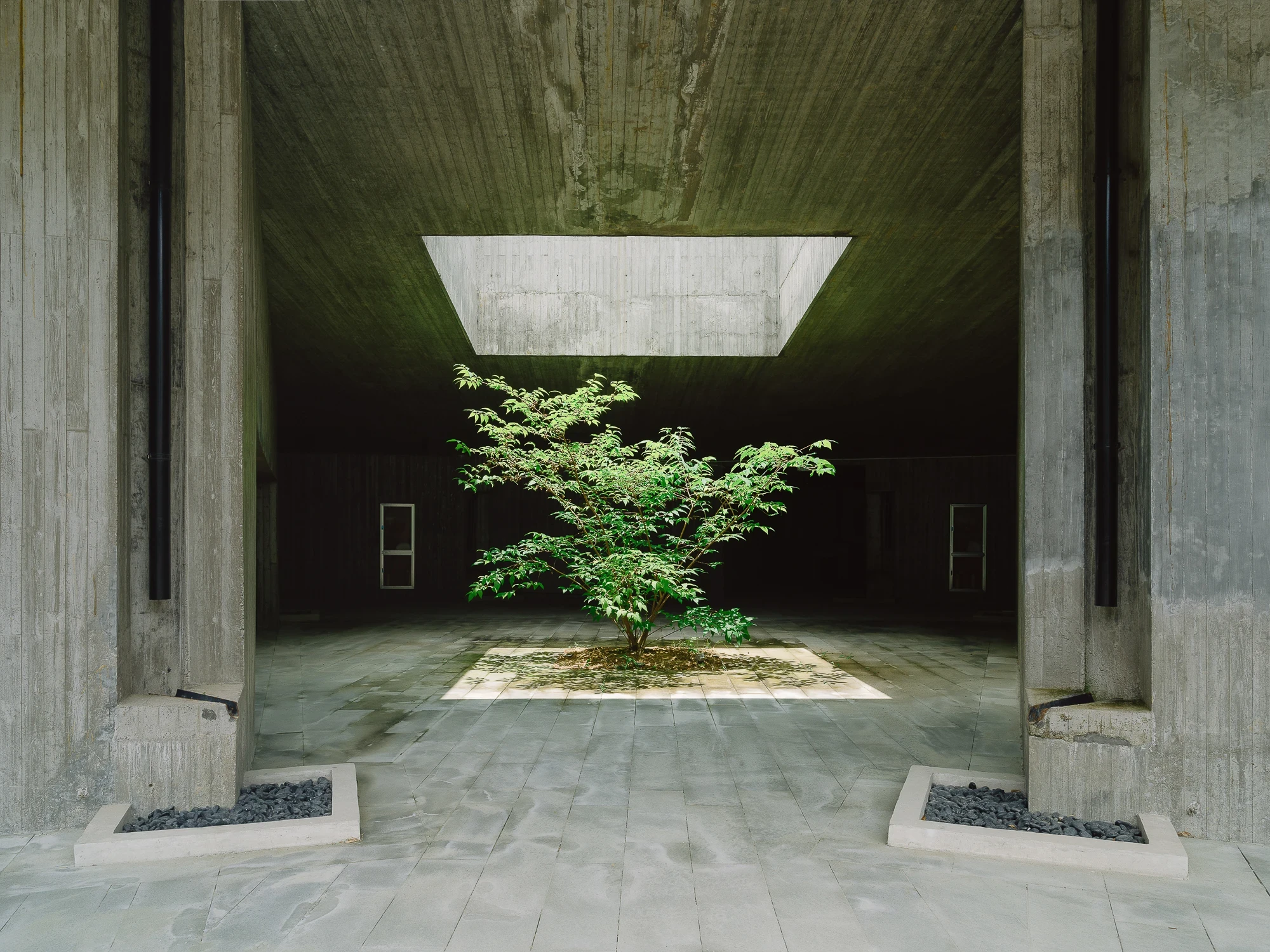
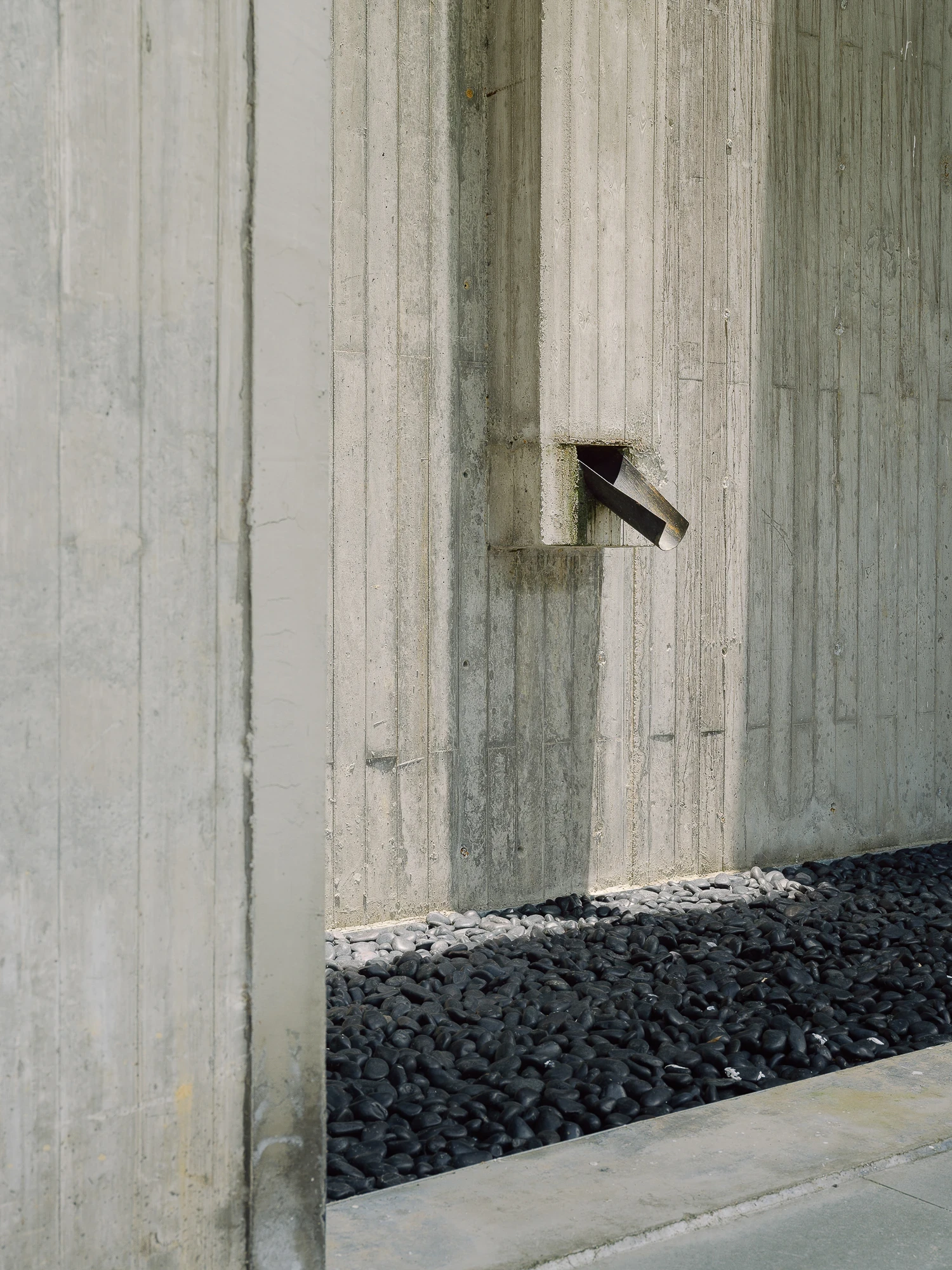
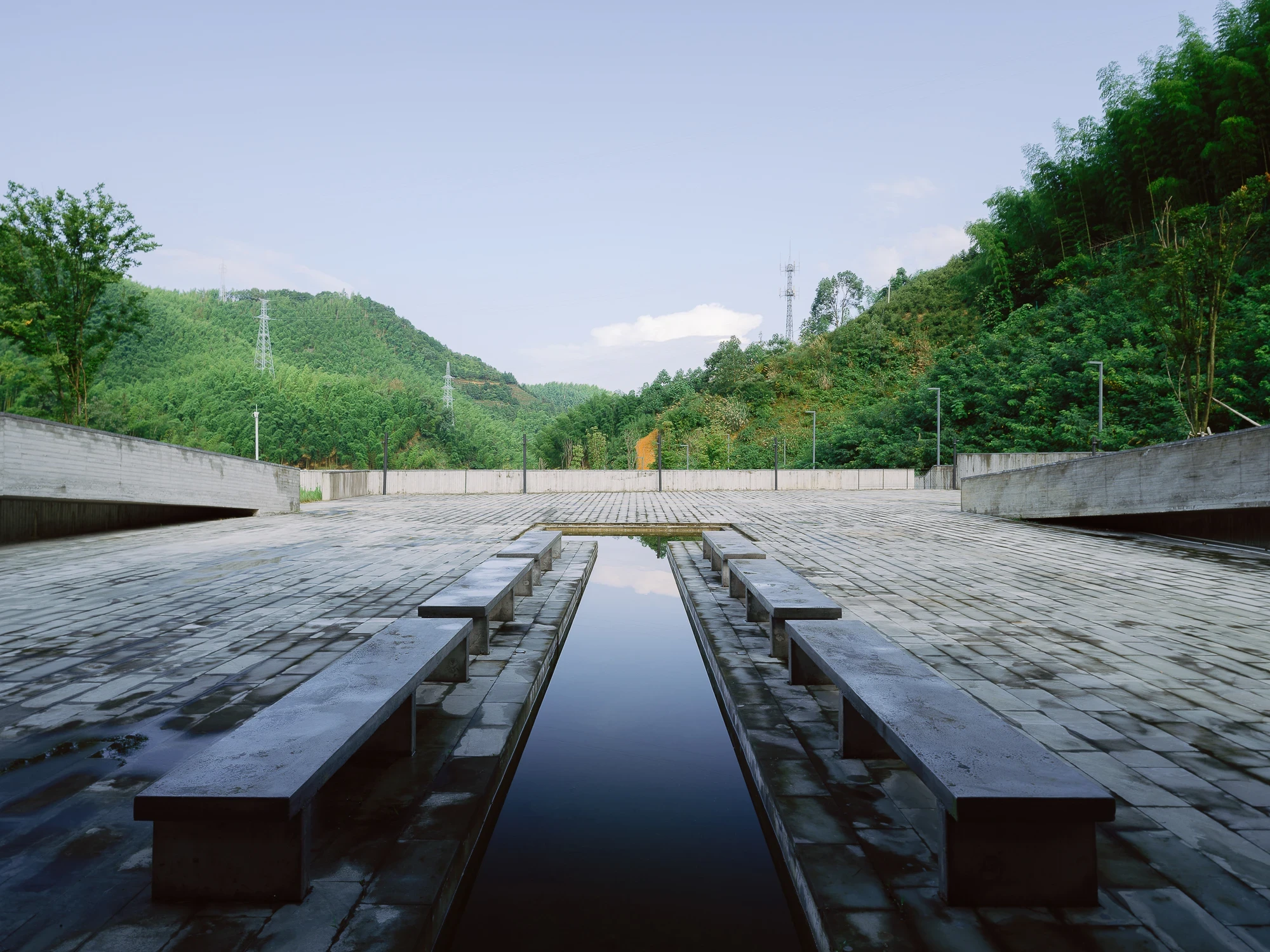
The rooms are held quiet and mostly empty. A mourning hall opens under a rectangular skylight, its floor bare grey concrete but for a bier banked with white and green flowers and a low carved timber base. Elsewhere a single maple grows from a square of earth cut into the paving, lit by a shaft that falls straight through a skylight overhead. Water runs through the plan as a recurring measure, a channel threaded between stone benches, a sunken pool ringed by a curving concrete ramp, a black bed of river stones catching the drip from a spout set into the wall.
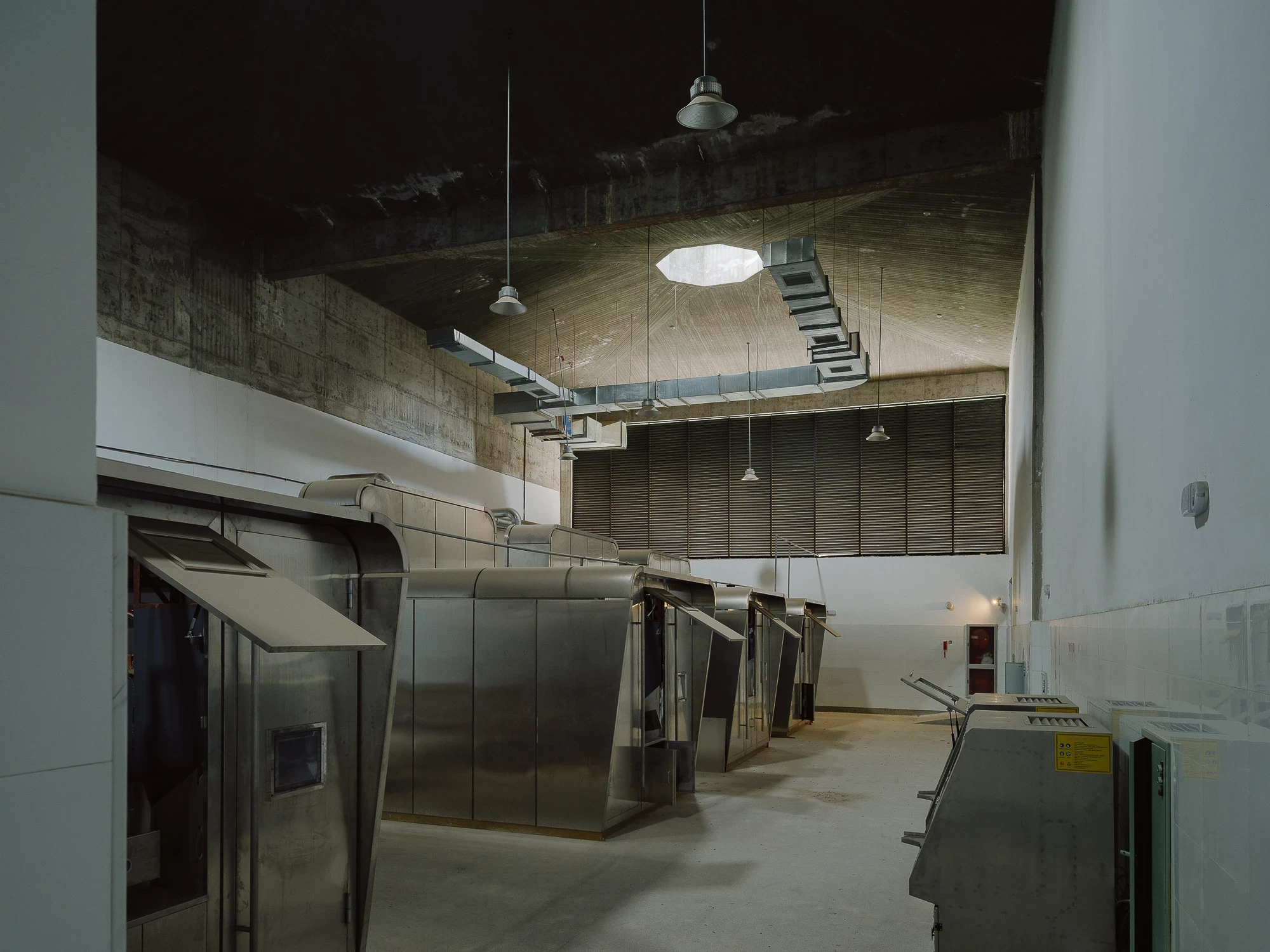
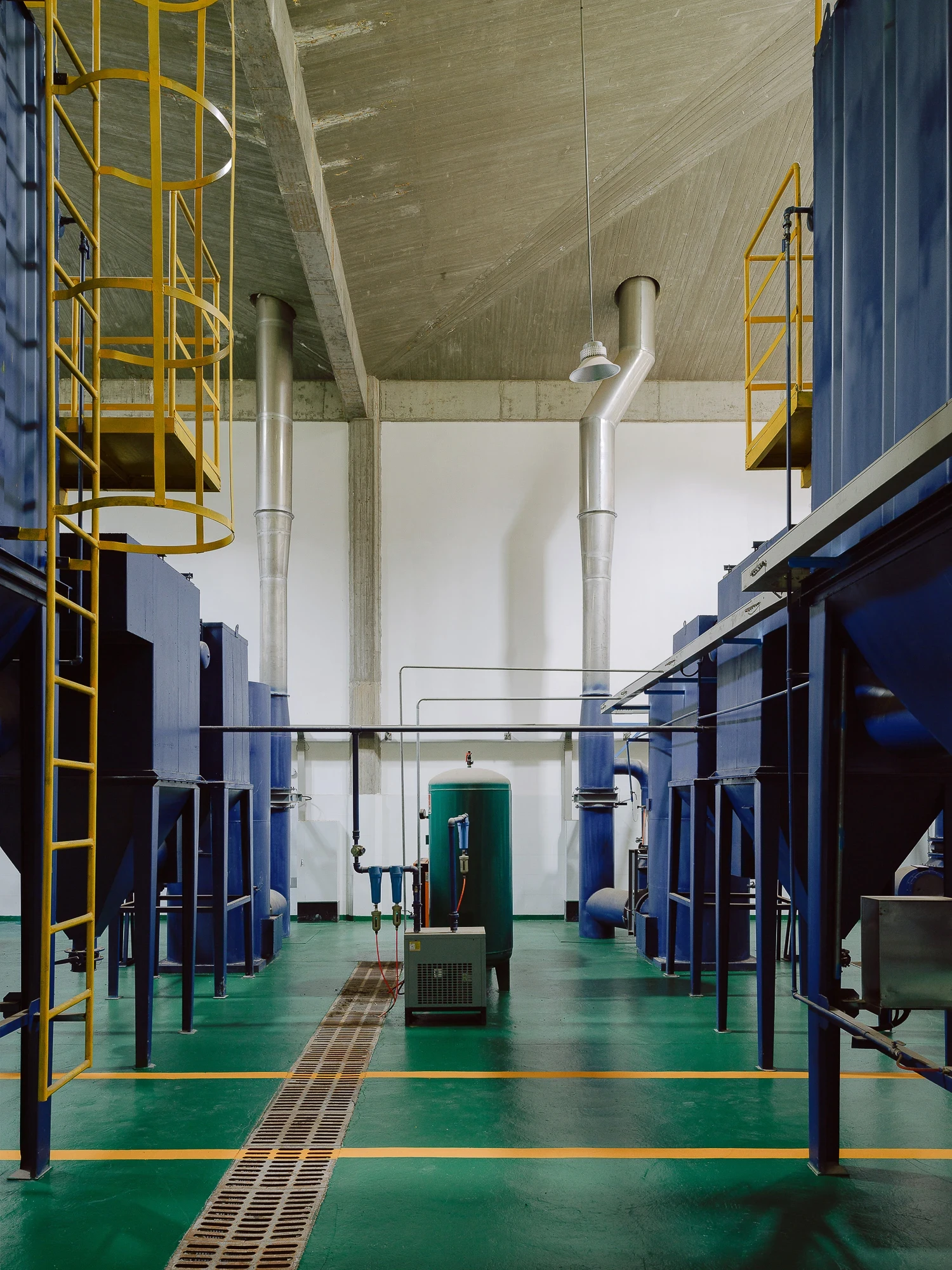
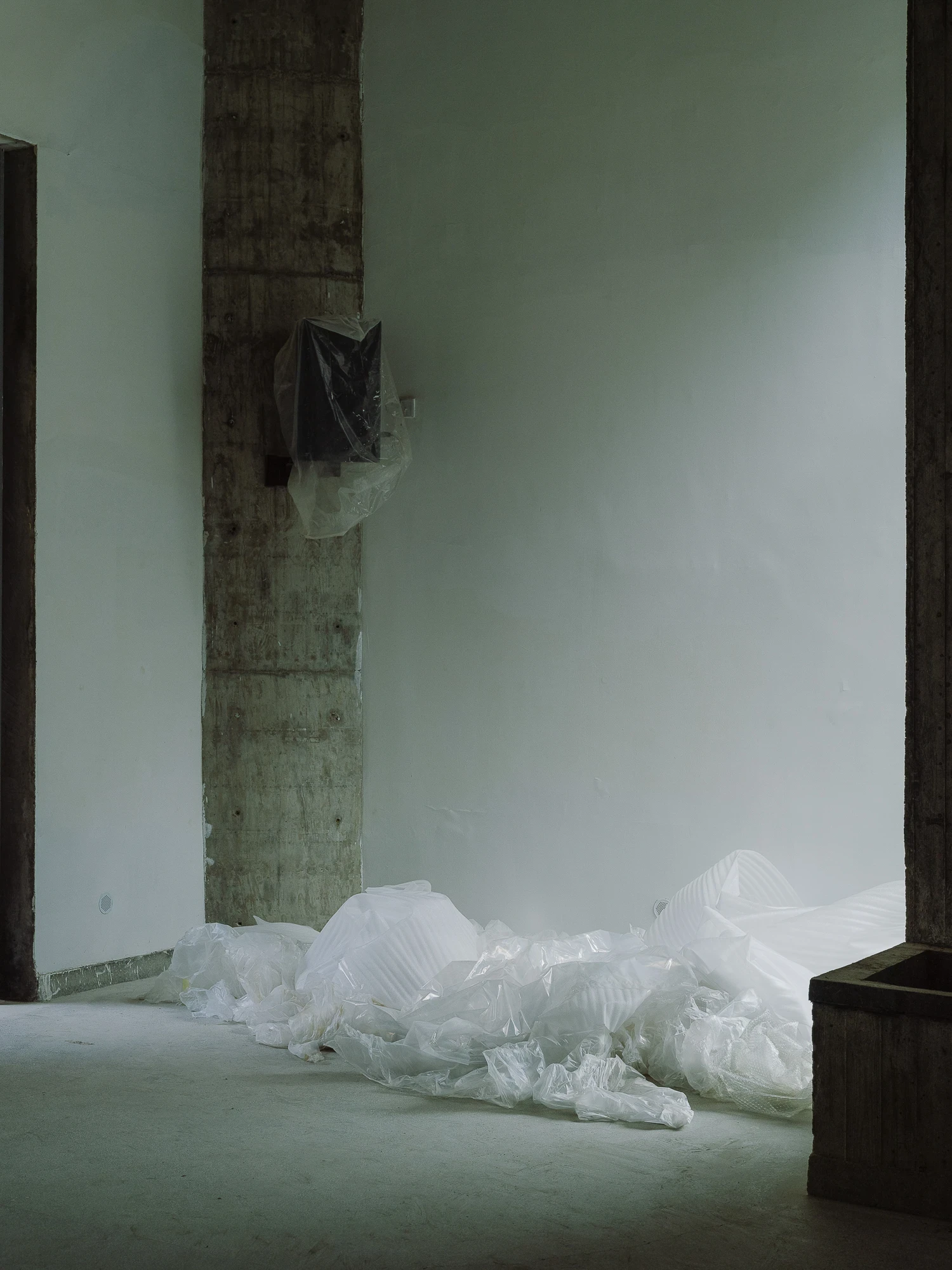
The detailing stays deliberately plain and legible. Rough concrete meets whitewashed and tiled surfaces where the working rooms begin, the cremation hall with its row of steel furnaces, the plant room stacked with blue tanks and yellow ladders. Nothing is dressed up. The complex carries the full sequence of a funeral, from arrival and ceremony to the machinery of cremation, and lets each part keep its own plain register.
What holds it together is light and mass. Heavy walls, deep shadow, then a sudden vertical of daylight cutting down through an oculus onto a table, a tree, a coffin. The building says little and offers a great deal of room to stand in. In a valley where the living and the dead are separated by a single wall, it makes a place that is grave without being grim, and open to the sky at exactly the moments it needs to be.