Thisispaper Community
Join today.
Enter your email address to receive the latest news on emerging art, design, lifestyle and tech from Thisispaper, delivered straight to your inbox.
Oops! Something went wrong while submitting the form.
Instant access to new channels
The top stories curated daily
Weekly roundups of what's important
Original features and deep dives
Exclusive community features
London Guide
under the patronage of
Solarium by Amélie Mckee at Plicnik Space Initiative
Alexander Zaxarov
Nov 26, 2026

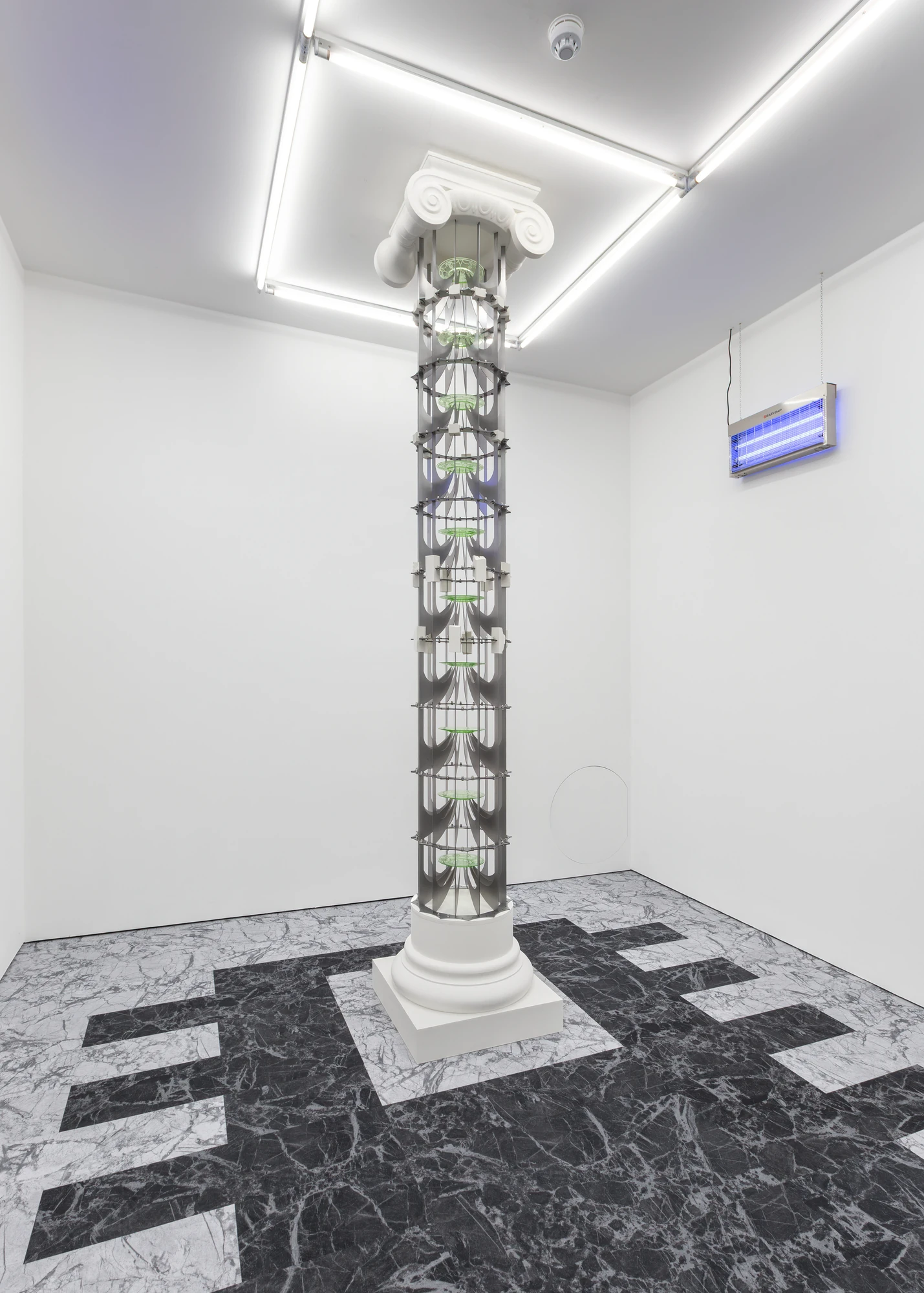
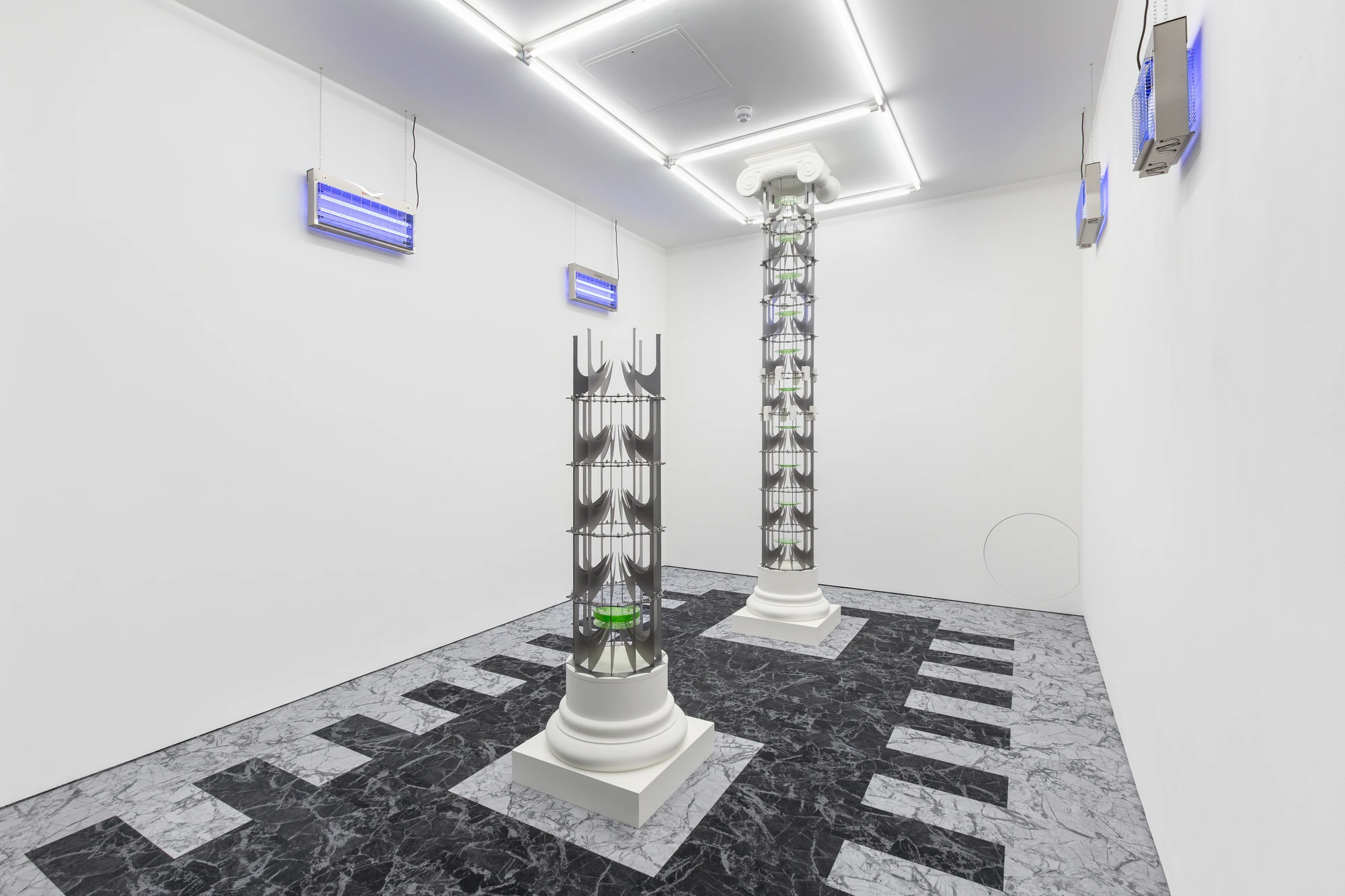
Marble becomes carpet, Ionic columns become steel frames for uranium glass, and an insect killer’s ultraviolet sets the plates glowing in Solarium, Amélie Mckee’s show at Plicnik Space Initiative in Deptford, London.

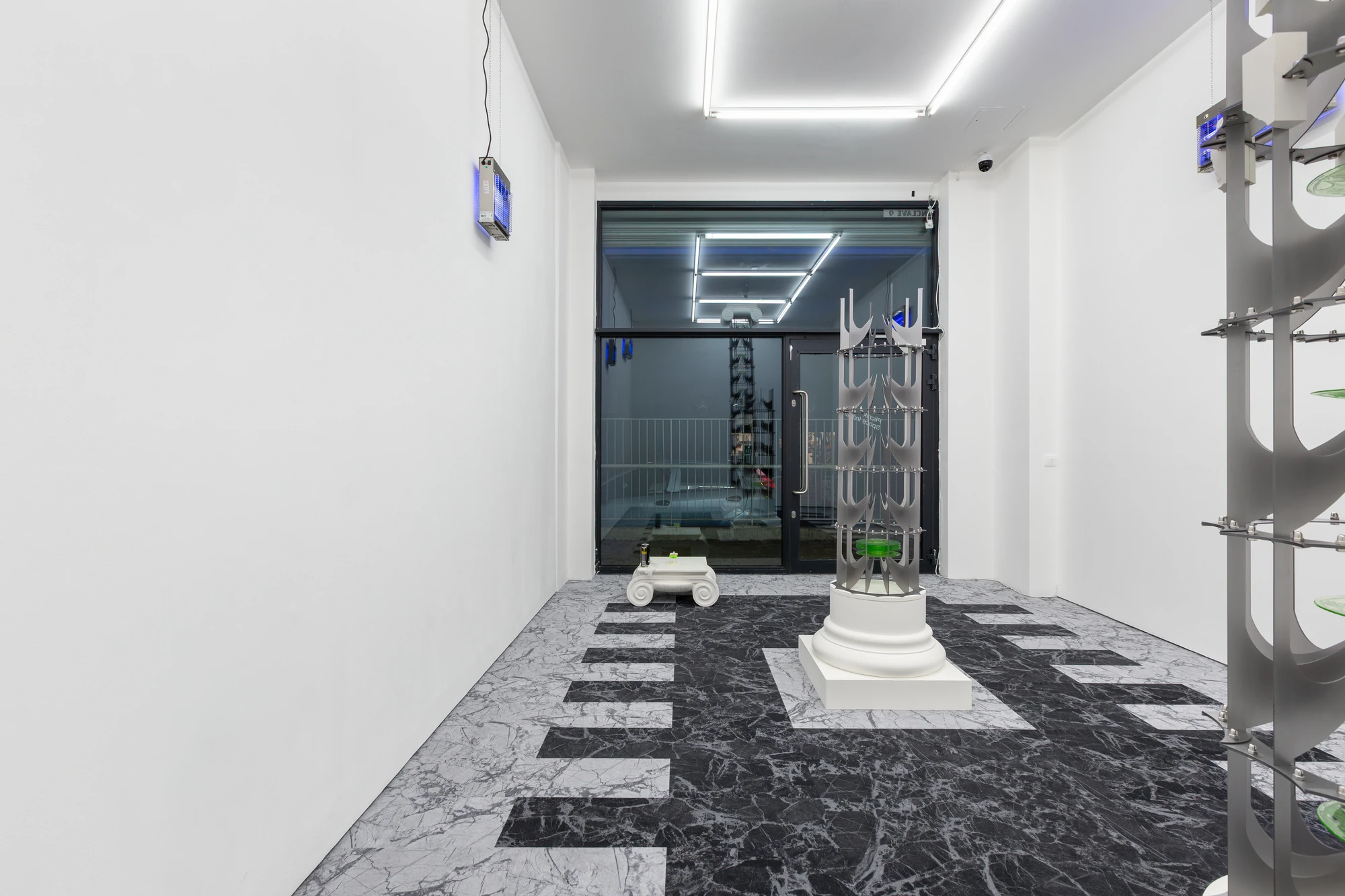
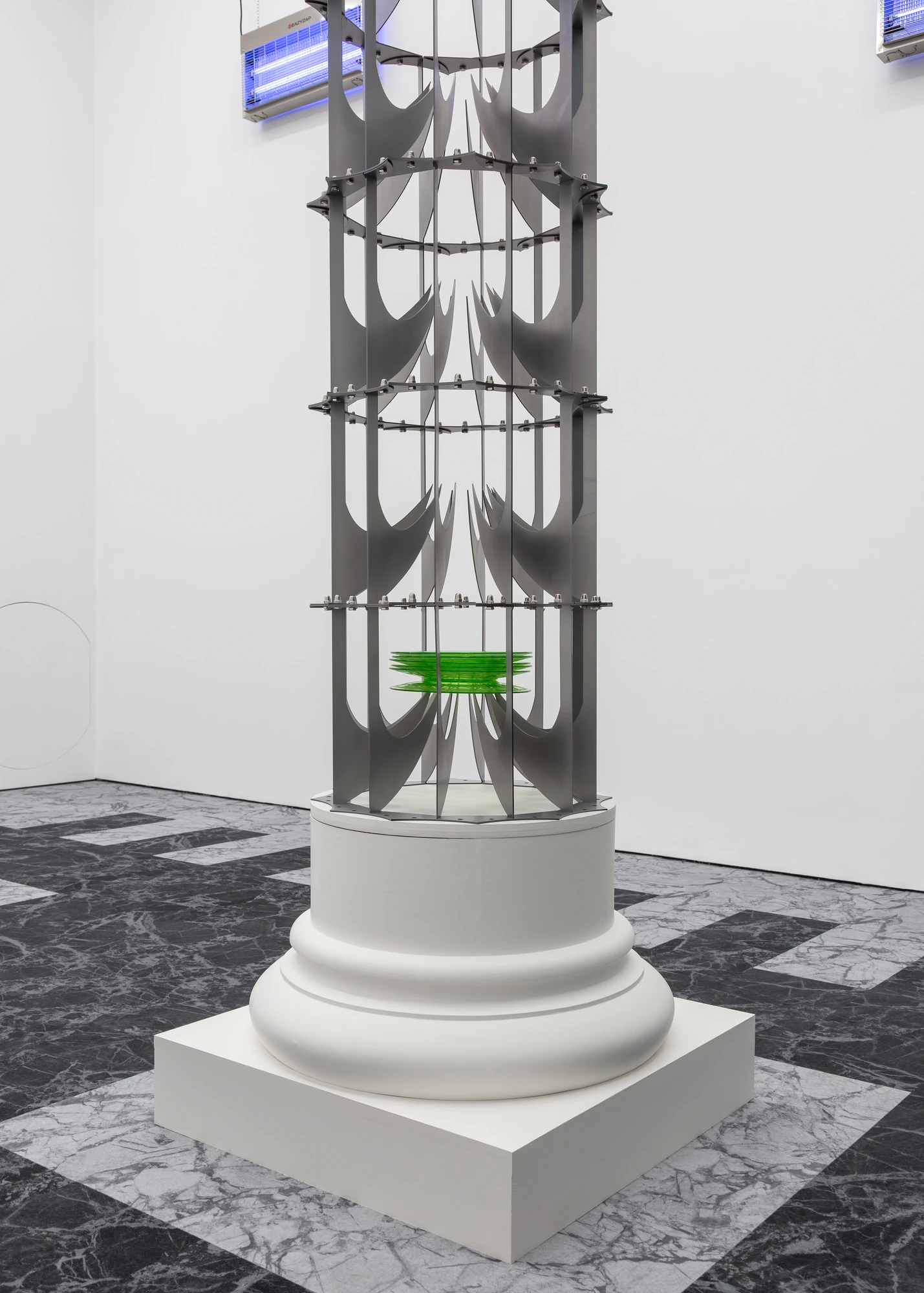
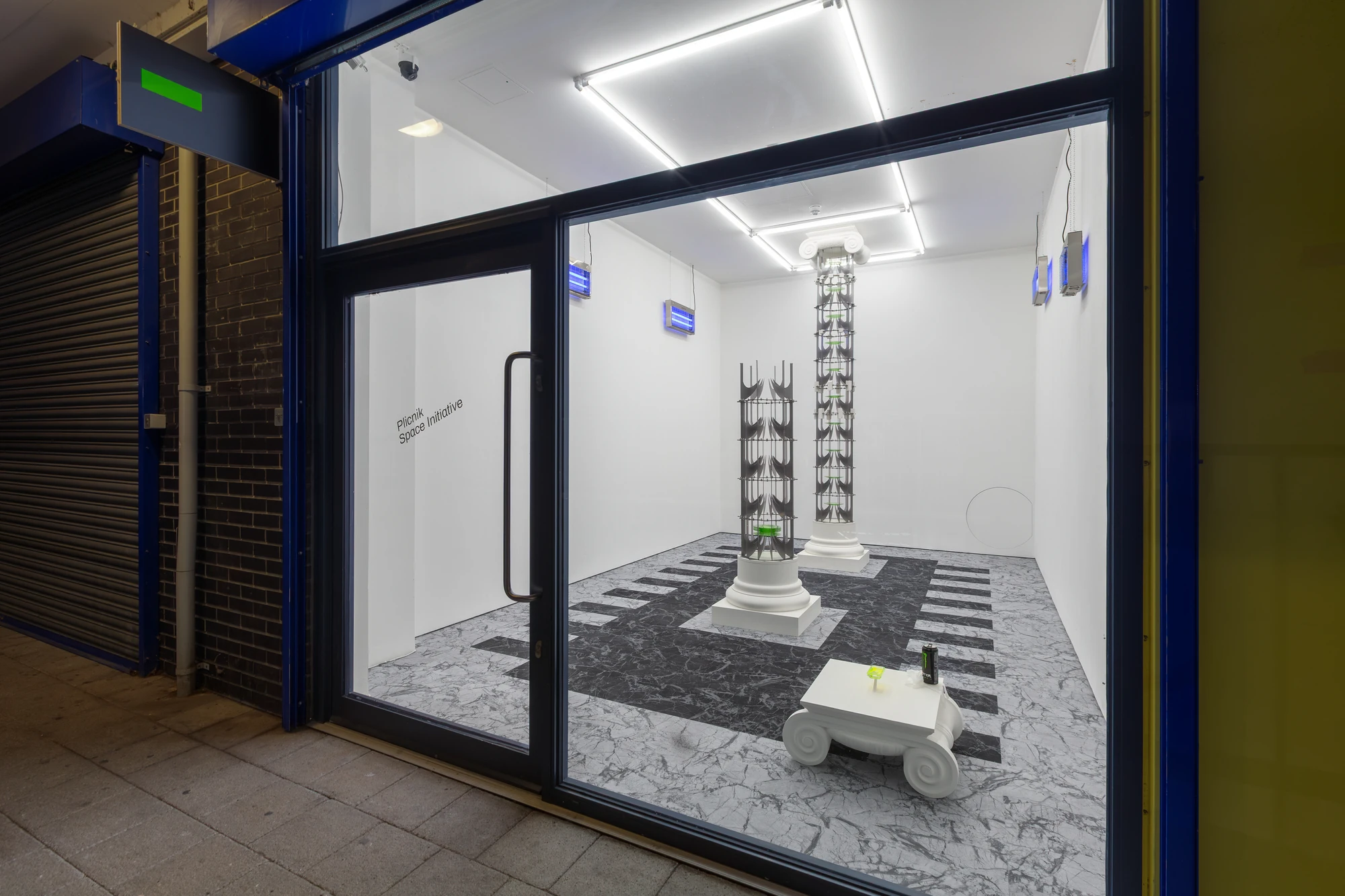
Solarium asks how authority dresses itself, and what remains when the costume proves to be a copy. The curators, Kollektiv Collective, describe a scenario in which value, form and function drift as power shifts. At Plicnik Space Initiative, four works from 2026 make one installation: Solarium itself, faux marble carpet planks with Easyzap insect lights and a soundtrack; the two columns of Cameo Ballerina; Meditation; and 40524839 continued, a wall work in plywood and paint. On view 6 November to 19 December 2026.

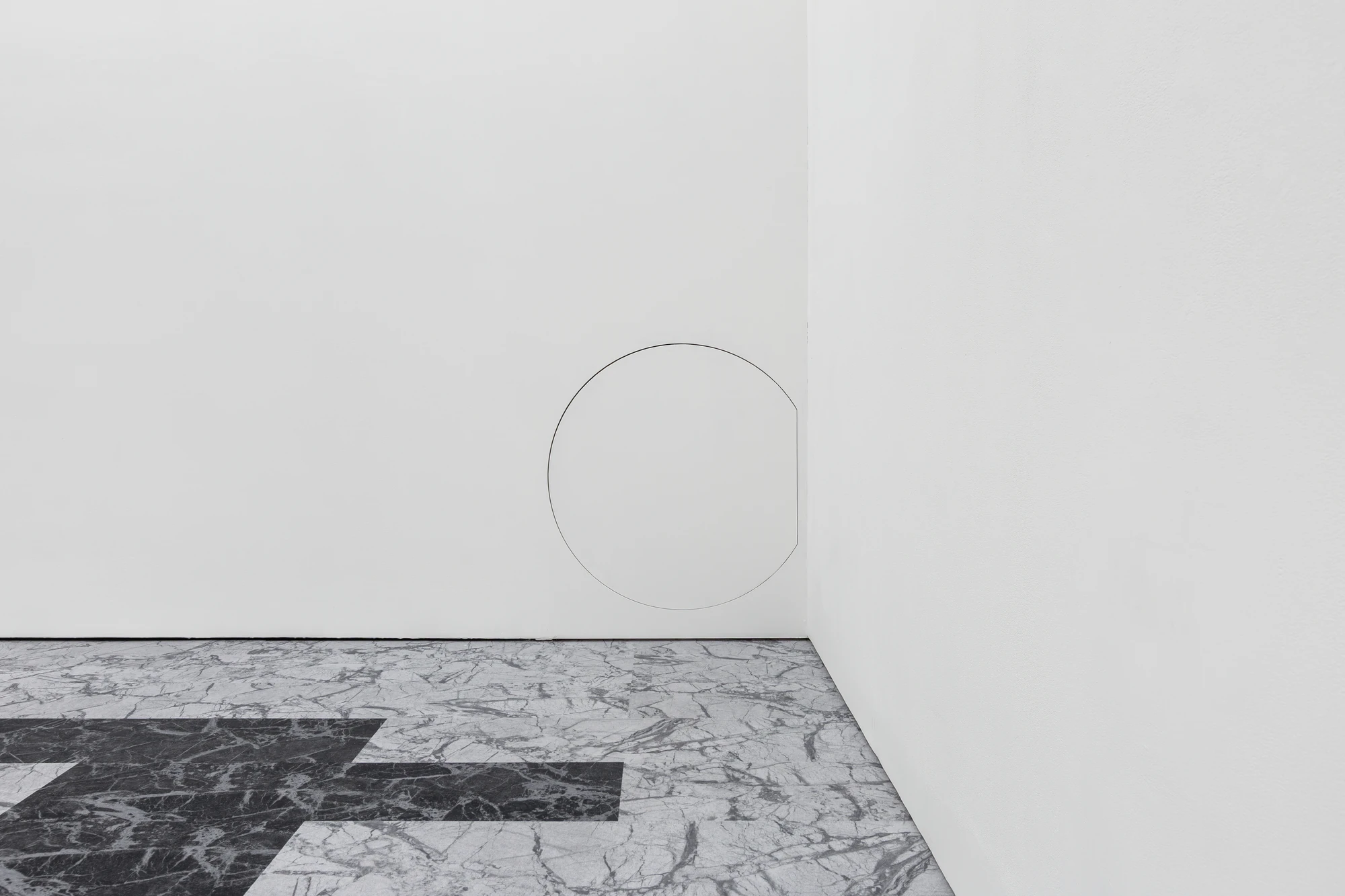
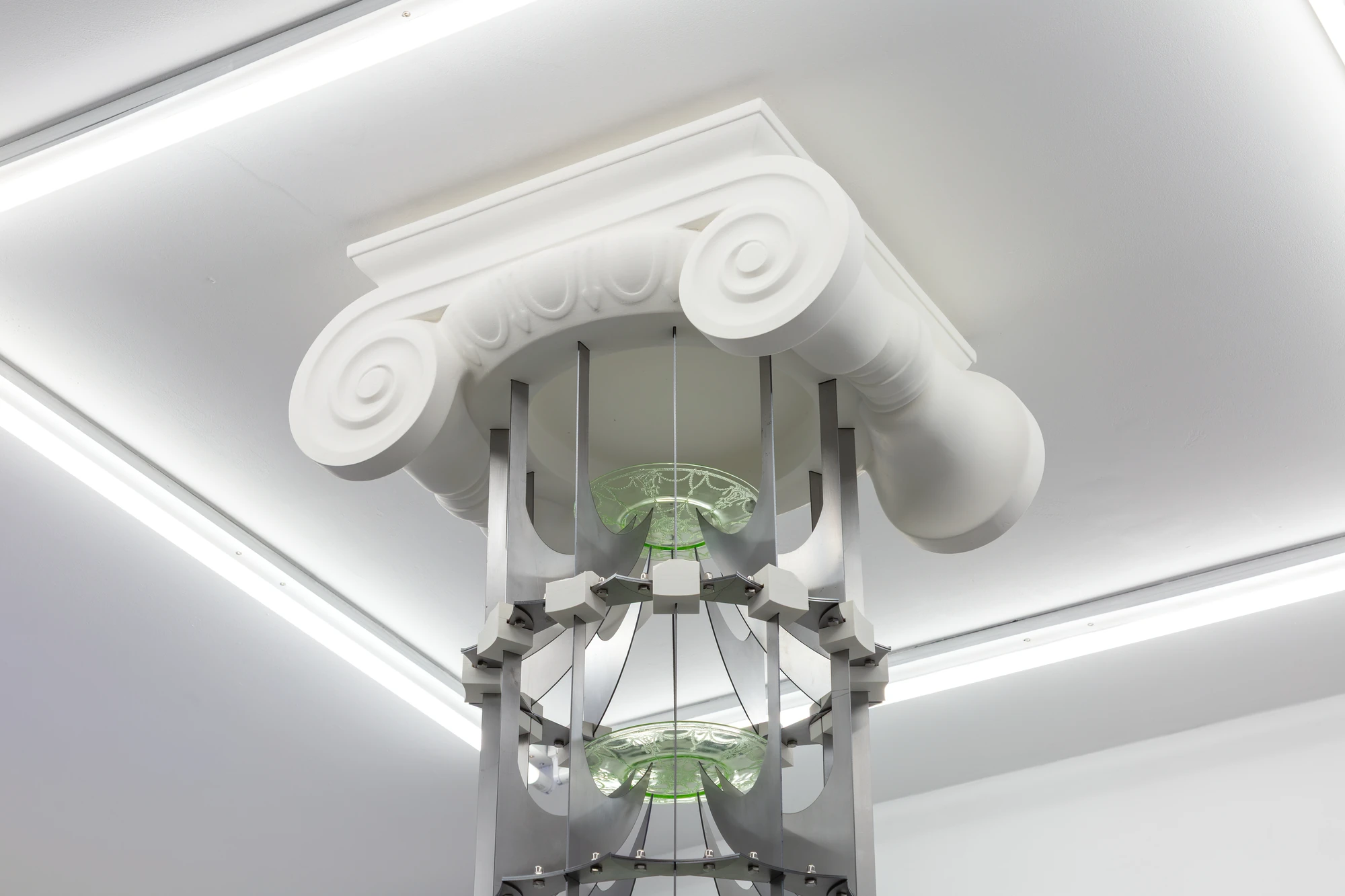
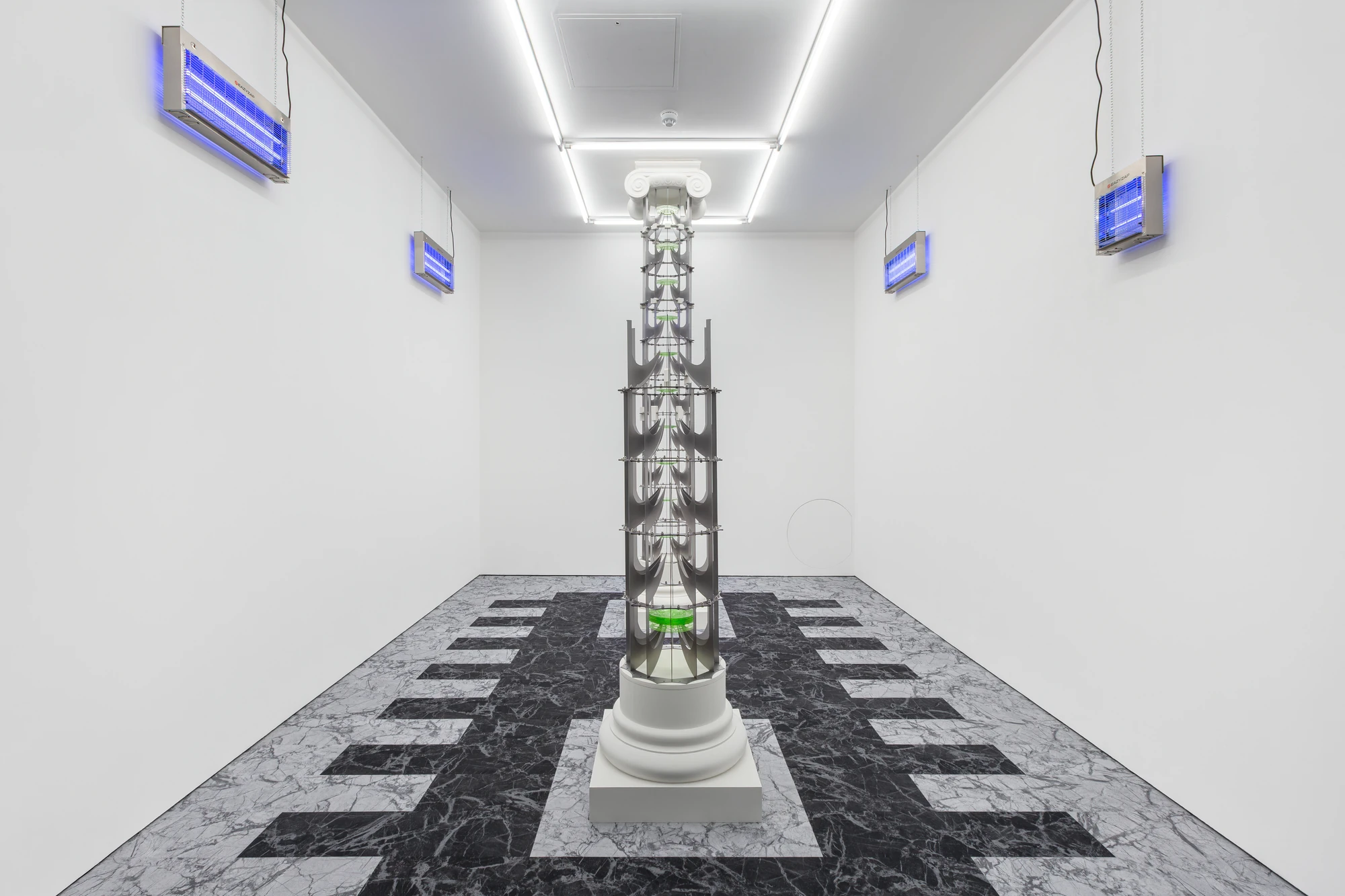
Start with the floor. “Marble, a signifier of wealth, is rendered as a soft-textured carpet”, the curators write, its sections set out of true so they read as hazard stripes. Cameo Ballerina, the sculpture at the centre, borrows the neoclassical columns that governments and museums use to project authority, but its Ionic tops and bases are 3D-printed, antiquity in a deceptively light material. Nothing here is what it claims to be, which is the point the curators press: the frameworks that lend authority are synthetic too.

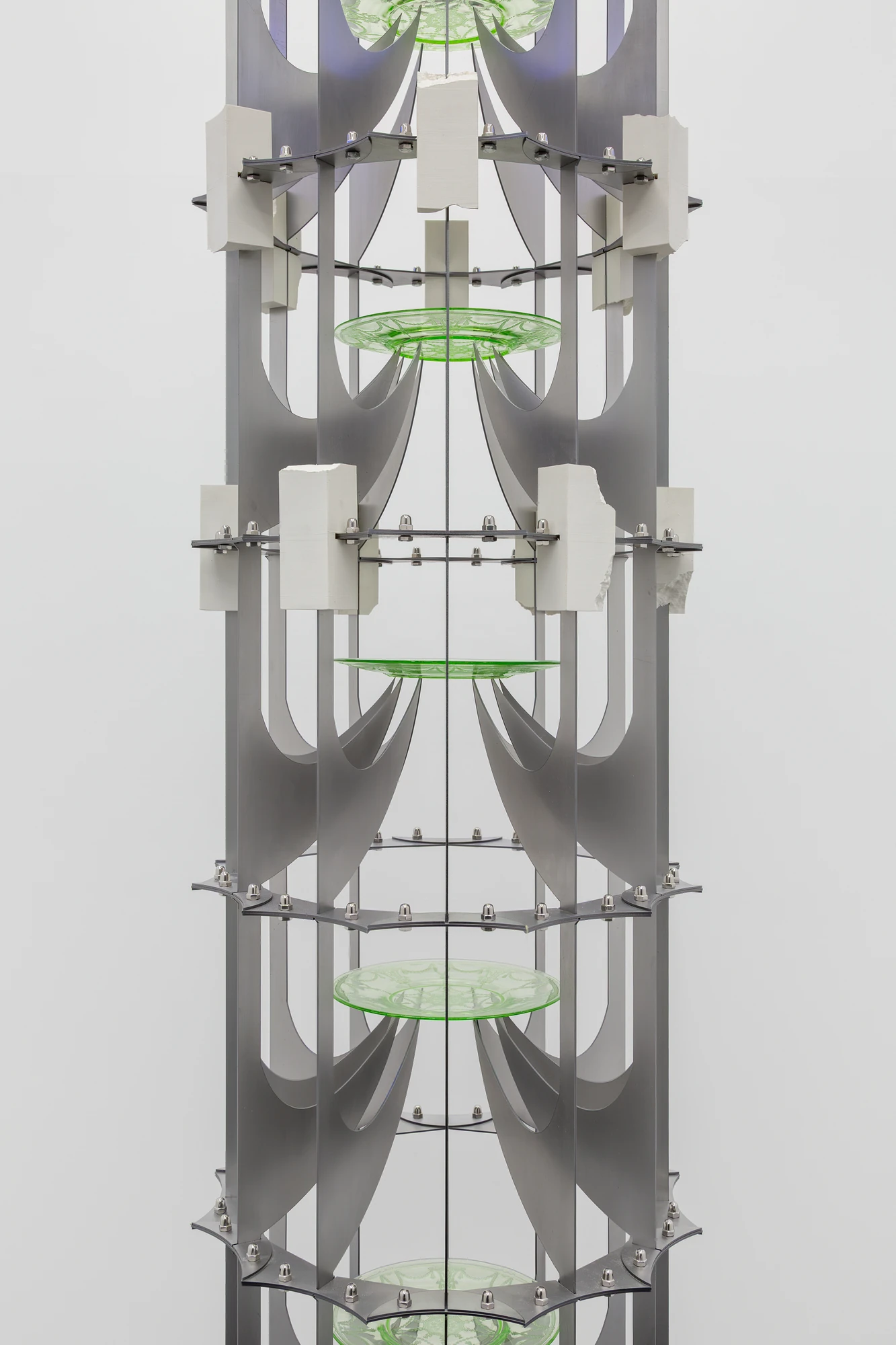
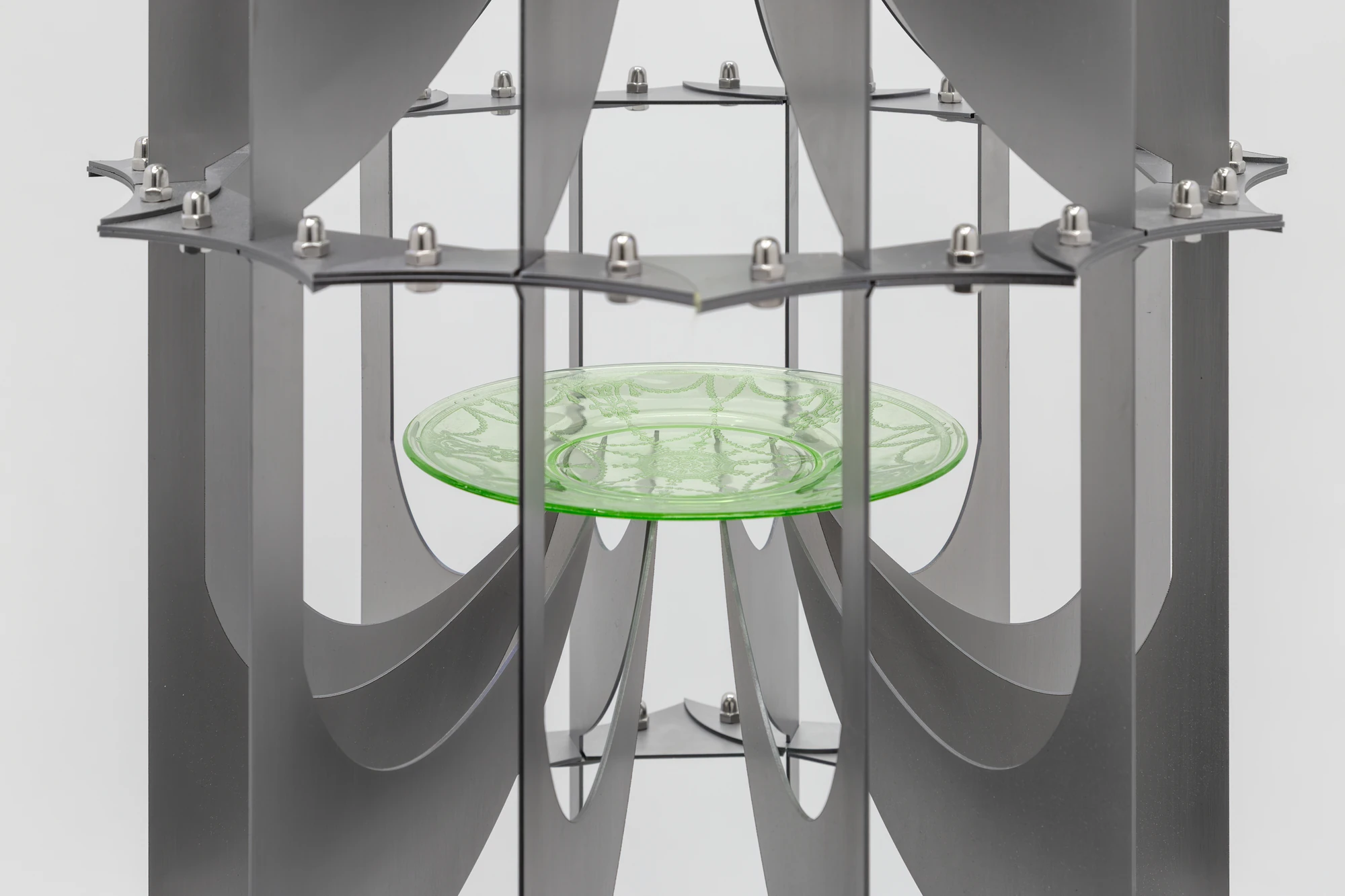
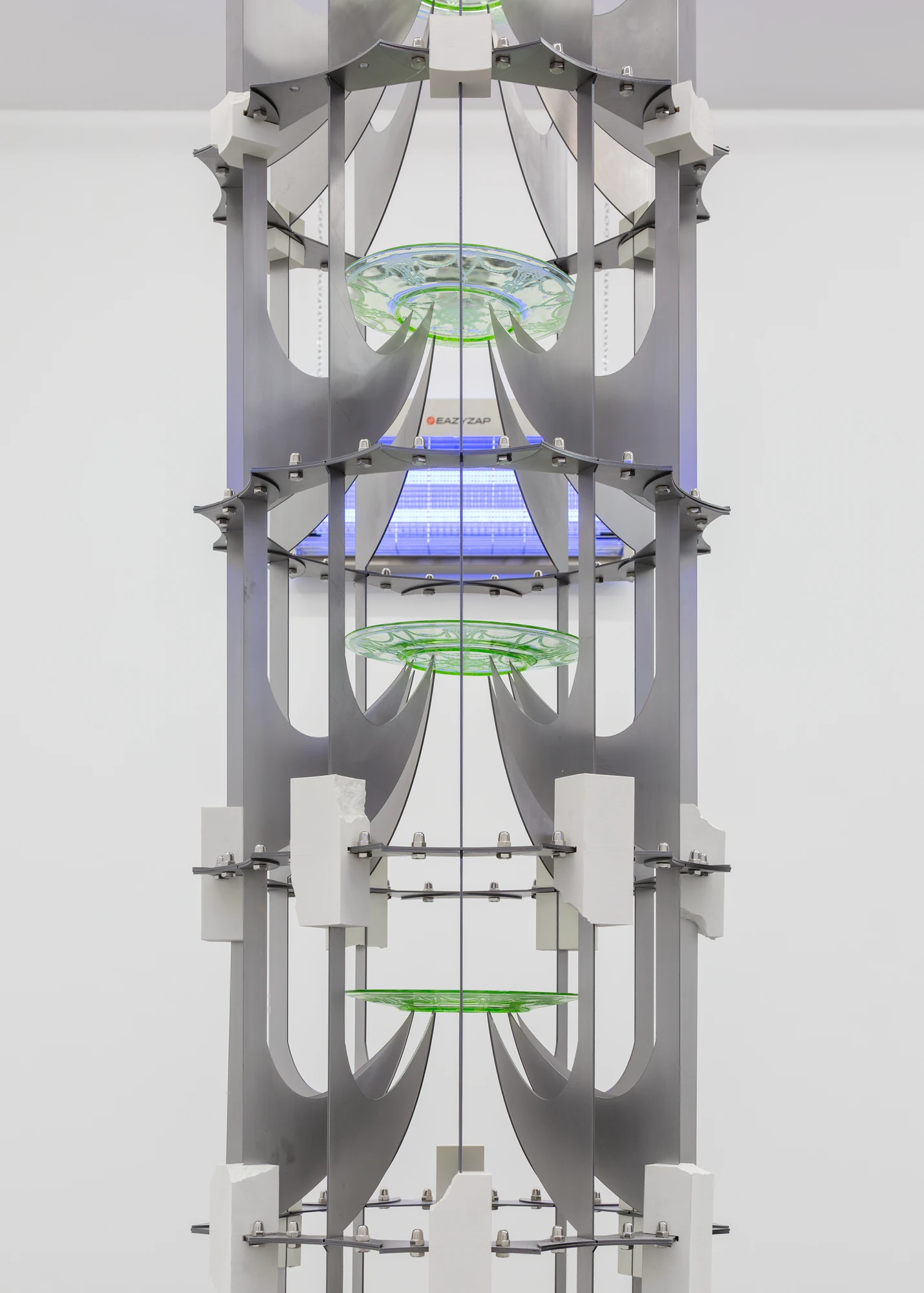
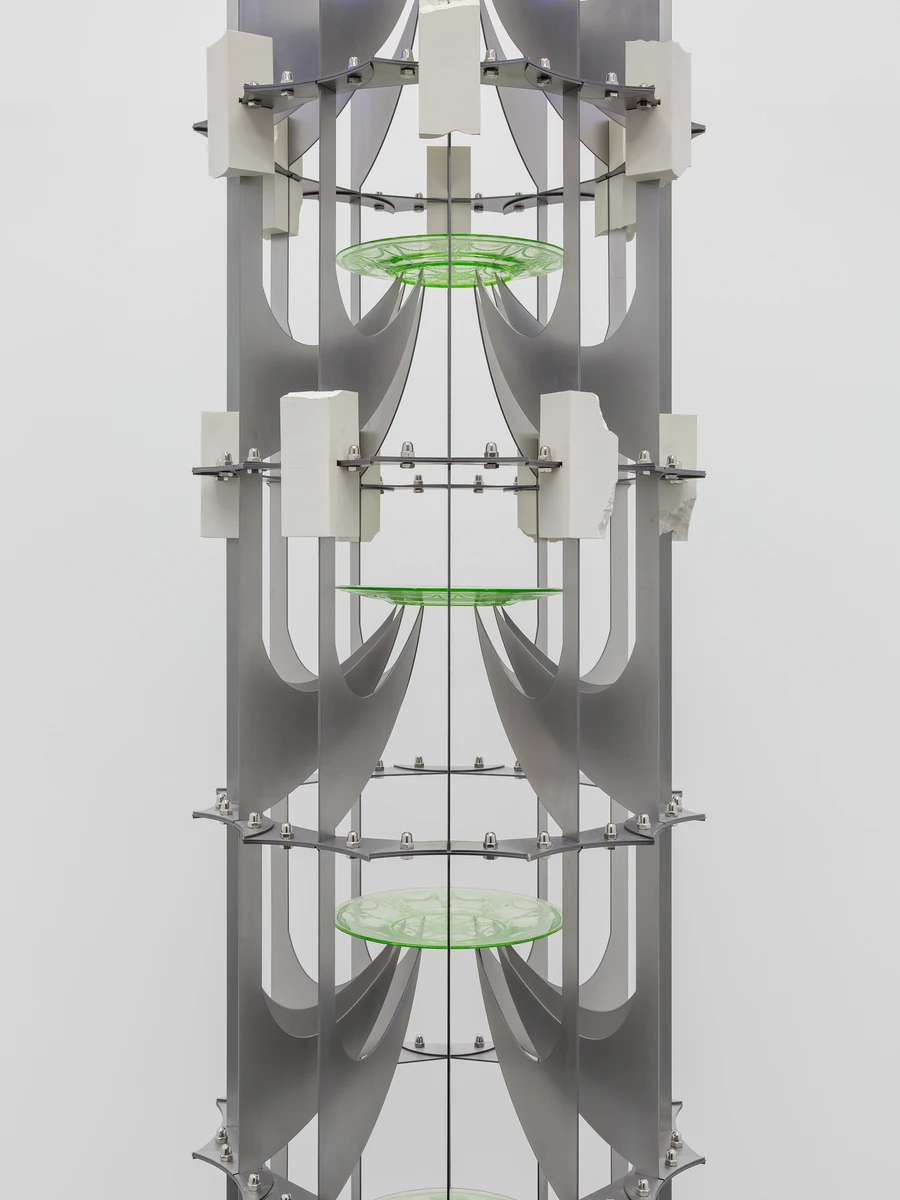
The mild steel carries a second reference. Mckee modelled the metalwork partly on Wardenclyffe Tower, Nikola Tesla’s unrealised scheme for wireless transmission, so the columns look built to collect, send or produce energy. Where a power source ought to be, vintage uranium glass salad plates are stacked inside the frames.

Those plates carry the show’s sharpest history. Uranium glass, a byproduct of radium extraction, spread across tableware and ornaments in the 1920s and 1930s, until uranium was held back for weapons and production fell away. “First home decor, then a war strategic asset”, as Kollektiv Collective put it: function, symbol and look all shift with technology and politics, and scientific research ended up in league with the military.

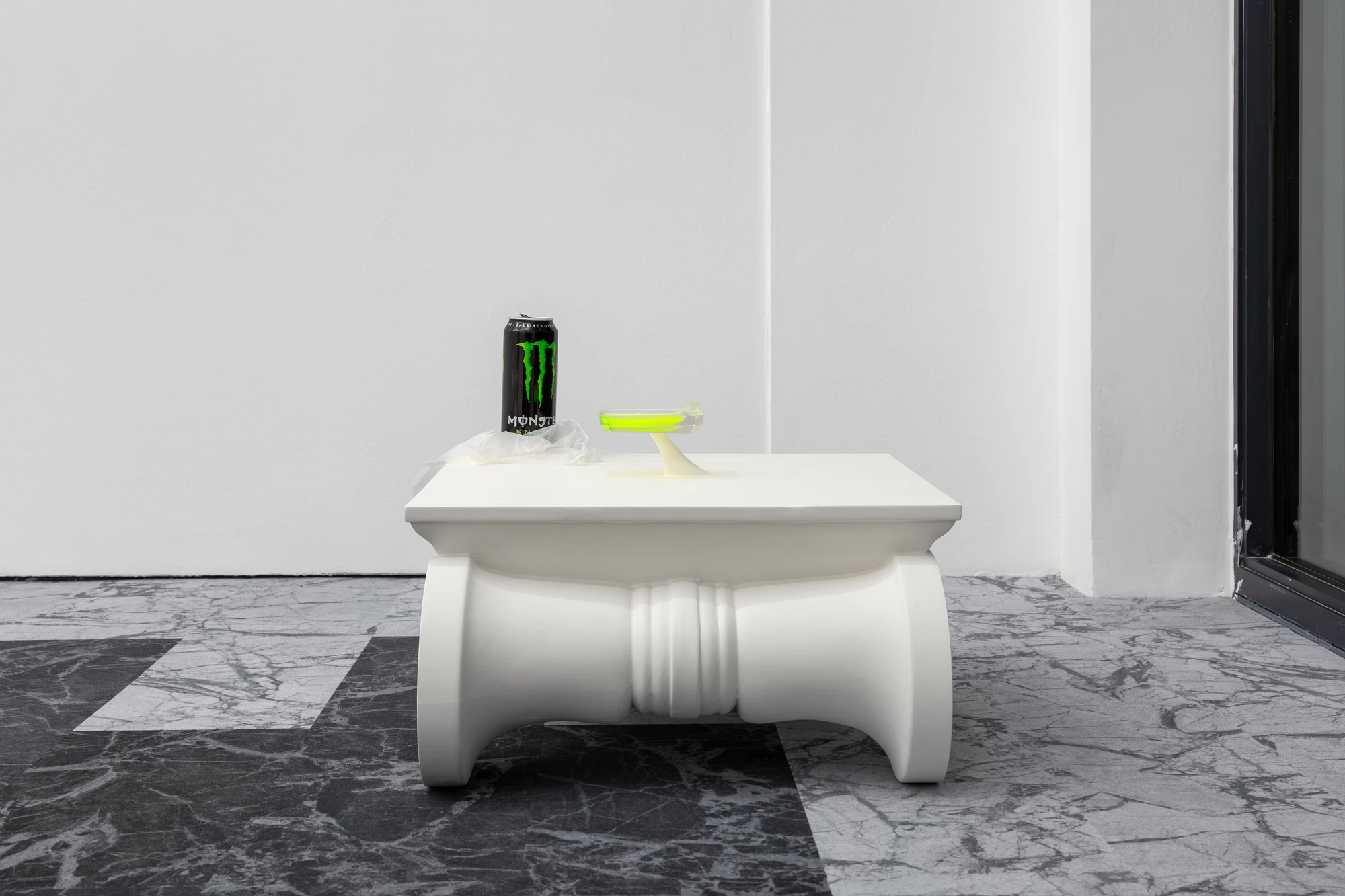
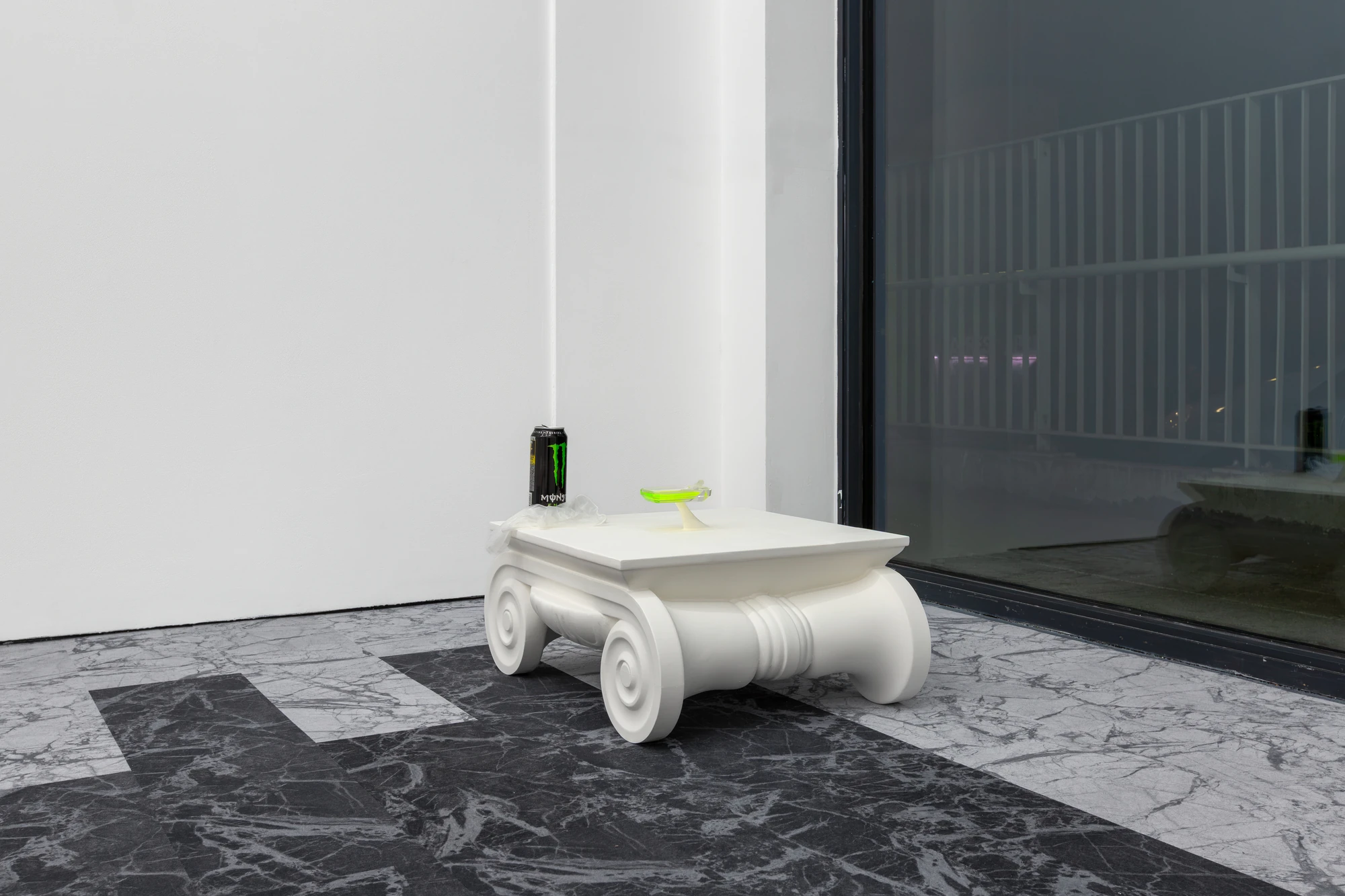
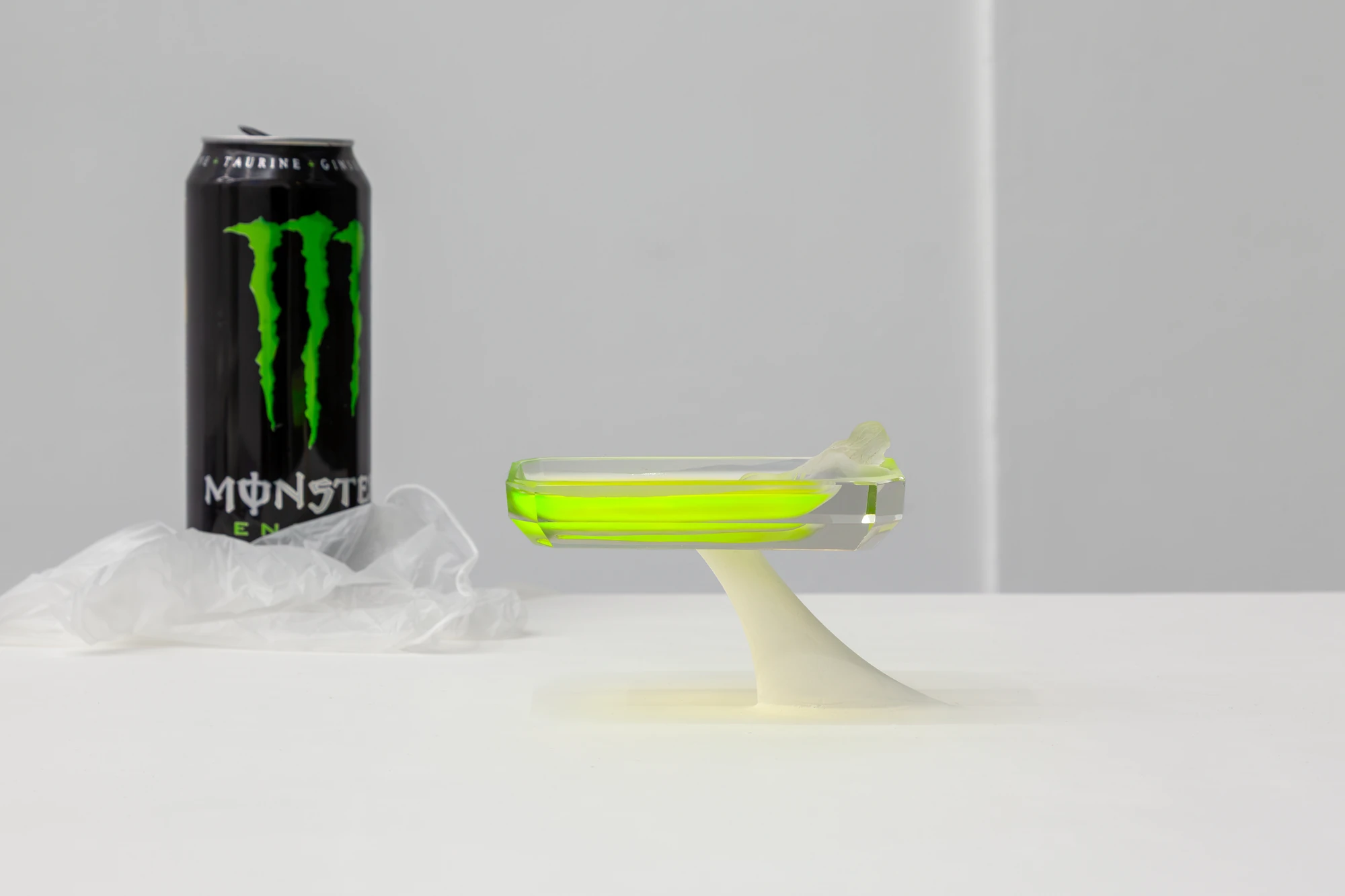
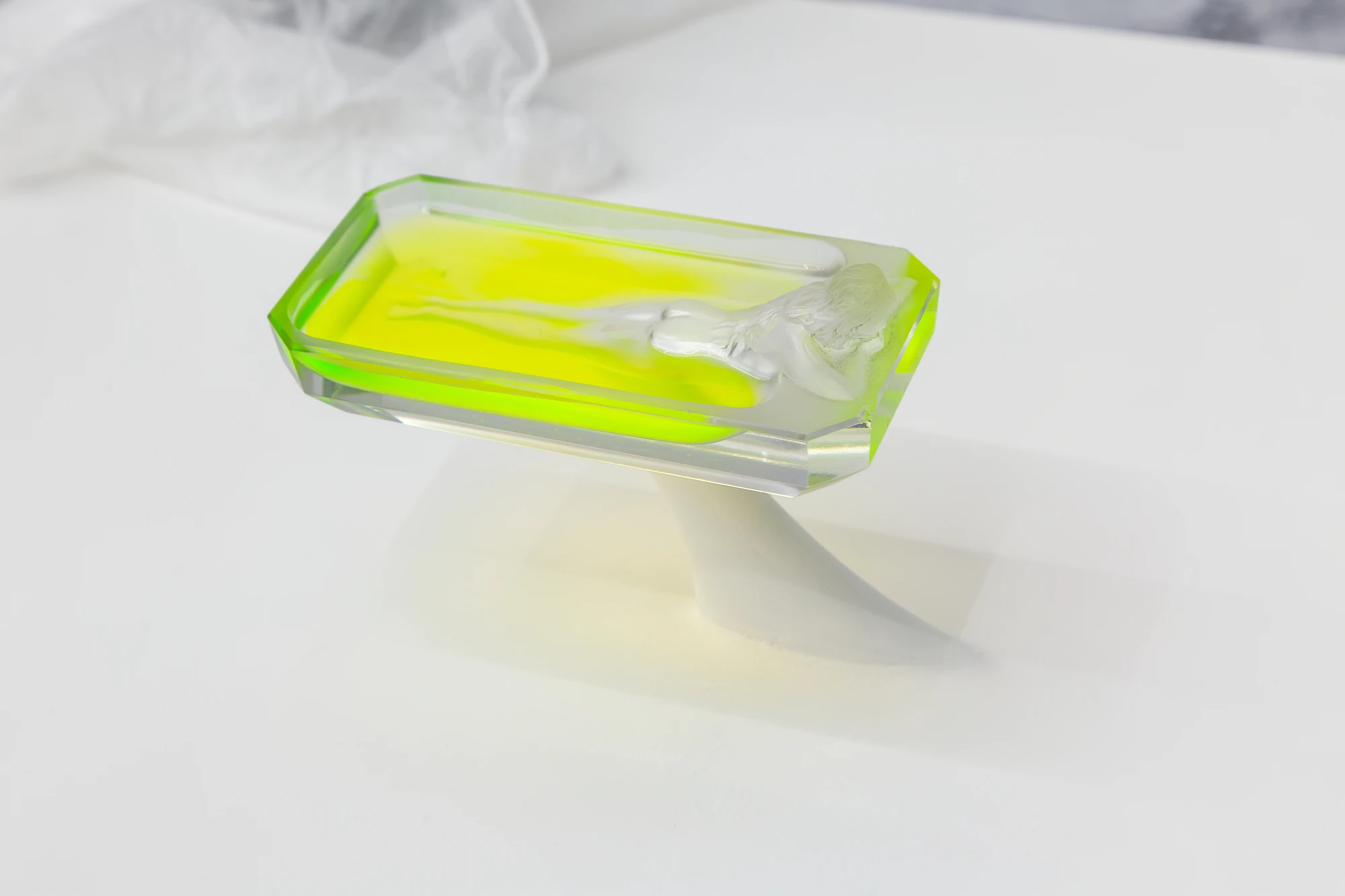
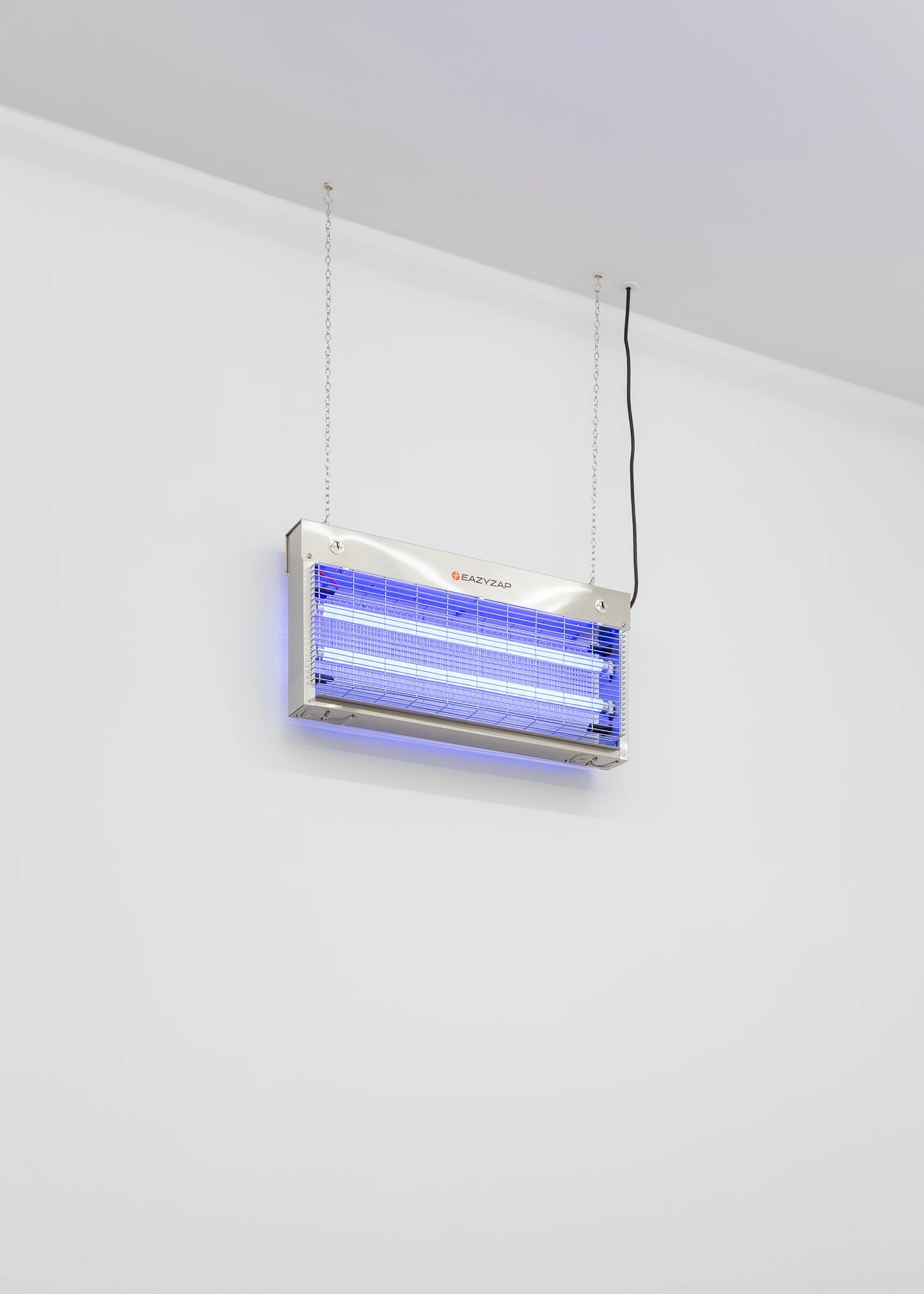
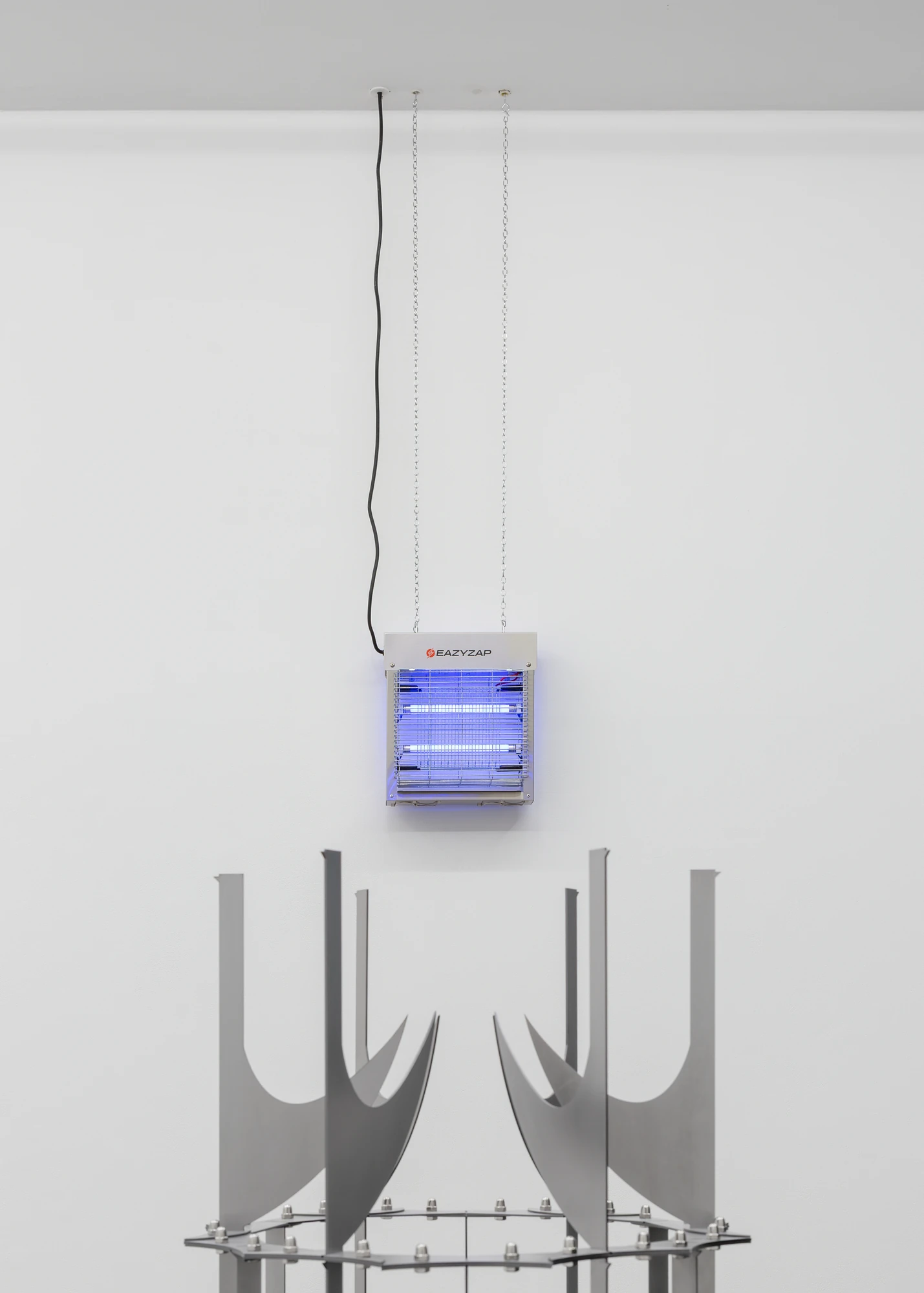
Ultraviolet binds the room. The Easyzap units on the walls are industrial insect killers working at 365 nanometres, the wavelength insect eyes respond to most and, by coincidence, the one used to test uranium glass for purity. Under that light the plates fluoresce, and so does the Monster energy drink, rich in riboflavin, in Meditation, where it fills Girl in a Pool, a 1928 glass pin tray raised above a 3D-printed column top on the floor. A device made to kill, toxic-looking tableware, a glowing drink: the curators match this everyday hostility to authoritarian power’s grip on aesthetics. Digby Warde-Aldam, in the exhibition booklet, asks: “who is really the Monster here?”

Against all this, a soundtrack of winter storm ambience soothes, much as the carpet softens hard stone underfoot. The setting won’t settle into one reading: part display window, part laboratory, part simulation. Systems of legitimacy, the curators argue, rest on contradictions. In Deptford, printed column parts, fake stone and a few glowing plates hold that contradiction in a single room.
Interested in Showcasing Your Work?
‍

If you would like to feature your works on Thisispaper, please visit our Submission page and sign up to Thisispaper+ to submit your work. Once your submission is approved, your work will be showcased to our global audience of 2 million art, architecture, and design professionals and enthusiasts.
No items found.
Less, with more behind it.
Explore guides. Search the archive. Walk the atlas.
Become a Thisispaper+ member today to unlock full access to our magazine, advanced tools, and support our work.
Get two months FREE
with annual subscription
Less, with more behind it.
Explore guides. Search the archive. Walk the atlas.
Become a Thisispaper+ member today to unlock full access to our magazine, advanced tools, and support our work.
Get two months FREE
with annual subscription
No items found.
Alexander Zaxarov
Nov 26, 2026

Marble becomes carpet, Ionic columns become steel frames for uranium glass, and an insect killer’s ultraviolet sets the plates glowing in Solarium, Amélie Mckee’s show at Plicnik Space Initiative in Deptford, London.

Solarium asks how authority dresses itself, and what remains when the costume proves to be a copy. The curators, Kollektiv Collective, describe a scenario in which value, form and function drift as power shifts. At Plicnik Space Initiative, four works from 2026 make one installation: Solarium itself, faux marble carpet planks with Easyzap insect lights and a soundtrack; the two columns of Cameo Ballerina; Meditation; and 40524839 continued, a wall work in plywood and paint. On view 6 November to 19 December 2026.

Start with the floor. “Marble, a signifier of wealth, is rendered as a soft-textured carpet”, the curators write, its sections set out of true so they read as hazard stripes. Cameo Ballerina, the sculpture at the centre, borrows the neoclassical columns that governments and museums use to project authority, but its Ionic tops and bases are 3D-printed, antiquity in a deceptively light material. Nothing here is what it claims to be, which is the point the curators press: the frameworks that lend authority are synthetic too.

The mild steel carries a second reference. Mckee modelled the metalwork partly on Wardenclyffe Tower, Nikola Tesla’s unrealised scheme for wireless transmission, so the columns look built to collect, send or produce energy. Where a power source ought to be, vintage uranium glass salad plates are stacked inside the frames.

Those plates carry the show’s sharpest history. Uranium glass, a byproduct of radium extraction, spread across tableware and ornaments in the 1920s and 1930s, until uranium was held back for weapons and production fell away. “First home decor, then a war strategic asset”, as Kollektiv Collective put it: function, symbol and look all shift with technology and politics, and scientific research ended up in league with the military.

Ultraviolet binds the room. The Easyzap units on the walls are industrial insect killers working at 365 nanometres, the wavelength insect eyes respond to most and, by coincidence, the one used to test uranium glass for purity. Under that light the plates fluoresce, and so does the Monster energy drink, rich in riboflavin, in Meditation, where it fills Girl in a Pool, a 1928 glass pin tray raised above a 3D-printed column top on the floor. A device made to kill, toxic-looking tableware, a glowing drink: the curators match this everyday hostility to authoritarian power’s grip on aesthetics. Digby Warde-Aldam, in the exhibition booklet, asks: “who is really the Monster here?”

Against all this, a soundtrack of winter storm ambience soothes, much as the carpet softens hard stone underfoot. The setting won’t settle into one reading: part display window, part laboratory, part simulation. Systems of legitimacy, the curators argue, rest on contradictions. In Deptford, printed column parts, fake stone and a few glowing plates hold that contradiction in a single room.
Interested in Showcasing Your Work?
‍

If you would like to feature your works on Thisispaper, please visit our Submission page and subscribe to Thisispaper+. Once your submission is approved, your work will be showcased to our global audience of 2 million art, architecture, and design professionals and enthusiasts.
Thisispaper+
London Guide
35+ Projects
Web Access
Link to Maps
Architecture in London — from Georgian terraces and Victorian warehouses to Brutalist estates and contemporary pavilions. A city that builds by layering the new onto the old, where every extension, conversion, and new-build negotiates heritage, density, and light.
Galleries first, back-room interiors second, bakeries third. A private city, if you know the addresses.
Explore
London Guide

Join Thisispaper+
Unlock access to 2500 stories, curated guides + editions, and share your work with a global network of architects, artists and designers who are shaping the future.
Get two months FREE
with annual subscription
Travel Guides
Immerse yourself in timeless destinations, hidden gems, and creative spaces—curated by humans, not algorithms.
Explore All Guides +
Submission Module
Submit your project and gain the chance to showcase your work to our worldwide audience of over 2M architects, designers, artists, and curious minds.
Learn More+
Curated Editions
Dive deeper into carefully curated editions, designed to feed your curiosity and foster exploration.
Off-the-Grid
Jutaku
Sacral Journey
minimum
The New Chair
Explore All Editions +
Atlas
A new and interactive way to explore the most inspiring places around the world.
Interactive map
Linked to articles
450+ curated locations
Google + Apple directions
Smart filters
Subscribe to Explore+
Become a Thisispaper+ member today to unlock full access to our magazine, submit your project and support our work.
Join Thisispaper+Join Thisispaper+
€9/month
Get two months FREE
with annual subscription