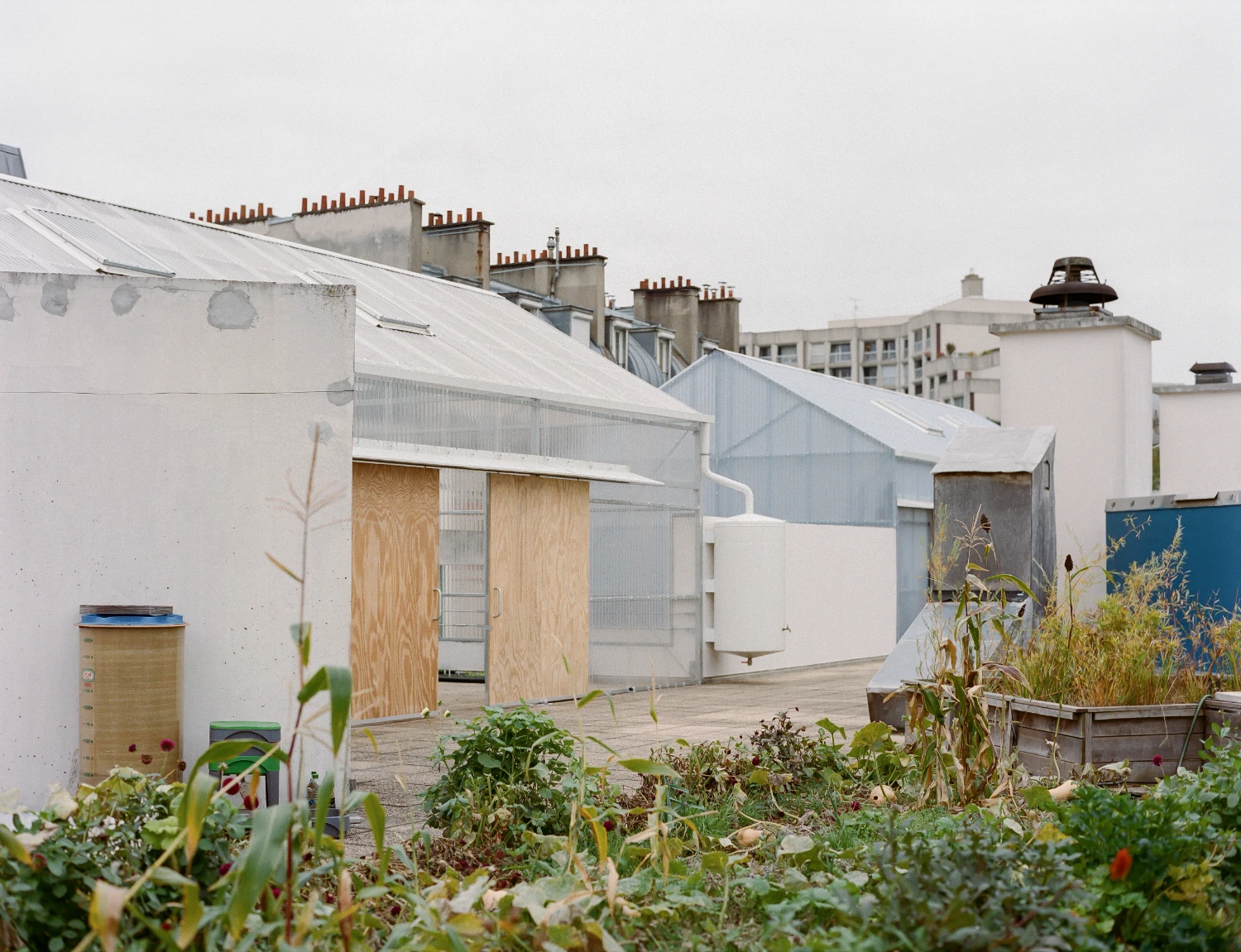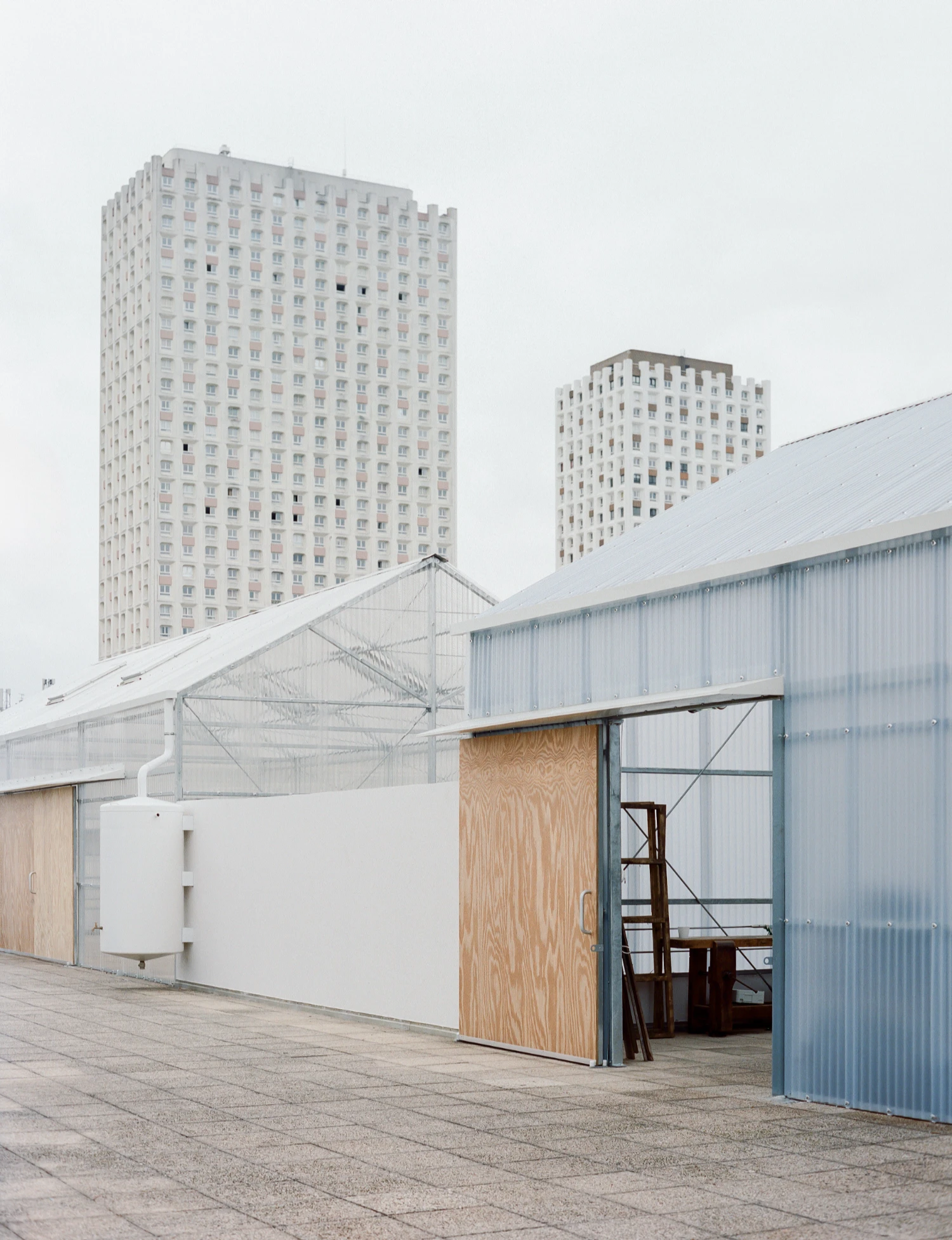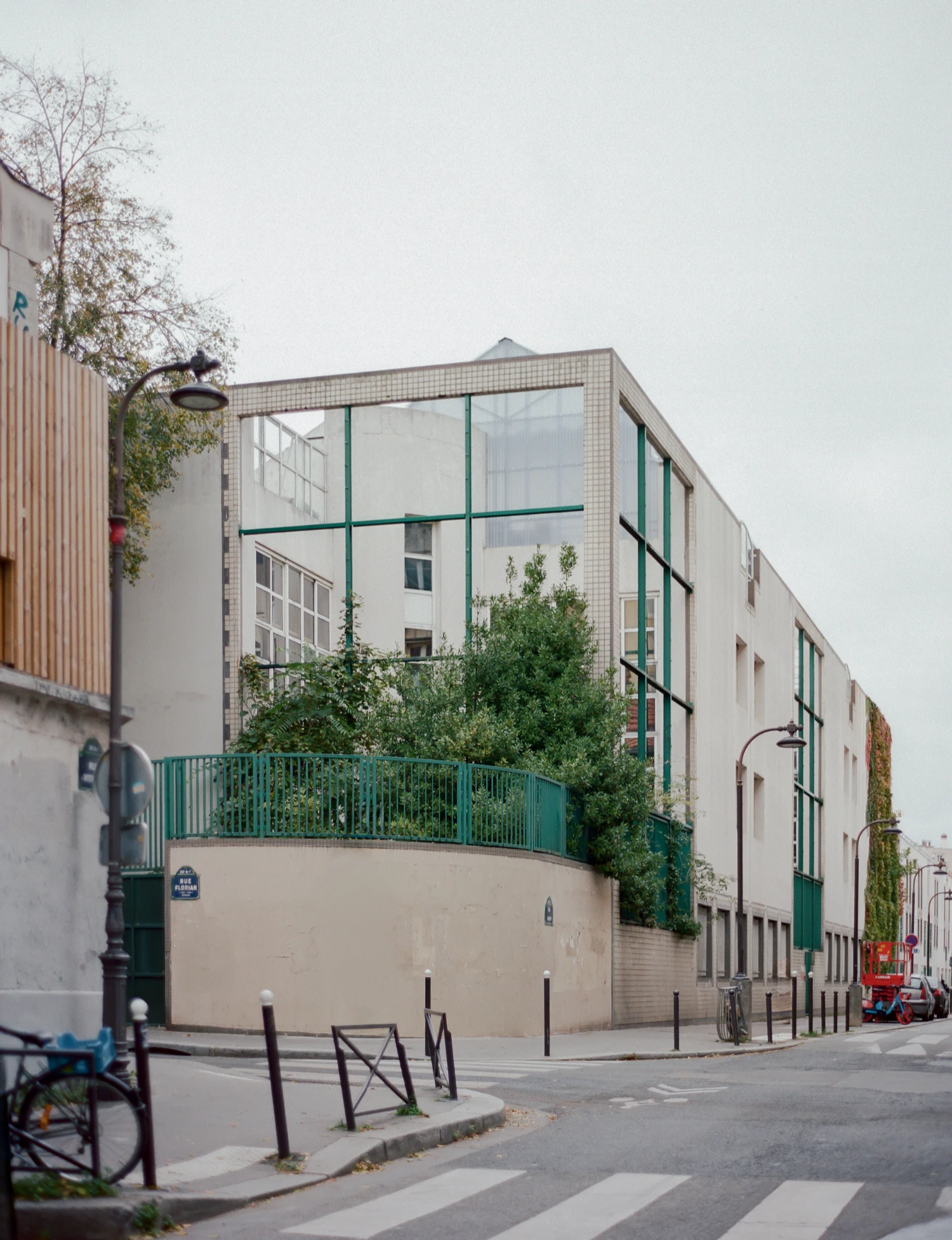
On the roof of a Parisian secondary school, rerum architectes have crafted an architecture that is less an addition than a calibration of latent potential.
The former playground already possessed the horizontality and exposure prized by urban growers; what the new intervention provides is a legible system that allows cultivation and pedagogy to unfold in parallel. Rather than imposing a singular architectural gesture, the project operates through a fine-grained reading of constraints—structural, climatic, and curricular—and elevates them into design intelligence.
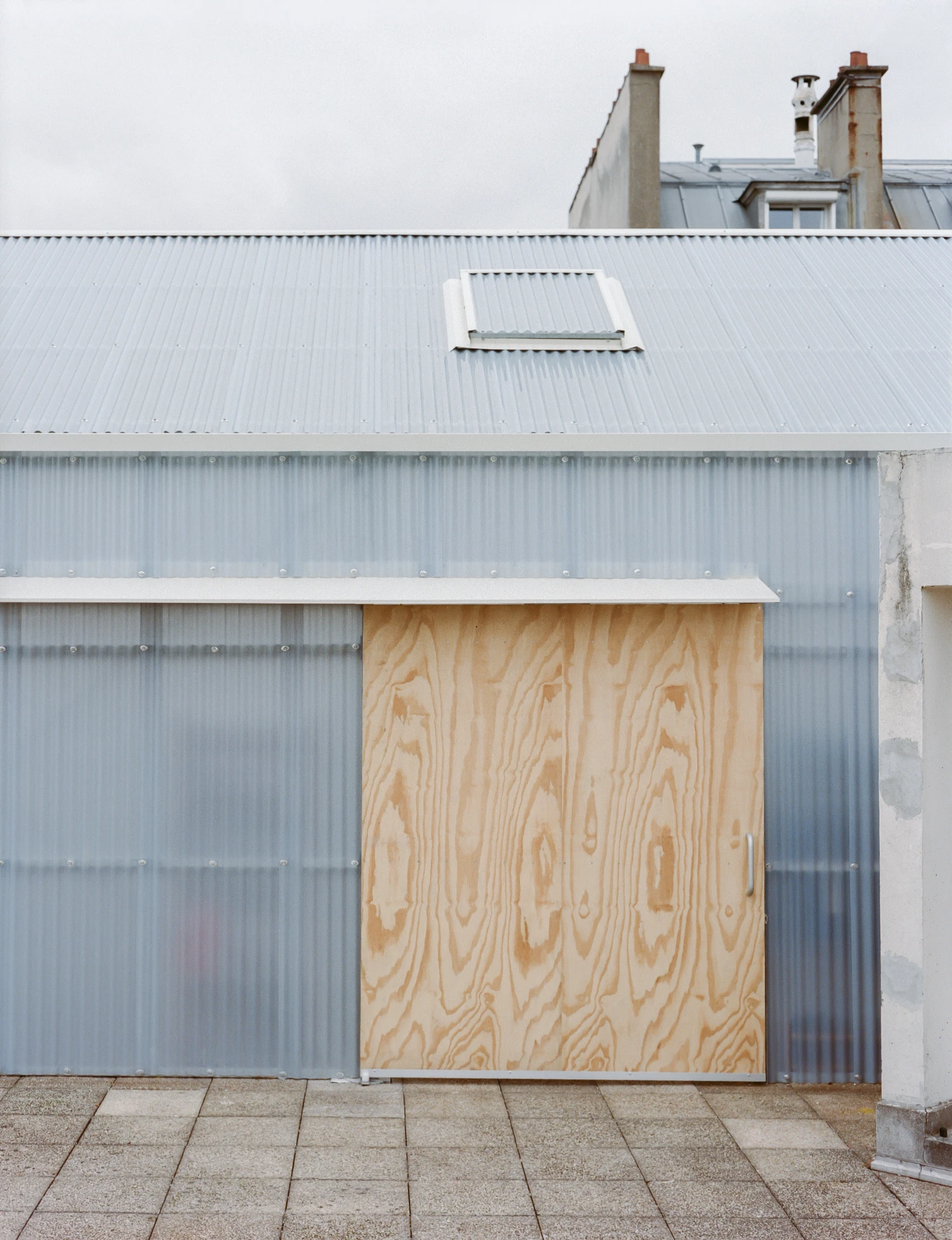
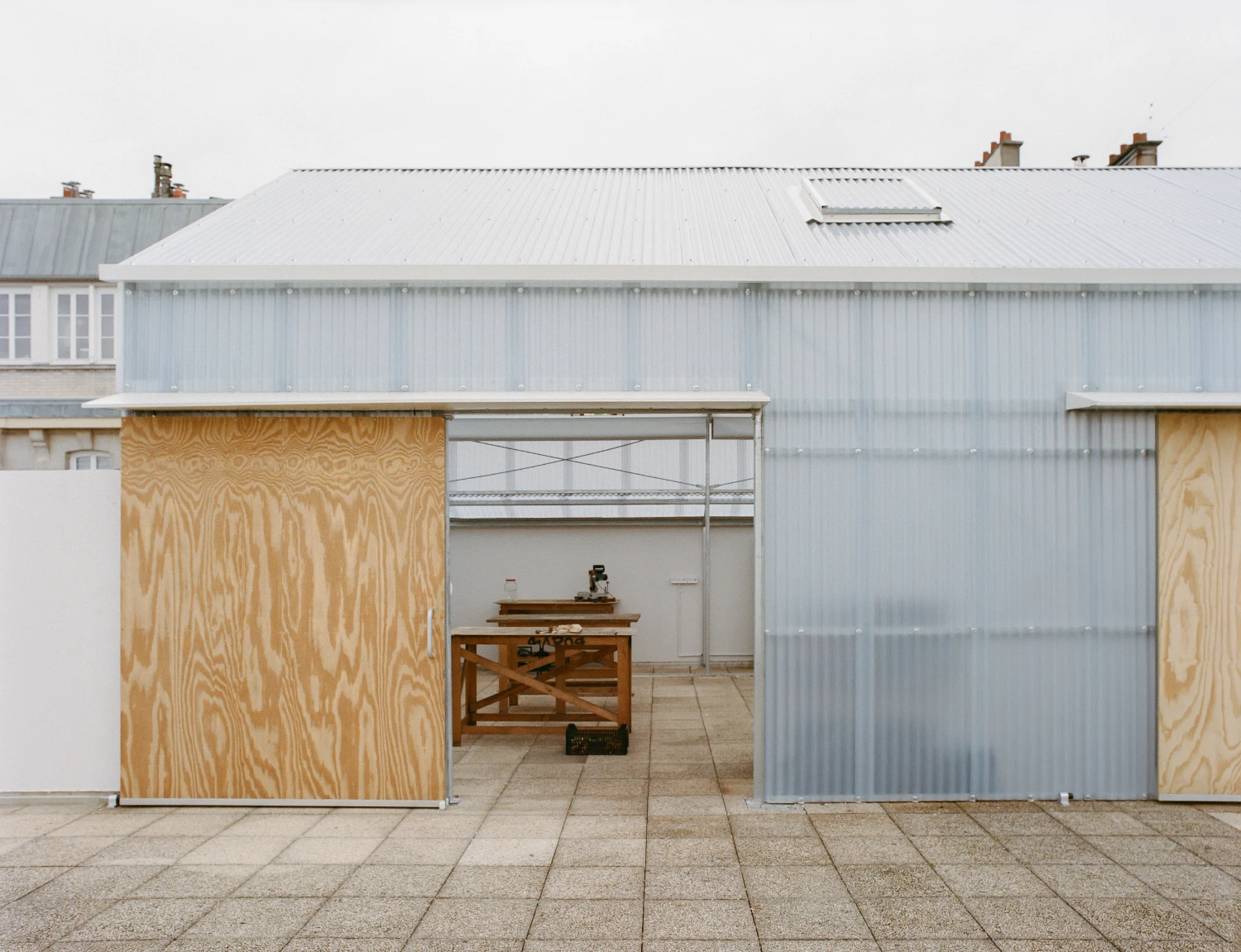
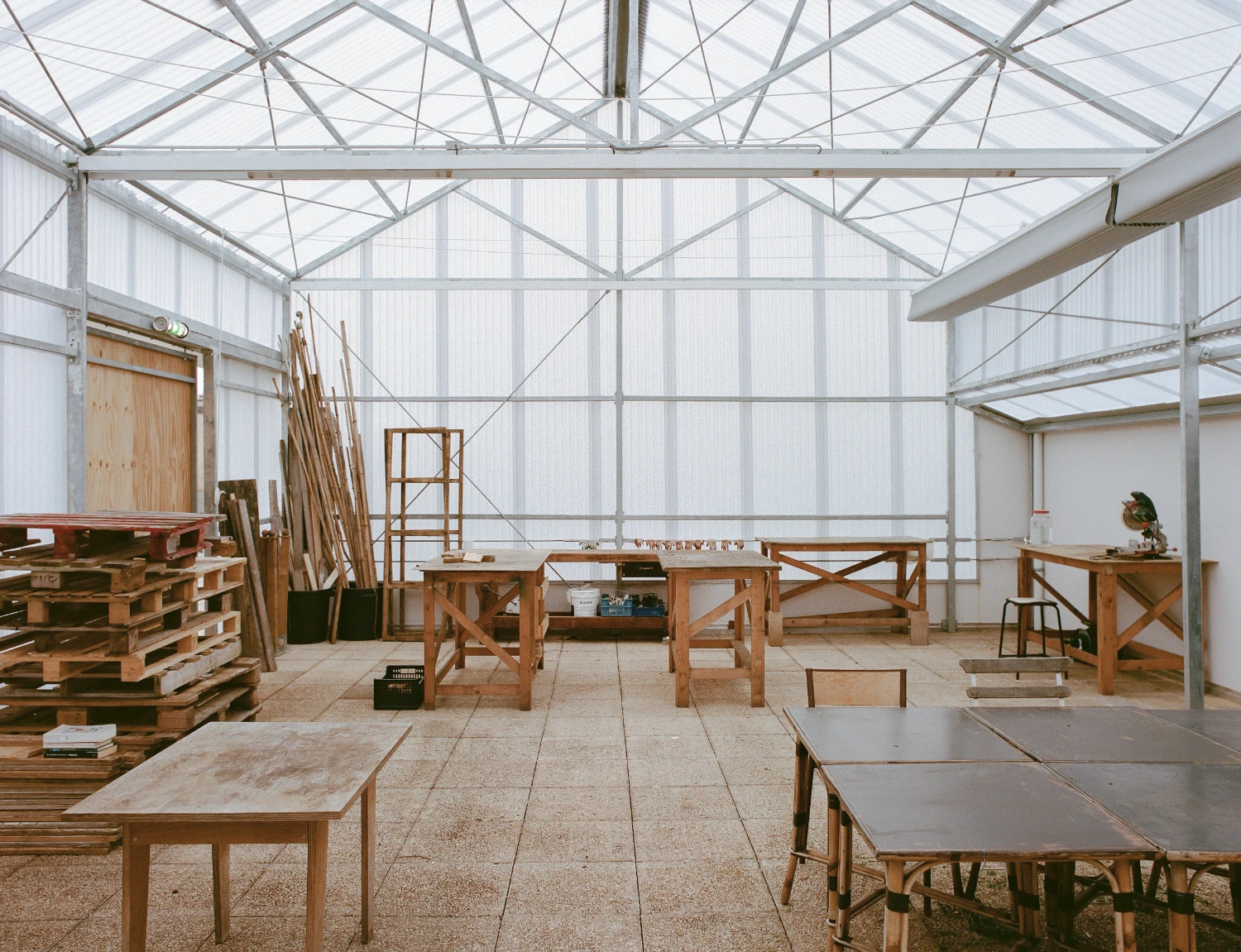
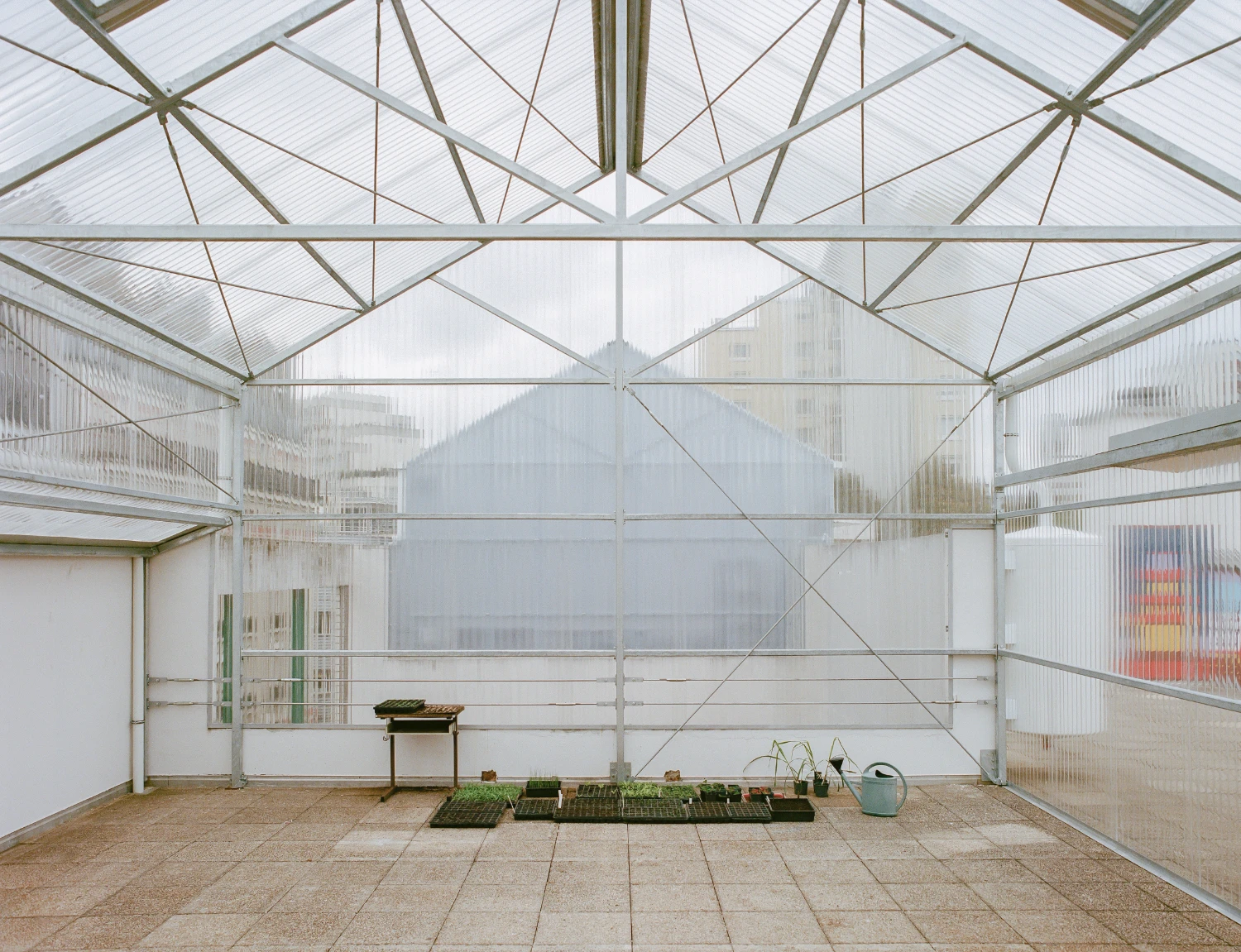
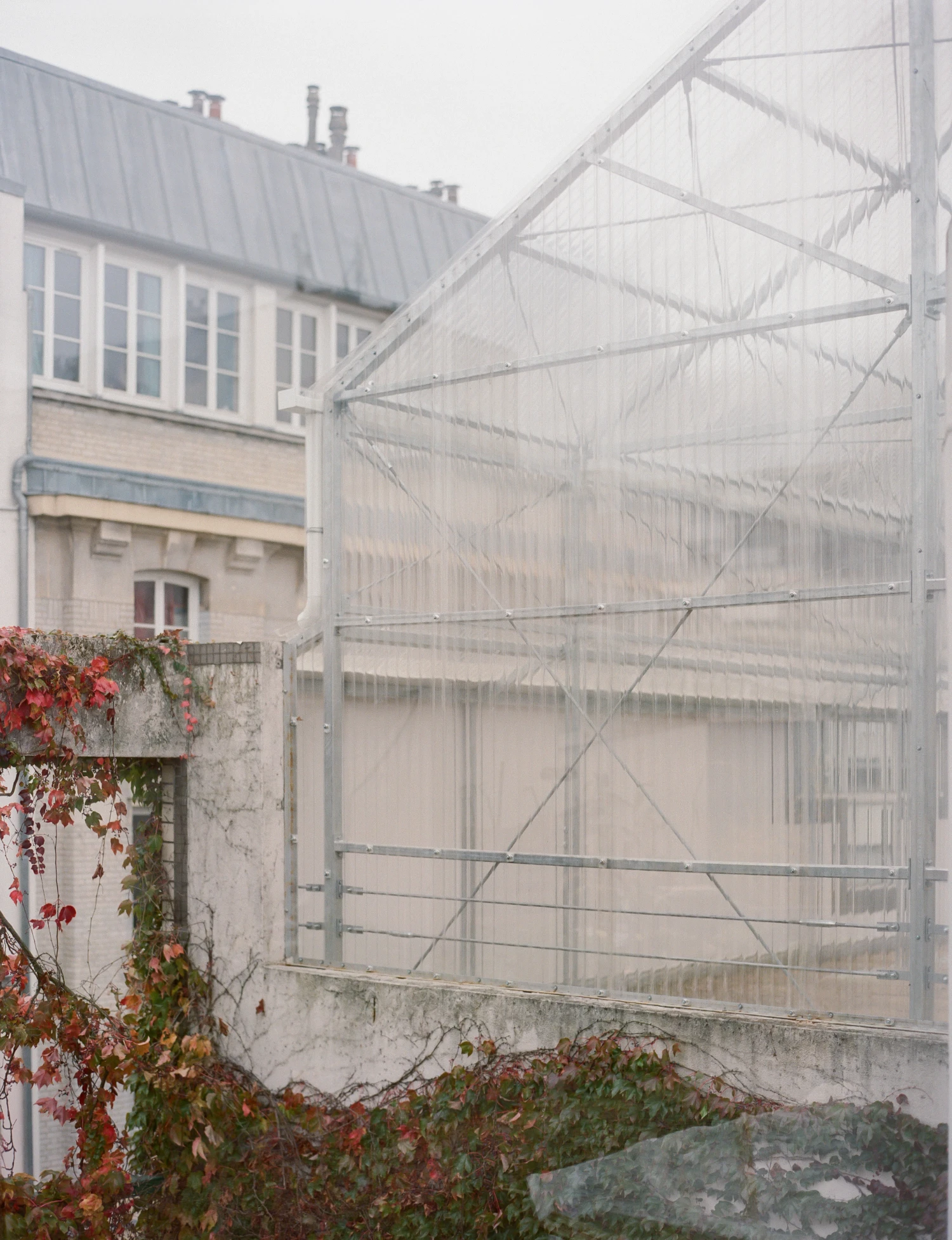
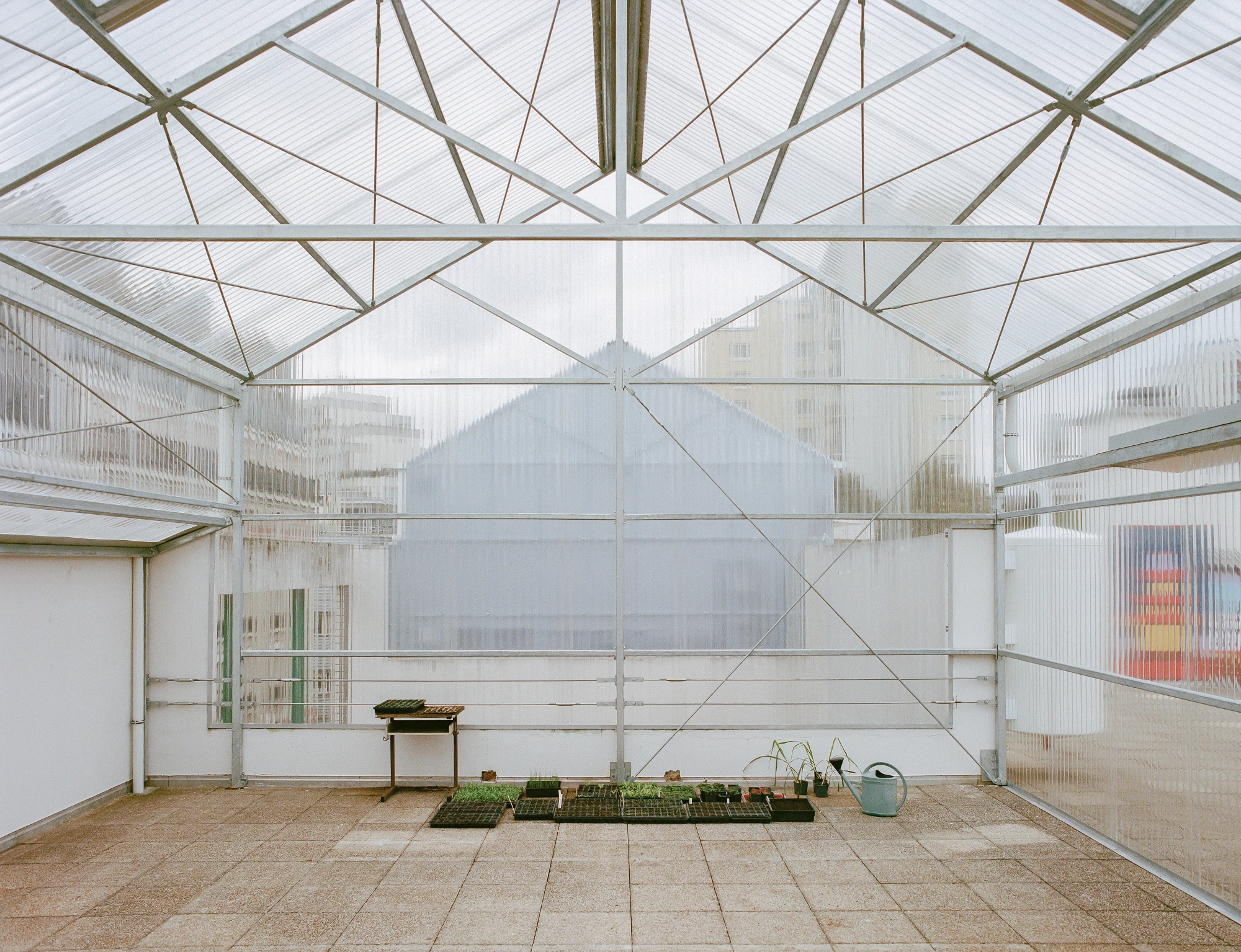
Two new volumes, a greenhouse and an educational pavilion, anchor the ensemble. They appear almost fraternal: similar in structural discipline yet divergent in their atmospheric ambitions. The greenhouse employs a transparent polycarbonate wrap, sharpening light and heat for growth, while the teaching volume opts for a translucent skin that softens illumination into something closer to contemplative daylight. Both rely on a galvanized steel frame that leaps wall to wall, a pragmatic maneuver preserving the existing waterproofing while underscoring the project’s frugal ethos. The frames read as infrastructural exoskeletons—a quiet argument for clarity over embellishment.
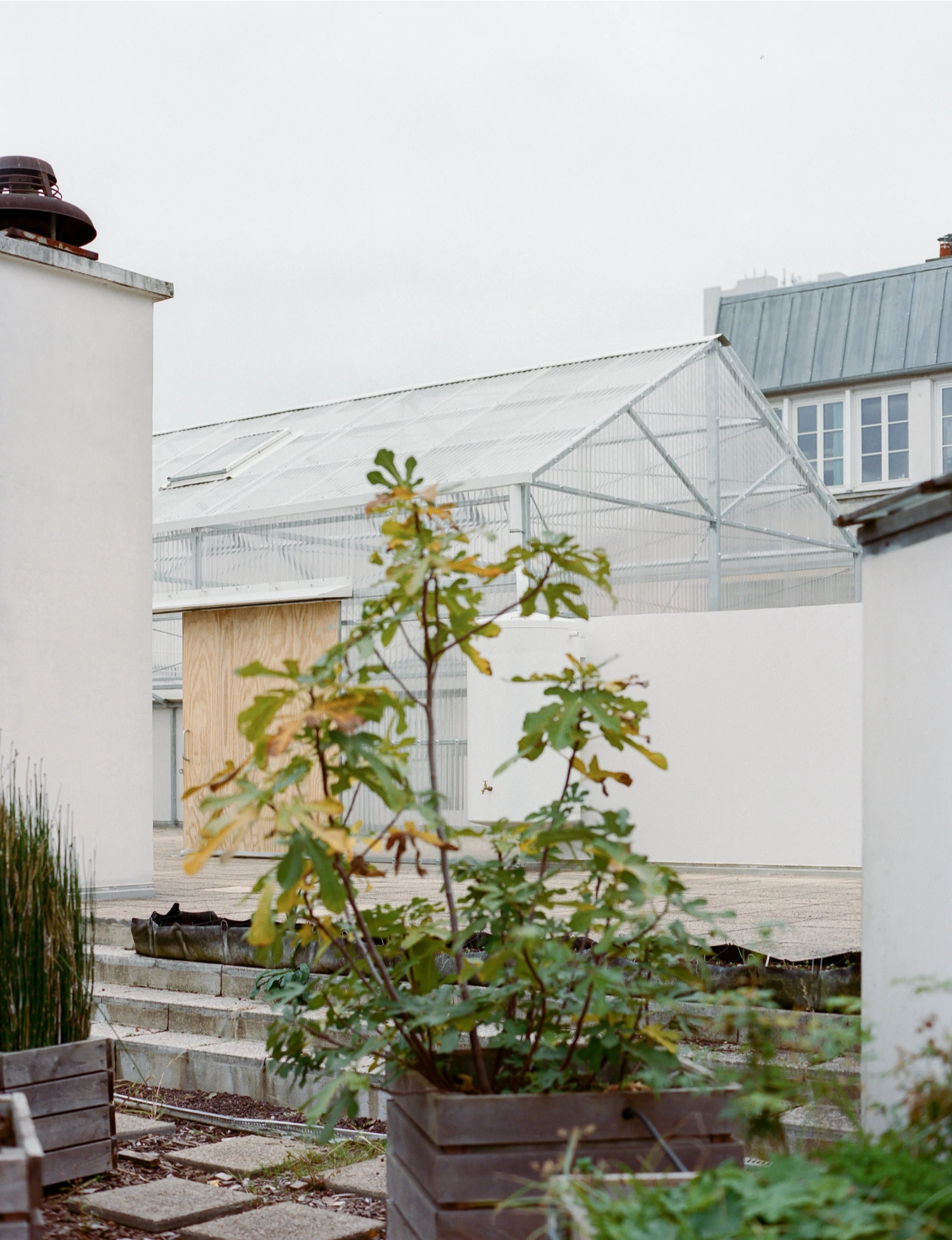
The rooftop’s open planting zones, distributed between raised beds and open ground, interweave with the built forms to create a kind of didactic terrain. Here, the project becomes most explicit about its pedagogical ambitions. The water cycle, often abstracted in urban settings, is rendered visible: rainwater is caught, stored, and re-routed in full public view. Potable and non-potable lines trace purposeful paths, turning water management into a narrated experience. This exposure is not decorative; it situates students within processes rather than symbols, reminding them that ecosystems are built from flows, not objects.
Ventilation completes the architectural choreography. Roof apertures, governed by thermosensitive mechanisms, echo the pragmatic ingenuity of agricultural hothouses while freeing teachers and students from the tyranny of mechanical control. Perforated and solid polycarbonate panels modulate air and light along the façades, generating atmospheres that shift with the seasons. The result is a climate that is neither sealed nor passive, but responsive—an environment that breathes with its users and its crops.
The project frames urban agriculture not as a pastoral escape but as an embedded pedagogical instrument. By articulating its four operative principles—support, shelter, recycle, ventilate—through clear spatial and material decisions, rerum architectes translate agronomy into architecture. The rooftop becomes a working classroom, a metabolizing landscape, and a subtle manifesto for infrastructural literacy in the city.