Thisispaper Community
Join today.
Enter your email address to receive the latest news on emerging art, design, lifestyle and tech from Thisispaper, delivered straight to your inbox.
Oops! Something went wrong while submitting the form.
Instant access to new channels
The top stories curated daily
Weekly roundups of what's important
Original features and deep dives
Exclusive community features
Thisispaper+ Member

REST Garden Restaurant by Pezo von Ellrichshausen

Dates:
✧ Collect Post
Concrete Stories
under the patronage of
REST Garden Restaurant by Pezo von Ellrichshausen
Alexander Zaxarov
Feb 12, 2026

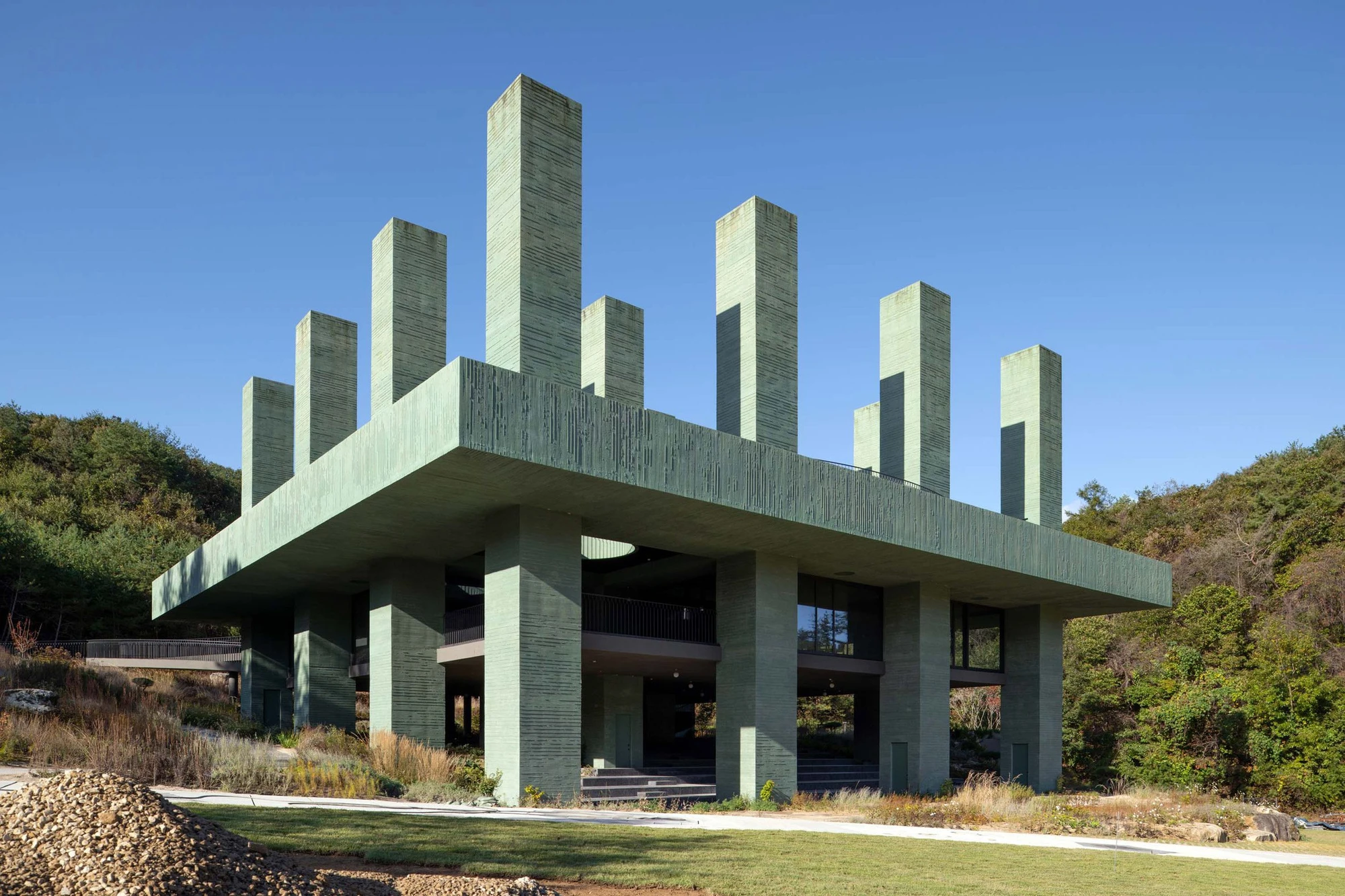
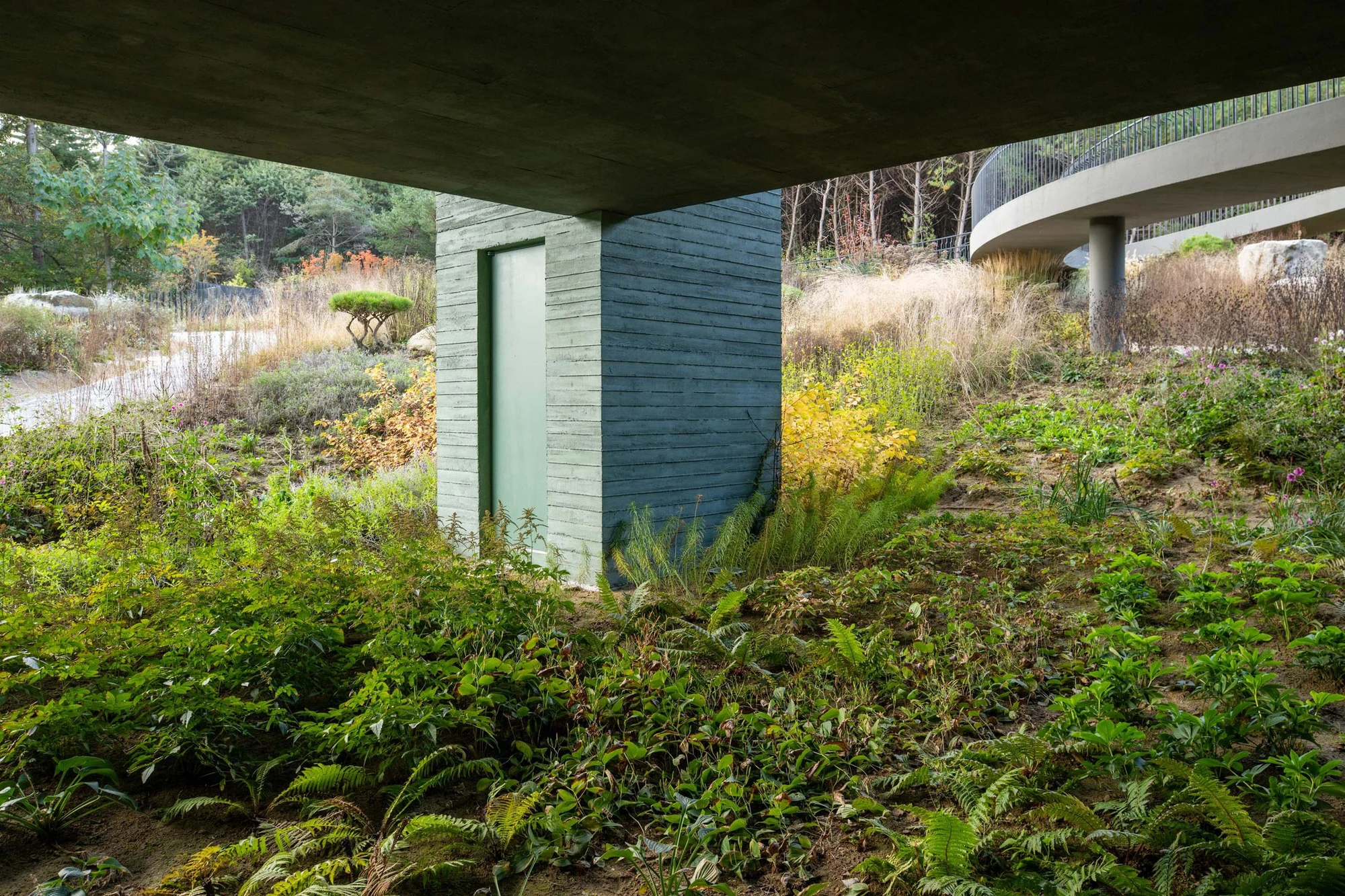
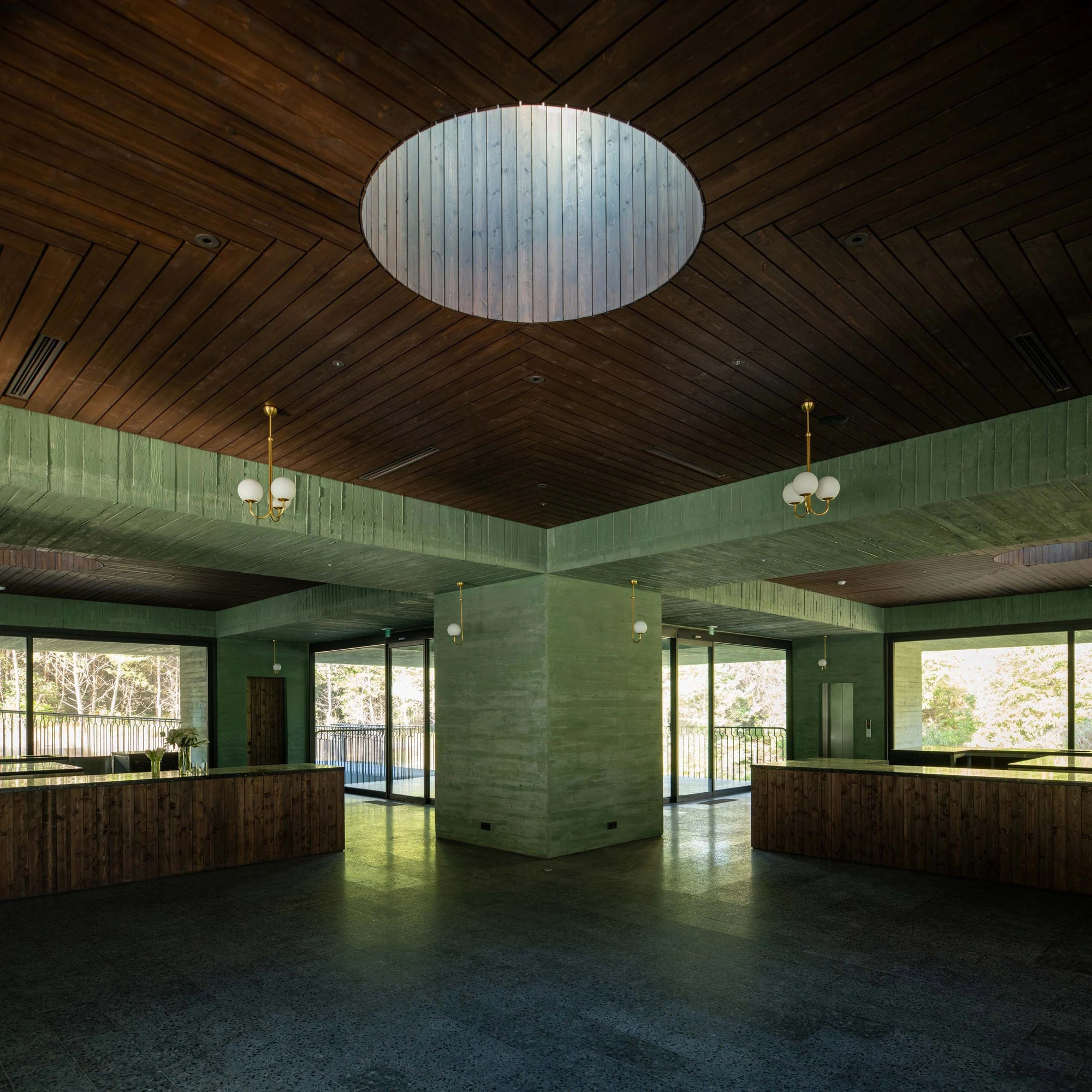
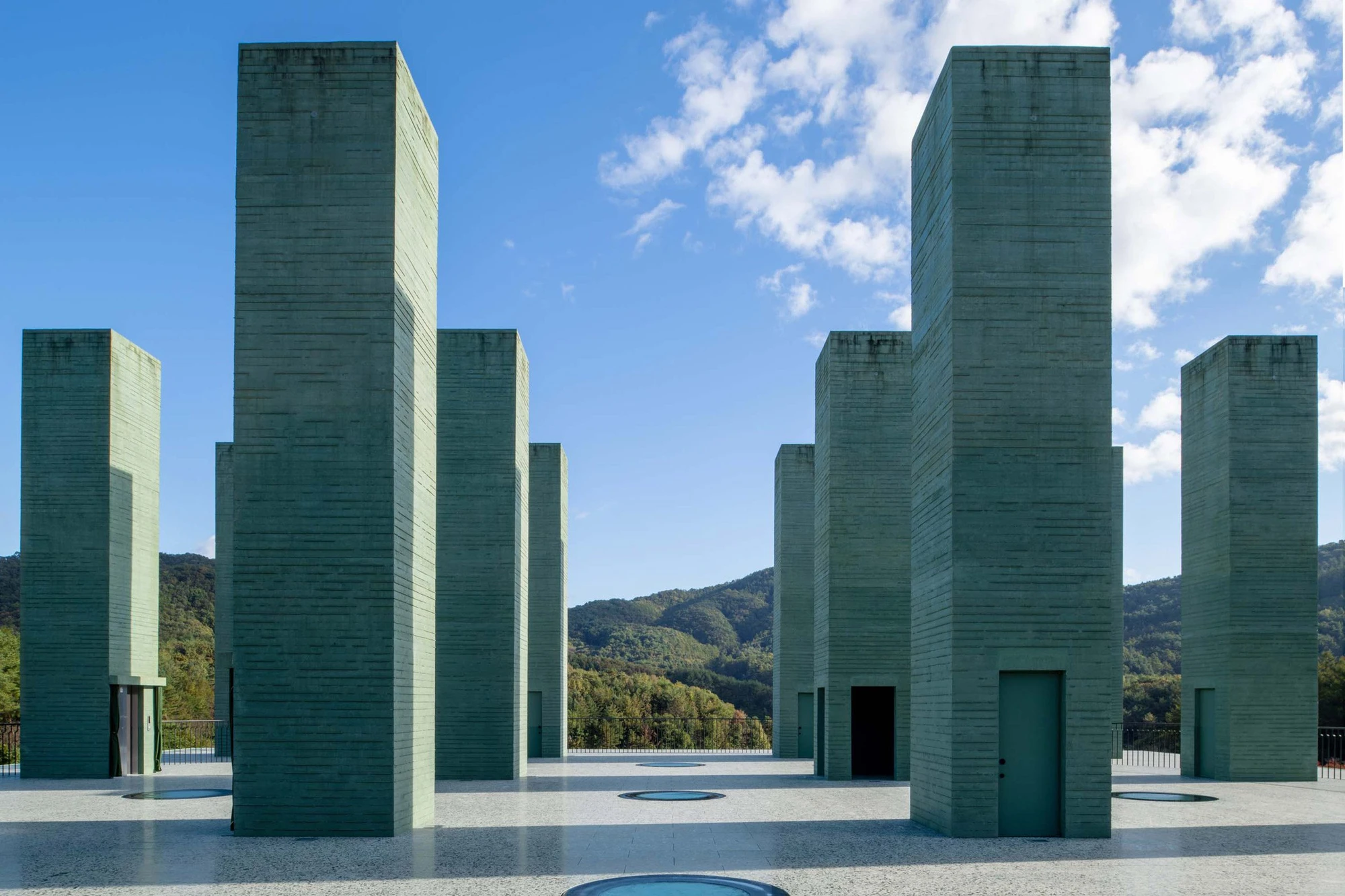
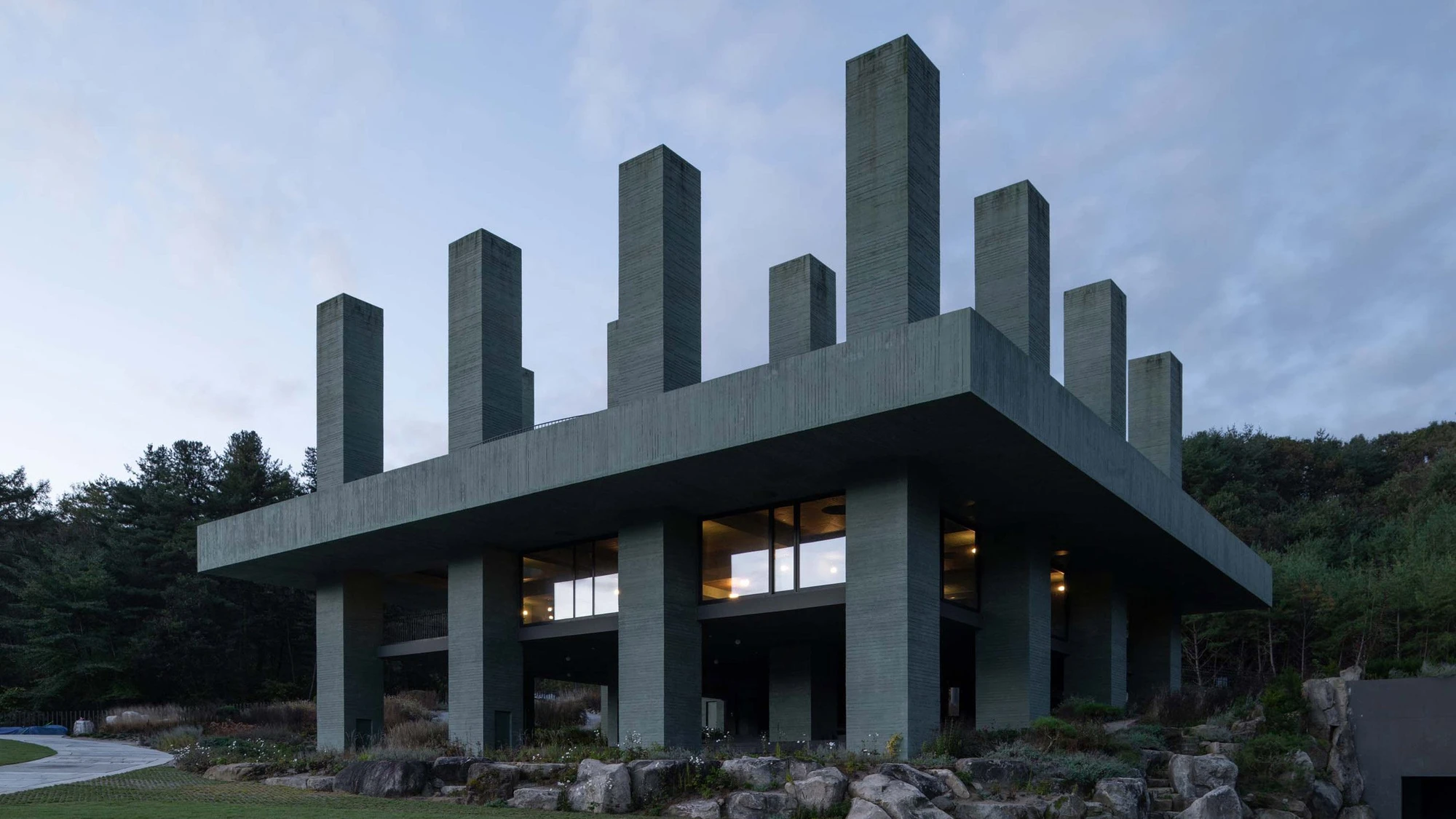
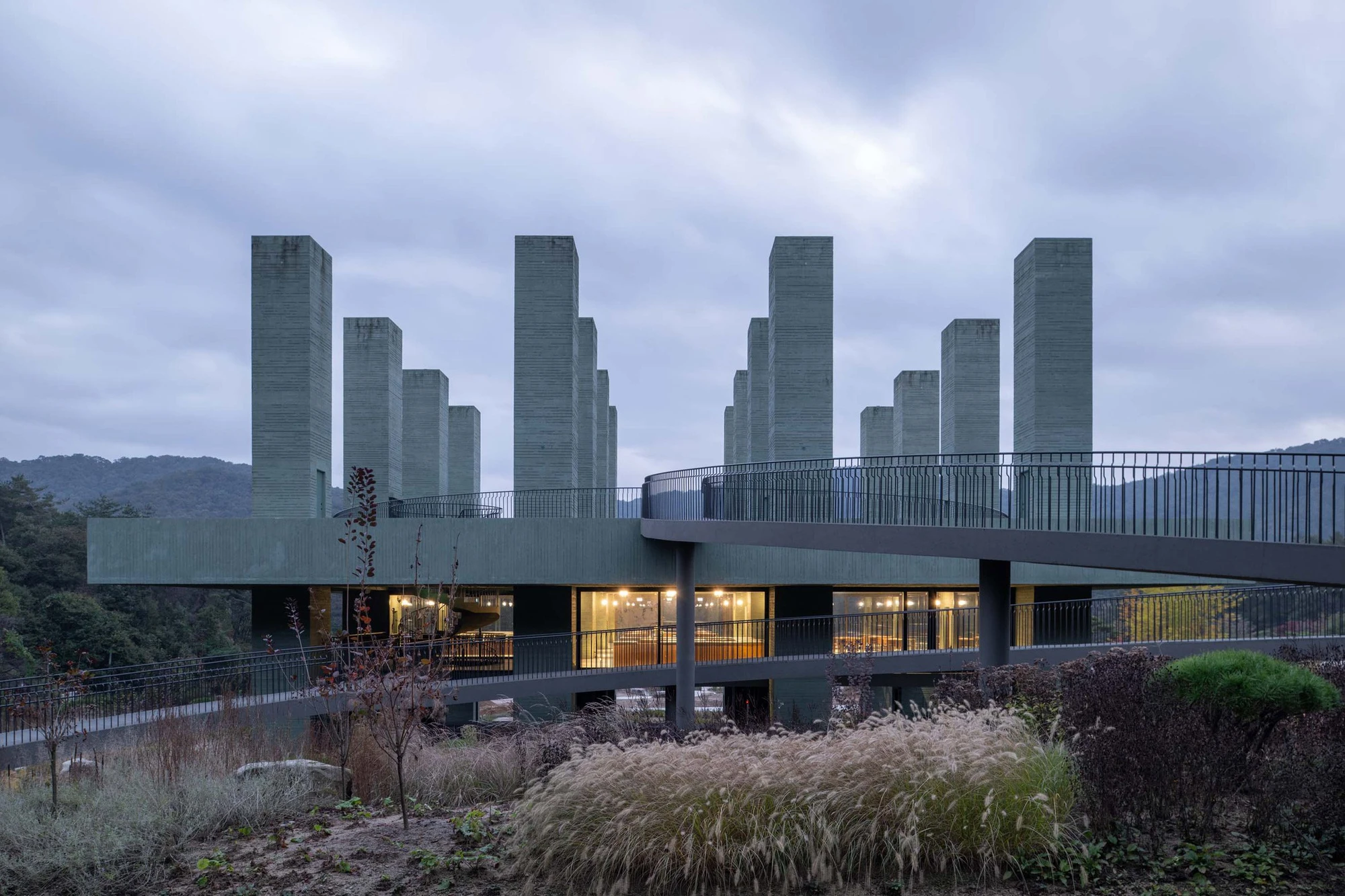
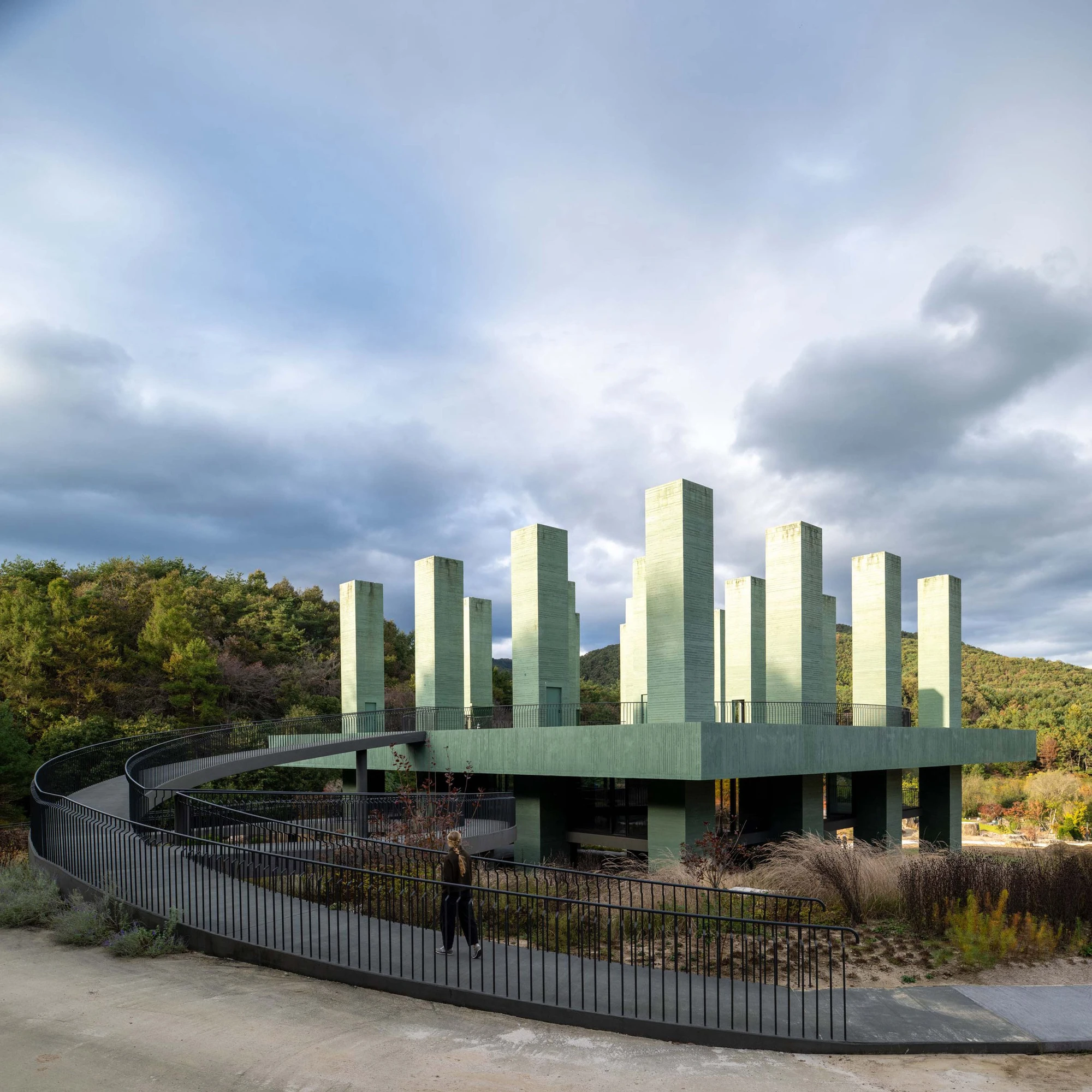
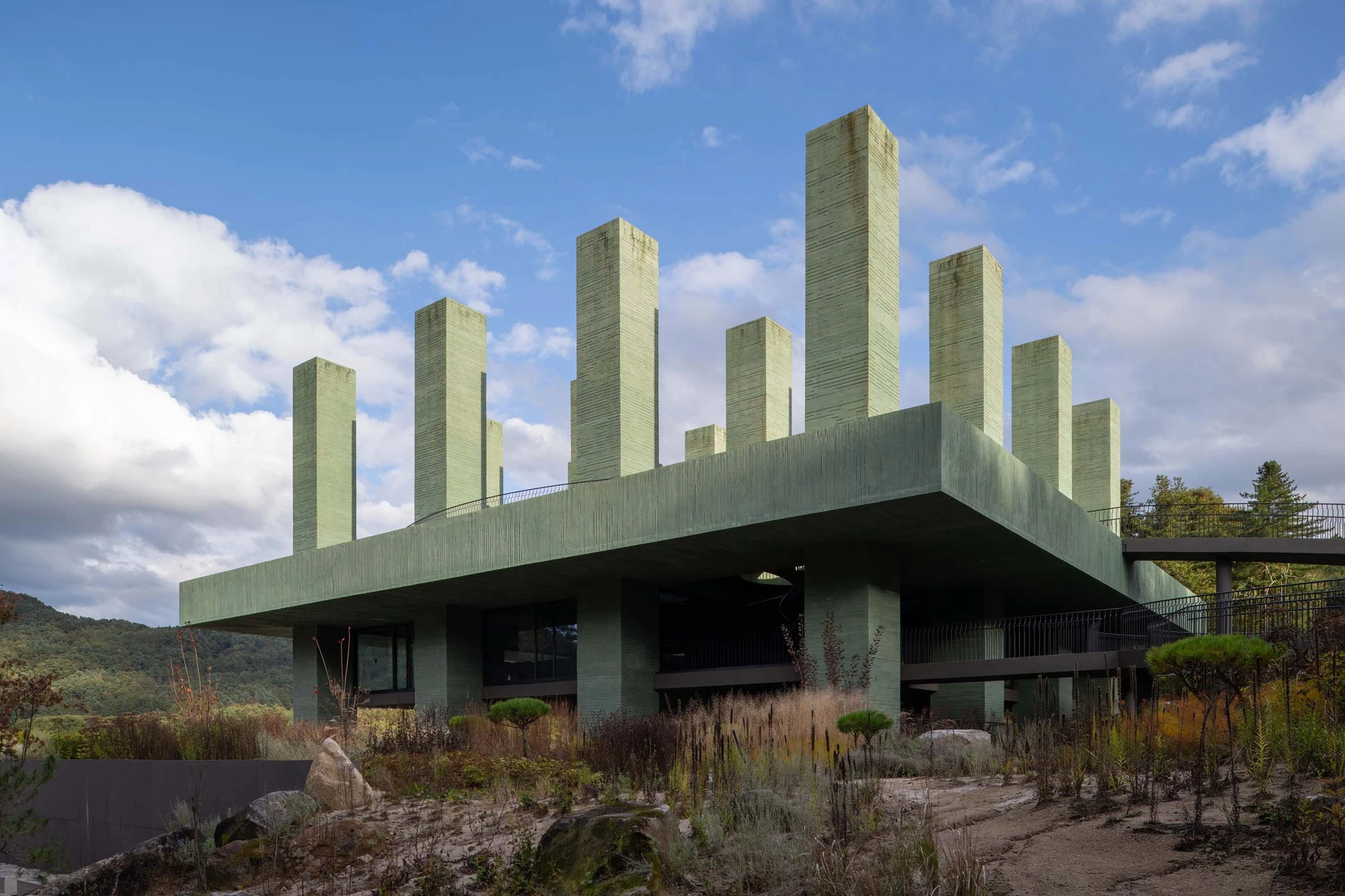
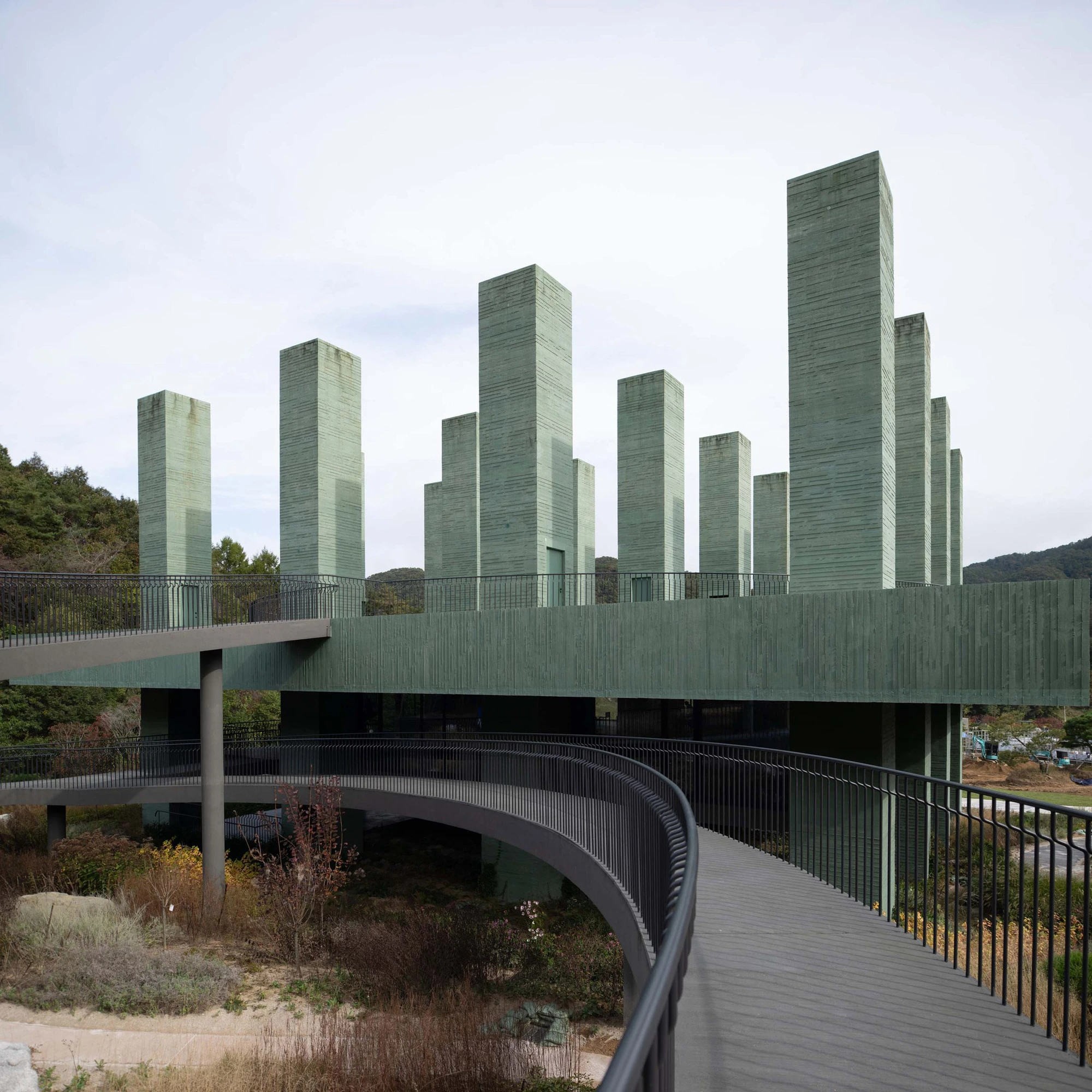
REST by Pezo von Ellrichshausen at Medongaule Garden in South Korea dissolves the boundary between building and ground—sixteen concrete columns becoming vertical landscape.

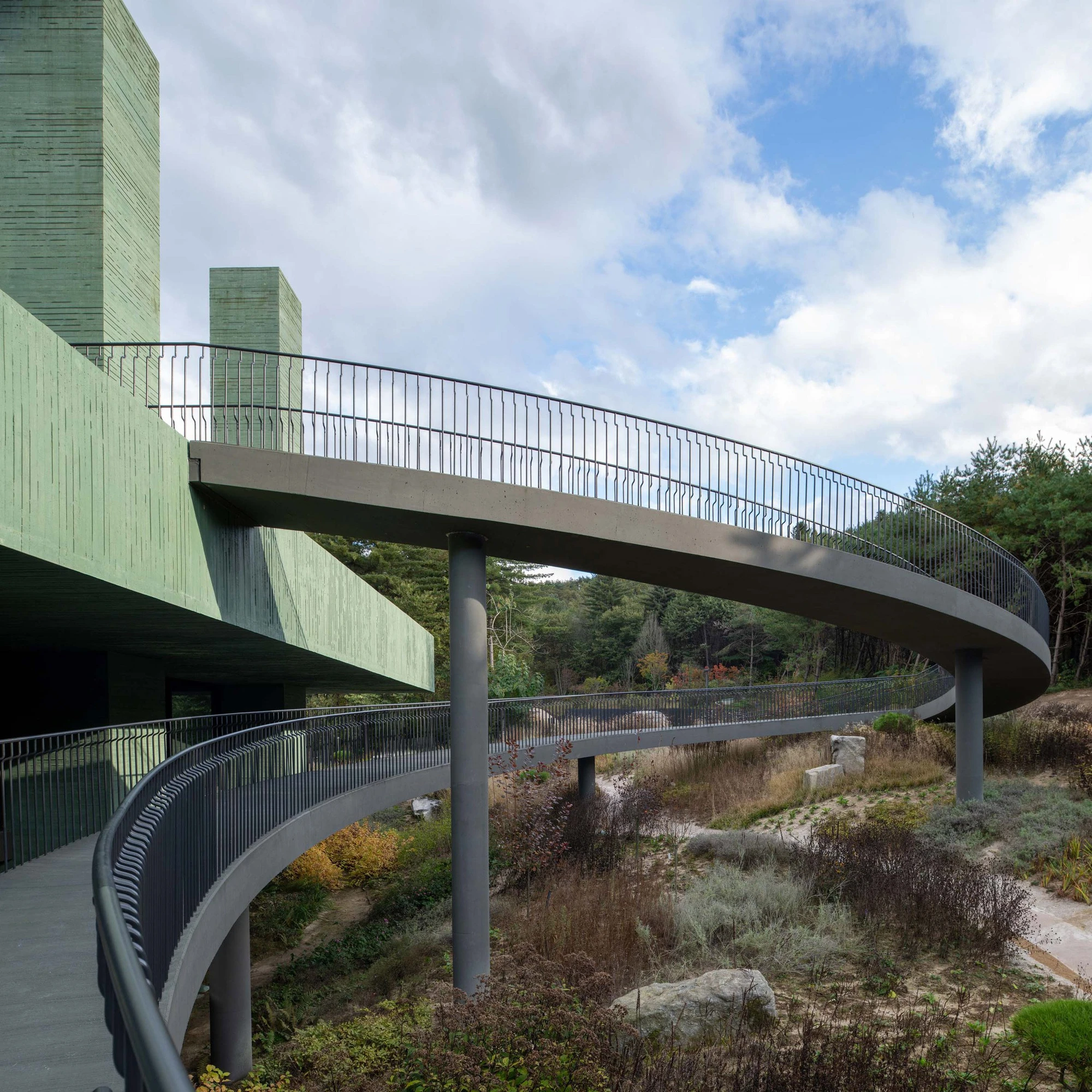
At the edge of a protected forest in Gyeonggi-do, where the Medongaule botanical garden unfolds across cultivated terrain, a restaurant emerges not so much built upon the land as grown from it. The Chilean practice Pezo von Ellrichshausen, known for their monolithic concrete volumes and careful sectional play, arrived at something both monumental and strangely vegetal—architecture that reads simultaneously as ruin and as organism.

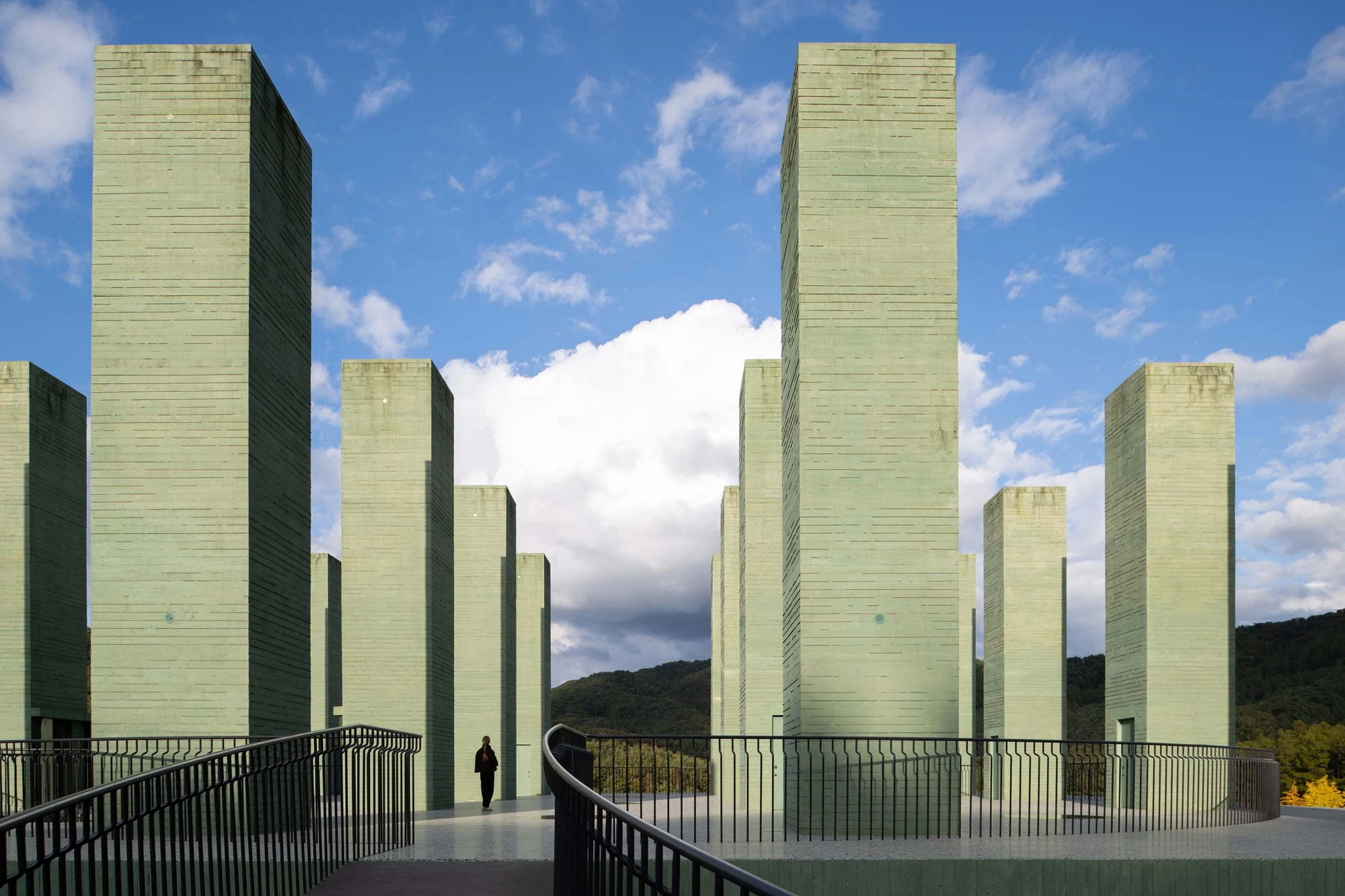
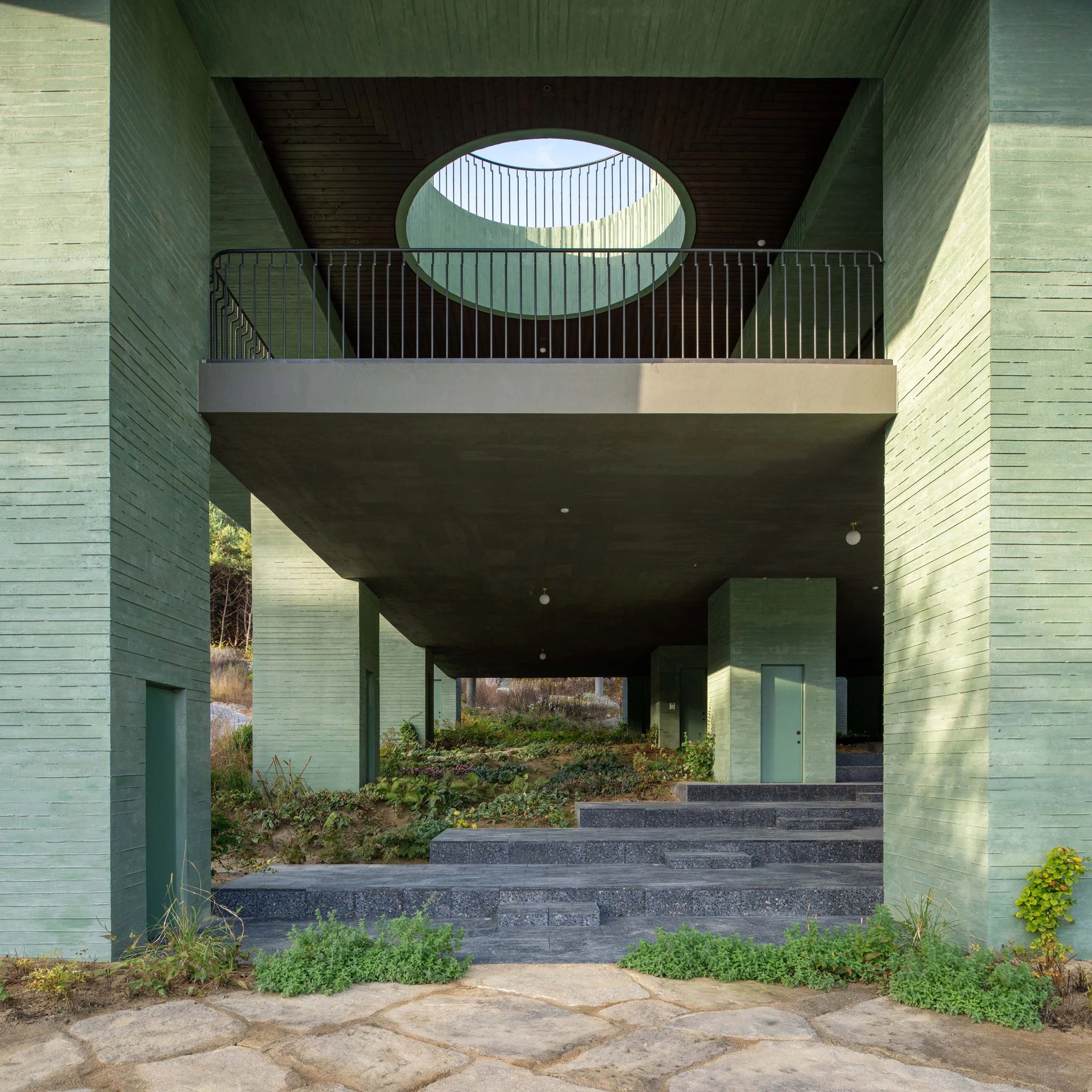
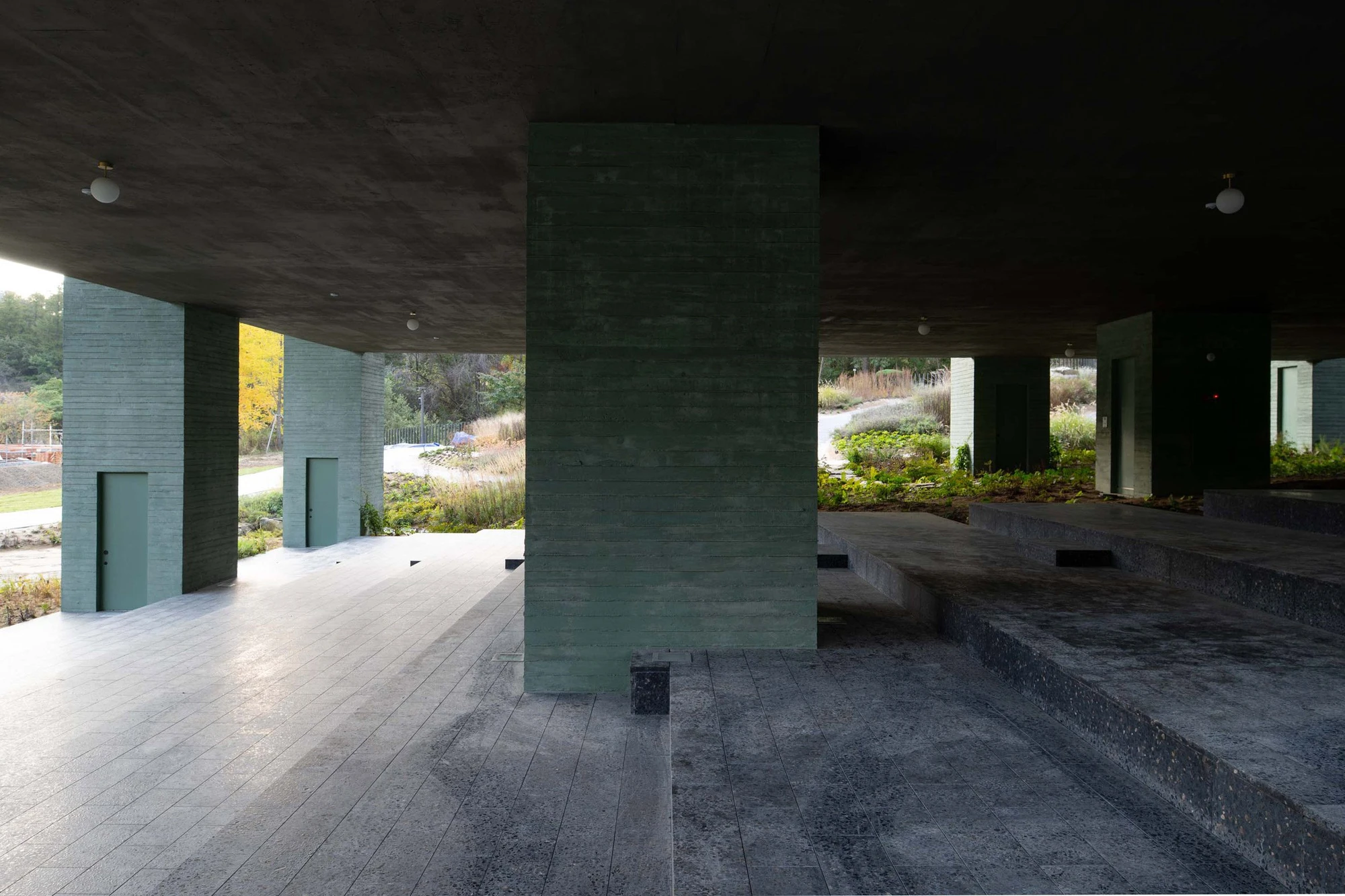
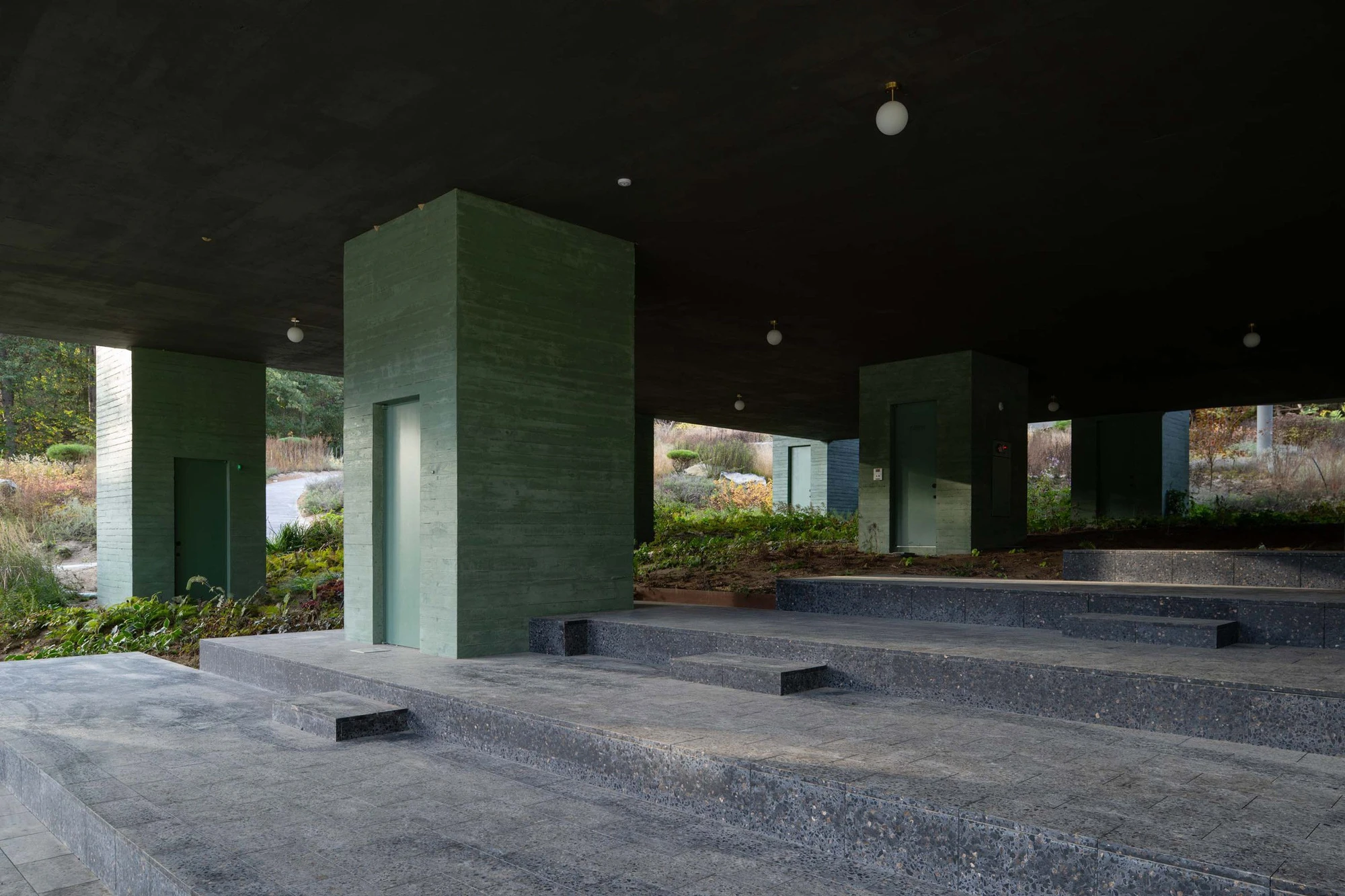
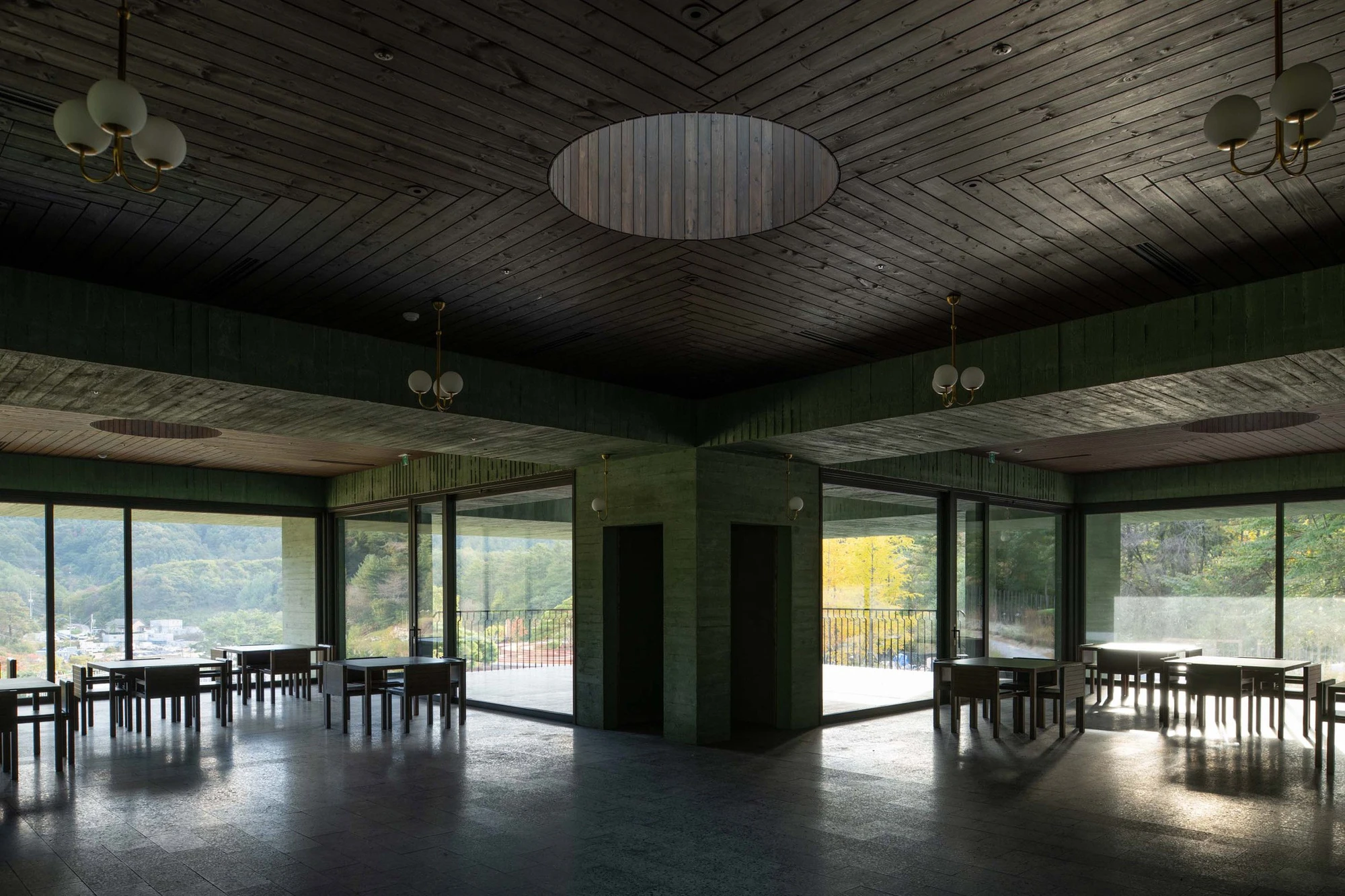
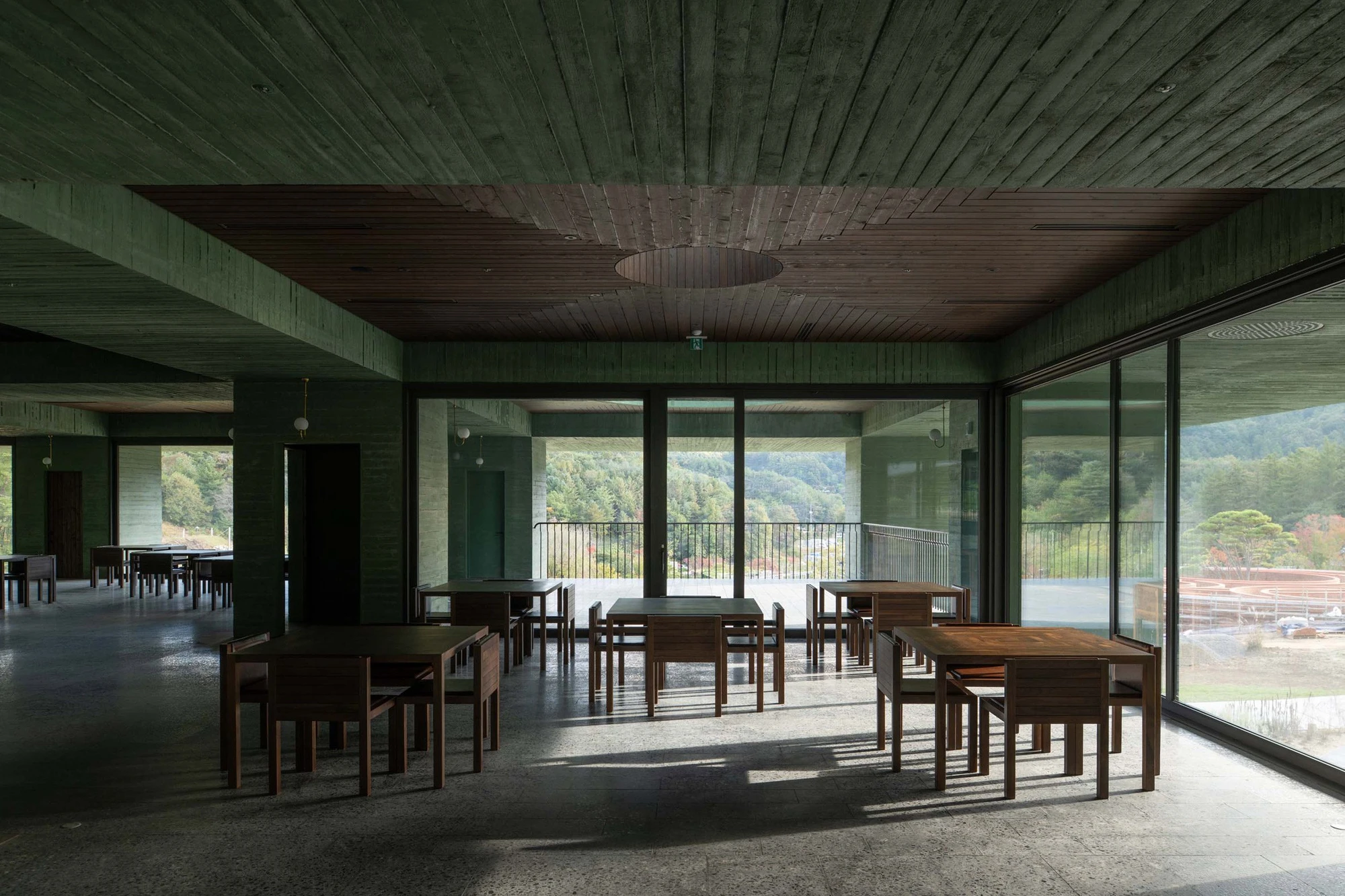
The building's logic begins with sixteen rectangular columns arranged in a strict grid, each one inhabitable rather than merely structural. These vertical elements—clad in soft green-tinted concrete, dark oak, and terrazzo—contain the restaurant's service spaces while defining the voids between them for dining. The effect resembles a forest of constructed trees, their canopies merging overhead into a continuous ceiling plane.

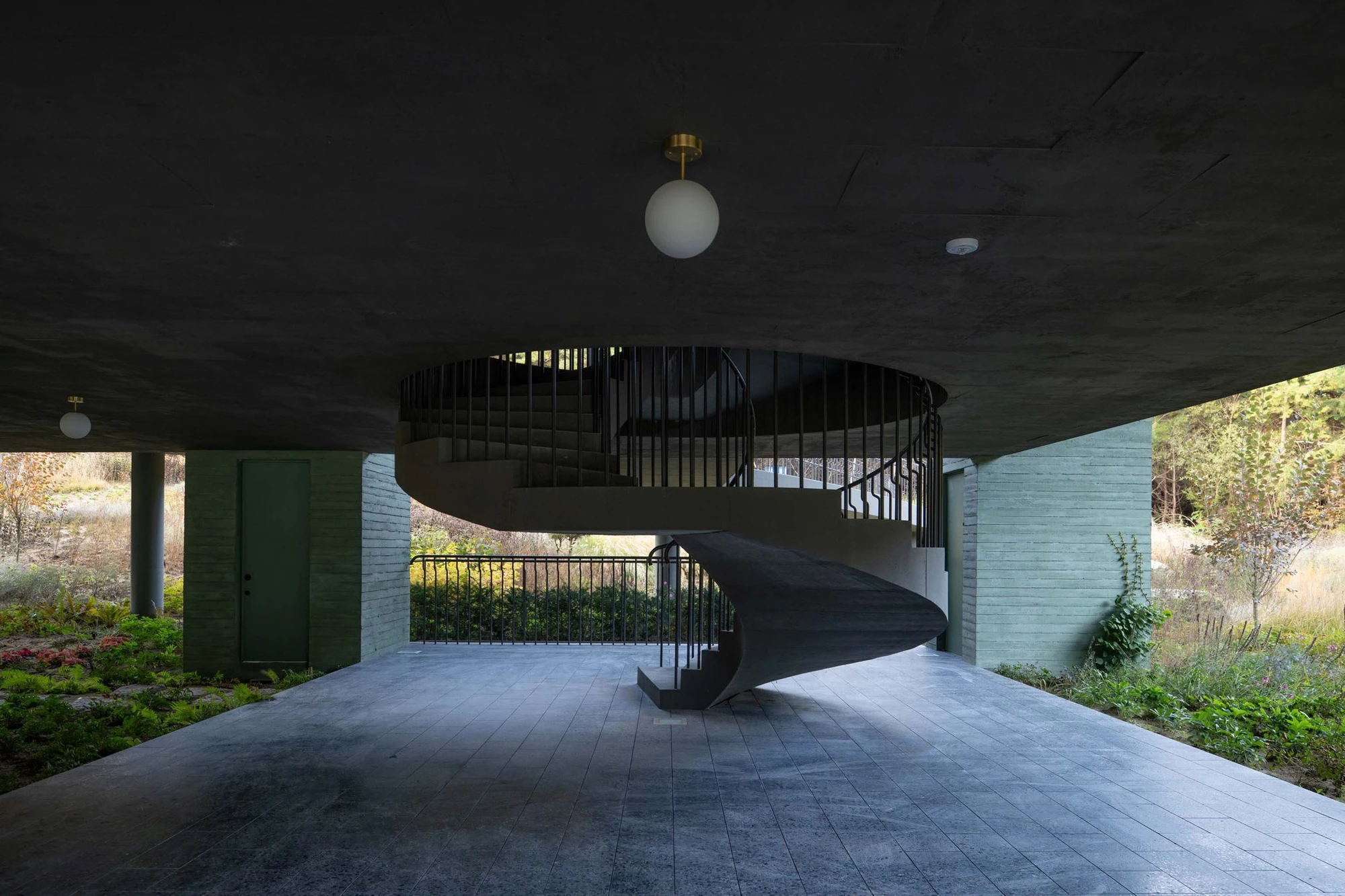
Three distinct horizontal layers respond to the site's topography. Below grade, a specialized kitchen operates invisibly, its presence announced only by the aromas that rise through the structure. At ground level, the column grid creates a permeable threshold between garden and interior. Above, the roof plane hovers as a unifying gesture, its underside forming ceilings of varying height as the terrain shifts beneath.

The material palette reinforces the sense of geological emergence. The green concrete tint suggests oxidation, as if the structure had been present long enough to acquire patina. Oak surfaces warm the harder elements without softening the overall severity. Terrazzo floors continue the mineral logic, their aggregate composition echoing the gravel paths that wind through the surrounding garden.

What Pezo von Ellrichshausen have achieved is a kind of architectural photosynthesis—a building that appears to draw sustenance from its context rather than merely occupying it. Diners seated among the columns experience both shelter and exposure, contained yet porous. The forest beyond the glazing reads as continuation rather than contrast. REST earns its name not through the absence of activity but through the presence of something calmer: architecture at peace with its ground.
Interested in Showcasing Your Work?

If you would like to feature your works on Thisispaper, please visit our Submission page and sign up to Thisispaper+ to submit your work. Once your submission is approved, your work will be showcased to our global audience of 2 million art, architecture, and design professionals and enthusiasts.
No items found.
We love less
but there is more.
Become a Thisispaper+ member today to unlock full access to our magazine, advanced tools, and support our work.
Get two months FREE
with annual subscription
We love less
but there is more.
Become a Thisispaper+ member today to unlock full access to our magazine, advanced tools, and support our work.
Get two months FREE
with annual subscription
No items found.
Alexander Zaxarov
Feb 12, 2026

REST by Pezo von Ellrichshausen at Medongaule Garden in South Korea dissolves the boundary between building and ground—sixteen concrete columns becoming vertical landscape.

At the edge of a protected forest in Gyeonggi-do, where the Medongaule botanical garden unfolds across cultivated terrain, a restaurant emerges not so much built upon the land as grown from it. The Chilean practice Pezo von Ellrichshausen, known for their monolithic concrete volumes and careful sectional play, arrived at something both monumental and strangely vegetal—architecture that reads simultaneously as ruin and as organism.

The building's logic begins with sixteen rectangular columns arranged in a strict grid, each one inhabitable rather than merely structural. These vertical elements—clad in soft green-tinted concrete, dark oak, and terrazzo—contain the restaurant's service spaces while defining the voids between them for dining. The effect resembles a forest of constructed trees, their canopies merging overhead into a continuous ceiling plane.

Three distinct horizontal layers respond to the site's topography. Below grade, a specialized kitchen operates invisibly, its presence announced only by the aromas that rise through the structure. At ground level, the column grid creates a permeable threshold between garden and interior. Above, the roof plane hovers as a unifying gesture, its underside forming ceilings of varying height as the terrain shifts beneath.

The material palette reinforces the sense of geological emergence. The green concrete tint suggests oxidation, as if the structure had been present long enough to acquire patina. Oak surfaces warm the harder elements without softening the overall severity. Terrazzo floors continue the mineral logic, their aggregate composition echoing the gravel paths that wind through the surrounding garden.

What Pezo von Ellrichshausen have achieved is a kind of architectural photosynthesis—a building that appears to draw sustenance from its context rather than merely occupying it. Diners seated among the columns experience both shelter and exposure, contained yet porous. The forest beyond the glazing reads as continuation rather than contrast. REST earns its name not through the absence of activity but through the presence of something calmer: architecture at peace with its ground.
Interested in Showcasing Your Work?

If you would like to feature your works on Thisispaper, please visit our Submission page and subscribe to Thisispaper+. Once your submission is approved, your work will be showcased to our global audience of 2 million art, architecture, and design professionals and enthusiasts.
Thisispaper+
Concrete Stories
100+ Projects
Web Access
Link to Maps
Monolithic yet intricate, raw yet refined—Concrete Stories presents a global collection of architectural wonders shaped by the visionaries of our time. This is a tribute to the poetic and sculptural power of concrete, where material and form converge in striking, unforgettable statements.
Explore
Concrete Stories

Join Thisispaper+
Unlock access to 2500 stories, curated guides + editions, and share your work with a global network of architects, artists, writers and designers who are shaping the future.
Get two months FREE
with annual subscription
Atlas
A new and interactive way to explore the most inspiring places around the world.
Interactive map
Linked to articles
300+ curated locations
Google + Apple directions
Smart filters
Subscribe to Explore+
Travel Guides
Immerse yourself in timeless destinations, hidden gems, and creative spaces—curated by humans, not algorithms.
Explore All Guides +
Curated Editions
Dive deeper into carefully curated editions, designed to feed your curiosity and foster exploration.
Off-the-Grid
Jutaku
Sacral Journey
minimum
The New Chair
Explore All Editions +
Submission Module
Submit your project and gain the chance to showcase your work to our worldwide audience of over 2M architects, designers, artists, and curious minds.
Learn More+
Become a Thisispaper+ member today to unlock full access to our magazine, submit your project and support our work.
Join Thisispaper+Join Thisispaper+
€ 9 EUR
/month
Cancel anytime
Get two months FREE
with annual subscription