Set amid the open farmlands of Weert, Residential House Weert designed by De Nieuwe Context unfolds as a careful negotiation between domestic life and landscape.
The house does not compete with its surroundings but settles into them, allowing long views across the fields to guide both form and orientation. What emerges is an architecture shaped less by objecthood than by continuity with its rural context.
The project draws on the regional typology of the langgevelboerderij, the long-facade farmhouse historically embedded in this part of the Netherlands. Rather than reproducing the type literally, the architects reinterpret its logic. Elongation becomes both spatial and sectional: horizontally, rooms unfold in a measured sequence; vertically, layers subtly differentiate public and private zones. The result feels archetypal without slipping into nostalgia.
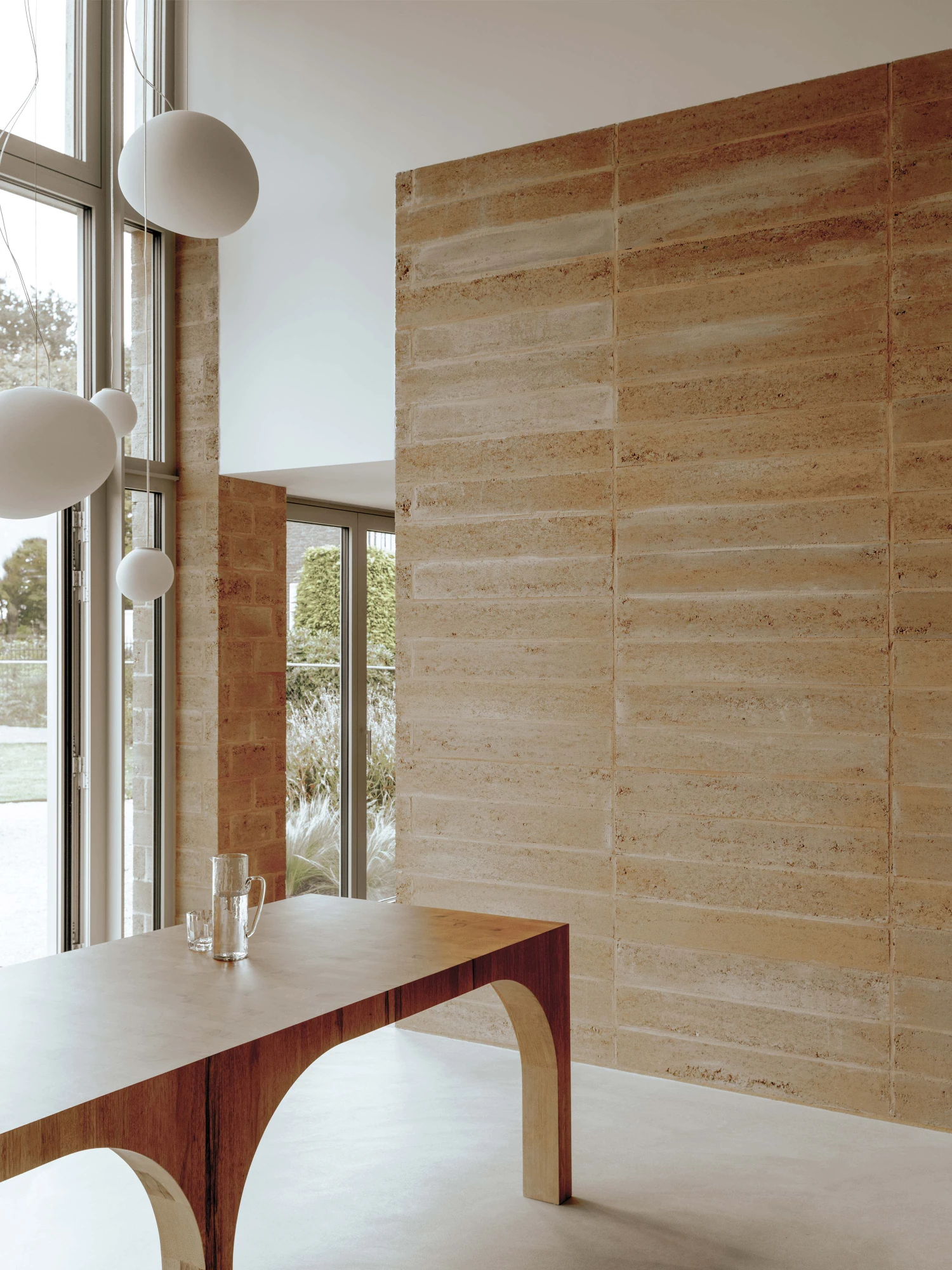
Inside, the plan privileges openness and visual depth. Large rear-facing windows dissolve the boundary between interior and exterior, turning the surrounding fields into an ever-changing backdrop. Sunken seating areas introduce a gentle modulation of levels, encouraging slower inhabitation and a heightened awareness of ground and horizon. Movement through the house is fluid, guided by light, view lines, and shifts in spatial compression.
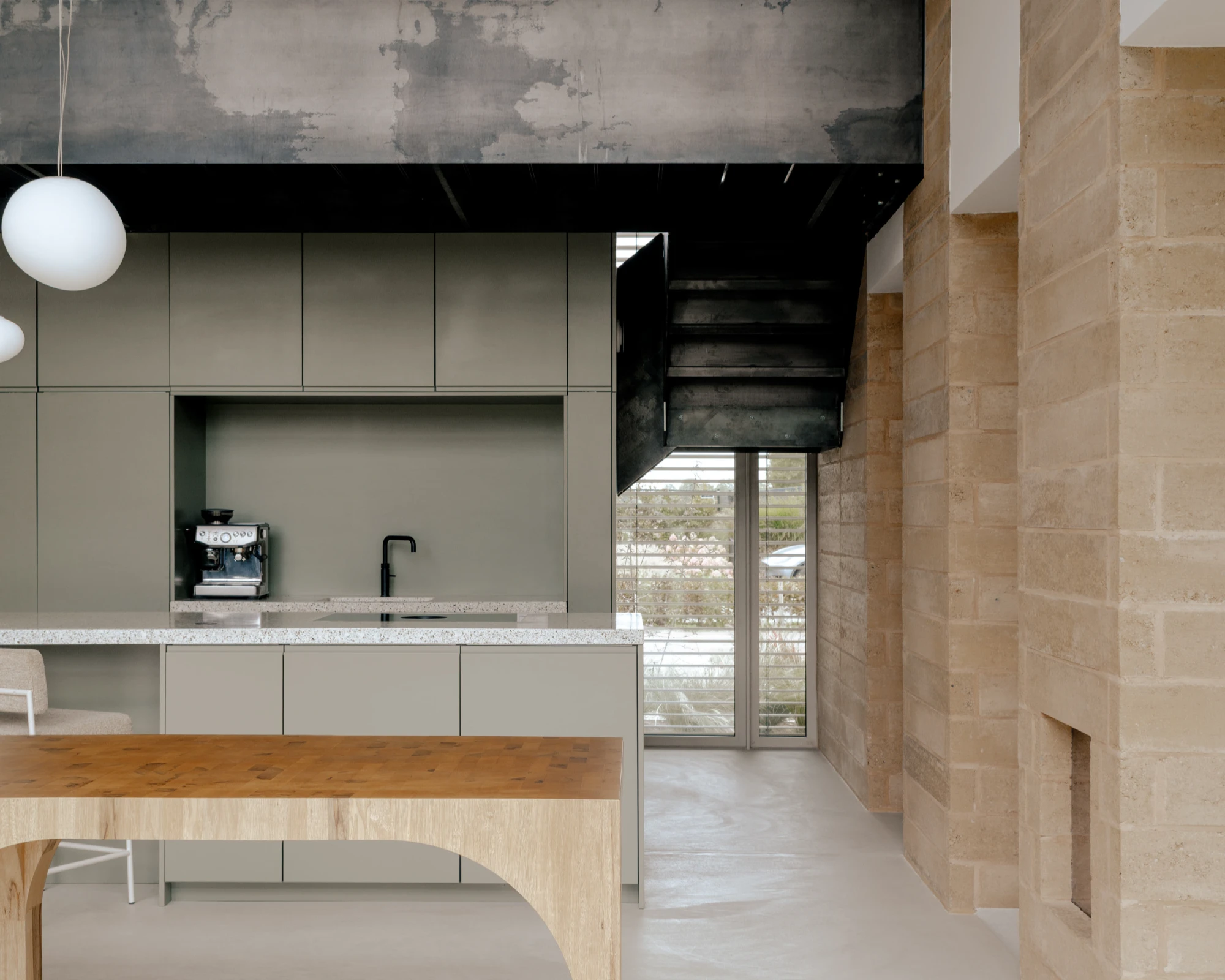
Material choices further anchor the building in its environment. The exterior’s Fraké wood cladding weathers naturally, while clay blocks from Fetdeterra appear both outside and within, lending texture and tonal continuity. Beyond their tactile warmth, these materials signal a commitment to circular construction, reducing environmental impact without foregrounding sustainability as a visual statement.
Residential House Weert reads as a lived-in landscape rather than a standalone object. Its strength lies in restraint: a clear typological idea, carefully tuned materials, and spaces that allow daily life to unfold in quiet dialogue with the countryside.