On Calle de Apodaca in central Madrid, Barcelona studio Oficina Satélite builds Riela, a bathhouse staged as a descent from street-level light into a basement of water and vapor.
The name comes from rielar, a Spanish verb for the shimmer of moonlight on water, and everything at Riela works to hold that image in a room. Oficina Satélite, the Barcelona studio run by Marc Castaño and Laia Rafel, set the bathhouse below a building on Calle de Apodaca, off Malasaña, and organised it around a self-guided circuit of heat, steam, cold water and rest. The references are old, drawn from Roman thermae, the Japanese onsen and the Russian banya. What the building does with them is newer, and it is structural.
Two horizontal planes do the organising, and they stand for the two things a bath needs: water and light. The upper plane, at street level, holds the entrance and belongs to light, which has no weight. The basement belongs to water, which is only ever trying to fall. Moving through the place therefore means going down. Below, a system of parallel, massive load-bearing walls, breached by small openings, carries the weight of the ground; above, the same structure thins out into a far looser plan.
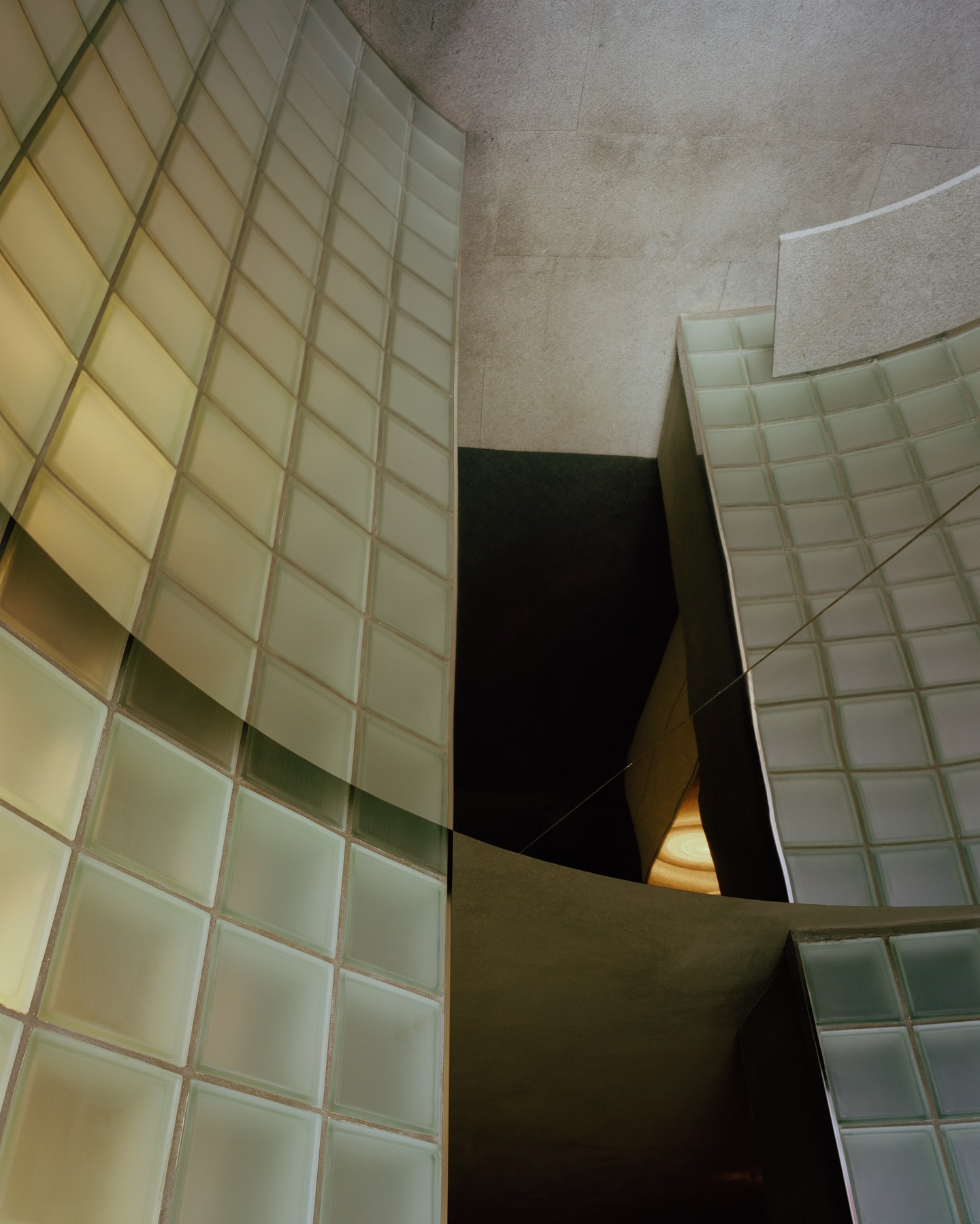
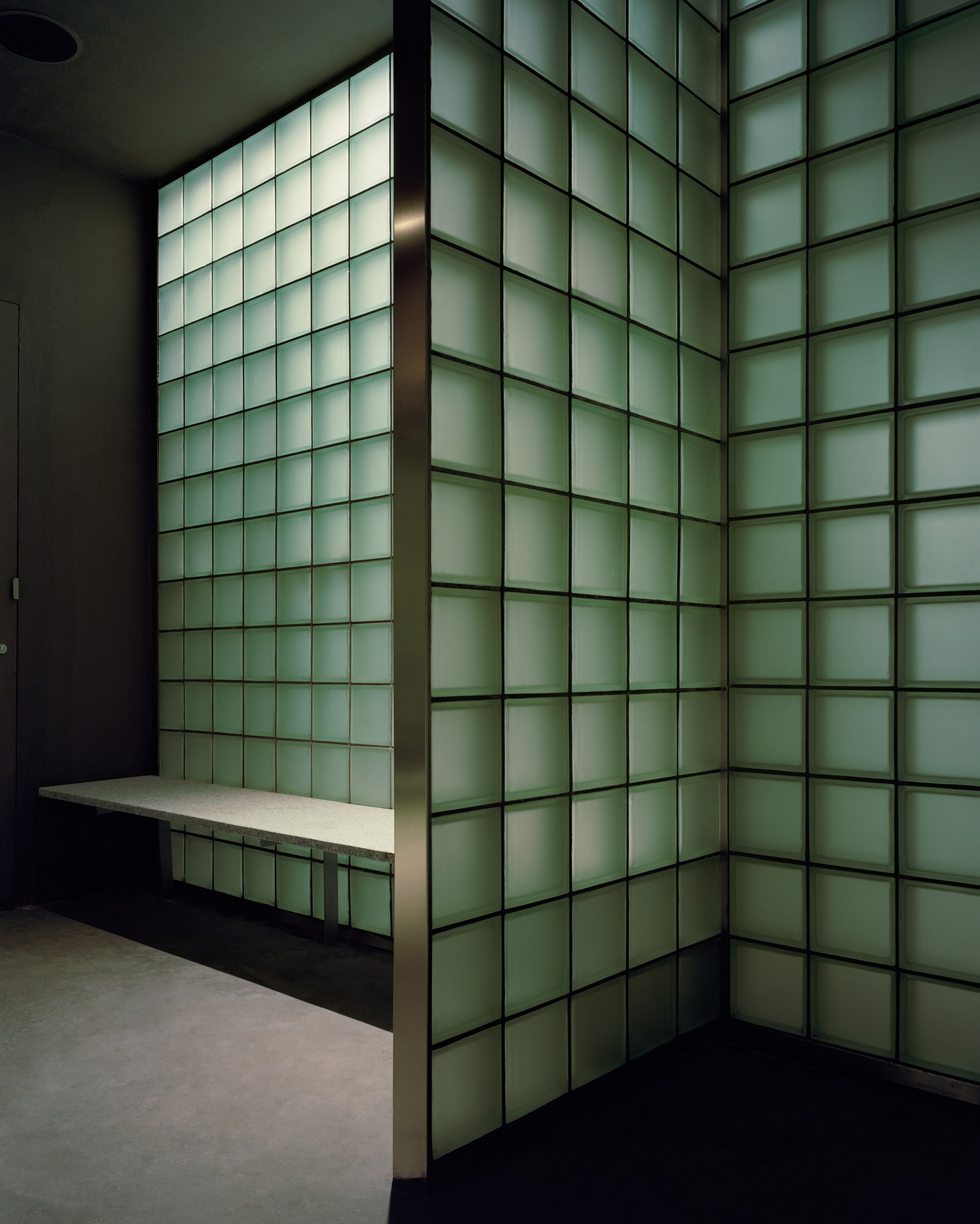
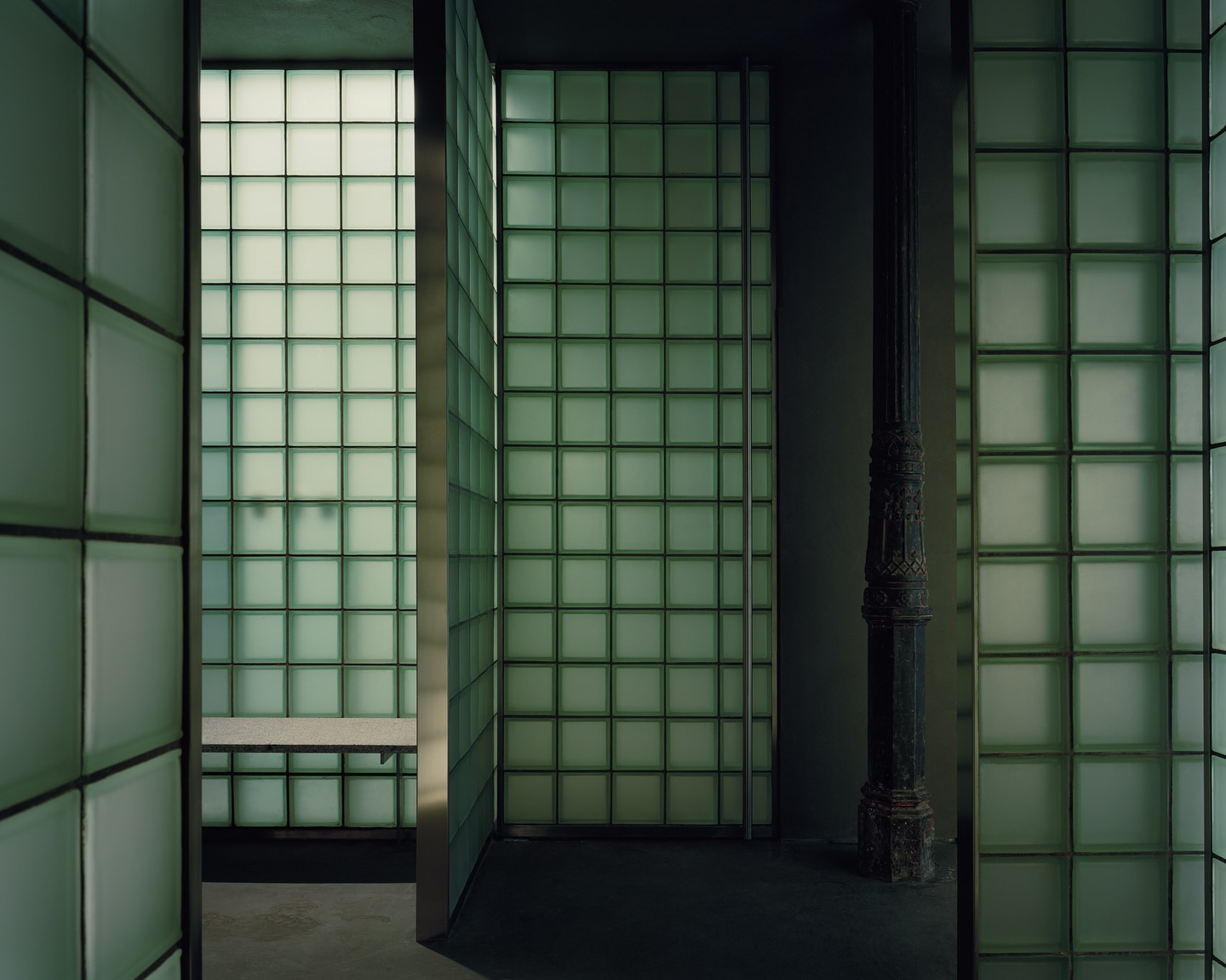
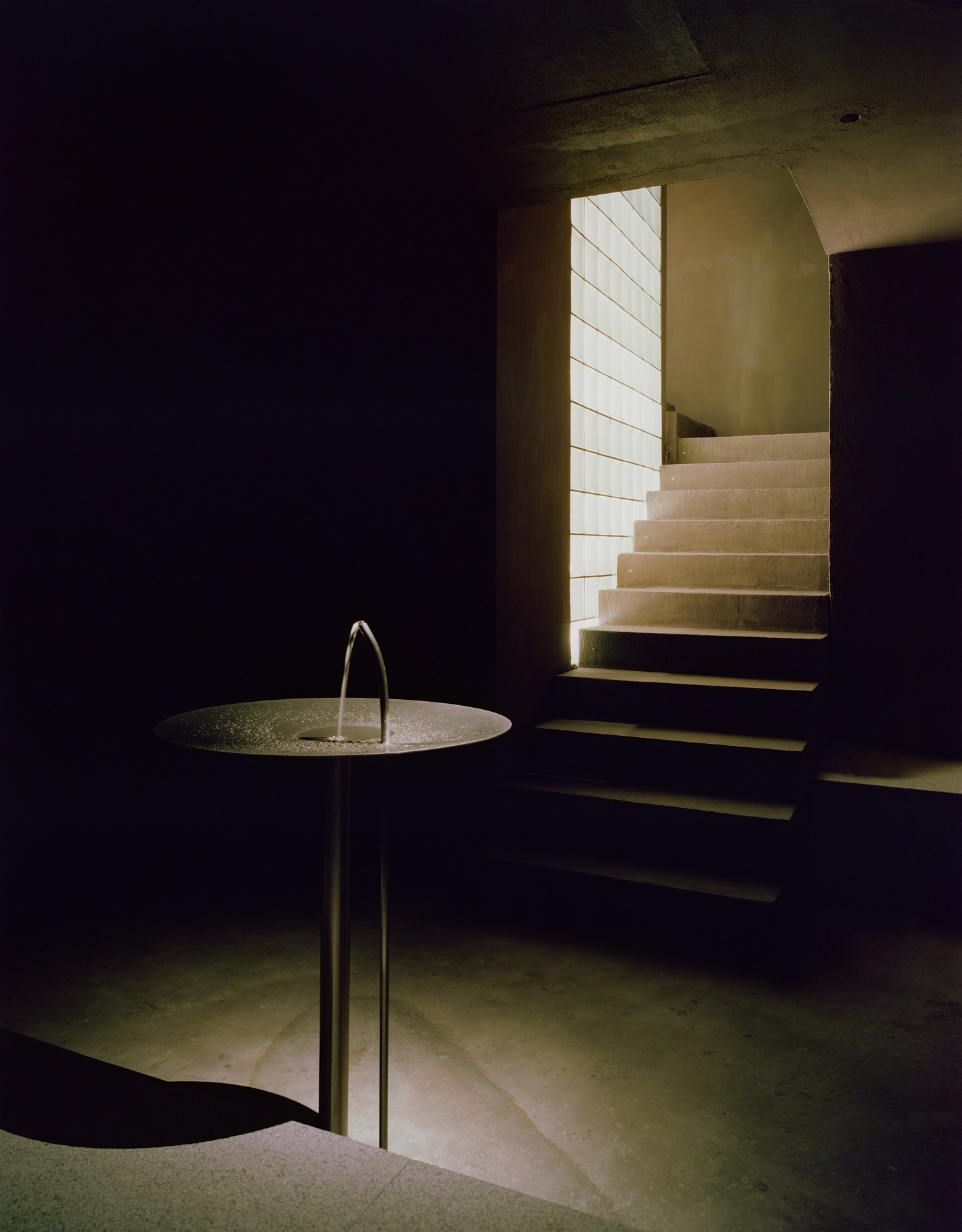
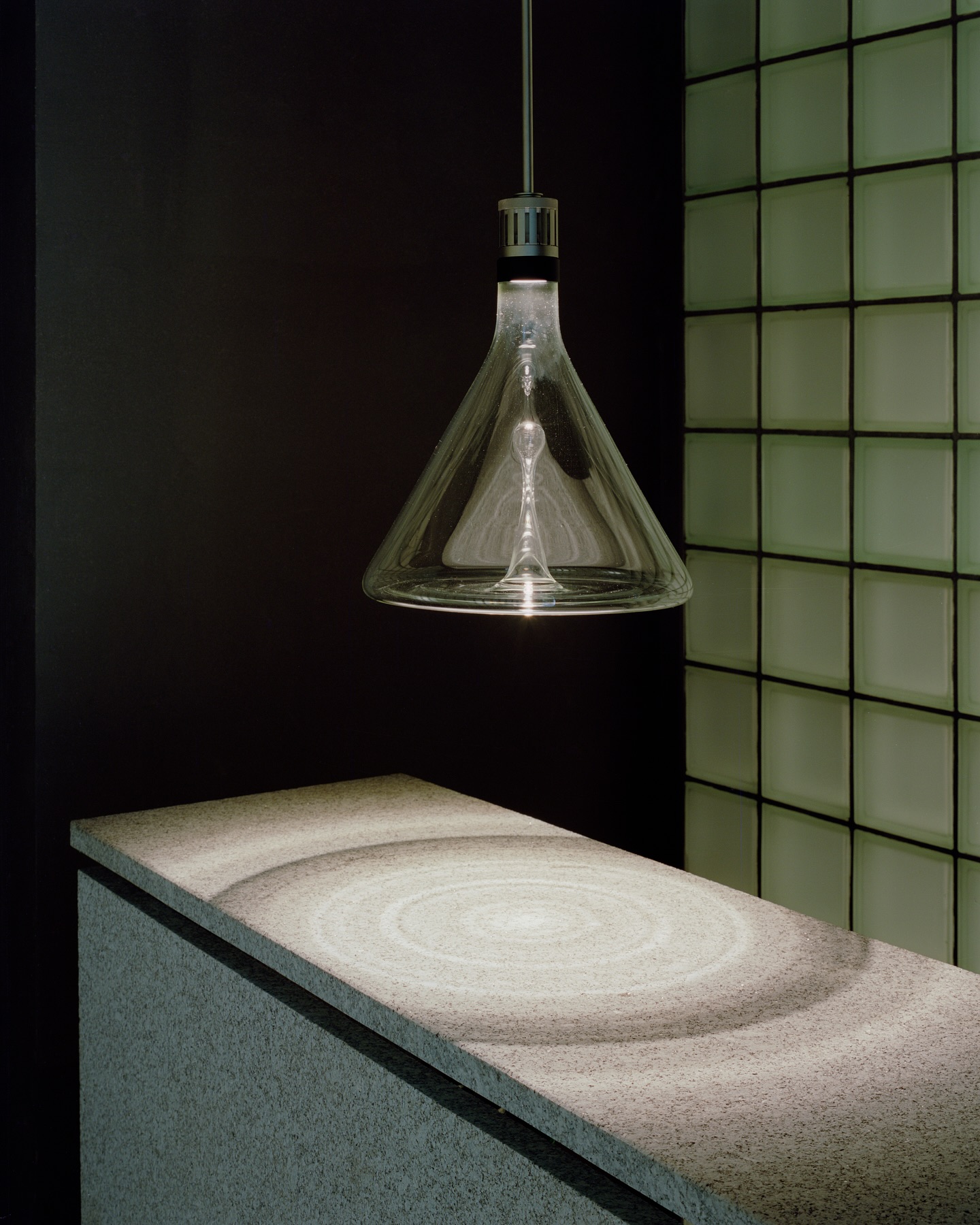
To keep that upper level light, Oficina Satélite traded solid partitions for what it calls walls of light: floor-to-ceiling grids of glass block, backlit and pale green, that divide the rooms without stopping the glow from passing between them. In the entrance sequence they read almost like water seen from underneath, a field of green cells with a granite bench cantilevered off one face. An ornamented cast-iron column, left as found, stands among them, evidence of the building that was already here.
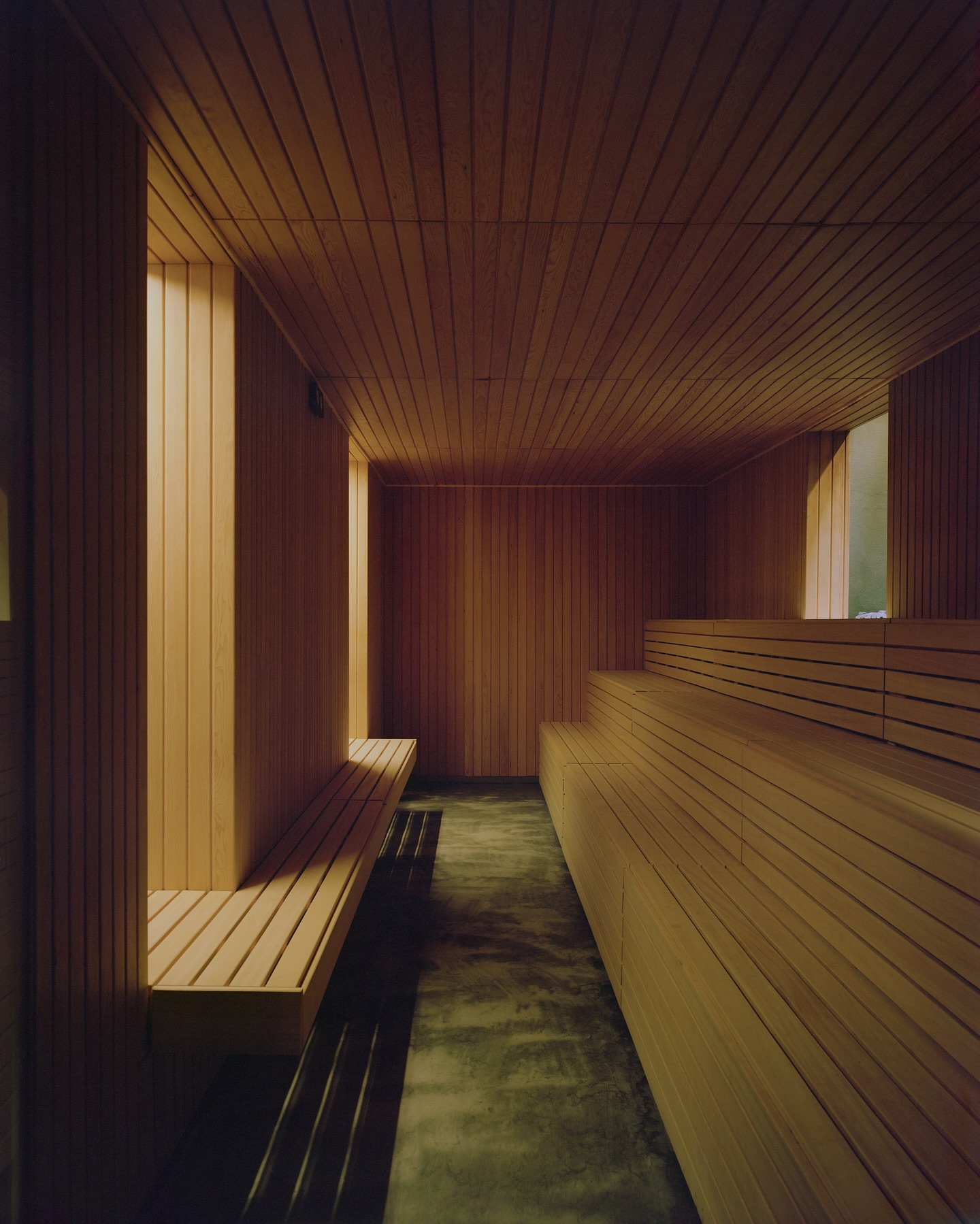
The palette stays deliberately short. Granite quarried around Madrid forms the pools and the benches, its grey speckle catching the low light. A sauna is lined entirely in pale timber, slatted bench and ceiling alike, warm against the green of the glass and the polished floors. One granite counter carries a set of concentric rings cut into its surface, the still record of a dropped stone, lit from above by a single hand-blown glass pendant.
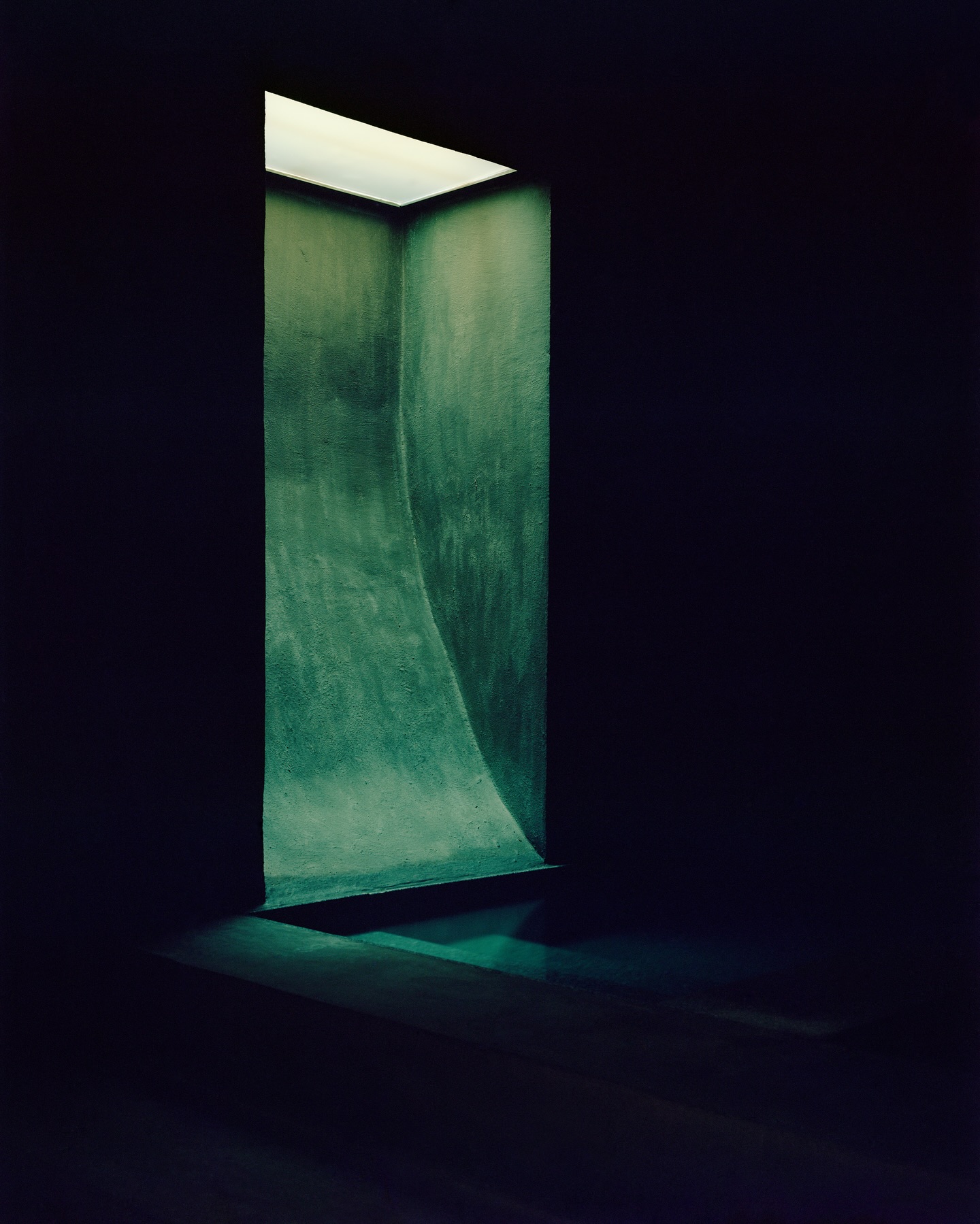
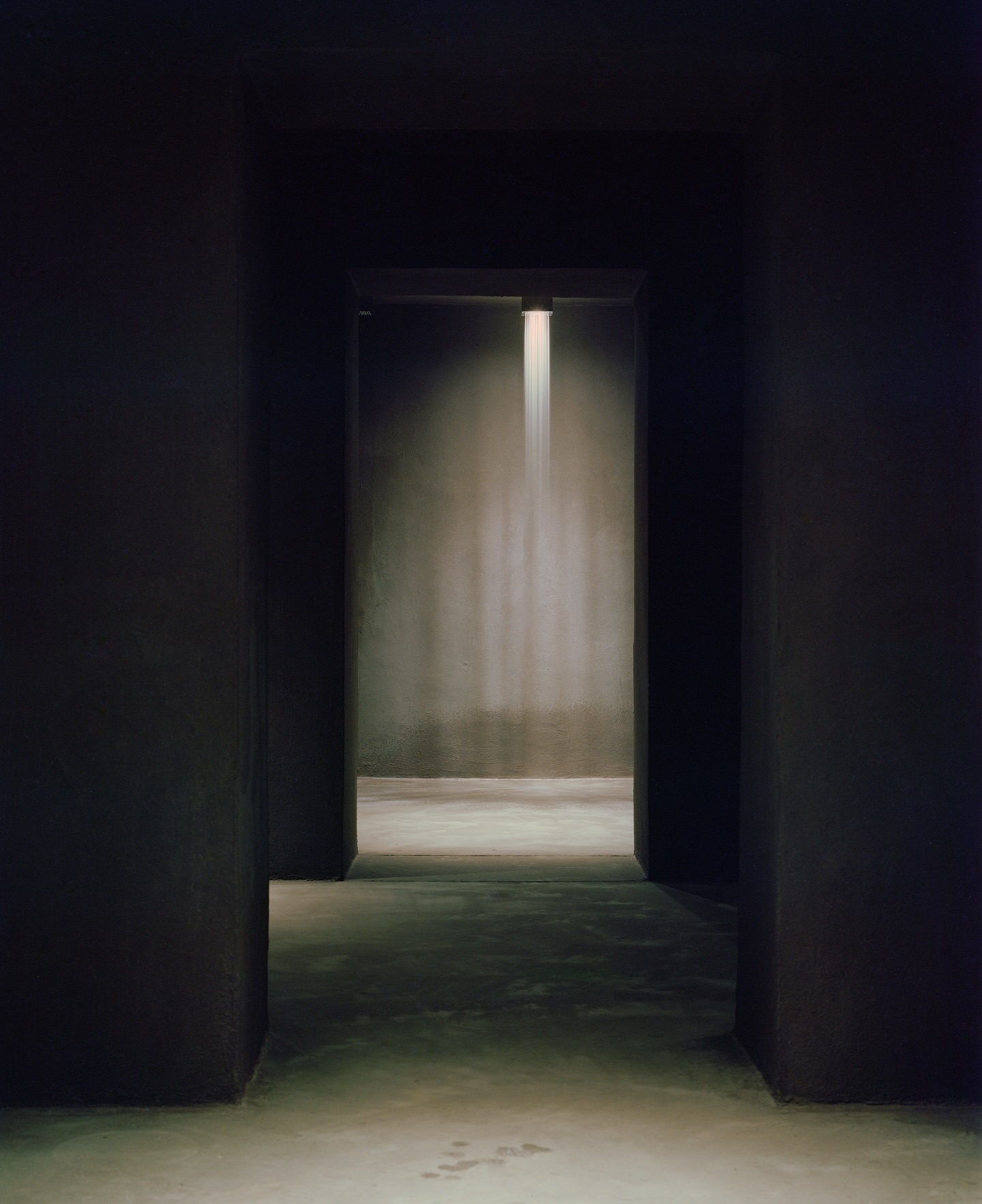
The stair is the hinge between the two worlds. It takes the form of a giant interior lantern that visitors circle as they descend, turning the act of going down into a slow spiral. The sequence is tuned the whole way: light, temperature, humidity and sound shift by degrees, preparing the body before it reaches the pond. Down here daylight arrives only through skylights, dropping vertically into dark green plastered wells, and a fine curtain of water falls through one black chamber as vapor. Silence and dimness become the working material.
What Oficina Satélite is after is less an image than a condition. The studio describes Riela as "open, free, non-intrusive," a place where in low light "you don't feel exposed; you feel held." That is the older idea underneath the bathing traditions it borrows from, that undressing in front of strangers becomes bearable only when the room agrees to keep you half-hidden. Riela builds the half-dark on purpose, then lets the water do the rest.