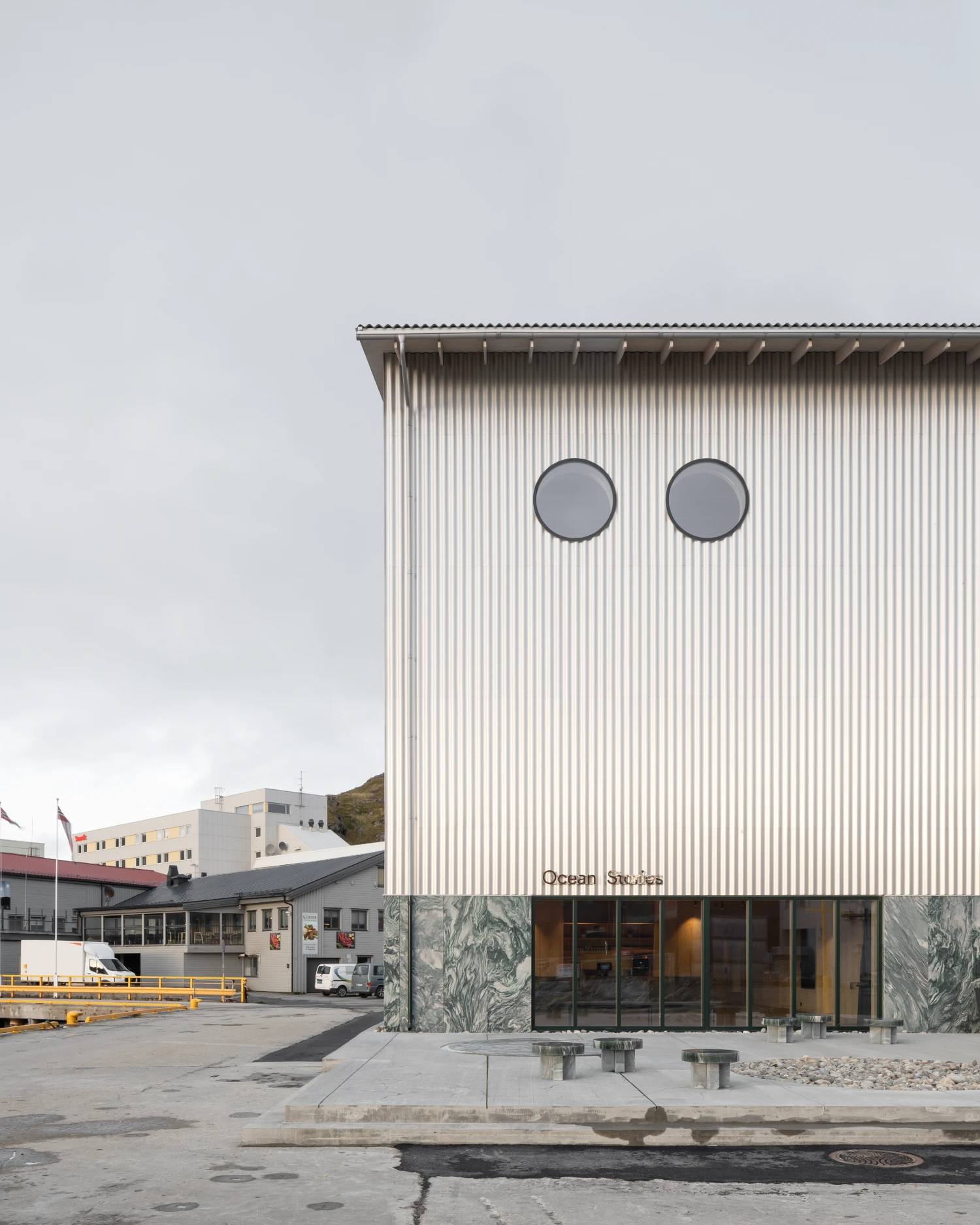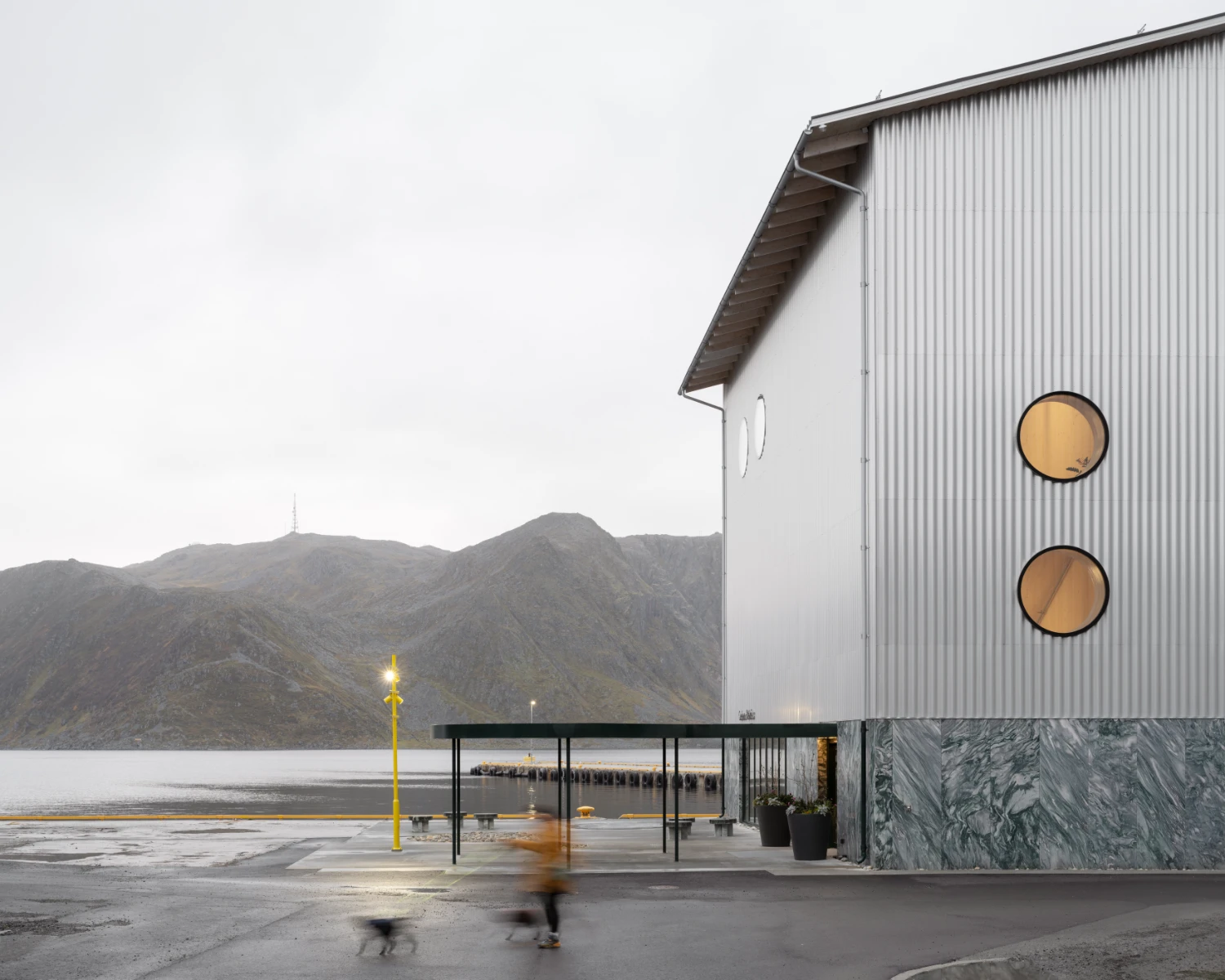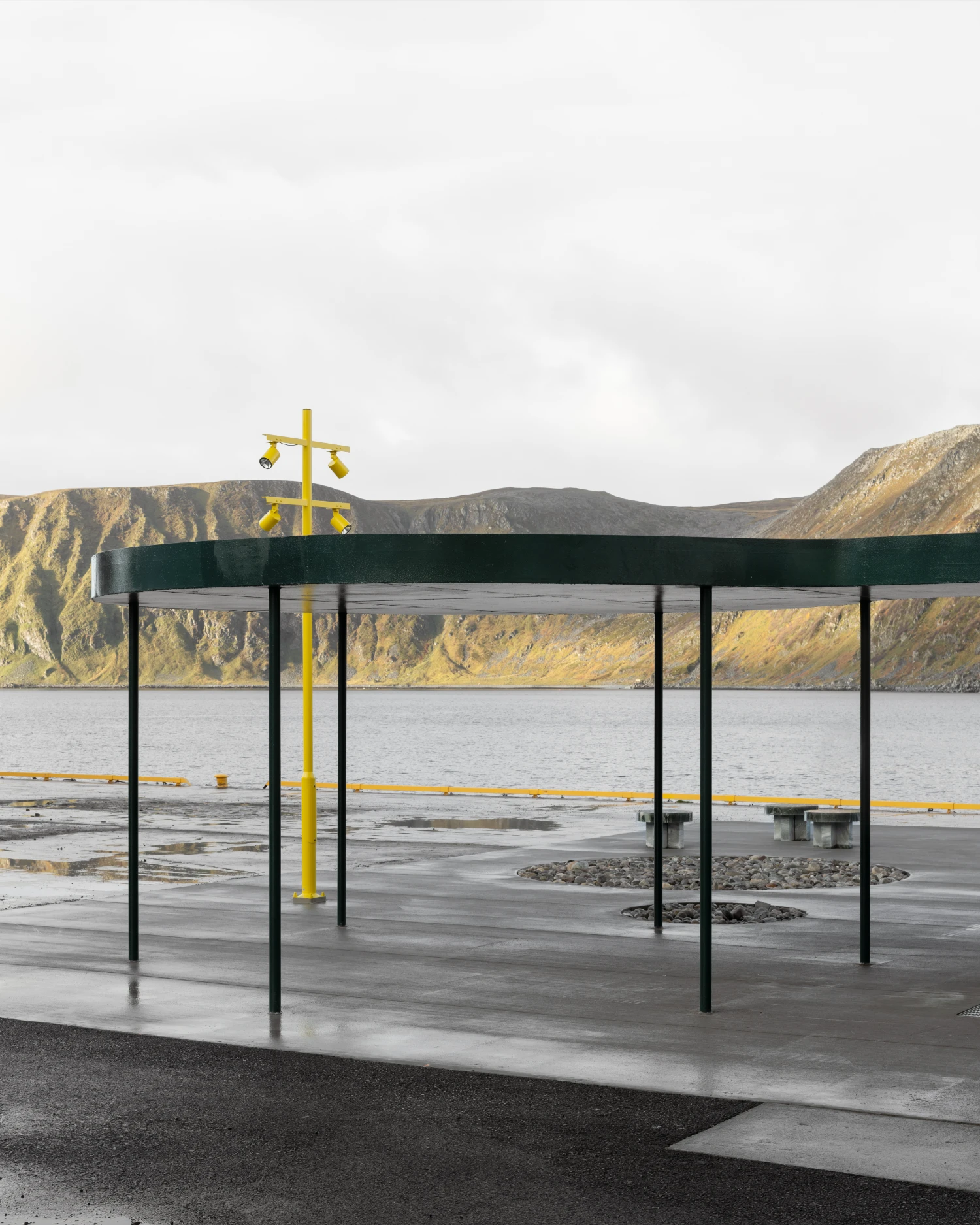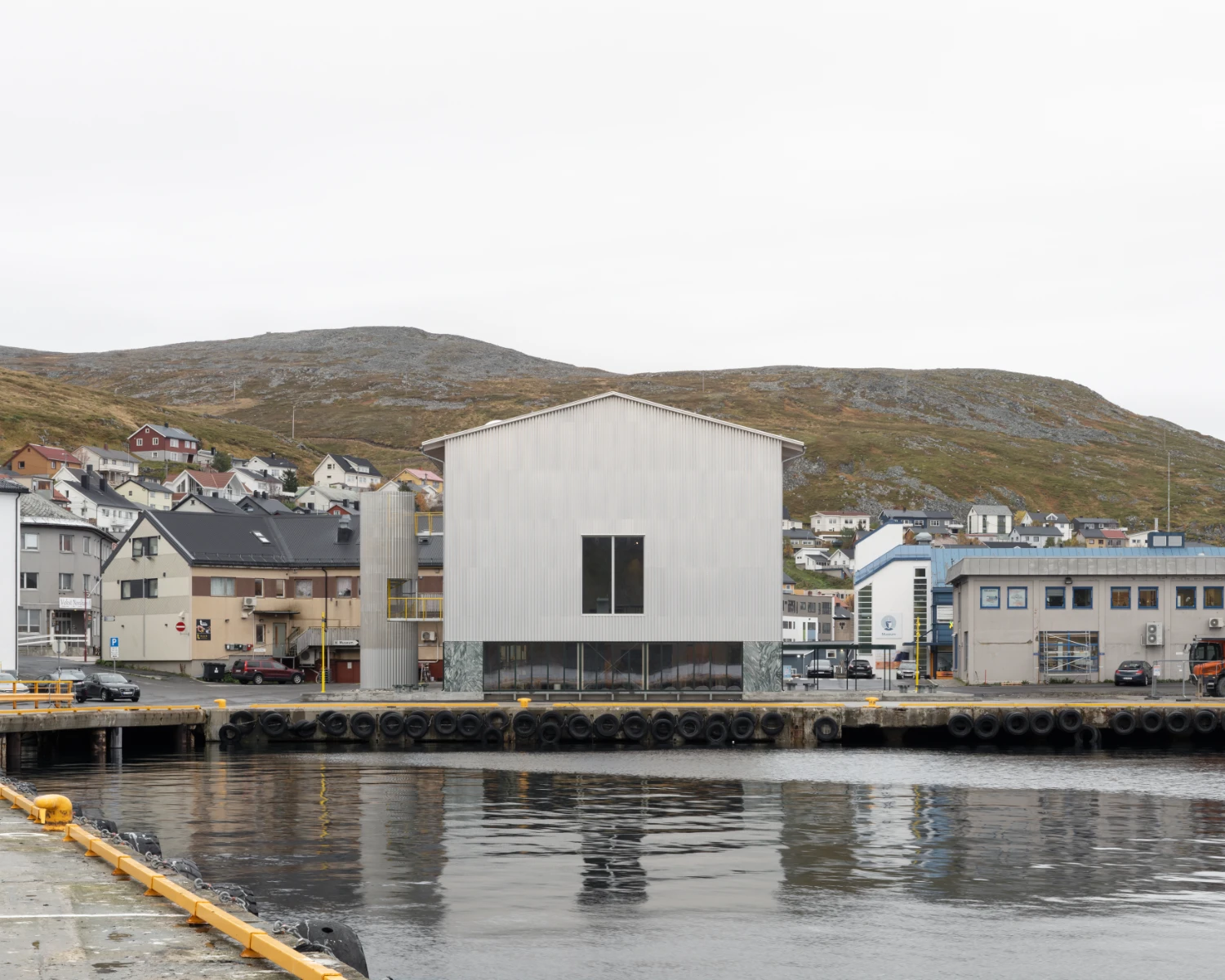
At the edge of Norway, where the Barents Sea meets the sky in a palette of grays and blues, Ocean Stories by Transborder Studio rises from the harbor of Honningsvåg as a quietly radical gesture.
Neither ostentatious nor deferential, the structure embraces its setting with an architectural language rooted in the material and cultural rhythms of the North Cape. Designed as both a museum and civic space, the building is the first installment in a larger vision to reimagine the harborfront as a nexus of knowledge, community, and ecological dialogue.
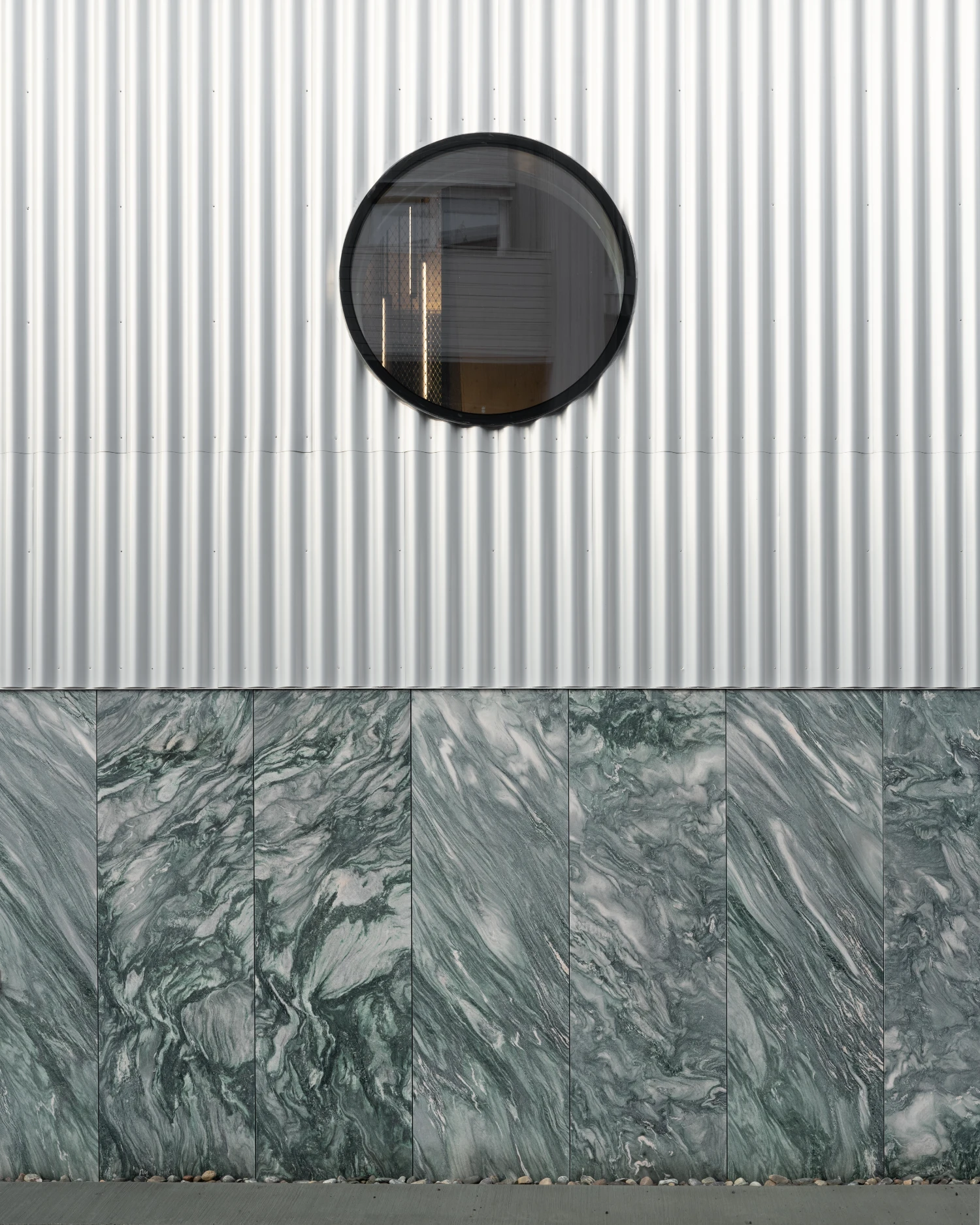
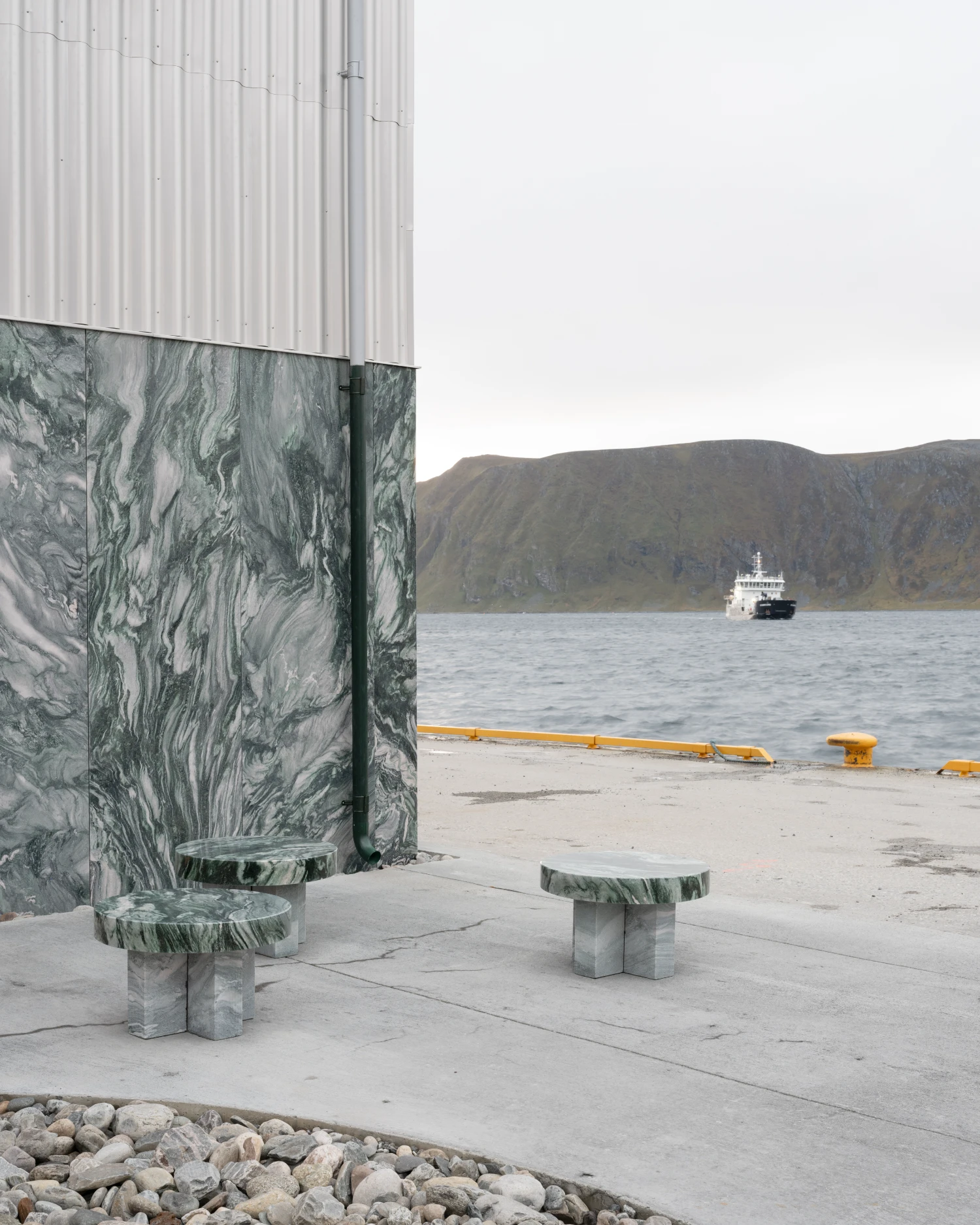
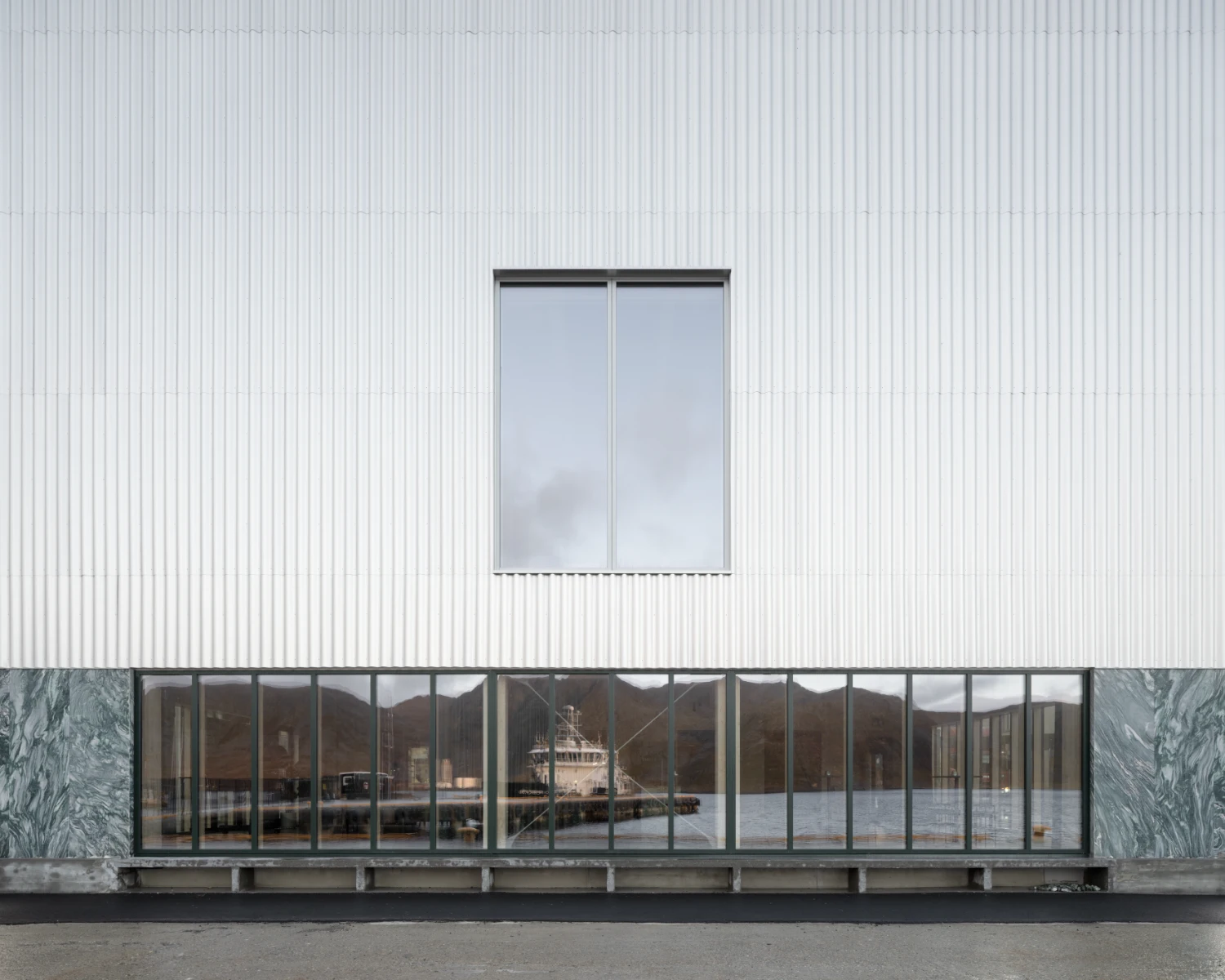
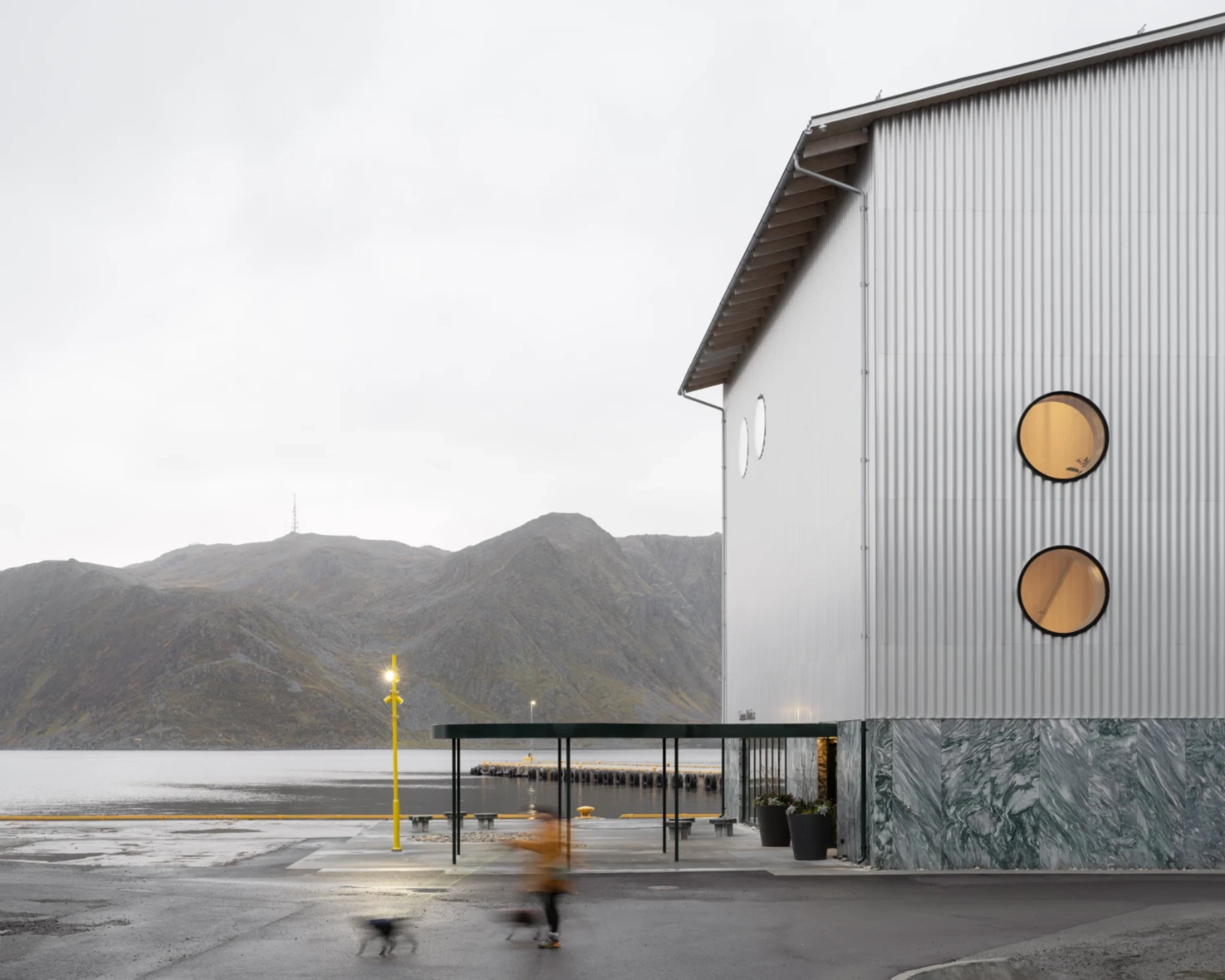
The form is archetypal: a simple gable-roofed volume evoking vernacular boathouses and industrial sheds. But within this restraint lies a depth of intention. The cladding—masi-quartzite stone from Kautokeino at the base and recycled aluminium above—offers a tactile narrative of place. The quartzite, thickly cut and rippling with sedimentary patterns, mirrors the surface tension of Arctic waters, transforming the façade into a quiet frieze of maritime memory.
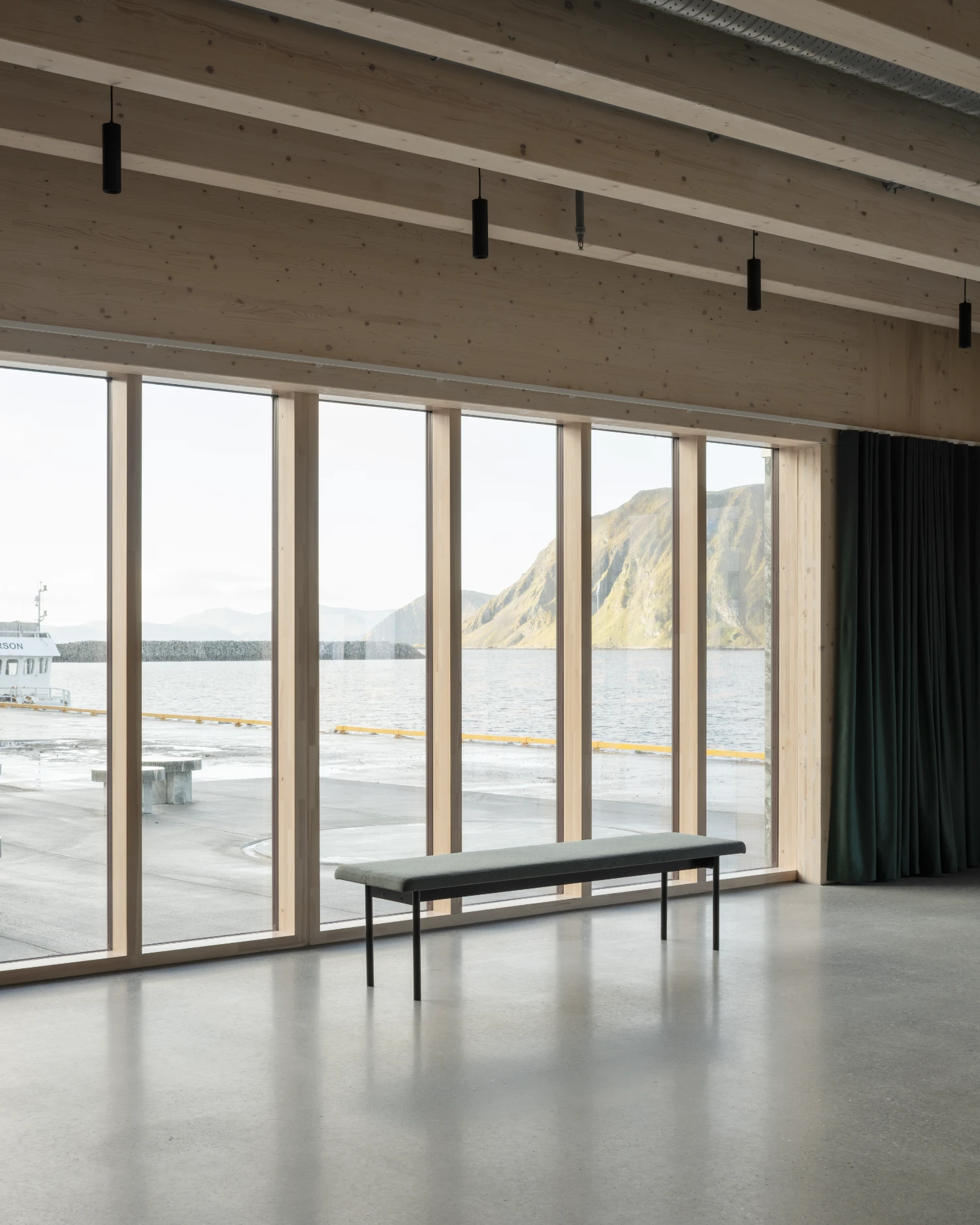
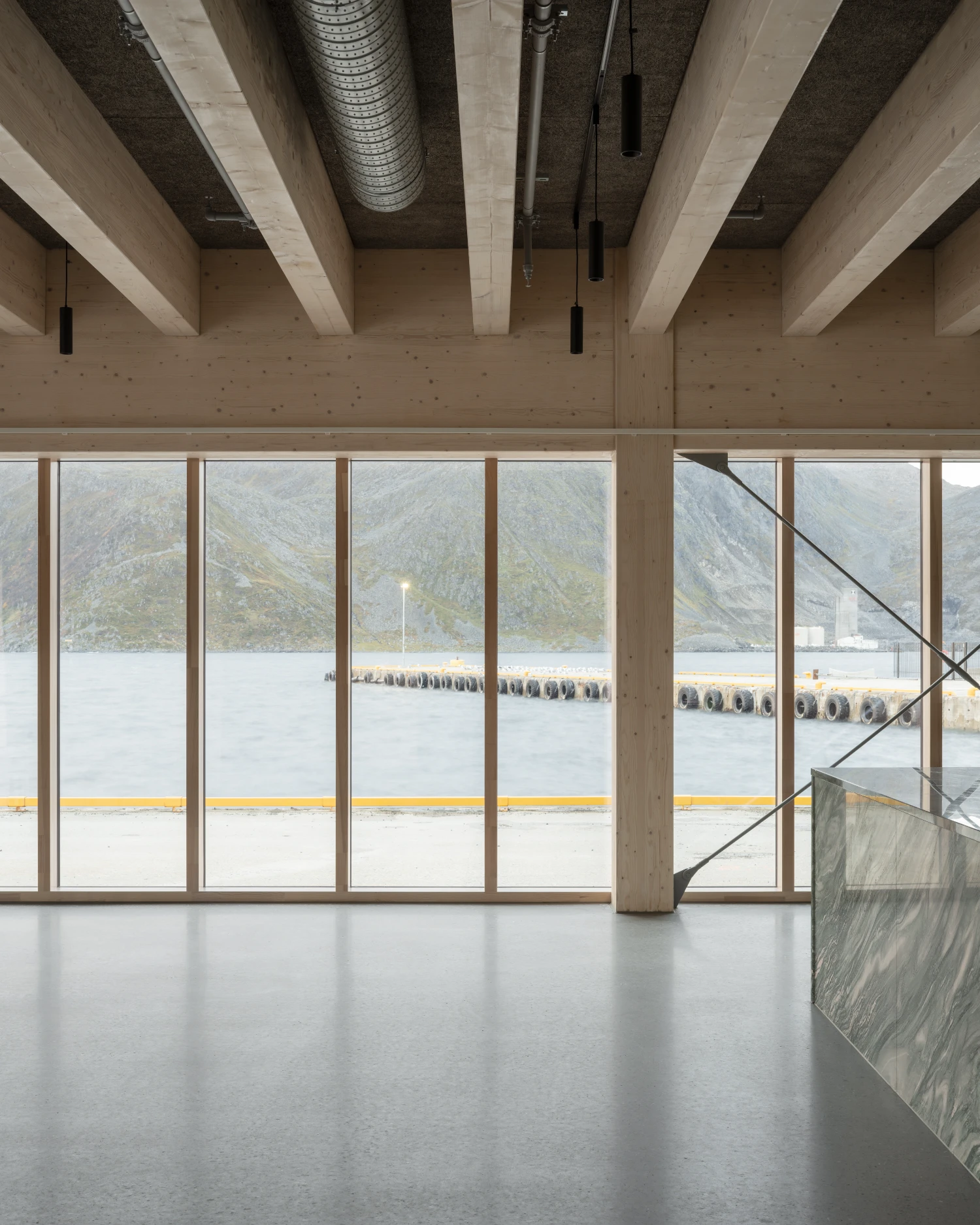
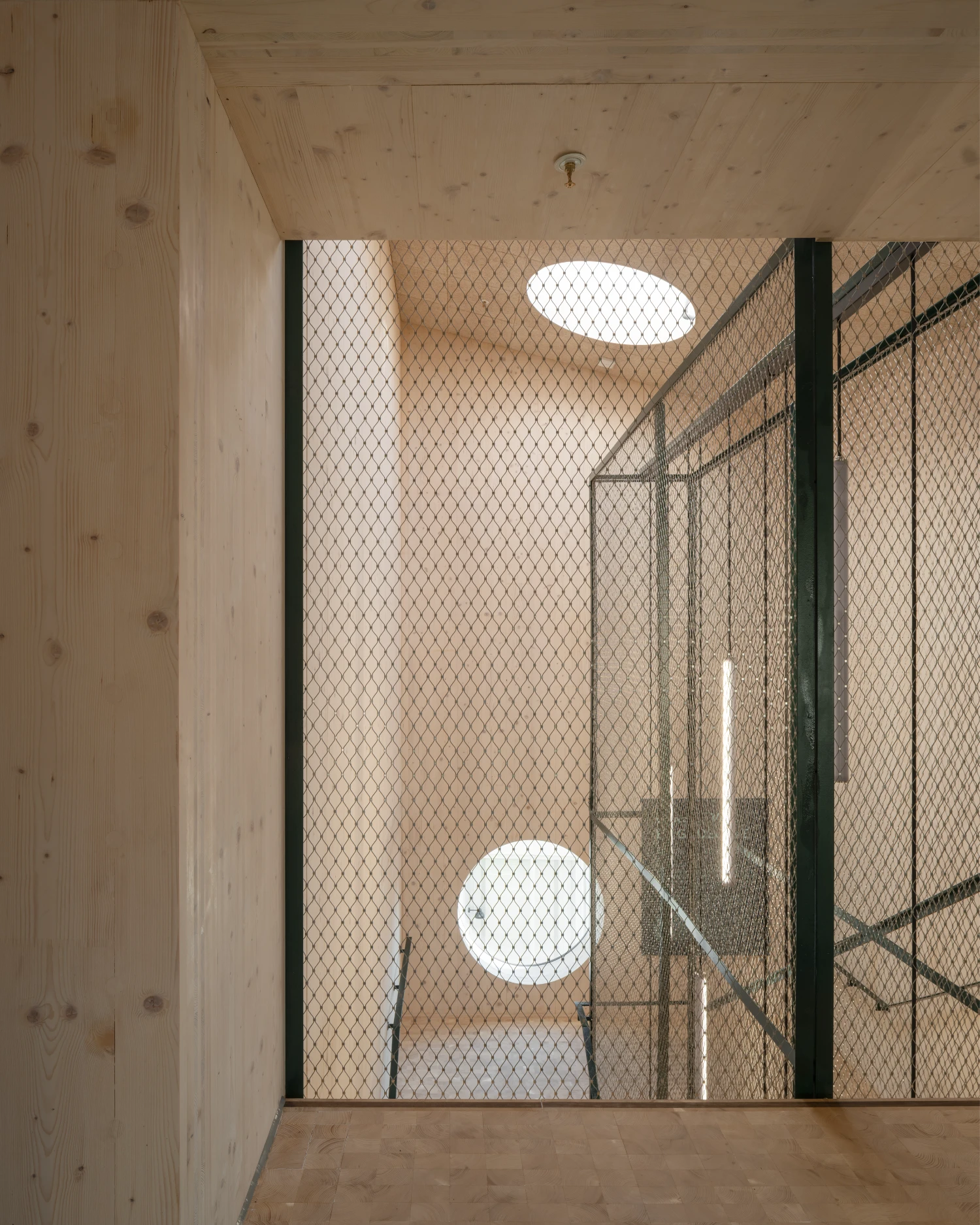
This sensitivity to material extends inward, where exposed cross-laminated timber (CLT) surfaces lend the interiors a raw warmth, grounding visitors in the tactility of Nordic craft. Constructed directly on the quay, the structure had to endure the region’s capricious weather—an endurance mirrored in the building’s robust yet refined detailing. Every joint, seam, and surface appears considered, yet never over-designed—a balance rarely achieved in public architecture.
Ocean Stories is not merely a museum but a polyfunctional institution. The first floor operates as a commons—welcoming locals, cruise visitors, researchers, and schoolchildren alike. Above, the exhibitions unfold across two floors, tracing the entangled histories of fisheries, climate realities, and aquaculture futures. This layered programming ensures the building lives beyond the tourist season, adapting to the tempo of the community.
Its presence is subtle, but its impact is ambitious. By embracing the cultural environment conservation zone not as constraint but as muse, Transborder Studio offers a model for place-specific architecture at the edge of the world. Ocean Stories becomes both vessel and voice—speaking to the complexities of marine life, Arctic stewardship, and rural revitalization in an age of climate anxiety.