Thisispaper Community
Join today.
Enter your email address to receive the latest news on emerging art, design, lifestyle and tech from Thisispaper, delivered straight to your inbox.
Oops! Something went wrong while submitting the form.
Instant access to new channels
The top stories curated daily
Weekly roundups of what's important
Original features and deep dives
Exclusive community features
Alexander Zaxarov
Jun 29, 2026

Made across rural South Korea, Daesung Lee builds Nirvana with his mother Yi-Boun Shin, a series that crowns its older women in cabbage leaves, kitchen baskets and balloons to weigh a lifetime of labour.

Daesung Lee, a Korean photographer based in France, made Nirvana alongside the one person who could not be a stranger to him: his mother, Yi-Boun Shin. The series turns its lens on the generation of Korean women now in their seventies and eighties, the ones who raised families through war, dictatorship and rapid industrialisation while their own names went mostly unrecorded. Shin is both collaborator and recurring subject, and the project carries the candour of a conversation held over decades rather than a stranger's study.

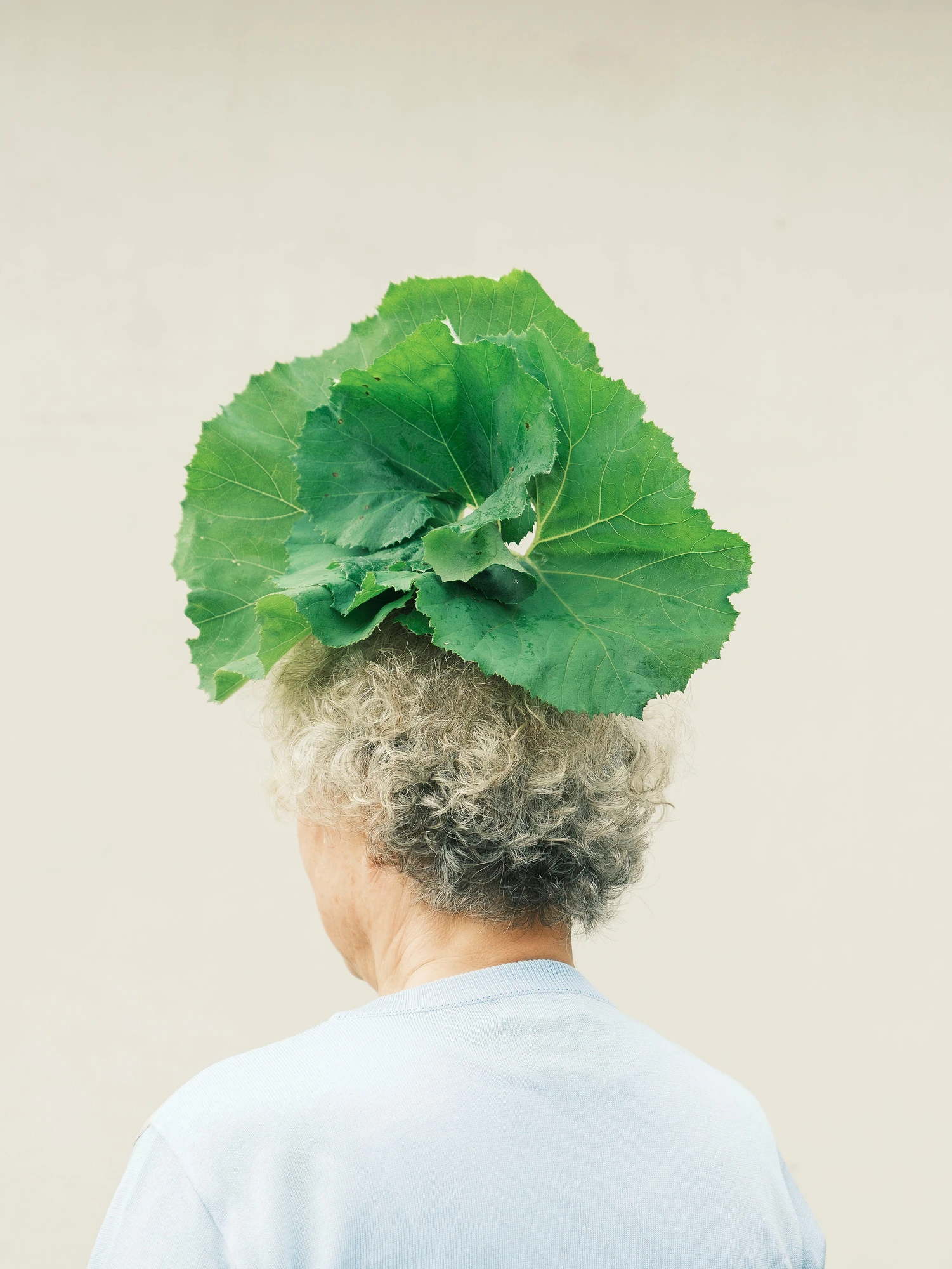
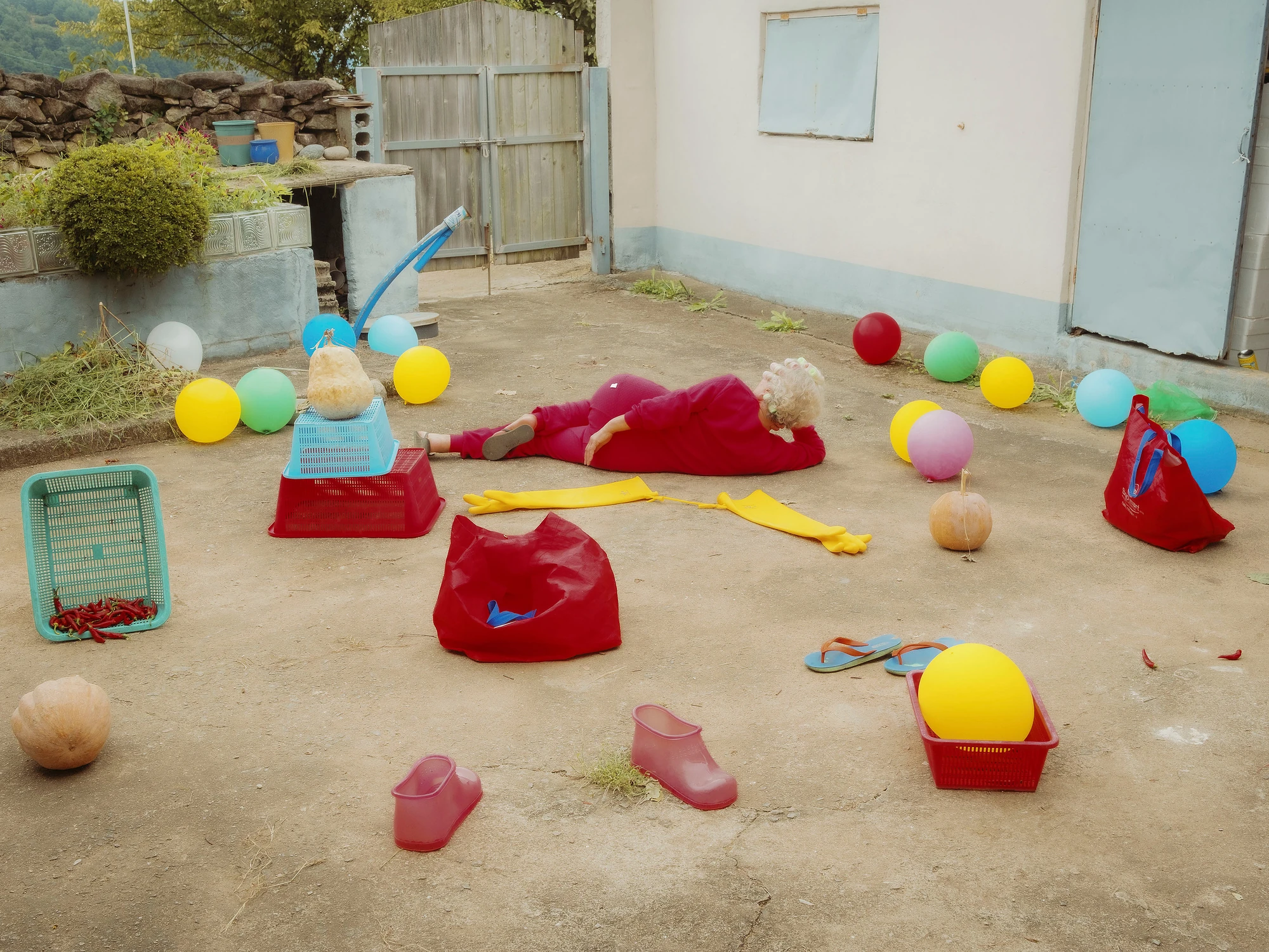
The grammar is domestic. A yellow plastic kitchen colander becomes a saint's halo behind a woman in a red shirt, green rollers still in her hair. Cabbage leaves fan out from the back of a head like a feathered hat. Balloons, garden clogs, pumpkins and red beanbags litter a concrete courtyard around a body laid flat among them. Nothing here is borrowed from a studio prop room; every object came from a kitchen, a yard, a market. Lee photographs them straight, with the flat frontality of a passport picture, so the absurdity reads as fact.

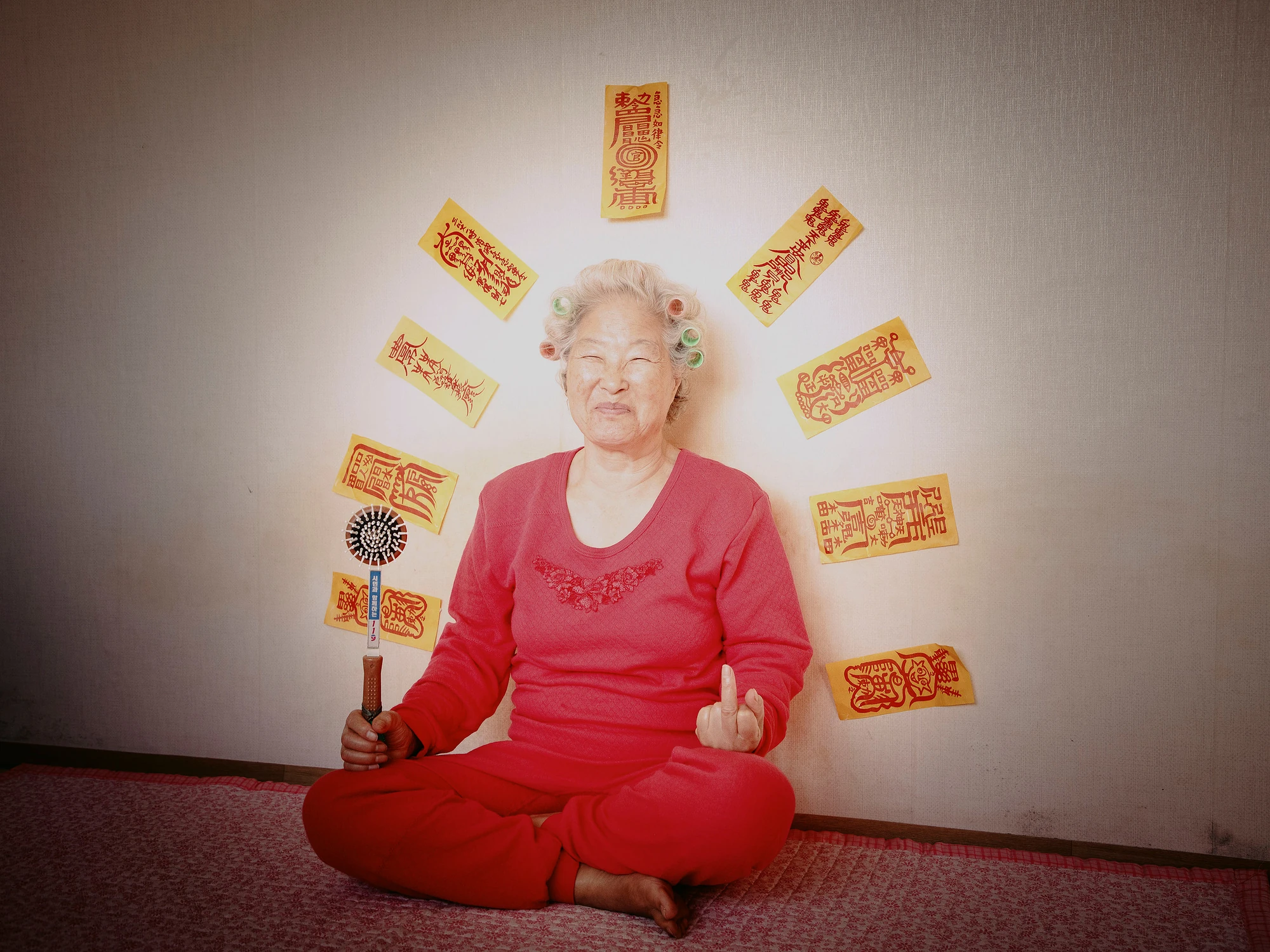
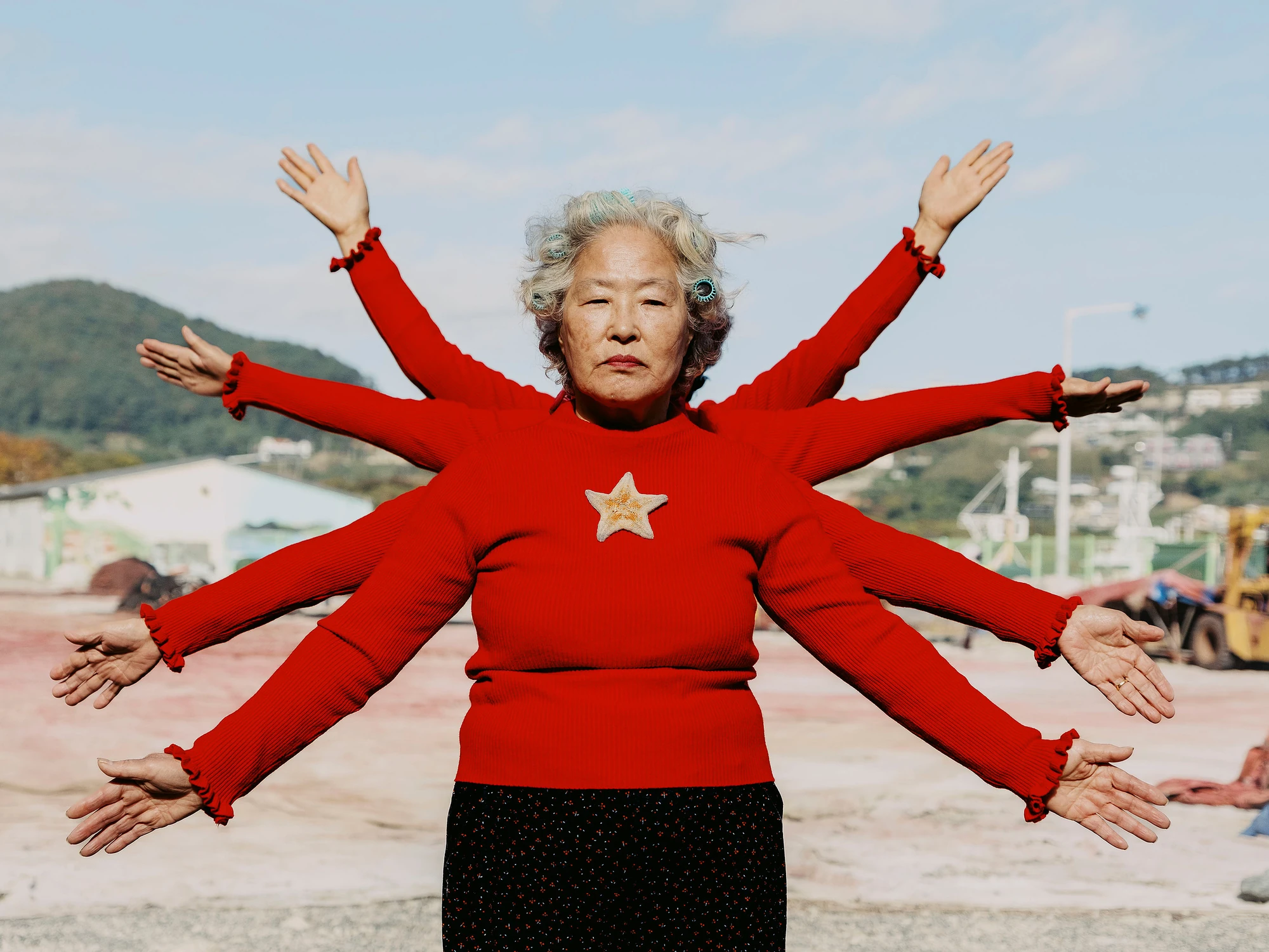
That deadpan is the point. In one frame a woman in a star-emblazoned sweater sprouts six arms, a kitchen-table Bodhisattva fanned against a dockyard. In another she sits cross-legged in red, ringed by yellow shamanic talismans arranged like rays of a rising sun. The iconography of devotion is everywhere, applied to women who spent their lives serving others and were rarely the ones knelt before.

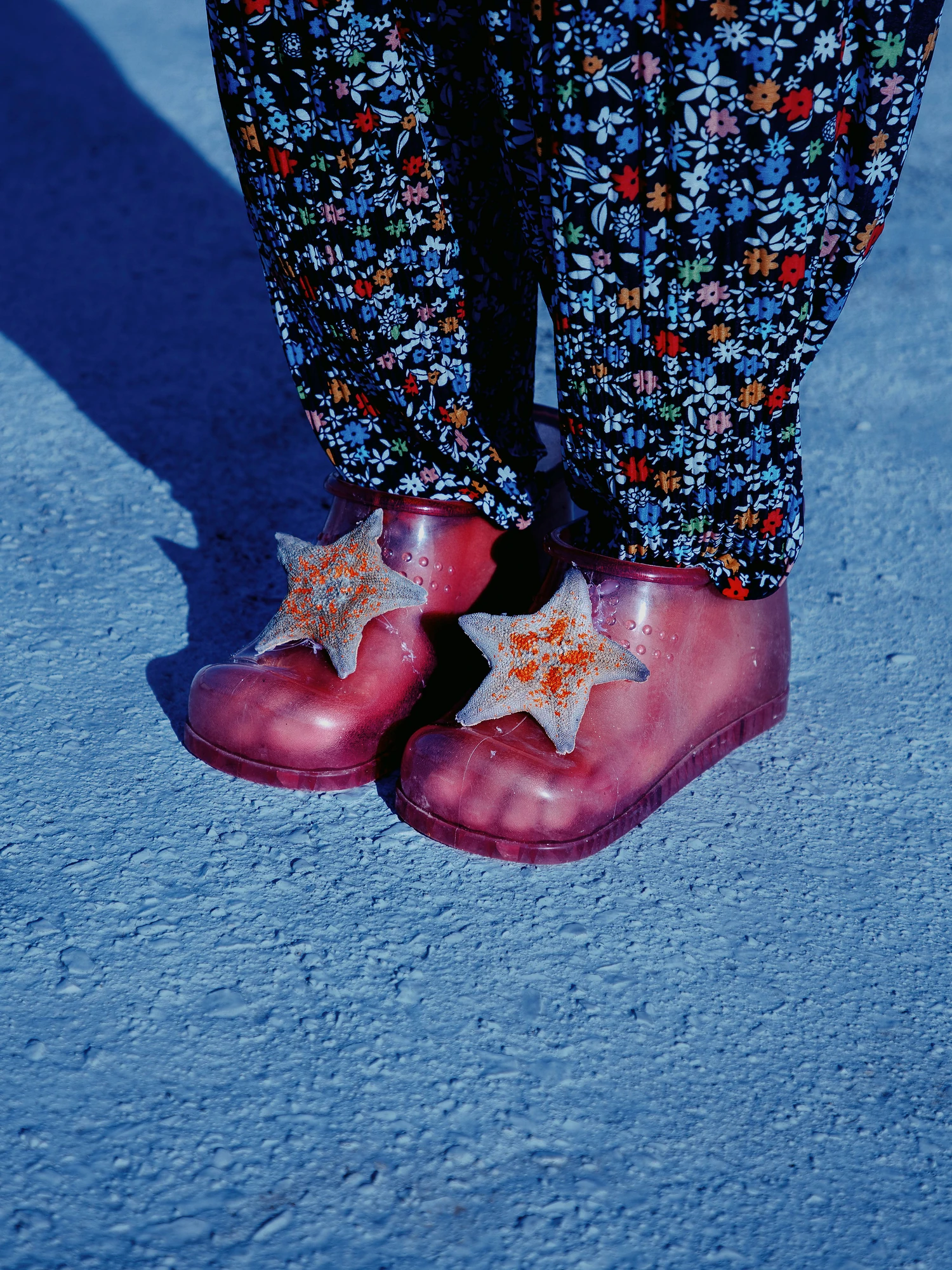
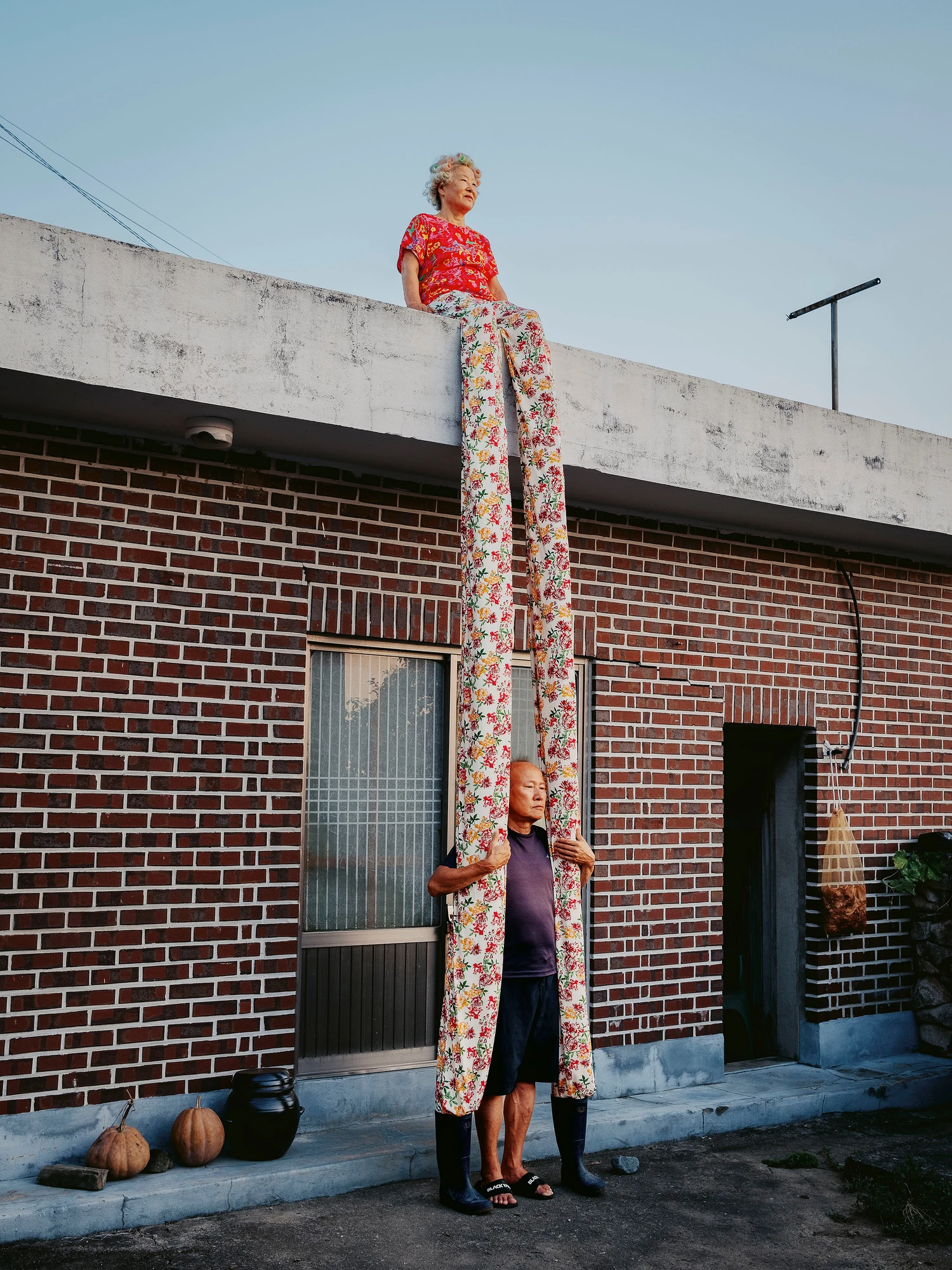
Humour does the heavy lifting, and underneath it sits something harder. Floral trousers run impossibly long, cascading off a rooftop into the hands of a man waiting below, a sly joke about who has held whom upright. The comedy keeps the grief from curdling into pity. These women survived, the pictures insist, partly by refusing to take their own suffering too seriously.

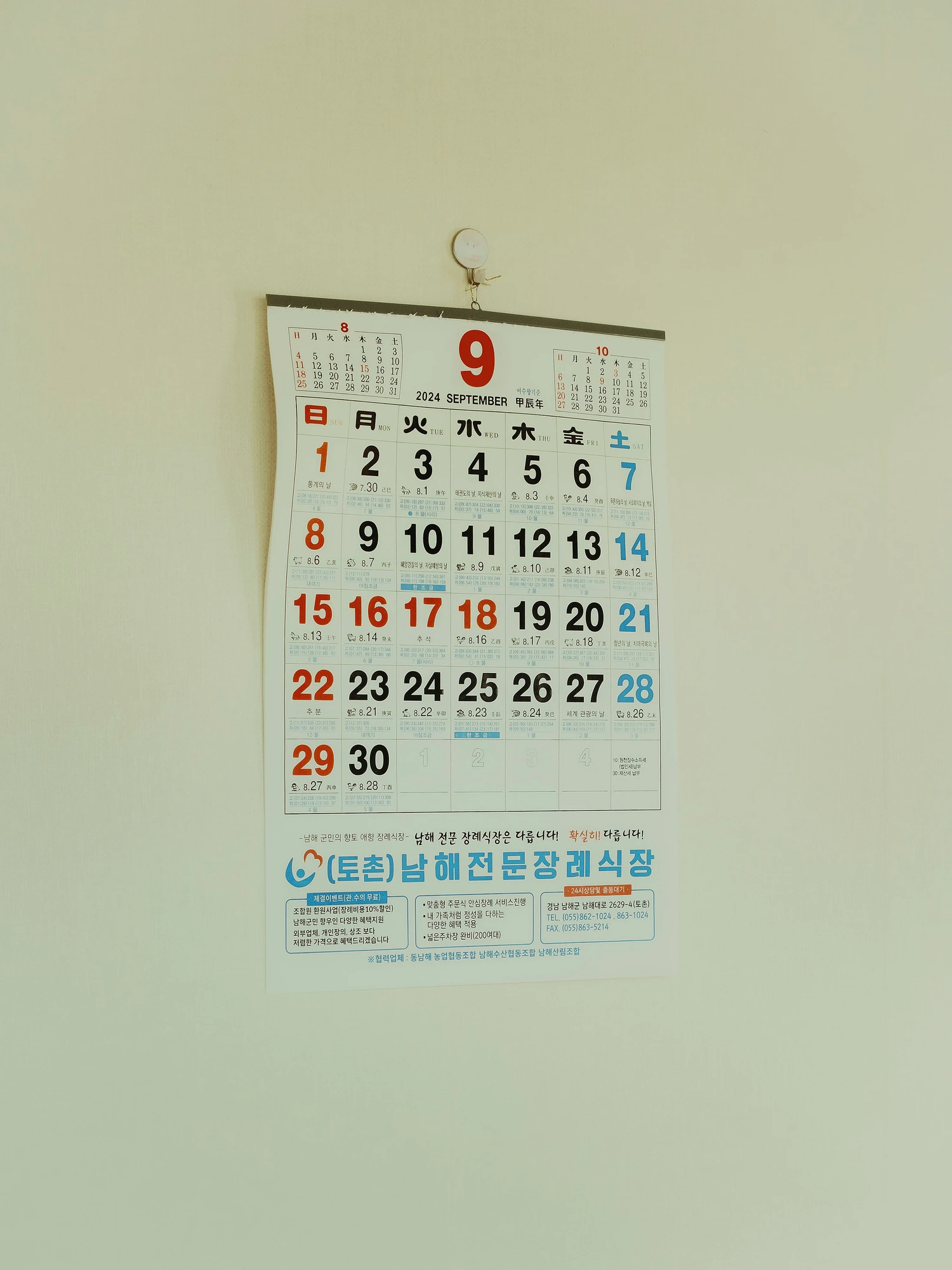
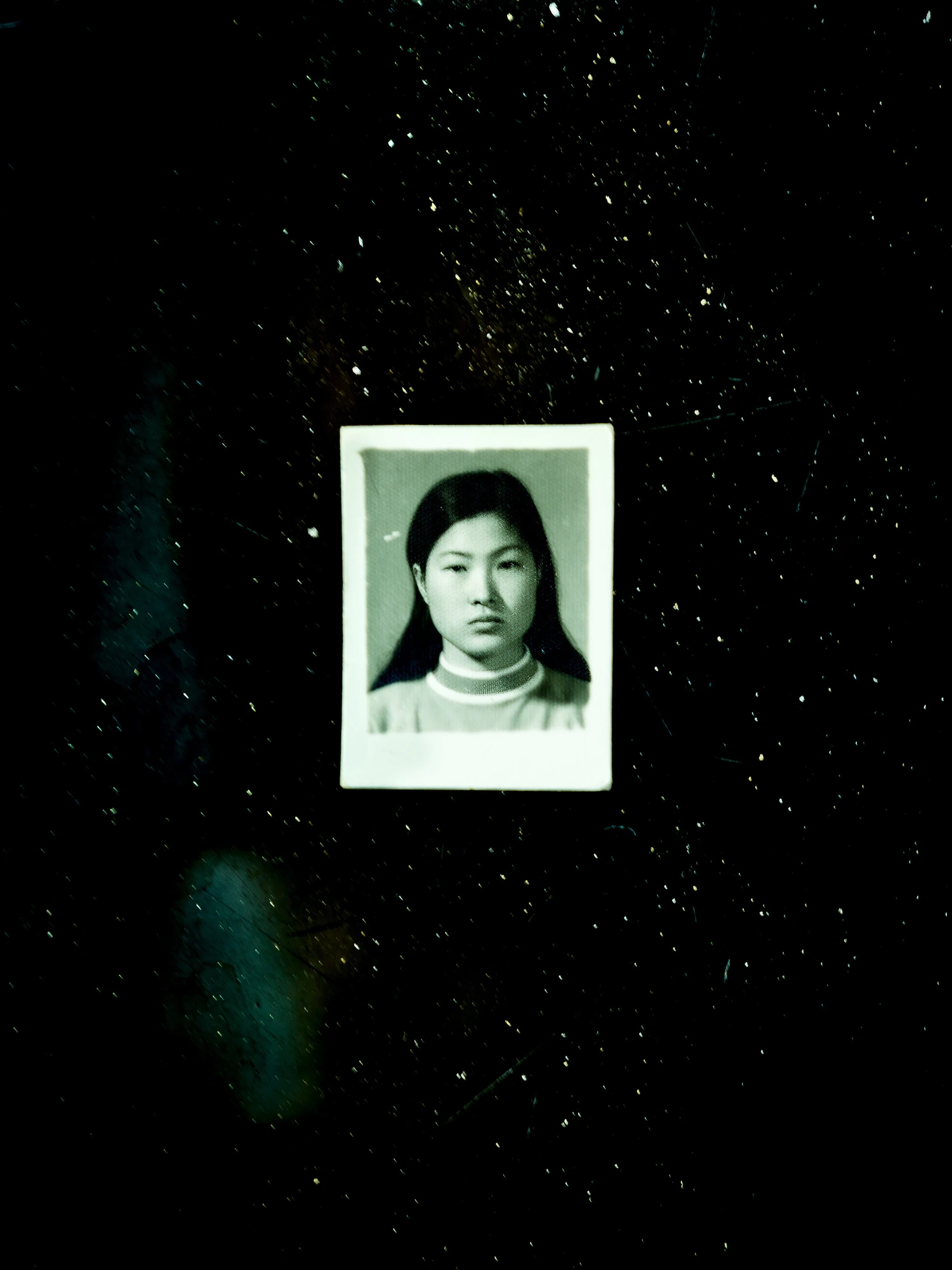
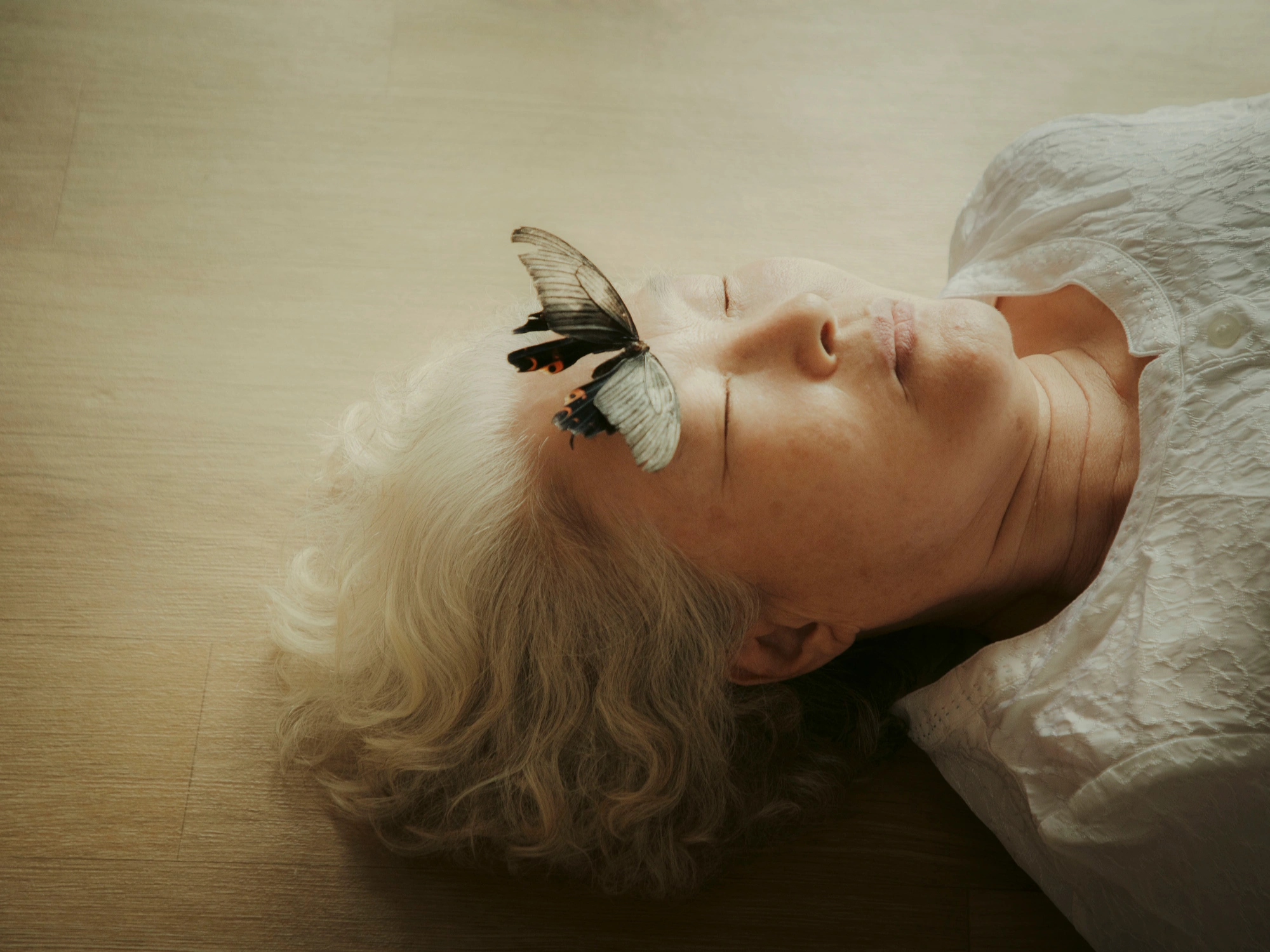
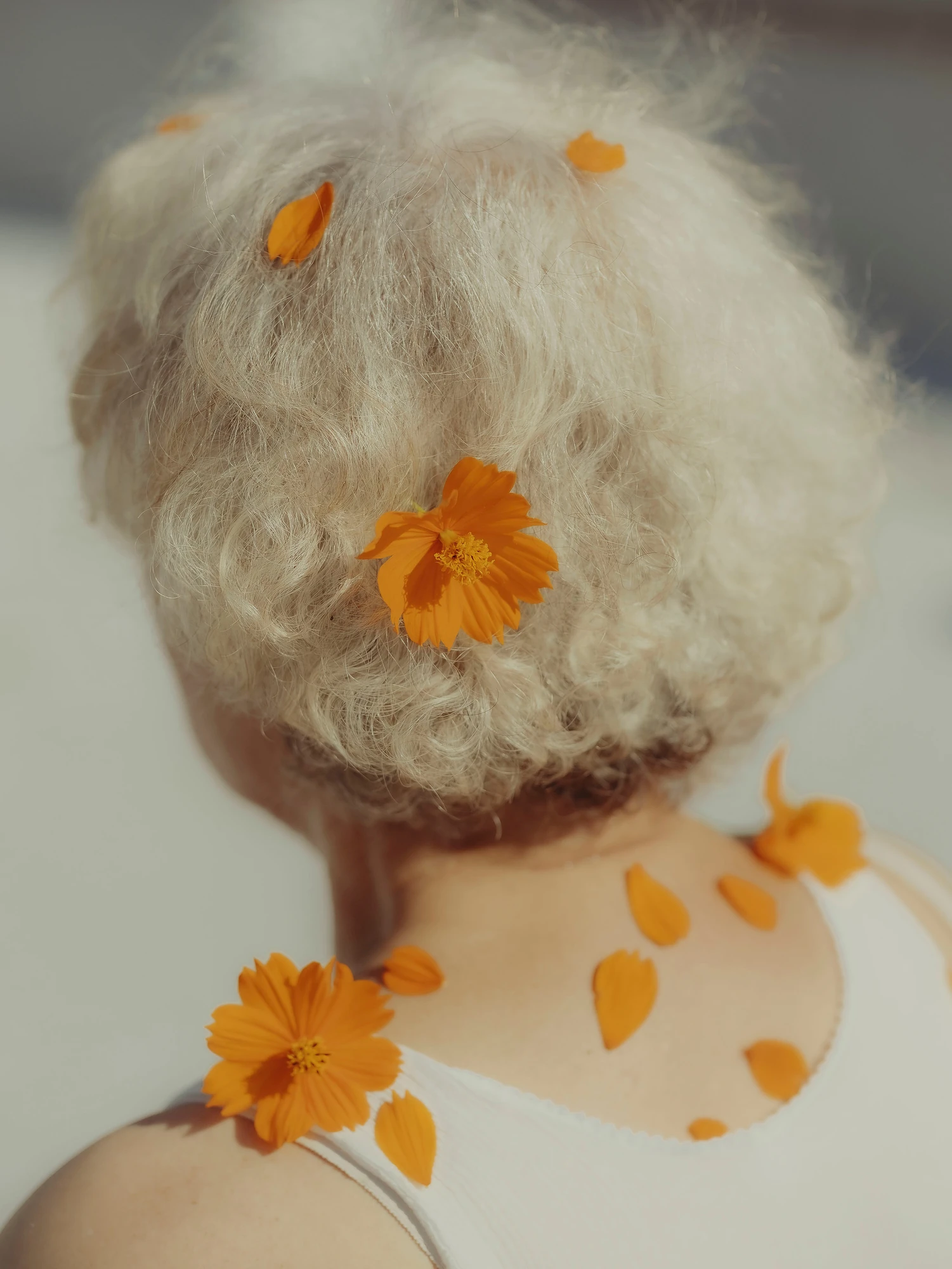
Then the register drops. A butterfly rests on a sleeping face; orange cosmos petals scatter across white hair and a bare shoulder; a calendar from a funeral home hangs on a blank wall; a scratched black-and-white portrait shows the same woman as a girl, a whole life away. Nirvana, in Buddhist terms, is release from the cycle of suffering. Lee and Shin reach for it not as transcendence but as something closer to rest, earned slowly and claimed late.
Interested in Showcasing Your Work?

If you would like to feature your works on Thisispaper, please visit our Submission page and sign up to Thisispaper+ to submit your work. Once your submission is approved, your work will be showcased to our global audience of 2 million art, architecture, and design professionals and enthusiasts.
No items found.
Less, with more behind it.
Explore guides. Search the archive. Walk the atlas.
Become a Thisispaper+ member today to unlock full access to our magazine, advanced tools, and support our work.
Get two months FREE
with annual subscription
Less, with more behind it.
Explore guides. Search the archive. Walk the atlas.
Become a Thisispaper+ member today to unlock full access to our magazine, advanced tools, and support our work.
Get two months FREE
with annual subscription
No items found.
Alexander Zaxarov
Jun 29, 2026

Made across rural South Korea, Daesung Lee builds Nirvana with his mother Yi-Boun Shin, a series that crowns its older women in cabbage leaves, kitchen baskets and balloons to weigh a lifetime of labour.

Daesung Lee, a Korean photographer based in France, made Nirvana alongside the one person who could not be a stranger to him: his mother, Yi-Boun Shin. The series turns its lens on the generation of Korean women now in their seventies and eighties, the ones who raised families through war, dictatorship and rapid industrialisation while their own names went mostly unrecorded. Shin is both collaborator and recurring subject, and the project carries the candour of a conversation held over decades rather than a stranger's study.

The grammar is domestic. A yellow plastic kitchen colander becomes a saint's halo behind a woman in a red shirt, green rollers still in her hair. Cabbage leaves fan out from the back of a head like a feathered hat. Balloons, garden clogs, pumpkins and red beanbags litter a concrete courtyard around a body laid flat among them. Nothing here is borrowed from a studio prop room; every object came from a kitchen, a yard, a market. Lee photographs them straight, with the flat frontality of a passport picture, so the absurdity reads as fact.

That deadpan is the point. In one frame a woman in a star-emblazoned sweater sprouts six arms, a kitchen-table Bodhisattva fanned against a dockyard. In another she sits cross-legged in red, ringed by yellow shamanic talismans arranged like rays of a rising sun. The iconography of devotion is everywhere, applied to women who spent their lives serving others and were rarely the ones knelt before.

Humour does the heavy lifting, and underneath it sits something harder. Floral trousers run impossibly long, cascading off a rooftop into the hands of a man waiting below, a sly joke about who has held whom upright. The comedy keeps the grief from curdling into pity. These women survived, the pictures insist, partly by refusing to take their own suffering too seriously.

Then the register drops. A butterfly rests on a sleeping face; orange cosmos petals scatter across white hair and a bare shoulder; a calendar from a funeral home hangs on a blank wall; a scratched black-and-white portrait shows the same woman as a girl, a whole life away. Nirvana, in Buddhist terms, is release from the cycle of suffering. Lee and Shin reach for it not as transcendence but as something closer to rest, earned slowly and claimed late.
Interested in Showcasing Your Work?

If you would like to feature your works on Thisispaper, please visit our Submission page and subscribe to Thisispaper+. Once your submission is approved, your work will be showcased to our global audience of 2 million art, architecture, and design professionals and enthusiasts.
No items found.

Join Thisispaper+
Unlock access to 2500 stories, curated guides + editions, and share your work with a global network of architects, artists and designers who are shaping the future.
Get two months FREE
with annual subscription
Travel Guides
Immerse yourself in timeless destinations, hidden gems, and creative spaces—curated by humans, not algorithms.
Explore All Guides +
Submission Module
Submit your project and gain the chance to showcase your work to our worldwide audience of over 2M architects, designers, artists, and curious minds.
Learn More+
Curated Editions
Dive deeper into carefully curated editions, designed to feed your curiosity and foster exploration.
Off-the-Grid
Jutaku
Sacral Journey
minimum
The New Chair
Explore All Editions +
Atlas
A new and interactive way to explore the most inspiring places around the world.
Interactive map
Linked to articles
450+ curated locations
Google + Apple directions
Smart filters
Subscribe to Explore+
Become a Thisispaper+ member today to unlock full access to our magazine, submit your project and support our work.
Join Thisispaper+Join Thisispaper+
€9/month
Get two months FREE
with annual subscription