Thisispaper Community
Join today.
Enter your email address to receive the latest news on emerging art, design, lifestyle and tech from Thisispaper, delivered straight to your inbox.
Oops! Something went wrong while submitting the form.
Instant access to new channels
The top stories curated daily
Weekly roundups of what's important
Original features and deep dives
Exclusive community features
Alexander Zaxarov
Apr 21, 2026

From downtown Louisville to the trailer parks of rural Pennsylvania, John Sanderson's National Character reads the United States through its roadside signage, decaying industry and familial porches.

The series begins with a picture Sanderson could not shake. In downtown Louisville, Kentucky, a shirtless man stands on the pavement holding a carton of Marlboros, a work shirt tossed over one shoulder. Above him, a red neon Modern Living sign, once the crown of a furniture store, arcs out from the painted white brick of a building long since closed. The graffiti is new, the sign is old, and the question Sanderson uses the picture to ask is already there in the frame: what, by now, does modern living mean in this country? Luxury, indulgence, leisure, work. None and all of it.

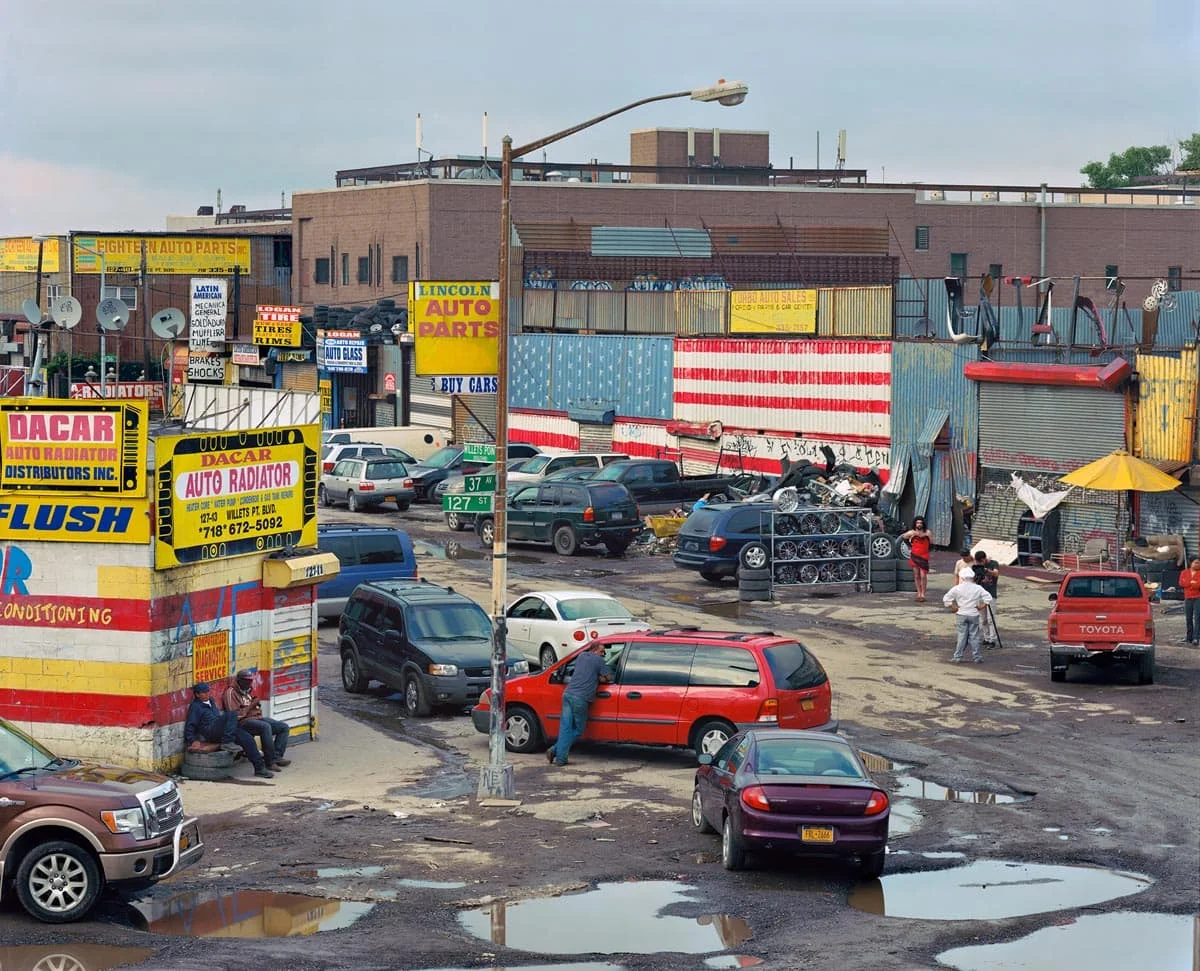
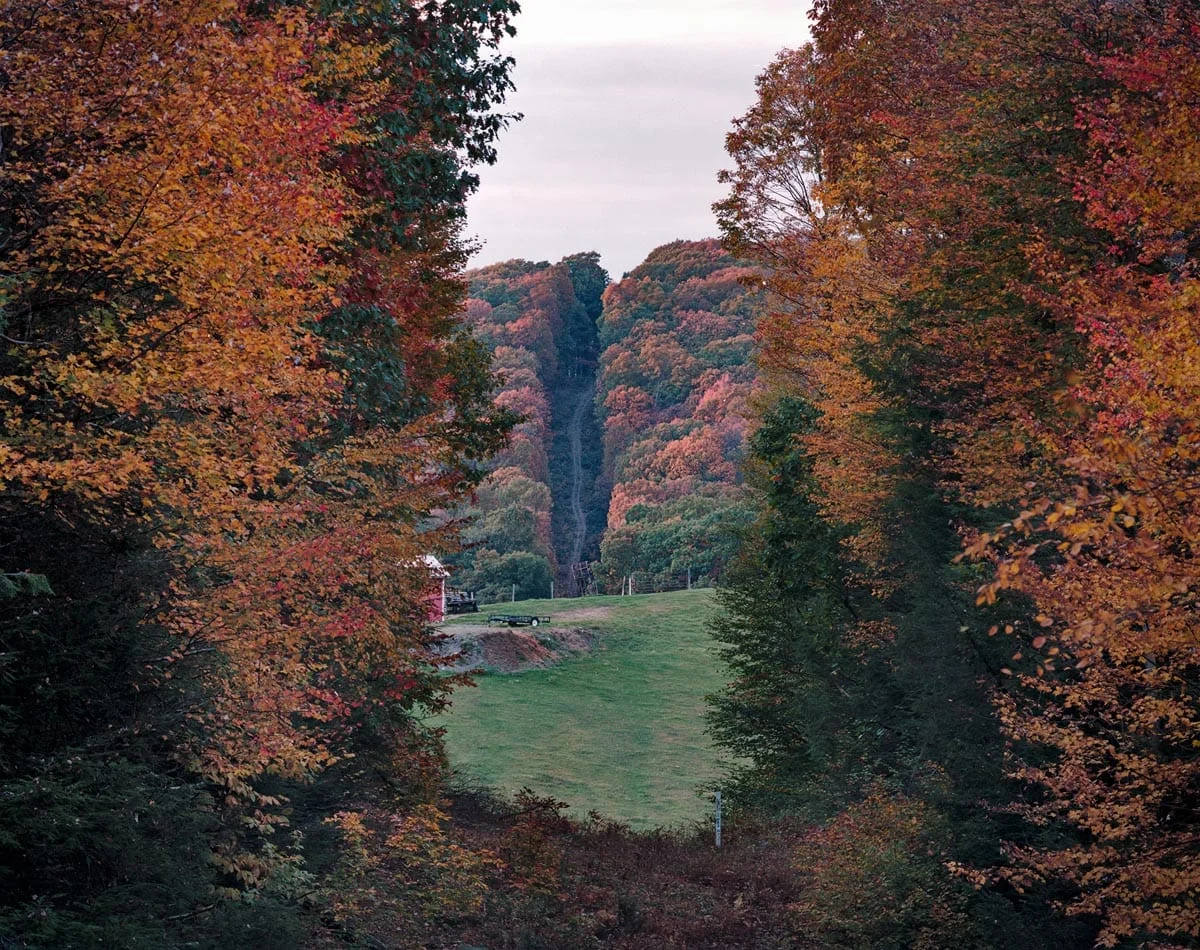
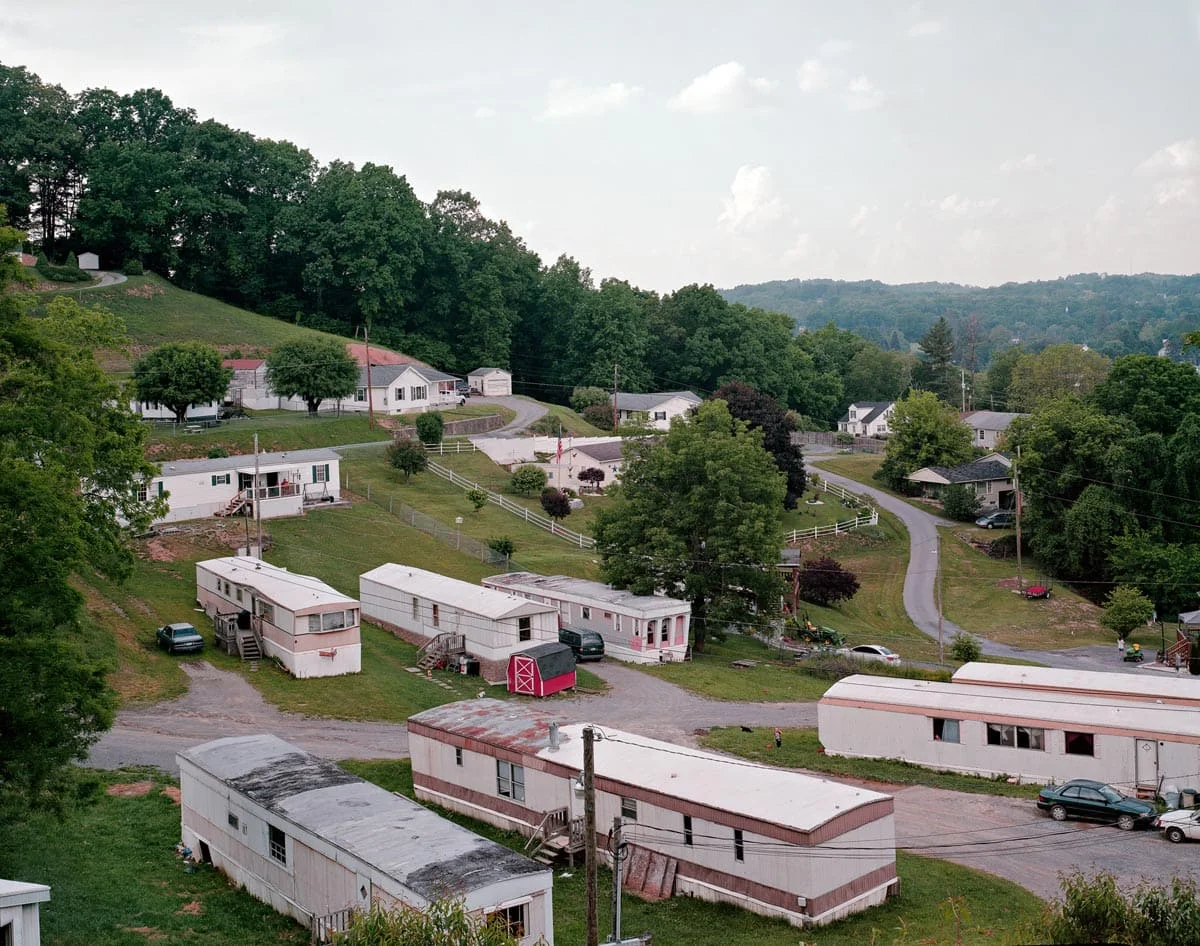
Sanderson was born and raised in midtown Manhattan. His earliest memories are of family drives from New York down to rural Pennsylvania, and the work has kept to that rhythm since. On foot or behind the wheel, he moves through the non-metropolitan United States drawn to the common noun: the trailer park threaded onto a wooded ridge, the brick VFW hall floodlit in orange and teal, the white clapboard house with a tar-patched roof, the bare tree taller than the shed beside it. The pictures are large-format and square, shot in the diffused light of overcast afternoons or the last pink minutes before night.

Industry is everywhere in National Character, mostly as residue. The abandoned Brier Hill steelworks in Youngstown sits behind a makeshift white guard shed and a line of yellow bollards. An open-pit mine displays a single yellow haul truck the way a town might display a cannon. In the Kinzua Valley, a man on an observation deck photographs what is left of the viaduct after a tornado folded it into the forest. A row of pastel clapboard houses sits beneath an enormous industrial shed topped with eleven black ventilation stacks, the one scaled to the other like a grown-up correction to a child's drawing.

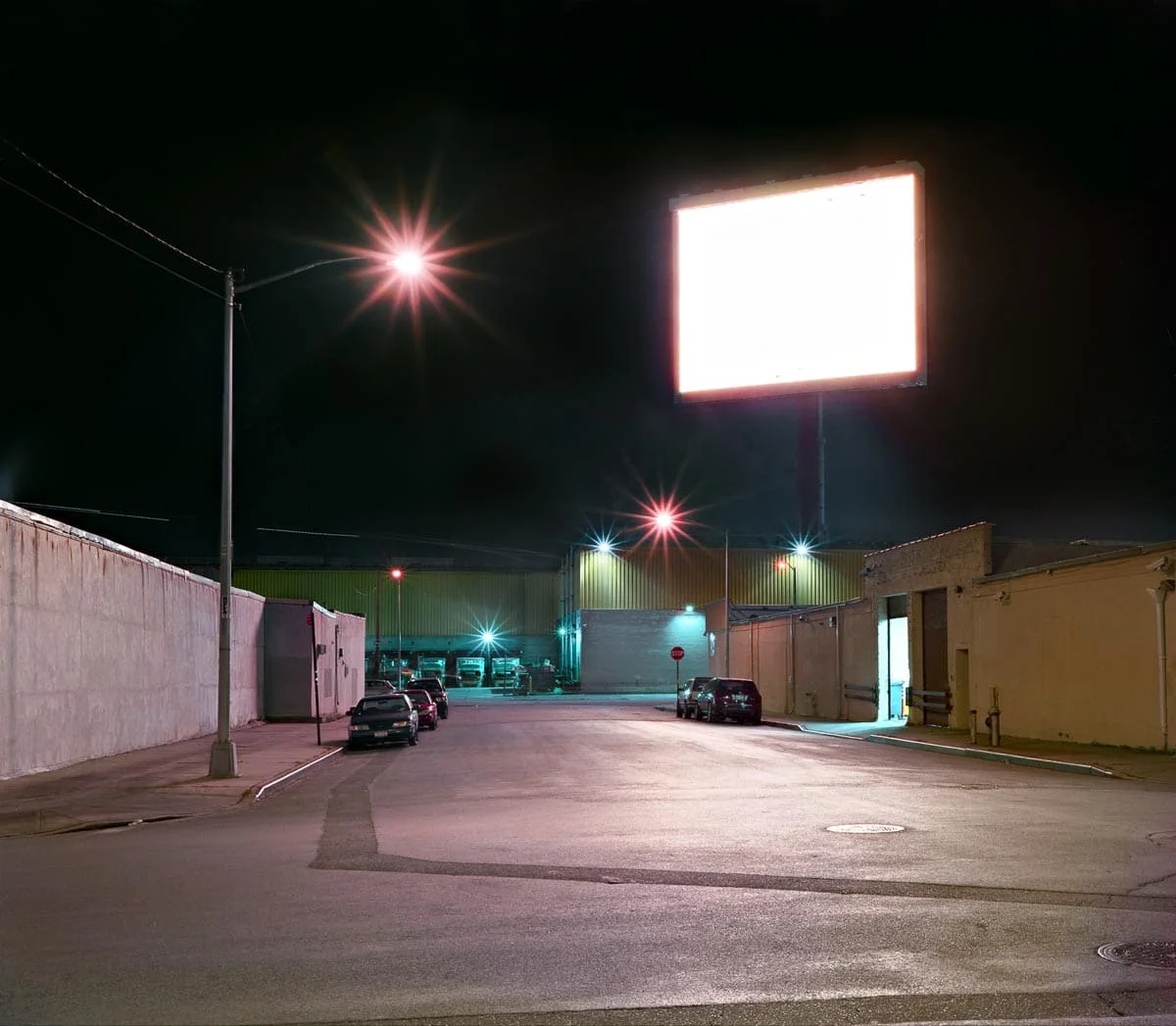
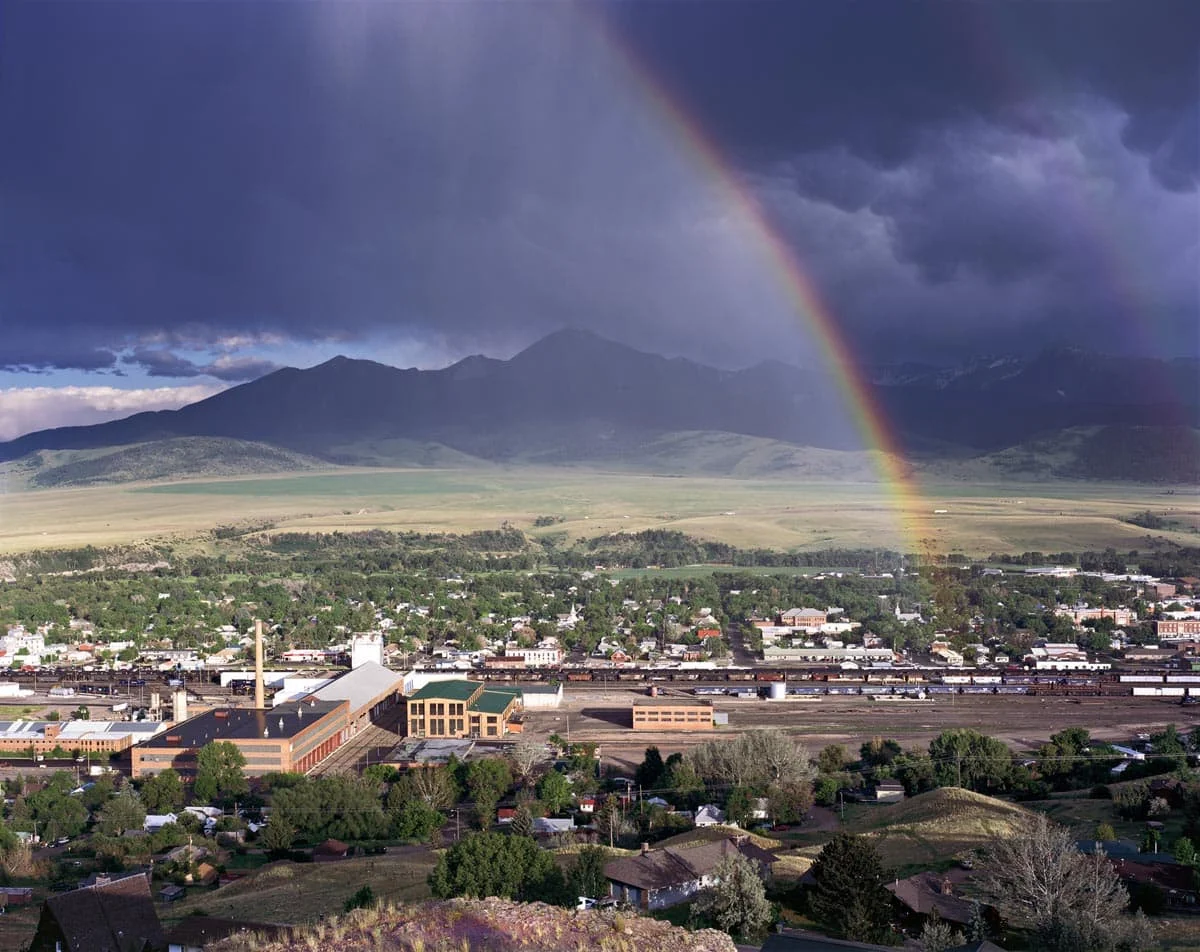
Leisure and travel carry their own weight in the sequence. A vintage Greyhound coach, chrome and turquoise, is parked beside a mid-century station clad in pale-blue aluminum. A blank billboard burns white over a deserted industrial lot at two in the morning. A Great Lakes lighthouse, red brick with a green slate roof, keeps watch over a gray shoreline no one is using. And at the project's softest register, a double rainbow lands over a valley town in the Northern Rockies, the railroad still running between factory and mountain.

The one full portrait is the Cooke family of Carbon County, Wyoming, nine-strong on a ranch porch, cowboy boots and denim shirts and a snow peak behind them. Sanderson lets it sit alongside the Marlboro Man and the dead tree in Manny's Yard in Michigan without commentary. National Character is not a thesis. It is an inventory, built slowly by a New Yorker turning the car toward the places the country prefers not to photograph itself in, and finding there a social geography more honest than the one the advertising keeps promising.

Interested in Showcasing Your Work?

If you would like to feature your works on Thisispaper, please visit our Submission page and sign up to Thisispaper+ to submit your work. Once your submission is approved, your work will be showcased to our global audience of 2 million art, architecture, and design professionals and enthusiasts.
No items found.
We love less
but there is more.
Become a Thisispaper+ member today to unlock full access to our magazine, advanced tools, and support our work.
Get two months FREE
with annual subscription
We love less
but there is more.
Become a Thisispaper+ member today to unlock full access to our magazine, advanced tools, and support our work.
Get two months FREE
with annual subscription
No items found.
Alexander Zaxarov
Apr 21, 2026

From downtown Louisville to the trailer parks of rural Pennsylvania, John Sanderson's National Character reads the United States through its roadside signage, decaying industry and familial porches.

The series begins with a picture Sanderson could not shake. In downtown Louisville, Kentucky, a shirtless man stands on the pavement holding a carton of Marlboros, a work shirt tossed over one shoulder. Above him, a red neon Modern Living sign, once the crown of a furniture store, arcs out from the painted white brick of a building long since closed. The graffiti is new, the sign is old, and the question Sanderson uses the picture to ask is already there in the frame: what, by now, does modern living mean in this country? Luxury, indulgence, leisure, work. None and all of it.

Sanderson was born and raised in midtown Manhattan. His earliest memories are of family drives from New York down to rural Pennsylvania, and the work has kept to that rhythm since. On foot or behind the wheel, he moves through the non-metropolitan United States drawn to the common noun: the trailer park threaded onto a wooded ridge, the brick VFW hall floodlit in orange and teal, the white clapboard house with a tar-patched roof, the bare tree taller than the shed beside it. The pictures are large-format and square, shot in the diffused light of overcast afternoons or the last pink minutes before night.

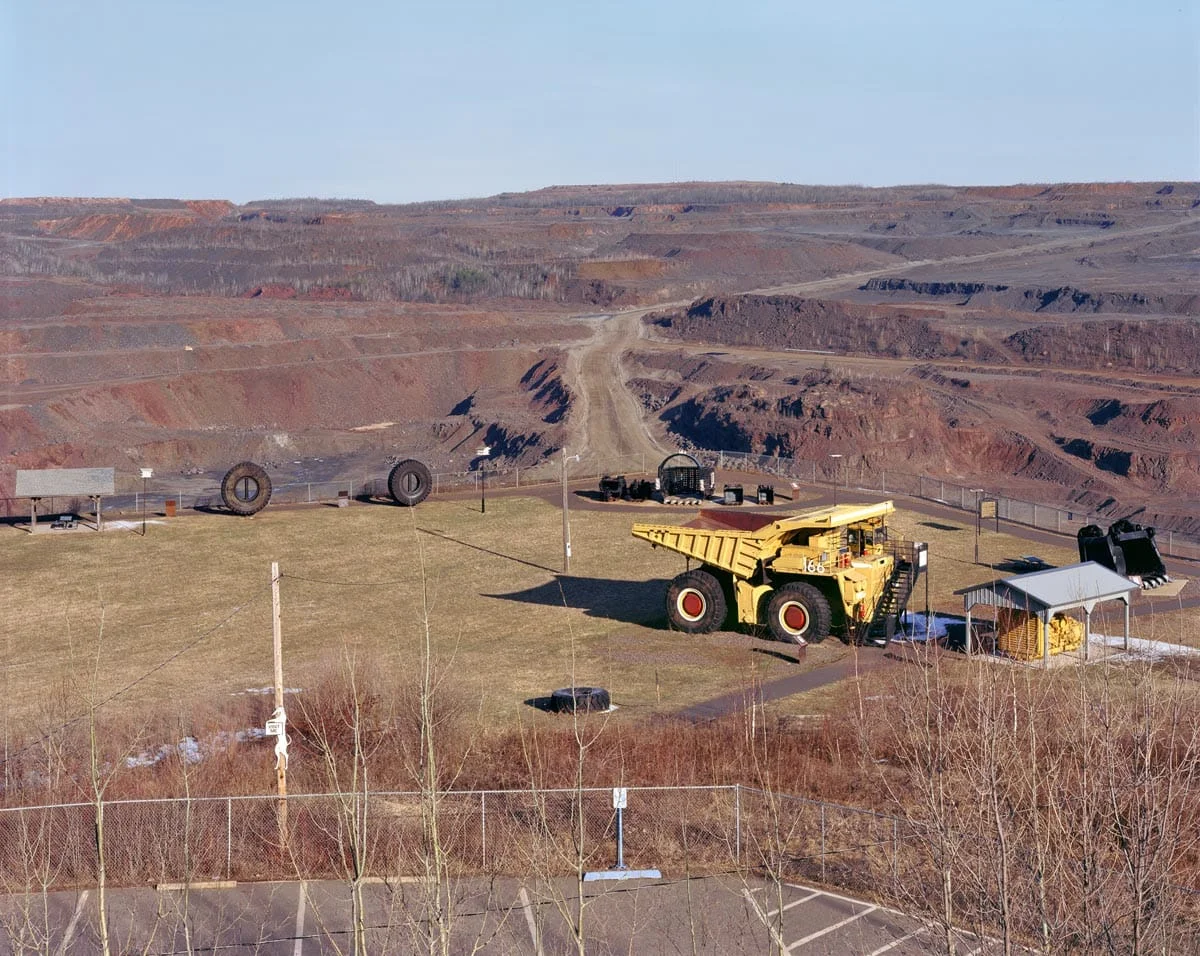
Industry is everywhere in National Character, mostly as residue. The abandoned Brier Hill steelworks in Youngstown sits behind a makeshift white guard shed and a line of yellow bollards. An open-pit mine displays a single yellow haul truck the way a town might display a cannon. In the Kinzua Valley, a man on an observation deck photographs what is left of the viaduct after a tornado folded it into the forest. A row of pastel clapboard houses sits beneath an enormous industrial shed topped with eleven black ventilation stacks, the one scaled to the other like a grown-up correction to a child's drawing.

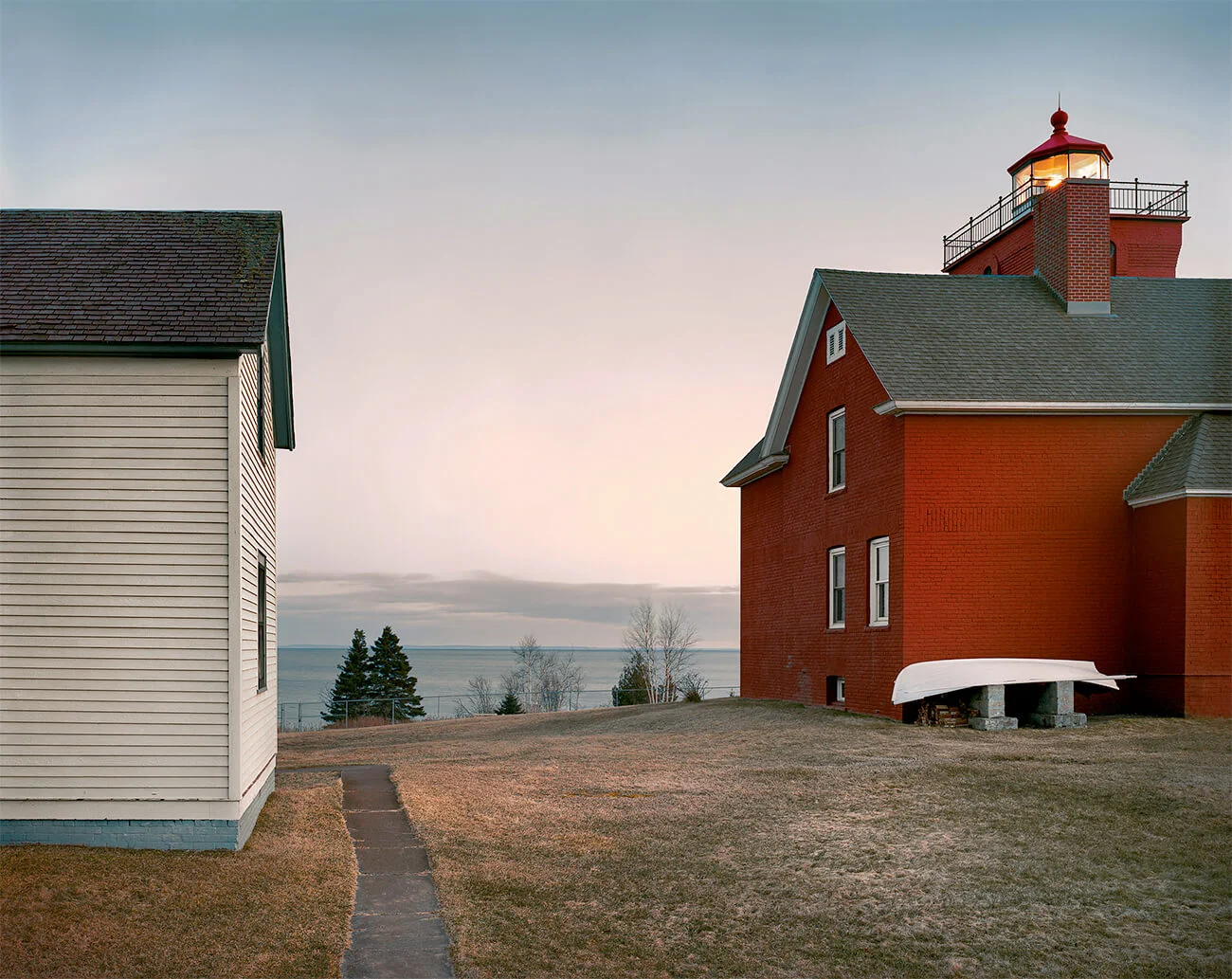
Leisure and travel carry their own weight in the sequence. A vintage Greyhound coach, chrome and turquoise, is parked beside a mid-century station clad in pale-blue aluminum. A blank billboard burns white over a deserted industrial lot at two in the morning. A Great Lakes lighthouse, red brick with a green slate roof, keeps watch over a gray shoreline no one is using. And at the project's softest register, a double rainbow lands over a valley town in the Northern Rockies, the railroad still running between factory and mountain.

The one full portrait is the Cooke family of Carbon County, Wyoming, nine-strong on a ranch porch, cowboy boots and denim shirts and a snow peak behind them. Sanderson lets it sit alongside the Marlboro Man and the dead tree in Manny's Yard in Michigan without commentary. National Character is not a thesis. It is an inventory, built slowly by a New Yorker turning the car toward the places the country prefers not to photograph itself in, and finding there a social geography more honest than the one the advertising keeps promising.

Interested in Showcasing Your Work?

If you would like to feature your works on Thisispaper, please visit our Submission page and subscribe to Thisispaper+. Once your submission is approved, your work will be showcased to our global audience of 2 million art, architecture, and design professionals and enthusiasts.
No items found.

Join Thisispaper+
Unlock access to 2500 stories, curated guides + editions, and share your work with a global network of architects, artists, writers and designers who are shaping the future.
Get two months FREE
with annual subscription
Travel Guides
Immerse yourself in timeless destinations, hidden gems, and creative spaces—curated by humans, not algorithms.
Explore All Guides +
Submission Module
Submit your project and gain the chance to showcase your work to our worldwide audience of over 2M architects, designers, artists, and curious minds.
Learn More+
Curated Editions
Dive deeper into carefully curated editions, designed to feed your curiosity and foster exploration.
Off-the-Grid
Jutaku
Sacral Journey
minimum
The New Chair
Explore All Editions +
Atlas
A new and interactive way to explore the most inspiring places around the world.
Interactive map
Linked to articles
300+ curated locations
Google + Apple directions
Smart filters
Subscribe to Explore+
Become a Thisispaper+ member today to unlock full access to our magazine, submit your project and support our work.
Join Thisispaper+Join Thisispaper+
€ 9 EUR
/month
Cancel anytime
Get two months FREE
with annual subscription