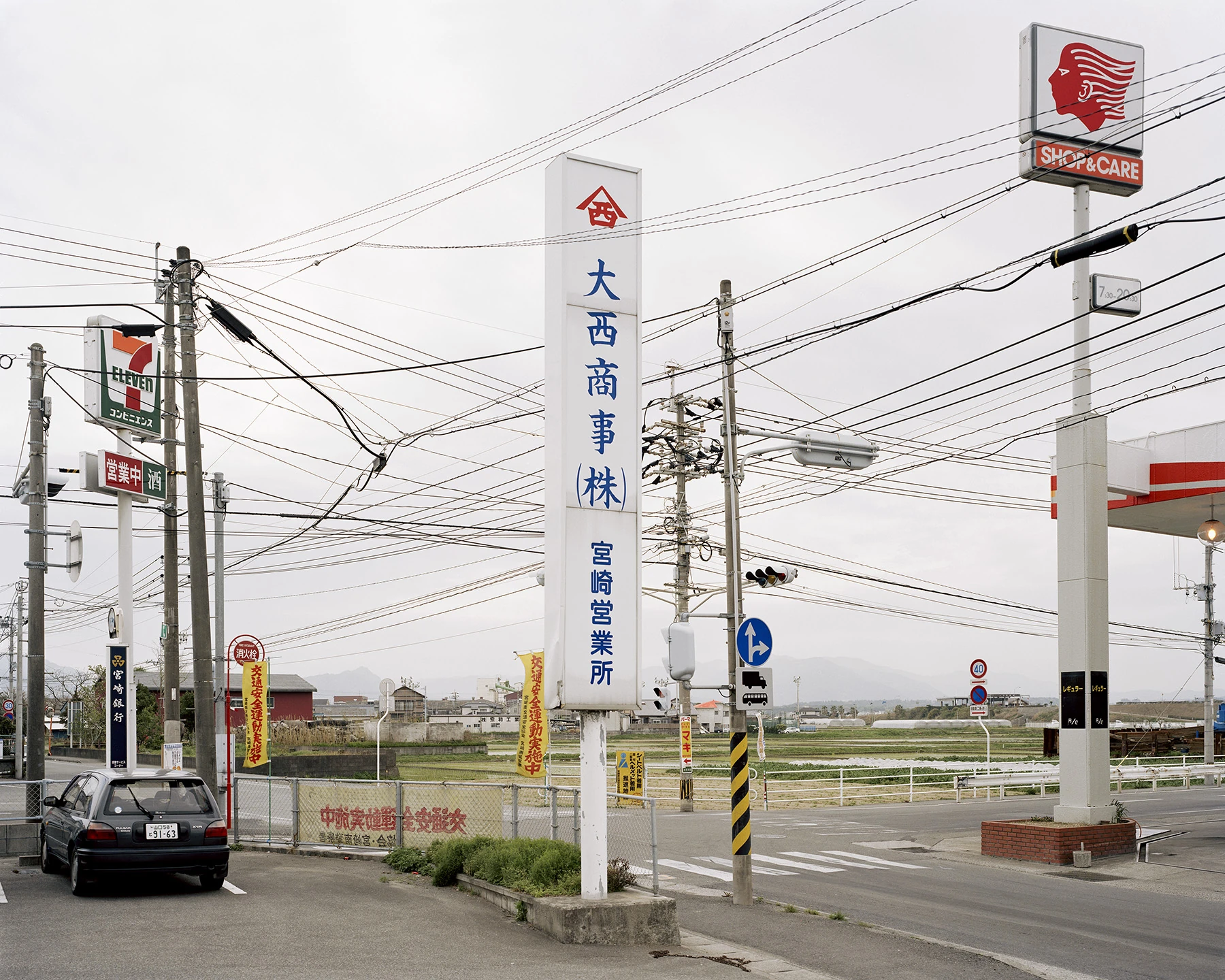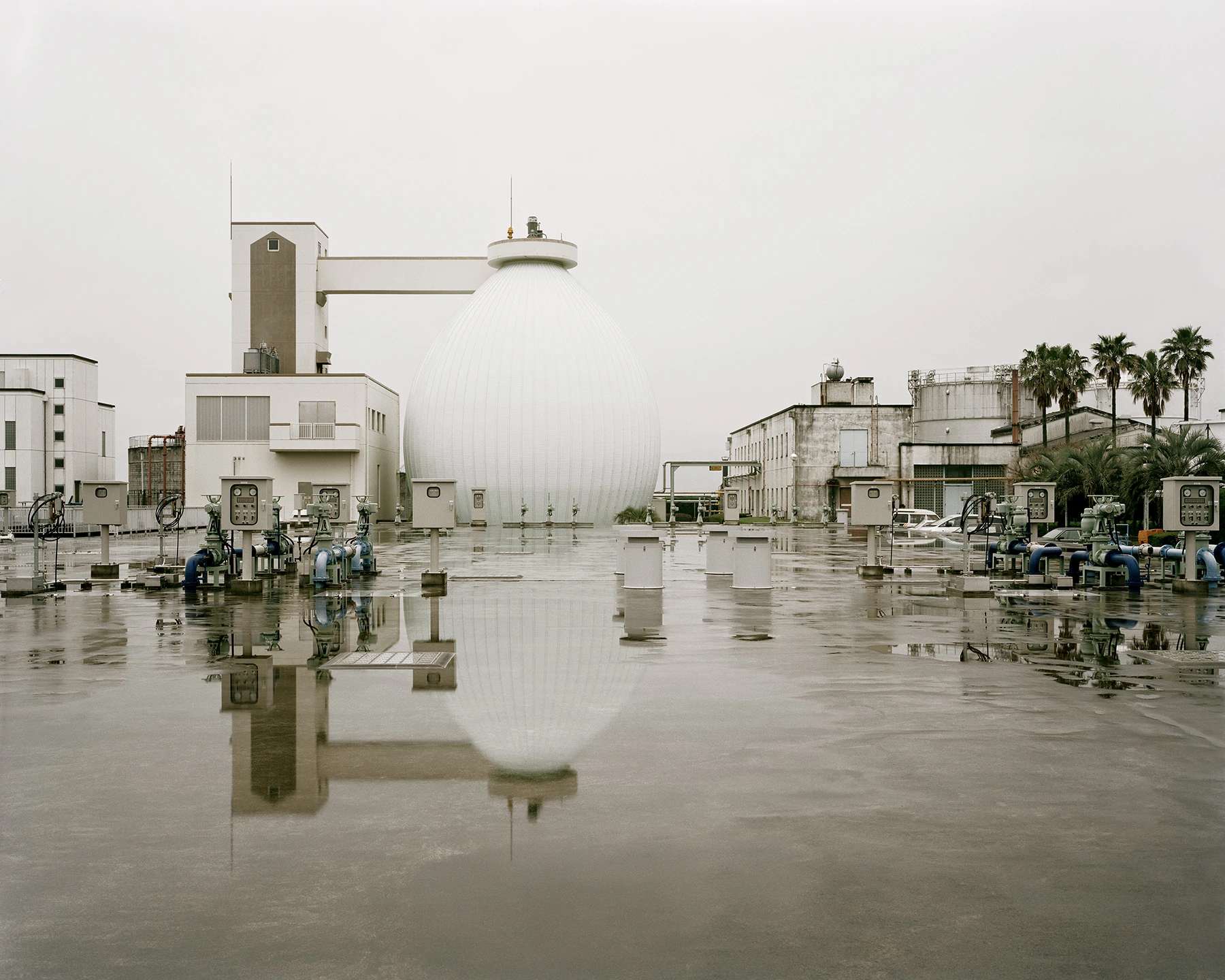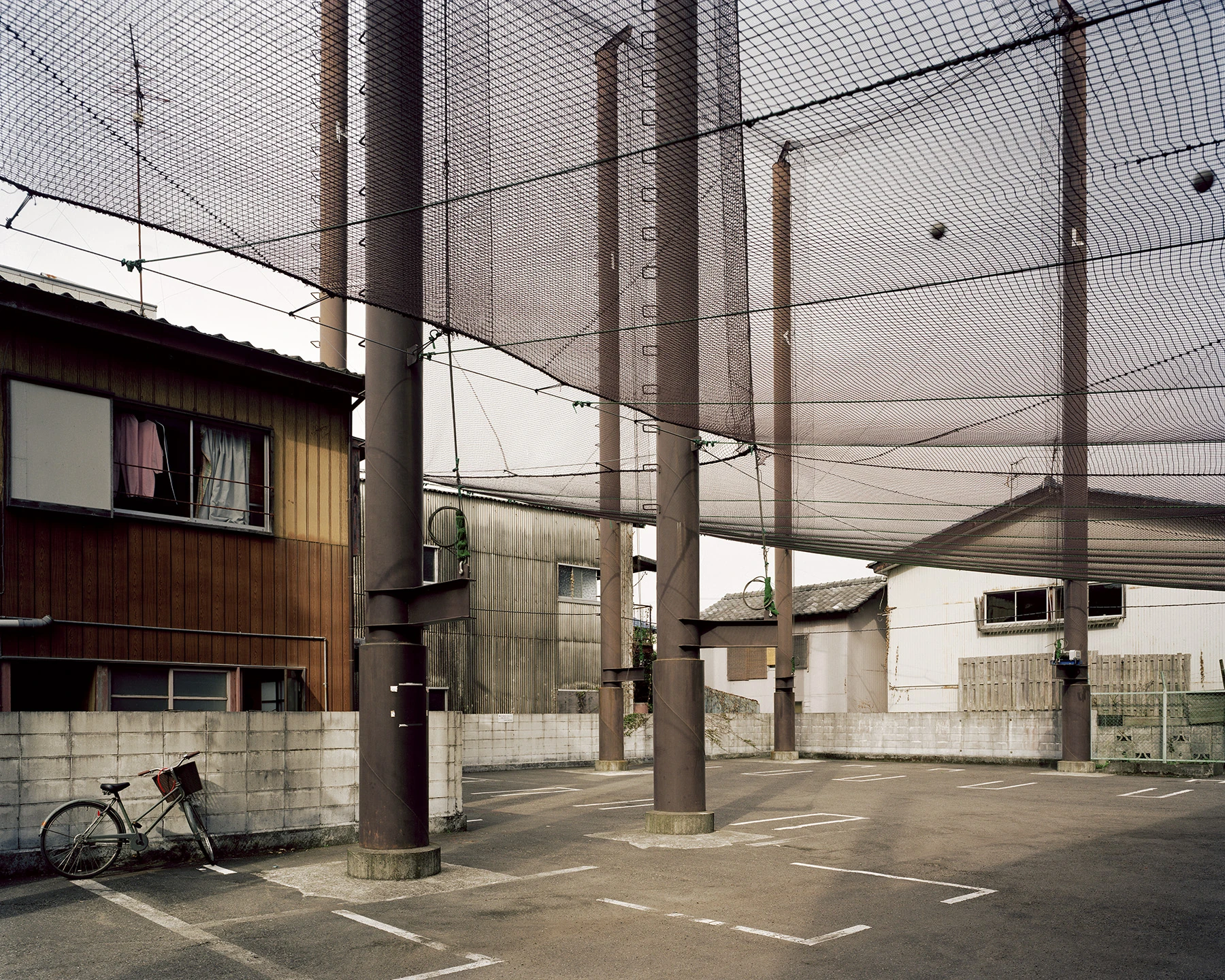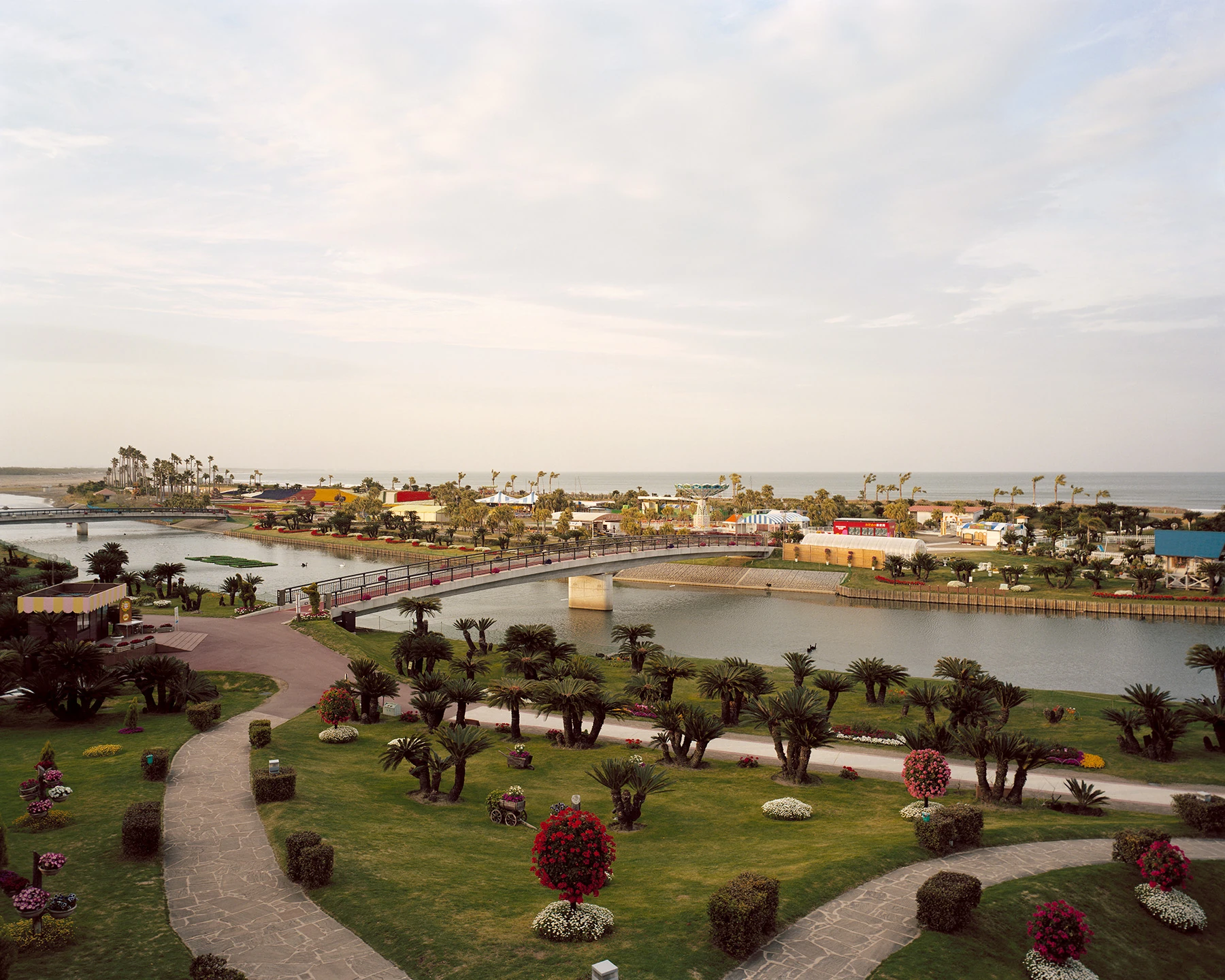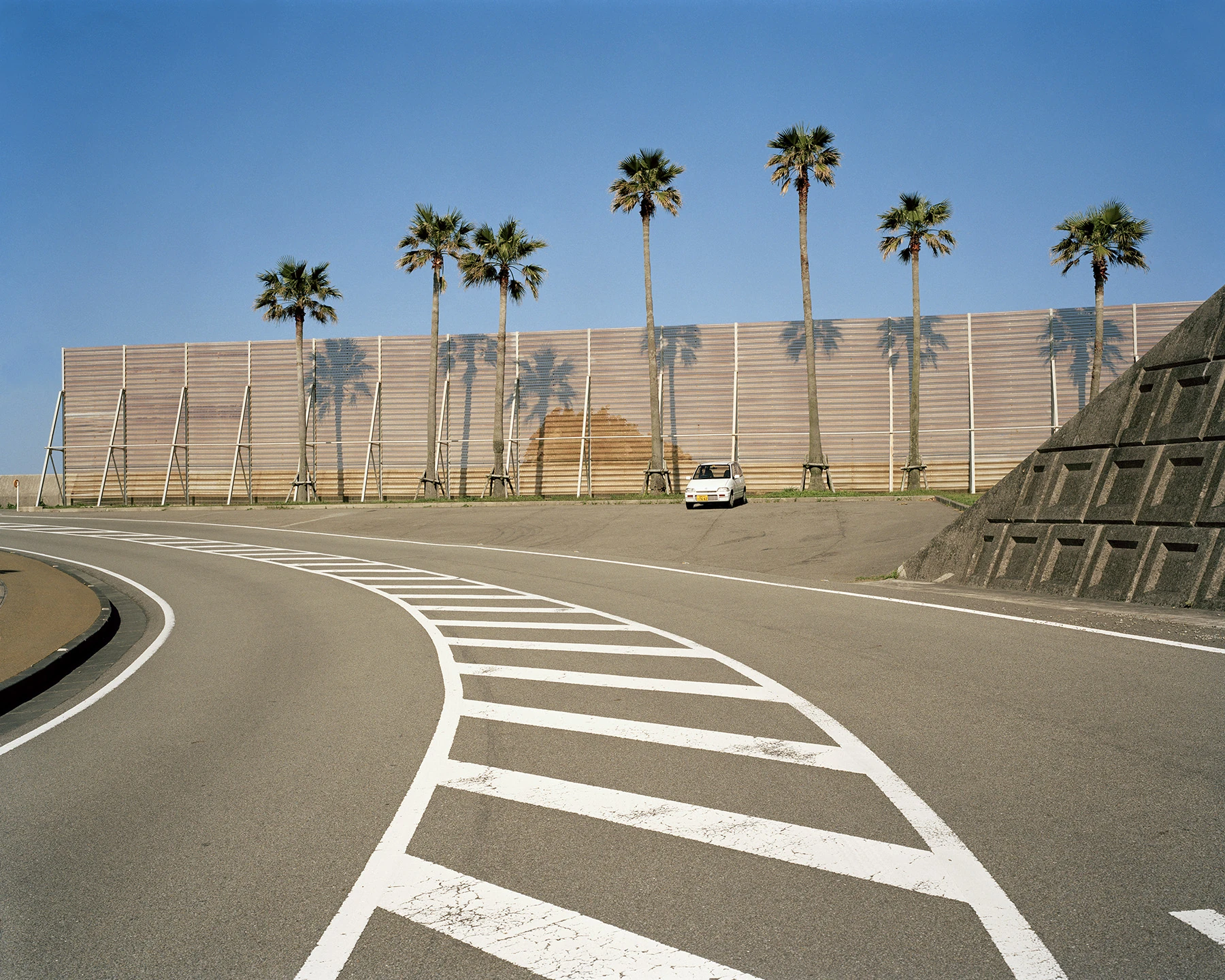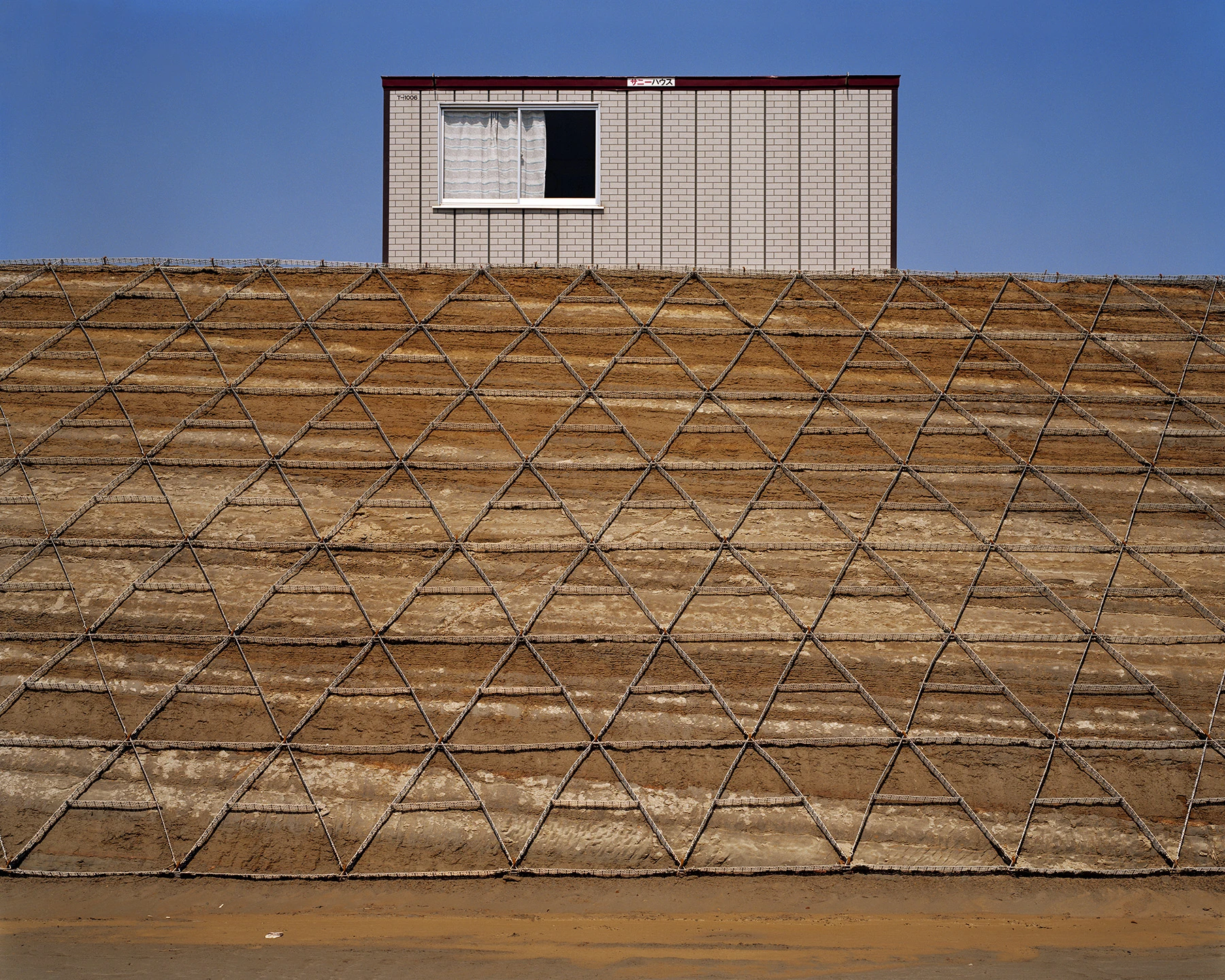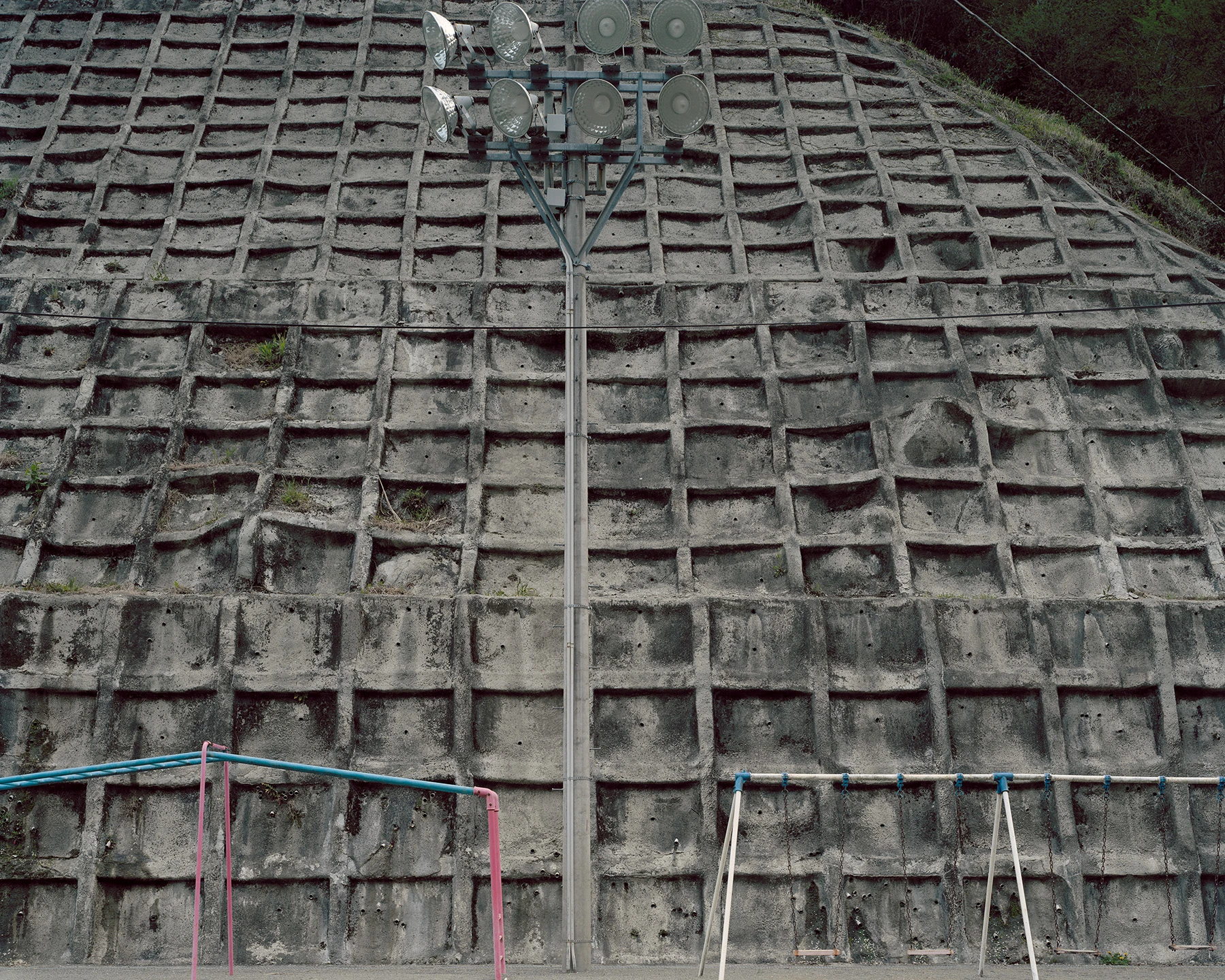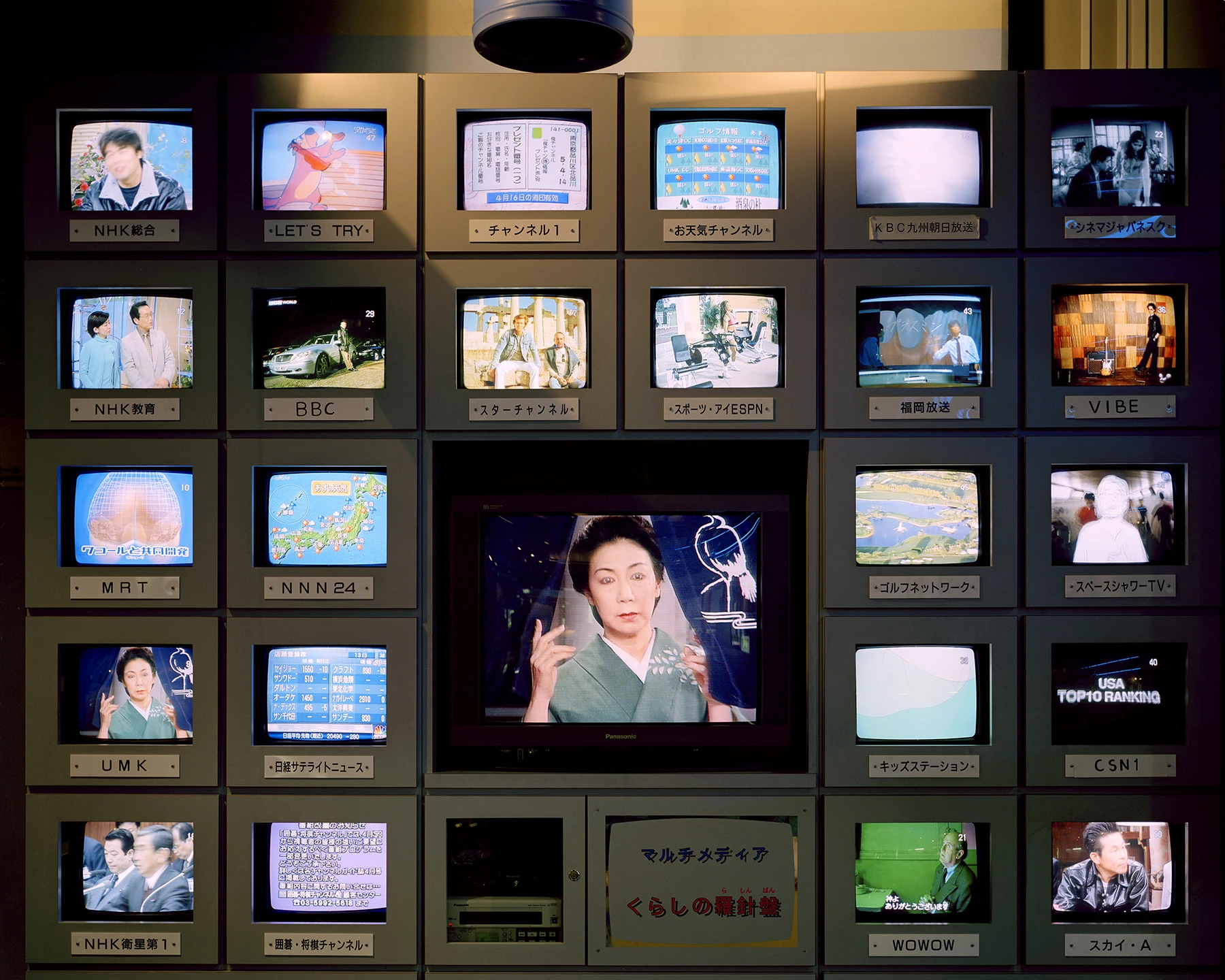
Sent for twenty days to the sub-tropical prefecture of Miyazaki, on the southern Japanese island of Kyushu, Mark Power came back with MIYAZAKI, a colour study of leisure laid over heavily engineered ground.
Japan has forty-seven prefectures. Between 1999 and 2003 the EU-Japan Fest matched that figure with forty-seven European photographers, one per region, twenty days each, the selections made by the French critic, writer and curator Gabriel Bauret. The organisers had been running cultural exchanges since 1993, hoping to achieve, in their own phrase, a deeper mutual understanding between Japan and Europe. Mark Power drew Miyazaki, sub-tropical, on the southern island of Kyushu.
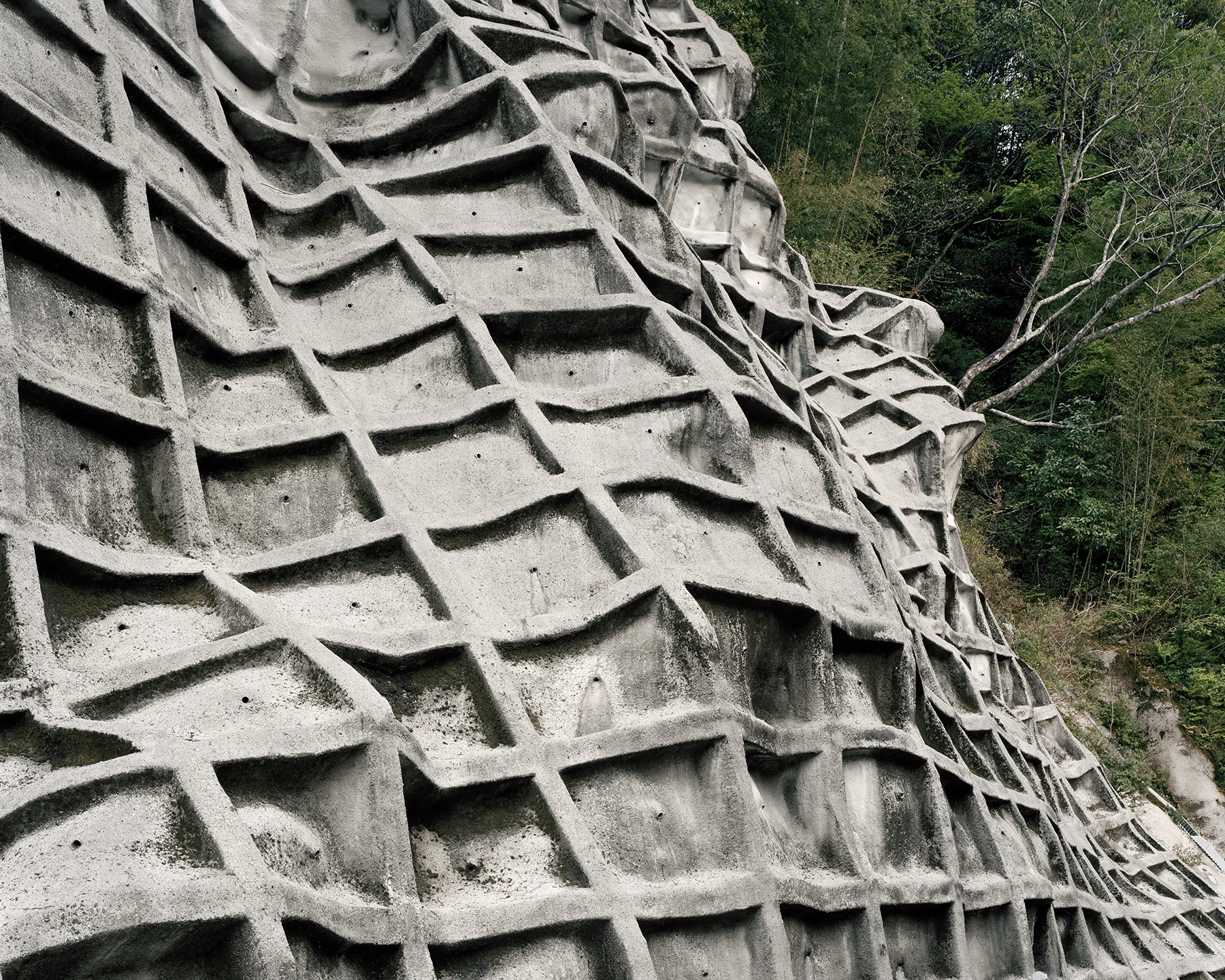
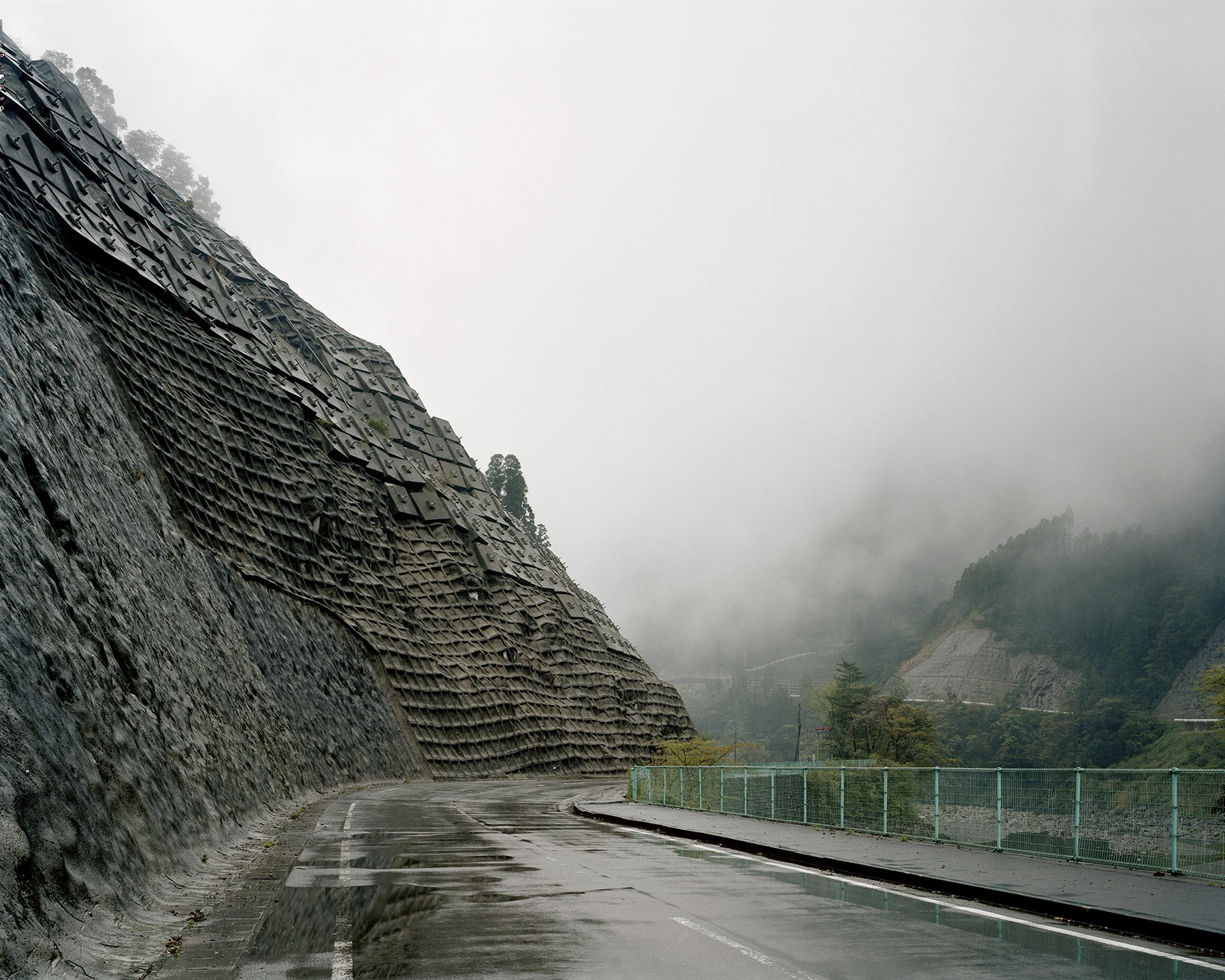
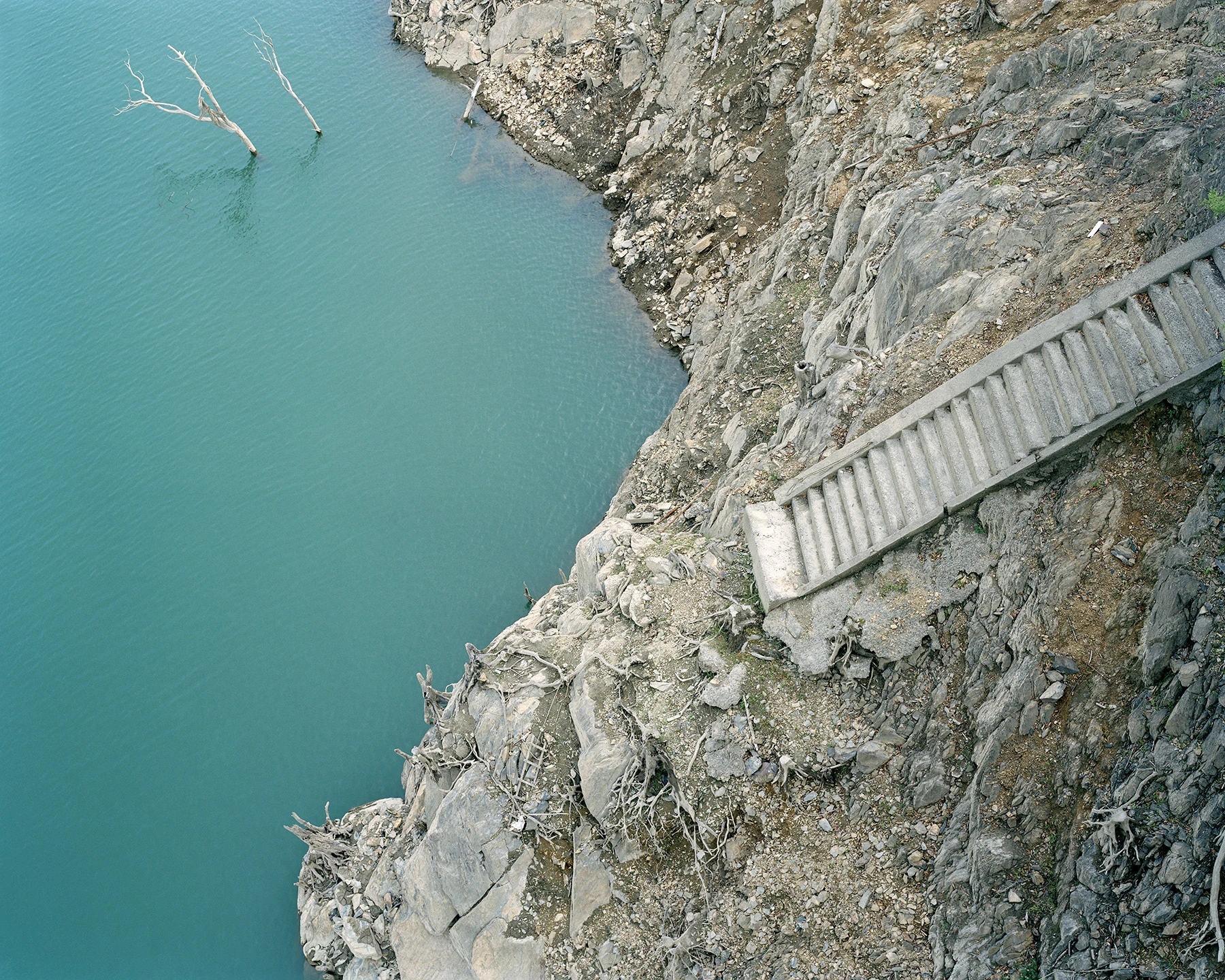
Twenty days is not long enough to know a place, and the pictures never pretend otherwise. What they record is the surface Miyazaki presents to someone arriving with a large-format camera and a deadline, and that surface turns out to be almost entirely built. Hillsides come sheathed in concrete lattice, cell after cell of it poured over the slope to hold ground that would otherwise move. In one frame the grid runs off the top edge and keeps going.
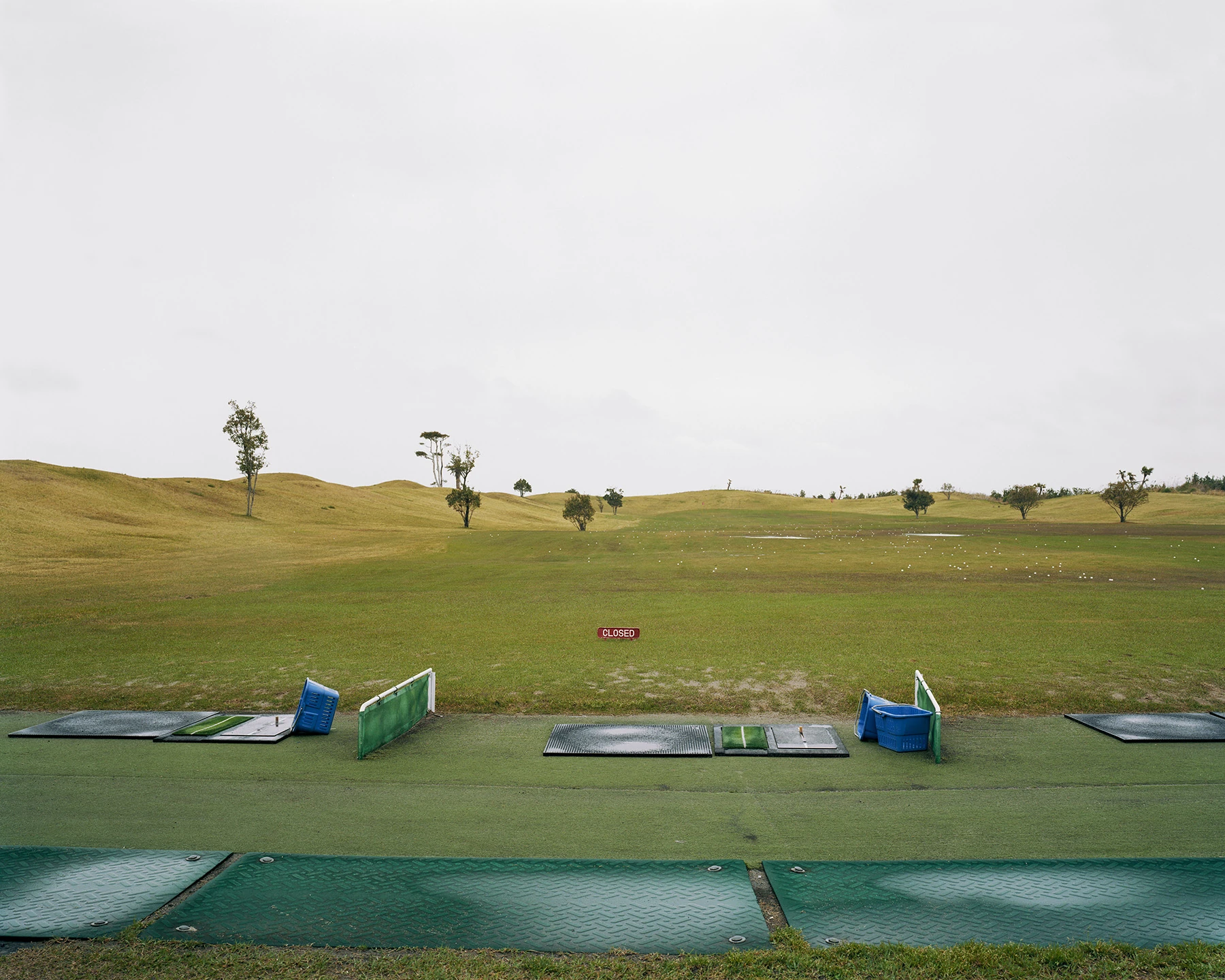
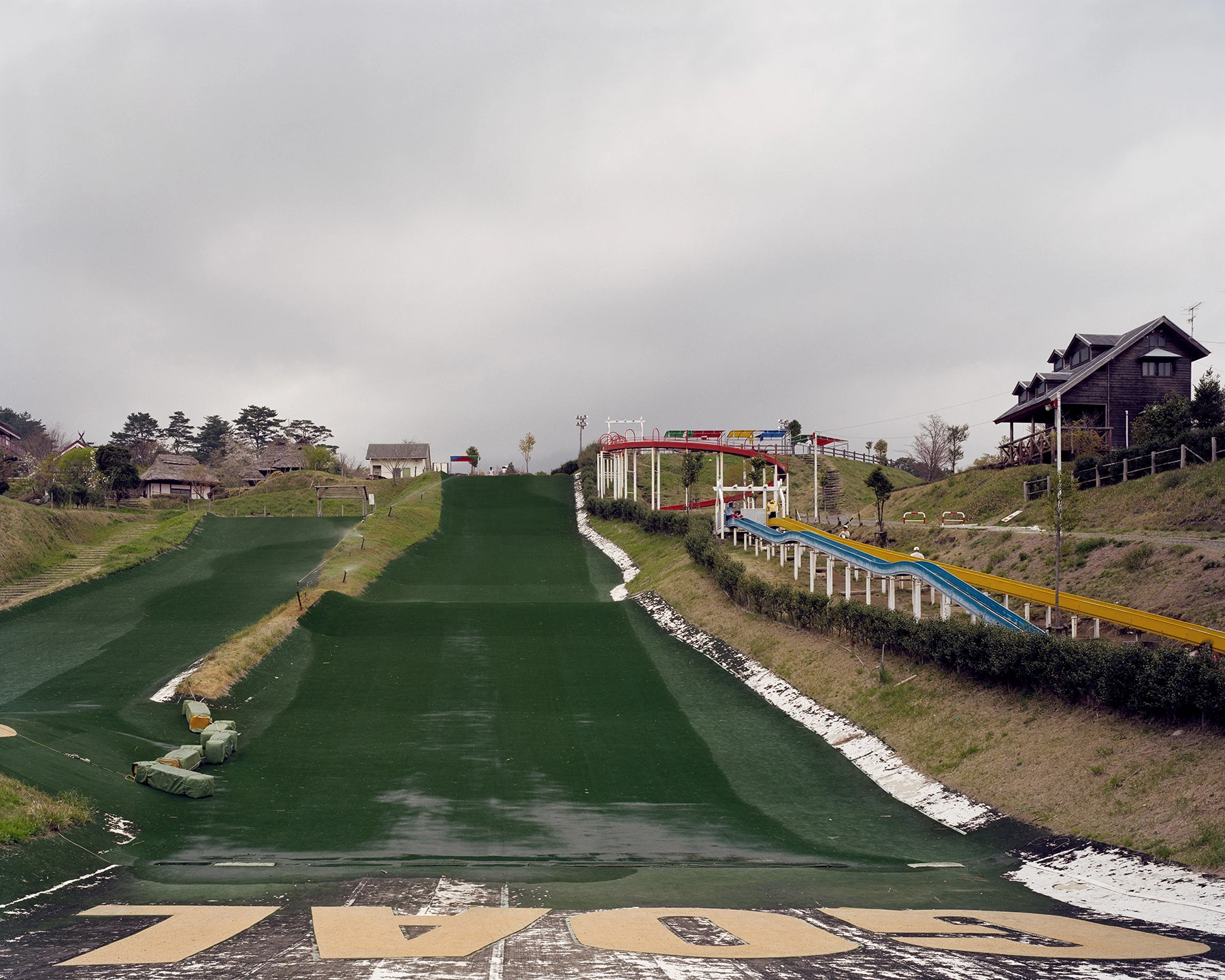
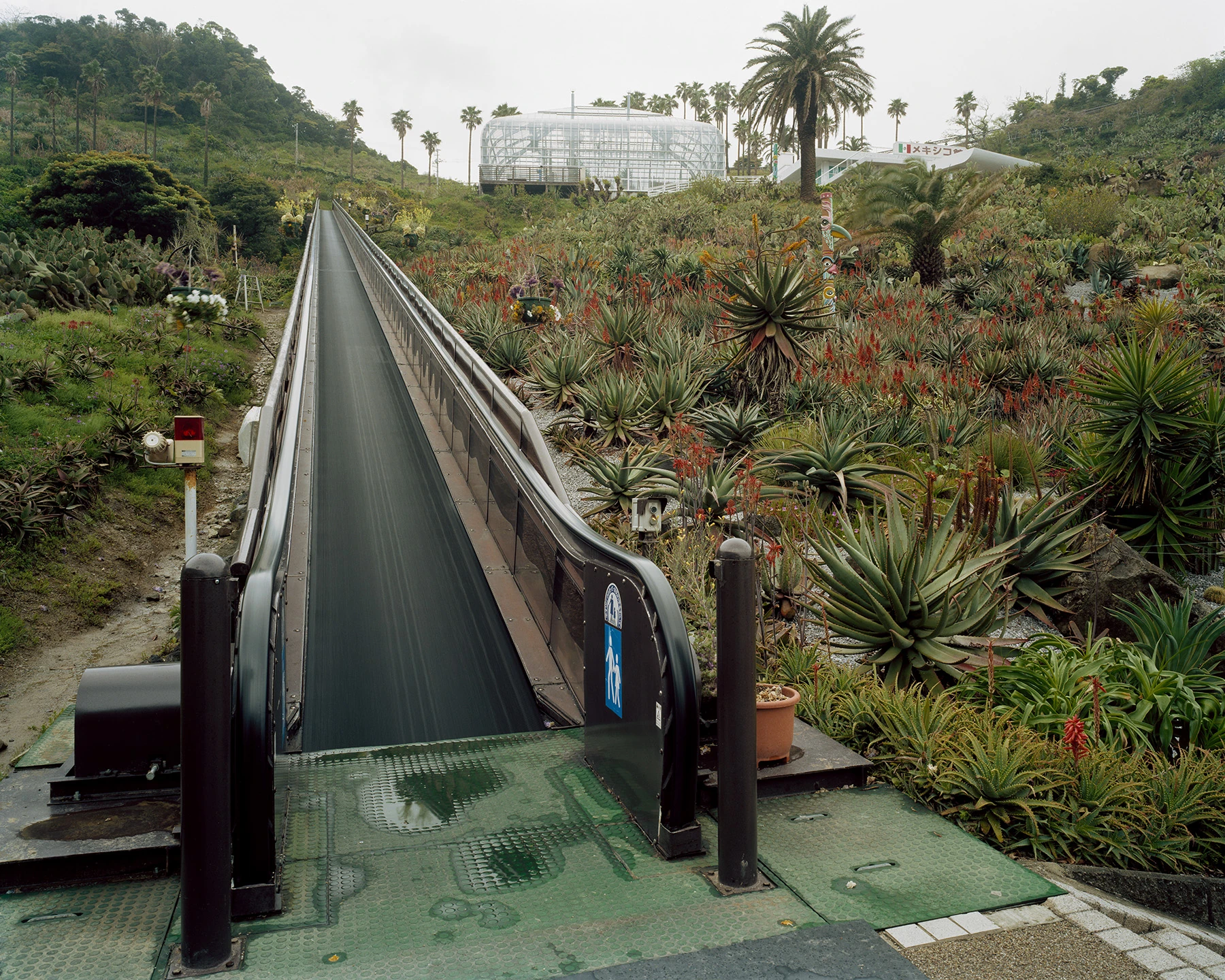
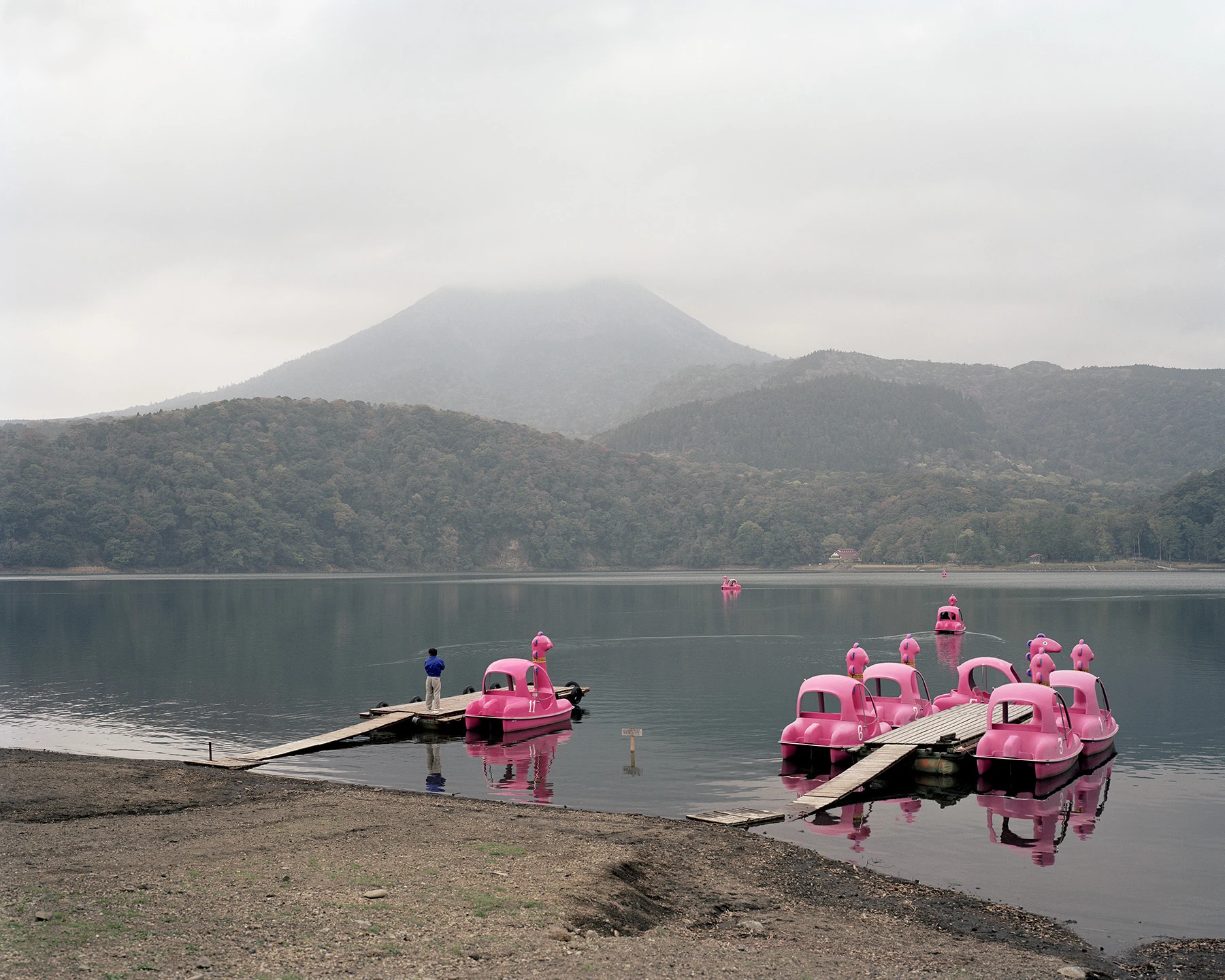
The rest is leisure, engineered with the same seriousness. Pink pedal boats moulded into swans wait at a jetty below a volcano packed in cloud. A dry ski slope in synthetic green runs down a hill with the word GOAL painted at its foot. A driving range faces open country under flat grey light, a small red CLOSED sign staked into the grass. An escalator climbs a hillside of aloe and agave carrying nobody. Each is a machine built to deliver an experience, photographed in the hour when nobody is having it.
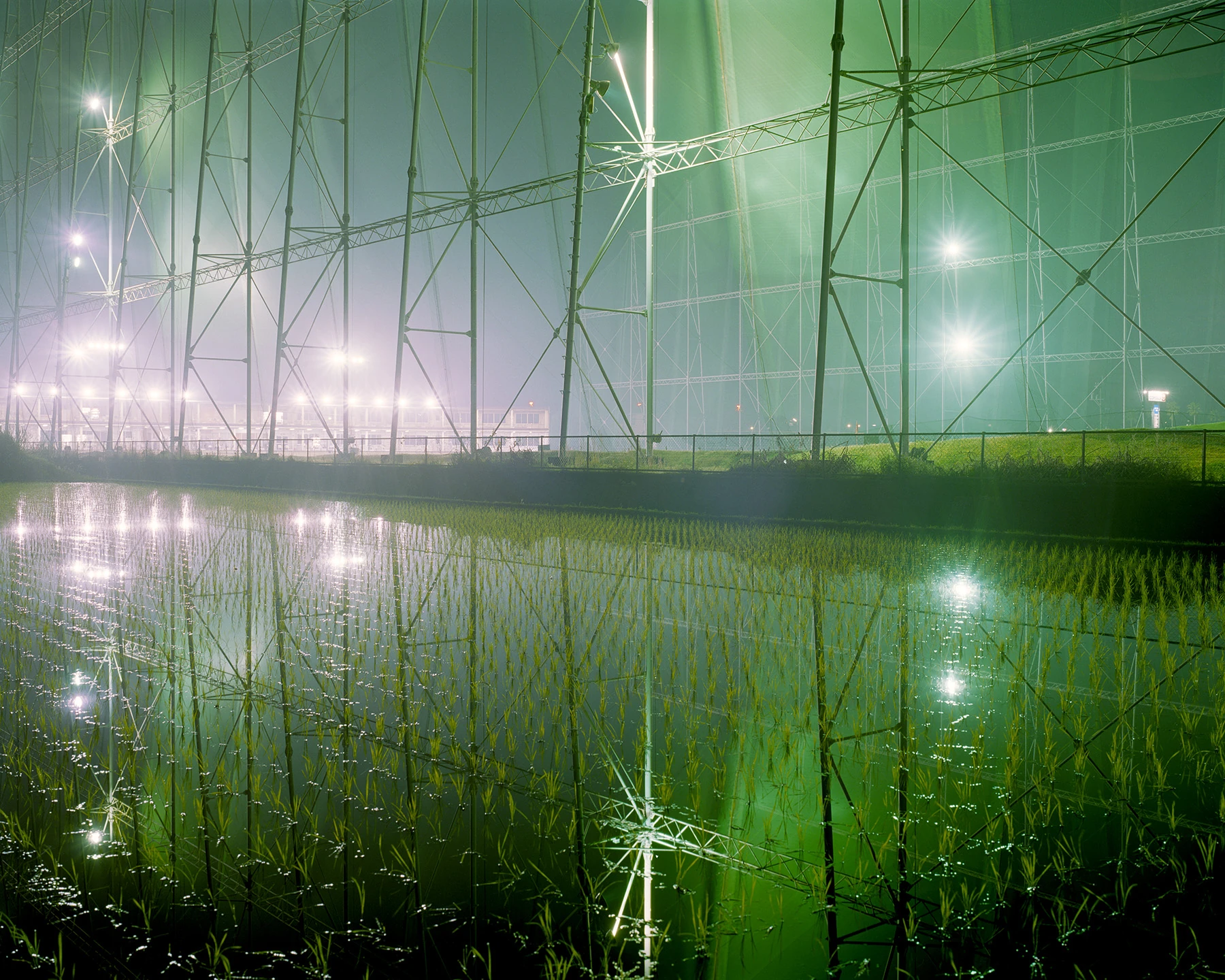
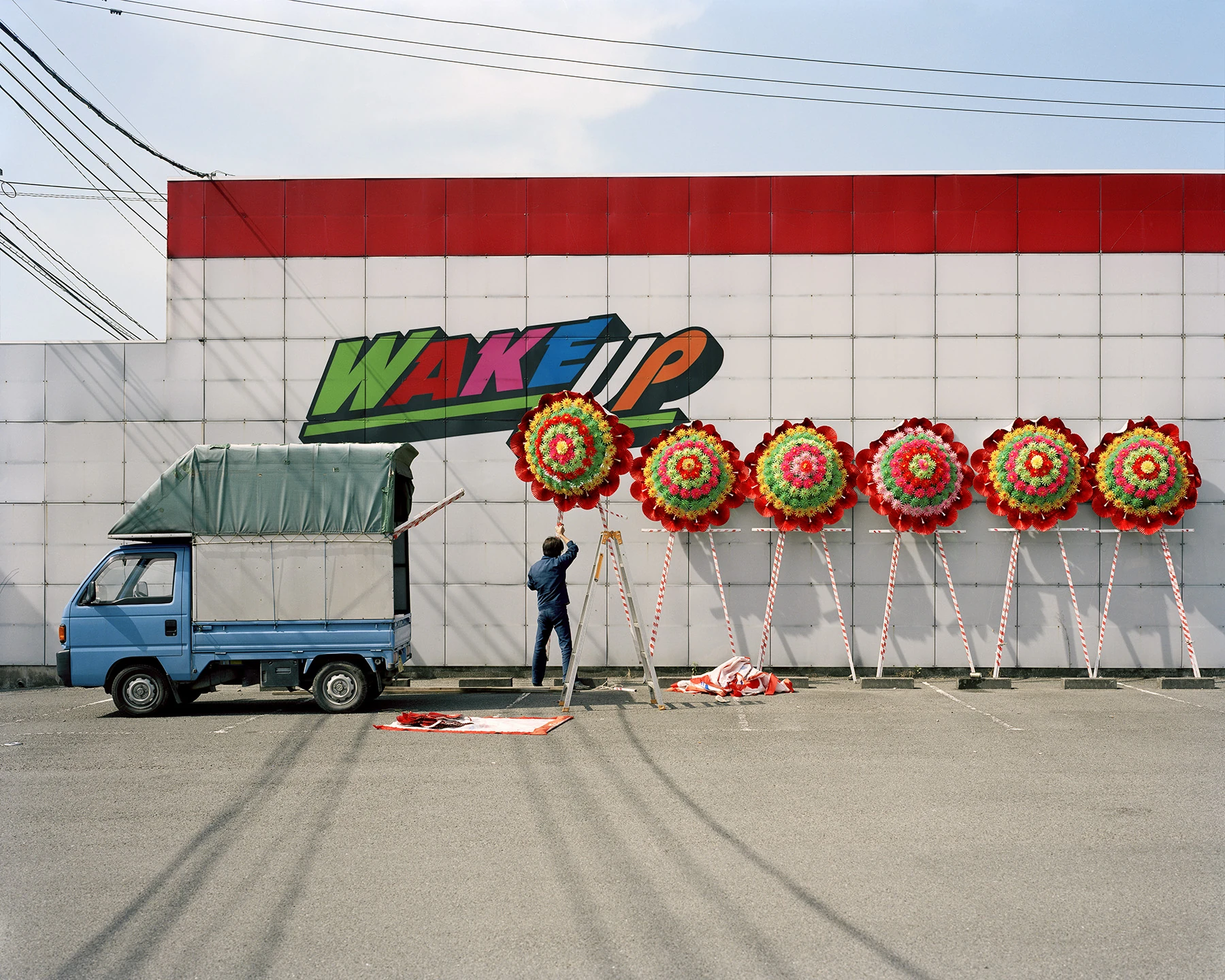
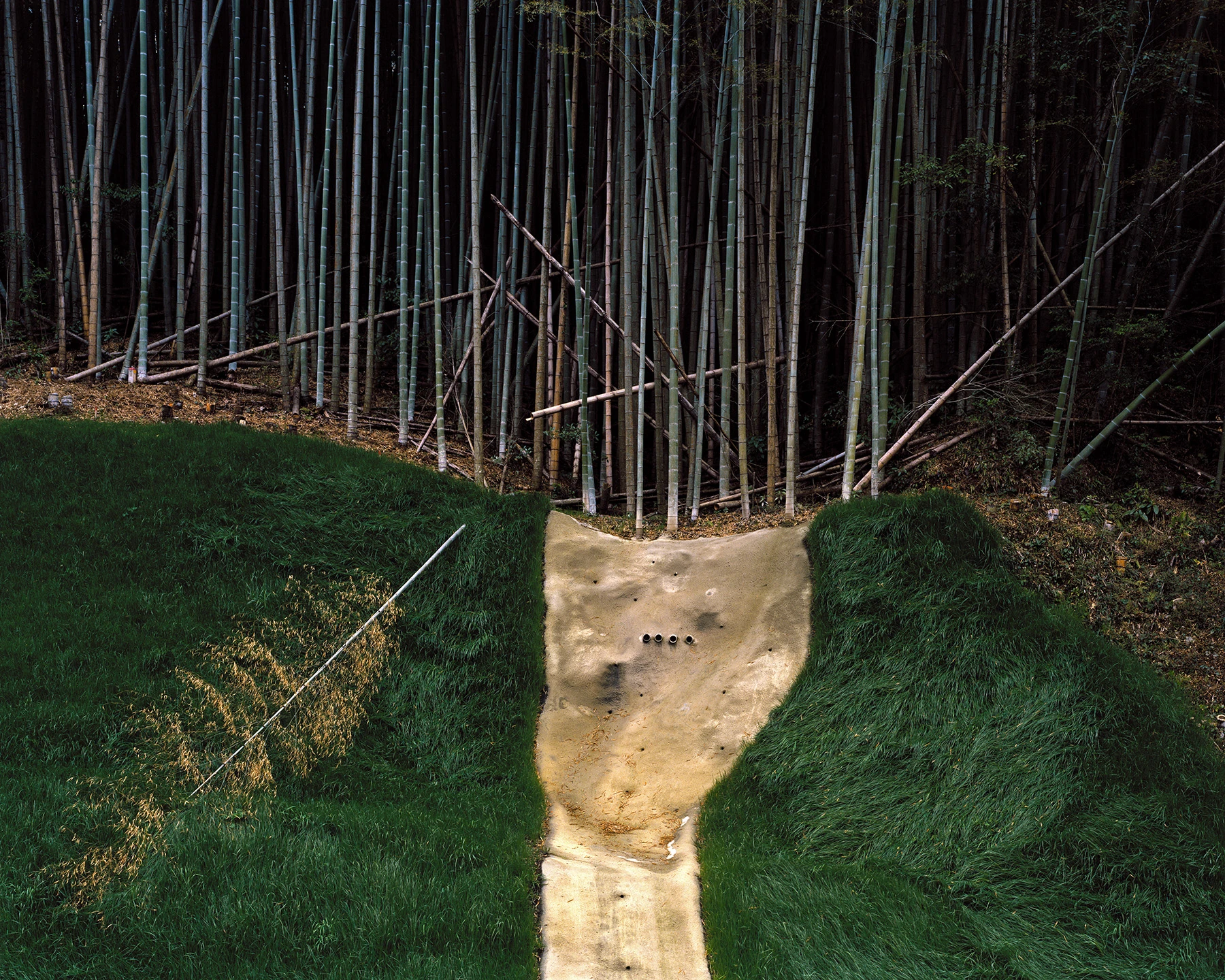
The light does much of the argument. Power works mostly under overcast, which drains the word sub-tropical of its brochure meaning and leaves colour to arrive as incident: a blue truck against a red and white shopfront, six flower wreaths on tripods below the word WAKE UP, a green so saturated on a bamboo slope it looks lit from inside. At night a driving range throws its floodlights across a flooded rice paddy and the whole frame turns the green of an aquarium.
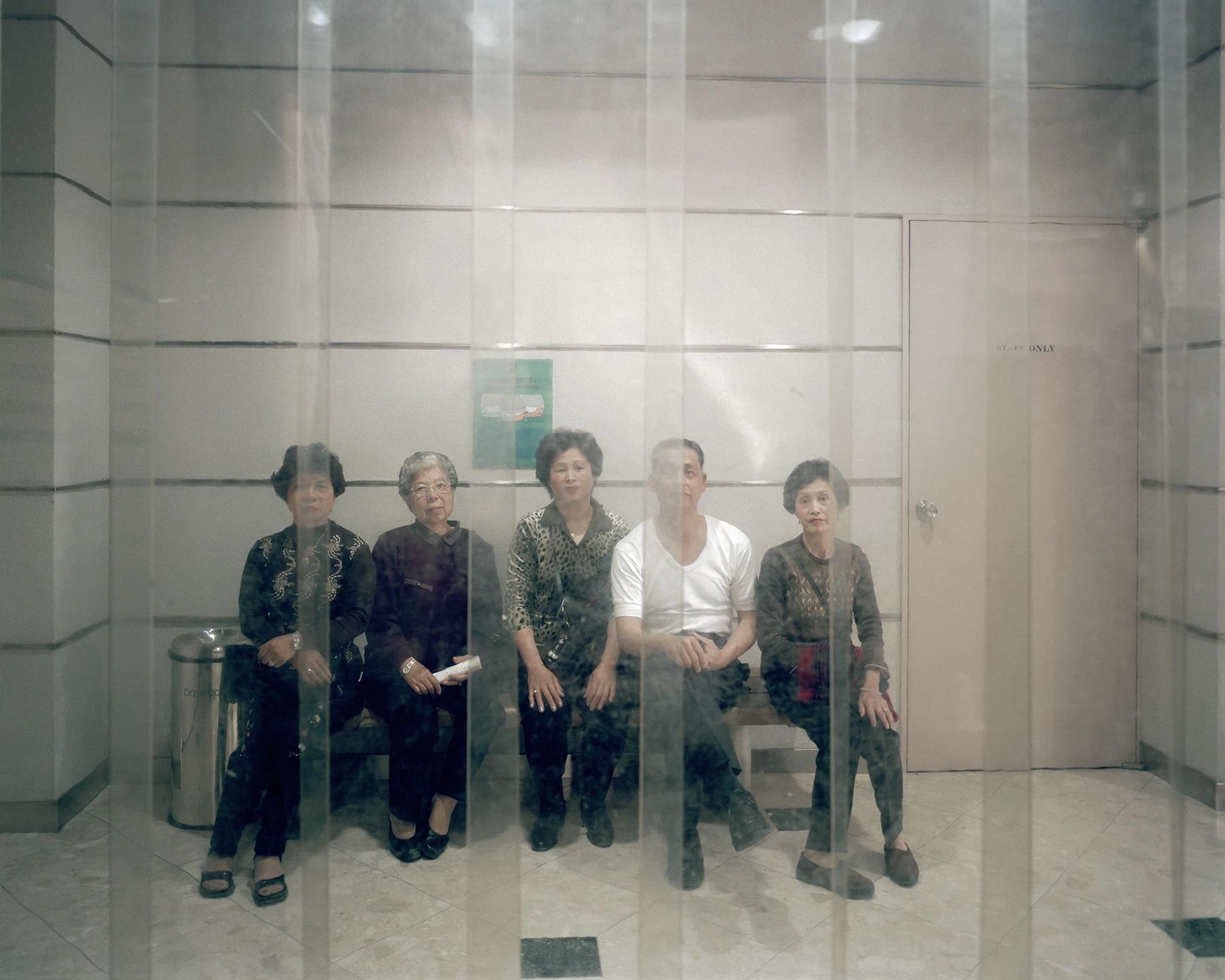
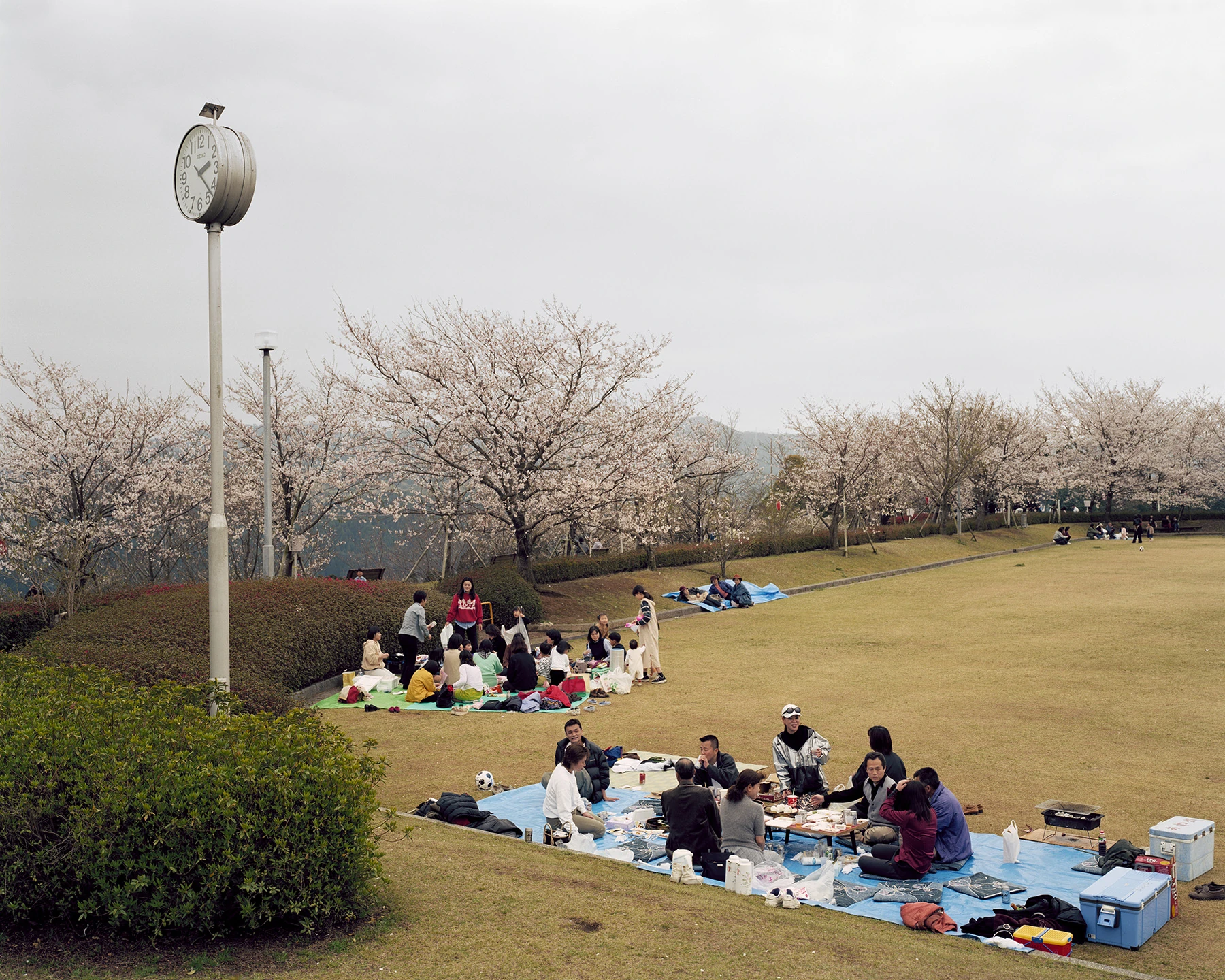
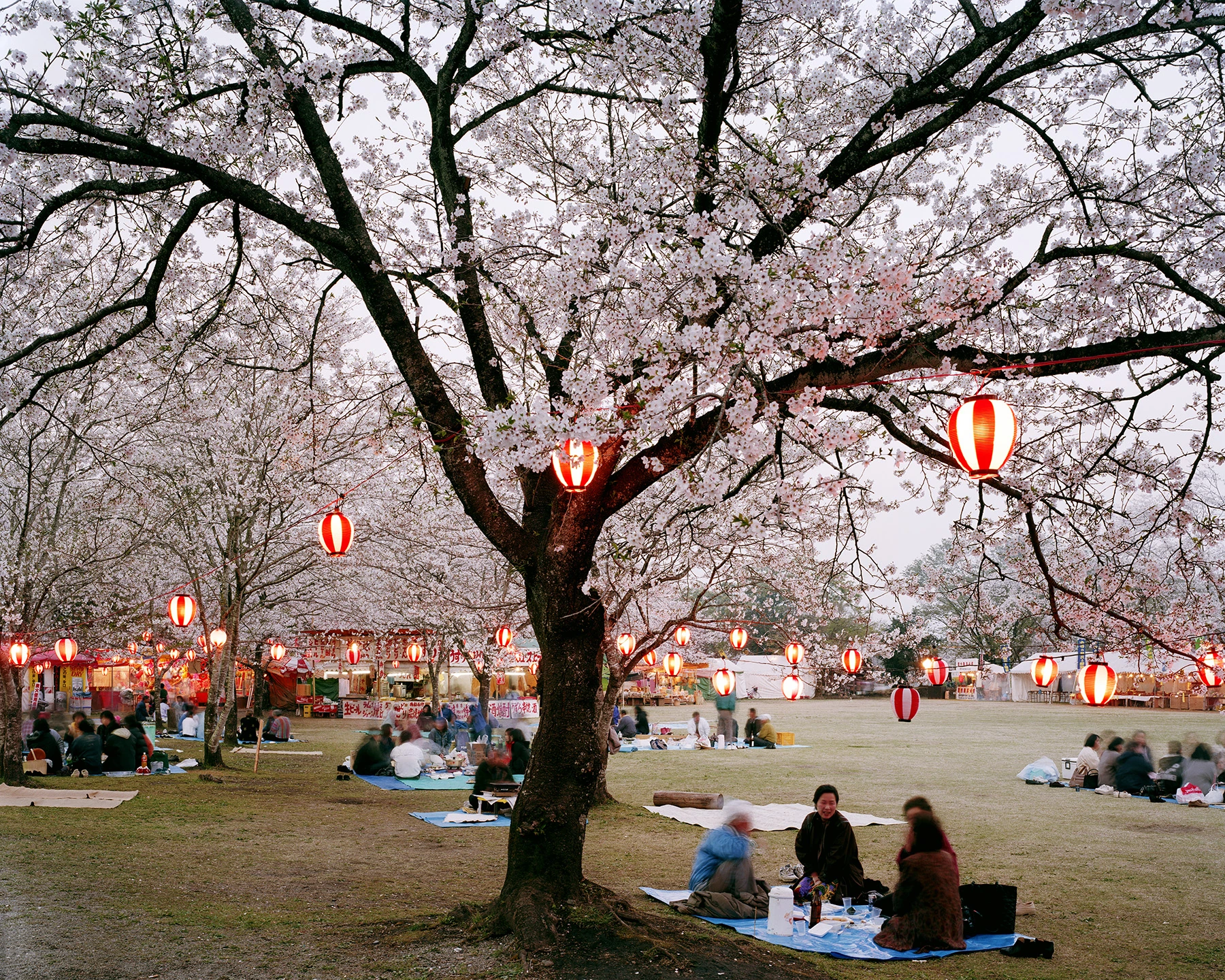
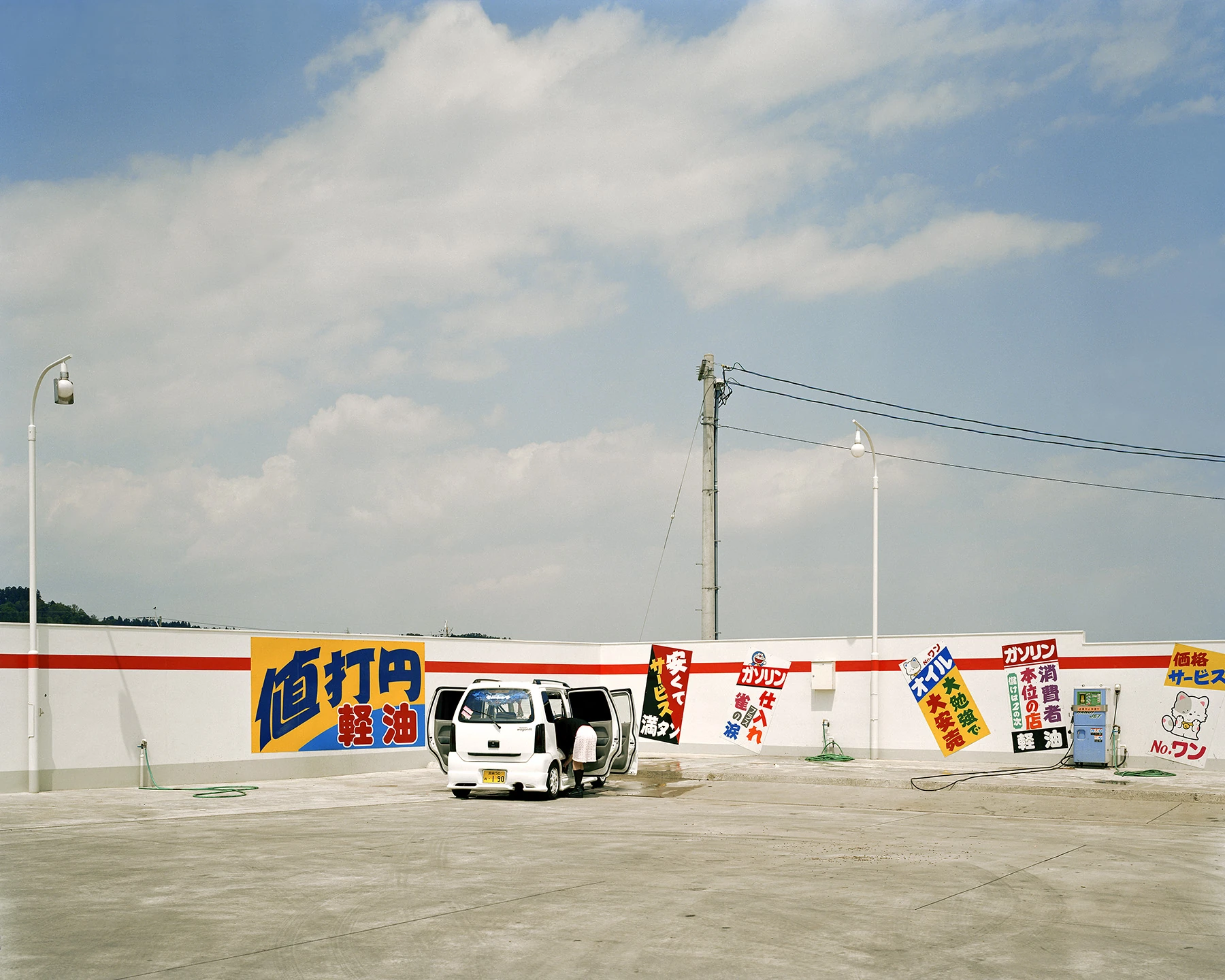
People arrive rarely and mostly at a distance: families on blue tarpaulins under cherry trees, a figure in a blue jacket alone on a jetty, a woman half inside a van at a filling station. Once they come close. Five people sit on a bench in a tiled lobby behind a sheet of glass, looking straight back, the glass throwing vertical bands across them. Whether twenty days can produce mutual understanding is not a question the commission had to answer. What survives is narrower and more useful: a record of what one prefecture chose to build on itself, and how it looks to someone who was only ever passing through.